Article Contents:
- Slatted panel PAN-007 1010×8×2670 mm: which SKU do we check near the hidden cornice
- MDF PAN-007 1010×8×2670 mm
- Primed MDF panel PAN-007
- Oak PAN-007 1010×8×2400 mm
- Beech PAN-007 1010×8×2400 mm
- Why you cannot write "oak PAN-007 2670 mm"
- Mounting layer
- Local wall curvature
- Geometry of the relief itself
- Curtain position
- Fold thickness
- Fully closed curtain
- Half open
- Fully gathered to the side
- After several cycles
- After manual tug
- In a draft
- Checkpoint #1 — near the window
- Point #2 — middle of the trajectory
- Point #3 — curtain parking zone
- Height check
- What to consider a good result
- What to consider bad
- The fold changes depth
- Top and bottom behave differently
- Seams create a local thickening
- The fabric sways
- Position changes after washing and re-hanging
- Why tulle cannot be considered safe just because it is thin
- How to check two rows
- What to measure
- Why the "nearest curtain" may not be a drape
- PAN-007 extends to the window reveal
- A smooth vertical strip remains behind the curtain
- PAN-007 starts after the curtain parking zone
- It preserves movement
- Simplifies cleaning
- Reduces the risk of snags
- Allows keeping the curtain rod
- Can be completely invisible
- Step 1. Find the nearest point of fabric with OPAN-007
- Step 2. Mark the parking zone
- Step 3. Add the actual section where the fabric can sway
- Step 4. Check the composition
- Step 5. Double-check the number of panels
- There were 4120 mm of continuous PAN-007
- It became 3500 mm after a smooth zone of 620 mm
- Another example
- Key commercial conclusion
- Example by area
- A more inconvenient example
- If values are 2574 / 2580 / 2586 mm
- If one point is 2662 mm
- If one point is above 2670 mm
- Why the same color does not completely hide the border
- Where is it better to place the border
- When oak is appropriate
- But the length of 2400 mm changes the project
- Why this is especially sensitive near curtains
- When oak is still stronger
- Where the catch is most likely
- Why the absence of friction does not equal the absence of a catch
- What to consider safe behavior
- If the fabric caught once
- What to measure
- PAN-007 starts above the baseboard
- PAN-007 goes down to the floor
- The baseboard is interrupted in the curtain parking zone
- Why the baseboard needs to be physically checked
- Check in side view
- Why height alone is not enough
- If the curtain only touches the baseboard
- When closing
- When opening
- When cleaning
- Practical test
- Scenario A — PAN-007 across the full width of the wall
- Scenario B — smooth strip 620 mm behind the curtain
- Savings in quantity
- But the price of the solution depends on the SKU
- Why you shouldn't leave a smooth strip just to save 20,180 ₽
- What happened
- Commercial output
- But there is a limit
- 1. Accurate measurement
- 2. OPAN-007
- 3. Full fabric cycle
- 4. Smooth zone
- 5. Module map
- 6. Only then the curtain rod
- When moving looks irrational
- What to do
- Why this is especially important in rentals or hotels
- Plus
- Minus
- What to Check
- 28 mm measured only on the stationary curtain
- The drape is not yet hanging on the final hooks
- The curtain rod will still be adjusted
- The inner row of tulle is not checked
- OPAN-007 is not attached
- The parking area is not checked
- The baseboard protrusion is unknown
- The smooth area is not designed
- The quantity is calculated only by area
- Mistake 1. Subtract 8 mm from 28 and immediately buy panels
- Mistake 2. Measure only the closed curtain
- Mistake 3. Check only the drapery
- Mistake 4. Not accounting for the mounting layer of PAN-007
- Mistake 5. Measure only at eye level
- Mistake 6. Not checking the seam and decorative border
- Mistake 7. Considering light fabric safe
- Error 8. Making the smooth strip as narrow as possible
- Error 9. Reducing the area and automatically reducing the number of PAN-007
- Error 10. Treating the entire 3500 mm width as one section if the smooth zone is in the center
- Error 11. Buying 2400 mm oak as a direct replacement for 2670 mm MDF
- Error 12. Leaving the relief behind the densest parking zone just for a seamless wall
- Error 13. Moving the hidden cornice before the OPAN-007 test
- Error 14. Not checking curtain removal and rehanging
- Error 15. Not accounting for the baseboard
- Error 16. Painting the entire PAN-007 before fitting
- Error 17. Treating the smooth strip as an unfinished element
- Error 18. Making the PAN border exactly along the edge of the assembled curtain
- Error 19. Not checking the curtain rod after several months of use
- Error 20. Considering 20 mm a universally safe distance
- What to do
- Why you cannot calculate it in advance as one 540 mm piece
- If you managed to save a large fragment
- Check 1. The curtain closes completely
- Check 2. The curtain opens completely
- Check 3. Several cycles
- Check 4. Tulle
- Check 5. Bottom at the baseboard
- Check 6. Fabric inspection
- Check 7. Side light
- When it's better to keep PAN-007
- When the profile should be compared with another one
- Why changing the profile doesn't cancel measurements
- Wall 4120 mm fully in PAN-007
- Rack zone 3500 mm after smooth strip 620 mm
- Difference
- Why the smooth zone should not appear just for this difference
- Why a direct comparison of "4 MDF vs 4 beech" is incomplete
- Plain linen or textured fabric
- Velvet or dense dark curtain
- Colored patterned fabric
- Light airy curtain
- What to do
- What to avoid
- This is a good example of optimization
- Why write 28 mm if there's already an OPAN test
- Why write tulle
- Why fix the smooth zone
- Don't measure from the curtain rod
- Don't pick one 'convenient' fold
- Use a rigid reference point at the wall
- Take a series of measurements
- Record not the average, but the minimum
- Separately record the position of the curtain
- What to Check
- If contact has appeared
- Why this is not a reason to make a large gap in advance
- What is especially important with expensive textiles
- Therefore, the service zone is not a loss of design
- What is the depth of PAN-007?
- What width does PAN-007 have?
- Is there a PAN-007 with a length of 2670 mm?
- Is there a long oak PAN-007 2670 mm?
- Can I buy PAN-007 made of MDF near a hidden cornice?
- Is the initial gap of 28 mm sufficient?
- How much will nominally remain after PAN-007 with a depth of 8 mm?
- Do I need to account for the installation layer?
- How to measure the distance to the curtain?
- Do I need to check the drapery when assembled?
- Do I need to check the tulle separately?
- What to do if the fabric touches PAN-007?
- Can I leave a smooth wall behind the curtain?
- Will a smooth zone reduce the number of PAN-007?
- How many PAN-007 are needed for a slat width of 3500 mm?
- How much is needed for a wall 4120 mm without a smooth zone?
- Can the quantity be calculated by area?
- What is the purpose of ordering OPAN-007?
- What size is OPAN-007?
- Where is the best place to install OPAN-007 for testing?
- Is it necessary to check the bottom hem of the curtain?
- Can the curtain catch on PAN-007 even if it doesn't rub constantly?
- What should be chosen next to curtains — MDF or oak?
- Can PAN-007 be painted to match the wall color?
- How to join PAN-007 with a wooden baseboard?
- Where can I buy a wooden baseboard for this assembly?
- Is it necessary to move the hidden ceiling cornice?
- What to do if the curtain only touches at the bottom?
- What to do if contact only occurs when there is a draft?
- Where to buy slat wall panels?
- Where to order PAN-007 1010×8×2670 mm?
- How to check the current price?
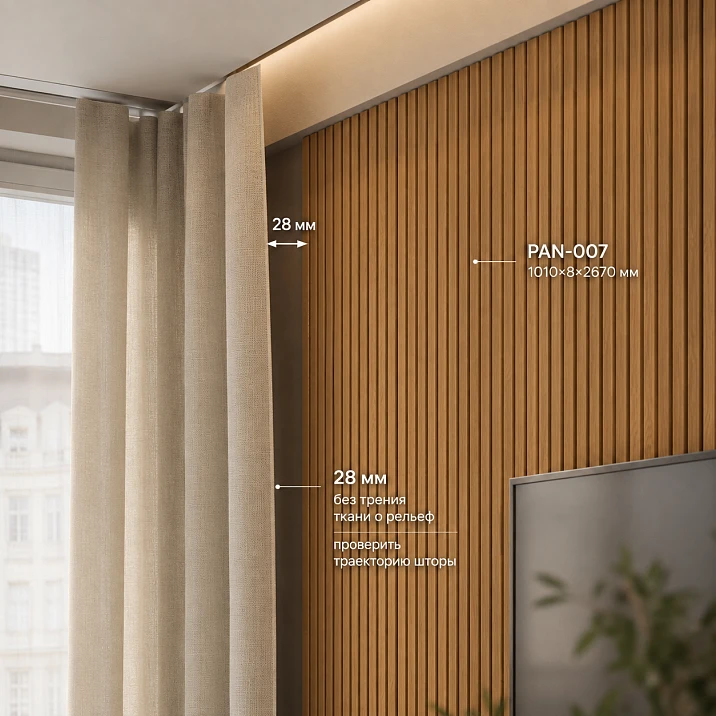
28 − 8 = 20 mm — this is only static arithmetic, not proof of curtain compatibility with PAN-007.
The initial situation seems simple. A hidden ceiling cornice is already installed, the ceiling is finished, the curtain hangs and, in the position closest to the wall, is approximately 28 mm from the painted surface. After installing PAN-007, the new decorative plane will protrude forward by at least the nominal 8 mm of the panel plus the actual mounting layer.
If we only count by the catalog depth:
28 − 8 = 20 mm.
But the fabric does not move like a rigid panel along a single unchanging trajectory. It gathers, spreads out, changes the depth of folds, sways from air movement, can deviate when opened manually, and may have a hem, weight, seam, or a more voluminous side edge. The closest point to the wall may occur not in the fully closed position, but precisely in the curtain parking zone.
Therefore, the direct answer is:
PAN-007 can only be ordered after physically checking the real movement of the fabric with the 8-mm OPAN-007 sample at critical points. The nominal 20 mm of clearance by itself does not prove the absence of friction.
If OPAN-007 shows that the fabric passes freely through the full opening and closing cycle, PAN-007 can be brought up to the slope or another chosen boundary. If the curtain touches the relief, it is more correct to change the boundary of the slat field rather than expect the fabric to "move away by itself" after installation.
This is especially important because the ceiling cornice is already built in. Moving it for wall finishing is the most expensive and destructive path. Before such a decision, there is a more rational sequence:
-
measure the actual trajectory of the curtain;
-
apply OPAN-007;
-
run the fabric through all working positions;
-
separately check the tulle;
-
check the lower part near the baseboard;
-
determine a smooth service strip if needed;
-
only after this count the number of full-size PAN-007.
If the boundaries are already confirmed, you can buy wall slat panels based on the actual width of the decorative zone, not the area of the entire wall.
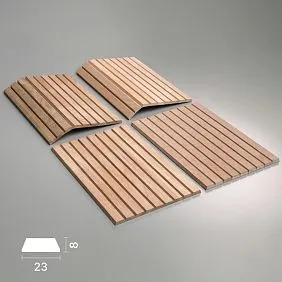
Slat panel PAN-007 1010×8×2670 mm: which SKU are we checking near the hidden cornice
PAN-007 is produced in several lengths and materials. For a tall wall with a hidden cornice, the main option for this article is MDF 1010×8×2670 mm.
The current product card confirms the following size logic:
| Material | Size of long PAN-007 | Role in the project |
|---|---|---|
| MDF | 1010×8×2670 mm | Solid tall cladding |
| Primed MDF | 1010×8×2670 mm | tall cladding for subsequent painting |
| Beech | 1010×8×2400 mm | natural wood, but shorter |
| Oak | 1010×8×2400 mm | natural wood, but shorter |




MDF PAN-007 1010×8×2670 mm
This is the most direct SKU for a wall height of about 2580 mm.
By height:
2670 − 2580 = 90 mm.
Nominally, one long piece covers the height without a horizontal joint.
If there is a baseboard below and the slat area starts above the floor, the actual vertical allowance becomes even greater.
For a painted interior, MDF is convenient because the smooth strip behind the curtain can be left in the same color. Then the transition:
smooth wall → relief PAN-007
is built primarily on texture, not on contrast of shades.
After checking the curtain trajectory, you can buy PAN-007 1010×8×2670 mm in the quantity already confirmed by the wall map.
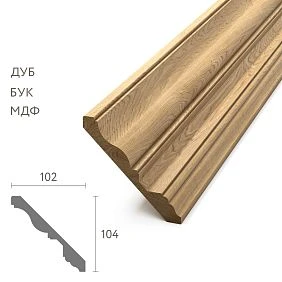
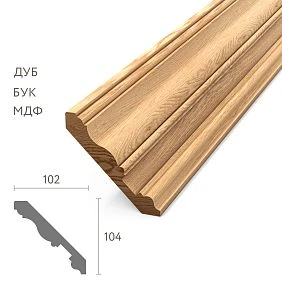
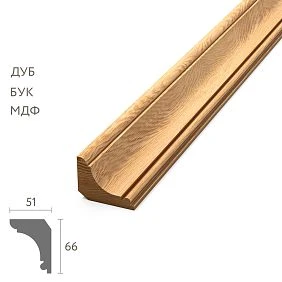
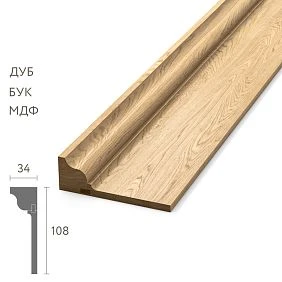
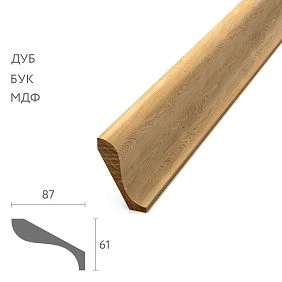
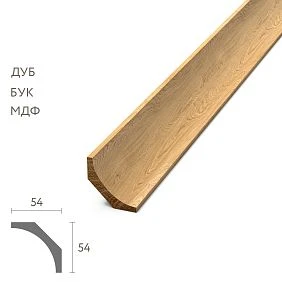
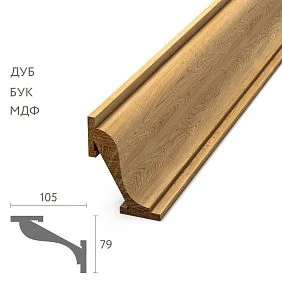
Our factory also produces:
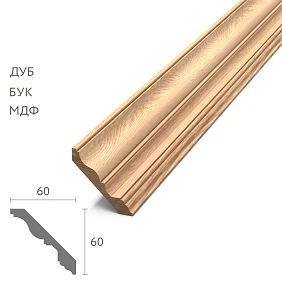
Primed MDF panel PAN-007
The geometry is the same: 1010×8×2670 mm.
This option makes sense if the painting process truly benefits from the factory-primed surface. You cannot automatically consider the primed panel "better" just because it is more expensive.
You need to compare:
-
the cost of preparing regular MDF;
-
time;
-
sanding;
-
materials;
-
the requirements of the chosen enamel.
Get Consultation
Oak is interesting as an independent natural accent surface next to textiles.
But with a wall height of 2580 mm, it does not cover it with a single length:
2580 − 2400 = 180 mm.
Even if the slat field starts above the baseboard, you need to check the actual height.
For example, with a baseboard of 100 mm:
2580 − 100 = 2480 mm.
And again:
That is, the wood creates an additional horizontal joint that can be avoided with MDF 2670 mm.
2480 − 2400 = 80 mm.
Beech PAN-007 1010×8×2400 mm
Beech PAN-007 1010×8×2400 mm
The logic for length is the same as for oak.
Beech can be interesting as a calmer natural wood for subsequent finishing, but it cannot be considered a direct replacement for MDF 2670 without recalculating the height.
Why you cannot write "oak PAN-007 2670 mm"
Because the current product card separates sizes by material:
-
MDF — 2670 mm;
-
oak/beech — 2400 mm.
This difference can change the very architecture of the wall. If a horizontal joint near a hidden cornice is undesirable, MDF may be more appropriate even in an interior with a large amount of natural wood.
Curtain 28 mm from the wall and PAN-007 with a depth of 8 mm: why 20 mm is only the first calculation
Let us denote:
G0 = 28 mm — the minimum measured distance from the fabric to the existing wall;
P = 8 mm — nominal depth of PAN-007;
Gnom = G0 − P = 20 mm.
If the curtain were a rigid vertical plane and the panel were mounted without an additional layer, such a calculation would be almost sufficient.
In the actual assembly, there are several additional values.
Mounting layer
PAN-007 is attached to the base. The actual offset depends on:
-
wall flatness;
-
adhesive layer;
-
additional fixing methods;
-
local irregularities.
It is not possible to universally assign, for example, "another 2 mm". This is measured in the actual mounting mock-up.
Local wall curvature
If the wall has a slight bump, PAN-007 will repeat the base and at that point will be closer to the fabric.
Even when the average gap is sufficient, one local area can become critical.
Geometry of the relief itself
8 mm is the nominal depth of the panel.
The trapezoidal profile creates protruding and recessed areas. For the fabric, the position of the most protruding working point is important.
Position of the curtain
28 mm can be measured:
-
in one position;
-
in one fold;
-
at one height.
During movement, the fabric changes shape.
Fold thickness
In the parking zone, several folds gather together. The side volume increases.
Therefore, the working allowance should not be estimated by the formula:
28 − 8
but as the actual minimum after a full test:
Greal = the minimum distance between the moving fabric and the real OPAN-007 in all working states.
Only this value answers the question about friction.
PAN-007 near the curtain: you need to measure not the wall, but the actual trajectory of the fabric
One of the most common mistakes is to measure the nearest fold of a stationary curtain and assume the trajectory is known.
For soft textiles, this is not enough.
Fully closed curtain
Folds are distributed across the entire width.
Often the fabric looks the most "flat."
At this moment it may be further from the wall than when parked.
Half open
Some of the folds are already gathering.
In some systems, it is in this position that the outer side fold deviates more strongly toward the wall.
Fully gathered to the side
This is the most important mode for a hidden curtain rod.
The fabric becomes thicker in the parking area.
If PAN-007 is continued directly behind the gathered curtain, that is exactly where the likelihood of contact increases.
After several cycles
The curtain should not just be opened and closed once.
Perform 5–10 regular cycles.
The fabric "settles" a bit on the runners, and the folds distribute differently.
After a manual tug
A real user does not always move the curtain perfectly smoothly.
It may sway toward the wall.
In a draft
An open window, ventilation, or door movement can deflect the fabric.
There is no need to create an extreme test with a fan. It is enough to check the normal air flows of the room.
OPAN-007 184×8×310 mm: how to check the movement of the curtain before purchasing a full-size PAN-007
OPAN-007 is the best way to turn abstract 8 mm into a physical test.
Sample size:
184×8×310 mm.
The card confirms MDF, beech, and oak.
If the future wall will be MDF, it is more logical to test the MDF sample. If the project is still comparing materials, samples help to see not only the depth, but also the color/texture next to the textile.
Before the main purchase, you can buy OPAN-007 sample.
Check point #1 — near the window
The curtain here may deviate more due to the air flow and the side edge.
OPAN is temporarily fixed in the design plane.
After that, the fabric is moved several times.
Point No. 2 — middle of the trajectory
It is necessary to exclude a local unevenness of the wall or features of the cornice.
Point No. 3 — parking zone of the drapery
The most important one.
The gathered fabric has maximum volume.
If it passes freely exactly here, the probability of problems on the straight section is lower.
Height check
The sample is small, so it is placed sequentially:
-
closer to the top;
-
at medium height;
-
at the bottom.
This way you can check whether the distance to the fabric changes vertically.
What counts as a good result
-
the fabric does not touch the relief;
-
the edge does not catch on the protrusion;
-
the fold does not slow down during movement;
-
after several cycles there are no traces;
-
the curtain does not start to deviate from its trajectory due to contact.
What counts as bad
Even rare contact in operating mode.
If the fabric catches PAN-007 once every five movements, the problem already exists.
PAN-007 slat panel and drapery: why static clearance is not enough
A dense curtain is a soft object with variable geometry. This is a fundamental difference from a door, facade, or rigid partition.
The fold changes depth
If the fabric is gathered with a gathering coefficient, its side profile is not uniform along its entire length.
One fold may be closer to the wall, another farther away.
The top and bottom behave differently
The top is more rigidly connected to the curtain rod gliders.
The bottom is freer.
If there is a weight, hem, or dense decorative border, the lower part may have a different projection.
Seams create local thickening
A vertical seam of two panels, side finishing, or decorative tape sometimes becomes the closest point to the wall.
Therefore, not only the central fold should be measured.
The fabric sways
With manual movement, the curtain gains inertia.
At the moment of stopping, the side fold may briefly move closer to the wall.
If the PAN-007 relief has a protruding edge, even brief contact can cause a catch.
The position changes after washing and re-hanging
The cornice remains in place, but the length, gathering, and hook positions may change by a few millimeters.
The article does not assign a "safety gap" precisely for this reason: the operational geometry must have a real reserve, not coincide with the relief flush.
PAN-007 and tulle: is it necessary to check thin fabric separately from dense drapery
Yes, especially if the hidden cornice is multi-row.
The curtain can run along the outer row and have 28 mm to the wall, while the tulle runs along the inner row, closer to PAN-007.
Why tulle cannot be considered safe just because it is thin
Thin fabric deflects more easily from the airflow.
It can:
-
stick to the relief;
-
go between protrusions;
-
catch with the edge;
-
touch the wall at the bottom.
How to check two rows
First, move the tulle separately.
Then move the curtain separately.
After that, both fabrics simultaneously in normal mode.
What to measure
For each row:
-
minimum distance to an existing wall;
-
minimum distance to OPAN-007;
-
position when assembled;
-
position when fully closed.
Why the "nearest curtain" may not be a drape
On the plan, the outer dense fabric looks like the main object.
In fact, the inner row of tulle goes closer to the wall.
If it is not checked, PAN-007 may be safe for the drape but inconvenient for the tulle.
Hidden cornice and PAN-007: three options for the boundary of the slat field
After the physical test, you need to choose not "panel or not," but the boundary of PAN-007.
PAN-007 goes all the way to the window slope
The most seamless slat wall.
Suitable if:
-
OPAN-007 passed the test in all positions;
-
the curtain parking zone does not conflict with the relief;
-
the tulle is also free;
-
the bottom edge does not touch the baseboard;
-
there is no risk of snagging when removing the curtain.
Advantage: continuous pattern.
Disadvantage — minimal reserve for changing trajectory in the future.
A smooth vertical strip remains behind the curtain.
A practical option if 20 mm of nominal remaining is insufficient or too borderline.
Advantages:
-
the fabric runs along a smooth surface;
-
easier to remove dust;
-
less risk of snags;
-
the edge of PAN-007 is hidden by the drapery;
-
no need to move the curtain rod.
The width of such a strip is not set universally. It is determined by the actual zone of fabric movement and the wall composition.
PAN-007 starts after the drapery parking zone
The most conservative option.
The gathered dense curtain remains entirely in front of the smooth wall.
PAN-007 starts where fabric no longer works.
This is especially logical if:
-
the drape is very voluminous;
-
the gathering coefficient is high;
-
the fabric is heavy;
-
the curtain rod is close to the wall;
-
the curtain is often opened completely.
The downside is that the decorative field becomes narrower.
Why a smooth strip behind the curtain may be more correct than an additional PAN-007
A smooth zone is sometimes perceived as "unfinished" only in a drawing. In a real room, it is almost constantly hidden by fabric.
It preserves movement
The main function of a hidden cornice is to give the curtain free movement.
If slatted trim interferes with this function, the decorative border should yield.
Simplifies cleaning
Dust accumulates behind a dense curtain.
A smooth wall is easier to wipe than a deep trapezoidal relief.
Reduces the risk of snags
The edge of the fabric, a thread, or a decorative loop does not catch on protrusions.
Allows saving the cornice
Moving a hidden ceiling profile after the ceiling is finished is significantly more complex than changing the boundary of wall finishing.
May be completely invisible
When the curtain is closed, the area is hidden.
When open, it is hidden by the gathered fabric.
That is, the technical solution hardly affects the main view of the room.
How to determine the width of the smooth strip behind the curtain
Not by the formula "remainder 20 mm plus another 10".
An actual movement corridor is needed.
Step 1. Find the nearest point of the fabric with OPAN-007
In every mode.
Step 2. Mark the parking zone
Not just the curtain rod axis, but the entire volume of the gathered fabric.
Step 3. Add the actual area where the fabric can sway
Without assigning a universal millimeter value.
Step 4. Check the composition
The PAN-007 boundary should look deliberate when the curtains are removed for washing.
Step 5. Double-check the number of panels
Reducing the slat width may, but does not have to, decrease the number of initial modules.
PAN-007 width 1010 mm: how to calculate the quantity after excluding the curtain parking zone
Let's take an example from the plan.
Full wall width:
4120 mm.
The smooth area behind the curtain remains:
620 mm.
Slat width:
4120 − 620 = 3500 mm.
One PAN-007:
1010 mm.
Three:
3030 mm — not enough.
Four:
4040 mm.
Nominal excess:
4040 − 3500 = 540 mm.
Therefore, for a rack zone of 3500 mm, 4 source modules are needed if it runs as one continuous field.
After building the map, you can Buy slatted panels specifically in the quantity of four, not by the area of the entire wall.
Why a smooth strip of 620 mm does not guarantee saving one PAN-007
Reducing the area and reducing the quantity are different things.
There were 4120 mm of continuous PAN-007
4 panels give 4040 mm — not enough.
5 source modules are needed.
Five give:
5050 mm.
Excess:
930 mm.
It became 3500 mm after a smooth zone of 620 mm
Four PAN-007 give 4040 mm.
Excess:
540 mm.
In this example, the smooth strip actually saves one original panel:
5 → 4.
Another example
The full batten width initially:
3900 mm.
It already requires 4 PAN-007:
4040 − 3900 = 140 mm of margin.
After the smooth zone, the batten width becomes, for example, 3500 mm.
The quantity remains the same:
4 panels.
That is, the smooth strip reduced the area, but did not reduce the number of modules.
Main commercial conclusion
The buyer should count discrete modules by width, not the area in square meters.
Buy slat panels after building the wall map, not after calculating square meters
Area is useful as a budget and consumption control.
But it does not show:
-
how many whole modules are needed by width;
-
Where will the joints be;
-
which remnants are usable;
-
where the smooth zone begins;
-
what edge is hidden by the curtain;
-
what cuts are needed at the corner or trim.
Example by area
Slat zone 3500×2580 mm:
3.5 × 2.58 = 9.03 m².
One PAN-007 1010×2670:
1.01 × 2.67 ≈ 2.6967 m².
9.03 / 2.6967 ≈ 3.35 panels.
Rounding up gives 4 — here the area matched the width calculation.
But this coincidence is not a universal rule. If the field is divided into two independent zones, each section is rounded separately.
If the smooth zone is not at the edge, but in the middle of the wall
Let's imagine:
-
left PAN-007 — 1800 mm;
-
smooth zone — 620 mm;
-
right PAN-007 — 1700 mm.
The total slat width is still:
3500 mm.
By total width, it seems that 4 panels are enough.
But the sections are counted separately.
Left:
ceil(1800/1010) = 2.
on the right:
ceil(1700/1010) = 2.
Total — the same 4.
A more inconvenient example
Left:
2100 mm.
on the right:
1400 mm.
Required on the left:
ceil(2100/1010) = 3.
on the right:
ceil(1400/1010) = 2.
Total:
5 source panels, although the total slat width is still 3500 mm.
This is an important example: the location of the smooth zone affects the purchase no less than its width.
PAN-007 2670 mm and wall 2580 mm: how much remains in height
MDF 2670 mm is preliminarily suitable.
Nominal remainder:
2670 − 2580 = 90 mm.
But before ordering, you need to take at least three heights:
-
by the window;
-
in the center of the wall;
-
at the opposite corner.
If the values are 2574 / 2580 / 2586 mm
Maximum height:
2586 mm.
Remainder:
2670 − 2586 = 84 mm.
The panel still fits.
If one point is 2662 mm
remains:
8 mm.
The trimming freedom almost disappears.
If one point is above 2670 mm
The standard long MDF PAN-007 no longer covers the entire visible height with a single piece.
Need to change the top/bottom assembly or the solution format.
MDF PAN-007 near the curtain: when a paintable slat panel is especially convenient
If the smooth area remains behind the curtain, MDF allows making it less noticeable.
For example:
-
the smooth wall and PAN-007 are painted in the same color;
-
the transition is built only on the relief;
-
with the curtains removed, the area looks architecturally neat.
If after the test a decision is made buy MDF slat panels, you need to separately approve the painting system for regular or primed MDF.
Why the same color does not completely hide the boundary
PAN-007 has a deep trapezoidal relief.
The smooth wall reflects light differently.
Therefore, the boundary should be even and deliberate.
Where is the best place to set the boundary
It doesn't have to be exactly along the edge of the gathered curtain.
You can tie it to:
-
the slope;
-
furniture;
-
the window vertical;
-
the edge of the cabinet;
-
another architectural line.
Then the technical solution becomes part of the design.
Oak PAN-007 or MDF next to textiles
Oak can create a very strong connection with fabric, especially in a calm, natural interior.
When oak is appropriate
-
solid color curtains;
-
natural palette;
-
wood is repeated in the furniture;
-
PAN-007 should be the main accent of the wall.
But the length of 2400 mm changes the project
At a height of 2580 mm:
Even if the slat field starts above the baseboard, you need to check the actual height.
If there is a 100 mm baseboard at the bottom:
visible height = 2480 mm.
Then:
2480 − 2400 = 80 mm.
A horizontal joint is needed.
Why this is especially sensitive near curtains
Vertical fabric and vertical slats already create a strong direction.
An additional horizontal extension can fragment the composition.
When oak is still stronger
If the top or bottom smooth strip is already part of the project and 2400 mm fits into that system without an accidental seam.
PAN-007 and the side edge of the curtain: check the risk of fabric catching on the trapezoidal relief
Even if the fabric does not constantly rub against the relief, there remains a second risk — snagging.
This is especially important for PAN-007 due to the large trapezoidal profile.
Where snagging is most likely
-
on the side edge of the curtain;
-
on the decorative trim;
-
on a loose thread;
-
on the hem;
-
at the seam;
-
with quick hand movement;
-
when removing or hanging the fabric.
Why absence of friction does not equal absence of snagging
The fabric may pass 10–15 mm from the panel without constant contact, but when swaying, one edge may enter the recess of the relief.
Therefore, the OPAN-007 test should include not only smooth movement, but also a typical real jerk.
What to consider safe behavior
-
the fabric passes freely past the sample;
-
the edge does not linger;
-
the fold does not change direction;
-
no characteristic rustling of friction appears;
-
after several cycles there are no stretched threads.
If the fabric snagged once
Do not consider this a coincidence.
In real operation, such an episode will repeat.
The PAN-007 boundary needs to be moved back.
Bottom hem of the curtain: why the gap at the floor may be smaller than in the middle of the wall
In the middle part, the curtain can easily pass 20 mm from the new relief, but at the bottom it may contact the baseboard or PAN-007.
Causes:
-
hem is thicker than the main fabric;
-
there is a weight inside;
-
the curtain slightly touches the floor;
-
the lower part deviates from the vertical;
-
the baseboard protrudes more than PAN-007.
What to measure
At the level:
-
50–100 mm from the floor;
-
middle of the wall;
-
300–500 mm from the ceiling.
If the lower point is more critical, the PAN-007 boundary cannot be selected only by the average gap.
Slat panel PAN-007 near the floor and wooden baseboard
If the curtain is "floor-length", the lower part of the assembly becomes a separate task.
Need to consider simultaneously:
-
PAN-007 with a depth of 8 mm;
-
actual mounting offset;
-
baseboard;
-
bottom hem;
-
fabric trajectory.
PAN-007 starts above the baseboard
The most common option.
Then the baseboard can protrude more than the panel.
The curtain passes freely next to PAN-007, but catches the baseboard at the bottom.
PAN-007 goes down to the floor
Then the baseboard is absent in the curtain area or is resolved differently.
The fabric only contacts the slatted relief.
The baseboard is interrupted in the curtain parking zone
A practical option in some interiors if the smooth area behind the fabric becomes a service strip.
But the baseboard gap must be architecturally justified.
Why the baseboard needs to be physically checked
Its protrusion from the wall can be:
-
less than PAN-007;
-
equal;
-
more.
Even if the fabric is free at eye level, at the bottom it may touch the protruding profile.
Buying a wooden skirting board for a wall with a hidden cornice: what to check together with PAN-007
If the bottom line is not yet approved, you can to buy wooden baseboard after checking its overhang relative to PAN-007.
The current section features modern solid wood profiles.
The skirting board here is not a separate SEO insert. It actually changes the fabric trajectory.
Check in side view
Make a simple diagram:
wall → PAN-007 → plinth → curtain.
Record the actual overhangs.
Why height alone is not enough
The plinth can be low but deep.
It is the depth that can become a point of friction.
If the curtain only touches the plinth
There is no need to automatically extend a smooth vertical strip to the full height.
Sometimes it is enough to change the bottom node.
Wooden plinth and floor-length curtain: why the plinth protrusion also affects fabric movement
A drape under its own weight often hangs almost vertically.
But the bottom part has inertia and can "wander" across the floor.
When closing
The fold moves along the wall.
When opening
The folds gather and the bottom part becomes thicker.
When cleaning
A vacuum cleaner or a person can shift the fabric closer to the wall.
Practical test
OPAN-007 is placed on the wall.
At the bottom, an actual baseboard is temporarily simulated or its sample is applied.
The curtain is moved in normal mode.
This is significantly more informative than two separate measurements.
Cost of slat panels: comparing a solid wall and a smooth strip behind the curtain
A commercial solution should be calculated based on whole initial modules.
Let's take a wall 4120 mm wide and 2580 mm high.
Scenario A — PAN-007 across the full width of the wall
By width:
4120 / 1010 ≈ 4,08.
5 initial modules are needed.
Five give:
5050 mm.
Nominal excess:
930 mm.
Scenario B — a smooth strip 620 mm behind the curtain
Slat width:
3500 mm.
3500 / 1010 ≈ 3,47.
4 modules are needed.
Four give:
4040 mm.
Excess:
540 mm.
Savings in quantity
1 full-size PAN-007.
But the price of the solution depends on the SKU
If MDF 2670 mm costs 20,180 ₽ at the time of checking, then:
5 panels:
100 900 ₽.
4 panels:
80 720 ₽.
The difference:
20 180 ₽.
This is the pure product difference before accounting for finishing and installation.
Why you can't leave a smooth strip just to save 20,180 ₽
If the curtain fits perfectly even without it, and the design requires a solid wall, reducing PAN for the sake of price can worsen the interior.
The smooth zone is justified primarily by the curtain's function.
Savings are a secondary effect.
Slat wall panels price: when the smooth zone reduces the area, but not the bill
Let's take another wall:
3900 mm.
For solid PAN-007:
4 panels = 4040 mm.
Stock:
140 mm.
Now let's leave a smooth zone of 400 mm behind the curtain.
Slat width:
3500 mm.
We also need 4 panels.
What happened
The area decreased.
The quantity did not.
Commercial conclusion
Before calculating the cost of slat panels, you need to determine the width of each continuous section and round up to a multiple of 1010 mm.
If the smooth zone behind the curtain is completely hidden: can it be made wider for convenience
Yes, if it improves usability and doesn't break the architecture.
For example, instead of a minimal strip along the actual trajectory, a wider parking zone can be left.
Advantages:
-
the fabric is guaranteed to remain on the smooth wall;
-
easier to clean;
-
less risk of relief contamination;
-
the visual edge of the PAN is hidden by the gathered drapery.
But there is a limit
A too-wide smooth zone may become visible when the curtain is closed.
Then it needs to be evaluated as part of the facade.
Is it necessary to move the hidden cornice for PAN-007
Not automatically.
The ceiling is already finished.
Moving the built-in cornice may affect:
-
the ceiling niche;
-
drywall;
-
stretch ceiling;
-
the backlighting electrical;
-
finishing;
-
the length of the curtains.
Therefore, the cheaper sequence is checked first.
1. Accurate measurement
Find out if 28 mm is indeed the minimum value.
2. OPAN-007
Check the actual relief.
3. Full fabric cycle
Closed, open, parking.
4. Smooth zone
See if it resolves the conflict.
5. Module map
Check the quantity.
6. Only then the cornice
If no wall scheme preserves the desired design and the fabric constantly rubs, then the ceiling unit issue truly becomes relevant.
When moving the cornice can be justified
-
PAN-007 must definitely go before the slope;
-
smooth zone is prohibited by design;
-
the curtain is expensive and should not touch the relief;
-
the cornice can technically be changed without destructive rework;
-
the future curtain system remains the same.
When the relocation seems irrational
If the conflict is resolved by a 300–600-millimeter zone that is still hidden by the fabric.
Why can't you just shift the runners or hooks
Sometimes it seems that you can move the drape a few millimeters away from the wall without changing the cornice.
The possibility depends on the specific system:
-
arrangement of rows;
-
hooks;
-
curtain tape;
-
gliders;
-
stoppers.
The article should not advise unauthorized modification of the curtain rod without checking with the manufacturer.
If this is a real option, it is assessed by a curtain specialist.
Curtain with gathering ratio: why a new set of curtains may change compatibility
Today PAN-007 is being tested with the current curtains.
In a few years, the fabric may be replaced.
If the new curtain has:
-
a higher gathering ratio;
-
denser material;
-
voluminous lining;
-
decorative border,
the parking area will increase.
What to do
If the interior is designed for a long term, it is reasonable to design the smooth strip not "flush with today's fold," but as a full-fledged service zone.
An exact allowance cannot be set universally.
Why this is especially important in rentals or hotels
Textiles change more often than wall finishes.
Tulle was replaced with a Roman/roller system: does the article change
Yes.
If the inner row disappears, the fabric closest to the wall may become different.
But PAN-007 is already installed.
Therefore, the current project should maintain reasonable flexibility.
If the curtain is motorized
The automatic drive moves the fabric repeatably, but this does not eliminate the need for inspection.
Plus
The trajectory is more stable.
Minus
If PAN-007 creates friction, the motor will repeat it every cycle.
This is worse than a rare manual touch.
What to check
Not only the absence of contact, but also the absence of increasing resistance.
The article does not specify the permissible motor force.
If the drape is very heavy
Large mass increases inertia when stopping.
The fold may swing more strongly toward the wall.
The smooth zone becomes even more interesting.
If the fabric is light and airy
It deflects more easily from drafts and may touch the relief sporadically.
That is, "light" does not mean "safe."
If the curtain has fringe or a tassel
Protruding decorative elements increase the risk of snagging on the trapezoidal profile.
In that case, the most protruding part should be tested, not the main fabric.
If PAN-007 is painted before installation
The finish can change the tactility of the surface.
But the article should not promise that a smooth enamel will eliminate the risk of snagging.
The geometry of the relief remains.
If PAN-007 remains natural wood
Pay special attention to checking for the absence of sharp edges, damage, or roughness in the fabric area.
A quality panel should be properly finished, but an operational test is still needed.
When PAN-007 is by the window, it is NOT yet necessary to buy
Purchasing a full-size batch should be postponed if at least one of the following points is not addressed.
28 mm were measured only on the stationary curtain
This is the most common false start.
Need to see the actual trajectory.
The curtain is not yet hanging on the final hooks.
Changing the suspension height and assembly changes the position of the folds.
The cornice will still be adjusted.
Even a few millimeters of row displacement can change the final gap.
The inner row of tulle has not been checked.
It may be closer to the wall.
OPAN-007 is not attached.
The catalog 8 mm exists only in digital form, not in the actual relief next to the fabric.
The parking area has not been checked.
A fully closed curtain can be safe, while a gathered one may not be.
The plinth protrusion is unknown.
At the bottom, the fabric may catch on another element.
The smooth zone is not designed.
If the test fails, an alternative must exist.
The quantity is calculated only by area.
An incorrect number of modules can be ordered.
When PAN-007 can already be ordered.
-
The curtain hangs in its final configuration.
-
The cornice is complete.
-
Measured minimum static gap.
-
Checked closed curtain.
-
Pr
If the curtain barely touches only in the fully closed position
This may occur on one fold.
Do not expect the fabric to "spread apart."
After washing or changing hooks, the position may worsen.
Errors when ordering PAN-007 near a hidden cornice
Error 1: Subtract 8 mm from 28 and immediately buy panels
Why it occurs: the calculation seems sufficient.
Consequence: the dynamic fold touches the relief.
How to prevent: OPAN-007 + full movement cycle.
Error 2. Measure only the closed curtain
Consequence: the parking zone becomes thicker.
Error 3. Check only the drapery
The tulle goes closer to the wall.
Error 4. Not accounting for the mounting layer PAN-007
The actual new plane is closer to the fabric than the catalog 8 mm.
Error 5. Measure only at eye level
The hem at the floor catches on the panel or baseboard.
Error 6. Not checking the seam and decorative border
The thickest point of the fabric remains outside the measurement.
Mistake 7. Considering light fabric safe
It deviates more strongly from the airflow.
Mistake 8. Making the smooth strip as minimal as possible
Today everything passes, after changing the curtains — no.
Mistake 9. Reducing the area and automatically reducing the number of PAN-007
Discrete modules of 1010 mm may still require the same quantity.
Mistake 10. Considering the entire width of 3500 mm as one section if the smooth zone is in the center
Two independent sections are rounded separately.
Mistake 11. Buying oak 2400 mm as a direct replacement for MDF 2670
A horizontal seam occurs.
Error 12. Leave the relief behind the densest parking zone only for the sake of a solid wall
The curtain function deteriorates.
Error 13. Move the hidden cornice before the OPAN-007 test
The most expensive rework is selected first.
Error 14. Not checking the removal and rehanging of curtains
During maintenance, the fabric touches PAN more than in normal use.
Error 15. Not taking the baseboard into account
The bottom hem starts to rub.
Error 16. Paint the entire PAN-007 before fitting
A compatibility error is discovered after expensive finishing.
Error 17. Considering a smooth strip a "flaw"
Because of this, the relief is brought too close to the fabric.
Error 18. Making the PAN border exactly along the edge of the gathered curtain
In a different position of the folds, it becomes visible or conflicts.
Error 19. Not checking the curtain rod after several months of use
Runners, hooks, and fabric may shift slightly.
Error 20. Considering 20 mm a universally safe distance
The article does not establish such a standard.
Edge case: no curtains yet, but PAN-007 needs to be ordered now
The best option is not to guess.
You need to get the data of the future curtain system:
-
cornice row;
-
offset from the wall;
-
tape type;
-
gathering factor;
-
fabric;
-
lining;
-
parking zone.
If these parameters are not selected yet, compatibility is not determined.
In this case, it is more reasonable to postpone the exact boundary of PAN-007 or leave a wider smooth zone.
Edge case: double curtain rod, but tulle is rarely used
Tulle still needs to be checked.
Rare use does not negate physical contact.
If it can be removed permanently, that is a change in the operating scenario that the client must consciously accept.
Edge case: the curtain parks not by the window, but in a separate niche
Then the most voluminous zone may not intersect with PAN-007 at all.
The slat field can be brought closer to the slope.
But the entire trajectory from the window to the parking spot is still tested.
Edge case: hidden curtain rod has backlighting
LED does not change the mechanics itself, but it changes the visibility of the gap.
A smooth strip behind the curtain may become more noticeable under side lighting.
Light also highlights dust on the trapezoidal relief.
What to do
Check OPAN-007 with the backlight turned on.
Edge case: the curtain barely closes and serves as decoration
If the drape is always parked, the gathering zone becomes the only important mode.
This may require a wider smooth strip than for regularly moving fabric.
Edge case: the drape is automatic and moves many times a day
Requirements for no contact are higher.
Repeated friction will accumulate wear.
Edge case: the panel covers only part of the wall
If PAN-007 ends well before the curtain, the problem disappears.
You don't need to buy a product for the entire wall just for symmetry if the interior calmly accepts a local slat field.
If PAN-007 next to curtains is replaced after a few years
The curtain system can remain.
A smooth zone allows replacing the slat panel with another profile without conflict with the cornice.
This is additional maintainability.
If curtains are changed more often than panels
This is a more likely scenario.
The new fabric may be thicker.
Therefore, a project made to the millimeter for the current fabric is less flexible.
Do you need to make a repair reserve PAN-007
A separate question about the quantity along the wall.
A reserve can be useful if:
-
the finish is non-standard;
-
the object is commercial;
-
reordering is difficult;
-
a large trapezoidal profile can be damaged.
But you don't need to automatically buy a spare panel because of the curtain.
What to do with the 540 mm remainder in width after four PAN-007
In the example, the slat zone is 3500 mm, four initial modules give 4040 mm.
Nominal excess:
540 mm.
It can be:
-
as one large strip;
-
with several trims;
-
with a repair fragment.
Why can't it be considered in advance as one 540 mm piece
The distribution depends on:
-
the starting phase;
-
the edge trims;
-
joints;
-
the position of the corners.
If a large fragment was preserved
Mark:
PAN-007 / project / color / date / remainder.How to conduct acceptance after installation of PAN-007 near the curtain
Do not limit yourself to a visual inspection of the wall.
Check 1. The curtain closes completely
Without changing speed or trajectory.
Check 2. The curtain opens completely
The parking zone does not press on the relief.
Check 3. Multiple cycles
At least the usual series of movements.
Check 4. Tulle
separately.
Check 5. Bottom near the baseboard
The hem does not catch.
Check 6. Fabric inspection
No threads, traces, or dust from contact.
Check 7. Side light
No random curve of the smooth and slat zone boundary.
MDF PAN-007 or another slat model: when the profile should be reconsidered before ordering
If OPAN-007 shows that the trapezoidal relief comes too close to the fabric, you don't have to immediately abandon the whole idea of a slat wall.
You can buy wall slatted panels after comparing other profiles in the category.
But changing the model is justified only in case of a real conflict with PAN-007.
When it's better to keep PAN-007
-
relief is liked;
-
OPAN passes the test;
-
smooth zone solves parking;
-
length 2670 is suitable;
-
the number of modules is already rational.
When the profile is worth comparing with another
-
the edge of the curtain regularly fits the trapezoidal protrusion;
-
want less visual relief;
-
the smooth zone should become too wide only because of the shape PAN-007;
-
another model better combines safe passage and design.
Why changing the profile does not cancel measurements
Even a thinner or rhythmically different panel changes the existing plane.
Need to redo:
-
check the thickness;
-
run the curtain;
-
recalculate the module width;
-
build the wall map.
The old 4 PAN-007 panels cannot be automatically replaced with four modules of a different model.
PAN-007 price: how much a solid wall costs and the option with a smooth zone
At the time of checking, the PAN-007 card shows a price of 20,180 ₽ for MDF 1010×8×2670 mm.
Wall 4120 mm fully in PAN-007
5 initial modules are needed.
Product cost:
5 × 20 180 = 100 900 ₽.
Slat zone 3500 mm after a smooth strip of 620 mm
4 modules are needed.
Cost:
4 × 20 180 = 80 720 ₽.
Difference
20 180 ₽.
This is the price of one module.
Why the smooth zone should not appear just for this difference
If the curtain moves safely on a solid wall, deciding the design only through saving one module is wrong.
If the smooth zone is needed for mechanics, the savings become a useful side effect.
Primed PAN-007: how the solution price changes
Primed MDF 1010×8×2670 mm at the time of check costs 37,470 ₽.
5 modules:
187 350 ₽.
4 modules:
149 880 ₽.
The difference:
37 470 ₽.
The more expensive the execution, the more important it is to prove the boundary of the slat field and the quantity before ordering.
Beech PAN-007: how much does the natural option cost and why length matters more than price
Beech 1010×8×2400 mm — 27,390 ₽ at the time of checking.
If 4 original modules are needed in width:
109 560 ₽.
But this amount does not solve the vertical shortage at a height of 2580 mm.
Need to add the cost/material of the horizontal node.
Why a direct comparison of "4 MDF vs 4 beech" is incomplete
MDF covers the height with a single piece.
Beech — no.
Therefore, the final project consists of different sets of parts.
Oak PAN-007: when a natural wall becomes the most expensive scenario
Oak 1010×8×2400 mm — 43,790 ₽.
4 panels:
175 160 ₽.
If additional height adjustment is needed, the product cost increases.
Therefore, oak should be chosen for a real visual purpose, not as an automatic "premium."
Why OPAN-007 is cheaper than one mistake in quantity
At the time of checking OPAN-007:
-
MDF — 550 ₽;
-
beech — 960 ₽;
-
oak — 1,600 ₽.
Even three different samples cost:
550 + 960 + 1600 = 3 110 ₽.
This is significantly less than one full-size MDF module at 20,180 ₽.
If the material is not yet approved, physically checking all three may be economically reasonable.
How to choose a material next to a specific curtain
Plain linen or textured fabric
Oak/beech can provide a rich natural combination.
Velvet or dense dark drapery
The large relief PAN-007 can be visually very active.
Plain painted MDF is sometimes calmer.
Colored fabric with a pattern
The natural texture of wood adds another pattern.
MDF in the wall color helps avoid overload.
Light airy curtain
Contrasting oak can become a strong background.
But the risk of contact is still checked physically.
What happens to the smooth zone when the curtains are taken down for washing
This is a good test of the architecture.
A zone that is hidden 95% of the time becomes visible for a few days a year.
It should not look like:
-
an unpainted area;
-
a random PAN break;
-
an unfinished strip.
What to do
Style it as a full part of the wall:
-
a finished color;
-
even edge;
-
matched plinth;
-
clean top junction.
How to choose the PAN-007 edge near a smooth zone
The panel end point must be anchored to something clear.
Possible reference points:
-
slope vertical;
-
edge of the curtain's hidden zone;
-
furniture line;
-
the center of the pier;
-
axis of the decorative element.
What to avoid
The edge that is "where 620 mm ended."
The number should be a consequence of geometry, not the sole reason.
If the smooth zone should be 620 mm by function, but architecturally 650 mm is better
Need to recalculate the quantity based on 650.
Wall 4120 mm:
4120 − 650 = 3470 mm of slat width.
Four PAN:
4040 − 3470 = 570 mm of nominal excess.
The quantity does not change.
So, 30 mm can be used for a more beautiful vertical alignment without an additional panel.
This is a good example of optimization
The mathematical minimum and the architectural boundary may differ slightly if the number of modules remains the same.
If architecturally a smooth zone of 500 mm is better
Slat width:
4120 − 500 = 3620 mm.
Four PANs still give 4040 mm.
Stock:
420 mm.
The quantity also does not change.
That is, in the range of 500–650 mm, the wall order remains 4 modules.
This gives the designer the freedom to choose the best line across the room.
When the smooth zone becomes too narrow for four panels
The boundary width of the slat zone with 4 modules is 4040 mm.
For a wall of 4120 mm, the minimum total smooth width by pure arithmetic is:
4120 − 4040 = 80 mm.
If the smooth zone is less than 80 mm, four PAN-007 panels are physically insufficient for the remaining wall.
But 80 mm is only a mathematical limit without margin and without accounting for cutting.
In a real project, a parts map is needed.
Why this 80 mm threshold is not a recommendation
Leaving 80 mm behind the curtain just to save a fifth panel may be:
-
insufficient in terms of trajectory;
-
not aesthetically pleasing;
-
too borderline in terms of cutting.
First, the fabric function, then the quantity.
What to send to STAVROS manager before ordering PAN-007
The final specification should record not only the wall size.
Example:
PAN-007 / MDF / 1010×8×2670 mm / wall 4120×2580 mm / hidden ceiling cornice already installed / minimum static fabric distance to old wall 28 mm / OPAN-007 checked in closed, open, and parking position / tulle checked / smooth zone 620 mm / slat width 3500 mm / quantity 4 pcs. / bottom unit ___ / color ___.Why write 28 mm if OPAN test already exists
This is the original project geometry.
In a year, the specification will show why the smooth zone appeared.
Why write tulle
So the installer does not check only the outer row.
Why record the smooth zone
So that it isn't accidentally reduced on site for a "nice fit."
How to measure the original 28 mm so that the number is actually useful
Even before the OPAN test, the original size must be taken correctly. An error of a few millimeters is especially sensitive here, because after the nominal deduction of 8 mm, only 20 mm remains.
Do not measure from the cornice
The cornice sets the suspension line, but the fabric does not align with its axis.
You need to measure from the closest actual surface of the fold to the finished wall.
Do not choose one "convenient" fold
Check several adjacent ones.
The closest one may be:
-
at the edge of the fabric;
-
on the seam;
-
closer to the parking;
-
at the bottom due to the hem.
Use a rigid reference point against the wall
The ruler or square should rest on the finished surface of the wall, not on a soft baseboard, textured wallpaper, or an accidental protrusion.
Take a series of measurements
For example:
-
fully closed: 31 / 29 / 28 / 30 mm;
-
half open: 27 / 25 / 26 mm;
-
in parking: 24 / 23 / 26 mm.
In this conditional example, the original "28 mm" is no longer the minimum value: the working fold in parking comes to 23 mm.
After PAN-007, nominally there would remain:
23 − 8 = 15 mm
before accounting for the mounting layer.
That is why one beautiful measurement on a closed curtain cannot be the basis for a purchase.
Record not the average, but the minimum
The average distance does not protect the fabric from contact.
For compatibility, the worst normal operating mode is needed.
Separately record the position of the curtain
A size without a state is useless.
In the report, it is better to record:
minimum 23 mm / curtain fully gathered on the right.This way the installer understands where the critical zone is.
Check after the first week of use: why a single installation test is not enough
Immediately after installing PAN-007, everything may work perfectly. After a few days, the folds redistribute slightly, the fabric settles into its usual positions, and the user starts moving it faster.
Therefore, a repeat check is useful.
What to check
-
whether a new contact point has appeared;
-
whether the parking zone has shifted;
-
whether there are dust marks on the fabric;
-
whether a rustling sound has appeared;
-
whether the edge catches after several cycles.
If contact has occurred
Do not wait for tissue damage.
Determine if it can be corrected:
-
parking limiter;
-
bottom assembly;
-
edge of PAN-007;
-
position of the fabric using the curtain system's own means, if the manufacturer allows it.
Why this is not a reason to make a huge gap in advance
The goal is not a maximum empty strip, but verified working compatibility.
What will change after washing or dry cleaning the drapery
Textile is not a constant geometry for the entire renovation period.
After maintenance, the following may occur:
-
slight shrinkage;
-
change in drape;
-
new hanging;
-
different position of hooks;
-
change in folds.
Therefore, when returning the curtain to the rod for the first time, it is useful to run it next to PAN-007 again.
This is especially important with expensive textiles.
Do not rely on the fact that "it worked once."
The wall panel remains rigid, but the fabric may change.
If the curtains are replaced with thicker ones
A smooth service zone provides a margin for the interior's life cycle.
If PAN-007 is currently brought almost to its working fold with minimal actual clearance, the new thick portiere may require reworking the wall.
Therefore, the service zone is not a loss of design
It can be an element of future compatibility.
Especially when the cornice is already built in and its position is practically fixed.
Checklist before payment PAN-007
Parameter Value Full wall width ___ mm Wall height ___ mm Static curtain gap to old wall ___ mm Nearest working point after OPAN test ___ Curtain closed Checked Curtain half open Checked Curtain in parking Checked Tulle checked / absent Hem at floor Checked Baseboard ___ Smooth zone ___ mm Slat width ___ mm PAN-007 1010×8×2670 mm Material MDF / primed MDF / beech / oak Quantity ___ OPAN-007 Checked Finish ___ If the 'curtain in parking' field is not filled, it is too early to make a compatibility decision.
Final algorithm for ordering PAN-007 next to a hidden cornice
-
Ensure the cornice is already in its final position.
-
Hang the curtains in the final configuration.
-
Measure the static distance to the wall.
-
Record the initial 28 mm or the actual value.
-
Check which row of fabric is closest to the wall.
-
Purchase OPAN-007 in the selected material.
-
Place it near the window.
-
Check the fully closed curtain.
-
Check the half-open one.
-
Check the gathered curtain.
-
Repeat several cycles.
-
Check the tulle.
-
Check the bottom hem.
-
Check contact with the baseboard.
-
Check the risk of snagging, not just rubbing.
-
Determine the actual working corridor of the fabric.
-
If an offset is needed, assign a smooth zone.
-
Tie it to the architectural line.
-
Calculate the rack width of the wall.
-
Divide it into modules of 1010 mm.
-
If the zone is divided into parts, count each section separately.
-
Check the height of 2670 mm at at least three points.
-
Compare MDF and wood considering the length of 2670/2400.
-
Approve the plinth.
-
Calculate the product cost based on whole modules.
-
Decide whether a repair reserve is needed.
-
Compile the specification.
-
Re-check the price and availability.
-
Order the panels.
-
After installation, run the curtains again along the entire trajectory.
FAQ
What is the depth of PAN-007?
8 mm according to the current card.
What is the width of PAN-007?
1010 mm.
Is there a PAN-007 with a length of 2670 mm?
Yes, the long MDF version has dimensions of 1010×8×2670 mm.
Is there a long oak PAN-007 2670 mm?
No, according to the current card. Long beech and oak are 2400 mm.
Can I buy PAN-007 made of MDF near the hidden cornice?
Yes, if the physical test shows free movement of the fabric and the panel boundary is calculated based on the real trajectory.
Is the initial gap of 28 mm sufficient?
This size alone guarantees nothing. After the nominal 8 mm, 20 mm remains, but the fabric moves and changes volume.
How much will nominally remain after PAN-007 with a depth of 8 mm?
28 − 8 = 20 mm before accounting for the mounting layer and fabric dynamics.
Do I need to account for the mounting layer?
Yes. The actual new wall plane is determined not only by the specified 8 mm.
How to measure the distance to the curtain?
By the closest actual point of the fabric, not just along the curtain rod axis.
Do I need to check the drapery when gathered?
Definitely. It is precisely in the parking zone that folds often become deeper.
Do I need to check the tulle separately?
Yes, if the curtain rod is multi-row. The inner row may be closer to the wall.
What to do if the fabric touches the PAN-007?
First, change the boundary of the slat field or increase the smooth service zone. Moving the curtain rod is a later option.
Can a smooth wall be left behind the curtain?
Yes. This is one of the most practical scenarios if the area is hidden by fabric and maintains free movement.
Will a smooth area reduce the number of PAN-007?
Not necessarily. The slat width needs to be recalculated based on 1010 mm modules.
How many PAN-007 are needed for a slat width of 3500 mm?
Four base modules, because three only give 3030 mm.
How many are needed for a wall of 4120 mm without a smooth area?
Five base modules, because four give 4040 mm.
Can the quantity be calculated by area?
Area is useful as a check, but the final order is determined by the map of whole modules and actual sections.
Why order OPAN-007?
To physically check the 8-mm relief near moving fabric before purchasing the entire wall.
What is the size of OPAN-007?
184×8×310 mm.
Where is the best place to install OPAN-007 for testing?
Near the window, in the middle of the trajectory, and in the parking zone of the drapery; also at different heights.
Do I need to check the bottom hem of the curtain?
Yes. It may be thicker than the main fabric and touch the baseboard or panel.
Can the curtain catch on PAN-007 even if it doesn't rub constantly?
Yes. The edge or seam may occasionally catch on the protruding trapezoidal profile.
What to choose near curtains — MDF or oak?
MDF is more convenient for a solid tall paintable wall of 2670 mm. Oak provides a natural texture, but the long version of 2400 mm may require a separate horizontal joint.
Can PAN-007 be painted to match the wall color?
MDF is designed for finishing; the specific primer and enamel system must be coordinated with the finishing technology.
How to join PAN-007 with a wooden baseboard?
Need to compare the baseboard protrusion, the lower hem of the curtain, and the depth of PAN-007. Free passage is checked physically along the entire height.
Where can I buy a wooden baseboard for this assembly?
In the current section of modern STAVROS baseboards.
Is it necessary to relocate the hidden ceiling cornice?
Only if measurements, the OPAN test, and changing the boundary of PAN-007 do not provide a working solution.
What to do if the curtain only touches at the bottom?
First, review the lower assembly and the baseboard. It is not necessary to remove PAN-007 along the entire height.
What to do if contact only occurs during a draft?
If a draft is the normal mode of the room, this contact must be taken into account.
Where to buy slat panels for walls?
In the STAVROS flexible slat panels category.
Where to order PAN-007 1010×8×2670 mm?
In the exact PAN-007 card, after checking the fabric trajectory and calculating the quantity.
How to check the current price?
Open the card immediately before payment: price and stock change.
Conclusion
With an initial distance of 28 mm between the nearest curtain fold and the painted wall PAN-007 with a depth of 8 mm nominally leaves:
28 − 8 = 20 mm.
But 20 mm is not a ready answer or a universal safe gap.
The drape changes shape when opening, closing, and parking. In the gathering zone, folds become deeper, sheer fabric may run closer to the wall, the bottom hem may deviate more, and the fabric edge may occasionally catch on the trapezoidal relief.
Therefore, the most important item before the full-size batch is OPAN-007 184×8×310 mm. It needs to be placed in the future wall plane and the curtain run several times through all working positions. If contact occurs even periodically, the PAN-007 boundary must be moved back.
A smooth strip behind the curtain is not a sign of unfinished renovation. In this scenario, it may be the best engineering and design solution: it preserves free fabric movement, facilitates cleaning, reduces the risk of snags, and allows avoiding rework of the already built-in ceiling cornice.
After determining this zone, the number of panels is recalculated.
On a 4120 mm wall with a 620 mm smooth strip, the slat width becomes:
4120 − 620 = 3500 mm.
Three PAN-007 panels give only 3030 mm.
Four give 4040 mm.
So, four source modules are needed.
If PAN-007 goes across the entire wall of 4120 mm, four are no longer enough and a fifth module is required. This shows why slat panels cannot be purchased only by square meters.
In height, MDF PAN-007 at 2670 mm fits well with a wall of about 2580 mm: nominally 90 mm remains. Long beech and oak have only 2400 mm and, with the same wall, create a separate horizontal joint. Therefore, the material is chosen after vertical calculation, not just by appearance.
At the time of verification, MDF PAN-007 1010×8×2670 mm costs 20,180 ₽. For example, 4 panels cost 80,720 ₽, 5 panels cost 100,900 ₽. If a smooth service zone is simultaneously needed for fabric and reduces the order from five to four modules, saving one panel becomes a useful consequence of correct geometry, not an end in itself.
The correct sequence for this wall is:
curtain → actual trajectory → OPAN-007 → tulle → bottom edge and baseboard → smooth zone → slat width → number of modules → material → cost → order.
If OPAN-007 has confirmed free movement of the fabric in all operating modes and the wall map is calculated, you can order PAN-007 made of MDF in the exact quantity.
If, however, the 20 mm remain only on paper, and the fold actually touches the panel, it is too early to buy PAN-007 until the boundary of the slat field is changed.
-