





























Article Contents:
- Why choosing a handle for a dresser is not a trivial matter
- Which types of handles are suitable for a dresser: a complete breakdown
- Knob handle: a point accent
- Pull handle: a reliable grip for wide drawers
- Cup handle: a decorative horizontal
- Drop handle: decor with history
- Handles for nightstands and bedside tables: delicacy above all
- Bedside table: a special scenario
- Hallway cabinet: between practicality and aesthetics
- Office cabinet: strictness without excess
- Drawer handles: from small to wide
- Small drawer: don't overdo the size
- Wide drawer: grip is the main criterion
- Drawers in solid wood: wooden handle as part of the material
- Drop handle: history, shape, and character
- Where the drop handle came from
- Drop handle made of wood
- Colors and finishes of dresser handles: when metal speaks for the entire interior
- Bronze: warmth and history in one finish
- Brass: jewelry precision
- Chrome: modernity without apology
- Matte black: contrast as a technique
- Gold: furniture as a center of attention
- How to choose the right size: proportion decides everything
- Center distance: a parameter you can't ignore
- Furniture style and handles: how not to miss
- Dresser in the bedroom: consistency with the overall look
- Old dresser: how to change handles and transform furniture
- Mistakes when choosing handles for a chest of drawers and a bedside table
- Putting a small knob on a heavy wide drawer
- Choosing a handle that is too large for a small bedside table
- Ignoring the center-to-center distance when replacing
- Mixing several finishes without design logic
- Not considering the furniture style
- Choosing handles only from a photo on the internet
- Buying handles for a chest of drawers on stavros.ru
- FAQ: answers to popular questions about handles for a chest of drawers and a bedside table
- Which handles are best for a chest of drawers?
- What to choose for a small bedside table?
- Which handle is more convenient for a wide drawer?
- Is a drop handle suitable for modern furniture?
- Can old handles on a dresser be replaced without drilling new holes?
- Which coating should I choose for handles on a classic dresser?
- How many handles are needed for a dresser?

You know what unites all successful interiors? There are no random details in them. Every handle, every hinge, every decorative element is chosen deliberately — for the furniture, for the style, for the daily use scenario. And it is handles for dresser most often left without due attention: people spend weeks choosing a dresser and five minutes on its handles. But in vain.
Handle for a cabinet, handle for a furniture drawer, handle for a nightstand — это детали, которые вы трогаете руками каждый день. Буквально каждый день. Утром, когда достаёте одежду. Вечером, когда кладёте телефон на зарядку. По ночам, нащупывая нужный ящик в темноте. Ручка должна быть удобной, пропорциональной, красивой и соответствующей характеру мебели. Эта статья — детальный разбор того, как сделать выбор правильно.


Почему выбор ручки для комода — это не мелочь
Комод — предмет с характером. У него есть горизонтальный ритм: ряды ящиков, повторяющиеся линии, симметрия. И ручки задают тон этому ритму. Одинаковые ручки по центру каждого ящика — это вертикальная ось, которая собирает весь комод в единый архитектурный объект. Разнобой ручек — и комод рассыпается визуально, даже если он сам по себе хорошей конструкции.
Но это ещё не всё. Ручка для ящика мебельная напрямую влияет на удобство: насколько легко открыть ящик одной рукой, насколько комфортно тянуть тяжёлый нижний выдвижной ящик, насколько аккуратно рука нащупывает ручку без взгляда. Это функциональность, а не только эстетика.
И наконец — стиль. Бронзовая ручка-капля на белом комоде в прованском интерьере и матово-чёрная скоба на том же комоде в скандинавском — это два совершенно разных интерьерных высказывания. Ручка — это финальный акцент, который подтверждает или разрушает весь замысел.

Какие типы ручек подходят для комода: полный разбор
Our factory also produces:




Ручка-кнопка: точечный акцент
Button Handle — один из самых популярных типов для комодов. Одна точка крепления, компактный размер, бесконечное разнообразие форм: круглая, квадратная, прямоугольная, многогранная, с рельефом или гладкая.
The knob works particularly well on a dresser in two scenarios.
First: narrow or small drawers where a long handle would look disproportionate. A drawer 80–100 mm high and 300–350 mm wide is space for one elegant knob in the center. A handle here is visually excessive.
Second: furniture in classic, Provencal, neoclassical, or vintage styles, where small, neat, decorative knobs were historically used.
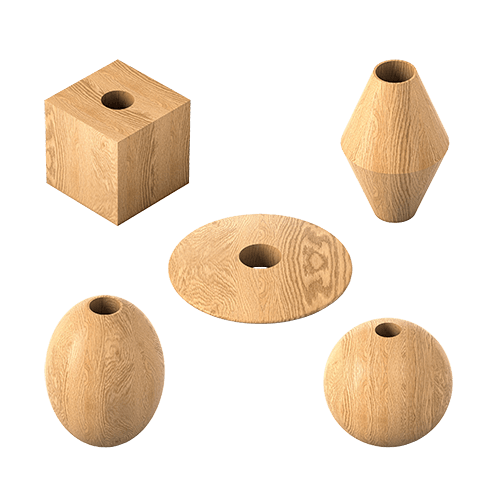
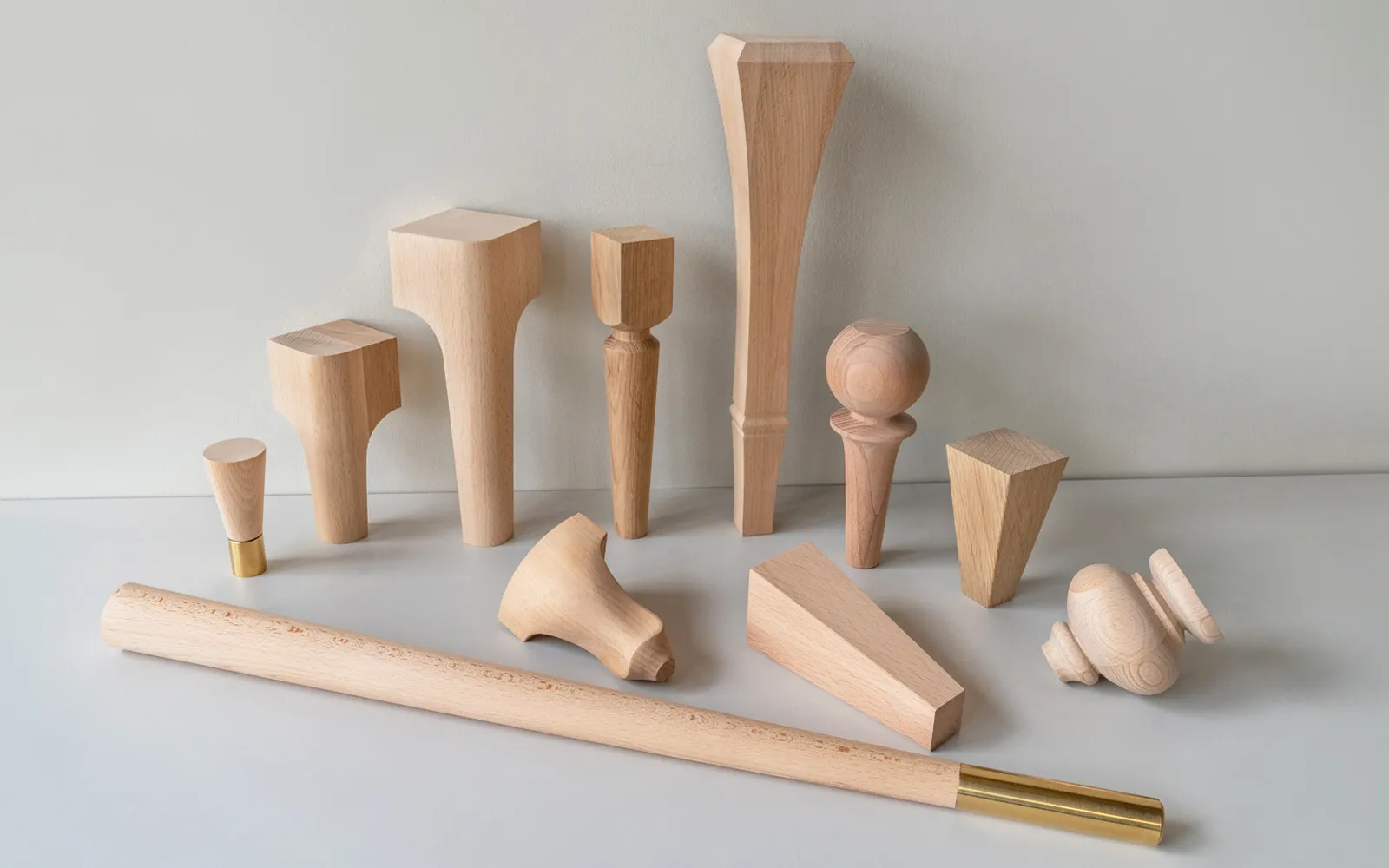
Furniture knob made of solid wood — it offers both tactile warmth and visual naturalness. A wooden surface under your fingers feels completely different from a metal knob. This works especially well when the knob is made from the same wood species or color scheme as the dresser body.
Important technical point: cabinet knob is attached with a single bolt passing through the front. This is the simplest installation — one hole, one bolt, tighten from the inside. Replacing a knob with another knob takes just a few minutes.
Knob height above the front: typically 15–25 mm. Diameter or width: 25–50 mm. For a narrow drawer — a knob with a diameter of 25–30 mm. For a medium one — 35–40 mm. For a decorative accent — up to 50 mm.
Get Consultation
Handle: a reliable grip for wide drawers
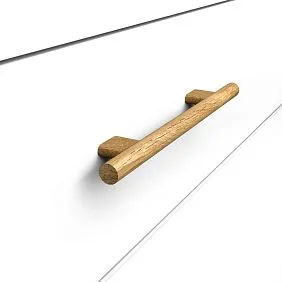
Bracket Handle — a classic of furniture fittings. Two mounts, a crossbar between them, the hand wraps around the crossbar — and the drawer pulls toward you. This is the most intuitive and powerful type of handle: the bracket is pulled with the whole hand, not just the fingers.
For wide and heavy dresser drawers furniture bracket handle — the best choice. The bottom drawer of the dresser, where heavy items, bed linens, thick sweaters are stored — here the bracket provides the right force without overloading a single finger.
Bracket handle for dresser made of wood — this is both practicality and decorativeness. The shape of the bracket can be straight (strict horizontal), curved (soft bend), with a square or round cross-section, with a chamfer or rounded ends.
The center distance of the bracket is a key parameter: the distance between the two mounting points. Standards: 32, 64, 96, 128, 160 mm. The most popular for dressers are 96 and 128 mm. It is important to consider this parameter when replacing old handles: if the new bracket has the same center distance, there is no need to drill new holes.
For a dresser with drawers of different heights, you can use brackets with the same center distance but different crossbar thicknesses — thinner brackets on narrow drawers, more massive ones on wide lower ones.
Shell handle: decorative horizontal
Shell Handle Shell HL-024 made of solid wood — this is a special type: not a bracket, not a knob, but something in between. A cup-shaped form with a recess for fingers, which is installed on the drawer front. The hand approaches from below, fingers enter the recess, the front is pulled toward you.
On the dresser handle sink It works architecturally: it emphasizes the horizontal line of the drawer, accentuates the center of each facade, and creates a special visual rhythm — as if each drawer has a small decorative recess inviting the hand.
The shell is especially convenient for dressers because the drawers open with a "down and toward you" motion — and the shell shape responds to this motion. Fingers naturally enter the recess from above and pull downward.
For a dresser in a classic style, in Provence, in neoclassicism, or in a historical interior — furniture shell handle is one of the most precise stylistic choices. It carries the historical memory of high-end furniture.
handles without coating made of solid wood — for self-finishing to the desired color or to match the dresser. Handles with Finish — bronze, brass, chrome, matte black — ready-made options for immediate installation.
Drop handle: decor with history
A drop handle is a special decorative form: a drop-shaped element suspended on an axis that tilts down when the drawer is opened. Or a fixed drop-shaped handle with a fixed form. In historical furniture craftsmanship, it is one of the oldest types of handles for chests of drawers and desks.
Drop handle for furniture — is a decorative tool. It is not just functional; it creates a visual accent on the facade. The drop shape — soft, organic, with a lower point and a rounded top — adds movement and a certain "liveliness" to the facade.
Furniture drop handle made of wood with a bronze finish is a classic choice for a chest of drawers in the Rococo, Baroque, or Classicism style. Dark bronze on dark wood, or a bronze drop on a light facade — in both cases, the detail reads as historically accurate.
Where a drop handle is especially appropriate:
-
On a classic chest of drawers with curved facades (bombe chest)
-
On desks and consoles with drawers
-
On dressing tables
-
On antique or antique-replicated chests of drawers
-
On facades with decorative carving or applied elements
Technically, a drop handle is attached at one point (axis + rosette). Size: the length of the drop element is usually 40–70 mm. For a small drawer — a smaller drop, for a central or accent drawer — a larger one.
Handles for a chest and nightstand: delicacy first
Nightstand: a special scenario
A nightstand is furniture that is contacted in the dark and half-asleep. The hand reaches for the drawer without turning on the light, from memory. And that is why handle for a nightstand it should first and foremost be tactilely comfortable: clearly palpable, provide a confident grip, and have no sharp edges.
Handle for a cabinet on a nightstand should not be too protruding — this risks catching a pajama sleeve or snagging when walking through a narrow passage by the bed. Optimal handle projection: 15–25 mm.
Best options for a nightstand:
-
Button Handle with a clear contour — easy to feel, compact, does not snag
-
Small Bracket Handle with a center distance of 64–96 mm — a comfortable grip even half asleep
-
Drop handle — for cabinets with a decorative character, in a classic interior
-
Shell Handle — for cabinets with character, when you want a detail with history
Hallway cabinet: between practicality and aesthetics
The hallway is an area where furniture works hard: the shoe cabinet opens several times a day, when entering from the street, often with a gloved hand or with full hands. A handle with a wide grip is needed here.
Handle for a cabinet in the hallway — a bracket or surface-mounted handle with sufficient projection is better. A knob is too compact for a 'hands full' situation. A profile or long bracket is optimal.
Stylistically, a hallway cabinet often serves as the first introduction to the interior. It is here that a handle with a brass or bronze finish sets the tone: 'it's warm and thoughtful here'.
Office cabinet: strictness without excess
Handle for an office cabinet — is first and foremost functionality and neutrality. An office cabinet is a working tool, not a decorative element. There is no room for drops and shells with bronze patina here.
Optimal choice for an office cabinet:
-
Simple bracket with matte chrome finish — neutral, strict, functional
-
Button in matte nickel or black — for a modern office interior
-
Minimalist surface-mounted handle — for a high-tech or minimalist office
If the office is decorated in warm natural materials — wood, leather, stone — a wooden handle without coating or with a dark walnut finish fits into such a context.
Handles for pull-out drawers: from small to wide
Small pull-out drawer: don't overdo the size
Small drawer — height up to 100 mm, width up to 300 mm — this is the zone for a compact handle. Handle for pull-out drawer should not overload the facade.
The best choice for a small drawer: a knob with a diameter of 25–35 mm, a short pull with a center-to-center distance of 32–64 mm, or a small drop handle. These options are proportional to the small front and provide enough grip for easy opening.
A common mistake: installing a long pull with a center-to-center distance of 128 mm on a small drawer. The pull takes up almost the entire front, looks cluttered, and adds neither comfort nor beauty.
Wide pull-out drawer: grip is the main criterion
A wide drawer — height from 150 mm, width from 500 mm, often heavy when filled. Here handle for a furniture drawer must provide a secure grip.
Optimal options:
-
Bracket Handle with a center-to-center distance of 96–128 mm — a classic for wide drawers
-
Shell Handle 90–120 mm wide — a decorative option with a wide recess
-
Two knobs symmetrically — a decorative solution for an accent front
Metal drawer pull in a modern interior: matte black or chrome. In a classic interior: bronze or brass. In a Scandinavian interior: neutral metal or wood.
Drawers in solid wood: a wooden handle as part of the material
For solid wood furniture — a chest of drawers, a nightstand, a bureau — a wooden handle made from the same material or a similar species creates a unity that no metal can replicate. Wood to wood is a tactile and visual integrity.
handles without coating from solid wood allow finishing the handle exactly the same as the body: with the same oil, the same wax, the same stain. The handle literally "grows" out of the surface — and it is this feeling of material unity that is most valuable in solid wood furniture.
Drop handle: history, form, and character
Where the drop handle came from
In European furniture of the 17th–18th centuries, drop handles were ubiquitous. They were placed on chests of drawers, bureaus, secretaries, and consoles. A brass or bronze drop on a rosette, cast in a decorative form, was the standard hardware for middle and upper-class furniture.
Today, the drop handle is experiencing a renaissance. Designers are bringing it back into interiors of neoclassicism, Provence, colonial style, and art deco. And this is no coincidence: in an era of minimalist profile handles and handleless kitchens, the drop handle is a deliberate decorative stance, a statement in favor of history and detail.
Wooden drop handle
Furniture drop handle from solid wood is a modern interpretation of a classic form. The wooden drop lacks metallic shine but gains warmth and naturalness that metal cannot provide.
On a light chest of drawers — a dark wooden drop. On a dark one — a light one or with a gold finish. Wooden Drop handle for furniture with a bronze finish — it's two materials in one item: the tactile warmth of wood and the visual historical metal.
Drop size for a dresser: length 50–65 mm, width at the widest point 25–35 mm. For a small nightstand: drop 40–50 mm. For an accent facade: drop 60–80 mm.
Colors and finishes of dresser handles: when metal speaks for the entire interior
Bronze: warmth and history in one finish
A bronze handle on a dresser is a case where one color carries everything: style, mood, and temporal belonging. Bronze — a warm brown-gold metal with soft tonal transitions — perfectly matches wood of any species.
Handles with Finish bronze-finished solid wood: the wooden base provides the warmth of touch, the bronze finish provides visual depth. On a classic dark oak dresser, on a cherry nightstand, on a walnut bureau — bronze looks impeccable.
Bronze Drop handle for furniture — is one of the most frequently requested options, and it's understandable: bronze and the drop shape have coexisted for centuries.
Brass: jewelry precision
Brass is lighter than bronze, closer to yellow gold. On white and light facades — a brass handle as a precise warm accent. On cream and beige — a natural harmony of warm tones.
For a neoclassical dresser, an Art Deco nightstand, or a console in a modern classic interior, brass sets the tone. This finish speaks of taste without unnecessary words.
Chrome: modernity without apology
A chrome handle on a dresser is for a modern interior. Cold silver metal on white, gray, graphite facades. Chrome is neutral, versatile, and resistant to everyday use.
On a Scandinavian dresser, a minimalist nightstand, or an office cabinet, chrome is appropriate. On a classic carved dresser, it is not.
Matte black: contrast as a technique
Black handles on a light dresser are a graphic technique. A dark accent on a white or light gray surface. The contrast is clearly readable from any distance.
For Scandinavian, loft interiors, for modern bedrooms with white furniture, black Furniture knob handle or a black bracket is one of the strongest decorative moves. Simple. Clear. Effective.
Gold: furniture as an object of attention
Matte or polished gold on a dresser is a statement. A dresser with gold handles ceases to be a background item and becomes an accent point of the interior.
On the dark blue, emerald, deep gray facade of the dresser, the gold handles work like real jewelry. For a bedroom with rich textiles, for a living room in a neoclassical style — this is a level that is remembered.
How to choose the right size: proportion decides everything
The proportion of the handle to the facade is the main visual law. Breaking it means ruining a dresser of any quality.
| Type of furniture and drawer | Optimal handle type | Recommended size |
|---|---|---|
| Small drawer (up to 100×300 mm) | Button, drop, short bracket | Button 25–35 mm, bracket center distance 32–64 mm |
| Medium drawer (120–180×400 mm) | Button, bracket, shell | Button 35–45 mm, bracket center distance 64–96 mm |
| Wide bottom drawer (from 500 mm) | bracket, shell, or two buttons | Bracket center distance 96–128 mm, shell 90–120 mm |
| Bedside table | Button, small bracket, drop | Button 30–40 mm, bracket center distance 64 mm |
| Dresser for bedroom (5–8 drawers) | Shellbracket, button, drop | Unify to the width of the boxes |
| Office cabinet | Simple bracket, button | Bracket center distance 96 mm, button 35–40 mm |
| Classic dresser with decor | Drop, shell, bracket with coating | Proportional to the facade, bronze/brass |
| Modern cabinet | Bracket, profile, surface-mounted | Center distance 96–128 mm, minimalist profile |
Center distance: a parameter you can't ignore
for handle-eyes Center distance is the distance between the centers of two mounting holes. It is a standardized parameter: 32, 64, 96, 128, 160, 192, 224 mm.
When replacing old handles with new ones: first measure the center distance on the already drilled holes. If the new handle matches this parameter — installation without rework. If not — you'll have to drill new holes and close the old ones with wooden plugs or decorative overlays.
Tip: when buying handles for an entire dresser at once, order a small quantity as a spare. Always test the holes on a sample before drilling the entire dresser.
Furniture style and handles: how not to miss
Dresser in the bedroom: consistency with the overall look
The bedroom is the most personal space. The dresser in the bedroom stands against the wall where the day begins and ends. Handles here should work in unison with the bed, nightstands, mirror, and lights.
If the bedroom is in a classic style: handles for dresser with a bronze, brass, or gold finish — shells, drops, small brackets with decor.
If the bedroom is in Scandinavian style: unfinished wooden knobs or simple matte metal brackets.
If the bedroom is in modern minimalist style: brackets or a profile in matte black or chrome.
Principle: the finish of the dresser handles should match the metal elements of the bedroom — the bed frame, lamp legs, mirror frames.
Old dresser: how to change handles and transform furniture
Often asked: how to put new handles on an old dresser without major repairs? This is one of the simplest ways to transform furniture.
If the old dresser is in good condition but has outdated hardware — replacing the handles with Furniture Handles wood with bronze or gold finish changes the entire perception of the piece. A Soviet-era dresser with new bronze shells is no longer "old furniture," it's "vintage."
Technically: if the old handles were on bolts — remove them, measure the center-to-center distance (for brackets) or the hole diameter (for knobs). Select new handles with the same parameters. Install. If the old holes don't match — fill them with wooden plugs of the same color, drill new ones.
Mistakes when choosing handles for a dresser and nightstand
Putting a small knob on a heavy wide drawer
A 30 mm diameter button on the wide bottom drawer of a linen chest is a functional mistake. One small point does not provide enough force: either the drawer opens with difficulty, or you have to pull with your fingertips, which is uncomfortable. For heavy wide drawers, use a handle or a pull with a wide grip.
Choosing a handle that is too large for a small nightstand
A handle with a 128 mm center-to-center distance on a 350 mm wide nightstand is 37% of the facade width. The handle takes up too much space and looks like a bulky detail on a small piece. Maintain the proportion: the handle should be no more than 25–30% of the facade width.
Ignoring the center-to-center distance when replacing
The most common practical mistake: buying a handle without checking the center-to-center distance and finding that it does not fit the already drilled holes. Always measure the parameters of the existing holes first.
Mixing several finishes without a design logic
Bronze handles on the three top drawers, chrome on the two bottom ones — this is not contrast or design. It is simply inconsistency. All handles on one piece of furniture should have a uniform finish. If you want to play with metals, do it across different pieces, not on one dresser.
Not considering the style of furniture
Furniture drop handle in bronze is a beautiful detail. But on a white modern dresser with flat fronts, it will look like a mistake. Always base your choice on the furniture style: a decorative handle requires a decorative front. A strict front requires a strict handle.
Choosing handles only from a photo on the internet
A photo is a flat image. It does not convey the actual color of the coating, the texture of the wood, the feel of the grip, or the weight of the handle in your hand. If possible, evaluate samples in person or order one sample for testing before placing a full order for the entire dresser.
Buying handles for a dresser on stavros.ru
On stavros.ru in the section furniture handles all listed types of handles made from solid natural wood are presented.
handle-buttons — compact, minimalist, with a single attachment point. For small facades, nightstands, buffet sections, classic furniture.
handle-eyes — with different center-to-center distances, for wide and heavy drawers. The most versatile option for a dresser.
Shell handle Shell HL-024 — cup-shaped form with a recess for fingers. For dressers in classic, Provence, neoclassical styles.
handles without coating — for projects with self-finishing.
Handles with Finish — ready-to-install options in several finishes: bronze, brass, chrome, gold, matte black.
Contact us to confirm shipping to your destination. Possibility to order a set for the entire dresser.
FAQ: answers to popular questions about handles for dressers and nightstands
Which handles are best for a dresser?
For a dresser, well-suited are handle-eyes, shell handles, buttons, drops, and half-rings. The choice depends on the width of the drawers, the style of the furniture, and the weight of the drawer contents. For wide, heavy drawers — a bracket or shell. For small top drawers — a knob or drop.
What to choose for a small nightstand?
For a small bedside table, the best choice would be a compact Button Handle with a diameter of 30–40 mm, a small bracket with a 64 mm center-to-center distance, or a wooden drop. The main thing is neatness, no sharp edges, and sufficient grip for opening in the dark.
Which handle is more convenient for a wide drawer?
For a wide pull-out drawer, a more convenient handle is Bracket Handle with a center distance of 96–128 mm or Shell Handle width 90–120 mm. They provide a wide grip and allow you to pull a heavy drawer with your whole hand without overloading your fingers.
Is a drop handle suitable for modern furniture?
The drop handle is a decorative shape with historical roots, so it fits best in classic, Provence, neoclassical, and solid wood furniture with decor. For strict minimalism or modern high-tech, it's better to choose a profile, surface-mounted handle or a bracket with a minimalist profile.
Can old handles on a chest of drawers be replaced without drilling new holes?
Yes — if the new handle matches the center distance (for brackets) or the hole diameter (for knobs). Before purchasing, be sure to measure the existing holes. If the parameters do not match, you need to fill the old holes with wooden plugs and drill new ones.
What finish should be chosen for handles on a classic chest of drawers?
For a classic chest of drawers, the best finish is bronze or brass. They are warm, natural in color, and historically accurate for classic furniture. Handles with Finish Bronze-finished wood array is the optimal choice for tactile quality, visual depth, and stylistic accuracy.
How many handles does a dresser need?
One handle per drawer. For a standard five-drawer dresser, five handles. For the lower wide drawer, you can install two handles symmetrically if one looks disproportionate. Important: all handles must be from the same collection with the same finish.