Article Contents:
- What is a polyurethane diamond-shaped overlay: shape, material, character
- Where to use diamond-shaped overlays: five interior contexts
- On Furniture Facades
- On interior doors
- On wall panels
- In Art Deco interiors
- In neoclassicism
- How a diamond-shaped overlay differs from other shapes
- How to choose the size of a diamond-shaped overlay: ten parameters
- Facade width
- Door or panel height
- Diagonal ratio
- Need one overlay or several
- Will there be a molding frame
- Distance to handles and fittings
- Relief thickness
- Central axis
- Future painting
- Interior style
- How to combine diamond-shaped overlays with moldings: the 'frame + diamond' system
- The molding sets the frame — the diamond sets the center
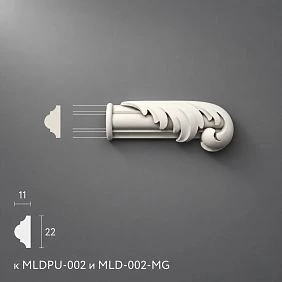
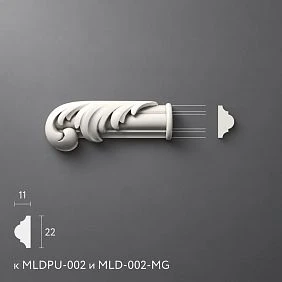
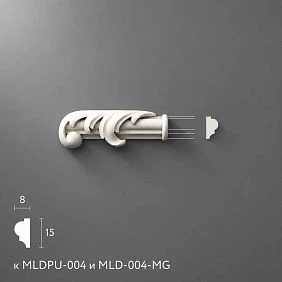
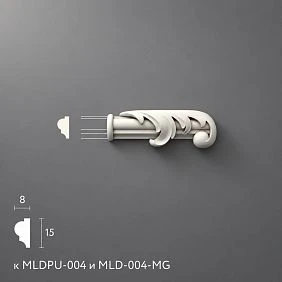
- Corner Elements and Decor for Moldings
- Several diamonds instead of a molding frame
- Scale of molding and diamond
- Diamond rhythm instead of linear decor
- Installation of polyurethane diamond overlays: precision in every step
- Preparation: dry layout
- Marking: two axes and four points
- Surface Preparation
- Applying adhesive and installation
- Sealing and painting
- How to assemble a purchase kit: a systematic algorithm
- Mistakes when choosing diamond-shaped decor: what actually goes wrong
- FAQ: everything about diamond-shaped overlays
- STAVROS: geometry that becomes character
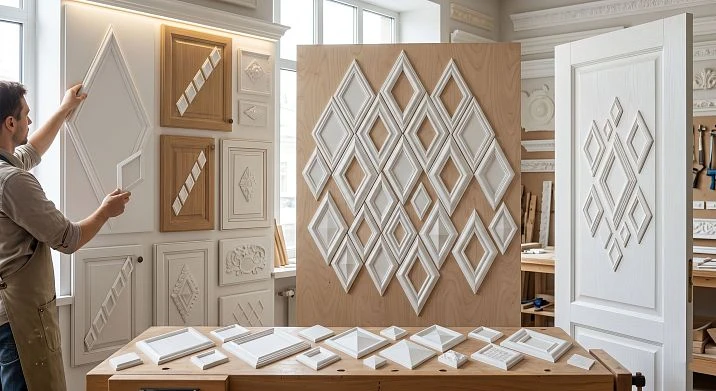
Geometry is the language of people who don't want extra words. When floral ornament seems excessive, a cartouche too classic, and a smooth facade too empty, the diamond comes. Four equal sides, sharp angles, absolute symmetry — this is a form that needs no explanation. It immediately says: they thought about proportions here.
Diamond-shaped polyurethane overlays — these are decorative stucco elements of geometric shape used on furniture facades, interior doors, wall panels, and within moldings. They are chosen when a strict, modern, symmetrical accent is needed without overloaded floral decor. The diamond is equally organic in neoclassicism, art deco, modern classic, and minimalist interiors with classic touches.
In the PU overlays STAVROS are presented diamond-shaped overlays — in several sizes and relief options: from flat geometric elements to three-dimensional relief overlays with profiled edges. Among all forms of polyurethane overlays the rhombus occupies a special place: it is the only shape that is both geometrically strict and visually dynamic — due to its diagonal axes of symmetry.

What is a rhombus-shaped polyurethane overlay: shape, material, character
The rhombus in decorative application is not just a "rotated square." It is a shape with two axes of symmetry directed diagonally. This creates a special visual effect: on a facade plane, the rhombus always reads as a "point of tension" — it attracts the eye with sharp angles and holds it in the center.
A polyurethane rhombus-shaped overlay is a cast element made of interior polyurethane with a density of 350–400 kg/m³. The surface is white matte, factory-primed. The relief ranges from a flat geometric figure with clear edges to a complex profiled element with multi-level relief (stepped profile, perimeter chamfer, central recess or protrusion).
Technical specifications:
-
Shape: rhombus (diagonal ratio varies from 1:1.2 to 1:2 depending on the model)
-
Relief thickness: 10–40 mm
-
Diagonal: from 80 to 350 mm
-
Weight: 0.1–0.5 kg
-
Surface: white matte, ready for painting
-
Installation: special polyurethane adhesive + concealed fastening if necessary
Key property of the diamond-shaped overlay: it simultaneously serves as a central accent and a structural organizer. Even without moldings, the diamond on the facade creates the feeling that the surface is organized — it has a center, axes, and intention.
molded decoration made of polyurethane in the shape of a diamond — part of a system where all elements are coordinated in scale and style. Adjacent overlays, moldings, and corner elements from the same STAVROS catalog are selected so that the diamond does not "hang" in isolation but is part of a well-thought-out interior composition.




Where to use diamond-shaped overlays: five interior contexts
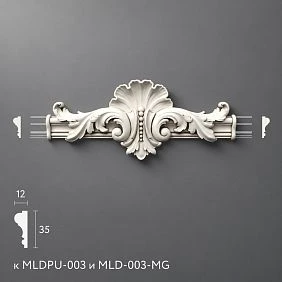
Our factory also produces:
On furniture facades
A furniture facade is a rectangular plane. It has two axes of symmetry: vertical and horizontal. The diamond ideally "lives" at the intersection of these axes — in the center of the facade. Where a cartouche with floral ornament would look "heavy" and a round overlay would look "soft," the diamond provides that very tension of form that constitutes decor.
Where exactly are diamond-shaped overlays used on furniture:
-
Center of the facade of a single-door cabinet or chest
-
Center of each door of a two-door cabinet (symmetrical pair)
-
Center of the upper facade of a kitchen cabinet above the work area
-
The center of the dresser drawer as a point accent
-
A repeating rhythm of several diamonds of the same size — along the vertical axis of a tall sideboard facade
Scale is important for furniture: a diamond with a diagonal of 120–180 mm — for facades 400–600 mm wide. With a diagonal of 180–250 mm — for facades 600–900 mm wide. Large diamonds (250–350 mm) — for wide multi-door sections and wall panels.
Decorative polyurethane overlays for furniture and doors — a theme exploring the application of all shapes, including diamonds, in the context of furniture renovation. The diamond-shaped overlay is especially interesting for enamel furniture: a white diamond on a white facade — only relief, only shadow; a white diamond on an anthracite or dark blue facade — a contrasting geometric impact.
Get Consultation
On interior doors
A door is a vertical rectangle that has one axis of symmetry (vertical) and no "natural center" on the horizontal axis — because a door is perceived from bottom to top, not like a painting. A diamond on a door is well placed in one of three positions:
In the middle third of the panel — at the eye level of a standing person (900–1100 mm from the floor). This is the "working zone" of the door's visual perception.
In the upper part of the panel — the "crown" of the door, at a distance of 150–200 mm from the top edge. Works especially well in combination with a frame made of of polyurethane moldings in the upper part of the door.
Twice — along the vertical axis — an upper diamond + a lower diamond, symmetrical about the horizontal axis. A strict paired composition for tall doors (2200 mm and more).
For interior doors: the gap from the edge of the diamond to the door handle axis — at least 80 mm. The relief thickness — no more than 20–25 mm, to avoid conflict with the trim.
On wall panels
A decorative wall panel with a molding frame is a "picture" on the wall with a clear center. The diamond in this center is a self-sufficient geometric accent that does not require additional ornamentation. It is the ornament itself.
Diamond application schemes on wall panels:
A single large diamond in a tall vertical frame — for piers between windows in a classic interior. The frame molding creates a contour, the diamond fills the center.
A repeating rhythm of identical diamonds — along a horizontal wall line or vertically on a tall pier. The diamond at equal intervals creates a rhythmic belt — a geometric analogue of a denticular frieze in architecture.
Four diamonds at the corners of the frame — instead of classic corner rosettes. Geometric corner accents combined with a clean molding frame — a strict neoclassical scheme.
Polyurethane wall decor STAVROS includes both molding for frames and point decorative elements — adjacent elements should be selected from this same system when creating wall panels with diamond decor.
In Art Deco interiors
Art Deco is a style where the diamond feels at home. Geometry, symmetry, repetition, contrast — all of this is the DNA of Art Deco. The diamond-shaped polyurethane overlay in an Art Deco interior is used not as a random accent, but as a module: the same diamond is repeated on different surfaces — on doors, on furniture, on walls — creating a cross-cutting geometric motif.
Color solutions for Art Deco with diamond overlays:
-
Black facade + gold or white diamond
-
White facade + black outline diamond
-
Dark green (or dark blue) facade + bronze or ivory diamond
-
Gray facade + white diamond + thin white molding
In Art Deco, symmetry is law. Any deviation from the axis is read as a mistake. Therefore, marking the center before installation is not an option, but a mandatory step.
In neoclassicism
In a neoclassical interior, a diamond-shaped overlay is a 'third way' between smoothness and ornamental richness. Too floral? Remove the garland. Too empty? Don't touch the wall. The diamond is exactly the volume of decor needed when you want a classic character without Baroque overload.
In neoclassicism, diamond decor works delicately: a small diamond with moderate relief (15–20 mm), in the color of the wall or furniture — barely noticeable but form-building. Such an element creates an 'expensive' feeling for people who understand what they are seeing.
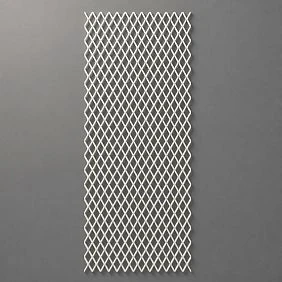
Decorative polyurethane grilles for furniture and doors — a related topic, revealing another geometric tool for the same spaces. In neoclassicism, the grille and diamond can be combined: the diamond as a central accent, the grille as a larger field nearby (but not on the same facade — too much geometry).
How the diamond-shaped overlay differs from other forms
| Element | When to choose | Character |
|---|---|---|
| Rhomboid overlay | Need a strict geometric accent | Dynamic, precise, modern |
| Cartouche | Need a classic ornamental center | Ceremonial, ornamental |
| Garland | Need a floral decorative motif | Soft, floral, baroque |
| Lattice | Need a large openwork insert | Large, openwork |
| Corner overlay | Need to design the corners of the frame | Structural, finishing |
| Molding | Need to build a line or frame | Linear, constructive |
| Square overlay | Need a neutral geometric center | Calm, static |
| Round overlay | Need a soft central accent | Neutral, balancing |
A rhombus fundamentally differs from a square and a circle precisely in its dynamics. A square is static — it "stands." A circle is neutral — it "exists." A rhombus "moves": sharp angles create vectors that the eye involuntarily follows. This makes the rhombus the most "active" central element among all geometric shapes.
A rhombus and a cartouche are opposites within the same task (to give a center to the frame). A cartouche is a story told by ornament. A rhombus is a statement expressed by form. The choice between them determines the stylistic intonation of the entire interior.
How to choose the size of a rhombus overlay: ten parameters
Facade width
A rhombus is a shape whose working size is determined by its diagonal. The horizontal diagonal of the rhombus (transverse) should be 25–40% of the facade width. For a 400 mm facade — rhombus diagonal 100–160 mm. For a 600 mm facade — 150–240 mm. For a 900 mm facade — 225–360 mm.
A rhombus that is too small on a wide facade gets lost. One that is too large on a narrow one feels oppressive. Verification principle: there should be at least 60–80 mm of space on each side between the acute angles of the rhombus and the edges of the facade.
Door or panel height
The vertical diagonal of the rhombus is the working size in height. It should be 15–25% of the field height. For a door 2000 mm high with a frame leaving a field of 1400 mm — a rhombus with a vertical diagonal of 210–350 mm. This corresponds to medium and large models of rhombus overlays.
Diagonal ratio
A rhombus with equal diagonals (a square rotated 45°) is the strictest and most neutral. A rhombus with a vertical diagonal exceeding the horizontal by 1.5–2 times is more "elongated," dynamic, and suitable for narrow vertical facades. A rhombus with a horizontal diagonal exceeding the vertical is "flattened," less common, and used in horizontal decorative bands.
Need one overlay or several
One diamond — a central accent. This is a self-sufficient solution for a single-door facade, interior door, or square wall panel.
Two diamonds — a vertical pair on a tall buffet facade or door 2200+ mm. Placement: the top diamond in the upper third, the bottom in the lower third, with a gap of at least 200–300 mm between them.
Three diamonds horizontally — a rhythmic belt on a long horizontal panel or frieze. The spacing between centers is equal.
Four diamonds at the corners of a frame — instead of corner rosettes. A strict geometric scheme for Art Deco and modern classics.
Will there be a frame of moldings
Diamond without a frame: self-sufficient on a clean field. Requires precise size — it sets all proportions itself.
Diamond in a frame of molding: the frame provides context. A diamond in the center of the frame is a "picture with a story." The frame and diamond are selected together, from the same series.
Rule: there must be at least 40–60 mm between the acute angle of the diamond and the inner edge of the molding. If the gap is smaller, the diamond "presses" on the frame. If larger than 120 mm, the connection between them is lost.
Distance to handles and hardware
The rhombus is positioned considering the location of the door handle, hinges, and furniture fittings. The gap from the acute angle of the rhombus to the handle axis is at least 60–80 mm. When installing the rhombus on a dresser drawer: the gap to the handle is at least 50 mm.
Hinges: the rhombus must not overlap the hinge — this is a kinematic element requiring free access during maintenance.
Relief thickness
For furniture: 15–30 mm is the working range. A thinner relief (10–15 mm) is delicate, "integrated" decor. A more voluminous one (25–40 mm) provides expressive shadow, rich relief.
For doors: no more than 20–25 mm — otherwise the relief protrudes into the casing area when closing.
For wall panels: 20–40 mm is optimal. A deeper relief creates more expressive play of light.
Central axis
The rhombus is critical to centering. For a square and circle, slight misalignment relative to the axis is perceived less acutely. For a rhombus, its acute angles make misalignment instantly noticeable. Mandatory: vertical axis with a pencil along the center of the facade + horizontal axis + checking with a tape measure from both sides.
Future painting
White rhombus in a white interior: works only with relief. The relief thickness must be at least 20 mm — otherwise the play of shadow is too weak.
White rhombus on a colored facade: maximum contrast of shape. Even a small rhombus (150 mm) on a dark facade is a powerful accent.
Rhombus in the color of the facade: "built-in" decor. The relief is soft, readable only up close. Good for neoclassicism, where decor is not displayed but guessed.
Rhombus with patina or gilding: a baroque accent. Used selectively, in a clearly defined stylistic context.
Interior style
Art Deco: strict geometric rhombus with clear edges, contrasting coloring, precise symmetry.
Neoclassicism: rhombus with moderate relief, in the color of the wall or furniture, combined with a thin molding.
Modern classic: a single rhombus as the only decor on a clean facade. Minimalism through form.
Classic: rhombus with profiled edges, stepped relief, possible gilding on the edges.
How to combine diamond-shaped overlays with moldings: the «frame + rhombus» system
The molding sets the frame — the rhombus sets the center
This is the basic scheme. Moldings made of polyurethane form a rectangular frame on the facade or wall. The rhombus in the center of this frame is a geometric answer to the rectangular question of the frame. The diagonals of the rhombus are perpendicular to the sides of the frame — this creates a visual «rotation» within the rectangular field.
Molding width for a frame under a diamond-shaped overlay: 30–60 mm for small rhombuses, 50–80 mm for large ones.
Corner elements and molding decoration
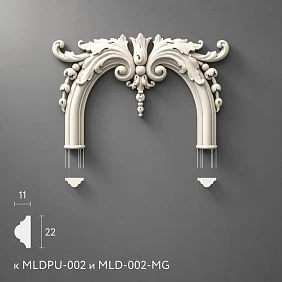
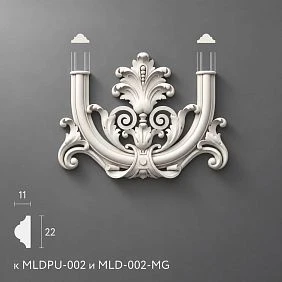
At the intersection points of the moldings in the corners of the frame, install Decor for Molding — corner locking elements. In the case of a diamond-shaped central accent, the corner elements should be geometric, not floral: square inserts or corner intersections with a profile, rather than rosettes with a flower.
This is fundamental: mixing a geometric diamond with floral corner elements is a stylistic mistake. Geometry requires geometry.
Several diamonds instead of a molding frame
A non-standard but very modern scheme: no moldings, only diamonds. Four diamonds of the same size — one in each conditional 'corner' of the field. The distance between the diamonds is the same. The fifth diamond is in the center. Result: a geometric 'constellation' scheme without a frame, clean, precise, modern.
Scale of molding and diamond
This is a critically important parameter that is often ignored. If a molding 25 mm high forms a frame around a diamond with a diagonal of 300 mm, the molding 'gets lost'. The frame must be proportionate to the content. Practical ratio: molding width — 15–25% of the smaller diagonal of the diamond.
Diamond rhythm instead of linear decor
Polyurethane trim — these are horizontal or vertical lines. In Art Deco, they can be replaced by a rhythm of diamonds with equal spacing. A diamond every 200 mm along a horizontal wall belt is a geometric 'linear element', more lively and original than a straight profile strip.
Installation of polyurethane diamond-shaped overlays: precision at every step
Preparation: dry layout
Before installation — mandatory dry layout. Cut a rhombus of the required size from cardboard. Secure with masking tape on the facade or wall. Look from a distance of 2–3 meters. Evaluate the proportions. Adjust the position.
This takes 15 minutes and saves 3 hours of rework.
Marking: two axes and four points
Center of the facade: find the vertical axis with a pencil (half the width). Find the horizontal axis (half the height if the rhombus is placed in the center, or the calculated height if in the upper third). The intersection of these axes is the center of the rhombus.
Four points of acute angles: measure from the center a distance equal to half of each diagonal. Check with a tape measure the symmetry from the acute angles to the edges of the facade — on each side.
If installing a pair of rhombuses: additional vertical — the axis between them — strictly in the middle of the facade.
Surface preparation
Degrease, if necessary — matte (P180–220). For painted surfaces — especially important: oil or alkyd-based paint provides poor adhesion to acrylic glue.
Applying Adhesive and Installation
Glue for polyurethane decorative elements — zigzag along the contour of the back surface of the rhombus. For rhombuses with a diagonal of more than 200 mm — additional glue points on the inner field.
Apply to the surface, align the center of the rhombus with the intersection point of the marking axes. Press, secure with masking tape. Setting time — 30–60 minutes.
For rhombuses with thick relief (more than 25 mm) on vertical surfaces: an additional thin screw through the lower (hidden) corner into the surface. Putty the head.
Sealing and painting
Gaps around the perimeter of the rhombus — acrylic sealant, smooth with a wet finger. After drying (4–6 hours) — sand with P240.
24 hours after installation — two coats of acrylic paint. A thin brush for profiled edges and relief recesses. It is in the recesses that the shadow forms — the living "framework" of the geometric shape.
How to assemble a kit for purchase: a systematic algorithm
Step 1. Determine the location: furniture, door, wall, or panel. Fix the style — Art Deco, Neoclassicism, Modern Classic, Classic.
Step 2. Measure the facade or free field. Record the width and height.
Step 3. Calculate the diagonal of the rhombus: 25–40% of the field width along the horizontal diagonal.
Step 4. Decide whether one overlay or a rhythmic group is needed.
Step 5. Choose a frame: is a frame made of molding? If yes, select the molding of the appropriate width.
Step 6. Select corner elements: Decor for Molding in a geometric (not floral) style.
Step 7. Check the distance from the diamond to the handles and hinges.
Step 8. Decide on the color: matching the facade or contrasting.
Step 9. Make a paper template and dry layout.
Step 10. Order diamond-shaped overlays and all related elements in one batch — from one STAVROS series.
Mistakes when choosing diamond decor: what actually goes wrong
They buy without measuring the facade. There is no "average" diamond. Each facade has its own size. Without measuring the width and height of the field, the risk of error is 50%.
They don't consider handles and hinges. A diamond with a sharp angle 30 mm from the handle axis is not only unsightly but also inconvenient to use.
Small diamond on a large door. A diamond with a diagonal of 80 mm on a 2000 mm door — a pin on a curtain. The minimum for a standard door is a diagonal of 150–200 mm.
Large diamond on a narrow facade. A diamond with a diagonal of 300 mm on a 350 mm facade — no gaps, no air. Violation of proportion kills the effect.
No central axis. A diamond shifted by 10–15 mm from the axis is immediately noticeable. Sharp corners are indicators of deviation: they "look" away from the correct center.
Frame not thought out. A diamond without the context of a molding frame on a large surface is "lost" in space. The frame organizes the space around it.
Floral corner elements with a geometric diamond. A stylistic conflict that cannot be corrected by painting.
Paint before fitting. A painted diamond that had to be trimmed or moved as a result — rework with loss of quality.
Too thick relief for a door. A 35 mm diamond on a door opening into a narrow corridor — constant collision with the casing.
Different series of molding and overlay. Different proportions of relief — and the system falls apart.
FAQ: everything about diamond-shaped overlays
What is a polyurethane diamond-shaped overlay?
This is a decorative stucco element made of cast polyurethane in the shape of a diamond — a geometric accent for furniture, doors, wall panels, and molding frames. It adds a strict, symmetrical, modern accent without floral decor.
Where are diamond-shaped overlays used?
On cabinet fronts, dressers, sideboards, kitchen cabinets, interior doors, centers of wall panels with molding frames, in decorative belts, and rhythmic geometric compositions.
Are diamond-shaped overlays suitable for furniture?
Yes. They are mounted on MDF, painted chipboard, plywood. They work well under enamel: a white diamond on a white facade — only relief and shadow; contrasting paint — a bright geometric accent.
Can a diamond overlay be glued to a door?
Yes. The relief thickness is no more than 20–25 mm. The gap from the sharp corners of the diamond to the handle axis is at least 80 mm. Assembly glue + hidden fastening if necessary.
How to choose the size of a decorative diamond?
The horizontal diagonal is 25–40% of the facade width. The gap from the sharp corners to the edges of the field or molding is at least 60–80 mm.
Can polyurethane overlays be painted?
Absolutely. Factory primer — ready for painting with acrylic paint in any color. Two coats, a thin brush for profiled edges.
How to combine diamond-shaped overlays with moldings?
The molding forms a rectangular frame — the diamond is placed in its center. Molding width: 15–25% of the diamond's shorter diagonal. Corner elements of the frame are geometric, not floral.
How is a diamond different from a cartouche?
A cartouche is an ornamental motif with history. A diamond is a geometric statement without narrative. Cartouche is classicism and baroque. Diamond is neoclassicism, art deco, modern classic.
Is diamond-shaped decor suitable for art deco?
Yes — it is one of the 'native' forms for art deco. Strict geometry, symmetry, repetition, contrasting colors — the diamond fits perfectly into the style's aesthetic.
Where to buy polyurethane diamond-shaped overlays?
In the Stavros catalog — diamond-shaped overlays In the section PU overlays. Contact us to confirm shipping to your destination.
STAVROS: geometry that becomes character
A diamond is not just a shape. It is a statement that in this interior, structure was considered, not randomness. A decorator who places a diamond-shaped overlay on a cabinet door sets the tone for the entire room.
STAVROS manufactures Diamond-shaped polyurethane overlays in several sizes — from delicate accents to large central elements. The entire line PU overlays proportionally matched with moldings, decor for moldings и wall decor — so that your geometry works as a system, not as a single element.
STAVROS — stucco decor where the form is already the solution.