Article Contents:
- What is a carved table base
- How a carved table base differs from a regular one
- Which tables are suitable for a carved solid wood table base
- How to choose a carved table base to match the interior style
- Solid wood table base: why the material matters
- Solid wood table base in oak, birch, pine: what to consider
- How to match a carved table base to a tabletop
- Carved table base for a classic table
- Carved underframe for a premium wooden table
- Mistakes when choosing a carved underframe
- What to buy together with a carved underframe
- How not to confuse a carved underframe with similar products
- Where to buy a carved solid wood underframe
- FAQ
- How to choose a carved underframe?
- How is a carved underframe different from a regular one?
- Which underframe to choose for a classic table?
- What to buy for a premium wooden table?
- How to choose an underframe for a carved interior?
- Is a carved underframe suitable for a modern interior?
- Which underframe is suitable for a solid wood table?
- How is a solid wood underframe better than a regular one?
- Can I buy a carved underframe separately from the tabletop?
- What should I check before ordering a carved underframe?
- Where to buy a wooden underframe?
- Should a carved underframe be combined with other decor?
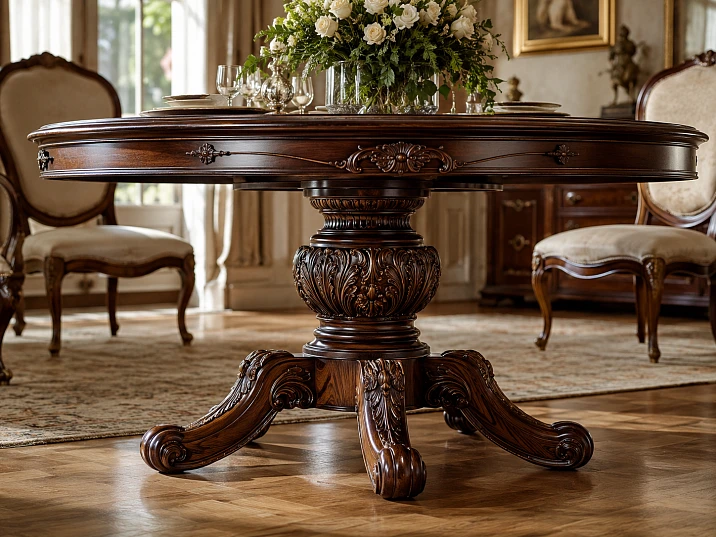
A carved solid wood underframe is not just the lower part of the table or an ordinary support chosen only by height. In a classic interior, it is the underframe that often sets the character of the entire furniture: it holds the tabletop, shapes the table's silhouette, supports the decorative line of the room, and shows how seriously the piece is thought out. If the tabletop looks expensive but the base is chosen randomly, the entire table loses its integrity. If the underframe matches in material, proportions, carving, and load, the furniture is perceived as a unified work.
A classic, premium, and interior table cannot be assembled on the principle of 'any leg will do.' Here, not only stability matters but also style: the shape of the support, depth of carved decor, massiveness, fit, combination with a wooden tabletop, and connection with other elements of the room. The carving should not argue with the interior but enhance it. It can be soft and calm, strict and symmetrical, expressive and prestigious, but in any case, it must work together with the tabletop.
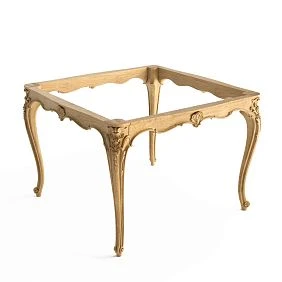
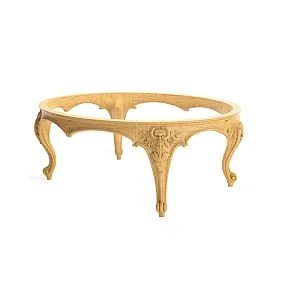
If the task is not just to fulfill a structural need but to assemble a table for a classic dining room, study, living room, restaurant, conference room, or private home, it is better to look in advance buy a carved solid wood table base and choose the base as a full-fledged part of the furniture composition. At STAVROS, carved table bases and furniture frames are logically viewed precisely as decorative and structural elements: they must support the tabletop and simultaneously maintain the interior style.
In this article, we will analyze how a carved table base differs from a regular one, which tables it suits, how to choose a solid wood table base, what to consider when matching it with a wooden tabletop, what mistakes most often ruin an expensive table, and how to move from an idea to a purchase without random selection.
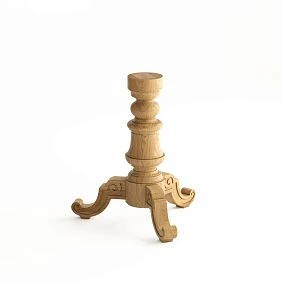
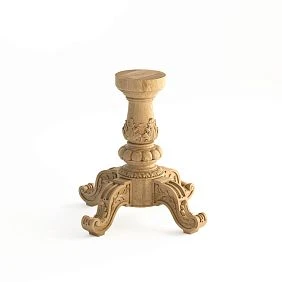
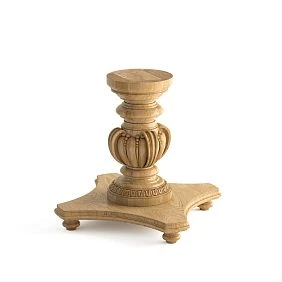
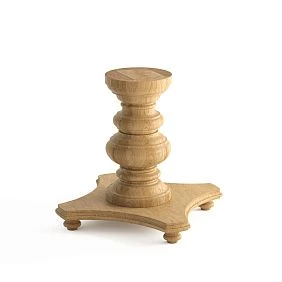
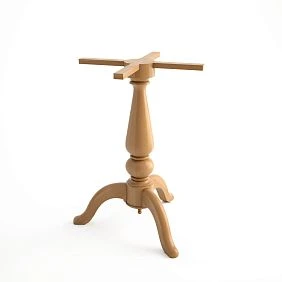
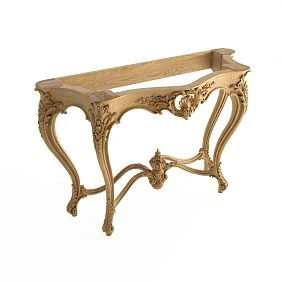
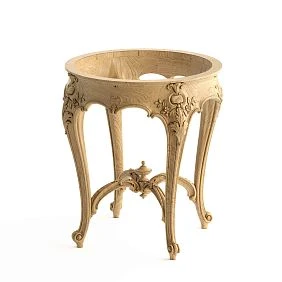
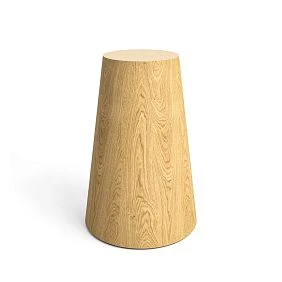
What is a carved table base
A table base is the supporting foundation of a table. It bears the weight of the tabletop, connects the upper part of the furniture to the floor, and affects height, stability, seating, and overall silhouette. In a simple version, the table base can be neutral: legs, a frame, a central support, or another structure that barely participates in the decorative image. A carved table base works differently. It does not hide but becomes a visible part of the furniture.
A carved table base for a table combines a structural task with a decorative one. It must be stable, proportional, compatible with the tabletop, but at the same time carries ornament, plasticity, volume, and style. That is why a carved table base is especially appropriate where the table plays a prominent role: in a dining area, study, formal living room, hall, restaurant, conference room, or designer interior.
The main difference from a regular support is visual presence. A simple base tries not to distract. A carved wooden table base, on the contrary, can become an accent. It emphasizes the naturalness of the furniture, adds depth, and connects the table with carved panels, cornices, columns, portals, furniture overlays, and other details. Therefore, when choosing, you need to think not only about dimensions but also about the style of the room.
if the interior already has Carved Decor, the table base becomes part of the common language. It should not look foreign: too fine carving will be lost next to large decor, too active carving will overload calm furniture, and an unsuitable pattern will conflict with facades, frames, and other wooden elements.
| Criterion | Regular table base | Carved table base | What This Means for the Buyer |
|---|---|---|---|
| Main task | Hold the tabletop and provide height | Hold the tabletop and serve as a decorative base | You need to choose not only by dimensions, but also by style |
| Visual effect | Neutral, calm, often inconspicuous | Accent, interior, status | The base affects the perception of the entire table |
| Material | Wood, metal, combined options | More often wood and solid wood, suitable for carving | You need to check the material of the specific model |
| Interior | Universal, modern, technical | Classic, neoclassic, premium, carved interior | It is important not to overload the room with decor |
| Choice | By size, height, stability | By size, height, stability, carving, and proportions | A style mistake is as noticeable as a size mistake |




How a carved underframe differs from a regular one
A regular underframe is often perceived as a functional part of the table. It must be sturdy, fit in height, not interfere with legs, and support the tabletop. In a modern interior, this is often enough: a neutral support, a laconic tabletop, a clean form. But for a classic or premium table, such an approach may look poor. There is a tabletop, there is size, there is function, but there is no character.
A carved wooden underframe adds expressiveness to the furniture. It helps make the table not just an item for eating, working, or negotiating, but the center of the area. In the dining room, it supports solemnity. In the study, it conveys solidity. In the living room, it provides a decorative connection with the rest of the furniture. In a restaurant or representative space, it gives a sense of a well-thought-out interior.
At the same time, carving should not become an end in itself. The buyer often looks at the ornament and forgets about the fit, height, weight of the tabletop, and stability. This is a mistake. A carved wooden underframe should be beautiful, but it remains the furniture base. If the decorative form interferes with the legs, if the base is too narrow, if the tabletop looks heavier than the bottom, the table will be uncomfortable even with beautiful carving.
Therefore, the right choice starts with balance. First, the purpose of the table is determined: dining, office, interior, restaurant, executive. Then the tabletop is examined: shape, thickness, weight, material, size. After that, the carving style and material of the underframe are evaluated. Only then does a carved underframe become part of the table, rather than a separate beautiful detail.
Our factory also produces:
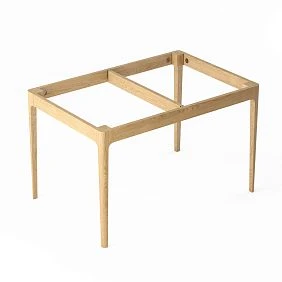
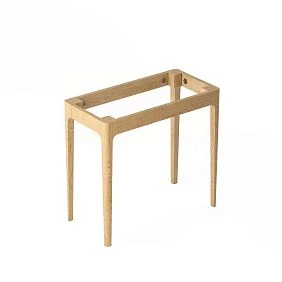
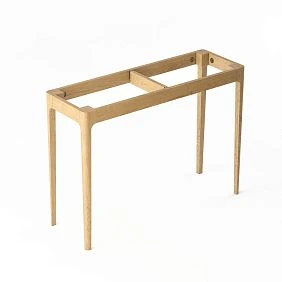

Which tables are suitable for a carved solid wood underframe
A carved solid wood underframe is best showcased where the table needs to look substantial. This could be a classic dining table, a large table in a private home's dining room, an office desk, an interior table in a living room, a conference table, a restaurant table, or a decorative table in an executive area. In all these scenarios, the base is visible and affects the impression no less than the tabletop.
For a classic dining table, a solid wood underframe helps create the feeling of real furniture, not a temporary assembly. The tabletop can be simple in shape, but the carved base will add depth to it. If the room has wooden chairs, a sideboard, a console, doors with architraves, wall panels, or carved elements, the underframe connects the table with the interior.
In an office, a carved wooden underframe works differently. Here, it's not so much about grandeur as about weightiness. The table should look confident, not accidental, not overly decorative. For an office, it's better to choose forms where the carving emphasizes the mass and proportions but does not turn the furniture into an overloaded ceremonial piece.
In a restaurant or reception hall, a carved underframe can be part of the atmosphere. It helps create an interior with character: not just tables and chairs, but furniture that supports the space's concept. However, for a commercial space, it's especially important not to forget about seating comfort, stability, and maintenance. A beautiful base that interferes with guests sitting will quickly become a problem.
| Scenario | Which underframe is appropriate | What to check | Commercial transition |
|---|---|---|---|
| Classic dining table | Symmetrical carved solid wood underframe with an expressive but not overloaded form | Height, stability, seating, compatibility with the tabletop | Carved apron |
| Office desk | A more austere wooden base with a sense of massiveness | Scale relative to the chair, tabletop, and other furniture | made in the same manner. For protection and maintenance, use natural oils and waxes. |
| Living room or dining room | Decorative underframe associated with carved decor and furniture | Combination with wood color, walls, cornices, facades | furniture carved decor |
| Restaurant or executive area | Stable base with a decorative character | Seating comfort, durability, behavior under daily load | carved furniture frames |
| Table with a wooden top | Solid wood base, matching in weight and style | Shape, attachment, finish, and visual balance | Buy wooden base |
Get Consultation
How to choose a carved base to match your interior style
A carved base cannot be chosen separately from the room. It may be beautiful on its own but not suit a particular interior. In classic style, symmetry, calm plasticity, and a connection with furniture and architectural details are important. In neoclassical style, the carving should be lighter and more restrained. In a premium interior, scale, material, finish, and precision of proportions are key. In a study, solidity and strictness are needed. In a restaurant, expressiveness and practicality are important.
A classic interior favors bases that look stable and solid. Here, you should not be afraid of decorativeness, but you need to ensure the carving does not conflict with the tabletop. If the tabletop is massive, the base must visually support it. If the top is light, a too-heavy base can make the table look squat.
Neoclassical style requires more caution. In such an interior, a carved base can be appropriate, but it is better to choose a calm ornament. Too active carving next to smooth facades, light walls, and minimalist furniture will look out of place. Here, soft decorativeness is more important than ostentatious luxury.
A premium interior is created not by the amount of carving, but by the quality of combinations. If there is an expensive tabletop, expressive chairs, wall panels, a fireplace portal, or wooden doors, the base must match them in level. It does not have to be the brightest item, but it must look convincing.
If carved decor is already used in the room, it is worth looking in advance not only at the base but also at neighboring STAVROS categories. For example, Carved Decor helps to understand how ornaments, scales, and wooden details can be combined in one interior.
Solid wood base: why the material matters
A solid wood base is perceived differently than a random lightweight support. Solid wood gives a feeling of solidity, naturalness, and furniture value. This is especially important for a carved base: wood allows working with volume, profile, plasticity, and decorative form. Carving on a wooden base looks natural because the material itself supports the idea of handmade and interior furniture.
A solid wood base pairs well with a wooden tabletop. If the top and bottom are made in a similar logic, the table looks cohesive. But this does not mean that any wooden base automatically suits any tabletop. You need to consider weight, thickness, shape, height, fit, and style. A massive base under a thin tabletop can look heavy, while a too-light base under a massive top can look weak.
The material also affects the finish. One base can be presented in natural wood, another for tinting, a third for enamel. But specific material and finish options should always be checked on the product card or clarified with a STAVROS manager. It cannot be assumed in advance that any model is available in all wood species and coating options.
If the task is broader than a carved base, you can additionally look at Solid Wood ItemsThis helps to select the table and adjacent elements in a unified logic: not only the base but also furniture details, decor, moldings, or other wooden products.
Solid wood base made of oak, birch, pine: what to consider
The wood species affects the perception of the product, but you cannot choose a base solely by the name of the species. Oak is often associated with durability, expressive texture, and status furniture. Birch is perceived as neater and calmer, well-suited for finishing. Pine gives a softer, warmer, and more affordable visual image. But in actual purchase, the specific model, its construction, processing, shape, and purpose matter.
A solid oak base can be appropriate for a solid dining table, study, private home, or classic dining room. It works well where solidity is needed. But it is important that the oak texture, color, and finish do not conflict with the tabletop and other furniture.
A solid birch base can be a good option for finishing, especially if the interior requires a calmer wood grain. But before ordering, you need to check whether the specific model is available in the desired material and what preparation option is provided.
A solid pine underframe can be appropriate in softer, country-style, cozy interiors. However, for a heavy tabletop, it is important to carefully evaluate not only the wood species but also the base structure. It is crucial that the underframe matches the load and purpose of the table.
| Material | How it is perceived | Where it can be appropriate | What to check before ordering |
|---|---|---|---|
| Oak solid wood | Solid, prestigious, expressive | Classic dining room, study, premium table | Availability of a specific model, finish, weight of the tabletop |
| Solid birch | Neat, calm, good for finishing | Neoclassicism, painted interiors, enamel furniture | Surface preparation and finishing options |
| Solid pine | Soft, warm, closer to a country-style interior | Dacha, private house, cozy dining room | Compatibility with table load and construction |
| Material not specified | Decision depends on the product card | When the buyer chooses a model by shape | Current parameters from STAVROS manager |
How to choose a carved underframe for a tabletop
Choosing an underframe for a tabletop is the most important step. Even a beautiful carved underframe may not fit if it does not match the shape, weight, or scale of the top part. First, determine the shape of the tabletop: round, rectangular, oval, or shaped. Then, the size, thickness, and weight. Next, the height of the future table and seating positions.
For a rectangular tabletop, it is important that the underframe does not look too narrow and does not get lost under the long top. For a round tabletop, central stability and balance around the circumference are especially important. For an oval one, a combination of longitudinal shape and comfortable seating. In each case, the underframe for a wooden tabletop should be perceived as part of the table, not as a random base.
The weight of the tabletop is a separate issue. A massive wooden tabletop requires a solid base. If the top is heavy, the underframe must withstand the load and visually match. If the tabletop is thin and light, an overly massive carved base may look excessively heavy. Balance is important both physically and visually.
You also need to think about seating. Decorative elements should not interfere with legs, chairs, or movement. This is especially important for a dining table. A beautiful base that is constantly bumped into quickly stops being pleasing. Therefore, before buying, you need to imagine how people will sit, where their knees will be, and how chairs will be pushed in.
If you need a wider selection of wooden bases, you can look at table bases. And if the task is purely decorative and classic, it's better to start with the section of carved furniture frames.
Carved underframe for a classic table
A classic table requires an expressive but proportional base. In classic design, a table is not just a surface to sit at. It is an object that participates in the room's architecture: it relates to doors, architraves, cornices, sideboards, chairs, lighting, and wall panels. Therefore, the underframe should support the overall structure of the interior.
Symmetry works well for a classic table. If the carving is too chaotic, the table may look decorative but not cohesive. If the underframe is too simple, the classic tabletop will lose its expressiveness. You need to find a middle ground: the base should be noticeable but not compete with the top.
Pay special attention to scale. In a spacious dining room, a small carved underframe will look weak. In a small room, a large, massive base can overwhelm the space. Therefore, you should choose not only based on the product photo but also considering the room where the table will be placed.
If the interior already has carved elements, the carved underframe should match them in character. Floral ornament, geometric carving, soft classic lines, strict forms—all of these create different moods. A mistake in style can be more noticeable than a mistake in shade.
Carved underframe for a premium wooden table
A premium wooden table is created not only by an expensive tabletop. Its level is felt in proportions, material, stability, detailing, finish, and the consistency of all parts. If the tabletop is expressive but the base is random, there will be no premium impression. If the underframe is beautiful but does not match in weight or height, the table will be uncomfortable.
A carved solid wood base helps make a table look prestigious, but only if chosen correctly. It should appear as part of the structure. The carving should not seem like an applied decoration added for effect. A good base supports the tabletop, matches its scale, and creates a cohesive silhouette.
For a private home, connection with the interior is important. The base should match the floor, doors, staircase, furniture, and wall elements. For a study, it should match the chair, cabinets, panels, and desk area. For a restaurant, it should align with the overall hall concept. For a meeting room, it should convey a sense of solidity and comfort.
Before purchasing a premium table, it is especially important not to rush. You need to check the size, material, purpose, finish, compatibility with the tabletop, and fit. If the parameters are not obvious, it is better to clarify them with a STAVROS manager before ordering.
Mistakes when choosing a carved table base
The first mistake is choosing solely based on the beauty of the carving. In photos, the buyer sees the pattern, shape, curves, and decorative details. But in a real room, the table must stand stably, be the right height, and not interfere with seating. Carving is important, but it does not replace the structure.
The second mistake is not considering the weight of the tabletop. A solid wood base may look substantial, but the specific design must still match the top part. The heavier the tabletop, the more carefully you need to examine the base, fastening, and support width.
The third mistake is choosing an overly decorative base for a restrained interior. Sometimes the buyer wants to add a "luxurious accent" but ends up with visual overload. If the room already has many details, active carving can make the interior feel heavy. In such cases, it is better to choose a more subdued form.
The fourth mistake is not checking the height and fit. A table can be beautiful but uncomfortable. If the base interferes with legroom, if chairs cannot be pushed in easily, or if the height does not match the tabletop, the furniture will be annoying every day.
The fifth mistake is mixing different carving styles. One element might be baroque, another strictly classical, and a third geometric. Individually, they all look nice, but together they create a mismatch. Therefore, the carved base should be coordinated with other decor.
| Mistake | What's happening | How to avoid | Where to look |
|---|---|---|---|
| Selection only by thread | The table turns out beautiful but uncomfortable or unstable | Check size, height, fit, and load | buy a carved solid wood table base |
| Ignoring the weight of the tabletop | The base visually or structurally cannot handle the top | Compare the material, thickness, and shape of the tabletop | — |
| Overload of decor | The table clashes with the interior and looks too heavy | Match the thread to the room style | Carved Decor |
| Incorrect height | It's uncomfortable to sit at the table | Check the height of the underframe and the thickness of the tabletop | — |
| Mixing different styles | The interior looks randomly assembled | Compare the carving shape with furniture and decor | furniture carved decor |
What to buy together with a carved underframe
A carved underframe is rarely bought as an isolated item. It is connected to the tabletop, chairs, trim, carved decor, furniture elements, and the overall room architecture. If you choose only the base but don't consider the surrounding details, the table may look separate from the interior.
The first related element is the tabletop. It must match in shape, weight, thickness, and style. The second is other wooden decor. If there are already carved elements in the room, the underframe should match them in scale. The third is furniture frames and wooden items, if the table is part of a larger project.
For an interior with solid wood, you should look not only at the carved underframe but also Solid Wood Items. For classic projects, it is useful to study furniture carved decor, so as not to mix incompatible carving styles.
| What to add to the purchase | Why this is needed | Which scenario it suits | What to pay attention to | Link |
|---|---|---|---|---|
| Carved solid wood table base | Creates a decorative and load-bearing base for a classic table | Dining table, study, living room, restaurant | Size, height, shape, carving, compatibility with tabletop | buy a carved solid wood table base |
| Carved furniture frames | Help select a base as part of a furniture structure | Table project, base replacement, custom furniture | Structure, style, and seating height | carved furniture frames |
| Wooden table bases | Provide a wider selection of bases for different tabletops | When a wooden base without a distinct carved accent is needed | Material, height, load, and shape | Buy wooden base |
| Solid wood products | Help support the table with adjacent wooden elements | Classic interior, home, study, dining room | Combination of material and finish | Solid Wood Items |
| Carved decoration | Connects the underframe with other decorative elements | Interior with cornices, overlays, portals, panels | Carving style, scale, and ornament richness | Carved Decor |
How not to confuse a carved underframe with similar products
A carved underframe can be confused with a regular wooden underframe, a decorative support, a furniture frame, or a separate carved element. The difference matters to the buyer. A regular wooden underframe can be good and sturdy but lack a distinct decorative appearance. A carved detail can be beautiful but not serve as a full load-bearing base. A furniture frame may be suitable for a different structure.
If you need a classic table with an expressive lower part, you should look for a carved underframe or carved furniture frames. If you just need a wooden base without a decorative accent, you can look at wooden underframes. If the task is to design the interior around the table, carved decor is additionally useful.
An error occurs when a buyer picks a beautiful element and expects it to solve all problems at once. But the load-bearing base must be designed for the tabletop. The decorative element must match the style. The solid wood must withstand the load. These parameters cannot be replaced by a single beautiful photo.
Where to buy a carved solid wood table base
It's better to start the purchase with a task. Not "I need something carved," but "I need a carved solid wood table base for a specific table, tabletop, and interior." Then the selection becomes more precise. You immediately filter out options that are too light, too decorative, unsuitable in style, or not matching the load.
On the STAVROS website, you can go to the section buy a carved solid wood table base and look at furniture frames as the basis for a future table. Before ordering, you should check the shape, height, material, carving, finish, fit, and compatibility with the tabletop.
If you need a wider selection of wooden bases, you can additionally look at Buy wooden base. If the table is part of a large interior project, it's useful to study Carved Decor и Solid Wood Items, so that all wooden elements work in the same style.
FAQ
How to choose a carved table base?
First, determine the size and weight of the tabletop, then select the shape, height, material, and carving style. The carved table base should be not only beautiful but also stable. If the table will be used daily, seating comfort and durability are no less important than the ornament.
How does a carved table base differ from a regular one?
A regular table base primarily serves a structural function. A carved table base additionally acts as a decorative element and shapes the style of the entire table. It is especially appropriate in classic, premium, and interior design projects.
Which table base should I choose for a classic table?
For a classic table, it is better to choose a wooden or carved table base with a symmetrical shape, stable construction, and decor that matches the overall style of the interior. It is important not to overload the table with carving if the room is already rich in details.
What should I buy for a premium wooden table?
For a premium wooden table, it is better to choose a solid wood table base with expressive proportions, high-quality finishing, and decorative elements that match the tabletop. The table base should look like part of the table, not a random support.
How to choose a table base for a carved interior?
You need to look at the style of the existing decor: the shape of the carving, the color of the wood, the richness of the ornament, the scale of the details. The table base should support the interior, not stand out from it. If the room already has carved elements, it is better to compare them with the future base in advance.
Is a carved table base suitable for a modern interior?
Yes, if the interior is built on a combination of classic and modern forms. In this case, it is better to choose restrained carving and a calm finish so that the table does not look overloaded. In a very minimalist interior, an active carved base may look too heavy.
What type of base is suitable for a solid wood table?
For a solid wood table, you need to choose a base considering the weight, thickness, and shape of the tabletop. A solid wood base pairs well with a wooden top, but the specific model must be checked for size, height, design, and purpose.
What makes a solid wood base better than a regular one?
A solid wood base feels more substantial and natural in wooden furniture. It pairs well with carvings and classic interiors. However, the advantage is only realized with the correct choice of design, material, and finish.
Can I buy a carved base separately from the tabletop?
Yes, but before purchasing, you need to know the parameters of the future or existing tabletop: shape, size, thickness, weight, and style. Otherwise, there is a risk of choosing a beautiful base that does not fit structurally or visually.
What should I check before ordering a carved base?
Before ordering, check the size, height, material, shape, carving style, compatibility with the tabletop, fit, and future finish. If the exact parameters are not obvious, it is better to clarify them with a STAVROS manager.
Where to buy a wooden underframe?
Wooden and carved bases can be viewed on the STAVROS website. For decorative classic solutions, the section of carved furniture frames is suitable, and for a wider selection of wooden bases, the section of wooden table bases.
Do I need to match the carved base with other decor?
Yes, especially when it comes to classic or premium interiors. The base should match the furniture and decor in scale, carving character, material, and finish. This way, the table looks like part of the room, not a random purchase.
Conclusion: a carved base gives the table its character
A carved solid wood base is the foundation that simultaneously supports the tabletop and shapes the table's image. It is suitable for classic, premium, and interior solutions where furniture should look intentional, cohesive, and expressive. Such a base is especially important for dining tables, studies, living rooms, restaurants, executive areas, or private homes.
Choosing a carved base should not be based solely on the beauty of the ornament. Size, height, material, shape, stability, fit, finish, and connection to the interior are all important. A mistake in any of these parameters can ruin even an expensive tabletop. A good base does not conflict with the top, does not hinder people from sitting, does not clash with the room, and does not look like a random detail.
At STAVROS, you can select carved furniture frames, wooden table bases, solid wood products, and carved decor for a cohesive interior project. If the goal is to assemble a classic or premium table, start with the right foundation: browse buy a carved solid wood table base, check the parameters against the tabletop, and choose not just a beautiful support, but a full-fledged part of the future table.