



























Article Contents:
- When standard panels stop working: situation analysis
- Non-standard geometric parameters of the room
- Non-standard cross-section profile
- Rare wood species and special coatings
- Objects with special requirements
- What exactly is ordered: spectrum of custom solutions
- Custom length
- Custom width and spacing
- Custom profile section
- Custom tinting and coating
- Architectural polyurethane decor: what it is and why it's needed
- Why Polyurethane, Not Plaster
- Assortment of architectural polyurethane decor
- How to combine custom slatted panels with polyurethane decor
- Hierarchy principle: who speaks, who listens
- Surface zoning: where slats, where molding
- Unity of scale: proportions as language
- Unity of color system
- For which objects custom production is especially appropriate
- Country houses and cottages
- Historical apartments and residences
- Commercial properties: restaurants, hotels, offices
- Children's institutions and educational spaces
- Technical process of custom manufacturing: how it works
- Technical specifications and project documentation
- Production cycle
- Acclimatization and installation
- Errors in designing custom interiors
- First error: ordering without precise measurements
- Second error: inconsistency in slat and decor scales
- Third error: ignoring seasonal wood movement
- Mistake four: inconsistency of color solutions for battens and decor at the ordering stage
- Mistake five: ordering without considering installation tolerances
- Mistake six: overestimating self-installation
- Case study: how the 'custom battens + polyurethane decor' system works in a real project
- Frequently Asked Questions (FAQ)
- STAVROS: a manufacturer that operates at a different level of precision

There are two types of renovation. The first is when they take a catalog, point at ready-made solutions, and assemble an interior from standard blocks, like a children's construction set. The second is when the space is designed from scratch, for specific dimensions, for a specific character, for a specific person. The difference between these two approaches is not just in the budget. It's a difference in mindset.
It is precisely where standard sizes don't fit, where a wall is of non-standard length, a ceiling is of non-standard height, an arch is of non-standard radius — it is precisely there that the possibilities of custom batten panels truly reveal themselves andArchitectural decoration from polyurethane. Not just a finishing material, but a design tool. Not covering walls, but creating architecture.
This article is for those who have already outgrown ready-made solutions. For those who understand: a unique space requires a unique approach to the material.


When standard panels stop working: situation analysis
Before discussing custom solutions, we need to honestly understand: when does the standard range of stores and manufacturers objectively fail to meet the task?




Non-standard geometric parameters of the room
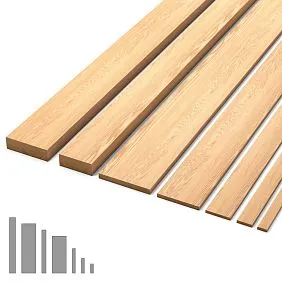
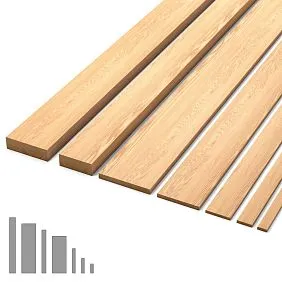
Standardslatted panels for wallsare produced in fixed lengths: 2700, 3000, 4000 mm. Standard slat width — 20, 25, 40, 50, 70 mm. Standard gap — 5–15 mm. If your wall is 4200 mm or 5600 mm long, standard panels will either create an unsightly joint in the middle or a non-multiple cut at the edge — with a visible disruption of the rhythm.
In historical buildings (mansions, pre-revolutionary tenement houses) ceiling heights reach 3.6–4.2 m. A standard 3 m long slat simply doesn't work vertically here — a custom slat, 3800–4200 mm long, is needed.
The same applies to non-standard width: if the design project involves a slat 35 mm wide with an 8 mm gap, creating a special visual rhythm — no standard item will reproduce this rhythm.
Our factory also produces:


Non-standard cross-section profile
Standard slats have a rectangular or slightly beveled cross-section. But there are hundreds of architectural situations that require a different profile: a slat with a 45° chamfer, creating a different play of shadows; a slat with a semi-oval front profile for a classic interior; a slat with rounded corners for children's spaces; a slat with a channel along the axis — for LED strip lighting.
None of these profiles are fully represented in the standard range. It is the manufacturing of slatted panels to a specific profile that turns a wall from a finish into an architectural object.
Get Consultation
Rare wood species and special coatings
The standard range of wooden slats covers pine, birch, oak, ash — the most common species with established supply chains. But what to do if the interior is designed for a specific species — teak, wenge, walnut, thermowood, charred larch?
Or if the finish requires a specific tone—not from the manufacturer's catalog, but an exact colorimetric match to a furniture or floor sample? Only custom production provides the precision that no warehouse can guarantee.
Objects with Special Requirements
For restaurants, hotels, medical facilities, and high-end offices, slatted wall panels must meet special requirements: fire hazard class, antimicrobial surface treatment, specific coating toxicity standards. Standard products do not always meet these requirements—custom manufacturing allows for the integration of the necessary characteristics.
What is Typically Ordered: The Spectrum of Custom Solutions
Custom slatted panels are not a single item, but a whole spectrum of possibilities. Let's examine each level of customization.
Custom Length
The most common request. Slats sized for a specific wall: length accurate to the millimeter, allowing panels to be installed without a single seam along the entire wall length. For a living room wall 6800 mm long—slats exactly 6800 mm long. A monolithic, flawlessly clean surface without a single joint.
This technically requires graded raw material of the corresponding length and a production line with sufficient workspace—not every manufacturer can provide this.
Custom Width and Spacing
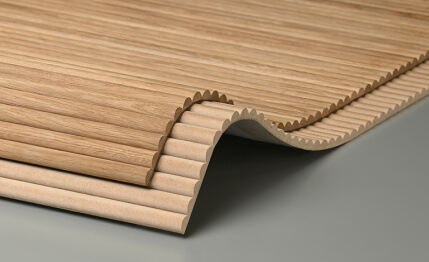
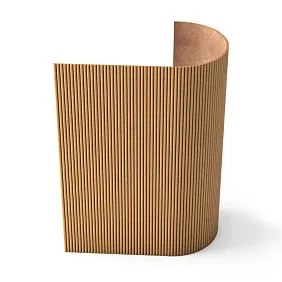
The width of the slat and the spacing between slats define the visual rhythm of the wall. Narrow slats with narrow spacing create a dense, almost solid relief, reminiscent of modern wood texture. Wide slats with wide spacing create an open, 'breathing' surface through which the background layer is visible.
Custom width options: from 15 mm (thin slats in a 'pencil sketch' style) to 150 mm (wide 'planks' in a modern classic style). Spacing between slats: from 5 mm to 80 mm. Each combination of width and spacing creates a fundamentally distinct look.
Exactly thereforedecorative slatted wall panelsIn high-end design projects, they are always produced to specific rhythm parameters defined in the project.
Custom cross-section profile
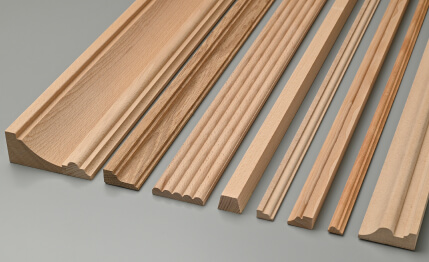
This is the most technically complex level of customization, requiring a special tool—a planer knife for a custom profile. Possible profiles:
-
Rectangular (standard) — a clear, modern rhythm
-
With a 30–45° bevel — soft play of shadows, transitional geometry
-
Semi-oval (convex) — a classic profile, emphasizing each slat as a separate architectural element
-
Concave (cove) — a profile rooted in historical joinery
-
With a groove along the axis — for LED strip lighting, creating a light accent along each slat
Slatted panels with lightingWith slats featuring a specially selected groove along the axis, they achieve an effect unattainable with standard slats with backlighting: the light line runs strictly along the axis of each slat, creating a rhythm of glowing lines against a dark wooden background.
Custom tinting and coating
Three types of slat surface finishes:
Oil — deep penetration into the fiber, revealing the natural texture. A matte surface with the tactile 'warmth' of wood. A finishing option for those who appreciate naturalness. Oil-based colored tinting — from 'white oil' to 'black wenge'.
Varnish — a protective film on the surface, more resistant to mechanical impact. Can be matte, semi-matte, or semi-gloss. Gloss varnish on slat panels is a rare but striking solution in the Art Deco or cabinet Empire style.
Paint (acrylic or alkyd) — completely covers the natural texture, achieving any color from the NCS, RAL, or Pantone palette.paintable slatted wall panelsMDF slats — most accurately reproduce colorimetry thanks to a perfectly smooth surface without natural variations.
Architectural decor made of polyurethane: what it is and why it is needed
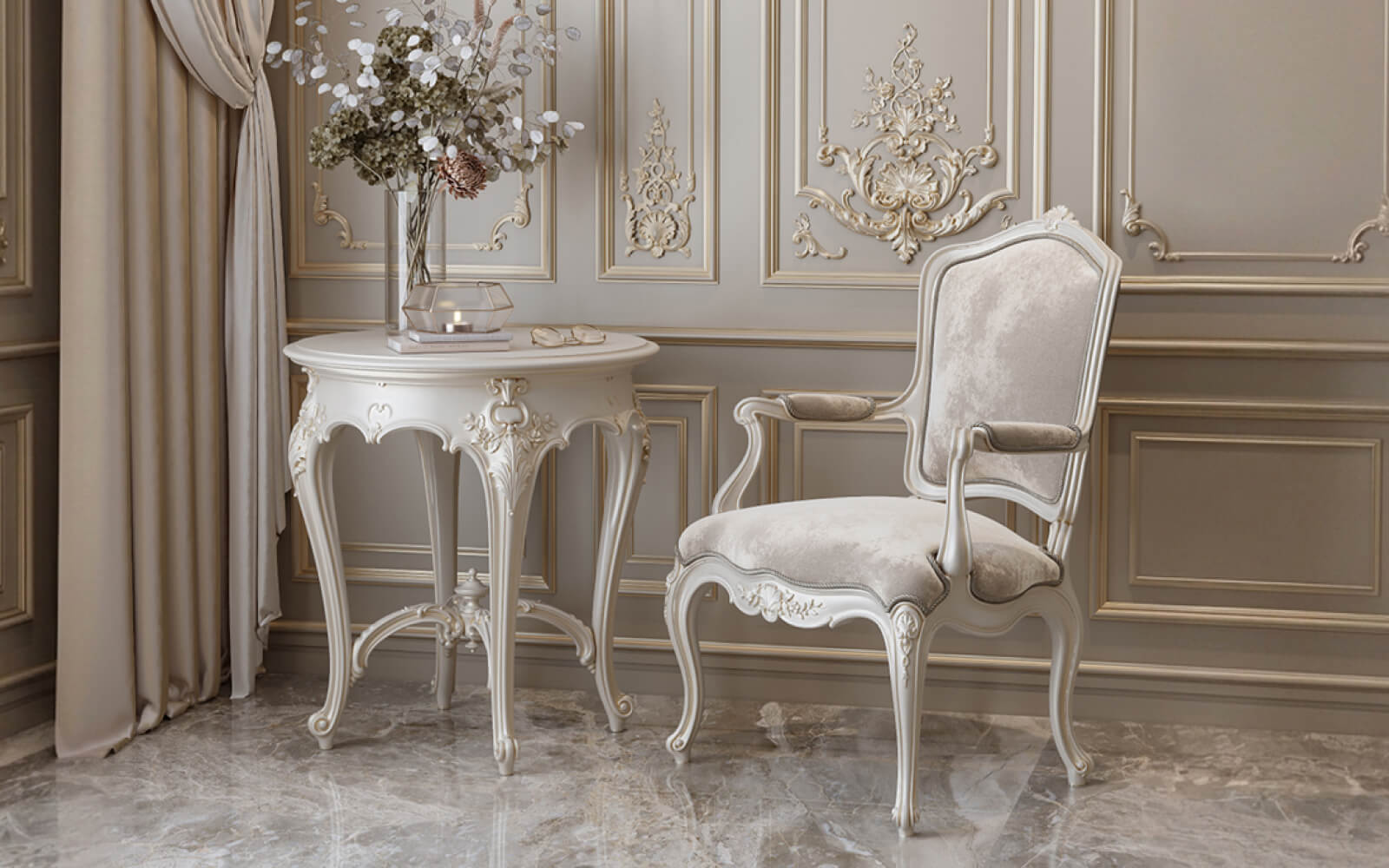
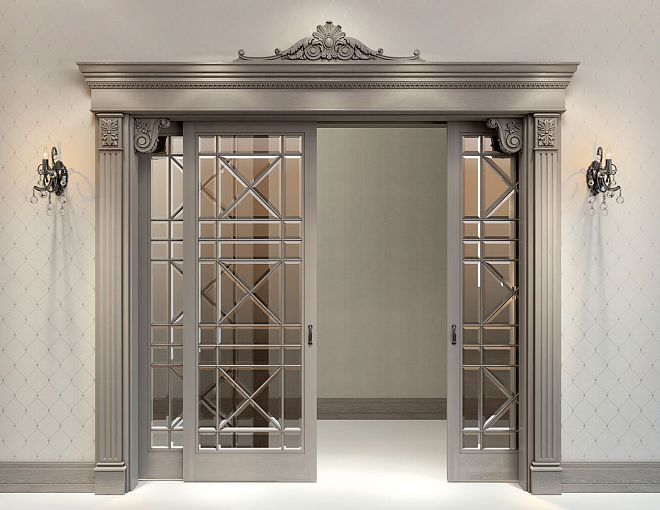
While slat panels address the task of creating a rhythmic surface,Polyurethane architectural decorationsolves a completely different task: it creates architectural events. The horizontality of a cornice. The verticality of a pilaster. A door or window frame. A niche surround. A coffered ceiling. An ornamental rosette. Everything that transforms a set of walls into an architectural space.
Why Polyurethane, Not Plaster
Historically, all this decor was made from plaster. But plaster is a heavy material (700–900 kg/m³), fragile, requiring a professional plasterer for installation. A mistake during installation results in a crack or chip that cannot be repaired.
High-density polyurethane (130–200 kg/m³) is 5–7 times lighter than plaster with comparable static load strength. Can be cut with a regular wood saw. Does not crumble when cut or installed. Adheres with acrylic mounting adhesive or liquid nails. Deforms rather than shatters upon impact. These are fundamental advantages for installation and long-term operation.
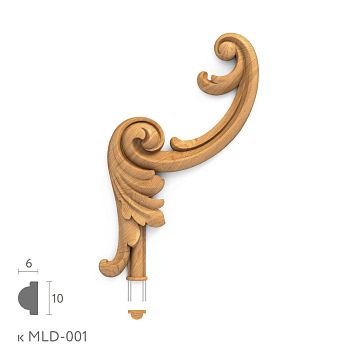
At the same time,Polyurethane items for interiorsPreserve the precision of detailing historical ornaments: acanthus, egg-and-dart, bead-and-reel, dentils, laurel wreath, meander—all classical profiles are reproduced with casting accuracy up to 0.5 mm.
Range of architectural polyurethane decor
Cornices and baseboards—horizontal profiles that organize transitions between surfaces (ceiling-wall, wall-floor). Width—from 40 to 350 mm, profile height—from 30 to 200 mm. Profile type—from minimalist thin to developed classical with a full order set of elements.
Moldings—intermediate horizontal profiles that divide the wall into vertical zones. Used both independently and in a system with slatted panels—as a dividing line between the slatted lower section and the smooth upper part of the wall.
Pilasters—vertical flat profiles that imitate columns. Create vertical rhythm on walls, divide large planes into architectural fields. Especially effective in interiors with ceilings from 3.0 m.
Rosettes and medallions—round or oval decorative elements for the center of a ceiling field. Diameter—from 20 to 180 cm. Used as a base for a chandelier or independently as a ceiling accent.
Coffered elements—frame profiles for creating a coffered ceiling (a system of recessed rectangular cells in the ceiling). One of the most powerful classical ceiling design techniques.
Beams—volumetric rectangular profiles that imitate load-bearing wooden beams. In reality—lightweight hollow polyurethane profiles mounted on the ceiling. Create the illusion of a wooden beam ceiling without actual structural load on the floor.
Niches and architraves—figurative elements for decorative finishing of doorways, arches, window reveals. Transform a standard opening into an architectural event.
How to combine custom slatted panels with polyurethane decor
This is where the main design challenge begins. Two different materials, two different scales, two different systems—how to assemble them into a unified architectural statement?
The principle of hierarchy: who speaks, who listens
In architectural interiors, there is always a hierarchy: a main element and supporting ones. The mistake of most cluttered interiors is the absence of this hierarchy: every element 'shouts' equally loudly, and as a result, no one is heard.
Hierarchy rule for a space with custom rails and polyurethane decor:
-
The main voice—the slatted surface (accent wall)
-
The organizing framework—cornices and moldings made of polyurethane
-
Punctuation—pilasters, rosettes, door/window surrounds
The slatted wall—lively, rhythmic, natural—should 'speak' first. Polyurethane decor creates an architectural context for it, sets coordinates, organizes transitions. This is a dialogue where each participant has its own role.
Surface zoning: where to use slats, where to use molding
The most competent spatial distribution scheme:
Accent walls (behind the sofa, behind the bed, behind the TV, the end wall of the study) – slatted panels. Full surface or lower belt. This is where the main decorative load is concentrated.
Transition zones (junction of wall and ceiling, junction of slatted belt and smooth wall, junction of wall and floor) – polyurethane decor. Cornice, molding, baseboard. Organizes transitions, conceals joints, creates horizontal accents.
Ceiling — polyurethane decor. Cornice around the perimeter, rosette in the center, coffered frames or beams. The ceiling is the primary architectural 'canvas' for polyurethane.
Side walls – neutral, with minimal decor (maximum – thin molding at windowsill height). They serve as a pause between accent surfaces.
Such distribution creates a clear architectural system in which each element is in its place and performs its function.
Unity of scale: proportions as language
One of the most frequently violated principles. Imagine: narrow slats 20 mm wide with a 5 mm pitch – a thin, delicate rhythm – and a massive cornice 200 mm high with rich ornamentation. This is a conflict of scales: the delicate rhythm of the slats is overwhelmed by the monumental cornice.
Rule: the scale of the polyurethane decor must correspond to the scale of the slatted solution. Thin slats – thin cornice (50–80 mm) with a minimalist profile. Wide slats with deep relief – developed cornice (120–180 mm) with a classic profile. Molding should be proportionate to the width of the slat – no wider than one and a half times the slat itself.
Unity of the color system
All polyurethane decorative elements in one space should be in the same color. Classic options: white or cream (RAL 9001, RAL 9010, RAL 9003). This is a neutral chromatic background where the relief is read by shadow, not by color.
Alternative approaches:
-
Molding in the color of the wall (10–15% lighter or darker) — a delicate monochrome effect
-
Molding in a contrasting color (white on a dark wall or dark on a light one) — a strong graphic accent
-
Molding with gold or silver patina — for Art Deco and Baroque interiors
Wooden slatted panels orWooden slat panelswith oil finish — chromatically neutral in their warmth: oak, ash, walnut create a warm natural tone that pairs well with cream molding and does not clash with white.
For which objects custom production is especially appropriate
Country Houses and Cottages
Country house — an object where custom solutions are most justified. Non-standard layouts, non-standard sizes, high ceilings, sloped roof surfaces, niches, and arches — all require a custom approach. At the same time, a country house is often an object built 'for a lifetime' and into which not only money but also meaning is invested. Standard finishing is not the answer here.
Wooden slats in a country house — a continuation of the natural context: a house in the forest receives wooden surfaces both outside and inside as a unified natural statement.Slatted Façade PanelsOutside, wooden slats in the living room, bedroom, study inside — a unified material code that permeates the house from facade to interior.
Historical apartments and apartments
An apartment in a building constructed between 1910 and 1950 is a special context. High ceilings (3.0–4.0 m), wide doorways, preserved historical stucco (or its fragments) — all of this requires either restoration, recreation of what was lost, or a delicate dialogue between modern materials and the historical space.
It is herePolyurethane Itemsshow their best qualities: the ability to reproduce the historical profile of a cornice or molding with accuracy comparable to original plasterwork. To complement preserved stucco — to add a missing fragment, restore symmetry — polyurethane products allow this to be done without involving a plasterer.
Solid oak slatted panels in a historical apartment are not a fashionable trend, but a return to the material that was originally in these interiors: wooden parquet, wooden doors, wooden frames.
Commercial properties: restaurants, hotels, offices
A restaurant with an 'urban forest' concept — slatted wall panels made of charred larch (thermally modified wood) on all walls, polyurethane beams on the ceiling under a 'rustic' ceiling. Everything is custom-made to fit the specific dimensions of the room.
A boutique hotel in a modern classic style — slatted panels in the rooms behind the bed headboard, polyurethane cornices and skirting boards in a unified system. A stucco rosette above the bed is the focal point of the image.
Class A office — a meeting room with wooden slats on two walls, a coffered ceiling made of polyurethane frames. A space that conveys seriousness and status without pomp.
Children's institutions and educational spaces
Sound unexpected? Meanwhile, wooden slats in children's institutions are one of the leading global trends in educational design over the past 15 years. Natural material on walls and ceilings reduces anxiety levels, improves concentration, and creates a sense of security.soft slat panelsmade of felt or wool with wooden slats — an acoustically functional and aesthetically rich solution for classrooms.
Custom sizes, rounded slat profiles (without sharp corners), antimicrobial coating — all of this is only achievable through custom production.
Technical process of custom production: how it works
Technical specification and project documentation
It all starts with a technical specification. The designer or client specifies:
-
Exact dimensions of each slat (length, width, height)
-
Cross-section profile (with a drawing or reference to an analogue)
-
Wood species or material type (solid wood, MDF with veneer, MDF for painting)
-
Type and color of finish (oil, varnish, paint — with specific tinting code)
-
Permissible geometry deviations
The more precise the technical specifications, the more precise the result. Vague formulations ('something warm', 'something like ash') lead to disappointment. Exact numbers and samples lead to an exact result.
Production cycle
Manufacturing of slatted panelsat the production level goes through the following stages:
-
Incoming raw material control: wood moisture (optimum 8–12%), absence of knots in critical zones (for the front surface)
-
Cutting: longitudinal sawing to the specified width on a multi-saw machine
-
Profiling: forming the cross-section profile on a four-sided planing and profiling machine
-
Length calibration: trimming saw with a stop — accuracy ±0.5 mm
-
Sanding: abrasive conveyor (grit 100–150)
-
Coating application: in a painting booth with forced ventilation — oil, varnish, or paint in 2–3 layers with intermediate drying
-
Packaging: individual packaging of each slat in protective film, bagging with labeling indicated.
Total production time with raw materials available — 10–25 working days depending on volume and complexity.
Acclimatization and Installation
installation of slatted panelsfor custom-made products is a crucial final stage. Before installation, wooden slats must be acclimatized: 48–72 hours in the room at operating temperature and humidity. This allows the wood to reach equilibrium moisture content in the specific room conditions and avoid deformation after installation.
The fastening method is chosen depending on the material and construction:
-
Adhesive + finishing nails — for MDF slats on a flat wall
-
Clips on a frame — for solid wood slats (compensate for seasonal wood movement)
-
Hidden self-tapping screws through the groove — for slats with a technological groove on the back side
Installation of batten panelson a frame provides additional advantages: the ability to install sound insulation or thermal insulation behind the slats, run hidden wiring for lighting, and geometrically level an uneven wall.
Errors in designing non-standard interiors
First mistake: ordering without precise measurements
It seems obvious — but this is the most common mistake. Battens are ordered 'according to design dimensions,' while actual wall dimensions differ from design by 20–50 mm. As a result, the last batten doesn't fit, or a gap appears near the baseboard. Rule: all measurements before ordering are taken only after rough finishing is complete, with clean floors and walls.
Second mistake: inconsistency in the scale of battens and decor
Already mentioned, but a critically important mistake. Thin battens (20 mm) are ordered, and simultaneously a rich classical cornice 180 mm high is ordered. During installation, it becomes clear that the cornice overwhelms the batten rhythm. Solution: before ordering both battens and decor — draw a cross-section of the wall to scale with all elements applied. The scale will immediately reveal disproportions.
Third mistake: ignoring seasonal wood movement
Solid wood battens in a room with forced heating (especially central heating radiators) lose moisture and dry out during winter. Battens 60–70 mm wide can change size by 1–3 mm with significant humidity fluctuations. If they are installed with adhesive without a gap — they deform and warp. Solution: clip mounting, a technical gap between battens, preliminary acclimatization.
Fourth mistake: inconsistency in color solutions for battens and decor at the ordering stage
Battens with a 'dark walnut' tint and 'standard white' cornices are ordered. During assembly, it turns out that the 'standard white' of the cornice has a cold bluish tint, while the battens have a warm reddish-brown. The temperature conflict ruins the aesthetics. Solution: before final ordering, check color matching on natural samples under the actual lighting conditions of the room.
Fifth mistake: ordering without considering installation tolerances
Custom battens 4800 mm long are ordered for a 4800 mm wall. During installation, it turns out that the walls are not strictly parallel — 4795 mm on the left, 4810 mm on the right. A monolithic batten of exact length either won't fit (too long) or will leave a visible gap (too short). Rule: custom length should be 3–5 mm less than the minimum measurement, with the gap covered by a profile molding or corner element.
Mistake six: overestimating DIY installation
DIY slatted panel— feasible for standard solutions and with basic construction skills. But custom battens made of valuable wood species with expensive coating, installed incorrectly — this is a loss of expensive material. For high-end projects, installation of custom panels should always be entrusted to professional installers with proven experience.
Case study: how the 'custom battens + polyurethane decor' system works in a real project
Imagine: a 95 m² apartment in a Stalin-era building from 1952. Ceilings 3.1 m high. Wide doorways without architraves (removed during previous renovation). A large living-dining room with windows on two sides.
Design solution: restoring the spirit of a historical interior with modern materials.
Living room. The wall behind the sofa (length 5.6 m, height 3.1 m) —Solid oak slat panels— width 50 mm, gap 12 mm, length 3100 mm (from floor to ceiling). Battens with 'light oak' oil finish. Exactly 80 battens — precise calculation for the wall size without a single lengthwise joint. This is only possible with custom production.
Around the ceiling perimeter — a 130 mm high polyurethane cornice with an elaborate classical profile (egg-and-dart + dentils). In the center of the ceiling — a 70 cm diameter rosette. A 70 mm high molding along all walls at a height of 1050 mm from the finished floor — creates the room's horizon.
Doorways are framed with polyurethane architraves with a classical profile, corresponding to the spirit of Stalinist architecture. The historical spirit is restored — not copied, but reinterpreted.
Bedroom. The wall behind the headboard — batten panels in the lower part (height 1200 mm), a dividing molding, smooth wall above in a warm cream shade. Ceiling — a thin cornice (70 mm) in the same cream tone as the wall. No rosette — only hidden lighting behind the cornice.
Study. Ceiling — a coffered system made of polyurethane frames (4 × 3 coffers). Two walls — slatted panels from floor to ceiling, but in a dark 'walnut' tint — create a library-like feeling, a sense of concentration. Precisely the case whenSlatted panels in interior designthey function not as a decorative technique, but as the architectural program of the space.
Frequently Asked Questions (FAQ)
What is the minimum order volume for custom slatted panels?
For most manufacturers — from 10–20 linear meters for a standard profile with custom sizes. For a completely new profile (requiring new tooling) — from 50–100 linear meters. Check with the specific manufacturer: conditions vary significantly.
How long does it take to produce custom slatted panels?
Standard timeframe: 15–30 working days if raw materials are available. Slats made from rare wood species (teak, wenge, padauk) — the timeframe increases to 40–60 days due to raw material logistics.
Is it possible to order slatted panels with a pre-applied finish?
Yes, and it is recommended: factory application of oil or varnish under controlled conditions (a chamber with forced ventilation, temperature and humidity control) provides a more stable and durable result than on-site application.
How to calculate the number of slats for a specific wall?
Formula: (wall width) / (slat width + gap between slats) = number of slats. Example: wall 4800 mm, slat 40 mm, gap 10 mm. 4800 / (40+10) = 96 slats. The result is rounded: if fractional — the gap or width is adjusted.
Do I need to coordinate the installation of slatted panels in an apartment of a multi-unit residential building?
Installation on walls - no. Installation on load-bearing structures with the creation of through holes deeper than 35 mm - requires coordination. Frame installation of slatted panels with anchor fastening of profiles to load-bearing walls - in most cases does not require coordination as finishing work.
Can polyurethane decor be painted in non-standard colors?
Yes.Polyurethane ItemsThey are painted with acrylic paints in any color according to RAL, NCS, or Pantone. The surface is pre-primed with acrylic primer to improve adhesion. The quality of painting is comparable to painting MDF with proper surface preparation.
STAVROS: a manufacturer that operates at a different level of precision
The standard market offers standard solutions. STAVROS operates where the standard is insufficient.
Rafter panelsMade from solid oak, ash, cedar, and thermowood - with the possibility of manufacturing to individual dimensions, profile, and finish. Production with incoming raw material control, industrial profiling, and factory application of finishes.slatted modular wall panelFor those who want systemization and installation speed.
Polyurethane architectural decorationA full range of cornices, moldings, pilasters, rosettes, beams, and coffered elements. Precision casting, stable geometric characteristics, ready for painting in any color.
Two production directions - one architectural system. Slats and decor from STAVROS are materials that design space, not just cover walls.
STAVROS. Non-standard space — non-standard material.