








































Article Contents:
- St. Petersburg and slatted panels: why it's a perfect match
- Northern light and textured surfaces
- Humidity: a challenge, not a verdict
- High ceilings and vertical rhythm
- Petersburg aesthetics: between classicism and minimalism
- Slatted panels in St. Petersburg: climatic requirements for materials
- Typology of Petersburg housing and suitable solutions
- Pre-revolutionary housing stock: 'old city' apartments
- Stalinist buildings: monumentality and dignity
- Khrushchyovkas: compactness as a design goal
- Panel houses from the 1970s–1990s
- New buildings: a fresh start
- Materials of slatted panels for St. Petersburg conditions: a detailed analysis
- Moisture-resistant MDF: the workhorse of the St. Petersburg market
- Solid wood: authenticity for the St. Petersburg spirit
- Thermowood: maximum stability
- Veneered MDF: a compromise that works
- What doesn't work in the St. Petersburg climate
- Stylistic concepts of slatted panels in St. Petersburg interiors
- St. Petersburg modernism: graphics and precision
- Northern coziness: wood and soft lighting
- St. Petersburg eclecticism: history and modernity
- Loft: industrial Petrogradka and Vasilievsky Island
- Slatted panels for different rooms in St. Petersburg apartments
- Living room: accent wall as architectural statement
- Bedroom: quiet pattern for relaxation
- Kitchen: dining area and St. Petersburg evening
- Hallway and corridor
- Bathroom
- Installation of slatted panels in St. Petersburg conditions: technical nuances
- Wall preparation: the St. Petersburg aspect
- Battens for St. Petersburg conditions
- Material acclimatization
- DIY installation of slatted panels in St. Petersburg
- Slatted panels for ceilings in a St. Petersburg apartment
- Acoustic slatted panels in St. Petersburg: urban noise as context
- Prices for slatted wall panels in St. Petersburg: an honest market picture
- Related products: what to buy together with slatted panels for a St. Petersburg project
- Where to buy slatted wall panels in St. Petersburg
- FAQ: answers to main questions about slatted wall panels in St. Petersburg
- About the Company STAVROS
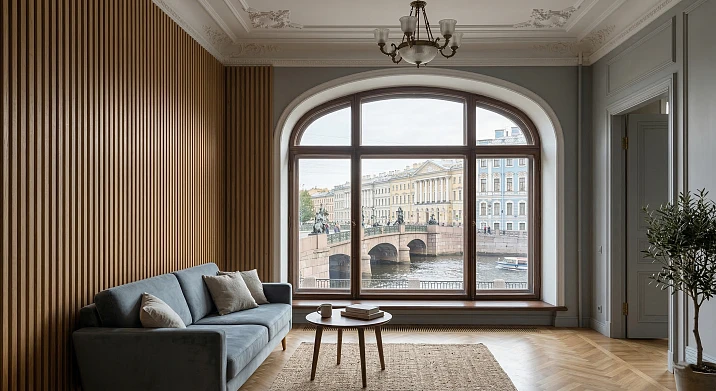
St. Petersburg is a city with a special attitude towards space. Here, it is not customary to do renovations hastily or 'like everyone else.' A St. Petersburg interior is a story: high ceilings of old buildings, stucco or its absence, floor-to-ceiling windows, courtyard wells, and behind them — the gray northern sky for nine months of the year. All this creates a special demand for finishing materials: they must work with a shortage of natural light, withstand the humidity of the St. Petersburg climate, and create warmth where it is naturally lacking.
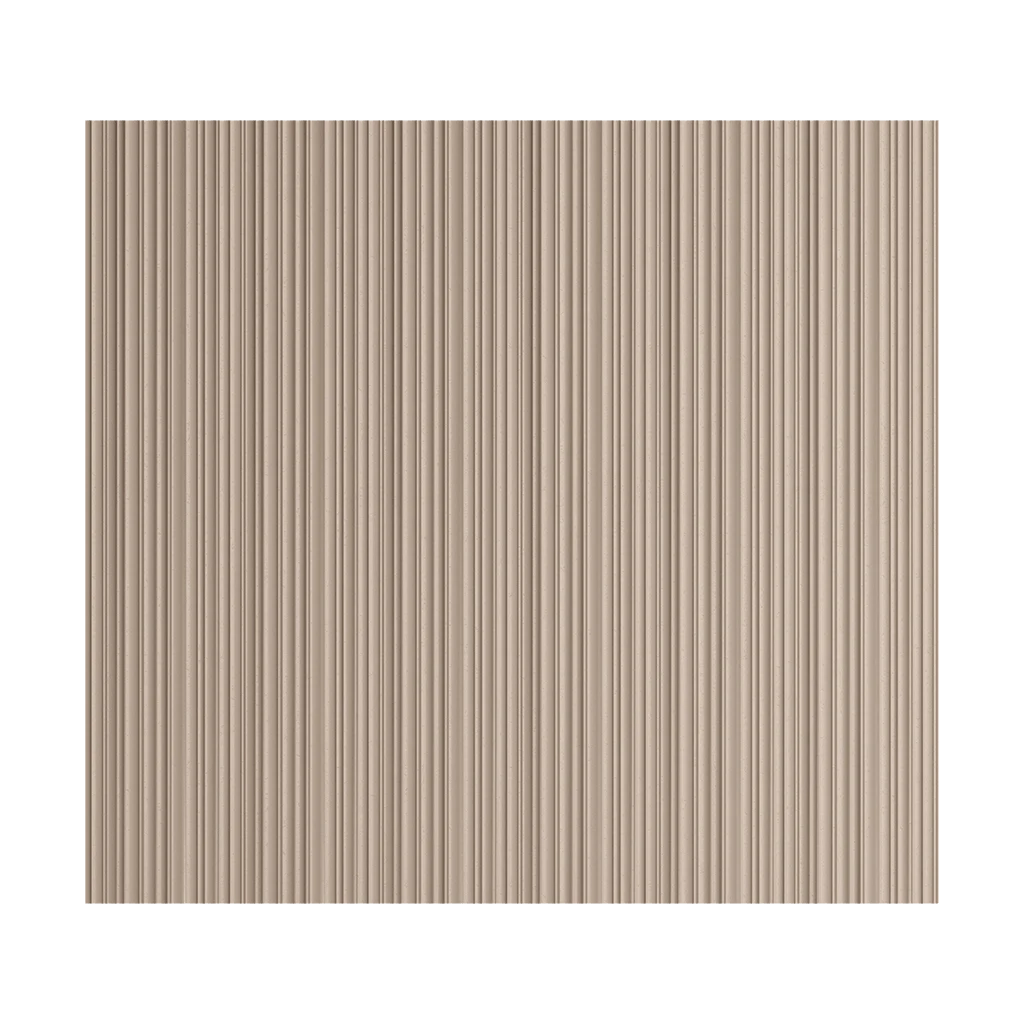
That's why slatted wall panels in St. Petersburg are not just a fashionable trend that accidentally made its way to the banks of the Neva from Moscow showrooms. It's a conscious choice of material that perfectly matches the St. Petersburg aesthetic and St. Petersburg conditions. The textured surface with a rhythm of vertical lines, the play of shadows under artificial side lighting, the warmth of natural wood or the laconic matte enamel — all of this works differently in a St. Petersburg apartment than anywhere else. Deeper. More expressive. More precise.
This article provides a complete professional breakdown: what slatted wall panels are in the context of St. Petersburg realities, which materials to choose considering the city's climate, how to use them in different types of housing — from Stalin-era buildings to new developments on reclaimed land — and where to buy them with a guarantee of results.
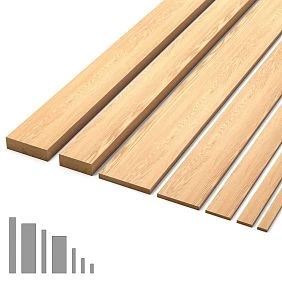
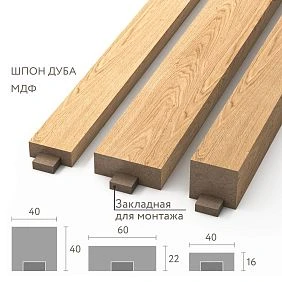
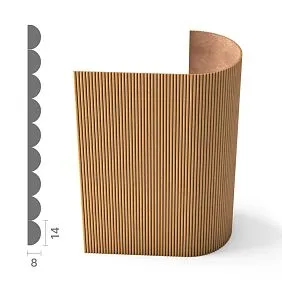
St. Petersburg and Slatted Panels: Why It's a Perfect Match
Before discussing technical parameters, it's worth understanding: why do slatted panels take root especially organically in St. Petersburg?

Northern Light and Textured Surface
St. Petersburg is a city where the sun appears for only a few hours in winter, and side artificial lighting works around the clock from October to March. A flat painted wall under such lighting is dead: it reflects light without creating any depth. A slatted surface under the same lamp comes alive: each slat casts a shadow into the gap, creating volume, rhythm, architectural expressiveness. The darker the St. Petersburg day outside the window, the more convincingly the slatted wall works inside.
Our factory also produces:
Humidity: A Challenge, Not a Sentence
The relative humidity in St. Petersburg is 75–85% for most of the year. This is higher than Moscow's figures and significantly higher than those in southern regions. Finishing materials in St. Petersburg apartments experience moisture stress differently. Wallpaper peels off more often here. Paint on walls near exterior walls bubbles. Standard MDF without moisture-resistant treatment warps.
Slatted wall panelsSlatted panels made of moisture-resistant MDF or treated solid wood with the correct coating are materials that perform under St. Petersburg conditions without degradation, provided installation technology is followed: a ventilation gap between the wall and the structure, edge treatment, antiseptic-treated lathing.
Get Consultation
High Ceilings and Vertical Rhythm
Stalin-era buildings, pre-revolutionary housing stock, 'Kirovki' — St. Petersburg has a huge number of apartments with ceilings 3.0–3.5 m and higher. Vertical slats from floor to ceiling in such spaces are an architectural technique that transforms height from a technical characteristic into an aesthetic virtue. The gaze travels upward along the lines of the slats — and the space unfolds in all its vertical strength.
St. Petersburg Aesthetics: Between Classicism and Minimalism
St. Petersburg is a city of two architectural poles. One is the Baroque and Classical opulence of the Hermitage and Nevsky Prospekt. The other is the austere Constructivist minimalism of the Kirovsky District and industrial embankments. Slatted paneling is organic in both contexts: in a classic interior, slats with bevels and molding framing convey dignity; in a minimalist loft — dark slats with wide gaps speak the language of industrial architecture.
Slatted Panels in St. Petersburg: Climatic Requirements for the Material
St. Petersburg's climate is subarctic maritime. Specific conditions that a finishing material must withstand:
-
Relative humidity: 75–85% (November–March)
-
Temperature fluctuations in rooms with exterior walls: up to 8–12°C during the off-season with insufficient heating
-
Condensation on exterior walls: a characteristic problem of apartments in buildings from the 1940s–1980s
-
Freezing of corner apartments: local zones of increased humidity in corners
Based on these conditions — requirements for wall slatted panels in St. Petersburg:
For interior walls (not in contact with the outside): standard-class MDF with matte enamel or veneer with oil coating. Standard quality requirements are sufficient.
For exterior walls and wet rooms: only moisture-resistant MR-class MDF or solid hardwood with proper treatment. A ventilation gap of at least 15 mm between the wall and the battens is mandatory.
For corner apartments at risk of freezing: before installing the slat structure — mandatory dew point check, if necessary — additional insulation on the exterior wall. Installing slat panels on an uninsulated freezing wall is a mistake that will lead to condensation behind the structure.
Typology of St. Petersburg housing and suitable solutions
St. Petersburg is a multi-layered city. People live in houses from different eras here, and each type of housing creates its own context forslatted wall panels.
Pre-revolutionary stock: apartments of the 'old city'
Ceilings 3.2–4.5 m. Oak parquet or its imitation. Stucco or its traces. Huge windows — and dark courtyard-wells. Inside such apartments — 21st-century interior thinking in a 19th-century architectural shell.
Slat panels here are in dialogue with history. Not an imitation of antiquity, but a modern replica. Slats of oak veneer or walnut veneer with matte oil — a tone in harmony with the old parquet. Slat width 60–80 mm, gap 16–20 mm, height from baseboard to cornice. No plastic trims: wooden molding matching the slats, historical-profile cornice made of MDF.
Wooden slat panelsin a pre-revolutionary apartment — is not an anachronism. It's a conversation between two eras, in which each speaks its own language, but both understand each other.
Stalin-era buildings: monumentality and dignity
Ceilings 3.0–3.4 m. Thick load-bearing walls provide good sound and thermal insulation. Wide staircases, large kitchens, spacious hallways. A Stalin-era apartment is a space with pretensions to significance.
In a Stalin-era building, a slatted wall works to its full potential precisely because of the ceiling height. The full height from baseboard to ceiling is 3.2 m of slats—this is a monumental, powerful solution. Recommended parameters: 70–100 mm MDF slats in matte enamel NCS or RAL, 18–22 mm gap, load-bearing base in a contrasting tone. Colors are deep: dark green, graphite, dark blue with cream or brass accents.
Khrushchev-era apartments: compactness as a design challenge
Ceilings 2.5–2.6 m. Small rooms. Narrow corridors. The task of the slatted panel here is not decoration, but working with space: optical enlargement. Vertical light-colored slats 30–50 mm with a narrow 10–12 mm gap visually raise the ceiling by 15–20 cm. Light tone, load-bearing base slightly darker than the slats—adds depth without heaviness.
Wall finishing with slatted panelsIn a Khrushchev-era apartment, it's a design challenge where spatial limitations become a condition for a smart solution. One accent slatted wall in the living room of a Khrushchevka changes its perception dramatically.
Panel buildings from the 1970s–1990s
Standard layouts, typical ceilings 2.7 m, standard windows. The slatted panel here is a way to individualize a typical space. From identical apartments in the same building, fundamentally different interiors can be created using slatted panels. This is the main value for residents of panel buildings who want to break out of the typical mold.
New buildings: a blank slate
Apartments in new residential complexes in St. Petersburg—on the Petrograd Side, in the Primorsky District, on Vasilievsky Island—are often sold with turnkey finishing or in rough condition. Open floor plan, ceilings 2.8–3.2 m in business class.
Herebuy slatted panelsIn a new building, it's an opportunity to create an interior with architectural character from scratch, not limited by previous finishing solutions. Complete freedom in choosing parameters, direction, tone. A new building is a blank canvas.
Materials of slatted panels for St. Petersburg conditions: detailed analysis
Moisture-resistant MDF: the workhorse of the St. Petersburg market
slatted MDF panelmade of moisture-resistant MDF is the most practical choice for most St. Petersburg apartments. The green cut (the color of the core due to the hydrophobic additive) is a sign of the moisture-resistant class MR. Water absorption is no more than 10–12% under 24-hour exposure.
Technical parameters for St. Petersburg conditions:
-
Density: at least 780 kg/m³
-
Class: MR (moisture resistant)
-
Emission: E0 or E1
-
Coating: two-component polyurethane varnish or matte acrylic enamel
MDF Slatted Wall Panelwith a quality coating means 15–20 years of operation in St. Petersburg conditions when installation technology is followed.
Solid wood: authenticity for the St. Petersburg spirit
St. Petersburg is a wooden city at heart, despite its stone facade. Wood in St. Petersburg interiors is not exotic; it's a return to roots.Wooden slat panelsMade of oak or ash with an oil finish — a choice for projects where material authenticity is important.
For St. Petersburg conditions: only hardwoods — oak, ash, elm. Softwoods (pine, spruce) lose geometric stability in St. Petersburg's humidity. Finish: hard water-based wax oil, 2–3 coats. Acclimatization of solid wood before installation indoors — at least 5–7 days.
Thermowood: maximum stability
Wood that has undergone heat treatment at 185–230°C is a fundamentally different material compared to ordinary solid wood. Water absorption is reduced by 2–4 times. Bio-resistance — maximum. Geometric stability during humidity fluctuations — significantly higher.
For St. Petersburg apartments with a risk of high humidity — thermowood made from birch, alder, or ash — is the optimal choice in the premium segment. The dark, rich tone of heat treatment (from walnut to almost charcoal) — without stain, only the natural result of temperature exposure.
Veneered MDF: a compromise that works
Moisture-resistant class MDF base with natural oak, ash, or walnut veneer — a precise tool for projects where a natural surface with industrial geometric precision is important. In St. Petersburg projects of the mid-range and business segments — the most common choice among designers.
What doesn't work in St. Petersburg's climate
Ordinary (non-moisture-resistant) MDF on exterior walls — swells and deforms in high humidity. PVC battens during the heating season: when in contact with heating radiators, the synthetic material emits a characteristic odor. Untreated exotic softwoods — are unstable with St. Petersburg's humidity fluctuations.
Stylistic concepts of slatted panels in St. Petersburg interiors
St. Petersburg modernism: graphics and precision
Dark slats—anthracite or dark brown—on a light wall. Narrow gap of 10–14 mm. Slats 40–60 mm. Metallic accents: matte steel or dark brass. This is an urban, masculine, intellectual style, in tune with St. Petersburg restraint. No warmth for the sake of warmth, no coziness for the sake of coziness. Only clarity, rhythm, character.
Wall slat panels in interiorIn this style, it is an architectural manifesto, not a decoration.
Northern coziness: wood and soft light
Ash veneer with white tinting or natural light oak. Slats 50–70 mm with a 15–18 mm gap. Vertical orientation. Behind the slats—LED strip 2700 K. Linen textiles, woven items, live plants. This is the St. Petersburg interpretation of Scandinavian hygge: warmth assembled from details, when it's gray and cold outside.
In such a concept,Slatted panels in interior designperform an almost physiological function: they create visual warmth in the absence of sunlight.
St. Petersburg eclecticism: history and modernity
Pre-revolutionary apartment with a slatted wall in a modern interpretation. MDF slats in matte enamel of a restrained 'archival' tone—gray-green, gray-blue, warm gray—combined with stucco and historic parquet. Modern material in a historical space. A dialogue, not a conflict.
Key principle: the tone of the slatted panel should harmonize with the tone of the flooring and historical elements—not match, but echo.
Loft: industrial Petrogradka and Vasilievsky Island
Former industrial buildings converted into housing are a specific feature of the St. Petersburg real estate market. Exposed brick, concrete ceiling, metal columns—and slatted panels made of thermally modified wood in a dark tone. Brutality, honesty of material, architectural strength without pretense of coziness. Slats 80–120 mm, gap 25–30 mm, exposed load-bearing base made of black metal profile.
Slatted panels for different rooms of a St. Petersburg apartment
Living room: accent wall as an architectural statement
The main wall of the living room—behind the TV or sofa—is the first and primary place for a slatted panel. In a St. Petersburg living room, often with limited natural light, an accent slatted wall with lighting becomes the visual center of the room around the clock.
Recommended parameters for a St. Petersburg living room: slat 50–80 mm, gap 14–20 mm, height from floor to ceiling, LED lighting behind slats 2700–3000 K. Material: oak veneer or MDF 800+ kg/m³ with matte enamel.
Bedroom: quiet pattern for rest
The wall at the head of the bed is an intimate space. Here, the slatted panel should be delicate: light tone, narrow slat 30–50 mm, soft gap. No graphics or contrast—only a quiet rhythm, creating a background for rest.
Feature of St. Petersburg bedrooms: white nights. In June, the bedroom is light until 11:00 PM—and the slatted panel at the headboard looks different during the day than in the evening. Choose a tone that is beautiful under both types of lighting.
Kitchen: dining area and St. Petersburg evening
Slatted panels in the kitchenIn a St. Petersburg apartment, it's almost always the wall of the dining area. St. Petersburg residents spend more time at the dining table than residents of southern cities: the climate promotes a home-centered lifestyle. A slatted wall behind the dining table with warm lighting creates an atmosphere for the long evenings here.
Material: moisture-resistant MDF with two-component varnish. Gap — no more than 16 mm for easy cleaning. Tone — warm: amber, walnut, warm gray.
Hallway and corridor
The St. Petersburg hallway receives wet outerwear, damp umbrellas, boots with melting snow. The humidity in the hallway of a St. Petersburg apartment in winter is close to the maximum among all rooms.
Only moisture-resistant MR-class MDF with two-component varnish. Slat thickness 16–18 mm, base density 820+ kg/m³. Antiseptic-treated lathing. A ventilation gap behind the load-bearing base is mandatory.
decorative slatted wall panelsIn a St. Petersburg hallway, it's the first thing a guest sees upon entering. Here, the quality of the material and the precision of installation speak more about the owner than any other interior element.
Bathroom
The St. Petersburg bathroom is a high-risk zone. Humidity 85–95%, daily steam. For the bathroom — only thermowood or DPC slats. Solid wood without special treatment and even moisture-resistant class MDF are at risk in bathroom conditions with any disruption to the ventilation regime.
Mandatory requirement: forced ventilation with an air exchange rate of at least 8 room volumes per hour.
Installation of slatted panels in St. Petersburg conditions: technical nuances
installation of slatted panelsIn St. Petersburg conditions has specifics that are important to consider — especially for external walls and wet rooms.
Wall Preparation: The St. Petersburg Aspect
In old housing stock buildings, walls often contain layers of years of repairs: paint over paint, old wallpaper, lime plaster. Before installing a slat structure — complete cleaning down to the load-bearing base on external walls; checking for mold and fungus (a characteristic St. Petersburg problem in houses without proper ventilation); treatment with a deep-penetrating antiseptic primer.
Do not install a slat structure over a wall with active mold — mold behind a closed structure continues to develop and sooner or later emerges on the surface.
Battens for St. Petersburg Conditions
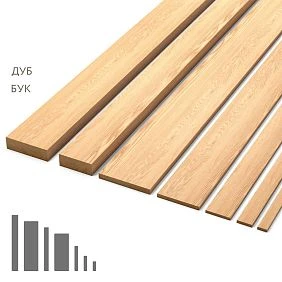
Wooden batten made from 40×50 mm timber — only antiseptic-treated. St. Petersburg humidity activates fungus on untreated wood within a few years. Metal profile 60×27 mm — an alternative for areas with maximum humidity (hallways, bathrooms).
Bat spacing: 400–500 mm for 14–16 mm slats; 300–400 mm for 12 mm slats. Ventilation gap between the wall and the load-bearing base — minimum 15 mm for St. Petersburg conditions (versus the standard 10 mm).
Material acclimatization
In St. Petersburg, material acclimatization before installation is not a recommendation, but a requirement. MDF and solid wood, brought from the warehouse, have moisture content corresponding to warehouse storage conditions. In a St. Petersburg apartment with its humidity, the material will begin to absorb moisture — and change its geometry. Acclimatization in the installation room: MDF — 48–72 hours, solid wood — 5–7 days.
How to install slatted panelsAfter acclimatization: expansion gaps between solid wood slats — 1–2 mm for every 60 mm of slat width. MDF slats — expansion gap at the ends of the structure 5–8 mm.
Installation of batten panelsDIY in St. Petersburg
DIY slatted panelIn a St. Petersburg apartment — a realistic task given the right tools and understanding of St. Petersburg specifics. Key differences between St. Petersburg DIY installation and standard:
-
Antiseptic on the battens — without exceptions
-
Moisture-resistant MDF — mandatory for exterior walls and hallways
-
Sealing the ends of the slats — silicone sealant on all junctions with the floor, ceiling, walls
-
Stainless steel fasteners — St. Petersburg humidity oxidizes ordinary fasteners in 3–5 years
Slatted panels for the ceiling in a St. Petersburg apartment
Slatted panels for the ceiling— a special scenario for St. Petersburg's high ceilings. A 3.2 m ceiling in a Stalin-era building with slatted finishing is not just beautiful. It's a way to 'ground' the space, make it cozier, more human. A lowered slatted ceiling over the dining area of the kitchen or over the sofa group in the living room — creates a zone with a sense of intimacy within a large space.
Batten panels for ceilingsin St. Petersburg conditions: a metal suspended frame (wooden for the ceiling is unstable in humidity), moisture-resistant MDF, integration of spotlights or linear profiles — all this requires professional load design.
Acoustic slatted panels in St. Petersburg: urban noise as context
St. Petersburg is a noisy city. Central districts: trams, automobile traffic, tourist flows. New residential quarters: construction noise, dense development. For many St. Petersburg residents, reducing the level of internal noise is a real task of interior renovation.
Acoustic slatted panels with an absorbing layer behind the slats (acoustic felt or melamine foam material) reduce reverberation in a room by 30–50% when covering 40–60% of the wall surface. This is not soundproofing from external sources (that's a task for window structures), but improving the internal acoustics of the room — a real effect.
For home theaters, offices, and studios in St. Petersburg apartments, acoustic slatted panels solve several tasks simultaneously: improving acoustics, visual architecture, and decorative character.
Prices for slatted wall panels in St. Petersburg: an honest market overview
| Category | Material | Finish | Material cost | Installation (St. Petersburg) |
|---|---|---|---|---|
| Economical | MDF 720 kg/m³ standard | Laminating film | 900–1600 RUB/m² | 700–1200 RUB/m² |
| Medium | MDF MR 780–820 kg/m³ | Matte enamel | 1800–3500 RUB/m² | 1000–1800 RUB/m² |
| Business | Oak/ash veneer on MR MDF | Oil or varnish | 3500–6500 RUB/m² | 1500–2500 RUB/m² |
| Premium | Solid oak, thermowood | Hard oil, UV lacquer | 6000–15000+ RUB/m² | 2000–4000 RUB/m² |
| Modular | MDF modular system | RAL enamel | 2500–5000 RUB/m² | 800–1500 RUB/m² |
For the St. Petersburg market, the recommendation is: do not skimp on the material class for exterior walls and wet areas. The price difference between standard MDF and moisture-resistant MDF is 20–30%; the difference in service life under St. Petersburg conditions is multiple.
Related products: what to buy together with slatted panels for a St. Petersburg project
Slatted panels work in an ensemble. For a complete result in a St. Petersburg project:
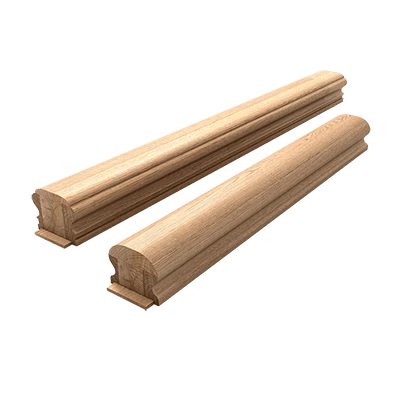
Wooden baseboard— the base of the slatted structure. In St. Petersburg apartments with historic parquet: solid oak baseboard matching the slats, height 80–120 mm.
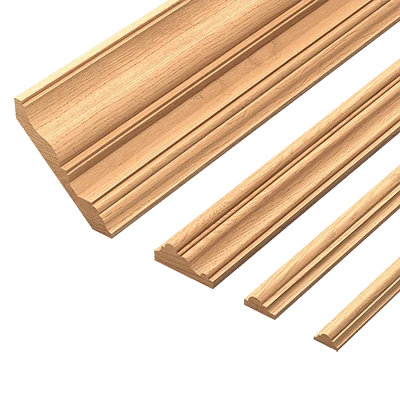
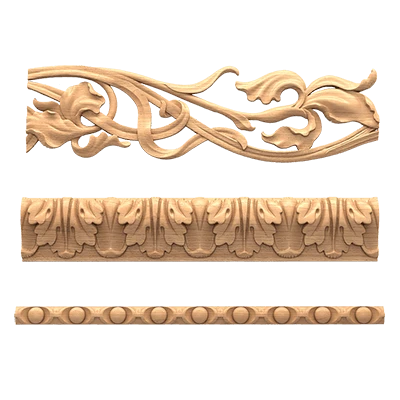
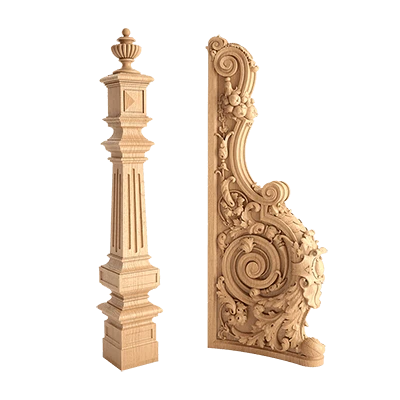
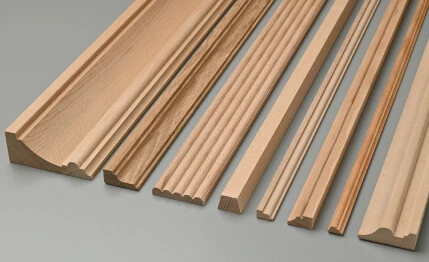
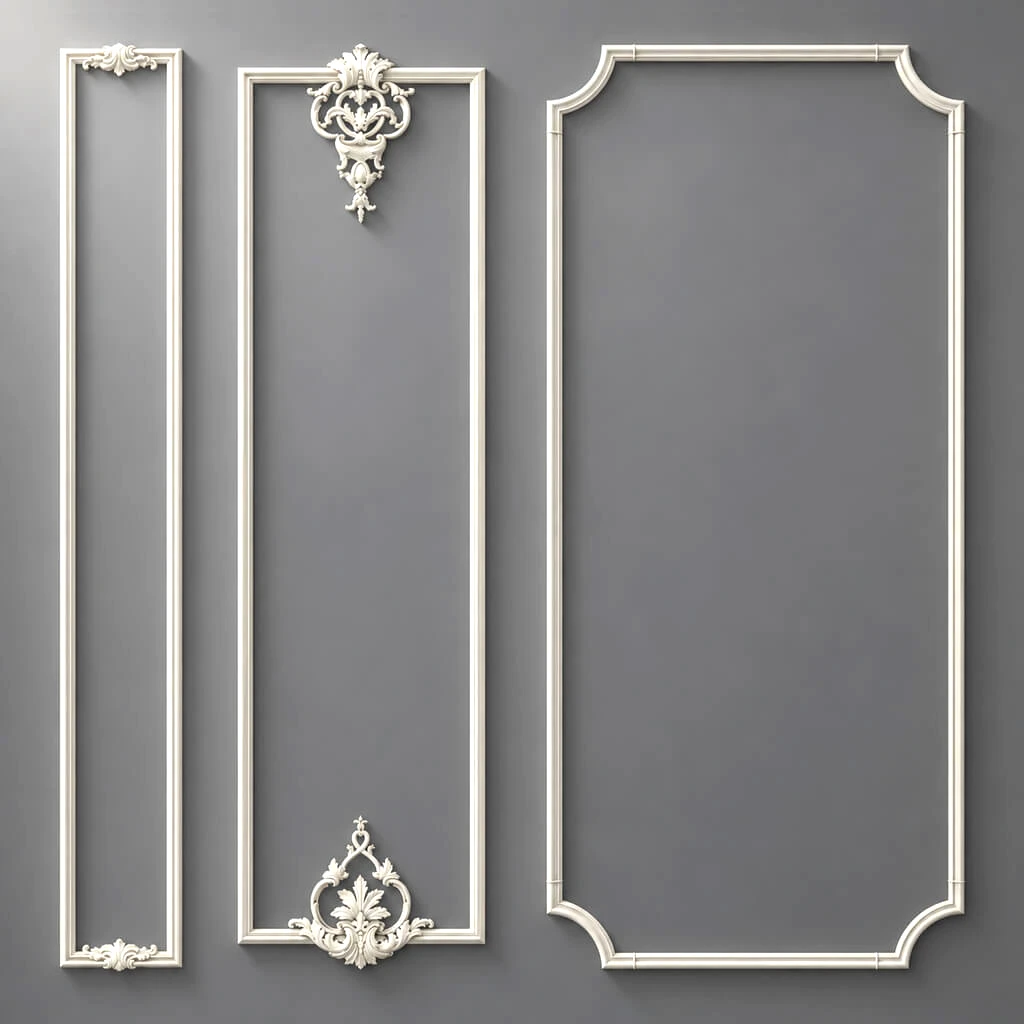
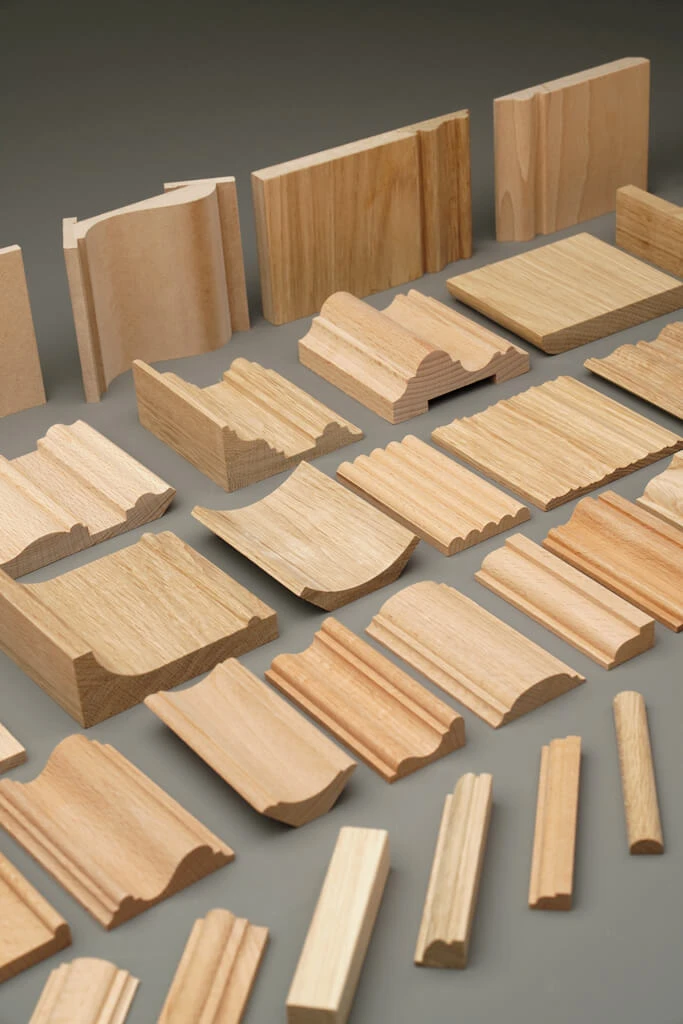
Pogonazh iz massiva— moldings and cornices for framing slatted structures. In historic apartments, an MDF cornice with a classic profile matching the slats creates the completeness that a 'bare' structure without framing lacks.
Paintable lath panels— MDF ceiling plinth in a unified system with cornices — for design projects with individual color solutions according to NCS or RAL. St. Petersburg designers actively work with 'historic' tones: gray-green No. 6021, gray-blue No. 5014, warm gray No. 7044 in the RAL system.
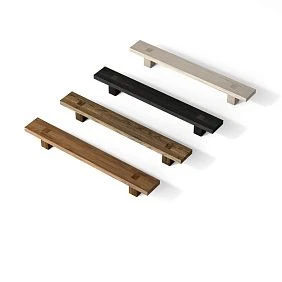
Furniture Handles— solid wood handles — a tactile detail that connects the slatted wall with furniture into a unified material world.
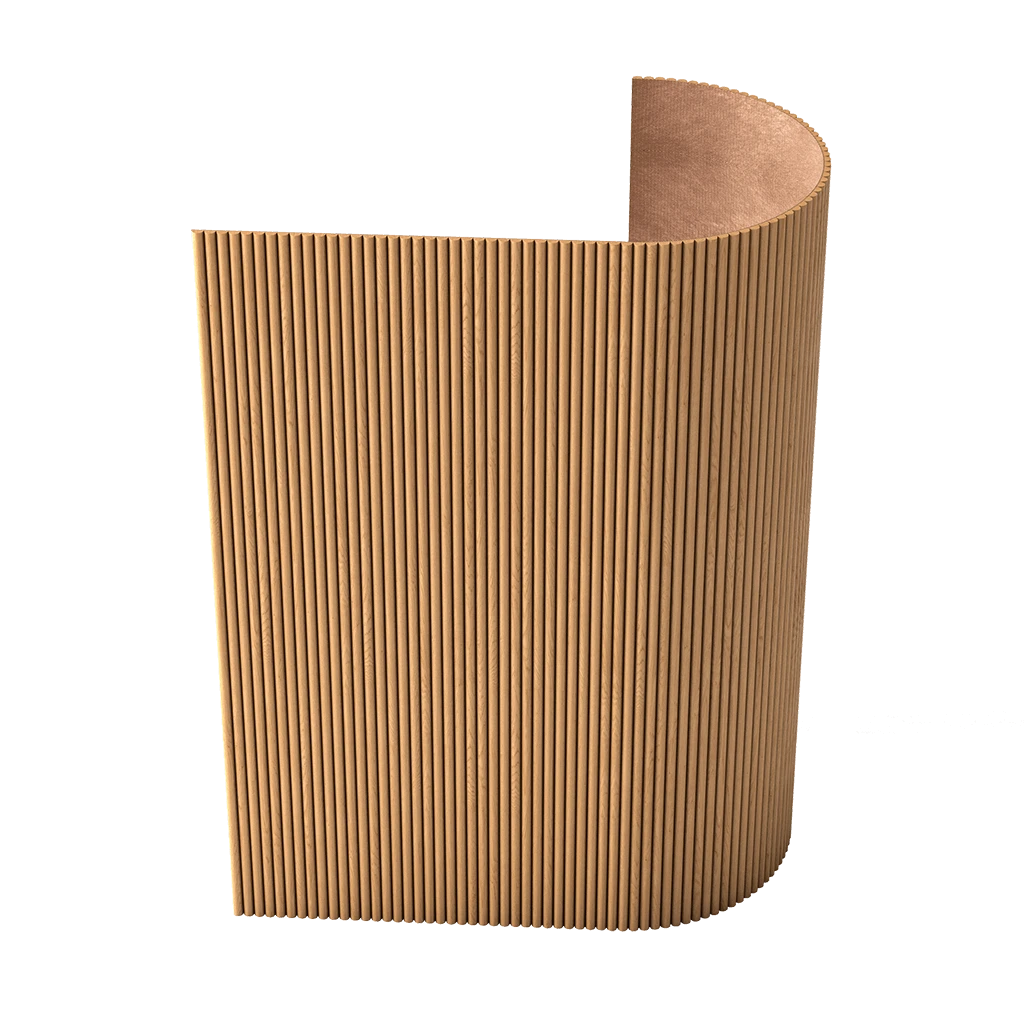
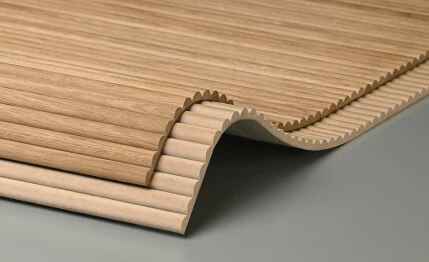
Flexible slatted panels— for arches and bay windows, which are abundant in St. Petersburg apartments of the old stock. A bay window with slatted cladding on curved surfaces is an architectural detail found in St. Petersburg projects and requires a specialized product.
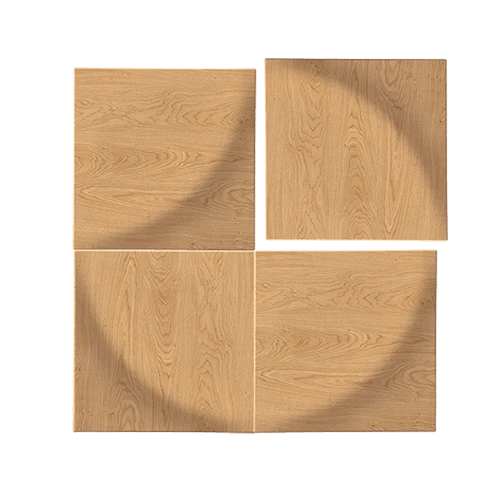
slatted modular wall panel— for commercial facilities in St. Petersburg: offices, restaurants, hotels — a task with tight deadlines and a requirement for uniformity.
Where to buy wall slatted panels in St. Petersburg
The market for slatted panels in St. Petersburg is represented by several channels. Construction hypermarkets offer a basic range in the budget segment, providing quick access to simple solutions. Specialized showrooms offer a full range, coating samples, and professional consultation.
The most advantageous path for a serious project is a direct order from a Russian manufacturer with delivery to St. Petersburg. Benefits include no intermediary markup, the possibility of custom parameters, and direct responsibility for quality. For volumes from 20–25 m², savings of 25–40% compared to retail showrooms are possible.
When purchasing slatted panels in St. Petersburg, always request:
-
Physical samples of coatings under real lighting
-
Documents: declaration of conformity, emission class E0/E1
-
Confirmation of the moisture-resistant class MR for exterior walls
-
Technical documentation for installation
FAQ: answers to the main questions about slatted panels for walls in St. Petersburg
Can regular MDF be used in a St. Petersburg apartment?
For interior walls in heated rooms with normal ventilation, it is acceptable. For exterior walls, hallways, and bathrooms, only moisture-resistant MDF of class MR should be used.
Is acclimatization needed before installation?
Absolutely. MDF — 48–72 hours, solid wood — 5–7 days. St. Petersburg's humidity is higher than warehouse levels — without acclimatization, slat deformation after installation is possible.
How long will slatted panels last in the St. Petersburg climate?
With the correct choice of material and installation technology: moisture-resistant MDF with two-component varnish — 15–25 years. Solid wood with oil finish — 25–40 years with regular oil renewal.
Slatted panels in a St. Petersburg bathroom — is it possible?
Yes — only thermally modified wood or DPC slats, provided forced ventilation with an air exchange rate of 8 volumes/hour is installed.
Can slatted panels be installed on a freezing wall?
No. First — insulate the freezing wall, then install the slatted structure. Otherwise, condensation behind the structure is inevitable.
How much does installation of slatted panels cost in St. Petersburg?
700–4000 rub./m² depending on complexity and segment. An accent wall of 10–12 m² — 7000–48,000 rub. for installation.
Are slatted panels suitable for a Stalin-era building with high ceilings?
Perfect. Full-height slats of 3.0–3.4 m are one of the most expressive interior techniques for this type of housing.
Is it possible to order a custom RAL color for slatted panels in St. Petersburg?
Yes. MDF panels for painting can be painted in any RAL or NCS color. Painting can be done both at the factory and on-site.
Is approval required for installing slatted panels in St. Petersburg?
No. Decorative finishing without affecting structural elements does not require approval. Exception: cultural heritage sites — any interior changes for them require approval.
Slatted panels and white nights: how does the material look in the daytime light of St. Petersburg?
Light slats on a bright summer day — soft, neutral, architectural. Dark slats are more expressive in the evening and winter; on a bright summer day, they may appear somewhat heavy in small spaces. Consider the seasonal change in lighting when choosing a color.
About the company STAVROS
St. Petersburg deserves the best materials. STAVROS is a manufacturer that understands this.
STAVROS is a Russian manufacturer of architectural wooden elements for interiors. Own production facilities with CNC equipment, full quality control from raw materials to the finished product. Delivery to St. Petersburg and the Leningrad region.
For St. Petersburg projects in the STAVROS catalog:Slatted wall panelsmade of moisture-resistant MDF and solid oak — optimal for the St. Petersburg climate;MDF Slatted Wall Panelmoisture-resistant MR class with lacquer coatings;Wooden slat panelsmade from oak and ash with oil finish;slatted modular wall panelfor commercial and residential properties;soft slat panelsfor arches and bay windows of historical buildings;Paintable lath panelsin any RAL or NCS shade;Slatted Façade Panelsfor St. Petersburg country houses and commercial facades;Pogonazh iz massiva— moldings and cornices for finishing slatted structures;Wooden baseboardmade from solid wood to match slatted panels;Furniture Handlesmade of natural wood as a finishing accent.
STAVROS works with St. Petersburg clients, designers, and architects. Samples of coatings, professional consultation on material selection considering St. Petersburg specifics, delivery at a convenient time, full project support. St. Petersburg is a special city. Your interior deserves special materials. Choose STAVROS.