Article Contents:
- What is the center-to-center distance of a furniture handle
- 96 mm handles: compact size for small fronts and drawers
- 128 mm handles: the most versatile and popular size
- 160 mm handles: confident grip for kitchens and wide fronts
- 192, 224 and 320 mm handles: for large fronts, cabinets and wide drawers
- 192 mm handle: transition to large format
- Bracket handle 224 mm: for wide cabinets and kitchen fronts
- Bracket handle 320 mm: scale and character
- Long handles for cabinets: when one handle changes everything
- How to choose a handle when replacing an old one: a practical algorithm
- How to choose the handle size for a specific facade
- Table for selecting handle size by facade type
- Types of handles and their size features
- Bracket handle
- Profile handle
- Knob handle
- Recessed handle
- Surface-mounted handle
- Handle size and interior style: how they are connected
- Drawers: features of choosing a handle
- Handles 80 mm and 64 mm: very small sizes
- Furniture handle 1000 mm: format for tall furniture
- Common mistakes when choosing handle size
- Where to buy furniture handles: what to look for
- Natural wood handles: why this is a special choice
- Kitchen handles: specifics of selection
- Cabinet handles: separate rules
- Handles for dressers and nightstands: nuances of selection
- FAQ: answers to popular questions about furniture handle sizes
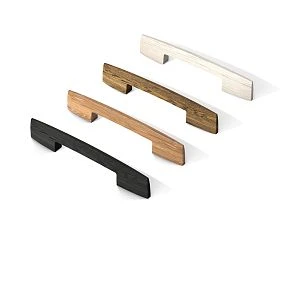
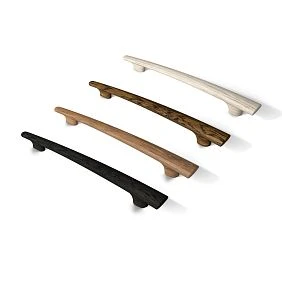
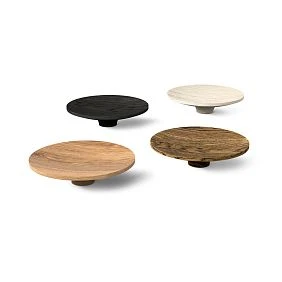
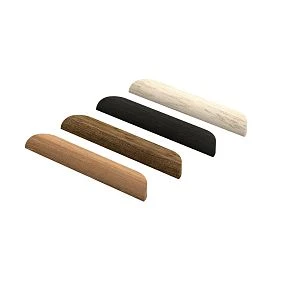
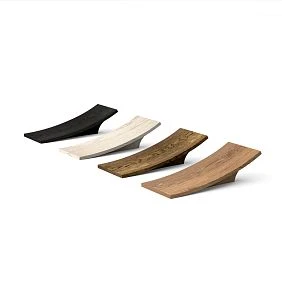
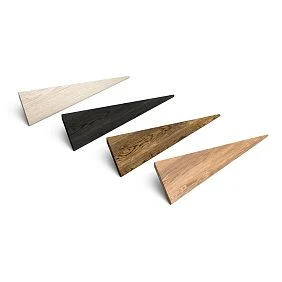
What is the center-to-center distance of a furniture handle
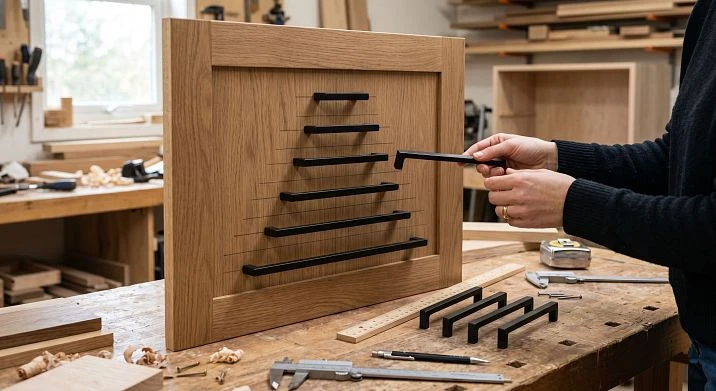
Before discussing specific sizes, it's essential to once and for all clarify a concept that confuses most buyers. We're talking about the center-to-center distance of a furniture handle — it is the key parameter when choosing and replacing hardware.
Center-to-center distance (also called the handle's center distance) is the distance between the centers of the two mounting holes through which the handle is attached to the facade. Not the length of the handle itself, not the length of the bar or arc, but precisely the distance between the axes of the two screws. This is the number that appears in the name of most models: handle 128 mm, handle 160 mm — that is the center-to-center distance.
Why is this important? Because the overall length of the handle is always greater than the center-to-center distance. For a bracket with a center-to-center of 128 mm, the total body length can be 145–160 mm, and for a long profile handle, even more. If you are replacing an old handle and want to use existing drilled holes, the new model must have the same center-to-center distance as the old one. Otherwise, you'll have to drill new holes, fill old ones, and repaint the facade.
That's why the first thing to do before buying a new handle is to remove the old one and measure the distance between the centers of the holes in the facade. This is your reference point. All Furniture Handles in the stavros.ru catalog are listed by center-to-center distance, making the selection accurate and predictable.
An important nuance: knob handles have no center-to-center distance — they are attached with a single screw. For handle-buttons only the mounting hole diameter and the knob diameter are specified. For brackets, profile, and rail models — there are always two holes, and it is the center-to-center distance between them that determines compatibility with the facade.




96 mm handles: compact size for small facades and drawers
A 96 mm furniture handle is the minimum standard size in the two-point mounting segment. It is compact, neat, and looks organic on small surfaces. Where exactly is this size used?
First of all — it's for pull-out drawers of cabinets, small doors of bedside tables, sections of dressers with narrow facades up to 400 mm wide. A 96 mm furniture bracket handle fits perfectly into such facades without visually overwhelming them. For children's furniture, compact kitchen cabinets under the sink, lower cabinets in the bathroom — this is the optimal choice.
Many designers choose the 96 mm handle in matte chrome for Scandinavian and minimalist interiors: a thin metal profile, restrained color, small arc — and the facade gets a finished, professional look without unnecessary accents. Matte chrome remains one of the most popular coatings today precisely because it does not glare, does not attract excessive attention, and suits most color schemes of cabinet furniture.
It should be noted that with a center distance of 96 mm, the total length of the handle will be approximately 110–120 mm — this must be considered when calculating the handle placement on the facade so that it does not extend beyond the panel edges. If the facade is narrow but you need a confident grip, the 96 mm handle provides comfortable grip even when opening tight drawers.
If you are looking for where buy furniture handle 96 mm in natural wood or with wooden inserts — check out the solid wood collections in the stavros.ru catalog. The wooden 96 mm handle adds warmth and natural expressiveness to furniture that no metal can replace.
Our factory also produces:
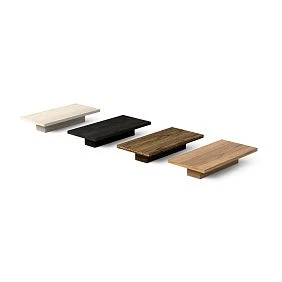
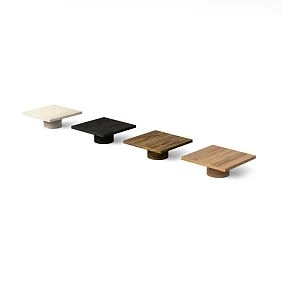
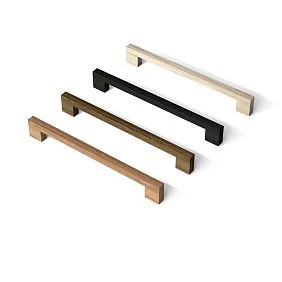
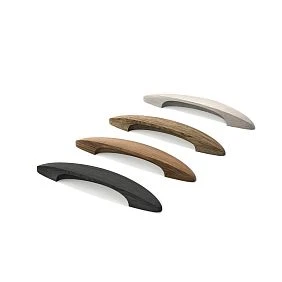
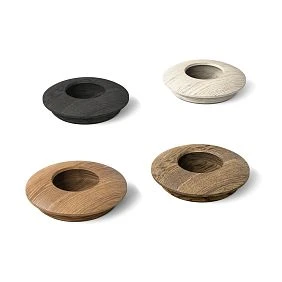
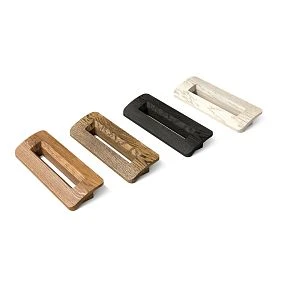
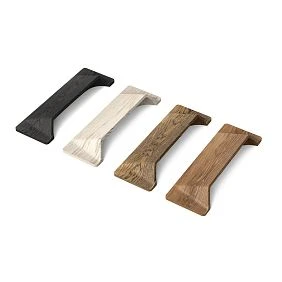
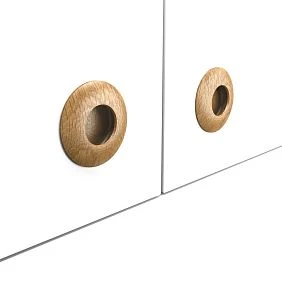
128 mm handles: the most versatile and popular size
If there is something truly universal in the world of furniture fittings, it is the 128 mm handle. This size ranks first in searches, sales volume, and frequency of use in kitchen sets, dressers, wardrobes, and built-in furniture. Why?
It's about proportion. The center distance of 128 mm is the sweet spot between compactness and functionality. The handle is large enough to be comfortably grasped with the whole hand, yet neat enough not to dominate medium-sized facades. Facades with a width of 400 to 600 mm perceive the 128 mm handle as an organic part of the design, without overloading or impoverishing it.
The 128 mm furniture handle is the standard for kitchen lower sections. Drawers under the hob, pull-out sections for dishes, side cabinets near the refrigerator — all are traditionally equipped with this size handle. Moreover, the 128 mm kitchen handle looks equally good both horizontally and vertically, giving the designer additional freedom.
The particular popularity of the 128 mm handle in matte black is explained by recent trends. Dark matte fittings are a powerful visual accent that turns an ordinary white kitchen set into a stylish modern object. Bracket Handle in matte black with a center distance of 128 mm — this is currently one of the most requested options for kitchens in loft, contemporary, and modern classic styles.
Chrome version of the 128 mm bracket handle — a classic that never goes out of style. If you are decorating a kitchen or living room in neutral tones, chrome fits organically into any color scheme. A 128 mm chrome furniture handle with a polished or matte surface looks equally good on facades made of MDF, veneer, laminated chipboard, and natural wood.
For those who are looking Buy a furniture handle In the optimal balance of price, quality, and versatility — start with the 128 mm size. This is a case where popularity is confirmed by practice.
Get Consultation
160 mm handles: confident grip for kitchens and wide facades
The next step in the size range is the 160 mm bracket handle. This size has confidently carved out a niche between the standard 128 mm and the larger 192 mm. Where is it indispensable?
First and foremost — in the kitchen. While lower sections are traditionally equipped with 128 mm handles, for pull-out drawers 500–600 mm wide, a 160 mm furniture bracket handle provides a noticeably more comfortable grip. The hand rests fully on the handle, without the feeling that fingers are "hanging" over the edges. This is especially important for heavy drawers with pots, pans, and large dishes.
The 160 mm bracket handle for the kitchen becomes the choice of those who value not only appearance but also functional comfort. For kitchen facades 715–900 mm high in a vertical orientation, this is one of the most organic sizes: the handle visually elongates the facade without overwhelming it.
In wardrobes — especially in systems with hinged doors and side cabinets — the 160 mm handle is used for doors of medium width (400–550 mm). It is long enough to provide convenient opening and not so bulky as to interfere with the placement of adjacent elements.
Pay attention to handles for kitchen Made of solid wood with a center distance of 160 mm — natural material, warm texture, and organic shape make such a handle a true decorative element. A wooden 160 mm bracket on a white matte MDF facade is fresh, modern, and unconventional.
Rail handles with a center distance of 160 mm, made of stainless steel, chrome, or black matte metal, are actively used today in minimalist and high-tech interiors. A thin rod with small supports creates an effect of lightness, visually "does not weigh down" the facade, while providing excellent functional grip.
192, 224, and 320 mm handles: for large facades, cabinets, and wide drawers
When facades get larger, handles grow too. A 192 mm furniture handle, a 224 mm bracket handle, a 320 mm bracket handle — these are serious fittings for serious surfaces. Let's look at each size separately, because each has its own area of application.
192 mm handle: transition to large format
The 192 mm furniture handle is the size that marks the beginning of the territory of large facades. It is ideal for drawers 600–700 mm wide, for sliding wardrobe doors with a single panel, and for side sections of a kitchen set with extended modules. The difference between 160 and 192 mm may seem small at first glance — just 32 mm. But it is these centimeters that create a fundamentally different feel of grip and visual balance on a large facade.
The 192 mm handle is also used in bathrooms — on vanity units under the sink with wide drawers, on large-format mirrored cabinets. Combined with matte nickel or black coating, such a handle looks modern and expensive.
224 mm bracket handle: for wide cabinets and kitchen facades
The 224 mm bracket handle already belongs to the category of large fittings. This size is in demand for cabinets with wide doors (from 600 mm and above), for full-width drawers of a kitchen module (800–900 mm), for furniture in Art Deco and modern classic styles, where large fittings are part of the decorative concept.
When installed vertically on a cabinet door the 224 mm bracket handle creates a striking vertical accent, visually increasing the height of the facade. This is a technique actively used by designers when creating tall hinged cabinets in dressing rooms and bedrooms.
320 mm bracket handle: scale and character
The 320 mm bracket handle is already almost a long handle. The center-to-center distance of 320 mm with a total body length of 340–360 mm creates a powerful visual element on the facade. This size is used for wide pull-out systems in wardrobes, for large kitchen island modules, and for built-in furniture facades with a width of 800 mm or more.
The 320 mm handle works great in a horizontal position on lower kitchen drawers — especially where a wall-to-wall system with solid pull-out sections is used. It also looks organic in a vertical position on tall cabinet doors.
Cabinet handles A 320 mm size in natural wood is a separate aesthetic. Solid oak, ash, or walnut, treated with oil or wax, gives furniture a tangible natural warmth. Such a detail turns a cabinet from a purely functional object into an interior piece.
Long handles for cabinets: when one handle changes everything
There is a category that stands apart from the standard size range — the long handle for cabinets. These are models with a center-to-center distance of 500 mm and above, up to handles that span the full height of the door panel.
Why do you need a long furniture handle? First, it's impressive. A vertical handle, stretching from the lower third to the upper part of the door, creates a strong design accent. It visually makes the cabinet taller, slimmer, and more monumental. In modern interiors with ceilings of 2.7–3.2 m, a long handle on a cabinet looks architectural — like an element that belongs not only to the furniture but also to the space.
Second, it's convenient. A handle that runs the full length of the door allows you to open the door at any point — by the top edge, the middle, or the bottom part. For tall hinged cabinets, this is especially relevant: you don't need to reach up or bend down. It is physically comfortable and reduces stress on the hinges and the facade.
Long handle for cabinet The Lagom HL-054 from the stavros.ru catalog is an example of such a model: an elongated profile, natural wood texture, and minimalist geometry. It is suitable for cabinets in Scandinavian minimalism, Japanese interior, modern classic, and contemporary styles.
A cabinet with long handles is not just a fashion statement. It is a functional solution that simultaneously solves three tasks: simplifies use, improves proportions, and creates visual identity for the furniture. It's no wonder that high-level designers are increasingly betting on long vertical handles.
Long furniture handle Made from solid wood, it organically fits into eco-style, boho, rustic, Scandinavian minimalism, and Japanese interior — that is, most current trends where natural materials play a leading role.
How to choose a handle when replacing an old one: a practical algorithm
One of the most common situations when buying a furniture handle is replacing an old one. The facades are not changed, but you want to update the handles: a different color, a different shape, a more modern design. How to do this correctly without ruining the facade?
The first step is to remove the old handle. Unscrew the mounting screws from the inside of the facade, gently pull the handle towards you. If it sits tightly, wiggle it slightly.
The second step is to measure the center-to-center distance. Take a ruler or caliper, place it at the center of one hole and measure the distance to the center of the second. This is your key parameter. This is the number you need to look for in the specifications of the new handle.
The third step is to compare with the dimensions of the new handle. If the center-to-center distance matches, the handle will fit perfectly. If not, you will either have to find an exact match or drill new holes.
The fourth step is to check the overall length of the handle. Make sure the new handle does not protrude beyond the edges of the facade or interfere with adjacent elements. This is especially important for narrow facades and drawers located close to a wall or adjacent section.
The fifth step is to check the handle's protrusion. For some brackets, the arc is located high above the surface — this is important in narrow passages (for example, between a kitchen island and the main set). Make sure the protruding handle does not create obstacles when moving.
If you are deciding how to measure a furniture handle before replacement, the main rule is: always measure not the handle itself, but the distance between the centers of the holes in the facade. This guarantees an exact match.
How to choose the handle size for a specific facade
The question 'what size handle to choose for a cabinet, kitchen, or dresser' is one of the most common when designing furniture. There is no single correct answer, but there are proven guidelines that will help you avoid mistakes.
Key rule: the handle should take up approximately 1/3–1/2 of the facade width. If the facade is 400 mm wide — a 128–160 mm handle will look organic. For a 600 mm facade — already 160–224 mm. For a wide drawer of 900 mm — 320 mm or more.
Handle size selection table by facade type
| Facade / drawer type | Facade width | Recommended handle size |
|---|---|---|
| Small drawer (cabinet, bedside) | up to 350 mm | 64–96 mm |
| Medium drawer (chest of drawers, cabinet) | 350–450 mm | 96–128 mm |
| Standard kitchen facade | 400–600 mm | 128–160 mm |
| Wide kitchen drawer | 600–800 mm | 160–224 mm |
| Large drawer / wardrobe | 800–1000 mm | 224–320 mm |
| Tall cabinet (swing door) | height 2000+ mm | 320 mm or long handle |
| Full-height cabinet | height 2200–2700 mm | long handle / profile |
This guideline helps avoid common mistakes and immediately narrows the choice to 1–2 suitable sizes.
For kitchen sets, there is another rule: uniformity. All handles in one set must be of the same type and size (or two coordinated sizes — for example, 128 mm for upper cabinets and 160 mm for lower drawers). A mix of sizes creates visual chaos that disrupts design integrity.
If you choose Handles for kitchen furniture and want to combine different sizes — do it intentionally: upper fronts — one size, lower drawers — another. This is a professional technique that creates rhythm and visual hierarchy.
Types of handles and their size features
Size is an important parameter, but not the only one. The type of handle also affects the optimal center-to-center distance. Let's look at the main types.
Bracket handle
Bracket Handle — the most common type of furniture fitting. Two mounting rods, with an arc or bar between them. Available in a full range of sizes: from 64 to 320 mm and more. The bracket works equally well in both horizontal and vertical positions. Standard sizes: 96, 128, 160, 192, 224, 320 mm.
Profile handle
Profile Handle — an elongated rail with a flat or shaped cross-section. Attached at two or more points. Used for long fronts, cabinets, and kitchen fronts in minimalist style. Profile handle sizes start from 128 mm and can reach 1000 mm and more.
Knob Handle
Button Handle — a compact convex overlay with a single attachment point. Used for small fronts, drawers, and doors of upper cabinets. There is no center distance — only the diameter of the mounting hole.
Recessed handle
Inset handle recessed into the front body: it does not protrude outward, creating the effect of furniture without fittings. Ideal for minimalist interiors and small spaces where every centimeter of space counts. It has its own standard sizes for groove length.
Surface-mounted handle
Overlay handle fixed on the front surface, creating a raised decorative element. Often used in classic and neoclassical interiors, where the handle is part of the ornamental concept of the front.
Handle size and interior style: how they are connected
Handle size is not only a technical parameter but also a design tool. A properly chosen size enhances the room's style, while an incorrect one destroys it.
In minimalist interiors, preference is given to small brackets of 96–128 mm or long profile handles that do not disrupt the clean lines. In classic interiors, medium-sized handles of 128–160 mm with shaped profiles, curls, or overlay decorative elements are more appropriate. In loft and industrial design, large brackets of 160–320 mm in black matte metal create the necessary weight and character.
For Scandinavian style, wooden handles are organic — brackets made of solid oak or birch with a center distance of 96–160 mm. They combine natural tactility and the laconic forms that are so valued in this direction.
Japanese minimalism and eco-interiors dictate the use of natural materials with understated forms — a wooden bracket of 128 mm or Long furniture handle fit perfectly into an array with a calm texture.
Pull-out drawers: features of choosing a handle
Pull-out drawers are a separate story. Here, the handle experiences significantly more load than on hinged doors. Every time you open a drawer, you apply force in the horizontal plane, and this force is transmitted to the mounting holes. The heavier the contents of the drawer, the more reliable the handle should be and the more important its size.
For light drawers — accessories, cutlery, small items — handles of 96–128 mm are suitable. For drawers with dishes, clothes, tools — 128–160 mm and above. For deep pull-out systems with heavy contents (pots, power tools, bedding) — handles from 160 to 320 mm with a reliable two-point mounting system are optimal.
Which handles to put on pull-out drawers? Practice shows: a bracket is the best choice. It distributes the load evenly across two points, provides a secure grip, and lasts a long time without deformation. A knob on a heavy drawer is not a good idea: one mounting point experiences concentrated load, and over time the fastening becomes loose.
Handles 80 mm and 64 mm: very small sizes
In the size range, there are also very compact formats — a furniture handle 80 mm and a bracket handle 64 mm. Where are they used?
The 80 mm handle is an intermediate size between a knob and a standard bracket. It is used for narrow drawers of bathroom cabinets, for small doors in niches, for drawers under the sink or built-in refrigerator. If 96 mm seems too large for a particular facade — 80 mm will be the exact answer.
The 64 mm bracket handle is the minimum format for bracket-shaped handles. It is used for small boxes, insert drawers in storage systems, decorative cabinets. For full-sized kitchen or cabinet facades, 64 mm is too small.
Furniture handle 1000 mm: format for tall furniture
At the other end of the size spectrum is a 1000 mm furniture handle. This is no longer just a handle, but a full-fledged architectural element. It is installed on tall cabinet-pencil cases, refrigerator cabinets in restaurant equipment, and built-in wardrobes with doors 2.4–2.7 m high.
A 1000 mm handle creates the feeling of a monolithic, well-proportioned object. In modern interiors with high ceilings, this is a powerful technique that turns an ordinary cabinet into an architectural accent of the room. To install such a handle, it is important to correctly calculate the location of the mounting points and ensure that the facade structure can withstand the load.
Common mistakes when choosing a handle size
Experience shows that most mistakes when choosing furniture handles are related not to ignorance, but to inattention. Let's look at the most common ones.
Looking only at the color, ignoring the size. A beautiful black handle in an online store — but if its center-to-center distance doesn't match the holes in the facade, you'll either have to drill or return it. Always check the size first.
Confusing the overall length and the center-to-center distance. A handle listed as "160 mm" — this is the center-to-center distance, not the overall length. The full length of such a pull will be 175–185 mm. If you don't account for this nuance, the handle may protrude beyond the edge of a narrow facade.
Buying a new handle without measuring the old holes. The most common mistake. Measure the holes in the facade — it takes two minutes but saves hours of hassle and hundreds of rubles.
Installing a handle that is too small on a heavy facade. A 96 mm pull on a massive kitchen door weighing 8–10 kg is both inconvenient and unsafe for the mounting holes.
Choosing a handle that is too long for a small drawer. A 320 mm handle on a drawer 400 mm wide will extend beyond the edges of the panel or take up almost its entire opening — this looks ridiculous and interferes with operation.
Not accounting for the handle's protrusion in a narrow passage. In hallways and kitchens with limited space, the arc of a pull protruding 30–40 mm from the surface can become a serious obstacle. In such cases, consider Inset handles or Surface-mounted handles with minimal protrusion.
Ignore the handle material. Plastic and cheap alloy on heavy drawers deform quickly. For kitchen furniture, choose handles made of stainless steel, aluminum, or natural wood — materials that withstand daily use.
Where to buy furniture handles: what to look for
Once the size is chosen, the material is determined, and the style is agreed upon — all that remains is to buy. But even here there are nuances that affect the final result.
First, buy handles with a spare. If you are equipping a full kitchen set of 15 fronts — order 17–18 handles. Spares will come in handy in case of accidental damage, allowing you to replace one handle without reordering the entire batch.
Second, check the package contents. The kit should include mounting screws of the required length. The standard bolt length is 25 mm, but for thick fronts (MDF 20–22 mm + overlay) a bolt length of 30–35 mm may be needed.
Third, pay attention to coating compatibility. If you already have hinges and guides in chrome — handles in matte nickel may look like a mistake. The hardware should be in a unified color scheme.
Buy a bracket handle made of natural wood, with confirmed manufacturing quality and clear dimensional characteristics, can be found in the stavros.ru catalog — which offers a wide range of wooden handles for kitchens, cabinets, dressers, and nightstands in all standard sizes.
Natural wood handles: why this is a special choice
The furniture fittings market offers handles made of metal, plastic, ceramics, and glass. But handles made of natural wood occupy a special place — and not only because of aesthetics.
Wood is a material with unique tactile properties. It feels warm to the touch, does not cool your hand in winter, and does not slip when hands are wet. A wooden handle bracket 128 mm or 160 mm becomes a pleasant daily ritual of touching furniture. This is something that metal and plastic cannot replicate.
Wooden handles made of solid oak, ash, walnut, or birch have high strength — they withstand years of use without deformation, do not rust, and do not tarnish. With proper care — periodic application of oil or wax — a wooden handle lasts for decades and only becomes more beautiful over time, acquiring a noble patina.
The catalog on stavros.ru presents handles for kitchen made of solid wood with various finishing options: without coating, oil, wax, stain, tinting. This allows you to choose a handle not only by size but also by color — to match the veneer tone, the facade color, or the overall color scheme of the interior.
Handles for the kitchen: specifics of selection
The kitchen is the most heavily used room in the house in terms of furniture fittings. Here, handles are opened and closed several hundred times a day, they are exposed to humidity, temperature changes, contact with fats and detergents. Therefore, handles for kitchen cabinets must meet increased requirements for strength and durability.
For upper cabinets, the standard recommendation is handles 96–128 mm, located at the bottom (for convenient opening). For lower drawers — 128–160 mm, located in the center or at the top of the facade. For tall cabinets and columns — 192–320 mm or long vertical handles.
The orientation of the handle also matters. Horizontal placement is a classic for lower drawers, it naturally follows the trajectory of the hand when opening. Vertical — for doors of swing cabinets, it simplifies grip when moving the door to the side. On facades with equal width and height, both options are possible.
Cabinet handles: special rules
A cabinet is not a kitchen, and the approach to choosing a handle is somewhat different. The load on cabinet handles is lower (10–30 openings per day vs. 100–200 in the kitchen), but the visual role of the handle is often higher — a cabinet in a bedroom or living room is in a zone of constant visual attention.
For hinged cabinets up to 500 mm wide, handles of 128–160 mm in vertical orientation are optimal. For wide double-door cabinets with each door 600+ mm wide — 192–224 mm. For tall pencil cabinets from 2 m — 320 mm or long wardrobe handle.
In bedroom sets, it is customary to maintain a unified solution: the handles of the dresser, bedside tables, and cabinet should be in the same style and type. Sizes may differ (on the dresser — 96 mm, on the cabinet — 160 mm), but the shape and finish are uniform. This creates a sense of a complete, designed space.
Handles for dressers and nightstands: selection subtleties
A dresser is multi-level furniture where each drawer has its own front. Standard recommendation: drawer width 400–500 mm — handle 96–128 mm, width 500–700 mm — 128–160 mm. All handles on the dresser should be the same size — this creates rhythm and a sense of system.
What size handle to choose for a dresser? If you are unsure between two sizes, choose the smaller one. On a dresser, the handle does not bear as much load as in the kitchen, and a smaller bracket looks neater without overwhelming the front.
For nightstands (bedside, under TV, in the hallway), handles of 64–96 mm are most often suitable. A compact nightstand with a small drawer — a small handle. The ratio of furniture and hardware sizes should be proportional: this is one of the main principles of good design.
FAQ: answers to popular questions about furniture handle sizes
Which furniture handle is the most universal in size?
The center distance of 128 mm is rightfully considered the most versatile. Handle bracket 128 mm suitable for most kitchen fronts, dressers, bedside tables, and medium-sized cabinets. It is one of the most requested sizes in the furniture fittings catalog.
What is more important when replacing a handle: its overall length or center distance?
When replacing an old handle with a new one, the center (center-to-center) distance — the distance between the centers of the mounting holes — is critically important. If this parameter matches, the handle will fit without additional work. The overall length is important for checking that the handle does not extend beyond the edges of the front.
Which handles are better for the kitchen: 128 or 160 mm?
For standard kitchen fronts with a width of 400–500 mm, the optimal choice is handles for kitchen 128 mm. For wide drawers and large fronts with a width of 500–600 mm or more — 160 mm provides a more comfortable and confident grip.
What handle size should I choose for a cabinet?
For cabinets with hinged doors 400–500 mm wide — 128–160 mm in vertical orientation. For wide doors 600+ mm — 192–224 mm. For tall cabinets and wardrobes — 320 mm or more, or vertical Long handle for cabinet.
Can I install a handle of a different size instead of the old one?
It is possible if the center distance of the new handle matches the old holes in the facade. If not, you will have to drill new holes and fill the old ones. In some cases (for example, when switching from 128 to 160 mm) this is easy to do, in others it may require replacing the facade.
Handle 96 or 128 mm — which is better for a small drawer?
For a drawer up to 400 mm wide — 96 mm. For a drawer 400–500 mm — 128 mm. If the facade is very narrow (up to 300 mm) — consider 64–80 mm or a knob handle.
How to correctly measure a handle for replacement?
Remove the old handle, place a ruler at the center of one hole in the facade and measure the distance to the center of the second hole. This is the center distance — exactly what you need to look for in the specifications of the new handle.
What handles are installed on pull-out drawers?
For pull-out drawers, pull handles with two mounting points are preferred — they distribute the load evenly. The size depends on the drawer width: 96–128 mm for small ones, 160–224 mm for wide ones. A knob handle on a heavy pull-out drawer is an undesirable option due to concentrated load on one mounting point.
Where to buy furniture handles made of natural wood?
The stavros.ru catalog offers a wide selection furniture handles of solid wood handles in all standard sizes: 96, 128, 160, 192, 224, 320 mm. Here you can choose a pull handle, profile, overlay, or inset model for a specific facade and interior style.