Article Contents:
- When a TV needs a frame or framing
- What to choose: frame, baguette, moldings or panels
- TV frame in a modern interior
- TV in a baguette: classic and neoclassical
- TV area with slats: modern volume and vertical rhythm
- TV area with cabinet and panels: buyer scenario
- How to choose the size of a TV frame
- Wall decor with a large TV: scale and proportions
- How to make a TV part of the interior: principles and approaches
- TV zone with backlight and slats: how to add atmosphere
- Mistakes to avoid when designing a TV zone
- What to check before buying decor for a TV zone
- How to design a TV in a classic interior: details and nuances
- Frame around the TV made of moldings: how it works
- Framing a TV on the wall: materials and their features
- How to design a TV zone without overload: the 'less is more' principle
- Wooden frame around the TV: installation and mounting
- FAQ: Answers to Popular Questions
- Can you make a frame around the TV with your own hands?
- What is better for a TV zone: slats or a frame?
- Can a wooden baguette be used around a TV?
- How to design a large TV on the wall?
- Is backlighting behind the TV necessary?
- How to hide wires when designing a TV zone?
- Which material is best for a TV frame?
- Can slats and a frame be combined in one TV zone?
- About the Company STAVROS
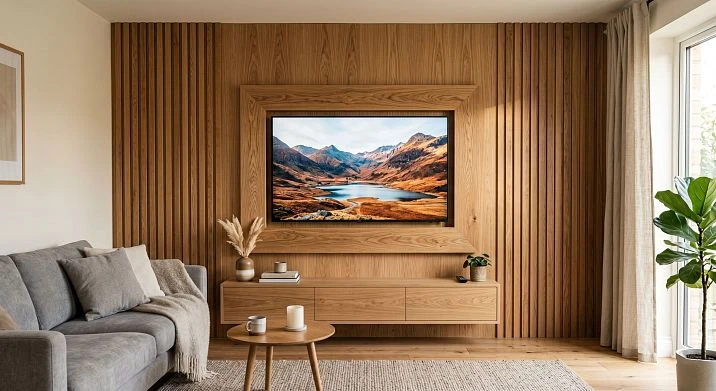
A TV frame on the wall is not just a decorative element, but an architectural solution that turns a screen hanging on the wall into a full part of the interior. When the TV is framed with a wooden baguette, moldings, slatted panels, or a ready-made decorative frame, it ceases to be a black rectangle on an empty plane and becomes the accent of the entire living room space.
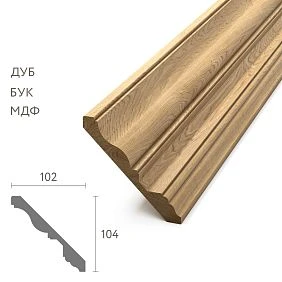
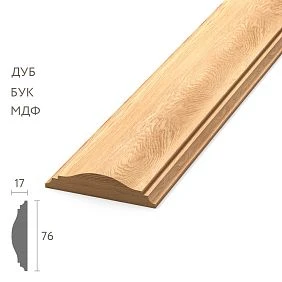
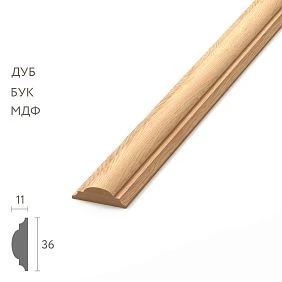
View frames, baguette, moldings, and panels for a TV zone — ready-made STAVROS solutions for mounting the TV on the wall.
When a TV needs a frame or framing
Modern TVs are getting bigger — 55, 65, 75 inches have long become the norm. And the larger the screen, the more acute the imbalance: a huge black field surrounded by a bare wall. This is not just an aesthetic problem — it's a design mistake that is easy to fix if you know which tools to use.
Framing a TV on the wall becomes necessary in several situations. The first and most obvious is when the TV hangs on a completely empty wall. Light plaster or plain wallpaper only enhances the contrast with the dark screen, and the eye doesn't know where to focus. The second situation is when the interior is done in a classic or neoclassical style, where wooden doors, stucco cornices, and solid wood baseboards create a certain architectural system, and the TV doesn't fit into it at all. The third is when there is a TV stand underneath, but the wall above it is empty, and the area looks unfinished, as if the furniture was just placed and forgotten.
There is another scenario that is especially common: a person wants to make wall decor under the TV such that the screen resembles a painting in a frame. This is not a fantasy, but a quite achievable idea — with the right selection of profile, proportions, and material.
Finally, framing is needed when the TV needs to be visually connected with furniture, wooden panels, and baseboards — so that the entire TV area reads as a single composition, rather than a set of disparate items.




What to choose: frame, baguette, moldings, or panels
Before starting the design, it's important to answer one question: what exactly do you want to achieve? This is not rhetoric — the choice of material and configuration directly depends on the answer.
Frame for TV — if the task is to highlight the screen as an independent visual object. The frame creates a clear boundary, separates the TV from the wall, and gives it a finished look. This works especially well in minimalist interiors, where every element must be precise and accurate. Decorative TV frame can be made from solid wood or MDF for painting — depending on style and budget.
A wooden TV frame — if you want the effect of a picture in a frame or need to fit the device into a classic interior. A frame is a profile element that, when assembled correctly, creates the feel of a museum exhibit. TV in a frame looks organic in living rooms with stucco molding, wooden doors, cornices, and classic furniture.
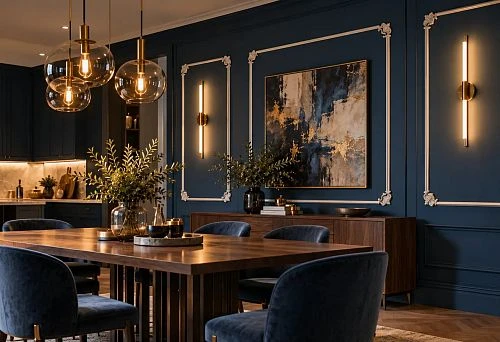
Moldings around the TV — if you need an architectural composition on the wall. Moldings allow you not just to outline the screen, but to build an entire system around it: panels, niches, geometric fields. Moldings for the TV zone work well in neoclassical and modern interiors with architectural accents.
Slatted panels for the TV zone — if you need modern volume, vertical rhythm, and a sense of depth. Slats transform a flat wall into an accent element, adding texture and scale. Rafter panels look especially good behind a large TV when you need to create a visual base for the screen.
Wall panel for the TV zone — if you need to cover a large wall area behind the TV and create a unified background element. The panel can be slatted, paneled, or solid — wall panel for the TV zone sets the scale of the entire zone and serves as a background for the whole composition.
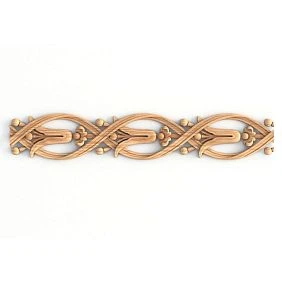
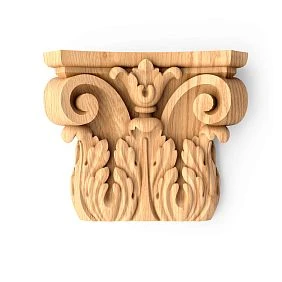
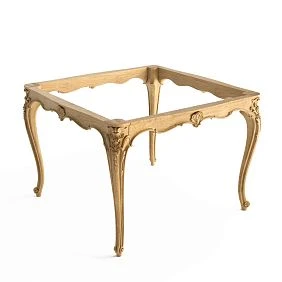
Our factory also produces:



TV frame in a modern interior
A modern interior cannot stand clutter. There is no room for heavy carving, gilded ornamentation, or ornate curls — unless it is a deliberate eclectic move. TV framing in a modern style is built on geometry, proportions, and material.
The best choice for a modern living room is a minimalist wooden profile with clean lines. It does not distract attention from the screen, but clearly defines its boundaries. Wooden TV frame made of solid ash, oak, or walnut adds the warmth of natural material to the space — exactly what interiors with concrete walls and metal decor lack.
A thin baguette is another option for modern spaces. It works like a picture frame, but without academic heaviness: a lightweight profile, minimal protrusion, a clean color without varnish or with a matte finish. Next to such a baguette, the TV ceases to look like a foreign object.
Vertical slats behind the screen are a separate story. They create depth, add rhythm, and make the wall behind the TV an independent decorative element. Wooden slats for the TV zone they look significantly more expressive from the array than their PVC or MDF counterparts — the texture of natural wood provides that very "expensive" effect that is difficult to replicate with artificial materials.
Lighting along the perimeter of the frame or along the slats adds depth and atmosphere. But it's important to understand: the lighting should be background, not direct — it should not shine on the screen or create glare. Properly installed lighting makes the TV area resemble a professional design installation.
A cabinet in the color of the wood or wall completes the picture. When the cabinet, frame, and panels are made of the same material or color scheme, the entire area reads as a single object — not as a TV plus something below.
Get Consultation
TV in a frame: classic and neoclassical
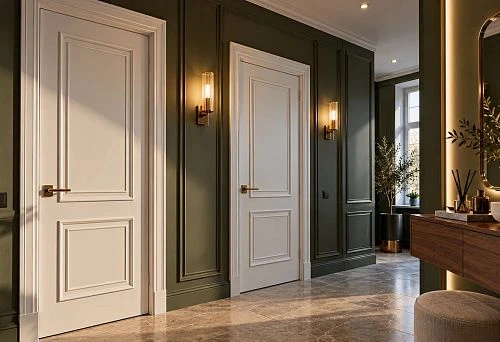
If your interior has stucco cornices, wooden paneled doors, classic furniture, or at least a high profiled baseboard — a TV on the wall will stand out from this system until you frame it in a matching style.
Wooden frame for TV — it is the very tool that helps reconcile modern technology with a classic or neoclassical interior. A wooden profile looks significantly more expensive than its plastic counterpart: it is heavier, more textured, and warmer in appearance. With good execution TV in a frame literally turns into a painting — especially if the screen is large and positioned at the right height.
The key point when working with a frame for a classic interior is matching the profile. If the room has doors with rectangular applied elements, then the TV frame should also be rectangular, with a similarly scaled profile. If the cornice has a wavy cross-section, it's better to choose the frame in the same logic. The unity of architectural details is what distinguishes a professionally made interior from a random set of items.
It's important not to overdo it with massiveness. A too heavy frame will make the TV look like an old museum portrait — and that's not always what you need. For a 55–65 inch screen, the optimal frame width is 40–80 mm. For a screen of 75 inches or more, a wider profile can be used, but then it should be calm in decor — without excessive carving or relief.
The distance from the frame to the cabinet is another parameter that is often ignored. If the frame hangs too high above the cabinet, a visual gap forms between them. It is optimal when the bottom of the frame is 100–150 mm from the top surface of the cabinet — then the area reads as a single whole.
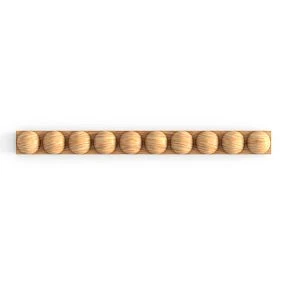
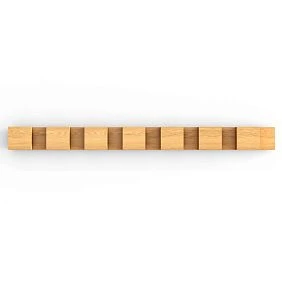
Decorative Inserts can complement the corner joints of the frame or serve as accent elements along the perimeter of the TV wall — this is a small detail that provides a big visual effect in a classic interior.
TV zone with slats: modern volume and vertical rhythm
Slatted panels behind the TV are one of the most popular design techniques of recent years. And this popularity is well-deserved: slats make the wall lively, add texture and depth, and the vertical rhythm visually stretches the ceiling.
The TV zone with slats works well in Scandinavian, modern, and Japandi-style interiors. There is no room for ornate details here — only clean lines, natural material, and proper proportions. slatted panel for the television made of solid wood creates that very effect of "expensive and simple" that is so difficult to achieve with cheap alternatives.
The main rule when choosing slats for the TV zone is not to make the rhythm too frequent. A small, frequent step of slats next to the screen creates visual noise that tires the eyes when watching. The optimal step for slats behind the TV is from 40 to 80 mm between the planks, depending on the width of the slats themselves and the overall scale of the wall.
Slats combine well with a hanging cabinet — it is both practical and visually correct. The cabinet seems to "grow" out of the slatted background, and the TV itself ends up in the center of the accent wall. If you add lighting along the bottom edge of the slatted panel, the effect is doubled.
For a TV zone with slats, it is important to choose the right material. Solid wood products — this is a fundamentally different level of quality compared to MDF or PVC. Solid wood does not deform from temperature and humidity changes, does not lose color over time, and only gains character over the years. Ash, oak, pine — each type of wood gives its own texture and its own tone.
Panels behind the TV on the wall Can be mounted either across the entire width of the wall or only in the TV area — 200–400 mm wider on each side. The second option works when you need to create an accent rather than fully cover the wall. This saves material and gives a lighter visual result.
TV zone with a media console and panels: buyer scenario
This is the most 'ready-made' and commercially clear design scenario. The person already knows what they want: a TV on the wall, a media console below, a beautiful panel behind — and it all should look like a finished designer object.
The media console sets the lower reference line for the entire zone. The design of everything else starts from its height, width, and color. If the console is light, the panels and frame can be either light or dark for contrast. If the console is dark, it's better not to intensify the dark tone behind, otherwise the zone will become too heavy.
wall panel for the TV zone Assembles the center of the entire composition. It can be slatted, paneled, or solid — depending on the interior style and desired effect. A slatted panel adds rhythm and movement, a paneled one adds classical strictness, and a solid one provides a calm neutral background.
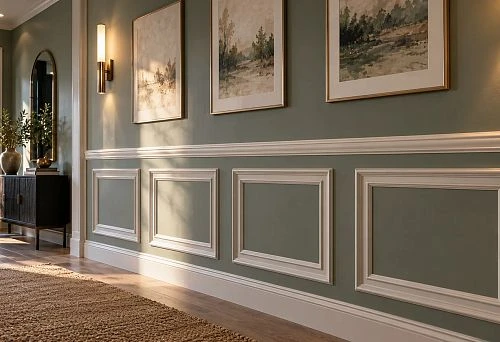
Moldings around the TV Make the borders of the frame or panel neater and more finished. They work like a 'mat' in a picture frame: they mark the transition between surfaces and give the zone architectural clarity. Molding can be used both around the perimeter of the TV and as a divider between panels of different textures.
Lighting adds depth. A properly hidden LED strip behind the slats or around the perimeter of the frame creates a glow effect that works even when the TV is off. This transforms the TV zone from a functional area into a full-fledged interior object.
Baseboard for completing the TV wall — a detail that is often forgotten. But in vain: it is the baseboard that connects the panel to the wall and floor, completes the vertical line, and makes the installation neat. Without a baseboard, even a perfectly assembled panel can look unfinished.
How to choose the frame size for a TV
One of the most common questions: how far should the frame extend beyond the edges of the screen? The answer depends on several factors, and none of them can be ignored.
First rule: the frame should not tightly clamp the TV. A technical gap is needed between the edge of the screen and the inner edge of the frame — at least 10–15 mm on each side. This is necessary not only for aesthetics but also for ventilation: the TV heats up, and without free space around the perimeter, this can lead to overheating.
Second rule: visual breathing room is needed around the TV. Even if technically the frame can be placed flush, visually it will look heavy and cramped. The optimal inner gap is 20–30 mm, which gives a feeling of lightness and neatness.
For a large screen of 65 inches or more, it is better to choose a calm profile without complex decor. The larger the TV, the more modest the frame should be — otherwise, the frame will start competing with the screen for the viewer's attention. A profile width of 40–60 mm with a clean cross-section is the optimal option for a large modern TV.
For a small TV up to 50 inches, you can afford a more decorative framing: a wider profile, a baguette with relief, a classic molding. A small screen needs visual "weight" in the framing so as not to get lost on a large wall.
Width wooden baguette for TV should match the scale of the wall and furniture. If the wall is high and the cabinet is massive, a narrow thin profile will look out of place. Conversely, a heavy wide baguette on a small wall with light furniture will create a feeling of overload.
The frame should be visually connected to the cabinet — this is fundamentally important. When the frame and cabinet are made of the same material or the same color, a visual connection arises between them, uniting the entire area. If they are different, the area splits into two unrelated objects.
Wall decor with a large TV: scale and proportions
A large TV on the wall is not a problem, but a resource. A large screen gives a reason to create a truly massive TV zone that will become the architectural center of the living room.
When the screen diagonal is 75 inches or more, the wall behind the TV should work for it, not compete. The best approach is wall panel for the TV zone across the entire width of the wall. This creates a uniform background against which the TV sits organically — like a cinema screen in a properly designed hall.
For a large TV, slatted panels are best made with a wide spacing and large slats. A fine rhythm next to a large screen visually "shrinks" the entire zone. The optimal slat for an accent wall behind a large TV is 30–50 mm wide with a spacing of 50–80 mm.
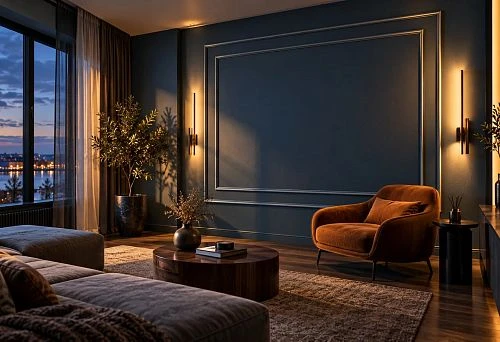
Moldings in the area with a large TV work as a frame system: they divide the wall into fields, one of which is occupied by the screen. This is especially effective in neoclassical interiors where moldings are already present on other walls — then the TV wall fits organically into the overall architectural logic.
How to hide an empty wall behind a TV is a question often asked to designers. The answer is simple: fill it with texture and scale. Wooden panels for the TV do exactly that — they turn an empty plane into an expressive architectural element.
How to make a TV part of the interior: principles and approaches
A TV as a picture on the wall is not just a beautiful metaphor, but a very specific design principle. For it to work, several conditions must be met.
Unity of material. The frame, cabinet, panels, baseboards, and doors should be made of the same material or color group. Mixing different wood shades is one of the most common mistakes. A dark oak frame with a light ash cabinet creates a visual conflict that won't disappear under any lighting.
Correct placement height. The center of the screen should be at the eye level of a seated person — approximately 110–120 cm from the floor. This is where design begins: from the screen center, the positions of the frame, cabinet, and panels are calculated.
Connection with furniture. If the TV cabinet has legs, then the slats behind the TV should also be mounted with a small gap from the floor — this creates a sense of lightness. If the cabinet sits on the floor without legs, it's better to mount the panel from the floor to avoid gaps.
Wires are a separate task. A beautifully designed TV area with protruding wires loses 80% of its appeal. Before installing panels and the frame, you need to plan cable channels or hidden wiring in the wall in advance.
Decor around the TV is a complex task where every detail matters: from the profile width to the backlight color. That's why the best result is achieved not when elements are selected individually, but when the entire area is designed as a single whole.
TV area with backlight and slats: how to add atmosphere
Backlighting in the TV area is a separate discipline. Making it both beautiful and functional is a task that requires understanding several principles.
First principle: the backlight should be indirect. The LED strip should not shine directly into the eyes or onto the screen. It is hidden behind slats, in frame grooves, behind molding protrusions, or in the niche between the panel and the wall.
Second principle: the color temperature of the backlight should match the general lighting of the living room. Warm light (2700–3000 K) works well with wood and creates a cozy atmosphere. Cool light (4000–5000 K) is more suitable for modern minimalist interiors with white walls.
A backlit TV zone with slats is perhaps the most cinematic solution for a modern living room. When warm light passes through vertical slats and creates soft stripes on the wall, it acts as a visual anchor: the eye returns to this spot again and again.
Slatted panels for the TV area are specifically designed for such installation: there is space between the slats and the panel base where the LED strip can be conveniently placed. This does not require complex technical solutions—only proper planning during the installation phase.
The third principle: the backlight should not glare on the screen. For this, the light source must be positioned behind the screen plane, not in front of it. If the backlight is mounted around the perimeter of the frame, it should be directed at the wall, not at the viewer.
Mistakes to avoid when designing a TV zone
Experience with interior projects allows us to highlight several typical mistakes encountered when designing a TV zone independently. Knowing about them in advance means not wasting money on rework.
Mistake 1: a too thin random strip around the TV. A thin slat 10–15 mm wide nailed around the perimeter of the screen does not create the feeling of a frame—it looks like unfinished installation. The TV frame should have weight and scale corresponding to the screen size.
Mistake 2: a frame without considering the screen size. A too small frame gets lost on a large TV. A too large one creates the feeling that the TV is drowning in a box. Proportions are key to everything.
Mistake 3: an active ornament next to the equipment. Carved elements, complex profiles with numerous reliefs—all of this starts competing with the image on the screen. This is especially noticeable when the TV is off and the screen pattern is neutral.
Mistake 4: wires are not hidden. Already mentioned above, but worth repeating: exposed wires ruin any design. Plan cable channels in advance, before installing panels and the frame.
Mistake 5: forgotten ventilation. The frame should not block the TV's ventilation openings. This is especially important if the frame fits tightly against the body—a technological gap is mandatory.
Error 6: Small, frequent rhythm of slats behind the screen. Slats with a pitch of 15–20 mm near the screen create visual noise — especially in combination with active imagery. For the TV zone, it's better to choose a sparser rhythm.
Error 7: The frame is not connected to the media console. The frame hangs separately, the console stands separately — there is no material or visual connection between them. This is called a "mishmash" and kills the sense of interior unity.
Error 8: Different wood shades. Honey oak, yellow pine, and gray ash on the same wall — this is not eclecticism, it's a design failure. Choose one material or one color group for all wooden elements of the TV zone.
Error 9: Backlighting that glares on the screen. An LED strip directed straight at the screen creates reflections and makes viewing uncomfortable. The backlight should work for the background, not for the TV itself.
What to check before buying decor for the TV zone
Before ordering a TV frame for the wall, Wooden Picture Frame, Moldings or Rafter panels, go through this list — it will help you avoid mistakes in your choice and not waste money on rework.
-
TV diagonal — the scale of the frame and profile width depend on it
-
Wall size — the width and height of the wall determine how much area the panels can occupy
-
Distance from the wall to the cabinet — needed for correctly choosing the height of the lower edge of the frame
-
Location of sockets and boxes — panels and frame should not block access to electrical components
-
TV mounting type — the wall bracket must remain accessible after frame installation
-
Is access to the back panel of the TV needed — important for those who change connections
-
Color of the cabinet and floor — basis for choosing the color and material of the frame and panels
-
Baseboard height — Skirting made of solid wood should harmonize with the frame profile and moldings
-
Interior style — determines what to choose: a minimalist profile, classic baguette, or slats
-
Frame material — solid wood, MDF, baguette, molding, or slat panel: each has its own characteristics
-
Is backlighting needed — if yes, plan grooves and cable routing in advance
This list is not a formality. Each item affects the result. Missing one can give you a beautiful frame that doesn't match the color, doesn't cover the outlet, or blocks the TV ventilation.
How to style a TV in a classic interior: details and nuances
A classic interior is a system. Here, every element is subordinate to the overall logic: proportions, symmetry, material quality, and unity of details. Integrating a modern TV into this system is a task that requires delicacy.
It all starts with choosing the framing format. A frame for a TV on the wall in a classic interior should resemble a picture frame: rectangular, with a profiled cross-section, with moderate decor. No sharp corners without a chamfer, no flat surfaces — only profiled geometry that creates a play of light and shadow.
Wooden moldings around the TV in the living room allow you to create a frame system integrated into the overall wall architecture. This is especially effective when the moldings form several levels: an inner frame around the TV, a larger outer decorative frame, and a molding along the perimeter of the entire TV wall.
The color of the frame in a classic interior is a separate story. White with gold patina, wenge, natural oak, or walnut — the choice depends on the color of the walls, furniture, and flooring. The main rule: the frame should either match the furniture color or be contrasting — but never random.
Decorative solid wood overlays can be used in the corners of the frame or as rosettes at the intersections of moldings — this is a classic technique that adds sophistication without overloading.
Frame around the TV made of moldings: how it works
A molding frame is not a ready-made product that you buy and hang. It is a system that is assembled on the wall. That is why, with the right approach, the result looks much richer than any ready-made frame.
The principle is simple: Moldings they are cut to size and mounted around the perimeter of the TV with the necessary gaps. The corners can be made as butt joints at 45 degrees — this is a classic that looks flawless. The inner perimeter of the frame is painted or covered with wallpaper, creating a contrasting background for the screen.
A more complex option is a double molding frame. The inner molding is closer to the screen, the outer one has a larger gap. Between them is a field that can be painted in an accent color or covered with textured wallpaper. This technique makes the TV a true dominant feature of the wall.
For such a system, it is important to use moldings from the same series or at least with compatible profiles — otherwise the joints will be unsightly and the corners won't align. All elements must be made of the same material: Wooden moldings give a warmer and more organic result than polyurethane analogs.
Framing the TV on the wall: materials and their features
Choosing the material for the frame is a choice between durability, aesthetics, and cost. Let's break down the main options.
Solid wood is the best option in all respects. Natural texture, durability, and the ability to repaint or resand if necessary. STAVROS solid wood products made from oak, ash, pine, and other species — with the option to choose finish and color.
MDF for painting is a more affordable option that, when done correctly, looks neat. It suits minimalist modern interiors where geometry matters more than material texture.
A wooden baguette is a profile element originally designed for framing paintings. It comes in hundreds of cross-section and decor variations. Wooden baguette for a TV on the wall — one of the fastest ways to give the screen a refined look.
Slat panels are no longer just a frame but a whole architectural element. They add volume and texture, cover a large wall area, and act as an independent decorative object. solid wood slat panels — is an investment in interior quality that pays off with visual results.
How to design a TV zone without clutter: the 'less is more' principle
One of the hardest tasks in interior design is knowing when to stop. The TV zone is a space that is easy to overload: frame, moldings, slats, lighting, a cabinet with decor — and suddenly the wall is screaming, and the TV gets lost in the chaos.
The 'less is more' principle applied to the TV zone means this: every element should work toward the overall idea, not exist on its own. If slats are chosen, the frame can be minimal or absent altogether. If a baguette is chosen, slats should only be a background, not the dominant feature.
To design a TV zone without overloading it, it's better to choose one material and one technique: either slats, moldings, or a panel — but not everything at once. Backlighting remains a universal addition that works with any option — provided proper installation.
Framing for a TV on the wall made of natural wood is already a sufficient accent in itself — there's no need to add an active wallpaper pattern or bright backlighting. Sometimes restraint is the main design solution.
Wooden frame around the TV: installation and mounting
Installing a TV frame is a process where sequence matters. First, the TV mount is installed, then cables are laid, and only after that the frame or panel is installed.
Attaching the frame to the wall depends on the wall material. For drywall — dowels with expansion elements. For brick or concrete — straight dowels. For a wooden wall — self-tapping screws. In any case, the frame must be securely fastened: it should not vibrate from the TV's sound or deform under its own weight.
Important: the frame is mounted around the TV, not together with it. This means the TV can be removed and replaced without touching the frame. This is convenient: when replacing the TV with a new model of a different diagonal, it will be enough to adjust the inner size of the frame, rather than redoing the entire TV zone.
for wooden frame for a TV on the wall made of solid wood, it's important to consider the weight of the structure. Solid wood is a heavy material, and with a profile width of 80 mm or more, a frame for a large TV can weigh several kilograms. This must be taken into account when choosing fasteners.
FAQ: Answers to popular questions
Can you make a frame around the TV yourself?
Yes, it's real. For a simple frame wooden molding you'll need a miter saw, PVA glue, finishing nails, and patience. The hardest part is cutting the corners at exactly 45 degrees. With careful work, the result will look professional. For of slatted panels you'll need more tools and preparation, but the principle is the same.
What's better for the TV area: slats or a frame?
It depends on the interior style and the desired result. rails create a modern accent wall and work well in minimalist, Scandinavian, and Japandi interiors. A frame or molding — when you need to make the TV look like a painting or fit the device into a classic interior. Both options can be combined: slats as a background, a frame as a border for the screen.
Can I use a wooden molding around the TV?
Yes, a wooden molding is one of the best options for framing a TV. It looks especially organic in interiors that already have wooden Solid wood skirting boards, doors, frames, or classic trim elements. The main thing is to choose a profile proportional to the screen diagonal and the scale of the wall.
How to design a large TV on the wall?
For a large screen from 65 inches, the optimal choice is a calm, wide frame. This could be wall panel for the TV zone across the entire width of the wall, Rafter panels with a wide spacing or Moldings, creating an architectural framing system. Decorative ornament should be minimized — it will compete with the screen.
Is backlighting behind the TV necessary?
Backlighting is not a mandatory but very effective element. It adds depth and atmosphere, especially in combination with plank panels. The main condition: the backlight should not create glare on the screen. The LED strip is hidden behind slats or in frame grooves and directed at the wall, not at the viewer. Color temperature — 2700–3000 K for warm, cozy lighting.
How to hide wires when designing a TV area?
The best solution is to lay a cable channel in the wall before installing the panels. If the wall is already finished, you can use decorative cable channels that are mounted on top of the wall and closed with a cover. In a system with plank panels wires are conveniently hidden behind the panel — this allows you to achieve a completely clean surface.
Which material is best for a TV frame?
Wood paneling — the best choice in terms of quality, durability, and aesthetics. It is warm, textured, and can be repainted or restored. MDF for painting is a budget alternative with good results when executed neatly. Polyurethane is the cheapest option, but it does not provide the warmth and weight that distinguish a wooden profile.
Can you combine slats and a frame in one TV zone?
Yes, this is a popular solution. The slats cover the entire wall or most of it, and the frame made of wooden molding frames only the TV. The frame can be the same color as the slats or contrasting — depending on the desired effect. The main thing is to maintain proportions: the frame should be neither too thin nor too massive relative to the background.
About the company STAVROS
STAVROS is a Russian manufacturer of wooden interior products, specializing in products made from natural solid wood. The company's assortment includes TV Zone Frames, Rafter panels, Moldings and cornices, Solid wood skirting boards, Wooden planks, Decorative Inserts and a full range solid wood products for creating complete interior solutions.
STAVROS produces products from oak, ash, pine, and other species — with the ability to choose color, finish, and size for a specific project. All products are made from natural material without the use of PVC or cheap substitutes