Article Contents:
- Short answer
- What is a profile handle
- How a profile handle works
- Where is a profile handle for facades used
- What is a Gola handle
- Gola is a system, not just a handle
- Wooden Gola handle
- Gala handle and other trade names
- How Gola differs from a profile handle
- Where to use profile handles
- Upper wall cabinets
- Lower fronts and drawers
- Sliding wardrobes and built-in cabinets
- Cabinets, chests of drawers, sideboards
- MDF and solid wood fronts
- Overlay or inset profile handle: which to choose
- Overlay profile handle
- Inset profile handle
- Colors of profile handles and Gola: how to choose for your kitchen
- Black profile handle
- White profile handle
- Gold and brass handle
- Transparent coating and natural wood
- Which color to choose for different kitchens
- Profile handle and Gola sizes: how not to make a mistake
- Profile length
- For the upper base
- For the lower base and drawers
- For a sliding wardrobe
- Profile under the countertop
- Wooden profile handle: why wood specifically
- Gola vertical handle: application features
- Profile handle and Gola for different kitchen styles
- Contemporary minimalism and high-tech
- Neoclassicism and Modern Classicism
- Scandinavian Style
- Loft and Industrial Style
- Country and natural style
- Mistakes when choosing profile handles and Gola
- Stavros: wooden profile handles for kitchen and furniture
- FAQ: Answers to Popular Questions
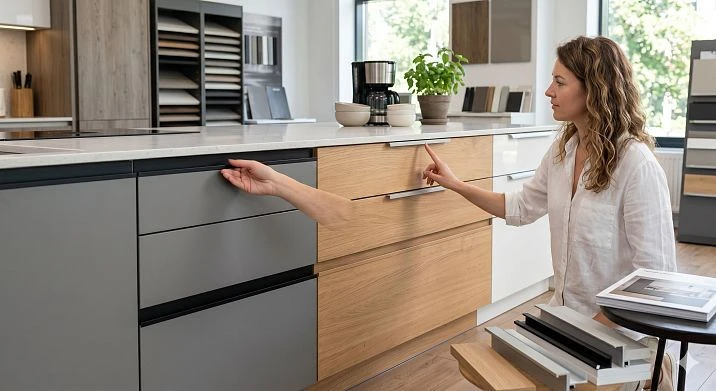
A modern kitchen without protruding handles is not a designer's fantasy, but a fully achievable reality. profile handles and Gola-type handles are the two most popular ways to make a kitchen set visually clean, concise, and modern, without sacrificing convenience. But there is a fundamental difference between them — and you need to know it before you place an order.
Short answer
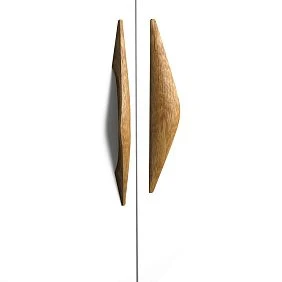
Profile handle for kitchen is a long or short profile made of wood that is attached to the facade or its edge and creates a horizontal or vertical grip area. The Gola handle is a hidden solution with a niche: it 'hides' in the gap between the facade and the body or in a specially prepared space. Both systems solve one problem — to remove protruding handles — but they do it differently. The choice between them depends on the kitchen design, facade type, cabinet height, and desired result.




What is a profile handle
Let's start with the basics — and do it honestly, without marketing fluff.
Furniture profile handle — is an elongated product with a characteristic cross-section. If you look at it in cross-section, you will see a curved, beveled, or S-shaped profile with a grip zone for fingers. It is this profile that gave the name to the entire type of product.
What's the point? A profile handle does not protrude from the facade as a knob or a bracket arc — it is attached to the front or side surface of the facade and forms a thin, almost flat line. The eye glides over the facade without lingering on a protruding detail. The kitchen looks like a single mass, without "interruptions" or "accents."
Our factory also produces:
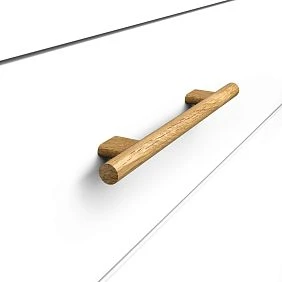
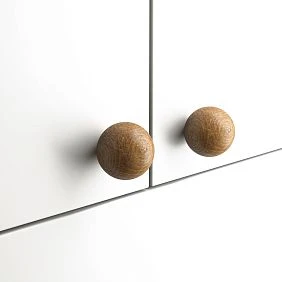
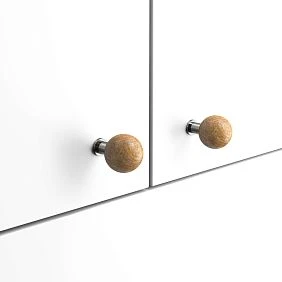
How a profile handle is constructed
From a structural perspective furniture profile handle — is a bar of solid wood (in the case of wooden products) with a milled cross-section profile. The profile defines the shape: how the hand will fit when gripping, how convenient it is to open the facade, how the shadow from the handle looks under side lighting.
Key characteristics to look for when choosing:
-
Profile shape — straight, beveled, wavy, S-shaped, minimalist with one edge;
-
Length — from 250 mm for small drawers to 2200 mm for tall cabinet-pencil cases;
-
Profile width and height — determine ease of grip and visual weight of the handle on the facade;
-
Mounting method — surface-mounted or recessed;
-
Wood species and coating — beech, oak, uncoated or coated.
Get Consultation
Where the profile handle for facades is used
Profile handle for facades — a universal solution. It is equally appropriate:
-
on lower kitchen cabinet facades (horizontal placement);
-
on upper wall cabinets (horizontal handle at the bottom of the facade);
-
on tall cabinet-pencil cases (vertical placement along the entire door height);
-
on facades of built-in sliding wardrobes (vertically);
-
on cabinets and dressers in the living room, bedroom;
-
on the refrigerator fronts in the column of the set.
What is a Gola handle
This is where the confusion begins. On the internet, in furniture showrooms, and even among manufacturers, the word "Gola" is used differently — and it's important to understand this before placing an order.
Gola is a system, not just a handle
In the strict sense, Gola is a system for concealed opening of fronts, where the role of the handle is played by a niche: a special groove or gap into which it is convenient to insert your fingers. No protruding hardware — only a slot or recess in a precisely specified location.
The classic Gola system is mounted between the front and the cabinet body: a special aluminum or plastic profile creates a niche along the entire length of the top or bottom edge of the front. When the front is closed, only a thin slit is visible from the outside. When opening, fingers go into this slit, and the front opens smoothly, without a jerk.
Gola handle made of wood
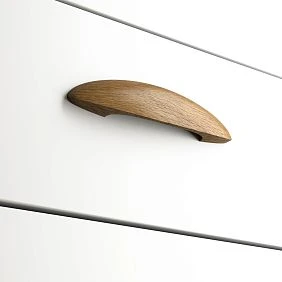
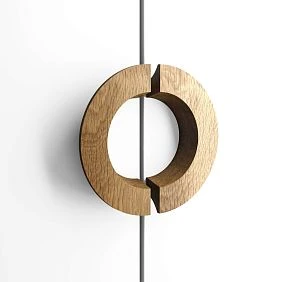
Wooden gola handle for kitchen — this is a different solution. It is an overlay or recessed wooden handle with a characteristic profile in the shape of the letter "C" or "G" in cross-section, which imitates the logic of the Gola system: the grip niche is hidden inside the profile, only the plane is visible from the outside.
In the kitchen Gola handle They are mounted horizontally — from below the upper cabinets and above the lower facades. This creates a powerful design effect: the kitchen looks like a single monolithic plane. No "extra" lines, no protruding elements.
Gala handle and other trade names
In colloquial and trade practice, the word "gala" (gala handle) is used as a synonym for "gola" or as the name of a product similar in principle. Functionally, it is the same: a profile with a grip niche, maximally hidden when the facade is closed. Gala handle for kitchen — appears in catalogs as a separate model with a different cross-sectional geometry but a similar installation method.
How Gola differs from a profile handle
This is the main question asked before purchasing. We will answer clearly and to the point.
| Criterion | Profile handle | Gola handle |
|---|---|---|
| Where is it installed | On the facade, end, or edge | Into the body or between the facade and body |
| Appearance | Thin protruding profile | Hidden niche, handle is almost invisible |
| Grip principle | Hand wraps around the profile from the outside | Fingers go into the niche inside the profile |
| Installation | Simpler: fastened with bolts or glue | More complex: requires precise preparation of the facade |
| Replacement | Easy, without interfering with the body | Depends on the mounting system |
| What it is suitable for | Kitchens, cabinets, drawers, chests of drawers | Modern kitchens without protruding elements |
| Length | Any, from 250 mm | Usually across the entire width or height of the facade |
| Compatibility | Facades made of MDF, chipboard, solid wood | Facades made of MDF, chipboard; requires precise edge |
To put it simply: profile handle — is a handle with a distinctive shape that is visible and comfortable to use. Gola is a solution on the verge of disappearance: a minimally noticeable element, maximum surface purity.
The question is not what is better. The question is what you need specifically for your kitchen.
Where to use profile handles
Profile handle for kitchen — is the workhorse of modern interiors. Let's go through specific application scenarios.
Upper wall cabinets
This is the most common area for profile handle for cabinet. Upper kitchen cabinets open from below — the hand reaches up and slightly forward. A horizontal profile handle attached along the bottom edge of the facade is optimally suited for this movement vector. Choosing a profile with a bottom grip (beveled or wave shape) ensures intuitive and convenient opening.
For upper cabinets up to 720 mm high, a profile handle is usually chosen with a length equal to the facade width minus 50–100 mm on each side. The handle "does not reach" the edges of the facade — this is a standard installation rule.
Lower facades and drawers
On lower facades profile handle are placed along the top edge. The principle is the same: the hand moves from top to bottom and forward, and the profile with a top grip exactly matches this movement. For drawers — the lower zone of cabinets with pull-out sections — profile handles of the same model as on other facades are often used: this creates a visual rhyme.
Wardrobe and built-in wardrobes
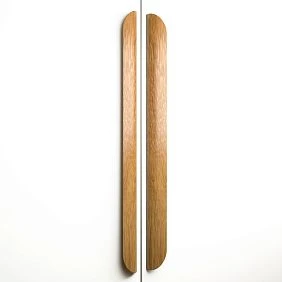
Profile handle for cabinet-wardrobe is a separate story. Here the handle is installed vertically, along the entire height of the door leaf or most of it. A long vertical profile handle on a wardrobe door is one of the most striking design moves: the door gains swiftness, lightness, and a sense of height.
For built-in wardrobes, it is important to calculate in advance whether the vertical handle will "hit" the ceiling or interfere with adjacent doors when opening. Usually, the handle is shifted 5–10 cm from the top edge to provide clearance.
Cabinets, chests of drawers, sideboards
Beyond the kitchen profile handle for furniture Works equally well on TV stands, dressers, and sideboards. Modern hotel minimalism — low cabinets with long horizontal profiles — is one of the most popular design aesthetics.
MDF and solid wood fronts
Profile handle for facades MDF is a standard choice for kitchen manufacturing. MDF allows for clean, precise drilling without chipping. A wooden profile on a painted MDF front creates a contrasting or tonal combination that looks particularly striking.
Solid wood fronts with wooden profile handles are a natural pair. One wood species or one tone — and the furniture is perceived as a single piece.
Surface-mounted or flush-mounted profile handle: which to choose
This is a technical choice with aesthetic consequences. Let's break down both options.
Surface-mounted profile handle
Overlay profile handle is attached to the front surface of the door with bolts that go through. The profile lies on the plane of the door and protrudes forward by the thickness of its body — usually 15–30 mm.
Advantages of the surface-mounted solution:
-
Easier installation: only need to drill holes for the mounting bolts;
-
Less demands on the facade: no milling required;
-
Easy to replace: unscrew and swap;
-
Suitable for already finished facades during kitchen renovation or restyling.
The surface-mounted handle has only one drawback: it still protrudes above the facade surface. If absolute smoothness of the facade plane is crucial for you, the surface-mounted option will not deliver the desired effect.
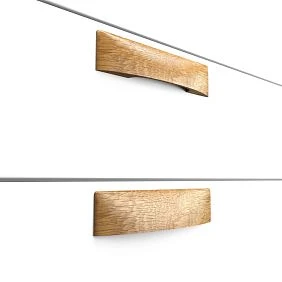
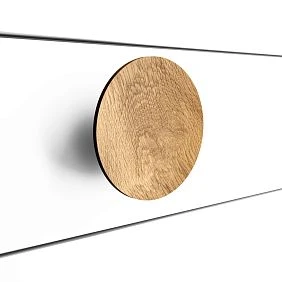
overlay handle for cabinet front In the 'whip' version, it is a thin, almost flat strip with minimal protrusion. It provides the cleanest result among surface-mounted solutions: the handle is there, but its presence is felt more tactilely than visually.
Recessed profile handle
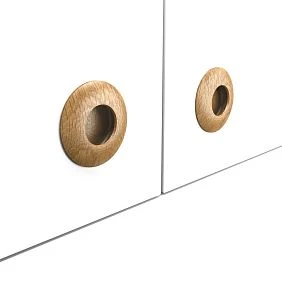
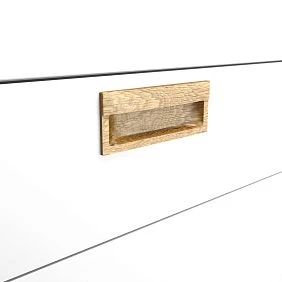
A recessed handle requires milling: a groove is made in the end or face of the facade, into which the profile is inserted. From the outside, the handle either does not protrude at all or protrudes very slightly.
This is a solution for those who want maximum line purity. A facade with a recessed profile handle looks monolithic: no extra element on the surface, only a thin groove line that forms the grip area.
Conditions for using a recessed handle:
-
Sufficient facade thickness (from 16 mm, optimally 18–22 mm);
-
High-quality milling with precise groove dimensions;
-
Correct profile selection: geometry must match the depth and width of the milling;
-
A competent installer or personal skills in working with a router.
The handle profile for a cut is precisely a mortise type: the profile is specifically designed for certain milling parameters. Clarify these parameters before ordering.
Colors of profile handles and Gola: how to choose for your kitchen
The color of the handle is not a trifle. Especially in a modern minimalist interior, where every element is in plain sight.
Black profile handle
Black profile handle is the undisputed sales leader in recent years. Black works in a variety of interiors:
-
on white and light gray facades — graphic contrast, rigidity of lines, modernity;
-
on wooden facades — natural material + industrial accent;
-
On dark facades — tonal fusion, the handle is perceived only as volume and shadow.
Gola handle black With coating — the coating is applied professionally, evenly, and is abrasion-resistant. This is important: the black coating on the handle is subjected to intense wear, and the quality of the finish here is critical.
White profile handle
White profile on a white kitchen — tonal zero, complete dissolution into the surface. The effect of a "kitchen without handles" despite having handles. A white handle on a Scandinavian-style kitchen is an ideal choice. Handles with Finish In white — a ready-made solution from the Stavros catalog.
Gold and brass handle
Gola gold handle — for kitchens with a warm, luxurious atmosphere. A gold or brass profile on dark facades (anthracite, blue, green) creates a striking contrast in the spirit of luxury interiors. On light wood facades — a warm, harmonious combination.
An important nuance: gold coating on a wooden base adheres differently than on metal. Choose products with professional factory finishing — this is insurance against peeling and uneven wear.
Transparent coating and natural wood
Profile handle without coating or with clear lacquer — maximum organic feel. The wood texture remains visible, the profile reads as a natural element, not as hardware. Ideal for kitchens with natural veneer fronts, for wooden kitchens in country, rustic, or nature-inspired style.
handles without coating — these are blanks that can be coated with any finishing material: enamel to match the facade, stain, oil, wax compound. Freedom to choose color and texture is the key advantage of uncoated products.
Which color to choose for different kitchens
Here's a practical cheat sheet:
| Facade | Recommended handle color |
|---|---|
| White matte | Black, white, gold |
| Light gray | Black, chrome, matte silver |
| Dark gray, anthracite | Black, gold, brass |
| Light wood veneer | Clear lacquer, gold, white |
| Dark wood veneer | Black, bronze, clear |
| Blue, green | Gold, brass, black |
| Beige, cream | Gold, brown, black |
Profile handle and Gola sizes: how to avoid mistakes
Size is the first thing to consider after choosing the handle type. And mistakes happen here more often than it seems.
Profile length
Key rule: the length of the profile handle should be 80–150 mm less than the width of the facade. That is, on a facade 600 mm wide, a profile 450–520 mm long is installed. On a facade 400 mm wide, a profile 280–360 mm is used.
The exception is the "full-width" handle in designer projects. This is a deliberate technique where the profile reaches almost to the edge of the facade, creating a maximally horizontal rhythm. But this requires absolute installation precision: the slightest unevenness will be clearly visible.
A profile across the entire door length of the cabinet is a vertical option for tall cabinets and built-in wardrobes. Here, the handle length can reach 1800–2200 mm. This is a structurally different solution: it requires multiple attachment points.
For the upper base
For upper cabinets (upper base), the standard facade height is 360, 450, 576, 720 mm. The profile handle for the upper base is installed along the bottom edge. The handle length is 80–100 mm shorter than the facade width.
Important point: on upper cabinets, the handle is positioned so that the bottom edge of the profile is 20–30 mm above the bottom edge of the facade. This ensures a comfortable grip and the correct opening angle.
For the lower base and drawers
The lower base has a facade height of 128–196–256 mm (drawers) or 716–756 mm (solid doors). For drawers, the handle is centered horizontally on the facade. The handle length is proportional to the drawer width.
For tall solid doors of the lower base, the handle is placed in the upper third: 150–200 mm from the top edge. This is an ergonomically correct zone — the hand reaches there naturally.
For a sliding-door wardrobe
The handle profile for a sliding wardrobe is a vertical format. The handle is placed at a distance of 80–120 mm from the edge of the door leaf (on the opening side). The profile length is 60–80% of the door height. The lower end of the handle does not reach the floor by 350–500 mm (to avoid obstruction), the upper end does not reach the ceiling by 200–300 mm.
Profile under the countertop
A profile handle under the countertop is a specific solution. The handle is mounted on the top edge of the lower facade, as close to the countertop as possible. You open the cabinet by inserting your fingers into the gap between the countertop and the top edge of the facade. It looks impressive but requires precise matching of the gap height and profile geometry.
Wooden profile handle: why wood specifically
Most profile handles on the market are aluminum or plastic. Why choose wooden ones?
The answer is simple: tactility. Metal is cold, hard, and "lifeless" in the hand. Wood is warm, slightly rough, with character. This feeling is hard to put into words — it needs to be felt.
In addition to the sensations, a wooden profile handle provides:
-
naturalness in interiors with natural materials;
-
the possibility of self-finishing to a specific color and surface type;
-
Exclusivity — wooden profile handles are much rarer than metal ones;
-
Eco-friendliness — natural material without synthetics.
STAVROS manufactures profile handles Made from beech and oak solid wood using 3D milling. The technology allows reproducing precise profiles with perfect geometry and a uniform surface. Profiles are available both without coating — for self-finishing — and with a factory coating in four basic colors.
Gola vertical handle: application features
The Gola vertical handle is a separate application area that is often overlooked. The vertical Gola is mounted on the side edge of the facade and creates a vertical grip niche. This solution is for:
-
narrow facades where a horizontal handle would be too short;
-
doors in a column (cabinet with refrigerator, oven, dishwasher);
-
sliding wardrobes and dressing rooms;
-
doors in non-standard niches.
A vertical Gola handle on a column with a refrigerator is a typical example. A tall narrow facade, a handle along the entire side edge: you open it with a powerful vertical motion. It is both convenient and impressive.
The Gola vertical wooden handle is a rarity on the market, but that is precisely what makes it a valuable design tool. The vertical wooden Gola on a wooden facade is almost a complete fusion of the handle with the surface, a feeling of solidity.
Profile handle and Gola for different kitchen styles
Kitchen style is another selection criterion. Let's consider the key scenarios.
Contemporary minimalism and high-tech
Profile handle for kitchen in a black finish on white or gray facades is a classic of modern minimalism. A thin horizontal profile, clear lines, no brackets or buttons. High-tech allows metal, but a wooden profile with a black coating creates an unexpected and memorable contrast: natural material + modern form.
Neoclassicism and modern classicism
It would seem that a profile handle is modernity. But a wooden profile handle with a natural coating and a soft profile organically fits into a neoclassical kitchen with veneer facades, moldings, and cornices. The main thing is to choose the right profile shape: a smooth, slightly rounded profile looks much softer than a rectilinear geometric one.
Wooden moldings on the walls and a wooden profile handle on the facades is an example of how wood works as a cross-cutting theme in the interior, uniting different elements into a single whole.
Scandinavian style
Scandinavia loves functional beauty. A wooden profile handle made of light beech without unnecessary decor, with a transparent or oil coating, is an ideal Scandinavian image. White facades, wooden handles, Wooden Skirting Boards made of light woods — that is the Scandinavian kitchen as it should be.
Loft and industrial style
Black profile handle, brick wall, open shelves, metal lamps. A loft kitchen with wooden profile handles in a black coating is a combination of the warmth of wood with the harshness of an industrial interior. A contrast that works flawlessly.
Country and natural style
A profile handle without coating or with a dark walnut coating — for kitchens in country and rustic styles. Wooden facades, wooden beams, Wooden casings, wooden handles — everything in one theme, everything made of natural material. Here, the profile handle does not pretend to be hidden — it is organic simply because it is made of the same material as the surroundings.
Mistakes when choosing profile handles and Gola
Experience shows: most mistakes when choosing profile handles and Gola systems are predictable. Knowing them means avoiding them.
Confusing Gola with a regular profile handle. This is the most common mistake. A profile handle and a Gola handle are different designs with different installation methods. Ordering a Gola but receiving a regular overlay profile (or vice versa) means at best redoing the installation, at worst redoing the facades.
Choosing only by color. Color is important. But the shape of the profile, length, and method of attachment are more important. A beautiful handle of an uncomfortable shape will irritate every day. A beautiful handle of the wrong length will look ridiculous.
Not considering the thickness of the facade. Recessed profiles require sufficient facade thickness. If the facade is thin (12 mm or less), a recessed handle simply will not fit. And an overlay profile with M4 bolts on thin MDF will hold unreliably.
Not checking the installation method before ordering. An overlay profile and a recessed profile are different products with different facade preparation. Ordering one and installing it as the other is impossible without rework.
Installing an uncomfortable profile on a heavy facade. A thin profile with a small grip niche on a heavy door of a column with a refrigerator is an ergonomic disaster. The heavier the facade, the deeper the grip niche should be and the longer the profile itself.
Not considering the distance to the wall and adjacent cabinets. A profile handle on an end facade adjacent to a wall or a tall cabinet is a risk that the handle physically cannot be opened: the hand does not fit. Consider the gaps when planning.
Order all handles of the same size. Different lengths are needed for drawers, doors, and pencil cases. A single size for all fronts is a common simplification that often looks like a mistake.
Stavros: wooden profile handles for kitchen and furniture
If you are looking for where to buy a wooden profile handle for the kitchen — Stavros offers a full range of solutions.
The catalog features profile handles various shapes: from minimalist straight profiles to wavy and beveled ones. All products are made of solid beech and oak, manufactured using 3D milling.
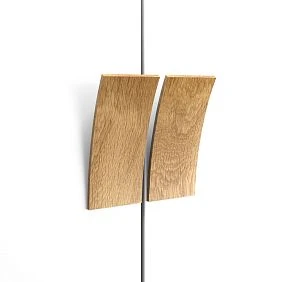
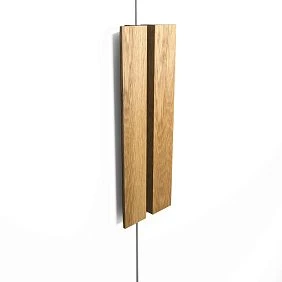
For those looking for a solution in the Gola style — handle Grace HL-009: a wooden handle with a distinctive profile and a hidden grip niche, mounted horizontally along the lower or upper edge of the front. The same model with factory coating — black, white, brown, transparent.
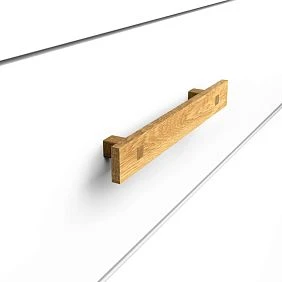
Overlay profile handle Wave HL-006 — a product with a smooth wave profile, overlay type, bolted to the facade.
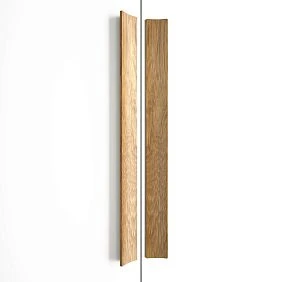
Plane HL-011 profile handle — a thin, almost flat whip-type profile, minimal protrusion above the facade surface. The most concise solution for modern interiors.
Solea HL-025 handle — another interpretation of the gala profile with a different geometry and character.
All of these are Furniture Handles made of wood, available in two finish options: without a finish (for self-painting, varnish, oil) and with a finish (factory finish, ready for installation). handles for kitchen from the Stavros catalog are shipped throughout Russia, minimum order of one piece.
In addition to handles, at Stavros you can choose Wooden furniture legs, Decorative Inserts, Moldings, Solid wood skirting boards и Casings — everything for designing the kitchen and furniture in a unified style from natural wood.
FAQ: Answers to popular questions
Which is better: Gola or a profile handle?
There is no universal answer — there are different tasks. Gola provides maximum concealment: the facade looks like a monolith. The profile handle is more versatile: easier to install, suitable for more types of facades, and easier to replace. If you want a completely clean surface — choose Gola. If you need a convenient and beautiful solution with minimal protruding hardware — profile handle.
What is the difference between a Gola handle and a profile handle?
Gola creates a hidden grip niche — the hand goes "inside" the profile or between the facade and the body. The profile handle protrudes above the facade and is grasped from the outside. The first is more concealed, the second is more traditional.
Can a profile handle be installed on a kitchen facade?
Yes, that is one of its main purposes profile handle for kitchen. Suitable for facades made of MDF, chipboard, solid wood. It is important to choose the correct type of mounting (overlay or inset) and the length of the handle.
Which handle is best for a kitchen without protruding handles?
Gola system or recessed profile handle — both options minimize protruding hardware. handle Grace HL-009 from the Stavros catalog — a good wooden solution in Gola style.
Is a profile handle suitable for a cabinet?
Yes. profile handle for cabinet — one of the most popular options. For built-in wardrobes, sliding wardrobes, and bedroom closets. Horizontally on doors, vertically on sliding wardrobe panels.
What to choose for upper kitchen cabinets?
A horizontal profile handle attached to the bottom edge of the upper cabinet front. The profile shape with a bottom grip — so the hand comfortably fits under the handle when opening upward. Furniture profile handle in the 350–450 mm size — optimal for a standard upper cabinet.
Are there profile handles in black, gold, and chrome?
Yes. Wooden Handles with Finish available in black, white, brown, and transparent colors. For painting — handles without coating allow achieving any shade, including imitation of gold and bronze.
Is milling required for a profile handle?
For surface-mounted profile handles — no, it is enough to drill holes for mounting bolts. For inset (profile for cutting) — precise milling of the groove with specified dimensions is mandatory.
Which is better: surface-mounted or inset profile handle?
Surface-mounted — easier to install and replace, suitable for ready-made facades. Inset — provides a cleaner, seamless result but requires facade preparation. Overlay profile handle Wave HL-006 — a good choice for those who value ease of installation without losing aesthetics.
Where to buy furniture profile handles?
In the Stavros online catalog — full range profile handles Made of wood, with and without coating, in various shapes and sizes. Contact us to confirm shipping to your destination., order from one piece, always in stock.