Article Contents:
- A backup supplier is not the one whose phone number is written second
- Not every profile needs a second source
- C1 — CRITICAL
- C2 — IMPORTANT
- C3 — NON-CRITICAL
- MASTER SAMPLE
- ALTERNATIVE SAMPLE
- PRODUCT IDENTITY
- SECTION
- MATERIAL
- LENGTH
- FINISH
- REPEATABILITY
- LEAD TIME
- QUANTITY
- SECOND SUPPLIER, SAME MANUFACTURER
- SECOND MANUFACTURER
- PRIMARY
- QUALIFIED SECOND SOURCE
- UNQUALIFIED ALTERNATIVE
- GREEN
- AMBER
- RED
- BACKUP SUPPLIER
- BACKUP SKU
- Is a second supplier needed for every SKU?
- Is it enough to find a company that has a similar skirting board?
- Can another seller of the same SKU be considered a second source?
- Does a product from another manufacturer need to be approved again?
- When should backup be activated?
- Can primary and backup be mixed in the same room?
- What should be done if a second source is technically impossible?
- What should be stored after switching the source?

The main supplier has already been selected. The wooden skirting board, moulding and cornice have been approved, the first batch arrived without critical issues, and installation is proceeding according to plan. The project will continue for several more months — and this is exactly where a risk often underestimated appears: what happens if, for the next order, the main source cannot confirm the required volume or lead time?
Looking for “something similar” two weeks before installation is a bad strategy. For a long project building material suppliers should be considered not only from the point of view of the first purchase, but also from the point of view of supply continuity — the sustainability of supply over time.
Working scheme:
PRIMARY SUPPLIER → SINGLE-SOURCE RISK → SECOND SOURCE CANDIDATE → TECHNICAL QUALIFICATION → QUALIFIED BACKUP → TRIGGER → CONTROLLED SWITCH.
A backup supplier does not have to receive half the volume immediately. Its role is to be a pre-verified route in case the main source stops covering the project’s critical requirement.
For standard and custom profiles, a reference is needed first: an exact SKU, material, cross-section, length, finish, and sample. Only after that does it make sense to compare an alternative source against the approved baseline.
Current production skirting boards, moldings, and cornices can be verified in the section STAVROS wooden molding, and for physical verification of profiles, the following are available Samples of linear products.
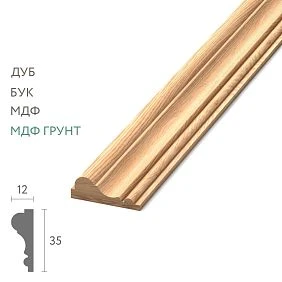
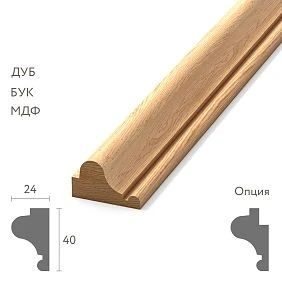
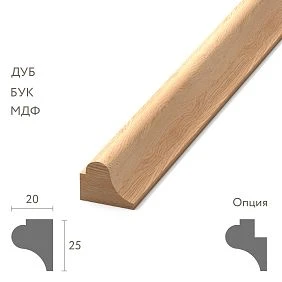
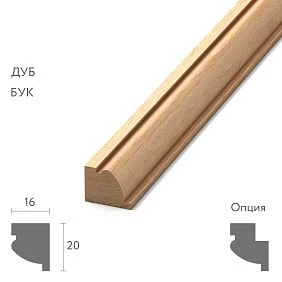
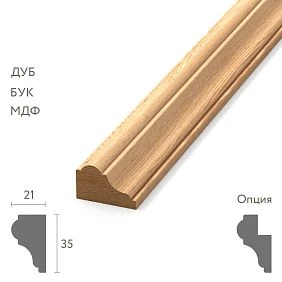
A backup supplier is not the one whose phone number is saved second
A note in the phone:
"if anything, there's another molding seller"
is not a second-source plan.
A qualified backup source must answer a specific question:
can it cover a critical project item without losing the approved geometry, material, finish, and lead time?
To do this, the backup is compared with the primary using the same data set.
| Parameter | Primary Supplier | Second Source | | --- | --- | --- | | SKU / profile | approved | verified | | Cross-section | master reference | cross-checked | | Material | approved | cross-checked | | Finish | approved | approved / pending | | Sample | master sample | second-source sample | | Available volume | working | confirmed / unconfirmed | | Lead time | known | confirmed | | Status | ACTIVE | QUALIFIED BACKUP |
A second supplier is not just another price list. It is a verified supply route for a specific item.




Not every profile needs a second source
One of the mistakes is turning source redundancy into a mandatory rule:
every SKU needs two suppliers.
This is expensive, difficult, and not always technically feasible.
It is more useful to first categorize items by criticality.
Our factory also produces:



C1 — CRITICAL
Profile:
- is used across a large part of the project;
- visually unifies several zones;
- difficult to replace;
- has a long lead time;
- can halt installation;
- must be repeated in subsequent queues.
Get Consultation
C2 — IMPORTANT
Position matters, but:
- is used more locally;
- there is schedule slack;
- a separate queue is possible;
- the project can withstand a temporary delay.
C3 — NON-CRITICAL
Small volume, local application, or a position whose failure does not affect the critical path.
Second-source work is primarily needed for C1.
How to identify single-source risk
A single supplier is not a problem in itself.
Risk arises when several conditions are met simultaneously:
- another technically viable source has not been verified;
- the profile is difficult to replace;
- the project lasts several months;
- the future volume has not yet been purchased;
- installation depends on a specific SKU;
- the supply recovery time is unknown.
For each critical profile, a field can be added to the Supplier Register:
SINGLE SOURCE: YES / NO
If YES, next to it the following must be indicated:
MITIGATION
For example:
- qualified second source;
- early order;
- increased project buffer;
- consolidation of several queues;
- operational stock;
- earlier confirmation of the production window.
Second sourcing is only one of the ways to reduce risk.
First, the primary standard is fixed
You cannot look for an "analog" before the project clearly understands what the reference is.
Every C1 profile needs a MASTER PRODUCT RECORD.
For example:
M-03 / MLD-XXX / OAK / SECTION-A / LENGTH 2400 / FIN-02 / APPROVED
The record includes:
- drawing;
- cross-section photo;
- physical sample;
- the material;
- finish;
- first delivery number;
- marking;
- application area.
Now any alternative is compared not against the buyer's memory or an interior photo, but against the master record.
The physical reference sample must be kept
For a long project, it is useful to keep:
MASTER SAMPLE
It shows what is hard to restore with a single table:
- the actual profile;
- scale;
- nature of the relief;
- the texture;
- the actual finish.
STAVROS offers 100-millimeter samples of profile products for preliminary assessment of the profile and material. For a project system, such a sample, after approval, can be included in its own reference archive.
Added to it:
PROJECT / CODE / SKU / MATERIAL / FINISH / APPROVED DATE
So, six months later, a new buyer understands what to compare the backup source with.
A second-source sample does not replace the master sample
A project must have two different objects.
MASTER SAMPLE
What has already been approved and is considered the project standard.
ALTERNATIVE SAMPLE
What the backup offers.
The comparison is:
alternative → master
And not:
two similar samples → we choose which one we like more.
If the second-source sample differs, it does not automatically “update” the master.
The difference is either accepted as permissible through change control, or the backup remains unsuitable.
Wooden skirting board: the same height does not mean the same profile
Let's imagine:
Primary:
100 × 18 mm
Backup candidate:
100 × 18 mm
On paper, the dimensions matched.
But they may differ in:
- radii;
- chamfers;
- top geometry;
- depth of relief;
- the nature of the transition;
- position relative to the architrave.
Therefore, for a skirting board, you don't just compare two numbers.
You need to check the full cross-section and critical junctions.
Especially:
skirting board → door casing
и
skirting board → furniture / plinth.
If the backup conflicts with an already installed door casing, equal height solves nothing.
Changing the skirting board within a continuous zone is especially risky
Case B can still be officially switched to the new project version if this is agreed upon.
But it is significantly more dangerous to mix two similar profiles:
- in the same corridor;
- on the same long wall;
- in the same room;
- on both sides of the same door.
Even a small difference in relief becomes visible at a direct joint.
Therefore, if the second source still produces a non-identical profile, its use should be zonal and coordinated with the design.
For wooden moulding, the second source is the most difficult
With moulding, this logic is especially dangerous:
the width is the same — so it will fit.
Similar 40 or 60 mm do not mean:
- the same depth;
- the same profile;
- the same grooves;
- the same shadow;
- identical frame corners.
Therefore, the backup molding is checked by cross-section, not by photograph.
If MLD-A has already been approved in the mock-up, the alternative profile must be compared with it as a technical and visual reference.
What to check on the backup molding
Minimum:
- total width;
- maximum thickness;
- position of the main protrusions;
- radii;
- grooves;
- symmetry;
- the material;
- length;
- finish;
- behavior in the corner joint.
For a frame layout, it is useful to assemble at least a control corner or a local module if the difference cannot be confidently assessed by cross-section.
The larger the production run, the cheaper such a check is compared to a mass error.
The backup cornice is checked in the ceiling assembly
The cornice is connected to:
- wall;
- ceiling;
- room height;
- with built-in furniture;
- curtains;
- light;
- adjacent molding.
Therefore, the second source must pass the SECOND-SOURCE DETAIL CHECK.
If the projection or profile character differs, the problem appears not in the product card, but in the actual ceiling assembly.
For a critical cornice, a single height comparison is not enough.
What exactly to compare in the second source
For a C1 position, it is convenient to use eight blocks.
PRODUCT IDENTITY
Which profile is actually supplied?
SECTION
Does the geometry match?
MATERIAL
Which species or other finish?
LENGTH
Which commercial lengths are available?
FINISH
Is the approved finish compatible?
REPEATABILITY
Can the backup supply the same configuration again?
LEAD TIME
What lead time is confirmed for the required volume?
QUANTITY
Can the source fulfill the required batch?
Only after that does it make sense to discuss price.
A second supplier and a second manufacturer are not the same thing
There are two different scenarios.
SECOND SUPPLIER, SAME MANUFACTURER
Supplier B sells the same physical product as Manufacturer A.
Technical risk is lower if the product is truly identical in SKU and configuration.
But the following are still checked:
- exact item;
- the material;
- length;
- batch;
- documents;
- available volume.
SECOND MANUFACTURER
The production source changes.
Then even a similar product name guarantees nothing.
A full technical check is required:
section → material → sample → finish → approval.
This is no longer just a new commercial point of purchase.
Wholesale building material suppliers: price is not the main criterion backup
When Building materials suppliers wholesale are compared as backup sources, price remains important, but not the first line.
A second source is created primarily for continuity.
Priority:
- technical suitability;
- ability to cover the volume;
- the deadline;
- repeatability;
- transparency of documentation;
- price.
The cheapest backup is useless if its molding cannot be used in the approved frame system.
Status is assigned to the supplier + product combination
A very important rule:
we do not qualify the company at all — we qualify the source of a specific item.
The same company can have different statuses:
| SKU | Supplier | Status | | --- | --- | --- | | PLT-A | Supplier A | PRIMARY | | MLD-A | Supplier B | QUALIFIED SECOND SOURCE | | KZ-A | Supplier B | NOT QUALIFIED | | MLD-C | Supplier C | SAMPLE PENDING |
This is more accurate than the phrase:
Supplier B is a good backup supplier.
For one SKU it may be an excellent backup, for another it may have no suitable solution at all.
Three working statuses of a source
PRIMARY
Primary active route.
QUALIFIED SECOND SOURCE
Verified but not used on an ongoing basis.
UNQUALIFIED ALTERNATIVE
Found commercially, but technical verification is not complete.
UNQUALIFIED does not mean a bad company.
It only means:
for this specific position, the project has not yet approved usage.
When the fallback scenario is triggered
It is better to define the trigger in advance.
For example:
- primary does not confirm the required quantity;
- lead time falls outside the acceptable window;
- the specific configuration is temporarily unavailable;
- the site's production schedule has accelerated;
- an additional case has appeared;
- the new batch became larger;
- primary reported a material risk.
Important:
TRIGGER ≠ AUTOMATIC SWITCH.
Trigger means:
ACTIVATE SECOND-SOURCE REVIEW.
After that, the backup is re-checked against the current volume, deadline, and status.
Why looking for a second supplier on the day of the shutdown is too late
If installation is in two weeks and the backup is not yet qualified, the project must simultaneously:
- find the source;
- check the SKU;
- request the drawing;
- compare the cross-section;
- get a sample;
- approve the finish;
- get the price;
- confirm the volume;
- arrange delivery.
All stages become emergency.
In a hurry, the likelihood of choosing an “almost the same” profile increases.
A second-source plan moves most of these actions into a calm period, while the primary is still working normally.
The building materials supplier should know the project’s critical windows
construction materials supplier is not required to see the entire internal financial and construction model.
But for a multi-stage project, it is useful to communicate in advance:
- approximate total volume;
- future phases;
- reconfirmation date;
- critical deadline for the next batch.
This allows the risk to be seen earlier.
Example calendar:
| Stage | Date | | --- | --- | | Supplier Health Check | 01.10 | | Availability confirmation | 08.10 | | Final quantity | 15.10 | | ORDER RELEASE | 18.10 | | NEED-BY | 15.11 |
If on October 8 the primary does not confirm the requirement, the backup review begins immediately, not on November 13.
Supplier Health Check before every major queue
Even a good primary needs to be checked again.
Before a new batch, the following questions are asked:
- Is the SKU still valid?
- Is the required material available?
- Is the volume confirmed?
- Is the lead time confirmed?
- Are there any configuration changes?
- Has the lead time increased?
- Is a new sample batch or re-verification needed?
If everything is confirmed:
PRIMARY = GREEN.
If uncertainty arises:
PRIMARY = AMBER.
If the requirement cannot be closed:
PRIMARY = RED.
Traffic Light for supply continuity
GREEN
Primary confirms:
- SKU;
- volume;
- the deadline;
- configuration.
Backup remains in reserve.
AMBER
There is a risk:
- timeline is unstable;
- volume is not confirmed;
- production window is changing;
- part of the configuration is in question.
The second source is moved to active verification.
RED
Primary does not officially close the requirement.
A predefined contingency procedure is triggered.
Color is a management status, not an emotional assessment of the supplier.
Do not merge the two sources automatically
Let's imagine:
Supplier A supplies 500 m.
Supplier B — another 500 m.
Both name the product:
oak molding 40 mm.
But they may differ:
- texture;
- shade;
- profile;
- finish;
- finish;
- length.
Therefore, the scheme:
A / B / A / B
in a single room or a single corridor can create noticeable unevenness.
If a second source is allowed, it is better to distribute its batches across separate zones, if permitted by the project.
Lot Allocation: separate sources by zones
For example:
Supplier A — Floors 1–3
Supplier B — Floor 4
This makes it easier to:
- control the visual result;
- maintain as-built documentation;
- place reorders;
- understand the origin of the material.
This does not mean that different sources can always be separated by floor.
If the profiles differ visually and the project requires absolute uniformity, a backup SKU should not be used at all without separate design approval.
The same color code does not yet guarantee the same result
With natural wood, perception depends not only on the tint number.
The final result is affected by:
- wood species;
- texture;
- surface preparation;
- batch;
- type of coating;
- the profile itself.
Therefore, when switching to another production source, finish approval is best considered separately.
Phrase:
color F02 is the same
does not yet mean that the result is visually identical to the master sample.
Pilot Batch before mass switching
For a C1 position, a reasonable project procedure may include a small control batch.
Goal:
- check the documents;
- see the actual material;
- compare with the master;
- check the labeling;
- check repeatability;
- make sure the new route works logistically.
If it concerns a different manufacturer and a visually critical profile, a sample or local mock-up may be required instead of a simple batch.
A second source should not be tested for the first time on the entire remaining volume of the project.
Wholesale building material suppliers: how to compare backup B and backup C
for wholesale building material suppliers useful table:
| Parameter | Primary A | Backup B | Backup C | | --- | --- | --- | --- | | Profile | APPROVED | MATCH | DIFFERENT | | Material | OAK | OAK | BEECH | | Finish | F02 | TEST REQUIRED | DIFFERENT | | Qty | AT RISK | CONFIRMED | CONFIRMED | | Lead time | AT RISK | 14 d | 9 d | | Sample | MASTER | PENDING | RECEIVED | | Technical status | ACTIVE | REVIEW | REJECTED | | Price | ___ | ___ | ___ |
Supplier C is faster.
But if its geometry differs and technical status = REJECTED, the nine-day lead time is useless.
Faster does not mean acceptable.
How to choose between a faster and a more accurate backup
Let's imagine:
Backup B:
- 14 days;
- profile matches;
- Oak;
- finish requires verification.
Backup C:
- 9 days;
- the profile is different;
- Beech;
- the finish is different.
If the project does not allow a change of geometry, B remains the only realistic candidate.
If 14 days no longer fit into the schedule, the project must solve a different problem:
- reschedule the work;
- use the buffer;
- move the area;
- change the project officially.
A technically unsuitable C cannot be turned into an acceptable product just because it is faster.
Who authorizes switching to a second source
The decision should not be made by the person who simply discovered the problem first.
Depending on the project, the following are involved:
- designer;
- architect;
- customer;
- technical specialist;
- procurement specialist;
- procurement officer within pre-agreed authority limits.
For the simple case of “the same SKU from the same manufacturer through a different dealer,” the procedure can be short.
For a different manufacturer and a different profile, it is much stricter.
A Source Change must create a record
Example:
SOURCE CHANGE SC-003
Was:
Supplier A
Now:
Supplier B
Reason:
Primary cannot meet required date
Technical status:
APPROVED
Effective from:
BATCH 04
Zone:
FLOOR 4
This way, the history can be restored a year later.
Without such a record, a new reorder turns into an investigation:
where profile A was, and where B was?
Supplier Register — the main tool of the continuity plan
| SKU | Primary | Second Source | Technical Status | Trigger | | --- | --- | --- | --- | --- | | PLT-A | Supplier A | Supplier B | QUALIFIED | Primary delay | | MLD-A | Supplier A | Supplier B | SAMPLE PENDING | — | | KZ-A | Supplier A | — | NO BACKUP | Critical | | MLD-C | Supplier C | Supplier D | QUALIFIED | Qty shortage |
It's immediately clear:
- where the risk is covered;
- where a backup has only been found;
- where the physical sample has not yet been checked;
- where the project remains single-source.
Such a table is more useful than a general list of "supplier contacts."
If there is no second source, resilience is increased differently
For a unique architectural profile, a single production source can be a normal reality.
Then the mitigation is different.
Options to consider:
- earlier order;
- additional installation reserve;
- separate operational stock;
- combining future batches;
- earlier confirmation of the production window;
- storage of the reference sample and drawing;
- a pre-agreed reproduction scenario.
The main thing is to acknowledge single-source risk and manage it.
The worst situation is assuming that a backup will “always be found later.”
Backup supplier and backup SKU are different things
BACKUP SUPPLIER
Another supply channel for the same approved product.
This is a commercial change of source while preserving product identity.
BACKUP SKU
A different product.
Even if it looks similar, this is already a technical change.
Backup SKU requires:
- cross-section comparison;
- material checks;
- sample;
- finish approval;
- sometimes a mock-up;
- a new revision of the specification.
These two scenarios should not be lumped together under the phrase “we found another supplier.”
When a second source is not needed
You can avoid spending resources on full qualification of a second source if:
- the project is short;
- the entire critical volume has already been purchased;
- item C3;
- there is sufficient physical stock;
- replacement does not affect the architectural system;
- a possible failure does not block the critical path;
- the cost of backup qualification is higher than the actual risk.
Second sourcing is a critical risk management tool, not a mandatory checkbox.
Seven mistakes of supply continuity
Mistake 1. Looking for a backup only after a failure.
The consequence is that all technical verification happens in emergency mode.
Mistake 2. Assuming the same width means the same profile.
The consequence is that different geometry ends up in the project.
Mistake 3. Not keeping a master sample.
Consequence — the backup is compared based on photographs and memory.
Mistake 4. Mixing two sources within one zone without verification.
Consequence — visible heterogeneity.
Mistake 5. Treating a second price as a qualification.
Consequence — a commercial candidate is mistakenly given technical backup status.
Mistake 6. Changing the source without a Source Change.
Consequence — as-built does not show the actual origin of the batch.
Mistake 7. Qualifying a company rather than a supplier + product.
Consequence — the status of one successful SKU is automatically transferred to another that was not tested at all.
Final algorithm for preparing a backup source
- Identify C1 positions.
- Lock the master specification.
- Create a Master Product Record.
- Save the master sample.
- Flag single-source positions.
- Find a potential second source.
- Determine: same manufacturer or different.
- Verify product identity.
- Cross-check the cross-section.
- Check the material.
- Check commercial lengths.
- Check finish.
- Confirm available volume.
- Confirm lead time.
- Obtain second-source sample if needed.
- Assign
QUALIFIED / PENDING / NOT QUALIFIED. - Record activation trigger.
- Perform a Supplier Health Check before each queue.
- In case of AMBER, activate backup review.
- In case of RED, perform a controlled switch.
- Separate batches by zones if required.
- Create Source Change.
- Save the actual source in as-built.
- After the project, update the Supplier Register based on the actual result.
This way, a backup supplier appears not in a panic two days before installation, but in advance — as a proven route for a specific critical profile.
Questions about a backup supplier of trim
Is a second supplier needed for every SKU?
No. First of all, it is needed for critical items where a disruption affects installation or architectural continuity.
Is it enough to find a company that has a similar skirting board?
No. It is necessary to compare the full cross-section, material, length, finish, and critical junctions.
Can another seller of the same SKU be considered a second source?
Yes, if the same approved configuration is actually supplied and the commercial channel is verified.
Do we need to re-approve a product from another manufacturer?
For design-critical mouldings — yes. A different production source requires technical verification against the master standard.
When should backup be activated?
Not necessarily only after an official primary refusal. A review can be initiated already at AMBER, when a confirmed risk to timeline or volume arises.
Can primary and backup be mixed in one room?
Only if the project has confirmed technical and visual compatibility. For differing sources, zonal distribution is safer.
What should be done if a second source is technically impossible?
Use other continuity measures: early ordering, buffer stock, batch consolidation, earlier confirmation of the production window.
What should be stored after switching the source?
Source Change, application areas, actual supplier, SKU, sample/reference and as-built record.