Article Contents:
- Why a designer needs more than just a store — a project supplier
- A store and a project supplier solve different tasks
- A clear production or supply chain
- Catalog depth
- Stable product codes
- Accurate technical dimensions
- Samples
- 3D models
- DWG and technical drawings
- Ability to calculate quantity
- System completeness
- Repeatability and reordering
- Working with a professional audience
- What to check with a manufacturer
- What to check with an intermediary
- Moldings
- Moldings and Cornices
- Stucco decorative elements
- Wall and slat panels
- Wooden decor
- Why multiple categories from one supplier are convenient
- What to check on a sample
- Color
- Relief
- Scale
- Texture
- Surface Quality
- Compatibility
- How to store samples
- What does this give
- What to check after import
- What not to do
- Why a render doesn't replace a drawing
- How to implement SKU in a studio
- Response speed
- Counting accuracy
- SKU match
- Packaging
- Documents
- Quality
- Deadline
- Handling issues
- Reorder
- Example
- Profile catalog
- Moldings
- Cornices
- Recessed Outlets
- Moldings
- Consistency
- Samples
- Technical files
- Material
- Format
- Geometry
- Sizes
- Color
- Repeatability
- Sample
- Layout
- Why screen color is not enough
- When an unfinished option is needed
- What to record in the specification
- Why a unified structure is useful
- How to link with drawings
- Central library
- Project shortlist
- Approved specification
- Order
- Archive
- A cheap profile that cannot be replicated
- An expensive sample before a large batch
- Delivery in several stages
- The hidden cost of replacement
- Mistake 1. Choosing based only on the lowest price
- Mistake 2. Not recording the SKU
- Mistake 3. Assuming a beautiful catalog is enough
- Mistake 4. Not ordering a sample
- Mistake 5. Using third-party 3D instead of the real product
- Mistake 6. Not checking reorders
- Mistake 7. Mixing projects in one order
- Mistake 8. Not checking changes before payment
- Evaluate more than just the product
- Evaluate reproducibility
- How is a supplier for a designer different from a regular store?
- Is a manufacturer always better than an intermediary?
- Why do you need samples if there are good photos?
- Why does a supplier need 3D models?
- Why DWG if there is 3D?
- How to vet a supplier before a large order?
- What matters more: a large catalog or stable items?
- Where can I see STAVROS professional capabilities?
- How to use a supplier across multiple projects?
- Where to start checking a STAVROS supplier?

A supplier for a design project is not just a place where you can buy a molding, panel, or decorative overlay you like. A designer needs a partner with whom they can go through the entire path from idea to installation: choose products, verify actual dimensions, receive samples, place the same items in 3D, transfer SKUs into the specification, order the calculated quantity, and, if necessary, place a reorder several weeks or months later.
Therefore suppliers for interior designers should be evaluated not only by the breadth of the assortment or the price of an individual item. For project work, the coherence of the system is more important:
catalog → real SKU → sample → 3D/DWG → visualization → specification → calculation → order → reorder.
If one of the links is missing, the burden shifts to the design studio. For example, the catalog is beautiful, but there are no exact dimensions; the 3D exists, but it is unclear which SKU it corresponds to; the sample is approved, but its code did not make it into the specification; the item was purchased, but finding it again two months later is impossible.
A professional supplier should reduce the number of such gaps. It does not have to be the sole supplier of all materials for the project. But within its own product system, it should allow the designer to work consistently and verifiably.





Why a designer needs not just a store, but a project supplier
A regular retail purchase solves a local task: find a specific product, compare the price, place an order, and receive it.
Project work is structured differently. A single decorative element is linked to several documents and participants at once: the visualization, working drawings, specification, material board, commercial proposal, order, installation, and author supervision.
That is why the same molding must be identified identically by the designer, visualizer, procurement specialist, supplier manager, and installer.
If a designer writes in the specification “white molding approximately 40 mm,” that is not a project item. A month later, another employee may choose a similar profile, and the composition will change.
But if it is recorded as:
manufacturer → article number → actual size → material → URL → quantity,
the item becomes manageable.
That is why manufacturers for interior designers are useful not only as a source of goods, but also as a source of technical information, samples, and digital materials.




A store and a project supplier solve different tasks
Store:
find → pay → receive.
Project supplier:
select → verify → integrate into the project → approve → calculate → order → repeat.
For a private purchase, this difference may be insignificant. For a studio managing several projects at the same time, it determines the number of errors and the speed of procurement.
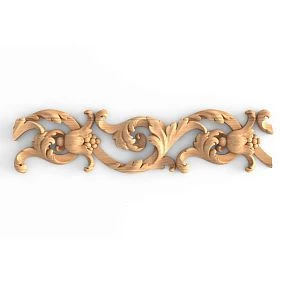
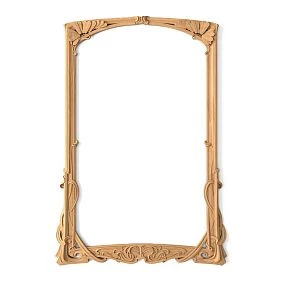
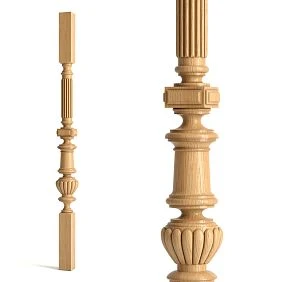
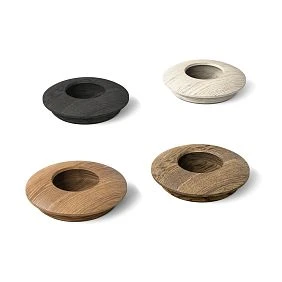
Our factory also produces:



Which criteria matter when choosing a supplier for a design project
It is more convenient to evaluate a supplier using a system of criteria rather than a single impression of the website.
Get Consultation
A clear production or supply chain
It is important for a designer to understand where the product comes from, how its specifications are confirmed, and who answers technical questions. This does not mean that an intermediary is automatically worse than a manufacturer. But the source of information must be clear.
Catalog depth
The catalog should allow solving several related tasks within a single category. For example, for polyurethane decor it is useful to have not only one type of molding, but also cornices, overlays, rosettes, wall elements, and related profiles.
Stable SKUs
The SKU is the anchor point of the entire project chain. If a code changes without clear logic or disappears from the catalog, it becomes harder for studios to maintain a materials library and replicate solutions.
Accurate technical dimensions
For decor, size is part of the design. The width of the molding changes the frame. The projection of the cornice affects the ceiling. The depth of the panel affects the joint with the casing. The diameter of the rosette affects the composition with the light fixture.
Samples
A photograph does not show texture and color the way the real material does. For project work Product samples make it possible to verify the solution before the main order.
3D models
3D is especially useful when the model corresponds to the actual product. Then the designer approves not an abstract object, but a specific item.
DWG and technical drawings
Profiles and visualization nodes are not enough. DWG helps transfer geometry into working documentation.
Ability to calculate quantity
The supplier must provide enough data so the studio can calculate linear meters, panels, or individual items.
System completeness
The more related categories can be managed within a single SKU logic, the fewer gaps there are between design and procurement.
Repeatability and reordering
If a project consists of several stages, it is important that the second order can be placed using the same item code. Mistakes, an additional wall section, or a change in furniture may require a repeat purchase.
Working with a professional audience
Individual conditions for designers and architects are useful because the supplier already has infrastructure for project work: digital materials, catalogs, a manager, and professional interaction scenarios.
Manufacturer or intermediary: what matters more to a designer
The formula "the manufacturer is always better" is too simplistic. What matters to a designer is not a badge on a website, but the quality of the project chain.
A direct manufacturer can offer advantages: technical information from the primary source, consistent geometry, a clear SKU, samples, drawings, digital models, the ability to resolve non-standard issues, and product repeatability.
But an intermediary can also be convenient if they maintain an up-to-date catalog, can work with specifications, keep stock, and provide reliable logistics.
So what should be compared is not the company's status, but its ability to deliver a specific project.
What to check with a manufacturer
-
Is there a detailed catalog.
-
Are there real dimensions.
-
Are there technical files.
-
Can a sample be obtained.
-
Can a product be identified by its item code?
-
Can the order be repeated?
-
Who answers technical questions?
What to check with the intermediary
-
How up to date are the product pages?
-
Do the SKUs match the manufacturer's?
-
Is there real stock availability?
-
How are claims handled?
-
What happens with a reorder?
The professional task is to choose not the “right type of company,” but a reliable chain of data and goods.
What range should an interior decor supplier cover
The convenience of a single supplier emerges where several decorative categories can be handled within one specification.
Moulding
Polyurethane moldings covers a large scope of interior tasks: moldings, cornices, rosettes, decorative elements.
For a studio, what matters is not the number of product cards itself, but the presence of different scales and types of geometry.
Moldings and Cornices
Moldings made of polyurethane are needed for frames, portals, wall compositions, ceiling transitions.
Precise profiles and DWG are especially useful here.
Stucco decorative elements
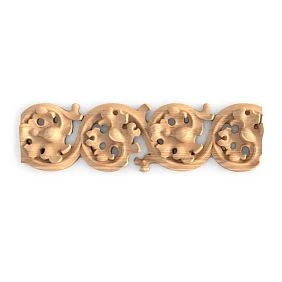
molded decoration made of polyurethane allows building compositions from central and repeating details.
When choosing, not only the dimensions matter, but also the visual scale relative to the molding and the wall.
Wall and slat panels
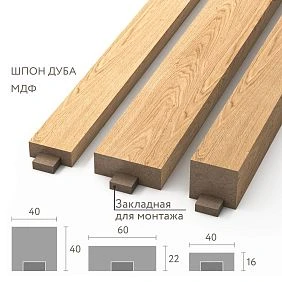
MDF wall panels — is no longer a separate decorative element, but a large finishing surface.
The supplier must provide enough information to verify rhythm, dimensions, and future layout.
Wooden decor
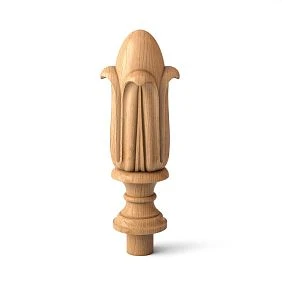
wooden decorative elements и Carved wooden decoration needed for furniture, doors, portals, panels, and architectural accents.
For wood, samples and texture control are especially important.
Why multiple categories from one supplier are convenient
Not because one brand is automatically better than several. The reason is practical: a unified SKU logic, one file library, one link system, a similar catalog structure, easier reordering, and easier archive management.
This reduces the administrative burden on the studio.
How to check a supplier's catalog
The catalog is the first point of contact with the assortment. For a designer, its quality can be assessed quite formally.
For each item, the following must be clear:
-
article number;
-
photograph;
-
exact dimensions;
-
material;
-
finish options;
-
price or the mechanism for obtaining it;
-
product status;
-
related elements.
For initial selection, it is convenient to use Material catalog for designers, where catalogs and technical materials are available for several product categories.
An image in the catalog should lead to a specific SKU. If a beautiful object cannot be identified, its value for project work drops sharply.
Samples: a mandatory stage before project procurement
A sample is especially important where the material is seen up close or occupies a large area.
Professional workflow:
catalog → shortlist → samples → material board → approval → specification.
What to check on the sample
Color
A screen does not confirm the real shade.
Relief
Side lighting can make a profile appear visually deeper or softer.
Scale
A molding in hand gives a different sense of scale than in a photograph.
Texture
For wood, this is critical. For a finish to be painted, it is also important if the surface has its own character.
Surface quality
Edges and relief are easier to assess physically.
Compatibility
The sample should be placed next to the paint, floor, door, facade, textiles, and metal.
How to store samples
On the back side, it is useful to write:
manufacturer / article number / date / project / status.
Then, six months later, the sample remains part of the system rather than an unnamed fragment.
3D models: how to verify a supplier at the visualization stage
If the supplier provides 3D models of interior decor, the designer can check the assortment before physical purchase.
Correct scheme:
SKU → 3D model → visualization → approval → the same SKU in purchasing.
What this gives
-
the actual scale;
-
checking proportions;
-
correct adjacency with furniture;
-
ability to count repeating elements;
-
fewer replacements after approval.
What to check after import
-
Scale.
-
Orientation.
-
Dimensions.
-
File name.
-
Link to SKU.
What not to do
You cannot stretch a serial profile in width just because it looks better that way.
You can change the length of a section, but the physical geometry of the actual product must be preserved.
DWG and technical drawings
DWG decor drawings are especially important for profiles.
3D answers the question:
how it looks.
DWG:
what size it is and how it is constructed.
For molding, a DWG is needed to check the width, depth, profile, and joint.
For a cornice — the height along the wall, the projection, and the profile.
For panels — module, layout, and junction.
For architectural decor — dimensions, axes, and mounting plane.
Why a render does not replace a drawing
The installer must not measure a picture.
If in the visualization the frame is located 120 mm from the casing, this dimension must appear on the elevation drawing.
Why the product code matters more than the name
Bad entry:
white molding 40 mm.
Good:
manufacturer + SKU + exact size + material + URL.
The first entry is understandable only to the project author at the moment of work.
The second remains understandable:
-
in a month;
-
to the procurement specialist;
-
to another designer;
-
to the manager;
-
on the next project.
How to implement SKU in the studio
The SKU can be included:
-
in the 3D object name;
-
in the specification;
-
in the material master-card;
-
in the DWG file name;
-
on the sample label.
The fewer different ways to designate one material, the fewer errors.
How to test a supplier with a first small order
If the studio has not yet worked with a supplier, there is no need to start with the maximum volume.
A first small order allows you to test the process.
Response speed
How quickly and thoroughly the supplier responds to technical questions.
Invoice accuracy
Whether the items, SKUs, and quantities match.
SKU match
Whether an "analog" appears in the invoice without approval.
Packaging
Especially important for long profiles and decorative surfaces.
Documents
Whether the items and quantities are clearly presented.
Quality
Whether the product matches the sample and the product page.
Deadline
The actual lead time should be compared with what was agreed for the specific order.
Handling issues
A supplier proves themselves not only in a flawless delivery, but also in how they handle a complaint.
Re-order
It is useful to check how easy it is to reorder the same item.
Why SKU stability matters more than a huge catalog
A catalog may contain thousands of items but still be inconvenient for a studio if SKUs change, product pages disappear, dimensions are incomplete, links are unstable, or orders cannot be repeated.
For a professional library, what is more valuable:
stability → archive → reuse.
Example
The studio used one profile in three projects.
On the fourth project, the designer opens the archive, sees the SKU, 3D, and sample, quickly checks whether it is still current, and reuses the solution.
If only an image was saved instead, the search starts over.
How to vet a stucco supplier
When choosing a supplier of stucco decor, there is no need to create an abstract ranking of companies. It is more useful to check a specific system.
Profile catalog
Whether there are different scales and purposes.
Moldings
Whether there are real cross-sections and dimensions.
Crown Mouldings
Are the height and projection clear.
Outlets
Are there different diameters and textures.
Plates
Can a composition be assembled.
Consistency
Do the elements match in scale and character of the ornament.
Samples
Can the material be viewed before a large purchase.
Technical files
Are 3D and DWG available.
After selecting a specific group, the project can move to the commercial phase and You can buy ready-made stucco matching the Baroque style. Calculate the quantity: linear meters of cornices and moldings, number of rosettes, pilasters, consoles, corner elements. Add a ten to fifteen percent allowance for trimming. for already approved items.
How to vet a wall panel supplier
Panels require a different set of questions.
Material
MDF and wood look and behave differently.
Format
Panel, slat, tile — different layout principles.
Geometry
The relief should be clear in numbers.
Dimensions
Needed for calculating the area.
Color
Especially if the surface is being painted.
Repeatability
For a large wall, it's important to understand the module logic.
Sample
Needed to check the texture and relief.
Layout
Before ordering, you need to understand the end modules.
When the project is ready, the designer or planner can buy MDF wall panels according to the calculated layout.
How to vet a wooden decor supplier
For wood, the technical part is complemented by natural variability.
It is useful to check:
-
wood species;
-
geometry;
-
thread quality;
-
sanding;
-
finishing;
-
the option without a finish;
-
sample;
-
repeatability of the batch.
Why color on a screen is not enough
Wood changes depending on lighting and finish.
That is why a physical sample is especially important.
When you need an option without a finish
If the studio wants to get a custom shade and a unified finish with the furniture.
What to record in the specification
Not just "oak overlay," but the exact SKU and version.
How to add a single supplier to the project specification
Each item needs the same fields.
| Field | What to fix |
|---|---|
| Manufacturer | STAVROS |
| SKU | Exact SKU |
| Category | molding / panel / decor |
| Size | actual |
| Material | PU / MDF / solid wood |
| Room | Project zone |
| Quantity | pcs. / linear m |
| URL | specific page |
| Sample | confirmed / not needed |
| Status | approved / ordered |
Why a unified structure is useful
If all suppliers are recorded the same way, it is easier for the specifier to work with the project.
Even if a single project has five brands, the table remains predictable.
How to link with drawings
The drawing uses the code:
ML-01.
In the specification:
ML-01 → STAVROS → SKU → quantity → URL.
This way, the drawing and the purchase are linked without long names.
How to work with a supplier across multiple projects at the same time
For a design studio, it is especially dangerous to mix data from different projects.
Working structure:
central library → separate project shortlist → approved specification → order → archive.
Central Library
Contains verified materials and files.
Project shortlist
Contains candidates.
Approved specification
Only items with APPROVED status.
Order
Final quantities only.
Archive
Preserves real experience.
Cannot mix:
-
article numbers;
-
batch;
-
premises;
-
budgets;
-
orders from different clients.
It is especially important to separate “selected for consideration” from “approved for purchase.”
When custom decor is needed instead of catalog options
Even a good supplier is not obliged to have a solution for every original idea in its catalog.
Custom decor is justified if you need:
-
a non-standard profile;
-
a special size;
-
an original ornament;
-
a reproduction of a historical detail;
-
a proprietary motif for a network of locations.
Work sequence:
sketch → technical assessment → sample / prototype → approval → production.
But before that, the existing assortment needs to be checked. Developing a new element should not begin simply because the designer did not look at the catalog.
How to compare suppliers by price
The price of a single unit is only part of the project cost.
For a project, you need to calculate:
item + sample + delivery + installation materials + waste + replacement risk + possibility of reordering.
A cheap profile that cannot be repeated
If in two months another 12 meters are needed and the item has disappeared, the savings from the first order may be lost.
An expensive sample before a large batch
It may seem like an unnecessary expense, but it prevents purchasing unsuitable material.
Delivery in several stages
You need to consider how convenient it is to repeat the same SKU and how critical batch consistency is.
The hidden cost of replacement
If the profile has to be changed after the 3D is approved, new costs arise:
-
adjustment of the visualization;
-
updating the layouts;
-
changing the specification;
-
re-approval.
Therefore, the supplier's price is also the cost of stability.
How to move from supplier selection to a commercial order
Final process:
catalog → samples → 3D/DWG → SKU → specification → calculation → commercial proposal → order.
At this stage, the supplier has already been vetted and the materials have been selected.
For linear moldings, you can buy polyurethane moldings by specific item codes from the specification.
For panels — place the calculated batch order.
For wooden decor — verify the material and finish.
The main rule: purchasing should not be initiated based on a presentation or verbal description. Only based on approved, identified items.
Common mistakes when selecting a supplier
Mistake 1. Choosing based only on the lowest price
Reason: the cost per unit is being compared.
Consequence: technical information, samples, and repeatability end up weaker.
How to avoid: calculate the cost of the project cycle.
Mistake 2. Not recording the SKU
Reason: it seems that the names are enough.
Consequence: a reorder turns into a new search.
How to avoid: include the item code in every line of the specification.
Mistake 3. Considering a beautiful catalog sufficient
Reason: the assortment looks convincing.
Consequence: at the working stage, dimensions and profiles are missing.
How to avoid: check the technical part before approval.
Mistake 4. Not ordering a sample
Cause: project deadlines are tight.
Consequence: the color or texture differs from expectations.
How to avoid: use a sample for visually critical materials.
Mistake 5. Using third-party 3D instead of the actual product
Cause: a model is easier to find.
Consequence: the object in the visualization does not match the purchase.
How to avoid: link the final scene to the supplier's SKU.
Mistake 6. Not checking reorders
Reason: it is assumed that the entire volume will be purchased at once.
Consequence: if additional demand arises, the item cannot be reordered.
How to avoid: before the main purchase, check the item's availability and the reorder procedure.
Mistake 7. Mixing projects in one order
Reason: saving time.
Consequence: mix-ups across rooms and clients.
How to avoid: separate project codes and packing lists.
Mistake 8. Not checking changes before payment
Reason: the specification was approved several weeks ago.
Consequence: an old version is being purchased.
How to avoid: final revision control.
When one supplier should not cover the entire project
Unification is useful, but you should not artificially force the entire interior to fit one manufacturer.
It makes sense to split suppliers if:
-
one does not have the required material;
-
another better covers a specialized category;
-
a unique item is required;
-
lead times differ;
-
a specific technology is important.
The studio's goal is not the minimum number of suppliers, but a manageable system.
A single supplier works well where categories are truly compatible and convenient for project work.
How to evaluate a supplier after project completion
A supplier's work is best seen after installation.
After project handover, it is useful to keep a short experience card in the studio library:
-
which SKUs were used;
-
whether the products matched the samples;
-
how convenient it was to work with the files;
-
whether there were packaging issues;
-
whether a reorder was needed;
-
how quickly it was completed;
-
whether there were any complaints;
-
what the installer said;
-
whether to use the supplier in the next project.
So the choice of the next supplier relies not on an advertising promise, but on your own project history.
Evaluate more than just the product
A supplier may have excellent products but weak communication. For a studio, this matters.
Need to consider:
-
response speed;
-
accuracy of documents;
-
willingness to understand the specification;
-
continuity of information between managers;
-
quality of feedback.
Evaluate reproducibility
If the same item code is ordered several months later without a new search or clarifications, the supplier has truly integrated into the studio's system.
Designer's checklist before choosing a supplier
Check:
-
Are there real item codes.
-
Are exact dimensions specified.
-
Are the materials clear.
-
Are there samples.
-
Is there 3D for significant categories.
-
Are DWG files available for profiles?
-
Can an SKU be reordered?
-
Are there multiple related product lines?
-
Is the pricing process clear?
-
Is professional support available?
-
Can you work from a specification?
-
How is a repeat order placed?
-
How are claims handled?
-
Can orders from different projects be separated?
-
Are the links and product pages up to date?
-
Is the product code preserved between the project and the invoice?
If most of the answers are positive, the supplier is suitable for deeper test work.
FAQ
How does a supplier for a designer differ from a regular store?
A project supplier should help not only to purchase a product, but also to identify it, integrate it into the project, obtain technical data, a sample, digital files, and reorder the same SKU.
Is a manufacturer always better than an intermediary?
No. What matters more is the quality of data, the stability of article numbers, the ability to reorder, samples, technical files, and the quality of work with the project.
Why are samples needed if there are good photos?
A photo does not confirm the actual texture, color, and scale of the relief. For critical materials, a sample reduces the risk of error.
Why does a supplier need 3D models?
So that the designer can place the real product in the visualization and then transfer the same article number into the specification.
Why DWG if there is 3D?
A DWG is needed for precise geometry, profiles, dimensions, and working drawings.
How do you vet a supplier before placing a large order?
Place a small test order: evaluate the accuracy of the invoice, SKUs, packaging, documents, quality, and the possibility of reordering.
Which matters more: a large catalog or stable items?
For a studio, stability is often more important. A proven SKU that can be reordered a year later is worth more than hundreds of unidentified images.
Where can I see STAVROS's professional capabilities?
Page manufacturer of interior decor for designers brings together professional tools and information for designers and architects.
How do you use a supplier across multiple projects?
Keep a central supplier library, but create a separate specification and order for each project. Do not mix quantities, statuses, and budgets from different clients.
Where should you start checking the STAVROS supplier?
You can start with the website STAVROS, then go to the professional section, catalogs, samples, and specific product categories.
Final working algorithm for a design studio
1. Choose the supplier category.
Stucco, panels, wood, or comprehensive decor.
2. Check the catalog.
You need real SKUs and dimensions.
3. Create a shortlist.
No more than a few suitable options per task.
4. Obtain samples.
For critical materials.
5. Check 3D.
At real scale.
6. Check DWG.
For profiles and assemblies.
7. Approve with the client.
Material and geometry.
8. Confirm the SKU.
In the specification.
9. Calculate the quantity.
According to the working documentation.
10. Place a test order.
If the supplier is new.
11. Check the result.
SKU, quality, packaging, and documents.
12. Place the main order.
Based on the final revision of the project.
13. Save the data to the library.
Sample, SKU, files, link, and usage experience.
14. Reuse the supplier only based on accumulated data.
This way, the studio's database becomes stronger with every completed project.