Article Contents:
- Ready in the warehouse does not yet mean ready to ship
- It is better to pass the checkpoint before the truck arrives
- An invoice does not replace the pre-shipment inspection sheet
- Wooden moulding: similar SKUs must be physically separated
- Wooden cornice: a low-quantity line item can be critical
- Line-by-line completeness matters more than the overall readiness percentage
- What to check physically on the selected items
- Why you cannot open only the first convenient pack
- Remote pre-shipment inspection for a regional facility
- What should be visible in the inspection video
- The final packing list is drawn up after group approvals
- Who grants shipment authorization
- How to compare the pre-shipment list with actual acceptance
- When pre-shipment inspection is especially useful
- When a separate extended check may be excessive
- How to work with multiple batches of the same SKU
- How to work with one batch across multiple compartments
- How to check a finished batch if some items are already sealed in packaging
- How to work with a small critical item
- How not to confuse order readiness with queue readiness
- How not to ship a reserve instead of an installation batch
- How to handle an SKU replacement before shipment
- How to verify the quantity inside packing units
- How to label transport units
- How to avoid mixing up similar profiles during combined loading
- What to do if the wrong material is found with the correct SKU
- What to do if the length differs from the ordered one
- What to do if the quantity is off by one or two planks
- What to do if the finish is visually questionable
- What to do if one package is damaged before loading
- How to recheck a held group
- After correction, the group undergoes control again
- Partial shipment must be a deliberate decision
- How to decide whether to ship approved groups separately
- How to keep history after the first partial truck
- How not to confuse the second shipment with a new order
- What to do if the held item cannot be quickly corrected
- How to verify the replacement SKU before shipment
- How to control the loading queue
- How to use the control sample when shipping a large batch
- How to work if there is no control sample
- How to verify completeness by room
- Why zone completeness is sometimes more important than warehouse completeness
- How to reconcile a photo of the finished batch with the final packing list
- How to store inspection results after shipment
- Practical example: total linear meters match, but long planks are missing
- What to do if the truck arrived before the inspection was completed
- How to organize a ready-group zone in the warehouse
- How to handle similar SKUs without colored stickers as the only identifier
- How to verify that the final packing list actually matches the truck
- How to handle a return after a group hold
- How to avoid re-paying or re-ordering a held balance
- How to record the reason for an incomplete first shipment
- When a remote check is not enough
- How to check finishes in photos without false confidence
- How to handle custom-made items
- How to handle a project where several trucks are dispatched on the same day
- How to verify that a site is ready for acceptance before dispatch
- How to verify that the first truck has actually closed the first queue
- When a pre-shipment check needs to be repeated in full
- When a local re-check is sufficient
- A checkpoint the day before loading reduces the number of urgent decisions
- How to tell that a batch is truly ready for shipment approval
- A pre-shipment check should reduce uncertainty, not create a new pile of paperwork
- When you don't need to reopen the entire batch after a correction
- How to tell that a batch is ready not only on paper but also physically
- A check is considered complete only after the register and the actual cargo match
- 1. Treating the "ready" status as approval to ship
- 2. Checking only the invoice total
- 3. Check only the total square footage
- 4. Do not verify the material
- 5. Do not verify the product length
- 6. Check only one convenient package
- 7. Do not check a small critical item
- 8. Find a problem and load it anyway because the truck is waiting
- 9. Stop the entire order because of one independent group
- 10. Remove the held item from the master registry
- 11. Do not recalculate the balance after the first truck
- 12. Perform a check and then mix the packages
- 13. Take photos without labeling
- 14. Treat pre-shipment inspection as a substitute for object acceptance
- 15. Do not link the final packing list to the current revision
- Should every package be opened before shipment?
- How is "ready" different from "approved for shipment"?
- Can an order be shipped without one disputed item?
- Why is it not enough to check the total linear meters?
- Should the material be checked if the SKU is correct?
- What should be done if the packaging is damaged while still at the warehouse?
- Are photos required?
- Does pre-shipment inspection replace acceptance at the site?
- When is such an inspection especially useful?
- Can a complex form be skipped entirely for a small order?
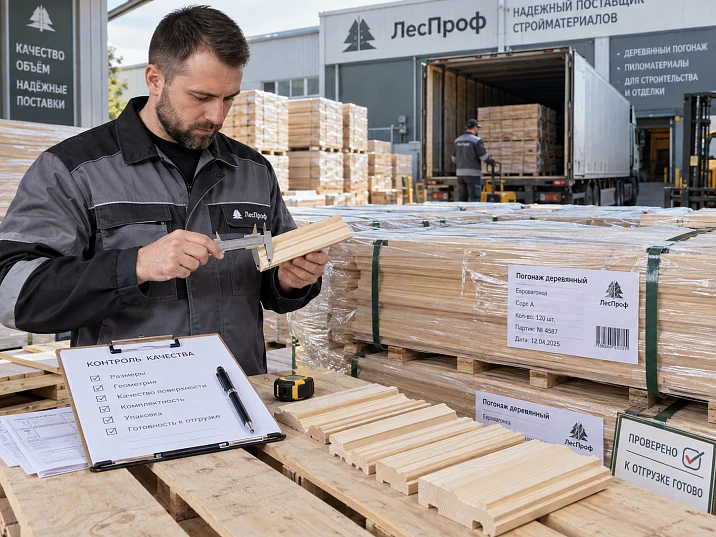
A regional client ordered a large batch of wooden trim: 280 skirting boards, 190 moldings, and 72 cornices. The order contains 16 SKUs, several materials, different product lengths, and three finish options. Production is complete, the order has been assembled, and the batch is physically sitting in the warehouse waiting for a truck.
This is exactly where a separate control point comes in. The status “ready at the warehouse” does not yet mean “ready to load.” An error found before loading is usually limited to one group: it can be stopped, rechecked, repacked, or replaced without expensive transportation. The same error after shipping 1,500 km already triggers a long chain: unloading, documenting the discrepancy, separate storage of the disputed group, repeat logistics, a new shipment, and repeat acceptance.
Therefore, between the statuses “batch assembled” and “truck departed,” one more is needed:
APPROVED FOR SHIPMENT.
Main sequence:
current specification → completed batch → check all lines → physical spot check → approve / hold → shipment balance → packaging and labeling control → final packing list → shipment authorization → loading → transport → acceptance at the site.
This is exactly the approach needed when building materials supplier wholesale preparing a large batch of wooden moulding for a project delivery.

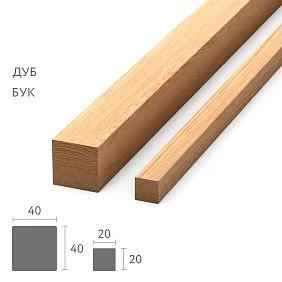

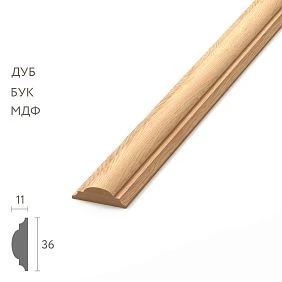

Ready in the warehouse does not yet mean ready to ship
A batch has several different states that are often confused in practice.
| Condition | What does it mean |
|---|---|
| PRODUCTION COMPLETED | Items manufactured |
| ORDER PICKED | Items physically picked for the order |
| CHECK COMPLETED | Lines and selected items checked |
| APPROVED FOR SHIPMENT | A specific group can be included in the loading |
The final status should appear only after verification. The driver, warehouse employee, or the vehicle itself should not become the last checkpoint for completeness control.




The checkpoint is best completed before the vehicle arrives
When the vehicle is already at the gate, everyone feels time pressure: the driver is waiting, the loading window is limited, and the warehouse wants to free up space faster. At that moment, even a discovered discrepancy begins to be perceived as an obstacle to the schedule rather than as grounds to stop a specific group.
Therefore, it is reasonable to complete the check before the scheduled loading time. Then the disputed molding can be left in the warehouse without conflict with transport, and the approved groups can be calmly prepared for the vehicle.
Pre-shipment inspection is not additional bureaucracy, but a way to separate the technical decision from the rush at the moment of loading.
Our factory also produces:








The pre-shipment inspection sheet is the central document of the batch
| Group | SKU | Material | Length | Quantity | Finish | Packaging | Status |
|---|---|---|---|---|---|---|---|
| G01 | PLT-A | Oak | 2400 | 120 | F01 | ACCEPTED | ALLOWED |
| G02 | MLD-A | Beech | 2400 | 86 | F02 | ACCEPTED | ALLOWED |
| G03 | MLD-B | Oak | 2400 | 42 | F03 | Check | HOLD |
| G04 | KZ-A | Oak | 2000 | 28 | F01 | ACCEPTED | ALLOWED |
The table immediately shows which part is ready for the machine and which is not. The disputed group does not disappear from the order: it retains its quantity, SKU, and status.
Get Consultation
We check 100% of purchasing lines, but are not required to open 100% of the items
Here it is important to distinguish between two checks.
For each order line, you need to verify:
- SKU;
- the material;
- execution;
- commercial length;
- quantity;
- finish code, if used;
- queue or zone assignment;
- readiness status.
This is 100% of lines.
However, physical inspection of individual items may be selective and depend on the batch structure. Formula:
100% of lines ≠ 100% opening of each plank.
First the current specification, then the finished batch
Pre-shipment inspection begins not with the warehouse, but with the current version of the order.
For example:
SPEC-PG-REV08 — current.
It is compared against:
LIST OF THE BATCH READY FOR SHIPMENT.
For each row:
ordered → ready → checked → approved for dispatch.
If the warehouse is working from REV07, but the buyer has already confirmed REV08, even a perfectly assembled batch is incorrect for the project.
An invoice does not replace a pre-shipment inspection sheet
An invoice answers the questions of a commercial document: what was sold, how many units, and at what price. It does not always reflect the actual packaging grouping, the actual number of packages, the internal group number, and the current status of the physical inspection.
A pre-shipment sheet answers a different question:
what exactly is prepared for loading right now?
These documents should not be mixed up.
building materials supplier: the material is checked together with the SKU
Entry:
MLD-050 — 48 pcs.
may be insufficient.
If a single item exists in several versions, the working line must be more precise:
MLD-050 / oak / 2400 / 48 pcs.
If there are different finishes:
MLD-050 / oak / 2400 / F02 / 48 pcs.
A correct SKU with the wrong material or length still means an incorrect delivery.
Wooden skirting: we check whole pieces, not just the total linear meters
In the order:
PLT-A — 48 pcs. × 2400 mm.
In the warehouse, the total linear meters may be roughly the same, but if some pieces have a different commercial length, the cutting plan for the site will change.
Wooden baseboard in a project, it is usually calculated not only in linear meters but also in whole planks, because long walls require specific cut lengths.
Therefore, the pre-shipment inspection records the number of pieces of each length.
Wooden moulding: similar SKUs need to be physically separated
If the following are being prepared at the same time:
- MLD-043;
- MLD-047;
- MLD-050;
they cannot be stacked in a common pile labeled "molding".
wooden molding may differ in profile, width, and finish, and similar profiles are especially easy to mix up during fast loading.
Before packing, each group receives its own identification and is checked against the master specification.
Wooden cornice: a low-quantity line item can be critical
An order has 300 skirting boards and only 8 cornices. This does not mean the cornices can be left "for later."
wooden cornice may close a continuous ceiling contour of a single zone. If one of the eight is missing, that specific room remains unfinished.
Line item count matters more than the overall order readiness percentage.
Line item completeness matters more than the overall readiness percentage
An order has 22 SKUs. Twenty-one line items are fully ready. By total item count, readiness is almost 100%. But the twenty-second line item is a critical cornice for the lobby.
If it is missing, the order cannot honestly be considered fully cleared for shipment.
The right question:
are all mandatory lines ready in the required configuration?
And not:
what percentage of the total volume is already in the warehouse?
After the line-by-line reconciliation, the physical spot check begins
Building materials suppliers wholesale they can prepare large batches where opening every item is impractical. But this does not mean that the physical check can be reduced to one random pack at the gate.
The sample must represent the structure of the order. It is useful to include:
- several SKUs;
- different materials;
- different commercial lengths;
- different finish options;
- different packaging groups;
- small but critical items;
- profiles that are similar to each other.
The sample size does not need to be turned into a universal percentage. It depends on the composition of the batch, the project requirements, and which risks actually need to be checked before transportation.
What to check physically on the selected items
Depending on the order, check:
- compliance of the profile with the declared SKU;
- the material;
- commercial length;
- key cross-section dimensions;
- the surface condition;
- finish execution;
- visual compliance with the approved sample, if one is used;
- legibility of the marking;
- condition of the control packaging.
There is no need to check parameters that are not in the task just to create a large report. But the main identification features must be confirmed.
Why you should not open only the first convenient pack
The first package by the aisle may contain the most common and simple SKU. If you check only it, the remaining product groups remain effectively out of control.
For example, a batch contains:
- 120 oak skirting boards;
- 86 beech mouldings;
- 42 oak mouldings with a different finish;
- 28 cornices;
- several small items for door units.
Checking only the oak skirting board does not confirm that the mouldings and cornices are assembled correctly.
Disputed group receives the status "HOLD UNTIL DECISION"
If a question arises during verification, the specific group should not automatically go into the machine.
For example:
| Group | Status | Action |
|---|---|---|
| Skirting board PLT-A | ALLOWED | Can be included in shipment |
| Molding MLD-A | ALLOWED | Can be included in shipment |
| Molding MLD-B | HOLD | Additional check |
| Cornice KZ-A | ALLOWED | Can be included in shipment |
Holding one line does not have to automatically stop the entire order. The decision depends on the independence of the groups and the site schedule.
wholesale building material suppliers: the disputed line should not disappear from the master registry
If MLD-B was removed from the current machine, it cannot simply be deleted from the final list as if the need never existed.
Remains in the master registry:
MLD-B / 42 pcs. / HOLD / NOT SHIPPED.
After the first truck, the project must clearly see what it still has to receive.
The shipment balance shows what remains after each truck
| SKU | Ordered | Allowed now | On hold | Remaining to receive |
|---|---|---|---|---|
| PLT-A | 120 | 120 | 0 | 0 |
| MLD-A | 86 | 86 | 0 | 0 |
| MLD-B | 42 | 0 | 42 | 42 |
| KZ-A | 28 | 28 | 0 | 0 |
This table is especially important for partial shipments. It protects against the mistake where, after the first truck, employees consider the order fully closed even though one group remained in the warehouse.
Photo documentation must show identity, not just the general warehouse
A photo like "here's the batch in the warehouse" is almost useless. It doesn't allow you to verify specific items.
Useful set of photos:
- general view of each packaging group;
- close-up of the marking;
- opened control package;
- the profile itself;
- product length or the method of confirming it;
- packaging condition;
- final view of the group after repacking.
It is convenient to keep the group code in the file name or caption: G01, G02, G03.
Remote pre-shipment inspection for a regional facility
If the customer's representative does not come in person, part of the control can be arranged remotely via photos, video, a table, and marking.
But such a scheme must be agreed upon for a specific procurement. The article does not claim that any company automatically provides a separate remote inspection service.
For remote verification, it is especially important that materials are shown not "beautifully," but verifiably.
What should be visible in the verification video
Useful video scenario:
- show the packaging group code;
- show the SKU and label;
- show the material and finish;
- show the product length;
- show the number of packages;
- open the verification pack;
- show the profile itself;
- separately show disputed points;
- record the final status of the group.
The video should allow verifying specific data, not create an impression of a neat warehouse.
After inspection, labeling must not be lost during repackaging
Imagine: group G03 has been inspected as MLD-A / beech / 2400 / F02. After inspection, the packaging was disassembled, the items were moved into new bundles, and only “molding” was written on them.
The value of the inspection has disappeared. Goods will arrive at the site whose connection to the inspected group is no longer obvious.
Therefore, the rule:
the verified identity must be preserved until acceptance at the site.
construction materials supplier: after inspection, packaging control begins
The new article should not turn into a guide to all transport logistics. But after inspection, it is necessary to ensure that it is the inspected group that will retain its identity in transit.
At minimum, check:
- one group has one clear label;
- similar SKUs are not mixed;
- labels are legible;
- the number of packages can be counted;
- the label is not hidden after the transport package is formed;
- packaging does not break the separation between groups.
The final packing list is compiled after the groups are approved
The order should be as follows:
master order → pre-shipment check → approved items → final packing list.
If MLD-B has the status "HOLD", it must not accidentally remain in the actual composition of the machine.
But in the master registry it remains as an unshipped requirement.
Shipping authorization — a separate checkpoint
A simple document or record can be used for the project:
| Field | Value |
|---|---|
| Check | PPO-01 |
| Date | ___ |
| Specification | REV08 |
| Verified groups | G01–G04 |
| Withheld | G03 |
| APPROVED FOR SHIPMENT | G01, G02, G04 |
This is a project control form, not a statement about a specific supplier's legal document.
Who authorizes shipment
At a specific site, the responsible person may be a purchaser, a kit assembler, a technical specialist, or a customer representative.
The key is to determine in advance who has the authority to move a group from “VERIFIED” to “APPROVED FOR SHIPMENT.”
The driver or loading crew must not decide on their own that a batch is sufficiently complete.
Pre-shipment inspection does not replace acceptance at the site
Even a perfectly inspected batch can be damaged after shipment approval: during loading, in transit, or during unloading. Therefore, pre-shipment control and on-site acceptance are two separate checkpoints.
Before transportation: we check that the correct SKUs, materials, lengths, quantities, and packaging groups are prepared for dispatch.
After transportation: we check that exactly this number of packages arrived, the packaging is not damaged, the groups have retained their identity, and no visible damage appeared in transit.
One procedure does not replace the other.
How to compare the pre-shipment list and the actual acceptance
If before dispatch there were:
24 transport packages.
The following must be present at the site:
24 transport packages.
If 23 arrived, the problem is localized immediately. The same applies to packaging: before shipment there is a photo of an intact group G02, and after unloading it has a dent on the end. The context of the event becomes clearer.
| Parameter | Before shipment | On site | Result |
|---|---|---|---|
| Number of seats | 24 | 24 | Matches |
| Group G01 | Intact packaging | Intact packaging | Matches |
| Group G02 | Intact packaging | Damaged corner | Record upon acceptance |
When pre-shipment inspection is especially useful
It is especially valuable if:
- regional delivery;
- expensive batch;
- many SKUs in the order;
- there are similar moldings;
- several materials;
- several finishes;
- there are custom items;
- long re-manufacturing lead time;
- installation is strictly tied to a date;
- one missing line blocks a separate zone.
For a simple local order with a single SKU, such a system can be significantly more compact.
When a separate extended check may be excessive
If an order consists of a single standard item, a small batch, and a short delivery, complex multi-page control may not be needed. But even then, it is useful to check the SKU, material, length, quantity, labeling, and packaging condition.
An expert approach does not mean maximum bureaucracy. It means the minimum sufficient control for a specific risk.
Wholesale building material suppliers: one machine can contain several independent groups
A large order is not necessarily shipped as one monolithic set. One machine may contain:
- skirting boards for Floor 1;
- moldings for Floor 2;
- cornices for the lobby;
- reserve;
- late reorder;
- goods from another queue.
Therefore, the pre-shipment list must retain not only the SKU but also the group purpose.
For example:
G01 / PLT-A / Floor 1.
G02 / MLD-A / Floor 2.
G03 / KZ-A / Lobby.
This way the facility understands not only what has arrived, but also where this group should go after unloading.
How to work with multiple batches of the same SKU
Suppose PLT-A is assembled from two production batches. This is not necessarily a problem, but identity must be preserved.
| Group | SKU | Batch | Quantity | Status |
|---|---|---|---|---|
| G01-A | PLT-A | LOT-11 | 70 | ALLOWED |
| G01-B | PLT-A | LOT-12 | 50 | ALLOWED |
After loading, they cannot be combined into nameless 120 planks if batch traceability is important to the project.
How to work with one batch across multiple finishes
If one SKU is used in three finish variants, pre-shipment inspection treats them as three purchasing configurations.
MLD-A / oak / 2400 / F01.
MLD-A / oak / 2400 / F02.
MLD-A / oak / 2400 / F03.
A shared article number does not allow these groups to be mixed. During inspection, it is necessary to confirm not only the profile but also the finish.
How to inspect a finished batch if some items are already sealed in final packaging
It is not always reasonable to completely destroy the transport packaging for inspection. In that case, accessible control packages or an inspectable sample must be provided in advance before the batch is finally closed.
Work sequence:
- verify the identity of the group before final packaging;
- leave control access to several items;
- record the results;
- close the packaging after inspection;
- save the group code;
- do not mix it during further consolidation.
This way, control does not conflict with transport preparation.
How to handle a small critical item
In a large order, a small line item can get lost among hundreds of products. For example, just four special architraves for the main entrance.
Their total linear footage is negligible, but the absence of one element blocks the handover of the portal.
Therefore, it is useful to have a flag in the checklist:
CRITICAL ITEM.
Such a line item is checked regardless of the small quantity.
How not to confuse order readiness with queue readiness
If the project is built in stages, full readiness of the entire order may not be needed for the first truck. But the first phase must be completed according to its own lines.
For example:
- Phase 1 — Floor 1 / 100% complete;
- Phase 2 — Floor 2 / 85% complete;
- Phase 3 — Lobby / 60% complete.
You can allow the first phase to be shipped without declaring the entire order fully ready.
The shipment balance must preserve the remaining quantity for the other phases.
How to avoid shipping the reserve instead of the installation batch
A project may have a separate operational or installation reserve. If its packaging looks the same as the main batch, it is easy to include the reserve in the current truck when in a hurry.
It needs a separate line:
PLT-A / RESERVE / 8 pcs. / DO NOT INCLUDE IN SHIPMENT #1.
Or vice versa — if the reserve must travel together with the main batch, this is also recorded separately.
How to handle a late specification change before loading
Dangerous scenario: the batch has already been assembled per REV07, and in the morning REV08 arrives. You cannot simply make a change in the registry and consider the warehouse automatically updated.
You need to:
- pause the release of the affected lines;
- compare REV07 and REV08;
- identify the physical groups affected by the change;
- reassemble if necessary;
- repeat the check of the affected lines;
- update the final packing list.
Unchanged independent groups may retain their status if this is confirmed by the project procedure.
How to handle SKU replacement before dispatch
If the original SKU has been replaced with another, this is not a simple quantity correction.
Was:
MLD-A / 42 pcs.
Now:
MLD-B / 42 pcs.
The check must confirm the new profile, material, length, and finish. The old group cannot be left under the previous code with just a row changed in the table.
How to verify quantities within packaging units
The phrase "10 packages" alone says nothing if each one may contain a different number of items.
It is useful to have:
G01 / 6 packages × 20 pcs. = 120 pcs.
or another actual structure.
If one pack is incomplete, this must be visible before loading.
How to label transport units
The marking must be clear not only to the supplier's warehouse but also to on-site receiving.
Minimally useful:
- group code;
- SKU;
- the material;
- length;
- quantity;
- batch if required;
- zone / queue;
- unit number out of the total quantity.
For example:
G02 / MLD-A / beech / 2400 / unit 2 of 5 / Floor 2.
How to avoid mixing up similar profiles during joint loading
If MLD-043, MLD-047, and MLD-050 are shipped in the same vehicle, different groups must remain visually and documentarily distinct.
Useful:
- different group codes;
- do not mix items in one package;
- do not use identical unlabeled labels;
- check the first and last package of each group;
- match the final packing list with the actual arrangement before closing the truck.
How to check the truck before closing the body
This is no longer a repeat of the entire pre-shipment check, but a short final verification:
- Only permitted groups are in the truck.
- The number of transport units matches.
- The held groups physically remained in the warehouse.
- Marking is visible or documented.
- The final packing list matches the actual contents.
After this, loading is considered complete according to the documents.
What to do if the wrong material is found with the correct SKU
Suppose the order line contains MLD-050 / oak / 2400. The warehouse has MLD-050, but some packages actually contain beech.
This is not a minor marking error if the project actually requires oak. The group receives the status "HOLD" because the profile is correct, but the configuration is not.
Next:
- Separate the correct packages from the incorrect ones.
- Recount the quantity of each configuration.
- Correct the marking only after physical confirmation.
- Determine the missing volume of oak.
- Do not include beech in the machine as a substitute without separate project approval.
Pre-shipment inspection is exactly for this purpose: to catch mixed-up grades before transportation.
What to do if the length differs from the ordered one
Ordered:
PLT-A / oak / 2400 / 48 pcs.
Prepared:
PLT-A / oak / 1000 / part of the quantity.
The total linear meterage may look close, but long planks are not automatically replaced by short ones. If the project is designed for long sections without additional joints, the batch does not match the procurement configuration.
Status — "HOLD". Then it is determined whether part of the short items can be used in other areas. But this is already a project change, not an automatic substitution before shipment.
What to do if the quantity is off by one or two planks
A shortage of one plank seems insignificant in an order of hundreds of elements. But the significance depends on the line item.
If one of 120 standard planks is missing, the project may have a reserve. If one of eight special cornices is missing, a specific ceiling contour remains uncovered.
Therefore, the decision is made not by the shortage percentage, but by the role of the line item.
Each line item can have a flag:
STANDARD / CRITICAL.
What to do if the finish visually raises doubts
If the project uses F01, F02, and F03, the pre-shipment inspection must preserve the link between the specific group and the approved finish.
If the color or surface of G03 differs noticeably from the reference sample, the group should not ship just because the SKU and quantity match.
You need to:
- compare with the approved sample;
- check the finish labeling;
- separate the questionable part;
- capture a photo under comparable lighting;
- make a decision on the specific group.
The article does not establish a universal color tolerance: it depends on the specific project, material, and the agreed sample.
What to do if one package is damaged before loading
Damaged packaging does not automatically mean damaged items, but such a group requires separate inspection.
Sequence:
- Record the packaging before opening.
- Check the edge and accessible items.
- Check whether the labeling has been lost.
- Repackage if necessary.
- Save group code.
- Reconfirm status.
If the item is intact, the group can be released after repackaging. If there is damage, the quantity is adjusted.
How to recheck a held group
The "HOLD" status must have a clear path to resolution. Otherwise, the disputed batch will simply sit in the warehouse with no next action.
In the register, it is useful to specify:
- reason for the hold;
- who checks;
- what exactly needs to be confirmed;
- the deadline;
- result of the recheck;
- final status.
| Group | Reason | Action | Result |
|---|---|---|---|
| G03 | Doubt about finishing F03 | Compare with sample | ___ |
| G05 | Shortage of 2 pcs. | Complete the set | ___ |
After correction, the group undergoes inspection again
It cannot be assumed that after completing the set or repacking, the group is automatically ready.
For example, G05 was missing two cornices. They were added from the warehouse. Now it is necessary to verify once again:
- SKU of new items;
- the material;
- length;
- finish;
- final quantity;
- marking of the entire group.
Only after re-inspection does the status change to "APPROVED FOR SHIPMENT".
Partial shipment must be a deliberate decision
If one independent group is on hold, the others can sometimes be shipped. But you need to check whether the absence of the disputed item blocks the installation of the first phase.
Example:
- first-floor baseboard — ready;
- first-floor molding — ready;
- first-floor cornice — on hold;
- installation of the cornice is in a month.
Perhaps the first truck makes sense.
Another example:
- baseboard — ready;
- critical entrance-area door casing — on hold;
- installation of the entrance portal begins immediately after delivery.
Here, partial shipment may not solve the facility's task.
How to decide whether to ship approved groups separately
It is useful to evaluate:
- whether the groups are independent;
- which works start first;
- whether there is storage space at the facility;
- whether the first vehicle will create additional re-sorting;
- when the held group will be ready;
- how many additional transport cycles will be required.
The pre-shipment check provides data for the decision, but by itself does not necessarily require splitting or consolidating the shipment.
How to keep a history after the first partial shipment
After shipment, the register does not close. It shows:
| SKU | Ordered | Shipped No. 1 | Remaining | Remnant status |
|---|---|---|---|---|
| PLT-A | 120 | 120 | 0 | CLOSED |
| MLD-A | 86 | 86 | 0 | CLOSED |
| MLD-B | 42 | 0 | 42 | HOLD |
| KZ-A | 28 | 28 | 0 | CLOSED |
The second shipment is built from the remaining balance, not anew from the full order.
How not to confuse the second shipment with a new order
MLD-B / 42 pcs. after the first shipment is not a reorder. It is the remainder of the original purchase that was not shipped due to the hold.
In the documents, it is useful to keep:
Original order → Shipment No. 1 → Remainder → Shipment No. 2.
This way, it is later clear that the project did not buy the molding twice.
What to do if the held item cannot be corrected quickly
Then the project needs to make a separate decision:
- wait for the original item;
- approve a SKU replacement;
- change the installation sequence;
- ship independent groups now;
- reschedule the entire delivery.
If a different SKU is selected, this is already a specification change and must go through separate approval.
How to verify a replacement SKU before shipping
A new SKU cannot be accepted just because it is "similar" and covers the shortage.
Checked:
- profile;
- the material;
- size;
- product length;
- finishing;
- compatibility with adjacent elements;
- new version of the specification.
After replacement, the master registry should show the new configuration, not the old line with a verbal note.
How to control the loading queue
The sequence of placement in the vehicle is already a logistics task, but the pre-shipment check should hand over clear groups.
If the site plans to unload Floor 1 first, it is convenient for the corresponding group to be identifiable and accessible without fully unpacking the vehicle.
The sheet can have a field:
UNLOADING QUEUE.
This does not replace the loading plan, but links the purchasing grouping to future acceptance.
How to use the reference sample when shipping a large batch
If the project has approved a molding sample, it can be used as a point of comparison for the finished batch.
It is useful to keep on the sample:
- SKU;
- the material;
- approval date;
- finish code;
- project number.
During pre-shipment inspection, the physical sample is compared specifically against the approved reference standard, not against an employee's memory.
How to work if there is no reference sample
Then the basis remains:
- current specification;
- product page;
- approved drawings;
- order data;
- recorded material and dimensions.
You cannot invent a reference standard retroactively after a discrepancy has been discovered.
How to check completeness by room
For object projects, a second control logic is useful: not only by SKU, but also by zones.
For example:
| Zone | Required items | Readiness |
|---|---|---|
| Lobby | PLT-L, MLD-L, KZ-L | 2 of 3 — NOT READY |
| Floor 1 | PLT-A, MLD-A | 2 of 2 — READY |
| Floor 2 | PLT-B, MLD-B | 1 of 2 — NOT READY |
This way you can see which zone can actually start after the first delivery.
Why zone completeness is sometimes more important than warehouse completeness
The warehouse may be 95% ready, but if the missing 5% relates to the first installation rooms, the first truck does not deliver the desired effect.
And conversely, the overall order may be only 70% ready, but fully cover the first construction phase.
The pre-shipment check should show both pictures:
- readiness by SKU;
- readiness by zone / queue.
How to match a photo of the finished batch with the final packing list
Each transport group must have the same code as in the document.
For example:
Photo G02 ↔ line G02 ↔ MLD-A / beech / 2400 / 86 pcs.
If photos are labeled loosely, within a week it becomes impossible to reliably match them to a specific vehicle.
How to store inspection results after shipment
After the vehicle leaves, the inspection sheet is not needed by the installer daily, but it should be kept together with:
- the current specification;
- the final packing list;
- photo;
- shipping authorization;
- vehicle / shipment data;
- on-site acceptance.
This allows comparing the condition before and after transportation.
Practical example: 16 SKUs and one disputed group before a regional shipment
A hotel order consists of 16 SKUs. By the scheduled production day, all items are complete. Before loading, a line-by-line reconciliation and physical spot check are performed.
Result:
- 12 SKUs fully match the specification;
- 2 SKUs require labeling clarification but are physically confirmed;
- 1 SKU has a shortage of two items;
- 1 SKU is questionable regarding the finish option.
After completing the set, the first disputed line becomes approved. For the finish, a separate comparison with the approved sample is required.
| Line | Condition | Action | Summary |
|---|---|---|---|
| 14 SKU | Comply | Approve | For shipment |
| KZ-B | Shortage of 2 pcs. | Complete the set and check again | For shipment |
| MLD-C | Doubt about F03 | Compare with sample | Hold until decision |
If MLD-C is not needed for the first installation phase, the site can ship the approved part. If it is critical for the first rooms, the decision on the machine may be different. The main thing is that it is made based on clear data, not because the transport has already arrived.
Practical example: the total footage matches, but there are not enough long planks
Order:
PLT-A / 48 pcs. × 2400 mm.
During recalculation, it turns out that part of the group is made up of short items. The total linear meters are close to the ordered amount, but there are fewer full 2400 mm planks.
If the object has long walls, short elements do not compensate for the shortage without additional st
What to do if the vehicle arrived before the inspection was completed
This is a good test of process maturity. If transport arrived earlier, the inspection should not be automatically shortened.
Three solutions are possible:
- the vehicle waits until the inspection is completed;
- only already approved independent groups are loaded;
- the loading window is postponed.
A bad decision is to turn the status “HOLD” into “APPROVED” just because the driver is already on site.
That is why it is better to complete the inspection in advance.
How to organize a zone for finished groups in the warehouse
The physical organization of the warehouse affects the quality of inspection. If finished items are mixed with work in progress and regular stock, searching and recounting become more difficult.
For a large order, it is useful to temporarily allocate:
- a "READY FOR INSPECTION" zone;
- a "RELEASED FOR SHIPMENT" zone;
- a "HOLD" zone;
- an "AWAITING COMPLETION" zone.
The physical status must match the table. If G03 is on hold in the registry, it must not be standing mixed with released batches at the gate.
How to work with similar SKUs without colored stickers as the only identifier
Colored labeling is convenient, but it should not be the only identification. A sticker can come off, colors can be confused, and a new employee may not know the legend.
It is better to use a text code:
G04 / MLD-047 / oak / 2400 / F02.
Color can be added as an auxiliary layer, but not instead of the SKU and parameters.
How to verify that the final packing list actually matches the truck
The document can be drawn up perfectly, but at the moment of loading someone can accidentally put an extra pack or fail to load one item.
Before closing the truck body, a short reverse check is performed:
truck → transport units → group code → packing list.
That is, not only “all lines of the document are checked off,” but also “every physical unit in the truck has a line in the document.”
If a unit is found without clear identification, the truck is not closed until the matter is clarified.
How to handle a group returned after being held
Suppose G03 was held, then the finishing was confirmed and the group became allowed. If the first truck has already left, G03 goes into the second shipment.
It must preserve the original link:
Original order → G03 → hold → re-check → release → Shipment No. 2.
This way, the second vehicle does not look like a separate new order.
How to avoid re-payment or re-ordering the held remainder
The most dangerous administrative error occurs when the site sees that MLD-B has not arrived and creates a new order, even though the 42 items already exist in the supplier's warehouse and are awaiting re-check.
Before any reorder, you need to check:
- whether there is an unshipped remainder of the original order;
- what its status is;
- whether re-payment is needed;
- whether a second shipment is already planned;
- whether the SKU has changed.
Shipment balance protects against such a double order.
How to record the reason for an incomplete first shipment
If part of the order did not ship, it is useful to write the reason in the documents, not just the remaining quantity.
For example:
MLD-B / 42 pcs. / not shipped / additional finish inspection.
A week later, you won't have to figure out whether it was underproduction, out of stock, a picking error, or a deliberate hold.
When remote inspection is not enough
Photos and videos are useful, but they cannot always replace in-person or technical control. For example, if you need to accurately assess the profile, complex relief, tactile quality of the surface, or compare the finish with a physical reference.
In that case, the project needs to choose a different inspection format. The article does not claim that a remote scheme is suitable for any risk.
Principle:
the inspection method must allow a confident answer to a specific question.
How to inspect finishes in photos without false confidence
A photograph depends on the light, camera, and screen. Therefore, the color in a photo cannot be considered an absolute reference.
A photo is useful for:
- identifying a gross mismatch;
- markings;
- comparing groups under the same lighting;
- recording the condition.
If exact visual matching is critical, it is better to use an approved physical sample and an agreed comparison method.
How to handle custom-made items
For a non-standard profile, the risk of repeat logistics is especially sensitive: a replacement may require new production.
Before shipping such an item, it is worth separately confirming:
- the drawing or approved cross-section;
- the material;
- length;
- quantity;
- finish option;
- marking;
- compliance with the reference sample, if available.
A small individual group may have a higher inspection priority than hundreds of standard strips.
How to handle a project where multiple vehicles are dispatched on the same day
If an order is split between two vehicles, each must have its own packing list and its own set of allowed groups.
For example:
| Vehicle | Groups | Number of seats | Purpose |
|---|---|---|---|
| №1 | G01, G02 | 14 | Floors 1–2 |
| №2 | G04, G05, reserve | 10 | Lobby / reserve |
It is not allowed to have a single shared packing list without a clear distribution between the two vehicles.
How to verify that the site is ready for acceptance even before dispatch
Pre-shipment inspection relates to the supplier's warehouse, but before releasing the vehicle it is useful to confirm that the site is able to receive the cargo.
Minimum:
- the unloading window is known;
- there is storage space;
- a person responsible for acceptance has been assigned;
- they have the final packing list;
- it is clear which groups should arrive;
- the unshipped remainder is known in advance.
This is not a repeat of the logistics article, but the completion of the information chain: the verified cargo must arrive where it can be matched against the pre-shipment data.
How to verify that the first vehicle has actually closed the first queue
After on-site acceptance, the following are compared:
- what was authorized;
- what is included in the packing list;
- what physically arrived;
- what was accepted;
- what remained in the supplier's warehouse.
Only after this reconciliation does the first batch receive the status "DELIVERED IN FULL".
When pre-shipment inspection needs to be repeated in full
A full repeat inspection may be required if, after the first inspection:
- the batch was substantially reassembled;
- the order revision changed;
- several SKUs were replaced;
- packaging groups were completely disbanded;
- a large volume was added;
- the finish changed.
If the change is local, it is enough to re-check the affected groups. The scope of the re-check should match the scope of the changes.
When a local re-check is sufficient
For example, G05 was missing two cornices. Exactly two items were added, and the rest of the data did not change.
Then G05 is re-checked: the new items, the final quantity, and the labeling. There is no point in reopening the independent G01 with the skirting board if its status and packaging have not changed.
This keeps control strict but does not turn it into meaningless repetition.
A checkpoint the day before loading reduces the number of urgent decisions
For a large batch, it is useful not to wait until the very morning of shipment. A day before the truck, you can run a short readiness check against the register and physical groups.
At this checkpoint, the following are confirmed:
- the current revision of the order;
- the number of completed packing groups;
- the absence of open questions regarding material and finish;
- completion of previously incomplete lines;
- marking;
- readiness of the final packing list;
- availability of a separate area for held items;
- readiness of the site for acceptance.
If it is clear the day before that G03 is still held, the decision on partial shipment is made calmly. In the morning, there is no need to choose between inspection quality and the driver's time.
How to determine that a batch is truly ready for shipment release
Final readiness is determined not by a single checkbox, but by a combination of conditions.
| Check | Status before release |
|---|---|
| Current specification | Confirmed |
| All lines to be shipped | Verified |
| SKU / material / length | confirmed |
| Quantity | Matches |
| Finishing | Confirmed, if applicable |
| Physical sample | Completed |
| Withheld groups | Separated and not included in the machine |
| Labeling | Readable |
| Packing list | Matches the actual groups |
If one critical item remains open, the corresponding group is not yet ready for shipment. This does not mean an automatic ban on all other independent items.
Pre-shipment inspection should reduce uncertainty, not create a new pile of paperwork
A good system lets you quickly answer five questions: what was ordered, what is physically ready, what has been checked, what is cleared for the machine, and what remains after shipment.
If this requires opening ten unrelated spreadsheets and searching for photos in different chats, the procedure is too fragmented.
The optimal set for most large project batches:
- current specification;
- pre-shipment inspection sheet;
- shipment balance;
- photos of inspected groups;
- final packing list;
- site acceptance result.
This is enough to link finished products to the warehouse, the vehicle, and the actual acceptance without duplicating the same information across multiple documents.
When there is no need to reopen the entire batch after a correction
Re-inspection should match the scale of the change. If group G05 was missing two cornices and the remaining items had already been inspected, then after completion it is sufficient to re-inspect only G05: the added cornices, the final quantity, material, length, finish, and marking. Independent groups G01 and G02, which were not disbanded or changed, do not require a full reopening.
A full re-inspection is justified if, after the first inspection, the batch has been substantially reassembled, packages have been mixed, the order revision has changed, or several SKUs have been replaced. If the change is local, the re-inspection can also be local. This preserves inspection quality without pointlessly repeating already confirmed operations.
The main condition is that the inspected group must retain its physical and documentary identity. If, after the first inspection, it was disbanded in such a way that it is no longer possible to prove which items were part of the inspected composition, the “approved” status must be reviewed.
How to confirm that a batch is ready not only on paper but also physically
The final check must align on two levels. In the table, all lines to be shipped have the status "approved", and in the warehouse the corresponding groups are actually assembled, signed off, separated from held items, and ready for loading without additional searching. If the document says G04 is ready, but physically it is still being assembled from two different locations in the warehouse, the batch has not actually reached the same degree of readiness.
Therefore, before approval, it is useful to walk the warehouse once from the first group to the last and verify: the code, the number of packages, the labeling, and the location. Such a short check catches discrepancies between a polished table and the actual cargo.
The check is considered complete only after the register and the actual cargo match
The final table by itself does not confirm readiness. Before approving shipment, you need to make sure that each approved line exists physically, is signed off, and is among the prepared transport packages, while held items have indeed remained outside the loading area. Only a match between the document and the actual cargo gives grounds to close the pre-shipment check.
15 mistakes when checking a batch before shipment
1. Treating the "ready" status as approval to ship
Why it happens: production is complete. Consequence: an unchecked batch goes to the site. How to prevent it: a separate "APPROVED FOR SHIPMENT" status.
2. Checking only the invoice total
Reason: the commercial document has already been approved. Consequence: the physical assembly remains unchecked. Prevention: a separate sheet for the finished batch.
3. Check only the total linear meters
Cause: meters are convenient for summing. Consequence: short items mistakenly replace long ones. Prevention: count of whole planks by lengths.
4. Do not verify the material
Cause: the SKU matches. Consequence: oak is replaced with beech or another finish. Prevention: SKU + material.
5. Do not verify the product length
Cause: the total volume seems sufficient. Consequence: the cutting plan for the site is not covered. Prevention: length in every purchasing line.
6. Check only one convenient package
Cause: the inspection needs to be completed quickly. Consequence: other materials and SKUs remain unchecked. Prevention: sampling by batch structure.
7. Do not check a small critical item
Cause: it has almost no effect on the overall readiness percentage. Consequence: a separate zone is blocked. Prevention: the “CRITICAL ITEM” flag.
8. Identify the problem and load it anyway because the truck is waiting
Cause: time pressure. Consequence: the error becomes a transport and item error. Prevention: check before the truck arrives.
9. Stop the entire order because of one independent group
Cause: no grouping. Consequence: finished items sit idle. Prevention: release / hold by groups.
10. Remove a held item from the master registry
Cause: it is not going on the current truck. Consequence: the demand is lost. Prevention: status "NOT SHIPPED" instead of deletion.
11. Do not recalculate the balance after the first truck
Cause: it seems the shipment is closed. Consequence: the second dispatch is built from memory. Prevention: shipment balance.
12. Perform the check and then mix the packages
Cause: loading optimization. Consequence: the identity of the checked groups is lost. Prevention: keep group codes until the site.
13. Take photos without labeling
Cause: everything is visually clear. Consequence: the photo cannot be matched to the line. Prevention: group code in the frame or in captions.
14. Treat pre-shipment inspection as a substitute for on-site acceptance
Cause: the goods have already been checked. Consequence: damage in transit may go unnoticed. Prevention: two independent checkpoints.
15. Not linking the final packing list to the current revision
Cause: the batch composition seems obvious. Consequence: an old version of the order goes to the site. Prevention: REV number in the inspection list and packing list.
Final order of pre-shipment inspection
CURRENT SPECIFICATION → PRODUCTION COMPLETE → FINISHED BATCH LIST → RECONCILE ALL LINES → PHYSICAL SPOT CHECK → RELEASE / HOLD → SHIPMENT BALANCE → PACKAGING AND LABELING CONTROL → FINAL PACKING LIST → SHIPMENT AUTHORIZATION → LOADING → TRANSPORT → SITE ACCEPTANCE.
- Confirm the current order revision.
- Obtain the list of physically finished groups.
- Verify each purchase order line.
- Check SKU.
- Check the material.
- Check the commercial length.
- Check the quantity.
- Check the finish option.
- Check queue membership.
- Identify critical small items.
- Create a physical sample.
- Compare with reference samples if available.
- Release the relevant groups.
- Hold the disputed groups.
- Record the reason for the hold.
- After correction, perform a re-inspection.
- Calculate the shipment balance.
- Check the packaging.
- Save group marking.
- Create the final packing list.
- Verify the actual vehicle contents.
- Issue shipment authorization.
- Save photos and documents.
- Perform an independent acceptance inspection at the site.
- Compare the actual contents with the pre-shipment list.
Bottom line: the vehicle should be taking away an already verified batch, not turning into the final assembly stage
The main value of pre-shipment inspection is that it separates the physical readiness of the goods from the readiness of the order for transportation.
Production may be complete. The components may be assembled. But only after line-by-line verification, physical inspection, resolution of disputed groups, and the final packing list does the batch receive the status:
APPROVED FOR SHIPMENT.
This is especially important for regional sites, multi-item orders, and long-length wooden trim, where an error in a single line after a long-distance shipment creates a much longer correction process.
The right checkpoint allows you not to check the order "by machine," not to ship a disputed item just to meet the schedule, and not to lose the remainder of the original order during a partial delivery.
Frequently asked questions
Is it necessary to open every package before shipment?
Not necessarily. Each procurement line requires 100% data verification, while physical inspection can be selective and correspond to the structure of the batch and the project requirements.
How does "ready" differ from "approved for shipment"?
"Ready" means that the item has been manufactured or the group has been assembled. "Approved for shipment" means that it has passed the required inspection and can be loaded into the vehicle.
Can an order be shipped without one disputed item?
A partial shipment can be considered if the groups are independent and this corresponds to the site schedule. The disputed item remains in the master register as not shipped.
Why is it not enough to check the total linear meters?
Because the project may require a specific number of whole items of a certain length. Short planks do not always replace long ones.
Do I need to check the material if the SKU is correct?
Yes, if the item is produced or ordered in several materials. A correct SKU with the wrong material does not match the procurement configuration.
What should I do if the packaging is damaged already at the warehouse?
Record the condition, inspect the items, keep the labeling, repack if necessary, and allow shipment only after re-inspection.
Are photos needed?
They are useful if they show the specific group, labeling, control packaging, and condition before transport, rather than just a general view of the warehouse.
Does pre-shipment inspection replace acceptance at the site?
No. Between the warehouse and the site there is loading, transport, and unloading, so on-site acceptance remains a mandatory control point.
When is such a check especially useful?
For regional delivery, a large number of SKUs, similar profiles, multiple materials and finishes, critical small items, and a tight installation schedule.
Is it possible to avoid introducing a complex form for a small order altogether?
Yes. For a simple batch, the check can be compact. But the SKU, material, length, quantity, marking, and condition before dispatch must still be clear.