Article Contents:
- One complaint does not yet mean a systemic problem
- Do not set a universal threshold of “after two cases — mandatory”
- Correction and corrective action are different things
- Central scenario: three batches, the same error
- First, localize the risk of the current project
- The scope of the nonconformity needs to be determined
- Batch and order numbers make it possible to see recurrence
- Symptom and root cause are not the same thing
- The answer "human factor" is too weak
- The method of successive "why?" questions is suitable for simple cases
- For a complex problem, it is convenient to group causes
- A corrective action must change the process
- The corrective action plan must be measurable
- Wholesale building materials supplier: when a single replacement is no longer enough
- Example with a wooden skirting board: the wrong length keeps recurring
- Recurring confusion between similar moldings is especially dangerous
- For a long-length cornice, the recurring cause may be packaging-related
- Complaints and requests for corrective action are handled separately
- One request can reference three related claims
- “Building material suppliers” — compare not the number of claims, but the ability to eliminate the cause
- After a corrective action, a verification batch is needed
- What to check in the verification batch
- “The measure has been implemented” does not yet mean “the measure is effective”
- If the problem recurred in the verification batch
- Supplier corrective action register
- Useful register statuses
- “Building material supplier companies” — the history of corrective actions should be included in supplier evaluation
- The history of systemic problems can affect supplier status
- When it makes sense to activate a backup supplier
- "Construction materials suppliers": recurrence matters more than a simple count of remarks
- There is no need to invent a universal recurrence metric
- An effectiveness check must have a predefined criterion
- The verification batch must be relevant
- A corrective action may affect not the entire supplier, but one part of the process
- What to request from the supplier after a repeated error
- When a root cause analysis should be returned to the supplier for revision
- When a corrective action request is not needed
- The evidence package for a recurring problem should be collected in one place
- A recurring symptom does not yet prove the same root cause
- If one cause affects multiple SKUs, the scope needs to be expanded
- When it makes sense to temporarily pause the next batch
- The buyer also needs someone accountable for the systemic problem
- Response time and root cause resolution time are different dates
- Before closing, it is useful to check four independent conditions
- After closing, you need to preserve not only the result but also the lesson for the next project
- Eight common mistakes when dealing with a recurring problem
- Final sequence of actions for a recurring error

A single defect in a delivery does not yet prove that the supplier's process is broken. The plank could have been damaged during unloading, the label could have come off, a single package could have been assembled incorrectly. But if the same problem returns in the second and third batches, the usual scheme of 'claim → replacement → closed' no longer solves the task.
for building materials supplier wholesale In such a situation, it is important not only to address how to replace specific items, but also to ask: what will change in the supplier's process so that the next batch does not reproduce the same defect or the same assembly error?
The practical sequence looks like this:
nonconformity → temporary risk containment → scope determination → root cause investigation → corrective action → verification batch → effectiveness check → closure.
If the problem has recurred, the buyer's task is no longer limited to receiving ten more correct planks. It is necessary to understand why the supplier's system allowed the same error three times and what confirms that the cause has been eliminated.
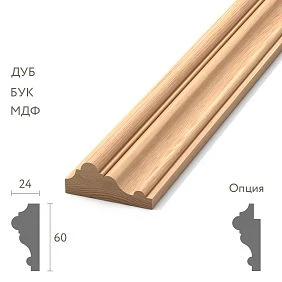
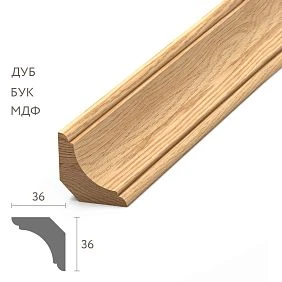
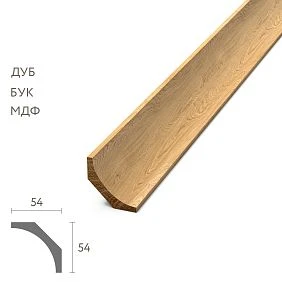
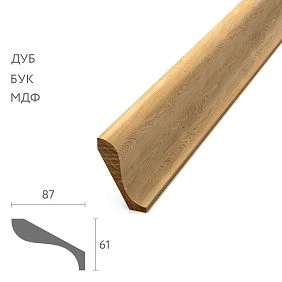
A single claim does not yet mean a systemic problem
An isolated case may be accidental. For example, one plank was damaged already during unloading at the site. Here it is enough to properly record the fact, determine responsibility, and close the specific claim.
But the situation changes when the same thing repeats:
- identically incorrect labeling in several batches;
- the same profile regularly arrives in the wrong length;
- confusion between beech and oak recurs;
- a neighboring, visually similar SKU arrives in different batches;
- the same packaging zone regularly damages the ends of the long-length item;
- supplies continue to reference an outdated version of the order.
Here you need to look not only for a specific nonconformity, but also for a recurring cause.




Do not set a universal threshold of "after two cases — mandatory"
The threshold depends on risk. For a critical profile, even one serious recurrence may require a separate investigation. For a non-critical packaging trifle, the company may choose a different level of response.
Useful signs that a regular replacement is no longer enough:
- the problem recurred in several batches;
- the same error affects the same SKU;
- the defect can halt installation;
- the supplier's previous measure should have already eliminated the problem, but did not help;
- the risk extends to other similar items;
- the error affects the product's design identity — item code, material, length, finish.
Our factory also produces:




Correction and corrective action are different things
The supplier sent ten correct planks to replace the faulty ones. This corrects a specific delivery.
But if the cause remains the same, the next batch may again contain the same error.
Corrective action answers a different question:
what has been changed in the process so that the cause of the nonconformity no longer reproduces the problem?
This distinction is especially important for recurring errors.
Get Consultation
Central scenario: three batches, the same error
Project "Hotel A".
| Batch | Article | Quantity | Issue | Zone | Status |
|---|---|---|---|---|---|
| 01 | MLD-A | 10 | Incorrect marking | Lobby | CLOSED |
| 02 | MLD-A | 7 | Same marking | 2nd floor | CLOSED |
| 03 | MLD-A | 5 | Same marking | 3rd floor | OPEN |
If each line is considered separately, it seems that we are dealing with three minor claims. If they are linked together, something else becomes apparent: one cause is probably still active in the supplier's process.
First, let's localize the risk of the current project
Before a deep root cause analysis, the current construction site must be protected from further use of the disputed products.
Depending on the situation, the following working statuses are applied:
- accepted;
- suspended;
- rejected;
- pending review;
- allowed only for a specific zone.
The purpose of this step is temporary: to prevent a potentially problematic item from proceeding further into installation. Localization does not replace finding the root cause.
It is necessary to determine the scope of the nonconformity
The error was found on six slats. But the real question is broader: where else could it have been reproduced?
Checked:
- one package or the entire batch;
- one batch or several;
- one SKU or a family of similar profiles;
- one material or all finishes;
- one assembly shift or the entire period;
- marking only or the actual contents of the packaging;
- a single order or multiple projects.
Until the scope is clear, it cannot be confidently stated that the problem is limited to six items.
Batch and order numbers make it possible to see the recurrence
You should not write to the supplier: "this is the third time we have had the same thing."
Stronger:
Order 147 / batch 01 / claim 011
Order 147 / batch 02 / claim 014
Order 162 / batch 03 / claim 019
Such a history makes it possible to compare documents, dates, shifts, packaging, and other conditions.
A symptom and a root cause are not the same thing
Symptom:
MLD-B arrived instead of MLD-A
But the cause may lie in a completely different place:
- incorrect matching of the internal code and the manufacturer's part number;
- outdated picking list;
- incorrect label;
- lack of final verification;
- mixed storage of similar profiles;
- data transfer error between the order and the warehouse;
- another cause not yet identified.
The root cause cannot be assigned in advance. It must be confirmed by facts.
The answer “human factor” is too weak
The phrase “the warehouse worker made a mistake” describes a participant in the event, but rarely explains why the system allowed the error to reach the customer.
The following questions are more useful:
- why the employee saw an outdated list;
- why two similar profiles could not be distinguished by labeling;
- why the error was not detected before the packaging was closed;
- why the old revision remained available as a working one;
- why the second check was missing specifically for the project order.
This is how the investigation moves from the person to the process.
The "Five Whys" method is suitable for simple cases
Example:
Why did the wrong molding arrive?
Because during order assembly, a neighboring SKU was taken.
Why was a neighboring SKU taken?
Because the internal labeling was similar.
Why was the similar labeling not detected?
Because before packaging, the manufacturer's SKU was not checked against the current order line.
If the controllable cause is found at the third question, there is no point in artificially asking exactly five. The goal of the method is not the number of questions, but reaching a cause that can be eliminated.
For a complex problem, it is convenient to group the causes
If there are several factors, they can be broken down into categories:
- people;
- method of work;
- the material;
- equipment;
- documentation;
- storage and packaging conditions.
This helps avoid getting stuck on the first obvious version.
A corrective action must change the process
Weak action:
have a conversation with the employee
Stronger:
before closing the packaging, verify the manufacturer's item code against the current order line and print the label from the same data version
The second action is specific, verifiable, and linked to the cause.
The corrective action plan must be measurable
| Issue | Root cause | Action | Responsible | Lead Time | Check |
|---|---|---|---|---|---|
| Incorrect SKU | old statement | Block outdated revisions | Warehouse manager | 15.09 | Next batch |
| Incorrect label | Manual entry | Print label from order data | Packaging | 18.09 | Full batch inspection |
A plan without an owner, a deadline, and a verification method remains a promise.
Wholesale building materials supplier: when a single replacement is no longer enough
If the supplier has already replaced the disputed item once, and the same type of error has returned, the new replacement must be accompanied by a separate root cause analysis.
Especially if:
- the same nonconformity code keeps recurring;
- an SKU critical for installation is affected;
- the error appears in multiple orders;
- the first corrective action was already considered implemented;
- the scale increases from batch to batch.
Example with a wooden skirting board: the wrong length keeps recurring
Order:
PLT-A / length 2400 mm
Some batches come in a different version.
Checked sequentially:
- what length is specified in the current specification;
- what length is specified in the supplier order;
- what has been confirmed by the supplier;
- what the warehouse sees during picking;
- what is printed on the label;
- what size is actually in the package.
The point where the data diverges for the first time often suggests the direction for root cause analysis.
Recurring confusion between similar moldings is especially dangerous
MLD-A and MLD-B may look visually similar but differ in cross-section or purpose.
If the error recurs, saying "the assembler will be more careful" is not enough.
Systemic protection is needed, for example:
- the exact manufacturer's part number in the picking list;
- control sample;
- a photographic reference;
- a separate storage zone;
- inspection before sealing the packaging.
Which specific measure is appropriate is determined by the supplier after analyzing the cause.
For a long-length curtain rod, the recurring cause may be a packaging-related one
If end damage occurs in several batches at the same spot, the cause may lie not in the product but in the packaging process.
Checked:
- end protection;
- pads;
- fixation inside transport packaging;
- point of contact with rigid elements;
- loading operations;
- position of the long item in the vehicle.
Then the corrective action relates to packaging or logistics, not to the production of the cornice.
The complaint and the request for corrective action are handled separately
The complaint is responsible for a specific case:
REC-014 / batch 02 / 7 planks
A corrective action request addresses a recurring problem:
CAR-003 / repeated incorrect labeling MLD-A
A single request can combine several complaints.
A single request can reference three related complaints
For example:
CAR-003
Base:
- CMP-011;
- CMP-014;
- CMP-019.
This shows that we are not dealing with three independent minor cases, but with one recurring problem.
“Building material suppliers” — compare not the number of complaints, but the ability to eliminate the root cause
In procurement tables, a block sometimes appears building material suppliers. For evaluation, it is useful to look not only at the number of registered claims.
One supplier might make one serious mistake, quickly find the cause, change the process, and confirm the result on the next batch.
Another might have minor claims for years that are formally closed by replacement but return again.
For risk management, the second scenario is often worse.
After a corrective action, a verification batch is needed
A systemic problem cannot be closed at the moment when the supplier has sent a beautiful action plan.
The next relevant batch becomes the verification batch.
For example:
Batch 04 — verification
The parameter that previously failed is the one being verified.
What to check in the inspection batch
If the problem was with the item code:
- item code on the product;
- label;
- packing list;
- actual contents of the package.
If the problem was with the packaging:
- ends;
- pads;
- fixation;
- signs of contact;
- condition after transportation.
If the problem was with the finish:
- the approved sample;
- finish code;
- actual surface;
- homogeneity within the accepted control procedure.
"Measure implemented" does not yet mean "measure effective"
There are two different states:
the measure was implemented — the supplier changed the process.
the measure is effective — the next relevant batch confirms that the problem has not recurred.
Closure should occur only after the second verification.
If the problem recurred in the verification batch
It is not necessary to automatically open a new request from scratch.
First, the existing request receives the status:
effectiveness check failed.
Then they return to root cause analysis.
This is important because the initial cause could have been:
- identified incorrectly;
- not the only one;
- addressed only partially;
- correctly identified, but the measure proved insufficient.
Supplier corrective action registry
| Number | Supplier | Issue | Complaints | Root cause | Action | Check | Status |
|---|---|---|---|---|---|---|---|
| 001 | А | Incorrect marking | 011, 014 | Confirmed | Implemented | Batch 04 | Check |
| 002 | Б | Edge damage | 018, 021 | Analysis | — | — | OPEN |
This way, systemic issues don't get lost among ordinary claims.
Useful registry statuses
- Open — a recurring issue has been registered.
- Containment — the current risk is being limited.
- Root cause analysis — the supplier is investigating the root cause.
- Actions agreed — measures have been defined.
- Implemented — measures have been applied.
- Verification — relevant batch control in progress.
- Closed — effectiveness confirmed.
“Supplier companies of construction materials” — the history of corrective actions should be included in the supplier evaluation
If the company maintains a section building materials supplier companies, it is useful to transfer into the final evaluation not the entire correspondence array, but short facts:
- systemic problem number;
- cause type;
- response time;
- implementation time;
- inspection batch result;
- success of the effectiveness verification.
This makes the subsequent supplier evaluation subjective.
A history of systemic issues may affect the supplier's status
If a company maintains an approved supplier list, a serious recurring issue may lead to a temporary conditional status.
After a confirmed corrective action, the status may be reviewed according to the company's internal rules.
Important: the mere fact of opening a corrective action request does not mean an automatic supplier change.
When it makes sense to activate a backup supplier
If a recurring issue is critical and threatens the project timeline, the company may activate a backup source in parallel.
This is especially reasonable when:
- the next batch is needed before the effectiveness verification is completed;
- the defect can halt installation;
- there is no confidence in supply stability;
- the project cannot wait for another correction cycle.
But a backup supplier is a risk mitigation tool, not a punishment.
“Construction material suppliers”: recurrence matters more than a simple count of comments
In the management section construction materials suppliers it is useful to see recurrence separately.
Three different minor comments may matter less than the same error that repeated three times in a row.
Therefore, analytics should answer:
- whether the problem recurred;
- how many times;
- whether by a single article;
- whether by a single process;
- after which action the recurrence stopped.
There is no need to invent a universal recurrence metric
For a small number of projects, a binary assessment is sufficient:
recurred / did not recur
For a large dataset, you can count the number of recurrences within a single category.
But a universal industry threshold is not needed here: the company itself determines how many recurrences and what level of risk require escalation.
The effectiveness check must have a predefined criterion
The phrase "let's look at the next batch" is too vague.
Before verification, it is useful to define:
- which batch is considered the verification batch;
- which parameter is being monitored;
- what volume is being checked;
- what is considered a successful result;
- who confirms the result.
This way, closure does not depend on the subjective assessment of “it seems to have gotten better.”
The verification batch must be relevant
If the problem concerned oak MLD-A, testing on a different beech profile does not always prove the effectiveness of the specific measure needed.
Where possible, the same or the most comparable process is checked:
- the same SKU;
- the same packaging type;
- the same assembly route;
- the same labeling logic.
A corrective action may affect not the entire supplier, but one process area
It is not always necessary to change the supplier's entire quality system.
The problem may lie only in:
- assembly of project orders;
- label printing;
- issuance of long-length items;
- packaging formation;
- transfer of the new version of the order to the warehouse.
A good measure corresponds exactly to the established cause.
What to request from the supplier after the error repeats
It is not necessary to require a complex report of dozens of pages.
For practical management, it is sufficient to obtain:
- description of the recurring problem;
- defined scope;
- temporal localization of the risk;
- root cause analysis;
- agreed corrective action;
- responsible person;
- implementation time;
- verification method;
- verification batch number.
When a root cause analysis needs to be returned to the supplier for revision
Weak answers:
- “employee carelessness”;
- “a one-off mistake” when there have already been three recurrences;
- “we conducted a briefing” without explaining the cause;
- “this won’t happen again” without changing the process.
If the explanation does not show why the problem could have recurred several times, the root cause analysis is not yet complete.
When a corrective action request is not needed
Not every discrepancy needs to be turned into a systemic investigation.
A separate request may be redundant if:
- the case is clearly isolated and localized;
- the cause is obvious and not related to the supplier's process;
- there is no recurrence;
- the risk to subsequent batches is minimal;
- the company already has a more suitable control mechanism.
The purpose of the process is to reduce recurring risk, not to create bureaucracy.
The evidence package for a recurring issue should be collected in one place
If three similar cases are scattered across different emails, the supplier easily perceives them as independent events. Therefore, it is useful to attach a compact package to a systemic issue:
- related complaint numbers;
- order and batch numbers;
- item codes and materials;
- description of the same symptom;
- photos and labeling;
- the number of affected items;
- dates of detection;
- what measures have already been taken previously.
Thus, the analysis begins not with the participants' recollections, but with a comparable history.
A recurring symptom does not yet prove the same cause
Three batches may have the same external problem, but different causes.
For example, an incorrect label could have appeared:
- in the first batch due to manual entry;
- in the second — due to an outdated version of the order;
- in the third — due to mixed-up packaging after the correct labels were printed.
Therefore, it is useful to group cases by symptom, but the root cause still needs to be confirmed separately. Otherwise, the supplier will fix the wrong part of the process.
If one cause affects several SKUs, the scope needs to be expanded
Suppose it turns out that the problem is related to an outdated picking list. Then checking only MLD-A is not enough.
It is necessary to determine which other items were picked using the same version of the data:
- other moldings;
- skirting boards;
- cornices;
- spare sets;
- batches that are already prepared but not yet shipped.
The root cause may have a broader scope than the first detected complaint.
When it makes sense to temporarily suspend the next batch
A full stop of supplies is not always necessary. But temporarily suspending a specific batch is justified if the risk that could reproduce the same problem has not yet been eliminated before shipment.
For example:
- the new marking procedure has not yet been implemented;
- the supplier has not confirmed the current revision;
- control of similar SKUs has not been introduced;
- the packaging cause has been identified, but the new protection has not yet been tested.
It is better to suspend only the affected flow, not the supplier's entire assortment without necessity.
The buyer also needs someone responsible for the systemic problem
The supplier-side responsible person does not replace the process owner on the customer's side.
Someone must ensure that:
- all related claims are collected;
- the supplier's response is received on time;
- the actions are actually implemented;
- a verification batch is assigned;
- the verification result is recorded;
- the supplier evaluation card is updated.
Without such an owner, a systemic problem easily gets stuck between quality, procurement, and the site.
Response time and root cause elimination time are different dates
The supplier can quickly confirm receipt of the request, but that does not yet mean the cause has been eliminated.
It is useful to distinguish:
| Date | What does it mean |
|---|---|
| Response deadline | The supplier has confirmed the problem and the analysis plan |
| Analysis deadline | Root cause identified |
| Implementation deadline | The corrective action is actually effective |
| Verification deadline | Verification batch evaluated |
A single common date of "close by Friday" does not show which stage must be completed.
Before closing, it is useful to check four independent conditions
A systemic problem can be considered closed when the following is simultaneously true:
- The root cause is confirmed and explains the recurrence.
- The corrective action has been implemented.
- The verification batch passed the agreed inspection.
- Related complaints and supplier status have been updated.
If even one item is missing, closing is premature.
After closing, it is necessary to preserve not only the result but also the lesson for the next project
A short entry may contain:
Problem: repeated incorrect labeling
Cause: outdated picking list in the assembly area
Action: block old revisions + print labels from the current order
Check: batch 04, no duplicates
This kind of history is useful for the next large order: the buyer knows in advance which control has already proven effective.
Eight common mistakes when dealing with a recurring problem
- Closing a recurring problem with another product replacement.
- Treating "human error" as a sufficient root cause.
- Not linking identical complaints to each other.
- Not assigning an owner for the corrective action.
- Closing a systemic problem right after the supplier's promise.
- Do not check the next relevant batch.
- Do not transfer the result to the supplier scorecard.
- Do not revise the supplier status for a serious recurring risk.
Final sequence of actions for a recurring error
- Record the current complaint.
- Check whether the issue is isolated or has already recurred.
- Find related complaints.
- Determine the scope.
- Localize the risk of the current project.
- Open a separate corrective action request.
- Obtain a root cause analysis.
- Verify whether the cause explains the recurrence.
- Agree on the corrective action.
- Assign an owner and a deadline.
- Implement the action.
- Select a relevant verification batch.
- Define the success criterion for verification in advance.
- Verify the specific problematic parameter.
- If the result is successful, confirm effectiveness.
- Close the systemic issue.
- Update the supplier evaluation card.
- If necessary, review the supplier status.
- If the check is not passed, return to analyzing the cause.
The main difference between systematic corrective work and an ordinary complaint is that it does not end with the replacement of a specific item. It ends only when the next relevant delivery confirms that the cause has truly been eliminated and the recurring risk no longer reproduces.
For a long project, this is especially important. Five incorrect strips in each batch may seem like a minor defect, but by the tenth delivery they turn into a constant source of stoppages, additional orders, confusion, and extra manual checking.
Therefore, the repetition of the same mistake should be perceived as a signal to check the supplier's process. First localize the current risk, then establish the cause, change the process, and be sure to verify the result on the next batch. Only after that can the problem be considered truly closed.