




























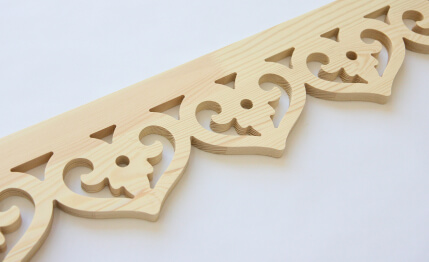
Article Contents:
- Which faux fireplace we are decorating
- Which elements really change the appearance
- What you should know about polystyrene profiles
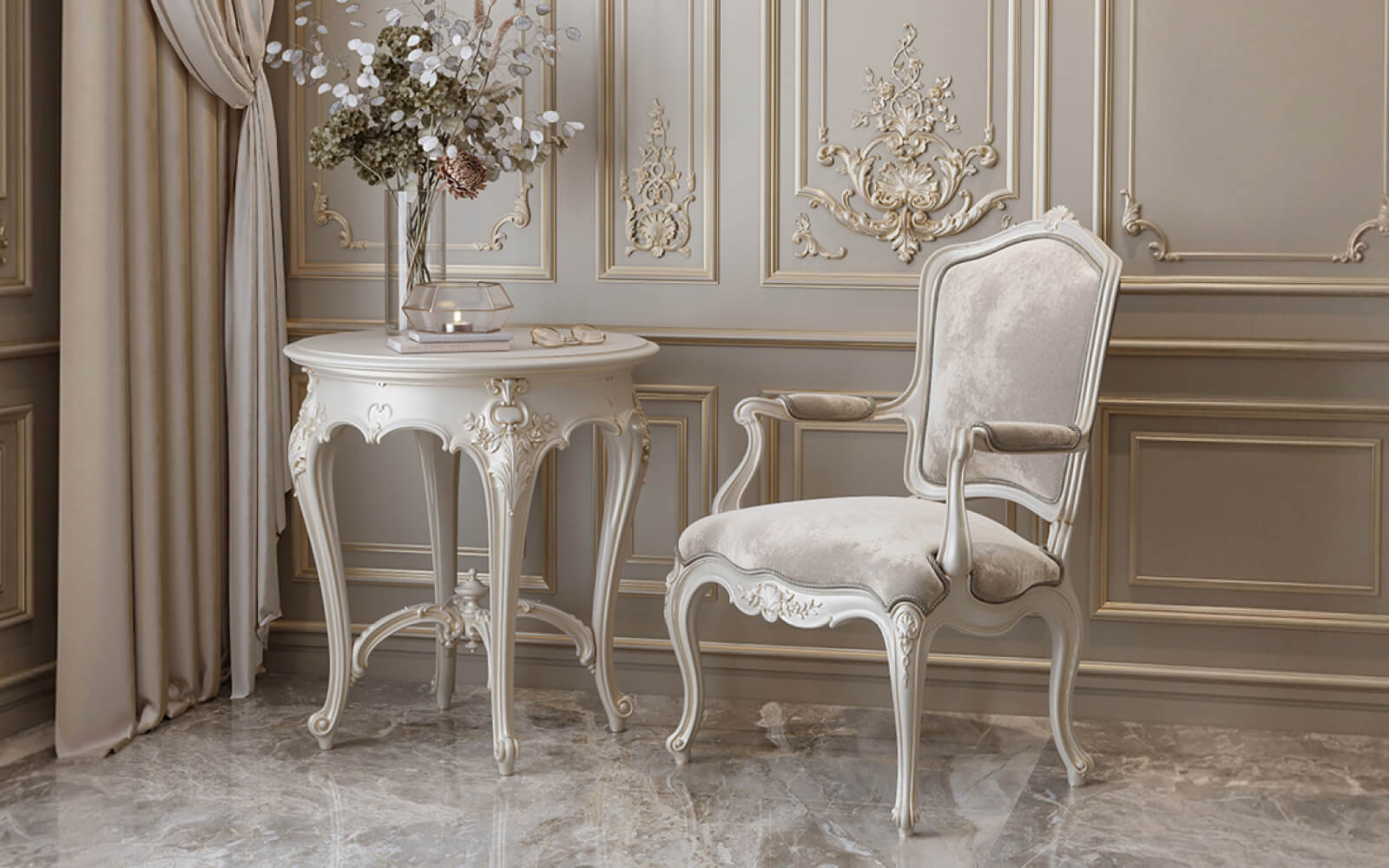
- What makes polyurethane stucco decor appealing
- Why you cannot compare material names alone
- Molding creates the architectural framework
- The overlay forms the center
- The bracket is an expressive detail, but not a support
- Three moldings with different roles
- Overlays and decorative brackets
- Option one: simple geometry
- Option two: pronounced molding lines
- Option three: classic relief portal
- Why you can't just add up the lengths
- When this cutting layout stops working
- Preparation and installation without unnecessary complexity
- Why a thick layer of paint ruins the ornament
- Electric fireplace: the decorative effect does not cancel heat requirements
- Bio fireplace, wood-burning hearth and real candles
- Can LED lighting be used?
- Which is better for a decorative faux fireplace: polystyrene or polyurethane?
- Can the entire faux fireplace be made of polyurethane molding?
- How to choose molding for a small living room?
- Are STAVROS overlays suitable for a classic mantel?
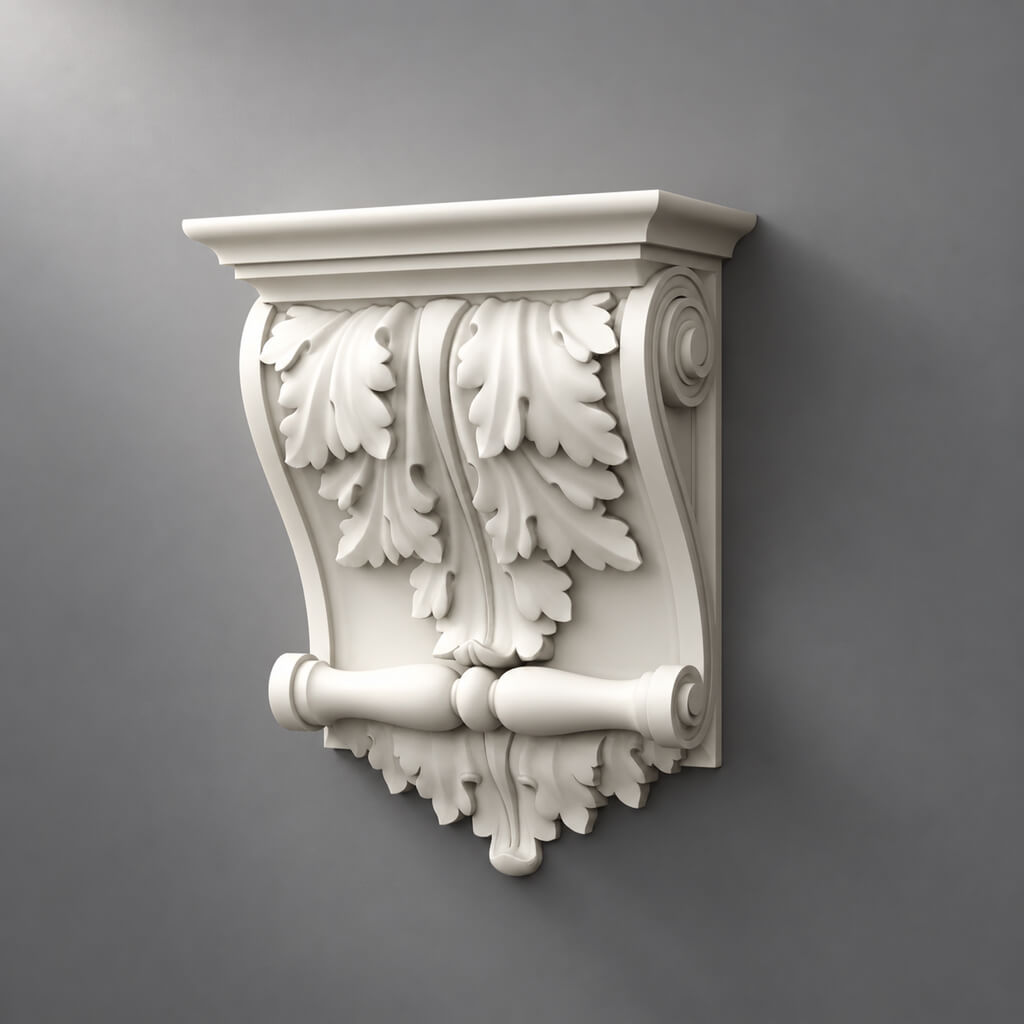
- Can decorative brackets KRPU-003 be chosen instead of real supports?
- How to calculate the number of moldings for one faux fireplace?
- Can polyurethane decor be painted together with the mantel?
- Is such decor suitable for an electric fireplace without turning on the heating?
- Where to buy stucco molding for a decorative fireplace?
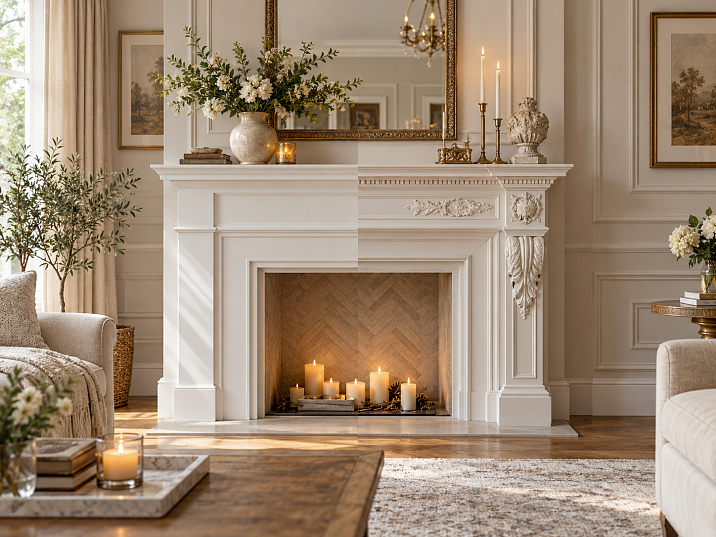
A smooth rectangular portal can be finished with several straight strips. But add a carved ornament above the opening, figured brackets on the sides, and a stepped profile along the uprights, and the task changes. Now you have to choose not only the molding material but a whole set of parts: with suitable dimensions, relief, projection, and method of joining.
For a minimalist faux fireplace without a heating appliance, polystyrene decor often turns out to be a reasonable solution. A dense, high-quality profile installed on a solid base and painted with a suitable composition can fulfill its decorative purpose. Polyurethane stucco molding is worth considering primarily when an architectural pattern is needed: overlays, figured elements, repeating ornaments, and coordinated straight moldings.
There is a condition more important than price and beauty: no finishing option made of ordinary interior polymers can be transferred to a working fireplace, bio-fireplace, or appliance heating zone without special confirmations. What follows concerns exclusively a cold decorative faux fireplace: a niche and portal without flame, heaters, or hot objects.


Which faux fireplace exactly we are finishing
In this task, the portal already has a solid base: a wall structure, a decorative box, or a prepared plane with a rectangular niche. Moldings and overlays are attached to its front surfaces and do not bear the load from the top shelf. We need to choose a finish that suits the scale and can be neatly assembled and painted.
Conventionally, the portal consists of two vertical uprights, an upper transverse part, and an opening between them. Sometimes a plinth, a projecting top plane, and side decorative accents are added. However, the stucco molding itself does not turn a lightweight box into a load-bearing structure. A top shelf designed for heavy objects must rest on an independent, reliable base. A decorative bracket only depicts a support unless its load-bearing properties and fastening are separately confirmed by the project.
Which elements actually change the appearance
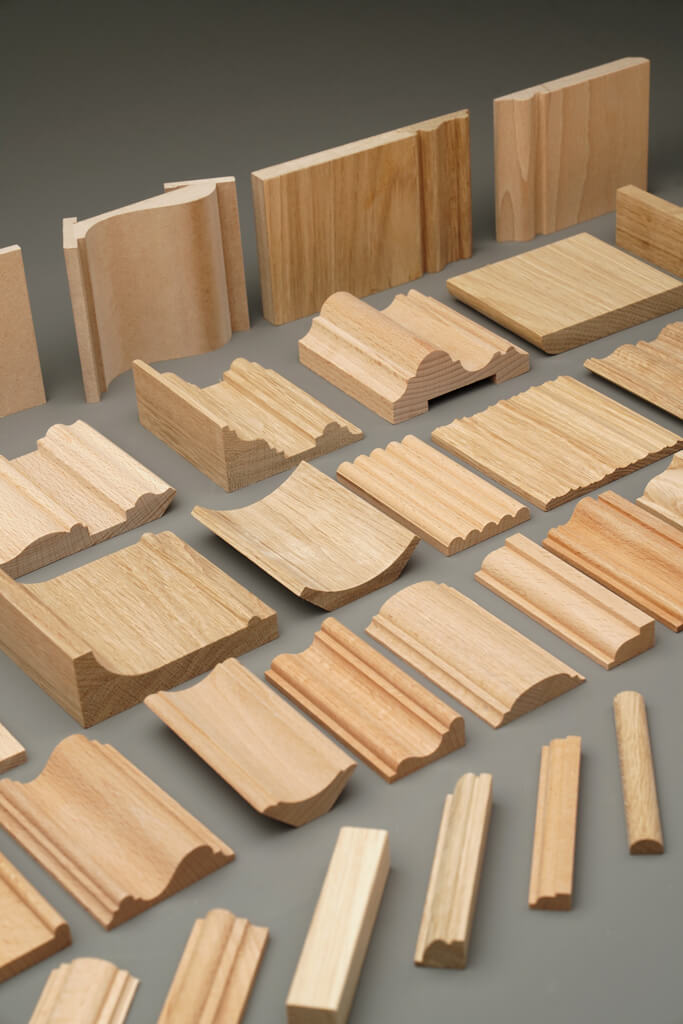
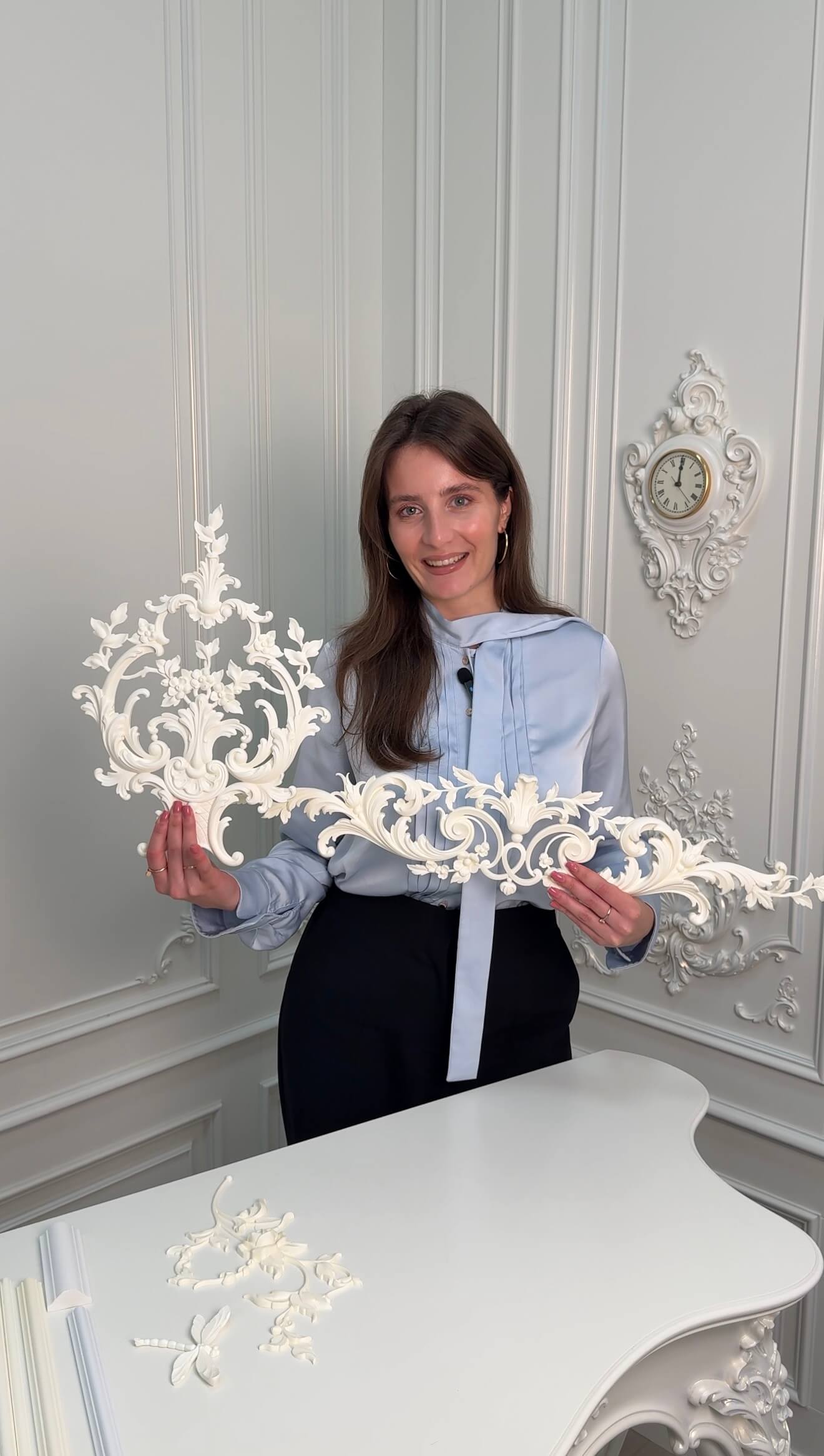
A straight molding marks the boundary. On a white surface it leaves a thin shadow that outlines the portal even without contrasting paint. The wider the profile and the more noticeable its projection, the stronger the architectural line becomes. The central overlay serves a different purpose: it highlights the upper lintel, so the eye reads the decorative fireplace as a complete composition. Paired brackets reinforce the vertical rhythm.
For complex finishing, it is important to first determine the location and dimensions of the parts, and then decide which polyurethane molding choose. If the top crossbar is too narrow, a large overlay may not fit, even if it matches perfectly in style. If the side posts are narrow, the protruding bracket begins to dominate the entire surround.
Our factory also produces:


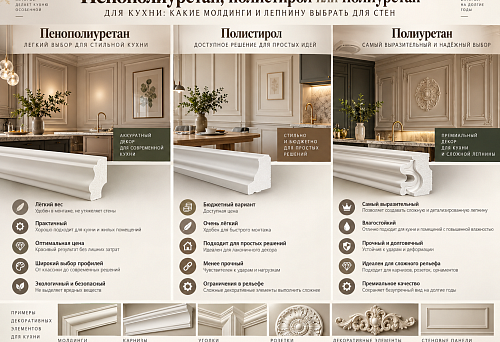
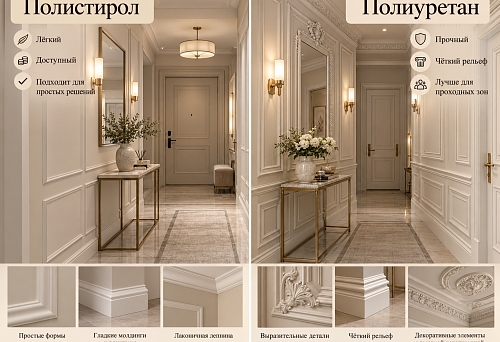
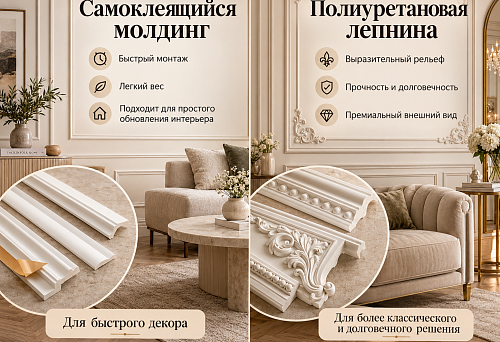
Polystyrene or polyurethane for a decorative surround: the main differences
Get Consultation
What you should know about polystyrene profiles
The name “polystyrene” covers products with different properties. Lightweight foamed profiles and dense impact-resistant options can differ noticeably in surface condition, resistance to dents, and edge precision. So a single word on a product page cannot prove that the decor is necessarily crumbly, fragile, or unsuitable for painting.
Simple polystyrene mouldings have a clear advantage: geometric lines can sometimes be achieved at lower cost. If the surround is small, consists of smooth flat surfaces, and does not require ornate accents, there is no need to pay extra just for the name of the polymer. But before buying, you need to compare products with the same purpose: cross-section, length, surface quality, available connecting parts, and recommended finish.
What makes polyurethane stucco interesting
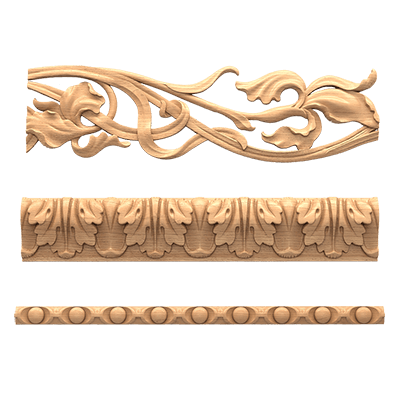
For a project with complex relief, it is more useful to look not at an abstract promise of durability but at the specific product range. STAVROS offers straight Moldings made of polyurethane, individual ornamental pieces, and brackets. They can be combined on flat surfaces, checking dimensions and relative placement against the drawings.
Moulded relief is especially noticeable on the upper part of the fireplace. Leaves and scrolls create small local shadows; with side lighting, the pattern reads with more depth than with frontal lighting. But even a high-quality casting will not save a poor design: the relief may look too large if narrow random strips of empty surface are left at its edges.
Why you cannot compare material names alone
Mechanical resistance depends on the density and composition of the material, the thickness of the section, the geometry of the protrusions, the paint, and the quality of the attachment. A polyurethane ornament with a thin protruding leaf can also be damaged by a careless impact. Conversely, a dense polystyrene profile of suitable construction can withstand ordinary household contact well.
A faux fireplace in the living room does not experience the loads typical of a door threshold or the lower edge of furniture. Here, other problems arise much more often: an inaccurate cut, a joint that has opened up, weak old paint under the adhesive, and the difficulty of caring for deep ornamentation. These cannot be eliminated by replacing one polymer with another.
Comparison of materials by eight criteria
| Criterion | Polystyrene decor | Polyurethane decor |
|---|---|---|
| Price of a simple line | Often cost-effective in a budget version | Depends on the profile and manufacturer |
| Selection of sections | Available in smooth and shaped variants | STAVROS offers profiles in various sizes |
| Complex terrain | Depends on the technology of the specific product | Ready-made molded overlays and brackets are available |
| Resistance to accidental contact | Highly dependent on type and density | Depends on the formulation, shape, and coating |
| Painting | Only with compositions compatible with the product | Also requires compatible primer and paint |
| Installation | A sturdy base and suitable adhesive are required | Fastening system requirements remain in place |
| Selection of additional parts | Depends on the range of the selected series | You can choose among STAVROS mouldings, overlays and brackets |
| Exposure to heat | Not permissible without special confirmation | Ordinary interior decor is also not automatically designed for heating |
If the task is a single flat frame, the price-quality ratio of a specific profile often becomes the deciding factor. For a portal with a central ornament, paired brackets and several tiers of decorative contour, the ability to select the entire composition matters more than simply buying linear metres of trim.
There is also a less obvious criterion: repairability. A small scratch on a flat painted area is easier to prepare for local repair than a chip on a deep, complex sheet. A separate overlay could theoretically be replaced, but the actual feasibility of removal depends on the adhesive, the paint thickness and how the part is joined to adjacent elements. A seamless replacement cannot be guaranteed.
Why a system of decorative elements is chosen for a complex faux fireplace
Moulding creates the architectural framework
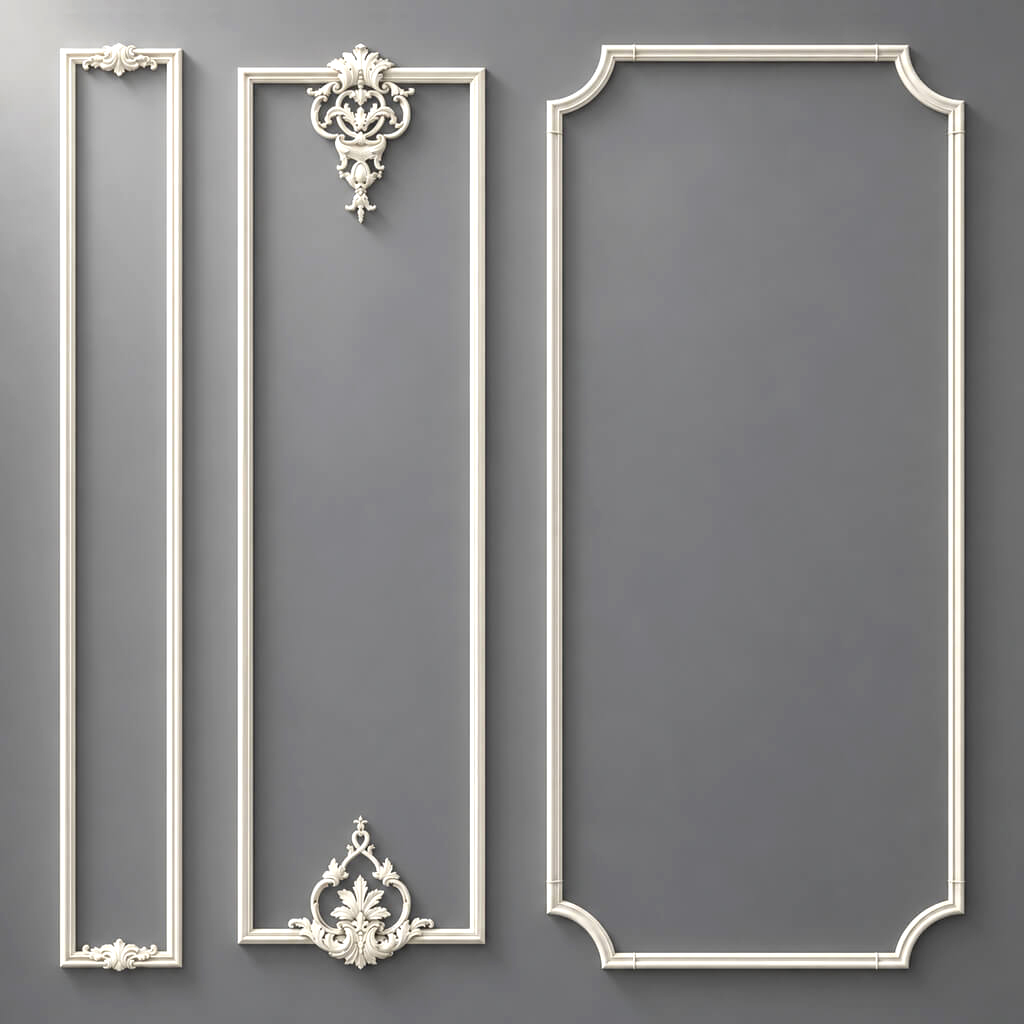
On a portal about 1200 mm wide, a thin frame works as an emphasis on the shape. A more expressive profile separates the edges of the uprights and the top lintel, changing the perception of their thickness. But a wide relief cannot be selected independently of the available strip of material: if a decorative strip 35 mm wide occupies almost the entire upright, there is no longer room for an overlay and a neat margin.
That is why it is useful to make a full-size layout: strips of paper 10, 22 and 35 mm wide immediately show the difference in scale. In a drawing reduced tenfold, all these options may look almost identical. On a real surface, the difference is obvious.
The overlay forms the center
For the upper lintel, one accent aligned to the central axis is often enough. For example, a 300 mm wide ornament on a 1200 mm wide decorative band leaves 450 mm on the right and left before accounting for other details. This is not a ready-made placement recommendation but a scale check: before buying an overlay, you need to find out its exact orientation and dimensions from the drawing.
In the category polyurethane decorative overlays it is convenient to look for a standalone ornament without mixing it with a straight molding. If the overlay is part of a specific profile system, it is better to keep to a compatible series rather than combine items just because they have a similar floral motif.
The bracket is an expressive detail, but not a support
A shaped bracket next to the upper shelf visually makes the portal more massive. This is a technique of decorative architecture: the element resembles a support and emphasizes the transition from the vertical post to the horizontal. In practice, the shelf must support itself. You must not place a heavy countertop, vase or other load on a stucco bracket without structural verification by calculation.
In a portal with two brackets, a mirrored composition is important: equal distances to the edges, coordinated projections, and positioning relative to the moldings. Before ordering, you need to make sure that the selected model actually allows the required orientation and paired installation.
Which STAVROS products to use for finishing a faux fireplace
Below are the actual dimensions of individual polyurethane products. These are options for designing decorative trim, not a ready-made fireplace kit. The dimensional information should be compared with the drawing: the lettered dimensions A, B, C and others cannot always be freely rearranged.
| Article | Dimensions, mm | Possible role |
|---|---|---|
| MLDPU-001 | 10 × 6 × 2600 | A thin frame on a smooth portal |
| MLDPU-002 | 22 × 11 × 2600 | Stepped decorative contour |
| MLDPU-003 | 35 × 12 × 2600 | Larger frame |
| NPU-002 | 140 × 77 × 12 | Compact relief accent |
| KRPU-003 | 99 × 50 × 34 × 23 × 47 in one of the versions | Shaped decorative bracket |
| KRPU-033 | 157 × 70 × 31 × 29 in one of the versions | Enlarged relief accent |
| MLDPU-2-1.1 | 300 × 178 × 18 | Central decor of the MLDPU-002 system |
Three moldings with different roles
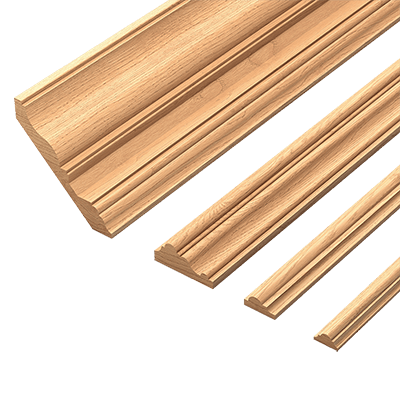
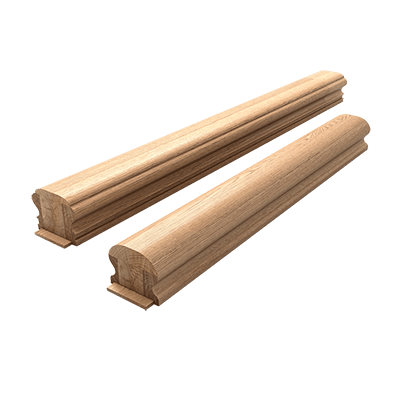
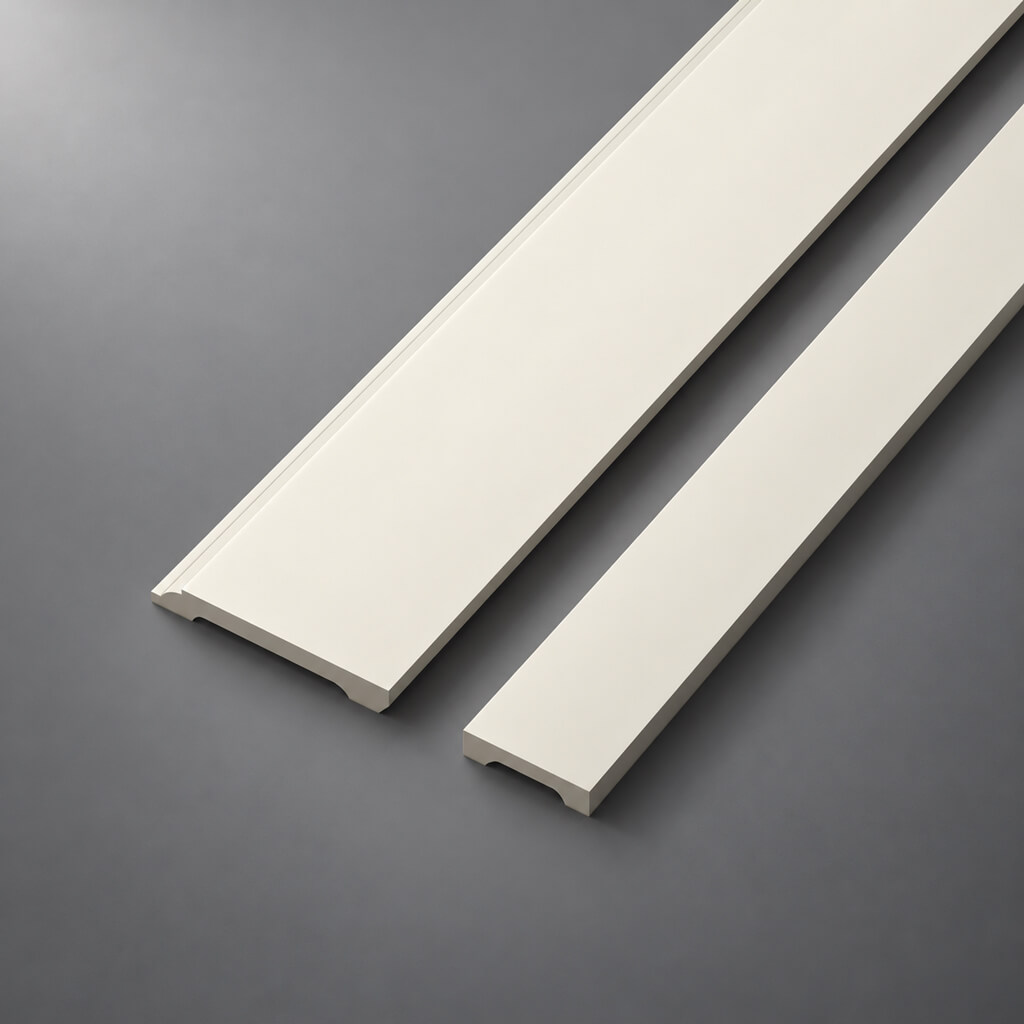
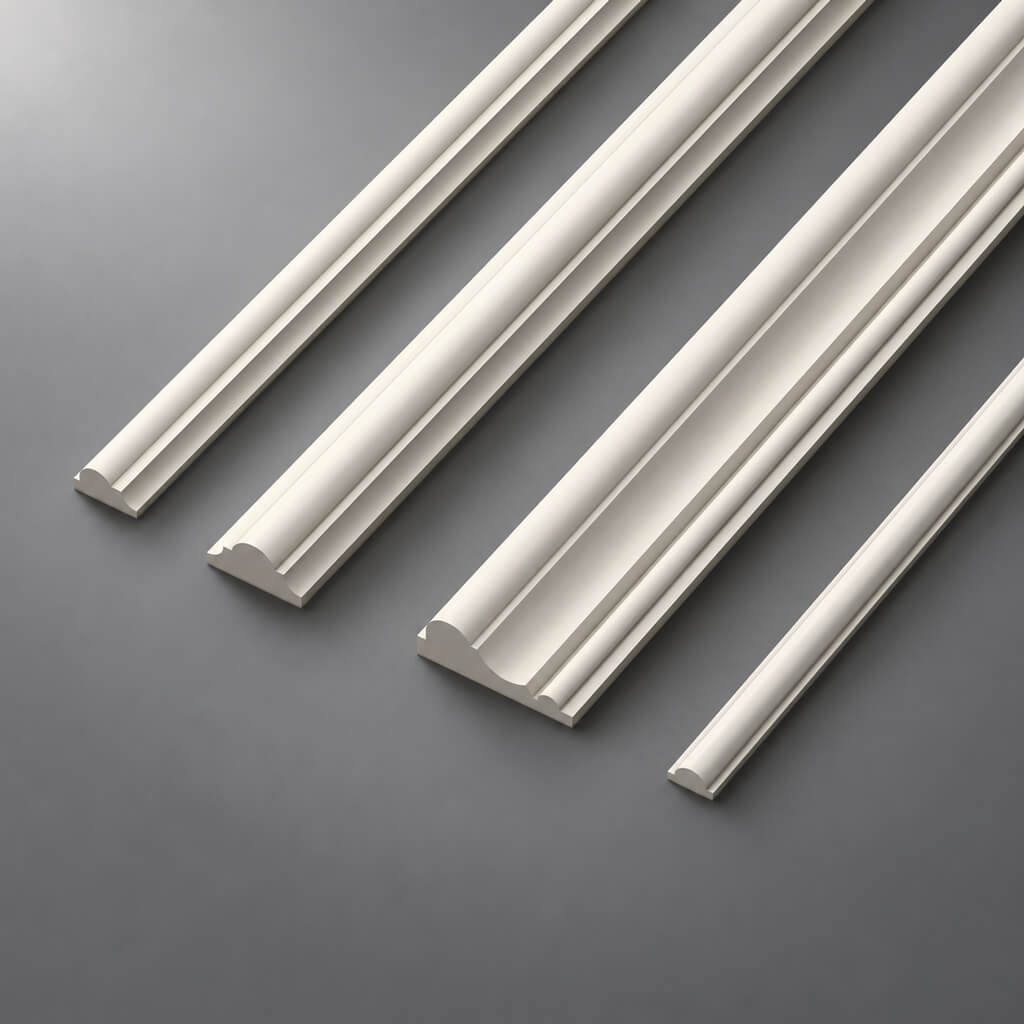
For calm geometry, consider thin molding MLDPU-001A 10 × 6 mm cross-section is appropriate when you want to define the outline without visually adding much mass to the box. It is especially useful with narrow uprights and in compositions where color, rather than relief, plays the main role.
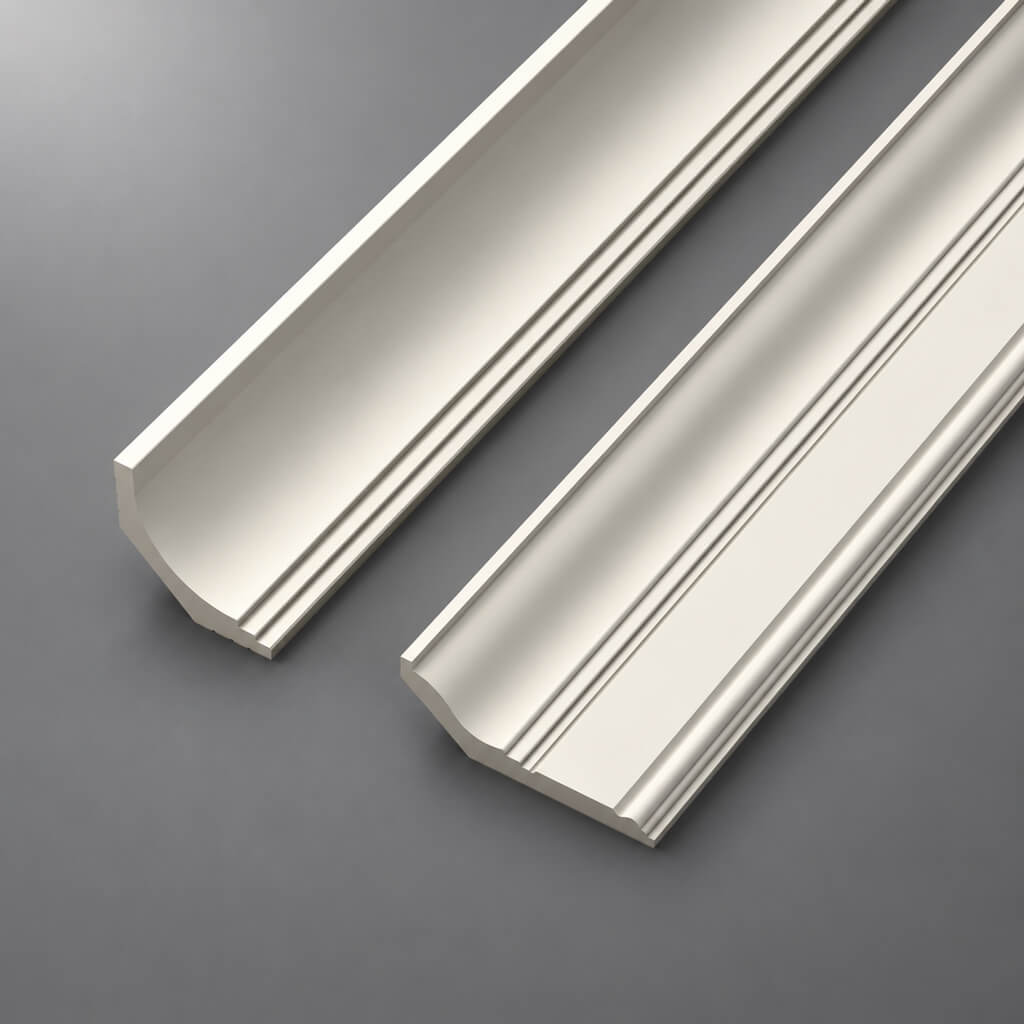
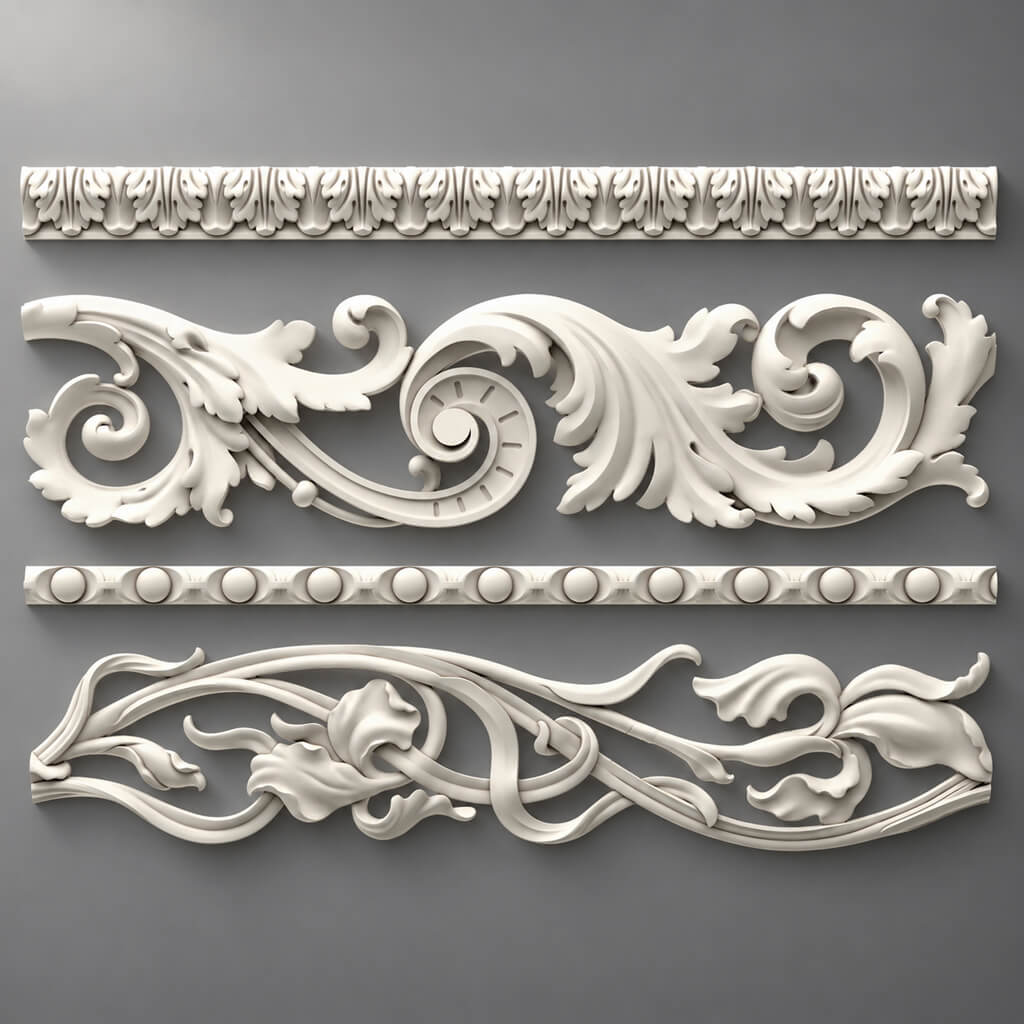
polyurethane molding MLDPU-002 has a 22 × 11 mm cross-section. It is convenient to consider it as the main line of a classic portal: the profile is more noticeable, but with a sufficient free field it does not look excessively wide. For a large decorative box, you can evaluate molding MLDPU-003 with a 35 × 12 mm cross-section. These are not three degrees of "quality," but three different scales.
Overlays and decorative brackets
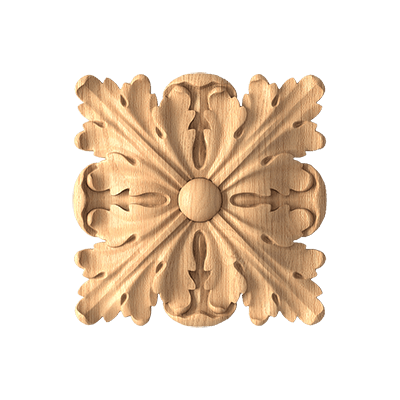
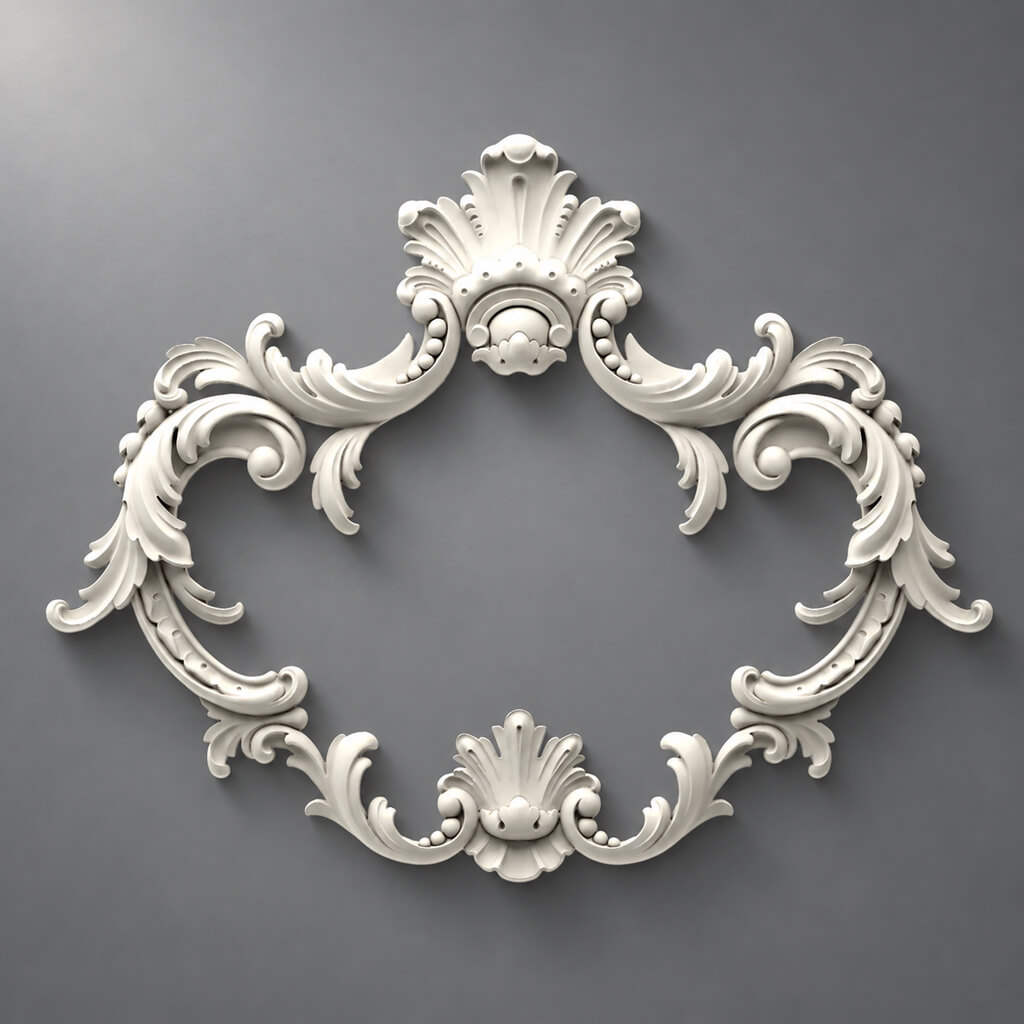
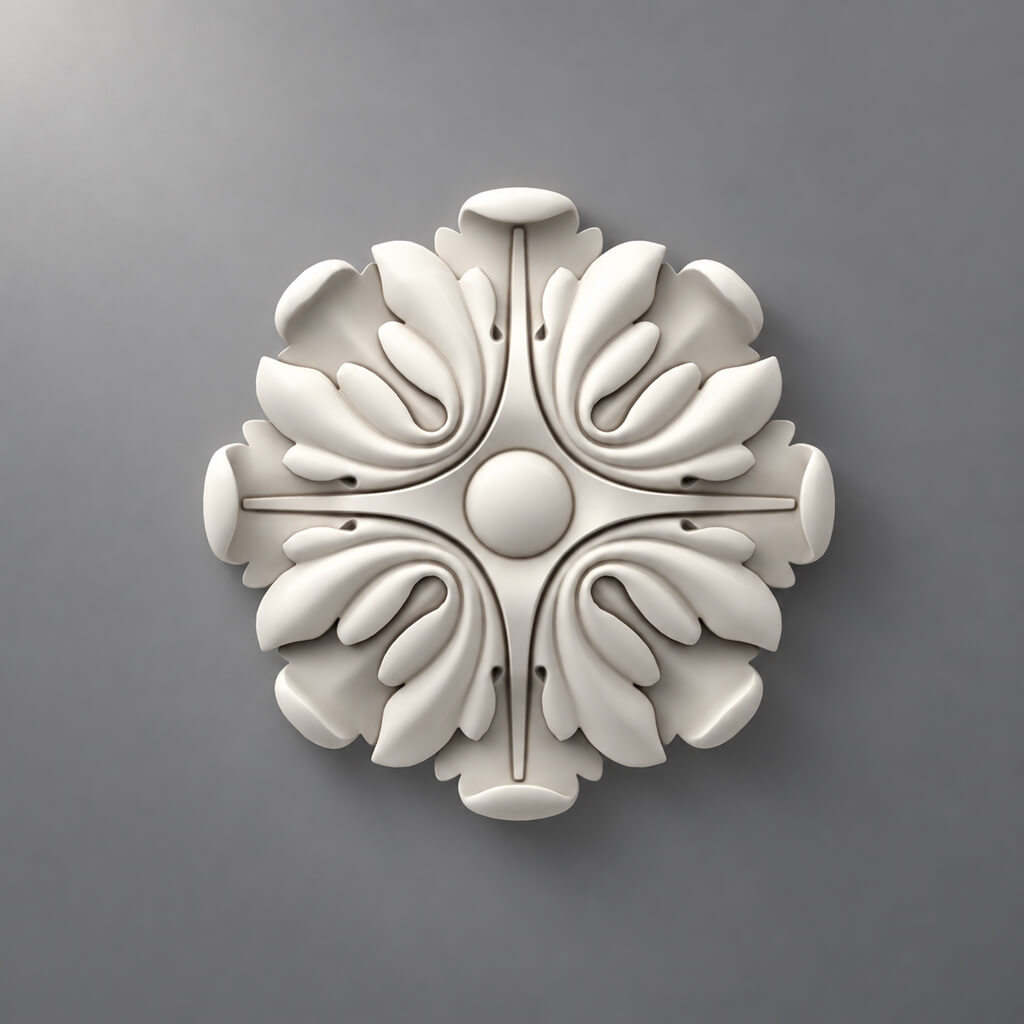
NPU-002 measures 140 × 77 × 12 mm. Such a molded decoration made of polyurethane it is worth first trying it on a paper template: a small element can get lost on a wide smooth lintel, yet it may prove proportionate to a narrow wall pier.
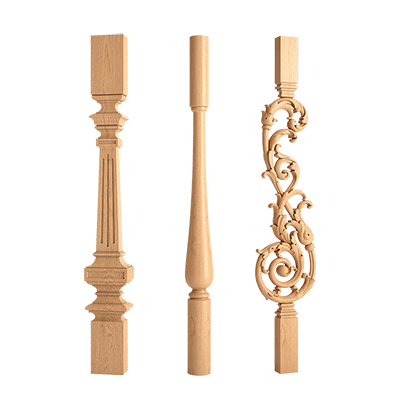
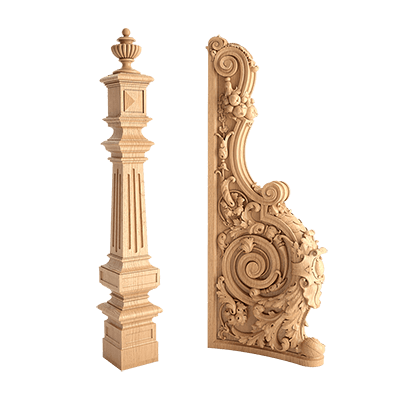
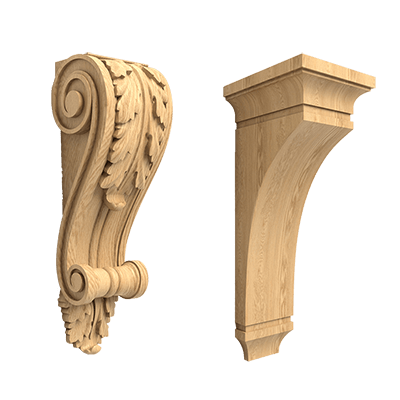
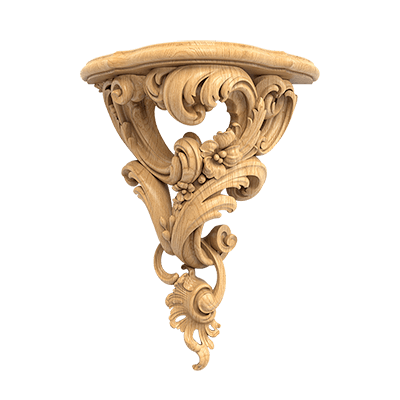
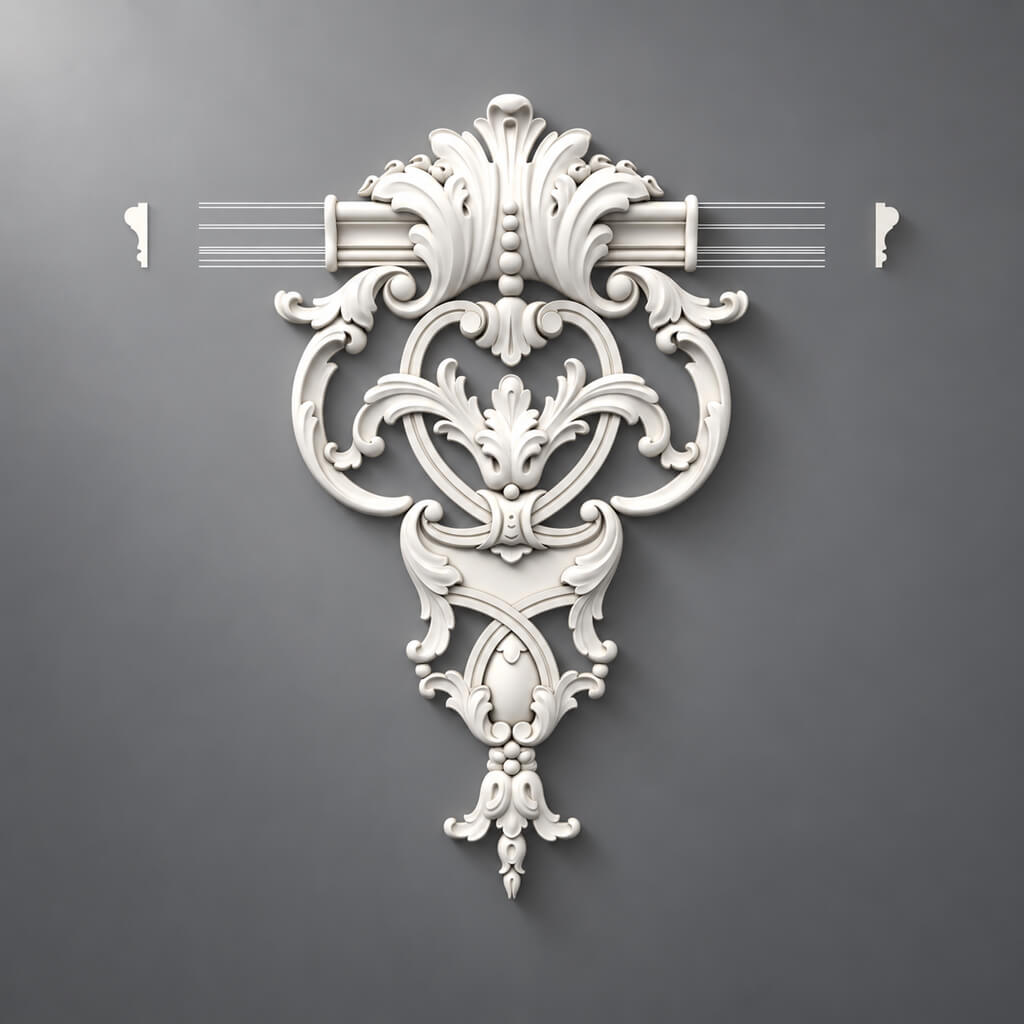
For vertical accents, suitable is carved bracket KRPU-003. At STAVROS it is available in several sizes; the starting version 99 × 50 × 34 × 23 × 47 mm is only one option. Model KRPU-033 also has several versions, so you cannot rely on the photo alone: check the article number and the selected size. In the section decorative polyurethane brackets it is easier to compare the possible forms.
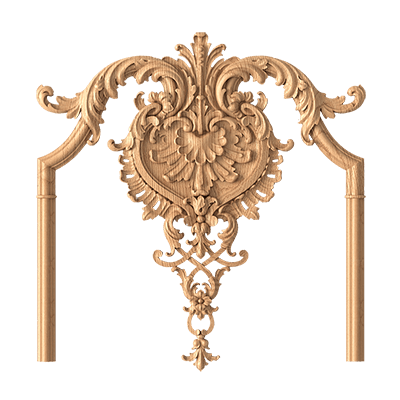
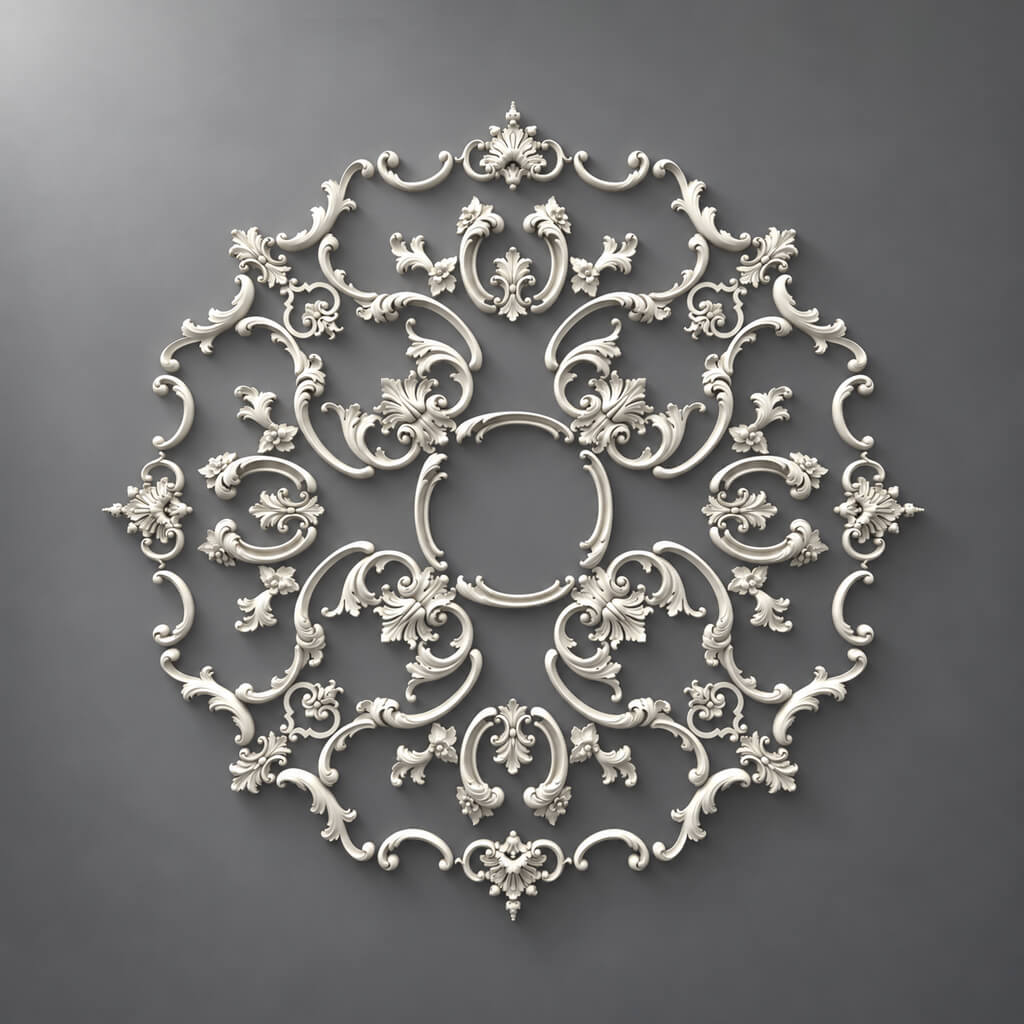
For a more developed upper accent, there is central overlay MLDPU-2-1.1, 300 × 178 × 18 mm. It belongs to the MLDPU-002 system. This is more useful than a random combination of unsuitable ornaments, but it does not mean that the overlay will automatically align with any width of the fireplace lintel and any arrangement of the brackets. First the drawing, then the order.
Three finish options for one decorative portal
Let us imagine a sturdy box 1200 mm wide and 1450 mm high with a central niche. The dimensions are provisional and are needed to compare decorative solutions: they are not a finished frame design or a load calculation for it.
Option one: simple geometry
Clean lines run across the front face, emphasizing the two uprights and the upper lintel. There are no overlays, the finish paint is monochrome, and the edges of the niche remain neat and free of protruding relief details. Such a portal works well in a small room: its form reads clearly but does not compete with the furniture and wall decor.
A high-quality polystyrene profile with confirmed adhesive and paint compatibility is suitable here. There is no need to pay for complex molding if the project does not use it. A polyurethane equivalent makes sense to choose for a specific cross-section, a convenient range, or consistency with the rest of the room's finish.
Option two: pronounced molding lines
A U-shaped contour based on MLDPU-002 appears around the niche. The profile cross-section creates a shadow that separates the inner part from the main plane of the portal. The top horizontal must match the height of the selected vertical lines, and the miters should form neat corners without unexpected relief irregularities.
This option becomes interesting if there are already wall frames made of a similar profile nearby in the living room. Then the faux fireplace does not look like a separate random homemade piece: its geometry supports the overall pattern of the room. However, the actual gaps between the elements need to be checked against the drawing and during a dry fit.
Option three: classic relief portal
A central ornament MLDPU-2-1.1 and two decorative KRPU-003 are added to the molding contour. New questions arise immediately. Will the overlay fit above the niche? Will there remain a free field for future finishing? Will the brackets protrude too much relative to the thin box? Can the paired elements be positioned identically?
This composition already requires its own sketch and a full scale check. It is not a ready-made factory set made from the named article numbers. More complex stucco work here is justified when what is needed is precisely relief, architectural depth, and consistency with classic interior details. For a portal that should look like a clean rectangular volume, such additions will be superfluous.
Calculating moldings: how many strips are required for one portal
Why you cannot simply use the sum of lengths
Suppose a U-shaped decorative contour runs along the facade. The two vertical pieces are each 1100 mm long, and the top horizontal is 1200 mm. Here the lengths are understood as the dimensions of the blanks along the accepted cutting line, taking into account the chosen method of corner joining; the actual 45° miter needs to be checked separately on a test cut.
Total length:
L = 1100 + 1100 + 1200 = 3400 mm.
With one MLDPU-002 strip being 2600 mm long, two pieces are mathematically sufficient. But they should be purchased not because of rounding 3400 / 2600 = 1.31, but because there is a specific cutting plan:
| Plank | Blanks | Blank lengths | Theoretical remainder before cuts |
|---|---|---|---|
| No. 1, 2600 mm | Two verticals of 1100 mm each | 2200 мм | 400 мм |
| No. 2, 2600 mm | One horizontal of 1200 mm | 1200 мм | 1400 мм |
Even after reasonable losses for cuts, this layout allows you to obtain solid parts from two strips, provided the blanks and angles are measured correctly. However, the final length of each part depends on which edge of the profile cross-section you measure along. If you measure one part along the outer edge and the adjacent one along the inner edge, the frame may not come together even with correctly calculated linear meters.
Overlays and brackets are counted separately: one central overlay, two identical brackets. They cannot be added to the linear meters. For an asymmetric composition or two different portals, the number of parts is recalculated rather than multiplied without verification.
When this cutting plan stops working
If the side sections become longer than 1300 mm, two verticals will no longer fit together in a single 2600 mm strip, taking cuts into account. The total linear meters may still indicate two strips, but the cutting map will require a different distribution or a third strip. A similar problem arises if the horizontal is longer than the original product: making it solid from a single strip is no longer possible.
Where there should be an expressive classic contour, additional cross joints are sometimes visually more noticeable than a small saving of material. Therefore, first define the permissible joint locations, then optimize waste. Not the other way around.
How much finishing costs: compare ready-made configurations
The price per meter means little without a list of works. A simple polystyrene frame and a classic composition of three product types solve different tasks. To avoid comparing incomparable things, draw up two estimates with the same portal size and a different set of decorative elements.
As an example, let's take the confirmed prices from STAVROS product cards as of October 21, 2026 for the selected standard sizes. This is a reference point at the time of checking, not a promise of an unchanging price.
| Position | Quantity | Price per unit | Total |
|---|---|---|---|
| MLDPU-002, 2600 mm | 2 pcs. | 5 460 ₽ | 10 920 ₽ |
| KRPU-003, 99 × 50 × 34 × 23 × 47 mm | 2 pcs. | 1 370 ₽ | 2 740 ₽ |
| MLDPU-2-1.1, 300 × 178 × 18 mm | 1 pc. | 4 820 ₽ | 4 820 ₽ |
| Total for the listed decorative products | — | — | 18 480 ₽ |
For the same geometry, the option without brackets and a central element will require only two MLDPU-002 — 10,920 ₽ at the same prices. The difference of 7,560 ₽ reflects the added decorative details, not a proven difference between polystyrene and polyurethane. This calculation does not include the price of the polystyrene alternative: without choosing a specific comparable product, an honest total cannot be stated.
Both estimates separately include the base and its load-bearing fastenings, mounting adhesive, surface preparation, consumables, painting, labor, and delivery. Also take into account the availability of made-to-order products and possible packaging. If the portal will be fully repainted, the color and coating composition for all elements are agreed in advance. Comparing only the cost of the strip hides these expenses.
Search for ready-made relief additions using the query "buy stucco molding" it is more reasonable after the dimensions of the free margins have been determined. And if the task is formulated as "buy polyurethane stucco molding", first choose the main profile section and the details that match it — this reduces the risk of getting beautiful but incompatible elements.
How to achieve a neat paint finish and preserve the relief
A decorative faux fireplace does not have constant heating, but its finish is subject to the usual requirements for an interior painted surface. It must withstand cleaning and not peel off together with the old coating. Before installation, make sure the base is dry and sound, the old paint is holding firmly, and the primer and mounting adhesive are suitable for both the chosen polymer and the surface of the box.
Preparation and installation without unnecessary complexity
- Draw the front view of the portal with the center axis, the width of the uprights, the dimensions of the opening, and the positions of the overlays.
- Transfer the outer and inner lines of the decorative contour onto the surface. Check the diagonals and equal offsets.
- Make a test cut on a short section of the profile. For a relief molding, it is important to match not only the angle but also the cross-section pattern.
- Lay out all the blanks and overlays without glue. Check for any conflict with the shelf, adjacent furniture, and side walls.
- Choose the adhesive according to the manufacturer's instructions, taking into account the base material, the existing coating, and the weight of the specific parts; if necessary, do a test bonding on an inconspicuous area.
- Install the elements, allow the specified fixing and curing time. Treat the seams only with a compatible material suitable for subsequent painting.
This is the procedure for working with the decor, not an instruction for building the fireplace frame itself. If the structure is wobbly, gluing on the moldings will not strengthen it: the base must be fixed first.
Why a thick layer of paint ruins the ornament
A smooth strip can be repainted relatively easily. On a floral applique, the brush leaves excess in the recesses between the leaves. After several thick layers, the fine relief loses its definition. The solution is not to look for a "special molding that is immune to paint," but to choose a compatible coating system and apply it in controlled thin layers with sufficient drying time.
First, do a test coat on an offcut or an inconspicuous area. Check for softening of the substrate, poor flow, drips, and clogged recesses. A solid color better reveals the geometry, and light highlighting of the raised areas is possible only after a confident base coat. For a small portal, patina is not essential: an excess of decorative techniques sometimes makes the form harder to read.
Why polymer moldings must not be installed near fire and heat sources without a separate design
The term "faux fireplace" is used for different structures. One is an empty decorative niche. Another is a portal with an electric heater. A third is a surround for a bio-fireplace, where real fuel burns. These options cannot be combined under a single piece of advice on finishing material.
Electric fireplace: the decorative effect does not cancel heat requirements
Even if the appliance shows an artificial flame, it may have a built-in heater and separate hot air outlet zones. You must not block the ventilation openings, glue ordinary polymer molding near the warm air outlet, or choose the clearance by eye. The conditions must be determined by the instructions for the specific appliance, the material documentation, and the installation design. If there is no confirmation, ordinary interior polyurethane and polystyrene are not chosen for such proximity.
Bio-fireplace, wood-burning hearth, and real candles
A bio-fireplace creates an open flame. Neither polystyrene molding nor a standard polyurethane applique is automatically a safe cladding for its surroundings. A non-combustible insert inside the niche does not by itself prove that the external polymer decor does not heat up. You need a calculation of the entire structure, verified distances, and confirmed suitability of the materials.
For the same reason, real candles should not be placed inside a polymer decorative portal. The flame, the hot candle holder, and the heated surface create a hazard, even if the candle is visually far from the molding. For a purely decorative composition, it is wiser to choose items that do not emit heat and to use flameless lighting.
Can LED lighting be used?
Low-temperature decorative lighting can be part of a project, but the word "LED" itself does not mean there is no heat. The fixture, strip, power supply and wiring have operating temperature limits and ventilation requirements. They are installed in accordance with the equipment documentation, avoiding overheating of the surrounding finishes. Electrical installation must meet safety requirements; power supplies must not be locked inside an unsuitable enclosed cavity.
If a heating or open-flame appliance is planned, the material in this article is no longer a guide for selecting cladding. Such a structure requires specialized safe solutions, not ordinary interior decorative profiles.
Eight mistakes that make a decorative portal look worse than the design
1. Buying the cheapest profile without checking the surface. Even a simple frame is noticeable in side light. Porosity, damaged edges and paint defects may become visible after the final coat. Before ordering, it is worth examining a sample of the chosen product, not just comparing prices.
2. Installing interior moulding in a heating zone. The external resemblance of a faux fireplace to a working hearth does not make the material fire-resistant. If a real fire or heater is planned, the design must be revised for verifiably suitable solutions.
3. Trying to support a shelf on decorative brackets. Shaped products may beautifully depict load-bearing elements, but they do not replace fastenings. The shelf and the load on it are calculated separately.
4. Choosing an overlay that is too large. It fills almost the entire lintel, leaving narrow strips at the edges and disrupting the composition. Before buying, it is useful to cut out a full-size template.
5. Joining relief details based on a photo. Similar scrolls do not guarantee suitable thickness or a matching joint. Check the series, dimensions, pattern directions and drawings.
6. Gluing onto a weak substrate. If the paint peels off the box, the decor may come off with it. Check the strength of the coating and the compatibility of the chosen fastening system.
7. They cover the ornament with too thick a layer of paint. Drips accumulate in the recesses; after drying, the pattern loses its depth. Do a test paint and use a suitable painting technique.
8. They only calculate the total footage. The profile has to be cut into specific lengths, the direction of the miters must be observed, and visible joints sometimes avoided. Before ordering, make a cutting plan and separately recalculate the piece items.
Frequently asked questions
Which is better for a decorative faux fireplace — polystyrene or polyurethane?
For a calm rectangular frame, a quality profile of a suitable cross-section is enough, including a polystyrene one. If you need relief overlays, decorative brackets and a complex composition, the STAVROS polyurethane range offers more specific options. The decision depends on the project, not on the assumption that one material is always stronger than the other.
Can the entire faux fireplace be made of polyurethane stucco?
Stucco overlays and moldings are intended for decorative finishing. The frame itself must have its own structure suited to the loads and the installation location. Ordinary polyurethane brackets cannot be considered load-bearing parts. It is especially important to separate the decoration of a cold portal from a structure designed for a real heater.
How to choose a molding for a small living room?
First assess the width of the face posts and the free part of the lintel. Make paper strips to the dimensions of the selected cross-sections and apply them to the portal. A thin profile will emphasize the border, a wider one will add volume. There is no ready-made universal size: on boxes of the same width, different depth and painting change the perception.
Are STAVROS overlays suitable for a classic portal?
Yes, with suitable dimensions and correct placement. For example, central elements designed for a specific molding series allow you to build a consistent composition. But matching by article number does not replace checking the free field, the protrusion depth, the direction of the ornament and the installation method. First prepare a sketch with real dimensions.
Can decorative brackets KRPU-003 be used instead of real supports?
No, if we are talking about load-bearing use. KRPU-003 and similar products should be regarded as visual architectural accents. A heavy shelf must have its own independent fastening to the load-bearing base. For decorative pairs, check the size of the selected version and whether symmetrical placement is possible.
How do I calculate the number of moldings for a single faux fireplace?
Measure the length of each decorative line, sketch the positions of corners and joints, then distribute the blanks across standard-length strips. For two verticals of 1100 mm each and a top line of 1200 mm using MLDPU-002 at 2600 mm, two strips are sufficient according to the cutting map provided. Count overlays and brackets separately, per piece.
Can polyurethane decor be painted together with the portal?
Yes, provided the materials are compatible and the surface is properly prepared. First check the factory finish of the selected parts and the priming recommendations. On ornate relief, it is especially important to avoid paint accumulating in the recesses. A test coat will let you assess the color, texture, and preservation of fine details before painting the entire structure.
Is this decor suitable for an electric fireplace without turning on the heating?
There is no automatic approval. For an appliance with a heating option, its design, instructions, and likely operating modes must be taken into account. Even if heating is not intended to be used, the project must exclude hazardous use of the equipment. Without documented compatibility and safe distances, standard polymer decor should not be used near the appliance.
Where can I buy stucco for a decorative fireplace?
For a cold decorative portal, you can choose STAVROS stucco molding by shape and purpose: moldings, overlays, and brackets. Before ordering, check the product cards, drawings, actual dimensions, number of parts, and composition of the set. The catalog helps you choose decorative items, but it does not replace the design of a load-bearing or heated structure.
Which material to choose in the end
If you need a rectangular faux fireplace for the living room with no fire, no heating, and no complex ornament, start with the requirements for surface quality and profile. A decent polystyrene molding can solve the task without unnecessary expense. When you need an expressive classic portal, it is reasonable to consider STAVROS polyurethane stucco molding: individual profiles, central overlays, and brackets make it possible to build a more complex pattern.
The main thing is to first design the composition, check the free space for each part, draw up a cutting map, and only then place the order. You should not buy large carved elements just for the sake of having stucco molding: the size and relief should work toward the architectural form of the portal.
These recommendations are exclusively for a cold decorative faux fireplace. Any project with heating or open flame requires a different technical solution and confirmed material characteristics. And to choose decorative profiles and overlays, you can use the STAVROS polyurethane products catalog, comparing not promises but the dimensions, shapes, and purpose of specific products.