Article Contents:
- What exactly the store purchases: HI WOOD B126 126×16×2000 mm
- Why it is better to keep a single plank as the base unit
- 2 m set
- 4 m set
- 8 m set
- Why the number of planks should be shown next to the metre length
- Three internal store SKUs and one factory SKU
- Which set should be the base one in the online store
- Why the number of orders and the consumption of planks are different metrics
- 2 m sets
- 4 m sets
- 8 m sets
- Total
- Why 180 meters does not mean a 180-meter shipping unit
- Why an 8 m set cannot be considered a "single large plank"
- How to store online store leftovers in base units
- Maximum 2 m sets
- Maximum 4 m sets
- Maximum 8 m sets
- Why display stock should be calculated dynamically
- How to avoid double reservation of items in carts
- Pre-assembled sets
- Made-to-order assembly
- When a hybrid model makes sense
- Why edges require separate protection
- Why stretch film alone is not enough as a universal answer
- How to build a packaging standard without invented specifications
- What to write on the packaging of a set
- Why the packaging code should differ from the product SKU
- Why an 8-meter set is especially important for the test
- What to record during a trial shipment
- Why you can't predetermine the weight of B126
- Dimensional weight and carrier tariff
- Why an 8 m set can cost disproportionately more in delivery
- How to allocate incoming delivery across sets
- 2 m set
- 4 m set
- 8 m set
- Formula for product cost by planks
- 2 м
- 4 м
- 8 м
- Formula for the full internal cost of a set
- Why 8 m packaging doesn't have to cost four times more than 2 m packaging
- Why assembly also has non-linear costs
- How to measure assembly time
- Cost must not be confused with selling price
- How to calculate the marginal contribution of a set
- Name
- SKU
- Manufacturer
- Base product
- Size of one plank
- Composition
- Total footage
- Why photos should show both the profile and the composition
- Why packaging photos are useful but should not promise an unchanging appearance
- How to display the price
- Why the price per meter can be confusing
- How to organize variants of a single card or separate cards
- One card with variants
- Three separate cards
- How to synchronize variant stock
- Why you can't set a fixed stock for each variant
- Pre-reservation for an unpaid order
- Why every bar needs to be checked
- Packaging completeness checklist
- Why you can't close a kit with an "equivalent linear footage"
- How to handle an incomplete kit
- Why you shouldn't write off the entire kit as four damaged planks right away
- How to calculate the damage share
- Why you can't set a "normal defect percentage" in advance
- What to change if 8-meter kits get damaged more often
- How to calculate the cost of reshipping a single plank
- How to use customer inquiries to change packaging
- End face
- Front surface
- Fractures
- Misgrades
- Why a 2 m set is useful as a control format
- Why a 4 m set is convenient for comparison
- The 8 m set shows the limit of the current process
- How to calculate actual profitability after the first sales
- Why a discounted plank should not quietly end up in a regular set
- How to organize warehouse zones
- FREE B126
- RESERVED
- PACKED
- QUARANTINE
- RETURNS
- Why an assembled set can no longer be counted as free planks
- If an order is cancelled after assembly
- Customer return: how to return goods to warehouse stock
- Why a return of 8 m needs to be broken down into four base planks
- How to handle a partial return
- Order assembly and inspection before handover to the carrier
- Why photos of the finished packaging are useful
- What to store in the shipment card
- What to ask the supplier before paying
- Why you shouldn't ask the supplier for “90 planks in sets of 1/2/4”
- How to use finishing materials suppliers in the context of the article
- Wholesale trade in building materials: where the store's added value appears
- Wholesale supplies of building materials and the incoming batch
- Final request to buy finishing materials wholesale
- 1. Storing 2/4/8 m as independent physical stock
- 2. Naming an 8 m kit without its contents
- 3. Purchasing based on the number of online kits
- 4. Splitting stock between variants manually and forgetting to recalculate
- 5. Assuming packaging is the same for 1 and 4 planks
- 6. Ordering packaging in bulk before the pilot
- 7. Making up the kit weight
- 8. Using a universal carrier rate
- 9. Not including inbound delivery in the cost
- 10. Do not account for assembly time
- 11. Write off damage as "one set"
- 12. Return customer returns directly to free stock
- 13. Pre-assemble too many 8-meter sets
- 14. Consider the number of orders sufficient for forecasting
- 15. Order "skirting board 126 mm"
- What size is B126?
- What material is it made of?
- How many planks are in a 2 m set?
- Does the set include 4 m?
- Does the set include 8 m?
- Are these factory sets?
- How many planks are needed for 20 sets of 2 m, 15 sets of 4 m, and 10 sets of 8 m?
- What is the total linear meterage?
- What is the physical length of one plank in an 8 m set?
- Should a separate stock balance be kept for each set?
- Can sets be assembled in advance?
- How do you determine the best set format?
- What should be included in the cost price?
- How to find out the delivery cost?
- Should the customer be told the number of planks?
- What to do if one plank in an 8-meter set is damaged?
- Which remaining quantity should be counted before reordering?
- How to process a repeat purchase?
- How to build a claim card
- Why the claim must be linked to the packaging version
- How to count reshipments
- How to distinguish a product issue from a delivery issue
- At the same spot on the profile before packaging
- On the ends after transportation
- Mixed-up article numbers
- Incomplete quantity
- How to calculate a reserve for claims without a made-up percentage
- What to do if the 8 m set barely sells
- What to do if 8 m suddenly sells better
- Why the shared B126 bar reduces the risk of dead stock
- How to test the first starting matrix for sensitivity to demand
- Scenario A — demand shifts to 2 m
- Scenario B — 8 m grows
- How to calculate stock coverage in planks
- Why stock coverage cannot be calculated in sets
- How to account for confirmed incoming delivery
- How to verify that 90 incoming planks actually produce the starting matrix
- Why you can sell before full pre-assembly
- How to determine the minimum free stock for selling 8 m
- How to set up an internal barcode or QR code without replacing the factory SKU
- How to verify assembly by scanning
- How to calculate the cost of packaging materials after tests
- How to avoid losing packaging consumption on defects
- How to check a product listing before launch
- How to check an 8 m set
- When it's better to temporarily not launch an 8 m set
- When you don't need to pre-build a 4 m set
- How to run an assembly control day
- How to check stock behavior after a control day
- How to check the cancellation of a single order
- How to check the replacement of a damaged slat before shipping
- What to check on the first 10–15 shipments
- When to change the kit ratio
- When it makes sense to remove one option from the showcase
- Why a pilot is better than a large pre-assembly
- How to tell that the process is ready for scaling
- How to use pilot data in a new application
- Why the 2/4/8 m format must remain reversible
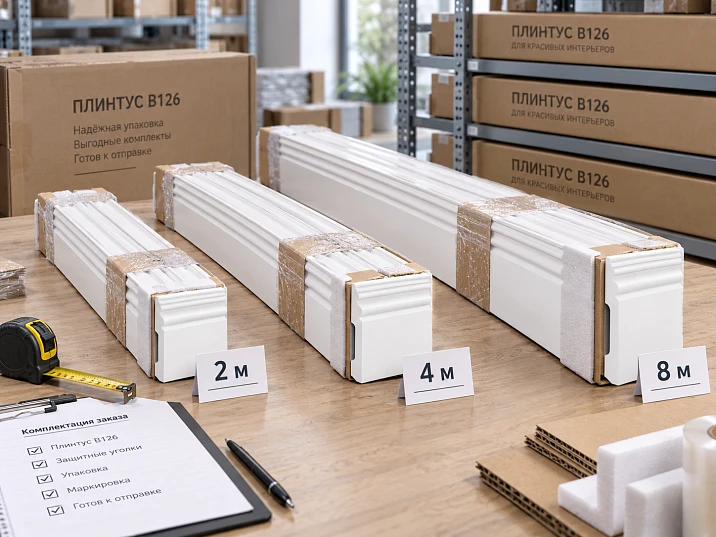
For an online store that plans to sell HI WOOD B126 not only as single planks but also as ready-made sets of 2, 4, and 8 meters, it is not enough to find out the wholesale price and order “more.” First, you need to decide which unit forms the basis of accounting, how the sellable kits are formed from it, how many whole planks are required for the starting assortment, how to package them after opening the incoming batch, and how to calculate the real cost of each shipment.
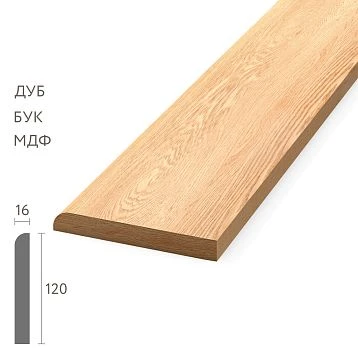
For B126, the base physical unit is simple: one plank measures 126×16×2000 mm. Therefore, the sets offered by the store are interpreted unambiguously:
-
2 m — 1 whole plank;
-
4 m — 2 whole planks;
-
8 m — 4 whole planks.
These are specifically the seller's kits for online sales. The article does not imply that the manufacturer or STAVROS ships B126 in factory sets of this composition.
Main purchasing logic:
wholesale batch of B126 → accounting in whole planks → store product kits of 1/2/4 planks → packaging standard → test shipments → cost of each kit → balance in base units → batch replenishment.
The main risk is confusing the commercial meterage of a kit with the physical length of the shipment. An “8 meters” set does not turn into an eight-meter profile. It is four items each 2000 mm long. For transportation, the length of the package remains about the length of one plank plus packaging, while the weight, cross-sectional dimensions, cost of packaging materials, and assembly labor increase with the number of items.
Therefore, to buy B126 skirting board wholesale for an online store, you need to already have a ready kit configuration model. Before placing a large order, it is advisable to know:
-
how many base planks are required;
-
which sets the store will actually sell;
-
what share of demand is expected for 2, 4, and 8 m;
-
whether the kit will be assembled in advance or made to order;
-
which packaging passes trial shipments;
-
how much it costs to assemble one parcel;
-
how to account for damage to one plank inside a multi-item set;
-
at what remaining stock level to place the next wholesale order.
What exactly the store purchases: HI WOOD B126 126×16×2000 mm
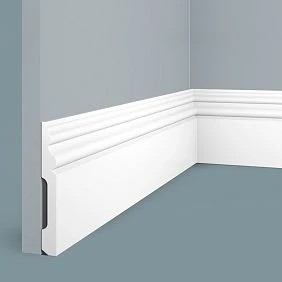
B126 — HI WOOD floor skirting board made of polystyrene.
Product card: buy B126 skirting board.
Working product line:
| Field | Value |
|---|---|
| Manufacturer | HI WOOD |
| Article number | B126 |
| Material | Polystyrene |
| Size | 126×16×2000 mm |
| Length of one plank | 2000 мм |
| Base stock unit | 1 whole plank |
| Sellable sets | 1, 2, or 4 planks |
The last field already relates to the online store, not to the factory product description.




Why it is better to keep one plank as the base unit
If the warehouse immediately starts storing:
-
2 m set;
-
4 m set;
-
set 8 m
as three independent products with separate stock levels, there is a risk of double counting. Physically, all three variants consist of a single resource — whole B126 boards 2000 mm long.
For example, there are 100 boards in stock.
If the system shows:
100 pcs. B126;
and simultaneously:
50 sets of 4 m;
these figures cannot be added together. Fifty sets of 4 m already require all the same 100 physical boards.
Therefore, it is better to use:
Base unit = B126, 1 board.
And the sellable items:
-
B126-2M = 1 base rail; -
B126-4M = 2 base rails; -
B126-8M = 4 base rails.
Our factory also produces:




Sets of 2, 4, and 8 meters: how to indicate the contents without ambiguity
In an online store product page, the linear meters must be accompanied by the number of items.
Get Consultation
2 m set
1 rail B126 × 2000 mm.
4 m set
2 rails B126 × 2000 mm.
8 m set
4 planks B126 × 2000 mm.
The buyer should not be left with only:
“B126 — 8 m”.
Such a name may create a false expectation of a single eight-meter product.
Better:
Skirting board HI WOOD B126, set 8 m — 4 planks of 2 m each.
Why the number of planks should be shown next to the linear meters
It is important for the buyer to understand in advance:
-
how many individual items will arrive;
-
what the length of each plank is;
-
how many joints may potentially be required;
-
how the set will be transported and stored.
For the store, this reduces the number of inquiries:
and 8 meters — with one stick?
Three internal store SKUs and one factory SKU
You can create internal trade codes:
-
B126-K1— 1 plank; -
B126-K2— 2 planks; -
B126-K4— 4 planks.
Or:
-
B126-2M; -
B126-4M; -
B126-8M.
But each code must have a link:
source SKU = HI WOOD B126.
The online store's internal SKU does not replace the factory SKU.
Which set to make the base one in the online store
There is no universal answer.
It cannot be stated in advance:
customers more often buy 4 m.
If you don't have your own statistics, it's better to test the starting ratio with a trial batch.
Working approach:
-
create three sets;
-
start sales;
-
record orders;
-
look not only at the number of orders, but also at the consumption of physical planks;
-
adjust the restocking structure.
Why the number of orders and plank consumption are different metrics
Let's imagine over a week:
-
10 orders of 2 m;
-
10 orders of 4 m;
-
10 orders of 8 m.
The number of orders of each type is the same.
But the consumption of B126:
-
2 m: 10 planks;
-
4 m: 20 planks;
-
8 m: 40 planks.
Total:
70 planks.
The 8 m set accounts for a third of orders but consumes more than half of the physical stock.
Therefore, purchasing should look not only at the number of orders, but also at the planks used.
How to choose the starting ratio of sets
If there is no statistics yet, you can set a test matrix not as a market forecast, but as an experiment.
For example:
-
20 sets of 2 m;
-
15 sets of 4 m;
-
10 sets of 8 m.
This is specifically a conditional starting model.
It is needed for calculating:
-
the physical batch;
-
the quantity of packaging materials;
-
the assembly time;
-
the storage location.
Not as a recommendation that consumer demand will necessarily be distributed exactly this way.
Calculation for the first batch: 20 single, 15 double, 10 quadruple sets
2 m sets
20 × 1 strip:
20 planks.
4 m sets
15 ×2:
30 strips.
8 m sets
10 ×4:
40 slats.
Total
20 + 30 + 40 = 90 strips.
Since each strip is 2 m:
90 × 2 = 180 m.
This is the figure to use in the request:
B126 — 90 whole strips.
Not:
45 online sets.
The supplier cares about the physical product.
Why 180 meters does not mean a 180-meter shipping unit
For commercial accounting:
180 m of product.
For physical logistics:
90 items 2 m long.
This is fundamental.
Warehousing, transport, and packaging do not work with abstract linear meters, but with 90 individual long-length items.
The total linear meters of a set and the physical dimensions of the shipment are not the same thing
An 8 m set sounds like a long product.
But physically it is:
four strips of 2000 mm each.
Therefore, the length of the packing unit does not become 8000 mm.
It remains tied to the two-meter product plus the protective packaging elements.
Other parameters change:
-
number of slats;
-
mass;
-
the cross-sectional dimension of the bundle;
-
the number of protective pads;
-
assembly time;
-
packaging cost;
-
the cost of transportation according to the rules of the specific transport company.
This must be explained directly to both the customer and the warehouse employee.
Why an 8 m set cannot be considered "one large plank"
If the product page is written poorly:
B126, 8 m,
the customer may assume:
one solid profile 8 m long.
Correct product page:
8 m set: 4 planks of 2 m each.
This removes the false expectation before the order is placed.
How to store online store leftovers in base units
For example:
there are 90 whole B126 in stock.
The system must be able to answer:
Maximum sets 2 m
90.
Maximum sets 4 m
45.
Maximum sets 8 m
22 full sets + 2 spare slats.
But these are alternative scenarios.
You cannot simultaneously promise:
-
90 sets of 2 m;
-
45 sets of 4 m;
-
22 sets of 8 m.
They all use the same stock.
Why display stock should be calculated dynamically
If the customer bought:
1 set of 8 m,
the following is deducted from the warehouse:
4 slats.
Was:
Remaining:
Now the maximum available is:
-
86 sets of 2 m;
-
43 sets of 4 m;
-
21 sets of 8 m + 2 planks.
Therefore, the online store must recalculate the availability of sets from the base stock.
How to avoid double reservation of a product across shopping carts
If customers place orders simultaneously:
-
2 sets of 8 m;
-
3 sets of 4 m;
-
5 sets of 2 m,
Requirement:
2×4 + 3×2 + 5×1 = 19 planks.
The system must reserve:
19 base planks.
Not:
three independent products with no linkage.
Otherwise, a single physical stock item could be sold multiple times.
Pre-assembly of sets or made-to-order configuration
The store has two basic approaches.
Pre-assembled sets
Pre-form in advance:
-
2 m set;
-
4 m set;
-
8 m set.
Advantages:
-
ship faster;
-
easier to standardize packaging;
-
easier to measure assembly time.
Disadvantages:
-
the product is "frozen" in a specific format;
-
if demand has changed, it has to be unpacked;
-
factory identification may be damaged;
-
it is harder to flexibly redistribute stock.
Assembly to order
Store whole B126 units and assemble the set only after payment.
Advantages:
-
all stock is universal;
-
easier to respond to demand;
-
simpler to maintain basic warehouse stock.
Disadvantages:
-
more operations before each shipment;
-
higher demands on warehouse discipline;
-
a stable packaging process is required.
When a hybrid model makes sense
For example:
-
a small number of 2-meter sets in advance;
-
some of the 4-meter ones;
-
assemble 8-meter ones to order.
But this is not a universal scheme.
The decision depends on actual statistics:
-
sales velocity;
-
assembly time;
-
warehouse space;
-
packaging cost;
-
damage frequency.
Individual packaging B126 after opening a wholesale batch
After a wholesale delivery, the store may receive a large factory/transport batch and then split it into retail shipments.
The purpose of individual packaging:
-
preserve the geometry;
-
protect the front surface;
-
protect the ends;
-
prevent the slats from rubbing against each other;
-
keep the labeling clear;
-
complete the selected delivery method.
The article must not invent a factory packaging format for B126.
This refers specifically to the seller's own packaging after receiving the wholesale goods.
Why the ends require separate protection
On a long-length item, the end is often the first to encounter:
-
an impact during vertical carrying;
-
edge of the shelving unit;
-
floor;
-
side of the truck body;
-
edge of the sorting trolley.
If the end face is damaged, the store may receive:
-
a claim;
-
a partial refund;
-
the need to replace one slat from the set;
-
an additional delivery.
Therefore, the packaging standard must have a separate solution for the ends of the slats.
Why stretch film alone is not enough as a universal answer
The film can:
-
hold items together;
-
protect from dust;
-
keep the label in place.
But on its own it does not guarantee:
-
rigidity;
-
corner protection;
-
protection of ends;
-
bending resistance;
-
resistance to point impact.
That is why packaging is selected based on the results of real test shipments.
How to build a packaging standard without invented regulations
The internal packaging map may include:
| Element | Function |
|---|---|
| inner padding | prevent the profiles from rubbing |
| Protection of ends | absorb impact at the end |
| outer rigid shell | keep the shape of the place |
| fixation | prevent the slats from moving |
| moisture-protective layer | protect against accidental contamination/moisture during logistics |
| Labeling | SKU, set, quantity |
The material and thickness are chosen after testing.
There is no need to declare one option as universal for all carriers.
What to write on the kit packaging
For example:
HI WOOD B126
4 m kit
2 strips ×2000 mm
Quantity: 2 pcs.
Order: ___
Do not mix with other SKUs
For 8 m:
8 m kit / 4×2000 mm.
This way the warehouse and the customer see the same contents.
Why the packaging code must differ from the product SKU
Product:
B126.
Commercial set:
B126-8M.
A packaging unit can have:
PACKAGING-B126-8M-01.
This helps:
-
track assembly;
-
print the label;
-
calculate packaging consumption;
-
link a claim to a specific format.
But the original B126 must not be lost.
Trial shipments before the main purchase
Before a large batch, it is reasonable to do a series of test shipments.
Goal:
-
check the actual dimensions of the packaging;
-
actual mass;
-
ease of carrying;
-
assembly time;
-
damage after transportation;
-
the performance of the selected delivery service.
There is no need to test only 2 m.
It is important to test all three formats.
Why the 8-meter set is especially important for the test
It consists of four planks.
It has:
-
greater weight;
-
larger transverse dimension;
-
more contact surfaces;
-
more fixation points;
-
higher cost of contents.
Therefore, packaging that is normal for one plank may be weak for four.
What to record during a trial shipment
Example log:
| Field | Value |
|---|---|
| kit | 2/4/8 m |
| Planks | 1/2/4 |
| Weight without packaging | actual measurement |
| Weight with packaging | actual measurement |
| Seat length | actual measurement |
| Cross-sectional dimensions | actual measurement |
| Assembly time | actual |
| Damage | yes/no + description |
| Packaging cost | actual |
| Delivery cost | according to carrier's tariff |
This creates the basis for a real economy.
Why you can't invent the weight of B126 in advance
A size chart does not provide a reliable basis for calculating the shipping weight of a specific retail parcel.
Even if the product weight is known, packaging changes the final result.
Therefore, for online store logistics:
weigh a test kit.
We do not insert a provisional figure into the delivery card.
Dimensional weight and carrier rate
Different delivery services may use:
-
actual weight;
-
volumetric weight;
-
maximum side;
-
sum of dimensions;
-
separate rules for long-length items.
Therefore, the article should not provide a universal tariff formula.
Correct order:
-
pack the test;
-
measured;
-
weigh;
-
check the rules of the selected carrier;
-
get the real price.
Why an 8 m set can cost disproportionately in delivery
Volumetric weight:
four times more than in a 2 m set.
But delivery does not have to be exactly ×4.
The tariff is affected by:
-
mass;
-
volume;
-
long-length category;
-
origin/destination points;
-
insurance;
-
additional services.
Therefore, logistics cost is determined by testing.
Cost of a set: which items to include
Minimum structure:
product cost + inbound delivery + packaging + assembly + sales channel expenses + actual losses + outbound delivery, if paid by the seller.
Where:
-
purchase cost of the slats;
-
share of inbound delivery from the supplier;
-
individual packaging;
-
assembly and components;
-
sales channel expenses;
-
actual cost of damages and reshipments;
-
outbound delivery, if paid by the seller.
Not all stores account for costs the same way.
But the structure helps you not forget hidden expenses.
How to allocate inbound delivery across sets
Wholesale shipment B126 arrives as a single load.
For example:
-
90 strips purchased;
-
incoming supplier delivery to the store warehouse —
Incoming_delivery.
Simplest option:
incoming delivery / 90 = incoming delivery per one slat.
Then:
Get Consultation
2 m set
1 × incoming delivery per one slat.
4 m set
2 × incoming delivery per one slat.
8 m set
4 × incoming delivery per one slat.
This is convenient if delivery actually depends on the total quantity of goods.
But the store's accounting model may allocate incoming costs differently.
The main thing is not to count them as zero.
Formula for the product cost of planks
Let:
P = actual purchase price of one B126.
Then:
2 м
product cost of 2 m = price of one plank.
4 м
product cost of 4 m = 2 × price of one plank.
8 м
product cost of 8 m = 4 × price of one plank.
Assembly costs are added to this.
Formula for the full internal cost of a set
For each option:
full cost = product + inbound delivery + packaging + assembly + channel costs + actual losses
Where:
-
number of planks in the set = 1, 2, or 4;
-
purchase cost of one strip;
-
inbound delivery per one strip;
-
packaging of a specific set;
-
assembly;
-
commission and other sales channel expenses;
-
actual costs for damages and reshipments, if the store includes them in the cost price.
There is no need to substitute a made-up loss percentage.
It appears only after statistics.
Why 8 m packaging does not have to cost four times more than 2 m packaging
Some materials are used per shipment:
-
one label;
-
one external protective contour;
-
one document printing operation.
Others grow with the number of planks:
-
gaskets;
-
locks;
-
surface protection;
-
installation time.
Therefore:
a package of an 8 m set does not have to cost four times as much as a package of a 2 m set
automatically.
It needs to be measured.
Why assembly also has non-linear cost
Assemble one plank:
-
take;
-
check;
-
pack;
-
mark.
Four slats:
-
take four;
-
verify the identical item code;
-
check each one;
-
align;
-
lay;
-
tighten;
-
pack.
This takes longer.
But not necessarily exactly four times longer.
Therefore, the warehouse can conduct a time study.
How to measure assembly time
Trial batch:
-
10 sets of 2 m;
-
10 sets of 4 m;
-
10 sets of 8 m.
For each:
time from receiving the task to the finished marked location.
We eliminate random pauses.
We get:
-
median or average working time;
-
spread;
-
bottlenecks.
After that, you can estimate the assembly cost of each format.
Cost must not be confused with selling price
Cost answers:
how much the kit actually costs the store.
Selling price also takes into account:
-
trade margin;
-
positioning;
-
competition;
-
taxes;
-
discounts;
-
promo;
-
store strategy.
The article should not establish the "correct markup."
It should make costs transparent.
How to calculate the marginal contribution of a set
If the store uses a management formula:
marginal contribution = selling price − variable costs
you can compare three sets.
But it is more important to look not only at the contribution per order.
Need to consider:
-
consumption of planks;
-
order frequency;
-
assembly time;
-
damage;
-
returns.
A set of 8 m can generate more revenue per order, but it reduces the warehouse stock more significantly.
Product page for the set in the online store
Each variant must have unambiguous data.
Name
HI WOOD B126 skirting board, 4 m set — 2 planks of 2 m each.
SKU
Internal
B126-4M.
Manufacturer
HI WOOD.
Base product
B126.
Size of one plank
126×16×2000 mm.
Composition
2 pieces.
Total length
4 m.
Why photos should show both the profile and the composition
Different image types are useful for the set:
-
close-up of profile B126;
-
end section;
-
one whole plank;
-
two planks side by side for the 4 m set;
-
four planks/packaging example for 8 m.
Do not mislead the buyer with a staged interior if the purpose of the photo is to explain what is included in the set.
Why a photo of the packaging is useful but should not promise an unchanging appearance
The actual packaging may be revised.
Therefore, the caption:
an example of an online store's protective packaging.
Not:
B126 factory packaging.
If the seller's own set contents are used, this should be clear.
How to display the price
The clearest format:
-
price of the set;
-
number of slats;
-
total square footage.
If necessary:
price per 1 m
may be supplementary.
But the buyer is ordering a specific set.
Why price per meter can be confusing
If the product card shows:
1,000 ₽/m
and the price:
8 000 ₽,
the buyer may not see that they will receive four separate slats.
Therefore, next to it:
4×2000 mm.
How to organize variants of a single product card or separate product cards
There are two design options.
One product card with variants
Switcher:
-
2 m;
-
4 m;
-
8 m.
Pros:
-
it is easy for the customer to compare.
Cons:
-
it is necessary to correctly link the stock of all variants to a single base inventory stock.
Three separate product cards
Pros:
-
independent search and advertising landing pages;
-
different delivery conditions are simpler.
Cons:
-
higher risk of content duplication;
-
stock synchronization is more complex.
The article does not prescribe a single option.
But in both cases, the warehouse must operate from the base B126 bar.
How to synchronize variant stock
Let:
warehouse stock = 37 bars.
Then:
-
2 m: maximum 37;
-
4 m: maximum integer part of 37/2 = 18;
-
8 m: maximum integer part of 37/4 = 9.
After ordering 4 m:
warehouse stock = 35 planks.
New availability:
-
35;
-
17;
-
-
This logic must be executed automatically or manually with discipline.
Why you cannot set a fixed stock for each variant
For example:
-
2 m — 20 sets;
-
4 m — 15;
-
8 m — 10.
Physical requirement:
20 + 30 + 40 = 90 strips.
If there are 60 planks in stock, such a showcase promises more product than exists.
Temporary reservation for an unpaid order
If the store holds an item in the cart or order until payment, you need to decide:
-
when to deduct the available stock;
-
when the reservation is released;
-
how long it remains valid.
This is already a store business rule.
But the reservation must be deducted in the base planks.
How to assemble a customer order
Before packing, the employee receives a task:
B126-8M / 1 set.
The system translates:
4 strips B126.
Control:
-
item code B126;
-
4 whole pieces;
-
identical model;
-
visual integrity;
-
length and format match the warehouse standard;
-
packaging according to the map.
Why every strip needs to be checked
If one of the four is damaged in an 8 m set:
the entire customer order is already problematic.
Therefore, it is not enough to check only the top rail of the pack.
Minimum:
-
end faces;
-
visible edges;
-
front surface;
-
absence of obvious damage.
Packaging checklist
| Check | 2 м | 4 м | 8 м |
|---|---|---|---|
| Item code B126 | 1 | 2 | 4 |
| Whole planks | 1 | 2 | 4 |
| Ends checked | Yes | Yes | Yes |
| Surface checked | Yes | Yes | Yes |
| Spacers | according to standard | according to standard | according to standard |
| Kit label | 1 | 1 | 1 |
Why a kit cannot be closed with an “equivalent linear meterage”
Order:
4 m = 2 whole planks.
Cannot ship:
-
1×2000;
-
2×1000.
Although the total meterage is 4 m.
The buyer purchased the declared kit of whole two-meter items.
How to handle an incomplete kit
Situation:
order 8 m;
In stock:
only 3 usable planks.
Prohibited:
-
automatically send 6 m;
-
report another profile;
-
replace with one short part.
Options according to store rules:
-
hold until restock;
-
approve the order change;
-
cancel;
-
offer another set.
But the customer must confirm the change.
Damage to one slat inside the set
If the claim is:
out of four, one is damaged,
the store needs the following data:
-
order number;
-
kit;
-
number of slats;
-
which one is damaged;
-
type of damage;
-
photo of the packaging;
-
photo of the product;
-
marking;
-
carrier;
-
date.
This helps to determine:
-
packaging defect;
-
transport damage;
-
warehouse error;
-
manufacturing defect;
-
picking error.
Why you shouldn't immediately write off the entire set as four damaged planks
Economic analysis should see:
1 of 4 is damaged.
If the store records:
a set of 8 m is damaged,
loss statistics are overstated.
Management accounting is better kept in base planks.
How to calculate the damage share
After accumulating statistics:
damage rate = damaged planks / shipped planks.
Can be done separately:
-
2 m each;
-
4 m each;
-
8 m each;
-
by carrier;
-
by packaging type.
This makes it clear whether multi-plank sets really require reinforcement.
Why you cannot enter a “normal breakage percentage” in advance
Without our own statistics, it's a guess.
First, tests and real shipments.
Then:
fact.
What to change if 8-meter sets get damaged more often
Check in order:
-
end protection;
-
external rigidity;
-
slat fastening;
-
cross-sectional dimensions;
-
loading;
-
selected carrier;
-
marking of the long-length vehicle.
There is no need to automatically exclude 8 m from the assortment after a single case.
How to calculate the cost of resending one plank
If the store decides to send one B126 additionally:
-
commodity value of 1 plank;
-
new packaging;
-
new assembly;
-
repeat delivery;
-
processing of the request.
This is the real cost of the damage.
It may exceed the cost of the physical defect itself.
How to use customer complaints to change packaging
Every complaint should answer not only the question:
who is to blame?
It should improve the packaging standard.
For example, if damage recurs:
Ends
End protection is reinforced.
Front surface
The inner padding is checked.
Perełomov
The rigidity of the outer packaging and the carrier's handling of long-length items are checked.
Mis-shipments
Article marking and assembly control are being strengthened.
This is how the store turns returns into data.
Why a 2 m set is useful as a control format
One strip has:
-
a minimum number of internal contacts;
-
simple assembly;
-
clear packaging.
If even 2-meter shipments get damaged:
the problem is probably not in the multi-panel kit.
You need to check the basic packaging standard or transportation.
Why the 4 m kit is convenient for comparison
Two slats already create:
-
internal contact;
-
need for fixation;
-
increased weight.
Comparing 2 and 4 m shows how much adding a second slat affects:
-
time;
-
packaging;
-
damage;
-
delivery.
The 8 m kit shows the limit of the current process
Four planks — a good test:
-
is it convenient for the employee to assemble;
-
is there enough rigidity;
-
does the pack not spread apart;
-
does the shipment not exceed the convenient parameters of the selected logistics;
-
does processing not become too expensive.
If 8 m is economically inefficient, this decision is made based on the numbers.
How to calculate actual profitability after the first sales
For each option, the following are collected:
-
number of orders;
-
revenue;
-
number of slats used;
-
packaging;
-
assembly time;
-
commissions;
-
compensations;
-
reshipments.
After that:
actual marginal contribution per order.
and:
actual marginal contribution per slat.
The second metric is useful for comparison
Why a discounted slat should not quietly end up in a regular set
If the store sells it as a separate discounted item:
a separate status and internal SKU are needed.
Prohibited:
add it to the 8-meter set because "the defect is small."
The commercial promise of the set must be consistent.
How to organize warehouse zones
Minimum:
AVAILABLE B126
Whole usable planks.
RESERVED
For paid/active orders.
PACKED
Already assembled sets.
QUARANTINE
Disputed.
RETURNS
Returns pending inspection.
This way the physical stock matches the digital one.
Why an assembled set can no longer be counted as free slats
Assembled:
B126-8M.
The four slats are already physically in the package.
If they remain in the status FREE:
the system can sell them a second time.
After assembly, the status of the base units changes:
assigned to the order / packed.
If the order is canceled after assembly
Options:
-
leave the set ready;
-
unpack;
-
return the slats to the free stock.
The decision depends on:
-
packaging states;
-
demand for this format;
-
space.
But the digital status must match the physical one.
Customer return: how to return an item to warehouse stock
Cannot be done automatically:
return = available.
Need to check:
-
article number;
-
number of slats;
-
condition;
-
packaging;
-
installation marks;
-
transportation damage.
after checking:
-
available;
-
quarantine;
-
MARKDOWN;
-
written off.
Why an 8 m return needs to be split into four base planks
Even if the customer returned one “set,” it contains four planks.
Possibly:
-
3 are usable;
-
1 is damaged.
To warehouse stock:
+3 spare planks.
Not:
+1 set 8 m
automatically.
How to handle a partial return
If the store's rules allow returning part of a set:
accounting is still tracked in planks.
However, the commercial and legal return policy is determined by the store's terms and applicable trade rules.
This article does not replace them.
Assembly and order inspection before handover to the carrier
Final step:
-
the order is checked against the product card;
-
the strips are recounted;
-
visual inspection;
-
packaging;
-
measurement/weighing if necessary;
-
label;
-
photo of the finished place, if the store uses such a practice;
-
handover to the carrier.
Why a photo of the finished packaging is useful
In case of a dispute:
was the packaging damaged before or after handover?
A photo does not solve everything.
But it helps:
-
verify the completeness of the set;
-
external location condition;
-
marking;
-
packaging version.
What to store in the shipment card
-
order number;
-
internal kit SKU;
-
original SKU B126;
-
number of slats;
-
packaging version;
-
packaging weight;
-
packaging dimensions;
-
carrier;
-
tracking number;
-
photographs;
-
picker.
This creates traceability.
How to place the first wholesale order with a supplier
The supplier must receive a request for the physical product.
Not:
sets of 2, 4, and 8 meters are needed.
But:
HI WOOD B126 / polystyrene / 126×16×2000 mm / ___ whole planks.
If the store uses the example of the starting matrix:
-
20 sets of 2 m;
-
15 sets of 4 m;
-
10 sets of 8 m,
then the base volume:
90 strips.
The order can explain:
the product is intended for further assembly by the online store into sets of 1/2/4 planks.
This is not a requirement for factory packaging.
What to ask the supplier before payment
It is useful to confirm:
-
availability of B126;
-
current wholesale price;
-
quantity;
-
timelines;
-
format of incoming packaging/shipment;
-
delivery conditions;
-
possibility of subsequent reorder;
-
documents.
If the store plans to regularly replenish stock, the possibility of quick repeat purchases affects the size of the safety stock.
Why you should not ask the supplier for “90 planks in sets of 1/2/4”
If the seller wants their own assortment matrix, it is not necessary to mix it with purchasing logic.
Stronger:
incoming supply = base strips B126.
outgoing sale = seller's kits.
Thus, a change in demand does not require changing the procurement format.
How to use finishing material suppliers in the context of the article
When choosing finishing material suppliers it is important for an online store to compare not only the price of a single strip, but also the terms of a wholesale batch:
-
minimum quantity;
-
delivery;
-
reorder capability;
-
condition;
-
documents;
-
SKU stability.
But a commercial request still ends with a specific line B126.
Wholesale trade in building materials: where the store's added value appears
If a store operates through wholesale trade in building materials, its own value may not lie in changing the product itself, but in the convenience of purchase:
-
clear sets;
-
ready-made packaging;
-
delivery to the end customer;
-
transparent composition;
-
quick selection of the required footage.
This is the logic of 2/4/8 m.
Wholesale supplies of building materials and incoming batch
When wholesale building material supplies discipline in incoming acceptance is important.
If the starting model requires 90 planks, the store accepts:
90 B126.
Not:
180 linear meters in total.
And not:
45 sets of different sizes.
Final request to buy finishing materials wholesale
Once the economics are confirmed, the store can buy finishing materials wholesale already based on the specific need.
For B126:
HI WOOD B126 / 126×16×2000 / quantity ___ pcs. / address / terms / contact.
The broad anchor leads to the homepage.
The product anchor leads to the B126 card.
Fifteen mistakes when launching B126 kits
1. Storing 2/4/8 m as independent physical stock
Why it happens: three product cards look like three SKUs.
Consequence: one warehouse stock item is sold multiple times.
How to prevent: base stock in B126 planks.
2. Naming an 8 m kit without its composition
Why it happens: you want a short name.
Consequence: the buyer expects a single-piece product.
How to prevent: “4 planks of 2 m each.”
3. Purchasing based on the number of online kits
Why it happens: the assortment has already been formed.
Consequence: the supplier receives an unclear unit.
How to prevent it: convert everything into planks.
4. Dividing the remainder between variants manually and forgetting to recalculate
Why it happens: stock levels are set as fixed values.
Consequence: selling the same physical stock to multiple buyers.
How to prevent it: dynamic calculation based on base planks.
5. Treating the packaging as the same for 1 and 4 planks
Why it happens: the length of the place is the same.
Consequence: an 8 m set is not sufficiently protected.
How to prevent: separate packaging cards.
6. Order packaging in bulk before the pilot
Why it happens: you want to start sales right away.
Consequence: unsuitable packaging material remains in the warehouse.
How to prevent: prototype → test → small batch.
7. Make up the kit weight
Why it happens: you need to fill in the delivery card.
Consequence: incorrect rate.
How to prevent: actual weighing.
8. Use the carrier's universal rate
Why it happens: the usual delivery of small-sized items.
Consequence: long-length items are calculated incorrectly.
How to prevent: check the rules of the specific service.
9. Not including inbound delivery in the cost price
Why it happens: it is perceived as a general expense.
Consequence: the margin on sets is overstated.
How to prevent: allocate inbound delivery.
10. Not accounting for assembly time
Why it happens: warehouse work seems free.
Consequence: large sets look more profitable than they are.
How to prevent: time tracking.
11. Write off damage as "one set"
Why it happens: the order was a single set.
Consequence: loss statistics are distorted.
How to prevent: count damaged planks.
12. Return a customer return straight into free stock
Why it happens: the item looks intact.
Consequence: the damaged plank is sold again.
How to prevent: return → inspection → status.
13. Pre-assemble too many 8-meter sets
Why it happens: there is a desire to speed up shipment.
Consequence: the base warehouse stock is frozen.
How to prevent: pre-assembly based on actual demand.
14. Consider the number of orders sufficient for forecasting
Why it happens: store analytics counts orders.
Consequence: underestimation of consumption of 8-meter sets.
How to prevent: used planks.
15. Order “126 mm skirting board”
Why it happens: brief description.
Consequence: loss of SKU.
How to prevent: HI WOOD B126 / 126×16×2000.
Practical questions from the buyer
What size is B126?
126×16×2000 mm.
What material is it made of?
HI WOOD polystyrene.
How many planks are in the 2 m set?
One.
In the 4 m set?
Two.
In the 8 m set?
Four.
Are these factory kits?
In the article scenario — no. These are the online store's own kits.
How many planks are needed for 20 kits of 2 m, 15 kits of 4 m, and 10 kits of 8 m?
90 strips.
What is the total linear meterage?
180 m.
What is the physical length of one plank in the 8 m kit?
2000 mm.
Should a separate warehouse stock balance be kept for each kit?
Physically, it is more convenient to keep one base stock balance B126 and calculate variant availability from it.
Can kits be assembled in advance?
Yes, if this is justified by statistics and the warehouse process.
How can the best kit format be determined?
Based on actual orders, plank usage, cost, delivery, and damages.
What should be included in the cost?
The product, inbound delivery, packaging, assembly, channel expenses, and actual losses/delivery under the adopted accounting model.
How do I find out the delivery cost?
Pack, measure, weigh, and calculate according to the rules of the selected carrier.
Should the number of planks be specified to the customer?
Yes. This removes ambiguity in the linear meters.
What should be done if one plank in an 8-meter set is damaged?
Record the defect against the base plank and follow the store's rules: replacement, return, compensation, or another agreed option.
Which remaining stock should be counted before reordering?
Free usable B126 planks net of reserves for active orders.
How to process a repeat purchase?
In whole B126, not in the number of user kits.
How to build a claim card
Minimum data set:
| Field | Value |
|---|---|
| Order number | ___ |
| Internal kit SKU | B126-2M/4M/8M |
| Number of planks | 1/2/4 |
| Damaged plank | ___ |
| Packaging version | ___ |
| Carrier | ___ |
| Tracking number | ___ |
| Damage type | ___ |
| Product photo | Yes/No |
| Packaging photo | Yes/No |
| Solution | ___ |
This is how complaints become comparable.
Why a complaint should be linked to the packaging version
Without the field packaging version the store won't understand:
did damage decrease after the packaging change, or is it just a coincidence?
If version 1 is replaced by version 2, the statistics are split.
How to count repeat shipments
If one plank is damaged and the store sends one extra:
the reshipment refers to the base plank B126.
In analytics, you can store:
-
number of extra planks sent = 1;
-
original set = 8 m.
This makes it clear which order format caused the additional consumption.
How to distinguish a product issue from a delivery issue
Recurring defects:
At the same spot on the profile before packaging
Check the incoming shipment.
On the ends after transport
Check packaging/logistics.
SKU mix-up
Check warehouse and completeness.
Incomplete quantity
Check picking and packaging.
This way the reasons don't get mixed up.
How to calculate a reserve for claims without a made-up percentage
At the start:
we don't assign a separate percentage without data.
You can keep a regular safety stock.
After a sufficient number of actual shipments, statistics emerge:
-
shipped planks;
-
damaged planks;
-
reshipments.
Then the decision becomes based on fact.
What to do if the 8 m set barely sells
You don't have to delete the listing right away.
Check:
-
visibility;
-
price;
-
delivery cost;
-
clarity of composition;
-
real demand.
If the format is economically weak:
reduce pre-assembly.
Base B126 can still be sold in 2/4 m.
This is the advantage of a shared stock-keeping unit.
What to do if 8 m suddenly sells better
Increase:
-
demand forecast in slats;
-
packaging stock for 8 m sets;
-
assembly throughput.
But it is not necessary to store all slats as finished 8M.
Why a shared B126 slat reduces the risk of dead stock
If demand for one variant drops, the physical product remains universal.
For example:
8 m stopped selling.
Four planks can be:
-
sold as four 2M;
-
as two 4M;
-
as another 8M later.
This is only possible if the product has not been irreversibly processed.
How to test the first starting matrix for sensitivity to demand
Initial plan:
-
20 sets of 2 m;
-
15 sets of 4 m;
-
10 sets of 8 m.
Requirement:
90 strips.
But this is only one model.
It is useful to check what happens with a different demand.
Scenario A — demand shifts to 2 m
For example:
-
30×2 m;
-
10×4 m;
-
5×8 m.
Consumption:
30 + 20 + 20 = 70 planks.
Scenario B — 8 m grows
-
10×2 m;
-
10×4 m;
-
15×8 m.
Consumption:
10 + 20 + 60 = 90 planks.
Number of orders:
The physical consumption is the same as that of the original matrix for 45 orders.
This shows:
for procurement, the structure of orders is more important than their number.
How to calculate stock coverage in planks
If the average weekly consumption is:
50 planks,
and the free balance is:
150,
stock coverage:
approximately 3 weeks
with unchanged demand.
But if an advertising campaign increases the share of 8-meter sets, consumption may accelerate.
Therefore, this metric is needed together with an up-to-date sales mix.
Why stock coverage cannot be calculated in sets
Which set exactly?
150 planks is:
-
150×2 m;
-
75×4 m;
-
37×8 m + remainder.
The only stable unit:
bar B126.
How to account for confirmed incoming supply
Let:
-
free stock = 80;
-
reserved for orders = 20;
-
confirmed incoming supply = 100.
Available now:
60 free bars.
After arrival:
160, if all 100 are accepted as good.
But before acceptance, the incoming shipment cannot be sold as actual warehouse stock if the store's policy does not allow it.
How to verify that 90 incoming strips actually produce the starting matrix
After receiving:
90 good free strips.
If 3 went into quarantine:
87 available.
The original matrix requires 90.
This means the store cannot simultaneously physically pre-assemble:
-
20×2 m;
-
15×4 m;
-
10×8 m.
You need to:
-
wait for the quarantine decision;
-
reduce pre-assembly;
-
order additionally;
-
leave assembly made to order.
Why you can sell before full pre-assembly
If the warehouse stock is shared:
87 slats,
the store can show all three options with dynamic availability.
There is no need to physically assemble 45 packages in advance.
This increases flexibility.
How to determine the minimum free stock for selling 8 m
One 8M requires:
4 free planks.
If free stock = 3:
the 8 m option should become unavailable.
At the same time:
-
2 m is still available ×3;
-
4 m ×1.
This is a simple storefront rule.
How to set up an internal barcode or QR code without replacing the factory SKU
The store may use its own warehouse labeling:
-
B126, base rail;
-
B126-2M;
-
B126-4M;
-
B126-8M.
If barcodes or QR codes are used, they must lead to an internal assembly item.
But the product card must retain:
original SKU = B126.
Thus, scanning an 8 m kit writes off:
4 B126.
It does not create four separate virtual products.
How to verify assembly by scanning
If the warehouse uses a terminal:
-
scan order B126-8M;
-
the system shows: 4×B126 needed;
-
the employee confirms four strips;
-
prints the kit label;
-
warehouse stock −4.
This reduces manual errors.
But the article does not require a specific warehouse system.
The same logic works in a simple spreadsheet.
How to calculate the cost of packaging materials after tests
Let the packaging recipe actually use:
-
quantity of material 1;
-
material quantity 2;
-
material quantity 3.
Then:
packaging cost = material quantity 1 × its price + material quantity 2 × its price + material quantity 3 × its price.
For 2/4/8 m — separate recipes.
So when the packaging price changes, the cost is recalculated automatically.
How to avoid losing packaging consumption due to defects
Assembled 8M.
Before shipping, damage to one plank was discovered.
Part of the packaging has already been used.
Even if the item did not go to the customer:
the packaging cost has already been incurred.
This is a store production expense.
It is worth recording.
How to check a product listing before launch
Checklist:
-
Is B126 specified?
-
Is HI WOOD specified?
-
Is 126×16×2000 mm specified?
-
is the number of planks visible?
-
is the total linear meterage correct?
-
is there no promise of a single 4/8-meter product?
-
is the packaging described as the seller's packaging, if mentioned?
-
Does the price apply to the selected set?
-
Is delivery calculated based on the actual format?
-
Are the photos not misleading?
How to check the 8 m product page
Especially:
“8 m = 4×2000 mm”.
This line must be visible before purchase.
If the buyer only finds out the composition after placing the order:
the product page is not transparent enough.
When it is better to temporarily not launch the 8 m set
if:
-
the packaging did not pass the test;
-
the carrier does not accept the dimensions;
-
the tariff makes the sale unprofitable;
-
the warehouse cannot safely assemble four slats;
-
the product page cannot correctly write off 4 base slats.
You can launch:
-
2 m;
-
4 м
and add 8 m later.
This is better than launching an unfinished format.
When there is no need to pre-assemble a 4 m set
If demand for 4 m is unknown and assembly takes little time:
you can keep the slats free.
The 4M card is still available via integer part of the free balance / 2.
Pre-assembly is an operational decision.
Not a condition of sale.
How to run a control assembly day
Before a mass launch, the store can simulate:
-
5 orders of 2 m;
-
5 orders of 4 m;
-
5 orders of 8 m.
And go through the entire process:
order → reserve → picking → control → packaging → labeling → measurement → handover to delivery.
The following are recorded:
-
errors;
-
time;
-
packaging;
-
inconvenient operations.
After that, the standard is refined.
How to check the remaining stock after the control day
Start:
100 planks.
Collected:
-
5×1 = 5;
-
5×2 = 10;
-
5×4 = 20.
Total:
35 planks.
Expected free remaining stock:
65, if there are no defects and no additional reserves.
If the system shows 70 or 60:
write-off error.
How to check the cancellation of a single order
Cancelled:
B126-8M.
If the set has not yet been handed over to the carrier and the item has been returned to available stock:
warehouse stock +4.
Not:
+1.
This test effectively identifies an incorrect stock model.
How to check the replacement of a damaged plank before shipment
B126-8M:
-
4 planks are reserved;
-
one is damaged;
-
it goes into QUARANTINE;
-
a new one is taken from the available stock.
Summary:
-
the order is still 4;
-
the available stock decreases by another 1;
-
QUARANTINE +1.
This is how the physical balance reconciles.
How to run a final pilot with 90 slats before scaling up purchasing
The starting batch of 90 B126 is convenient not only as an arithmetic example. It can be used to test the entire online sales cycle without prematurely moving to a large permanent stock.
Initial test matrix:
-
20 sets of 2 m;
-
15 sets of 4 m;
-
10 sets of 8 m.
Physical requirement:
90 planks / 180 m.
But the store is not obliged to pre-divide all 90 planks in exactly this way. It is better to treat this as a model of possible demand, and keep the physical stock as flexible as possible.
What to check on the first 10–15 shipments
Not just sales.
Data needs to be collected:
-
which set the customer chose;
-
how many planks were used;
-
how many minutes the assembly took;
-
how much the packaging cost;
-
actual dimensions;
-
actual weight;
-
delivery cost;
-
whether there was any damage;
-
whether a consultation on the kit composition was needed.
After that, the cards and packaging are adjusted before scaling.
When to change the kit ratio
Let's imagine that after 30 orders:
-
2 m — 18 orders;
-
4 m — 9;
-
8 m — 3.
Based on orders, 8 m looks like a weak option.
But the consumption of slats:
-
18;
-
18;
-
-
That is, 8M still consumed a quarter of the base product.
If you decide only by the number of orders, the format's contribution will be underestimated.
When it makes sense to remove one option from the display
Not because it sold worse once.
The reason may be a combination of factors:
-
low sustained demand;
-
expensive delivery;
-
high damage rate;
-
assembly takes too long;
-
high packaging consumption;
-
low marginal contribution;
-
frequent customer questions due to the unclear format.
Then the assortment becomes simpler.
Physical B126 does not lose value because of this — it remains the base stock for the other options.
Why a pilot is better than a large pre-assembly
If the store has pre-assembled all 10 eight-meter sets:
40 planks are already bundled by the packaging.
If demand shifts to 2 m, they will have to:
-
store;
-
unpack;
-
repack;
-
monitor again.
When assembling to order, the same 40 slats remain universal.
How to tell the process is ready to scale
A pilot can be considered successful when the store knows not hypothetically, but in fact:
-
how much packaging for 2/4/8 m costs;
-
how many minutes each format takes;
-
what dimensions the finished spot has;
-
which carrier accepts it on the required terms;
-
how many slats get damaged;
-
how returns work;
-
how card stock levels change dynamically;
-
when the reorder point occurs.
Only after that does the next large wholesale batch become a management decision rather than a bet on assumed demand.
How to use pilot data in a new request
For example, the first cycle showed usage:
-
2 m — 35 planks;
-
4 m — 44 planks;
-
8 m — 52 planks.
Total:
131 planks.
If similar demand is expected for the next calculation period, supply starts with 131, then adjusts:
-
for the current available stock;
-
active reservations;
-
already confirmed incoming shipment;
-
target safety stock.
And again it gets the result in whole B126, not in an abstract number of online kits.
Why the 2/4/8 m format must remain reversible
A good product matrix allows:
4 planks → one 8 m kit;
the same 4 planks → two 4 m kits;
the same 4 planks → four 2 m kits.
As long as the items are intact and not tied to a customer order, the stock remains flexible.
It is precisely this reversibility that is one of the main advantages of the scenario: the store adds value through assembly, packaging, and service without modifying the B126 itself or creating physically different versions of the product.
Final readiness matrix for online sales of B126
| Check | Status |
|---|---|
| B126 126×16×2000 confirmed | Yes/No |
| Base stock is maintained in planks | Yes/No |
| 2 m = 1 plank | Yes/No |
| 4 m = 2 planks | Yes/No |
| 8 m = 4 planks | Yes/No |
| Variant stocks are synchronized | Yes/No |
| 2M packaging tested | Yes/No |
| 4M packaging tested | Yes/No |
| 8M packaging tested | Yes/No |
| Actual weight measured | Yes/No |
| Actual dimensions measured | Yes/No |
| Carrier tariff verified | Yes/No |
| Packaging maps recorded | Yes/No |
| Assembly time measured | Yes/No |
| Cost of each option calculated | Yes/No |
| Claim card ready | Yes/No |
| Quarantine separated | Yes/No |
| Returns are being reviewed | Yes/No |
| Repeat orders are counted in planks | Yes/No |
| Supplier request is ready | Yes/No |
If several critical lines remain "no", it is better not to scale up a large purchase.
What the final STAVROS request should look like
We kindly ask you to calculate a wholesale supply of HI WOOD B126 polystyrene floor skirting board measuring 126×16×2000 mm for subsequent online sale. The required quantity is ___ whole planks. The store independently assembles retail sets of 1, 2, and 4 planks from the base items; we do not intend to use factory packs of 2/4/8 m. Please confirm the current wholesale price, availability/lead time, incoming packaging format, delivery terms, documents, and the possibility of repeat orders.
Such a request does not mix:
-
incoming wholesale supply;
-
the seller's retail sets.
Final B126 launch chain
HI WOOD B126 126×16×2000
→ purchase in whole planks
→ single base remainder
→ 2 m = 1
→ 4 m = 2
→ 8 m = 4
→ dynamic variant availability
→ trial packaging
→ weighing and measuring
→ carrier test
→ packaging maps 2/4/8 m
→ cost calculation
→ online store product cards
→ order reserves base slats
→ inspection of each slat
→ packaging and labeling
→ shipment
→ claims are calculated based on damaged slats
→ returns are inspected before being returned to available stock
→ demand is converted into consumed slats
→ the next wholesale purchase is calculated in B126 slats
The main question of this article is not:
How many meters of B126 should I actually buy?
But:
How many whole two-meter B126 units should an online store keep in stock so that it can simultaneously sell clear sets of 2, 4, and 8 m, avoid double-counting remaining stock, avoid promising single long pieces, account for actual packaging and delivery, and replenish warehouse stock based on the actual consumption of physical planks?
Once this issue is resolved, the store gets a scalable model. It can change the range of kits without changing the purchased product itself, respond quickly to demand, and see the real economics of each shipment.