Article Contents:
- What exactly is NPU-165 in this context?
- Why does the wall above the piano require a separate solution at all?
- The piano itself sets a strong horizontal line.
- The slatted panels on the sides strengthen the center.
- The music zone has an emotional center.
- Emptiness here is often perceived more acutely.
- It supports the silhouette of the instrument.
- It balances the vertical of the slats
- It works as a standalone accent
- It doesn't have to change the entire style of the room
- Along the axis of the piano itself
- Along the axis of the smooth field between the slats
- Along the axis of the entire room
- How to make a template
- A piano about 1400–1500 mm wide
- The piano is already 1200–1300 mm
- The piano is wider than 1500–1600 mm
- Too low
- Too high
- Correct height
- One overlay is a minimal intervention
- The piano itself creates the lower support of the composition
- Slat panels already work as an architectural frame
- Side lighting
- Light from above
- Slat backlighting
- Modern minimalist piano
- Classic piano with profiling
- Dark solid piano
- Light compact piano
- Ceiling height
- Presence of paintings or mirrors in adjacent areas
- The role of the piano in the room
- Viewing distance
- Coloring
- Step 1. Photograph the entire wall
- Step 2. Measure the width of the piano
- Step 3. Measure the width of the smooth section between the rails
- Step 4. Make a template 400 × 133 mm
- Step 5. Find the axis
- Step 6. Check several heights
- Step 7. Look at the template during the day and in the evening
- Step 8. Evaluate the area together with real objects on the piano
- Step 9. Compare two states: with and without the template
- Step 10. Make a decision
- Scenario 1. Piano 1450 mm, smooth zone 900 mm, calm slats
- Scenario 2. Piano 1550 mm, smooth zone 1400 mm, high wall
- Scenario 3. Compact piano, active slats, items on the lid and wall sconce
- Buying from the product card without a layout
- Centering on the wall, not on the piano
- Considering only the length, forgetting the height of 133 mm
- Ignoring the 11 mm relief
- Evaluate an empty music zone
- Try to "save" a failed overlay with a frame or additional details
- Can NPU-165 be placed above an electronic piano instead of a classical one?
- Is it mandatory to paint NPU-165 in the wall color?
- Can NPU-165 be combined with a sconce above the piano?
- Will NPU-165 work if the piano is not strictly centered between the slat panels?
- Can two NPU-165 units be used side by side?
- Is a molding needed under the NPU-165?
- What to do if the overlay seems too small?
- Can the NPU-165 be hung higher, almost up to the ceiling?
- Will the NPU-165 work if there is already a large lamp on the piano?
- Is it worth buying the NPU-165 in advance, before installing the slat panels?
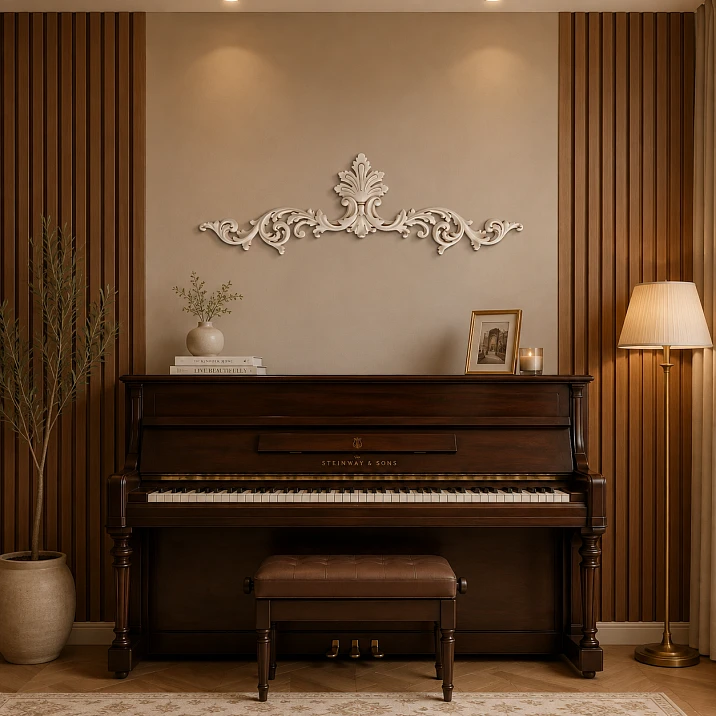
A piano in an interior is not just furniture. Even if it is a modern compact instrument rather than a concert grand, the wall behind it almost always begins to be perceived as a separate compositional zone. This is especially noticeable in a living room, music room, study, spacious hallway, or common family area, where the instrument becomes not only a functional object but also a visual center.
That is why a smooth section of wall above a piano rarely remains neutral. If slat panels are already placed on the left and right, the situation becomes even more interesting: the vertical rhythm of the slats forms an architectural frame, and the middle of the wall above the instrument begins to look either like a deliberate pause or like a place that begs for an additional accent.
At such a moment, the buyer has a very specific question: is one horizontal carved decorative overlay NPU-165 made of polyurethane needed here—or is it better to leave the wall smooth.
For this article, we take only one product option: NPU-165 400 × 133 × 11 mm priced at 2,320 RUB. The model also has a second size, but here we do not turn the material into another review based on the principle of "which of the two to choose." The buyer is already considering a specific overlay and wants to understand whether it is worth buying 1 piece specifically for the wall above the piano.
The short answer is this: the NPU-165 is worth buying only when a single 400-millimeter horizontal overlay truly brings the composition together above the instrument, rather than looking like random small decor on a wide wall. To do this, you need to check the scale relative to the piano itself, the amount of free smooth space around it, the installation height, the nature of the lighting, the visual connection with the slat panels, and the overall richness of the interior.
If after a full-size fitting it becomes clear that the NPU-165 makes the wall above the piano complete and architectural, you can buy a horizontal carved decorative overlay NPU-165 made of polyurethane. If the overlay is lost in scale, conflicts with the slats, or looks like a decorative "patch," the right decision is not to justify it, but to leave the wall free.
That is why this article is not about the abstract beauty of stucco molding. It is about a very specific choice: 1 × NPU-165 = 2,320 ₽ or 0 × NPU-165 = 0 ₽.
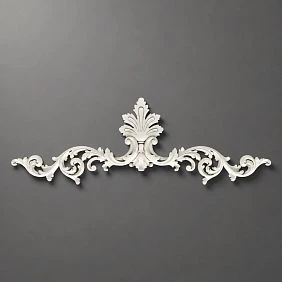
What exactly the NPU-165 is in this task
NPU-165 is a horizontal carved decorative overlay made of polyurethane. For our scenario, the 400 × 133 × 11 mm variant is important. Within the article, this size is considered as an independent wall accent above the piano.
It is convenient to immediately record the basic data:
| Parameter | NPU-165 for this article |
|---|---|
| Product type | horizontal carved decorative overlay |
| Material | Polyurethane |
| Size | 400 × 133 × 11 mm |
| Price | 2,320 ₽/pc. |
| Planned quantity | 1 pc. |
| Installation location | smooth wall section above the piano |
| The main question | buy one overlay or leave the wall smooth |
NPU-165 belongs to the category of horizontal polyurethane overlays, which means the very logic of its shape already hints at the direction of use: it is not a vertical element, not a corner piece, and not a molding insert, but an elongated decorative accent that works best where a transverse line or a local focal point is needed in a horizontally oriented composition.
And that is exactly why the wall above the piano is one of the natural scenarios. The piano itself has a horizontal silhouette. If there are slats on the sides, they form a vertical frame. NPU-165 could theoretically become an element that connects these two directions: the vertical of the architectural background and the horizontal of the instrument.
But the word "theoretically" is important here. The mere fact that the product fits by type does not mean it is needed for a specific wall. To avoid buying decor blindly, you need to go through a sequential check.
If you want to see similar solutions by product type, you can buy horizontal polyurethane overlays. But within the scope of this article, the choice of a specific SKU is already fixed: we are considering exactly one NPU-165 400 × 133 × 11 mm.




Why the wall above the piano requires a separate solution at all
Many mistakes start with perceiving the area behind the piano as an ordinary section of the wall. But the interior works differently.
The piano almost always organizes the space around itself. Even if there is a floor lamp nearby, sheet music lies on the instrument, a painting hangs above, and slats are placed on the sides, it is the instrument that becomes the object relative to which the wall is perceived.
There are several reasons why a compositional question arises above the piano.
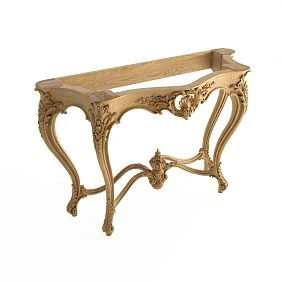
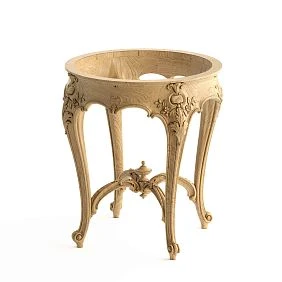
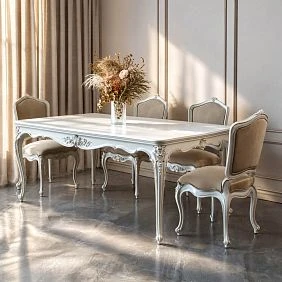
Our factory also produces:

The piano itself sets a strong horizontal line.
Even a compact instrument has a wide frontal plane. It visually "grounds" the wall and creates a stable line at the bottom. Above it, a free field begins to read, which either needs to be supported or deliberately left empty.
Get Consultation
Slat panels on the sides strengthen the center.
When a smooth zone is sandwiched between two vertically rhythmized fragments, the middle is perceived as a separate panel, even if no one specifically designed it.
The music zone has an emotional center.
Unlike a regular console or utility cabinet, a piano is associated with music, composure, home rituals, learning, and family atmosphere. Therefore, a decorative accent above it can work more appropriately than above a random piece of furniture.
Emptiness here is often perceived more acutely.
Above a sofa, an empty wall can look calm. Above a piano, especially between slats, an empty field sometimes seems unfinished. But this does not mean it must necessarily be filled with something. It only means it needs to be checked.
The main thing is not to replace the question "is an accent needed" with the question "what to cover the empty space with." NPU-165 should be bought not by emptiness, but by composition.
Why a horizontal overlay is logical above a piano
If we are talking about a wall with slat panels, it intuitively seems that any classic decor will clash with the modern rhythm of the slats. In practice, this is not always the case.
A horizontal overlay above a piano has several strong points.
It supports the silhouette of the instrument
A piano is perceived as a volume stretched in width. Vertical decor above it often breaks up the composition and can make the wall look more random. A horizontal element, on the contrary, supports the existing logic.
It balances the verticality of the slats
If there are slats on the left and right, a single horizontal NPU-165 can create a meaningful contrast of directions. This is especially valuable when, without decor, the wall seems too stretched upward.
It works as a standalone accent
Unlike a molding frame, which requires a full system, a single horizontal overlay can be a minimal intervention. This is a good scenario for an already finished interior where you don't want to rebuild complex classic decor.
It doesn't have to change the entire style of the room
One NPU-165 above the piano is not an attempt to turn a modern interior into a palace. It is a precise decorative gesture. With proper painting and calm installation, it can make the area warmer and more architectural without breaking the room's overall language.
But all these advantages only work when the scale, height, and air around the piece are not violated. So next, we need to talk not about taste, but about verification.
First, determine what exactly you are centering: the piano, the smooth section of the wall, or the entire pier.
One of the most common mistakes is centering decor on the room's random geometry. For example, along the axis between slatted panels, along the entire wall, or along the ceiling light, even though the main object of the zone is the piano.
The right question here is: relative to what should the NPU-165 be centered?
There are several options.
Along the axis of the piano itself
This is the basic and most often correct scenario. If the instrument stands symmetrically and the smooth wall section behind it is wide enough, the overlay logically centers along the axis of the piano's body.
Along the axis of the smooth field between the slats
This option is acceptable if the slatted panels form a very clear architectural frame and the piano also stands centered in that zone. Ideally, the instrument's axis and the smooth field's axis should coincide. If not, you'll have to decide what is more important: the wall's architecture or the musical object itself.
Along the axis of the entire room
This is the most dangerous path. The room may be asymmetrical, and the piano may be offset relative to the furniture, window, or passage. If you center the NPU-165 on the room rather than the instrument, the decor may visually appear "not above the piano" but simply somewhere on the wall.
Therefore, the basic rule is simple: if there is no special compositional reason, the NPU-165 should be centered primarily on the piano.
A paper template of 400 × 133 mm is mandatory before ordering
Almost all mistakes with wall decor above individual pieces of furniture occur because the size is estimated from a product photo or by internal feeling.
In the case of the NPU-165, this is especially dangerous. 400 mm may seem:
- on screen — like a large overlay;
- on a wide wall — like a small detail;
- above a compact piano — like a precise accent;
- above a wide instrument — like too modest an element.
Therefore, before purchasing, you need to make a full-size template.
How to make a template
- Cut out a rectangle 400 × 133 mm from paper or cardboard.
- Label it as NPU-165.
- Optionally, add a thin backing to roughly simulate the third dimension of 11 mm.
- Secure the template with masking tape over the piano.
- Look at it straight on, from the side, from the room entrance, and from a typical viewing distance.
- Remove the template and compare the option with and without the decor.
The most important step is the comparison. The decor should not just “look fine,” but make the composition better than it was without it.
If there is almost no difference or the template looks like a random ornamental stroke on a large surface, that is already a serious argument against making the purchase.
If after the test you understand that the idea is generally correct, then you can order NPU-165 400 × 133 × 11 mm.
400 mm against the width of a piano: how to check the scale before ordering
Here begins the real practical analysis. The NPU-165 does not exist in a vacuum — it needs to be evaluated relative to the width of the instrument.
Conditionally, several typical scenarios can be imagined.
A piano about 1400–1500 mm wide
This is a very common range. If the overlay is 400 mm long, it takes up about a quarter or slightly less than a third of the instrument's width. In this case, it most often works as a local central accent, not as a dominant decorative frieze.
A piano already 1200–1300 mm wide
On a more compact instrument, the NPU-165 becomes more noticeable relative to the body and may look more active.
A piano wider than 1500–1600 mm
If the instrument is large and the smooth wall section is also wide, a 400-mm overlay may start to be perceived as too small.
Here it is useful to calculate not only in your head, but also through a simple proportion. If the width of the piano is denoted as P, and the length of the NPU-165 is 400 mm, then you can estimate:
The proportion of the overlay relative to the tool width = 400 / P.
This is not a mathematical criterion of "fits / doesn't fit," but it's a good diagnostic of scale. If the proportion is too small, there's a risk the overlay will get lost. If it's too large, it will start to dominate the tool.
The main thing to remember: scale is assessed not only relative to the wall, but also relative to the object over which the decor hangs.
How much smooth wall should remain on the sides
After choosing the axis and scale, it's important to check the air around the piece.
If the NPU-165 is centered over the piano, it's useful to understand how much smooth wall remains on the left and right up to the slat panels or to the edge of the conditional smooth field.
If the width of the smooth zone between the slats is W, and the NPU-165 occupies 400 mm, then with symmetrical centering:
side space on each side = (W − 400) / 2.
For example:
| Width of the smooth zone | Field on the left and right when centering the NPU-165 |
|---|---|
| 700 мм | 150 мм |
| 800 мм | 200 мм |
| 900 мм | 250 мм |
| 1000 мм | 300 мм |
| 1200 мм | 400 мм |
| 1400 мм | 500 мм |
These numbers don't mean that some width is "allowed" and some isn't. They help understand the character of the composition.
- With a narrow field, the NPU-165 becomes almost the main content of the entire smooth zone.
- With a medium field, the overlay more often looks like a central accent.
- With a very wide field, there is a risk that it will get lost and fail to tie the composition together.
If after the mockup you see that there is huge empty space on the sides and the overlay looks tiny, that is a serious reason not to buy this particular scenario.
Mounting height above the piano lid: where the correct line runs
Above the piano, not only the width matters, but also the mounting height. Even an NPU-165 perfectly matched in length can look bad if hung too low or too high.
There is no universal number for all interiors. The height depends on:
- the overall height of the instrument;
- the height of the smooth field;
- the presence of lamps, paintings, mirrors, shelves;
- of the scale of the room itself;
- whether the NPU-165 is perceived as an accent specifically above the piano or as part of the overall wall.
But the logic of checking is always the same.
Too low
If the overlay almost "sits" on the instrument, there is no air left between the piano lid and the decor. Then it seems that the piece was simply glued above the piece of furniture without a compositional pause.
Too high
If the NPU-165 is raised too far, it detaches from the piano and ceases to be read as an element of the musical zone specifically. Then the decor starts to live on its own.
Correct height
A successful position is when there is a clear pause between the piano and the overlay, but the connection between them is not yet lost. In practice, this is determined precisely by a full-size paper template.
It is useful to stick the template in two or three height variations at once, take a photo, and compare. Very often, it is the photo that shows where the NPU-165 works as a deliberate center and where it looks like a random decorative strip.
Height of the smooth field above the piano: is there enough space for NPU-165
The vertical size of NPU-165 is 133 mm. Even if the length of 400 mm seems moderate, the vertical dimension needs to be checked separately.
If a relatively low smooth area remains above the piano, the overlay may end up squeezed between the instrument and, for example, a ceiling cornice, wall sconce, shelf, or simply the upper boundary of the field.
Conditionally, a similar check can be used:
if the height of the available smooth area is H, and the vertical dimension of NPU-165 is 133 mm, then when centered:
top and bottom margin = (H − 133) / 2.
But, as with width, this formula is not a rule, but a way to see the scale. If the top and bottom margins are too small, the overlay will look cramped. If they are too large, there is a risk of losing the accent.
It is especially important to consider that vertically above the piano, the composition is often perceived more sensitively than above a console or dresser. The instrument itself is the semantic center, and the decor above it should be cohesive, not stretched across emptiness.
Why a horizontal NPU-165 can balance the vertical rhythm of slats
This is one of the strongest arguments in favor of the product — but only with the right dosage.
Slat panels on the sides almost always create vertical movement. It can be soft and tactile, or it can be contrasting and very graphic. If a piano stands between such planes, the composition gets a powerful vertical frame.
One horizontal NPU-165 can play a useful role here:
- it visually "grounds" the center;
- connects the smooth field with the horizontal line of the piano;
- softens the feeling of excessive wall elongation;
- makes the music zone more complete.
But there is an important limitation. NPU-165 should balance the slats, not compete with them.
If the slat panels are already very active — dark, deep, backlit, with pronounced wood texture — the overlay should be especially delicate. Usually in this case, it is helped by:
- single application;
- absence of a molding frame;
- painting in the color of the wall or a shade close to it;
- precise centering along the piano axis.
If the slats are neutral and serve more as a textural background, the NPU-165 may read more strongly.
When the panel above the piano looks too small
This is a very important scenario, because the error here is not that the product "doesn't fit," but that it doesn't solve the scale problem.
The NPU-165 may be too small if:
- the piano is wide and massive;
- the smooth wall section between the slats is very wide;
- the room is large, with a high wall and large furniture;
- there are already large-scale elements nearby — sconces, paintings, tall slats, a large chandelier;
- The viewing distance is large, and from a normal point the overlay is almost unreadable.
On such a wall, a single 400-mm NPU-165 can look like a neat but too modest gesture. Then the buyer usually starts looking for ways to "save" the situation: move the overlay higher, add moldings, buy something else nearby, intensify the color.
But if the product initially does not hold the scale, it is better to honestly admit it right away. Within the scope of this particular article, the correct conclusion in such a case is not to buy one NPU-165 for this wall.
When NPU-165 looks too active
The reverse scenario is also possible.
The overlay can become excessive if:
- the piano is compact;
- the smooth section of the wall is small;
- the slats on the sides are already very expressive;
- on the piano there is decor, sheet music, a lamp, a vase, a metronome;
- There is already a picture, sconce, or other wall element above the tool;
- The room itself is decorated minimally.
In such a situation, even a single overlay without a frame can look like an extra decorative layer. This is especially noticeable if the product is painted in a contrasting color or if its ornament is quite active compared to the overall calmness of the room.
Here it is important not to confuse a "beautiful overlay" with a "necessary overlay." NPU-165 may be aesthetically pleasing on its own, but for a specific wall above the piano, it may be too busy.
Does NPU-165 need a molding frame
For this topic, it is fundamentally important: no, it is not necessary.
Moreover, in most scenarios above the piano between the slat panels, NPU-165 is interesting precisely because it can work independently, without a frame of moldings.
Why is this important?
One overlay is a minimal intervention
If the interior is already finished and the wall is painted, a molding system means:
- more details;
- more installation;
- more decorative density;
- more pronounced shift toward classic style;
- additional calculation of dimensions and indents.
The piano itself creates the lower support of the composition
Unlike an empty wall panel, the area above the instrument already has a strong lower object. Therefore, one horizontal overlay is often enough.
Slat panels already work as an architectural frame
If there are slats on the left and right, adding molding framing is only justified for a very good reason. Otherwise, the composition quickly becomes overloaded.
Therefore, the correct sequence is as follows:
- first check one NPU-165;
- only if it does not work, do not automatically add a frame, but reformulate the task.
Sometimes the absence of a frame is the main advantage of the solution.
If in the future it turns out that a different type of decor is needed, you can buy polyurethane decorative overlays or go to the general section and You can buy ready-made stucco matching the Baroque style. Calculate the quantity: linear meters of cornices and moldings, number of rosettes, pilasters, consoles, corner elements. Add a ten to fifteen percent allowance for trimming.. But within the scope of this article, the basic scenario is exactly this: one overlay without a frame.
How light affects the perception of NPU-165 above the piano
The third dimension of the product — 11 mm — means that the overlay creates a real relief. And relief is always closely related to light.
This is especially important above the piano, because the music area is often illuminated by several light sources at once:
- ceiling light;
- floor lamp;
- desk lamp on the piano;
- side lighting of the slats;
- with natural light from the window.
Because of this, the same NPU-165 can be perceived differently during the day and in the evening.
Side light
If light comes from the side, the relief becomes more expressive, and the shadow deeper. This can enhance the decorative effect.
Light from above
With soft overhead light, the ornament may read more delicately.
Backlighting of slats
If the slats already have pronounced light and shadow, the overlay risks being included in a very active graphic environment. Then you need to pay special attention to the overall saturation.
That is why it is advisable to check the paper template not only during the day, but also in the evening. If possible, it is useful to even make a simple three-dimensional imitation to see how the 11 mm protrusion works.
Why you shouldn't forget about what's on the piano
When people evaluate wall decor, they often look only at the wall and forget about the furniture surface. In the case of a piano, this is a mistake.
On the instrument there may be:
- music stand with sheet music;
- lamp;
- photographs;
- candles;
- vase;
- small decorative items;
- metronome;
- books or sheet music.
If all of this is already present, the NPU-165 will interact not only with the wall and the rails, but also with the top line of the piano itself.
Sometimes it turns out that wall decor above the instrument is not needed not because the overlay itself is bad, but because the compositional center is already assembled with items on the lid.
Therefore, the NPU-165 template needs to be tried on a real piano in its usual state, not on an empty instrument that will later be filled with details again.
How the style of the piano itself influences
Not all pianos look the same. And this directly affects the appropriateness of the overlay.
Modern minimalist piano
If the instrument is strict, with simple lines and minimal decor, the NPU-165 can become a soft classic accent that adds character without overloading.
Classic piano with profiling
If the instrument already has cornices, a complex base, decorative handles, or panels, the overlay should be especially neat. Otherwise, the classic language starts to repeat too intrusively.
Dark massive piano
On a heavy dark instrument, a small overlay can get lost, especially on a wide wall.
Light compact piano
Here, one NPU-165 can look more noticeable and elegant.
That is, evaluating the product only by the wall is wrong. Wall decor above a piano always has a second active participant—the instrument itself.
When a smooth wall above the piano is better than any decor
A commercial article should be able to say directly: sometimes the best result is not buying anything at all.
It is better to leave the wall smooth if:
- slat panels already provide enough architectural rhythm;
- the piano itself is beautiful and expressive;
- there is a lamp, painting, or another finished accent above;
- the overlay is lost in scale;
- the overlay looks like decorative noise;
- the area is overloaded with items on the piano;
- the interior relies on minimalism and calm;
- After the mockup, the "with overlay" option did not become clearly better.
This is a very important conclusion: a smooth wall is not a problem in itself. Sometimes it is the pause between the slats and the instrument that makes the composition more expensive than an attempt to add another ornamental layer.
What else to check before deciding to buy
Geometry and light are not everything. Before making the decision "1 piece or 0", you need to check a few more things.
Ceiling height
On high walls, one small decorative element can look too modest.
Presence of paintings or a mirror in adjacent areas
If there is already active wall decor nearby, the NPU-165 should fit into the overall language, not become a random foreign motif.
The role of the piano in the room
If the instrument is the main object of the area, the overlay may be appropriate. If the piano is secondary and the main accent of the room is already elsewhere, additional decor behind it may not be needed.
Viewing distance
If a wall is usually seen from afar, you need to check whether NPU-165 is readable from the main viewpoint.
Coloring
The same overlay can sound different:
- in the color of the wall;
- in the color of the slats;
- in the color of the piano;
- in contrast.
For the first test, the safest option is to try the idea as a relief accent in the color of the wall or close to it. Contrast immediately increases the risk of overload.
Practical algorithm for checking NPU-165 before ordering
Let's bring all the logic into one working order.
Step 1. Photograph the entire wall
The frame should include the piano, slat panels, the top of the wall, and the nearest lighting.
Step 2. Measure the width of the piano
This is needed to estimate the scale of the overlay.
Step 3. Measure the width of the smooth section between the slats
If the overlay is placed in this field, you need to understand the actual size of the available area.
Step 4. Make a template 400 × 133 mm
Secure it above the piano.
Step 5. Find the axis
Check where it looks better: in the center of the tool or in the center of the smooth field. If the axes coincide — great. If not — decide what is more important.
Step 6. Check several heights
Don't limit yourself to one line. Often a difference of 50–100 mm completely changes the impression.
Step 7. Look at the template during the day and in the evening
Light affects the relief more than it seems.
Step 8. Evaluate the area together with real objects on the piano
Don't test an empty surface if in real life it is not empty.
Step 9. Compare two states: with the template and without it
This is the main decision-making stage.
Step 10. Make a decision
If the NPU-165 makes the composition convincingly better, buy one unit. If not, decline.
Only after this does it make sense Buy NPU-165 400 × 133 × 11 mm.
Three typical scenarios with different outcomes
Scenario 1. Piano 1450 mm, smooth zone 900 mm, calm slats
With this geometry, the NPU-165 usually works as a clear central accent. There is enough space on the sides, the mounting height is easy to adjust, and the slats serve as an architectural background.
Result: high probability that 1 × NPU-165 will be a suitable purchase.
Scenario 2. Piano 1550 mm, smooth zone 1400 mm, high wall
Here, the overlay may fit geometrically perfectly, but get lost in scale. Especially if the instrument is in a large room and is perceived from a distance.
Result: within a single scenario, there is a high probability of refusal — 0 × NPU-165.
Scenario 3. Compact piano, active slats, items on the lid, and a wall sconce
Even if the size of the overlay itself fits, the overall decorative density may be too high.
Result: it's better to leave the wall smooth — 0 × NPU-165.
These scenarios are important because they show different reasons for rejection: loss of scale, overload, and lack of necessity.
Mistakes when choosing NPU-165 above the piano
Buying from the product card without a mockup
Why it happens: 400 mm in photos seems like a universal size.
Why it's dangerous: the overlay turns out to be too small or too busy.
How to avoid: full-size template.
Centering on the wall, not on the piano
Why it happens: there's a desire to "subordinate" the decor to slat panels.
What is dangerous: the overlay hangs not over the instrument, but as if separately.
How to avoid: first determine the axis of the piano.
Count only the length, forgetting about the height of 133 mm
Why it occurs: the buyer sees only the horizontal accent in the product.
What is dangerous: vertically, the overlay turns out to be squeezed.
How to avoid: check both axes.
Ignore the 11 mm relief
Why it occurs: a flat template seems sufficient.
What is dangerous: in reality, the shadow and volume turn out to be stronger than expected.
How to avoid: imitate at least an approximate volume.
Evaluate the empty musical zone
Why it happens: fitting occurs before the final arrangement of items.
Why it's dangerous: after adding notes, lamps, and decor, the composition becomes overloaded.
How to avoid: check the area in its actual state.
Trying to "save" a failed overlay with a frame or additional details
Why it happens: it's hard to give up a product you like.
Why it's dangerous: a local accent turns into decorative overload.
How to avoid: if one NPU-165 doesn't work, honestly admit it.
What exactly to add to the cart after fitting
This article essentially has only two outcomes.
| Check result | Cart | Cost |
|---|---|---|
| NPU-165 improves the composition above the piano | 1 pc. | 2 320 ₽ |
| NPU-165 gets lost, overwhelms, or is unnecessary | 0 pcs. | 0 ₽ |
This is an important script rigidity. We do not lead the reader into endless selection and do not push them to buy at any cost.
If one NPU-165 passed the check — great, the task is solved. If not — it's better to leave the wall smooth or separately look for another decorative approach.
If after the refusal you want to look at alternatives by product type, you can Buy decorative polyurethane overlays. If you need a wider selection of wall solutions, you can order polyurethane wall decor.
When NPU-165 is especially appropriate
One horizontal overlay above the piano usually works best in the following cases:
- the piano is truly the center of the zone;
- there are slats on the sides, but they are not overly active;
- a well-readable smooth field remains above the tool;
- a wall without decor looks slightly unfinished;
- the tool itself is quite concise;
- items on the lid do not overload the composition;
- the overlay is readable from the main viewpoint;
- it can be painted calmly, without contrasting aggression.
In this scenario, NPU-165 gives the music zone a bit more architecture and composure.
When it's better to refuse NPU-165 right away
There are also situations where the fitting time can be reduced because the risk of failure is initially high.
It's better to approach the idea with caution right away if:
- a painting, mirror, or lamp already hangs above the piano;
- the smooth wall section is too wide relative to the 400 mm length;
- slat panels are very active and already look like the main decor;
- the piano is small, and the ornament seems heavy for the room;
- the overall interior style is minimalist;
- the owner wants to add an overlay just because "the place is empty."
Even in such cases, a template can be made, but the likelihood that a smooth wall will be better increases.
How to use the article for commercial benefit of the site
From a commercial logic standpoint, this topic is good because it not only talks about molding but also guides the reader through several relevant directions at once.
If NPU-165 is suitable, the logical first link is buy a horizontal carved decorative overlay NPU-165 made of polyurethane.
If a person understands that the product type suits them, but they want to look at analogues, a transition to the section is appropriate buy horizontal polyurethane overlays.
If the task is broader and the buyer is just getting into the topic of wall decor, a general transition is logical: You can buy ready-made stucco matching the Baroque style. Calculate the quantity: linear meters of cornices and moldings, number of rosettes, pilasters, consoles, corner elements. Add a ten to fifteen percent allowance for trimming..
If the reader came through the context of slat panels, the article naturally connects with the main product category as well: buy wall slat panels or buy slat panels for walls for interior finishing.
Such a route looks natural:
slat panels → smooth center → music zone → specific NPU-165 → general polyurethane decor.
Conclusion: NPU-165 is needed not for any wall, but only for one where a single overlay truly assembles the music zone
The horizontal carved decorative overlay NPU-165 400 × 133 × 11 mm is a clear and fairly delicate wall accent that theoretically fits well on the wall above a piano between slat panels. Its strength lies precisely in the fact that it can work as a single piece, without a molding frame and without a heavy decorative system.
But you should buy it not based on the product card, but on the actual composition.
First, determine the piano's axis and the width of the smooth field. Then make a template of 400 × 133 mm, check the installation height, evaluate the light, items on the instrument, and the connection with the slats. Compare the wall's condition with and without the template.
If NPU-165:
- does not get lost in scale;
- does not look too active;
- truly balances the vertical of the slats;
- gathers the zone above the piano;
- does not require additional decorations for its own sake,
then buying 1 piece for 2,320 ₽ is justified.
If the overlay does not make the composition unequivocally better, the right decision is not to buy it for that wall.
The main conclusion is simple: an empty wall above the piano is not a problem in itself. NPU-165 is needed only when, after a full-size trial, it truly turns the smooth field between the slat panels into a strong and cohesive musical composition.
FAQ
Can NPU-165 be placed above an electronic piano instead of a classical one?
Yes, the verification logic remains the same. But an electronic instrument often has a lighter and more modern visual character, so the decorative overlay should be evaluated especially carefully.
Is it mandatory to paint the NPU-165 in the wall color?
No, it is not mandatory. But for the first test, a calm color matching the wall or a close shade usually gives the most objective result.
Can the NPU-165 be combined with a sconce above the piano?
Only after a separate check. If the sconce is already becoming the main vertical accent, a horizontal overlay may be redundant.
Will the NPU-165 work if the piano is not strictly centered between the slat panels?
This scenario requires a separate fitting. Usually, priority remains with the instrument's axis, but you need to see whether this disrupts the architectural logic of the entire wall.
Can two NPU-165s be used side by side?
This is a different compositional task. This article only considers one overlay as an independent central accent.
Is a molding needed under the NPU-165?
In this topic — no, it is not mandatory. The main scenario is based on the independent use of a single overlay.
What to do if the overlay seems too small?
Don't try to "save" it with random framing. If one NPU-165 doesn't hold the scale of the wall above the piano, it's better to skip it in this scenario.
Can NPU-165 be hung higher, almost up to the ceiling?
Technically it's possible, but then it stops being read as an element of the piano zone specifically. Usually this weakens the meaning of the composition.
Will NPU-165 work if there's already a large lamp on the piano?
It depends on the scale of the lamp and the overall saturation. Very often a large lamp already creates enough of an accent, and the overlay becomes redundant.
Should NPU-165 be purchased in advance, before installing the slatted panels?
Better not. For such a product, trying it out at real scale in the finished environment is especially important.