
























Article Contents:
- Floating furniture: why it needs not only hidden but also beautiful support
- Three things a decorative bracket under furniture does
- What is a furniture bracket and how is it different from a regular mounting angle
- Furniture bracket vs shelf bracket: is there a difference?
- Where to use wooden brackets in furniture: a complete scenario map
- Floating cabinet in the hallway
- Console under the mirror
- Open furniture shelves and bookcases
- Decorative TV stand
- Countertop against the wall: kitchen, study, hallway
- Furniture niche
- Decorative support for the side of furniture
- Bracket for a cabinet: when it's needed and what it provides
- Wall-mounted cabinet: why visible support
- How a bracket changes the perception of a cabinet
- Technical requirements for a bracket for a wall-mounted cabinet
- Console under a mirror: the most beautiful scenario for carved brackets
- Classic pair: console and mirror
- What does an ideal bracket-mounted console look like
- Console and bracket dimensions: proportion
- Mirror style and bracket style: must speak the same language
- Wooden bracket under the countertop: practical for kitchen, study, and hallway
- Narrow countertop in the hallway
- Workstation by the window in the study
- Decorative countertop in a niche
- Bar counter in the kitchen
- Load on the bracket under the countertop: honest calculation
- How to choose the size of a furniture bracket: practical guide
- Bracket depth
- Vertical part height
- Distance between brackets
- Weight and load
- Bracket thickness and its own strength
- Which style to choose: from classic to modern minimalism
- Classic and Baroque: carved bracket with ornament
- Neoclassicism: profiled bracket without excess
- Provence and shabby chic: warm wood with floral ornament
- Country and rustic: massiveness and naturalness
- Library and study: massive wooden supports
- Modern classics and Scandinavian style: form without unnecessary ornament
- Mistakes when choosing furniture brackets
- Metal corner in the visible area
- Too small bracket under a massive cabinet
- Not accounting for the thickness of the countertop or body
- Forgetting about symmetry
- Mixing Different Carving Styles
- Relying only on a decorative bracket without proper fastening
- Buying brackets without considering the material
- Wooden bracket and wooden decor: systemic thinking
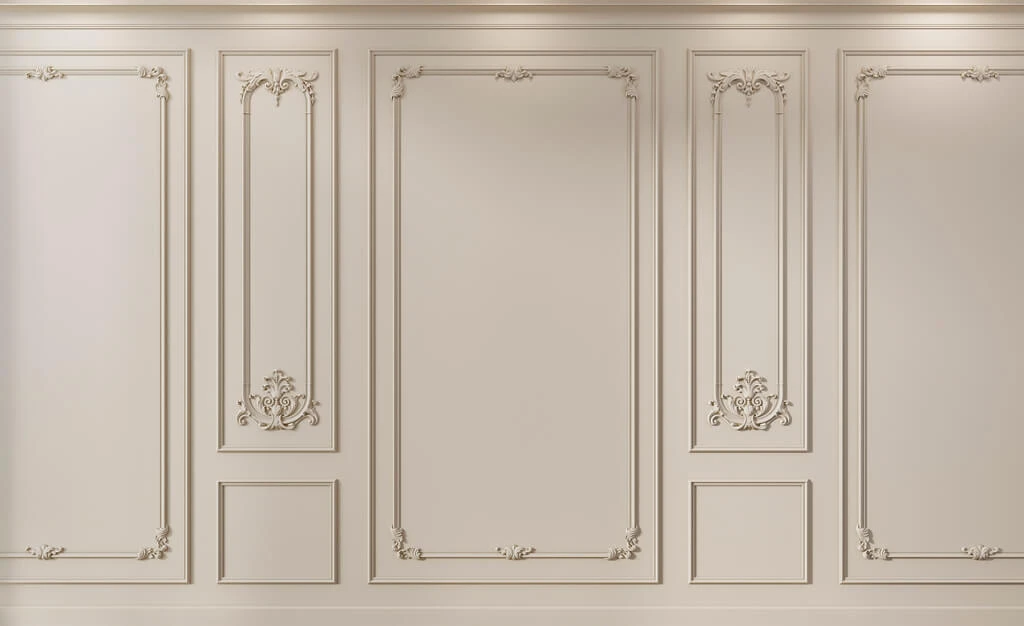
- Connection with moldings and cornices
- Connection with carved decor
- Connection with molding
- Polyurethane decor and wooden brackets: working together
- FAQ: answers to popular questions about furniture brackets
- Can a wooden bracket be used for a hanging cabinet?
- How is a furniture bracket different from a shelf bracket?
- Will a carved bracket suit modern furniture?
- Can wooden brackets be installed under a countertop against the wall?
- Which brackets are best for classic furniture?
- How many brackets are needed under a cabinet 600 mm wide?
- Can a wooden bracket be painted to match the furniture color?
- About the Company STAVROS
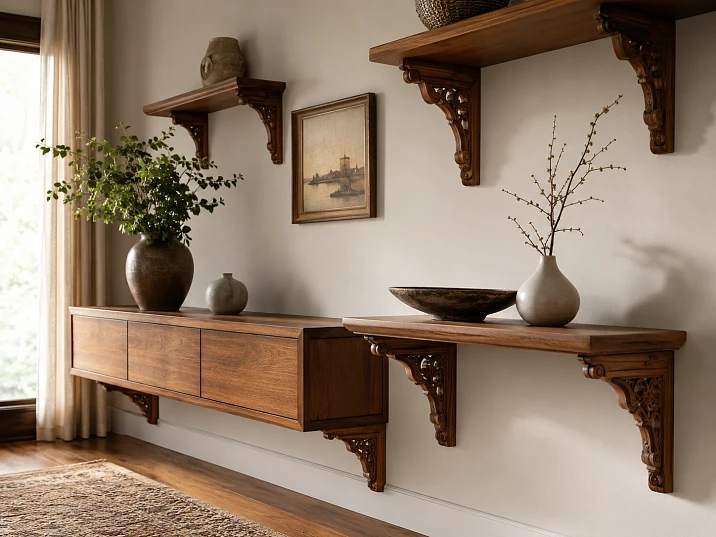
Suspended furniture is an architectural technique that can do a lot. It frees up the floor, visually lifts the room, simplifies cleaning, and creates a feeling of lightness. But there is a nuance that designers know, and most buyers discover only after renovation: a hanging cabinet, mounted on hidden brackets without visible support, sometimes looks as if it was simply screwed to the wall and left unfinished. It exists in the space as a random object — without roots, without architectural logic, without character.
This is where An interior is built from details. You can use hidden fasteners, minimalist shelves on invisible brackets – and get a functional but characterless space. Or you can choose quality — not as a technical crutch, but as a full-fledged decorative detail. A wooden bracket under a cabinet is a visible support that says: "I am not here by chance. This furniture is designed to stand exactly in this place." This is the difference between furniture that is hung and furniture that is placed — with character, with an architectural foundation.
In this article — everything about how to choose wooden brackets for furniture: for a cabinet, console, countertop, open shelving, and any other structure where visible support should work for the interior.
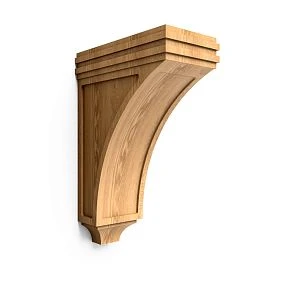
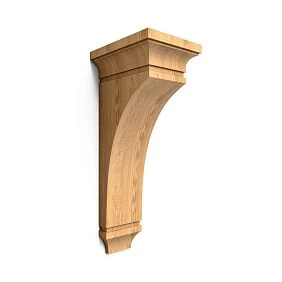
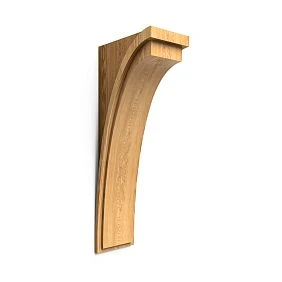
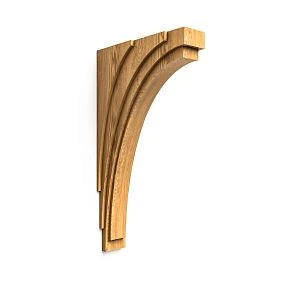
Floating furniture: why it needs not only hidden but also beautiful support
Hidden mounting is a technically sound solution. Special metal guides, anchor bolts, mounting plates hidden inside the furniture body — all of this reliably holds a hanging cabinet or console. But visually, such a structure remains without a base.
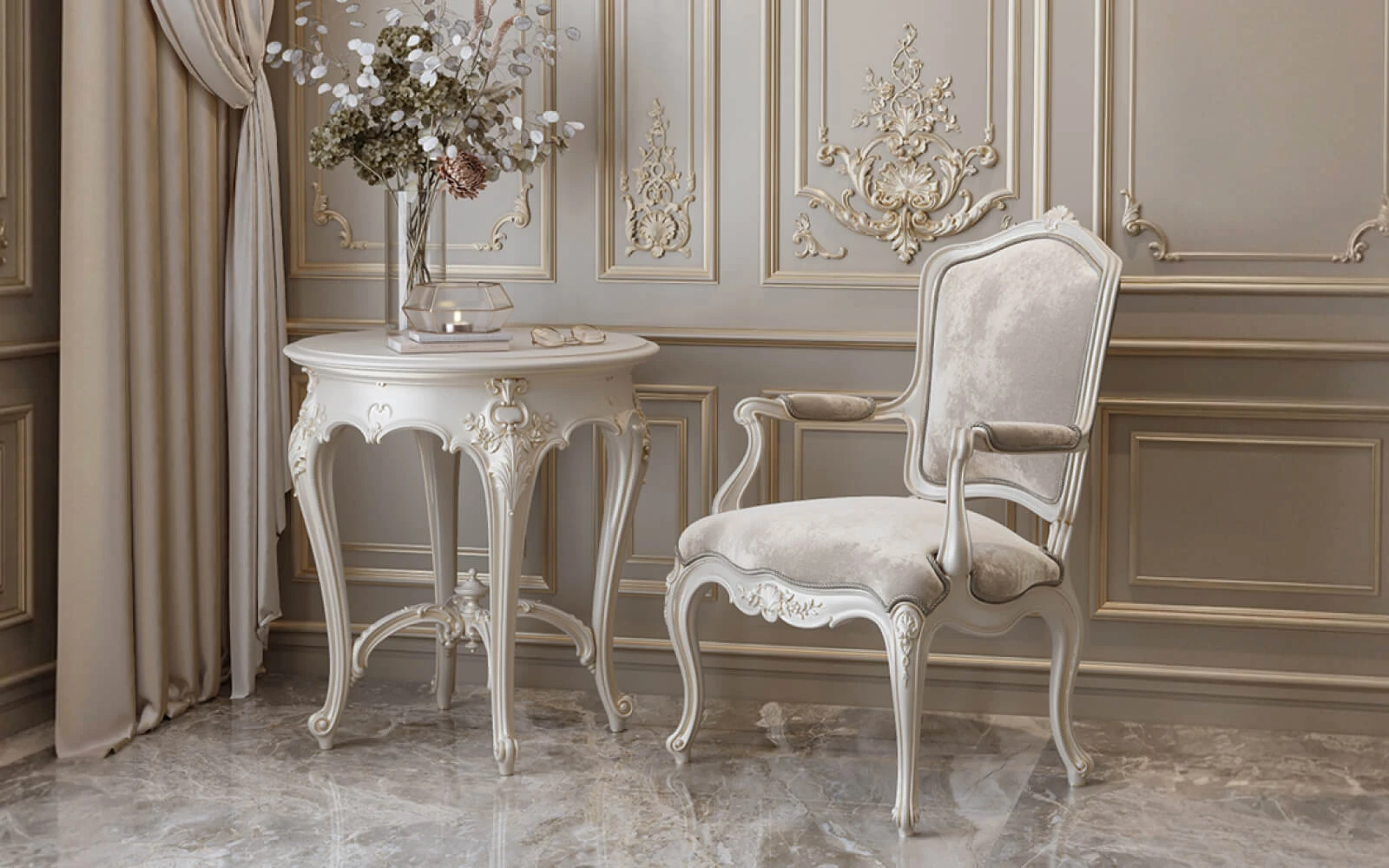
Look at a hanging cabinet in the hallway: a beautiful veneer body, nice handles, an even gap to the floor — and yet something is subtly missing. The furniture seems to hang in the air without explanation. For some styles — minimalist, ultra-modern — this is exactly what is needed. But for classic, neoclassical, Provence, country, and modern classic — this "groundlessness" becomes an aesthetic problem.
A wooden bracket solves this problem elegantly. It does not hide — it shows itself. It takes on the role of a visible architectural link between the wall and the furniture. It explains the logic of the structure — and at the same time decorates it.

Three things a decorative bracket under furniture does
Adds a visual base. The cabinet no longer seems "glued" to the wall — the bracket creates a feeling of a well-thought-out structure with support.
Enriches the interior composition. A carved or profiled wooden bracket is a decorative element that adds detail and warm material to the interior.
Works as a style marker. The shape and ornament of the bracket allow you to "read" the style: classic, Provence, country, neoclassical — each style has its own ornamental language, and the bracket speaks it.
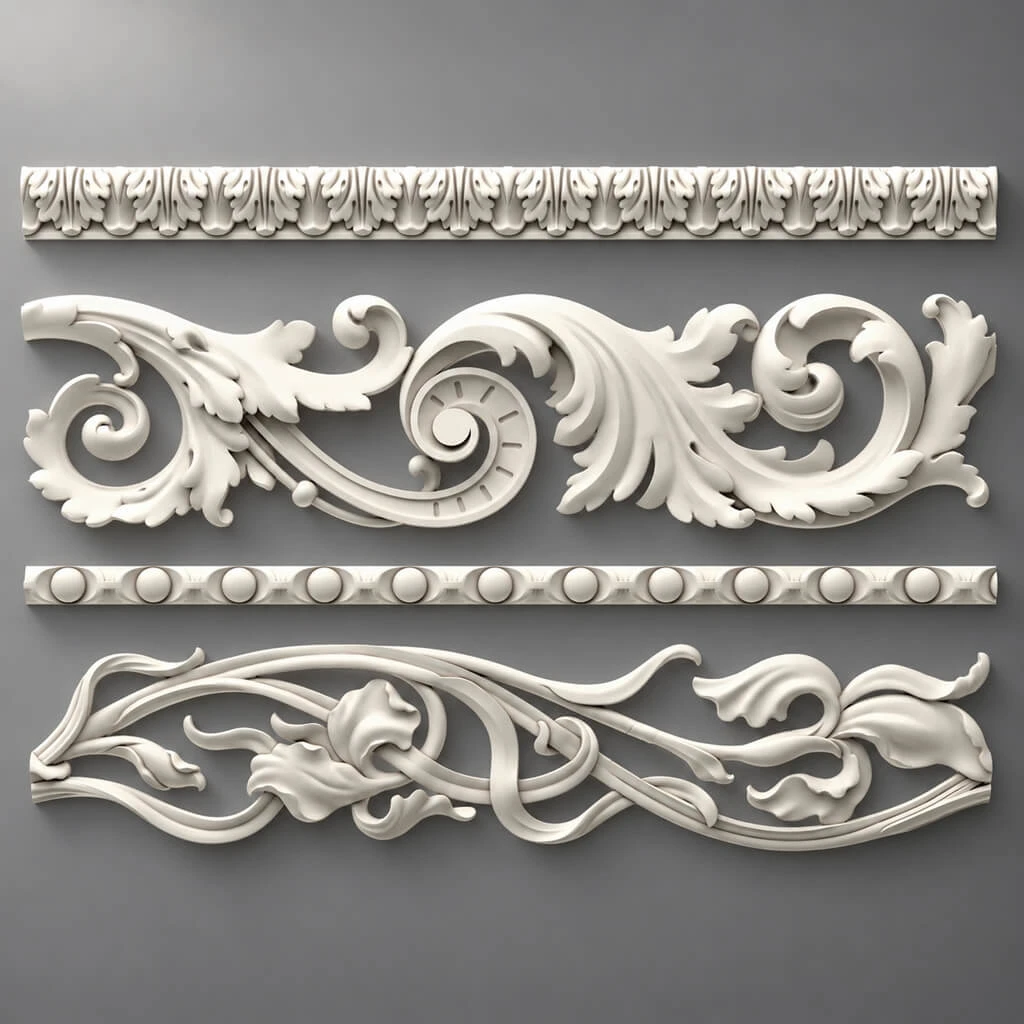
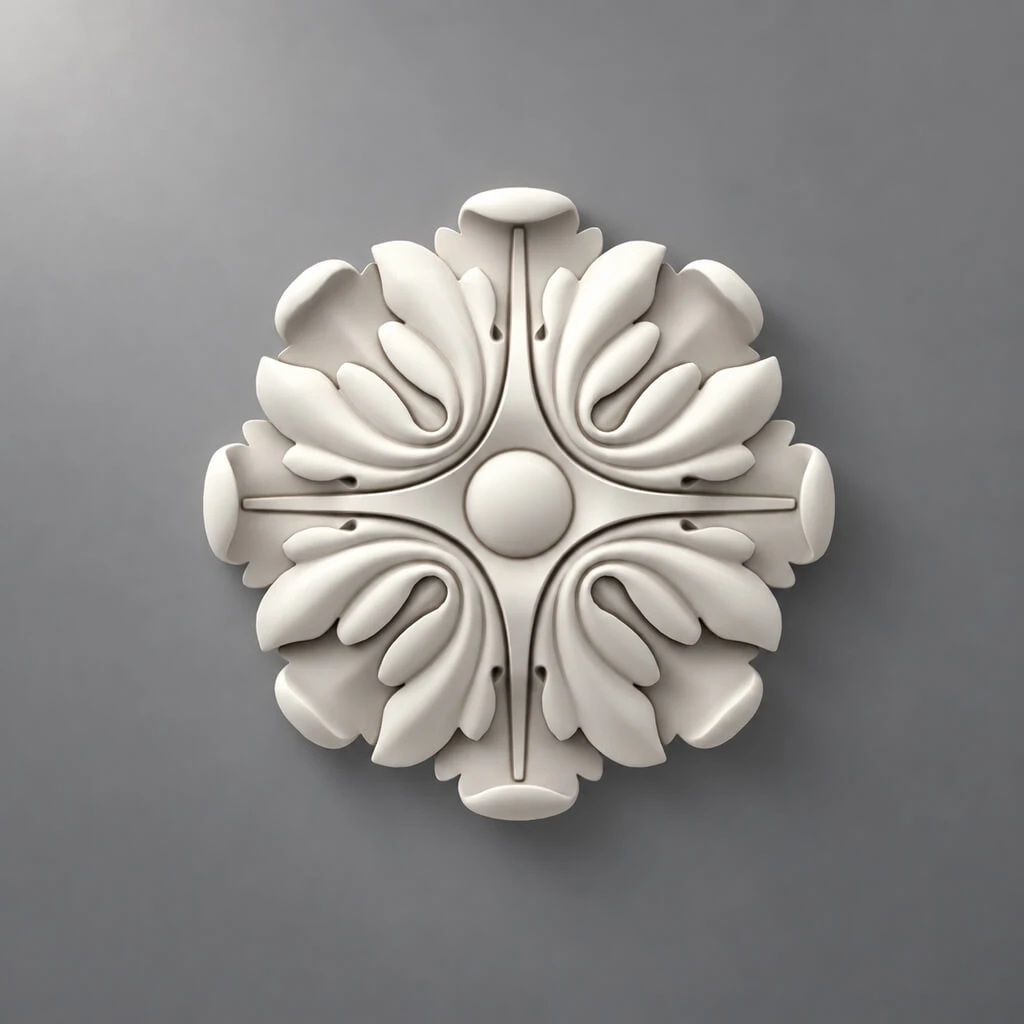
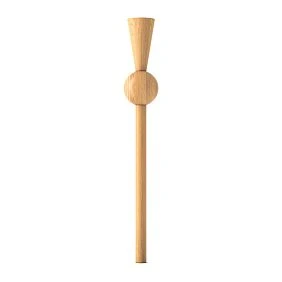
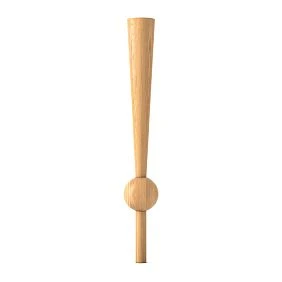
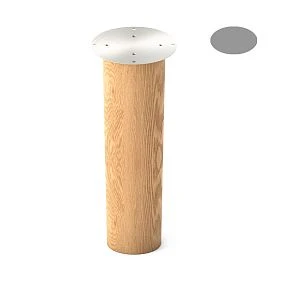
Our factory also produces:
What is a furniture bracket and how is it different from a regular mounting angle bracket
This is the most frequently asked question — and the answer is not always obvious until the first comparison.
A mounting angle bracket is a technical part. Stamped metal, standardized holes, maximum functionality at minimal cost. Its job is to hold. Its aesthetics are zero. It is designed for concealed installation: behind the facade, inside a cabinet, under the cladding. Where no one sees it.
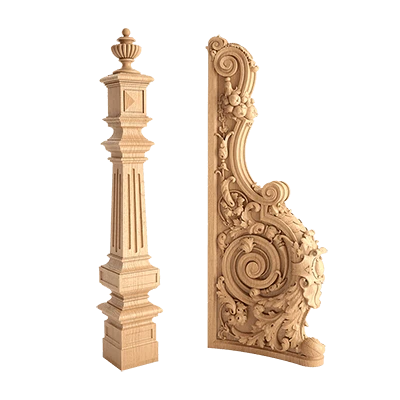
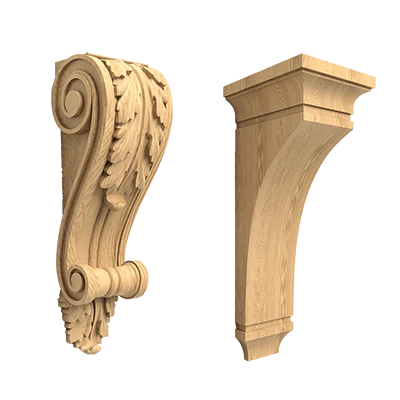
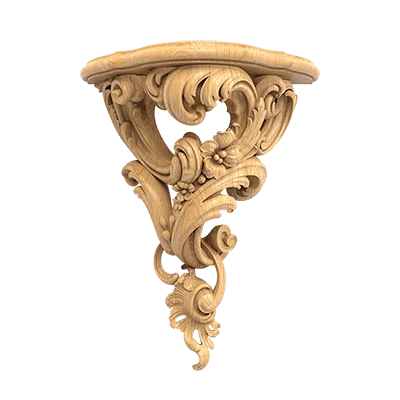
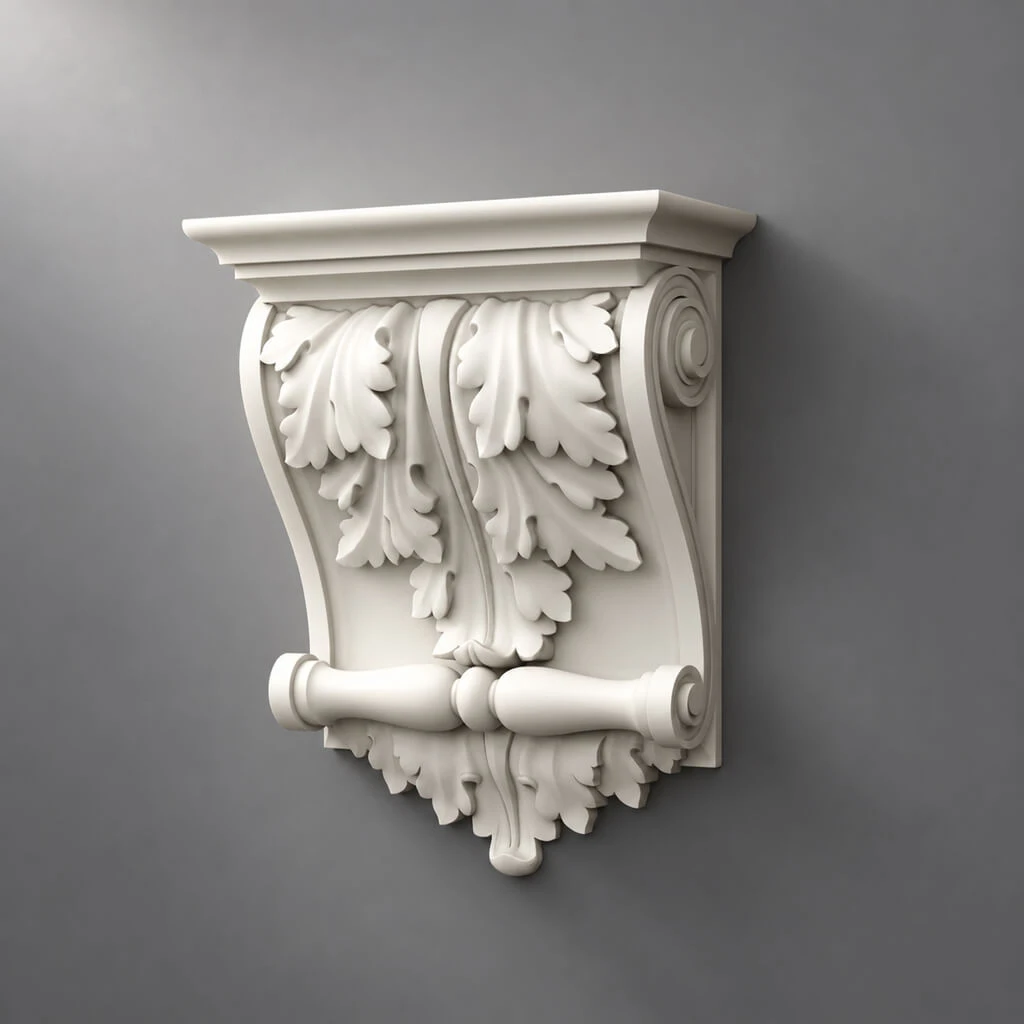
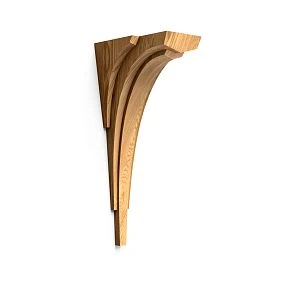
Decorative furniture bracket is a completely different story. It is created to be seen. It carries a dual load: structural (supports furniture or a countertop) and decorative (works as part of the interior composition). The shape of the bracket can be profiled, carved, architectural — with ornamentation of leaves, scrolls, geometric motifs.
Wooden bracket adds what a metal angle bracket fundamentally lacks: the warmth of natural material, tactile surface quality, and a visual connection with wooden furniture, wooden floors, and wooden interior details.
Get Consultation
Furniture bracket vs shelf bracket: is there a difference?
There is no strict classification — the same wooden bracket can work under a shelf, under a console, or as a side support for a cabinet. The difference is more functional than nomenclature.
Shelf bracket — attached to the wall and supports a horizontal shelf from below. The load is directed downward.
Furniture bracket — can function both as a shelf bracket and as a side support for a furniture body, as well as a decorative detail within a furniture structure. The load may be directed downward or sideways.
In the context of this article, we consider both options — but the emphasis is on furniture applications.
Where to use wooden brackets in furniture: a complete scenario map
Wooden Brackets — a surprisingly versatile element. Here is a full overview of where and how they work.
Wall-mounted cabinet in the hallway
The hallway is the first and last impression of a home. A wall-mounted cabinet here is almost a must-have detail: it frees up the floor for cleaning, creates storage for shoes, keys, and small items. But a bare suspended box — even made of good material — looks utilitarian.
Two wooden brackets under the cabinet in the hallway solve several problems at once: they visually "ground" the structure, add a warm material to an area often overloaded with function, and create a complete decorative look. For a hallway in a classic or neoclassical style, this is exactly the level of detail that distinguishes a well-thought-out interior from a randomly assembled one.
Console under a mirror
A console with a mirror is a classic furniture pair that appeared in European interiors back in the 17th century and has not lost its relevance. A narrow tabletop on wooden brackets under a large mirror is one of the most refined and accessible interior design techniques. More details about this scenario are in a separate section below.
Open shelving and bookcases
An open shelf is an architectural element of a room. If the shelf boards rest on wooden brackets rather than hidden metal pins, the shelf takes on a different quality. The rhythm of identical wooden brackets creates unity and transforms a functional storage system into a decorative object.
Decorative TV stand
The TV area is one of the most challenging spots in an interior: a large black screen dominates the wall and requires compensation in the form of thoughtful framing. A wall-mounted TV stand on wooden brackets is one way to 'seat' the stand in the interior so that it looks like part of the architectural composition, rather than a random TV stand.
Countertop against the wall: kitchen, study, hallway
A narrow countertop mounted on the wall with wooden brackets is a multifunctional solution. In the hallway, it's a place for bags and keys. In the study, it's a compact workspace by the window. In the kitchen, it's an additional work surface or a bar counter against the wall. Brackets for countertops are covered in a separate section below.
Furniture niche
In a decorative niche with lighting, a wooden bracket under a shelf or a small cabinet looks like a meticulously detailed architectural element. It is especially expressive in niches with side lighting, when shadows from the bracket's carving create an additional decorative effect.
Decorative support for the side of furniture
This is a less obvious but very interesting scenario: a wooden bracket is mounted not under a horizontal surface, but on the side of a furniture body — as a side decorative support or as an architectural 'pylon' connecting the furniture to the wall. This technique is used in portals, buffet areas, and decorative shelving with architectural details.
Cabinet bracket: when it is needed and what it provides
A separate discussion about the cabinet bracket — because there is a specific aspect here that is worth examining in detail.
Cabinet on the wall: why visible support
A wall-mounted cabinet is attached to the wall using a hidden method. The mounting system is reliable — but visually, the cabinet "hangs." This is acceptable in a modern minimalist interior. But in an interior with wooden details, moldings, classic decor — a "floating" cabinet without visible support looks like an unfinished thought.
The bracket for a wall cabinet solves this problem: it is installed under the cabinet body, creates a visible support point, and simultaneously decorates the lower plane. The cabinet stops "hanging" — it "stands," resting on architecturally designed brackets.
How a bracket changes the perception of a cabinet
This is almost a psychological effect. The human eye seeks the logic of construction: what supports what. When a cabinet has visible support — even if decorative — the mind calms down. The structure is "explained." This creates a sense of reliability and solidity, even if the load-bearing function of the bracket is minimal.
Technical requirements for the bracket for a hanging cabinet
If the bracket bears a real load (cabinet with contents), it is important:
-
Bracket depth — at least 75% of the cabinet depth
-
Wall fastening — matches the material (anchors for concrete, special bolts for aerated concrete, embedded parts for drywall)
-
Wood species — dense: oak or beech, not soft pine
-
Number of supports — at least two, for cabinet width over 800 mm — three
If the bracket is purely decorative (the cabinet is held by hidden mounting, the brackets only imitate support), the technical load requirements are waived — but the fastening to the wall and to the cabinet must be neat and reliable.
Console under a mirror: the most beautiful scenario for carved brackets
This scenario deserves a separate analysis — because it is ideal in all respects.
Classic pair: console and mirror
A mirror in the hallway or bedroom is an architectural detail that requires framing. When there is nothing under the mirror, it looks like a randomly hung object. A console tabletop under the mirror gives it a base—an architectural pair that turns the mirror from just a mirror into an interior object.
And if the console is not held by hidden brackets, but by a pair of wooden carved brackets —the entire composition takes on the character of an item made in a workshop. It looks expensive, thoughtful, and individual.
What an ideal console on brackets looks like
A narrow oak tabletop (depth 250–350 mm, thickness 30–40 mm). Two carved wooden brackets on the sides—made of the same wood or in the same color. Above the console—a mirror in a wooden frame or a frame with wooden details. Optional—small decorative items on the console: a vase, a candle, a book.
This is not an expensive or labor-intensive project. But the result is a console that looks like a piece of a custom-made furniture set.
Dimensions of the console and brackets: proportion
For a console with a depth of 280–300 mm: bracket depth 220–250 mm. For a console with a depth of 350 mm: bracket depth 280–300 mm. The height of the vertical part of the bracket is 180–250 mm, depending on the thickness of the tabletop and the overall scale of the mirror.
A bracket that is too small under the console will look fragile and unconvincing. One that is too large will overwhelm the delicate look. Proportion is key.
Mirror style and bracket style: must speak the same language
A mirror in a gilded frame with stucco ornamentation — a bracket with a classic floral pattern will suit it. A mirror in a simple wooden frame — a bracket with a profiled shape without complex carving will suit it. A mirror in a metal frame in loft style — a wooden bracket here will provide a warm contrast if you choose a laconic form without decor.
Wooden bracket under the countertop: practical for the kitchen, study, and hallway
This is one of the most functional scenarios — and one of the most underestimated. A countertop on wooden brackets against the wall is both a beautiful and very practical solution.
Narrow countertop in the hallway
The hallway is rarely spacious. A narrow countertop (depth 200–250 mm) on two wooden brackets is a place for a bag when you come home. A place for keys, for glasses, for children's things. This small horizontal surface radically changes the functionality of the hallway.
And it doesn't take up space — it hangs on the wall. Wooden bracket under the countertop here a compact, neat one is chosen — proportionate to a small narrow hallway.
Workplace by the window in the study
A compact "table" by the window is a narrow countertop on wooden brackets attached to the windowsill or the wall under the window. Depth 400–500 mm is enough for a laptop and a coffee mug. This is a workspace without legs — the space underneath remains free.
Brackets for a wall-mounted table in this case, choose quite powerful ones: the countertop bears the load from the user, equipment, and books. The bracket depth is at least 80% of the countertop depth. The wood species is oak or beech.
Decorative countertop in a niche
A niche in the wall + a countertop on brackets = a built-in "table" that looks architectural. In a study — a desk. In the kitchen — a bar counter. In the bathroom (in this case, the brackets must be coated with moisture-resistant varnish) — a shelf under the mirror.
Bar counter in the kitchen
A narrow countertop by the wall or by the kitchen island — like a bar counter for breakfasts and quick snacks. Wooden brackets here are chosen to match the kitchen style: for a classic kitchen — with ornamentation, for a Scandinavian one — laconic profiled ones.
Load on the bracket under the countertop: honest calculation
A countertop for a workspace carries a significantly larger load than a decorative console. A person can lean on it, place heavy equipment. This is important to consider:
-
The bracket depth is at least 80% of the countertop depth
-
The step between brackets is no more than 500–600 mm
-
For countertops longer than 1200 mm — at least three brackets
-
Fasteners — anchor bolts, not regular dowels, into the load-bearing wall
-
Wood type — only dense wood: oak, beech, ash
How to choose the size of a furniture bracket: a practical guide
This is the most technically rich section. Here are specific numbers and rules, not general words.
Bracket depth
The horizontal part of the bracket (depth) should be at least 70–80% of the depth of the supported surface. If the cabinet or countertop is 300 mm deep, the bracket should have a horizontal shelf of at least 210–240 mm.
Deviating from this rule by reducing the size creates a risk: under lateral load or load at the front edge, the surface may tip over. Even if this does not happen structurally, a visually "short" bracket looks unreliable.
Height of the vertical part
The vertical part of the bracket (height) should be proportional to:
-
The thickness of the tabletop or the depth of the cabinet
-
The overall scale of the furniture
-
The height of the room and ceilings
Guidelines:
-
For a thin console (tabletop 25–30 mm): vertical part 150–200 mm
-
For a medium tabletop (30–40 mm): vertical part 180–250 mm
-
For a massive cabinet (body height 200–300 mm from the bottom plane): vertical part 200–300 mm
Distance between brackets
-
Up to 600 mm surface width: two brackets with an indent of 80–120 mm from the edges
-
600–1000 mm: two brackets, spacing 400–600 mm
-
1000–1500 mm: three brackets evenly spaced
-
More than 1500 mm: three to four brackets with spacing no more than 500 mm
Weight and load
| Application type | Recommended Wood Species | Minimum bracket depth | Wall mounting |
|---|---|---|---|
| Decorative console, light items | Beech, pine | 70% of surface depth | Dowels |
| Cabinet without load | Beech, oak | 75% | Anchors |
| Worktop | Oak, beech | 80% | Anchors into the load-bearing wall |
| Heavy cabinet with contents | Oak | 80–85% | Anchors + embedded parts |
Bracket thickness and its own strength
A wooden bracket made of dense wood with a thickness of 40–60 mm (at the thinnest section) can withstand significant load. Thin decorative brackets (20–30 mm in section) are intended primarily for decorative function — they should not be relied upon as a load-bearing structure under significant weight.
Which style to choose: from classic to modern minimalism
Style bracket for furniture — this is not an aesthetic preference in a vacuum. It is a choice that should be determined by the interior style, the character of the furniture, and the ornamental language of the entire space.
Classic and Baroque: carved bracket with ornament
A classic interior is an architectural system with clear rules. Cornices, moldings, pilasters, fluting — everything speaks the language of the order system. a carved wooden bracket with an acanthus leaf, with an S-shaped profile, with a rocaille shell — an organic detail of this system. It looks like part of the architecture, not an attached piece.
In a Baroque interior, the bracket can be especially rich: scrolls, leaves, sculptural relief. It is mounted under a console in a formal room, under a shelf in a paneled study, under a buffet cornice.
Neoclassicism: a profiled bracket without excess
Neoclassicism is a restrained version of classicism. Less ornament, more form. A wooden bracket for a neoclassical interior — with a clear geometric profile, with delicate carving or none at all, but with an expressive silhouette. It is 'smart' decor: it exists but does not shout.
The finish for neoclassicism is matte varnish or oil with tinting in light or dark walnut. The wood species is oak. The shape is a strict L-shaped profile with a smooth curve in the lower part.
Provence and shabby chic: warm wood with floral ornament
Provence is cozy France, wildflowers, worn surfaces, beige and cream colors. The bracket here — with a soft floral ornament, in white or cream paint, with a light patina on the carving details. Under a console top made of bleached wood — an ideal pair.
Shabby chic goes even further: intentional 'wear', traces of time, layers of paint. A wooden bracket with white paint, through which the wood shows, is an absolutely authentic detail for this style.
Country and rustic: massiveness and naturalness
Country and rustic are interiors in which wood is the main material. Beams, boards with knots, rough textures. wooden bracket here — massive, made of pine or oak with visible texture, coated with oil or stain. The ornament is rustic: weaving, simple geometric motifs, natural forms.
Library and study: massive wooden supports
Bookshelves in the study require brackets with visual weight — proportionate to heavy books and a serious space. Large wooden brackets under shelves in the study are an architectural technique that works in libraries, reading rooms, and home studies in the English style.
Modern classic and Scandinavian style: form without unnecessary ornament
In a modern interior with wooden details, a wooden bracket is a warm accent. The form is concise, without complex carving. The profile is smooth. The wood is light oak or beech under clear oil. This is a "Scandinavian" approach to a classic element: the function remains, the decor is minimal, but the presence of warm natural material is tangible.
Mistakes when choosing furniture brackets
These mistakes are common. Let's analyze each one — not to scare, but to help avoid them.
Metal corner bracket in a visible area
This is not a mistake of choice — it is a lack of choice. Using a stamped metal corner bracket in a visible area under a console or cabinet means consciously lowering the quality of the interior. This is only acceptable where the bracket is guaranteed to be hidden.
Too small bracket under a massive cabinet
Under the body of a pedestal 800 mm wide and 400 mm deep, there are two brackets 150 mm deep — they look like small legs under a heavy body. Visually — unstable. Structurally — a risk under load. The 70–80% depth rule must not be violated.
Do not account for the thickness of the countertop or body
If the countertop is 40 mm thick and the bracket is designed for a slab of 18–20 mm, there will be a mismatch at the connection point. Before ordering, it is necessary to clarify the thickness of the support plane the bracket is designed for.
Forget about symmetry
Two brackets under one surface — they must be mirror images. If the bracket is not symmetrical in shape (has a "face" and a "back"), you need to order a pair: left and right. Buying two identical asymmetrical brackets gives an ugly result: both "look" in the same direction.
Mixing different carving styles
A baroque bracket with curls under a minimalist white pedestal is a style conflict. A geometric bracket under a console in a Provencal interior is also a conflict. The ornament of the bracket must belong to the same style vocabulary as the entire interior.
Rely only on a decorative bracket without proper fastening
If the pedestal or countertop bears a real load, a decorative bracket is not enough — a reliable mounting system is needed. The bracket can be both beautiful and load-bearing — but the fastening to the wall must match the load. For brick and concrete walls — anchor bolts. For aerated concrete — special chemical anchors. For drywall — embedded elements installed before the cladding is mounted.
Buy brackets without considering the material
A wooden bracket made of soft pine under a work countertop is a solution that will make itself known in a few years: the soft wood can compress at support points and develop cracks. For load-bearing applications — only dense species: oak, beech, ash.
Wooden bracket and wooden decor: systems thinking
A wooden bracket works best not as a single element, but as part of a wooden decor system.
Connection with moldings and cornices
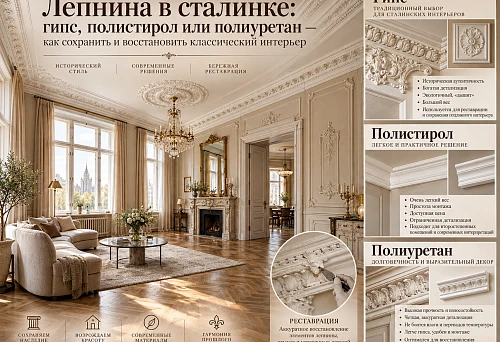
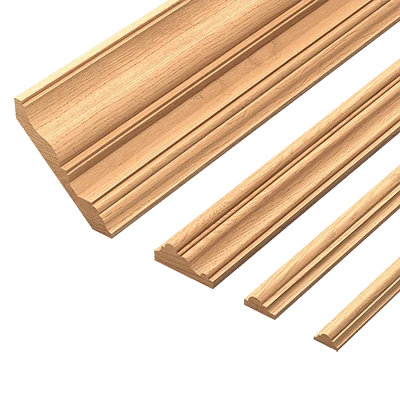
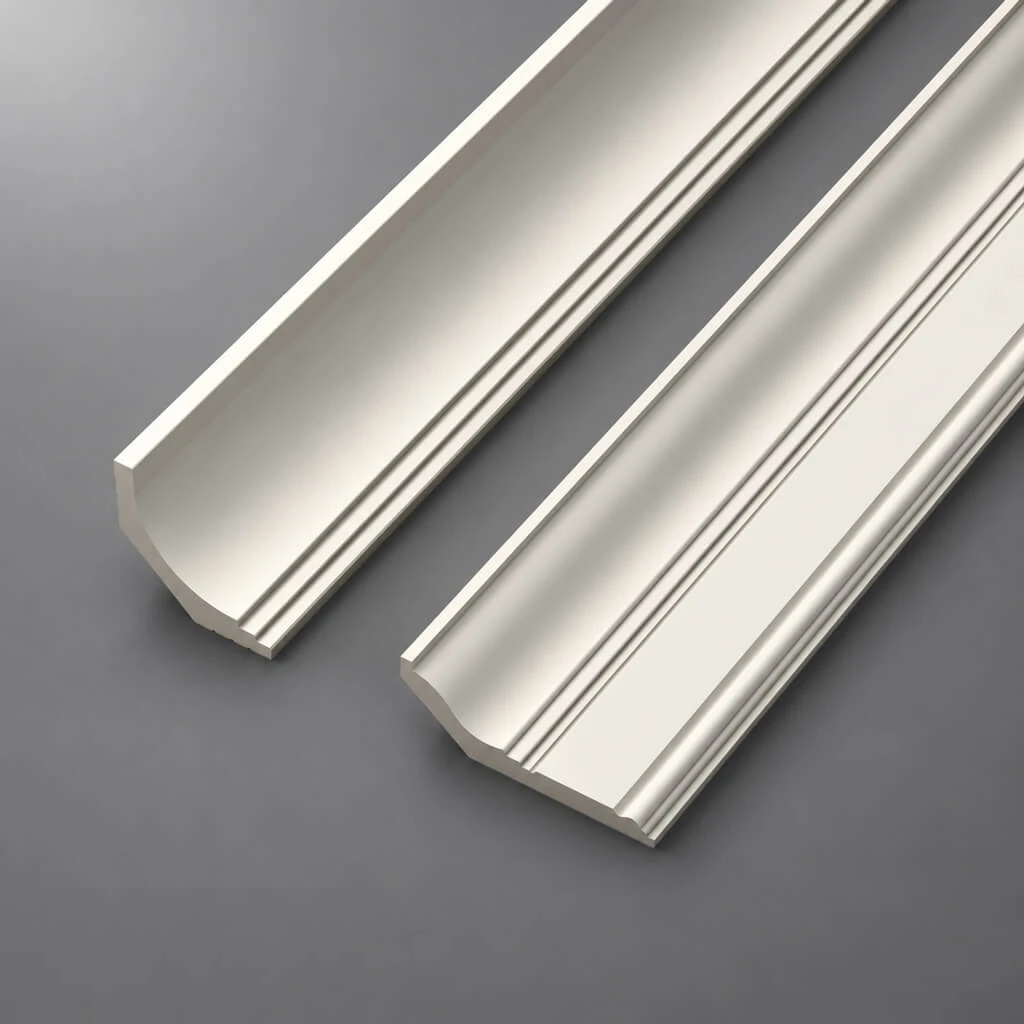
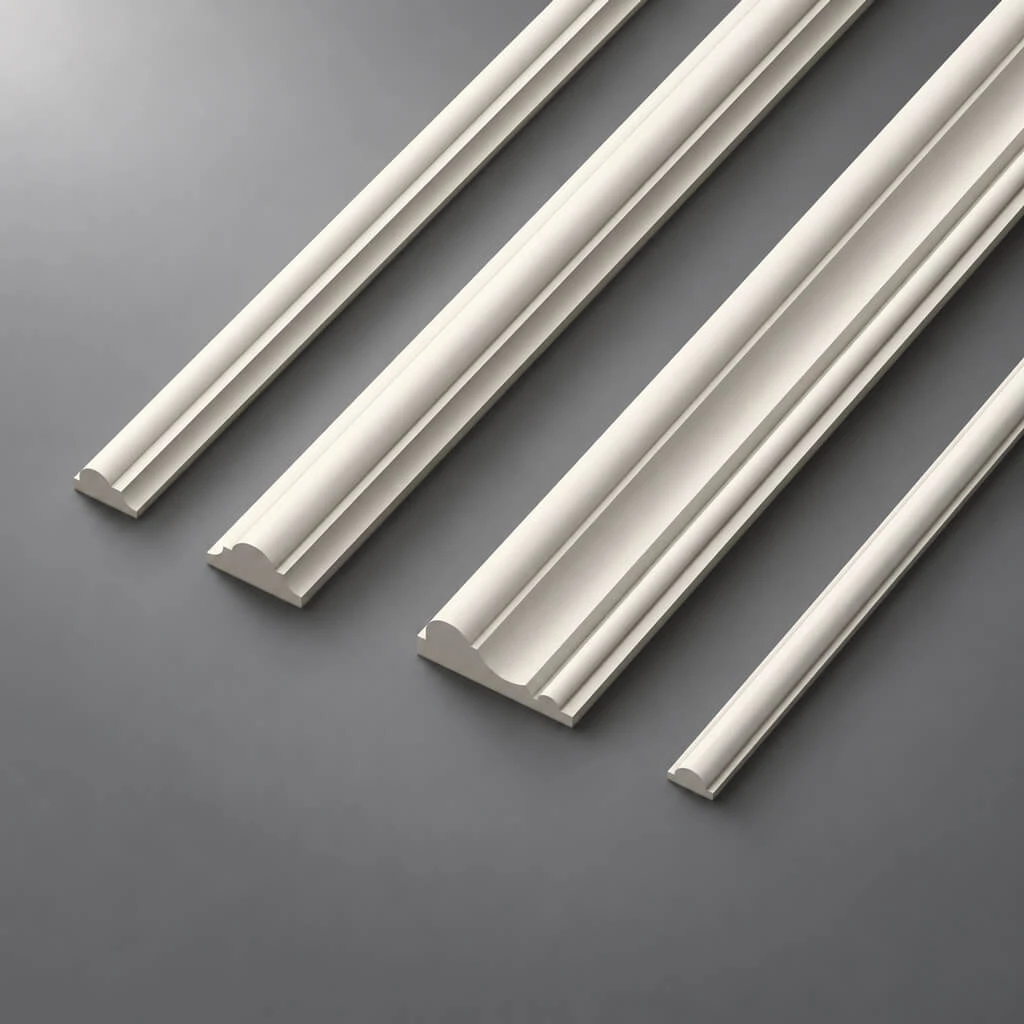
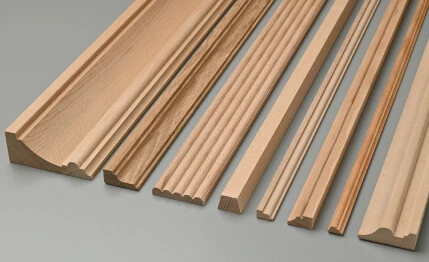
Wooden moldings and cornices — these are horizontal lines of the interior. The bracket is a vertical and diagonal element. When they are made from the same wood species and in the same ornament style, a decorative system emerges that is perceived as a single whole.
Connection with carved decor
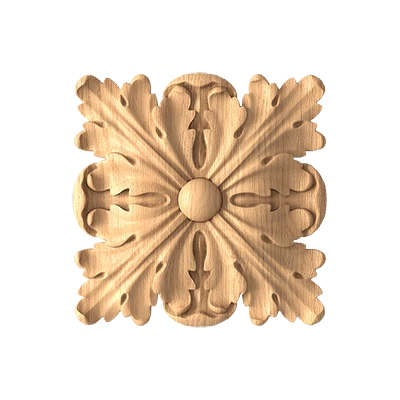
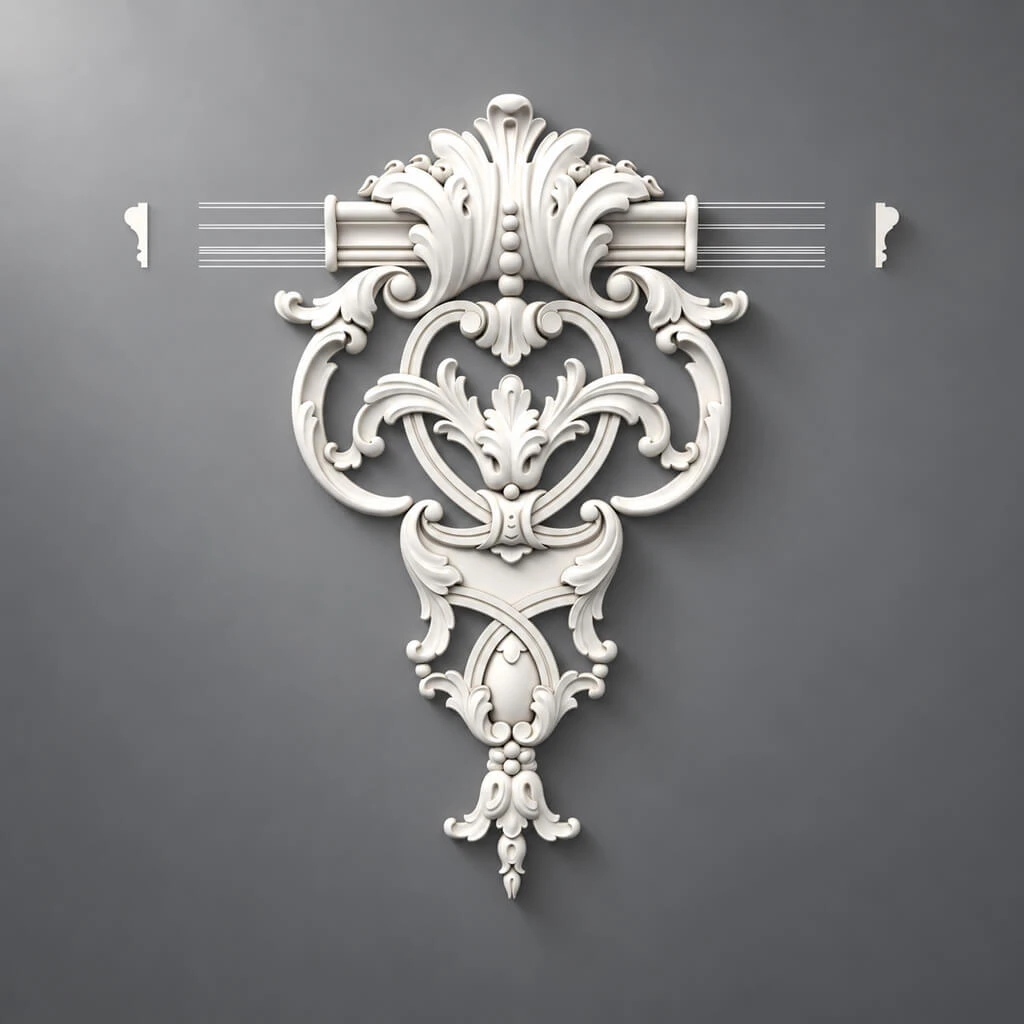
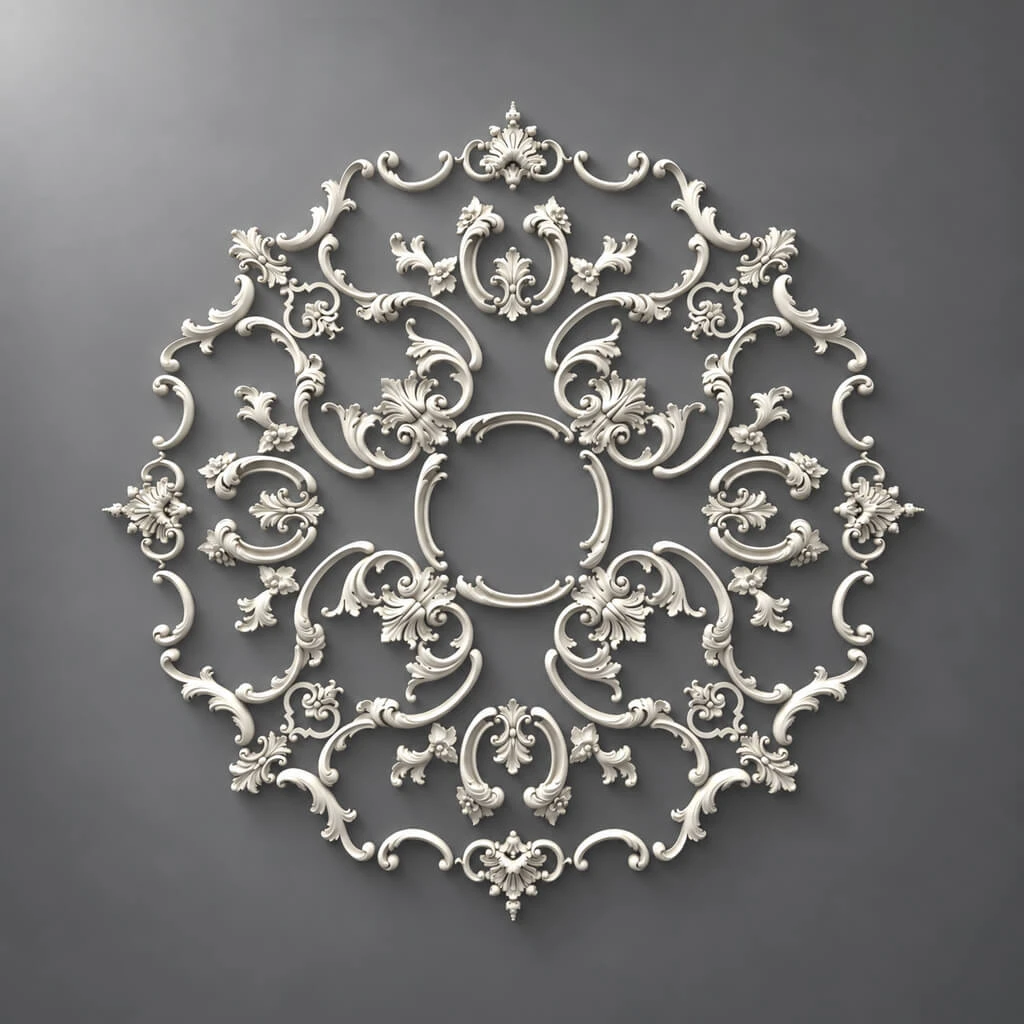
Carved furniture decor — overlays, rosettes, corner elements — speaks the same language as brackets. If furniture facades are decorated carved inlays, and the brackets under the console have a similar ornament — the furniture and console are perceived as part of one set.
Connection with linear moldings
Wooden trim — baseboards, architraves, threshold strips — creates a framing system for the room. A bracket made from the same wood species, with the same tinting as the linear moldings, fits organically into this system and is perceived as a planned detail, not a random purchase.
Polyurethane decor and wooden brackets: working together
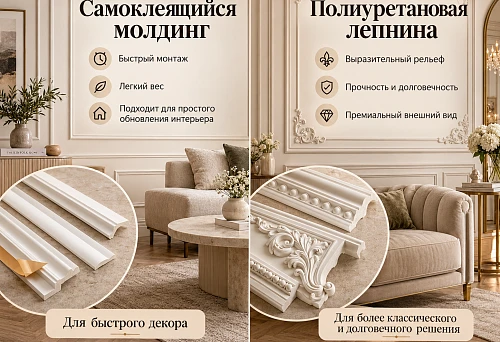
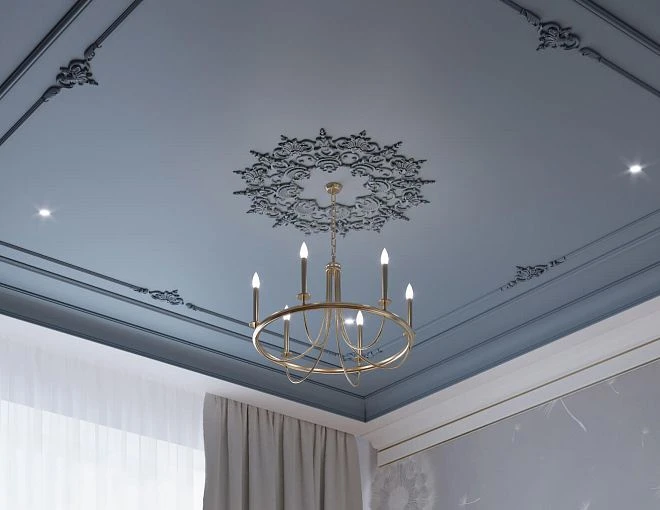
In mixed interiors where there are Polyurethane Items — ceiling cornices, stucco rosettes, architectural details — wooden brackets can work alongside each other with coordinated painting. If everything is painted in a single color, the difference in materials disappears. This technique is especially popular in classic interiors with white decor: wooden and polyurethane details under white enamel look like a single ensemble.
Polyurethane brackets — a separate direction for architectural and ceiling tasks. Their advantages are lightness and moisture resistance. The STAVROS catalog includes, among others, vertical polyurethane brackets — for non-standard architectural applications.
FAQ: answers to popular questions about furniture brackets
Can a wooden bracket be used for a hanging cabinet?
Yes. A wooden bracket can be either a load-bearing or decorative element under a hanging cabinet. If the bracket bears a real load, a dense wood species (oak, beech), the correct size (depth at least 75% of the cabinet depth), and reliable wall fastening are needed. If the bracket is decorative, load requirements are removed, but installation must be careful.
How is a furniture bracket different from a shelf bracket?
There is no fundamental classification difference — the same wooden bracket can work under a shelf, under a cabinet, or as a decorative support for a console. The difference lies in the context of use and priorities: for a shelf, horizontal support is important; for furniture applications, the bracket is more often considered as part of a furniture or interior composition.
Will a carved bracket suit modern furniture?
Yes, if you choose the right shape. For a modern interior — a laconic profiled bracket without complex ornamental carving. The wooden material itself serves as a warm accent in a modern space — carving is not necessary here, an expressive silhouette is enough.
Can wooden brackets be installed under a countertop against a wall?
Yes. This is one of the best use cases: a narrow countertop in the hallway, a workspace by the window, a bar counter in the kitchen. Countertop brackets should have a depth of at least 80% of the countertop depth and be attached to a load-bearing wall with anchors.
Which brackets are best for classic furniture?
For classic, neoclassical, and solid wood furniture — wooden carved brackets made of oak or beech. The ornament should match the specific style: acanthus for high classic, plant ornament for neoclassical, floral for Provence.
How many brackets are needed under a cabinet 600 mm wide?
Two brackets with an indent of 80–120 mm from the edges of the cabinet. If the cabinet is wider than 800–1000 mm — three brackets with equal spacing. With significant weight of the contents, the step between supports should be no more than 400–450 mm.
Can a wooden bracket be painted to match the furniture color?
Yes. Unpainted wooden brackets accept any type of finish: white and colored enamel, tinting, matte or glossy varnish, oil. Before painting — sanding and priming. The result is a bracket that is indistinguishable in color from the furniture and is perceived as part of it.
About the company STAVROS
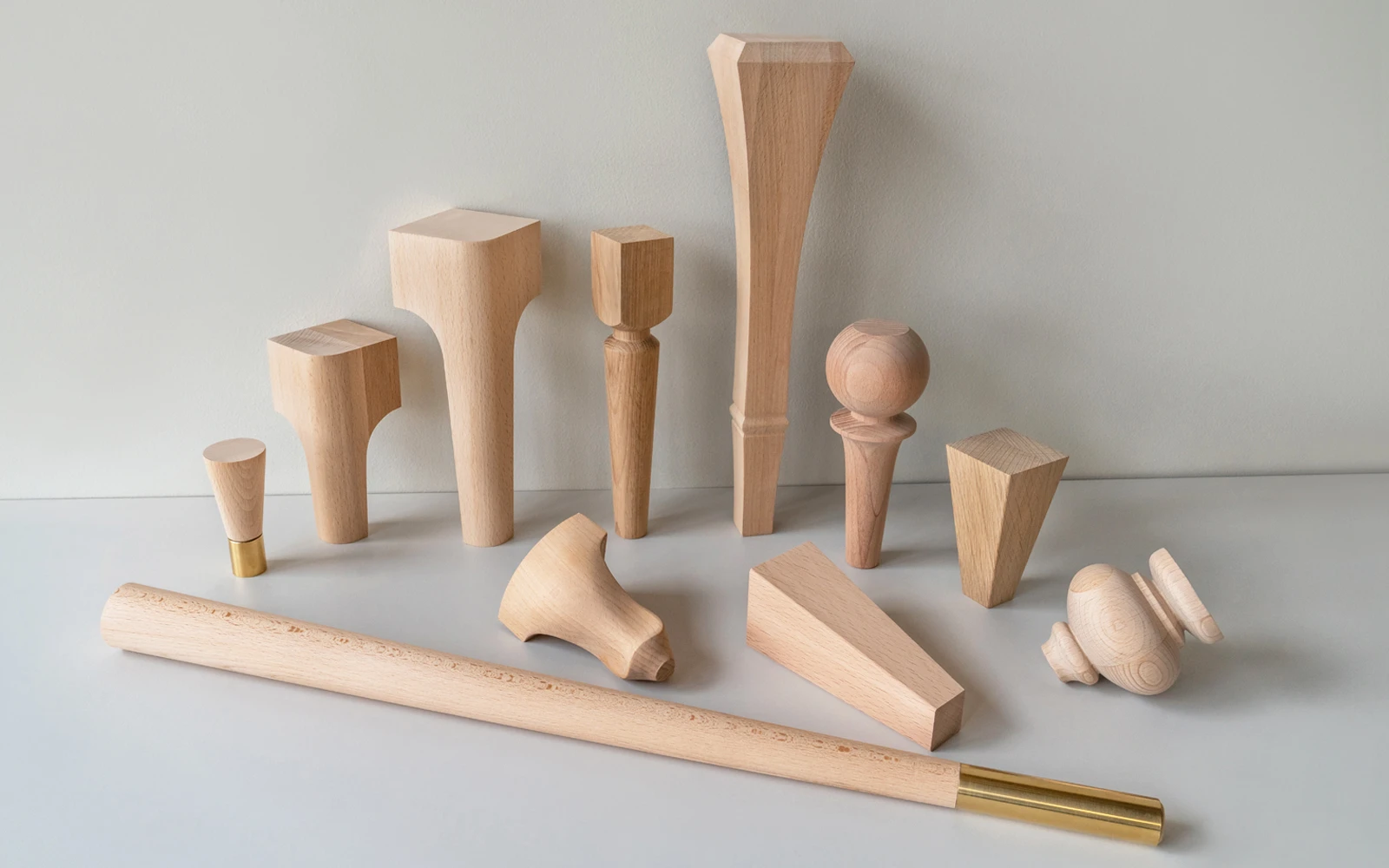
STAVROS is a Russian manufacturer of wooden decor and solid wood products for interiors and furniture. The company's catalog includes a complete system for working with wooden brackets and decor: wooden furniture brackets made of solid oak and beech, Polyurethane brackets for architectural tasks, Wooden moldings and cornices, Carved furniture decor, applique, moldings and the entire range solid wood products.
STAVROS decorative elements are designed to be system-compatible: brackets, moldings, overlays, and rosettes are coordinated by style groups. This allows you to complete interior projects from a single source — without style conflicts or selecting details from different places. Full catalog of polyurethane products and solid wood products are available on the STAVROS website.