Article Contents:
- N-349L/R or N-350L/R: short answer
- What are paired overlays and why L and R are needed
- L — left part
- R — right part
- Closed composition
- Open composition
- One overlay instead of a pair
- Four elements
- 200 mm — local size
- 411 mm — architectural size
- The difference shows in pairs
- Background changes the impression
- Viewing distance
- For door panel corners
- For a Wardrobe
- For the buffet
- For a Dresser
- For local wall decor
- Commercial choice
- For a tall door
- For a furniture portal
- For the library
- For wall panels
- For a Gothic composition
- Commercial choice
- Print at 1:1 scale
- Make left and right template
- Use multiple copies
- Add handle and socket
- Look from afar
- Photograph the layout
- N-349 in the upper corners
- N-349 on the sides of the central socket
- N-350 on a standard door leaf
- Handle and grip zone
- Doors in one corridor
- One pair N-350
- Two pairs N-349
- Four N-350
- Connection with the opening architecture
- View from the hall
- One N-349
- Pair on one door
- Pair on two facades
- N-350 on furniture door
- Repeat on cabinet
- Central section
- Paired tall doors
- Side sections
- Glass display case
- Bookshelves
- On sides of mirror
- Above the headboard
- In the study
- In the niche
- In a long corridor
- Direction towards the center
- Direction outward
- Top and bottom
- On two doors
- On four corners
- Laser level and template
- There is a central socket
- There is a door panel
- There is a mirror or panel
- Paired furniture doors
- Need to visually expand the field
- The center is already saturated
- The composition continues with moldings
- Two symmetrical zones
- First, choose the overall scale
- Axis of socket and axes of pair
- Free space between elements
- Commercial route
- For N-349
- For N-350
- Ornament check
- Commercial route
- Frame around the central field
- Continuation of ornament direction
- Scale for N-350
- Length calculation
- Commercial route
- One part
- Two parts
- Four N-349
- Four N-350
- Mixed scheme
- Measure not the entire door, but the useful area
- Compare the field around N-349
- Compare the field around N-350
- Check the corners
- Estimate the distance to the edge
- Hand trajectory
- Handle as part of symmetry
- Long bracket
- Button
- Lock and keyhole
- If beech is confirmed
- If a duplicate is confirmed
- If the material differs
- Surface Preparation
- Overlays in the color of the door
- Contrasting decor
- Pair uniformity
- Lay out the parts on a horizontal surface
- Transfer the axes to the door
- Use temporary fixation
- Check the diagonals
- Take photos
- Approve the marking
- Wooden door
- MDF facade
- Solid furniture front
- Painted wall
- Boiserie
- Finishing Before or After Installation
- Left and right parts of the same series
- Compact and large size
- Overlay and door portal
- Overlay and molding
- Rosette and paired overlay
- Ready-made wooden decor and plastic sticker
- Need to finish the corners of a regular door
- Need to decorate a tall front door
- Need to decorate two cabinet doors
- Need to highlight the central section of the library
- Need to decorate the wall above the dresser
- Need to assemble a door following a ready-made solution example
- Need a composition for a commercial interior
- Need to replace one damaged overlay
- Consider 200 mm as a universal size
- Buy only one side for a symmetrical composition
- Place too close to the handle
- Repeat on each cabinet door without an overall layout
- Copy a finished door without recalculating
- Consider N-349 a reduced copy of N-350
- Choosing a large series just for greater expressiveness
- Not making a full-size template
- Installing four parts without checking
- Use on any tall door
- Choosing a socket that is too small
- Mount only on the decorative layer of the wall
- Full surface photo
- Exact part numbers
- Quantity and location of each part
- Pattern direction
- Related elements
- Material and finish
- Control dimensions
- Post-installation check
- Reference after assembly
- How are N-349L/R different from N-350L/R?
- How much larger is N-350 compared to N-349?
- What size are N-349L and N-349R?
- What size are N-350L and N-350R?
- Do I need to buy the left and right pads together?
- Can I install only one pad?
- How to determine the direction of the pattern?
- Can I swap L and R?
- Which pads are suitable for a standard interior door?
- What to choose for a tall door?
- Will N-350 fit a furniture front?
- Can overlays be installed on a wall panel?
- How to combine N-349 with R-061?
- How to combine overlays with R-076?
- How to select K-057 trim?
- How to make a full-size template?
- What distance should be left to the handle?
- What to choose for enamel — beech or oak?
- When is it better to tint the decor?
- How to attach wooden overlays?
- Can N-349 and N-350 be mixed?
- Where to buy N-349L/R?
- Where to order N-350L/R?
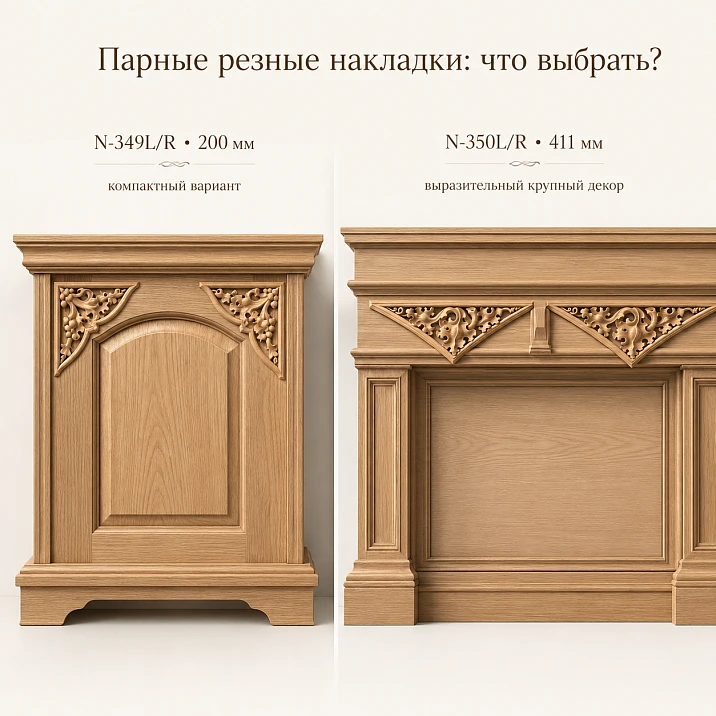
Comparison of two mirror series of different scales for door, furniture, cabinet, and wall panel
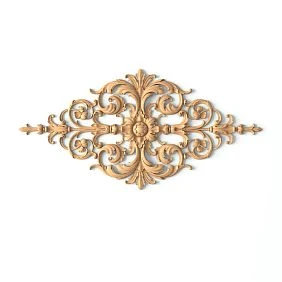
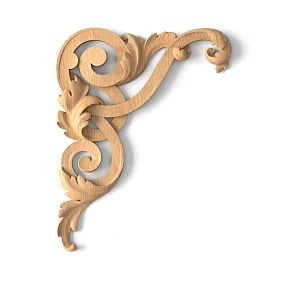
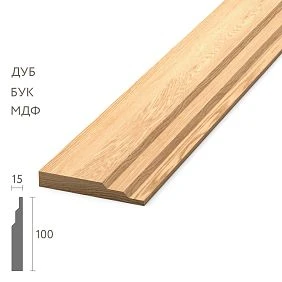
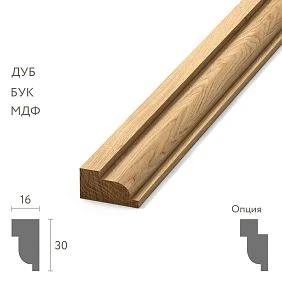
N-349L/R or N-350L/R: short answer
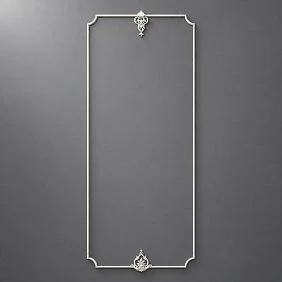
N-349L and N-349R are worth buying if you need a compact paired composition of 200 mm for corners of a door, furniture facade, sideboard, cabinet, or frame decor. Such a pair fits more easily next to a handle, central rosette, and molding, without taking up most of the free space. N-350L and N-350R are better chosen for a tall door, large library section, furniture portal, or wall panel where the decor should be readable from a distance. The confirmed size of each overlay in the large series is 411 mm, meaning it is more than twice as large as N-349. Before ordering, print the 200 and 411 mm outlines at actual size, apply them to the surface, and only then decide whether you need a local corner accent or a dominant symmetrical composition.
Buy N-349L Buy N-349R Buy N-350L Buy N-350R View the finished door with N-349L and N-349R
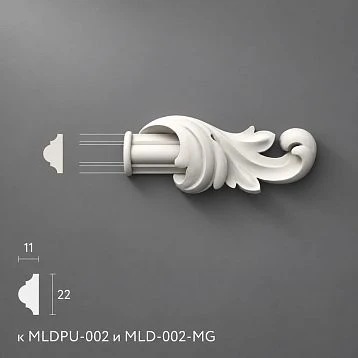
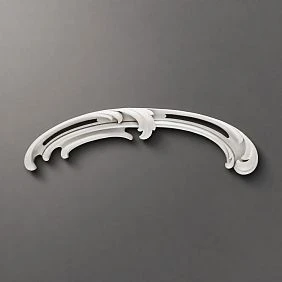
N-349L and N-349R are separate left and right overlays measuring 200 mm. They suit local corner accents and are already shown in the finished door composition.
N-350L and N-350R are separate left and right overlays measuring 411 mm. The large series is designed for a more extensive free field.
411 mm is 2.055 times larger than 200 mm. Therefore, N-350 cannot be considered just a slightly enlarged version.
Letters L and R indicate direction. A closed symmetrical composition usually requires both articulations of the same series.
The exact width, height, thickness, and mounting plane must be verified against the card or DWG. Only the overall scale of 200 and 411 mm is confirmed.
Material, surface preparation, and fastening method are checked before ordering. They cannot be assigned the same for all four cards without confirmation.
Paired carved overlays are more difficult to purchase than a single decorative element. The buyer needs to choose not only the pattern but also the scale, left and right direction, number of parts, position relative to the central axis, handles, frame molding, and free field. An error in one parameter makes the composition asymmetrical or overloaded.
N-349L/R and N-350L/R solve different tasks. The compact 200 mm series works as a local accent. It can occupy the corners of a door panel, support a central rosette, or be repeated on several furniture fronts. The large 411 mm series claims the role of main decor: it requires a tall door, a wide wall panel, a large library section, or a furniture portal.
The photo on the card does not show this difference accurately enough. On screen, both products occupy almost the same image area, so N-350 may seem only slightly more expressive. On a real door, the 411 mm size changes the entire composition: it reduces free fields, approaches the handle, frame, and edges of the panel, requiring a larger center or, conversely, more air.
For a regular door, you can start with compact decor measuring 200 mm и paired element for the door. For a large panel, it is worth comparing left Gothic decor 411 mm и right paired decor 411 mm. If both series do not fit the scale, it is better to view all wooden overlay decor, rather than trimming the finished carved form.




What are paired overlays and why L and R are needed
A paired overlay is not two identical items randomly placed on opposite sides. The left and right pieces create a mirrored or directional composition. One part sets the movement of the ornament on one side, the other responds to it on the other.
Our factory also produces:
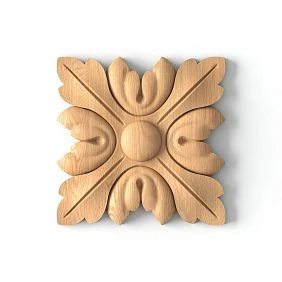
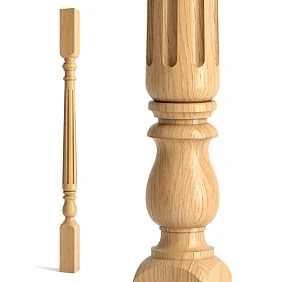
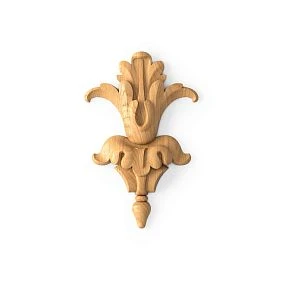
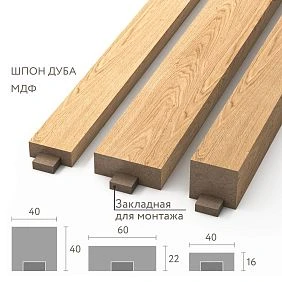
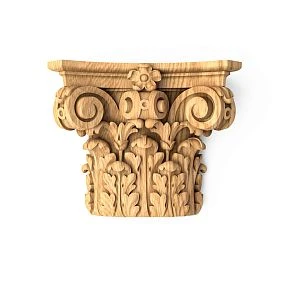
L — left part
It is intended for a specific side of the composition based on the card's pattern. The position cannot be determined solely by the letter without viewing the actual product: the ornament itself and the chosen direction — inward or outward — are important.
Get Consultation
R — right part
It complements the left part and helps create a symmetrical pair. During painting, the marking must be preserved so that the elements are not mixed up after finishing.
Closed composition
Ornaments are directed towards the center — a rosette, handle, mirror, panel, or the axis of a furniture section. This option draws attention to the middle.
Open composition
The pattern is turned from the center towards the edges. This expands the visual field and can support a frame or adjacent sections. The possibility of a specific orientation is checked against the card's pattern and dry layout.
Single overlay instead of a pair
Single use is possible as an asymmetrical accent if the project requires it. However, the buyer should not consider a single item as a complete mirror composition.
Four Elements
On a large door, furniture portal, or wall panel, two pairs can be used — at the corners or on the sides of the central field. For N-350, this layout is particularly rich and requires a full-size mockup.
Confirmed specifications of four SKUs
| Parameter | N-349L | N-349R | N-350L | N-350R |
|---|---|---|---|---|
| Format | Left overlay | Right overlay | Left overlay | Right overlay |
| Confirmed size | 200 мм | 200 мм | 411 мм | 411 мм |
| Scale | Compact | Compact | Large | Large |
| Main Scenario | Door or facade corner | Paired door or facade corner | Tall door, panel, portal | Paired part of a large composition |
| Ready-made solution | Shown in composition with N-349R | Shown in composition with N-349L | Scenario is selected by card and layout | Scenario is selected by card and layout |
| Collection | Checked in the card | Checked in the card | Presented in the main catalog and gothic collection | Presented in the main catalog and gothic collection |
| Material | Specified in the card | Specified in the card | Specified in the card | Specified in the card |
| Thickness and mounting plane | Verified against DWG | Verified against DWG | Verified against DWG | Verified against DWG |
The table deliberately separates confirmed items from those requiring verification. The size of 200 or 411 mm is known, but it cannot be automatically called height, width, or length without a diagram. Similarly, the same material, thickness, and fastening cannot be guaranteed for all four cards.
N-349L/R and N-350L/R: direct comparison
| Criterion | N-349L/R, 200 mm | N-350L/R, 411 mm | Practical conclusion |
|---|---|---|---|
| Scale | Compact | More than twice as large | N-350 requires significantly more free space. |
| Role in the composition | Local accent | Dominant decor | The choice depends on whether the overlay should support or define the composition. |
| Standard interior door | Fits more often | Requires scale check | For a standard panel, it is safer to start with template N-349. |
| Tall door | May look too small | Reads better | N-350 fits a large vertical plane. |
| Furniture door | Convenient for repetition | A large facade is needed | On a regular cabinet, N-350 may approach the edges and handle. |
| Wall panel | Point accent | Large symmetrical composition | N-350 is better visible on boiserie and high panel. |
| Near the handle | Easier to maintain a convenient gap | Accurate verification required | For N-350, hand trajectory and opening are especially important. |
| Central socket | Easier to add a small center | Need a large center or more air | All part dimensions must be aligned with the layout. |
| Repeat on multiple facades | Calm rhythm | Very dense rhythm | N-350 is better to dose or use on the central section. |
| Risk of overload | Below | Higher | Full-size template for N-350 is mandatory. |
| Quantity | One, a pair, or four | One, a pair, or four after checking | Four N-350s create a very large composition. |
Why size matters more than the photo
Catalog photos align different products on the screen. A 200 mm overlay and a 411 mm overlay can look almost equally large because each is shown separately. The buyer sees the ornament but does not feel the actual area it will occupy on a door or furniture.
200 mm — local size
N-349 can be placed in the corner of a panel, on the sides of a rosette, or at the top of a small door. It leaves a noticeable field around itself and allows repetition on several facades.
411 mm — architectural size
N-350 occupies a significant part of a tall door or wall panel. Such an overlay ceases to be a small decoration and becomes part of the surface architecture.
The difference becomes apparent in a pair
Two N-349s create a cumulative decorative rhythm but keep the center free. Two N-350s can almost cover most of the vertical field. Four large overlays require a particularly wide portal.
The background changes the impression
On a white door, dark decor appears larger. An overlay matching the door color is perceived through shadow and looks calmer. But color matching does not reduce the physical size.
Viewing distance
N-349 reads well up close — in a hallway, by a cabinet, near a nightstand. N-350 is designed for perception from the other end of the room, from the center of the hall, or opposite a tall wall.
Compact series N-349L/R
N-349L and N-349R are confirmed as separate mirror elements measuring 200 mm. Their main advantage is controlled scale. The pair can support a central outlet, fill two corners, or create symmetry on a furniture facade without taking up the entire surface.
For door panel corners
The compact pair easily fits within the frame. Before ordering, check the actual contour, distance to moldings and edge lines. On the website, you can View the finished door with N-349L and N-349R.
For a cabinet
On paired doors, N-349 can be placed mirrored on either side of the central gap or at the outer corners. The offset from handles must ensure a free grip.
For the buffet
The overlays can support a socket or decorative trim on the central section. Repeating them on several doors creates a calm system.
For a chest of drawers
On a wide drawer, a pair can be placed on either side of the center. But you need to check that the relief does not fall into the handle area and does not interfere with opening.
For local wall decor
Two N-349 can decorate a small niche, mirror, or central panel above a chest of drawers. On a large wall, they will be perceived as small accents.
Commercial choice
For a symmetrical pair, you can buy the left overlay N-349L и buy the right overlay N-349R. Both items should be ordered in the same material and surface finish, if these parameters are confirmed by the cards.
Large series N-350L/R
N-350L and N-350R have a confirmed size of 411 mm. They are featured in the main catalog of overlays and the Gothic collection. The large scale makes them suitable for a tall door, wall panel, furniture portal, or central section of a library.
For a tall door
Overlays can form a pronounced vertical composition. It is necessary to check how much space remains to the top and bottom edges, handle, lock, and frame decor.
For a furniture portal
On a large central section, N-350 can work on the sides of a mirror, niche, or rosette. The composition must have enough breathing room so that the ornament does not merge with adjacent details.
For a library
Large overlays are appropriate on a central tall door or portal, but repeating them on every section without visualization is risky. The row may become too busy.
For a wall panel
N-350 reads well on tall boiserie, in a study, hall, or bedroom. For examples, you can open wall panel design ideas with wooden decor.
For a Gothic composition
A large series suits vertical arches, tracery, and elongated frames. However, the stylistic category does not automatically guarantee compatibility with any Gothic rosette or molding.
Commercial choice
For a large project, you can buy a large overlay N-350L и buy a large overlay N-350R, after checking the actual geometry on the product cards.
How to make paper templates of 200 and 411 mm
The template is not for simulating carving, but for checking scale, free margins, and symmetry. It should replicate the actual outer contour as accurately as the drawing allows. If only the overall size is available, first use a conditional rectangle, and after receiving the DWG, refine the shape.
Print at 1:1 scale
Check the control segment with a ruler. The printer's "fit to page" setting reduces the design and makes the mock-up useless.
Make the left and right template
It's not enough to flip one sheet by eye. Mark L and R, top, bottom, and the central axis. For complex patterns, direction matters.
Use multiple copies
For a pair, two templates are needed; for a four-sided composition, four. Only then can you see the overall rhythm and distances between details.
Add the handle and rosette
Mark the outlines of all hardware and decor. The overlay may fit well separately but conflict with the handle or central element.
Look from a distance
Attach the paper with masking tape and step back to the working distance. N-349 is evaluated from the hallway or near furniture, N-350 from the opposite side of the room.
Photograph the layout
The snapshot helps compare two series and align the decision with the customer. The photo should show the entire facade or wall, not just the pattern.
Choice for a standard interior door
A standard interior door rarely has a large free field. The door leaf already has panels, frames, a handle, a lock, and sometimes a central rosette. Therefore, a size of 200 mm is often manageable: it allows creating a paired decor and preserving work zones.
N-349 in the upper corners
Left and right overlays can support the upper part of the panel, directing the pattern toward the center. Space remains at the bottom for the handle and everyday contact. The layout depends on the actual pattern and orientation.
N-349 on the sides of the central rosette
The pair creates a symmetrical node. In the finished solution, N-349 is connected to rosettes and moldings, demonstrating the principle of a complete composition. This does not mean that any rosette size will automatically fit.
N-350 on a standard door leaf
A large series may take up too much space and come close to the frame or handle. It can only be used after a full-size fitting and checking the entire composition.
Handle and grip area
There should be enough space between the relief and the fittings for the hand. The user should not touch the carving every time they open it. The N-350 is checked especially carefully.
Doors in one corridor
If the decor is repeated on several panels, the N-349 creates a calmer rhythm. Several doors with large N-350 can overload a narrow space.
For examples, it is useful to look at interior door decor ideas and compare the scale of elements on finished panels.
Choice for a tall door and portal
A tall door requires decor that does not get lost in the large vertical space. Compact N-349 can work at several points, but one pair sometimes looks too small. N-350 better maintains the scale and becomes part of the panel's architecture.
One pair of N-350
It can be placed on either side of the central axis, rosette, or elongated frame. The overlays should have enough space above, below, and between each other.
Two pairs of N-349
Four compact elements create a more fractional rhythm. This suits a door with multiple panels and complex moldings, where a large solid overlay does not fit.
Four N-350
This layout is only possible on a very large portal. Without a full-size layout, it is risky: the decor can occupy almost the entire plane and compete with the architraves.
Connection with the architecture of the opening
Overlays should support arches, vertical axes, frieze, and pilasters. Random placement just to fill empty space makes the portal look disjointed.
View from the hall
Large decor is evaluated from a distance. N-350 should be read as a single form, not blend in with adjacent carved details.
Selection for a small furniture door
On a cabinet, sideboard, or kitchen facade, the free field is smaller than a door leaf. Here, N-349 is often more suitable in scale. Even 200 mm can be too large for a narrow door, so a template is mandatory.
One N-349
A single overlay can be used as a directional accent in a corner or at the center. This technique suits asymmetrical furniture but does not create a mirror pair.
Pair on one door
Left and right parts can be placed at the top, bottom, or sides. Maintain gaps to the handle, frame, and adjacent door.
Pair on two fronts
N-349L is installed on one door, N-349R on the other, creating a unified pattern across the central gap. It is important that the gap does not break the ornament too much.
N-350 on a furniture door
It is only suitable for large sections. On a standard front, the 411 mm size may overlap the frame and make opening inconvenient.
Repeat on the cabinet
If the cabinet has many doors, it is not necessary to decorate each one. N-349 can be used on the central pair, leaving the other fronts plain.
For design examples, you can select carved overlays for the cabinet and evaluate their connection with large furniture forms.
Selection for a large cabinet and library
Central section
N-350 suits a tall central door or library portal. The pair emphasizes the axis and makes the section the main one. It is better to keep the other facades calmer or use N-349.
Paired tall doors
Left and right large overlays can be directed towards the central gap. Need to check handles and opening of both doors.
Side sections
N-349 helps to repeat the theme on a smaller scale. Mixing series in one piece of furniture is only possible after layout, because the pattern and proportions may differ.
Showcase with glass
The overlay should not cover the transparent part or fall on a thin frame without sufficient mounting surface. Profile dimensions are checked against the drawing.
Book shelves
Large carving competes with the rhythm of shelves and books. N-350 is more appropriate on a closed lower cabinet, central portal, or upper frieze, if confirmed by the project.
Selection for wall panel and boiserie
A wall offers more freedom than furniture, but a large format requires architectural logic. N-350 can frame a niche, mirror, panel, or central section of boiserie. N-349 is used as a repeating corner accent.
On the sides of the mirror
Paired elements create symmetry and connect the mirror to the wall panel. N-350 suits a large mirror, N-349 suits a compact composition above a chest of drawers.
Above the headboard
Two overlays can be directed towards a central rosette or decorative axis. A large series requires a high wall and free space around it.
In a study
Gothic decor supports the library, wood panels, and dark finish. N-350 reads as the main element, N-349 as a repeat in frame corners.
In a niche
The size of the overlay is compared to the width and height of the niche. The decor should not touch shelves, lights, or items placed inside.
In a long corridor
Repeat N-349 creates rhythm, and one pair of N-350 can mark the end wall. A large number of large elements makes the passage heavy.
How to arrange L and R
Correct orientation depends on the pattern and purpose of the composition. Letters help distinguish cards but do not replace dry layout. Before painting and installation, markings are preserved on the back of each part.
Direction towards the center
Lines converge to the socket, handle, mirror, or axis. This creates closed symmetry and emphasizes the middle.
Direction outward
The ornament opens towards the edges, visually expanding the panel. This technique suits a wide portal and wall composition.
Top and bottom
Some overlays have a pronounced direction of ornament growth. A 180-degree rotation can change the character. Admissibility is checked against the card and the actual product.
On two doors
The central gap becomes part of the composition. The distance from the axis of each overlay to the edge of the door leaf must be the same.
On four corners
You will need two left and two right parts or another combination according to the pattern. The quantity cannot be assumed without a layout diagram.
Laser level and template
Vertical and horizontal axes are marked on the surface. But holes, glue, and fasteners are selected only after confirming the base material and the back side of the overlay.
When to direct the pattern toward the center
There is a central rosette
The overlays guide the eye to R-061, R-076, or another confirmed center. The size of the rosette must match the scale of the pair.
There is a door panel
The closed composition emphasizes its center and does not spread to the edges of the canvas.
There is a mirror or panel
Paired elements work as a frame and help integrate the object into the boiserie.
Paired cabinet doors
The ornament converges toward the central gap and unites the two doors. Handles must remain accessible.
When to use an open composition
Need to visually expand the field
The direction toward the edges supports a wide portal or panel.
The center is already saturated
If there is a large rosette, handle, or carved insert in the middle, the overlays can be turned outward to avoid concentrating too many lines.
The composition continues with the molding
The ornament can transition to the frame and connect with K-057. Joints and scales are checked with a mockup.
Two symmetrical zones
On a wall or furniture, overlays can refer to side niches or columns. Such a pattern requires a clear architectural reason.
How to combine N-349L/R with the central rosette R-061
The central rosette helps to assemble paired overlays into a finished composition. It sets a point towards which lines L and R can be directed, and visually closes the empty center. In the SEO scheme, R-061 is listed as one of the confirmed elements used alongside N-349 in a finished door solution.
First, choose the overall scale
A compact pair of 200 mm allows for a central element that does not overwhelm the overlays. The exact diameter and relief of R-061 should be checked in the card, and then verified with a paper template together with N-349.
The axis of the rosette and the axes of the pair
The center of R-061 must coincide with the axis of the door, panel, or furniture section. The left and right overlays are placed at the same distance from this point. Even a slight shift becomes noticeable due to the mirror composition.
Free space between elements
The carving should not visually stick together. Air is left between the rosette and the overlays, the amount of which is determined by the actual contour. A universal offset cannot be assigned without a drawing.
Commercial route
After selecting a pair, you can buy the central rosette R-061 and assemble the overall template. Before ordering a batch, check the material, surface preparation, and finishing method of all parts.
How to combine N-349L/R and N-350L/R with R-076
R-076 belongs to the Gothic theme and can support tracery, elongated lines, and large paired decor. But stylistic similarity does not guarantee dimensional compatibility. Special attention should be paid to comparing R-076 with N-350, because a large pair requires a convincing center.
For N-349
The rosette can become the main element, and the overlays can be supporting corner accents. This composition is suitable for a door or furniture panel with limited free space.
For N-350
The center should not get lost next to two 411 mm parts. Sometimes it's better to leave more air or use the rosette as a separate node above or below the pair.
Checking the ornament
The lines of the rosette and overlays should support each other, not form a random overlap. First, assemble a dry layout on the floor or board, then transfer it to the door.
Commercial route
For a Gothic composition, you can buy a Gothic rosette R-076 и complement the overlays with tracery ornament after checking the scale.
How to use carved molding K-057
The molding creates a frame, connects corners, and helps turn individual overlays into an architectural system. In the finished solution N-349, it is used together with K-057, so the buyer can study the principle, not just a set of disparate parts.
Frame around the central field
K-057 can mark the boundaries of a panel or decorative panel. N-349 is located in corners or near the center. Precise joints depend on the pattern and width of the profile.
Continuation of the ornament direction
Overlay lines can visually transition to the trim. If the pattern does not match, leave a free field between the parts rather than trying to join them with a random cut.
Scale for N-350
Large overlays may require a more substantial frame. K-057 cannot be automatically declared suitable without a full-size layout. Sometimes it works as a thin contrast, sometimes it appears insufficiently large.
Length calculation
The length of the trim is calculated based on the actual sides of the frame, corners, joints, and allowance for cutting. The article does not assign a universal percentage of allowance.
Commercial route
To assemble a door frame, you can buy carved trim K-057 и arrange a frame around the overlays according to the exact template.
How to assemble a composition from one, two or four overlays
One piece
Suitable for an asymmetrical accent, the corner of a small panel, or repairing an existing composition. It should be understood that a single N-349L or N-350R does not create a mirror pair and looks directional.
Two pieces
The most straightforward option: left and right overlays of the same series. They are installed on either side of the center, on two doors, in the upper corners, or near an outlet.
Four N-349
Two pairs can decorate the four corners of a door, furniture portal, or wall frame. The compact size makes this scheme more manageable, but it still requires a template and a single direction.
Four N-350
This is a very large composition. It is only appropriate on a large wall, portal, or tall wide door. Without free space, the ornament turns into a solid decorative mass.
Mixed scheme
N-349 and N-350 cannot be joined just because both series are paired. Their pattern, center, thickness, and scale may differ. Mixing is allowed after a separate design layout, not as a way to use leftover parts.
How to check the minimum free field
The minimum field cannot be determined by a single universal number. It depends on the full contour, frame thickness, handle, central rosette, and whether the decor should be local or dominant.
Measure not the entire door, but the usable area
The panel, molding, lock, handle, and edges reduce the available area. The overlay must fit within a flat mounting plane.
Compare the field around N-349
A compact part usually leaves more air. If the pattern almost touches the frame, even 200 mm may be too large for a specific door.
Compare the field around N-350
A large overlay needs not only physical clearance but also visual space. If it technically fits but visually covers the entire surface, consider N-349.
Check the corners
The carved contour may extend beyond the conditional rectangle. You cannot rely solely on the central axis and overall size. An accurate template based on DWG is required.
Estimate the distance to the edge
Too close a position creates a risk of damaging thin areas and looks random. The precise offset is determined by the shape of the part and the base.
How to account for door and furniture handles
Hand trajectory
The user must open the door without touching the relief. For N-349, keeping a free zone is usually easier. N-350 may require moving the composition higher or further from the handle.
Handle as part of symmetry
On a double-door cabinet, handles are often located near the central gap. Overlays should not create visual clutter around them.
Long bracket
It occupies more vertical space. Before ordering overlays, apply its full contour, not just the attachment points.
Button
A compact handle can work as an additional center. But if R-061 or R-076 are already nearby, three accents can overload the facade.
Lock and keyhole
On the door, they also fall into the work area. The thread should not obstruct maintenance and access.
Material and surface preparation: what can be stated safely
The semantic core includes queries about beech under enamel and oak under tinting, but the SEO scheme requires checking the material of each card before ordering. Therefore, the article does not claim that all four SKUs are necessarily available simultaneously in both wood species.
If beech is confirmed
It can be used under covering enamel. A test paintout shows how the coating lays on deep relief and thin edges.
If oak is confirmed
Tinting preserves the wood texture and emphasizes the relief. Paired elements need to be matched by shade before installation.
If the material is different
Do not mix left and right overlays from different wood species in a transparent finish without a conscious decision. The texture and color will differ.
Surface preparation
The degree of sanding, the need for additional finishing, and the condition of the product are checked in the card. Before finishing, inspect all recesses and thin elements.
For a general check, it is useful to open the section select the material and surface preparation.
Enamel, tinting, or contrast finish
Overlays in the color of the door
The relief is read through the shadow and looks calmer. This option is suitable for N-350 if the large size should not become a contrasting spot.
Contrast decor
Dark overlays on a light facade or
Pair uniformity
L and R must be finished simultaneously, using the same system and with the same number of layers. After drying, they are compared side by side, not individually.
Dry layout before installation
Dry layout is a check of the entire composition without glue or final fastening. It allows you to see the L/R direction, distance to the center, handles and frames, and also understand whether the N-350 looks too large. For paired decor, this stage is especially important: after installation, correcting symmetry can damage the door or furniture finish.
Lay out the parts on a horizontal surface
First, assemble the composition on a table or clean board. Place the left and right overlays, rosette, and trim pieces. Check where the main lines of the ornament are directed.
Transfer the axes to the door
Mark the center of the panel, panel boundaries, handle position, and frame. For a double-door cabinet, consider the central gap separately.
Use temporary fixation
Paper templates can be secured with masking tape. Finished wooden parts cannot be held in a way that damages the surface or fine carving.
Check the diagonals
For four corners, the distances must be equal. A laser level helps maintain axes but does not replace measuring the actual contour.
Take photos
Remove the door or panel completely. Compare N-349 and N-350 from the same angle. This method helps the client see the real scale and choose without guesswork.
Approve the marking
After approval, mark the position of each part: top left, top right, bottom left, bottom right. This prevents swapping after painting.
Installation on door, furniture, and wall panel
The SEO scheme does not confirm a single mounting method for all surfaces. It cannot be promised that any overlay can be simply glued with one compound. The base, part weight, thickness, back plane, and operating conditions vary.
Wooden door
It is necessary to check the flatness of the field, the condition of the finish, and the possibility of fastening without damaging the panel. The decor should not fall on the movable joint of the panel if the door design allows for dimensional changes.
MDF facade
Glue and mechanical fastening are selected considering the coating. An overly aggressive compound can damage the enamel, and a random screw can come out on the reverse side.
Massive furniture front
The direction of the fibers and seasonal changes in the wood are taken into account. The mounting scheme should allow the part and the base to work without cracking.
Painted wall
The strength of the paint and the base is checked. Large N-350 requires a particularly reliable solution; it cannot be attached only to a weak decorative layer.
Boiserie
The overlay is installed on the prepared panel, aligning with moldings and joints. The attachment points should not fall on voids or edges of elements.
Finishing before or after installation
Paired overlays are more convenient to paint before installation if you need to cover all edges and maintain the cleanliness of the front. But the connection points and possible final finishing are determined by the project technology.
Materials can be purchased for mounting overlays, and general techniques can be verified through Installation and painting recommendations for decor.
What to buy together with paired overlays
A finished composition often requires more than just left and right parts. The central rosette sets the axis, the molding forms the frame, and the materials help with finishing and installation. Buying elements separately without an overall layout is risky: they may not match in scale and pattern.
| What to add to the purchase | Why this is needed | For which scenario | What to Check |
|---|---|---|---|
| Left overlay N-349L | Assemble a compact mirror pair | Regular door, cabinet, sideboard, chest of drawers | Size 200 mm, direction and material |
| Right overlay N-349R | Complete the symmetry N-349L | Paired door or furniture composition | Match of surface condition with the left part |
| Left overlay N-350L | Create a large directional accent | High door, portal, panel | Size 411 mm, free field and DWG |
| Right overlay N-350R | Assemble a large mirror pair | Large door, library, boiserie | Direction and distance to handle |
| Central socket R-061 | Form the center of the composition | Door GRD-019, furniture frame | Size and distance to pair |
| Gothic rosette R-076 | Support the masverk theme | Gothic door or wall panel | Stylistic and dimensional compatibility |
| Carved molding K-057 | Frame around the overlays | Door panel, furniture portal | Width, joints and length of the frame |
| Glue and materials for mounting overlays | Secure and finish the composition | Wood, MDF, wall panel | Compatibility with base and coating |
How not to confuse these overlays with similar products
Left and right parts of the same series
N-349L must connect with N-349R, and N-350L with N-350R. You cannot automatically take the left part of one series and the right part of another.
Compact and large size
200 and 411 mm are not adjacent options. The difference is more than double. The overlays require different surfaces and clearances.
Overlay and door portal
The overlay is mounted on a flat surface and does not replace a structural part of the portal, casing, or pilaster.
Overlay and molding
K-057 creates an extended frame, while N-349/N-350 creates a local carved element. One product does not replace the other.
Rosette and paired overlay
A rosette usually has an independent center, while paired details guide the composition. Random replacement disrupts symmetry.
Ready-made wooden decor and plastic sticker
A carved overlay requires checking the material, thickness, preparation, and installation. It cannot be chosen using the same principles as thin self-adhesive decor.
General differences and scenarios can be further studied in the material how to use overlay decor on furniture.
Practical selection for specific tasks
Need to decorate the corners of a regular door
Start with N-349L/R. Make two 200 mm templates, add a handle, rosette, and frame. Consider N-350 only after checking, if the compact series is lost.
Need to design a tall front door
N-350L/R better maintains scale. Check the free space and view from the hall. The central decor should not be too small.
Need to decorate two cabinet doors
Place N-349L on one door, N-349R on the other. Measure the same distance to the central gap and handles.
Need to highlight the central section of the library
One pair of N-350 can become the main decor, while leaving the side sections calm. Check the repetition of large overlays on each door with visualization.
Need to design the wall above the dresser
N-349 suits a compact mirror or panel, N-350 suits a tall panel and large center. In both cases, the connection with the width of the dresser is important.
Need to assemble the door following the example of a ready-made solution
Open example of a paired compositionthen separately check N-349L/R, R-061, R-076 and K-057. Do not copy the layout without considering the dimensions of your canvas.
Need a composition for a commercial interior
In a hotel, restaurant or salon, N-350 is readable from a distance and can mark a central door or panel. N-349 is more convenient for repeating doors and cabinets.
Need to replace one damaged overlay
Check the exact L or R article, material, surface condition and direction. It is better to compare the new part with the existing one before painting.
Typical mistakes when choosing N-349L/R
Considering 200 mm as a universal size
The compact series is smaller than N-350, but on a narrow furniture door even 200 mm can take up too much space. The decision is made based on the template, not the name "compact".
Buying only one side for a symmetrical composition
N-349L and N-349R are separate articles. If the project requires a mirror pair, you need to order both parts and check their direction.
Place too close to the handle
The relief may interfere with the grip and constantly touch the hand. The template should show not only the handle but also the actual trajectory of the fingers.
Repeat on each cabinet door without a common layout
Compact size reduces the risk of overload, but a large number of details still creates a dense rhythm. Central and side sections may require different saturation.
Copy a finished door without recalculation
Solution GRD-019 shows the principle, but the dimensions of the specific panel, panel insert, and handle may differ. All distances need to be determined anew.
Consider N-349 a reduced copy of N-350
The SEO scheme directly warns: the same pattern is not confirmed. Before mixing or replacing, compare cards and DWG.
Typical mistakes when choosing N-350L/R
Choose a large series only for greater expressiveness
Size 411 mm requires a free surface. On a standard door or facade, the overlay may look heavy and come close to the edges.
Do not make a full-size template
A small picture or sketch does not convey the actual area. For N-350, a 1:1 scale template is mandatory.
Install four parts without checking
Four overlays of 411 mm each create a very rich composition. It is only suitable for a large portal or wall and must be coordinated with the center and frame.
Use on any tall door
The height of the panel alone does not guarantee a suitable scale. Width, panels, handle, trim, and free space are important.
Choose a too small rosette
The central element may get lost between large overlays. Sizes are compared on a common layout.
Attach only to the decorative layer of the wall
A large wooden element requires a reliable base. The installation method is chosen based on the actual weight, back surface, and wall material.
Who is N-349L/R suitable for
- a standard interior door with limited free space;
- a furniture door, cabinet, sideboard, or dresser;
- paired facades with a central gap;
- compositions around R-061 or R-076;
- a frame with carved molding K-057;
- repeating decor on multiple doors;
- a small niche, mirror, or panel;
- a project where the handle is close to the decorative field;
- to two or four corner accents;
- for a buyer who needs a controlled 200 mm scale.
When not to choose N-349L/R
- the decor should be visible through the large grand hall;
- a tall door requires a large dominant vertical;
- the 200 mm pattern gets lost on a large wall panel;
- the buyer wants one large independent ornament;
- there is no flat mounting surface on the surface;
- the actual outline does not fit inside the frame.
Who N-350L/R is suitable for
- a tall or wide door;
- a large furniture portal;
- the central section of the library;
- a tall wall panel and boiserie;
- a Gothic interior with a pronounced vertical;
- a large mirror or niche;
- a representative hall, office, hotel or restaurant;
- a composition viewed from a distance;
- a pair serving as the main decorative accent;
- a project with a mandatory full-size layout.
When it's better not to choose N-350L/R
- a regular furniture door is too small for 411 mm;
- the decor approaches the handle or edges of the panel;
- the door already has many moldings, rosettes, and other carved elements;
- the buyer is not ready to make a template and check the DWG;
- the surface does not have a reliable base for installation;
- a large pair visually overwhelms the furniture or room.
What to Check Before Ordering
- article N-349L, N-349R, N-350L or N-350R;
- one piece, one pair, or two pairs are needed;
- confirmed scale of 200 or 411 mm;
- actual width, height, and thickness according to the card or DWG;
- pattern direction and possibility of rotation;
- material of each item;
- surface preparation;
- identical execution of left and right parts;
- free space inside the frame;
- distance to handle, lock, and edge;
- central rosette R-061 or R-076;
- compatibility with K-057 trim;
- finishing of the entire composition;
- method of attachment to a specific base;
- full-size dry layout;
- payment and delivery terms.
Pair composition control card
After selecting a series, it is useful to create a short card that links the sketch, actual SKUs, and installation. It is especially important for four parts and the large N-350: without it, the left and right overlays may be swapped after painting, and the craftsman will have to re-determine the position on the finished surface.
Photograph of the entire surface
The photo should show the door, furniture front, or wall panel as a whole. A close-up of the carving does not allow restoring distances to edges, handles, sockets, and moldings. The central axis and working field are marked on the photograph.
Exact SKUs
The card separately records N-349L and N-349R or N-350L and N-350R. Formulations like "left large" and "right small" are insufficient: they create a risk of mixing series during ordering, finishing, and installation.
Quantity and location of each part
For a pair, indicate the upper or lower zone; for four elements, each corner. If a single overlay is used separately, this is also recorded so that the absence of a paired article is not mistaken for an incomplete set.
Pattern direction
Arrows indicate whether the ornament faces the center or outward. On the reverse side of physical parts, temporary markings are preserved that do not damage the wood and do not interfere with the future coating.
Related elements
The card includes R-061, R-076, K-057, handles, and frames if they are part of the composition. Not only the names are indicated, but also the position relative to the overlays. This helps the finisher and installer see a complete set.
Material and Finish
After confirming the cards, record the material of each article, the preparation system, color, and gloss level. Left and right parts cannot be sent to different finishing batches unnecessarily: the difference in shade will be noticeable due to symmetry.
Control dimensions
Record the distance from the central axis to identical points L and R, offsets to the frame, and the working area near the handle. These dimensions apply only to the specific door or furniture and should not be transferred to another object without re-verification.
Post-installation check
When the glue or other approved fastening method has reached working strength, the composition is inspected again. Check symmetry, absence of displacement, clean edges, and smooth handle operation. On double-door furniture, both doors should open without touching the relief. If overlays are located near moldings, check whether visually different gaps have appeared after final fixation.
For N-350, it is useful to additionally evaluate the view from a distance: a large pair may appear balanced up close but too heavy from the center of the room. After installation, correcting the scale is too late, so this check primarily confirms the quality of the layout and serves as a reference for subsequent doors or panels.
Reference after installation
The final photo and saved color sample help with repairs or reordering. For a commercial project, it is useful to keep one spare part or clarify in advance the possibility of re-supplying the same article and finish.
How to buy N-349L/R or N-350L/R at STAVROS
First, measure the usable area of the door, furniture, or wall. Then print two outlines — 200 and 411 mm — and compare them in real scale. If you need a local paired accent, open the product pages and buy the carved overlay N-349L together with with the right overlay N-349R.
For a tall door, large panel, or furniture portal, compare the large series and buy the large overlay N-350L together with with the right overlay N-350R. Before placing an order, check the full drawing and ensure the elements do not conflict with the handle, frame, and central rosette.
If a complex composition of four parts, K-057 and sockets is required, you can order a layout of paired overlays. This is especially useful for N-350, where a scale error is noticeable and costly to fix after finishing.
Before payment, clarify the current material, surface condition, quantity and configuration. The terms for receiving the batch can be checked on the page payment and delivery of carved decor.
FAQ: questions about N-349L/R and N-350L/R
How do N-349L/R differ from N-350L/R?
N-349L/R have a confirmed size of 200 mm and are suitable for compact compositions. N-350L/R have a size of 411 mm and are designed for larger doors, furniture portals or wall panels.
How much larger is N-350 than N-349?
411 mm is 2.055 times larger than 200 mm. Therefore, the large series occupies more than twice the linear scale.
What size are N-349L and N-349R?
The confirmed size of each part is 200 mm. The exact orientation of this size and other dimensions need to be checked in the card or DWG.
What size are N-350L and N-350R?
The confirmed size of each part is 411 mm. The full width, height, and thickness are checked separately.
Do I need to buy the left and right overlays together?
For a mirror-symmetrical composition, yes. A single part is used only as a deliberate asymmetrical accent.
Can I install only one overlay?
Yes, if the project does not require a pair. The directional pattern and free space must be considered.
How to determine the direction of the ornament?
Look at the L and R cards, make templates, mark the top and bottom, and do a dry layout before painting.
Can L and R be swapped?
Physically, some shapes can be flipped, but the visual result depends on the pattern. The possibility of swapping is checked on a mockup, not assumed in advance.
Which overlays are suitable for a standard interior door?
Most often N-349L/R size 200 mm. N-350 is used only after checking if the door is truly large and has enough free space.
What to choose for a tall door?
N-350L/R are better read from a distance and support a larger vertical. N-349 can be used with several compact accents.
Are N-350 suitable for a furniture facade?
Yes, if the facade is large. For a standard door of 411 mm, it is often too much, so a full-size template is needed.
Can overlays be installed on a wall panel?
Yes, with a confirmed base material and a reliable fastening method. N-350 is especially suitable for large boiserie.
How to combine N-349 with R-061?
The socket is placed along the central axis, and the left and right overlays are placed at equal distances on the sides. All dimensions are checked with a general layout.
How to combine overlays with R-076?
R-076 can support a Gothic ornament. It is necessary to check whether the socket is lost next to large N-350 and whether the center is overloaded next to N-349.
How to select the molding K-057?
Match the width, relief, and pattern direction. The molding forms the frame, and the overlays form local accents. The joints are checked with a mockup.
How to make a full-size template?
Print the outline at 1:1 scale, check the control segment with a ruler, label L/R, and apply it to the surface along with the handle and socket.
What distance should be left to the handle?
There is no universal number. The hand should be able to freely use the hardware without touching the relief. The gap is checked with an actual grip.
What to choose under enamel — beech or oak?
The material of a specific card must first be confirmed. If beech is available, it is often used under opaque finishes; the solution is verified with a test coat.
When is it better to tint the decor?
When a suitable material is confirmed and the wood grain needs to be preserved. The left and right parts are tinted in one batch.
How to attach wooden overlays?
The method depends on the back surface, weight, base, and coating. A universal adhesive for all surfaces is not prescribed.
Can N-349 and N-350 be mixed?
Only according to a separate project layout. Identical pattern and full compatibility of the series are not confirmed.
Where to buy N-349L/R?
In separate cards, you can buy left N-349L and right N-349R, checking the material and current parameters of each part.
Where to order N-350L/R?
In the N-350L and N-350R cards, you can select a large paired decor measuring 411 mm for a suitable surface.
Result: a local accent of 200 mm or a large composition of 411 mm
N-349L/R and N-350L/R cannot be selected only by pattern. The compact series of 200 mm is suitable for a regular door, furniture door, cabinet, sideboard, and small wall panel. The large series of 411 mm is intended for a tall door, central library section, furniture portal, or wall panel where the decor should be the main accent.
Before ordering, you need to determine the quantity, L/R direction, free field, distance to the handle and central element. Then templates are made at a 1:1 scale, R-061 or R-076 is added, K-057 frame, and the entire composition is checked under real lighting. Material, thickness, preparation, and fastening are verified against the cards and DWG.
STAVROS allows you to open four independent cards, view a ready door solution, select rosettes, moldings, and installation materials. This route helps you buy not random decorative overlays for furniture, but a coordinated left and right pair of the required scale that actually fits on a door, facade, or wall panel.