Article Contents:
- Finishing materials wholesale Moscow: why a large order and a large single delivery are not the same thing
- First the master specification, then the delivery schedule
- Why you can't make a new specification for each floor
- Wooden skirting board: how to distribute the volume between installation phases
- Why the entire reserve doesn't necessarily have to arrive with the first batch either
- Wooden moulding: where it is especially dangerous to split the order without overall control
- How to form a moulding set for one floor
- Wooden cornice: why the phase is calculated by whole planks
- What is CALL-OFF for a project order
- Why the "needed on site" date matters more than the "want to order" date
- How to calculate the order date from the installation date
- What happens if the site is delayed
- Why early delivery can also be a problem
- Finishing materials Moscow: how much material should actually be on site
- How to determine the maximum volume of a single batch
- What to do if the storage space is designed for only one installation phase
- Why same-day deliveries are too fragile a model
- What buffer is needed between batches
- Construction and finishing materials: why link the delivery schedule to the work schedule
- Status READY FOR DELIVERY
- Who should confirm batch readiness
- Finishing materials stores: why today's availability does not replace the project schedule
- What to record for each future batch
- What the batch log looks like
- Why you cannot change batch contents over the phone
- How to account for the remaining balance of the overall order
- Project balance and warehouse balance are different things
- How to clarify the next batches after each phase
- Why you shouldn't automatically reduce the total volume after a successful first stage
- What to do with the remainder of the previous batch
- When physically moving the remainder is unprofitable
- The last batch: why it is calculated especially carefully
- What to keep after the entire project is completed
- When phased delivery is not needed at all
- Final scheme for phased supply

A large project may have a fully approved specification but not be ready to accept the entire volume of wooden trim at once. For example, for six floors the SKUs and total linear meters are already known: 860 m of skirting, 1240 m of molding, and 410 m of cornice. Total — 2510 linear meters. At the same time, the first two floors are ready in October, the next ones in November, and the last ones only in December.
If finishing materials wholesale moscow are purchased for such a project, there are two equally weak extremes. The first is to bring all 2510 m at once and turn the construction site into a warehouse of long-length decor. The second is to start purchasing anew every month, as if these were three independent projects, with the risk of getting different finishes, new equivalents, and uncoordinated changes.
A rational scheme lies between these options:
one master specification → total project volume → installation phases → NEED-BY for each batch → READY FOR DELIVERY before shipment → separate acceptance → actual consumption → adjustment of subsequent batches without unauthorized SKU changes.
In other words, a large order and a large one-time delivery are not the same thing. A project can lock in the entire required volume in advance, but physically receive it in parts, synchronizing batches with floor readiness.
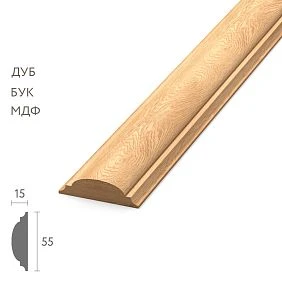
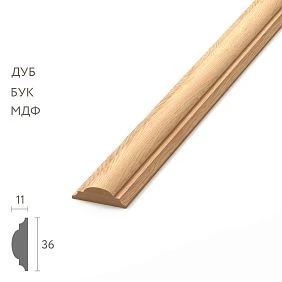
Finishing materials wholesale Moscow: why a large order and a large one-time delivery are not the same thing
The project documentation may contain a single specification for 2,500–3,000 linear meters. This reflects the full volume of the site. But a physical batch answers a different question: how much material the site can safely accept and actually use in the nearest installation phase.
Therefore, it is necessary to distinguish:
- project volume — everything required by the approved specification;
- procurement volume — the agreed total order;
- batch volume — a specific selection for a certain date;
- ON-SITE STOCK — the actual stock at the site.
If these four quantities get mixed up, the team quickly loses track of what has already been paid for, what is still to arrive, and what is physically on site.
For control purposes, it is convenient to keep one more quantity — PROJECT BALANCE, the remaining total project volume after the batches already selected. For example, if 860 m have been approved for PLT-A and B01 has already delivered 300 m to the site, the project balance is 560 m. These 560 m are not the warehouse stock on site and must not be mixed up with what physically remains after the installation of the first phase.
| Indicator | What it shows |
|---|---|
| PROJECT TOTAL | Total approved volume |
| CALLED-OFF | How much has already been selected in batches |
| PROJECT BALANCE | How much still remains to be selected |
| ON-SITE STOCK | How much is physically on site |




First the master specification, then the delivery schedule
The master specification records the product part of the order. It must not change from floor to floor without an official revision.
| Code | Article | Material | Total volume | Status |
|---|---|---|---|---|
| P01 | PLT-… | Oak | 860 м | APPROVED |
| M01 | MLD-… | Oak | 1240 м | APPROVED |
| K01 | KZ-… | Oak | 410 м | APPROVED |
A separate schedule is responsible for the physical movement. In it, the same codes are broken down into batches and dates. This two-level system preserves a single architectural standard but allows logistics to be managed flexibly.
Our factory also produces:





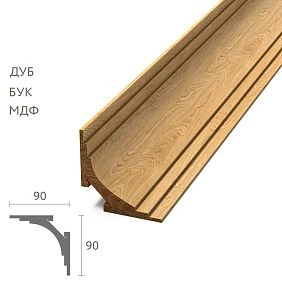
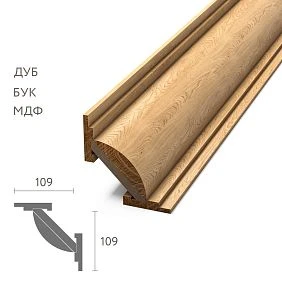

Why you shouldn't create a new specification for each floor
If each floor turns into a separate purchase, a single project gradually breaks down into different versions.
On the first floor, MLD-021 may remain, on the fourth someone will approve MLD-023, and on the sixth the purchaser will accept a "similar" profile due to the deadline. As a result, the difference will be discovered when the floors are already finished.
The rule should be simple:
one SKU code applies to the entire project until the project officially changes it.
If a change is truly necessary, it is issued as a new revision of the master specification, indicating from which phase it applies.
Get Consultation
Wooden skirting board: how to distribute the volume between installation phases
It is convenient to split the skirting board by actual installation zones.
| Queue | Net area | Installation reserve | For issue |
|---|---|---|---|
| Floors 1–2 | 280 м | By cutting | … |
| Floors 3–4 | 295 м | By cutting | … |
| Floors 5–6 | 285 м | By cutting | … |
The reserve does not need to be assigned as a universal percentage for all floors. If the first two floors have many short wall sections, while the last ones have long straight walls, the waste will be different. The calculation must take into account the specific geometry and lengths of the planks of the selected product.
Why the entire reserve also does not necessarily need to arrive with the first batch
The total reserve can be calculated in advance, but this does not mean that it must physically arrive in October together with the first stage.
If part of the reserve relates to future floors, it is safer to keep it as part of subsequent batches — provided that such a scheme is agreed in advance in the order.
The main thing is not to lose this volume in the balance. The reserve should be visible as a separate part of the project, and not as “extra meters” without a purpose.
Wooden molding: where it is especially dangerous to split an order without overall control
The molding part of the project is usually more complex than the skirting board. On one floor, several profiles of different widths, cross-sections, and purposes may be used.
If each queue orders moldings independently, the risk increases:
- mixed-up grades;
- of an uncoordinated replacement;
- of switching to a different material;
- of losing alignment with the layout;
- of errors in quantity.
That is why a batch is formed not "by the total amount of molding," but by specific SKUs.
How to form a molding set for one floor
Bad line:
Floor 3 — 200 m of molding.
Good:
FLOOR-03 / MLD-A / 82 m
FLOOR-03 / MLD-B / 46 m
FLOOR-03 / MLD-C / 70 m
After that, the packages can be marked with the same codes. During unloading, it is clear which profiles belong to a specific installation zone.
Wooden cornice: why the order is calculated by whole planks
The clean perimeter of the zone may be 66.4 m. But the batch is formed by physical items.
You need to go through the chain:
wall lengths → allowable joints → length of a specific plank → cutting → number of whole items.
Only after that does the real shipping figure appear.
For example, if the order requires 66.4 m of cornice, and the selected version is supplied in planks of 2.4 m, simple division gives 27.67, that is, a minimum of 28 planks or 67.2 m. But if cutting along the walls requires several long continuous sections, 28 planks may not be enough. Therefore, the batch is closed only after checking the cut-list, and not by rounding the total.
If you use only linear meters, a mathematically correct batch may turn out to be inconvenient for installation.
What is CALL-OFF for a project order
In procurement practice, there is a model where the total volume is fixed in advance, and the buyer selects it in parts according to an agreed schedule. In the article, this can be called phased call-off of the project volume.
For example, the total volume is 1000 m, and the batches are as follows:
300 → 350 → 350.
This is specifically an order organization model. The possibility, legal terms, storage between call-offs, reservation period, and procedure for changing batches must be agreed separately with the specific supplier.
For the customer, the value of CALL-OFF lies elsewhere: they stop reassembling the same project every month. The SKUs are already approved, the total volume is clear, and only the specific call-off remains to be managed. At the same time, each batch must reference the same master specification so that the “phasing” does not turn into three independent purchases.
In practice, the call-off log may look like this:
| Batch | PLT-A | MLD-A | KZ-A | Total called off | Project remaining |
|---|---|---|---|---|---|
| B01 | 300 м | 410 м | 135 м | 845 м | 1665 м |
| B02 | … | … | … | … | … |
Why the “needed on site” date matters more than the “want to order” date
Each batch needs a NEED-BY DATE — the date when the material must already be on site, accepted, and available to the installers.
| Batch | Zone | NEED-BY |
|---|---|---|
| B01 | Floors 1–2 | 12.10 |
| B02 | Floors 3–4 | 09.11 |
| B03 | Floors 5–6 | 07.12 |
Such a date is better than an abstract “order in November” because the procurement specialist can build a backward calendar.
How to calculate the order date from the installation date
If installation starts on November 15, delivery cannot be automatically scheduled for the morning of November 15.
Before work begins, the following must be arranged:
- product readiness;
- package contents;
- packaging;
- transportation;
- acceptance;
- distribution by zone;
- if necessary — technological conditioning of the material in the site conditions.
The specific buffer depends on the project. The main thing is that it is calculated, not left to chance.
It is convenient to calculate backwards from NEED-BY. If the material is needed on site on November 9, and one day is allocated for acceptance and distribution, transport requires two days, and assembly and packaging require another two, then the last permissible readiness date of the batch must be at least five working days earlier. This is not a standard, but an example of backward planning logic.
The formula is simple:
ORDER/RELEASE DATE = NEED-BY – transport – assembly – acceptance – controlled buffer.
Parameters should be taken from the actual conditions of the specific delivery.
What happens if the object is delayed
Batch B02 was supposed to be needed on November 10, but construction readiness shifted by three weeks.
Before shipment, a decision must be made:
- keep the original date;
- reschedule the delivery;
- arrange intermediate storage;
- partially reduce the batch.
The worst-case scenario is making a decision when the truck has already arrived at the site and it turns out there is nowhere to place the long-length material.
Why early delivery can also be a problem
Early material does not always mean reliability.
If dirty processes are still ongoing at the site, there is no clean storage area, and other contractors are working, long profiles have to be constantly moved. This increases the number of contacts with the material and the risk of damage.
Therefore, "better to have it lying there in advance" only works under suitable storage conditions.
Finishing materials Moscow: how much material should actually be on site
When needed finishing materials moscow for a long project, it is useful to introduce the concept of ON-SITE STOCK.
The construction site should not hold the maximum possible volume, but the quantity that covers:
- the current installation queue;
- the nearest work front;
- reasonable operational reserve.
If only one batch can physically fit at the site, the schedule must account for this limitation from the very beginning.
For ON-SITE STOCK, it is useful to set not a single maximum number of meters, but limits by type. For example, 300 m of skirting and 300 m of large cornice occupy different usable volumes. Therefore, the warehouse limit is better expressed through actual storage locations: how many long packs fit on the racks, how many zones can be allocated without intersecting with walkways and other contractors.
How to determine the maximum volume of one batch
The batch size is limited not only by purchasing logic.
Need to check:
- available storage area;
- maximum length of stored items;
- volume of the current installation queue;
- ability to safely bring in the profiles;
- throughput capacity of the site;
- schedule of other contractors.
For example, if the warehouse area holds 400 m of various profiles, shipping 700 m creates a problem regardless of how profitable it is to transport such a batch.
What to do if the storage space is designed for only one installation queue
The schedule is built as a sequence:
acceptance of B01 → installation of B01 → clearing of the zone → acceptance of B02.
A small controlled buffer is needed between batches. If B02 arrives at the minute B01 ends, any delay in the first queue causes a storage conflict.
Why same-day deliveries are too fragile a model
The current stock runs out on Friday morning, and the next truck is scheduled for Friday morning. Formally, the schedule is perfect. In practice, a delay of a few hours stops the crew.
Therefore, the interval between batches must take into account the actual consumption rate and the predictability of delivery.
What stock is needed between batches
There is no universal number of days.
The buffer depends on:
- installation pace;
- crew size;
- consumption rate;
- delivery variability;
- batch size;
- availability of an alternative work front.
If the crew consumes 80 m per day and a one-day delay is critical, the operational stock should reflect this risk. If installation can easily be switched to another zone, the buffer can be smaller.
Construction and finishing materials: why link the delivery schedule to the work schedule
construction and finishing materials do not exist independently of each other on a construction site. Skirting board installation is tied to the floor, doors, wall painting, and the readiness of adjoining surfaces. The cornice depends on the ceiling and related works.
Therefore, the delivery date must be based on construction readiness, not just the procurement calendar.
Status READY FOR DELIVERY
Before shipment, the batch must receive confirmation:
READY FOR DELIVERY.
The status is set when:
- the installation area is actually ready;
- the storage area is cleared;
- the receiving employee will be on site;
- the batch has been verified against the specification;
- NEED-BY remains valid.
This is the last checkpoint before the physical movement of goods.
To keep the status from becoming a formality, it is useful to use a short pre-delivery checklist:
- the area has been handed over for finishing works;
- the previous batch does not block the warehouse;
- access for unloading is confirmed;
- the person responsible for acceptance has been assigned;
- SKUs and batch quantity have been verified;
- there are no changes in the current revision.
If one critical item is not closed, the status remains SCHEDULED, not READY FOR DELIVERY.
Who should confirm batch readiness
The responsible person depends on the project structure: site foreman, section manager, procurement specialist, or purchaser together with the site representative.
What matters is not the job title, but the pre-defined authority to say: "the site is ready, the batch can be shipped."
Finish material stores: why today's availability does not replace the project schedule
Even if finish material stores show the required profile as available today, while the site may need it in three months.
The procurement task therefore consists not only of finding current availability. For a long project, it is necessary to preserve the identity of the approved SKU until the required phase and to understand in advance how the next batch will be formed.
This is especially important if the product has several versions.
What to record for each future batch
Minimum card:
- Batch ID;
- area;
- article numbers;
- quantity;
- planned NEED-BY;
- current status;
- responsible person;
- link to the master specification revision.
For example:
BATCH-03 / Floors 5-6 / NEED-BY 07.12 / STATUS PLANNED
What the batch log looks like
| Batch | Zone | Plan | Actual | Status |
|---|---|---|---|---|
| B01 | 1st–2nd floor | 12.10 | 12.10 | DELIVERED |
| B02 | 3rd–4th floor | 09.11 | — | SCHEDULED |
| B03 | 5th–6th floor | 07.12 | — | PLANNED |
The log shows not only the future but also deviations of actual dates from the plan.
It is useful to add two columns: "zone readiness" and "actual consumption of the previous batch." Then the B02 delay is immediately linked to the cause: the site is not ready, the supplier is not ready, or B01 is being consumed more slowly than planned. This helps avoid automatically shifting all subsequent batches.
Why batch contents cannot be changed over the phone
The foreman calls: "Add another similar molding to B02." If such a change does not make it into the master document, in a week the actual delivery will no longer match the specification.
Any change to the SKU, material, or quantity must go back into the documentation. Urgency does not cancel versioning.
How to account for the remaining balance of the overall order
Let's say the total volume of PLT-A is 860 m.
Transferred to B01 — 280 m.
Projected remaining balance:
860 – 280 = 580 m.
Of which:
- B02 — 295 m;
- B03 — 285 m.
This way the purchaser sees the balance and does not perceive the remaining 580 m as free, undefined stock.
Projected remaining and warehouse remaining are different things
Projected remaining — how much material still needs to be selected or supplied according to the overall specification.
Physical remaining on site — how much of what has already been received has not yet been used.
For example, the projected remaining for PLT-A is 580 m, while after installing the first phase, 18 m physically remain on site. These values cannot be added together or substituted for each other.
How to refine subsequent batches after each phase
After installing floors 1–2, real data appears:
- how much was issued;
- how much was actually used;
- what waste was generated;
- how much usable remainder was preserved.
If the contractual scheme allows adjustment of subsequent batches, this data can be used to refine B02 and B03.
Suppose B01 for one molding was calculated at 420 m, actual consumption was 392 m, and 18 m of usable remainder can be passed on. If B02 initially required 410 m, this does not mean an automatic reduction to 392 m. First, the geometry of the second stage and its own cutting layout are checked. Only after that is the usable remainder of the first batch credited toward the new requirement.
For example, in B01, 300 m of skirting board was issued, 282 m was actually used, and 18 m remained usable. If the geometry of B02 is comparable and these 18 m can be used further, the next batch can be recalculated.
Why the total volume cannot be automatically reduced after a successful first stage
Low waste on the first floors does not guarantee the same result on subsequent ones.
B03 may have:
- more corners;
- more short walls;
- a different frame layout;
- a different number of doors;
- more complex ceiling sections.
Therefore, the adjustment is made based on the actual geometry, not on a single successful percentage.
For comparison, you can track the actual consumption coefficient for each phase:
consumption coefficient = used linear meters / net design requirement.
If the net requirement for B01 was 280 m, but 294 m were actually used, the coefficient is 1.05. This is a useful observation, but not a universal rule for B02. It becomes one of the inputs along with the geometry of the next floor.
What to do with the remainder from the previous phase
After B01, 24 m of PLT-A remained. First, they check whether this volume is needed as a reserve for the first zone.
If not, the material can be transferred to B02 and the next physical delivery reduced. But the transfer must be reflected in the statement.
When physically moving the remainder is unprofitable
If the remainder is already in a closed zone, its transfer requires separate loading, or the quantity is too small, it may be logistically more reasonable to leave the material as an operational reserve.
Saving a few meters should not create an expensive transfer operation.
The last batch: why it is calculated especially carefully
The last queue differs from the previous ones: after it, there will no longer be a natural opportunity to "add to the next batch."
Here, the following are closed simultaneously:
- remainder of the design volume;
- actual shortfalls from previous stages;
- project changes;
- installation reserve;
- operational reserve.
Therefore, B03 or the final batch cannot be automatically formed according to the original schedule. A separate control recalculation is needed before it.
What to keep after the completion of the entire project
After installation, a random set of short offcuts is not needed.
It is better to arrange the operational reserve as a managed kit:
- whole or genuinely useful items;
- exact part numbers;
- the material;
- cross-section;
- project number;
- final specification;
- storage location.
After a few years, such a reserve can be identified without trying to match the profile "by eye."
When phased delivery is not needed at all
Splitting an order into batches should not be done automatically.
A one-time delivery may be better if:
- the site is already fully ready;
- there is a proper warehouse area;
- installation is happening simultaneously on all floors;
- additional shipments significantly complicate logistics;
- it is more cost-effective and safer to receive the goods in a single batch.
A phased approach is justified only when it solves a real problem with readiness, storage, or scheduling.
There is also an intermediate option: instead of dividing the entire order strictly by floor, combine it into two large batches. For example, the first covers floors 1–3, and the second covers floors 4–6 plus the final reserve. Sometimes this approach provides a better balance between the number of shipments and warehouse constraints. The batch size should follow the project economics, not a nice calendar symmetry.
Final phased procurement plan
- Approve a single master specification for the entire site.
- Calculate the total project volume.
- Split the project into installation phases.
- Determine the allowable ON-SITE STOCK.
- Convert the meters of each phase into actual items.
- Generate a BATCH ID for physical batches.
- Assign a NEED-BY DATE to each batch.
- Build a reverse schedule for picking and delivery.
- Obtain READY FOR DELIVERY before shipment.
- Accept each batch separately by SKU and quantity.
- After installation, record actual consumption and usable remainder.
- Adjust future batches only through the master specification.
- Do not change SKU at the initiative of an individual floor.
- Before the final batch, perform a full control recount.
- Close the installation and operational reserve with the final delivery.
For a large Moscow project, this model makes it possible to lock in the full set of wooden skirting boards, mouldings, and cornices in advance, but not overload the construction site with material ahead of time. The purchaser sees the overall balance, the site foreman sees the nearest batch, and each zone receives exactly the SKU that was approved in the project.
Therefore, if the project requires construction and finishing materials in Moscow, the question should not be "how to deliver everything faster," but what volume the site needs now, what volume is needed at the next stage, and what should remain in the overall order until its turn.
Phased completion works when the physical batches remain parts of a single system. One specification preserves the architectural solution, NEED-BY synchronizes purchasing with installation, READY FOR DELIVERY protects against premature shipment, and the project balance shows how much material