Article Contents:
- A single SKU can arrive at a site in multiple batches — that's normal
- SKU, batch, and zone answer three different questions
- The batch number must be saved before the packaging disappears
- Order number and batch number are not the same thing
- Wooden skirting board: how a batch gets lost on site in one day
- How to preserve traceability without labeling every individual plank
- Wooden moulding: identical batches are especially easy to mix up
- Why a note like “MLD-043 — floor 2” may not be enough
- One batch can go to three floors
- One floor can receive two batches
- Linking a LOT to an order number allows you to return to the original specification
- What happens with a claim without a batch map
- Adjacent rooms do not necessarily belong to the same batch
- The transition between two LOTs must be recorded separately
- The service reserve must also preserve its origin
- Batch map for a restaurant
- Minimum data set for a real construction site
- How to label an object group after distribution
- What to do if one LOT contains different configurations
- How to control the balance of a single batch
- How to handle material returns from a floor
- How to document redistribution between floors
- Why the batch map is useful for local reordering
- How to hand over the operation map after construction completion
- How to use the map during spot checks
- How not to confuse correlation with causation
- When a batch map is especially valuable
- When a detailed batch map is excessive
- How to choose a zone object code
- How to photograph batch markings
- How to maintain the map when there are multiple contractors
- How to distinguish a production LOT from an object Delivery ID
- How to account for partially opened packaging
- How to maintain the map with phased floor openings
- How to work with a single room where two batches were used
- How to avoid losing the LOT during cutting
- How to handle usable offcuts
- How to link the LOT to the finish
- What to do when there is a mix-up between LOTs
- How to check the map before closing a floor
- How the batch map helps with a repeat order a year later
- How to keep the history after an AS-BUILT change
- How to verify that the batch map is truly useful and not just a formality
- How to organize a weekly check without unnecessary bureaucracy
- How to link the batch map to the defect report
- How to avoid losing traceability after a local replacement
- How to work with multiple suppliers of the same SKU
- How to avoid confusing Supplier Lot and the contractor's Internal Lot
- What to do if the batch marking is damaged
- How to track batches with clear wood finishing
- How to track batches with opaque coating
- Which file format to use
- How to avoid double entry of the same information
- How to tell if the detail level is too coarse
- How to tell when detailing is too fine-grained
- How to record cornice batches along the perimeter of a large hall
- How to record molding batches in serial wall frames
- What to do if the system is introduced after some labeling has already been lost
- How not to lose the map when the site foreman changes
- How to close a batch after it is fully used up
- Why a batch map helps with inventory counts
- How to link the map to stage-based payments without turning it into accounting
- What to hand over to the service department upon completion
- How to assess the economic value of a batch map without made-up numbers
- What checks are needed before the final handover of the map
- When you don't need to preserve the production LOT down to the room level
- 1. Discarding labeling before recording
- 2. Treating the order number as the production batch number
- 3. Mix two deliveries of the same SKU
- 4. Mix oak and beech of the same article number
- 5. Fail to record LOT transfer between rooms
- 6. Treat the entire floor as one batch without verification
- 7. Return leftovers to the common pile
- 8. Do not label the service reserve
- 9. Continue using the old LOT after reordering
- 10. Store the map only on the foreman's phone
- 11. Do not link LOT to PO
- 12. Do not update the map after redistribution
- 13. Delete records after installation is completed
- 14. Treat LOT as proof of the defect cause
- 15. Check the entire site even though the map allows narrowing the area
- 16. Invent a LOT that the manufacturer did not specify
- 17. Make the detail so complex that it stops being maintained
- What to prepare before the first delivery so the batch map works right away
- What result the site manager should get
- Should the batch number be recorded on each plank?
- What should I do if there is no LOT on the packaging?
- Can one PO be considered one batch?
- If one floor received two batches, how should the map be maintained?
- Should the LOT be kept in the service reserve?
- Does LOT mean that all items in the batch have the same problem?
- How does LOT TRACE differ from AS-BUILT?
- Can the map be deleted after the project is handed over?
- What should be done with the remainder of the old LOT after a new batch arrives?
- What is the minimum data set required?
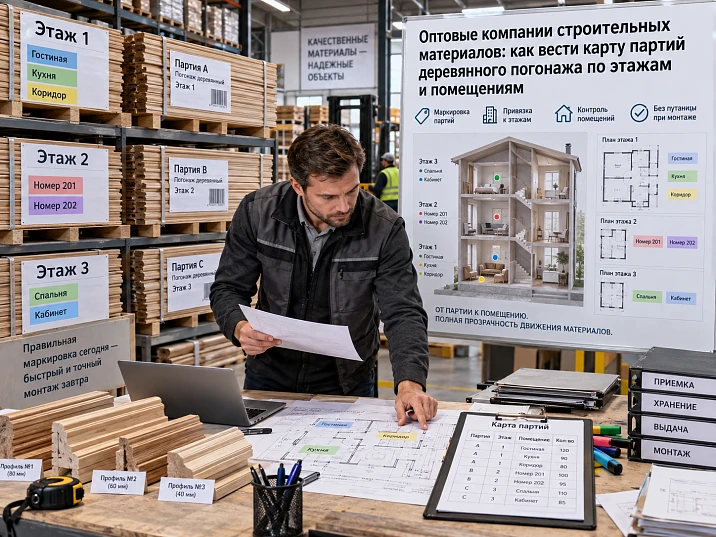
A 120-room hotel received wooden skirting boards in four deliveries. The first batch went to the first floor, the second to part of the second and third floors, the third covered the remaining rooms on the third floor and the entire fourth floor, and the fourth arrived later as a supplementary order. Six months later, the operations team notices the same problem in eight rooms. The article number is known, the material is known, and the total purchase volume is also known. But no one any longer understands which specific delivery the strips for these rooms came from.
If all batches were mixed together after unloading, the entire site will have to be inspected. If the link has been preserved, however:
LOT-02 → floor 3 → rooms 301–318,
the inspection scope shrinks immediately. Not because the batch number automatically proves the cause of the problem, but because the project knows the origin of the installed material and can meaningfully determine which zones are actually connected to the same delivery.
In this article wholesale building materials companies are not considered as tender participants or as a "supplier list." The main task is different: after several deliveries of the same wooden trim, preserve within the construction site the link between the product, the specific batch, and the installation location.
Central formula:
SKU → LOT → ZONE.
That is:
what it is → which batch it came from → where exactly it was installed.
For a large site, this is enough to turn the abstract "960 PLT-___ planks were on site" into a manageable origin map.
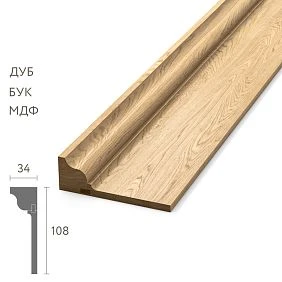
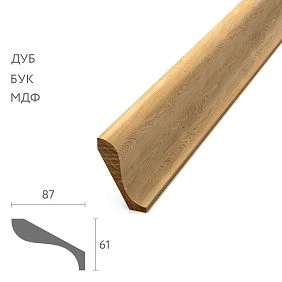
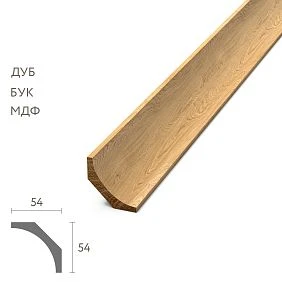
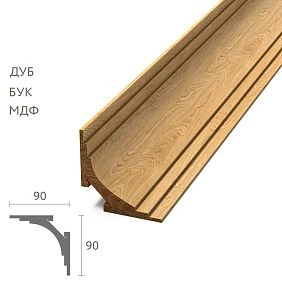
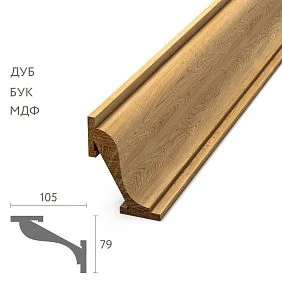
A single SKU can arrive at a site in several batches — this is normal
Several deliveries of the same SKU are not a problem in themselves. A large site rarely receives all the trim in one truck. The reasons can be entirely operational: phased production, construction by building and floor, limited storage space, different readiness dates for zones, a reorder after volume clarification, replacement of part of the goods, a separate operational reserve, and a schedule shift for one phase.
The problem appears not at the moment of the second delivery, but at the moment when the link to it is lost. After the packaging is removed, two batches of identical oak skirting can look the same. A week later, employees remember only the general SKU. A few months later, it is already difficult to restore the origin of a specific plank.
That is why the batch map is built, not to complicate logistics. It preserves information in the brief moment when it is still obvious.




SKU, batch, and zone answer three different questions
| Identifier | Question | Example |
|---|---|---|
| SKU | What is it? | MLD-___ |
| LOT | Which batch is it from? | LOT-04 |
| ZONE | Where is it installed? | FLOOR 2 / ROOMS 201–216 |
For example: MLD-050 → LOT-04 → FLOOR 2 / ROOMS 201–216.
If the last part is missing, production traceability ends at the warehouse. If the LOT is missing, the site knows the location but not the origin of the specific delivery.
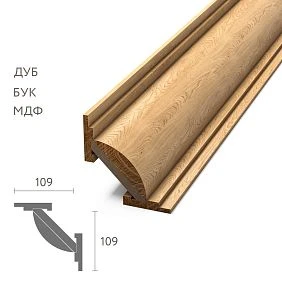
Our factory also produces:






The batch number must be saved before the packaging disappears
During production and delivery, the batch may be marked on the packaging. On site, the packaging is opened, the bundles are broken down, long-length items are carried between floors, and the original label is often thrown away.
It is precisely up to this point that the batch number must be transferred to the object ledger.
Received → read the marking → recorded the LOT → distributed → only then opened and issued.
If the manufacturer does not specify a batch number, it cannot be invented as an “official LOT.” In that case, the site may use its own delivery identifier, for example DELIVERY-03 or PO-018 / 12.09.2026. The main thing is to preserve the delivery → zone link.
Get Consultation
Supplier companies of construction materials: what to record upon acceptance
When building materials supplier companies if a large order is shipped in stages, it is useful for the site to transfer not only the quantity into the log.
| Field | What to fix |
|---|---|
| PO | Order number |
| SKU | Exact SKU |
| Material / finish | Oak, beech, MDF, or another confirmed finish |
| Length | Actual commercial length |
| LOT | Batch number, if specified |
| Quantity | Pieces / packages / other operational accounting |
| Date | Date of receipt |
| Current zone | Warehouse / building / floor |
| Status | RECEIVED / ALLOCATED / ISSUED / INSTALLED |
If there are multiple batches within a single delivery, they cannot be collapsed into one line just because they arrived on the same truck.
Order number and batch number are not the same thing
PO identifies a commercial order. LOT identifies a production or delivery group of goods. These concepts may overlap, but they are not interchangeable.
A single PO can contain multiple SKUs, multiple materials, multiple product lengths, multiple production batches, and multiple shipments. Therefore, the entry PO-018 does not always answer the question of which batch a specific installed profile belongs to.
Working chain: ZONE → LOT → PO → SPECIFICATION.
Wooden skirting board: how a batch gets lost on site in one day
С wooden skirting board this is especially clear. A typical day:
machine → unloading → packaging removed → bundles distributed → installers took the material.
Within a few hours, the labels are gone. What remains are visually identical planks. If the remainder of a previous delivery is lying nearby on the same day, the boundary between LOT-02 and LOT-03 disappears almost instantly.
How to maintain traceability without labeling each individual plank
For a construction site, it is not necessary to create a barcode on every part. In most cases, it is sufficient to work with packaging groups.
LOT-03 / FLOOR-3 / 42 PCS.
Before opening, a bundle is assigned to a specific floor or group of rooms. After being transferred to a floor, its contents are considered part of that designated group until redistribution occurs.
If a bundle is split between two floors, two Allocation lines are created. This is much simpler than individual labeling of each plank and provides sufficient traceability for most tasks.
ALLOCATION: distributing a batch before installation
| LOT | Received | Zone | Allocated |
|---|---|---|---|
| LOT-01 | 180 | Floor 1 | 140 |
| LOT-01 | Service reserve | 40 | |
| LOT-02 | 220 | Floor 2 | 180 |
| LOT-02 | Floor 3 | 40 |
Such a table is more useful than the entry “400 pcs. in stock” because it shows the future route. If the schedule changes, the Allocation can be changed, but the change must be logged before issue.
Large building materials supplier: traceability is needed even during normal operations
Working with a large building materials supplier does not remove the need for an object batch map. This is not a system of distrust toward the supplier and not an article about defects.
Traceability is useful even during normal operations: it shows where a specific delivery was used, which LOT remains in stock, what went into reserve, which order to repeat, and where to look for the material for a local issue.
Wooden molding: identical batches are especially easy to mix up
Two deliveries of the same wooden molding may look completely identical: MLD-043 / oak / LOT-01 and MLD-043 / oak / LOT-02. If one arrived in May and the other in July, visually they may still have no obvious differences.
But for the object’s history, it is useful to preserve the origin at least until installation is completed and the operational archive is formed.
Why the entry "MLD-043 — floor 2" may not be enough
If only one batch went to the second floor, such an entry works. If two went there, it already hides the transition.
Minimum line: MLD-043 / finish / LOT-02 / FLOOR 2.
If there are different materials, lengths, or finishes, these parameters must be added to the configuration.
Large building material suppliers: it is better to form the batch map before issuing to installers
When working through large building material suppliers a site may receive a large volume at once, but the sequence within the construction site remains the same:
received → identified → distributed → recorded → issued.
Not:
issued → then we will try to reconstruct what came from where.
After issuing, reconstruction is always more difficult because the packaging is opened, leftovers are moved, and some of the material has already been cut.
One batch can span three floors
This is a normal scenario. For example, LOT-05 contains 200 planks.
| LOT | Zone | Quantity |
|---|---|---|
| LOT-05 | Floor 2 | 60 |
| LOT-05 | Floor 3 | 80 |
| LOT-05 | Floor 4 | 45 |
| LOT-05 | Reserve | 15 |
Total — 200. The batch was not lost, even though it was split across four directions.
If a remark later arises in one zone, the map shows other places where the same LOT could have been used. This provides a basis for checking, but does not mean they should automatically be considered problematic.
One floor can receive two batches
The reverse scenario is also common. The third floor began installation with the remainder of LOT-02, then switched to LOT-04.
- LOT-02 — numbers 301–310;
- LOT-04 — numbers 311–320.
In this case, the "floor" level is already too coarse. A range of numbers or another more precise zone is needed.
The principle is simple: the detail must be sufficient to localize the transition between batches.
How to choose the detail level of a LOT-to-Zone Map
Not every property needs mapping down to an individual wall.
| Object type | Reasonable detail level |
|---|---|
| Small house | Room |
| Hotel | Floor + number range |
| Restaurant | Main hall / VIP / bar / entrance |
| Large private house | Floor + room |
| Serial property | Building + section + floor |
| Complex finishing of a single zone | Room + wall / area |
The higher the cost of subsequent verification and the more complex the batch distribution, the more useful the detail.
Wholesale building material suppliers: where the reasonable boundary of accounting lies
When working with wholesale building material suppliers there is no need to turn a construction site into a traceability laboratory and label every single plank individually.
The goal of the system is not a maximally detailed archive, but the ability, when a question arises, to narrow the scope of verification to a reasonable area.
If the map allows you to say: “this batch was potentially used in rooms 301–318,” the system is already performing a practical function.
Individual detail is needed only where risks or the cost of an error truly justify it.
Linking LOT to the order number allows you to return to the original specification
Example:
ROOM 314 → LOT-04 → PO-018 → SPEC REV05.
From a single operation record, you can trace back to the invoice, specification, material, commercial length, quantity, date, and order terms.
Therefore, it is useful to store the PO in the Installation Trace, even if the LOT is already known.
INSTALLATION TRACE — history of the origin of the installed material
| Zone | SKU | LOT | PO | Installation date | Status |
|---|---|---|---|---|---|
| 201–208 | PLT-A | LOT-02 | PO-015 | ___ | INSTALLED |
| 209–216 | PLT-A | LOT-03 | PO-019 | ___ | INSTALLED |
| Lobby | MLD-B | LOT-04 | PO-022 | ___ | INSTALLED |
This table does not replace warehouse accounting. It answers a different question:
where did what has already been installed come from?
How Installation Trace differs from AS-BUILT
AS-BUILT answers: what is installed?
For example: number 205 — PLT-A.
LOT TRACE answers: from which specific delivery was this PLT-A installed?
For example: number 205 — PLT-A / LOT-02 / PO-015.
AS-BUILT is needed to know the actual composition of the interior. The LOT-to-Zone Map adds the origin of a specific batch. These are different levels of data.
What happens with a claim without a batch map
Suppose an issue is found in room 314. Without an origin map, only the SKU is known. To understand the scope, you have to trace the history of the entire PLT-A at the site.
With the map: ROOM 314 → LOT-04.
Next, you can view all zones of LOT-04 and check exactly those.
However, you cannot claim that the discovered problem automatically extends to the entire batch. The LOT is needed to find related zones, not for an automatic diagnosis.
How to determine the scope of the check
Work sequence:
found an issue → found the LOT → found zones of the same LOT → selected relevant zones → checked → determined the actual scope.
This protects against two extremes: checking nothing beyond the first room and checking the entire site unnecessarily.
Adjacent rooms do not necessarily belong to the same batch
Numbers 312 and 313 could be installed consecutively, but this does not mean they share the same origin.
ROOM 312 — LOT-03 CLOSED.
ROOM 313 — LOT-04 START.
Geographic proximity does not replace a batch transition log.
The transition between two LOTs must be recorded separately
The most valuable entry sometimes takes up a single line:
ROOM 312 — LOT-03 CLOSED / ROOM 313 — LOT-04 START.
Six months later, it allows the supply boundary to be restored instantly.
If installation runs along walls, it is recorded similarly: WALL-B / LOT-03 END → WALL-C / LOT-04 START.
The usable remainder of an old batch must not be thrown into a new common stack
Traceability most often breaks down precisely at remainders. Two whole elements and one 820 mm offcut were left from LOT-03. LOT-04 has already arrived at the warehouse.
If everything is put together, the origin is lost within a day.
It is better to keep: PLT-A / LOT-03 / 2 PCS + 820 MM OFFCUT.
If this remainder is later assigned to room 317, a new Allocation from LOT-03 appears on the map.
The service reserve must also preserve its origin
For example: SERVICE RESERVE / PLT-A / LOT-03 / 8 PCS.
This does not mean that future repairs must use only LOT-03. But operations knows exactly what is stored in the warehouse and which delivery this remainder came from.
If the reserve is later replenished with LOT-07, the two groups can be stored separately or merged only after a deliberate decision and a corresponding record.
A reorder receives its own source
New order: PO-034 / LOT-07.
It cannot be retroactively renamed to LOT-03 just because the SKU is the same.
On the contrary, the map must show which rooms or repair zones have already received material from the new source.
Batch map for the hotel
| Zone | Batch |
|---|---|
| Floor 1 | LOT-01 |
| Floor 2 | LOT-02 |
| Floor 3 / 301–310 | LOT-02 |
| Floor 3 / 311–320 | LOT-03 |
| Floor 4 | LOT-03 |
| Service Reserve | LOT-03 + LOT-04 |
Such a scheme immediately shows transitions and mixed zones.
Batch map for a restaurant
For a restaurant, it makes more sense to divide not by floors, but by functional zones:
- main hall — LOT-A;
- VIP — LOT-A;
- bar — LOT-B;
- entrance — LOT-C after the project change.
Two years later, during local repairs, it becomes clear why a visually similar profile in the entrance area may come from a different delivery.
How not to turn a batch map into bureaucracy
There is no need to force the installer to fill out a form after every cut. For most sites, it is enough to record five events:
- receipt;
- batch distribution;
- transition to a new LOT;
- return of usable remainder;
- reorder / new delivery.
If these events are recorded, provenance is preserved without excessive burden on the crew.
Minimum data set for a real construction site
Basic minimum: SKU + finish + LOT / Delivery ID + zone + quantity.
Additionally as needed: PO, date, revision, material, length, FINISH, installation status, and photo of packaging marking.
The system must remain applicable on site, otherwise it will stop being maintained.
If the production batch number is unavailable
You cannot invent a LOT. Use the object identifier of the delivery:
DELIVERY-03 or PO-018 / 12.09.2026.
Then the system becomes: delivery → zone.
It is less detailed than a production LOT, but still far more useful than a complete loss of provenance.
How to label an object group after allocation
If the manufacturer's packaging is opened, the object may create its own temporary labeling. It must not replace the production LOT, but only preserves the link between the original batch and the zone.
For example:
PLT-A / LOT-03 / FLOOR-3 / 42 PCS.
The labeling must match the Allocation record. A colored sticker can be used additionally, but a text code is more reliable. A new employee must understand the contents without a verbal legend.
What to do if one LOT contains different configurations
The batch number does not remove the need for product identification. If one delivery group contains different materials, lengths, or finishes, the card must preserve the configuration.
For example:
MLD-___ / OAK / F02 / LOT-06 / LOBBY.
and:
MLD-___ / BEECH / F01 / LOT-06 / ROOMS.
Even a shared LOT does not make these lines interchangeable. The LOT answers for provenance, while the configuration answers for what exactly was installed.
How to control the balance of a single batch
For a LOT, you can maintain a simple material balance:
received = distributed + remaining + reserved + waste / return.
| LOT | Received | Allocated | Reserve | Remainder | Status |
|---|---|---|---|---|---|
| LOT-05 | 200 | 185 | 10 | 5 | OK |
The balance does not replace the zone map, but it helps to see that part of the batch has been lost from accounting. If you received 200, distributed 170, reserved 10, and physically 8 remain in the warehouse, the difference requires an explanation.
How to handle material returns from the floor
After the shift, installers return six intact planks. If they are placed in the common stack without a LOT, traceability will be lost.
The return record must contain:
SKU / LOT / where it was returned from / quantity / condition.
For example:
PLT-A / LOT-03 / FLOOR-3 / RETURN 6 PCS / GOOD.
After that, the planks can be redistributed to another zone. If one element is damaged, it should not be returned to the "GOOD" balance just because it is geometrically intact.
How to process redistribution between floors
Suppose Floor 2 received 180 LOT-02 items but used 165. The remaining 15 were sent to Floor 3.
You need to not just reduce the remaining quantity, but record a Transfer:
LOT-02 / TRANSFER / FLOOR 2 → FLOOR 3 / 15 PCS.
Then the third-floor map shows two sources: the original Allocation and the Transfer. If a question arises about one room a month later, you can reconstruct which part of the delivery it was furnished from.
Why the batch map is useful for local reordering
If LOT-03 is installed in rooms 311–320, and a reorder is required to repair one room, operations can check whether the LOT-03 service reserve is still available and which PO was the original one.
If there is no reserve, the new order will still be a new delivery. But the source data simplifies verification of the specification, material, length, and finish.
A new batch should not artificially receive the old LOT. A new source will appear on the map, for example LOT-07 or DELIVERY-07.
How to hand over the operations map after construction is completed
After installation, the LOT-to-Zone Map does not need to be deleted. It can be handed over together with the as-built documentation as an additional provenance layer.
Minimum set:
- AS-BUILT — what is installed;
- LOT TRACE — from which delivery;
- service reserve registry;
- LOT → PO link;
- photo of packaging marking for critical batches;
- log of transitions between LOTs;
- latest version of Allocation.
This way, operations not only see the SKU but also understand the history of a specific zone.
How to use the map for sampling inspection
If an issue appears in one room, the map allows you to build a sample.
- ROOM 314 → LOT-04.
- LOT-04 was used in 311–320 and partially on Floor 4.
- Several relevant zones of the same LOT are selected.
- An actual inspection is carried out.
- Only after that is the real scope determined.
This is far more rational than automatically inspecting all 120 rooms.
How not to confuse correlation with causation
If the same problem is found in several rooms of LOT-04, this does not yet prove that the batch itself is the cause. The coincidence may be explained by a shared installation crew, the same operating zone, a single finishing system, or another factor.
LOT helps form a testable hypothesis:
“these rooms are linked by a single delivery.”
But a technical conclusion about the cause requires a separate check.
This is a fundamental limitation. The origin map is a diagnostic tool, not an automatic verdict.
When the batch map is especially valuable
It is most useful in several situations:
- one SKU arrives in four or more deliveries;
- the site has many identical rooms;
- installation is long and phased;
- some material is moved between floors;
- there is a service reserve;
- backorders expected;
- natural materials are used with possible visual variations;
- the object must be maintained for a long time after handover.
When a detailed batch map is excessive
On a small project where the entire SKU arrived in one delivery and went entirely into one room, a separate LOT-to-Zone Map may be excessive. It is enough to keep the PO, batch marking, and an entry in AS-BUILT.
A detailed system is justified where several sources can actually mix.
How to choose a project zone code
The code should be short and unambiguous. For example:
- H-301 — hotel room 301;
- F3-301-310 — rooms 301–310 on the third floor;
- REST-VIP — restaurant VIP room;
- BLDG-A-F2 — building A, second floor;
- LOBBY-WALL-B — wall B in the lobby.
The code should not depend on a verbal description like “left wing.” If the drawings already have stable designations, it is better to use them.
How to photograph batch marking
A photo of the label is a simple fallback source. But it is useful only with a clear reference.
You can use the following in the file name:
PO-018_LOT-04_PLT-A_RECEIVED_2026-09-12.jpg.
If the package is already assigned to a floor:
LOT-04_F3_ALLOCATED_01.jpg.
A random photo without a name is almost useless six months later.
How to maintain the map if there are multiple contractors
On a single floor, the skirting board may be installed by a finishing crew, while the moulding is handled by a specialised one. Each receives materials independently. In this case, the overall LOT register is better maintained at the level of the client or general contractor, rather than left inside the phones of individual site supervisors.
Contractors can fill in their own rows, but the data source is single. Otherwise, LOT-03 for one crew may mean a site delivery, while for another it means their internal third pack.
How to distinguish a production LOT from a site Delivery ID
To avoid confusion, it is useful to have two fields in the table:
| Field | What does it mean |
|---|---|
| Manufacturer Lot | Manufacturer's batch number, if specified |
| Project Delivery ID | Own identifier for the site receipt |
For example:
Manufacturer Lot: 24-071 / Delivery ID: D-05.
If there is no production number, the first field remains empty, and the site still retains the Delivery ID.
How to account for partially opened packaging
Pack LOT-05 contains 20 planks. 12 went into installation, 8 remained. After opening, the external factory label may disappear.
Before returning the remainder to the warehouse, an internal label is created:
MLD-___ / LOT-05 / REMAIN 8 PCS.
It is precisely on partially used packs that traceability is most often lost.
How to maintain the map when floors are opened in stages
In a hotel, Floor 3 may be installed not as a whole, but in blocks. For example:
- 301–306 — LOT-02;
- 307–312 — LOT-02 + remainder of LOT-01;
- 313–320 — LOT-03.
In this case, the "Floor 3" range is insufficient. The map must show the mixed section separately.
It is especially useful to record not only the main LOT of the zone, but also the exceptions.
How to handle a single room where two batches were used
This is an edge case, but it is possible: installation began with the remainder of LOT-02, then LOT-03 was completed.
Instead of trying to assign a single LOT to the room, you can record:
ROOM 309 / WALLS A-B — LOT-02 / WALLS C-D — LOT-03.
If such detail is not needed for the entire site, it is used only in mixed rooms.
How not to lose LOT during cutting
After cutting, an individual piece no longer carries the factory label. But if cutting is performed within a pre-assigned zone, the origin is preserved through Allocation.
For example, the entire batch LOT-03 was allocated to Rooms 301–306. Pieces from it remain within this block, and there is no need to label each one individually.
However, if offcuts are returned to the general warehouse, they must be labeled again.
How to document useful offcuts
A useful offcut can be valuable for future repairs, especially for a rare profile. The record must contain:
- SKU;
- LOT;
- length;
- condition;
- if necessary, FINISH;
- storage location.
For example:
MLD-043 / LOT-02 / 930 MM / GOOD / RESERVE-R2.
How to link LOT to finish
If a single SKU exists in multiple FINISH, the batch number cannot be tracked separately from the configuration.
Example:
MLD-___ / OAK / F02 / LOT-07.
and:
MLD-___ / OAK / F03 / LOT-08.
On a project, the same article and material do not yet mean interchangeability. The card must preserve both the origin and the finish.
How to act in case of a mix-up between LOTs
If a pack of LOT-05 is found in the LOT-04 zone, first stop further issuing of the disputed group.
Next:
- recount both batches;
- verify the Allocation;
- check the zones already issued;
- update the actual map;
- if necessary, create a CORRECTION entry.
You cannot simply move the pack and leave the table unchanged.
How to check the map before closing the floor
Before the FLOOR COMPLETE status, it is useful to verify:
- which LOTs were assigned;
- which were actually issued;
- whether there are mixed rooms;
- whether leftovers were returned;
- whether the reserve was updated;
- whether there are any open Transfers.
After this, the floor can be considered closed from a traceability standpoint.
How the batch map helps with reordering a year later
Operations sees: rooms 401–418 have PLT-A / LOT-03 / PO-019 installed. If one plank needs to be replaced, it first checks the service reserve LOT-03. If there is none, it opens the original PO and specification.
A new purchase may still differ by batch, but the original information makes the request precise.
How to store history after an AS-BUILT change
If two years later room 405 was renovated and a material from LOT-09 was installed, AS-BUILT receives a new as-built record, and LOT TRACE is updated:
ROOM 405 / PLT-A / LOT-09 / PO-044 / REPAIR 2028.
The history of the original LOT-03 can be preserved in the Change Log. This way traceability continues after operation as well.
How to verify that the lot map is actually useful and not merely formal
A good map should allow you to answer a practical question within a few minutes. For example: "from which delivery was the skirting board in room 315 taken?" or "where else is LOT-04 installed?"
If answering requires calling three employees, searching for photos in a messenger, and cross-checking old invoices, the map formally exists but does not fulfill its function.
Minimum test:
- Select a random room.
- Find the SKU.
- Find the LOT or Delivery ID.
- Find the related PO.
- Show other zones of the same batch.
- Check stock and reserved quantity.
If the chain works without manual investigation, traceability is set up correctly.
How to organize a weekly check without unnecessary bureaucracy
On an active multi-stage project, short regular change control is sufficient. There is no need to recalculate the entire archive every week.
Checked:
- new deliveries;
- new LOT / Delivery ID;
- redistributions between zones;
- transitions between batches;
- returned stock;
- service reserve changes;
- unclosed mixed rooms.
If there are no changes, the map remains without rewriting.
How to link the batch map to the defect report
If a remark appears on the site, the defect report may contain a separate LOT field.
| Zone | SKU | LOT | Remark | Verification status |
|---|---|---|---|---|
| Room 314 | PLT-A | LOT-04 | ___ | OPEN |
| Room 317 | PLT-A | LOT-04 | ___ | CHECKED |
This way, the claim does not create a separate unrelated table. It uses the existing origin map.
How not to lose the link after a local replacement
If in room 314 one plank LOT-04 was replaced with a new one from LOT-09, the history must be updated. Otherwise AS-BUILT will describe the correct SKU, while LOT TRACE remains old.
For a local replacement, the following entry is sufficient:
ROOM 314 / REPLACEMENT / PLT-A / OLD LOT-04 → NEW LOT-09 / PO-044.
If one short section was replaced, the wall or coordinate can be specified if necessary.
How to work with multiple suppliers of the same SKU
Sometimes the same profile is purchased from different channels or suppliers. Then the LOT-to-Zone Map becomes even more useful, because you need to preserve not only the batch but also the source.
Full line:
SKU / MATERIAL / SUPPLIER / LOT / PO / ZONE.
This does not mean that different suppliers automatically provide different products. But the origin history must remain verifiable.
How not to confuse a Supplier Lot and a contractor's Internal Lot
A contractor may assign internal numbers to packs independently. For example, “LOT-3” in their log is the third batch issued to the crew, not a production LOT.
To avoid ambiguity, it is better to use different fields:
- Manufacturer Lot;
- Supplier / Delivery ID;
- Contractor Issue Batch.
If an internal code is needed, it must not be disguised as an official batch number.
What to do if the batch marking is damaged
If the label is only partially readable, do not reconstruct the missing characters by guessing.
Possible actions:
- check other packages from the same delivery;
- check the delivery note;
- check the photo upon receipt;
- verify the data with the supplier;
- if the exact LOT is not confirmed — use the Delivery ID.
An honest Delivery ID is better than a fabricated production number.
How to track batches with clear wood finish
For oak, beech, and other materials with visible grain, batch origin can be especially useful because repeat deliveries naturally differ in wood pattern and shade.
But a batch map does not guarantee visual identity within a single batch and should not promise it. It only provides information about origin.
If visual uniformity is critical, a separate system of samples and finish acceptance is needed. The LOT-to-Zone Map complements it rather than replaces it.
How to track batches with opaque paint finish
With opaque enamel, the visual difference in wood may be less noticeable, but traceability is still useful for supply history, reordering, and technical questions.
Therefore, the map does not need to be abandoned just because the finish is opaque. But the level of detail can be chosen more simply.
Which file format to use
A specialized system is not required. For most projects, a table with filters is sufficient.
Required columns:
- Zone ID;
- SKU;
- Execution;
- Manufacturer Lot;
- Delivery ID;
- PO;
- Allocated Qty;
- Installed Qty;
- Returned Qty;
- Reserve Qty;
- Status;
- Comment.
If there is a lot of data, the file can be split into Received Lots, Allocation, and Installation Trace, but the key identifiers must match.
How to avoid double entry of the same information
There is no need to manually rewrite the same data into five tables. You can use a single LOT register as the source and create views for warehouse, installation, and operation.
For example:
- Warehouse View — LOT, balance, storage location;
- Site View — LOT, zone, issued, return;
- Installation View — zone, SKU, LOT, PO;
- Service View — zone, SKU, LOT, reserve.
This way information doesn't diverge due to manual copying.
How to tell that the detail level is too coarse
If, after detecting a problem, the map still forces you to check half of the site, the detail level is insufficient.
For example, the entry:
LOT-02 → HOTEL.
formally is a map, but provides almost no practical value.
Better:
LOT-02 → Floor 2 + Rooms 301–310.
The detail level should narrow down the search area.
How to tell that the detail level is too fine
If installers have to record a LOT for each individual 420-millimeter segment, the system is most likely too heavy.
If one LOT is assigned to a batch, the batch to a zone, and all segments remain within it, that is sufficient.
A good system is minimal but preserves provenance during real movements.
Large building materials supplier: how to continue production traceability within the site
If large supplier of building materials marks products with a batch, the construction site does not need to create its own "production LOT". Its task is to continue the chain after acceptance.
Before the site, traceability may look like this:
raw materials → production → LOT → packaging → shipment.
At the site, the following is added to it:
LOT → Allocation → Floor / Room → Installation Trace → Service Reserve.
The most vulnerable point is the moment when the packaging is opened but the material has not yet been distributed. This is exactly where the batch number needs to be transferred to the site log.
If the labeling contains a lot of production data, there is no need to copy all of it. For the site card, the fields that allow the installed material to be reliably linked to the original delivery are sufficient.
Wholesale building materials suppliers: how to manage overlapping deliveries of the same SKU
When Wholesale building material suppliers they close out the object with several shipments, one delivery can span multiple floors, and one floor can receive several batches.
| Delivery | LOT | SKU | Zone | Qty | ||||||||||||||||||||||||||||||||||||||||||||||||||||||||||||||
|---|---|---|---|---|---|---|---|---|---|---|---|---|---|---|---|---|---|---|---|---|---|---|---|---|---|---|---|---|---|---|---|---|---|---|---|---|---|---|---|---|---|---|---|---|---|---|---|---|---|---|---|---|---|---|---|---|---|---|---|---|---|---|---|---|---|---|
| D-01 | LOT-01 | PLT-A | Floor 1 | 140 | ||||||||||||||||||||||||||||||||||||||||||||||||||||||||||||||
| D-02 | LOT-02 | PLT-A | Floor 2 | 180 | ||||||||||||||||||||||||||||||||||||||||||||||||||||||||||||||
| D-02 | LOT-02 | PLT-A | Floor 3 / 301–306 | 40 | ||||||||||||||||||||||||||||||||||||||||||||||||||||||||||||||
| D-03 | LOT-03 | PLT-A | Floor 3 / 307–320 | 95 | ||||||||||||||||||||||||||||||||||||||||||||||||||||||||||||||
| D-03 | LOT-03 | PLT-A |
RHow to record cornice batches along the perimeter of a large hallFor a ceiling cornice, a convenient boundary is often the corner of the room.
This way one large zone remains readable without tracking each plank individually. How to record molding batches in serial wall framesFor repeating frames, it is convenient to use panel ranges: LOBBY / PANELS A01–A12 / MLD-___ / LOT-04. LOBBY / PANELS A13–A18 / MLD-___ / LOT-05. This is more precise than writing “Lobby — LOT-04 + LOT-05,” and it is still simple enough for the construction site. What to do if the system is introduced after part of the marking has already been lostA late start does not mean the map cannot be assembled at all. But a reconstruction must not be presented as a confirmed fact. Sources can include:
For restored lines, you can use:
For example, if it is only known that Floor 3 was installed between D-02 and D-03, you can record DELIVERY RANGE D-02–D-03 instead of a fabricated LOT. How not to lose the map when the site foreman changesThe origin of the material should not exist only in one employee's memory. When handing over duties, the new site foreman receives:
If this story cannot be conveyed without an hour-long oral account, the system is too dependent on people. How to close a lot after full consumptionA LOT receives the CLOSED status when:
CLOSED does not mean deletion. The record remains in the object's history but no longer participates in the current balance. Why the lot map helps with inventoryWithout LOT, the warehouse shows "PLT-A — 42 pcs.". With traceability, it is clear: PLT-A / LOT-03 — 8 pcs. PLT-A / LOT-07 — 34 pcs. If LOT-03 should already be CLOSED in the documents, eight items immediately require an explanation: a forgotten reserve, a return, or an accounting error. How to link the map to staged payments without turning it into bookkeepingIf a PO is paid in installments, the LOT register only needs the order number and, if necessary, the stage. Amounts and payments remain in financial accounting. The LOT-to-Zone Map is responsible for the origin of the material. If a financial field does not help identify the delivery, it does not need to be duplicated. What to hand over to the service department at commissioningOperations does not need a full daily warehouse log. It needs a compact layer:
This is enough to return to the origin and the original specification during future repairs. Practical example: four deliveries for a 120-room hotelImagine a project where a single skirting board PLT-A is used in all rooms and corridors. Over four months, four batches arrived:
With conventional tracking, after a few months only one figure remains: PLT-A — 960 pcs. With a LOT-to-Zone Map, the story looks different.
Six months later, the note appears in 309, 314, and 327. All three numbers belong to LOT-03. This does not prove a common cause, but it gives a clear next step: check several other zones of LOT-03 and compare the result. There is no need to check Floor 1 and Floor 2 at once. Decision tree: to what level of detail should the zone be broken down?The level of tracking can be chosen using simple logic. Does one batch cover the entire zone? Keep the floor or room level. Do two batches intersect within the zone? Go down to the range of numbers, wall, or panel. Do batches mix within a single wall? Record the physical boundary — axis, corner, doorway. Is an error in one element critical and does it require individual provenance? Only then does it make sense to label individual items. This way, the system does not automatically receive maximum detail, but chooses the minimum sufficient level. How to assess the economic usefulness of a batch map without made-up numbersThere is no need to promise that a batch map “saves 30%” or delivers a specific financial return without project data. But its effect can be described concretely. Without a map, the inspection area is determined across the entire SKU. With a map — by the zones of a specific LOT. Consequently, the following are potentially reduced:
On a small site, the gain may be minimal. In a hotel, office complex, or chain facility, localization already has practical value. How to implement a LOT-to-Zone Map if construction is already underwayYou don't have to wait for the next project. If part of the facility is already installed, the system can be started from the current state.
This way the quality of the map gradually improves. There is no need to wait for a perfect reconstruction of old stages in order to stop losing data from new ones. What control is needed before the final handover of the mapBefore handing over the site, you need to check not every operation again, but the logical integrity of the registry.
After this check, the map becomes not a working construction note, but a document suitable for operation. When there is no need to preserve the production LOT down to the room levelTraceability should solve a real problem, not create an archive for the sake of an archive. If one SKU arrived in a single delivery, was fully used in one room, and has no multiple versions, recording the LOT at the room level adds almost nothing. In that case, it is sufficient to keep the order number, SKU, the overall supply identifier, and the fact of installation. A detailed LOT-to-Zone Map becomes useful when one of the boundaries starts to branch: multiple batches, multiple floors, stock transfers, reorders, service reserve, or subsequent repair queues. A good rule: if you can still unambiguously tell where the material in a specific zone came from without LOT, additional detail may be unnecessary. If the answer requires guesswork or checking the entire site, the map should be kept in more detail. 15 batch map mistakes1. Discarding the labeling before recordingCause: packaging gets in the way of unloading. Consequence: LOT is lost on the very first day. Prevention: photo and record first, then open. 2. Treating the order number as the production batch numberCause: one PO is perceived as one batch. Consequence: the actual production grouping is hidden. Prevention: keep PO and LOT separate. 3. Mixing two deliveries of the same SKUCause: the profile looks identical. Consequence: the origin of installed elements is lost. Prevention: separate zones before Allocation. 4. Mixing oak and beech of the same SKUCause: they rely only on SKU. Consequence: the batch map is preserved, but the item is identified incorrectly. Prevention: SKU + finish + LOT. 5. Not recording the LOT transfer between roomsCause: installation proceeds continuously. Consequence: the batch boundary is unknown. Prevention: CLOSED / START mark. 6. Treating the entire floor as one batch without verificationCause: the floor is convenient as a large zone. Consequence: mixed Floor 3 is mistakenly becomes LOT-02. Prevention: detail by number ranges. 7. Returning leftovers to the common pileCause: the remainder is small. Consequence: traceability breaks on return. Prevention: return by LOT. 8. Not labeling the service reserveCause: SKU seems sufficient. Consequence: a year later the origin of the stock is unknown. Prevention: SKU + LOT + quantity. 9. After reordering, continuing to use the old LOTCause: the item is the same. Consequence: the new delivery loses its own history. Prevention: new PO / LOT / Delivery ID. 10. Keep the map only on the foreman's phoneCause: it's faster. Consequence: data disappears when an employee changes. Prevention: a single project registry. 11. Do not link LOT to POCause: the batch has already been recorded. Consequence: it is difficult to return to the order specification. Prevention: PO is a mandatory additional field. 12. Do not update the map after redistributionCause: the material was urgently moved to another floor. Consequence: documentation and reality diverge. Prevention: Transfer event. 13. Delete records after installation is completedCause: they consider them a temporary warehouse document. Consequence: operation loses the history of origin. Prevention: hand over LOT TRACE together with AS-BUILT. 14. Consider LOT proof of the cause of a defectCause: the problem is found in one room. Consequence: the entire batch is declared problematic without verification. Prevention: LOT only localizes the related zones. 15. Checking the entire site, even though the map allows narrowing the areaCause: traceability exists, but it is not used. Consequence: extra work and downtime. Prevention: build verification from LOT-to-Zone. 16. Inventing a LOT that the manufacturer did not specifyCause: the desire to preserve the format. Consequence: the object code is mistaken for a production code. Prevention: use Delivery ID and explicitly specify its type. 17. Making the detail so complex that it stops being maintainedCause: the pursuit of absolute traceability. Consequence: the log is filled out formally or abandoned. Prevention: record only events that change origin and zone. What to prepare before the first delivery so that the batch map works immediatelyThe simplest way to avoid reconstructing origin retroactively is to prepare the structure before the first truck arrives. You need zone coding, a LOT-register template, a person responsible for acceptance, and a rule for labeling opened packs. Before delivery, it is worth defining:
This preparation takes less effort than subsequently reconstructing the history from delivery notes and correspondence. Especially at a site where the same linear trim arrives once every few weeks and gradually gets distributed across floors. Ready-made batch map workflowPO → delivery → SKU → LOT → acceptance → ALLOCATION → zone → installation → remainder → reserve → INSTALLATION TRACE → AS-BUILT.
What result should the site manager receive?After implementing the batch map, the manager no longer needs to remember material movement. For each batch, they can see:
This turns a long procurement history into a manageable system. Bottom line: knowing what was purchased is not enough — on a large project, it is useful to know where a specific delivery wentThe SKU gives the product its identity. The batch number or Delivery ID gives its origin. The zone gives its place of use. Only together do these three layers turn several deliveries of the same linear trim into a manageable history of the project. A batch map is not needed for the sake of the table itself. It is needed so that months or years later you can answer:
Short formula: SKU → LOT → ZONE → TRACE. This is the object traceability of wooden trim. Frequently asked questionsShould the batch number be recorded on each plank?No. For most objects, packaging groups, zone allocation, and batch transition records are sufficient. Individual marking is only needed when the cost of an error is truly high. What should be done if there is no LOT on the packaging?Do not invent a production number. Use the object Delivery ID, order number, and delivery date. Can one PO be considered one batch?Not always. One order may contain several production batches or several shipments. PO and LOT must be stored separately. If one floor received two batches, how should the map be maintained?Reduce the level of detail to a range of rooms, a room, or another area where the actual LOT boundary lies. Should LOT be preserved in the service reserve?Useful. Then operations understands the origin of the remaining items and can link them to the original delivery. Does LOT mean that all items in the batch have the same issue?No. LOT only helps to find related zones. The actual scope is determined by a separate inspection. How does LOT TRACE differ from AS-BUILT?AS-BUILT says what is installed. LOT TRACE adds the origin of the specific delivery from which this material was taken. Can the map be deleted after the project is handed over?It is not advisable if the project is large and service, repair, or repeat orders are planned. The map becomes a useful layer of operational history. What should be done with the remainder of the old LOT after a new batch arrives?Store it separately or at least keep the origin marking. If the remainder is transferred to a new zone, process a Transfer / Allocation. What is the minimum data set required?SKU, finish, LOT or Delivery ID, zone, and quantity. PO, date, and status are added when possible. |