Article Contents:
- Wholesale trade in building materials: a wide assortment does not mean a huge physical warehouse
- Why wooden trim is especially sensitive to incorrect inventory
- Wooden skirting board: which items are reasonable to consider for permanent availability
- Why you should not build stock only from the cheapest wooden skirting boards
- Wooden moulding: where the highest risk of bloated product range arises
- How to divide wooden mouldings into A/B/C
- A — permanent availability
- B — limited stock
- C — sample + order
- 1. Gross profit
- 2. Turnover rate
- 3. Average warehouse stock
- A
- B
- C

A wide catalog of wooden mouldings does not mean that a store, showroom, or dealer must physically keep every profile in stock. What matters more for a business is understanding which skirting boards, mouldings, and cornices actually sell regularly, which are needed from time to time, and which are better shown to the client as a sample and ordered for a specific project.
If wholesale trade in building materials is built on the principle of "the more goods in stock, the better," capital is quickly distributed among dozens of SKUs with different sales velocities. Some items have to be constantly reordered, others do not move for months, and still others remain as short leftovers that are no longer enough for a typical project. As a result, the warehouse is full, but there is not enough free money to replenish fast-moving items.
The working model looks different:
SKU → real demand → typical order → target stock → reorder point → remaining stock → turnover → decision "warehouse / small stock / sample + made to order."
The assortment may include many profiles, but the physical stock should be different. A fast-moving wooden skirting board can be kept permanently. A less predictable moulding can be kept in a limited batch. A rare large cornice can be shown as a sample and ordered for a project. Such a system allows the offering to be expanded without having to freeze money in the entire catalog.
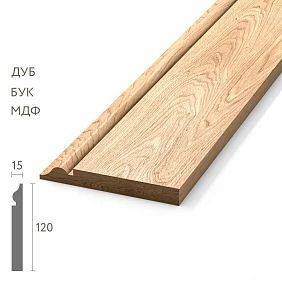
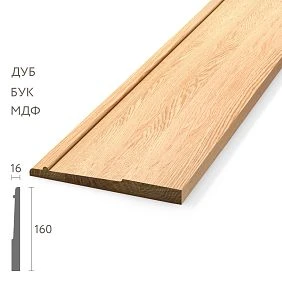
Wholesale trade in building materials: a wide assortment does not mean a huge physical warehouse
The main mistake of a product matrix is treating assortment and stock as one and the same.
A store may conditionally have 60 profiles. If you buy 100 m of each, the warehouse will contain 6,000 linear meters. But demand will not be distributed evenly. One skirting board may sell monthly, another moulding several times a year, and a special cornice only in certain design projects.
Therefore, it is useful to divide the nomenclature into three availability models:
| Group | How we sell | Stock logic |
|---|---|---|
| A | Permanent warehouse stock | Regular demand, predictable sales velocity, sensitivity to stockouts |
| B | Small stock + reorder | Sales exist, but volume is less predictable |
| C | Sample + project-based order | Rare, expensive, large, or highly project-dependent profile |
This is not a fixed classification forever. An SKU can move from C to B if it starts being requested regularly, or from A to B if sales slow down. The product matrix should reflect current reality, not purchasing history.




Why wooden mouldings are especially sensitive to incorrect inventory stock
Moulding splits a warehouse more than many universal materials. A single product is not just a "moulding" or a "skirting board".
Items differ by:
- SKU;
- width and thickness;
- cross-section;
- relief;
- by material;
- length;
- style;
- purpose in the project.
If you keep stock for every combination, the warehouse quickly turns into a set of small batches. On paper, the cost is spread across many product lines. In practice, part of the money ends up in profiles that rarely sell or are hard to assemble into a complete order.
The most dangerous is the leftover that "exists" but is insufficient for an ordinary customer. Formally, the SKU is listed as in stock, but in reality a new project still requires a separate order.
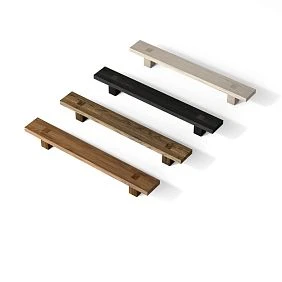
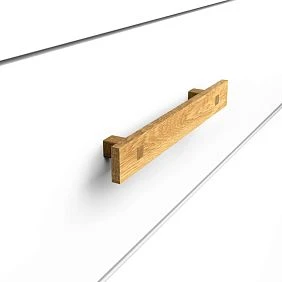
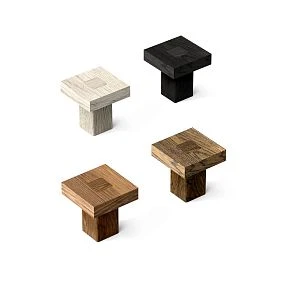
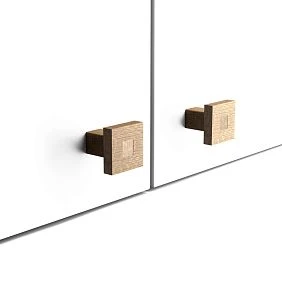
Our factory also produces:



Wooden skirting boards: which items make sense to keep in permanent stock
There is no universal list of skirting boards that every dealer must keep in stock. The decision should be based on the statistics of a specific location.
For each SKU, it is useful to check:
- order frequency;
- number of different customers;
- average order volume;
- share of repeat purchases;
- share of urgent reorders;
- how often a sale is lost due to being out of stock;
- how long replenishment takes.
If a skirting board is purchased regularly, in predictable volumes, and its absence leads to order delays, there are grounds for keeping it in permanent stock.
If there was only one large project in a year, it is too early to conclude that demand is stable. 800 m in a single sale is not the same as twenty orders of 40 m each. For a warehouse, repeatability matters more than an impressive annual total.
Get Consultation
Why you shouldn't build stock only from the cheapest wooden skirting boards
A low purchase price reduces the cost of a single purchase, but it does not make an SKU a good warehouse item.
A cheap profile may have low demand and sit idle for months. If it takes up space and ties up money, the benefit of a low entry price gradually disappears.
A more expensive skirting board may sell regularly in large project batches and return the invested capital faster.
Therefore, you need to look at the following at the same time:
margin × sales frequency × average order × turnover rate × average stock.
A product with moderate margin and regular demand is often more useful for a warehouse than a product with a high markup that sells twice a year.
Wooden moulding: where the highest risk of bloated product range arises
Moldings are especially sensitive to excess stock. A catalog may contain many profiles that are similar in purpose but differ in width, cross-section, relief, and style.
For the client, this variability is valuable: the designer needs choice. For the warehouse, it creates a risk of fragmentation.
If a store purchases a small batch of each similar molding, the money is spread across dozens of SKUs. At the same time, one profile becomes a hit, while five neighboring ones sell rarely.
It is more correct to separate the breadth of the displayed assortment from the breadth of physical stock. The client can see twenty options in the showroom, but only those with statistics confirming regular movement need to be stocked in large volume.
How to divide wooden moldings into A/B/C
A — constant availability
Profiles that sell regularly, are used in various projects, and have repeatable demand. Out-of-stock situations for them are especially painful.
B — limited stock
Items with actual sales but lower frequency or a wider spread of volumes. For them, you can keep a small working balance and replenish based on actual movement.
C — sample + order
Rare, specific, or expensive-to-store moldings. The client gets acquainted with the profile via a physical sample, and the main volume is ordered after project approval.
The class should be assigned based on data, not on the manager's taste.
What to review quarterly
The frequency depends on the business, but the matrix cannot be set up once and forgotten. For a practical review, it is convenient to regularly look at each SKU:
- sales for the period;
- number of orders;
- current stock;
- average stock;
- days without movement;
- reorder frequency;
- cases of lost sales due to lack of;
- the share of one major client in the annual volume.
After that, the position may move from A to B if demand has slowed, or from C to B if it has started to be purchased regularly.
It is especially useful to note the reason for the transition. Then in six months it will be clear why the inventory policy changed.
Wooden cornice: why a large profile is especially expensive to store "just in case"
The cost of storing a cornice is determined not only by the purchase price. A large profile requires long warehouse cells, careful handling, and takes up more usable volume.
If such a cornice is sold irregularly, a large stock "just in case" may be a weak solution.
For part of the assortment, it is more rational to:
keep a sample → show the profile to the client → confirm the project → order the main linear meters.
This does not make the cornice a bad product. It simply has a different sales model.
Wholesale trade in building materials: three figures more important than the discount size
В wholesale trade in building materials A large purchase discount by itself says nothing about inventory efficiency.
For each SKU, it is useful to look at at least three metrics.
1. Gross profit
How much money remains after selling the item before accounting for other business expenses.
2. Turnover rate
How quickly the money invested in the item is returned through sales.
3. Average inventory balance
How much capital is on average tied up in this SKU.
A profile can deliver high margin, yet tie up money and warehouse space for years. Another may bring in slightly less per sale, but turn over quickly.
Why a high-margin profile can turn out to be a bad warehouse SKU
Let's imagine two products.
SKU A: high margin, two sales per year, large remaining stock.
SKU B: slightly lower margin, sales occur every month, the batch is regularly replenished.
From the perspective of a single deal, A looks more attractive. From the perspective of working capital, B may perform better.
Therefore, the decision on permanent availability cannot be made based on the markup percentage alone.
How to calculate the turnover of wooden moulding
For management control, it is convenient to separate two similar metrics.
Turnover in times = sales for the period / average stock for the same period.
Stock in months = average stock / average monthly sales.
The second metric is easier for the warehouse.
For example, the average balance is 300 m, and average sales are 100 m per month.
300 / 100 = 3 months of stock.
If, with the same balance, 15 m is sold per month:
300 / 15 = 20 months of stock.
In absolute figures, the warehouse has the same 300 m. The economic meaning is completely different.
These examples are a methodology, not a standard. A normal stock depends on the lead time, the nature of demand, and the risk of shortage for a specific SKU.
What is excess stock
You cannot universally say: “anything that sits for more than 90 days is bad.” The sales cycle differs for different profiles.
But it's useful for a business to set its own categories:
| Status | What does it mean |
|---|---|
| Normal | Matches current demand and replenishment lead time |
| Elevated | Stock is above target, but it can still realistically be sold |
| Excess | Quantity noticeably exceeds expected demand |
| Dead stock | The item hasn't moved for a long time or the remaining stock is practically unsellable |
The threshold should account for the specifics of the SKU. For a fast-moving skirting board, three months of stock may be normal; for a rare custom cornice, it may already be excessive — or vice versa, if the replenishment lead time is very long.
How to find dead stock of wooden moulding
Signs of a problematic item:
- no sales for a long time;
- the SKU is no longer included in new projects;
- a more in-demand alternative has appeared;
- the remaining stock is too small for a typical order;
- there is a sample, but customers almost never request the profile;
- new purchases of a similar product are happening, but the old remaining stock is not moving.
The last point is especially dangerous. Sometimes the warehouse keeps buying a new "favorite" item without noticing that dozens of small tails of old SKUs are left nearby.
Why a remaining stock of 7 meters can be worse than a remaining stock of 100 meters
The size of the remaining stock cannot be assessed without a typical order.
100 m of a popular skirting board can be fully taken by a single buyer.
7 m of a rare moulding may be too little for a project room and too specific for casual retail.
That is, the second remainder is smaller in monetary terms but worse in terms of liquidity.
It is useful to calculate:
stock / average order.
If the warehouse has 100 m and a typical purchase is 80 m, that is roughly one working order.
If 7 m remain with a typical purchase of 40 m, the position no longer covers even a quarter of an average project.
Wholesale of building materials: average order matters more than total meterage
When wholesale sale of building materials the same warehouse stock can mean completely different levels of readiness.
For one SKU, the average order is 20 m. For another, it is 250 m.
A remaining stock of 100 m in the first case covers several typical orders. In the second case, it covers less than half of one.
Therefore, the inventory report should show not only meters, but also how many average orders the remaining stock covers.
How to determine the minimum working stock
A single figure for the entire catalog does not work.
Each SKU should have its own benchmarks:
- minimum working stock;
- target stock;
- reorder point.
A conditional example of the methodology:
| Article | Average order | Target stock | Reorder point |
|---|---|---|---|
| PLT-A | 80 м | 240 м | 120 м |
| MLD-A | 35 м | 100 м | 50 м |
| KZ-A | 20 м | 50 м | 25 м |
These figures are not standards. They illustrate the principle itself: a profile with a large typical order requires different logic than a rare project item.
Reorder point: when to buy the next batch
A "sell out, then reorder" system creates a period of zero stock. For fast-moving items, this means lost urgent sales.
The reorder point should account for:
sales velocity + replenishment lead time + safety stock.
A simple example. A profile sells on average 100 m per month, and replenishment takes about one month. If you order only when stock hits zero, the store risks operating without the product the following month. It is more sensible to initiate a reorder earlier.
The exact point depends on demand variability and lead time. The more they fluctuate, the more important an additional buffer becomes.
Why the same reorder point does not suit all profiles
A popular skirting board, a special cornice, and a rare shaped molding are sold differently.
They differ in:
- demand frequency;
- typical volumes;
- restocking lead times;
- storage cost;
- risk of losing a sale due to being out of stock.
That is why the rule "reorder when stock reaches 50 m" makes no sense for the entire catalog.
Building materials wholesalers: which products are more profitable to sell on order
for building materials wholesalers selling made-to-order is not a sign of a weak assortment. For some profiles, it is an economically sound model.
It makes sense to consider made-to-order for items:
- with rare demand;
- with a large number of variants;
- with high storage costs;
- with large cross-section;
- with highly project-dependent application;
- with a large average order value but low repeat rate.
At the same time, the client still needs to see the actual profile. A sample serves this purpose.
A sample instead of ten packs: how to expand the assortment without bloating the warehouse
The "wide display + limited warehouse" model is especially suitable for decorative trim.
In the showroom, the client sees physical samples of moldings, baseboards, and cornices, compares width, relief, and material. Only fast-moving items are kept in the warehouse on a permanent basis. Rare profiles are ordered after selection.
STAVROS has a separate catalog of samples and display stands, designed among others for dealers, assemblers, showrooms, and salons. Therefore, the demonstration assortment can be separated from the warehouse assortment.
This allows showing the client dozens of options without the need to purchase dozens of full-size batches.
How a sample should be labeled
The sample should remain linked to the product a year later, not only on the day the stand is installed.
Minimum labeling:
- article number;
- name or type of product;
- size;
- the material;
- QR code or link to the product page.
If one profile is available in several versions, the sample must indicate which one is shown.
Why a sample without product availability is harmful
The customer chooses a profile, the manager opens the system and replies: "We don't know if it can be ordered." At that moment, the sample stops working as a sales tool.
For each display SKU, you need to quickly check:
- whether it can be ordered;
- which versions are available;
- approximate lead time;
- whether there is stock on hand;
- what terms apply to a project batch.
The sample and the product database must be linked.
Wholesale sales of building materials: which sales should be tracked separately
When wholesale of building materials you cannot mix all channels in one picture.
It is also useful to see:
- retail single purchases;
- orders from designers and specifiers;
- contract projects;
- regular B2B clients;
- one-off large projects.
A single 800 m project can create the impression that the SKU is in very high demand. If you subtract that order, it turns out that the profile was barely sold in the other months.
How to distinguish regular demand from a single large project
Let's say annual sales are 1,000 m.
Scenario A: one client bought 850 m, the rest bought 150 m.
Scenario B: twenty customers bought approximately 50 m each.
The total footage is the same. For the warehouse, the scenarios are different.
In B, demand is distributed among many buyers and better confirms the need for constant availability. In A, the next year may pass without a repeat of a large project.
Therefore, alongside the footage, you need to look at the number of orders and the number of unique customers.
What to do with a rare but very large project SKU
A rare profile does not necessarily have to be excluded from the assortment.
Rational scheme:
- keep a quality physical sample;
- keep a minimum demonstration stock if needed;
- order the main footage for a confirmed project;
- do not turn a one-off large sale into a basis for a permanently large warehouse.
This is how a business retains the ability to sell expensive and expressive solutions without large frozen capital.
Why a discount for a large volume sometimes creates bad inventory
A supplier may offer a favorable price when purchasing 500 m. But if the store actually sells 50 m per year, a discount alone is not enough to solve the problem.
The inventory is designed for approximately ten years of sales at unchanged demand. During this time, the assortment, customer preferences, and the product matrix itself may change.
Therefore:
buying more only for the sake of a discount percentage is not a strategy.
The discount must be compared with the cost of frozen capital, storage, and the risk of leftover stock.
How to account for useful leftovers after a project order
For example, a customer ordered 240 m of profile; after assembly, the dealer had 24 m left.
One cannot automatically classify the leftover as problematic. It is necessary to understand:
- whether the SKU sells regularly;
- is 24 m enough for a typical order;
- is a reserve needed for the current project;
- is there a next client for the same profile;
- can the remainder be added to permanent stock.
For a fast-moving moulding, 24 m may be a normal working reserve. For a rare cornice, it is a potential leftover.
When leftovers from several orders become a problem
Separately, 17 m, 11 m, or 8 m look insignificant. The problem appears when there are dozens of such leftovers.
For example:
- 17 m MLD-A;
- 11 m MLD-B;
- 24 m MLD-C;
- 8 m KZ-A.
If there are 80 such SKUs, the total dead stock can become noticeable.
Therefore, the warehouse should be analyzed not only by large remaining stocks, but also by the sum of small, slow-moving tails.
How to perform an ABC analysis of wooden moulding
A simple ABC analysis divides products by their contribution to the business.
A
SKUs that form the main part of the selected metric — for example, revenue or gross profit.
B
Stable but less significant items.
C
Rare or insignificant SKUs for current turnover.
For moulding, ABC alone is not enough. It is useful to add an availability model:
stock / small reserve / sample + order / project-only.
Then the matrix turns from a report into a practical solution.
Why ABC cannot be built on revenue alone
High revenue can hide weak economics.
The profile may:
- generate high revenue;
- have low margin;
- sell in a single large deal;
- require a huge average stock.
Therefore, it is useful to look at the following at the same time:
revenue + gross profit + order frequency + number of customers + average stock.
This shows which SKUs truly work for the business and which simply generated a large turnover once.
How to decide which wooden trim to keep in stock
For each item, answer eight questions:
- How often is it asked for?
- How often is it actually purchased?
- What is the typical order volume?
- How many different customers have purchased the SKU?
- How quickly can the stock be replenished?
- How much space does the profile take up?
- Can it be sold by sample?
- How painful is a stockout?
After that, the decision about stock becomes explainable.
What a wholesale seller of wooden moulding should not do
- Do not buy the entire catalog in identical batches.
- Do not keep dead SKUs just because they were purchased once.
- Do not mistake one large project for stable demand.
- Do not confuse a broad assortment with a huge warehouse.
- Do not wait for a fast-moving SKU to reach zero stock.
- Do not purchase a large batch just for the maximum discount.
- Do not consider a remaining stock liquid just because it is small.
- Do not evaluate ABC solely by revenue.
- Do not show the sample if the manager cannot quickly check product availability.
Working model of the product matrix
The final table should connect sales and the stock decision.
| SKU | Sales | Order frequency | Typical order | Remainder | Class | Model |
|---|---|---|---|---|---|---|
| PLT-A | High | High | Large | … | A | Permanent stock |
| MLD-A | Medium | Medium | Medium | … | B | Small allowance |
| MLD-B | Low | Low | Small | … | C | Sample + order |
| KZ-A | Project-based | Low | Large irregular | … | C | Made to order |
Such a matrix needs to be updated regularly. It answers three questions at once: what sells, how much stock actually needs to be kept, and how to handle rare assortment items without bloating the warehouse.
As a result, the warehouse stops being a copy of the catalog. It becomes a working sales tool: fast-moving skirting boards are available quickly, less predictable moldings are supported with a small reserve, and rare cornices and special profiles remain in the assortment through samples and project orders.
: For a store or dealer, this is what a healthy wholesale sale of construction materials: not the maximum amount of goods on the shelves, but a sufficient stock of those SKUs that really should be available, and minimal capital frozen in items that do not need physical warehouse space.