Article Contents:
- Direct shipment via a dealer: where it helps and where a warehouse is better
- How direct shipment differs from a regular sale from a dealer's warehouse
- The standard scheme involves two physical legs
- The direct scheme removes the dealer's warehouse from the physical chain
- What the project gains
- When direct shipment is especially useful, and when it's better to keep the dealer's warehouse
- The direct scheme is especially strong for project-length trim
- When a dealer's warehouse is more useful
- Direct shipment should not become a mandatory ideology
- Commercial responsibility of the dealer and technical identity of the manufacturer
- The client should not suddenly switch to the factory for all matters after payment
- Technical data must come from the manufacturer without distortion
- The SKU must not be replaced with a description like “classic molding No. 7”
- Unified technical specification for the dealer, manufacturer, and site
- All three parties must read the same product line
- What is included in the minimum technical line
- MLD-050 shows why a single SKU is not enough
- PLT-006 illustrates the same problem even more clearly
- We record the quantity so that the object can physically accept it
- Linear meters are useful for calculation, whole items — for acceptance
- The number of cargo units is a separate value
- The direct shipment register links two chains with a single order
- Both the dealer order number and the manufacturer order number are retained
- Object readiness is confirmed before dispatch, not after the truck departs
- A single address is not enough
- The recipient must know about the vehicle in advance
- Operational states of direct shipment
- The desired date, production readiness, and delivery date are three different dates
- The dealer must not promise the client an unconfirmed timeframe
- Finished goods may wait for the site to be ready
- Labeling must be understandable to the end site, not just to the dealer
- An order number is needed, but it does not replace product identification
- Similar moldings are labeled separately
- A cornice requires dimension verification before transport is arranged
- Partial order readiness: when to split shipment and when to wait for completeness
- A single combined order may be ready unevenly
- Before deciding, we compare three scenarios
- Each additional vehicle increases the number of checkpoints
- The original combined order is preserved even with multiple physical shipments
- The order balance is visible to all three parties
- A partially accepted shipment also affects the balance
- What the manufacturer checks before the vehicle departs
- Composition check
- Document verification against the physical batch
- Address verification — part of order fulfillment
- What the site checks during direct acceptance
- Transport units first
- Then the labeling
- After that — packaging condition and visible damage
- Acceptance ends not after unloading, but after the result is recorded
- What the dealer checks after physical delivery
- Dispatch of a vehicle from the manufacturer's warehouse does not close the commercial order
- The receiving result must return to the same register
- Shortage: first record the discrepancy, then determine the stage
- We do not create a new order automatically
- Shortage of an item within an intact packaging group
- Damage: separate the disputed group from the accepted goods
- Why packaging damage and item damage are different statuses
- The claim channel is determined before the first direct shipment
- The client should not have to guess whom to contact
- The manufacturer receives a technical package, not a retelling of emotions
- Technical and commercial information must be separated
- Technical part
- Commercial part
- Why the project still needs to know the manufacturer
- A repeat order must start from the old technical line
- Changing the supplier does not give the right to change the profile unnoticed
- Practical example: direct order through a dealer from approval to closing
- Step 1. The dealer records the technical configuration
- Step 2. The manufacturer receives the same technical line
- Step 3. Manufacturer confirms readiness
- Step 4. Site confirms on October 10
- Step 5. Before shipment, the manufacturer verifies the physical batch
- Step 6. The vehicle departs
- Step 7. The site receives
- Step 8. The result is returned to the dealer
- When the direct route is truly more advantageous
- When it is better not to use the direct route
- If the actual recipient is not the buyer under the contract
- What the physical recipient needs to know
- Multiple addresses for one client: direct shipment cannot be managed with a single shared line
- A commercial order can remain as one
- Changing the address after the batch is ready requires a new check
- If the batch has already been labeled for the old site
- Changing the recipient on the delivery day
- Delivery via passes and night windows requires its own logistics readiness
- If the window is missed
- Partial refusal of delivery by the site
- Why a disputed group cannot be mixed with an accepted one
- Hidden discrepancy after unpacking
- Direct shipment with multiple manufacturers
- Documentary discrepancy without a physical error
- Physical conformity and documentary conformity are verified separately
- Dealer's pre-shipment reconciliation before issuing the “ready to ship” command
- The direct supply archive is needed for a future reorder
- The carrier becomes the fourth party in the physical route, but not the owner of the specification
- What the carrier must receive
- Replacing the vehicle must not change the content of the trip
- Early or late vehicle arrival: site readiness has time limits
- Why "arrived earlier — we'll unload faster" can be a mistake
- Late arrival also needs to be recorded
- The site cancelled the window after the batch was already loaded
- After return unloading, the batch is checked again
- A finished batch may wait at the manufacturer's warehouse until the site window
- What needs to be agreed upon during a long wait
- Recipient's signature before a full recount: what exactly it confirms
- For small critical items, it is better not to postpone the check
- Who unloads long-length items: the site, the carrier, or the sender
- The number of people cannot be assigned universally
- Changing the project zone after submission
- Direct shipment does not cancel control after actual acceptance
- Pre-shipment control: when you can give the command for direct dispatch
- If one critical line is not closed, it is better not to mask the shipment with the status "all ready"
- When you can ship with an open non-critical issue
- The command "can ship" must refer to a specific revision
- After departure, the checklist is not rewritten retroactively
- We compare not the number of links, but the number of useful operations
- A direct route should be evaluated based on a specific order

The client buys wooden moulding from a dealer or a kit supplier. Commercially, the order goes through the seller: price, terms, documents, and total volume are agreed upon. But physically, a dealer warehouse is not needed in this scheme. The manufacturer assembles the skirting board, moulding, and cornice and ships them directly to the end client's construction site.
For long-length wooden decor, such a model can be more advantageous than conventional two-stage logistics. It eliminates one unloading, intermediate storage, re-loading, and a second transportation. But in return, a new management risk appears: one company sells, another physically ships, and a third party receives at the site.
Therefore wholesale sale of building materials under a direct scheme should be built around a single technical identity of the order. The dealer, manufacturer, and site should not have three different descriptions of the same batch. One order number, one approved specification, one labeling logic, and a single acceptance result link the commercial and physical routes.
COMMERCIAL PATH: CLIENT → DEALER / KIT SUPPLIER → MANUFACTURER
PHYSICAL PATH: MANUFACTURER → CLIENT SITE
The main rule: the dealer remains the owner of commercial communication, the manufacturer is the source of technical identity and physical configuration, and the site is the party confirming actual acceptance.
Direct shipment through the dealer: where it is useful and where a warehouse is better




How direct shipment differs from a regular sale from the dealer's warehouse
Our factory also produces:








The standard scheme includes two physical legs
In the classic model, the goods first travel to the dealer's warehouse:
manufacturer → dealer's warehouse → site.
At the warehouse, the dealer receives the goods, stores them, if necessary combines them with other categories, and then creates a new shipment to the client. This scheme is justified if the dealer truly adds logistical value: combines products from different manufacturers, splits volumes between addresses, performs additional checks, or assembles a complete set.
Get Consultation
The direct scheme removes the dealer's warehouse from the physical chain
Physically, the goods move as follows:
manufacturer → site.
But the client continues to work with the dealer on the commercial order. The dealer passes the cleaned technical specification and delivery address to the manufacturer, and after shipment receives confirmation of the actual result from the site.
What the project gains
With a properly organized scheme, the number of operations is reduced:
- there is no need to unload long-length material at an intermediate warehouse;
- it does not need to be reloaded into transport again;
- the number of places where marking can be lost is reduced;
- the risk of end impacts and bending during repeated handling is reduced;
- the time between batch readiness and actual acceptance by the site is reduced.
But these advantages exist only when the site is actually ready to receive the cargo. If the manufacturer ships the batch without a confirmed window, recipient, and storage location, the skipped dealer warehouse will not simplify the process — it will simply shift the problem to the construction site.
When direct shipment is especially useful, and when it is better to keep the dealer's warehouse
The direct scheme is especially strong for project-length items
It works well when:
- a large project batch of one or several exact SKUs is ordered;
- the site is ready to accept long packages;
- there is no need to combine linear goods with dozens of other brands;
- the dealer does not perform additional technological processing;
- intermediate storage does not provide independent value to the project;
- the delivery address, unloading window, and receiving party are known in advance.
For example, hundreds of meters of a single oak skirting board for a single hotel property make sense to consider for direct shipment if the entire batch is going to one address and the site has a ready dry warehouse.
When a dealer warehouse is more useful
It is better to keep an intermediate warehouse if:
- the dealer consolidates products from several manufacturers into one vehicle;
- the client wants to receive one comprehensive set;
- the batch is small and a separate production delivery is economically irrational;
- the site is unable to accept several separate vehicles;
- the dealer performs its own incoming inspection;
- the goods need to be distributed among several final destinations;
- the manufacturer does not have an agreed method for direct site delivery for a specific order.
Direct shipment should not become a mandatory ideology
The goal is not to eliminate the dealer's warehouse at any cost, but to reduce the number of useless operations. If the intermediate site genuinely consolidates, inspects, and distributes goods, it remains useful. But if the dealer merely receives long-length items and loads them onto another truck a day later without adding any function, a direct route may be more rational.
Roles of the dealer, manufacturer, site, and carrier
Commercial responsibility of the dealer and technical identity of the manufacturer
The client should not suddenly switch to the factory for all matters after payment
When wholesale sale of building materials through the dealer, the client initially interacts with the seller. If the physical sender is the manufacturer, this does not mean that the dealer disappears from the process after payment.
Before the first shipment, it is necessary to determine:
- who confirms the order to the client;
- who reports the confirmed production readiness;
- who agrees on the actual delivery date;
- who receives the shortage notification;
- who coordinates the claim;
- who communicates the final decision to the client.
Technical data must come from the manufacturer without distortion
The dealer may use their own internal code, for example D-1842but the original manufacturer's SKU is preserved in the technical line, for example MLD-050.
It is the manufacturer's item number that links the object to the product card, reorder, technical drawing, and future identification. After a few years, the dealer's internal code may mean nothing to the client's new employee.
| Field | Example | Role |
|---|---|---|
| Dealer code | D-1842 | Seller's internal commercial system |
| Manufacturer | STAVROS | Product source |
| Manufacturer's SKU | MLD-050 | Technical identity |
| Material | Oak | Physical specification |
| Size | 65×18×2400 mm | Geometry and length control |
The SKU must not be replaced with a description such as “classic molding No. 7”
A dealer's internal product name may exist, but it must not become the sole identifier that the object is seen by. For acceptance of long-length trim, a code is needed that allows the order to be unambiguously matched to the physical item.
Unified specification and marking of wooden trim
Unified technical specification for dealer, manufacturer, and site
All three parties must read the same product line
Bad:
- dealer: “MLD-050 — batch under contract”;
- manufacturer: “180 m of oak moulding”;
- site: “we expect 75 moulding strips.”
The numbers may coincidentally describe the same order, but there is no unambiguous technical link.
Strong line:
STAVROS / MLD-050 / oak / 65×18×2400 mm / 75 whole units / site A / floor 3.
What the minimum technical line includes
- manufacturer;
- article number;
- product type;
- the material;
- size;
- product length;
- number of whole products;
- object;
- zone or queue;
- labeling requirements.
MLD-050 shows why a single SKU is not enough
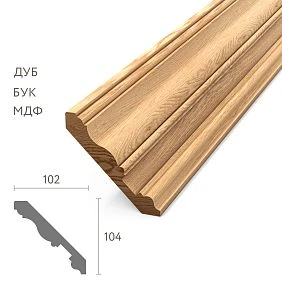
On the current product page MLD-050 is available in MDF with a length of 2600 mm and in beech/oak with a length of 2400 mm with a cross-section of 65×18 mm. Therefore, the line “MLD-050 — 75 pcs.” does not provide complete information about the physical product.
PLT-006 shows the same problem even more clearly
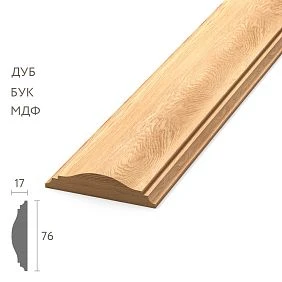
У PLT-006 MDF measures 100×16×2600 mm, while beech and oak measure 100×15×2400 mm. One model code does not remove the need to store material, thickness, and length.
We record the quantity so that the object can physically accept it
Linear meters are useful for calculation, whole items are for acceptance
When wholesale sale of construction materials for wooden mouldings, it is convenient to store both levels:
- calculated linear meters;
- actual quantity of whole items of a specific length.
For example, 180 linear m of profile with a length of 2400 mm:
180 / 2.4 = 75 whole strips.
The site receives 75 physical items, not an abstract 180 meters. If 74 arrived, the shortage is immediately visible.
The number of cargo places is a separate value
75 strips can be packed into a different number of transport places. Therefore, in the direct shipment register it is useful to store:
| Parameter | Example |
|---|---|
| Number of items | 75 pcs. |
| Number of cargo units | ___ |
| commercial length | 2400 мм |
At the site, you can first check the number of places, and then the contents according to the specification.
Direct shipment register and three order dates
The direct shipment registry links two chains with a single order
| Field | Value |
|---|---|
| Dealer order number | D-487 |
| Manufacturer order number | PR-041 |
| Object | Hotel A |
| delivery address | Confirmed site address |
| Recipient | Full name / phone |
| Article number | MLD-050 |
| Material | Oak |
| commercial length | 2400 мм |
| Quantity | 75 pcs. |
| Cargo places | ___ |
| Planned date | ___ |
| Actual date | ___ |
| Condition | ___ |
The dealer, the manufacturer, and the site must not have three separate lists for the same order. The registry may technically live in the dealer's system, a spreadsheet, or another environment, but each party must work with a single approved technical version.
Both the dealer's order number and the manufacturer's order number are retained
This helps link the commercial and production history. The client can reference the dealer's order, while the factory can reference its own production number. In the registry, there is a one-to-one correspondence between them.
Site readiness is confirmed before dispatch, not after the vehicle has departed
An address alone is not enough
The phrase “Moscow, ___ Street” does not answer the questions of actual unloading. For direct delivery by a long-haul truck, the following are needed:
- exact entrance;
- contact person receiving the delivery;
- permitted delivery window;
- restrictions on freight vehicles;
- unloading location;
- required passes;
- available loaders;
- ready storage area;
- verified route for long packages.
The recipient must know about the vehicle in advance
A classic mistake of the direct scheme is that the site first learns about the delivery from the driver: "I'll be there in an hour." The foreman is busy, the entrance is closed, loaders have not been called, and the dry warehouse is still occupied by another crew.
Therefore, confirmation of readiness must be a verifiable event, not a verbal phrase from the manager that "the site is waiting."
Working states of direct shipment
| Condition | What does it mean |
|---|---|
| NOT READY | Delivery not yet coordinated |
| READY FOR ACCEPTANCE | The site confirmed the address, time window, and responsible person |
| SHIPMENT COORDINATED | The manufacturer confirmed the dispatch date |
| SHIPPED | The cargo has left the manufacturer's warehouse |
| ACCEPTED | The site confirmed receipt |
| DISCREPANCY FOUND | Quantity or condition requires verification |
| CLOSED | Delivery is complete and all issues are closed |
These states separate production readiness from construction site readiness.
Desired date, production readiness, and delivery date are three different dates
The dealer must not promise the client an unconfirmed timeframe
The client may want the goods on October 10. This is the desired date. The manufacturer confirms readiness on October 8. The site can only accept the shipment on October 12. The actual agreed delivery date is October 12.
| Date | What does it mean |
|---|---|
| Desired | When the client would like to receive the material |
| Confirmed readiness | When the physical batch is ready for shipment |
| Coordinated delivery | When the site is able to accept the shipment |
Finished goods may wait for the site to be ready
for building materials wholesalers it is important not to mix production and site schedules. If a batch is ready today but the site only accepts on Friday, this is not necessarily a manufacturer delay. And vice versa: the site may be fully ready, but the batch may still be in production.
Marking must be clear to the end site, not just to the dealer
An order number is needed, but it does not replace product identification
A good label:
D-487 / STAVROS / PLT-006 / oak / 2400 / 12 pcs. / floor 3.
A weak one:
dealer order 487-V.
The recipient must understand what is inside without calling the dealer's manager.
Similar moldings are labeled separately
If a project uses MLD-A, MLD-B, and MLD-C, they cannot be shipped under the generic name “oak moldings.” The manufacturer may fulfill the order perfectly, but the site will still receive a mixed-up shipment during direct unloading if the groups cannot be distinguished.
The cornice requires dimension verification before transport is scheduled
For a long or large cornice, the following are checked in advance:
- length of the transport space;
- vehicle maneuvering on the premises;
- route from the truck body to the warehouse;
- elevators and corridors;
- method of horizontal storage after acceptance.
You shouldn't find out at unloading that the long package doesn't fit in the only available elevator.
Partial shipments and the remainder of the total order
Partial order readiness: when to split the shipment and when to wait for completeness
A single total order may be ready unevenly
For example, a dealer ordered:
- PLT-A — 120 pcs.;
- MLD-A — 80 pcs.;
- KZ-A — 24 pcs.
The skirting board is fully ready, the molding is partially ready, and the cornice will be ready in four days. The mere fact of partial readiness does not yet mean that the first truck must be sent immediately.
Before deciding, we compare three scenarios
| Scenario | Plus | Minus |
|---|---|---|
| Wait for completeness | One delivery, one acceptance | Part of the finished goods is waiting |
| Send the finished part | Installation can start earlier | Additional vehicle and acceptance |
| Send only the critical SKU | Minimal urgent logistics | The remaining total order must be preserved very precisely |
The decision is made by the project taking the actual schedule into account. If the skirting board is needed tomorrow and the cornice in a month, a partial shipment may be justified. If all three items are installed by one crew in a week, splitting will add operations without benefit.
Each additional vehicle increases the number of control points
A second vehicle means one more site confirmation, one more set of transport units, a separate unloading, a new acceptance report, and an additional risk of discrepancy. Therefore, splitting an order 'because part of it is already ready' is not automatically necessary.
The original overall order is preserved even with multiple physical shipments
Dealer order:
PLT-A — 120 pcs.
First direct shipment:
60 pcs.
Second:
60 pcs.
This is one order with two physical movements, not two independent orders.
| Article | Ordered | Shipment 1 | Shipment 2 | Remaining |
|---|---|---|---|---|
| PLT-A | 120 | 60 | 60 | 0 |
| MLD-A | 80 | 40 | 0 | 40 |
| KZ-A | 24 | 0 | 24 | 0 |
All three parties see the order balance
After the first truck, the dealer, manufacturer, and client must have the same understanding:
MLD-A: ordered 80 / shipped 40 / remaining 40.
If the dealer has "remaining 40", the manufacturer has "remaining 36", and the site is waiting for 44 more, the next shipment already starts with a conflict.
A partially accepted shipment also affects the balance
The manufacturer shipped 40 MLD-A, the site accepted only 39 and recorded a discrepancy. In the register, you cannot simply put "shipment 1 = 40, accepted". It must be visible:
shipped 40 / accepted 39 / discrepancy −1.
The remaining quantity to be delivered is determined after a decision on this unit, not automatically.
Pre-shipment control by the dealer and manufacturer
What the manufacturer checks before the truck departs
The manufacturer should not have to re-examine the dealer's commercial terms. Its task before physical shipment is to confirm the specific batch.
Composition check
- article number;
- the material;
- size;
- product length;
- number of items;
- number of transport units;
- packaging condition;
- marking;
- object and destination address.
Document vs. physical batch check
The register should not be generated automatically from the order without reconciliation with the actual count. If 75 MLD-050 were ordered but 72 were physically assembled, the truck should not leave with a document showing "75" just because that number appears in the order.
Valid options:
- complete the set to 75;
- officially approve a partial shipment of 72;
- change the date.
Address check is part of order assembly
If a manufacturer services multiple sites for a single client, the packaging and transport documentation must specify the exact address. The error of "site A instead of site B" is technically not a mispick, but it completely breaks the chain.
Site acceptance and the cargo handover boundary
What the site checks during direct acceptance
Transport units first
Before opening, it is useful to compare the number of units against the manifest. If the document says 12 but the truck holds 11, the discrepancy is recorded before the cargo is distributed across floors.
Then the marking
The site verifies:
- order number;
- manufacturer;
- article number;
- the material;
- commercial length;
- quantity;
- the project zone.
After that — the condition of the packaging and visible damage
If the packaging is torn, the end is dented, or the pack is clearly deformed, the disputed unit is set aside before it is mixed with the accepted cargo.
Photo documentation must show:
- general view of the transport unit;
- marking;
- specific damage;
- if possible, the condition of the item inside.
Acceptance ends not after unloading, but after the result is documented
The driver's phrase "everything has been unloaded" confirms only the physical unloading. It does not confirm that the item codes match, the quantity, or the absence of damage.
The order is closed by the receiving party according to the agreed procedure.
Shortage, damage, refusal, and claim
What the dealer checks after physical delivery
The departure of the vehicle from the manufacturer's warehouse does not close the commercial order
The dealer must receive a result from the client:
- how many places were accepted;
- which items were accepted in full;
- whether there is any damage;
- whether there is a shortage;
- whether there is a labeling dispute;
- whether the manufacturer needs to be involved.
If there is no confirmation from the site, the status remains "SENT" rather than "CLOSED".
The acceptance result must be returned to the same registry
There is no need to create a separate table for "what the site said". The actual date, accepted quantity, and result are added to the direct shipment row.
Thus, the dealer's commercial history ends with the same document that started the shipment.
Shortage: first we record the discrepancy, then we determine the stage
In the register:
12 transport units.
At the site:
11 units.
First status:
NOT FULLY ACCEPTED / THERE IS A DISCREPANCY.
We do not create a new order automatically
First check:
- how many units the manufacturer actually handed over to the carrier;
- whether the loading manifest matches;
- whether there is space in another sector of the vehicle body;
- whether there was a separate unloading;
- whether an item counting error occurred;
- what the photo taken before departure shows, if one is kept.
Only after determining the fact is it decided whether additional loading, replacement, or correction of the document is needed.
Shortage of an item within an intact packaging group
If the number of transport units matches, but one pack contains 11 items instead of 12, the original contents and packaging integrity are checked. This is a different type of discrepancy than a missing whole unit.
Damage: we separate the disputed group from the accepted goods
If during unloading one pack raises doubts, it should not be mixed with the normal batch and left for a decision later.
The following are recorded:
- order number;
- article number;
- the material;
- quantity in the disputed group;
- nature of packaging damage;
- condition of the item;
- photographs;
- storage location until resolution.
The remaining independent part can be accepted and used if the problem is local.
Why packaging damage and item damage are different statuses
A torn film by itself does not always mean a defect in the moulding. But it requires inspection. In the registry, it is useful to distinguish:
- packaging damaged, product intact;
- damage reached the item;
- inspection not completed.
The claim channel is determined before the first direct shipment
The client should not have to guess who to contact
If the client's contracting party is a dealer, it must be communicated in advance:
- to whom the site sends photos and the report;
- who confirms receipt of the request;
- who requests technical data;
- who passes the information to the manufacturer;
- who returns the decision to the client.
The direct physical route must not create a situation where the seller sends the client to the factory, and the factory sends them back to the seller.
The manufacturer receives a technical package, not a retelling of emotions
Not:
client is unhappy with the molding.
But:
order D-487 / PR-041 / MLD-050 / oak / 2400 / disputed group 6 pcs. / photos attached / visible end damage.
The more accurate the input data, the faster it is possible to distinguish delivery damage from an issue with the product itself.
Technical and commercial information must be separated
When wholesale trade in building materials through direct shipment, the site needs technical and logistical information, but it does not necessarily need to see the dealer's entire internal commercial structure.
Technical part
- what is being shipped;
- which manufacturer;
- which SKU;
- the material;
- size and length;
- quantity;
- packages;
- address;
- date;
- marking.
Commercial part
- dealer price;
- discount;
- payment terms;
- dealer's internal settlements with the manufacturer;
- margin and other terms of the transaction.
The specific commercial document flow is determined by the contractual model. The article deliberately does not invent a universal legal scheme for all transactions.
Why the site still needs to know the manufacturer
After a few years, the dealer may change the manager, company, or supplier. The installed architectural profile, however, remains on the site.
For future operation, it is useful to keep:
- manufacturer;
- the original article number;
- the material;
- commercial length;
- execution;
- the number of the original order or delivery.
A repeat order should start with the old technical line
A year later, the client contacts the dealer:
we need 20 more strips of the same molding.
The dealer pulls up the original record:
STAVROS / MLD-050 / oak / 65×18×2400.
No need to re-select the profile from a photo.
Changing the supplier does not give the right to quietly change the profile
If a new source offers a “nearly identical” molding, that is already a different technical item. It requires separate comparison and approval. A commercial replacement of the counterparty must not automatically change an architectural element.
Practical example of a direct order through a dealer
Practical example: a direct order through a dealer from approval to closing
The client ordered oak MLD-050 for a hotel through a specifier. The dealer handles the commercial order, while STAVROS physically assembles and ships the goods to the site.
Step 1. The dealer records the technical configuration
In the register:
D-487 / STAVROS / MLD-050 / oak / 65×18×2400 / 75 pcs.
Additionally, the site, floor 3, and labeling requirements are specified.
Step 2. The manufacturer receives the same technical line
Not “180 meters of molding,” but a specific order composition. The manufacturer links the dealer’s order to its production number PR-041.
Step 3. The manufacturer confirms readiness
The batch is ready on October 8. The dealer does not tell the client “delivery on October 8,” because this is only the date of readiness for shipment.
Step 4. The site confirms on October 10
The construction site confirms:
- window 10:00–12:00;
- entry from the freight gate;
- responsible foreman;
- loaders;
- finished warehouse;
- route for long packages.
The delivery date becomes agreed.
Step 5. Before shipment, the manufacturer verifies the physical batch
75 items, labeling, number of transport units, and destination are checked.
Step 6. The vehicle departs
The status changes to SHIPPED. The dealer receives departure confirmation and passes the transport information to the site according to the accepted scheme.
Step 7. The site receives
The number of units matched. The marking is legible. During inspection of one pack, the facility records damage to the outer packaging, but the items inside were not affected.
Status of this group:
PACKAGING DAMAGED / GOODS ACCEPTED.
Step 8. The result is returned to the dealer
The dealer receives confirmation: 75 items are fully accepted, there is no technical discrepancy. After that, the order receives the status CLOSED.
If the facility had accepted only 74, the order would not be closed until a decision was made on the one missing unit.
Role control matrix for direct shipment
| Check | Dealer | Manufacturer | Object |
|---|---|---|---|
| SKU approved | Checks the order | Completes the set | Verifies |
| Material and length | Transfers without distortion | Confirms the actual batch | Verifies the labeling |
| Quantity | Tracks the order and stock | Assembles and ships | Accepts |
| Address | Receives from the client | Uses for delivery | confirms |
| Date | Coordinates | Confirms readiness | Confirms acceptance |
| Recipient | Records contact | Transfers to driver / logistics | Assigns |
| Labeling | Transfers requirements | Applies | Verifies |
| Acceptance | Receives result | Receives data on discrepancy | Performs |
| Claim | Coordinates communication | Handles the technical part | Records the fact |
When a direct route is truly more advantageous
It is especially convincing when:
- a large single object;
- hundreds of meters of a single SKU;
- a ready on-site warehouse;
- a clear delivery window;
- no need to combine products from multiple brands;
- agreed acceptance procedure;
- transparent manufacturer's technical labeling.
In such a scenario, a dealer warehouse often creates more operations than value.
When the direct route is better not to use
If the site cannot independently accept long-length items, there is no storage space, dozens of brands need to be consolidated, or the dealer performs a mandatory local inspection, an intermediate warehouse can be an important element of the chain.
If the actual recipient is not the buyer under the contract
At a construction site, the goods are often accepted not by the legal entity that paid for the order, but by the general contractor, site foreman, storekeeper, or a specialized logistics service. For direct shipment, this is a normal situation, but the role of the receiving party must be determined in advance.
In the registry, it is useful to separate:
| Field | Example |
|---|---|
| Customer | Client company |
| Contracting party | Dealer / kit assembler |
| Physical recipient | General contractor on site |
| Acceptance contact | Site foreman / storekeeper |
| Address | Construction site |
If these roles are mixed up, the driver may look for the "director of the buyer company" at the construction site, while the general contractor may refuse to sign documents because no one informed them.
What the physical recipient needs to know
They do not need to see the entire commercial part of the contract, but they must understand:
- which order is arriving;
- which item codes are inside;
- how many places to expect;
- who is the sender;
- whom to notify about the discrepancy;
- which document or register to use for reconciliation.
Without this, direct delivery turns into “an unknown vehicle brought some goods.”
Address, recipient, delivery window, and route change
Multiple addresses for one client: direct shipment cannot be managed with a single shared line
A dealer may receive one commercial order for a network or a large development project, but physically the linear goods must be split across several addresses.
For example, a combined order:
PLT-A — 180 pcs.
Distribution:
- site 1 — 70;
- site 2 — 60;
- site 3 — 50.
If only "180 pcs." is passed to the manufacturer, the physical route will remain undefined.
| Object | Article | Quantity | Address | Recipient | Date |
|---|---|---|---|---|---|
| Object 1 | PLT-A | 70 | Address 1 | Contact 1 | 05.10 |
| Site 2 | PLT-A | 60 | Address 2 | Contact 2 | 09.10 |
| Object 3 | PLT-A | 50 | Address 3 | Contact 3 | 16.10 |
A commercial order may remain single
Within a deal, the dealer may manage the total volume, but each direct physical shipment receives its own object line and acceptance result.
This is how the connection is preserved:
total commercial volume → specific object shipments → specific acceptance confirmations.
Changing the address after the batch is ready requires a new check
The order was produced for object A. One day before shipment, the client asks to send the same batch to object B.
Since the goods are technically the same, it may seem sufficient to replace the address in the transport line. But the new object may have different:
- unloading windows;
- contacts;
- entry conditions;
- route of the long-haul truck;
- storage location;
- project purpose.
Therefore, changing the address is not just editing a field. The object's readiness status must be confirmed again.
If the batch has already been marked for the old object
The manufacturer must update the object-specific part of the marking while preserving the original product identity. You cannot send packs to object B with a large label reading "object A / floor 2" and expect everyone to understand at unloading.
Changing the recipient on the delivery day
The assigned foreman got sick, but the truck is already on its way. The object assigns another employee.
This should not lead to automatic cancellation of the delivery if the process allows replacing the recipient. But the new contact information must reach the driver, dealer, and manufacturer through an agreed channel.
The following are minimally recorded:
- who replaces the previous recipient;
- phone;
- from what time they are responsible;
- whether they have the right to sign off on acceptance;
- who confirmed the replacement.
A verbal message like "someone else will be there" creates a risk that the driver hands the goods over to an employee who is not responsible for the material at all.
Delivery by permits and night windows requires its own logistics readiness
At sites in the city center or in operating commercial buildings, unloading may be permitted only at night or during a specific hour.
Then "site is ready" includes more than having a warehouse.
Need to check:
- whether a vehicle permit has been issued;
- whether the vehicle's state registration number is provided, if required by the facility;
- whether the driver is authorized;
- whether the gate is open;
- whether the receiving team will be available at the required time;
- whether a freight elevator is available;
- whether there is lighting and a safe unloading route.
For the direct scheme, this check is especially important: the dealer does not have its own intermediate warehouse where the vehicle can be returned if the time slot is missed.
If the time slot is missed
It is necessary to understand in advance what happens next: waiting, rescheduling to another time slot, returning to the manufacturer, or another agreed-upon scenario. A universal rule cannot be set without the conditions of specific logistics, but the issue must be resolved before dispatch.
Partial refusal of delivery by the facility
The machine delivered 75 MLD-050. The site accepts 69, and considers six items disputed due to packaging damage.
You cannot frame the situation as "the site did not accept the entire delivery" if most of it matches the order.
In the register:
| Status | Quantity |
|---|---|
| Accepted without comments | 69 |
| Disputed group | 6 |
| Total delivered | 75 |
The fate of the six is then decided separately: accept after inspection, return, replace, or leave at the site until agreement.
Why the disputed group cannot be mixed with the accepted one
If after unloading all 75 were placed in one stack, within an hour it is already difficult to determine which six had damaged packaging.
Hidden discrepancy after unpacking
During acceptance, all transport places matched, and the packaging looked normal. The next day, during distribution, it turned out that in one closed pack
Direct shipment with multiple manufacturers
A dealer sells a client a complex order: STAVROS wooden moulding, doors from another manufacturer, and flooring from a third.
If each manufacturer ships directly, the site receives three independent trucks. This scheme can be fine, but only if the site can manage multiple delivery windows.
If not, a dealer or third-party consolidation warehouse may be more useful.
| Scenario | Rational scheme |
|---|---|
| One large moulding order, other categories separately | Moulding directly, the rest via their own routes |
| Many small suppliers, the site receives one truck | Consolidation |
| Three large categories and the site has delivery windows | Several direct shipments |
There is no need to declare one logistics model correct for the entire project.
Documentary discrepancy without a physical error
24 correct PLT-A units arrived at the site, but one dealer document states 22. There is no physical shortage, but the documents do not match the facts.
Such a discrepancy also needs to be closed. Otherwise:
- the client's warehouse will receive the wrong quantity;
- the dealer will see a different order balance;
- a repeat delivery may compensate for a nonexistent deficit.
Status:
GOODS ACCEPTED / DOCUMENT REQUIRES CORRECTION.
Physical compliance and documentary compliance are verified separately
Four states can be obtained:
| Physical product | Document | Result |
|---|---|---|
| Correct | Correct | ACCEPTED |
| Correct | Erroneous | Correct document |
| Erroneous | Correct | Technical discrepancy |
| Erroneous | Erroneous | Full order verification |
Dealer's pre-shipment reconciliation before issuing the "ready to ship" command
Although the dealer is not physically at the manufacturer's warehouse, they must verify that the commercial order and site readiness are synchronized.
Before the shipment command:
- technical specification approved;
- manufacturer order number known;
- actual quantity confirmed;
- partial shipment, if any, agreed;
- address confirmed;
- receiving contact up to date;
- window confirmed;
- marking agreed;
- the site has a ready storage location.
This does not mean the dealer must physically recount the goods. Their task is to make sure all parties are working from the same version of the order.
A direct supply archive is needed for future reorders
After closing the project, it is useful to keep a compact set:
- the final technical specification;
- the dealer order number;
- the manufacturer order number;
- actual shipments;
- acceptance results;
- closed discrepancies;
- execution information about the manufacturer and item numbers.
This archive is not needed for daily work after closing, but it allows you to repeat the profile years later without searching for a "similar" one.
The carrier becomes the fourth party in the physical route, but not the owner of the specification
In practice, the manufacturer often hands the cargo over to a transport company or an individual driver. Then the physical chain looks like:
manufacturer → carrier → site.
This does not mean that the carrier must understand architectural nomenclature, but they need data sufficient for correct handover.
What the carrier must receive
- address;
- recipient contact;
- delivery window;
- number of transport units;
- specifics of long-length cargo;
- entry requirements;
- shipment or order number for identification.
The item specification remains with the manufacturer, dealer, and site. The driver must not decide that “one package looks like another” or that part of the cargo can be left at another address.
Replacing the vehicle must not change the content of the trip
If the vehicle breaks down and the logistics company replaces it, the number of packages and the identity of the cargo remain the same. Transloading between vehicles creates an additional risk point, so it is advisable to record it: when, where, and how many packages were transferred.
Early or late vehicle arrival: site readiness has time boundaries
The site confirmed the 10:00–12:00 window. The vehicle arrived at 8:30. Formally, the address and recipient are correct, but the receiving team is not ready yet.
This cannot automatically be interpreted as the site refusing the goods. You must follow a predefined waiting or rescheduling scenario.
Why "arriving earlier means we'll unload faster" can be a mistake
Before 10:00, other equipment may be operating on site, the entrance may be closed, or there may be no freight elevator. For a long-haul vehicle, improvised unloading through another entrance increases the risk of damage.
Late arrival also needs to be recorded
If the vehicle arrived after the end of the window, the site may objectively have no right to accept it. In that case, it is useful for the dealer to see not just "delivery did not take place," but the actual times: the confirmed window and the actual arrival.
The site canceled the window after the batch had already been loaded
The batch is fully assembled, the vehicle is loaded, but the site reports an unscheduled closure of the entrance.
Possible solutions depend on the specific logistics:
- keep the loaded vehicle until the new window;
- unload back at the manufacturer;
- redirect to an agreed intermediate site;
- change the date.
A universal option cannot be established without a contract and transportation terms. But order management must preserve the fact: the goods were ready and loaded, and the change occurred on the site side after confirmation.
After return unloading, the batch is checked again
Double transshipment creates a new physical risk. Before reshipment, the manufacturer must ensure that the quantity, marking, and condition have been preserved.
The finished batch can wait at the manufacturer's warehouse until the site window
If production is completed earlier and the site is not yet ready, the direct route does not require immediately shipping the goods.
In the register, one can separate:
BATCH READY — 08.10.
SITE READY FOR ACCEPTANCE — 12.10.
DELIVERY — 12.10.
So four days of waiting do not look like a production delay.
What needs to be agreed upon during a long wait
If a finished batch remains with the manufacturer significantly longer than the planned period, the parties may separately agree on storage, re-confirmation of the date, and the condition of the packaging. The specific commercial terms depend on the deal and should not be invented universally.
Recipient's signature before full recount: what exactly it confirms
On a large delivery, the site may first sign off on the fact that the vehicle arrived and the number of transport units, and perform a detailed check of the contents later.
If such a procedure is used, the documents must clearly distinguish the stages:
| Stage | What is confirmed |
|---|---|
| Initial acceptance | The vehicle has arrived, the number of cargo units has been accepted, obvious damage has been recorded |
| Detailed acceptance | SKUs, materials and internal quantity have been checked |
Otherwise, one signature is interpreted by the dealer as “everything accepted without questions,” and by the site only as “the vehicle has been unloaded.”
For small critical items, it is better not to postpone the check
Three rare cornices or four special strips are easier to count right away. If they are set aside and then distributed across the site, it is harder to prove the original completeness.
Who unloads the long-length items: the site, the carrier or the sender
Before dispatch, it is necessary to understand not only “who accepts” but also who physically unloads the linear mouldings.
The options can vary:
- site crew;
- driver and assistant;
- individual loaders;
- combined team.
The specific distribution of responsibilities is determined by the logistics scheme. But the absence of an agreement is dangerous: the vehicle arrives, and each participant believes that the other party will unload.
The number of people cannot be assigned universally
It depends on the length, weight of the package, the route, and the equipment. In the article, it is more correct to require a preliminary check of the physical route and the carrying method, rather than giving a single number of loaders for any profile.
Changing the project zone after dispatch
The pack is marked "floor 3", the vehicle is already en route, and the project decides to use the same SKU on floor 4.
The product identity does not change. The object assignment changes.
At the site, it is necessary to:
- accept the pack according to the original SKU and quantity;
- record the new assignment;
- update the internal warehouse labeling;
- do not treat the old label "floor 3" as a mispick of goods.
If the SKU itself has changed, this is no longer a zone change but a technical replacement, which requires a different approval.
Direct shipment does not cancel control after actual acceptance
After receipt, the site distributes the linear products by floors and rooms. The dealer and manufacturer are not obligated to manage the client's internal warehouse, but to close the delivery it is necessary to ensure that disputed issues regarding the delivery itself are separated from subsequent internal movement.
For example:
the manufacturer shipped 75 → the site accepted 75 → two days later 74 were found on the floor.
If the acceptance of 75 was confirmed, further search already relates to the site's internal movement, unless there is other evidence.
Therefore, the moment of transfer of responsibility must be clear and documentarily distinguishable.
Pre-shipment control: when the command for direct shipment can be given
Before the machine is assigned and the batch leaves production, it is useful to run one general check. It should not turn into a long bureaucratic form; its purpose is to make sure that the three parties are talking about the same order.
| Check | Dealer | Manufacturer | Object |
|---|---|---|---|
| Technical version of the order | Confirmed | Received | Knows the expected composition |
| Item codes and materials | Verified against the customer's order | Verified against the physical batch | Has a receiving checklist |
| Number of items | Matches the placed volume | Actually assembled | Knows the expected quantity |
| Partial shipment | Agreed, if any | Order remainder saved | Knows what exactly is arriving now |
| Labeling | Requirements submitted | Applied | Understands the codes |
| Address | Received from client | Present in the transport task | Confirmed |
| Recipient | Contact is current | Handed over to logistics | Ready to receive |
| Delivery window | Approved | Fits the route | Confirmed |
| Unloading | Understands the parties' responsibilities | Knows the constraints | People and route are ready |
| Storage zone | Confirmation received | — | Dry area is ready |
If one critical line is not closed, it is better not to mask the shipment with the status "everything is ready"
For example, the item is fully produced, but the site has not confirmed vehicle clearance. Then the batch has the status "ready at the manufacturer" but not "ready for delivery." This separation protects the parties from a dispute over who delayed the order.
When shipment is allowed with an open non-critical issue
Not every issue blocks the vehicle. For example, the site has not yet decided in which room part of the reserve slats will be stored, but the dry storage area exists, the recipient is assigned, and the route is checked. If this does not affect acceptance and preservation, delivery can take place. Criticality is determined by real risk, not by the number of unfilled lines.
The command "can ship" must refer to a specific revision
If the dealer and manufacturer have changed the quantity from 75 to 69, the site must receive the current version. Wording:
D-487 / revision 04 / MLD-050 oak 2400 / 69 pcs. / shipment approved.
This way, you cannot accidentally ship using the old file.
After departure, the control table is not rewritten retroactively
Actual movement becomes a new part of the history: what was actually shipped, when, by what transport, and what the site received. If a document error is discovered after departure, it is recorded as a correction rather than a silent change to the original version.
This discipline is especially important with multiple partial shipments. Without it, the first trip may be recalculated using the new figures, and the total order balance will no longer be reproducible.
Decision tree: ship directly or via the dealer's warehouse
Before every large order, you can go through a short decision tree. It helps keep direct shipment from becoming a mandatory rule.
| Question | If "yes" | If "no" |
|---|---|---|
| Is the batch large and tied to a single site? | The direct route becomes more logical | Check the benefit of consolidation |
| Can the site accept long-length items on its own? | Move on | The dealer's warehouse or a hub may be more useful |
| Is it not necessary to consolidate goods from multiple manufacturers? | Move on | Consider consolidation |
| Is the manufacturer ready to provide clear labeling? | Move on | A direct route increases the risk of mis-sorting |
| Are the address, time window, and recipient confirmed in advance? | Direct shipment is organizationally ready | It is better not to schedule the shipment |
If most answers are positive, a direct route really does cut out unnecessary operations. If several critical conditions are not met, a dealer warehouse or third-party consolidation may be safer.
We compare not the number of links, but the number of useful operations
A chain with two physical stages is not necessarily worse than a direct one. If an intermediate warehouse checks the goods, consolidates several brands, assembles room sets, and delivers in one convenient time window, it creates value. If it only unloads and reloads the same package, the value is questionable.
A direct route should be evaluated based on a specific order
Even for a single dealer, some orders may go directly, while others go through the warehouse. For example, a large batch of PLT-006 for a hotel project is shipped directly from the manufacturer, while small items from several brands are consolidated at the dealer. A hybrid scheme is often more sustainable than a single rule for all product groups.
The final criterion is simple: the route should reduce the number of useless operations without losing technical identity, acceptance control, and complaint manageability.
20 typical mistakes of direct shipment through a dealer
- Treating direct shipment as an ordinary sale from the warehouse. The separation of the commercial and physical route is ignored.
- Not preserving the manufacturer's SKU. The project receives the dealer's internal code without a technical reference point.
- Passing only the internal name to the manufacturer. There is a risk of incorrect configuration.
- Passing only the order number to the project. The receiver does not understand the contents of the packages.
- Not confirming the receiving party. The vehicle arrives without a responsible party.
- Not coordinating the delivery window. The finished batch arrives at a project that is not ready.
- Confusing batch readiness with site readiness. False accusations of delay arise.
- Promising the client an unconfirmed date. The commercial promise runs ahead of production.
- Splitting shipment automatically. The number of trucks and acceptances increases with no benefit.
- Losing the remaining balance of the overall order after the first truck. The next shipment is assembled from different figures.
- Not indicating the project zone on the labeling. The site receives the correct product but distributes it incorrectly.
- Closing the order as soon as the truck departs. The acceptance result is still unknown.
- Not obtaining confirmation from the site. The dealer does not know what was actually accepted.
- Not recording the shortage immediately. After distribution, the problem cannot be localized.
- Mixing the disputed pack with the accepted one. The evidence of condition disappears.
- Not determining the claim channel in advance. The client is sent back and forth between the seller and the manufacturer.
- Pass a complaint to the manufacturer without an article number or photo. Technical analysis begins with guesswork.
- Quietly change the manufacturer or profile on a repeat order. A commercial substitution becomes a technical one without approval.
- Consider the direct scheme optimal for any order. Cases where a dealer warehouse is needed are ignored.
- Do not save data for a future reorder. A year later the profile has to be selected again from scratch.
Final algorithm for direct object shipment
1. THE CLIENT APPROVES THE WOODEN TRIM
↓
2. THE DEALER CREATES A COMMERCIAL ORDER
↓
3. THE MANUFACTURER'S ORIGINAL ARTICLE NUMBER IS SAVED
↓
4. A SINGLE TECHNICAL SPECIFICATION IS PASSED TO THE MANUFACTURER
↓
5. THE MANUFACTURER CONFIRMS THE COMPOSITION AND READINESS
↓
6. THE SITE CONFIRMS THE ADDRESS, DATE, RECIPIENT AND READINESS
↓
7. A UNIFIED DIRECT SHIPMENT REGISTER IS CREATED
↓
8. THE MANUFACTURER ASSEMBLES AND LABELS THE BATCH
↓
9. THE DEALER CHECKS THAT THE PARTIES' DATA MATCH
↓
10. THE BATCH IS SHIPPED DIRECTLY TO THE SITE
↓
11. THE SITE CHECKS THE LOCATIONS, LABELING, SKU CODES AND CONDITION
↓
12. THE ACCEPTANCE RESULT IS SENT TO THE DEALER
↓
13. IN CASE OF A DISCREPANCY, THE DEALER COORDINATES A SOLUTION WITH THE MANUFACTURER
↓
14. AFTER ALL ISSUES ARE RESOLVED, THE DELIVERY IS GIVEN THE STATUS CLOSED
↓
15. THE TECHNICAL DATA IS SAVED FOR REORDERING
Before the first delivery, it is useful to run a short trial run without physical shipment: the dealer opens the register, the manufacturer confirms that it can assemble the batch according to it, and the site checks that it can accept it using the same codes. If at this stage the participants are already asking questions like "what does this item code mean," "what is the length," or "who receives the truck," the problem is discovered before transport, not at unloading.
For a large batch, it is also useful to determine in advance who will store the final version of the register after the delivery is closed. If the copy remains only with the dealer's manager, and the client's archive does not contain the manufacturer's item code and the final accepted quantity, the repeat order will again begin with searching for old correspondence. The final statement should remain accessible to the party that will service the site after handover.
Conclusion: the seller, the shipper, and the receiver must see one technical truth
Direct shipment through the dealer can indeed reduce unnecessary operations with wooden mouldings. But this saving does not appear simply because the goods bypass the seller's warehouse. It appears when the commercial and physical routes are linked by one technical specification and one status system.
The dealer remains the party with which the client conducts commercial communication. The manufacturer retains the original item code, material, dimensions, and physically assembles the batch. The site confirms the address, delivery window, and actual acceptance. If at least one participant uses its own unlinked list, the direct route becomes less transparent than a standard two-stage delivery.
Two boundaries are especially important. The first is before the truck departs: the batch is ready at the manufacturer and the site is actually ready to accept it on a specific date. The second is after unloading: the site has confirmed the quantity, marking, item codes, and visible condition. Only after the second boundary can the delivery be considered complete.
For partial shipments, the original order is not split into separate histories. The dealer, manufacturer, and site continue to see ordered, shipped, accepted, and remaining. In case of shortage or damage, the disputed group is separated, and the claim goes through a predefined channel with precise technical information.
This is how the direct scheme works as a managed B2B process: the dealer sells, the manufacturer physically ships, the site accepts, and the same MLD-050 or PLT-006 remains unambiguously identifiable from the first commercial confirmation to the future repeat order.