

























Article Contents:
- Why chair and table legs should be chosen differently
- Two tasks — two approaches
- Height: a key parameter for each type of furniture
- Wooden chair legs: what to look at first
- The chair is the most demanding furniture in terms of leg load
- Straight and angled chair legs
- Threaded connection of leg and apron
- Turned legs for a classic chair
- Wooden legs for kitchen and dining table
- Kitchen — special requirements for legs
- Height of kitchen table legs
- Cross-section of dining table legs
- Number of legs and configuration
- Coffee table legs: when form matters more than load
- Coffee table — decorative dominant of the living room
- Height of coffee table legs
- Style of coffee table legs
- Leg shape: straight, turned, shaped, carved
- Shape is the language of furniture
- Straight Legs
- Turned legs
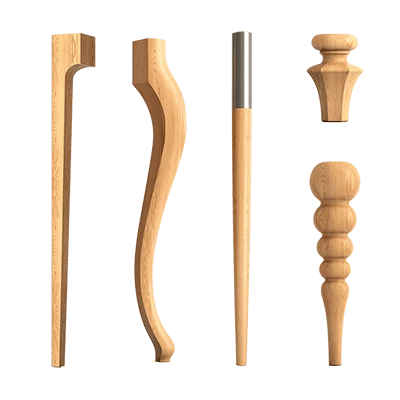
- Shaped legs: saber, cabriole, lyre
- Carved legs
- How to choose material for furniture legs
- Hardness is not a whim, but a necessity
- Beech: ideal for painting and any finishing
- Oak: for those who choose natural expressiveness
- Legs for painting: what's important to know
- How to match legs to furniture style
- Style is an agreement between details
- Classic and neoclassic
- Provence and Country Style
- Scandinavian Style
- Modern classicism
- Loft furniture and industrial style
- Restoring chairs and tables: when replacing legs is enough
- A second life for old furniture
- What you need to know when replacing legs on old furniture
- Legs for restoration: popular scenarios
- How to combine table legs, chair legs, and furniture decor
- A unified furniture group is a strategy, not a coincidence
- Furniture handles as a continuation of style
- Decorative furniture overlays
- Tall wooden legs: a special scenario
- When height becomes style
- Common mistakes when choosing wooden legs
- Mistake 1: Legs too thin for a heavy table
- Error 2: Incorrect leg height
- Error 3: Different styles of table and chair legs
- Error 4: Weak leg attachment
- Error 5: Choosing only by photo
- Error 6: Soft wood in load-bearing structure
- Error 7: Different batches of the same product
- FAQ: Popular questions about wooden legs for chairs and tables
- Where to buy wooden legs for chairs and tables
- STAVROS: Solid wood furniture legs for kitchen, dining room, and living room
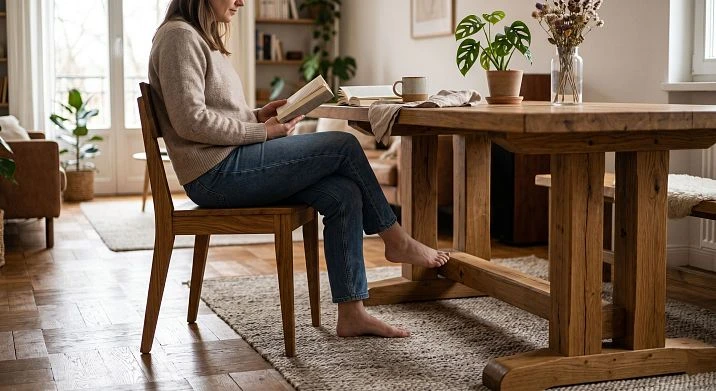
There are things in the house that are only noticed when they fail. A chair leg creaks — and the whole dinner is spent in tension. A table wobbles under your hand — and the mood is ruined. We don't think about furniture supports until they work properly. But they bear both the physical weight of objects and the visual harmony of the entire kitchen or living room.
Wooden legs — it's not just four identical columns under the tabletop. It's a system: seating height, installation angle, profile shape, cross-section, material, compatibility with furniture style and interior. And if you choose this system correctly, the furniture transforms. An old table with new legs becomes a different piece. Kitchen chairs with replaced supports come back to life.
In this article, we'll cover everything: how to choose chair legs, legs for a kitchen table, Legs for coffee table and dining structures — with specific numbers, recommendations on shape, material, and style.
Why chair and table legs need to be chosen differently
Two tasks — two approaches
At first glance, a chair leg and a table leg are similar objects. A wooden cylinder with a threaded mount. But once you delve into the details, the difference becomes fundamental.
For a chair, ergonomics is the priority. The height of the chair legs determines the seating height. The standard seat height is 44–48 cm. This is not a random number: at this height, a person of average build sits with knees bent at 90°, feet flat on the floor. A deviation of 3–4 cm changes the seating, and therefore comfort while eating, convenience at a work desk, and strain on the back.
For a chair, the installation angle of the legs is also important. A classic chair has legs with a slight outward tilt — this widens the support base and increases stability. Straight legs (perpendicular to the seat) are only stable when placed wide apart.
For a table, the priority is load and visual balance. A table bears significantly greater static load: the tabletop, dishes, food, a person leaning on it. Table legs must have sufficient cross-section for this load. At the same time, they must be visually proportional to the tabletop. Legs that are too thin under a heavy oak tabletop create a feeling of instability, even if structurally everything is reliable.
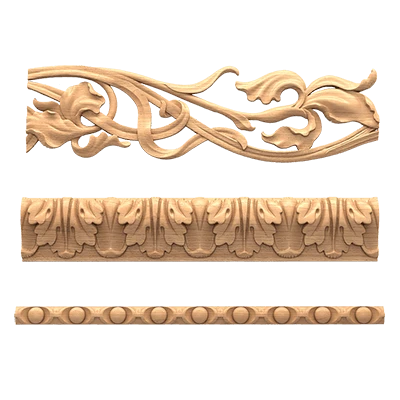
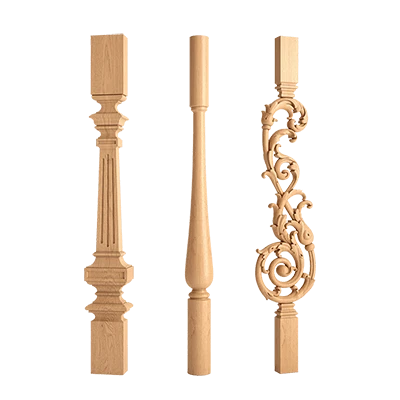
Our factory also produces:
Height: a key parameter for each type of furniture
| Furniture type | Height from floor to top | Leg height (approximate) |
|---|---|---|
| Chair (seat height) | 44–48 cm | 40–44 cm |
| Bar stool | 60–75 cm | 55–70 cm |
| Kitchen table | 74–76 cm | 68–72 cm |
| Dining table | 74–78 cm | 68–73 cm |
| Coffee table | 40–50 cm | 35–46 cm |
| Coffee table (low) | 30–40 cm | 25–35 cm |
These numbers are not just standards. Behind them is ergonomics: when the height of the chair and table are coordinated, there is a gap of 25–30 cm between the seat and the tabletop. This is the optimal distance for a comfortable seating position while eating.
Get Consultation
Wooden chair legs: what to look for first
The chair is the most demanding piece of furniture in terms of load on the leg
The chair bears a dynamic load. When a person sits down, the load at the moment of sitting is 2–3 times greater than the static weight. When a person leans back, there is a lateral load. When they stand up abruptly, leaning on the backrest, there is a load on the rear legs.
This means: chair legs they must be made of hardwood and have a sufficient cross-section. For turned chair legs, the minimum cross-section at the thinnest part of the profile is 28–35 mm. Any smaller and there is a risk of breakage under lateral load.
Straight and angled chair legs
Straight legs are installed strictly perpendicular to the seat. They are found in modern, Scandinavian, and minimalist chairs. Visually, they offer clear geometry and strictness. Structurally, they require a wide leg spread for stability.
Angled legs are tilted outward from the vertical by 3–8°. This is a classic design: a chair with angled legs is stable even with a compact seat top. It is characteristic of most classic, Provencal, and country-style chairs.
Saber legs — with a curve imitating the shape of a saber. An expressive decorative form, popular in Empire and Neoclassical style furniture. Require precise fitting during installation.
Threaded connection of leg and apron
Chair legs are attached to the apron (horizontal frame under the seat) via a threaded connection, dowels, or metal brackets. For removable legs — a threaded insert in the leg body plus a stud in the apron. Important: the thread diameter (M8, M10) must match the insert installed in the furniture.
Turned legs for a classic chair
A turned leg with a turned profile — grips, vases, conical transitions — is the hallmark of a classic chair. Such Buy furniture legs for a 200-room hotel project — this is not an ordinary deal, but a partnership requiring a special approach. can be in several execution styles: from a restrained minimalist profile to a richly decorated one with several tiers of relief.
Parameters of a turned chair leg:
-
Total length: 410–450 mm (for standard seat height 44–48 cm, accounting for screwing in).
-
Cross-section at the thinnest point of the profile: at least 30 mm.
-
Mounting tenon or threaded part: M8–M10.
-
Wood type: beech or oak — must be hardwoods.
Wooden legs for kitchen and dining table
Kitchen — special requirements for legs
A kitchen table operates under challenging conditions: humidity fluctuations, temperature changes, frequent mechanical impacts. This imposes requirements not only on the leg material but also on the coating.
Wooden legs for table Kitchen-grade legs must be coated with durable varnish or oil with moisture-resistant properties. Beech legs under polyurethane varnish are an excellent choice: hard wood, smooth surface, resistance to wiping with a damp cloth.
Height of kitchen table legs
Standard for a kitchen table is 74–76 cm from floor to tabletop. With a tabletop thickness of 20–28 mm, the leg height will be:
-
Tabletop 20 mm: leg height = 74 − 2 = 72 cm = 720 mm.
-
Tabletop 28 mm: leg height = 74 − 2.8 ≈ 71 cm = 710 mm.
-
Plus a mounting tenon (fits into the tabletop/apron) 10–15 mm: final leg length 720–740 mm.
Important nuance: if the kitchen table is made "bar-style" or for high chairs — the table height increases to 85–90 cm, and the legs accordingly to 810–860 mm.
Cross-section of legs for a dining table
legs for a dining table bear a significantly greater load than the legs of a coffee table. A dining table for 6 people with a 40 mm oak top weighs 30–50 kg. Plus the load from people and dishes — another 60–100 kg total. This is a load of up to 150 kg on four legs — 35–40 kg each.
Under such load, the minimum cross-section of the leg at the thinnest point of the profile:
-
Turned leg for a dining table: at least 45–50 mm in the body.
-
Straight square leg: 50×50 mm or more.
-
For massive tables made of oak and teak: 60×60 mm or more.
Number of legs and configuration
Four legs — standard for rectangular and round tables. Four supports ensure stability with even load distribution.
Six legs — for long (over 200 cm) dining tables. The central pair of legs prevents sagging of the long tabletop.
Pedestal base (one central leg) — for round tables, often found in cafes and restaurants. Provides maximum legroom but is less stable under lateral loads.
Coffee table legs: when form matters more than load
Coffee table — the decorative focal point of the living room
Unlike a kitchen or dining table, a coffee table bears minimal load: a cup of coffee, a remote, a book. But it is in plain sight — in the middle of the living room, at the center of the sofa grouping. This is where legs go from a decorative element to the main feature.
Legs for coffee table — is primarily a visual solution. Height 35–46 cm (the table should be at or slightly below the seat level of the sofa), shape — from elegantly turned to straight with a chamfer, material — beech or oak with a finish coordinated with the furniture.
Height of coffee table legs
The optimal height for a coffee table is 40–50 cm. This is the distance from the floor to the top surface of the tabletop, with the latter being 20–30 mm thick. The leg height is 36–46 mm depending on the tabletop thickness.
If the table is made "low" — in Japanese or Scandinavian style — the leg height can be 15–25 cm with a final table height of 25–35 cm.
Style of coffee table legs
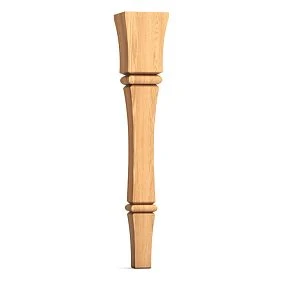
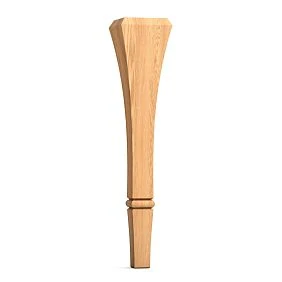
Tapered straight legs — slight outward tilt, tapering downward. Elegant Scandinavian look, lightweight construction.
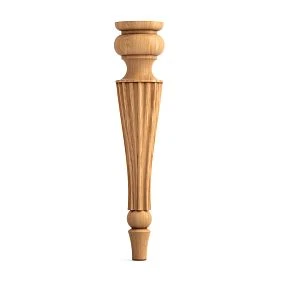
Turned legs with moderate decor — classic or neoclassical, harmonizes with a sofa on wooden legs of a similar profile.
Straight square legs without decor — minimalism, industrial style, modern classic.
Carved legs with a rich profile — for classic living rooms with rich decor, antique furniture, large carpets.
Important rule: legs for a coffee table should match the style of the legs of the sofa and armchairs standing nearby. The unity of the furniture grouping is created precisely through the consistency of these details.
Leg shape: straight, turned, shaped, carved
Shape is the language of furniture
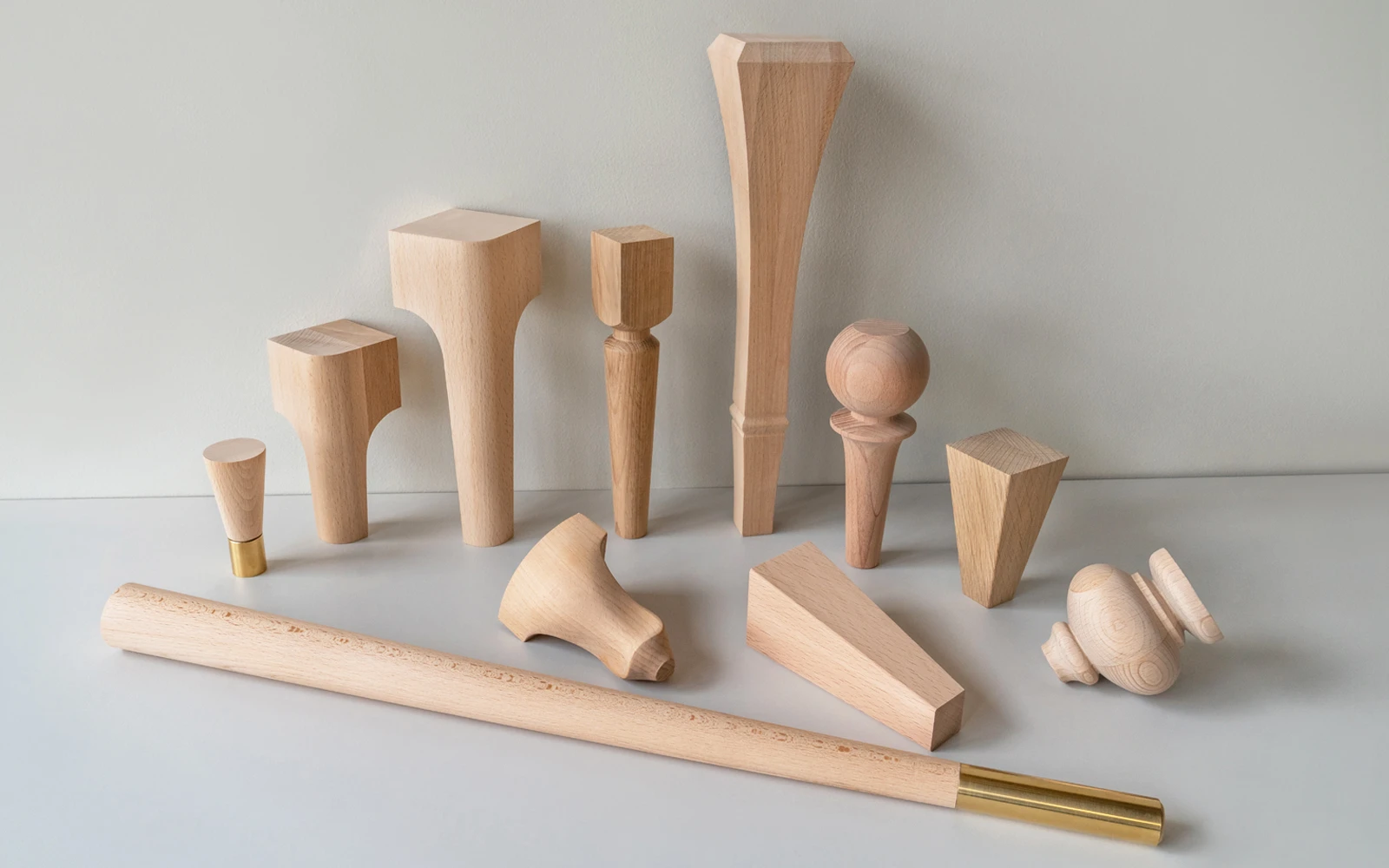
The shape of the leg is the first thing that is read when looking at a piece of furniture. Sharp straight lines speak of strictness and modernity. Smooth turned profiles speak of classical tradition. Carved decor speaks of luxury and status. Tapered conical legs speak of lightness and air in the interior.
Straight legs
Strict geometry without decor. Square or round cross-section, constant along the entire length or with a slight taper downwards (straight conical).
Application: modern furniture, Scandinavian style, Japanese minimalism, loft. Ideal for kitchen tables with clean design, desks, simple coffee tables.
Advantages: versatility, ease of processing and painting, neutrality in the interior.
Turned legs
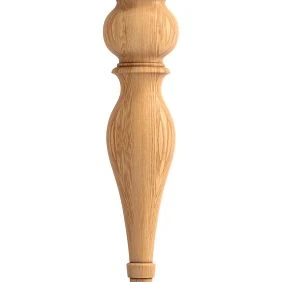
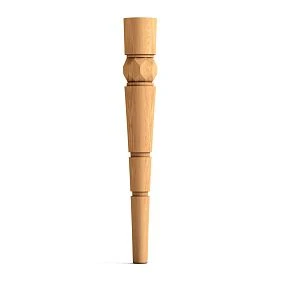
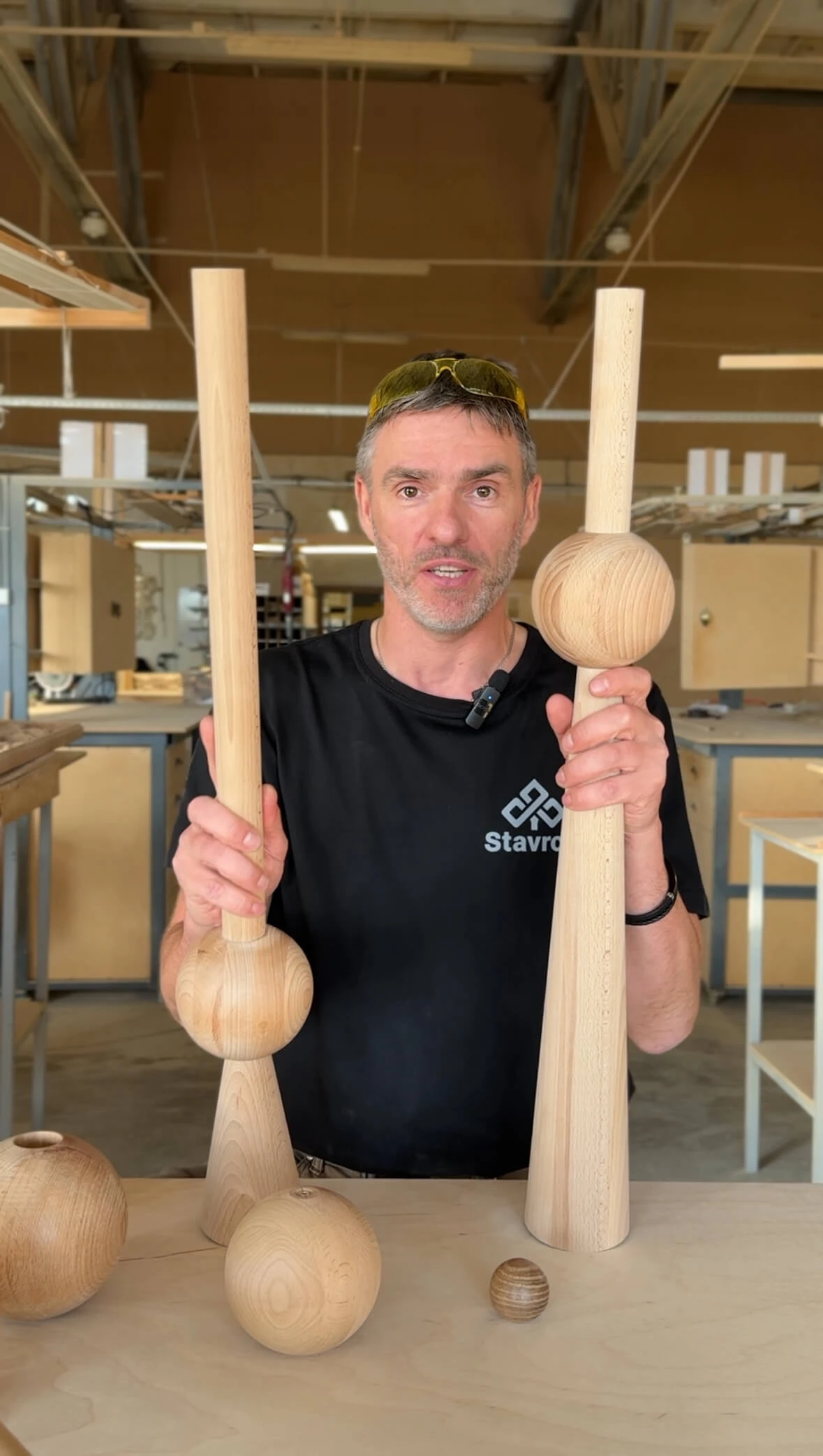
Turning allows for an endless variety of profiles: from a simple cone with one grip to a complex multi-tiered pattern with vases, beads, necks, and heels.
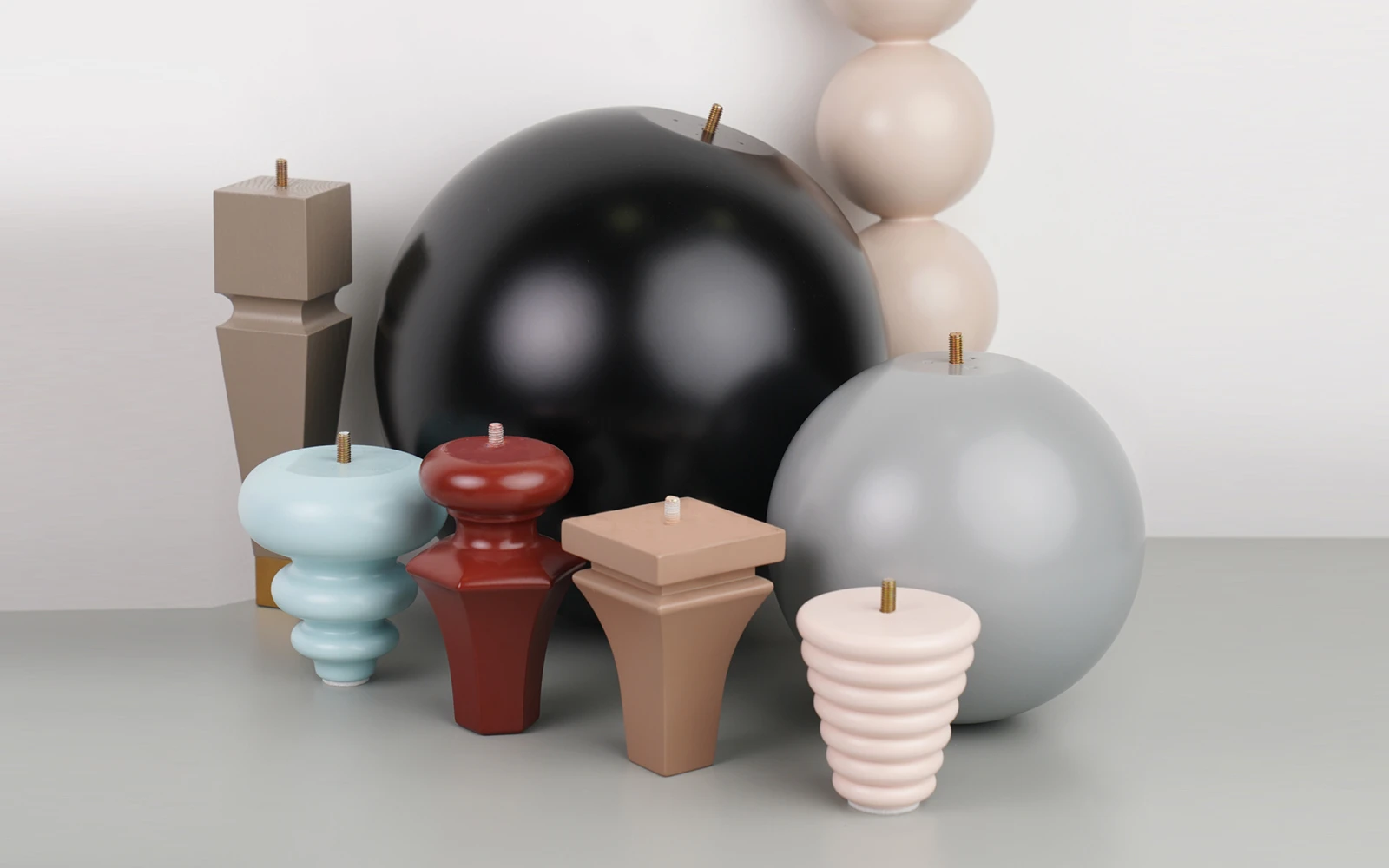
Turned legs are a traditional choice for classic furniture. They speak of hand craftsmanship, tradition, and timeless quality. Turned furniture leg under white enamel — an image of Provence. The same leg under dark lacquer — an image of English classic.
Shaped legs: saber, cabriole, lyre
Shaped legs with a curve are a special category. This is no longer turning, but milling or manual work.
Cabriole — a leg with an S-shaped curve, the lower part in the form of an animal paw or scroll. Baroque and Rococo aesthetics. Used on sofas, armchairs, dressing tables in classic interiors.
Saber — a leg with a smooth single curve, like a saber. Characteristic of Empire and Biedermeier style furniture.
Lyre — a leg with a protruding middle element in the shape of a musical instrument. Decorative and expressive, for classic-style tables.
Carved Legs
The highest level of decorative craftsmanship. Carving on the body of a turned leg — acanthus leaves, garlands, geometric motifs. For furniture that itself is a work of applied art: antique reproductions, custom pieces, representative furniture.
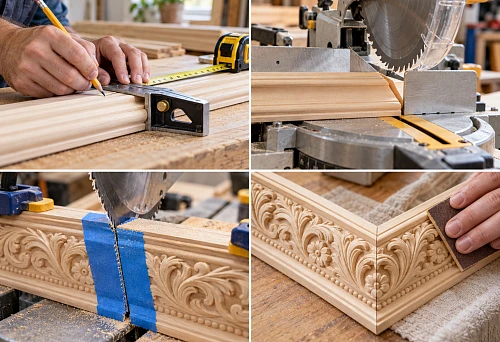
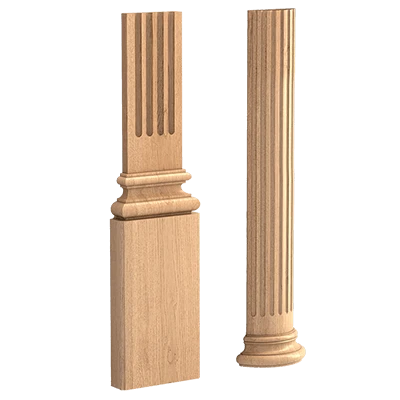
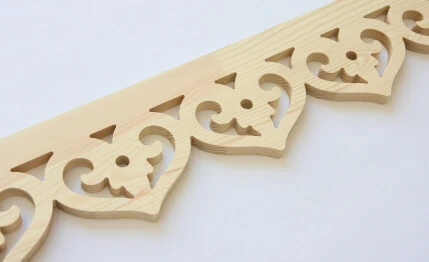
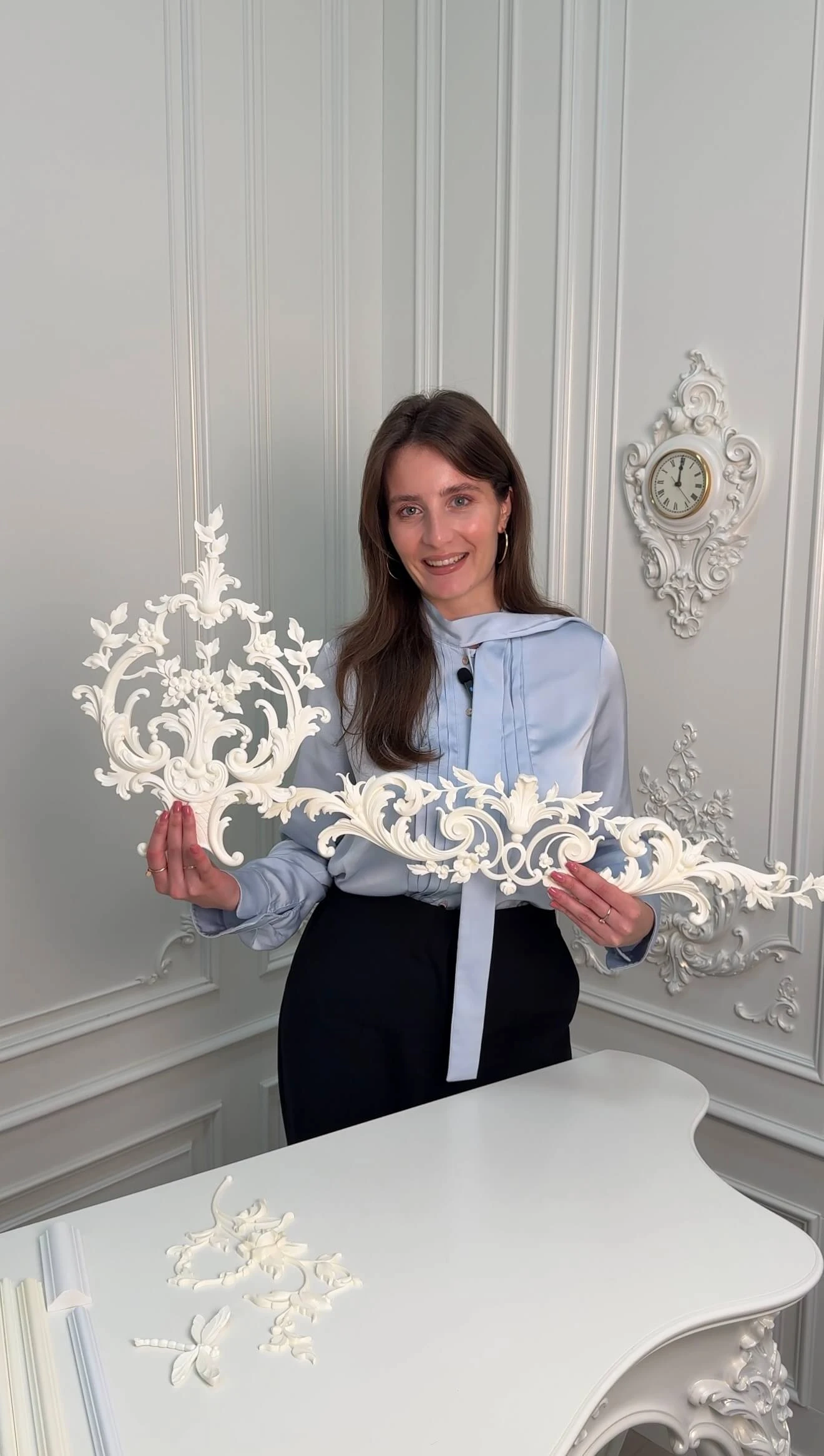
decorative elements for furniture — overlays and decor — can be added to a straight leg, creating the illusion of a carved piece at a more affordable price.
How to choose material for furniture legs
Hardness is not a whim, but a necessity
A furniture leg is a load-bearing element. Even coffee table legs experience impact loads when moving furniture across the floor. Soft wood does not hold the end grain under load and dents under point pressure (e.g., from a leg on a hard floor without a felt protector).
For everyone wooden legs for furniture — beech or oak. This is not a luxury, it is a minimum quality requirement.
Beech: ideal for painting and any finishing
Beech is the most common wood species for furniture legs. Density around 700 kg/m³, uniform fine-grained structure, minimal porosity — an ideal material for any coating.
Beech legs under white enamel — an impeccable surface without traces of texture. Under tinting — they accept any shade evenly, without streaking. Under clear varnish — a clean, calm pattern without aggressive spots or stripes.
Beech also lends itself well to turning: clean cut, no tear-out, smooth surface without sanding operations between passes.
Oak: for those who choose natural expressiveness
Oak legs are about texture. A pronounced natural pattern with characteristic radial rays, a darker and richer shade compared to beech. Under an oil coating, oak "comes alive" — the texture becomes voluminous and tactile.
Oak is stronger than beech: 720–750 kg/m³, high hardness, excellent moisture resistance. For a dining table with an oak top — oak legs are 100% organic.
Downside: oak is more expensive than beech, and this must be considered when budgeting, especially if many legs are needed (set for 6 chairs + table = 28 legs).
Legs for painting: what you need to know
buy wooden legs for a table "for painting" means getting a workpiece with a clean sanded surface, ready for applying primer and paint. Such legs have no finish coating — their finishing is up to the buyer.
Technology for painting wooden legs:
-
Sanding with 120–150 grit along the grain.
-
Apply 1 coat of acrylic primer.
-
Light sanding with 220 grit.
-
Enamel 1–2 coats.
-
Topcoat lacquer (for high-traffic surfaces).
How to match legs to furniture style
Style is an agreement between details
A furniture leg does not exist on its own. It is part of an object, and the object is part of an interior. Breaking the style logic at the leg level negates everything else.
Classicism and neoclassicism
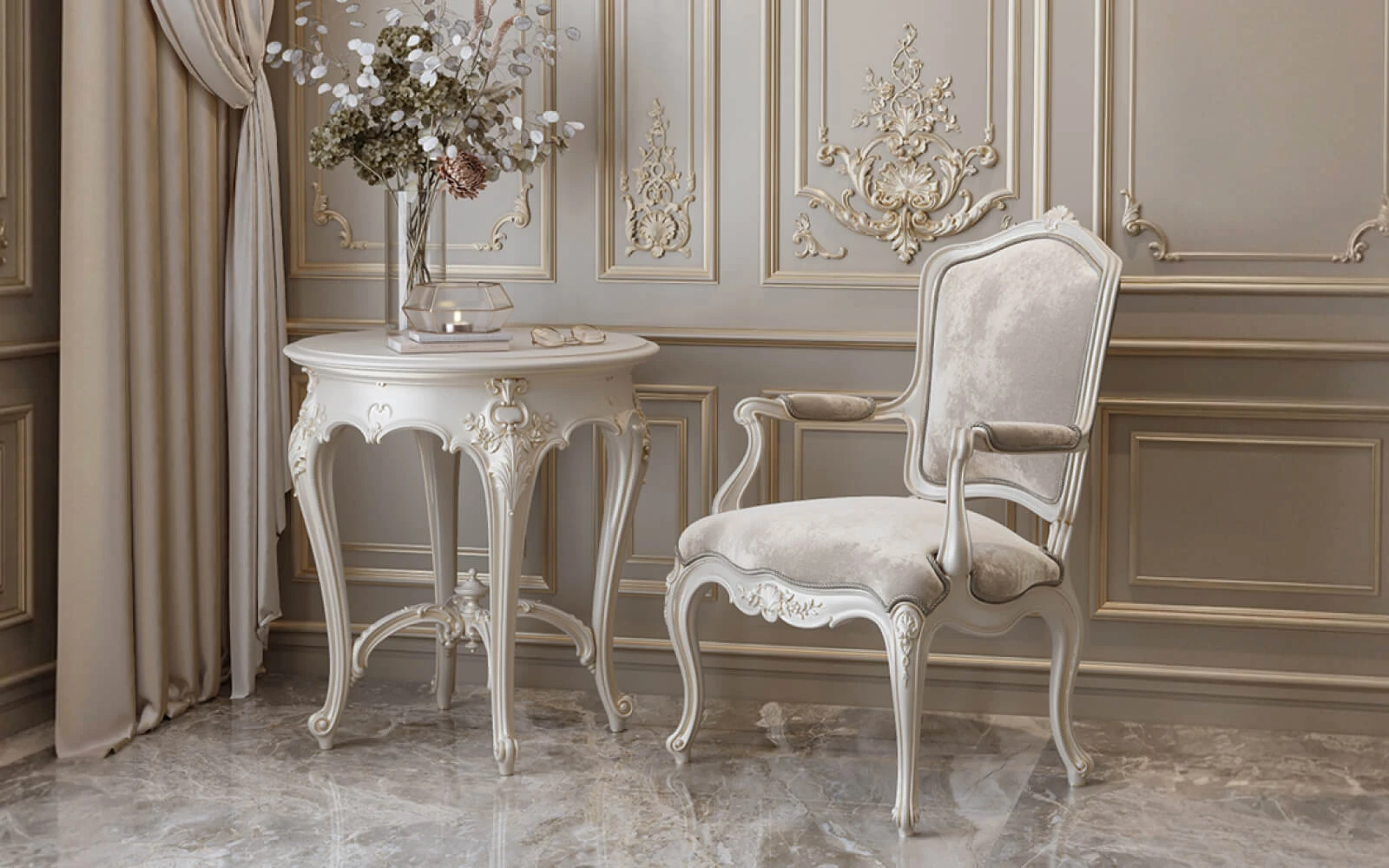
Turned legs with rich profiles — several tiers of vases, grips, beads. For a table — a powerful cross-section with decor. For a chair — elegance with sufficient thickness.
Finish: dark walnut, cherry, dark oak under lacquer — or white enamel for "light classic."
Additional decor: decor for furniture — applied rosettes, cartouches, applied pilasters — enhances the classic look.
Provence and country
Turned legs with a smooth, "soft" profile. Conical tapers, calm relief without sharp transitions. Finish: white or cream enamel, "aged" surface with patina.
Consistency is key here: if the table is in a Provencal style with cream enamel, the chairs should be from the same stylistic solution with similar legs. Mixing turned legs with different profiles under the same coating is a stylistic disharmony.
Scandinavian style
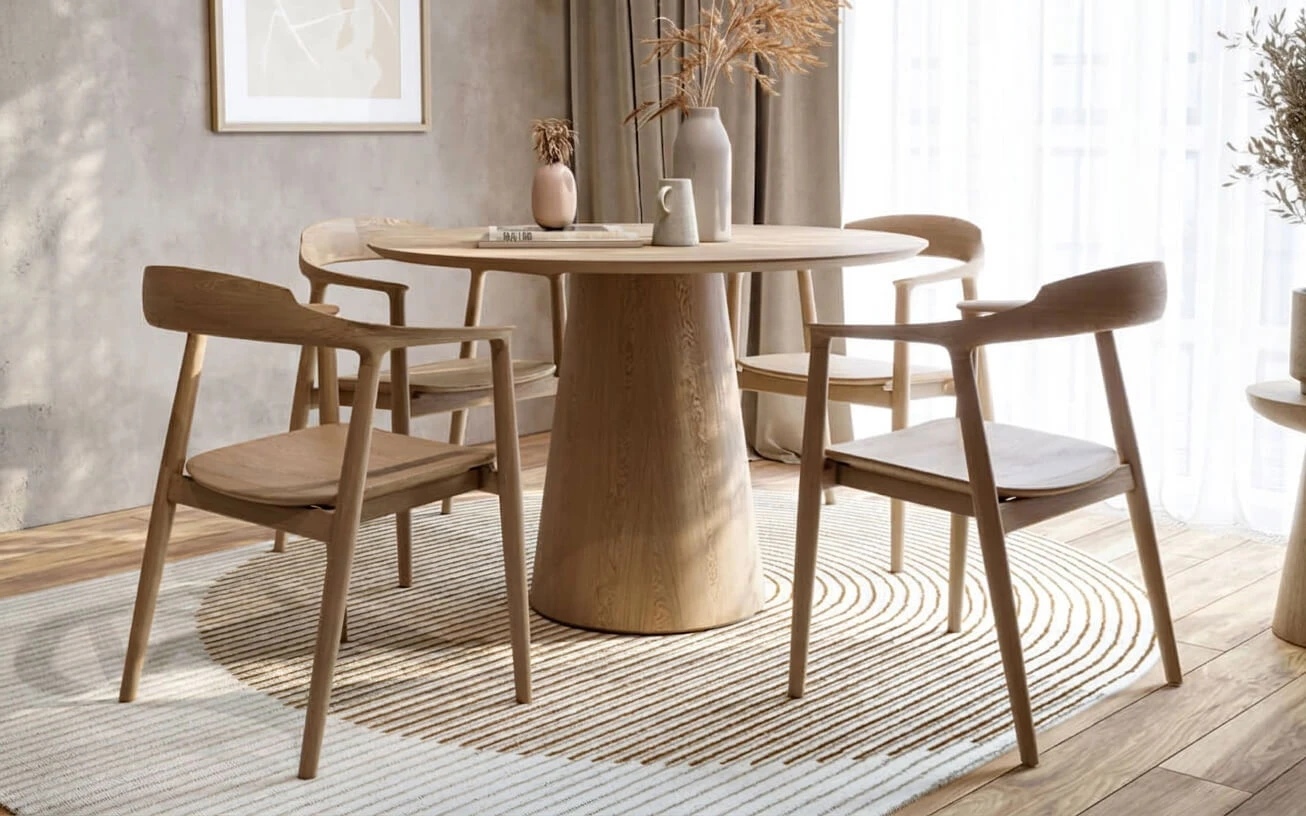
Conical straight legs, tapering downwards. Minimal or zero decor. Wood species: beech or birch. Coating: natural oil, light varnish, or enamel in light gray / white tones.
The legs are slightly splayed outward, creating a "flying" silhouette characteristic of Scandinavian furniture.
Modern classic
The golden mean: a turned leg with a moderate profile (one or two grips without complex decor). Suitable for most modern interiors with classic notes.
Coating: light or medium tone under varnish / oil. White enamel for light interiors.
Loft and industrial style furniture
Straight thick legs, square or round in cross-section. No turned decor. Massiveness, roughness, honest material. Wood species: oak under dark oil or "raw" finish.
In loft interiors, wooden legs are often combined with metal fasteners — this is part of the image.
Restoration of chairs and tables: when it's enough to replace the legs
A second life for old furniture
This is one of the most underrated scenarios for buying furniture legs — restoration. An old dining table with a beautiful oak top but broken or unsightly legs. A set of chairs with sturdy seats but legs that have dried out and come unglued. Or simply a desire to change the look of furniture without a full replacement.
In each of these cases Buy chair legs and installing them is an instant transformation of furniture at minimal cost.
What you need to know when replacing legs on old furniture
Diameter and type of attachment. Old furniture may have threaded inserts M8, M10 or dowel fittings 10–12 mm. Before buying legs — check the type of attachment and its size.
Leg height. If you are changing table legs to taller or shorter ones — check how this will affect ergonomics. A table that has become 5 cm taller may be uncomfortable for the previous chairs.
Style. New legs on an old table should match the spirit of the piece. Turned classic legs on a massive oak top — organic. Straight Scandinavian legs on the same table — a style conflict.
Legs for restoration: popular scenarios
Scenario 1: Old Soviet chair. Sturdy wooden frame, good seats — but legs have dried out. New turned beech legs under white enamel — and the chair in a Provencal style.
Scenario 2: Country table. Pine solid wood top, legs have rotted or dried out. New tapered beech legs under dark oil — a practical and aesthetic replacement.
Scenario 3: Coffee table made from a slab. An inexpensive table made of laminated chipboard with plastic legs. Replacing them with wooden legs of the desired height instantly warms up and refines the look.
How to combine table legs, chair legs, and furniture decor
A unified furniture group is a strategy, not a coincidence
An ideal dining group is when the table and chairs look like a set, not randomly assembled pieces. And the first tool for this is coordinated legs.
Rule 1: Same wood species. If the table has beech legs, the chairs should also have beech legs. Beech and oak with the same stain will give different shades.
Rule 2: Coordinated profile. The legs of the table and chairs don't have to be identical, but they should be from the same stylistic alphabet. A turned leg with two vases on the table, and a turned leg with one, more elegant, on the chair. One family, different sizes.
Rule 3: Same finish. The same stain color, the same level of varnish gloss. Matte varnish on the table plus gloss on the chairs creates a visible disconnect.
Furniture handles as an extension of the style
If the same interior includes cabinets, sideboards, or dressers with wooden handles, they should be coordinated with the legs in style and wood species. wooden hook handle in the same tone as the table legs — another step towards a cohesive interior.
wooden button handle — a small detail, but it's these details that bring the interior together as a whole.
Decorative furniture overlays
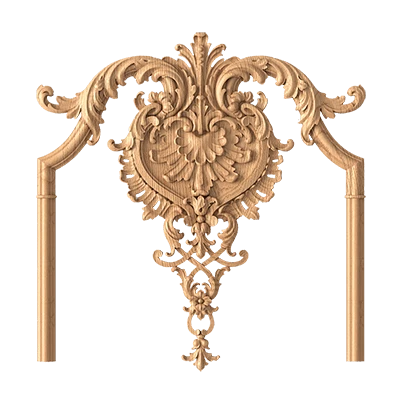
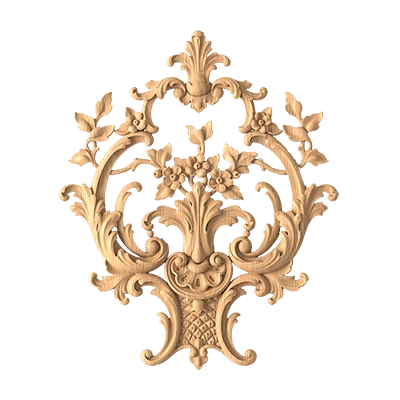
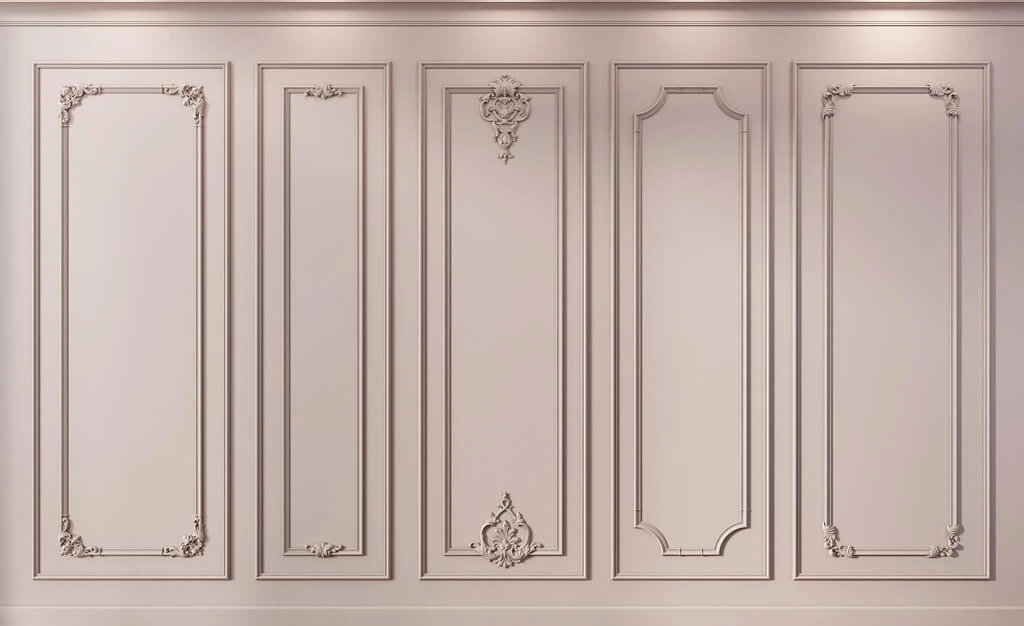
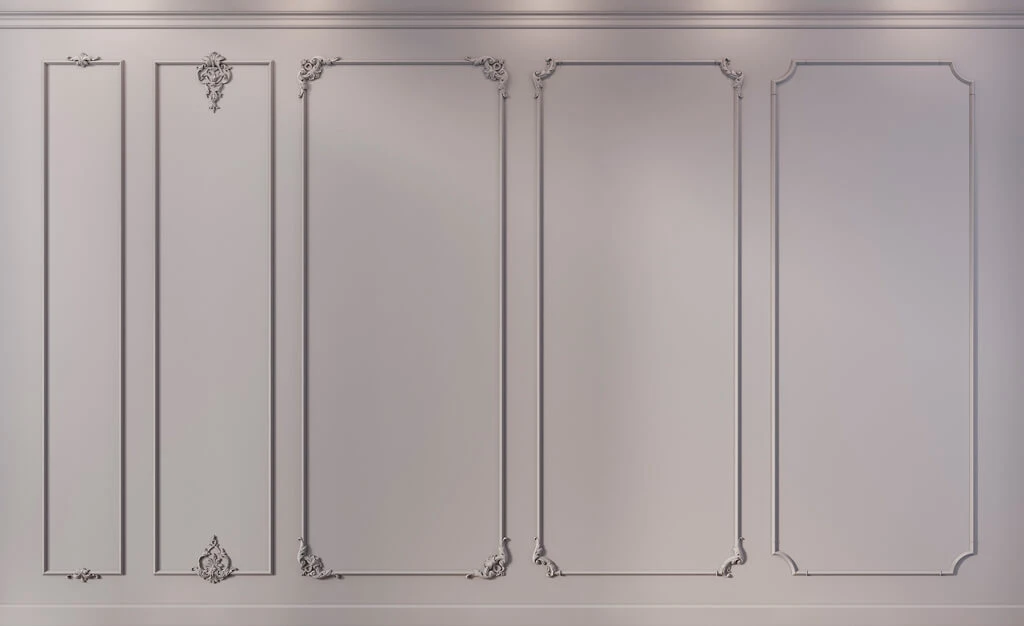
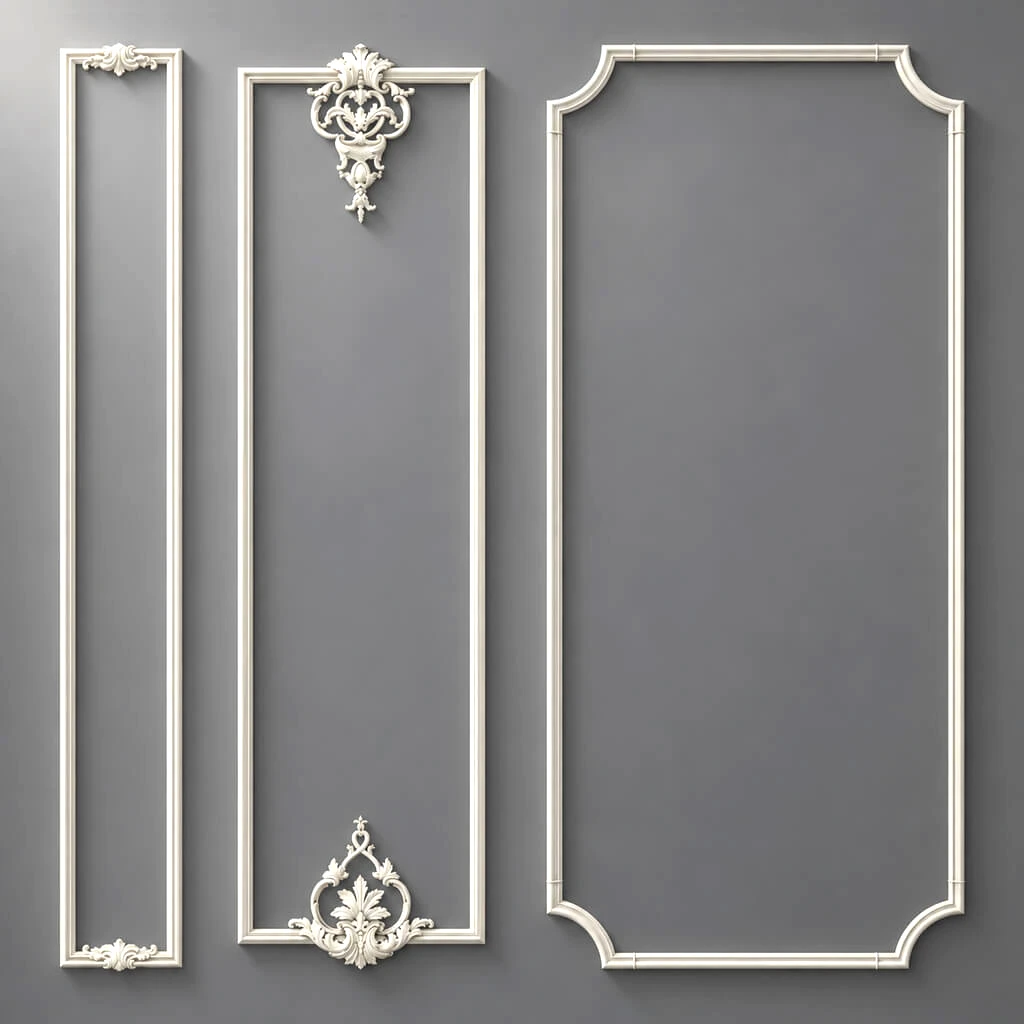
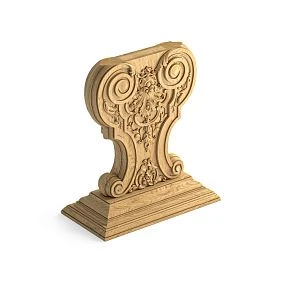
If the legs carry decoration — decorative elements for furniture on the facades of cabinets and tables, they continue this language. Overlay rosettes, cartouches, corner inserts — all these are tools of the 'agreement between details.'
Tall wooden legs: a special scenario
When height becomes style
A separate topic — tall wooden legs for furniture: from 15 to 30 cm and higher. These are legs for sofas, armchairs, poufs, and sometimes — consoles and dressing tables.
Tall legs create a sense of 'lightness' for the object: the furniture seems to float above the floor. This is especially valuable in small spaces and in Scandinavian, Japanese, and modern design.
For kitchen and dining tables, high legs are used in the "bar" height format: table 85–105 cm + bar stools or high stools.
Common mistakes when choosing wooden legs
Mistake 1: Legs too thin for a heavy table
An elegant leg with a narrow grip on a massive oak tabletop — beautiful in photos, unreliable in reality. The minimum cross-section at the thinnest point of the dining table leg profile is 45 mm.
Mistake 2: Incorrect leg height
"I'll pick something close" — and as a result, the table is 3 cm below the norm, making it uncomfortable to sit at. The leg height is calculated based on the specific tabletop thickness and the desired final table height.
Mistake 3: Different styles of table and chair legs
Straight Scandinavian legs on the table + classic turned legs on the chairs — two different eras, two different languages in one space.
Mistake 4: Weak leg attachment
A leg on a single dowel without glue — wobble within a month. Proper attachment: threaded stud + nut tightening, or dowel with wood glue + side metal bracket.
Mistake 5: Choosing only by photo
In a photo, a leg may look different than in reality. Be sure to study the dimensions: height, cross-section in the body, diameter of the mounting part. A leg bought "blindly" often doesn't fit one of these parameters.
Mistake 6: Soft wood in a load-bearing structure
Pine or alder legs for a kitchen table are only acceptable under minimal loads. For a daily-use dining table, only beech or oak.
Error 7: Different batches of the same product
Legs were purchased later, and the new ones had a slightly different wood shade. Order a full set with a spare in one order.
FAQ: Popular questions about wooden legs for chairs and tables
What leg height is needed for a standard kitchen table?
With a standard kitchen table height of 74–76 cm and a tabletop thickness of 20–28 mm, the leg height will be 710–730 mm plus a mounting tenon of 10–15 mm. The final leg length is 720–745 mm.
How to choose chair legs so they don't squeak?
Squeaking is a sign of poor fastening or wood drying out. Use a threaded connection with a metal insert (more reliable than a dowel), apply wood glue to all wooden joints during assembly, and then be sure to let the glue dry completely before use.
Can you put chair legs on a table?
Technically, if the mounting tenon size matches. Practically, chair legs are too tall for most tables (44 cm for a chair vs. 71–73 cm for a table). Legs are chosen for a specific product.
How many legs does a coffee table need?
The standard is four legs at the corners. For round and oval tables, three or five legs around the perimeter are possible. A pedestal support (one central leg) is for coffee tables with a very wide tabletop.
What type of wood is best for dining table legs?
Beech is the optimal choice for any finish. Oak is for when the tabletop is oak or the piece is planned for clear lacquer/oil with visible texture. For standard kitchen tables for painting, use beech.
Are felt pads needed on the legs?
Absolutely — for any hard floors (parquet, laminate, porcelain tile). Felt or silicone pads protect the floor from scratches and slightly dampen vibration.
Where to buy wooden legs for chairs and tables
Finding the right legs is not a matter of random search. It is a choice from a full range, where each item has precise dimensions, material specifications, and a photo of the actual product.
Full catalog of furniture legs:
-
Wooden legs — full range of solid wood furniture supports.
-
Buy furniture legs for a 200-room hotel project — this is not an ordinary deal, but a partnership requiring a special approach. — all legs without coating (for self-finishing).
-
Legs for coffee table — specially selected for low structures.
-
decor for furniture — overlays, rosettes, decorative elements.
-
tall wooden legs for furniture — detailed article about supports for sofas and high structures.
STAVROS: solid wood furniture legs for kitchen, dining room, and living room
A wooden leg is a small detail with great responsibility. It bears weight, sets the style, determines the comfort and durability of furniture. That is why choosing wooden legs for chairs and tables should be done consciously: with an understanding of height, shape, material, and style compatibility.
STAVROS produces and supplies wooden furniture legs from solid beech and oak — turned, straight, shaped, for painting and with coating. The entire range is made with precise geometry, clean turning, and stable dimensions. Legs, handles, overlays Wooden decoration и Solid wood products — a unified system for those who create furniture with character.
STAVROS works with furniture manufacturers, restorers, and private craftsmen throughout Russia.