








































































Article Contents:
- What components are needed for a wooden staircase
- Anatomy of a railing: what it consists of
- What to buy: standard minimum for one flight
- Why it's better to choose staircase elements as a set
- Ensemble vs. random assembly
- Balusters for a staircase: how to choose shape and material
- Baluster — the visual rhythm of the staircase
- Turned (lathe-turned) balusters
- Flat balusters
- Carved newels
- Beech and oak balusters
- A technical parameter often forgotten: the baluster tenon
- Staircase posts: decorative and load-bearing role
- A post is not just a "big baluster"
- Functions of a staircase post
- Carved wooden posts
- Types of posts by configuration
- Post dimensions and proportions
- Handrails and railings: how to choose a comfortable and beautiful option
- Handrail: between ergonomics and aesthetics
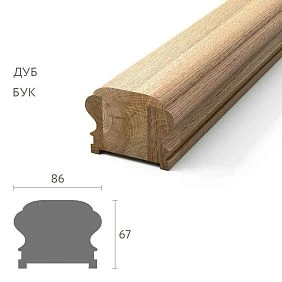
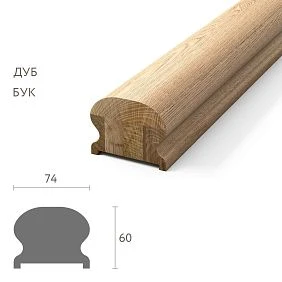
- Handrail profile shape
- Handrail Dimensions
- Handrail height above step
- Wall-mounted handrail
- How to choose components to match interior style
- Staircase style is a dialogue with the home
- Classic and neoclassic
- Country wooden house
- Modern classic and neoclassic
- Provence and Country Style
- Modern minimalism
- How to calculate the number of balusters and posts
- Mathematics of stair railing
- Step 1: Determine the railing height
- Step 2: Determine the spacing between balusters
- Step 3: Calculate the number of balusters
- Step 4: Calculate the number of posts
- Step 5: Calculate the linear footage of handrail
- Summary calculation table
- Material: beech, oak and other wood species for staircase elements
- Wood species is not just about price
- Beech — the universal standard
- Oak — for those who choose visible texture
- Pine: when budget matters more
- Uniformity of wood species throughout the staircase
- Installation: basic principles of mounting
- How balusters are attached to steps and handrail
- How the post is attached to the structure
- Common mistakes when choosing stair components
- Mistake 1: Different styles of balusters and posts
- Mistake 2: Too large spacing between balusters
- Mistake 3: Incompatibility of handrail and balusters
- Mistake 4: Purchase without a general project
- Mistake 5: Incorrect quantity calculation
- Mistake 6: Different batches of the same wood species
- Error 7: Ignoring connecting parts
- Wooden decor in the staircase system
- When a part becomes an accent
- FAQ: popular questions about staircase components
- Where to buy components for a wooden staircase
- Full range in one catalog
- STAVROS: wooden staircase components from solid wood
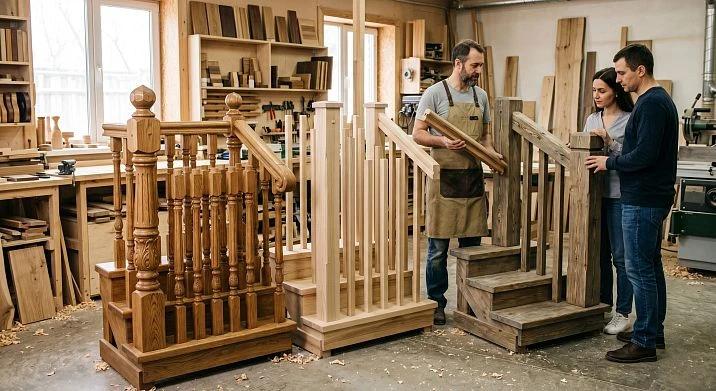
A staircase in a house is not just a structure for climbing to the second floor. It is an architectural object that is visible from the doorstep, present in every frame of interior photography, and shapes the first impression of the house as a whole. And if the steps are the body of the staircase, then Handrails and balusters — its face.
That is why mistakes in choosing staircase components are so painful: redoing a finished staircase is expensive, and poorly selected elements cannot be fixed with any paint. A baluster with a different profile, a post in an incompatible style, a handrail that does not match the baluster in size — all of this is immediately visible, all of this cannot be ignored.
This article provides a complete practical breakdown: which Components for wooden staircase are needed, how to select elements into a unified ensemble, how to calculate the quantity, and how to avoid mistakes with style and material.
Which components are needed for a wooden staircase




Anatomy of the railing: what it consists of
Before choosing, you need to clearly understand what elements make up a wooden staircase railing. Without this, it is impossible to correctly calculate the quantity or select compatible parts.
A baluster is a vertical railing element between the handrail and the stringer (or step). Balusters stand in a row, support the handrail at the required height, and create the "pattern" of the railing. This is the most numerous element: for a flight of 3–4 meters, 15 to 30 pieces may be needed.
A newel post is a more powerful and decoratively rich support element. It is installed at the beginning and end of a flight, on landing platforms, and at transition points between flights. The post bears the main structural load and sets the "gateway" of the railing.
A handrail is a horizontal (or inclined along the flight) element that the hand rests on. It should be comfortable to grip, safe, and consistent in width with the mounting groove of the balusters.
Railing, in a broad sense, refers to the entire railing system: balusters + posts + handrail together. In a narrow sense, "railing" sometimes denotes the handrail.
Support and fastening elements: baluster shoes, dowels, bolts, plugs — these are technical parts hidden in the structure but critically important for strength.
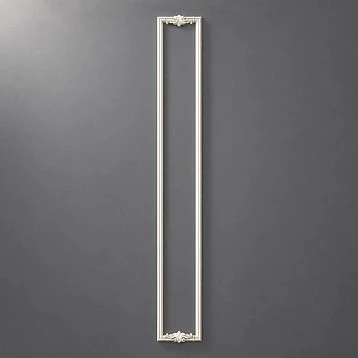
Decorative elements: post caps, rosettes at the base of balusters, string and stringer cladding boards, decorative brackets — give the staircase a finished look.
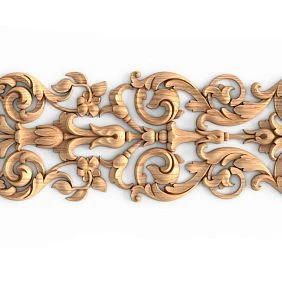
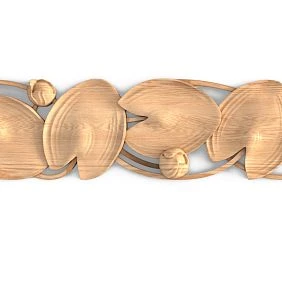
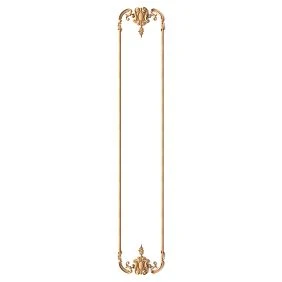
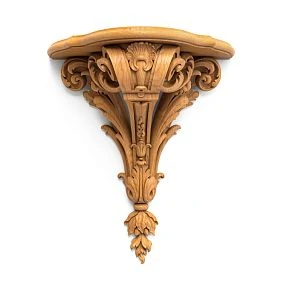
Our factory also produces:
What to buy: standard minimum for one flight
For one straight staircase flight with a landing:
-
Balusters for the staircase — as calculated (usually 1–2 per step).
-
Bottom and top newel posts — 2 pieces (+ 1–2 for the landing).
-
Handrail — linear footage along the flight length + landing.
-
Fasteners — specific to the installation type.
-
Decorative overlays and elements — as per design solution.
Get Consultation
Why it's better to choose staircase elements as a set
Ensemble vs. random assembly
This is the main principle that is most often violated. A person buys balusters they like, then separately a post (from a different supplier, a different batch, a different wood species), then a handrail from a third place. As a result, everything is assembled on the staircase — and does not work as a single unit.
Why does this happen? Because the consistency of staircase elements is a multi-level system:
Level 1: Material and wood species. A beech baluster and a pine post, after identical staining, will give different shades. A beech handrail and oak balusters under clear varnish — a visible difference in texture. The entire staircase should be made of the same wood species.
Level 2: Style and scale. A classic turned baluster with vases and a minimalist post without decor — a style conflict. A decoratively rich carved wooden post requires balusters of a comparable level of decorativeness.
Level 3: Proportions. The height of the baluster must correspond to the height of the post minus the handrail. The width of the handrail must correspond to the mounting groove for the specific type of baluster.
Level 4: Coating. All elements must be treated with the same type of coating from the same series — otherwise, after applying paint or varnish, the color will differ.
The conclusion is clear: staircase components you need to buy from one manufacturer, from one catalog, from one batch.
Balusters for stairs: how to choose the shape and material
Baluster — the visual rhythm of a staircase
When looking at a stair railing, it is the balusters that create the rhythm — a repeating pattern running along the span. One baluster means nothing. A row of twenty is an architectural motif. And that is why choosing the shape of the baluster is so important: it will be repeated dozens of times.
Turned (lathe-turned) balusters
The most common type. They are turned on a lathe, featuring a characteristic profile with thickenings, waists, vase shapes, and conical transitions. They can be simpler (minimal decoration) or richly decorated (several tiers of vases, expressive "posture").
wooden balusters for staircases of the turned type — a classic suitable for most styles: from strict neoclassicism to warm Provence. Their advantage is scalable decoration: you can choose a baluster with minimal relief for a restrained interior or with a rich profile for a classic home.
Standard sizes of turned balusters:
-
Length: 900, 1000, 1200 mm — for different railing heights.
-
Body cross-section: 40–60 mm.
-
Upper mounting part (tenon): 25–35 mm for the handrail.
Flat balusters
Flat baluster — cut from a board along the contour, with a figured silhouette. It looks different from a turned one: flatter, with a characteristic "cut-out" pattern — arches, scrolls, geometry. A detailed breakdown is in the article about Flat wooden balusters.
Flat balusters are used:
-
In wooden houses with open roofing — for balcony railings.
-
On verandas and terraces — as a decorative element.
-
Inside the house — for stairs with a more rustic, country character.
Carved balusters
Highest level of decorativeness. Hand or milled carving on the surface of a turned baluster — acanthus leaves, grapevine, geometric patterns. For prestigious classical staircases, country mansions, interiors with rich decor.
Beech and oak balusters
Beech balusters — the first choice for stairs intended for painting or opaque finishing. Density ~700 kg/m³, uniform structure, ideal surface for enamel. Beech easily accepts any color without streaks or unevenness.
Oak balusters — for stairs under clear varnish or oil, where the natural wood texture is visible. A more prestigious and expensive material with a pronounced grain.
A technical parameter often overlooked: the baluster tenon
The baluster does not just stand — it is fixed in the mounting spot via a tenon (top) and in the lower part via a dowel or cutout for the stringer. The top tenon fits into the groove of the handrail. Therefore, the size of the baluster tenon must strictly match the groove of the handrail. When buying balusters and handrail separately — be sure to check size compatibility.
Staircase pillars: decorative and load-bearing role
A pillar is not just a "large baluster"
One of the most common myths about wooden staircases: "a pillar is just a large baluster." No. It is a fundamentally different element in function and scale.
A baluster is a thin vertical post bearing minimal load. A pillar is a massive load-bearing support through which the load from the handrail and railing is transferred to the staircase structure. The difference in cross-section: if a baluster is 40–50 mm, then a pillar is 80×80, 100×100, 120×120 mm or more.
Functions of a staircase pillar
Structural. The pillar is attached to the stringer, step, or landing with a bolted connection. The handrail rests on it. It withstands lateral loads from a person leaning on it.
Decorative. The pillar is a visual accent at the beginning and end of a flight. It catches the eye first, and it is visible in panoramic interior photos.
Architectural. The pillar is the "frame" for the staircase railing. Two pillars at the edges of a flight form a "gate" through which one ascends to the next floor.
Carved wooden pillars
carved wooden balusters — the pinnacle of decorative staircase elements. The combination of turned profiles with milled or hand-carved carving creates a rich decorative accent. They are used in classic, baroque, empire-style interiors, in country houses with a representative character.
A distinctive feature of a carved post: it sets the decorative "bar" for the entire staircase. If the post has a complex relief with acanthus motifs, the balusters should be comparably decorative. A simple smooth baluster next to an ornate carved post is a proportional and stylistic failure.
Types of posts by configuration
Lower (starting) post. Installed at the lowest point of the flight, on the first step or landing. Typically the most massive and decorative — it is seen first.
Upper (finishing) post. Installed at the highest point of the flight. It may be identical to the lower post or slightly more modest in decoration.
Intermediate post. Installed on turning landings, at points where the staircase changes direction. In terms of decoration — between the lower post and the baluster.
Post dimensions and proportions
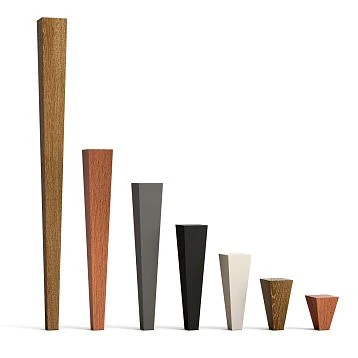
Post height — from the surface of the step (or landing) to the top point. Standard railing height is 900–950 mm. Therefore, the height of the post with a decorative "cap" is 900–1000 mm from the mounting surface.
Cross-section: 80×80 mm — for most residential staircases. 100×100 mm — for more massive structures with a heavy handrail.
Railings and handrails: how to choose a comfortable and beautiful option
Handrail: between ergonomics and aesthetics
The handrail is the only element of the staircase that is constantly touched by hands. This means: it must first and foremost be comfortable. But it is also visible from above, along the entire length of the flight — meaning it must be aesthetically flawless.
Two requirements that often contradict each other. A wide, flat handrail with a rich profile is expressive — but uncomfortable to grip. A thin, round one is comfortable — but may look too strict. The correct handrail is a balance.
Handrail profile shape
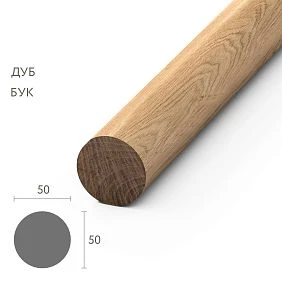
Round (D-shaped) handrail. Classic shape for a comfortable grip. Diameter 40–60 mm is the optimal range for most people. The bottom may be flat for ease of attachment to balusters.
Oval handrail. Slightly flattened on top — a compromise between round and profiled. Comfortable to grip, looks more solid than a round one.
Profiled (shaped) handrail. Has a complex molded profile with a heel, shelf, and fillet. Characteristic of classic staircases. Less comfortable to grip, more decorative.
Handrail dimensions
Handrail width (standard): 60–90 mm — depends on the profile.
Profile height: 40–60 mm.
Groove for balusters (bottom): strictly matches the top tenon of the baluster — usually 25–35 mm.
Principally: the handrail and balusters are a single fastening system. The size of the handrail groove = the size of the baluster tenon. This is the first thing to check when purchasing together.
Handrail height above the step
According to standards for residential buildings — 900 mm from the step surface to the top of the handrail. For children's spaces — 700–750 mm (sometimes a second handrail is installed at a lower height). For open stair flights and balconies — 1000 mm.
Wall-mounted handrail
A separate case is the wall-mounted handrail, which is attached to the wall via brackets. It is not connected to balusters and posts — it is an independent element. For wooden stairs in narrow spaces, a wall-mounted handrail is often the only solution.
How to choose components to match the interior style
The style of the staircase is a dialogue with the house
A wooden staircase does not exist in a vacuum. It is part of the interior, part of the home's architecture. And Wooden staircase components for sale it needs to be done so that the staircase 'converses' with the rest of the space, rather than contradicting it.
Classicism and neoclassicism
The richest selection of staircase components. Characteristic features:
-
Balusters: turned with several tiers of vases, pronounced decor.
-
Posts: carved or with rich turned profile, with a "cap" — a ball or figured top.
-
Handrail: profiled or oval.
-
Finish: clear varnish with walnut or light beech tint, less often — white enamel.
A classic staircase with balusters, posts, and handrail made from the same wood species with a coordinated finish is an undeniable interior asset.
Country wooden house
A freer and more "lively" style. Allows visible wood texture, massive forms, rustic details. Characteristic features:
-
Balusters: turned with moderate decoration or flat with fretwork pattern.
-
Posts: powerful, massive, with simple forms or natural details.
-
Handrail: round or D-shaped, possibly with visible wood structure.
-
Finish: oil or matte varnish, emphasizing the texture.
Modern Classicism and Neoclassicism
A restrained version of the classics without being overloaded with decor. Here's the balance: turned balusters with minimal decor, posts with a clean profile, oval or round handrail.
-
Finish: white or cream enamel (for maximum modernity) or light varnish.
-
Accents: Wooden decoration on the posts — overlays, rosettes, cartouches — instead of complex carving.
Provence and country
A warm, "homey" style with soft forms. Balusters — turned, with smooth transitions. Posts — without rigid geometry. Handrail — slightly wider, with a soft profile. Finish — light shades: white, cream, ivory.
Modern minimalism
Here, wooden staircase elements work as a contrast — warm wood against white walls and concrete floor. Balusters: straight, without decor, square or round cross-section. Posts: straight, with minimal profile. Handrail: round or rectangular.
How to calculate the number of balusters and posts
The math of staircase railing
One of the most common questions when purchasing wooden balusters for staircases — how many are needed. Let's break it down step by step.
Step 1: Determine the railing height
The standard railing height for a residential staircase is 900 mm. This is the distance from the stair tread (or landing) surface to the top of the handrail. The baluster length is determined based on this height.
Baluster length = railing height − handrail thickness − lower mounting plate thickness.
For example: height 900 mm − 60 mm (handrail) − 15 mm (bottom plug) = 825 mm working length. Plus tenons at the top and bottom — final baluster length: 900–1000 mm.
Step 2: Determine the spacing between balusters
According to safety standards, the gap between balusters must not exceed 150 mm (to prevent a child from sticking their head through). The optimal interval in residential buildings is 100–130 mm. With a baluster body width of 40–50 mm — center-to-center spacing: 140–180 mm.
Step 3: Calculate the number of balusters
Span length (horizontal projection) ÷ center-to-center spacing of balusters = number of intermediate balusters.
Example: span 4000 mm, spacing 160 mm → 4000 ÷ 160 = 25 balusters. Add 10–15% spare for cutting and possible installation errors.
Step 4: Calculate the posts
-
Lower + upper post = 2 pieces per straight flight.
-
On the turning platform: +1 or +2 posts (depending on configuration).
-
On a staircase with two flights: 2 + 2 (start and end of each flight) + post on the intermediate landing = 4–5 posts.
Step 5: Calculate the linear footage of the handrail
Handrail length = length of each flight + length of horizontal sections on landings. Measure along the attachment line to the balusters, taking into account the slope of the flight.
Summary calculation table
| Parameter | Formula / Standard |
|---|---|
| Railing Height | 900 mm (standard for residential) |
| Clearance between balusters | No more than 150 mm |
| Step from axis to axis | 140–180 mm (with baluster 40–50 mm) |
| Number of balusters | Span length ÷ spacing + 15% spare |
| Posts on straight flight | 2 (bottom + top) |
| Pillars on the turn | +1–2 per landing |
| Handrail | Along flight length + horizontal |
Material: beech, oak and other species for staircase elements
Wood species is not just about price
When it comes to staircase components, wood species is a matter of durability, appearance, and compatibility with the coating.
Beech — the universal standard
Beech is the most common species for beech balusters and posts for painting. A density of about 700 kg/m³ provides sufficient strength with a compact cross-section. The fine-grained uniform structure is ideal for enamel.
Beech is well-suited for turning: clean cuts without tear-out, a smooth surface after sanding. When painted with white or cream enamel, beech balusters look like products made of expensive monolithic material — without traces of texture.
The disadvantage of beech is its moderate moisture resistance. For indoor staircases with proper coating, this is not a problem. For outdoor and porch staircases, it is better to consider oak or larch.
Oak — for those who choose visible texture
Oak staircase components are for when the staircase should "sound" like wood. The pronounced natural pattern with characteristic radial rays under clear varnish or oil creates the image of a prestigious natural material.
Oak is stronger than beech: 720–750 kg/m³, high hardness, excellent resistance to moisture and mechanical loads. For a country house with natural finishing materials, oak is preferable.
Important nuance: oak balusters and posts are significantly more expensive than beech. This must be considered when budgeting.
Pine: when budget is more important
Pine is the most affordable wood species. Softer than beech and oak, prone to deformation under load. Not recommended for load-bearing posts. Acceptable for balusters of lightweight country stairs, verandas, garden structures.
The main problem with pine when painting: resin pockets cause uneven coverage. Pre-treatment with a special insulating primer is mandatory.
Uniformity of wood species throughout the entire staircase
This is not just a recommendation — it is a necessity. Beech and oak under the same stain will give different shades. Beech and pine under white enamel will show visible differences in coverage and texture.
Rule: all staircase elements — balusters, posts, handrail — must be from the same wood species, from the same batch, with the same finish.
Installation: basic mounting principles
How balusters are attached to steps and handrail
There are several installation technologies:
Dowel mounting. Holes are drilled in the end of the baluster and in the step, and a wooden dowel is inserted with wood glue. A simple, invisible joint. Disadvantage: can loosen under poor glue and load.
Threaded rod mounting. A metal rod M8–M10 is installed in the step, and a threaded insert nut is screwed into the lower end of the baluster. The baluster is screwed onto the rod. A very reliable, detachable joint.
Installation into a stringer groove. If the staircase is on a stringer, a groove is milled in it for the lower tenons of the balusters. All balusters fit into the groove and are secured from above by the handrail.
How the post is attached to the structure
The post — a load-bearing element — is attached more rigidly:
-
Bolted connection through the stringer or step with a metal fastener (rod + nut + decorative plug).
-
Metal shoe-cup hidden inside the post — the bolt passes through the step from below.
A decorative wooden plug or rosette covers the attachment point from above.
Common mistakes when choosing stair components
Mistake 1: Different styles of balusters and posts
This is the most common and the most painful. Balusters with moderate decor + a carved post with rich ornamentation — a major conflict. The level of decorativeness must match.
Mistake 2: Too large spacing between balusters
"I'll place them less often — it's cheaper." A gap of more than 150 mm violates safety requirements for residential premises. For homes with children, it's even stricter: the gap should be no more than 100–120 mm.
Mistake 3: Incompatibility of handrail and balusters
The groove of the handrail and the tenon of the baluster are of different sizes — impossible to assemble. Or assembled haphazardly, but with play and without rigidity. Always check compatibility before purchasing.
Mistake 4: Buying without an overall project
"I'll buy the balusters for now, and figure out the posts later." Later it turns out that the posts of the required height in the same wood species have been discontinued, or don't match in style. The entire set — only after the final project decision.
Error 5: Incorrect quantity calculation
A shortage of even 2–3 balusters is a problem if the batch is discontinued. Always add a 10–15% reserve. It's cheaper than searching for additional elements later.
Mistake 6: Different batches of the same wood species
Ordered half of the balusters now, the second half in a month. Different batches of even the same wood species may differ in shade under the same coating. The entire volume in one order.
Mistake 7: Ignoring connecting parts
Not enough dowels. Threaded inserts didn't fit the size. Didn't order post shoes. Fasteners are not a trifle: the rigidity and durability of the entire structure depend on them.
Wooden decor in the staircase system
When a detail becomes an accent
A staircase assembled from balusters, posts, and handrails is already a complete structure. But it is Wooden decoration that turns it from a technical product into a piece of joinery art.
Decorative overlays on the post. Small carved or milled elements glued to the post face — they add depth of relief without needing to order a fully carved post.
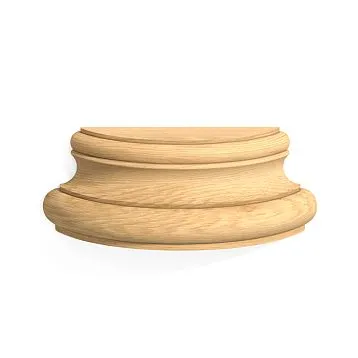
Rosettes at the base of a baluster. A decorative round or square element that masks the junction of the baluster with the step. A small detail that gives a sense of completeness.
Cladding the end of a stringer. If the stringer (the inclined beam of the staircase) is made of panel material — its end is covered with solid wood overlays. A single wood species with the balusters — a unified look.
Rosettes around the mounting bolt on a post. Decorative overlays that cover the bolt entry point into the post body. Without them — a technical flaw in plain sight. With them — completeness.
Full range solid wood products allows you to fully assemble the staircase — from balusters to the smallest decorative details.
FAQ: popular questions about staircase components
How many balusters are needed per step?
Usually 1–2 balusters per step. With a step width of 800–900 mm and a baluster of 40–50 mm with a gap of 100–120 mm — typically 2 balusters. With a narrower staircase — 1.
Can you mix balusters of different designs on the same staircase?
A deliberate technique — alternating two types of balusters — is used in complex classical staircases. But this requires design consideration. Random mixing of different shapes is a mistake that will be clearly visible.
Should balusters be painted before or after installation?
Priming and the first coat of paint — before installation. The final coat and covering of joints — after. This is standard practice for achieving a quality result.
How to choose the height of a baluster if the staircase has an inclined handrail?
On an inclined flight, all balusters are the same length, but their lower mounting end is cut at the angle of the flight. The handrail goes at an incline — this is normal. The handrail height above the step of 900 mm is maintained at every point.
Which handrail to choose: wooden or metal?
For a wooden staircase with wooden balusters — a wooden handrail from the same wood species. A metal handrail on wooden balusters — possible as a deliberate design contrast, requires careful planning.
How is a beech baluster better than a pine baluster?
Beech is 1.3 times harder than pine, holds its shape under load, provides an ideal surface for painting without resin pockets. For a residential staircase, beech is preferable in every sense.
Where to buy components for a wooden staircase
Full range in one catalog
staircase components — this is not a set of individual products. It is a system that only works when all elements are fully consistent in material, style, and dimensions. That is why purchasing from one manufacturer from a single catalog is the only correct approach.
Complete catalog for equipping a wooden staircase:
-
Balusters for staircase — turned, flat, carved.
-
Buy wooden balusters — full range.
-
wooden balusters for staircases — classic turned.
-
Flat baluster — for rustic and country stairs.
-
carved wooden balusters — for classic interiors.
-
Wooden decoration — overlays, rosettes, decorative elements.
-
Solid wood products — full catalog.
STAVROS: wooden stair components from solid wood
A staircase is not a purchase for a year. It is a decision for decades. And that is why Components for wooden staircase they should be chosen with a full understanding: of what material, in what style, with what compatibility of elements.
STAVROS produces and supplies a full range of wooden staircase components from solid wood: turned and flat balusters, carved and decorative posts, handrails, and related decor. All products are made from hardwoods (beech, oak), with precise turning and milling, in a unified system of stylistically coordinated elements.
STAVROS works with private clients, construction companies, and designers across Russia. If you are assembling a wooden staircase — start with the full catalog, where all elements are already matched to each other.