Article Contents:
- Short answer: when to order MLD-019 with a quarter
- Why one sample is truly cheaper than a hundred mistakes
- Confirmed characteristics of MLD-019
- What is a quarter cut in furniture molding
- What changes after additional processing
- A standard profile sample and a control processed part are not the same thing
- Why a photo does not replace physical inspection
- Where a serial order begins
- Why the insert is chosen first, and then the rebate is designed
- Glass insert: what to check before the drawing
- Plywood and wooden panel
- Painted MDF panel
- What must be included in the technical specification
- The article number and material must be repeated on each sheet
- How to mark the front and back sides
- How to show the profile orientation
- Dimension chains: why rebate dimensions alone are not enough
- Base surfaces
- Tolerances cannot be invented in advance
- Drawing version is part of the order
- What cannot be left as a verbal agreement
- Inappropriate wording in the request
- MDF, beech, or oak for a serial batch
- MLD-019 made of MDF
- MLD-019 made of beech
- MLD-019 made of oak
- Send only a verbal description
- Do not mark the front side
- Take the glass thickness from the name
- Not accounting for finishing
- Approve a photo instead of a drawing
- Consider the standard sample as confirmation of the quarter
- Run the entire batch without a trial assembly
- Fail to lock the document version
- Fail to prepare incoming inspection
- Immediately rework the disputed batch
- Constructor
- Technologist
- Designer
- Purchaser
- Quality service
- Can I order MLD-019 with quarter sampling?
- What is the size of the standard MLD-019?
- What materials is the profile made from?
- From what quantity is the service available?
- How much does quarter sampling cost?
- Is there a standard quarter size?
- Will one quarter fit any glass?
- Does MLD-019 hold the glass on its own?
- What does the OMLD-005 set show?
- Is it mandatory to produce one control part?
- What should be on the drawing?
- Can only a photo be approved?
- When to launch a serial batch?
- How to check the received batch?
- What to do in case of discrepancy?
- Can MDF, beech, and oak be mixed?
- Do I need to account for paint?
- Where to view MLD-019?
- Where to compare other profiles?
- How to prepare for ordering samples?
- Can an old sample be used for a reorder?
- What to check before payment?
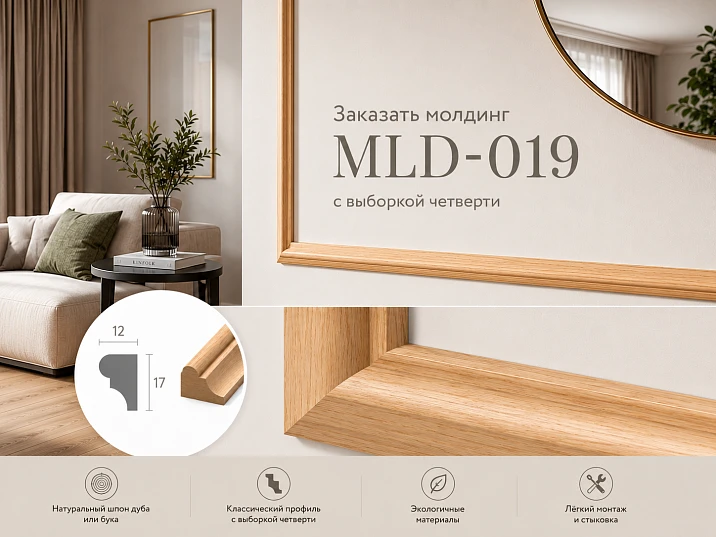
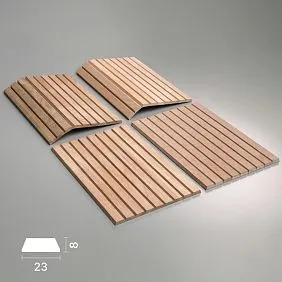
Order molding MLD-019 with rabbet cut It makes sense for serial furniture fronts when a compact profile of 17 × 12 mm needs a custom seat for glass, plywood, panel, or another insert. Such processing helps prepare a repeatable part for furniture production, but buying the entire batch without an approved drawing is risky: an incorrect rabbet side, an extra millimeter of depth, or an unaccounted finish coating will repeat on every item.
MLD-019 is made from MDF, beech, and oak. The card includes an additional rabbet cut per technical specification for orders of 100 pieces or more. At the time of preparing this material, the separate processing is listed at 185 ₽ per item, but before placing an order, the cost, service availability, length of the selected version, and other commercial parameters must be re-checked in the product card or with a STAVROS manager.
A serial order differs from buying a few standard strips. With a regular frame, a craftsman can try the profile, adjust the cutting, and fix a single mistake. In a batch of a hundred items, an unclear formulation turns into a systemic defect: the same rabbet ends up on the wrong side, the insert does not fit after painting, and the profile has to be reworked or completely reordered.
The right route is built not around the promise to 'make a rabbet,' but around controlled approval: select the standard MLD-019 profile, define the insert and front construction, prepare a measurable drawing, request the possibility of manufacturing a test processed part, approve the result in writing, and only then move to the series. After receiving the batch, incoming inspection is carried out according to the same parameters that were recorded in the technical specification.
Short answer: when to order MLD-019 with a rabbet
This option is needed by furniture production, a joinery workshop, or a design bureau if the standard molding must be part of a frame front with a separate insert and repeat across dozens of items. The rabbet creates a geometrically defined seat, but by itself does not answer questions of fixation, gaps, coating compensation, and assembly sequence.
The order is justified when the front construction is already designed, the actual insert thickness is known, the material and finish are approved, and the series is large enough for individual processing to provide a production benefit. If the project is still changing, the glass is not selected, and the installation side is being discussed, starting the processing is premature.




Why one sample is really cheaper than a hundred mistakes
The cost of a mistake in serial production consists not only of the price of the moldings themselves. Added to this are downtime of the section, re-cutting, reworking of facades, new packaging, repeated delivery, postponed assembly deadlines, and a dispute over which version of the drawing was considered final. The later an error is detected, the more operations have already been performed on the incorrect part.
A control processed sample allows you to check not an abstract idea, but a real combination of profile, rabbet, insert, coating, and assembly technology. It is important to request this stage from the manufacturer in advance: the article does not promise that a single control sample is automatically included in the standard service or order cost.
Our factory also produces:


Confirmed characteristics of MLD-019
| Parameter | Confirmed data | Practical significance |
|---|---|---|
| Article number | MLD-019 | Specified in all versions of the technical specification, order, and labeling |
| Cross-section | 17 × 12 mm | Defines the initial geometry before additional processing |
| Materials | MDF, beech, oak | The material is chosen before calculating the rabbet and finishing system |
| Profile type | Compact quarter-round furniture molding | Suitable for thin frames and serial facades |
| Additional option | Rabbet selection according to the technical specification | Dimensions and orientation cannot be specified by words alone |
| Service condition | The card indicates availability for orders of 100 pieces or more | Conditions are confirmed before launching a specific batch |
| Processing cost | 185 ₽ per item at the time of writing the article | The price is subject to change and requires re-verification |
| Product card | Profile MLD-019 measuring 17 × 12 mm | Here you can check current options, lengths, prices, and availability |
Get Consultation
What is a quarter cut in furniture molding
A quarter is a longitudinal cut on one side of the profile, creating a stepped seating area. In a furniture front, it can be involved in placing glass, a plywood insert, a panel, or another material. However, the word itself does not specify the width, depth, or direction of the machining.
Two customers may both write "make a quarter" but mean opposite sides of the profile and different functions. Therefore, the service exists only together with a drawing showing the original cross-section of MLD-019, the area to be removed, the face side, the installation direction, and control dimensions.
What changes after additional machining
The standard profile ceases to be a universal strip and becomes part of a specific assembly. It can no longer be flipped, turned to the other side, or used in another furniture front model without checking. The orientation becomes tied to the face side, the insert, and the assembly method.
Quality control also changes. Before machining, it is enough to verify the article number, material, cross-section, and length. After machining, the width and depth of the quarter, the distance to the face edge, the condition of the machined surface, the consistency of geometry along the length, and compliance with the approved drawing version are added.
A standard profile sample and a control machined part are not the same thing
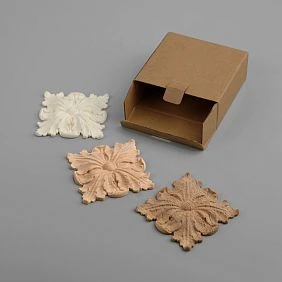
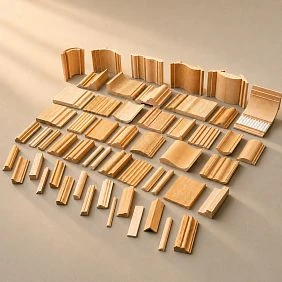
Molding samples set OMLD-005 helps to evaluate the shape, scale, and material of standard profiles at full size. Such a sample is useful at the initial stage: the technologist and designer see whether a 17 × 12 mm cross-section suits the front, whether the line looks too thin, and how the profile combines with adjacent parts.
But a standard sample does not confirm the individual quarter, which does not yet exist. It does not show the actual seating depth, orientation, clearance for the insert, or behavior after painting. For a production batch, separate approval of the custom machining is required.
Therefore, the stages cannot be combined. First, MLD-019 is selected as a standard profile, then a quarter is developed for a specific assembly. In the request to the manufacturer, the possibility of making a control machined part and the conditions for such approval should be clarified separately.
Why a photo does not replace a physical check
A photograph shows the shape but does not allow measuring the fit. The angle hides depth, scale changes from screen to screen, and the front and back sides can be understood differently. Even a photo with a ruler does not replace a drawing, because it does not capture tolerances, datum surfaces, and dimension chains.
A photograph is useful as an explanation to the drawing: you can mark the front side, insertion point, and mounting direction with an arrow. But the production basis should remain an agreed document with measurable values and a version number.
Where a serial order begins
- Select standard profile MLD-019 and material.
- Determine the facade construction and the purpose of the rebate.
- Obtain actual data on the insert, not just its trade name.
- Prepare a full-section drawing with front and back sides.
- Specify cutout dimensions and technological clearances.
- Agree on lengths, quantity, finish, and packaging.
- Request the possibility of manufacturing a control machined part.
- Check the sample in a real facade.
- Approve the result and drawing version in writing.
- Launch the series and prepare an incoming inspection plan.
Why the insert is chosen first, and then the rebate is designed
Glass, plywood, or panel is not an abstract plane. They have actual thickness, tolerances, edge, coating, and fixing method. If the rebate is designed before the insert, the technologist is forced to make assumptions. In a series, an assumption becomes a recurring risk.
First, you need to obtain the insert specification, measure real samples, and understand whether the thickness will change after processing. Only then calculate the seating area and technological gap. The size from the product name does not always equal the actual value of each part.
Glass insert: what to check before the drawing
- actual thickness of several samples;
- edge processing type;
- presence of film, coating, or decorative layer;
- supplier tolerances;
- method of installation in the facade;
- need for gasket or sealant;
- conditions for safe fixation;
- possibility of replacing the insert after assembly.
MLD-019 with a quarter cannot automatically be considered an independent glass holder. The method of final fixation is determined by the entire facade structure and must be checked by the responsible designer.
Plywood and wooden panel
Plywood and solid inserts may change thickness due to material, sanding, and coating. If the panel is to be tinted or lacquered separately, a trial assembly is performed in a state as close as possible to production.
For a wooden insert, the direction of the grain and possible dimensional changes are important. The quarter should not be assigned without considering the behavior of the entire assembly.
Painted MDF panel
For a painted panel, the final thickness depends on the substrate, primer, and finish layers. If the rebate was designed for an unpainted blank without allowance, the finished insert may fit too tightly.
It is better to prepare a process sample with the actual finishing system and test it together with the machined MLD-019. A universal clearance cannot be assigned without project data.
What must be included in the technical specification
| Technical specification section | What to fix | What error it prevents |
|---|---|---|
| Identification | MLD-019, order number, project, document version | Mixing part numbers and old files |
| Material | MDF, beech or oak | Ordering different substrates for one series |
| Original cross-section | 17 × 12 mm | Machining a similar but different profile |
| Length | Exact length of each workpiece or selected configuration | Incompatibility with cutting map |
| Quantity | Number of products by item | Shortage or mixing of batches |
| Quarter | Width, depth, position, and reference surfaces | Unmeasurable wording "small quarter" |
| Orientation | Front and back sides, top, bottom, installation direction | Mirror machining error |
| Insert | Material, actual thickness, coating | Unsuitable seating position |
| Gaps | Values defined by the designer | Too tight or loose fit |
| Finishing | What is painted and at what stage | Loss of fit after finishing |
| Control | List of measured parameters and methodology | Dispute during acceptance |
The article number and material must be repeated on each sheet.
If the technical specification consists of several pages, it is better to indicate the article number and material not only on the title page, but also in the stamp of each drawing. A separate printout may reach the workshop without a cover letter.
For MDF, beech, and oak, you cannot use one document with the vague wording "material per order." If the series is divided by materials, each item is assigned a separate code.
How to indicate the front and back sides
The words "front" and "back" without a drawing are unreliable. On the cross-section, you need to label "front side of the facade" and "back side of the facade," add an arrow indicating the viewing direction, and show the position of the insert.
On the control part, the marking must match the drawing. Then the technologist, finisher, and assembler use the same coordinate system.
How to show the profile orientation
The quarter-round MLD-019 may visually appear symmetrical to a person who sees it only in the list. After routing, the sides become functionally different. The drawing must show the profile in its installed position, not just separately from the facade.
An additional detail is useful: a fragment of a vertical or horizontal cross-section of the facade with the insert. It links the part geometry to the actual assembly.
Dimension chains: why just the quarter dimensions are not enough
The width and depth of the sample do not describe the position relative to the front surface. The dimensions must form a closed and consistent chain: the original cross-section, the remaining wall thickness, the distance to the edge, and the final geometry.
If one dimension is calculated from several rounded values, an accumulated error may occur in the series. The designer must define the measurement bases and critical dimensions.
Base surfaces
Control is carried out from pre-selected bases. For example, from a flat back side and a specific edge. If the manufacturer and the customer measure the depth from different surfaces, both may get "correct" numbers that describe different parts.
Bases are marked on the drawing with conventional symbols and repeated in the control chart.
Tolerances cannot be invented in advance
The required accuracy depends on the material, length, equipment, and function of the assembly. A universal tolerance cannot be promised for any batch of MLD-019. It is agreed between the customer and the manufacturer.
In the technical specification, critical and reference dimensions should be separated. Critical ones will be those on which fit and assembly depend.
Drawing version is part of the order
In a serial order, it is not enough to send a file by email. The document is assigned a number, date, and revision index. After correction, the previous version is withdrawn from circulation.
The order, invoice, approval act, and control sample marking must reference the same version. This protects both parties from a situation where production worked with one file while the customer checks against another.
What cannot be left as a verbal agreement
- sampling side;
- profile orientation;
- width and depth of the rebate;
- batch material;
- insert thickness;
- coating accounting;
- number of items;
- drawing version;
- control check parameters;
- basis for launching the series.
A phone call helps quickly discuss an issue, but the final decision must be transferred to a letter, specification, or approved drawing. The phrase "we agreed so" does not allow measuring the product and does not show which side was considered the front.
Inappropriate wording in the request
| Unclear wording | Why it is dangerous | What to replace it with |
|---|---|---|
| "Make a small quarter" | No numbers and bases | Dimensions on the full section |
| "Select from the reverse side" | It is not defined which side is the reverse | Marking of face and back |
| "Under regular glass" | Thickness and coating are unknown | Actual insert parameters |
| "As on the sample" | The standard sample may be without a quarter | Control processed part and drawing |
| "Standard quarter" | Standard size not confirmed | Individual geometry |
| For furniture front | Node construction not shown | Front section assembly |
MDF, beech, or oak for serial batch
Material is chosen before processing because MDF and solid wood have different surface, edge, and finish properties. They are not fully interchangeable even with the same cross-section. The same quarter geometry may behave differently after priming, painting, or transparent finishing.
For one furniture series, the material must be fixed in the specification. Mixing options complicates finishing, color control, and fit repeatability. Replacing oak with beech or MDF due to current availability requires re-approval, not a simple edit in the invoice.
MLD-019 made of MDF
MDF is convenient for fronts with opaque enamel and repeatable geometry. After routing, it is especially important to agree on the preparation of the processed area and edges. The thickness of the primer and topcoat is considered in the trial assembly, otherwise the seating area may become narrower after finishing.
If the facade is also made of MDF, this does not negate the need to check the compatibility of the adhesive and the finishing system. The molding, insert, and frame may undergo different technological operations.
MLD-019 made of beech
Beech is considered for painting, tinting, or transparent finishing depending on the project. For the series, it is important to agree on the wood sorting, grain direction, and appearance requirements. A uniform structure helps achieve a calm frame, but natural material still does not look like an artificially uniform strip.
A finish sample is made on material from the batch or on the closest possible blank. Not only the front arc is checked, but also the machined rabbet, ends, and joints.
MLD-019 made of oak
Oak is chosen when the grain should remain visible or to match oak facades. After routing, additional surfaces are exposed that may perceive the finish differently. This is especially noticeable in a transparent system.
For a serial order, it is necessary to agree on which sides will be visible, how the strips are sorted, and whether differences in pattern are acceptable. An oak molding should not be automatically replaced with beech just because the dimensions match.
Comparison of materials in a production order
| Criterion | MDF | Beech | Oak |
|---|---|---|---|
| Typical finish | Covering enamel | Enamel, varnish, or tinting per project | Transparent or semi-transparent finish per project |
| Texture | Uniform base | Calm wood | Expressed wood |
| Main control | Edges and coating | Sorting and color | Pattern and tone |
| Serial task | Repeated painted frame | Beech furniture or combined finish | Facades with visible oak texture |
| Cannot assume | That one quarter and one finishing technology are equally suitable for all materials | ||
Length of blanks and cutting map
Card MLD-019 contains versions of different lengths depending on the material. Before ordering, you need to check current options and link them to the facade cutting map. For a serial batch, it is not enough to specify the total footage: the manufacturer and your own workshop need specific items.
The list specifies the length of each blank, the number of identical elements, the purpose in the facade, and the orientation of the quarter. Separately, parts that cannot be joined and elements for which offcuts are allowed are noted.
Why processing before cutting and after cutting are different scenarios
If the quarter is made on a full-size strip, then the profile is cut into parts. This is convenient for repeated longitudinal processing, but requires control of continuity along the entire length. The cutting map must take into account that after trimming corners, the orientation of the quarter remains correct.
If processing is performed on already cut products, the technical specification must particularly accurately specify the lengths and direction of each segment. The specific sequence is agreed with the manufacturer, not assumed in advance. The customer should not build a production plan on an operation that is not confirmed.
Batch of 100 pieces: what exactly counts as a piece
The card specifies the condition of 100 pieces, but before ordering, you need to clarify what is considered a product in a specific configuration: a full-size strip, a cut blank, or another unit. The budget, quantity, and the ability to combine several sizes into one order depend on this.
It is not allowed to automatically extend the condition to all materials, lengths, and options without confirmation. The request specifies the exact item nomenclature and asks for the minimum service volume to be confirmed in writing.
Processing price and project budget
At the time of preparing the article, the card shows 185 RUB per item. For a batch, the processing fee is calculated separately from the cost of the molding, cutting, finishing, packaging, and delivery. If different items are processed, the estimate must show each of them.
The price refers to variable commercial data. Before publishing the article and especially before issuing an invoice, it must be re-checked. In the production estimate, it is better to highlight separate lines: profile, custom processing, reference sample if such a service is available, packaging, and logistics.
How to request a reference processed part
In the letter, it should be clearly stated that the standard profile sample has already been selected, and now it is necessary to confirm the possibility of manufacturing one or more parts with a custom rebate before launching the entire series. The manufacturer must inform whether this is possible, under what conditions, and how the approval will be formalized.
One should not write that the company is obliged to manufacture a reference sample for free or automatically. This is a separate request, the terms of which are confirmed before ordering. If such a stage is impossible, the customer must choose another way to reduce risk and understand the consequences in writing.
What to check on the first processed part
| Inspection | Verification method | Result |
|---|---|---|
| SKU and material | Verify marking and appearance | Original MLD-019 confirmed |
| Cross-section | Measure base dimensions | Profile matches drawing |
| Orientation | Match face, back, and direction | Quarter made on the required side |
| Width and depth | Measure with agreed tool | Seat matches specification |
| Insert | Assemble actual unit | Required fit is present |
| Finish | Perform a test paint application | The finish does not violate the geometry |
| Assemble the facade | Make a control sample | The assembly can be done using the accepted technology |
| Appearance | Inspect the front side under side lighting | The processing did not damage the decorative profile |
Why measurements of the sample need to be recorded
The phrase "sample is suitable" is too vague. In the report or letter, specify which dimensions were measured, with what tool, with which insert the check was performed, and the condition of the surfaces. If the sample was without coating, this is also noted.
Photos are useful as an attachment, but do not replace numerical data. The control sample is marked with the order number and drawing version so it cannot be confused with a regular piece.
Trial assembly of a real facade
The best way to check a rebate is to assemble a test fragment or a full facade with a real insert. This reveals errors that are not visible on a single strip: corner conflicts, installation sequence, gap after finishing, and access to fastening.
The test facade must replicate the production design. If the sample is assembled in a simplified way, its result cannot be unconditionally transferred to production. Hinges, handles, frame, and the method of closing the back side can affect the joint.
Finishing of the control part
The rebate is checked not only on the raw profile. If production moldings are to be painted, part of the control part goes through the full preparation and finishing cycle. Otherwise, the customer approves only the raw profile, not the finished furniture part.
After complete drying, measurement and assembly are repeated. This is especially important for narrow seating areas where the total thickness of primer and enamel can change the result.
Written approval of the sample
The approval must reference a specific physical part and document. The wording may include the article number, material, sample number, drawing version, date, measured parameters, and a list of permissible changes.
If the insert, coating, or rebate size changes after approval, a new version and re-check are required. The old sample cannot be considered valid for the modified design.
Who approves the production run
In a furniture company, responsibilities are assigned in advance. The designer is responsible for geometry, the technologist for assembly and finishing, the purchaser for commercial terms, and the quality specialist for acceptance criteria. The designer confirms the appearance but should not unilaterally set technological gaps.
One employee should not confirm parameters outside their area of competence. Final approval for the series is issued according to the customer's internal process.
When the remaining batch can be launched
- material selected;
- standard profile MLD-019 approved;
- insert defined and measured;
- drawing has a version number;
- control processing checked;
- trial assembly completed;
- finishing did not disrupt the fit;
- commercial terms confirmed;
- incoming inspection criteria agreed;
- the responsible employee gave written permission.
How to place an order for a serial batch
In the card, you can view materials and options for MLD-019, after which the specification and approved drawing are attached to the application. The letter specifies the project, material, quantity, lengths, processing, document version, technologist contacts, and desired approval procedure.
In the order, one should not limit oneself to referring to a long correspondence. All critical parameters are transferred to a single document package that can be opened without searching for old messages.
What to buy and prepare together
| Position | What it's for | What to Check | Link |
|---|---|---|---|
| MLD-019 | Main profile of the serial facade | Material, length, quantity, quarter option | buy wooden molding MLD-019 |
| Molding catalog | Comparison of profiles before fixing the article | Wouldn't another profile fit better | View all moldings for furniture |
| OMLD-005 | Physical evaluation of standard profiles | What the set does not confirm the custom quarter | purchase the OMLD-005 sample set |
| Guide to samples | Organization of preliminary selection | Material and scale before the batch | Order molding samples before the batch |
| Packaging and delivery | Safe receipt of a long-length batch | Transport, marking, unloading | Delivery conditions for long-length moldings |
How not to confuse MLD-019 with a similar profile
The assortment includes other compact moldings, so the drawing and order must specify MLD-019 and the cross-section 17 × 12 mm. A visually similar part may have a different curvature, thickness, or position of the flat side. After cutting a rabbet, even a slight difference in the original profile affects the remaining wall thickness and fit.
If the profile has not been finally selected yet, it is useful to first open the STAVROS wooden moldings catalog and compare the options. After the article number is approved, it cannot be replaced without new inspection.
How not to confuse the standard option with a ready-made facade assembly
The card confirms the possibility of cutting a rabbet, but does not promise a ready-made universal system for any glass. The customer designs the facade, determines the insert, gaps, and method of final fixation. The manufacturer performs the agreed operation on the profile.
MLD-019 remains a component. Its operation depends on the frame, insert, adhesive, fasteners, finishing, and operating conditions. Therefore, the article does not call the molding an independent panel holder.
How not to confuse a profile sample with a batch reference
The standard sample shows the geometry of the original MLD-019. The control machined part shows an individual quarter. The batch reference is already an approved part associated with a specific drawing version, material, and insert.
These three objects serve different purposes and must have different labeling. If they are all called "sample" in production, there is a risk of checking a series against the wrong reference.
Serial scenario: display cabinet doors
For a cabinet with glass doors, the same insert position and profile repeatability across all doors are important. The control facade helps check handles, hinges, viewing angle, and visibility of the rear part. If the quarter is too close to the front arc, the visual frame thickness may change after assembly.
In the technical specification, facades are divided by size groups. For each group, molding lengths and installation direction are specified. An identical quarter does not eliminate a separate cutting plan.
Serial scenario: sideboard with multiple sizes
In a sideboard, upper and lower doors often differ in height and width. One cross-section geometry may apply to different profile lengths, but the specification must separate items. Otherwise, short elements mix with long ones, and labeling loses its connection to the facade.
The control sample is checked in at least one real assembly of each significantly different facade type. A small door may be assembled differently than a tall display case.
Serial scenario: kitchen display cases
For kitchen production, consider the coating, the humidity conditions of the room, repeatability across a large number of doors, and compatibility with the chosen care method. The finishing system is confirmed separately, without a universal promise for any material.
It is especially important to check the fit after the full finish. A raw workpiece may assemble easily, but after priming and enamel, it may require force that is dangerous for the glass or frame.
Serial scenario: hotel furniture
In contract furniture, a batch may include multiple rooms, floors, and delivery stages. Marking links moldings to the project, the cabinet body, and the facade version. You cannot store all items under the common name "display case molding".
For repeat deliveries, the item passport is retained until the project is completed. At the same time, price, availability, and commercial terms are confirmed anew for each order.
Serial scenario: restaurant or showroom
In public interiors, glass facades are often at eye level and illuminated by directional light. Any frame difference or damage to the front arc is more noticeable than in a household cabinet. Incoming inspection should include a visual assessment under side lighting.
If facades are distributed across different halls, the batch is divided into marked sets. This reduces the risk of mixing lengths and materials during installation.
Serial scenario: small carpentry workshop
Even with a volume close to the service condition, the approval process remains necessary. A small workshop can suffer especially badly from a wrong batch because it has fewer reserves of time and material.
If individual processing is not economically justified, it is better to consider a standard design or perform the quarter independently after a series of trials. The decision is made after calculating the full cost, not just the price of the operation.
Serial scenario: several furniture collections
One MLD-019 can be used in different collections, but the quarter should not automatically transfer from one model to another. A new insert, a different color, or a different assembly method change the initial conditions.
A separate code for the processed profile is created for each collection. This prevents a situation where the warehouse issues a visually similar strip with an unsuitable cutout.
Passport of a serial item
For internal use by a furniture factory, it is useful to create an item passport. It combines the product card, drawing, sample, finish, assembly diagram, change history, and incoming inspection results.
The passport should answer practical questions: what to order, how to check, where to use, and which version is current. On repeat orders, it saves time but does not cancel the verification of current commercial terms.
What to transfer to the assembly area
- facade drawing;
- MLD-019 orientation scheme;
- marked control sample;
- reference insert;
- finishing instructions;
- fixation procedure;
- acceptance criteria;
- list of prohibited unauthorized changes.
The assembler must not determine the quarter direction from a photo of the finished product. Unambiguous marking is needed at the workplace.
What to transfer to the finishing section
The finisher must know which surfaces are seating surfaces and what coating layer is permissible per the project. Not all areas can be treated the same. If the quarter must maintain an exact size, the finishing system is coordinated with the technologist.
The test sample is kept together with the reference sample. A color card without a real profile does not show how the coating behaves in a recess.
What to pass to procurement
The buyer receives a specification with material, lengths, quantity, processing option, and a link to the technical specification version. They must not independently replace the material or length just because it is in stock.
Any change is returned to the designer and technologist for review. Savings on one item can lead to incompatibility of the entire series.
What to pass to the quality department
The quality department receives a list of critical parameters, measurement bases, tools, and a protocol form. Without this, acceptance turns into subjective inspection: one employee considers the part suitable, another does not.
It is separately recorded which deviations block the entire batch and which require additional evaluation. These decisions cannot be made up after receiving the goods.
Incoming inspection of the received batch
Acceptance begins before unpacking: the number of packages, packaging condition, and marking are checked. Then products are selected according to the approved inspection plan. If the packaging
Insert fit control
For verification, a reference insert or a sample with confirmed parameters is used. A random piece of glass of unknown thickness is not suitable. The result is recorded for the processed and, if necessary, finished part.
The insert must not be used as a tool for force-expanding the rebate. If the fit requires excessive pressure, the assembly is returned to the technologist.
How to store an approved sample
The control part is kept until the project is completed. It is marked with the order number, material, drawing version, and approval date. The sample is protected from staining, cutting, and accidental transfer to assembly.
Storage helps with repeat supply or additional orders. However, an old sample cannot be automatically applied to a new batch if the material, finish, or insert has changed.
What to do in case of discrepancy with the drawing
If the part does not match the approved document, it is separated from accepted products, measurements and photos are recorded, and packaging and labeling are preserved. Then a structured notification is sent to the manufacturer.
Do not start independent rework of the entire batch before approval. After intervention, it will be more difficult to determine the original condition, and uniformity of manual rework is not guaranteed.
What data to attach to the discrepancy notification
- order and batch number;
- article number and material;
- drawing version;
- photos of marking;
- measured values;
- measurement method;
- comparison with reference sample;
- number of inspected and non-conforming items;
- description of impact on assembly;
- proposed course of further action.
Delivery and packaging of serial batch
Before ordering, check Delivery conditions for long-length moldings, packaging type, transport company, unloading location, and possibility of inspection. A geometrically accurate quarter is worthless if the profile is damaged during transportation.
Inside the package, items must be separated and labeled. This is especially important if the batch includes different lengths or materials. The customer's warehouse prepares a place in advance where the slats can be laid without bending.
Acceptance of packaging before opening
They photograph the general view, labeling, and damaged areas. The number of packages is checked against the documents. If the packaging frame shows signs of impact, this is recorded before dismantling.
The packaging must be opened in a way that does not damage the face and the quarter with tools. Workers must understand that inside are not ordinary construction battens, but prepared furniture parts.
Storage of the batch before production start
Profiles are stored by material and item, without removing the labeling. Acclimatization and storage conditions are set by the technologist, taking into account MDF, beech, or oak.
Accepted and unchecked products must not be mixed. Each batch is assigned a status: quarantine, accepted, rejected, or pending decision.
Customer errors before production start
Send only a verbal description
Words do not define geometry. Production needs a measurable drawing with datums and orientation.
Do not mark the front side
The quarter may turn out to be mirror-oriented, although the dimensions will be formally observed.
Take the glass thickness from the name
The actual value, film, and edge processing may differ from expected.
Not accounting for the finish
After enamel or varnish, the fit may change. A raw sample does not replace the final check.
Approve a photo instead of a drawing
A photo does not capture bases, tolerances, and document version.
Consider the standard sample as confirmation of the quarter
OMLD-005 shows the original profile, not individual processing.
Launch the entire batch without a trial assembly
The error will be detected after repetition on multiple parts and additional operations.
Not fixing the document version
Different employees may use different files and sincerely consider them final.
Not preparing incoming inspection
After delivery, it is unclear which parameters to check and how to confirm non-conformity.
Immediately reworking the disputed batch
The ability to prove the original state and coordinate the solution with the manufacturer is lost.
Communication errors
The problem often arises not due to technical impossibility, but due to mismatched terminology. The customer considers the front side obvious, the technologist sees the profile in a different orientation, the purchaser forwards an incomplete file, and the assembler learns about the quarter only during installation.
A unified set of documents, one responsible contact, and written confirmations reduce the risk. After a call, it is useful to send a short summary with the decisions made.
Who is suitable for a serial order with an individual quarter
- for a furniture factory with a repeatable series of facades;
- for a joinery workshop with an approved design;
- for a manufacturer of display doors;
- for a project with a specific glass or panel insert;
- for a company ready to maintain drawing versions and quality control;
- for a customer who needs to reduce manual processing at their site.
The main sign of a suitable project is repeatability. If the same part is used dozens of times and its geometry is already confirmed, transferring the longitudinal operation to the manufacturer can simplify the flow. The benefit appears by reducing your own setup, worker time, and the spread of manual processing.
Who is better not to launch an individual quarter
The format is not suitable if the facade design is still changing, the insert is not selected, the quantity is insufficient for the service conditions, or the company is not ready to prepare a drawing. Individual processing does not replace design.
For a single item, a standard profile and processing in your own workshop may be more rational if you have the equipment and expertise. For an experimental collection, it is more useful to first assemble several facades, and only then transfer the unit to series production.
Standard MLD-019 or profile with custom processing
| Criterion | Standard MLD-019 | MLD-019 with custom rabbet |
|---|---|---|
| Preparation | Selection of material, length, and quantity | Full technical specification and processing approval |
| Versatility | Can be used in various decorative tasks | Tied to a specific facade unit |
| Customer's work | Cutting and additional processing are done independently | Repeatable operation is passed to the manufacturer |
| Main risk | Spread of in-house processing | The specification error repeats across the entire batch |
| Control | Article, material, cross-section, length | Additionally quarter, orientation, fit, and drawing version |
| When to choose | For simple decor, trials, and small volume | For approved serial design |
Why ready-made custom processing can be beneficial
With a properly prepared project, the factory receives a repeatable part and reduces operations in its area. There is no need to separately configure processing for each strip, store special tools, create an additional workstation, or control manual finishing.
Economy only appears with an exact series. If the drawing is not approved, ready-made processing multiplies the error faster than in-house trial work. Therefore, the control stage is not an unnecessary cost increase, but a means to protect the main budget.
How to compare the costs of two options
For internal calculation, compare the cost of standard MLD-019, in-house processing, setup time, operator labor, tooling, defect rate, and control. In the second option, consider the price of a custom quarter, approval, possible control sample, packaging, and logistics.
Comparing only 185 ₽ with machine operating minutes is incorrect. The calculation includes the entire production flow: storage of blanks, movement, re-inspection, and responsibility for geometry.
How to prepare a request for a STAVROS manager
- company name and contact details of the responsible person;
- part number MLD-019;
- material — MDF, beech or oak;
- lengths and quantity of products;
- link or attachment with the current drawing;
- dimensions and orientation of the quarter;
- description of the insert and its actual thickness;
- requirements for subsequent finishing;
- request to confirm service terms from 100 pieces;
- request for current processing price;
- request for possibility of control of processed part;
- requirements for packaging and delivery.
The request should allow the manager to pass the task to the technologist without retelling. The fewer critical data remains only in the customer's head, the more reliable the approval.
Commercial route on the STAVROS website
If the profile is not selected yet, first study general selection of furniture moldings for facades and compare physical samples. When MLD-019 is confirmed by scale and appearance, you can proceed to the technical specification for processing.
A broad request "buy wooden molding" is better to start with molding catalog. This article addresses a narrower task — how to safely design a custom quarter for a series, rather than how to choose a profile in general.
General application options are covered in the material about Wooden moldings for furniture and walls. For the serial MLD-019, the key remains the transition from idea to a measurable production document.
Which documents to gather into one package
| Document | Purpose | Who uses it |
|---|---|---|
| Specification | Article number, material, lengths, quantity | Procurement and manufacturer |
| Section drawing | Geometry and quarter orientation | Technologist and quality control |
| Facade scheme | Profile and insert position | Designer and assembly |
| Finishing map | Primer, finish, and protected areas per project | Finishing section |
| Sample protocol | Measurement and trial assembly result | Launch Responsible |
| Incoming Inspection Map | Delivery Check Parameters | Quality Service |
| Version History | Changes and Approval Dates | All Project Participants |
Responsibility Distribution
Designer
Defines the facade unit, dimensions, base surfaces, and technological gaps. The designer checks that the residual profile geometry is sufficient for the adopted function.
Technologist
Checks the assembly sequence, finishing, tooling, and reproducibility of the operation. He links the drawing to the actual production process.
Designer
Confirms the appearance of the standard MLD-019, material, visible part of the profile, and compliance with the collection. The designer does not replace the engineer's calculation.
Purchaser
Checks the card, current price, availability, service terms, deadlines, and delivery. He passes only approved documents to the supplier.
Quality Service
Organizes incoming inspection and keeps protocols. In case of discrepancy, it separates disputed products from accepted ones.
Reordering after a few months
It cannot be assumed that the old price, availability, and processing terms will remain. Before repeating, you need to open the MLD-019 card and confirm the commercial parameters. A reference to the old invoice does not replace a new check.
The technical part is also reviewed: whether the insert, finishing, facade construction, or glass supplier has changed. Even without changing the article number, the furniture collection may receive a new revision.
Additional order to an existing batch
For an additional order, specify the original order number, drawing version, and reference sample. Material from a new batch may differ in tone and texture, especially in oak and beech.
If new parts will be placed next to old ones, matching the appearance becomes a separate task. For painted MDF, check the finish system match, not just the raw profile.
Changing the insert after the first batch
Replacing glass with a panel or switching to a different glass thickness requires recalculating the rebate. Do not use the old geometry just because the outer frame remains the same.
The new version receives a separate index, sample, and protocol. In the warehouse, processed moldings of different revisions are stored separately.
Changing material MLD-019
Switching from MDF to beech or oak affects finishing, appearance, execution lengths, and surface control. Even if the rebate drawing formally remains, the joint should be checked on the new material.
In an order, the material cannot be left as an alternative with a slash. Production needs one specific item.
Changing color and finish
A new color by itself may not change the geometry, but a new primer and enamel system can alter the layer thickness. For the seating area, the technology matters, not just the shade number.
A test coating on the processed profile confirms that the quarter remains functional after finishing.
How to organize labeling in the warehouse
The item code should include MLD-019, material, quarter revision, and length. For example, the internal code can distinguish between the standard profile and processed variants without revealing the full geometry in the name.
The label accompanies the packaging to the assembly area. Individual strips should not remain unidentified after the bundle is opened.
How to use remnants of the processed profile
A remnant with a quarter cannot be automatically directed to another facade. First, check the length, orientation, material, revision, and joint acceptability. It may be suitable for a short lintel, but not for a mirrored side.
Suitable remnants are entered into the warehouse ledger with the same code as the original batch. Mixing them with standard MLD-019 is dangerous.
Economics of the control stage
A control part requires time for correspondence, manufacturing, delivery, and inspection. Against the backdrop of the batch, this stage seems like a delay, but it allows stopping an error before costs multiply by the number of items.
Benefit is measured not only by prevented defects. A sample helps train assemblers, prepare tooling, check finishing, determine packaging, and create a clear incoming inspection map.
Why you cannot speed up approval by removing important stages
The timeline can be shortened through parallel preparation: while the manufacturer evaluates the drawing, the customer checks the insert, finishing, and cutting map. But you cannot save time by skipping a document version or trial assembly.
A quick launch of the wrong batch is not acceleration. It shifts the delay to a more expensive stage.
FAQ: ordering MLD-019 with a quarter cut
Can I order MLD-019 with a quarter cut?
Yes. The card confirms this additional option per the technical specification. Before ordering, you need to confirm current conditions for the selected material and length.
What is the size of the standard MLD-019?
The confirmed cross-section is 17 × 12 mm. The additional quarter changes the rear geometry according to the agreed drawing.
What materials is the profile made from?
The card presents MDF, beech, and oak. The material is fixed before preparing the production order.
From what quantity is the service available?
The current card specifies a condition of 100 pieces. For a specific configuration, it should be confirmed in writing.
How much does a rabbet cut cost?
At the time of preparing the article, it was 185 ₽ per item. The price is subject to change and is verified before publication and order placement.
Is there a standard rabbet size?
There is no confirmation of a universal size. The geometry is defined by the technical specification for a specific insert and facade.
Will one rabbet fit any glass?
No. You need to know the actual thickness, coating, tolerances, edge, and method of fixation.
Does MLD-019 hold the glass on its own?
You cannot claim that. The method of final fixation is determined by the entire facade structure.
What does the OMLD-005 set show?
It helps assess the standard shape, material, and scale of the profile, but does not confirm an individual rebate.
Is it mandatory to produce one control piece?
There is no automatic promise. The possibility, cost, and conditions of such a stage are requested separately.
What should be on the drawing?
The original cross-section, rebate dimensions, bases, front and back sides, orientation, insert data, gaps, and document version.
Can only a photograph be approved?
A photograph is useful as a supplement, but does not replace a measurable drawing and written approval.
When to start the production batch?
After checking the control processing, trial assembly, finishing, and written approval of the current version.
How to check the received batch?
Verify the material, quantity, lengths, orientation, and quarter dimensions against the approved control card.
What to do in case of discrepancy?
Isolate the disputed items, record measurements, and contact the manufacturer before making any adjustments yourself.
Can MDF, beech, and oak be mixed?
The materials are not fully interchangeable. Each version requires separate inspection and finishing.
Do I need to consider paint?
Yes. The coating can affect the fit, so the control joint is checked after the actual finishing system.
Where can I find MLD-019?
Current options are available in the MLD-019 card.
Where to compare other profiles?
В the wooden moldings catalog.
How to prepare for ordering samples?
It is useful to study the material about how to order molding samples before purchasing a batch.
Can I use an old sample for a reorder?
You can use it as a reference only after checking that the material, insert, finish, and design version have not changed.
What should I check before payment?
Item number, material, lengths, quantity, drawing version, current processing price, inspection stage conditions, packaging, and delivery.
Example of specification for serial order MLD-019
The specification must be readable independently of correspondence. The first line states: "Wooden molding MLD-019, initial cross-section 17 × 12 mm, material — beech, quantity — per the list, additional rabbet selection — per drawing MLD019-Ч-03". Then lengths and quantities of each item are listed, as well as the furniture collection number.
In a separate field, the purpose is recorded: frame facades with a specific type of glass insert. Then the front and back sides, actual thickness of the insert, adopted finishing system, base surfaces, and control dimensions are indicated. If the series includes several sizes of doors, they receive separate lines, even when the rabbet cross-section is the same.
At the end of the specification, a list of appendices is placed: cross-section drawing, facade scheme, control part protocol, marking photographs, incoming inspection map, and packaging requirements. Each document must have a number, date, and version. This form allows purchasing, production, warehouse, and quality service to work with a single data set.
Checklist before written approval for launch
| Question | What must be confirmed | Status |
|---|---|---|
| Product selected? | MLD-019, cross-section 17 × 12 mm | Yes / no |
| Material defined? | One specific option: MDF, beech, or oak | Yes / no |
| Insertion verified? | There are real measurements, not just a name | Yes / no |
| Drawing approved? | Quarter, bases, face, rear, and version are recorded | Yes / no |
| Control processing agreed? | Possibility and conditions confirmed | Yes / no |
| Trial assembly completed? | Real facade node checked | Yes / no |
| Finishing verified? | Finish does not affect fit | Yes / no |
| Quantity confirmed? | There is a list of lengths and products | Yes / no |
| Is the price current? | The cost of the profile and processing has been re-checked | Yes / no |
| Is acceptance prepared? | There is an incoming inspection card | Yes / no |
If at least one critical item is marked "no", the launch is postponed until the uncertainty is resolved. Such a checklist does not replace the contract and technical specification, but helps not to miss a mandatory stage in the approval flow.
How to conduct an internal meeting based on a sample
The short meeting must be attended by a designer, technologist, quality specialist, and procurement representative. The sample is placed next to the drawing and the actual insert. First, the article and material are checked, then the geometry of the quarter, after which the assembly is put together and the finish is evaluated.
Decisions are recorded immediately: "approve", "refine the drawing", "replace the insert", "repeat the sample after coating", or "decline custom processing". The meeting cannot be concluded with a vague conclusion like "generally fine" if a batch is to start after it.
The protocol is signed or confirmed via electronic correspondence by responsible employees. Photos of the sample with markings are attached to it. After that, the purchaser receives an unambiguous basis for the order, and the quality service receives a reference standard for future delivery.
Conclusion
MLD-019 with a quarter cut is not just a standard molding with an additional operation. After processing, the profile becomes part of a specific furniture unit, so its quality is determined not only by the 17 × 12 mm cross-section, material, and appearance, but also by the accuracy of the seating area, orientation, and compliance with the insert.
For serial facades, only a sequential process is safe: a standard sample helps select the profile, the technical specification defines measurable geometry, a control processed part confirms the actual unit, written approval opens the series, and incoming inspection protects production after delivery.
STAVROS offers MLD-019 from MDF, beech, and oak and confirms the possibility of a quarter cut according to the technical specification for orders from 100 pieces. Before placing a batch order, you need to order MLD-019 after sample approval, re-check the current processing price, lengths, and commercial terms, and then transfer a single approved set of documents to the manufacturer. One carefully checked sample truly costs less than a hundred identical mistakes.