





































































Article Contents:
- Why it's important to select furniture parts as a set
- Handles are responsible for facades and daily touch
- Legs set the height, stance, and visual volume
- Supports are responsible for stability under load
- The underframe combines function and image
- Why you can't choose parts separately
- Furniture handles: what to choose for a cabinet, chest of drawers, and kitchen
- Kitchen handles: load and grip come first
- Dresser handles: balancing aesthetics and convenience
- Cabinet handles: size matters
- Uncoated handles: complete color freedom
- How to choose the handle size for the facade
- Furniture legs: how to choose height, shape, and style
- Cabinet legs: lightness without losing stability
- Dresser legs: proportion and scale
- Cabinet legs: fixation matters more than height
- Legs for sofas and ottomans
- Legs for painting: a universal tool
- Table and chair legs: where load capacity is especially important
- Chair legs: seat height and stability
- Buying table legs: what to consider
- Table legs: load and fixation
- Stool legs: stability at a single point
- Furniture support and furniture supports: how they differ from legs
- Support as a load-bearing element: structural logic
- When you need a decorative leg and when a load-bearing support
- How to choose a support for heavy furniture
- Support area: why it matters more than it seems
- Table underframe: when it's better to choose a ready-made base
- Underframe vs. individual legs: what's the fundamental difference
- Base for Dining Tables
- Table base for a round table
- Underframe for kitchen countertop
- What to check before buying an underframe
- How to combine handles, legs, and supports in one style
- One shade of wood as a basic condition
- Uniform level of decorativeness
- Connection with floor, doors, baseboard, and countertop
- Classic and modern: what goes with what
- Ready-made selection scenarios
- Dresser: handles and legs as a system
- Wardrobe: handles matching the height of facades
- Kitchen: handles and parts for daily use
- Cabinet: legs for lightness and cleaning
- Table: legs or underframe — how to decide
- Chair: parameters you can't ignore
- Mistakes when choosing furniture parts
- Where to buy furniture legs, handles, and supports
- Frequently Asked Questions
- Which furniture legs to choose for a cabinet or dresser?
- How is a furniture support different from a regular leg?
- Which furniture handles are suitable for a wardrobe and kitchen?
- What to choose for a table: legs or underframe?
- Can you paint wooden handles and legs?
- Which legs should I choose for a chair?
- How to combine furniture handles and legs in one style?
- Where to buy wooden furniture parts?
- About the Company STAVROS
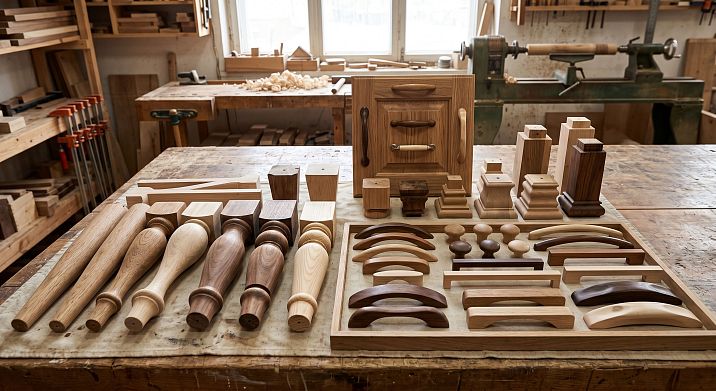
Furniture in a home exists in two states. The first is when every detail is chosen deliberately: handles hold confidently, legs bear the load without creaking, supports don't wobble, the shape and shade of each element speak the same language. The second is when everything is bought at different times, in different places, without a system. Handles from one set, legs from another, supports are completely random. You look at such furniture and can't understand why it irritates you. It works. It stands. But something is wrong.
The difference between these two states is not about money or apartment size. It's in the details. It is furniture handles, furniture legs, and supports that determine whether the interior will look cohesive or random. And this article is dedicated to exactly that — a practical, systematic guide to choosing wooden furniture parts for any piece of furniture in the home.



Why it's important to select furniture parts as a set
Let's start with the main point that many ignore until the last moment. Handles, legs, and supports are not separate purchases. They are a system. And if you approach it systematically, the result is fundamentally different.




Handles are responsible for facades and daily touch
Furniture Handles — this is the first thing a person touches when opening a cabinet, a dresser drawer, or a kitchen cabinet door. They work every day, hundreds of times. They are visible on every facade. Their shape determines whether it's convenient to open furniture with one hand. The material determines how long they will maintain their appearance. The size determines how proportional they are to the facade.
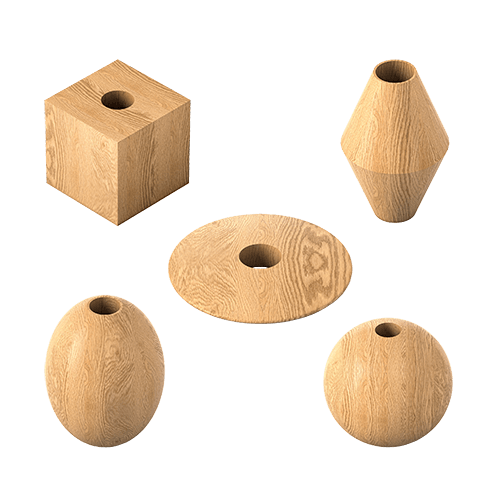
Our factory also produces:




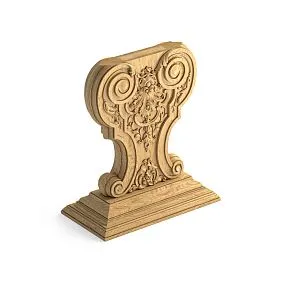
Legs set the height, seating position, and visual volume
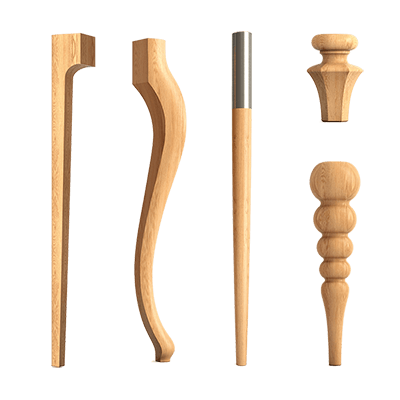
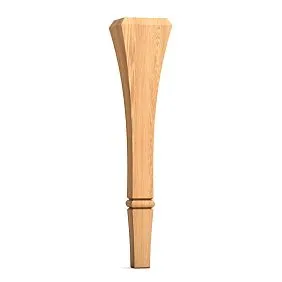
furniture legs They solve several tasks at once. They lift furniture off the floor — and this is not only aesthetic but also allows cleaning underneath. They determine the seating height — especially critical for chairs and sofas. They make furniture visually light: a cabinet without legs looks grounded and heavy, while the same cabinet on 100 mm legs appears airy and modern.
Get Consultation
Supports ensure stability under load
Furniture Supports — these are load-bearing elements that take the weight and distribute the load. Under a heavy dining table, massive sideboard, or wide sofa, you need not a thin decorative leg but a reliable support with the correct cross-section and attachment method.
The underframe combines function and image
Solid wood furniture frames — underframes, frames, crosspieces — these are the base for a table. When you have a tabletop but no base, the underframe is the most elegant solution. It provides stability, completeness, and an expressive look all at once.
Why you cannot choose parts separately
Imagine: you bought handles in light beech, legs in dark walnut, and a support made of painted MDF. Each element individually is not bad. Together — three different worlds on one piece of furniture. This is how the feeling of "something is off" arises, which cannot be fixed without replacing parts.
Buy handles, legs, and supports at the same time. From the same wood species. In the same finish. This is the main rule that has no exceptions.
Furniture handles: what to choose for a wardrobe, chest of drawers, and kitchen
Let's break down furniture handles by subject — by furniture type, shape, and function. This is not an abstract discussion about beauty, but a specific choice for a specific task.
Kitchen handles: load and grip first and foremost
The kitchen is the toughest place for any furniture part. Handles here are opened 30–50 times a day. Hands can be wet, greasy, hot. Therefore, the first criterion is the material that can withstand daily contact.
Wooden furniture handles Solid oak or beech for the kitchen is the right choice. Oak is dense, not afraid of moisture with proper coating, and does not heat up to an uncomfortable temperature like metal. Beech is uniform in structure, holds tinting and varnish coating well.
The shape of the kitchen handle is a horizontal bracket. The gap between the handle body and the facade surface is at least 30 mm. This is necessary for a comfortable grip even in gloves or with full hands. Length — from 96 to 160 mm, depending on the width of the facade. For narrow vertical facades — a vertical bracket.
Handles for a chest of drawers: a balance of aesthetics and convenience
A chest of drawers is furniture for the bedroom or living room. The load here is lower than in the kitchen, but visibility is higher: the chest of drawers is in plain sight, and its handles shape the overall appearance of the item.
For a classic chest of drawers — Wooden furniture handles with turned details: a small pattern, smooth profile, a shape that references traditional furniture. For a modern chest of drawers — knob handles of round or square shape without decoration.
An important nuance: all handles on one chest of drawers must be of the same article number. Different handles on the upper and lower drawers is a common mistake that is difficult to fix retroactively.
Cabinet handles: size matters
A cabinet is tall furniture with large fronts. A small knob handle gets lost here. For tall cabinet doors, a long pull handle from 128 to 192 mm or a vertical profile handle is optimal.
Center-to-center distance — standard 96, 128, or 160 mm. Before purchasing, measure the distance between mounting holes on existing handles or choose handles that require drilling for a specific pitch.
Uncoated handles: complete color freedom
Wooden furniture handle Uncoated — this is a blank for tinting to match your interior. You choose the shade of stain or oil that matches the floor, trim, or baseboard — and get a perfect color system. This is especially valuable when restoring old furniture or assembling custom furniture, where every shade matters.
How to choose the handle size for the facade
There are several practical rules.
-
Pull handle for a horizontal front (drawer): handle length — from 1/3 to 1/2 of the front width.
-
Handle for a vertical front (door): length — from 1/5 to 1/4 of the front height.
-
Knob handle — for small fronts up to 400 mm wide.
-
Gap between the handle body and the front — at least 25 mm, ideally 30–35 mm.
Furniture legs: how to choose height, shape and style
If handles are the face of furniture, then legs are its posture. They determine how an item stands in space, how confident it looks, and how convenient it is in everyday life.
Legs for a cabinet: lightness without loss of stability
Legs for chests — this is perhaps the most popular type. A TV cabinet, bedside table, hallway cabinet — all benefit from being installed on legs.
The optimal height for a cabinet is 80–120 mm. This is enough for the space underneath to be cleaned with a vacuum cleaner, and not so much that the cabinet looks unstable. The leg cross-section is from 30×30 mm for light cabinets to 40×40 mm for more massive ones.
Mounting method: a screw-in support through a threaded insert is the best option. The insert is placed into the cabinet bottom once, the leg is screwed in and, if necessary, replaced without damaging the body.
Legs for a chest of drawers: proportion and scale
A chest of drawers is furniture weighing from 30 to 70 kg depending on its contents. Here, legs must be not only beautiful but also capable of withstanding real load. The minimum leg cross-section for a chest of drawers is 35×35 mm or a diameter of 35 mm for turned options.
The height of legs for a chest of drawers is 60–100 mm. Taller legs make the chest of drawers visually light, but can disrupt proportions: if the body of the chest of drawers is low, overly long legs will create an unbalanced silhouette.
Legs for a wardrobe: fixation is more important than height
A cabinet is a heavy and tall piece of furniture. Its legs must be as stable as possible. Height is typically 50–80 mm: the cabinet should not "wander" even when heavy doors are opened. Installation is strictly via threaded inserts, with height adjustment to compensate for uneven floors.
Legs for sofa and ottoman
A sofa on legs is not just about aesthetics; it changes the feel of the room. The space under the sofa is open, light passes underneath, and the living room looks more spacious.
Furniture legs For a sofa — height 80–150 mm, conical or cylindrical shape. Attachment via a mounting plate: it is screwed to the sofa frame, and the leg is screwed into it.
For an ottoman — legs are more elegant, height 100–180 mm. Stability under point load is crucial here: a person sits on the edge, and the leg bears maximum force.
Legs for painting: a universal tool
Buy legs for furniture Without coating means gaining complete freedom of color. This is especially relevant for restoring Soviet cabinets and dressers, where standard tinting does not match any shade of a modern interior. Prime it, apply the desired shade — and old furniture gets a second life in a new color.
Legs for table and chair: where load is especially important
A table and chair are furniture used particularly intensively. Here the load is completely different from that of a nightstand or dresser. And choosing legs here is not just about aesthetics but also engineering calculation.
Legs for a chair: seat height and stability
The correct height of chair legs depends on the seat height. The standard seat height for a dining chair is 450 mm from the floor. For a bar stool, it is 650–750 mm. Based on this, legs are selected considering the seat thickness.
chair legs must have a minimum cross-section of 30×30 mm for a garden or decorative chair and at least 35×35 mm for a dining chair used daily. The leg angle is an important parameter: slightly splayed legs provide significantly better stability than strictly vertical ones.
Anti-slip glides must be on the lower ends of the legs. This is not a trifle: a chair without glides scratches parquet, slides on tiles, and loosens the connection between the leg and the seat.
Buying table legs: what to consider
buy legs for a table — a query that covers very different needs. A dining table is not the same as a coffee table. A kitchen table is not the same as a work table. Let's break down each case.
Dining table. Leg height — 680–720 mm depending on the tabletop thickness (final table height should be 750–760 mm). Leg cross-section — at least 50×50 mm for a four-legged table. Attachment — via metal brackets or tenon-and-groove joints with additional tightening.
Coffee table. Height — 400–450 mm. Legs can be more elegant, cross-section — from 25×25 mm. Here the load is fundamentally lower, and the leg shape is more important than its load-bearing characteristics.
Legs for coffee tables — this is a separate category with a special emphasis on design. Conical, spindle-shaped, Scandinavian — here the shape carries semantic meaning.
Table legs: load and fixation
«Table legs» — this is often how massive support elements are called, differing from a classic leg primarily in cross-section and attachment method. For a large dining table 100 cm wide or more — solid wood legs with a cross-section of 60×60 mm or 70×70 mm. They do not sag, do not loosen over time, and hold the tabletop without extraneous sounds during use.
Stool legs: stability at a single point
stool legs — this is a case where serious demands are placed on a small object. A stool bears the entire weight of a person at four points. At the same time, its base area is small. This means each leg must be stable and have a reliable connection to the seat.
The optimal solution for a stool or bench is four legs with a slight outward angular tilt, cross-section 30×30 mm or diameter 30 mm for a turned version, fastened with a dowel and glue plus a metal tie from below.
Furniture support and furniture supports: how they differ from legs
This question arises for many who are seriously selecting furniture fittings for the first time. What is the difference between a leg and a support? When is the first needed, and when the second?
Support as a load-bearing element: structural logic
A leg is a point support element. It lifts furniture at a single point. A support is an element with a larger bearing area or a special design that handles distributed load.
furniture leg in the context of wooden furniture, this could be a wide block, a U-shaped element, a corner piece, or a platform base. It is appropriate where a point leg is insufficient: under a wide sofa, under a heavy massive sideboard, under a table with a large tabletop.
When a decorative leg is needed, and when a load-bearing support
A decorative leg is for a cabinet, bedside table, bench, light chest of drawers. The load is small, aesthetics are important. Here the leg can be elegant, turned, tapered — with priority on form.
Load-bearing Furniture support — this is a dining table, a work table, a heavy sideboard, a sofa. Here, form is secondary, while cross-section, fastening method, and resistance to lateral loads are a priority.
How to choose a support for heavy furniture
A few practical parameters.
Cross-section. For furniture weighing up to 50 kg — support cross-section from 40×40 mm. Up to 100 kg — from 50×50 mm. For particularly heavy furniture — from 60×60 mm.
Height. The support must ensure stability: the taller the furniture, the more stable the lower point should be. For tall items — supports are installed at corners with the widest possible base.
Material. Solid oak or beech — dense species with high load-bearing capacity. Pine is acceptable for light furniture, but under heavy loads it may deform.
Support area: why it's more important than it seems
The base area of the support is how many square centimeters are in contact with the floor. The larger it is, the more stable the furniture, the less pressure on the floor covering, and the lower the likelihood of denting parquet or laminate under static load. This is why, for a heavy sofa on a wooden floor, a support with a wide base is preferable to a thin decorative leg.
Table underframe: when it's better to choose a ready-made base
There is a situation that occurs more often than it seems: a person has found the perfect tabletop — or made it themselves — but doesn't know how to create a worthy base for it. Four separate legs? A central support? Or Buy a pedestal — ready frame structure?
Underframe vs. Individual Legs: What's the Fundamental Difference
Four individual legs provide visual lightness but require precise alignment and proper fastening. Under asymmetric load (a person leaning on one corner of the table), a four-leg structure without cross braces is prone to wobbling.
the base for a table — this is a frame structure with horizontal stretchers and corner joints. It is inherently rigid. The load is distributed across the entire frame, not just four points. This makes the underframe the preferred solution for a dining table, desk, and any item that will be used daily with real load.
Table base for a dining table
Base for Dining Tables — the most sought-after solution. Several selection criteria.
Frame width. Should be 100–150 mm less than the tabletop width on each side so that seated people's legs fit comfortably under the table.
Height. The final table height is 750–760 mm. If the tabletop is 40 mm thick, the underframe should have a height of 710–720 mm.
Attachment to the tabletop. Metal L-shaped brackets or screws through the horizontal frame rails. Attachment via brackets allows the tabletop to move slightly during expansion from humidity—which is especially important for solid wood.
Table base for a round table
For a round tabletop, a central underframe is suitable—a column with a cross-shaped base. It does not interfere with seating (no corner legs), takes up minimal space, and creates an expressive silhouette.
The cross at the bottom provides stability. The wider the cross arms, the more stable the structure under lateral load. For a round dining table with a diameter of 90–120 cm, a cross with a span of at least 60 cm.
Underframe for kitchen countertop
Countertop substructure The kitchen table operates in conditions of high humidity and temperature fluctuations. The coating here is critical: oil-wax or polyurethane varnish resistant to water. The wood species is oak or beech: they are less susceptible to moisture than pine. Connections use metal fasteners that compensate for wood movement when humidity changes.
What to check before buying an underframe
A few mandatory points.
-
Maximum load specified by the manufacturer — must be at least 80 kg for a dining table.
-
Type of attachment to the countertop — presence of holes, brackets, or dowels in the kit.
-
Size compatibility — frame width and length matching your countertop dimensions.
-
Wood species and coating — matching your interior in color and texture.
How to combine handles, legs, and supports in one style
This section turns a set of parts into a system. There are no complex rules here — just common sense and a few guidelines.
One shade of wood as a basic condition
All wooden parts in one room — baseboard, handles, legs, countertop, doors — must be kept in a single tonal range. This does not necessarily mean one species or one stain. But it must be one color temperature: warm shades (walnut, honey oak, cherry) in one interior. Cool shades (gray oak, ash, light beech) in another.
Mixing warm walnut and cool gray oak in one room is a conflict that the eye perceives as discomfort, even without recognizing the cause.
A single degree of decorativeness
If handles are turned, classic, with relief elements — then legs should be in the same spirit: turned, with grips, with classic proportions. If handles are a laconic bracket without decor, a modern shape — legs should be straight, geometric, without turning.
Mixing a classic handle with Empire decor and a minimalist conical leg without details is a style conflict. Both elements are beautiful on their own, but together they don't work.
Connection with floor, doors, baseboard, and countertop
Wooden furniture parts do not exist in a vacuum. They stand next to the floor, trim, baseboard, countertop. If the floor is dark oak, then handles and legs in light beech will contrast. This can be intentional and beautiful. But it must be intentional, not accidental.
Working principle: first determine the dominant shade in the room — floor, doors, main furniture. Then select handles and legs in the same tonal range or in a deliberate contrast to it.
Classic and modern: what goes with what
| Interior style | Handles | Legs | Supports |
|---|---|---|---|
| Classic | Staples with turned parts | Turned with grips | Corner with profile |
| Neoclassical | Staples of strict shape | Tapered or straight | Straight with chamfer |
| Scandinavian | Rounded buttons | Tapered pins | Central columns |
| Modern loft | Staples without decor | Straight square | Massive blocks |
| Suburban house | Handles with relief | Turned massive | Wide corner |
Ready-made selection scenarios
Dresser: handles and legs as a system
A dresser without legs is a heavy block on the floor. A dresser on legs 80–100 mm high with wooden handles matching in shade is a different piece of furniture. For a classic dresser: handles with turned elements, tapered or waisted legs, one wood species, one shade.
For a modern dresser: button handles without relief or short staples, straight square-section legs, matte lacquer finish.
Cabinet: handles matching the height of the facades
A tall cabinet requires long vertical handles or profile handles. Wooden furniture handles 200–300 mm long for tall doors — this is proportional and convenient. For a cabinet with a mezzanine, different handles on the lower and upper tiers are only acceptable if they are from the same series.
Kitchen: handles and details for daily use
In the kitchen — brackets made of solid wood with a gap of at least 30 mm. Center-to-center distance: 96 or 128 mm for lower cabinets, 128 or 160 mm for upper cabinets. Supports for a kitchen island or bar counter — from the same wood species as the handles. The base for a dining table in the kitchen — with a moisture-resistant coating.
Nightstand: legs for lightness and easy cleaning
A nightstand without legs — a closed lower area. With with matching legs a height of 80 mm — an open space that is easy to clean. For a TV stand — four legs at the corners, tapered or straight. For a bedside table — height 60–80 mm, shape matching the bedroom style.
Table: legs or base — how to decide
A coffee table — four separate legs, that's enough. A dining table for four or more people — only wooden base for tableKitchen table for daily use — frame base with mandatory moisture protection. Work table — frame base with rigid joints, height 710–720 mm for standard tabletop.
Chair: parameters that cannot be ignored
A chair is a load at a single point. Buy chair legs — means choosing elements with a cross-section of at least 30×30 mm, with a slight outward tilt for stability and anti-slip glides at the bottom. Leg height — for a standard seat height of 450 mm, accounting for seat thickness.
Mistakes when choosing furniture parts
Here are eight mistakes that occur regularly — and that ruin the result even with a good budget.
-
Buying handles without checking the facade size. A small handle on a large facade is a visual failure. Always measure the facade before ordering.
-
Choosing legs without considering the load. A thin leg with a diameter of 20 mm under a 60 kg chest of drawers is a broken leg in a month.
-
Putting thin legs under a heavy table. A dining table is a dynamic load: people lean on it, move it, children rock on it. Legs must match this load.
-
Mixing different styles of handles and supports. Classic handles with baroque details and minimalist conical legs — this is not eclecticism, it's chaos.
-
Not checking the chair seat height. A chair with legs that are too high or too low for your table causes discomfort with every meal.
-
Choosing a support only by photo. A photo does not convey the rigidity of the structure or the accuracy of dimensions. Check the technical specifications.
-
Not considering the color of the floor, doors, and baseboard. Wooden details work within the context of the entire room. Without reference to this context, they are random.
-
Buying an underframe without checking compatibility with the tabletop. Frame size, mounting type, height — all of this needs to be checked before, not after, the purchase.
Where to buy furniture legs, furniture handles, and supports
The main principle when buying furniture parts is consistency. If you need furniture legs, Furniture Handles и Furniture Supports at the same time — buy them from one manufacturer, from one line. Only then will the material, shade, and profile match without additional adjustment.
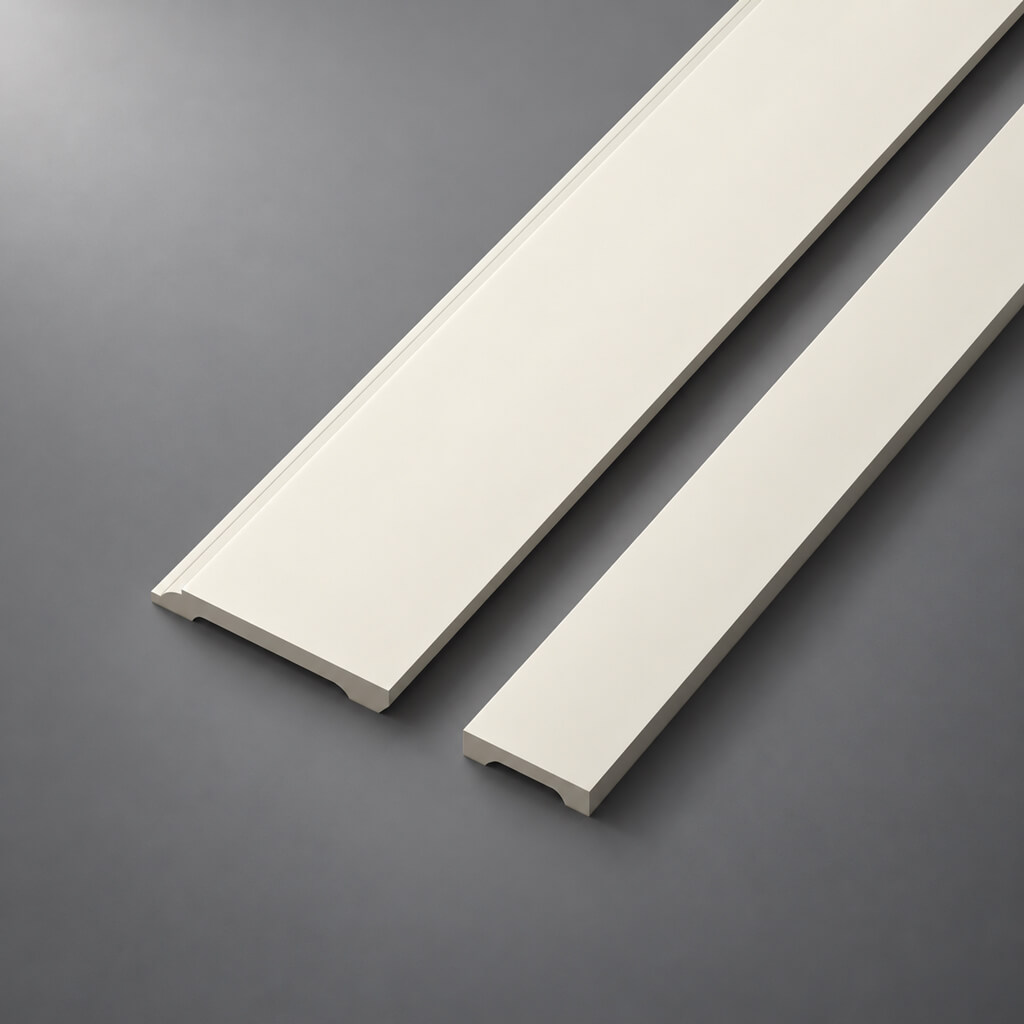
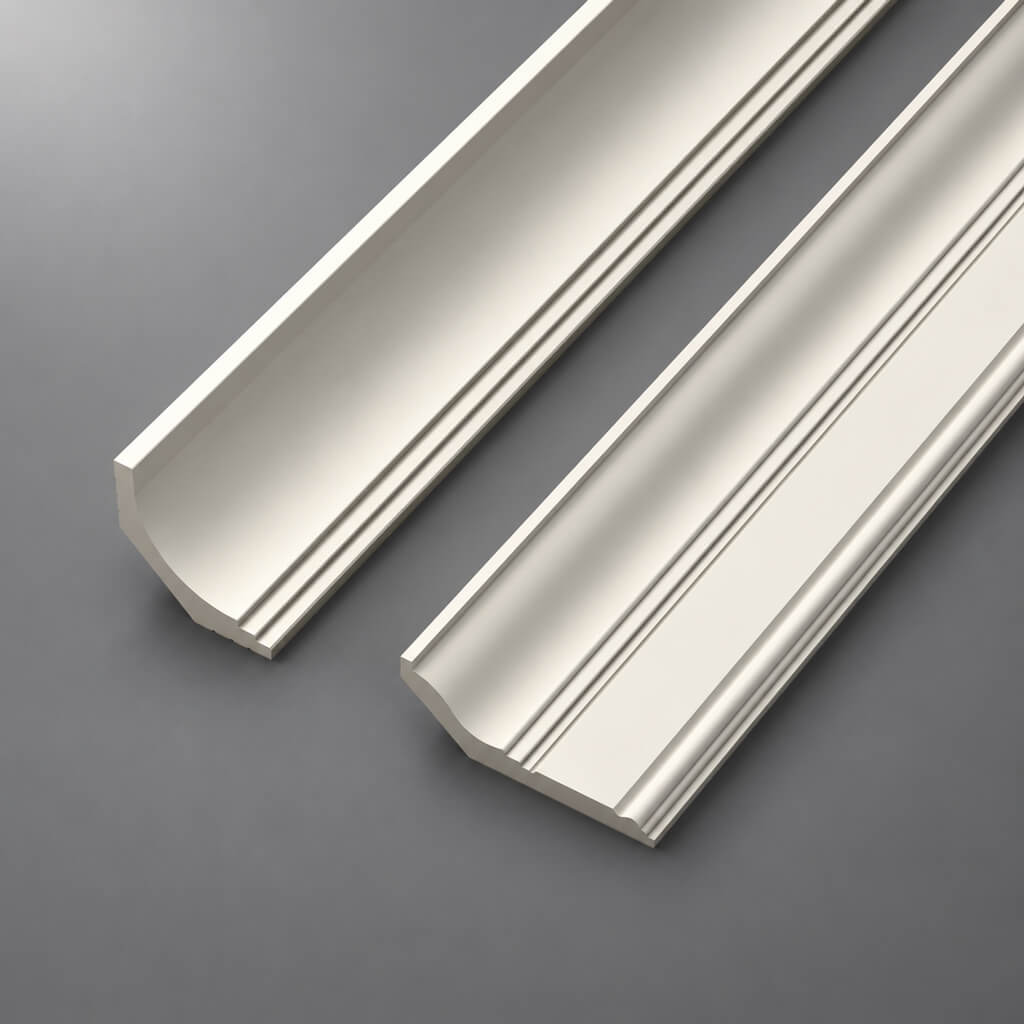
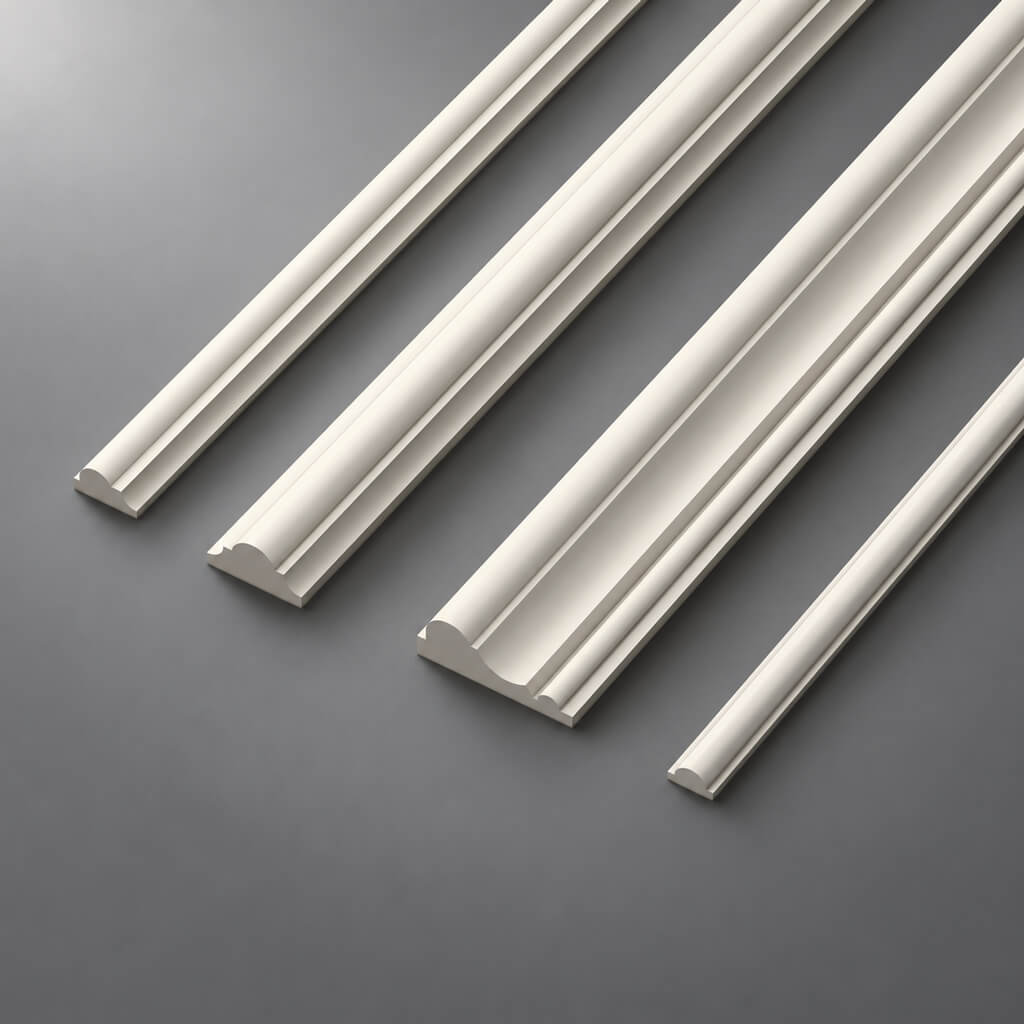
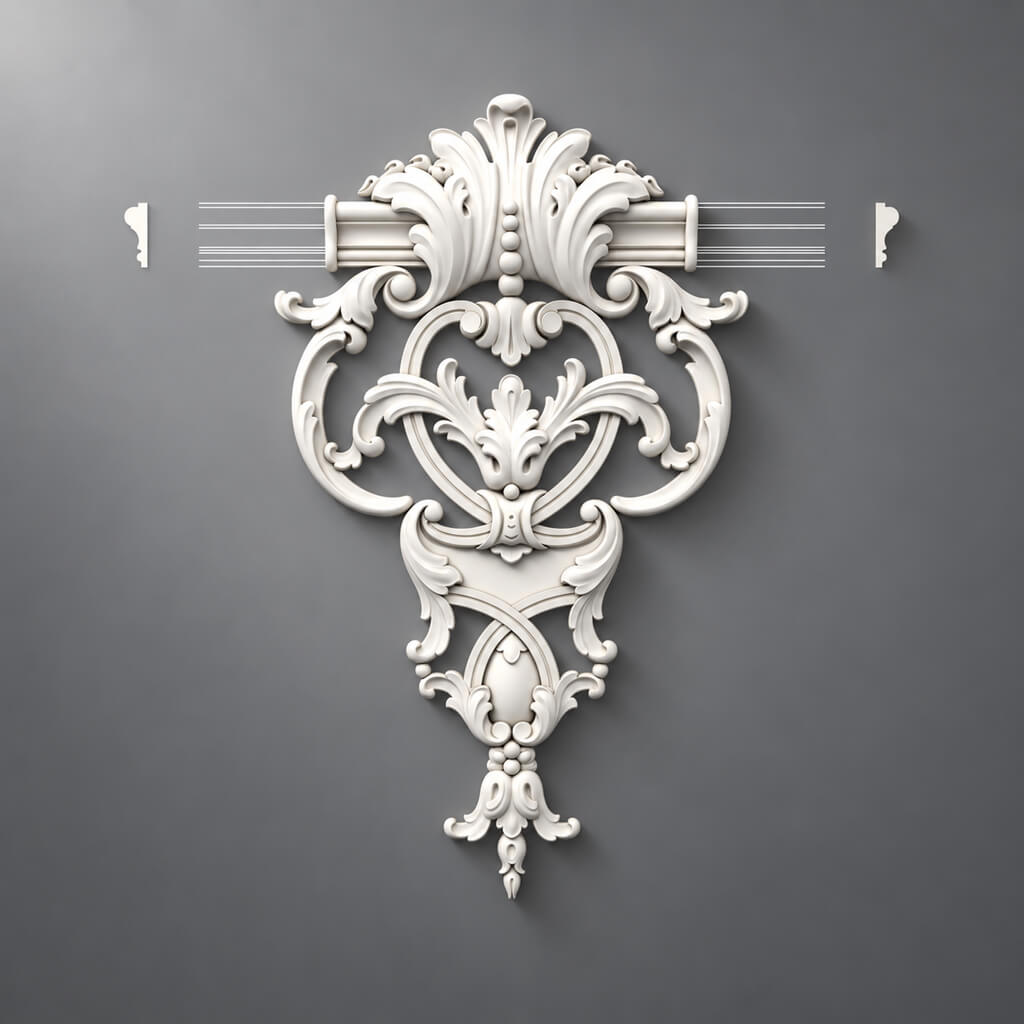
Solid Wood Items is a broad category that includes all the elements needed for a complete wooden system: from handles and legs to underframes, baseboards, and cornices. When everything comes from one source, the result is fundamentally different.
Buy with a quantity surplus: if one leg or handle is damaged in a year, you can replace it from the leftover stock without searching for a matching SKU.
Frequently asked questions
Which furniture legs to choose for a cabinet or dresser?
For a pedestal — height 80–120 mm, cross-section from 30×30 mm, fastening via threaded insert. For a chest of drawers — height 60–100 mm, cross-section from 35×35 mm. In both cases — made of solid oak or beech with a finish coating.
How is a furniture support different from a regular leg?
A leg is a point support element, prioritizing shape and height. furniture leg — a load-bearing element with a larger support area, prioritizing stability and load. A support is needed for heavy furniture, a leg is for light and decorative furniture.
Which furniture handles are suitable for a wardrobe and a kitchen?
For a wardrobe — long vertical brackets 160–200 mm or profile handles. For a kitchen — horizontal brackets with a gap of at least 30 mm, center distance 96–160 mm depending on the facade. Material — solid oak or beech with a lacquer or oil coating.
What to choose for a table: legs or an underframe?
For a coffee table, four legs are sufficient. For a dining or kitchen table used daily — Buy table base. The frame structure of the underframe provides rigidity that four separate legs do not.
Can wooden handles and legs be painted?
Yes, that's exactly what unfinished handles and legs are for. You prime them, tint them to the desired shade, and coat them with varnish or oil. The result is a perfect match with the color of your furniture, floor, or other wooden interior details.
Which legs should I choose for a chair?
Cross-section at least 30×30 mm, a slight outward tilt for stability, anti-slip glides on the bottom ends. Height — for a standard seat height of 450 mm from the floor, accounting for the seat thickness.
How to combine furniture handles and legs in one style?
One wood shade, one level of decorativeness, one stylistic tone. Classic handles go with turned legs. Minimalist modern handles go with straight geometric legs. No mixing of baroque and minimalism in a single piece of furniture.
Where to buy wooden furniture parts?
Buy from a full-cycle manufacturer where handles, legs, supports, and underframes are made from the same wood and within a unified tinting system. This guarantees part compatibility and a consistent visual result.
About the company STAVROS
All the wooden furniture parts discussed in this article are produced by the Russian company STAVROS. The full range includes furniture handles, legs, supports, underframes, and frames — made from solid oak, beech, and other valuable species, with precise tolerances and a unified tinting system within each line.
STAVROS works with both private customers updating furniture at home and professional furniture makers, designers, and carpentry workshops. Here you can select parts for a specific task — from a single leg for a cabinet to a complete set for a dining table, kitchen, and living room. Everything in one place, in one system, from one material.
If you want the furniture in your home to look not like a collection of random items but like a cohesive, thoughtful interior — start with the STAVROS catalog. Details matter.