Article Contents:
- When the molding can really be ended at the slat panel
- What NPU-398.1 is
- Why NPU-398.1 should be considered together with MLDPU-001
- The main calculation: count endpoints, not meters
- Which endings should be considered open
- The end is freely visible on the wall
- The end is covered by a casing
- The molding turns and continues the frame
- The molding reaches the inner corner of the room
- The molding ends before the slat panel
- MLDPU-001 adjoins the trim
- The molding ends before the trim
- The molding closes into a frame
- MLDPU-001 goes under another profile
- The molding butts against the casing
- There is almost no free space between the molding and the battens
- There is already a lot of stucco decor on the wall
- The straight cut itself looks neat and matches the style
- In the color of the wall
- In the color of the slats
- Contrast option
- NPU-398.1
- MLDPU-001
- Buy by the number of MLDPU-001 strips
- Place a tip on each physical end
- Automatically make two tips for each line
- Do not check the distance to the slats
- Evaluate only from the front
- First glue MLDPU-001, then look for a place for the tip
- Add tips to a closed frame
- Can NPU-398.1 be used only on one side of the wall if on the right the molding ends at the slats, and on the left it does not?
- Do I need to buy an additional NPU-398.1 as a spare?
- Can NPU-398.1 be used on a short section of MLDPU-001 200–300 mm long?
- If the slat panel protrudes slightly forward relative to the smooth wall, do I need to shift the tip?
- Can NPU-398.1 be placed not at the slats, but at the free end of the molding in the center of the wall?
- What to do if the slat panel does not start with a vertical straight line, but has a stepped edge?
- Can NPU-398.1 be used on two moldings located very close to each other?
- Do all NPU-398.1 need to be oriented the same way?
- What should I do if the tip becomes almost invisible after painting?
- Can I use a different molding with the NPU-398.1?
- If the molding ends near an internal corner of the wall, and the slats start 50 mm later, where should I place the tip?
- Can the molding be finished with a regular cut and NPU-398.1 added later?
- Do I need to count tips separately for each room?
- What to do if one room needs 5 tips?
- Can NPU-398.1 be used only for the bottom line, leaving the top line without a tip?
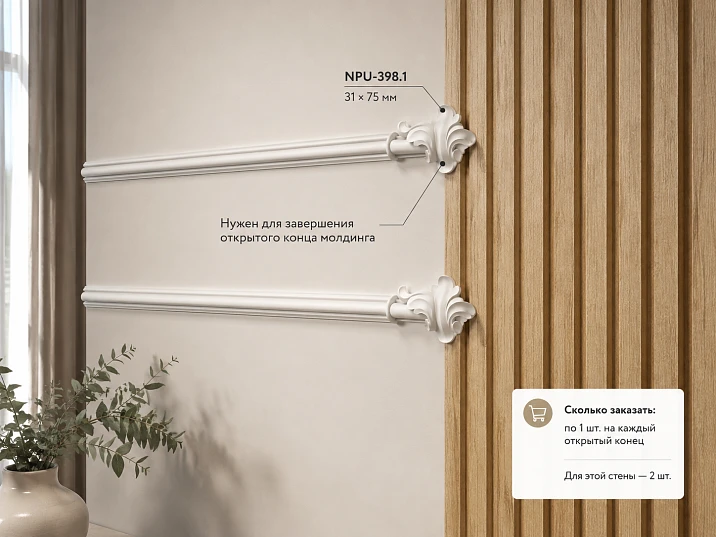
A molding line on a wall does not always have to close into a rectangular frame. Sometimes it is deliberately ended where another texture begins — for example, a vertical zone of slat panels. Then the straight molding has an open endpoint, and it is this endpoint that either needs to be left as a plain cut or styled as an independent decorative finish.
For the system with polyurethane molding MLDPU-001, the decorative tip NPU-398.1 can be considered.
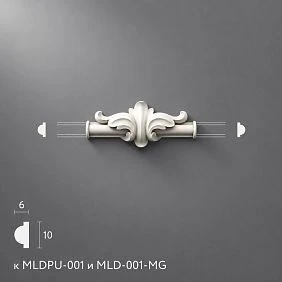
NPU-398.1 measures 31 × 75 × 12 mm, is made of polyurethane, and costs 440 ₽ per piece. The product card links it to MLDPU-001, so this is not about randomly adding one molding piece to another, but about a specific product system.
MLDPU-001 itself is a straight polyurethane molding with dimensions of 10 × 6 × 2600 mm, and the current price for one strip is 1,740 ₽.
The main feature of the calculation here is very simple:
NPU-398.1 are counted not by meters of molding, but by the number of open ends.
If one MLDPU-001 line ends at a slat panel, 1 end cap is needed.
If two parallel lines end at the slats, 2 end caps are needed.
If there are two symmetrical molding zones on both sides of the central slat insert, and each has two open ends, 4 NPU-398.1 are needed.
Therefore, before ordering, you should not measure the perimeter of the entire wall, but literally go through the project and mark each end point of MLDPU-001.
After such a check, you can buy decorative end cap NPU-398.1 in the actually calculated quantity.
When the molding can actually be finished at the slat panel
Slat finish and molding perform different tasks on the same wall.
The slats create a repeating vertical rhythm. The molding, on the contrary, draws a finer decorative line on a smooth surface.
If you try to continue MLDPU-001 over the slats at any cost, the two systems start to overlap:
the linear profile of the molding is superimposed on the already existing relief of the slat panel.
This is not always necessary.
A much cleaner scheme can look like this:
smooth wall → molding line → intentional finish → small pause → slat panel.
In this solution, the open end of the molding is no longer perceived as an unfinished element. It becomes part of the composition.
But this only works when the end is truly designed with intention.
A regular straight cut can also be the right solution. Especially if:
-
the molding is very thin;
-
the line ends in an inconspicuous place;
-
The slat panel is placed flush;
-
The interior is maximally minimalist;
-
no decorative accent is needed at the transition.
NPU-398.1 is needed not because every molding must have a tip, but because at a specific point you want to create a visible decorative ending.




What is NPU-398.1
On the STAVROS website, the NPU-398.1 is specifically designated as a decorative molding end cap.
This is the correct term for the article as well.
It should not be called simply a "trim," "decoration," or "molded element" when referring to its primary function in the composition in question.
Confirmed parameters:
| Characteristic | NPU-398.1 |
|---|---|
| Type | Decorative molding end cap |
| Size | 31 × 75 × 12 mm |
| Material | Polyurethane |
| Price | 440 ₽/pc. |
| Minimum order | 1 pc. |
| Production | Custom Order |
| Average production time | 3–7 days |
The specific product is located here:
buy decorative end cap NPU-398.1
The low price of the individual part makes it especially convenient as an addition to a molding order.
But even at a price of 440 ₽, there is no point in buying four or six end caps "just in case" if the project only needs two.
First, the number of endpoints is calculated.
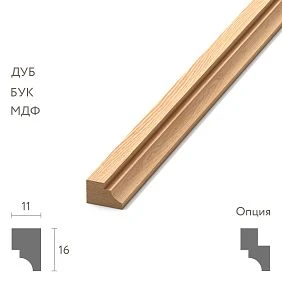
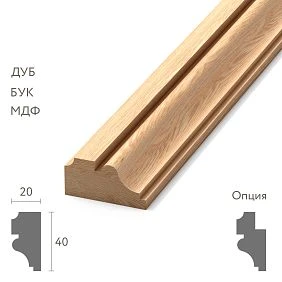
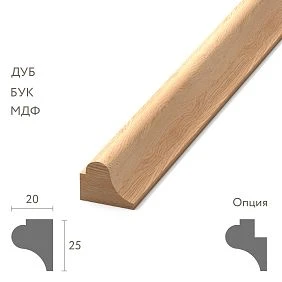
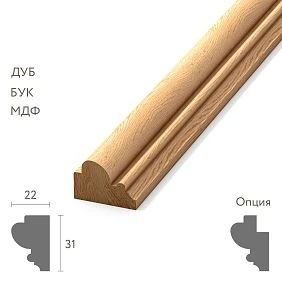
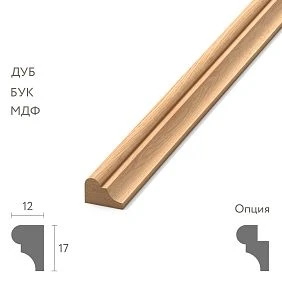
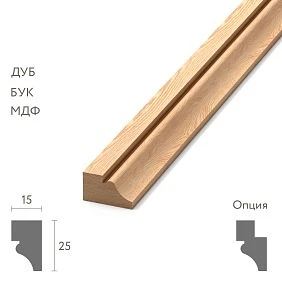
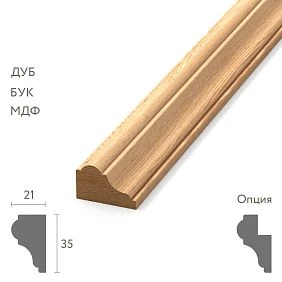
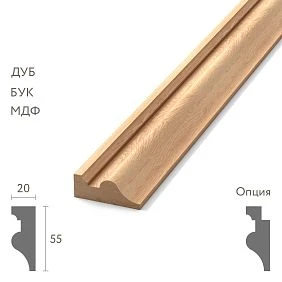
Our factory also produces:
Why NPU-398.1 should be considered together with MLDPU-001
NPU-398.1 is related to the MLDPU-001 system.
MLDPU-001 is a straight polyurethane molding measuring 10 × 6 × 2600 mm.
You can view it via the link:
buy MLDPU-001 molding made of polyurethane
The combination looks like this:
MLDPU-001 forms a line → the line ends → NPU-398.1 finishes its endpoint.
That's why the molding is designed first, and the tip is calculated afterwards.
Incorrect sequence:
"I liked NPU-398.1, where should I put it?"
Correct:
"My MLDPU-001 ends here. Do I need a decorative tip at this point?"
This way the purchase remains functional.
Get Consultation
Main calculation: count endpoints, not meters
The quantity of NPU-398.1 does not directly depend on the length of MLDPU-001.
The molding can be of length:
-
400 mm;
-
1200 mm;
-
2500 mm;
but if it has only one open decorative end, one NPU-398.1 is needed.
Conversely, four short lines of 300–400 mm can produce four open ends and require four tips.
Therefore, the count is done according to the scheme:
one open endpoint = one NPU-398.1.
| Molding scheme | Open ends | NPU-398.1 | Cost |
|---|---|---|---|
| One line ends at the rails | 1 | 1 pc. | 440 ₽ |
| Two parallel lines | 2 | 2 pcs. | 880 ₽ |
| Two symmetrical zones on the sides of the rails | 4 | 4 pcs. | 1 760 ₽ |
| Three zones with two open ends each | 6 | 6 pcs. | 2 640 ₽ |
This table is more useful than any calculation of linear meters.
She immediately responds to the customer's question.
Which ends to consider open
Not every edge of a cut molding requires a decorative end cap.
It is necessary to distinguish between a visible open end and a technical ending that is hidden by another part of the composition.
For example, MLDPU-001 can:
-
butt against the inner corner of the wall;
-
enter another part of the molding frame;
-
go under the trim;
-
connect with another decorative element;
-
end freely on a smooth field.
For the calculation of NPU-398.1, the last option is primarily of interest.
The end is freely visible on the wall
This is the main candidate for the tip.
The end is covered by the trim
NPU-398.1 may not be needed at all, because the line physically ends under another element.
The molding turns and continues the frame
There is no end in the compositional sense.
The molding reaches the inner corner of the room
The method of joining needs to be decided separately. The tip is not installed automatically.
The molding ends before the slat panel
This is exactly the original scenario of the article and the most natural place for NPU-398.1.
One horizontal line up to the slats: one end cap is needed
Let's imagine a wall.
On the left is a door portal.
From it, MLDPU-001 runs to the right along the smooth painted wall.
After 1600 mm, the vertical slat panel begins.
The molding does not continue along the slats.
On the side of the door portal, its beginning blends into the existing decor. Only the end near the slats remains free.
Quantity:
1 open end point.
You need to:
1 × NPU-398.1.
Cost:
440 ₽.
There is no point in buying a second tip just for "symmetry," because the other end of the line is not free.
Two parallel lines: two NPU-398.1 are needed.
Now, on the smooth part of the wall, two horizontal lines of MLDPU-001 are made.
For example:
-
one at the top edge of the decorative panel;
-
one at the lower edge.
Both end before the same slat zone.
We get:
2 open ends.
Therefore:
2 × NPU-398.1 = 880 ₽.
Here, a vertical rhythm of two identical endings already appears.
And that is why it is important to position both tips identically relative to the edge of the slat panel.
Even a small difference in offsets will be noticeable.
Four endings around the central slat insert
More complex scheme:
-
the central part of the wall is decorated with slat panels;
-
on the left there is a smooth molding zone;
-
on the right — symmetrical to it;
-
on each side, two horizontal lines of MLDPU-001 approach the slats.
Left:
-
upper end;
-
lower end.
on the right:
-
upper;
-
bottom.
Total:
4 endpoints.
You need to:
4 × NPU-398.1.
Cost:
1 760 ₽.
In this scenario, the tips become no longer random details, but repeating elements of a single composition.
Therefore, it is especially important:
-
the same distance to the outer rails;
-
matching heights on the left and right;
-
same orientation;
-
uniform coloring.
If there are six lines, you still need to count by the ends
Suppose there are three separate decorative zones on the wall, and in each one the molding breaks off on both sides.
We get:
3 × 2 = 6 open ends.
You need to:
6 NPU-398.1.
Cost:
6 × 440 = 2 640 ₽.
With this scheme, it is especially useful to make a small plan of the wall before ordering and number all the end points:
K1, K2, K3, K4, K5, K6.
This makes it much harder to make a mistake with the quantity.
The size 31 × 75 × 12 mm needs to be checked on a real wall.
NPU-398.1 is a small element, but on a thin MLDPU-001 it can look quite expressive.
Don't judge it just by the photo on the card.
Make a paper template 31 × 75 mm.
Attach it at the final point of the future molding.
Check:
-
from the front;
-
from the doorway;
-
from the side;
-
against the background of the slats.
It's especially useful to compare two options:
a regular straight end of MLDPU-001
и
an end with the NPU-398.1 template.
If the line already looks finished and neat without the tip, there is no need to add decoration just for the sake of quantity.
If, however, the cut is perceived as accidentally broken off, NPU-398.1 may provide just the necessary finishing touch.
Why the 12 mm depth also needs to be taken into account
NPU-398.1 has a third dimension of 12 mm.
In a frontal photograph, this volume may not be obvious.
But near the slat panel, it is especially important to view the product from the side.
The slats themselves already protrude from the base and create shadows. The tip also has its own relief.
If these two volumes are too close together, the transition may look overloaded.
Therefore, the mockup should be evaluated not only strictly from the front.
Look from a position from which the wall is most often seen in the room.
For example, when entering at an angle of 30–45 degrees.
It is then that it becomes clear whether the set is too active:
molding → tip → shadow → first slat → next shadow.
What gap should be left between NPU-398.1 and the first rail
There is no fixed universal distance here.
You cannot honestly say:
"always leave 20 mm"
or
"minimum 50 mm."
The product card does not provide such a rule.
You need to check the composition itself.
If the tip is almost flush with the outermost rail, it may visually blend with the panel.
If you move it too far away, it will feel like the molding ended long before the slat area without a clear reason.
Correct method:
-
mark the edge of the first rail;
-
temporarily draw the MLDPU-001 line with painter's tape;
-
place the NPU-398.1 template;
-
move the end relative to the rails;
-
choose the position along the entire wall.
For two or four tips at the same time, check the same offsets.
Should NPU-398.1 be placed directly on the edge of MLDPU-001
The main task is to get a visually unified end.
You cannot orient NPU-398.1 arbitrarily just because its size is larger than the cross-sectional dimension of the molding itself.
First, you need to check how the tip ornament aligns with the MLDPU-001 profile.
It is best to do a dry fit of the actual parts before installation:
-
place MLDPU-001 on a flat surface;
-
attach NPU-398.1;
-
check the central axis;
-
look at the drawing transition;
-
only then transfer the position to the wall.
If the parts are not yet available, use a printed or cardboard template at a 1:1 scale.
Is it necessary to finish both ends of the same line?
No.
This depends on what happens at each end.
For example:
door portal → MLDPU-001 → NPU-398.1 → slat panel.
Here, a tip is needed only on the right.
The left edge is already compositionally completed by the portal.
Another option:
NPU-398.1 → MLDPU-001 → NPU-398.1.
This is a free line on a smooth wall with two independent endings.
Then two pieces are indeed needed.
So the rule is simple:
not "two tips for each segment," but "one tip for each end that needs to be decoratively finished."
What to do near the door casing
The molding often runs between the door and the slat area.
Two solutions are possible here.
MLDPU-001 adjoins the trim.
Then, on the door side, a separate NPU-398.1 may be redundant.
The trim already forms a natural boundary.
The molding ends before the trim.
Another open endpoint appears.
In that case, the second NPU-398.1 can be checked.
But you should not automatically place identical end caps on both sides of the line if one side abuts an architectural feature and the other remains free.
What to do if the slat panel has its own frame
Sometimes the edge of the slat area is already finished:
-
with a vertical profile;
-
the molding;
-
the casing;
-
End plate.
Then NPU-398.1 cannot be evaluated separately.
You need to look at the triple transition:
MLDPU-001 → NPU-398.1 → panel edge.
If the slat panel already has an active decorative finish, an additional tip can create an unnecessary accent.
In such a situation, a regular neat end of MLDPU-001 sometimes looks better.
When the tip really improves the transition
NPU-398.1 is especially logical if several conditions are met simultaneously:
-
the end of MLDPU-001 is clearly visible;
-
the molding ends on an open smooth surface;
-
another finishing system begins nearby;
-
a plain cut looks technical;
-
the decorative finish supports the room's style.
Then the tip explains to the viewer:
the line here ended intentionally.
This is its most useful function.
When it's better not to use NPU-398.1
There are situations where the tip adds no extra value.
The molding closes into a frame
There is no open end.
NPU-398.1 is not needed.
MLDPU-001 goes under another profile
The endpoint is not visible.
The molding butts against the trim
The trim itself can finish the line.
There is almost no free space between the molding and the slats
An additional part can overload the transition.
There is already a lot of stucco decor on the wall
One more small ornamental element can become superfluous.
The straight cut itself looks neat and matches the style.
Not every ending requires a decorative finish.
Why four finials are not always better than two.
Symmetry is useful only where the architecture itself is symmetrical.
For example, if the slat insert is strictly centered on the wall and identical lines run on the left/right, four NPU-398.1 look logical.
But if:
-
there is a door on the left;
-
On the right is a cabinet;
-
One line is longer than the other;
Mechanical duplication of tips can only emphasize the asymmetry.
First, count the real open points.
Then see whether each of them needs to be styled the same way.
How to choose the color for MLDPU-001 and NPU-398.1
For a connected system, it makes sense to first consider a single color.
Matching the wall color
Molding and the tip work mainly through shadows.
This is a calm option next to active slat panels.
In the color of the slats
The molding system begins to visually connect with the textured part of the wall.
It is especially interesting if the slats have a noticeable tint.
Contrast option
The tip becomes more visible.
For a detail measuring 31 × 75 mm, this can be useful if you need to specifically emphasize the ending point.
But if the MLDPU-001 itself is thin, too strong a contrast of the tip can make it visually heavier than the main line.
Therefore, the color is better assessed on the entire wall, not just on the sample.
Can the tip and the molding be painted in different colors?
Such a design can be considered, but then NPU-398.1 turns from a line ending into an independent accent.
For example:
-
Molding in the color of the wall;
-
tip in the color of the slats.
This makes the transition point stronger.
But this only makes sense with a deliberate color composition.
For most calm walls, it is safer to first try a variant where MLDPU-001 and NPU-398.1 are perceived as one system.
How to calculate molding and end caps simultaneously
The quantity of NPU-398.1 and the quantity of MLDPU-001 are calculated using different methods.
NPU-398.1
By the number of decoratively exposed ends.
MLDPU-001
By the total length of all straight lines and the cutting of strips 2600 mm long.
For example, there are two parallel lines, each 1800 mm long.
Straight molding required:
1800 + 1800 = 3600 mm.
One strip is 2600 mm.
Therefore, one is not enough.
Two strips MLDPU-001 are needed.
And NPU-398.1 provided that only one end of each line is free:
2 pieces.
The basket is:
-
2 × MLDPU-001;
-
2 × NPU-398.1;
-
Mounting material.
Cost without installation:
2 × 1 740 + 2 × 440 = 4 360 ₽.
Here, the length and number of tips are calculated independently.
Another scenario: four lines of different lengths
Let's imagine:
-
600 mm;
-
900 mm;
-
1200 mm;
-
1500 mm.
Total:
4200 mm MLDPU-001.
For the total length, you need at least two strips of 2600 mm.
But for an accurate order, it's still useful to create a cutting layout.
For example:
1500 + 900 = 2400 mm.
1200 + 600 = 1800 mm.
Two strips really do the job.
Now we calculate the endings.
If each line touches another architectural element with one end, and the other ends before the slat zone:
4 open ends = 4 NPU-398.1.
Cost of tips:
1 760 ₽.
That is, molding is counted by lengths, and tips by points.
Why you don't need to buy NPU-398.1 based on the number of MLDPU-001 strips
This is a common logical mistake.
Suppose three MLDPU-001 strips are purchased.
This does not mean:
"three tips are needed".
From these three planks, you can assemble:
-
one long line with one open end;
-
four short lines with four ends;
-
two closed frames with no tips at all.
The number of molding packages says nothing about the quantity of NPU-398.1.
There is only one reference point:
how many endpoints in the finished composition will remain open and need to be finished.
Cost of 1, 2, 4, and 6 tips
The price of one piece is 440 ₽.
Therefore, the product part can be easily calculated in advance:
| Quantity of NPU-398.1 | Cost |
|---|---|
| 1 pc. | 440 ₽ |
| 2 pcs. | 880 ₽ |
| 3 pcs. | 1 320 ₽ |
| 4 pcs. | 1 760 ₽ |
| 5 pcs. | 2 200 ₽ |
| 6 pcs. | 2 640 ₽ |
Even with a large quantity, the price remains clear.
But the fact of a relatively low cost should not provoke the purchase of extra parts.
If the project has four open points — order four.
Not six "just in case," if there is no installation reason for a reserve.
How to make a full mockup before ordering
For one line, it is enough:
-
stick a strip of masking tape in the size of MLDPU-001;
-
mark the end point;
-
attach a paper template 31 × 75 mm;
-
mark the edge of the slat panel;
-
look from a distance.
For two or four lines, it is important to mock up all endings simultaneously.
Then it becomes visible:
-
whether the height matches;
-
whether the indents are the same;
-
whether there are too many tips;
-
whether unnecessary horizontal accents appear next to vertical slats.
Photograph the layout strictly from one point.
This makes it easier to compare the option:
without NPU-398.1
и
with tips.
Installation: first all the geometry, then glue
The small size of NPU-398.1 does not mean it can be installed without preliminary marking.
On the contrary, small repeating elements show discrepancies very well.
If two tips on parallel lines are placed:
-
one is 20 mm closer to the rails;
-
the other is farther;
this can look more noticeable than an error on a long molding.
Therefore, the order is as follows:
-
install or precisely mark MLDPU-001;
-
determine the endpoint;
-
apply NPU-398.1 without glue;
-
check the position;
-
repeat on all lines;
-
only after a full check proceed to installation.
What to add to the order
The basic product chain looks like this:
MLDPU-001 + NPU-398.1 + mounting compound.
NPU-398.1:
buy decorative end cap NPU-398.1
MLDPU-001:
buy MLDPU-001 molding made of polyurethane
For comparison of other finishes:
buying polyurethane molding decor
If a different straight profile is required:
For a wider selection:
If the textured wall zone itself is also being designed:
Buy slatted panels for wall finishing
For installation, you can additionally check out:
buy glue for installing moldings
The amount of adhesive should be determined by the actual installation pattern and substrate, not by the number of tips.
When it's better to choose a different tip
NPU-398.1 is not required to fit any molding composition.
Consider a different decor if:
-
the tip pattern is too busy;
-
the 31 × 75 mm size is too large relative to the line;
-
the transition to slats requires a more minimalist solution;
-
a different molding is used;
-
a mirrored pair of a different pattern is needed;
-
the interior itself does not support such decorativeness.
In this case, it is more reasonable to open Decor for polyurethane moldings and choose an element for a specific profile and composition.
There is no need to force NPU-398.1 to work on every open line just because it is inexpensive.
Main calculation errors
Buy by the number of MLDPU-001 planks
Three strips do not mean three tips.
Error: packaging is counted, not the finished geometry.
Solution: mark all open points on the wall plan.
Place a tip on each physical end
Some ends may be hidden by trim, a corner, or another detail.
Solution: count only visible decorative endings.
Automatically make two tips for each line
If one end already enters the portal, the second tip may be the only one needed.
Do not check distance to slats
The tip ends up either pressed against the panel or too far from it.
Solution: 1:1 mockup.
Evaluate only from the front
The 12 mm depth is not taken into account.
Solution: look from the side and under working lighting.
First glue MLDPU-001, then find a place for the tip
The endpoint is selected without considering the full length of NPU-398.1.
Solution: mark the bundle simultaneously.
Add tips to a closed frame.
In a closed composition, there is no free endpoint.
Solution: use NPU-398.1 only where the termination function is truly needed.
Ready-made algorithm before purchase
-
Draw all MLDPU-001 lines on the wall plan.
-
Mark where the slat finish begins.
-
Determine both ends of each molding.
-
Cross out points that are hidden by a portal, casing, corner, or continue with another molding.
-
The remaining points are candidates for NPU-398.1.
-
Count them.
-
Multiply the quantity by 440 ₽.
-
Make an NPU-398.1 template measuring 31 × 75 mm.
-
Check all endings on the wall simultaneously.
-
Look at the composition from the side, taking into account the 12 mm relief.
-
Check the distance to the first rail.
-
Clarify the quantity of MLDPU-001 separately by line length.
-
Add a suitable mounting compound.
-
Only after that place the order.
If the calculation showed four open endings, you can order NPU-398.1 for the molding exactly in the quantity of four pieces.
FAQ
Can NPU-398.1 be used only on one side of the wall, if on the right the molding ends at the rails, and on the left it does not?
Yes. The quantity is determined by specific open endpoints. The composition does not have to have the same number of tips on the left and right if the wall architecture itself is asymmetric.
Do I need to buy an additional NPU-398.1 as a spare?
Not necessarily. At a price of 440 ₽, the reserve is not too expensive, but it makes sense to buy it only for a specific installation reason. For a simple calculation, the quantity should match the number of provided tips.
Can NPU-398.1 be used on a short section of MLDPU-001 with a length of 200–300 mm?
The line length itself does not prohibit this, but a decorative end that is large relative to the section can visually dominate. A full-scale 1:1 layout of the entire line is needed.
If the slat panel protrudes slightly forward relative to the smooth wall, does the end cap need to be shifted?
The position should be assessed based on the installation plane of MLDPU-001 and the actual depth of the transition. Do not move the end cap to another plane just to get closer to the slats without a separate check.
Can NPU-398.1 be placed not at the slats, but at the free end of the molding in the center of the wall?
If the task really is decorative finishing of the free MLDPU-001, this is possible as a usage scenario. But the specific composition must be checked with a mockup: in the center of a large empty wall, a small tip is perceived differently than near the boundary of the slat zone.
What to do if the slat panel does not start with a vertical straight line but has a stepped edge?
Then the position of the molding end should be determined relative to the entire panel boundary, not just the nearest slat. First form a clean compositional transition line, and only then install the tip.
Can NPU-398.1 be used on two moldings located very close to each other?
Such a scheme can be considered, but two tips measuring 31 × 75 mm may visually merge into one large node. Before purchasing, be sure to place both templates simultaneously.
Do all NPU-398.1 need to be oriented the same way?
In a repeating system, orientation must be consistent. If the element's pattern has a pronounced direction, it cannot be randomly rotated on different lines. Before installation, lay out all parts as they will be installed.
What to do if the tip becomes almost unnoticeable after painting?
This is not necessarily a problem. In the wall color, the decorative finish can work mainly through light and shadow. If a strong color accent was required, the solution should have been planned at the mockup and finish selection stage.
Can a different molding be used with NPU-398.1?
In the original scenario, NPU-398.1 is specifically associated with MLDPU-001. For another profile, compatibility cannot be assumed based only on similar width. It is better to choose decor according to a confirmed system.
If the molding ends near an internal wall corner, and after 50 mm the slats begin, where should the end cap be placed?
This is already a complex transition of three objects: molding, wall corner, and slat zone. It is necessary to decide which one is the natural end boundary. NPU-398.1 should not be automatically installed just because slats are nearby.
Can the molding be finished with a regular cut and NPU-398.1 added later?
Compositionally, this is possible if the surface and installation technology allow for refinement, but the position should be planned in advance. The end cap requires its own space, so adding it after a finished renovation may be less convenient.
Do I need to count the tips separately for each room?
Yes. Even if the same MLDPU-001 is used, the number of open ends depends on the layout of each wall. The total order can only be combined after separately counting all rooms.
What to do if one room needs 5 tips?
Order five. There is no rule that NPU-398.1 must only be used in pairs. The quantity is determined by the actual composition.
Can I finish only the lower line with NPU-398.1 and leave the upper line without a tip?
Yes, if it's a deliberate decision and the two lines serve different functions. But if they are perceived as one paired system, different endings should first be tested on a full-size mockup.
Summary: the number of NPU-398.1 equals the number of truly open decorative ends
The decorative tip NPU-398.1 is not needed for every segment of MLDPU-001 or every purchased strip.
It is counted by end points.
if:
one line ends at the slats → 1 NPU-398.1 → 440 ₽;
two lines → 2 NPU-398.1 → 880 ₽;
four exposed ends → 4 NPU-398.1 → 1,760 ₽;
six → 6 NPU-398.1 → 2,640 ₽.
Before ordering, it is useful to make a simple drawing of the wall and mark each end of the MLDPU-001.
Those points where the molding is:
-
continues;
-
fits into the frame;
-
is hidden by the casing;
-
adjoins another part,
are excluded from the calculation of tips.
Only visible ends remain, which truly require a decorative finish.
Then you need to make a template 31 × 75 mm, place it next to the slat area, assess the depth of 12 mm, check the distance to the first slat, and only then buy the required quantity.
The NPU-398.1 itself can buy here.
Connected straight profile — MLDPU-001 polyurethane molding.
If NPU-398.1 does not fit in design or scale, it is better not to use it just to complete the line, but to open Decor for polyurethane moldings and choose another solution.
The main principle remains the same:
first the molding layout → then open endpoints → then the number of NPU-398.1 → mockup → order.