



































Article Contents:
- The main difference: MDF and chipboard serve different purposes in furniture
- MDF
- Laminated Particle Board (LDP)
- Particleboard
- Laminated chipboard as laminated particle board
- Laminated chipboard and chipboard: what's the difference in finished furniture
- What is most often used for furniture carcasses
- What is most often chosen for furniture fronts
- Smooth laminated front
- Painted facade
- Milled facade
- Facade with applied decor
- Why the facade and the carcass don't have to be made of the same material
- MDF for painting: where its properties are especially useful
- Laminated chipboard: when a finished surface is an advantage
- Kitchen island: the base and the decorative surface are different layers
- Wardrobe carcass
- Hinged facades
- Built-in wardrobe
- Decorative Inserts
- Why a tall smooth cabinet can look too flat regardless of the material
- MDF panel or solid wood over a furniture front
- MDF panel
- Solid wood
- Decorative overlays on MDF and chipboard
- Applied decor or milling on the front
- Routing
- Overlay Decor
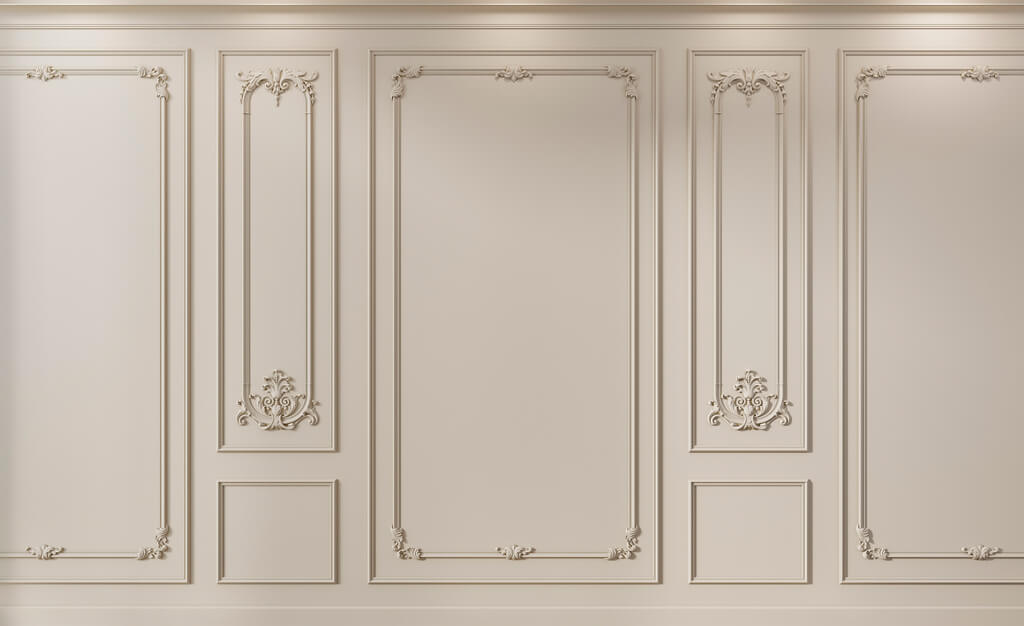
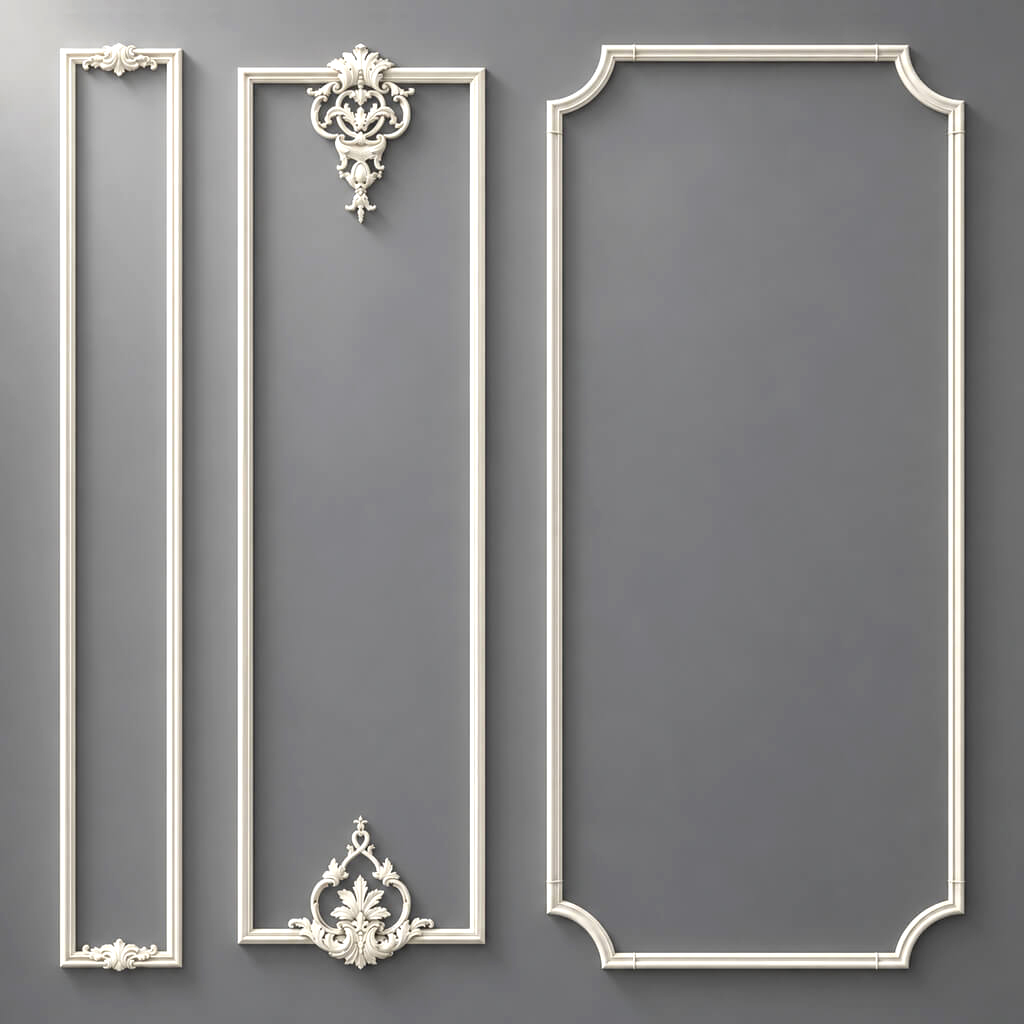
- Furniture molding on a panel front
- When solid wood is really needed
- Why the rule “MDF is more expensive, so it's better” doesn't work
- Furniture BOM: material must be stored at the level of each part
- A product photo is not enough for a complex furniture composition
- How to build a furniture material board
- Example comparing two facade scenarios without made-up prices
- Scenario A: smooth melamine-faced chipboard
- Scenario B: painted milled MDF
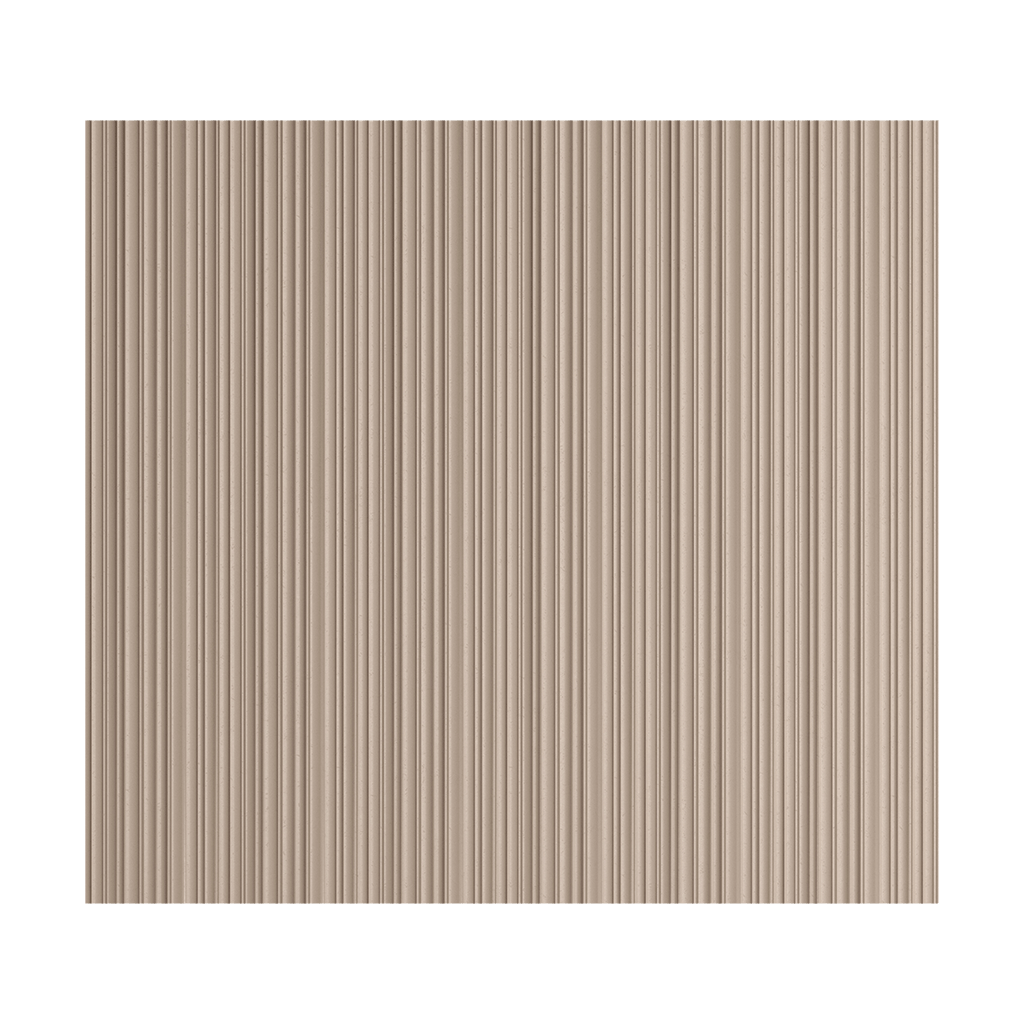
- Scenario C: melamine-faced chipboard + slatted panel
- When MDF is not needed
- When chipboard is not a convenient choice
- Moisture resistance and strength cannot be determined solely by the words "MDF" or "chipboard"
- Milling: why the base structure is critical
- Drilling and fastening: material does not replace structural calculation
- A slatted panel changes not only the appearance but also the facade construction
- Wood and MDF tiles: another decorative layer on top of the base
- How to choose material for built-in furniture
- How to choose material for children's furniture
- How to choose material for commercial furniture
- Serial furniture: how not to mix different materials under one name
- The same facade can be changed without changing the carcass
- Mistake: choosing one material for all furniture
- Mistake: considering MDF an automatic sign of premium quality
- Furniture materials: why a universal rating is useless
- Materials for furniture production: where this article ends
- How to choose a decorative scenario after choosing the base
- Scenario 1. Add nothing
- Scenario 2. Add only a handle
- Scenario 3. Add molding or an overlay
- Scenario 4. Add a slatted panel or textured tile
- How to choose a wooden handle for painted MDF
- How to choose a handle for chipboard
- How to choose an overlay for a smooth facade
- How to choose molding for a furniture frame
- When it is better not to add decorative elements
- Practical matrix: what to choose for a specific furniture task
- How to prepare a furniture project for a commercial quote
- Which STAVROS categories to use after choosing the base
- How to order samples for furniture made from multiple materials
- How to check an alternative if the desired decor is out of stock
- If the facade is already manufactured: what can be changed without redoing the base
- How to replace one damaged part after several years
- How to choose between replacing the facade and overlay decor
- How to check material before a repeat batch
- How not to mix the structural base and the decorative layer in an estimate
- When one sample decides more than ten renders
- Pre-order furniture checklist
- A short answer for a buyer who doesn't want to understand the technology
- MDF or melamine-faced chipboard — which is better for furniture?
- What is the difference between MDF and melamine-faced chipboard?
- How does particleboard differ from melamine-faced chipboard?
- Which is better for a wardrobe — MDF or chipboard?
- Which is better for the kitchen — MDF or chipboard?
- What is best for making furniture carcasses?
- Which material is best for fronts?
- Can wooden decor be installed on MDF furniture?
- Can slatted panels be used on chipboard fronts?
- Which handles are suitable for MDF fronts?
- Where to buy wooden decorative elements for furniture?
- Is MDF always more moisture-resistant than chipboard?
- Is chipboard always cheaper than MDF?

A wardrobe can have a carcass made of chipboard, painted MDF fronts, wooden handles, applied solid wood decor, and a slatted insert. Therefore, the question "MDF or chipboard — which is better?" is itself posed too broadly. First, you need to determine which furniture part is being discussed and what surface technology you want to achieve.
If you need a ready-made laminated flat surface for a carcass, shelves, or a simple front, chipboard is often rational precisely because the decorative surface is already formed at the factory. If milling, subsequent painting, or complex relief is required, the homogeneous structure of MDF provides more freedom for machining and finishing. At the same time, one furniture model can quite normally combine both materials.
The practical selection path looks like this: furniture purpose → specific part → carcass or front → required surface → MDF / chipboard → decorative components → SKU → sample → order.
In the article, STAVROS is considered primarily as a manufacturer and supplier of decorative and functional components for an already selected furniture base: wooden handles, moldings, overlays, slatted and relief panels, solid wood and MDF products. The detailed topic of purchasing raw materials for furniture production is better considered separately.


The main difference: MDF and chipboard perform different tasks in furniture
MDF and chipboard are wood-based panel materials, but their internal structure and surface type differ.


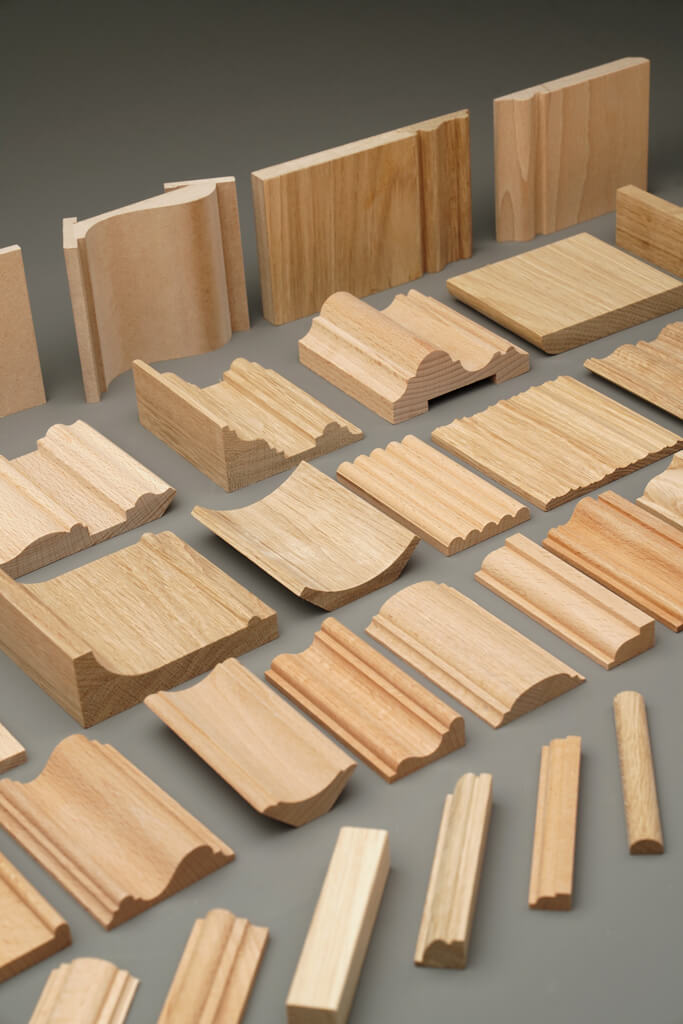

MDF (740–760 kg/m³, emission class E1/E0) provides ideal geometry, uniformity, and better base for enamel: high adhesion, smooth surface, absence of knots and cracks.
MDF is medium-density fiberboard. The base is formed from wood fibers bonded under pressure and temperature. The material has a homogeneous, dense structure and a smooth surface, so it is convenient to mill, profile, prime, paint, and face with film or veneer — depending on the technology of a particular furniture production.
Our factory also produces:


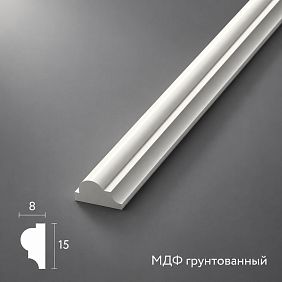


Laminated chipboard
Chipboard is a particle board with a ready-made laminated decorative surface. In furniture production, such a board is valuable because after cutting and edge processing it can immediately become a visible carcass or front part. The color, pattern, and texture are already set by the board's decor.
Hence the main conclusion: MDF is more often chosen not because it is "better in general," but when the properties of its homogeneous base and further processing are needed; chipboard — when a ready-made decorative surface and a straightforward panel construction are advantageous.
| Task | What chipboard offers | What MDF offers |
|---|---|---|
| Cabinet body | Ready decorative surface | Possible, but not always needed for the body's function itself |
| Smooth front | Ready-made board decor | Base for painting, film, veneer and other finishes |
| Complex milling | The laminated layer is not intended for deep relief forming | The homogeneous structure is convenient for milling |
| Painted facade | A separate process flow is required if the original lamination is not used | Standard scenario for further finishing |
| Overlay decor | Possible as a separate unit after checking the fastening and surface | Possible as a separate unit after checking the fastening and surface |
| Slatted panel over the facade | Base + separate decorative layer | Base + separate decorative layer |
Get Consultation
Particleboard and melamine-faced particleboard are not the same thing
The large volume of search queries arises precisely from the confusion of terms. Particleboard and melamine-faced particleboard are related, but they are not identical states of the material.
Chipboard
Particleboard is a wood-particle board without mandatory finished decorative lamination. Its core consists of wood particles bonded with a binder and pressed into a board.
Laminated chipboard as laminated particle board
Laminated chipboard is particle board whose surface has already received a decorative laminated layer. In finished furniture, it is this layer that determines the color, pattern, and texture of the visible surface.
Therefore, the formula "particle board and laminated chipboard differences" comes down not to two completely different types of raw material, but to the presence of a finished decorative surface and the corresponding application technology.
Laminated chipboard and particle board: what is the difference in finished furniture
On a finished product, the difference is especially noticeable in the surface and edges. A laminated board already has a decorative face side, while the edges after cutting require treatment with edgebanding material or another solution provided for by the project. Uncoated particle board has no visible decorative surface, so for furniture it usually requires additional facing or is used where the technology provides for a different finish.
When choosing between particle board and laminated chipboard, it is important not to draw a conclusion based only on the name of the base. You need data for the specific board: thickness, decor, surface type, purpose, edge, fastening requirements, and operating conditions.
Carcass, front, and decorative surface: distributing material by function
The comparison "an MDF sheet is more expensive / cheaper than a laminated chipboard sheet" says almost nothing about the cost of finished furniture. One material may be a carcass base with a finished surface, while another is a blank for milling, primer, and enamel. The volume of operations differs.
For example, one cabinet can be assembled like this:
- carcass — laminated chipboard;
- facades — painted MDF;
- handles — solid oak;
- overlays — beech;
- slatted insert — MDF or solid wood, depending on the selected panel.
Here the question of "chipboard or MDF?" is decided not once for the entire wardrobe, but separately for each component.
What is more often used for furniture carcasses
The carcass consists of side panels, top, bottom, internal partitions, shelves and other panel parts that form the volume of the product. If a rectilinear construction with a ready decorative surface is needed, chipboard is often a logical option: the board is cut, edges are processed, holes are drilled, and hardware is installed.
MDF can also be used in carcass parts, but its properties must be needed for the specific project. Making the entire carcass from MDF just because the material is perceived as "more premium" is weak reasoning. For an invisible internal partition, complex milling and painting may simply not be needed.
Back walls, drawer bottoms and other elements should be considered separately: their construction may use other sheet materials. One should not mechanically assign every flat part of a wardrobe to a single group.
What is more often chosen for furniture facades
The facade has a stronger influence on the appearance than the cabinet body, so this is where the difference between MDF and chipboard becomes most noticeable.
Smooth laminated facade
Chipboard is convenient when you need a ready-made decor without further complex finishing. The manufacturer works with the existing color and texture collection of the board, edge banding, and straight-line geometry.
Painted facade
MDF is often considered as a base for primer and enamel because its surface is homogeneous and suitable for further finishing. In this case, the color is set not by the board's decor but by the finishing system.
Milled facade
If the pattern is created by removing material — frames, grooves, geometric fields, relief — the homogeneity of MDF is technologically convenient. With chipboard, deep milling disrupts the finished laminated layer, so this is already a different technology with additional finishing.
Facade with applied decor
The base can be MDF or chipboard, while the decorative pattern is created by separate physical elements — moldings, overlays, slats, wooden handles. Here, the facade material should be chosen together with the method of mounting the external decor.
Why the facade and the cabinet body do not have to be made of the same material
This is one of the most useful rules when choosing materials for furniture. The carcass is primarily responsible for geometry, storage, and construction. The front is responsible for appearance, opening, and tactile interaction. Decorative details add a third layer.
One item can combine:
- a chipboard carcass;
- an MDF front;
- a wooden handle;
- a solid wood overlay;
- metal hardware;
- a slatted panel;
- a mirror or glass.
This is normal design logic. The material is chosen for the function of the part, not for the desire to call the entire wardrobe one word.
MDF for painting: where its properties are especially useful
When a facade must be painted in an exact color, have a milled pattern or a complex profile, MDF becomes a convenient base. The uniform surface allows working with primer, paint system and mechanical processing without the natural grain pattern.
STAVROS also uses MDF in its own decorative products: in moldings, wall and slat panels. For example, the current category of slatted panels directly separates MDF for painting and solid oak as two different visual scenarios.
This is an important example: MDF is needed not "instead of wood", but where the priority is a smooth paintable surface and geometry; solid wood — when natural wood texture is valued.
Laminated chipboard: when a ready-made surface is an advantage
Laminated chipboard is especially rational when the decorative result is already in the board itself and complex milling is not required. This reduces the number of subsequent finishing operations: the part is cut, gets a processed edge, drilling and goes to assembly.
This scenario is suitable for many cabinet parts, internal sections, shelves and some straight facades. But the actual choice depends on the specific board series, thickness, decor, edge, hardware and operating conditions.
One should not claim that laminated chipboard is "always cheaper in the end". If a project requires non-standard cladding, a special edge, additional decorative layers or complex installation, the cost of the finished unit may change.
MDF and laminated chipboard in the kitchen: separate the carcass, facade and decorative surface
Queries like "MDF or chipboard for the kitchen" often try to solve the kitchen with a single material. In practice, a kitchen consists of different components, and the requirements for them differ.
| Zone | What is important | Typical choice |
|---|---|---|
| Housing | Geometry, series production, finished surface | Often chipboard |
| Facade | Color, texture, milling, design | Chipboard or MDF — depending on the surface technology |
| Decorative side panel | Visible plane, texture, color | MDF, panel, or another finishing layer |
| Kitchen island | Facade, edges, radii, handles | Combined system |
If the kitchen is to have smooth laminated fronts in a finished decor, chipboard may be sufficient. If the fronts are to be painted, milled, or have complex geometry, MDF offers greater technological freedom.
At the same time, the front material does not determine the kitchen design as a whole. A wooden handle, slatted insert, decorative molding, or overlay can change the perception of even a simple cabinet solution.
Kitchen island: base and decorative surface are different layers
An island clearly shows why structural material should not be confused with finishing material. The internal carcass may be made from one panel material, while the visible side panels and fronts may be made from another or have an additional decorative layer.
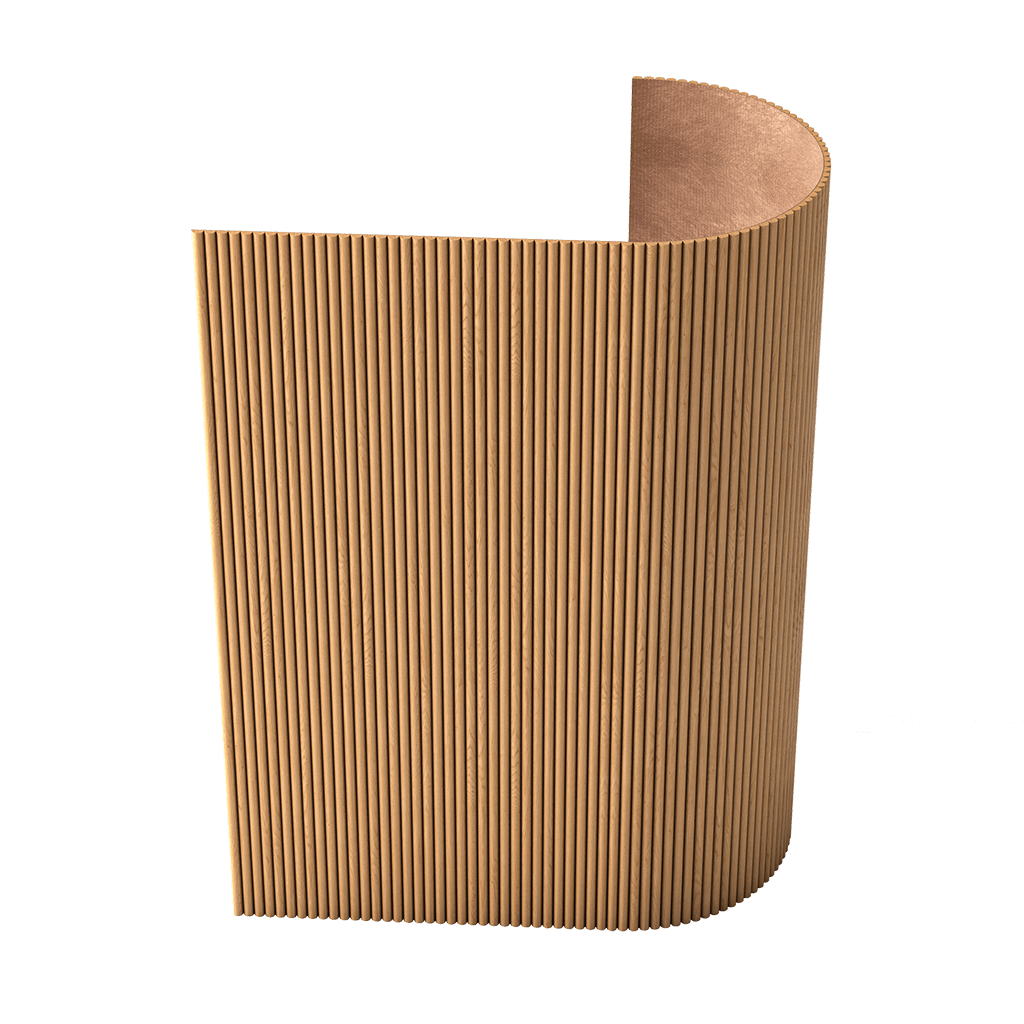
STAVROS separately develops slatted panels for furniture fronts and kitchen islands. This means that another question is added to the choice between MDF and chipboard: will a separate decorative panel be mounted on the base?
If so, the following must be taken into account:
- the thickness of the base;
- the additional thickness of the panel;
- position of handles;
- the edge of the door or drawer;
- the joint with the plinth;
- end face of the island;
- radius, if the surface is curved.
There is a separate article for a detailed topic about slatted panels on furniture fronts. In the current article, it is only important to understand their role: the panel is an external decorative layer over the base, not a replacement for the logic of the carcass.
Wardrobe: MDF or chipboard
For a wardrobe, the question needs to be broken down into four parts.
Wardrobe carcass
Straight side panels, shelves, and internal partitions are often rational to make from chipboard if the ready-made decorative surface is suitable and the project does not require further complex processing.
Hinged fronts
If the fronts are smooth and must match the cabinet body decor, chipboard can be used here as well. If a painted color, milled pattern, or relief is needed, MDF becomes the more natural base.
Built-in wardrobe
Here it is especially important not to mix the cabinet body material with the finish of the niche and walls. Built-in furniture can combine chipboard inside with a more complex decorative front outside.
Decorative inserts
Slats, moldings, wooden handles, and overlays create an additional level of finishing regardless of the base board.
Therefore, the answer to the question “which is better for a wardrobe — MDF or chipboard?” is this: for the cabinet body, chipboard is often sufficient, while for the front, the choice is determined by the design and surface technology.
Why a tall smooth wardrobe can look too flat regardless of the material
A large solid-color front can look too neutral in both MDF and chipboard. The problem here is not the base, but the composition.
Depth can be added through:
- wooden handles;
- furniture mouldings;
- applied carved decor;
- slatted panels;
- division of the facade into fields;
- a local wood insert.
That is, the choice of MDF or chipboard does not resolve the question of facade design. The base determines the technology, while the decorative system determines the external character.
Slatted panels and relief surfaces on facades
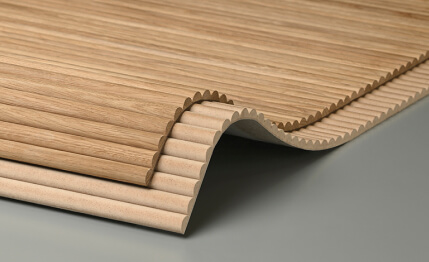
STAVROS slatted panels are used on walls and furniture surfaces. For a facade, this is a separate layer that must be taken into account even before design engineering.
Before installation, check:
- the plane of the base;
- the full thickness of the facade after cladding;
- gaps between adjacent doors;
- position of hinges and handles;
- the edge of the facade;
- direction of the slats;
- ends and corners;
- the weight of the finished part and the permissible load of the specific hardware — according to the furniture manufacturer's calculation.
If the chipboard facade already has a glossy or textured surface, the method of preparing the base for installing the decorative layer is determined by the adhesive technology and the specific panel. It is impossible to universally recommend one composition for all boards.
MDF panel or solid wood over a furniture facade
In the decorative layer, the choice is no longer between “MDF and chipboard,” but between different visual tasks.
MDF panel
Suitable when an exact painted color and a smooth surface without a natural wood grain are needed. This is convenient for a facade that must match a wall, enamel, or brand palette.
Solid wood
Chosen when the value is created by the wood texture itself, the direction of the grain, and the natural material.
STAVROS offers both options in wall and slatted panels. A broader section wall panels и wood and MDF tiles shows that a decorative surface can be a separate product rather than a property of the furniture carcass.
Wooden handles, overlays, and moldings on panel fronts
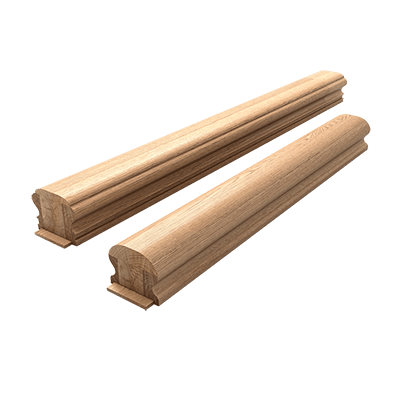
Even a simple MDF or chipboard front can gain a natural tactile accent through a wooden handle. This is one of the most direct commercial transitions from choosing a base to a real product.
In the category STAVROS furniture handles various shapes and sizes are presented. There are separate Handles with Finish, where the finish is already part of the configuration.
When choosing a handle for a panel front, the following are important:
- overall handle size;
- installation geometry;
- overhang;
- the material;
- coating;
- facade thickness;
- position on the door or drawer.
The main rule is to choose the handle before serial drilling. Once holes appear, compatibility becomes an engineering constraint.
Decorative overlays on MDF and chipboard
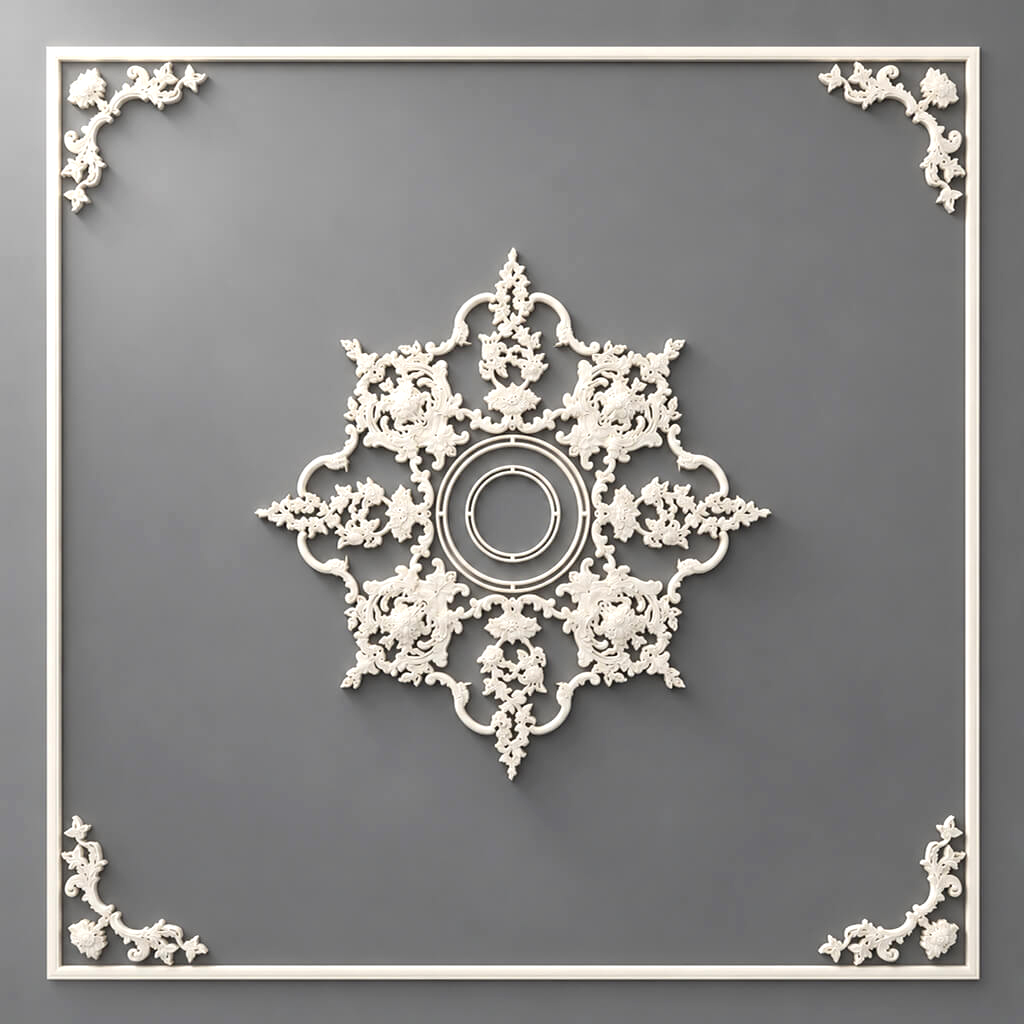
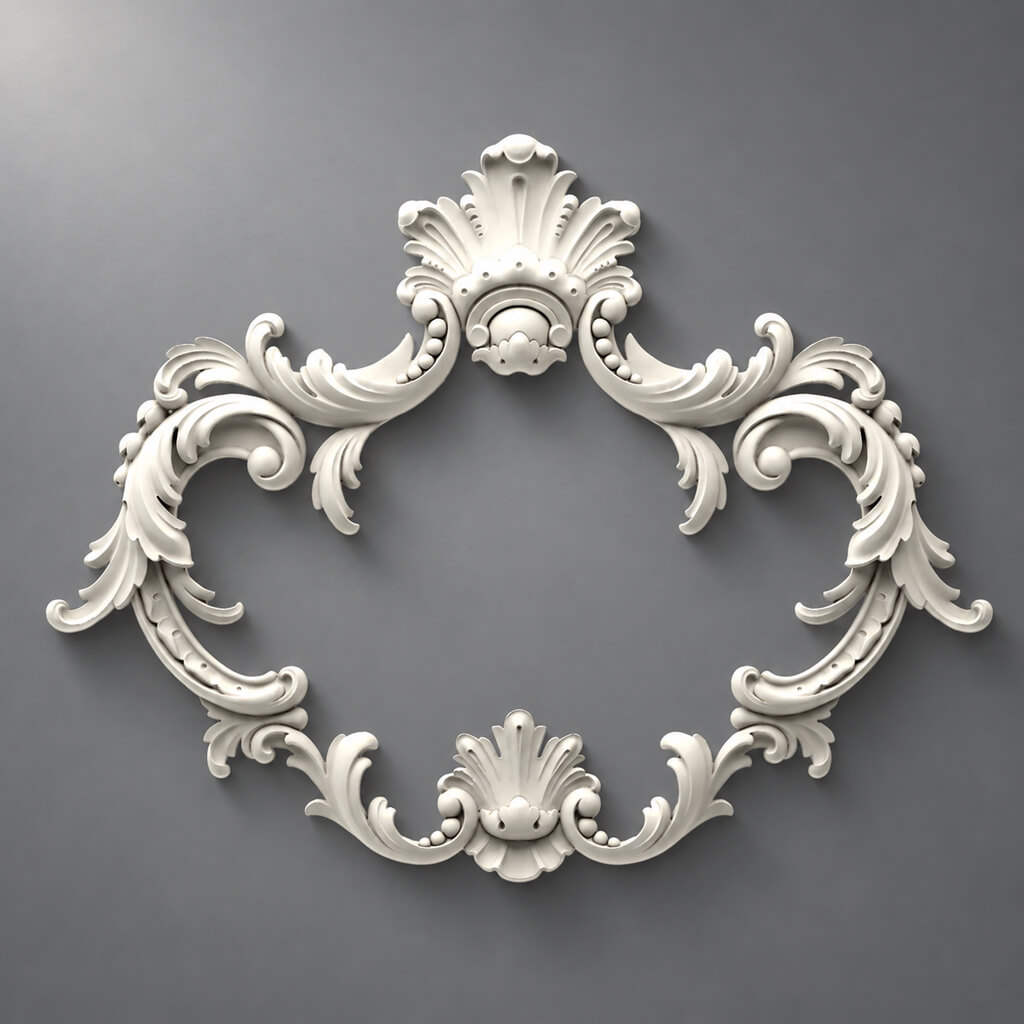
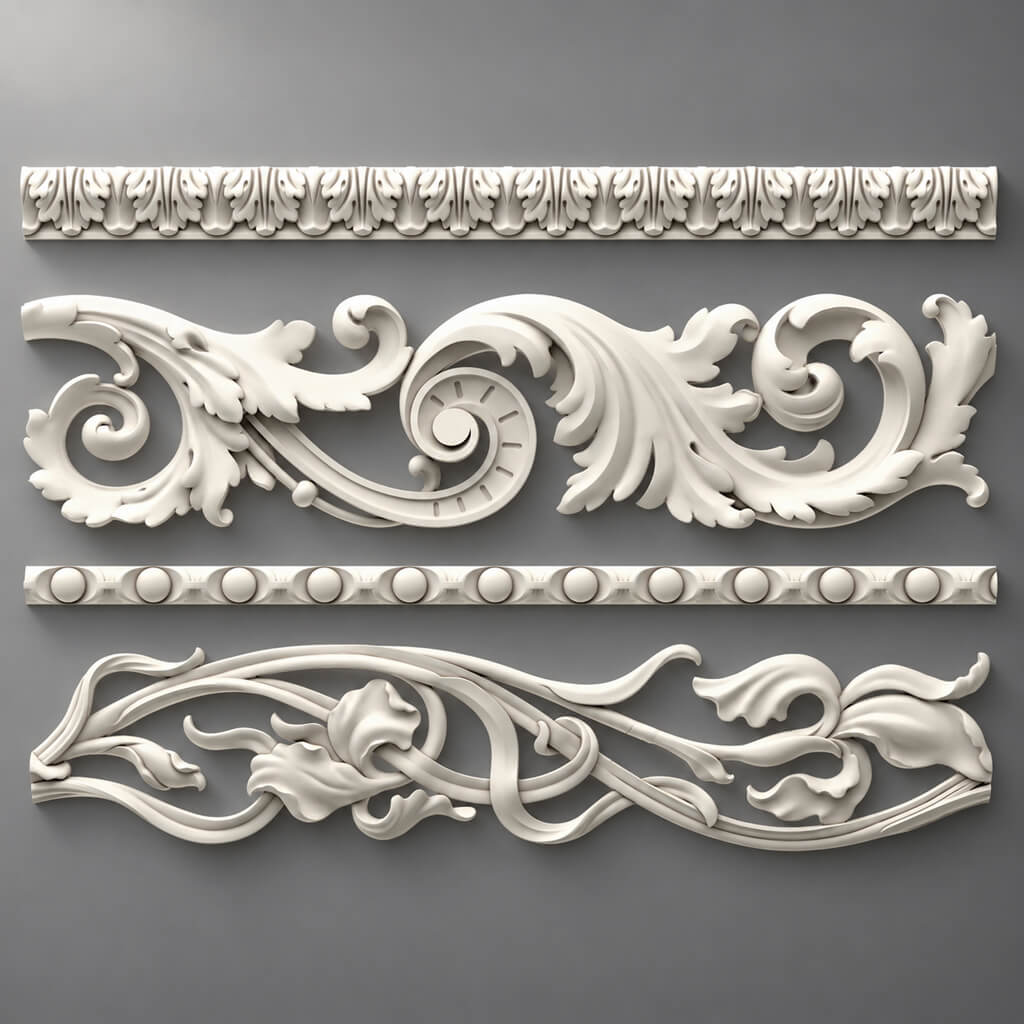
STAVROS has a separate section wooden decorative overlays. Such elements are used on furniture fronts, doors and other surfaces.
If you plan to buy decorative elements for furniture, you first need to decide exactly how the overlay is connected to the base.
Checked:
- front size;
- overlay size;
- center and offsets;
- base material;
- mounting method;
- presence of a finish coating;
- compatibility with the handle;
- painting or tinting scenario.
You cannot assume that any wooden overlay automatically fits any laminated or painted surface without checking the assembly.
Applied decor or milling of the facade
These are two different ways to create relief.
Milling
The pattern is created directly in the facade material. Therefore, the base must be technologically suitable for the required depth, profile, and subsequent finishing. MDF is especially convenient here due to its homogeneous structure.
Applied decor
The ornament exists as a separate physical SKU. It can be specified, purchased, and installed separately from the facade.
The advantage of the applied system is modularity. The disadvantage is that a separate fastening unit appears, additional thickness, and the need to precisely position the element. Neither approach is universally better.
Furniture molding on a panel facade
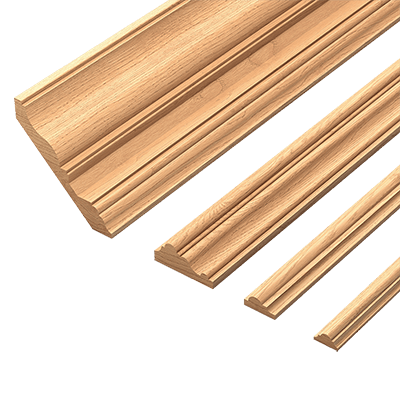
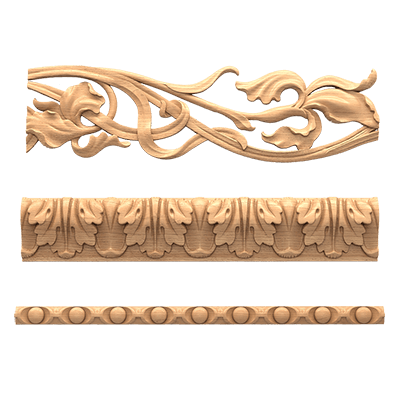
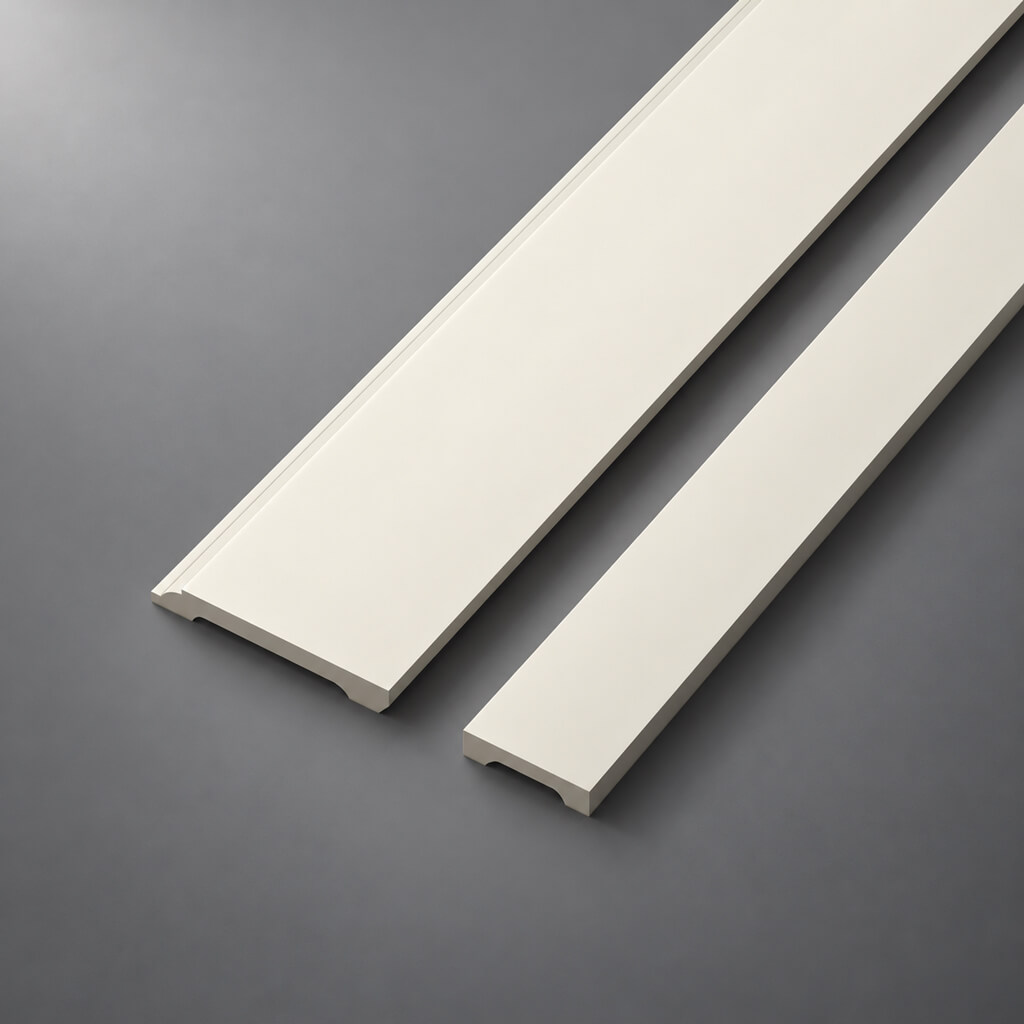
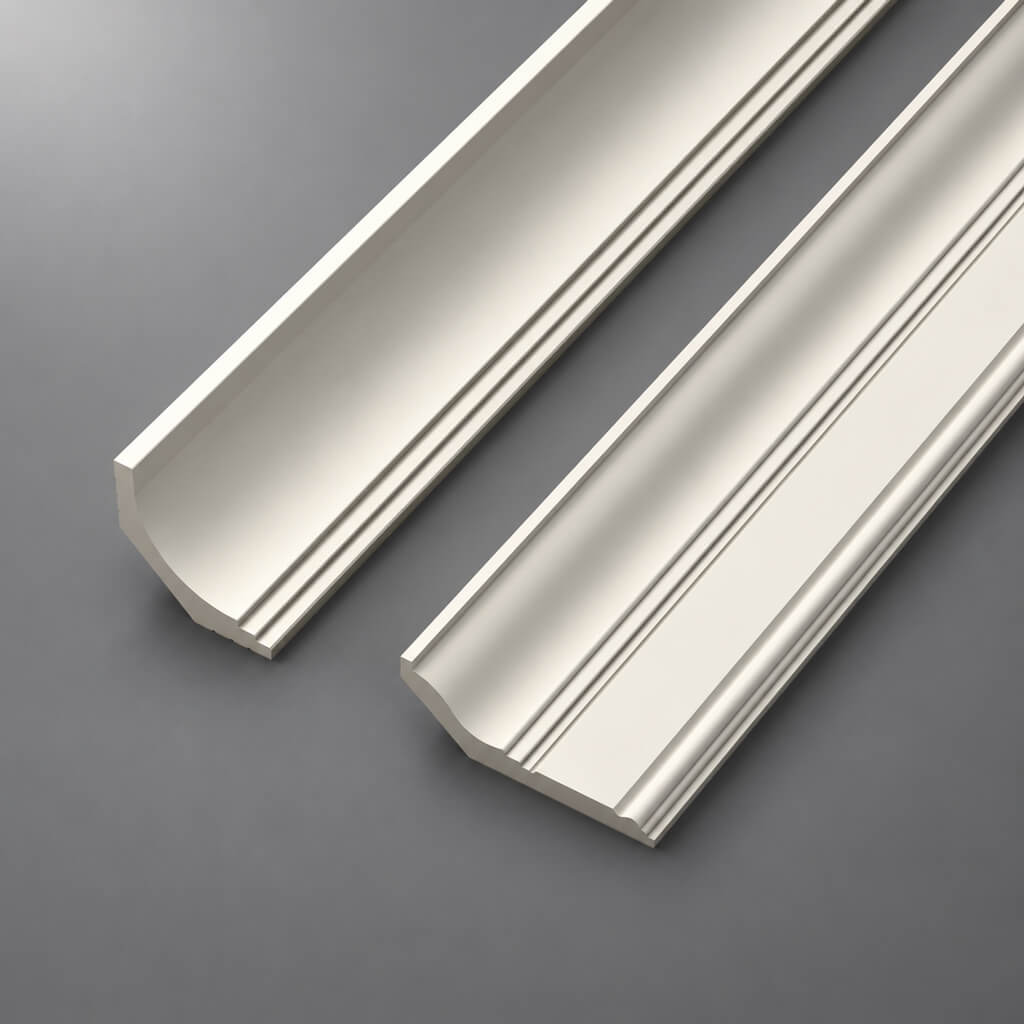
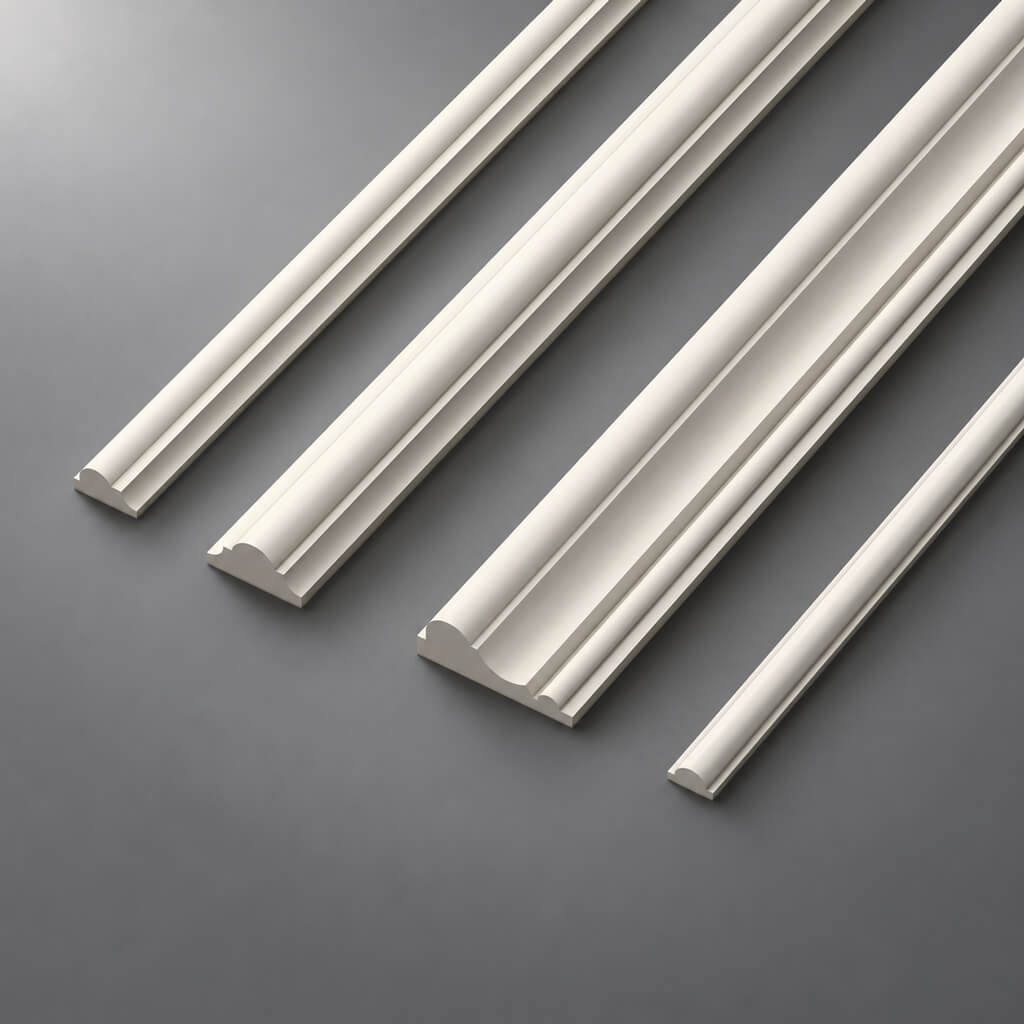
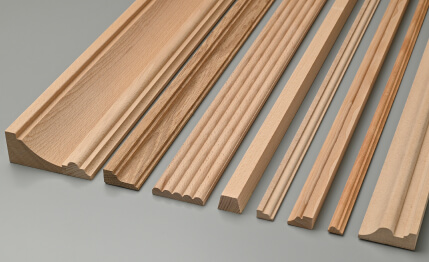
STAVROS trim products include profiles made of solid wood and MDF. In furniture, they can form frames, paneled compositions, decorative strips, and upper bands of cabinets.
If the molding is mounted on a panel facade, the following must be taken into account in advance:
- its thickness;
- the edge of the facade;
- gaps between doors;
- Cutting;
- corner joints;
- color and finish;
- installation method;
- handle position.
This is how a simple smooth facade gains architectural structure without the need to mill a pattern into the panel itself.
How to combine a panel base and solid wood
One of the most useful takeaways for a furniture project: natural material does not have to become the entire piece of furniture. The carcass and facade can be made from panel materials, while individual solid wood details add tactility and visual depth.
This allows functions to be divided:
- Laminated chipboard — carcass and interior surfaces;
- MDF — painted or milled facade;
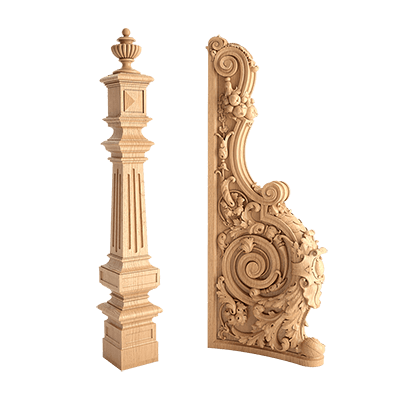
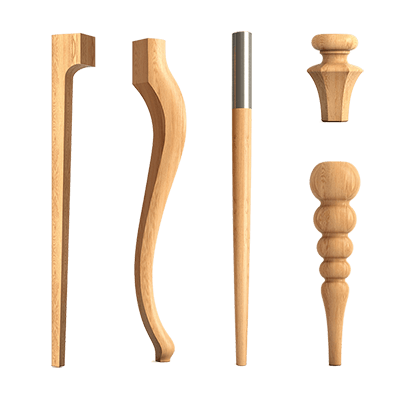
- solid wood — handles, legs, overlays, moldings;
- slatted panel — outer textured layer;
- metal — fasteners and separate hardware.
This avoids overpaying for properties that are not needed for the entire product, while using an expressive material where it is actually visible and functional.
When solid wood is truly needed
Solid wood should not be compared with MDF or particleboard as a direct equivalent for every furniture part. It has a different role.
Solid wood is especially justified when the part:
- must preserve the natural wood texture;
- functions as a visible tactile element;
- has three-dimensional carving;
- is profiled in space;
- should become a standalone accent;
- is used as a handle, leg, overlay, baguette, or decorative profile.
In the products made of wood and MDF STAVROS these roles are divided by product categories. This is exactly the approach that is useful in furniture design as well: not choosing a "material for everything," but distributing it by function.
Why the rule "more expensive MDF means better" does not work
The price of a material is not a universal indicator of the quality of a furniture solution. If an internal cabinet partition does not need milling, painting, and a complex surface, a more expensive base may not provide the user with noticeable benefit.
The opposite situation: if the facade must have a deep pattern, precise enamel, and a complex profile, trying to save on the base may create additional technological operations or even require changing the design.
The right question is not "what is more expensive?" but what properties does this specific part need?
Serial production: material is stored at the level of each part
The queries "material for furniture production" and "materials for furniture production" are too broad unless the product is broken down into components.
Minimum decomposition:
- building;
- facades;
- back and internal auxiliary parts;
- decorative surface;
- handles;
- legs and supports;
- applied decor;
- moulding;
- fasteners.
After that, a specific material is selected for each item. It is perfectly normal for a single furniture series to include chipboard, MDF, oak, beech, and metal at the same time.
Furniture BOM: material must be stored at the level of each part
For professional production, it is useful to record not "MDF/chipboard cabinet" but a specific BOM — a bill of materials and components.
| Position | Material | SKU / code | Finish | Comment |
|---|---|---|---|---|
| Housing | Laminated chipboard | Internal board code | Ready-made decor | Thickness and edge banding as per project |
| Facade | MDF | Internal code | Enamel | Milling REV-02 |
| Handle | Oak | HL-___ | Selected finish | Installation geometry |
| Overlay | Beech | N-___ | For finishing | Position on the facade |
| Panel | MDF | PAN-___ | For Painting | Slat direction |
This makes it clear that "MDF or laminated chipboard" is only one layer of the solution. The next layer is specific purchased components.
Supplier and samples: how to verify decorative components
The query "furniture hardware manufacturer" cannot be reduced to a ranking of brands. For a project, the verifiable parameters of a specific supplier matter more.
Before purchasing, check:
- whether there are real SKUs;
- whether dimensions are published;
- whether materials are clear;
- whether there are finish options;
- whether a drawing or 3D model can be obtained;
- whether a sample is available;
- can the same configuration be reordered;
- whether there are separate categories for a specific task;
- are the delivery times and terms clear?
For STAVROS, such a commercial layer consists of handles, moldings, overlays, panels, and other decorative elements. But the article does not turn into a ranking of the "best furniture hardware manufacturers" — that is a different search intent.
A product photo is not enough for a complex furniture composition
A screen poorly shows the combination of several materials: painted MDF, chipboard, natural oak, metal hardware, and a tinted handle may look harmonious individually and clash together.
For a responsible project, a physical material board is useful. It allows you to compare:
- chipboard color;
- MDF paint sample;
- a wooden handle;
- molding;
- overlay;
- a slatted panel;
- metal of handles or other hardware.
Real light is especially important. The same oak next to warm enamel and cold gray chipboard can be perceived differently.
How to assemble a furniture material board
You don't need to collect dozens of samples. Those visible simultaneously in the finished product are enough.
For example, for a wardrobe:
Laminated chipboard of the carcass
→ painted MDF of the facade
→ wooden handle
→ molding sample
→ overlay / slat
→ metal of hinges or exposed hardware, if visible
If three different wood tones appear on the board, this is a reason to reconsider the composition before ordering. If wood is used only in the handle, it can become a deliberate accent.
How to calculate cost correctly: not the price of a sheet, but the finished assembly
Comparing the price of an MDF sheet and laminated chipboard is too crude. The final cost of a facade or carcass includes more operations.
For laminated chipboard:
board + cutting + edge banding + drilling + hardware + decorative elements.
For painted MDF:
board + cutting + milling + surface preparation + primer + painting + drilling + hardware + decorative elements.
If a slatted panel is mounted on top of any base, another block appears:
panel + layout + trimming + installation + edge treatment.
Therefore, "MDF is more expensive per sheet" does not equal "the entire cabinet is always more expensive by exactly that difference." You need to calculate the finished configuration.
Example comparing two facade scenarios without invented prices
Let's assume the cabinet has four facades of the same size.
Scenario A: smooth chipboard
You need boards in the selected decor, cutting, edge banding, drilling, and handles.
Scenario B: painted milled MDF
You need MDF boards, milling, surface preparation, painting, drilling, and the same or different handles.
Comparing these options by the price of the source sheet is pointless, because the finished surface is formed differently. A correct estimate compares the entire facade assembly.
Scenario C: Chipboard + slatted panel
The base remains laminated, but an external decorative layer is added. Now the cost depends on the panel module, cuts, edges, and installation. This option may cost more than simple MDF and less than a complex painted facade — or vice versa, depending on the actual SKUs and technology.
Without a specific project, there is no universal figure.
When MDF is not needed
MDF should not be chosen automatically if the part:
- is hidden inside the cabinet;
- does not require milling;
- will not be painted;
- has a simple rectilinear shape;
- is fully satisfied by the available chipboard in terms of decor;
- does not use the MDF properties for which it was chosen.
This does not mean that MDF is "bad" for the carcass. It is just that its advantages must be in demand.
When chipboard is not a convenient choice
Chipboard is less suitable as the initial visible base if the project requires:
- deep decorative milling;
- complex relief in the board itself;
- a single painted surface after processing;
- a smoothly formed profile;
- complex restoration of the decorative layer after mechanical sampling.
In such tasks, it is more logical to consider MDF or another material suitable for the technology of the specific facade.
Moisture resistance and strength cannot be determined solely by the words "MDF" or "chipboard"
There are different grades of boards, coatings, adhesive systems, and designs on the market. Therefore, it is impossible to make a universal conclusion that "MDF is always moisture-resistant" or "chipboard is always afraid of water" based only on the material name.
For a kitchen, bathroom, commercial furniture, or another high-load area, check the technical data sheet of the specific board, the class or type of product, edge banding, finish, end construction, and operating conditions.
The same applies to fasteners and mechanical load: final performance depends on the thickness of the part, drilling quality, selected hardware, distance to the edge, and joint design. Material is only one factor.
Technical details: edge banding, milling, drilling, and facade thickness
In finished furniture, the edge of chipboard is not a neutral technical detail. After cutting, the structure of the board is exposed, so the visible edge is covered with the edge banding material specified by the design. The appearance of the finished facade and carcass depends on the color, thickness, and quality of the edge treatment.
Before ordering furniture, it is useful to clarify:
- which edge banding is used on visible ends;
- whether it matches the board decor;
- what thickness is provided;
- which edges remain hidden;
- how the ends near handles and applied decor are finished;
- whether the edge conflicts with an additional panel.
Painted MDF has a different task: the end can be part of a unified finishing system for the facade. Therefore, a visually identical rectangular door made of two materials has a different manufacturing technology.
Milling: why the structure of the base is critical
Milling removes part of the material and forms a relief. If the surface already has a finished decorative layer, as with laminated chipboard, a deep cut destroys this layer. After that, the area cannot be considered a finished laminated surface.
With MDF, the decorative relief is formed directly in the homogeneous base, and then the entire part undergoes finishing. That is why frame facades, grooves, waves, and geometric reliefs are often designed specifically on MDF.
But the depth, radii, and minimum margins are determined by the technologist for a specific board thickness and design. One milling file cannot be transferred to any board without verification.
Drilling and fastening: the material does not replace structural calculation
Both MDF and laminated chipboard require correctly selected furniture hardware, drilling, and edge distances. A weak joint cannot be fixed by replacing the material alone.
For each part, consider:
- panel thickness;
- fastener type;
- hole depth;
- position relative to the edge;
- number of disassembly cycles, if the furniture is knock-down;
- front weight;
- hinge or slide type;
- additional decorative layer.
If a heavy panel or massive overlay is added to the front, the hardware and hinges must be checked for the finished assembly, not for the bare base.
A slatted panel changes not only the appearance but also the front construction
Adding a panel increases the thickness and weight of the facade, changes the edge, the position of the handle, and sometimes the opening geometry. Therefore, the solution of "we'll glue the slats on later" is dangerous for an already completed structure.
Before launching, check:
- the total thickness of the assembly;
- the gaps between the facades;
- hinges;
- handle protrusion;
- the opening radius;
- the end finish of the panel;
- the position of the slats relative to the adjacent facade.
This is especially important for a kitchen island and a long cabinet, where several doors should be perceived as a single rhythmic surface.
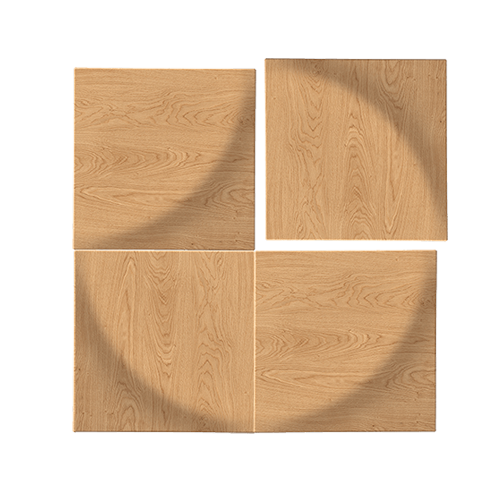
Wood and MDF tiles: another decorative layer on top of the base
In the category wood and MDF tiles STAVROS offers modular relief elements. In furniture, this approach can be used on side panels, inserts, decorative panels, and individual facade fields, if the design allows it.
But a modular relief requires the same check:
- base size;
- module grid;
- edge cuts;
- thickness;
- end face;
- handles and adjacent doors;
- mounting method;
- weight of the finished part.
Therefore, the choice of chipboard or MDF remains only the first level — a standalone decorative system may appear on top.
Choice by furniture type: cabinet, built-in, children's and commercial
A nightstand and a chest of drawers have a smaller facade area than a tall wardrobe, so a decorative detail has a stronger effect on perception.
The carcass can be made of chipboard, the facades — of the same material or MDF, while the character of the furniture is shaped by handles, legs and overlays. If small facades are used, complex milling may be visually excessive; sometimes one expressive handle gives more effect.
When comparing options, it is useful to make two renders:
- base carcass and facade without decor;
- the same volume with the selected handle, molding, or overlay.
This shows whether a more complex facade material is really needed or the design can be achieved with external components.
How to choose material for built-in furniture
In a built-in wardrobe, part of the carcass may be hidden by walls, a niche, or facades. Therefore, expensive finishing of internal invisible surfaces does not always make sense.
Selection logic:
- internal carcass — by function, geometry, and budget;
- visible edges — by finish;
- facades — by design;
- handles — by ergonomics and style;
- decorative inserts — only on visible surfaces;
- top and side fillers — according to the niche architecture.
This way, resources can be used where they truly affect the interior.
How to choose material for children's furniture
For children's furniture, you cannot draw a conclusion from the material abbreviation alone. You need documents and specifications for the specific board, coating, edge banding, hardware, and finished product.
During design, the following are checked separately:
- certification of the selected materials;
- the coatings used;
- the quality of the edges;
- fasteners;
- radii and injury safety of the structure;
- furniture purpose;
- operating conditions.
It cannot be claimed that all particleboard or all MDF have identical emission, moisture resistance, or mechanical strength ratings. These parameters relate to a specific product and its documentation.
How to choose material for commercial furniture
Furniture in a store, hotel, office, or restaurant may have a more intensive usage scenario than home furniture. Therefore, in addition to appearance, batch consistency, decor availability, repairability, and the ability to quickly order a replacement are important.
For a serial project, it is useful to save in advance:
- board article number;
- thickness;
- the decor;
- edge;
- MDF paint sample;
- SKU of handles and overlays;
- samples of decorative elements;
- the actual BOM.
A year later, this will allow the furniture to be reproduced more accurately than a photo of the finished object.
Modular furniture: how not to mix different materials under one name
In a production specification, the entry “MDF front” is insufficient. A single series can have several colors, thicknesses, milling patterns, and finishes.
More correctly:
FACADE-01 / MDF / 18 mm / MILL-02 / RAL-___ / MATTE
BODY-01 / LDSP / 16 mm / DECOR-___ / EDGE-___
HANDLE-01 / HL-___ / OAK / FINISH-___
This way the contractor understands exactly what to repeat in the next production run.
The same front can be changed without changing the carcass
This is an important commercial idea for a furniture brand. The base carcass design can remain unchanged, while product lines differ in front and decor.
| Line | Body | Facade | Decorative element |
|---|---|---|---|
| BASE | Laminated chipboard | Laminated chipboard | Simple handle |
| COLOR | Same platform | Painted MDF | Wooden handle |
| RELIEF | Same platform | MDF / board base | Slatted panel or molding |
| CLASSIC | Same platform | MDF | Moldings and overlays |
This is an example of the methodology, not ready-made STAVROS product lines. It shows how materials and decorative components allow expanding the model range without completely reworking the carcass.
Common mistakes when choosing MDF and chipboard
Mistake: choosing a single material for all furniture
Reason: you want a simple answer. Consequence: some parts get unnecessary properties, while others get insufficient ones. Prevention: choose material for each function.
Mistake: treating MDF as an automatic sign of premium quality
Reason: the material is often used in painted fronts. Consequence: overpaying for invisible carcass parts. Prevention: consider g
How to decide: the decision tree for MDF or chipboard
If you remove marketing labels, the decision can be made using a short algorithm.
- Is the part visible or internal? For an internal part, first evaluate the construction and the finished surface.
- Is milling needed? If yes, MDF becomes a more natural candidate.
- Need painting in an exact color? MDF is often more convenient as a base for such a finish.
- Happy with the ready-made decor of the board? Then chipboard can solve the task without additional finishing operations.
- Will there be overlay decor? You need to check the thickness, fastening, and edge of the facade.
- Will there be a slatted panel? The base is chosen together with the full facade package.
- Need a natural wood texture? It can be added with individual solid wood elements without changing the entire carcass.
This is the answer to the query “which material is better, MDF or chipboard”: the best material is determined by the specific part and surface technology.
Furniture materials: why a universal rating is useless
The queries “furniture materials” and “types of furniture materials” cover much more than MDF and chipboard: solid wood, plywood, metal, glass, plastics, fabrics, fillers, and other groups. STAVROS already has a separate article about furniture materials in general.
The current article is deliberately narrower. It compares specifically:
- Particleboard as the base chipboard;
- Laminated particleboard as the finished laminated board;
- MDF as a homogeneous wood-fiber base;
- decorative components that are installed on top of or next to them.
This reduces the risk of cannibalization and creates a concrete user outcome: choose a base for the carcass or facade and then select the actual decor.
Materials for furniture production: where this article ends
A detailed selection of suppliers, warehouse program, purchasing terms, and the overall raw material base belongs to a different intent. STAVROS already has a separate article about materials for furniture production.
Here, purchasing logic comes into play only after the construction is chosen:
base → facade → decorative system → specific SKUs → sample → commercial offer.
This helps keep the article from turning into a catalog of every possible material and supplier.
How to choose a decorative scenario after choosing the base
Once it is decided what the carcass and facade will be made of, four main scenarios remain.
Scenario 1. Add nothing
If the ready-made laminate decor or painted MDF already solves the task, additional decor is not needed. This is a complete solution, not "unfinished furniture."
Scenario 2. Add only a handle
The most economical way to add a natural accent and tactility. It works especially well on smooth facades.
Scenario 3. Add molding or an overlay
Suitable for classic and neoclassic facades when a three-dimensional pattern is needed on top of the surface.
Scenario 4. Add a slatted panel or relief tile
Creates a strong textured layer and requires accounting in advance for thickness, edges, and opening.
A commercial choice begins not with a catalog, but with the answer to which of these four scenarios a specific piece of furniture needs.
How to choose a wooden handle for painted MDF
A painted facade and a wooden handle create a good contrast of materials, but you need to check more than just the color.
Look:
- the size of the handle relative to the facade;
- center-to-center distance or mounting point;
- overhang;
- facade thickness;
- handle material;
- finish color;
- whether the handle conflicts with the milling;
- whether the fasteners fall into a thin part of the relief.
If the facade is milled, the handle axis is best determined after the final drawing of the pattern. Otherwise, the holes may fall into a decorative groove.
How to choose a handle for a laminated chipboard (LDSP)
On a smooth laminated surface, holes and handle placement are especially noticeable. There is no subsequent painting here that could hide rework.
Therefore, before drilling:
- choose the exact SKU;
- check the center-to-center distance;
- make a template;
- check the position relative to the edge;
- take into account adjacent fronts and opening direction.
The query “buy furniture handles” for serial furniture should end with an exact specification, not with choosing a “similar handle” during assembly.
How to choose an overlay for a smooth front
Overlay decor works especially well on a facade without its own complex milling. But the composition must take the real scale into account.
A simple way to check:
- Open the overlay product page.
- Take its real dimensions.
- Draw the outline on the facade to scale.
- Add the handle.
- Check the free margins.
- Only after that, confirm the SKU.
If the overlay takes up almost the entire door, a small facade may look overloaded. If it is too small, the relief will be lost.
How to choose a molding for a furniture frame
For furniture moulding, not only the profile matters, but also the cutting map. The frame on the facade consists of four parts that must meet at the corners and leave equal margins.
It is necessary to record:
- the width and height of the frame;
- profile width;
- joint angle;
- the material;
- finish;
- commercial length;
- number of facades.
This is how “buy furniture trim” turns into a calculation of actual parts, not linear metres without cutting.
When it is better not to add decorative elements
An overlay, moulding or rail is not needed if the facade already has strong milling, active board decor or a complex handle. Each new layer should add function or visual hierarchy.
If the design becomes better after removing one element, that element is not worth buying. For a commercial article, this is an important conclusion: not every piece of MDF or chipboard furniture requires additional decor.
Practical matrix: what to choose for a specific furniture task
| Task | What to Check | Rational candidate | What can be added |
|---|---|---|---|
| Internal cabinet body | Thickness, decor, edge banding, hardware | Often chipboard | Usually no additional decor is needed |
| Smooth front in a finished decor | Color, edge banding, size | Laminated chipboard | Handle, local overlay |
| Painted smooth front | Finish, color, preparation | MDF | Wooden handle, molding |
| Milled front | Thickness, pattern, milling depth | MDF | Handle; additional decor only if necessary |
| Facade with slatted relief | Base, panel thickness, edges | MDF or chipboard as a base | Slat panel |
| Kitchen island | Carcass, side panels, radii, handles | Combined system | Slats, panels, wooden decor |
| Classic wardrobe | Frame, milling, overlays | Often MDF on the facade | Moldings, overlays, handles |
| Commercial series | SKU repeatability, repair, lead time | By the function of each part | Standardized components |
The matrix is not a universal production standard. It shows how to move from the general question “what is better?” to a specific set of checks.
How to prepare a furniture project for a commercial estimate
Before requesting from suppliers, it is useful to at least define a basic specification.
For each part:
- purpose;
- the material;
- thickness;
- decor or finish;
- size;
- quantity;
- edge;
- hardware;
- decorative SKUs;
- sample or reference.
If the specification contains only “facade — MDF,” the commercial proposal will be incomplete. It is necessary to understand the milling, finish, handles, overlays, and other operations.
Commercial route after choosing the base: STAVROS components
STAVROS does not necessarily have to define the panel base itself in order to be useful in a furniture project. The commercial layer begins where basic furniture needs to be finished, made more complex, or standardized decoratively.
Route:
- define the carcass;
- define the facade;
- choose the decorative scenario;
- open STAVROS Main Catalog;
- go to the required category;
- select SKU;
- check the size and material;
- order a sample or product;
- add the item to the BOM.
This creates an honest commercial link: the article helps you choose the base, and then move on to the actual components that change the appearance of the furniture.
Which STAVROS categories to use after choosing the base
- Furniture Handles — for a tactile and visual accent;
- Handles with Finish — when the finish should be part of the finished configuration;
- Trim — for frames and decorative bands;
- applique — for a separate ornamental layer;
- Carved Decor — for more complex compositions;
- Wall Panels — for textured furniture and interior surfaces;
- Rafter panels — for facades, islands, and radius elements;
- Wood and MDF tile — for modular decorative relief.
Thus, buying components for furniture production becomes a task after choosing the design, rather than a replacement for the design process itself.
How to order samples for furniture made from multiple materials
If a project combines chipboard, painted MDF, and wood, it is better to check them together. A separate handle sample does not show how it looks on a specific facade.
Minimum set:
- chipboard decor sample;
- MDF paint sample;
- handle sample;
- molding fragment;
- overlay or its physical sample;
- a piece of slatted panel.
After making a choice, you should keep the approved board or at least photos with material codes. This is especially useful for repeat orders.
How to verify an alternative if the required decor is out of stock
You cannot replace one decorative component just because another is "similar in color." The following are checked:
- size;
- geometry;
- the material;
- mounting;
- coating;
- compatibility with the holes;
- impact on the overall design.
If a handle has a different center-to-center distance, the replacement affects the front. If the molding is wider, the frame changes. If the panel has a different module, the layout is rebuilt. Therefore, an approved alternative is a separate configuration, not a verbal "you can use an equivalent."
Modernization and repair of existing furniture
When modernizing furniture, the question "MDF or chipboard?" often arises after the carcass has already been manufactured. In this case, you do not need to automatically replace the entire unit. If the carcass geometry, fastening zones, and construction remain suitable, the design can be updated with fronts and decorative components only.
Working scenario:
- check the actual dimensions of the openings;
- remove the old fronts;
- check the hinges and mounting holes;
- choose a new facade material;
- determine the handles;
- if necessary, add molding, an overlay, or a slatted panel;
- recalculate the weight of the new facade and hardware compatibility;
- assemble one test facade.
If the chipboard carcass is in good condition, replacing it with an MDF carcass does not automatically provide a visual benefit: the user still mostly sees the facades. It is far more worthwhile to invest in the part that changes the look of the furniture.
If the facade has already been manufactured: what can be changed without reworking the base
A finished smooth facade can only be changed within the limits of its current geometry and load-bearing capacity. Overlay decor offers more freedom than new deep milling, because it does not require re-forming the pattern inside the panel.
Possible changes:
- replacing the handle with compatible installation geometry;
- adding an overlay;
- adding a moulding frame;
- local slatted insert;
- changing the colour, if the surface technology allows it;
- replacing the entire front when the old base is incompatible.
If the new handle has a different centre-to-centre distance, the old holes in the finished chipboard are especially difficult to conceal without replacing the front. That is why modernisation begins with the exact dimensions of the existing parts.
How to replace a single damaged part after several years
Repair shows the value of an accurate specification. If one door is damaged three years later, the phrase "grey chipboard cabinet" is almost useless. You need the decor code, thickness, edge banding, size, drilling pattern and handle.
For painted MDF, you additionally need the colour code and a description of the finish. For a wooden handle — the SKU and coating. For an overlay — the article number and material.
Therefore, after manufacturing furniture, it is useful to keep an as-built set:
- panel material code;
- color sample;
- facade drawing;
- handle SKUs;
- decor SKU;
- photos of the finished product;
- production date.
This is especially important for commercial furniture, hotels, stores, and serial projects, where repairing individual elements must be fast and repeatable.
How to choose between replacing the front and overlay decor
| Situation | Front replacement | Overlay decor |
|---|---|---|
| A new geometry or size is needed | Rational | Does not solve the underlying problem |
| Deep milling is needed | Rational | Another visual effect |
| The base works, but the facade is too plain | not required | It might be enough |
| Need to stay within budget | Count the entire assembly | Often provides a targeted update |
| There are old handle holes | Sometimes it's easier to replace | An overlay doesn't always hide the problem |
| Need natural wood as an accent | not required | A handle, molding, or overlay solves the problem |
This choice is especially useful when renovating already installed furniture: it is not always necessary to replace the panel base for a new look.
How to verify material before a repeat batch
If furniture is produced in series, you cannot rely solely on the material name from the previous batch. You need to confirm that the new supply matches the specification.
For the panel base, check:
- manufacturer and code;
- thickness;
- the decor;
- surface;
- edge;
- current technical documentation.
For an MDF facade, additionally check the milling and finish. For decorative components — SKU, material, size, and coating.
The same general term "gray MDF" does not protect against color discrepancy, just as "oak handle" does not define a specific model.
How not to mix the structural base and decorative layer in the estimate
In a cost estimate, it is convenient to separate at least three levels:
- Base. Chipboard or MDF as the board.
- Finish. Lamination, enamel, film, veneer, or another layer specified by the project.
- Decorative components. Handles, moldings, overlays, panels.
If everything is combined into a single line "premium facade," it is impossible to understand what exactly makes the product more expensive and where the budget can be optimized without losing the design.
For example, you can keep the chipboard carcass but choose more expressive handles. Or keep a smooth MDF facade and forgo unnecessary applied decor. Value engineering works only when layers are separated.
When one sample solves more than ten renders
If a project combines two board materials and natural wood, the difference in shades often becomes visible only physically. This is especially true for warm gray, beige, brown, and wood combinations.
It is useful to assemble one test facade or at least a fragment:
- a piece of chipboard;
- MDF paint sample;
- handle;
- molding or overlay;
- panel, if provided.
This way you can evaluate not only the color, but also the real scale of the profiles. A large overlay that looked neat on screen can take up almost the entire field on a 400 mm wide door.
Environmental characteristics are verified for a specific board, not by an abbreviation
Another common mistake is trying to resolve the safety issue with the formula "MDF is more eco-friendly than particleboard" or vice versa. Both materials belong to wood-based composite boards and are produced using binders. Actual indicators depend on the specific product, manufacturer, technology, emission class, and supporting documentation.
Before ordering furniture or starting serial production, it is useful to request:
- technical data sheet for the board;
- declarations or certificates that relate specifically to the selected material;
- data on the coating used;
- information about the edgebanding material and adhesive system, if this is critical for the project;
- documents for the finished product, if the furniture is supplied as a complete product.
One MDF brand's data should not be applied to all MDF, nor one chipboard collection's characteristics to the entire market. For a responsible choice, what matters is not the general term but the specific specification.
Checklist before ordering furniture
| Question | What should be known |
|---|---|
| What is the carcass made of? | Material, thickness, decor, edge |
| What are the fronts made of? | Chipboard / MDF / other base and finish |
| Is there any milling? | Pattern, depth, front thickness |
| What handles? | SKU, dimensions, mounting, coating |
| Is there applied decor? | SKU, size, material, position |
| Are there slatted panels? | Module, direction, thickness, edges |
| How is the price calculated? | Not a sheet, but a finished assembly with all operations |
| Are there samples? | Melamine-faced chipboard, painted MDF, wood, hardware |
| Can the order be repeated? | Material codes and BOM saved |
If at least half of the answers sound like "approximately," the project is not yet ready for the final order.
A short answer for a buyer who doesn't want to dig into the technology
If you need a simple guideline, use three rules. For a carcass with a finished surface, people more often look toward laminated chipboard. For a painted or milled facade — toward MDF. For expressiveness of finished furniture, after choosing the base, handles, moldings, overlays, or panels are selected.
Next, you need to look not at the abbreviation, but at the specific board, thickness, finish, and construction. This protects against two extremes: overpaying for properties that are not used, and saving where the facade technology requires a different material.
FAQ: MDF, laminated chipboard, particleboard, and decorative components
MDF or laminated chipboard — which is better for furniture?
There is no universal winner. For a carcass with a finished decorative surface, laminated chipboard is often rational. For a painted or milled facade, MDF is more often considered. In one piece of furniture, both materials can be used at the same time.
What is the difference between MDF and laminated chipboard?
MDF consists of wood fibers and has a homogeneous, dense structure that is convenient for precise machining and finishing. Laminated chipboard is a wood-particle board with a finished laminated decorative surface.
How does particleboard differ from laminated chipboard?
Laminate-faced chipboard is based on chipboard but has a finished decorative laminated layer. Plain unclad chipboard is not a finished visible furniture surface in the same sense.
Which is better for a wardrobe — MDF or laminate-faced chipboard?
The carcass is often made from laminate-faced chipboard, while the front is chosen by design: laminate-faced chipboard for a smooth finished surface, MDF for painting and milling. This is not a mandatory standard, but a typical selection logic.
What is better for the kitchen — MDF or chipboard?
Separate the carcass and the front. The carcass can be made of laminate-faced chipboard, the fronts — of laminate-faced chipboard or MDF, while decorative side panels and the island may have a separate panel or cladding.
What is best to make a furniture carcass from?
From a material that provides the required geometry, a finished surface, compatibility with hardware, and budget. For many straight carcasses, laminate-faced chipboard is rational, but the specific solution depends on the project.
Which material is best for fronts?
If a finished laminated decor is needed — laminate-faced chipboard. If painting or complex milling is required — often MDF. If a decorative panel goes on top, the entire front assembly needs to be evaluated.
Can wooden decor be installed on MDF furniture?
Yes, if the project provides for a compatible fastening method, dimensions, and finish. The overlay, moulding, or handle become separate SKUs in the specification.
Can slatted panels be used on an LDSP (laminated chipboard) facade?
Yes, with a properly designed base and installation. You need to account for the additional thickness, edges, hinges, handles, and the surface preparation method.
Which handles are suitable for MDF facades?
Those that match in size, mounting geometry, projection, and design. For a milled facade, the handle must be coordinated with the pattern before drilling.
Where can I buy wooden decorative elements for furniture?
The STAVROS catalog features furniture handles, moldings, carved overlays, slatted and relief panels. For a project, it's best to first select the exact SKU and check its size on the facade.
Is MDF always more moisture-resistant than LDSP?
No. Moisture resistance depends on the specific type of board, binder, coating, edge banding, and product construction. You need to check the technical data of the specific product.
Is LDSP always cheaper than MDF?
You can't compare just the material names. The price of a finished product depends on the decor, thickness, processing, edge banding, milling, painting, hardware, and decoration.
Final selection route
- Identify the specific furniture part.
- Determine whether a ready-made laminated surface is needed.
- Determine whether painting or milling is needed.
- Choose chipboard or MDF for the base.
- Check the thickness, edge banding, and hardware.
- Define the decorative scenario.
- Choose handles, moldings, overlays, or panels.
- Assemble the material board.
- Add all items to the BOM.
- Calculate the cost of the finished assembly, not the sheet.
- Check samples and technical data.
- Only after that, place the order.
So the question "MDF or chipboard — what's the difference and which is better" gets a practical answer. Chipboard and MDF do not compete for the title of the single correct material. They solve different tasks within the same piece of furniture, and the final result depends on how precisely the base, surface, hardware, and decorative components are assembled into one system.