





































Article Contents:
- Why a furniture front needs a slatted panel
- Which furniture tasks are slatted panels suitable for
- Wardrobe fronts
- Chest of drawers and cabinet fronts
- Kitchen island
- Decorative furniture inserts
- Radius side panels and curved fronts
- What to choose: rigid panel or flexible
- What to choose: MDF for painting or solid oak
- MDF for painting: color accuracy and scalability
- Solid oak: natural texture and tactile value
- Slatted panels for kitchen island
- When the island looks 'too boxy'
- How slats visually lighten a massive volume
- Where to best use slats on the island
- Care and coating for kitchen application
- Slatted panels for cabinets and built-in furniture
- Hallway cabinets
- Built-in bedroom wardrobes
- Bedroom dressers and nightstands
- How to combine slatted and smooth fronts
- What parameters to check before purchase
- Common mistakes when choosing
- What solutions to look for in the catalog
- Practice: slatted fronts in different interior styles
- Jatoba
- Neoclassicism
- Modern minimalism
- Loft and Industrial Style
- Installing slatted panels on furniture fronts: step-by-step logic
- Slatted panels and lighting: how the combination works
- Custom furniture slatted panels and serial solutions
- Checklist for choosing slatted panels for furniture fronts
- FAQ: answers to common questions
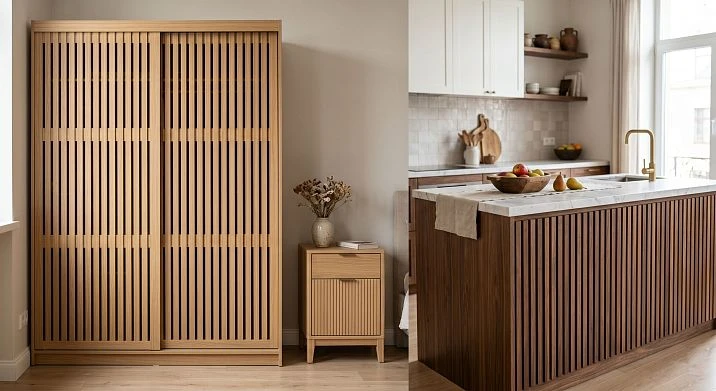
A smooth, textureless case has long ceased to be a neutral background—today it simply looks unfinished. Slatted panels for furniture fronts have become one of the main tools modern design uses to solve the problem of 'volume without overload': the vertical rhythm of slats adds depth, chiaroscuro, and architectural dignity to even the simplest cabinet or chest. If you're currently facing a choice—rigid module or flexible, MDF for painting or solid oak, for an entryway or for a kitchen island—this article will give you a comprehensive answer.
Why a furniture front needs a slatted panel
A flat front solves one problem—it conceals the contents. A slatted front solves several at once: it conceals, shapes the plasticity of volume, and interacts with light in a way no other finish can. When the rays from a floor lamp or recessed spotlight fall at an angle onto a vertical row of slats, the furniture surface literally comes to life: soft shadows appear between the slats, the material's pattern is accentuated, and the feeling of a 'cheap box' disappears.
Exactly thereforeslatted panels for furniture frontsare actively chosen by designers working in styles where the tectonics of form are important: Japandi, neoclassicism, Nordic minimalism, modern classic, organic modern. The slatted texture does not overload the interior with decoration—it adds precisely that degree of complexity which distinguishes a well-thought-out space from a standard one. A cabinet ceases to be a 'box,' becoming an architectural element of the room.
Another argument, less frequently discussed, is the visual lightening of large volumes. A built-in floor-to-ceiling wardrobe without divisions weighs on perception, especially in a small room. Vertical slats on the fronts break up the monolithic appearance, create an illusion of less weight, and allow the furniture to 'breathe' within the space. This same principle works for kitchen islands: a large rectangular block with slatted side panels is perceived as a lightweight designer structure, not as a concrete chest in the middle of the kitchen.
In addition to visual qualities, slatted panels for furniture have a purely practical advantage: they are mounted onto a finished case without completely redoing the fronts. This is important when you want to update furniture without replacing the entire set or when you need to align the visual language of new built-in furniture with existing pieces.

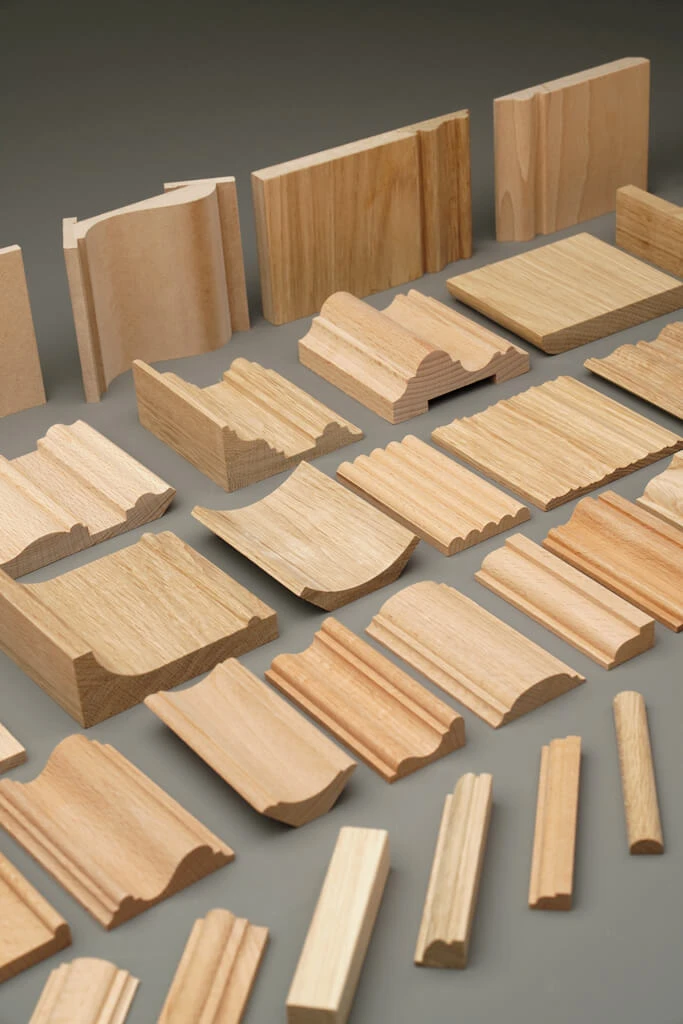

For which furniture tasks are slatted panels suitable
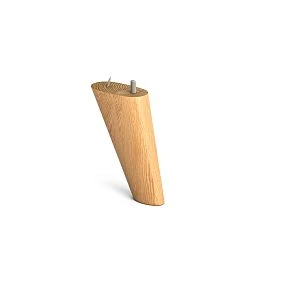
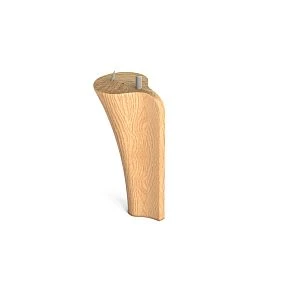
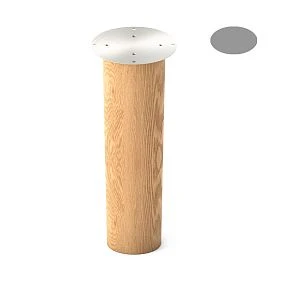
Our factory also produces:
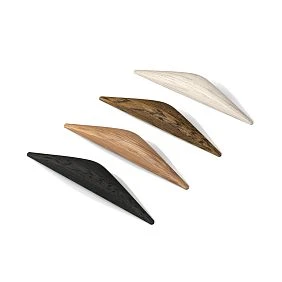
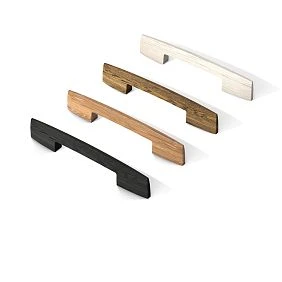
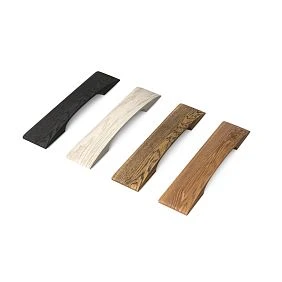


Cabinet fronts
A floor-to-ceiling wardrobe with slatted fronts is already a classic of modern residential interior design.Slatted panels for cabinetThey are mounted on flat door panels or directly onto the frame, forming a single vertical plane. This type of facade works well in an entryway where you need to visually stretch a low room upward: the slats emphasize the vertical and make the wall with the cabinet a unified architectural statement.
In the bedroom, a built-in wardrobe with slatted facades often becomes the main element of the headboard wall—especially when lighting is hidden behind the slats. Illuminated slats in the headboard create a warm atmosphere that no wall painting can replace. The slatted wardrobe facade pairs with laconic bracket handles in matte brass or black metal, and in push-to-open systems—it dispenses with visible hardware altogether, preserving graphic purity.
For wardrobes in the entryway, the practicality of the material is especially important: a slatted MDF surface for painting is easily refreshed with minor mechanical damage—one coat of enamel restores the original appearance without dismantling.
Get Consultation
Chest of drawers and nightstand facades
A chest of drawers and a nightstand are pieces of furniture that are seen up close and often touched by hand. This is precisely why the tactile qualities of the material are especially valued here.Decorative slatted panels for furnitureSolid oak slats on chest of drawers facades provide a surface pleasant to the touch: warm wood with a live grain pattern—it's a completely different sensation than laminate or veneer on particleboard.
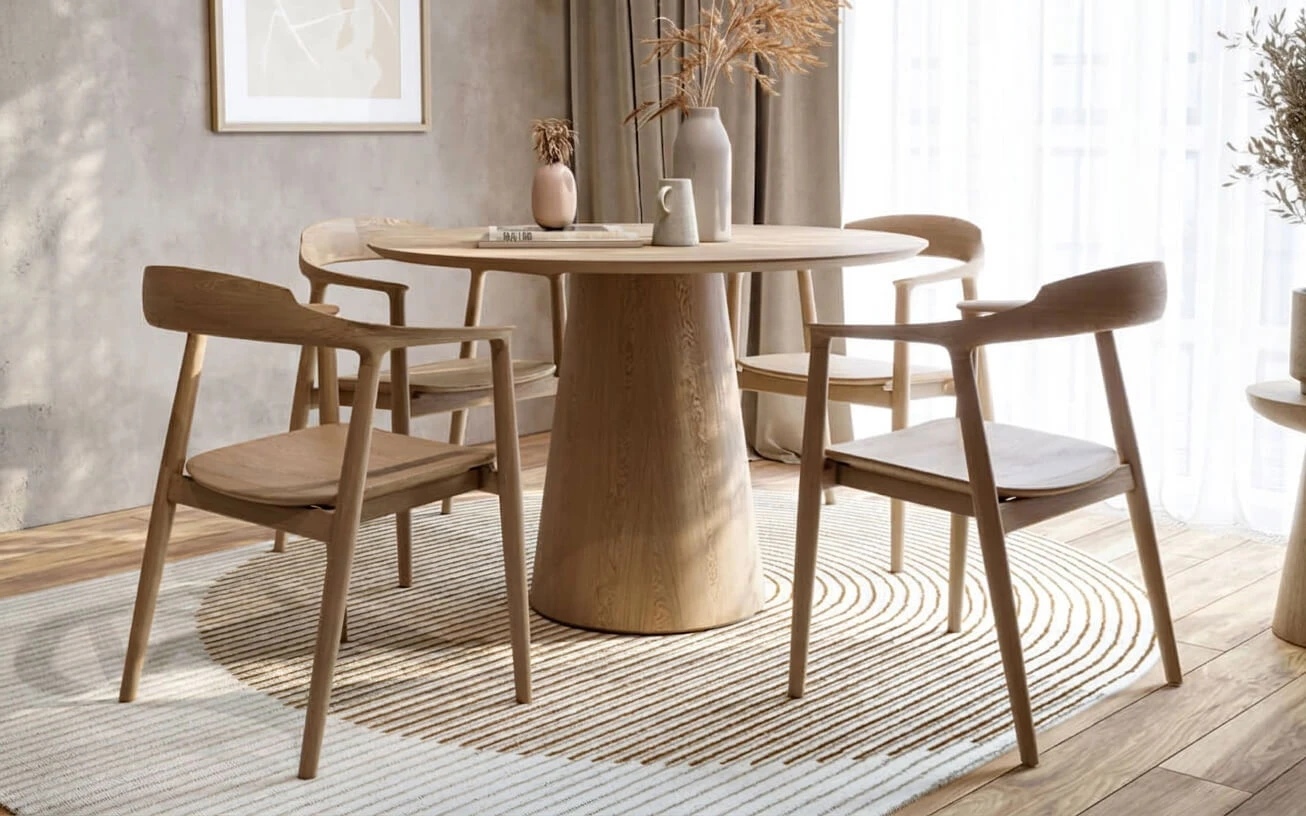
For nightstands in the Japandi or Scandinavian minimalist style, a slatted oak facade with clear oil is practically an ideal solution: natural texture, warm golden or smoky gray tone depending on the treatment, no ostentation. A small nightstand with slatted facades takes up little space but carries a high visual load—it becomes an accent, not a furniture background.
Chests of drawers with slatted panels fit organically into bedrooms where the rest of the furniture is in neutral colors: white, beige, light gray. A wooden or painted slatted facade adds the only necessary accent without the risk of overloading the interior.
Kitchen island
The kitchen island is perhaps the most advantageous point for applying slatted panels in the entire furniture theme. The island stands in the center of the room, visible from all sides, and it is its 'clothing' that determines whether the kitchen looks like a designer interior or a set of mass-produced kitchen cabinets.Slatted panels for the kitchen islandsolve the problem of visual lightening and giving the island's volume an architectural character.
The sides and ends of the island are priority areas for slatted panels. They are the first things seen upon entering the kitchen, and they form the first impression of the furniture. The slatted texture on the island's ends transforms it from a 'kitchen block' into a standalone piece of furniture with a designer identity.
The front parts of the island—drawers, doors, open shelves—also work perfectly with slatted panels. Especially if the island serves a bar function: a slatted facade at the level of bar stools creates a cozy 'textured' wall, pleasant to sit behind with coffee or a glass of wine.
Decorative furniture inserts
Slatted panels for furniture do not necessarily cover the entire facade. An insert of a slatted panel in the central part of a cabinet facade—with smooth side zones—creates an interesting rhythmic solution. This technique is especially good for large sliding door wardrobes: the slats in the middle break up the monotony without turning the facade into a solid slatted mass.
Decorative furniture inserts made of slats are also popular in kitchen design: slatted decor above the bar counter, between upper and lower cabinets, in the niche above the sink—all this creates accent zones without completely rethinking the set.
Radius sides and curved facades
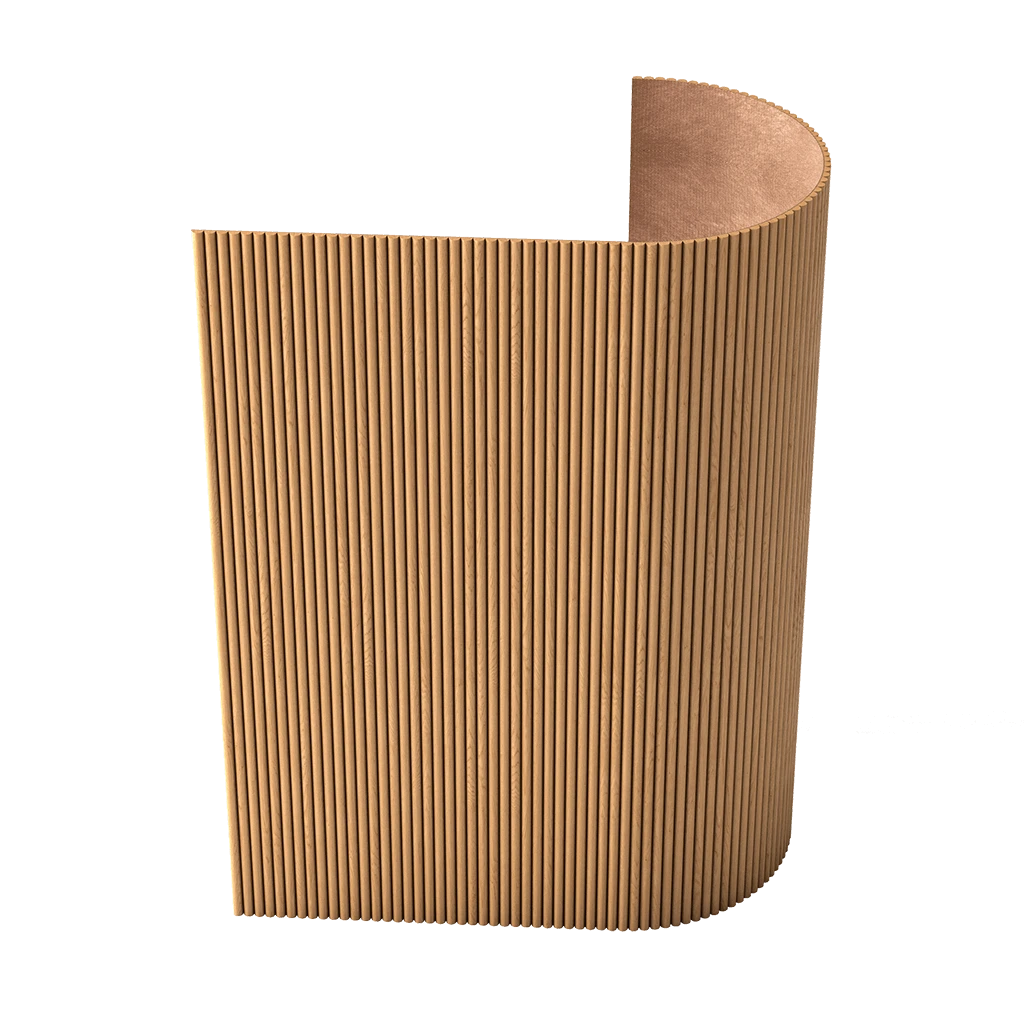
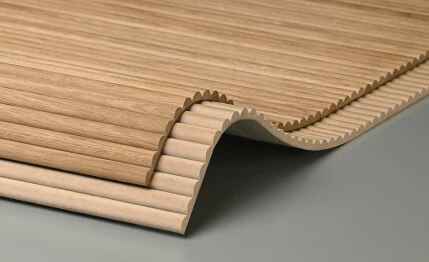
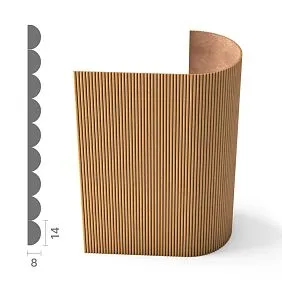
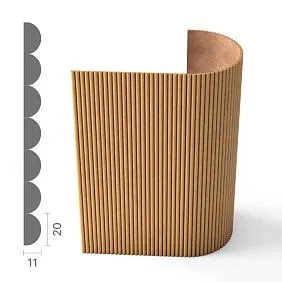
Furniture with smooth shapes—islands with rounded ends, radius sides of cabinets, rounded cabinets—requires a special solution for slatted cladding. A standard rigid panel does not work here: linear modules do not wrap around the curvature without visible gaps and deformations. It is precisely for these tasks thatFlexible slatted panels for radius facadeson a fabric base.
The flexible PAN-001 panel follows the curve of the surface without any sawing or fitting: the fabric base allows it to smoothly wrap around radii of any diameter, and the slats maintain uniform spacing and geometry even on curved sections. This opens up possibilities that just a few years ago were only available in custom handcrafted projects: a slatted facade on an elliptical kitchen island, a radius cabinet with slatted side panels, a wardrobe with smoothly rounded corners.
What to choose: rigid panel or flexible
Choosing between a rigid and flexible construction is the first and most crucial step when purchasing a slatted panel for a furniture facade. A mistake at this stage means either the impossibility of installation or a result that will be worse than it could have been.
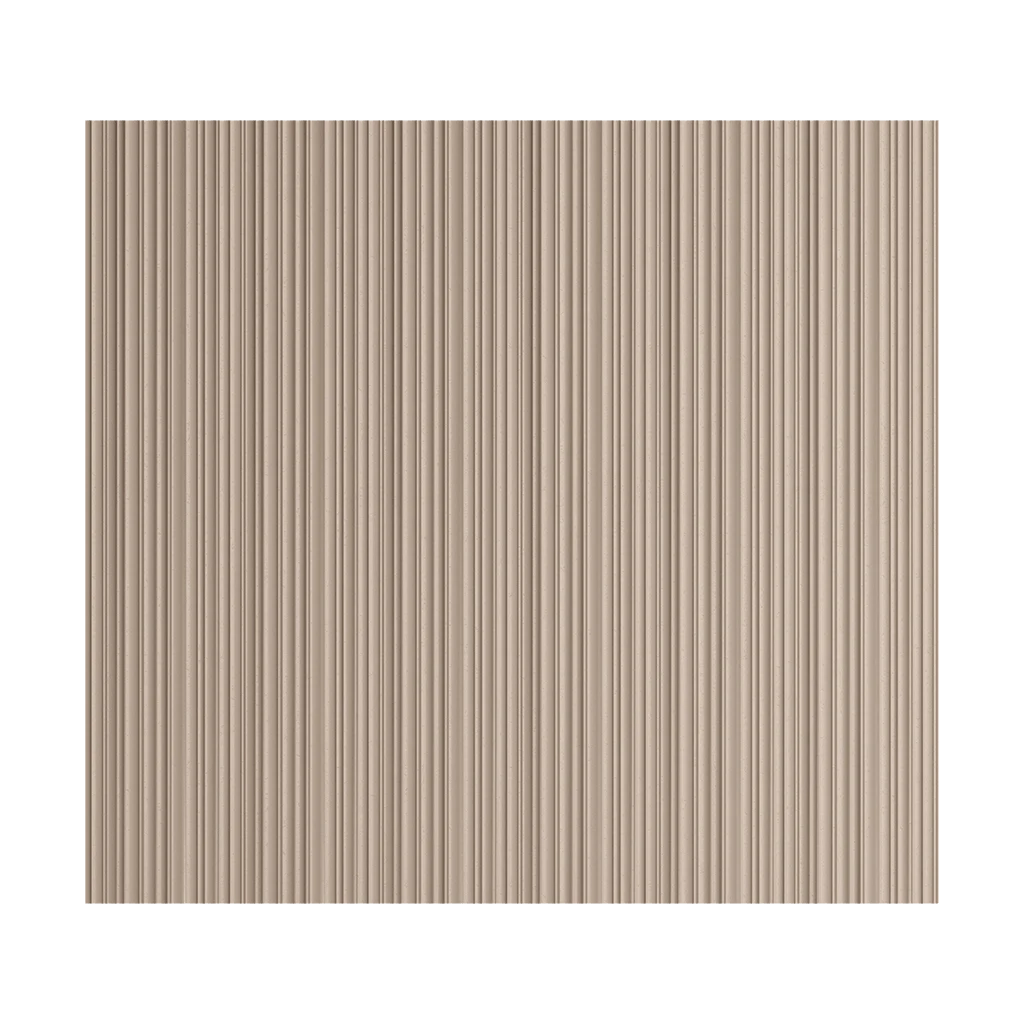
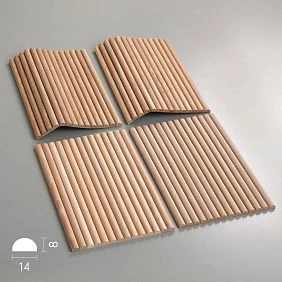
A rigid slatted panel on an MDF backing is the choice for all flat, straight facades without exception. If the surface is linear—a cabinet door, a drawer front, a cabinet side panel without curves—a rigid panel will provide maximum geometric accuracy: even slat spacing, a perfect plane, clean lines.Primed MDF slatted panels PAN-002 and PAN-004—precisely such solutions: a rigid module, prepared for final painting, with precise geometry and factory primer.
A flexible slatted panel on a fabric base is the choice exclusively for radius and curved surfaces. Using a flexible panel on a flat plane is a common mistake: on a straight base, the fabric backing can cause slight undulation, which is visually perceived as unevenness. A flexible module is justified where the radius of curvature is less than 300–400 mm—islands, rounded side panels, columns in furniture.
| Parameter | Rigid panel | Flexible panel |
|---|---|---|
| Surface | Flat | Radius, curved |
| Slat geometry | Maximum accuracy | Precise on bends |
| Installation | Glue, finishing nails | Glue by shape |
| Application | Cabinet, drawer, chest | Island, rounded fronts |
| Base | MDF underlay | Fabric base |
Practical tip: if you're designing an island with straight sides and rounded ends—you need both types. Cover straight sections with rigid panels PAN-002 or PAN-004, ends with flexible PAN-001. The joint is seamlessly resolved by matching slat spacing.
What to choose: MDF for painting or solid oak
The second key choice is the material of the slats. There is no universal answer here: each option addresses its own tasks, and understanding this difference saves both money and nerves.
MDF for painting: color accuracy and scalability
MDF slat panels for furniture— the right choice in three cases. First: when an exact opaque color according to RAL or NCS is needed, matching the other fronts of the set. Second: when the order volume is large and the reproducibility of the same shade in different batches is important. Third: when the budget is limited, but the quality of the result must be at a high level.
MDF with a density of 750–850 kg/m³ has a homogeneous structure without knots, resin pockets, or variations in hardness. This means the enamel applies evenly, without spots or blistering, and the matte finish looks smooth and professional. The factory primer on PAN-002 and PAN-004 panels reduces preparatory work: the surface is already ready for the finishing coat without additional puttying.
For furniture in white, gray, beige-pink, powder, black, or any other precise colorMDF slat panels for painting for fronts— the only reasonable solution. Solid oak is no help here: its grain will show through even with dense enamel, and achieving a perfectly uniform color without defects is practically impossible.
Solid oak: natural texture and tactile value
Solid oak slat panels for furnitureThey are chosen when the living texture of wood is not a defect, but the main advantage. Oak with a density of 700–750 kg/m³ is one of the most stable domestic species: minimal shrinkage, high hardness, resistance to mechanical damage. Each slat carries a unique grain pattern — moiré, straight, wavy, with medullary rays — which is not repeated in any other product.
Under transparent oils, oak reveals its natural golden-honey tone with warm brown transitions. Tinting oils offer a wide palette: Scandinavian bleached gray for the japandi style, deep dark walnut for neoclassicism, tobacco cognac for modern loft, almost black graphite for brutal minimalism. At the same time, the fiber texture is preserved under any tone — this is what creates the feeling of tactile value, which cannot be imitated with film or veneer.
For dressers, bedside tables, kitchen islands in a natural style, for accent fronts in the bedroom and living room —wooden slatted panels for frontsmade of oak remain a solution that looks expensive and deliberate in any price segment of the interior.
Slatted panels for a kitchen island
A kitchen island with slatted panels is a topic that deserves a separate conversation, because several factors converge here at once: structural complexity, high aesthetic requirements, and practical considerations for care.
When the island looks 'too boxy'
A standard kitchen island is a rectangular cabinet with fronts from the same set as the main unit. In small kitchens, this solution works: uniformity of material creates a sense of cohesion. But in kitchens from 15 sq. m, where the island stands as an independent element, identity with the unit makes it 'part of the wall', not a separate design object.
It is in this situationslatted panels for the kitchenThe sides and ends of the island become a highlighting tool. The island gets its own 'clothing,' distinct from the cabinetry: a different texture, a different surface depth, a different interaction with light. The color can remain unified—and then the transition between the cabinetry and the island is perceived as a deliberate design move, not as a mismatch.
How battens visually lighten a massive volume
The physics here are simple: a vertical row of battens creates a visual 'fragmentation' of the surface. A large rectangular volume 90 cm high and 180 cm wide with battened sides is perceived as lighter than a similar volume with a smooth front. The shadows between the battens—especially with side lighting—literally 'take weight off' the furniture.
Directional lighting provides an additional effect: built-in LED strips under or above the island countertop, illuminating the side with batten panels, create a hidden lighting effect. This is the highest level of kitchen design, andflexible batten panel for the kitchenmakes it accessible without custom cabinet front production.
Where to best use battens on the island
-
Sides are the priority zone: they are visible upon entering the kitchen, and they shape the island's image.
-
Ends work in open kitchens where the island is visible from the living room side; a battened end creates a clear finish for the volume.
-
Frontal parts—drawer and door fronts; here, batten panels require precise marking for hardware and hinges.
-
The base under the countertop—a decorative slatted strip between the floor and the lower edge of the island creates a 'floating' countertop effect.
Care and coating for kitchen application
The kitchen is a zone of high humidity, grease, and mechanical stress. This must be considered when choosing the material for slatted panels for a kitchen island.
MDF for painting in the kitchen requires a high-quality paint coating: matte water-based enamel with a hardener additive creates a durable film that withstands regular wet cleaning with a soft cloth. Aggressive cleaning agents, abrasives, and stiff sponges are prohibited for any furniture coating.
Solid oak on a kitchen island requires coating with oil and wax or polyurethane-based varnish. Oil with wax gives a more natural look but requires renewal every 1–2 years; varnish provides higher moisture protection with less frequent renewal. Regular cleaning—with a dry or slightly damp cloth; water and grease stains are removed immediately to prevent absorption into the wood.
Slatted panels for cabinets and built-in furniture
Cabinets in the hallway
The hallway is the room with the highest traffic in the apartment. Every day, furniture here comes into contact with outdoor clothing, shoes, and bags. That is why for slatted fronts in the hallway, coating durability and ease of restoration are especially important.
Slatted panels for cabinets in the hallwaymade of MDF for painting—is the optimal choice: in case of local damage, the front is repainted without disassembly, the shade is matched by code, and everything looks like new. Vertical slats on a hallway cabinet create an illusion of high ceilings even at a standard 2.5 m: the vertical rhythm 'pulls' the space upward and compensates for the low room height.
Color solutions for the hallway: white, light gray, dusty beige, mint gray — all these shades work well on MDF and create a sense of lightness and cleanliness. Dark slatted fronts in the hallway are a bold solution for large, well-lit spaces.
Built-in wardrobes in the bedroom
In the bedroom, a built-in wardrobe with slatted fronts often occupies an entire wall, which makes the choice of material and construction critical: a small error in the scale or proportions of the slats over a large area becomes obvious.
For built-in wardrobes in the bedroom, the slatted panel on a fabric base for the front PAN-001 works especially well: it allows creating not only straight but also radius sections of the wardrobe — for example, a rounded corner instead of a straight joint between two wardrobes. This solution looks expensive and atypical for mass-produced furniture, yet it is implemented without custom production.
Lighting behind the slatted fronts of a bedroom wardrobe is a separate topic. An LED strip at the bottom of the wardrobe, illuminating the floor, or lighting at the top, creating a glow above the slats — both techniques create an atmospheric lighting scenario that requires no additional wall decor.
Chests of drawers and nightstands in the bedroom
For chests of drawers and bedside tables, slatted panels are chosen considering the height and proportions of the piece. A nightstand 50–60 cm high is a small volume, and a slatted front here works as a detail: it doesn't overwhelm but accentuates. For a chest of drawers 90–110 cm high, slatted fronts have a more noticeable effect: the multi-tiered structure of the drawers with a common slatted rhythm creates a unified vertical composition.
Slatted panels for a nightstandOak slat panels — a choice for interiors where tactile feel and material naturalness come first. Oak slats on a bedside table with wrought iron or brass legs — a combination that works in Japandi, modern classic, and organic modern styles.
How to combine slatted and smooth fronts
A common mistake is to cover all fronts in a row with slats. The result is a 'wooden box' where details are lost, and the texture turns into noise. The rule is simple: slatted panels are an accent, not a background.
For a wardrobe with eight doors, the optimal solution is slatted fronts on the four central ones, smooth on the side ones. For a chest of drawers — a slatted front on the top two or three drawers, the lower ones in smooth enamel. For a kitchen island — slatted sides, smooth fronts on the drawers. This creates rhythm and hierarchy in the furniture, not a monotonous textured surface.
What parameters to check before purchase
Before placing an order, it's worth going through a short checklist: it will save time and prevent a situation where the purchased panels are not suitable for the task.
Surface geometry. Flat plane — rigid panels. Radius, rounding, curve — flexible panels on a fabric base. This parameter determines everything else and has no compromise.
Material of the base carcass. What will the panels be mounted on: MDF, chipboard, plywood, laminated chipboard? The type of base determines the type of adhesive and fasteners. Most furniture bases hold mounting acrylic or polyurethane adhesive well; on polished surfaces, additional roughening is needed before installation.
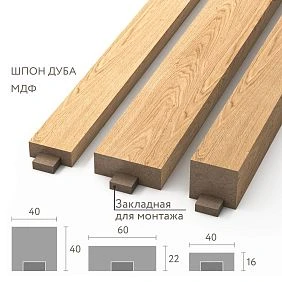
Height and width of the area. Standard formats of slatted panels in the catalog are height 950 mm and 2700 mm, width about 1000–1010 mm. Measure the front and calculate how many modules will be needed, taking into account trimming at the edges. Remember: panels are cut with an ordinary knife along a metal ruler — it's no more difficult than cutting drywall.
Color solution. If an exact shade is needed — choose MDF for painting. If a living texture is important — oak for tinting. Do not try to paint oak in an opaque color: the texture will still show through.
Hidden lighting. If you plan to install LED strips behind the battens — ensure the batten spacing is sufficient for placement. An 8–10 mm wide light strip easily fits between battens with standard spacing.
Seamless transition. If the facade is taller or wider than one module — ensure all panels are from the same batch. Different batches may have slight variations in shade and batten dimensions; from the same batch, seamless transition is guaranteed due to matching spacing.
Hardware and opening system. If you plan to use handles — mark their positions before installing the panels. If using a push-to-open system — verify that the batten panel thickness doesn't interfere with the closer mechanism. Typically, an additional 8–11 mm thickness is not a problem for standard systems.
Selection Errors
Over years of practice with furniture facades, several typical mistakes emerge that lead to disappointment with the result. All of them stem from insufficient understanding of the material, not from installation complexity.
Flexible panel on a flat surface. People buy flexible panel PAN-001 because it's 'more interesting' or because 'it's cheaper this way'. On a straight facade, the fabric backing isn't taut and can create waves. Result — an uneven surface instead of the expected geometry. For flat facades — only rigid panels.
Solid wood where precise color is needed. People order batten panels made of oak, planning to paint them white to match the facades. Oak grain shows through the white enamel, creating an uneven surface. Outcome — either unsatisfactory results or additional costs for multiple layers of primer and enamel. MDF for painting solves this task immediately and without extra expense.
Battens on all furniture without exception. When batten facades cover all cabinets, dressers, and the island simultaneously — the interior loses rhythm and accents. The batten texture 'overwhelms' the entire space. Rule: battens are an accent, not a universal facade material.
Vertical joints without considering batten spacing. When joining two panels vertically, it's important that the batten spacing matches on both panels. If this isn't checked in advance, the joint will be noticeable even with identical shades.
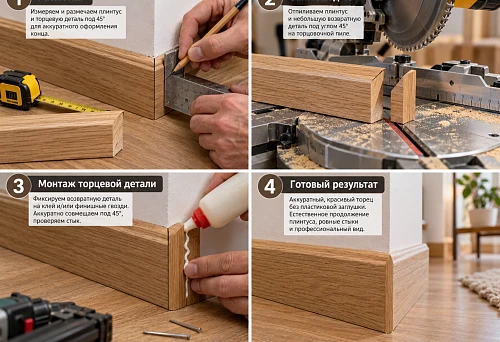
Unplanned edges and junctions. A cut edge of a batten panel without an end cap or edge profile looks unfinished. Before installation, plan how all exposed edges will be covered: end caps, corner profiles, or skirting boards solve this task.
Incorrect panel quantity calculation. People buy exactly what's needed, without extra for trimming. If additional panels from another batch need to be purchased — slight color variation is possible. Standard surplus — 10–15% of the calculated quantity.
Which solutions to view in the catalog
The STAVROS assortment for furniture facade tasks features a line that covers most scenarios—from straight cabinet doors to radius islands and decorative inserts for cabinets.
For smooth furniture facades for painting—PAN-002 and PAN-004 panels made from primed MDF. Factory primer is the starting point for any finish enamel. The 950 mm height perfectly matches the standard height of cabinet facades.Buy slatted panels for furniture facadesthese models directly in the catalog.
For radius and curved facades, as well as kitchen islands—flexible slatted panel PAN-001. Fabric base, follows any curve, seamless joining. Available in MDF and solid oak versions.
For natural finishing in oak texture—solid oak panels for tinting and varnish. Suitable for cabinets, dressers, accent facades in bedrooms and living rooms.
For self-assembly of slatted inserts—Interior Rail RK-002made from MDF with oak veneer. Allows creating custom patterns from individual slats, forming non-standard spacing, and placing slats exactly where the design requires. Built-in insert simplifies installation without glue.
Sample OPAN-001—the option to order a trial sample of a slatted panel before the main purchase. Allows evaluating slat spacing, material texture, color, and primer quality under real lighting conditions and in combination with other interior materials.
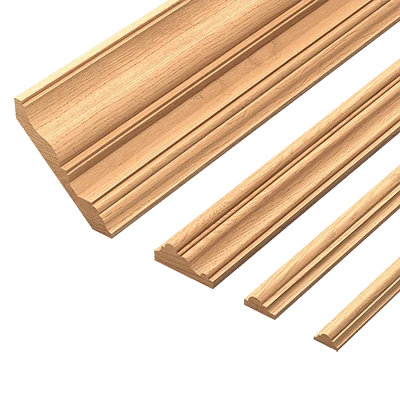
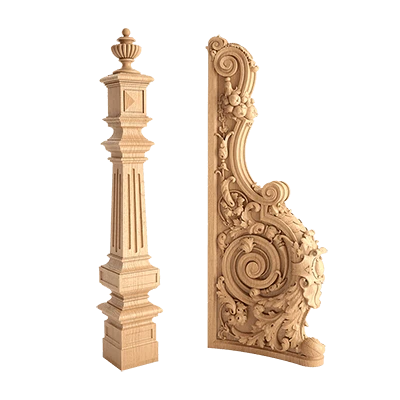
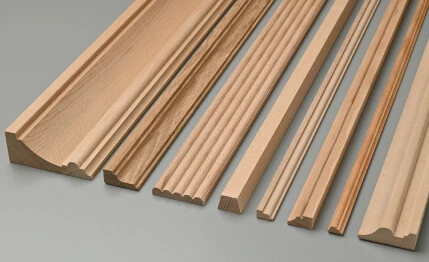
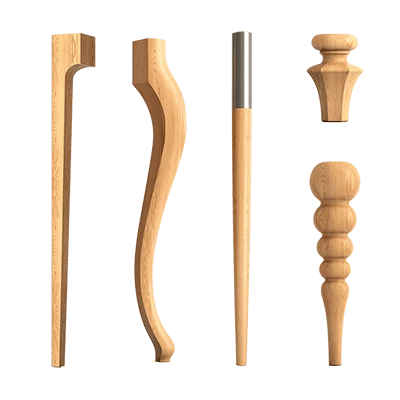
For comprehensive solutions — combining slatted panels withmouldingswood and MDF, furniture legs, decorative overlays — the entire range of the 'Solid Wood Products' section allows you to create a unified design system for furniture.
Practice: slatted fronts in different interior styles
Japandi
Japanese-Scandinavian synthesis is built on a balance of natural materials, neutral tones, and minimalist forms. Oak slatted panels with clear oil or in a cool gray-smoky tint are an absolutely organic material for this style. On the fronts of low cabinets, dressers, and kitchen islands, oak slats create a horizontal or vertical rhythm that echoes the natural philosophy of Japandi. Hardware — matte brass or black metal; countertop — light stone or concrete; floor — light oak. All together forms that very quiet luxury that cannot be achieved with synthetic materials.
Neoclassicism
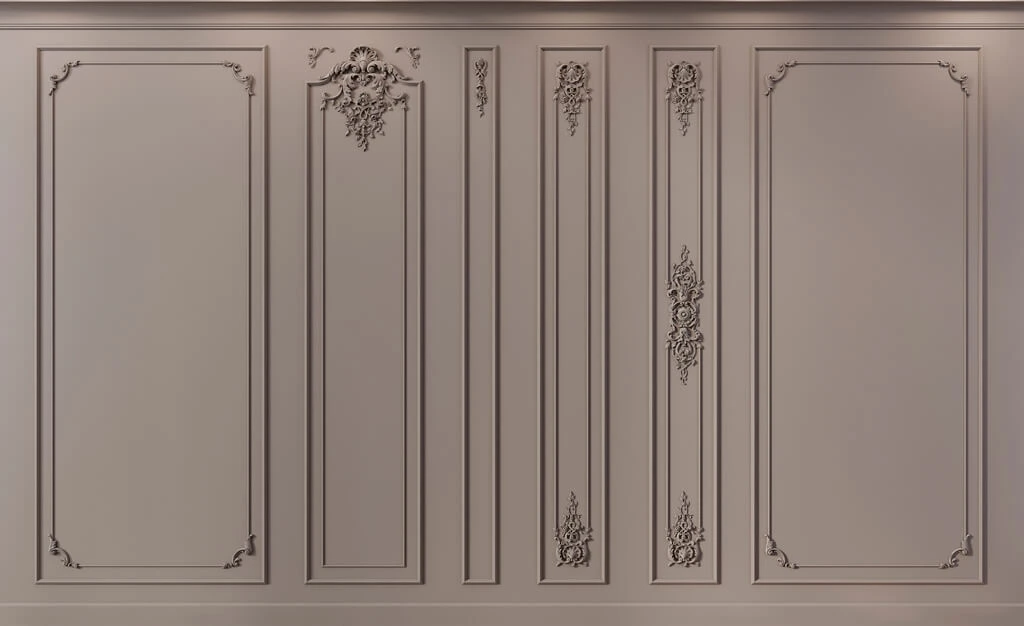
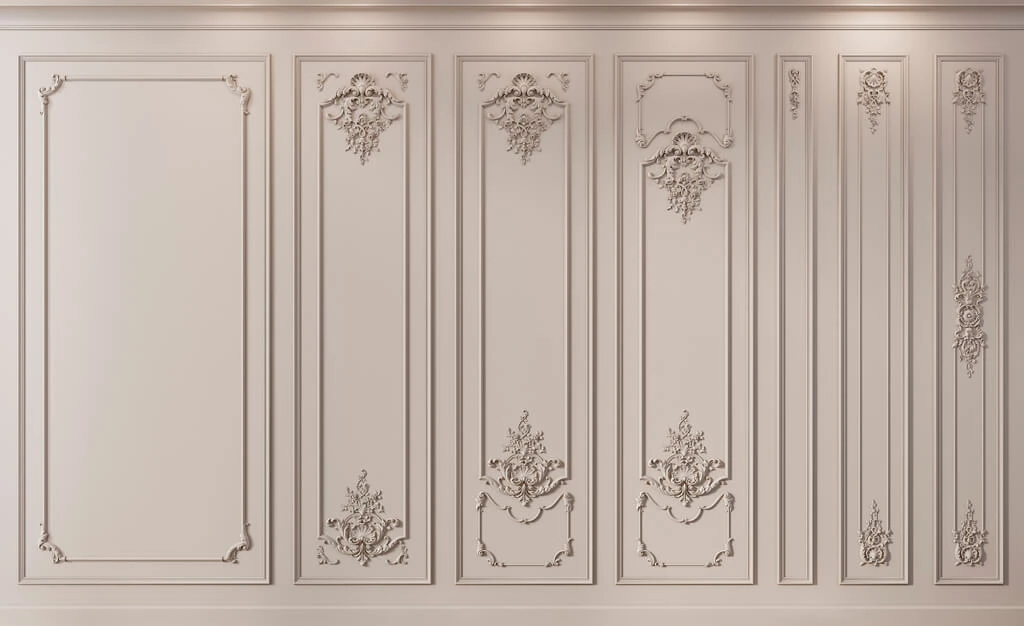
In a neoclassical interior, slatted fronts work differently: they replace milled decor on fronts, creating a vertical rhythm without historical references. MDF for painting in deep gray, dusty blue, or classic white — a slatted front in neoclassicism looks modern but with aristocratic dignity. For hallway or wardrobe cabinets, this solution allows working with tall spaces: slats reaching the ceiling in a unified rhythm create a sense of a palace enfilade without a single molding.
Modern minimalism
Minimalism requires maximum material precision: no unnecessary details, every line is intentional.MDF slatted panels for paintingin a shade identical to the walls — this is the technique of 'dissolving' furniture in space. A cabinet in the wall color with slatted fronts literally ceases to be furniture, becoming part of the room's architecture. On a kitchen island in white with slatted sides of the same white — the island turns into a sculptural object that stands out solely by its texture.
Loft and industrial style
A brutal industrial interior with concrete walls and metal structures needs a warm accent — otherwise the space becomes cold and lifeless. Oak slats with a dark graphite or wenge tint on an island or cabinet create that very contrast of warmth and brutality that makes a loft livable. The specific material, visible wood texture — all this works in unison with exposed brickwork, metal, and concrete.
Installing slatted panels on furniture fronts: step-by-step logic
Installing slatted panels on a furniture front is a process significantly simpler than it seems at first glance. It does not require special tools, professional qualifications, or expensive equipment.
Step 1: Surface preparation. The facade surface must be clean, degreased, and dry. Polished or varnished surfaces should be lightly sanded with 120–180 grit sandpaper to ensure adhesive bonding.
Step 2: Marking. Determine the exact position of the panel on the facade. If the panel covers the entire height—align it vertically using a spirit level. If precise centering by width is needed—find the center of the facade and mark it.
Step 3: Applying adhesive. Mounting acrylic or polyurethane adhesive is applied to the panel backing in a "snake" pattern with 15–20 cm spacing. For rigid panels, additional fixation with headless finishing nails or thin screws through the backing is possible.
Step 4: Pressing and securing. Press the panel against the base with uniform pressure across the entire area. Open adhesive curing time is 5–10 minutes; full polymerization takes 24 hours. During this time, secure the panel with painter's tape around the perimeter or with spacers.
Step 5: Edge treatment. Exposed edges are treated with an edge trim or corner profile. For MDF panels, the edge can be filled with putty and painted along with the surface.
Step 6: Finishing. MDF panels are primed (if necessary) and painted with two coats of finishing enamel. Oak panels are coated with oil or varnish according to the chosen technique.
Slatted panels and lighting: how the combination works
One of the most striking design techniques with slatted facades is the integration of LED lighting. It transforms an ordinary cabinet or island into a source of atmospheric light and creates a depth unattainable without this solution.
Lighting can be placed in different ways. A bottom strip on a cabinet creates a 'floating' effect above the floor and softly illuminates the floor in front. Backlighting in niches behind open sections of a cabinet with slatted shelves looks like a museum display. Lighting within the slats themselves—where the strip is placed in the space between slats—creates an effect where the furniture itself glows from within.
For a kitchen island, lighting under the lower edge of the side with slatted panels is a classic technique that makes the island visually lighter while creating a working lighting zone at the base. This is practically convenient: no need to reach for a switch—simply program a lighting scene via a smart home system.
Slatted panels for custom furniture and serial solutions
An important question often asked by designers and clients: what is better — to order slatted fronts from a furniture manufacturer or to use ready-made slatted panels for independent furniture finishing?
Ready-made slatted panels from the STAVROS catalog offer several fundamental advantages over custom fronts. First — speed: standard panels are in stock and shipped within a few business days. Second — flexibility: panels can be used to update existing furniture without ordering new fronts. Third — economy: a ready-made panel per square meter is significantly cheaper than custom production of a slatted front.
At the same time, the quality of geometry and uniformity of slat spacing in industrial panels is the result of precise CNC milling, which cannot be achieved with manual assembly from individual strips. This same level of precision ensures seamless module joining over large areas.
Checklist for selecting slatted panels for furniture fronts
A short summary list for those ready to make a decision:
-
Flat surface? → rigid panels PAN-002 or PAN-004
-
Radius or rounding? → flexible panels PAN-001
-
Need an exact color to match enamel? → primed MDF
-
Natural texture important? → solid oak
-
Facade height up to 95 cm? → panel format 950 mm
-
Facade height around 270 cm? → panel format 2700 mm
-
Need separate slats for non-standard spacing? → interior slat RK-002
-
Want to check the material before ordering? → sample OPAN-001
FAQ: answers to frequently asked questions
What's better for a cabinet facade: slatted panel or separate slats?
Slatted panel as a ready-made module offers advantages in installation speed and geometric precision: slat spacing is factory-fixed and requires no marking. Separate slats — for example, Interior Rail RK-002— provide more freedom in creating non-standard rhythm and individual patterns. For serial application on standard facades — panel; for custom solutions with non-standard spacing — slats.
Can slatted panels be used on a kitchen island?
Yes, and this is one of the strongest application scenarios. Flexible PAN-001 panels clad the sides and ends of islands of any shape — rectangular, rounded, elliptical. Rigid primed panels are suitable for straight sides and front parts. Coating for kitchen application — enamel with hardener (MDF) or oil with wax / polyurethane varnish (oak).
What to choose for enamel?
Only MDF for painting — PAN-002 and PAN-004 panels with factory primer. Solid oak under opaque enamel does not paint evenly due to its fibrous structure: the wood grain shows through any opaque enamel and disrupts color uniformity.
What is suitable for a radius facade?
Flexible slatted panel on fabric base PAN-001. It wraps around radii of any diameter without slat deformation and joins seamlessly with adjacent modules. More details — in the section Flexible slatted panels.
Can slatted panels be used on cabinets and dressers?
Yes, this is one of the most advantageous scenarios. Slatted panels on cabinet and dresser facades turn functional furniture into a design accent of the space. It is recommended to use solid oak panels for a tactilely rich result or MDF for painting for precise color solutions.
How to care for a relief furniture facade?
Regular cleaning — dry or slightly damp soft cloth. Dust from the gaps between slats is removed with a soft brush or vacuum cleaner brush attachment. Painted MDF facades do not tolerate aggressive cleaning agents; oiled oak facades require renewal of the protective layer every 1–3 years depending on intensity of use.
Can slatted panels be installed independently, without a professional?
Yes. Installation does not require professional skills: panels are cut with a regular knife, attached with mounting adhesive, and if necessary, additionally secured with finishing nails. Flexible panels on fabric base are glued directly onto the radius surface shape — without a frame or special tools.
Is base preparation needed before installation on furniture?
For furniture surfaces with a finish (varnish, polish), apply light roughness with 120–150 grit sandpaper to ensure adhesive adhesion. Clean MDF or particleboard without a finish can be glued without additional preparation. The surface must be clean, dry, and degreased.
STAVROS Company is a manufacturer and supplier of wooden decor and furniture components with production in St. Petersburg. The range includes over 4000 items: slatted panels, millwork, furniture legs, handles, decorative overlays, rails, and stair components. All products are made from properly dried oak and beech wood in a controlled microclimate (temperature 20–24°C, humidity at least 40%), ensuring stability.