











































































Article Contents:
- Why moldings work well on a wall with paintings
- What design options for a wall with paintings exist
- One large frame around a painting
- Several symmetrical frames
- Gallery wall with posters
- Panel inside a frame made of moldings
- Painting above a console, sofa, or dresser
- What to choose for a wall with paintings
- Thin moldings
- Medium architectural moldings
- Decor for moldings
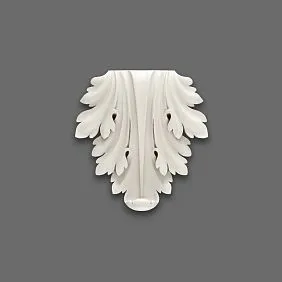
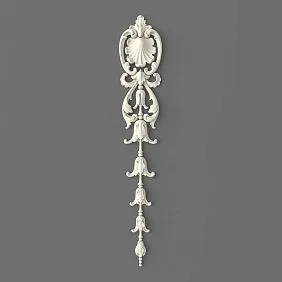
- Decorative appliqués
- Ready-made sets for symmetry
- How to choose the size of a frame for a wall with paintings
- Mistakes when decorating a wall with paintings
- The painting does not fit in the center of the frame
- Too small molding on a large wall
- Too active decor next to a bright painting
- No connection with furniture and lighting
- Frames of different scales without a system
- Style solutions for a wall with paintings
- Installation practice: from marking to final painting
- What to buy for a wall with paintings
- Frequently asked questions

There are walls that live. They breathe, tell stories, hold the gaze. And there are walls that simply exist — smooth, painted, silent. The difference between them is often determined by one decision: how exactly the paintings, posters, or panels hanging on them are arranged.Molding decor for a wall with paintingsis not a frame around the canvas in the usual sense. It is an architectural environment into which the painting enters as part of a whole, rather than hanging orphaned on a nail.
Polyurethane moldings give the wall a structure that makes any gallery composition — whether it's one large poster or a dozen small photographs — meaningful, complete, and professional. Today we'll break down exactly how this works, what schemes exist, how to choose a molding for a specific task, and what mistakes are best avoided.


Why moldings work well on a wall with paintings
Ask yourself: why do paintings in a museum look different from paintings at home? It's not just about lighting or the value of the works themselves. It's about the environment. In a museum, each piece exists in a carefully thought-out spatial context: a precise distance from the edge of the wall, the correct center height, a neutral background. Moldings replicate this principle in your home: they create a visual context for a painting or poster — a space where the piece ceases to be just an "object nailed to the wall" and becomes part of the interior design concept.
The second argument is visual logic. When several paintings of different sizes hang on a wall without structure, the eye perceives them as a random collection. Molding frames unite disparate objects into a system: they create rhythm, set a unified scale, and establish hierarchy. One molding encompassing a group of posters instantly turns them into a gallery installation. This is called "visual assembly" — and moldings work exactly that way.
The third argument is the material. Polyurethane molding is lightweight (many times lighter than plaster molding), geometrically precise, and resistant to deformation. It is mounted with glue, paints beautifully in any color, and can be removed without damaging the wall if needed. For a wall with paintings, this is fundamental: you can change the composition, rearrange paintings, refine the molding scheme — all without major renovation.
Decorating a wall with paintingsmade of polyurethane organically fits both classic interiors with stucco cornices and baseboards, and modern spaces with neutral walls and minimalist furniture. Versatility is another quality for which professional designers value this material.




What are the options for decorating a wall with paintings
Before choosing moldings and calculating the material, it is important to understand which decorative scheme you are implementing. Everything depends on this: the type of molding, its width, the number of elements, and the need for additional decor.
Our factory also produces:





One large frame around the painting
The most classic and most concise option. One canvas — one molding frame. The molding is mounted not on the stretcher of the painting, but on the wall, creating an architectural context around it. The painting hangs inside this space — and this is the principle used in interior magazines and references that everyone wants to emulate.
The key question here is the gap between the edge of the painting and the inner edge of the molding. The recommended minimum is 8–12 cm on each side. This creates "air" around the work, allows it to breathe, and does not compete with the painting's own frame. If the painting is large (60×80 cm or more), the gap can be 15–20 cm — this creates a sense of museum framing.
Moldings around the paintingin this scheme should be proportionate to the canvas: a narrow thin profile for a large painting gets lost, a too wide molding for a small poster overwhelms. The golden rule: the width of the molding is 1/12–1/15 of the smaller side of the painting.
Get Consultation
Several symmetrical frames
If you have several paintings or posters of the same or similar size — the ideal scheme: symmetrical molding frames arranged along a single axis. Two, three, four rectangles with equal spacing between them and equal gaps inside each frame. Paintings or posters are placed in the center of each section.
This scheme works flawlessly above a sofa, console, dining table — anywhere with a horizontal axis of symmetry.Molding frames for picturesare built using a single layout: first, the center of the entire composition is determined, then frames are arranged on both sides with equal spacing. Symmetry is the main principle that must not be broken.
The corresponding material details how symmetrical wall decor from polyurethane is constructed:symmetric polyurethane wall decor.
Gallery wall with posters
A gallery wall is several posters, photographs, or paintings of different sizes, united by a molding scheme into a single composition. Here, moldings act as a "grid": they create a common perimeter for the gallery field, within which works of various formats are placed.
There are two types of approaches. The first is one large molding frame encompassing the entire gallery, with posters freely arranged inside. The second is individual molding frames around each poster, united by a common rhythm and aligned along horizontal or vertical axes.
For a gallery wall with posters, it is important thatmoldings for posters on the wallhave the same profile — this creates visual unity even with different frame sizes. The molding profile is chosen based on the overall style: Neoclassic Light for bright modern interiors, Japandi for minimalist spaces, Neoclassic for classic settings.
Panel inside a frame made of moldings
This is a special case where a painting, reproduction, or decorative panel is mounted not separately, but as part of a complex molding composition. The molding frame can have several levels: an outer wide frame, an inner thin frame, with a colored or textured background between them. The work itself is placed in the center of this system.
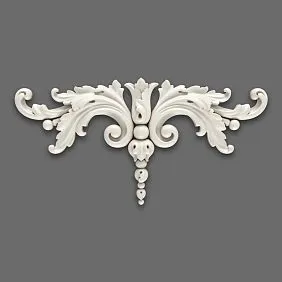
Stucco decor for a wall panelin such a scheme, it is enhanceddecorative inlays— with corner elements, floral motifs in the corners of the frame, a central ornament above or below the panel. The result is a complex, multi-level architectural composition that looks like the work of a professional designer.
A painting above a console, sofa, or dresser
This is a situation where the molding frame exists in relation to the furniture. A painting above a console is not just a "painting on the wall," it is a visual pair: the horizontal line of the tabletop and the vertical line of the canvas, united by the molding frame. Here, the molding sets the scale that connects the painting with the piece of furniture below it.
Rule: the upper outer edge of the frame should be no more than 25–30 cm from the ceiling cornice or visually "tied" to it. The lower outer edge should be no lower than the level of the upper plane of the console or sofa back. This creates a "proportional corridor" in which the furniture and decor form a single whole.
What to choose for a wall with paintings
Choosing a molding is not just a matter of beauty. It is a matter of scale, proportion, and style. Let's break down all types of products and their role in a gallery wall.
Thin moldings
A thin molding with a profile width of 15–30 mm is a tool for delicate, neutral schemes. It is almost invisible itself, but its presence on the wall is felt: an architectural line, a border, a rhythm appears. A thin molding is ideal for modern interiors, for walls with posters in Scandinavian style, for galleries with minimalist works.
An important advantage of a thin molding: it does not compete with the painting itself. If the work is bright, rich in color, or complex in composition, the thin molding creates a border without drawing attention to itself. The painting remains the main character.
From the STAVROS catalog, the collection is most suitable for this taskNeoclassic Light — thin profiles with a delicate relief, organic in modern and Scandinavian interiors.
Medium architectural moldings
A molding with a width of 35–60 mm is already an architectural statement. It creates a frame that is perceived independently, not as a thin border. Such a molding is suitable for medium and large format paintings, for neoclassical interiors, for walls with ceilings from 270 cm.
A medium molding is the optimal choice for symmetrical schemes behind a sofa or console: it is expressive enough to create a real architectural panel, and moderate enough not to compete with the contents of the frame.
Moldings for decorative panels from the Neoclassic collection — this is exactly the format: an expressive profile, a sense of weight, a classic character.
Decor for moldings
Decor for moldings around a painting— these are corner inserts, decorative elements for joints and intersections. In the context of a wall with paintings, they perform an important function: they eliminate "bare" corner joints and make the frame look finished and professional.
Corner elements are especially important in schemes where medium or wide molding is used. If the molding is thin, corner joints are practically invisible. If the molding is wide, a joint in the corner will be noticeable if the cut is inaccurate. The corner element covers this joint and simultaneously adds a decorative detail characteristic of classic molding frames.
Some decorative elements for moldings can be used not only in corners but also in the center of the long sides of the frame, creating an additional accent on the horizontal and vertical crosspieces.
Decorative appliqués
Decorative overlays for a wall with paintings— are ornamental three-dimensional elements placed outside or inside the frame. Above a molding frame, a small rosette overlay or floral motif creates a "crown" — an effect familiar from classic interiors with stucco. Between two symmetrical frames, a divider overlay creates a meaningful pause between sections.
For a wall with paintings, it is important to observe moderation: overlays should not compete with the artworks themselves. They are the context, the framing, the architectural environment. Not the main character. If the painting is bright and saturated, it is better to make the overlays in the color of the wall, neutral. If the wall is monochrome and the artworks are restrained, the overlay can be in a contrasting color or with gilding.
Ready-made kits for symmetry
Buy decor for a gallery wall— in the format of a ready-made kit means getting all the elements at once: moldings for the perimeter, corner inserts, and, if necessary, overlays. Everything from one collection, with coordinated profiles and scale.
Ready-made kits are an ideal solution for symmetrical pairs of frames, for schemes like "painting above the sofa" or "panel above the console." Where precise symmetry and consistency of all elements are needed, a ready-made kit eliminates the risk of selection errors. The topic of ready-made frames is covered in more detail in the articleReady-made molding frames for the wall.
How to choose the frame size for a wall with paintings
This is the most technical and most important section. This is where the success or failure of the entire gallery scheme is determined — and this is where most people make mistakes.
Step one: determine the central axis. Any frame on the wall is built from the center. The center of a painting or group of paintings should be at a height of 145–155 cm from the floor — this is the eye level of a standing person, the standard for museum and gallery hanging. If the composition is placed above a sofa, the center of the frame rises to 160–170 cm (since perception occurs while sitting).
Step two: determine the offsets within the frame. The distance from the edge of the painting to the inner edge of the molding is 8–20 cm, depending on the size of the canvas and the desired effect. A small offset (8–10 cm) gives a tight, "intimate" framing. A large offset (15–20 cm) gives a museum-like, "ceremonial" effect.
Step three: determine the external dimensions of the frame. Add twice the offset to the size of the painting to get the internal dimensions of the frame. Add the width of the molding (multiplied by two) to get the external size of the frame. This is what will be visible on the wall.
Step four: correlate the frame with the furniture. A frame above a sofa should be no narrower than the width of the sofa and no wider than 20–30 cm on each side. A frame above a console table should match the width of the console plus or minus 10 cm. A frame in an empty wall space should have a clearance of at least 15 cm from adjacent walls and the ceiling.
The algorithm for calculating all elements is described in the article how to calculate moldings and stucco decor for a wall — there, formulas and practical examples are detailed.
Molding width and proportions. For small posters (30×40, 40×50 cm) — molding width 15–25 mm. For medium formats (50×70, 60×80 cm) — 25–40 mm. For large canvases (80×100 cm and larger) — 35–60 mm. If the molding is too thin, it gets lost next to a large work. If it is too wide, it overwhelms the canvas.
Molding color and painting. Molding in the tone of the wall creates a neutral architectural frame — the painting remains the center of attention. White molding on a colored wall is a classic contrast. Molding in the color of the painting's frame is an elegant, designer solution that requires precision but yields a very mature result.
Mistakes when decorating a wall with paintings
Experience observing how decor works (or doesn't work) in real interiors allows us to identify several fundamental mistakes — each of which is better to study in advance.
The painting does not fall into the center of the frame
This is the most common mistake when installing molding frames on a wall with paintings. First the frame is mounted, then the painting is placed inside — and it turns out that it is shifted to the left, or hangs too high, or does not fall into the visual center.
The correct sequence is always the opposite: first determine the exact spot for the painting (considering eye level, axis of symmetry, furniture below it), then build the frame from that point. The painting is primary, the frame is secondary. No other way.
Molding that is too small for a large wall
A thin molding 15–20 mm wide on a wall area of 4–5 sq. m with large works simply gets lost. It does not create an architectural effect, does not tie the composition together — it just 'exists', uncertainly and unconvincingly. The scale of the molding should be proportionate to the scale of the wall and the paintings.
If you have high ceilings (280 cm and above) and large canvases — use picture moldings with a width of 40 mm or more. They will be readable and create the necessary architectural weight.
Decor that is too active next to a bright painting
Decorative overlays with rich ornamentation, a wide molding with an expressive profile, corner elements with floral motifs — all of this is good on its own. But next to a bright, saturated painting, active decor creates competition: two visual centers start to "pull" attention away from each other.
The rule is simple: the more expressive the painting, the more neutral the molding should be. The calmer and more monochrome the work, the richer the architectural context around it can be. This principle is used by all professional exhibitors.
No connection with furniture and lighting fixtures
A gallery wall that doesn't "talk" to the furniture beneath it is an incomplete composition. The frame above a console should be proportionate to the console. Frames above a sofa should relate to its width. Paintings above a dresser should "respond" to the horizontal line of its top.
A separate issue is lighting. Illuminating a gallery wall with a spotlight, sconce, or hidden LED strip dramatically changes its perception in the evening. The article discusses the principles of working with light in decor.Stucco wall decor with backlighting.
Frames of different scales without a system
Several molding frames of different sizes, different profiles, from different collections — this is not a "creative approach," it's visual chaos. Frames can be different in size, but they must be from the same collection, with the same profile, and a unified scaling logic.
If you want a multi-format gallery, maintain unity of the molding profile and the spacing system. This is what creates a sense of intent, not randomness.
Style solutions for a wall with paintings
The choice of molding collection determines not only the appearance of the frame but also the overall character of the gallery wall — its tone, era, and mood.
Neoclassic Light — for a modern interior where architectural structure is needed without heavy classicism. Thin, elegant profiles from the collectionNeoclassic Light create frames that work as a neutral context — they do not impose a style, but delicately structure the wall. Ideal for posters, photographs, watercolors, graphics.
Neoclassic — for interiors with a more expressive architectural character: high ceilings, classic crown moldings, furniture with wooden details. The collectionNeoclassical creates frames with a substantial profile, perceived as part of the building's architecture, not as glued-on elements.
Japandi — for a minimalist space where the main tools are rhythm and line. The collectionJapandi offers rectangular sections without ornamentation — pure geometry that works excellently with Scandinavian-style posters, Japanese graphics, monochrome photographs.
Versailles Light — for a classic living room with reproductions, portraits, landscapes. The collectionVersailles Light with a rich ornamental profile creates museum-grade frames — solemn, grand, historically convincing. For a modern minimalist poster, it's overkill. For a classic oil painting, it's perfect.
Installation practice: from marking to final painting
Technically, working with moldings on a wall with paintings is no more difficult than any other decorative installation. But here precision is especially important — because any deviation from symmetry is immediately noticeable.
Markup. Start by determining the center of the entire gallery scheme. Mark a point on the wall from which the entire system is built. Use a laser level — it's the only tool that guarantees horizontal and vertical without errors.
Frame template. Cut a frame template of the required size from cardboard, apply it to the wall, and ensure the correct position. Only after approving the template — mark with a pencil and install the molding.
Installation. The molding is fixed with liquid nails or polyurethane glue. The glue is applied in a zigzag pattern along the entire length of the strip. After fixing, the molding is pressed against the wall for 2–3 minutes, then left for 24 hours until fully cured. Corner joints are made at 45 degrees — using a miter saw or miter box.
Sealing joints. All joints and small gaps are sealed with acrylic sealant of the desired color, then sanded with fine sandpaper. After that — painting.
The entire installation technology with a detailed analysis of corners and joints is described in two professional articles:installing polyurethane moldingandinstallation of polyurethane molding.
What to buy for a wall with paintings
Practical list of elements for designing a gallery wall with moldings:
-
Moldings for a wall with paintings — the basis of the scheme. Choose a profile based on the format of the paintings and ceiling height. Profile width: 15–60 mm depending on scale. Quantity — with a 15% margin.
-
Decorative Inserts — for corner accents, central elements, framing panels. Select proportionally to the frame and neutral to the content of the painting.
-
Decor for Molding— corner inserts for joints, elements for intersections. Mandatory for classic schemes.
-
Ready-made decor set— for symmetrical pairs of frames, for schemes "above the sofa" and "above the console". Eliminates selection errors.
-
Elements from one collection — Neoclassic Light, Japandi, Neoclassic or Versailles Light — depending on the interior style. No mixing of collections in one space.
The entire assortment. Clear lines, created using modern technologies, emphasize the strict aesthetics of the room. Each decorative element harmoniously fits into the overall concept, creating a sense of order and thoughtfulness.is presented in the STAVROS catalog with application photos and detailed characteristics of each element.
Frequently Asked Questions
Can moldings be used next to framed paintings?
Yes. A molding frame on the wall and a painting frame are different framing levels that coexist perfectly. It is important to maintain an offset: the molding should not touch the painting frame. The optimal gap is 8–15 cm. This creates a "double framing" that works like in a museum exhibition.
Which molding to choose for small posters?
For posters 30×40–50×70 cm, a molding width of 15–30 mm from the Neoclassic Light or Japandi collection is optimal. A thin profile creates a neat framing without taking focus away from the artwork itself. With ceilings from 280 cm, you can take a profile width of 30–40 mm.
How to place several paintings of different sizes?
Use a gallery wall scheme: one large outer frame encompasses the entire group, with paintings arranged inside it according to the gallery principle. Alternatively, use individual frames around each painting with a uniform molding profile and consistent spacing rhythm.
Should the molding be painted the same color as the wall?
It depends on the goal. Molding in the wall color creates a neutral architectural environment where the painting remains the main focus. White molding on a colored wall provides expressive contrast, suitable for classic interiors. Molding in the color of the painting's frame is a sophisticated design solution for the discerning eye.
How to properly illuminate a gallery wall?
Track-mounted spotlights are the professional standard for gallery lighting. They are adjustable in direction and do not cast shadows from frames. An alternative is wall sconces on either side of the main frame. A hidden LED strip behind the molding creates a soft contour light that is especially effective in the evening.
What to do if the wall is uneven?
Polyurethane molding compensates for minor surface irregularities due to the material's elasticity and adhesive bonding. For significant differences (more than 3–5 mm), it is better to level the wall with putty in the molding installation areas. This is a simple preparatory operation that takes a few hours.
Can moldings be installed by oneself?
Yes. Installing polyurethane moldings is one of the few interior improvement tasks that a person without construction experience can confidently handle. The main requirements are precise marking, a sharp tool for cutting corners, and the right adhesive. Everything else is patience and accuracy.