










































































Article Contents:
- Can stucco decor be used in a small apartment
- Which elements are suitable for small rooms
- Thin moldings
- Simple frames
- Small decorative overlays
- Vertical elements to elongate the wall
- Lightweight ready-made kits
- What mistakes make a room visually smaller
- Profile too wide
- Many small frames
- Large ornament on a small wall
- Incorrect placement height
- Too contrasting coloring
- How to choose a style for a small apartment
- Neoclassic Light — for a calm interior
- Japandi — for minimalism and air
- Neoclassic — if you need a more architectural wall
- Versailles Light — only as a neat accent
- Where to use stucco decor in a small apartment
- Wall behind the sofa
- Bed headboard
- Narrow pier
- Entry Hall
- Mirror area
- Kitchen-living room
- How to choose decor for ceiling height: practical parameters
- Monochrome is the main rule of a small space
- Polyurethane vs. plaster in a small apartment: why the difference is fundamental
- What to buy: moldings or a ready-made kit
- Studio: a special case
- Frequently asked questions
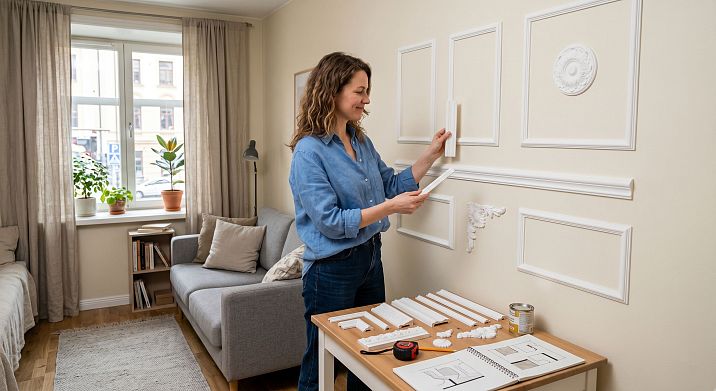
A small apartment is not a problem to be tolerated. It is a space where every design decision weighs more than in a spacious house. One right technique — and the room breathes. One mistake — and the walls press in. That is why the question of stucco decoration in a small apartment is so often accompanied by anxiety: "Won't it make it even more cramped?"
The answer to this question is not "no," but "it depends on the choice."stucco decor for a small apartmentPolyurethane stucco is not the heavy plaster molding of a Baroque mansion. It is lightweight thin moldings, delicate frames, neat overlays that add architectural character to a wall without visual pressure. With the right profile selection and proper painting, decor in a small room does not reduce space — it structures it, makes it organized, and therefore visually more spacious.
The whole task is one: choose the right tool. Not the one that looks beautiful in a grand hall, but the one that works in an apartment of 35–45 square meters, with 2.5 m ceilings, narrow piers, and combined zones.





Can stucco decoration be used in a small apartment
Yes. But not any and not everywhere.
The classic fear of stucco molding in a small space is explained in a specific way: a heavy plaster cornice, a wide profile with elaborate Baroque relief, large ornamental overlays. All of this indeed creates a feeling of crampedness. Not because the stucco is "bad," but because its scale does not match the scale of the space.
Polyurethane decor for a small apartment is a fundamentally different story. A thin molding profile of 10–20 mm does not create visual weight. It works like a line on paper—it defines structure without taking up volume. A simple rectangular frame on the wall in a monochrome finish is not mass, it's a contour. And this contour makes the wall more organized, and therefore visually more manageable.
Key principles of stucco decor for a small room:
-
thin or medium profile—no more than 22–28 mm;
-
monochrome paint or a shade close to the background;
-
one accent wall, not decor around the entire perimeter;
-
a maximum of one or two frames per wall;
-
minimum ornamentation—clean lines are more important than rich relief.
Moldings for a small apartmentmade of polyurethane, when these principles are followed, do not shrink the room—they give it a finished look. And a finished space is always perceived as more comfortable than an empty and unstructured one.




Which elements are suitable for small rooms
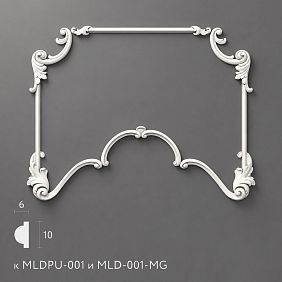
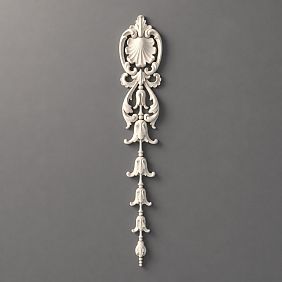
Our factory also produces:
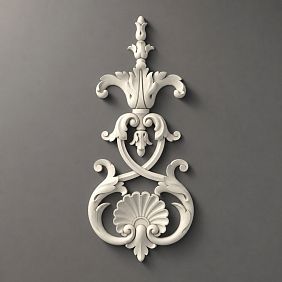
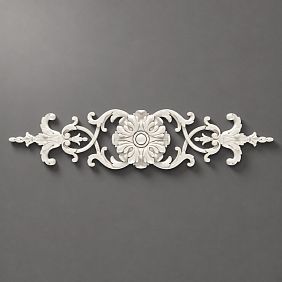
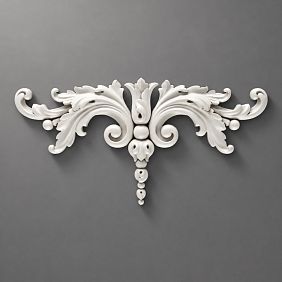


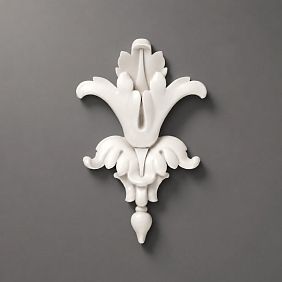
Thin moldings
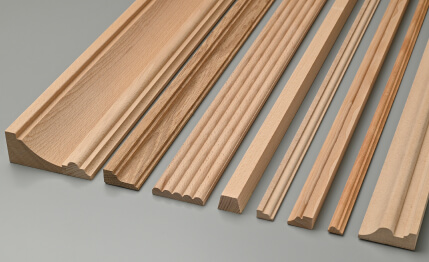
The first rule of a small apartment is that the molding profile should be proportional to the ceiling height and wall width. For ceilings of 2.4–2.6 m, the optimal range is 10–18 mm. For ceilings of 2.6–2.8 m, it is 14–22 mm.
Thin moldings for wallscreate a line, not a relief. This line structures the wall but does not overwhelm. This is exactly the tool needed in a space where every centimeter counts.
There is another optical effect rarely mentioned: a thin molding in a monochrome finish makes the frame almost weightless. Such a frame does not protrude forward—it stays at the level of the wall plane. As a result, the wall looks structured but does not feel closer to the observer.
For comparison, a wide molding of 45–60 mm creates a pronounced three-dimensional shape that visually extends from the wall plane. In a small room, this sensation amplifies the feeling of crampedness.
Get Consultation
Simple frames
A simple rectangular frame without ornamental corner pieces is a minimalist yet highly effective tool for a small apartment. One frame on the wall behind the sofa or at the head of the bed is an architectural organization of space in its most delicate execution.
Frame size in a small room: width—55–70% of the wall width, height—45–60% of the working height from the baseboard to the ceiling. A frame smaller than these parameters will look lost on the wall.
Ready-made molding framesis one of the most practical formats for small apartments: the elements are already sized, the corners are factory-cut, and installation does not require professional experience.
Small decorative corner pieces
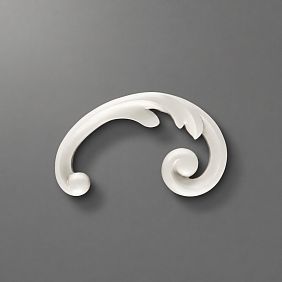
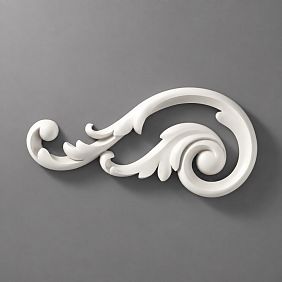
In a small room, corner pieces should be proportionate to the molding — no larger than 4–6 cm in diameter. A large floral piece with high relief on a thin molding looks disproportionate and creates a sense of decorative "noise."
decorative wall overlayssmall-scale — geometric squares 3×3 cm or delicate floral elements 5×5 cm — these are point accents that add character to the system without visual clutter.
An important rule: in a small apartment, it's better to forgo corner pieces entirely than to choose disproportionately large ones. A clean frame corner looks strict and professional.
Vertical elements for elongating the wall
Vertical molding is the most effective tool in the arsenal for a small space with low ceilings. One or two vertical moldings on a partition wall or in an interior with a height of 2.4 m create an optical illusion: the eye moves vertically — and the room feels taller.
Vertical wall decor made of polyurethane— this is the only decorative technique that simultaneously structures the wall and visually increases the room's height. For studios and one-bedroom apartments with 2.5 m ceilings — this is the priority format.
Height of vertical molding: 60–80% of the wall's working height. Bottom offset 20–30 cm from the baseboard, top offset 20–25 cm from the ceiling. Two moldings with equal spacing on a narrow partition wall — enough to create rhythm.
Lightweight ready-made kits
For a small apartment, compact ready-made kits designed for walls 1.0–1.8 m wide work better. Such a kit provides a predictable result without the risk of miscalculating proportions: all elements are already coordinated in scale.
Polyurethane wall decorin the form of a ready-made compact kit — it's one order, one installation, one result. For a busy person doing renovations on their own, this is important.
What mistakes make a room visually smaller
Too wide profile
A molding 40–60 mm wide in a room with 2.5 m ceilings is a gross scale error. A wide profile protrudes from the wall plane, creates a shadow, and emphasizes its own volume. In a small room, this volume feels like pressure.
Rule: the width of the molding profile should not exceed 1% of the ceiling height. With a 2.5 m ceiling — no more than 25 mm. With 2.4 m — no more than 24 mm. This is not a strict limitation, but a guideline.
Too many small frames
Five small frames 30×40 cm on a 2.8 m wide wall create a fragmented, restless surface. The eye finds no focal point and jumps between frames. The room feels fussy and cramped.
Rule: in a small apartment, it's better to have one large frame than three or four small ones. One clear architectural accent organizes the space better than a set of small elements.
Large ornament on a small wall
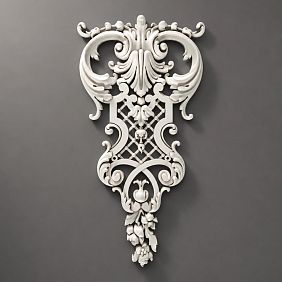
A rich floral relief, tall corner overlays 12–15 cm, wide central cartouches — all this in a small room creates a sense of ornamental excess. The pattern becomes too active, it 'comes out' of the wall and takes over the visual space.
For small spaces — only a laconic ornament or its complete absence. Geometry instead of floral relief, small corner accents instead of developed overlays.
Incorrect placement height
Decor hung too low — the bottom edge of the frame is 10 cm from the baseboard — presses the interior to the floor. Decor hung too high — the top edge is 5 cm from the ceiling — creates a feeling of hovering.
The correct range for a small apartment: bottom indent from the baseboard — 20–30 cm, top from the ceiling — 20–30 cm. The center of the system is at a height of 145–160 cm from the floor. This is the eye level of both a sitting and standing person.
Too contrasting color
Moldings in a bright contrasting color on a light wall in a small room is an aggressive technique. Contrast draws attention to the molding, makes it visually "heavy", pushes it forward.
For a small apartment — monochrome or a shade close to the background. The same tone plus or minus 10–15% in lightness. The relief is revealed through light, not through color contrast. More about coloring strategies in the material about stucco decor for walls for painting.
How to choose a style for a small apartment
Neoclassical Light — for a calm interior
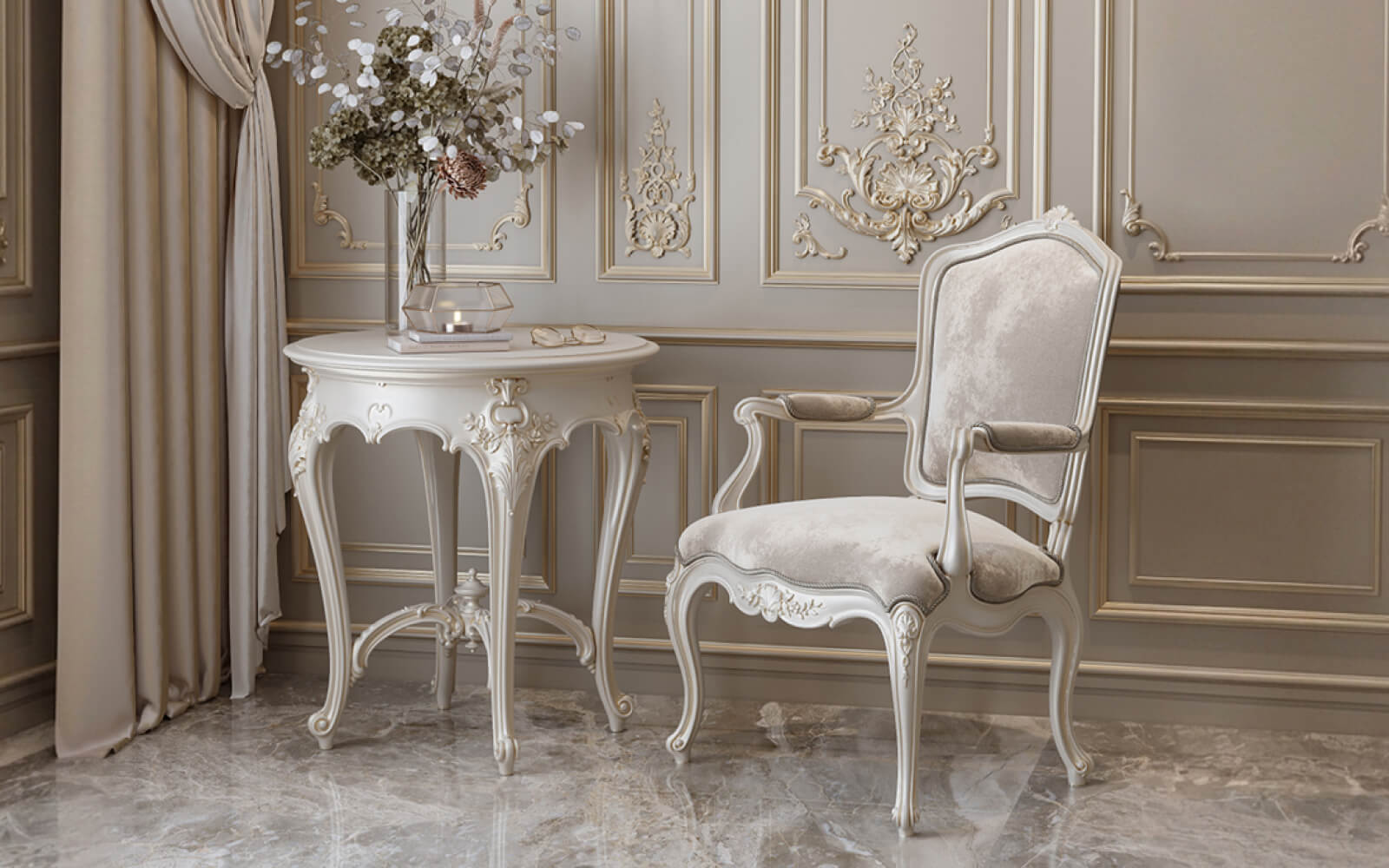
Light stucco decor for walls — the "Neoclassical Light" collection is the first and main choice for a small apartment. Thin classic profile 14–22 mm, delicate ornament without Baroque saturation, element scale designed for standard apartment conditions.
"Neoclassic Light" works in a small apartment precisely because it doesn't pretend to be historically grand. It's a modern, light neoclassicism that adds architectural character to the wall — but doesn't turn a 14-meter room into an attempt to replicate a palace hall.
When painted in a monochrome tone matching the wall, "Neoclassic Light" is completely invisible to those unfamiliar with design — but creates a feeling of "something right" for everyone who enters the room. That's exactly what's needed in a small space: not an accent, but quality.
Japandi — for minimalism and air
Wall decor in Japandi style — an ideal choice for those whose apartment lives in a neutral palette: beige, linen, white, warm gray. The collection is built on geometry without ornament: thin straight molding, square corner accents, complete absence of floral elements.
"Japandi" in a small apartment is air. Literally: clean lines and the absence of ornament don't overload the eyes. The gaze finds architectural structure but doesn't "catch" on decorative patterns. This is a crucial quality for a small space.
"Japandi" works especially well in studio apartments: one molding frame in the living area, a few vertical moldings near the entrance — and the studio gains thoughtfulness without overload.
Neoclassic — if you need a more architectural wall
Stucco decor in neoclassicism is suitable for a small apartment with one condition: ceilings no lower than 2.6–2.7 m. With sufficient height, molding with a profile of 26–34 mm looks proportionate and convincing even in a small room.
If ceilings are 2.5 m — "Neoclassic" already creates a risk. At 2.4 m — this choice is not recommended. The rule is simple: the lower the ceiling, the thinner the profile.
"Neoclassic" in a small apartment works only as a single accent for the entire apartment. For example, one wall in the living room. Decorating several walls with the "Neoclassic" collection in a small space is overload.
Versailles Light — only as a neat accent
The "Versailles Light" collection in a small apartment is a risk zone. Rich ornament, wide profile, high corner overlays — all of this requires scale. If you do use "Versailles Light" in a small space, then only as one element: one small decorative rosette on the wall at the headboard or one compact frame in the mirror area.
Never — a full molding system "Versailles Light" in a room up to 15 sq. m. This is the only strict limitation.
Where to use stucco decor in a small apartment
Wall behind the sofa
This is the best scenario for stucco decor in a small living room or studio apartment. One frame made of thin molding, matching the width of the sofa — and the living room gets a finished accent without a feeling of overload.
Frame width — sofa width or plus 10 cm on each side. No more: going beyond the sofa in a small space disrupts the balance. Monochrome painting — mandatory.
Detailed analysis — in the article about polyurethane wall decor behind the sofa.
Bed headboard
In a small bedroom, a molding frame at the headboard is a delicate technique that adds completeness to the interior without visual load. System width — bed width. Height — from the headboard level to 20–25 cm below the ceiling.
For a small bedroom, one thing is important: do not raise the decor too high. In a narrow room, high-placed decor creates a feeling of hovering. The center of the system — at a height of 140–155 cm from the floor.
For more details, see the article on a molding set for the bedroom.
Narrow pier
A narrow wall section of 40–80 cm is one of the most common "problem areas" in a small apartment. A frame doesn't fit here, and there's no room for furniture. This piece of wall simply exists.
Two vertical moldings with equal spacing or one narrow vertical frame on such a wall section turn a problem area into a deliberate element. The eye perceives the wall section as part of a rhythmic system, not as empty space between doors.
vertical wall decor — the main tool for narrow wall sections in a small apartment.
Entryway
The hallway of a small apartment is often a corridor 90–120 cm wide. There's no room for furniture, no space for large decor. But one small molding frame in the mirror area or a series of vertical moldings along the wall turns the hallway into an interior, not a service vestibule.
A thin molding of 12–16 mm in the corridor is architectural minimalism in action. The rhythm of lines on a narrow wall creates depth and organization. The first impression of the apartment is formed right here.
Mirror zone
A molding frame around a mirror is a universal technique for any apartment, but in a small one it works especially effectively. The mirror reflects space, creating an illusion of volume. The molding frame makes the mirror an architectural object, not just an item on the wall.
An important nuance: the frame should not be wider than the mirror. Ideally, the molding is flush with the mirror or with a gap of 3–5 cm.
Kitchen-living room
In a studio apartment or a one-room apartment with an open layout, zoning with walls is physically impossible. Decor helps to visually define zones. A molding frame behind the dining table separates the kitchen area from the living room. A system of moldings in the living room area creates its "territory".
The main rule for a studio: decor in only one zone. Not both walls, not three accents — just one. Otherwise, a small space turns into a collection of decorative techniques.
How to choose decor for ceiling height: practical parameters
| Ceiling Height | Molding profile | Recommended collection | Number of frames on the wall |
|---|---|---|---|
| 2.4 m | 10–16 mm | Japandi, Neoclassic Light | 1 |
| 2.5 m | 12–20 mm | Japandi, Neoclassic Light | 1–2 |
| 2.6 m | 16–24 mm | Neoclassic Light, Neoclassic | 1–2 |
| 2.7 m | 20–30 mm | Neoclassic, Neoclassic Light | 1–2 |
| 2.8 m and above | 24–38 mm | Neoclassical, Versailles Light | 2–3 |
Monochrome — the main rule of a small space
This is not an aesthetic preference — it's a technique. In a small apartment, moldings and decorative overlays should be painted in the tone of the wall. Not necessarily identical: a shade 5–15% lighter or darker than the background is acceptable. But not a contrasting color.
Why is this important? Because contrasting decor attracts the eye, 'comes out' of the wall plane, and takes up visual space. Monochrome decor structures the surface while staying at its level. The first option reduces the room. The second organizes it.
Stucco decor for walls for painting— это именно тот формат, который нужен в маленькой квартире. Монтаж на стену, заделка стыков, грунт, покраска вместе со стеной — и результат выглядит как монолитная архитектурная поверхность.
Полиуретан vs гипс в маленькой квартире: почему разница принципиальна
Для маленького пространства выбор материала — не просто вопрос удобства монтажа. Это вопрос объёма.
Гипсовая лепнина имеет высокий рельеф и большую массу. Широкий гипсовый молдинг 50 мм с развитым профилем выходит из плоскости стены на 15–25 мм. В маленькой комнате это физически уменьшает объём пространства — и это ощущается.
Полиуретановый молдинг 20 мм выходит из плоскости стены на 5–8 мм. Это в 3–4 раза меньше. Разница в 10–15 мм для маленькой комнаты — это разница между «декором, который заметен» и «декором, который давит».
Кроме того: Polyurethane moldings for walls монтируются на клей без крепежа в стену. Никаких дополнительных отверстий в тонких межквартирных перегородках. Никакого риска повредить отделку соседей при сверлении.
Что купить: молдинги или готовый комплект
Для маленькой квартиры рекомендация однозначна: начинайте с готового комплекта. Вот почему.
В небольшом пространстве ошибка в пропорциях заметна немедленно. Рамка чуть шире, чем нужно — и она «упирается» в угол. Рамка чуть уже — и диван выглядит шире декора. Молдинг чуть крупнее по профилю — и комната начинает давить. Готовый комплект минимизирует эти риски: пропорции элементов уже выверены дизайнером.
Buy wall decor for a small apartmentin the form of a ready-made compact set — it's a single order with a predictable result.
When individual moldings are still better:
-
the wall is very narrow (less than 1 m) and the standard set does not fit in width;
-
a non-standard vertical layout in the partition is needed;
-
precise adjustment to a specific size of a mirror or furniture is required.
In such casesMoldings for a small apartmentare purchased by the meter — calculated according to a diagram on paper.
Practical algorithm for independent selection without errors:
-
Measure the wall: width and working height from baseboard to ceiling.
-
Identify the key object: sofa, bed, mirror.
-
Calculate the system width: object width ±10–15%.
-
Choose a collection: for ceilings up to 2.6 m — "Neoclassic Light" or "Japandi".
-
Choose a format: ready-made set or linear moldings.
-
Choose a color: monochrome or close to the background.
Details on choosing moldings — in the article about polyurethane wall moldings and about decorating a blank wall.
Studio: a special case
A studio apartment deserves a separate discussion because here all the laws of small spaces are amplified. One room — three to four functional zones. Every visual element is visible from all points of the space simultaneously.
In a studio apartment, stucco decor works on the principle of "one — maximum." One accent: the wall behind the sofa in the living area or the wall at the headboard in the sleeping area. Never — decor in several zones simultaneously.
Collection for the studio: only "Japandi" or "Neoclassic Light." No classical ornament: the studio is a modern space, and the decor should match it.
Monochrome — no options. In a small combined space, contrasting decor creates chaos. Monochrome organizes.
A full breakdown of decorative strategies for open spaces — in the article about polyurethane decor for an empty wall.
Frequently Asked Questions
Can stucco molding be used with a low ceiling?
Yes, if you choose a thin molding profile (10–18 mm) and vertical elements. Vertical molding optically increases the height of the room. Horizontal cornices and wide moldings with ceilings below 2.5 m are not recommended.
Which moldings to choose for a small room?
Profile 10–22 mm depending on ceiling height. Collections "Neoclassic Light" or "Japandi". One accent per room, monochrome painting. No large ornamental overlays.
Do I need to paint the moldings the same color as the wall?
For a small apartment — yes, this is the main recommendation. Monochrome painting makes the decor part of the surface, not an independent object. The space remains unified and airy.
Is polyurethane stucco molding suitable for a studio?
Yes. "Japandi" or "Neoclassic Light" with a thin profile, one accent wall, monochrome. This is the right format for a studio of any size.
What is better for a small apartment: thin moldings or decorative panels?
Thin moldings are more versatile: they provide an architectural effect without physical bulk. Decorative panels are good in large spaces — in a small apartment they can create a feeling of crampedness due to the rich relief over a large area. The exception is a small decorative panel as the only accent on the wall at the headboard.