










































































Article Contents:
- Stucco for columns and pilasters: designing vertical accents in the interior
- What is stucco for columns and pilasters
- Which STAVROS elements are suitable for column design
- Moldings for columns and pilasters
- PU overlays for vertical decor
- Wall decor in the column area
- Decor for moldings: corner blocks and inserts
- Carved decor for classic columns
- Where to use stucco for columns in the interior
- Column in the interior
- Pilaster on the wall
- Half-column or decorative projection
- Pier between openings as a pilaster
- Hall, living room, study: where column stucco is especially appropriate
- Column decoration schemes with stucco
- Scheme 1. Vertical frame of moldings
- Scheme 2. Overlays at the top and bottom
- Scheme 3. Pilaster with molding, inner frame, and central decor
- Scheme 4. Column with brackets and carved decor
- Scheme 5. Complete vertical accent
- How to choose stucco for a column: algorithm
- How to calculate elements for columns and pilasters
- Stucco for columns in different styles and rooms
- Classic Interior
- Neoclassicism
- Neoclassicism
- Stucco for columns in a modern-style apartment
- Mistakes when choosing stucco for columns
- Where to buy STAVROS stucco for columns
- FAQ: answers to popular questions about stucco for columns



Stucco for columns and pilasters: designing vertical accents in the interior
Vertical is the most powerful architectural gesture in an interior. Horizontal lines calm, create a sense of order and balance. But it is the vertical that lifts the gaze, stretches the space upward, and gives the room solemnity and scale. Columns, pilasters, wall sections between openings, decorative protrusions on walls — all these are vertical accents that can completely change the character of an interior. But only if they are skillfully designed.
Stucco for columns is not about buying a ready-made plaster column weighing half a ton. It is about selecting decorative elements: moldings, PU overlays, carved decor, brackets, and wall decor, from which the image of a vertical architectural accent is assembled. Stucco for columns and pilasters in the STAVROS catalog are real items that can be used to create both a strict neoclassical pilaster and a lush classical portal with columns.
If you are interested in how to choose decorative stucco for columns and what exactly to buy for vertical decor — let's break it down in order: architectural context, application scenarios, specific schemes, links to the catalog.




What is stucco for columns and pilasters
Before moving on to selecting elements, it is important to clearly define the subject. Stucco for columns is not the columns themselves as a structural element of a building. It is the decorative finishing of vertical surfaces: moldings, overlays, decorative inserts, profiles that turn a flat wall or a bare structural column into an architectural object.
What can be the object of decoration:
-
Structural column — a real load-bearing or decorative pillar in a room. Found in country houses, large apartments with open layouts, offices, cottages. Without finishing, it is just a cylinder or rectangle. With stucco decor, it becomes an element of classical architecture.
-
Half-column — a column half 'recessed' into the wall. A typical element of classical interiors, creating a sense of depth and monumentality.
-
Pilaster — a flat decorative projection on a wall that imitates a column. This is the most accessible and common vertical accent. A pilaster does not require a structural protrusion: it can be formed purely by decorative means — moldings and overlays directly on a flat wall.
-
The pier between openings is the vertical plane between a door and a window, between two doors, between niches. It is a ready "candidate" for pilaster decor.
-
Decorative projection — any vertical element that stands out architecturally: a corner, a niche, an end plane.
Decorative stucco for columns in this context is a system of polyurethane and carved decor elements from STAVROS, which allows you to design any of the listed objects without construction work and without special qualifications.
A separate nuance: the request "stucco for the facade of a column" is a facade topic that we do not develop in this article. The article is about interior space: living room, hall, study, corridor, hall. Interior decor. No confusion with the facade cluster.
Our factory also produces:




Which STAVROS elements are suitable for designing columns
The main principle: not to invent non-existent products, but to use what is actually available in the catalog. For designing columns, half-columns, and pilasters, the following groups of elements are needed.
Get Consultation
Moldings for columns and pilasters
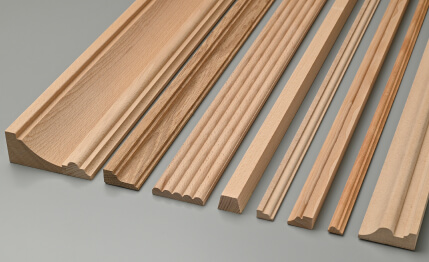
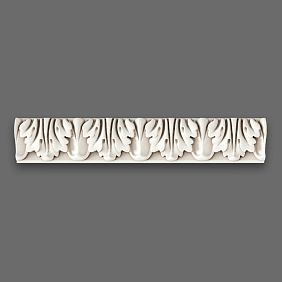
Polyurethane moldings, cornices, and baseboards — this is the basic tool for any vertical decor. The molding runs vertically along the column or pilaster, forming a frame contour. Two vertical profiles on the sides + horizontal ones at the base and at the capital — and the pilaster is ready in its basis.
For columns and pilasters, moldings with moderate or developed relief are chosen: a too flat profile gets lost on the vertical, a too high one makes it heavier and coarser. The optimal profile width for designing a pilaster 150–250 mm wide is a molding 30–60 mm. For a wide pilaster from 300 mm — 50–80 mm.
An important technical point: on vertical surfaces, the molding is glued the same way as on horizontal ones — with assembly adhesive. But fixation during the setting process requires holding or temporary fastening. More about the technology — in the article installation of polyurethane molding.
PU overlays for vertical decor
PU overlays — individual decorative elements with a three-dimensional relief. In the design of columns and pilasters, they serve as a capital (top accent), base (bottom accent), and central decorative insert.
Top overlay (capital) — the most expressive element of a pilaster. It defines the stylistic affiliation: Ionic volute, Corinthian acanthus, simplified classical abacus, geometric element for Art Deco. The overlay size should be slightly wider than the pilaster width — this creates the feeling of a "crowning" element that holds the vertical.
Bottom overlay (base) — a mirror or independent solution at the bottom of the pilaster. Usually simpler than the top: a rectangular relief element that "roots" the pilaster into the floor plane.
Central overlay — an optional but expressive element in the middle part of a long pilaster (for rooms with ceilings of 3 m and higher). A medallion, cartouche, geometric ornament — something that makes the monotonous vertical plane decoratively rich.
Decor for walls in the column area
Polyurethane wall decor — for filling the pilaster field and creating a decorative pattern on the plane around the column. Frame panels, horizontal decorative belts, vertical accents — all of this works in conjunction with moldings and overlays.
For a pilaster wider than 200 mm, the inner field is a decorative opportunity. A frame made of molding inside the pilaster, a small decorative element in the center of the field — this is no longer just a protrusion, but a full-fledged architectural motif.
Decor for moldings: corner blocks and inserts
Decor for Molding — corner blocks for joining horizontal and vertical profiles. On a pilaster, these are primarily corner blocks at the transition points of vertical molding to horizontal (at the base and capital). Without corner blocks, joints need to be cut at 45° — technically more precise, but requires accuracy. With corner blocks — a clean decorative joint without cutting.
Carved decor for classical columns
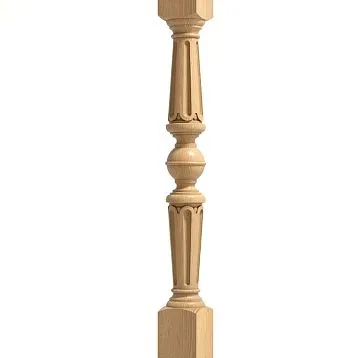
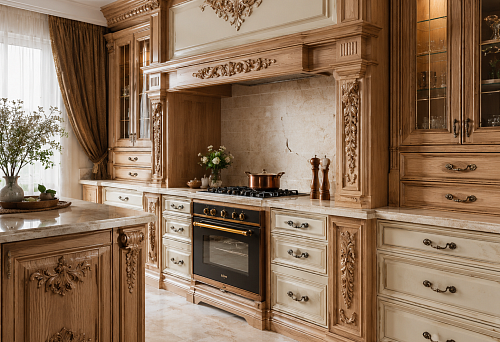
STAVROS carved decor — for those who want true depth of relief and wood texture. For classical and neo-baroque interiors, carved elements on columns provide a level that polyurethane only partially reproduces. A carved capital, carved base, carved insert in the center of the shaft — this is museum-quality craftsmanship.
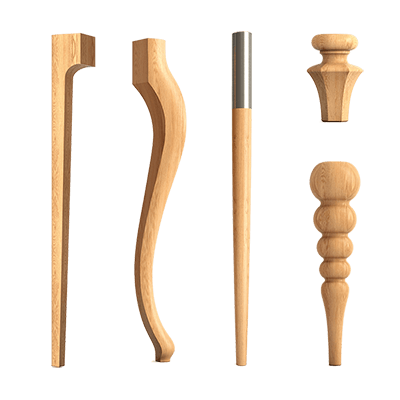
Carved brackets are used in pairs with a pilaster: they are placed above the capital or on its sides, visually 'supporting' the cornice shelf or beam. A bracket paired with a pilaster is one of the strongest architectural techniques in a classical interior.
Where to use stucco for columns in an interior
Before choosing elements, you need to precisely define the object. Let's break down each scenario.
Column in an interior
A structural or decorative column in an interior is both a challenge and an opportunity. A challenge because a bare structural post disrupts the stylistic logic of the room. An opportunity because a properly designed column becomes an architectural focal point.
Stucco on a column in an interior is installed on four faces (for a rectangular cross-section) or on visible sides (for a corner column). The scheme: a molding frame along the entire height of the face → an overlay at the top (capital) → an overlay at the bottom (base) → a central overlay if needed.
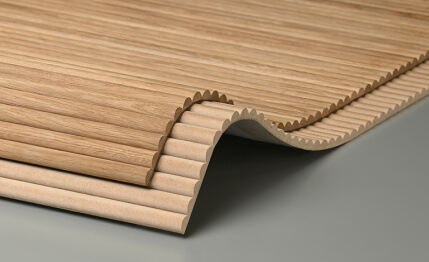
For a column with a circular cross-section, it's more complex: standard straight profiles do not fit along the radius. Here, flexible moldings or vertical overlays are used, which are installed along the generatrices of the cylinder.
The connection of the column with the cornice is mandatory. a polyurethane cornice must 'pass through' the column, creating a visual horizontal link between the objects in the room.
Pilaster on the wall
A pilaster is the most accessible and flexible scenario. It doesn't need to be built: it is formed by decor directly on a flat wall.
The pilaster principle: two vertical moldings on the edges + horizontal profiles at the base and top line + a capital overlay + a base overlay. Between the vertical moldings is the pilaster's "shaft": either a flat wall surface (this is normal if the wall is painted the right color) or a field with an inner frame and a decorative accent.
Decorating a pilaster with stucco is literally working with a flat wall: glue, molding, overlay, painting. No plaster, no protrusions. The result is a full-fledged architectural element indistinguishable from one made using construction methods.
Important: the width of the pilaster should be proportional to its height. The classic ratio is a width of approximately 1/7–1/10 of the height. For a room with a 3 m ceiling, a pilaster 300–400 mm wide is the correct proportion.
Moldings for columns and pilasters — profiles of different widths, for different scales. The current assortment is in the cards.
Half-column or decorative protrusion
A half-column is a pilaster with a protrusion: the plane of the "shaft" protrudes from the wall by 60–150 mm. Such a protrusion can be made of drywall, brick, or a solid element. Stucco decor here is applied using the same logic: vertical moldings, overlays at the top and bottom points, decor on the plane.
For a drywall protrusion, it is important to remember: drywall is a good base for polyurethane provided the panels are properly secured and puttied. The glue bonds reliably. Installation details are in the article How to glue polyurethane molding.
Decor for a column on a ledge: vertical molding along the front edge of the ledge + molding frames on the side faces + overlay on the top horizontal. This creates a three-sided "wrapping" of the ledge with decor — a full architectural solution.
Pier between openings as a pilaster
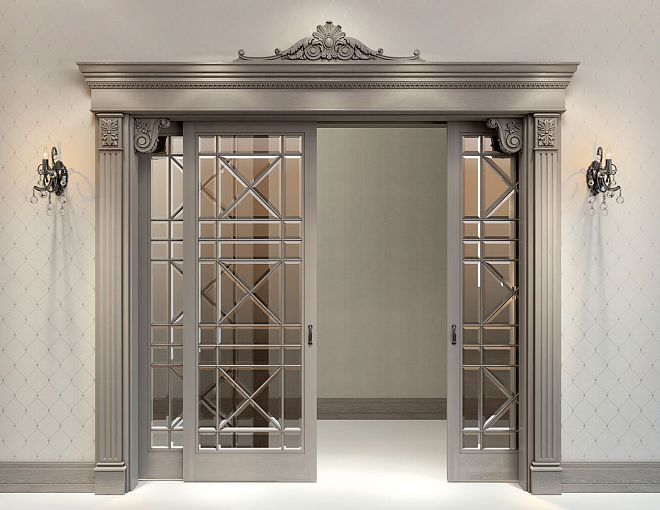
This is perhaps the most underestimated scenario when working with vertical accents. The pier between two doors or between a door and a window is a vertical plane, usually 200–500 mm wide. This width is ideal for pilaster design.
The scheme is simple: the pier is designed as a pilaster — a molding frame along the contour + an overlay on top + an overlay on the bottom. If width allows — an inner frame in the pier field. As a result, the pier ceases to be "empty" and starts working as an architectural divider.
This works especially well in hallways with multiple doors and in living rooms with wide openings: the piers are designed symmetrically, creating an architectural rhythm for the entire wall.
PU overlays for vertical decor и Wall Decor — key tools for this scenario.
Hall, living room, study: where column stucco is especially appropriate
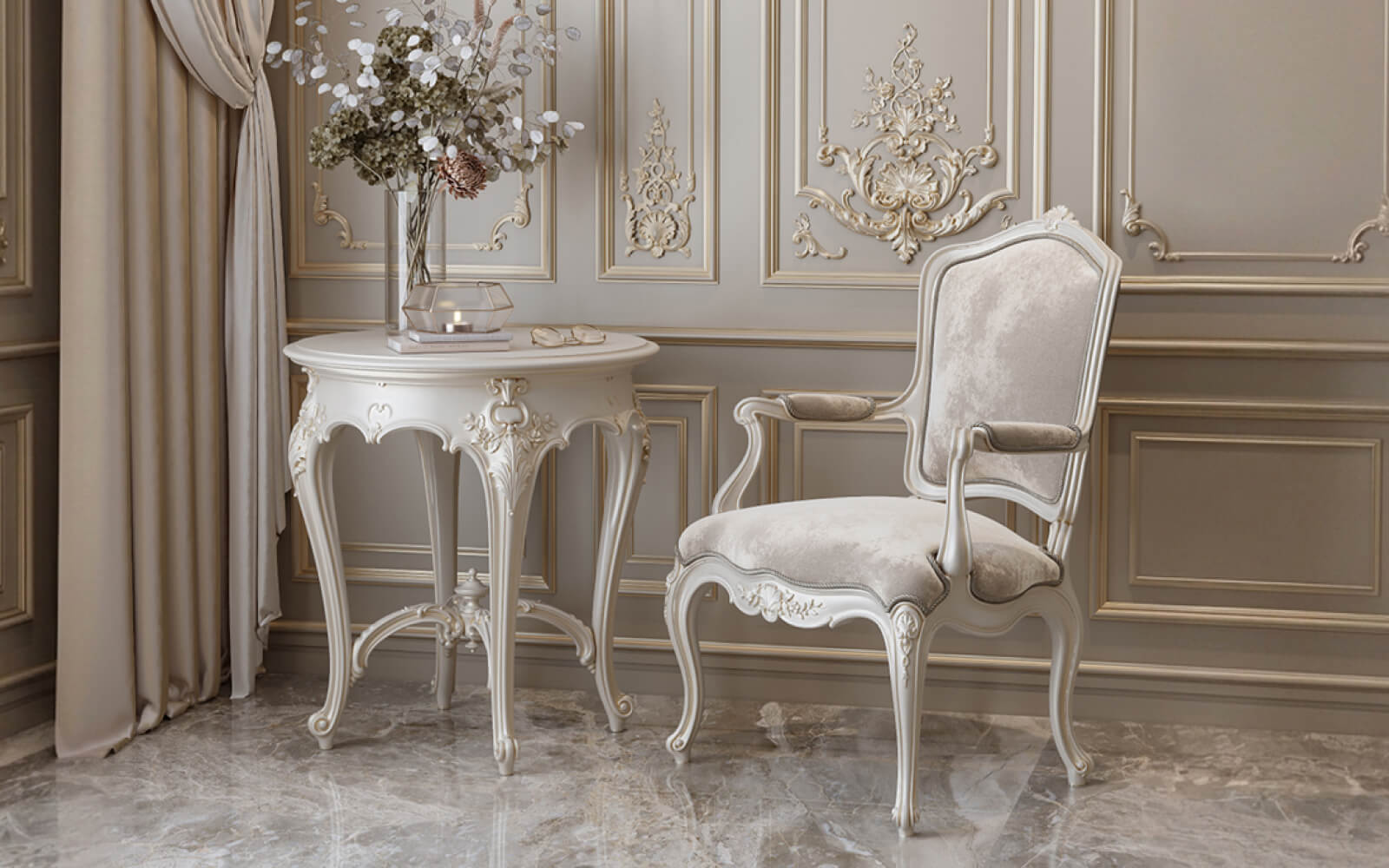
The hall and grand foyer are the space of first impressions. It is here that architectural decor works with maximum impact. Pilasters on the sides of the entrance door or around the perimeter of the hall are a classic technique that conveys solemnity and status.
Living room — for zoning and accenting. Pilasters on the edges of the TV wall or on the sides of the fireplace area create architectural "frames" for functional zones.
Study — to create an atmosphere of seriousness and classical rigor. The piers between bookcases, designed as pilasters, unite the furniture and walls into a single architectural ensemble.
Dining room — pilasters around the perimeter create the feeling of a "hall," even if the room is small.
Stucco for columns in the classical style — in Classic collection. For Empire style — in Empire collection. For a lavish version — Versailles Collection.
Schemes for decorating columns with stucco
Five working schemes — from minimalist to formal.
Scheme 1. Vertical frame of moldings
A basic but flawlessly working option. Two vertical moldings along the edges of the pilaster/piers + horizontal jumpers at the base (30–50 mm from the baseboard) and at the top line (30–50 mm from the cornice). A frame contour without overlays.
For neoclassicism and modern classicism — a self-sufficient scheme. Molding 30–50 mm, smooth or with minimal relief. Color — white or matching the wall.
One condition: vertical segments must be strictly perpendicular to the floor. The slightest tilt at a height of 2.5–3 m becomes noticeable — check with a level before installation.
Moldings made of polyurethane — in the profiles section.
Diagram 2. Overlays at the top and bottom
Reinforcing the base frame: overlays are added to the vertical contour at the base and at the capital. This scheme already gives a sense of classical order — a column or pilaster with a base and capital.
Capital overlay size: 100–180 mm in width (slightly wider than the pilaster width), 80–150 mm in height. Base overlay size: can be slightly smaller than the capital or identical to it.
Key technique: the capital overlay should be horizontally "spread out" — wider than the molding verticals. This creates a sense of the column "opening up" at the top, characteristic of classical architecture.
PU overlays — selection by size and relief in product cards.
Diagram 3. Pilaster with molding, inner frame, and central decor
A full-fledged pilaster for a classical or neoclassical interior. Composition:
-
External frame made of molding along the contour of the pilaster
-
Inner frame made of smaller profile molding inside the field
-
Central overlay or element made of wall decor
-
Capital overlay on top
-
Base overlay at the bottom
-
Corner blocks made of decoration for moldings at all corner joints
This is an architecturally rich option that works with ceiling heights from 2.8 m. Ideal for rooms with ceilings of 3 m and higher.
Scheme 4. Column with brackets and carved decor
A formal scheme for halls, living rooms, fireplace areas, and representative spaces. The vertical of the pilaster or column is complemented by carved brackets, which are placed above the capital line or on its sides. The brackets visually "support" the cornice line or beam above them.
Additional Items: Carved Decor On the pilaster shaft — a vertical carved insert with a floral or geometric motif. For a hall with a ceiling of 3.5 m or more, this is the level that sets the atmosphere of a historical interior.
Brackets and carved decor are combined with polyurethane moldings and overlays — the main thing is that the style is unified. Collection of neoclassicism — for a monumental combination of carved and polyurethane decor.
Scheme 5. Complete vertical accent
This is not a single detail, but a meaningful set for creating a complete vertical architectural motif.
Kit contents:
-
Molding — vertical outline and inner frame
-
PU overlay — capital and base
-
Decor for Molding — corner blocks
-
Wall Decor — central accent in the pilaster field
-
Bracket — if necessary, for a classic interior
-
Cornice — horizontal tie to the ceiling
-
Skirting — lower tie to the floor
It is the last point — the connection with the cornice and baseboard — that is often overlooked. And this is fundamentally important: a pilaster that “starts” not from the baseboard and “ends” not at the cornice, but simply hangs in the air, looks like an unfinished detail.
How to choose stucco for a column: an algorithm
Eight steps that deliver results.
Step 1. Determine the type of object
A structural column, half-column, pilaster on a flat wall, pier, or decorative projection — the design scheme and set of elements depend on this.
Step 2. Measure the geometry
Height of the object (from baseboard to cornice or ceiling), width (for a pilaster — the width of the planned field), depth (for a projection or half-column). Write them down — they are needed for calculating the linear footage and sizes of overlays.
Step 3. Choose a style
Classic (16th–19th centuries) — rich relief overlays, ornamented brackets, order system. Neoclassicism — strict geometry, moderate relief, symmetry. Empire style — monumentality, simple forms with rich details. Art Deco — geometric overlays, rectilinear moldings. Modern classic — only a molding contour without overlays or with a minimal accent.
For classic and Empire style: Collection of neoclassicism. For lush classic: Versailles. For universal neoclassical: Classic.
Step 4. Choose the width of the molding
The width of the molding for the pilaster frame is 20–30% of the pilaster width. Pilaster 300 mm → molding 60–90 mm. Pilaster 200 mm → molding 40–60 mm. Wall section 150 mm → molding 25–40 mm.
Step 5. Choose the overlays
Size of the capital overlay: width = pilaster width + 30–60 mm (slightly wider than the field). Height = 10–15% of the pilaster height. Size of the base overlay: slightly smaller than the capital or identical to it.
Step 6. Check symmetry
If there are several pilasters in the room, they must be absolutely identical. Width, height, set of elements, distance from the baseboard to the base and from the cornice to the capital — everything identical.
Step 7. Connect the pilaster with the cornice and baseboard
The pilaster "starts" from the baseboard — the base is mounted directly above the baseboard (or coincides with its height). The pilaster "ends" at the cornice — the capital is mounted flush under the cornice or transitions into it. This is architectural continuity, without which the vertical hangs in the air.
Step 8. Go to the catalog
polyurethane products from STAVROS — starting section. Next — moldings, overlays, wall decor, decor for moldings, carved decor.
How to calculate elements for columns and pilasters
| Task | What to use | Where to go |
|---|---|---|
| Vertical pilaster frame | Moldings | Moldings made of polyurethane |
| Top accent (capital) | PU overlays | PU overlays |
| Bottom accent (base) | PU overlays | PU overlays |
| Central decor in the field | Decor for Walls | Wall Decor |
| Corner joints of moldings | Decor for moldings | Decor for Molding |
| Classic support/bracket | Carved brackets | Brackets |
| Carved inserts on the shaft | Carved decoration | Carved Decor |
| Horizontal bundle | Cornices | Crown Molding |
| Lower bundle | Baseboards | Baseboards |
Calculation of molding footage for one pilaster 2.7 m high (from baseboard to cornice) and 280 mm wide:
-
Two vertical segments: 2 × 2.7 m = 5.4 linear meters
-
Horizontal at the base: 0.28 m
-
Horizontal at the capital: 0.28 m
-
Inner frame (if needed): perimeter of the inner field = (0.14 m + 2.3 m) × 2 ≈ 5 linear meters
-
Total for one pilaster: about 11 linear meters + 15% reserve = 12–13 linear meters of molding
For four symmetrical pilasters in the living room — 48–52 linear meters respectively. Plus piece elements: 8 overlays (4 capitals + 4 bases) + corner blocks.
Stucco for columns in different styles and rooms
Architectural style defines everything: proportions, relief, scale, set of elements. Let's break down key scenarios.
Classic interior
For classic style — full order language. Base, shaft, capital. Inside the shaft — vertical flutes (imitation of flutes) from thin moldings or carved insert. Capital — with relief ornament. Brackets on the sides of the capital.
Large scale: pilaster 300–500 mm wide at a height of 3–3.5 m. Molding 60–80 mm with developed relief. Versailles Collection — for the most representative design.
Neoclassicism
Strictness and symmetry. Pilaster without ornamental overlays or with minimal geometric accent. Molding contour — clear, rectilinear. Capital — simple, with abacus without complex relief. Brackets — only for functionally motivated elements (cornice, shelf).
Molding 35–55 mm. Pilaster 200–300 mm wide. Classic Collection — a universal choice.
Empire
Empire style is monumentality with military and antique motifs. Pilasters in Empire style are powerful, wide, with heavy capitals. Eagles, laurel wreaths, military attributes in overlays. Brackets — mandatory, large. Collection of neoclassicism — specifically for this style.
Stucco for columns in a modern style apartment
A modern apartment with decorative pilasters is not a contradiction. A strict geometric pilaster without overlays, only a molding contour, white color on a white wall — works as an architectural gesture without violating modern aesthetics.
Key point: in a modern interior, a pilaster must be part of a well-thought-out system (cornice, baseboard, window frames — all in the same style). Otherwise, it looks like an accident.
Mistakes when choosing stucco for columns
Eight mistakes — and each one ruins the result.
Promising ready-made columns. An article about stucco for columns should lead to real decorative elements — moldings, overlays, decor. Not to a non-existent "product — ready-made column."
Making the theme facade-related. Interior column design is a separate cluster. Do not mix with exterior facade decor.
Too large overlays on a narrow pilaster. A capital overlay wider than the pilaster by more than 80–100 mm ruins the proportion. The capital should "open up" moderately.
Not considering ceiling height. A pilaster with a heavy capital in a room with a 2.5 m ceiling feels oppressive. For low rooms — a thin molding contour without large overlays.
Not connecting the pilaster with the cornice and baseboard. A pilaster that "starts" in the air above the baseboard and "ends" 20 cm before the cornice is an unfinished detail.
Mixing styles. A Baroque capital with an Art Deco molding is not eclecticism, it's a mistake. One style — one interior.
An odd number of pilasters. For symmetrical design, an even number of pilasters is needed on both sides of the central element. One pilaster in the center of the wall is architecturally illogical.
Do not account for the width of the piers. For pilaster design, a pier width of at least 150 mm is required. Smaller — there is no place to install the molding.
Where to buy stucco for STAVROS columns
For designing columns, pilasters, and vertical accents, STAVROS has a complete set: moldings for frame contours, PU overlays for capitals and bases, wall decor for filling pilaster fields, decor for moldings for corner joints, carved decor and carved brackets for classic and formal interiors.
Section navigation:
-
General selection: Polyurethane Items
-
Frame profiles: Moldings
-
Capitals and bases: PU overlays
-
Pilaster field: Wall Decor
-
Corner joints: Decor for Molding
-
Carved classics: Carved Decor и Brackets
-
Horizontal connection: Crown Molding и Baseboards
STAVROS is a manufacturer and supplier of decorative interior elements with its own collections of stylistically coordinated products. The key advantage: all elements within a collection are designed in a unified architectural language — meaning that a molding, overlay, cornice, and bracket from the same collection will work together rather than "compete" with each other. For decorating columns and pilasters, this is fundamental: a vertical architectural element requires consistency.
FAQ: answers to popular questions about stucco for columns
What is called stucco for columns?
Decorative elements for designing vertical architectural objects: moldings, overlays, carved decor, brackets, wall decor. All of this is mounted on the surface of a column, pilaster, or wall pier, creating an architectural image.
Can I buy stucco for columns at STAVROS?
Yes. The catalog does not have "ready-made columns" as a separate product, but it has all the elements for decorative design: moldings, PU overlays, wall decor, decor for moldings, carved decor, and brackets. Any version of pilaster or column decor can be assembled from these.
What elements are needed for a pilaster?
Vertical moldings for the outline + horizontal crosspieces + a capital overlay on top + a base overlay on the bottom + corner blocks at the joints. Additionally — a central overlay or wall decor in the pilaster field.
Is polyurethane stucco suitable for columns?
For interior decorative design — yes. Polyurethane moldings and overlays are mounted on any flat surface, paint well, and do not deform under standard operating conditions. For rooms with normal temperature and humidity conditions — no restrictions.
How many elements are needed for one pilaster?
Molding footage — about 11–13 linear meters per pilaster 2.7 m high. Piece elements: 1 capital overlay + 1 base overlay + corner blocks (4–8 pieces depending on the scheme). If there is an inner frame — an additional 5–6 linear meters of smaller profile molding.
How to connect the pilaster with the rest of the room decor?
The pilaster should "start" from the baseboard and "end" at the cornice. The style of the pilaster molding should be from the same style range as the cornice, baseboard, and window moldings. Use STAVROS collections for guaranteed style unity.
Can a pilaster be made on a flat wall without a protrusion?
Yes. The pilaster is formed by decorative means: moldings along the contour on a flat wall + overlays + decorative field filling. No construction protrusion is needed.