










































































Article Contents:
- What is stucco molding and what tasks does it solve
- What types of stucco molding are there
- Moldings
- Ceiling Cornices and Plinths
- Chandelier moldings
- Decorative appliqués
- Brackets, pilasters, capitals
- How to choose stucco molding by application location
- Molding for Walls
- Ceiling molding
- Facade stucco
- Molding for furniture
- Molding for Doors and Openings
- Why polyurethane is often chosen for stucco molding
- How to choose molding to match the interior style
- Classic
- Neoclassicism
- Modern classicism
- Art Deco
- Minimalism
- How to avoid mistakes when buying stucco
- Where to buy polyurethane stucco
- Brief checklist for choosing stucco decor
- FAQ: Answers to popular questions about stucco molding
- What is stucco molding in simple words?
- Which stucco molding is best for an apartment?
- Can stucco molding be used on a ceiling with a height of 2.6 meters?
- What is the difference between stucco molding and moldings?
- Where to buy polyurethane molding?
- Can polyurethane molding be painted?
- How to choose the size of stucco molding?
- Is special wall preparation needed before installing stucco molding?
- About the Company STAVROS
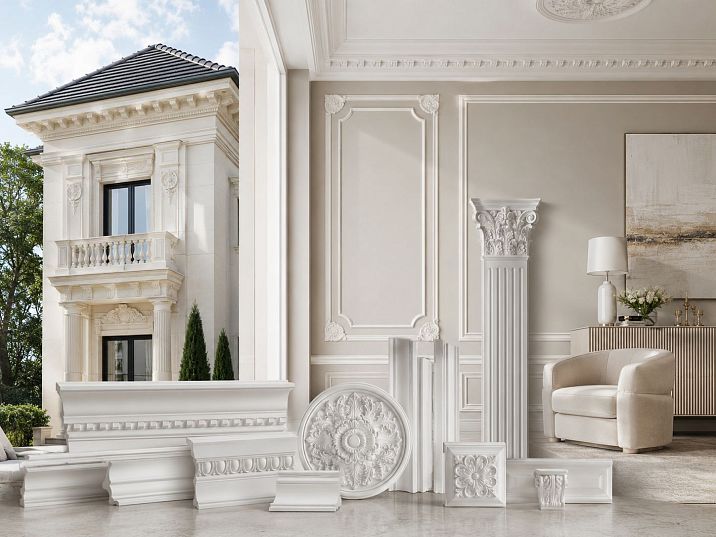
When it comes to interior or facade decor, it is Moldings the first thing that comes to mind as a tool capable of turning an ordinary space into an architecturally complete one. Today, these are not heavy plaster reliefs that required highly skilled craftsmen and labor-intensive installation. The modern decorative market offers polyurethane — a lightweight, durable, and precise material for reproducing relief, suitable for walls, ceilings, furniture, doors, and facade areas. It is these Polyurethane Items that open up possibilities previously only available with expensive classical molding.
The purpose of this article is not to tell the history of decorative arts or delve into architectural theory. Here is a concrete, practical discussion about which stucco molding to choose for a specific task, how to avoid mistakes with size and style, what elements are needed for what, and where to buy it all with confidence in quality.


What is stucco molding and what tasks does it solve?
Decorative stucco molding is an architectural element that adds depth, rhythm, and style to flat surfaces. Moldings, cornices, rosettes, pilasters, overlays, brackets, capitals — all of these fall under the concept of stucco decor, and each type of element serves its own purpose.
What exactly does stucco molding bring to an interior?
-
It makes the interior more architectural: even a simple room with molding frames on the walls gains a sense of thoughtfulness and class.
-
It covers empty walls that, without decor, seem unfinished.
-
It emphasizes the ceiling height using vertical elements — pilasters, overlays, moldings.
-
It finishes the joints between walls and ceilings with cornices and baseboards.
-
It helps create a classic, neoclassical, or modern interior with a unified decorative language.
-
It is used on building facades, doorways, fireplace portals, and furniture fronts.
Stucco decor is not just decoration. It is a tool for shaping space. A wall without moldings is just a wall. A wall with molding frames is already an architectural plan — readable and meaningful.




What types of stucco molding are there?
Before choosing specific elements, it is important to understand what is included in the range of polyurethane stucco decor and what tasks each type of product solves.
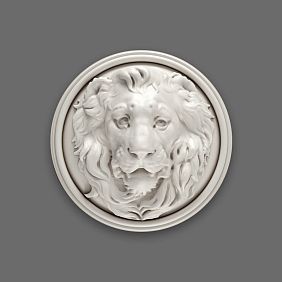
Our factory also produces:
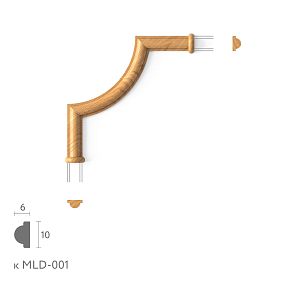
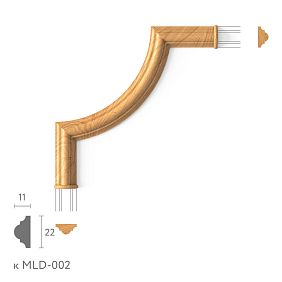
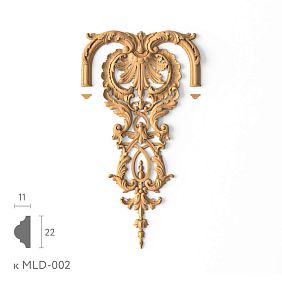
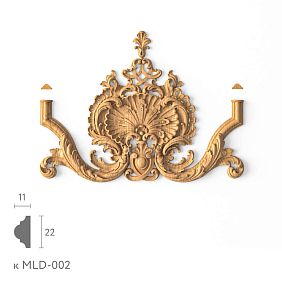
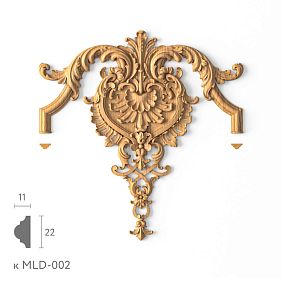
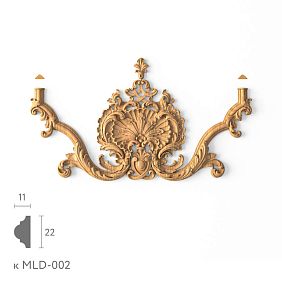
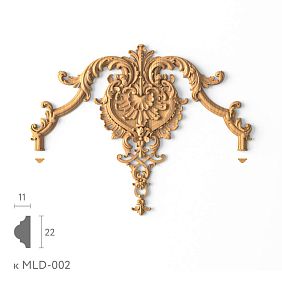
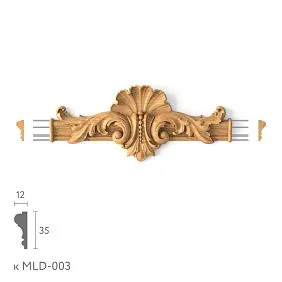
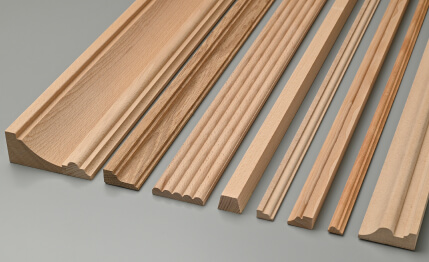
Moldings are linear profiles used to create framed compositions, zone walls, and frame openings. They come in various widths (from 20 to 150 mm) and relief complexity — from smooth to richly decorated.
Moldings made of polyurethane — a basic element of almost any stucco decor system. These are profiled decorative strips used to create frames on walls, frame panels, decorate mirrors, doors, TV areas, furniture facades, and zone surfaces. The width of moldings varies from a few millimeters to 200 mm or more, and the profile can be simple or complex with a multi-level relief.
It is the moldings that form the "skeleton" of any decorative system. Everything else—rosettes, overlays, corner elements—is mounted around them or at their intersection points.
Get Consultation
Ceiling cornices and moldings
Cornices are elements that decorate the joint between the wall and the ceiling. They visually complete the room, hide unevenness in the corners, and create a sense of architectural completeness. A ceiling cornice is one of the most noticeable elements in an interior: it runs along the entire perimeter of the room, setting the rhythm and scale of the entire space.
For those who want to add hidden contour lighting, cornices with a groove for an LED strip solve two problems at once: decorative and lighting. Check out the STAVROS catalog: you can choose polyurethane wall moldings, cornices and baseboards of different profiles for any interior style.
Rosettes for chandeliers
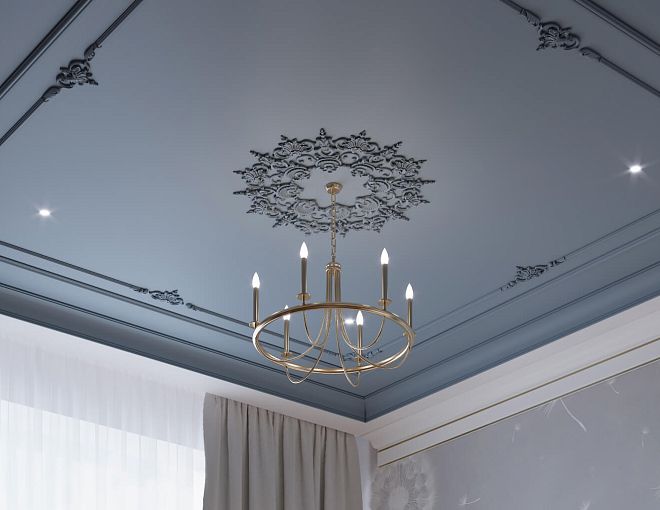
Polyurethane ceiling rosettes — decorative elements of round or polygonal shape with a three-dimensional ornament, mounted in the center of the ceiling around the chandelier attachment point. In classic and neoclassical interiors, the rosette turns the chandelier from a technical object into an architectural dominant of the ceiling.
The diameter of rosettes in the STAVROS catalog varies from small 150–200 mm to monumental 400–600 mm. The choice depends on the room area, ceiling height, and the diameter of the chandelier itself: the rosette should be at least a third smaller than the diameter of the light fixture so that the chandelier does not cover the decor.
Decorative appliqués
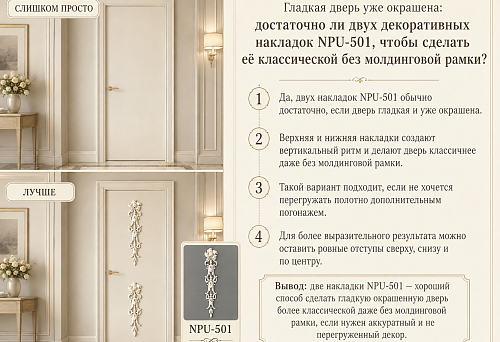
Polyurethane decorative appliques — these are small three-dimensional elements with floral, geometric, or figured ornaments, used to enrich decorative systems: decorating panels, complementing molding frames, designing TV areas, furniture facades, door portals, and fireplace zones.
Overlays allow you to create multi-layered relief compositions where moldings form the structure and overlays add detail. This approach is typical for classic and neoclassical interiors with a high density of decor.
Brackets, pilasters, capitals
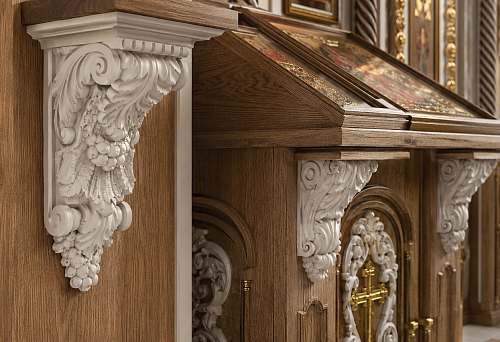
Brackets, pilasters and capitals are architectural elements for designing portals, columns, fireplace areas, facade compositions and interiors with expressive vertical accents. They give the space scale, depth and historical character.
Polyurethane brackets from STAVROS are used both as standalone elements above doors, windows and niches, and as part of multi-level decorative systems. If the task is to create a grand interior with architectural character, these elements are indispensable.
How to choose stucco by application
One of the main questions when selecting stucco decor is where exactly it will be used. The answer to this question directly determines which elements are needed, in what scale and with what profile.
Wall molding
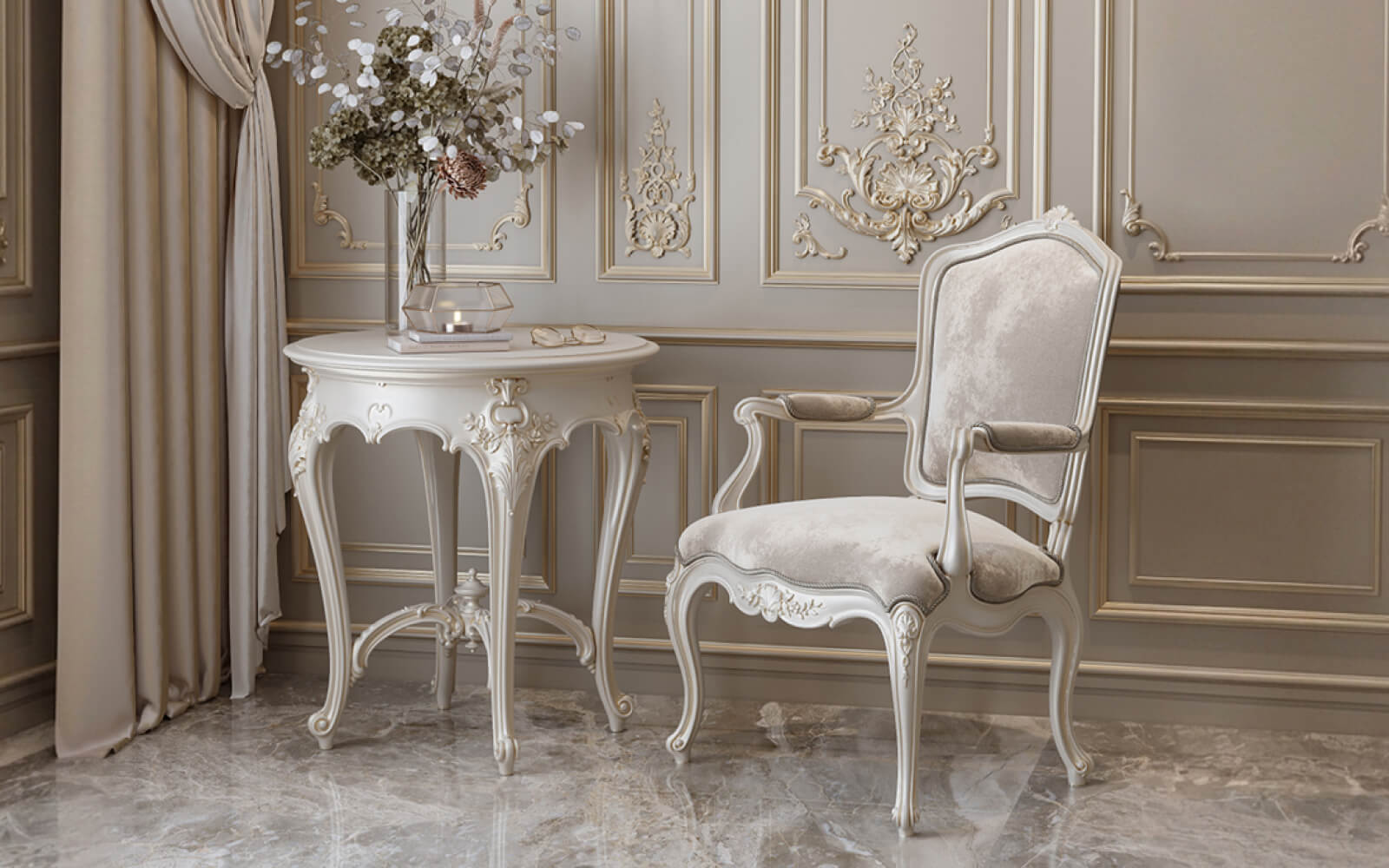
Walls are the most common area for applying stucco decor. Here, stucco solves several tasks at once: creates frames and panels, forms accent zones, designs the TV wall, the area behind the sofa or bed, and frames mirrors and niches.
How to work correctly with wall decor:
-
Frames made of moldings on the wall create the effect of architectural "panels" — this is a classic technique that works equally well in classic, neoclassical and modern classic styles
-
A TV area decorated with molding frames and decorative corner pieces turns into the central accent of the living room
-
The area behind the bed headboard with a frame of moldings and a central overlay becomes a full-fledged architectural element of the bedroom
-
An accent wall made of relief decorative panels creates a focal point without the need for expensive materials.
Suitable for walls Polyurethane wall decor in a wide variety of options: from the Neoclassic collection to Versailles, from Japandi to Petersburg. Each collection has its own ornamental language and scale.
Ceiling molding
The ceiling is a surface that cannot be ignored. It defines the feeling of space more strongly than walls and floors combined. Ceiling molding includes several types of elements with different functions:
-
A cornice around the perimeter of the room is the first and mandatory element of any ceiling system, it decorates the junction of the wall and ceiling
-
Molding frames create a decorative zone above the sofa or dining group
-
Decorative overlays enrich the ceiling field with ornamental accents
-
Corner elements decorate the intersection points of moldings
-
Central element under the chandelier + rosette create an architectural dominant in the center of the ceiling
When choosing polyurethane ceiling decor consider the ceiling height: for 2.5–2.7 m choose lightweight, laconic systems; for 2.9–3.0 m and above, you can use richer multi-level compositions with large overlays.
Molding for facade
Polyurethane facade decor is a solution for those who want to give their home architectural expressiveness without using heavy and expensive materials. Polyurethane is resistant to precipitation, temperature changes, and UV radiation, making it an optimal choice for exterior use.
On the facade, stucco decor is used:
-
For framing window and door trims
-
For installing window headers and cornices
-
For creating pilasters and decorative piers
-
For decorating corners, gables, and the base area
-
For accentuating the entrance group
An important advantage of polyurethane polyurethane decor для фасада — он не требует специальных анкеров и тяжёлого крепежа: монтажный клей обеспечивает надёжное соединение даже при длительном воздействии атмосферных нагрузок.
Furniture Molding
Мебельный декор из полиуретана — это способ обновить шкафы, комоды, фасады кухонного гарнитура, гардеробной или буфета без полной замены мебели. Небольшие накладки, рамки и угловые элементы в классическом или неоклассическом стиле превращают обычную фасадную плиту в декоративный элемент интерьера.
Полиуретановые накладки для мебели легко окрашиваются в любой цвет, не деформируются при перепадах влажности, надёжно держатся на МДФ, ДСП и других стандартных материалах мебельного производства. Посмотрите Polyurethane trim и накладки в каталоге STAVROS — среди них есть элементы, специально подходящие для мебельного декора.
Molding for doors and openings
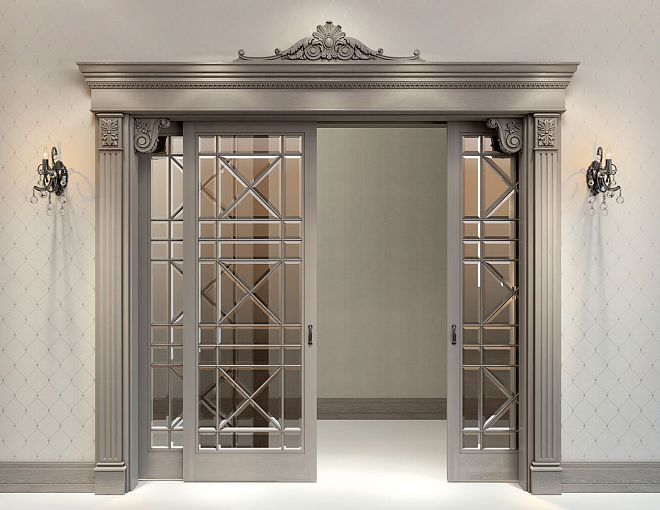
Дверной и оконный декор из полиуретана — это оформление наличников, порталов, арок и межкомнатных проёмов. В классических и неоклассических интерьерах дверь без декоративного обрамления выглядит незавершённо: она «врезается» в стену, а не вписывается в неё.
Decor for Molding включает угловые элементы, замковые камни, вставки и орнаментальные блоки, которые позволяют собрать полноценный портал из молдинговых профилей и декоративных накладок. Такой портал придаёт дверному проёму архитектурный статус, сопоставимый с лепными проёмами парадных помещений.
Почему для лепнины часто выбирают полиуретан
Вопрос о материале — один из первых, который возникает при выборе лепного декора. Гипс, дерево, полиуретан, полистирол — у каждого материала свои свойства и своя область применения. Почему polyurethane moldings стала стандартом для большинства современных проектов?
Лёгкость. Полиуретановый элемент, даже крупный — весит в несколько раз меньше гипсового аналога. Это означает монтаж на клей без анкеров, без специальных инструментов, без необходимости укреплять несущую конструкцию.
Clear relief. Polyurethane casting reproduces the shape with an accuracy of tenths of a millimeter. Sheet ornaments, curls, geometric patterns come out of the mold flawlessly — without chips, without blurred details, without a "soapy" relief.
Moisture resistance. Polyurethane does not absorb water, does not swell, does not deform with humidity fluctuations. This is critically important for bedrooms with air conditioning, kitchens, bathroom areas, and facade decor.
Paintability. The surface of polyurethane has no pores, so the paint lays perfectly evenly without graininess. One coat of primer and two coats of enamel or water-based paint give a monochrome surface indistinguishable from painted plaster.
Wide selection of elements. Moldings, cornices, baseboards, rosettes, overlays, brackets, pilasters, capitals, corner elements, decor for moldings — all within a single system where elements are coordinated in scale, style, and ornamental language.
Simplified installation. Polyurethane trim is cut with a simple hacksaw, glued with construction adhesive, and trimmed without chipping. Joints are filled with acrylic sealant and puttied without special skills.
Systematic approach. From moldings, rosettes, cornices, and overlays, you can assemble a full-fledged decorative system where each element is connected to another by a single ornamental language.
How to choose molding to match the interior style
Stucco does not exist in isolation from style. The same molding in a classic interior and in a minimalist space creates a different effect. Let's consider which stucco decor corresponds to the main style directions.
Classic
A classic interior assumes maximum density of decor: rosettes with lush acanthus ornament, cornices with multi-step profiles, pilasters with capitals, decorative overlays at corner points of panels. The relief is expressive, detailed, with rich ornamentation. Symmetry and proportionality are mandatory.
Neoclassicism
Neoclassicism preserves the principles of classicism but reduces the density of decor: frames of moldings on walls, cornice around the perimeter, rosette under the chandelier, minimum overlays. The ornament is moderate, calm, without Baroque overload. Decor for Molding For neoclassicism, it is chosen with a laconic profile and restrained relief.
Modern classic
In modern classics, stucco is present, but its role is to create an architectural structure, not to fill every centimeter of the surface. Thin moldings with a clean profile, a medium-sized cornice, minimal ornamental overlays. Moldings made of polyurethane for this style — with a simple elegant profile without complex relief.
Art Deco
Art Deco style is built on geometry, rhythm, and contrast. Decorative elements with a graphic profile, zigzag ornaments, vertical rhythmic accents, geometric overlays. Art Deco does not tolerate floral ornaments — only pure geometry and expressive contrast of forms.
Minimalism
In minimalist interiors, stucco is used sparingly: thin moldings as a structural accent, a neat ceiling cornice that hides the wall-to-ceiling transition but does not attract attention. No overlays, no rosettes, no ornamentation — only clean lines and correct proportions.
How to avoid mistakes when buying stucco molding
Buying stucco decor without preliminary preparation is almost a guarantee of mistakes. Here is a practical checklist that helps avoid the most common problems:
-
Do not choose an element only by photo. In a photo, a cornice may look light and delicate, but in reality, it may turn out to be a massive 120-millimeter profile that will overload a small room.
-
Check the width, height, and depth of the relief — all three parameters are important. Deep relief with a low ceiling creates a feeling of crampedness.
-
Consider ceiling height: for ceilings 2.5–2.7 m — light profiles, for 3.0 m and above — large expressive elements are acceptable.
-
Do not mix too many ornaments: acanthus leaves, geometry, and baroque curls in one space — this is not eclecticism, it is chaos.
-
Plan the layout scheme of moldings on the wall in advance: distance between frames, indentation from the ceiling and floor, symmetry relative to the room's axes.
-
Check what additional elements are needed for the main molding: corner blocks, locks, inserts — without them the frame doesn't look complete
-
Consider installation: how corners are cut, what fills the joints, whether painting is needed and in what order it is done
-
Don't buy individual parts without an overall composition: each element must be part of a system, not a random decoration
More details on installation technology — in the article installation of polyurethane molding, where all stages are covered: from surface preparation to final painting.
For those who work with moldings and want to understand the nuances of working with joints and corners, there is a separate article: installing polyurethane molding.
Where to buy polyurethane stucco
When the selection task is solved, the question arises: where exactly should you You can buy ready-made stucco matching the Baroque style. Calculate the quantity: linear meters of cornices and moldings, number of rosettes, pilasters, consoles, corner elements. Add a ten to fifteen percent allowance for trimming.? The difference between the right and wrong choice of purchase location is the difference between getting a systematic result and a set of incompatible elements.
You should buy stucco decor where the following conditions are met:
-
Wide range of different categories: moldings, cornices, baseboards, rosettes, overlays, brackets, linear elements, decor for moldings — all in one system
-
Clear dimensions in product cards: width, height, relief depth, length of molding
-
Photos of elements in completed projects, not just on a white background
-
Consistency of elements within the system: so that a cornice, molding, and overlay from the same catalog work together without proportional mismatches
-
Solutions for walls, ceilings, facades, furniture, and doors within a single assortment
-
Materials ready for painting without additional preparation
-
Opportunity to get selection consultation
Go to catalog STAVROS, to choose stucco, moldings, rosettes, cornices, and decorative polyurethane elements for your project. All categories of stucco decor are collected here: from laconic moldings for modern interiors to rich classical systems with brackets and capitals.
Brief checklist for choosing stucco decor
| Task | What to choose |
|---|---|
| Decorate an empty wall | Moldings, frames, overlays |
| Design the ceiling | Cornice, rosette, ceiling decor |
| Make an accent behind the sofa | Moldings, wall decor |
| Design a facade | Polyurethane facade decor |
| Decorate furniture | Furniture decor, overlays |
| Design a door or portal | Moldings, overlays, decorative elements |
| Emphasize the classic style | Rosettes, cornices, pilasters, capitals |
| Make light neoclassicism | Thin moldings and calm frames |
| Build art deco | Geometric overlays, graphic moldings |
| Hidden ceiling lighting | Cornice with groove for LED strip |
FAQ: Answers to popular questions about stucco
What is stucco in simple terms?
Stucco is decorative architectural elements for walls, ceilings, facades, furniture, and openings. In a broad sense — moldings, cornices, rosettes, overlays, pilasters, brackets, capitals, and other details that add volume, rhythm, and style to surfaces. Today, most such elements are made from polyurethane — a lightweight and durable material that reproduces relief with high precision and is well-suited for painting.
Which stucco is best to choose for an apartment?
For an apartment with ceiling heights up to 2.8 m, wall moldings, medium-profile ceiling cornices, chandelier rosettes, and decorative overlays for accents are best suited. The choice of specific elements depends on the style: for neoclassicism — laconic profiles and frames, for classicism — more expressive cornices, rosettes, and corner overlays. All these polyurethane elements adhere well with glue, are cut with standard tools, and are painted with standard paints.
Can stucco molding be used on a ceiling with a height of 2.6 meters?
Yes, but you need to choose lightweight, laconic profiles. A cornice 40–60 mm wide, a thin molding contour, and a small rosette are quite appropriate for ceilings of 2.5–2.7 m. The main thing is not to choose massive multi-tiered cornices with deep relief: they "eat up" the height and create a feeling of pressure.
How is stucco molding different from moldings?
Moldings are one type of stucco molding. Stucco molding as a concept is broader: it includes moldings, cornices, baseboards, rosettes, overlays, brackets, pilasters, capitals, and other decorative elements. Moldings are profiled strips for creating frames, zoning surfaces, and framing interior details.
Where to buy polyurethane moldings?
You can buy polyurethane stucco molding in the STAVROS catalog — https://www.stavros.ru/products/izdeliya-iz-poliuretana/. It features elements for walls, ceilings, facades, furniture, doors, and interior compositions: moldings, cornices, rosettes, overlays, brackets, linear profiles, and ready-made ceiling kits.
Can polyurethane molding be painted?
Yes, polyurethane stucco molding is painted after installation — with acrylic or latex water-based paints. The surface of polyurethane is non-porous, so the paint lays evenly without graininess. Usually, one coat of primer and two coats of paint are sufficient. The color can be matched to the walls, ceiling, or create a contrasting decorative accent.
How to choose the size of stucco molding?
The size is chosen based on three parameters: ceiling height, wall area, and the overall scale of the interior. For small rooms with ceilings of 2.5–2.7 m — moldings 20–50 mm wide, cornices no wider than 80 mm, rosettes with a diameter of 150–250 mm. For spacious rooms with ceilings from 3.0 m — you can choose more expressive profiles and large decorative elements. The general rule: the scale of the stucco molding should match the scale of the space.
Is special wall preparation needed before installing stucco molding?
The wall must be level, clean, and dry. Old wallpaper, peeling paint, and crumbling plaster must all be removed. Significant unevenness is leveled with putty. Primer improves adhesive adhesion. If there is a durable coating suitable for painting, installation can be done directly onto it.
About the company STAVROS
The catalog of decorative moldings, trims, rosettes, cornices, overlays, and architectural decor made of polyurethane is an area where STAVROS operates as a system provider of solutions for residential and commercial interiors, as well as for facade decor.
In the STAVROS catalog:
-
Moldings and cornices for walls and ceilings — from minimalist to expressive profiles
-
Ready-made ceiling sets of the CPU-P series with coordinated elements
-
Decorative overlays and corner elements for creating multi-layer systems
-
Chandelier rosettes with diameters from 150 to 600+ mm
-
Brackets, pilasters, and capitals for architectural compositions
-
Decor for moldings: locks, corner blocks, inserts
-
Linear products, wall decor, ceiling decor, and facade decor
If you are selecting stucco for an interior, facade, furniture, or ceiling — start with the STAVROS catalog. It features moldings, rosettes, cornices, overlays, and other polyurethane decorative elements for various styles and tasks.
Go to the catalog and choose You can buy ready-made stucco matching the Baroque style. Calculate the quantity: linear meters of cornices and moldings, number of rosettes, pilasters, consoles, corner elements. Add a ten to fifteen percent allowance for trimming. for your project — with clear sizes, photos, and a full range that allows you to build a system, not just a set of individual parts.