Article Contents:
- Winter wholesale purchasing is not just about the delivery date
- Why this is a procurement task, not just an installation one
- Why this matters for decisions
- Why opening everything at once creates risks in itself
- Why wet film and wet wood are different situations
- Why you can't assess only the top pack
- Why "received" can't be combined with "ready"
- Why the space must be chosen before the vehicle
- Why the status must be physically visible
- What to compare within the group
- Why a mechanical defect cannot be blamed on frost
- Why a single measurement proves nothing
- What to do if there is no control group
- When batches can be combined
- Why only one responsible person should assign the status
- Why this is better than total control
- Before the machine
- Why fully removing packaging from the entire delivery creates new problems
- Why this is especially important for long planks
- Why you can't assume the second machine is automatically ready based on the first one's experience
- Why installation should not be a way to "fix" the material
- Why this is especially important with a large volume
- When a problem with one pack can still affect the entire group
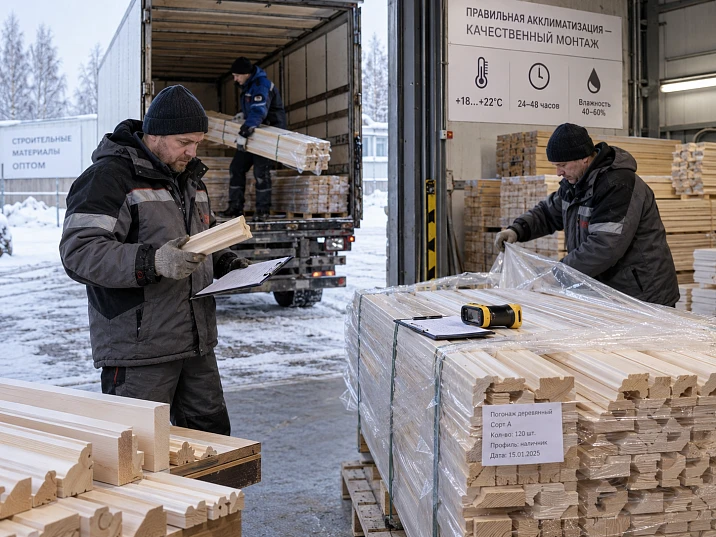
January. The truck drove for several hours through the frost, inside — several hundred strips of oak and beech moulding. At the site there is a heated room, the installers are ready to start work after lunch. At unloading a simple logic appears: the material is dry, the packaging is intact, so it can be brought in, opened and immediately sent to installation.
There is also the opposite extreme: "let everything sit for a week — then it will definitely be fine." It is also weak. Time by itself does not answer the main question: has the specific material transitioned into a stable state under the real conditions of the site, and can it be safely released into further processing and installation.
Therefore, if needed buy building materials wholesale in winter, the procurement process must take into account not only the SKU, quantity and delivery date. In winter delivery another important transition appears: from what conditions the material arrived and into what conditions it is entering.
Workflow:
COLD TRANSPORT → RECEIVING → RECEIVED COLD → PACKAGING CHECK → STABILIZATION ZONE → PAUSED IF NECESSARY → CONDITION CHECK → READY FOR INSTALLATION → RELEASE OF CURRENT QUEUE → INSTALLATION
The main formula of the article:
DELIVERED ≠ STABILIZING ≠ READY FOR INSTALLATION.
Especially in winter, when the material passes through significantly different temperature and humidity conditions.
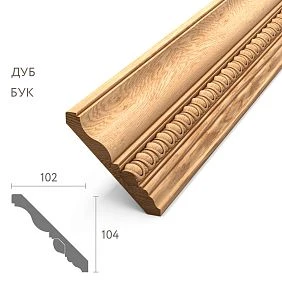
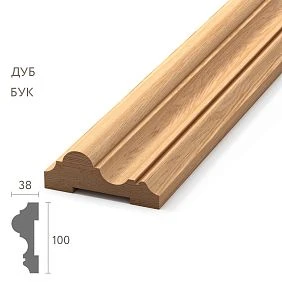
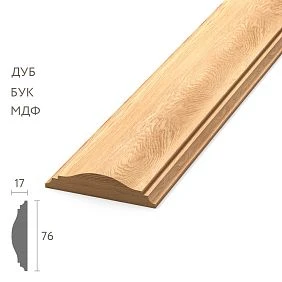
Winter wholesale purchasing is not just about the delivery date
In a standard specification, the buyer sees:
- article number;
- the material;
- commercial length;
- quantity;
- the delivery date.
In winter, this is not enough. For the project, it is important to understand the transition:
cold transport → unloading zone → intermediate room → room of future installation.
Each of these points may have its own temperature and humidity. If the vehicle arrived from the cold and unloading takes place in a warm room, the delivery itself ends, but the climatic adaptation of the material is only beginning.




Why this is a procurement task, not just an installation task
If the buyer delivered the long-length material in the morning and scheduled installation for the same day, the installer can no longer fix poor planning. This means the pause between delivery and use must appear in the schedule before the vehicle even arrives.
Our factory also produces:






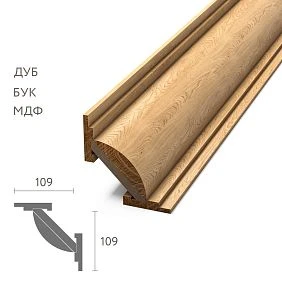
The outdoor air temperature and the wood temperature are not the same thing
If the vehicle arrived at −15 °C, you cannot automatically assume that every plank inside is also at −15 °C.
The condition of the material is affected by:
- duration of transportation;
- temperature at the start;
- body type;
- packing density;
- position of the bundle within the load;
- waiting time during unloading;
- weight and cross-section of the product.
Therefore, the outside temperature is only context, not a measurement of the wood.
Get Consultation
Why this matters for decisions
If the buyer treats air as the exact material temperature, they either overcomplicate the process or, conversely, lift restrictions too early. It is better to record the actual condition of the batch and the transition conditions.
We do not open the entire winter batch at once
At a site, there may be 600 m of skirting, 400 m of moulding, and 150 m of cornice lying at the same time, while installation tomorrow starts only on the second floor. There is no practical sense in opening the entire order at once.
Better to split:
- the current installation queue;
- the next queue;
- batches that still need to be kept protected and identified;
- disputed packages.
This way, winter stabilization does not turn into mass unpacking of the entire site.
Why mass opening itself creates risks
After opening, it is easier to lose labeling, mix up similar profiles, damage the surface during transfer, and accidentally issue the wrong queue to installers. Therefore, only the volume that is actually ready for work is prepared.
Buying building materials wholesale is easy; the harder part is properly receiving long-length items in winter
When you need buy construction materials wholesaleduring unloading, the usual parameters are checked first:
- packaging;
- article number;
- the material;
- length;
- quantity;
- Mechanical damage.
But in winter, additional questions come up at the same time:
- how long the cargo was kept in the cold;
- whether there is visible moisture;
- whether there is condensation on the outer surface of the packaging;
- whether there are signs of moisture inside damaged packaging;
- whether the protective film is intact;
- whether water got on the ends;
- whether the material was moved through a wet area.
This does not replace standard acceptance — it is an additional winter layer of control.
What a sharp temperature transition means
There is no point in using the term "temperature shock" as a scare tactic. The practical meaning is simpler: the material quickly moves from one environment to another that differs greatly in temperature and, possibly, humidity.
The very fact of a temperature difference does not yet mean a defect.
The problem begins if the cold material is immediately:
- unpacked without assessing its condition;
- cut;
- tightly joined;
- painted;
- installed as if it were already stabilized.
That is, the risk is associated not only with the difference in conditions itself, but also with what the object does during the transition moment.
Why condensation matters after bringing in
A cold surface, when exposed to warmer and more humid air, may fall below the point at which moisture from the air begins to form on it. For receiving, this means: after bringing in, you need to distinguish exactly where the water appeared.
| Scenario | What we see | What to do |
|---|---|---|
| Condensation on the outer packaging | Moisture outside the film | Do not draw a conclusion about the condition of the wood without additional checking |
| Moisture inside damaged packaging | Traces of water near the item | Pause the group and check more thoroughly |
| Dry packaging | Externally, everything looks clean | This is not yet proof of readiness for installation |
Condensation by itself is not automatically a manufacturing defect of the product. But it cannot be ignored.
Why wet film and wet wood are different situations
The outer packaging may collect moisture on the surface, protecting the material itself. But if water has gotten inside, the control becomes different. Therefore, it is important to first establish the boundary of the problem.
Wooden skirting board: first inspect the packaging, then decide what to open
After winter delivery Wooden baseboard there is no need to automatically remove it completely from the packaging.
First, check:
- integrity of the film;
- fogging;
- water inside;
- end condition;
- traces of moisture;
- mechanical damage;
- marking.
If the packaging looks suspicious, the batch gets the status "on hold". A normal intact batch follows the standard stabilization path.
Why you shouldn't evaluate only the top pack
The bottom, edge, and inner packs may be in slightly different conditions. With a large batch, it's useful to check in a distributed manner, not just the most accessible spot.
Why you shouldn't leave wet packaging unattended
If water got inside the packaging, a hermetically sealed pack may already be holding moisture next to the material.
But the opposite universal solution — "immediately remove all film from the entire order" — is also weak.
Correct order:
- record the condition;
- separate the suspicious group;
- check where the moisture is;
- compare with the manufacturer's recommendations;
- choose the method for further storage;
- do not mix the disputed group with the regular batch.
Introducing four winter statuses
| Status | What does it mean | Can it be installed? |
|---|---|---|
| RECEIVED COLD | Just arrived after winter transportation | No |
| Stabilizing | Located in a controlled zone | No |
| done | Verified and approved for release | Yes |
| ON HOLD | There is a question about packaging, condition, or identification | No |
These statuses remove the debate of “can we take it yet?” from verbal communication.
Why “received” cannot be combined with “ready”
A signature on the delivery note means that the cargo has arrived and passed acceptance according to the established process. It does not mean that the material has completed winter acclimation.
Why the “ready” status cannot be determined by the number of hours alone
In articles and instructions, you may find guidelines of 48 hours, 72 hours, or several days. They can be useful as specific recommendations, but the new B2B system should not turn a single number into a universal standard for any trim and any conditions.
The actual condition is affected by:
- oak or beech;
- cross-section;
- length;
- packaging;
- duration of transportation;
- temperature and humidity of the room;
- actual moisture content of the material;
- coating;
- storage method;
- requirements of the specific product.
Therefore, time is only part of the process. What matters more is the stable condition of the material under the real conditions of the site and confirmation according to the accepted procedure.
Buy building materials wholesale: choosing the right space for winter stabilization
If you need buy construction materials wholesale for a winter site, the stabilization area must be prepared in advance.
Poorly suited:
- cold corridor;
- open loading area;
- room with wet plaster;
- a room next to constantly opening gates;
- an area with sharp temperature fluctuations;
- a dirty warehouse for raw materials.
A dry, enclosed area without active wet processes is needed, where long-length material can be placed without bending, constant moving, and accidental access by installers.
Why the location must be chosen before the vehicle
If a suitable room is only looked for after unloading, the material temporarily ends up where it is convenient, not where it is safe. In winter, this temporariness is especially risky.
The unloading area and the installation room are not the same thing
For example, the vehicle is unloaded in a parking garage at +8 °C. Installation will take place in the rooms under different conditions.
The fact that it was “brought inside the building” does not mean it was “placed in the future operating environment.”
The route may look like this:
MACHINE → UNLOADING → TEMPORARY ACCEPTANCE → STABILIZATION ZONE → TARGET INSTALLATION ZONE
The more the conditions along the route differ, the more important it is not to release the material into work automatically.
Stabilization zone — a separate status area
This is not necessarily a special climate chamber. For the facility, a clear zone is sufficient where the material stays until the decision "ready".
Marking can be simple:
STABILIZATION — DO NOT RELEASE.
Inside, the material is divided by:
- SKU;
- material;
- length;
- batch;
- installation queue;
- status.
Why the status must be physically visible
If the mark exists only in the purchaser's table, the installer may not know about it. Physical marking protects against accidental issue.
Why installers should not independently take material from the stabilization zone
A visually cold plank may look completely normal after a few hours. That is why the right to issue should be tied to status, not to a subjective assessment of "already warm to the touch."
If there is no "ready" status, the material does not go to cutting or installation.
For a large project, one person responsible for transferring the batch to the available stock is useful.
Wooden molding: thin and large profiles cannot be assessed in the same way
У wooden molding different cross-section, mass, and surface area. Therefore, the same time interval should not be automatically applied to all items.
Let us compare two conditional groups:
| Group | Characteristic | What to consider |
|---|---|---|
| Thin profile | Smaller cross-section | Reacts faster to changing conditions, but still requires monitoring |
| Large profile | Larger cross-section and mass | May take longer to equalize in temperature and humidity |
This is not a reason to invent a fixed table like “thin — this many hours, thick — that many.” It is a reason not to apply a single timer to the entire specification.
What to compare within the group
- surface temperature;
- moisture level;
- packaging condition;
- the geometry of several items;
- behavior relative to a control stabilized batch.
Wooden cornice: winter unloading requires both climatic and mechanical caution
Large wooden cornice during unloading, it is easy to damage it mechanically. In winter, workers often try to bring the load inside faster, which is why long-length items:
- hit doorways;
- placed on end;
- leaned against the wall;
- moved with insufficient support;
- placed under heavier packages.
Therefore, winter acceptance must simultaneously control the climatic transition and the normal mechanics of handling long profiles.
Why a mechanical defect cannot be blamed on frost
If the end is split by an impact during carrying, it is mechanical damage. Mixing up the causes worsens the claim and makes it impossible to understand which stage needs to be corrected.
How to use a moisture meter without false precision
A moisture meter is useful if it is used as a tool for comparison and control, not as a yes/no button.
It helps:
- compare a new winter batch with already stabilized material;
- check several items;
- see the variation within the batch;
- assess the dynamics after some time;
- identify a suspicious group.
But a specific number cannot be taken out of context of the species, the device, its settings, and the manufacturer's requirements.
Why a single measurement proves nothing
If you measure one convenient board from the top of the stack, you may not see differences inside the package or on the other side of the batch. For a large order, it is better to use distributed sampling.
| Control point | Why |
|---|---|
| Top of the group | Understand the state of open layers |
| Bottom of the group | Check the influence of the base |
| Edge | Check the influence of a cold wall/passage |
| Center | Get a typical value |
| Suspicious packaging | Check local risk |
A control dry group makes measurements clearer
If the site already has previously stabilized material of the same article number, or at least the same species and a similar cross-section, it can be used as a control group.
For example:
CONTROL — PLT-A, kept in the workroom for 7 days
NEW WINTER SHIPMENT — PLT-A, arrived today
Comparing temperature, humidity, and geometry makes more sense than an isolated number.
What to do if there is no control group
Then the decision relies on the current room conditions, repeat measurements, manufacturer requirements, and the condition of the batch. A control group is useful but not mandatory.
Buying building materials wholesale: don't mix old and new batches at once
If you need buy building materials wholesale across multiple deliveries, the winter batch should retain its own identifier at least until the inspection is complete.
For example:
WINTER-SHIPMENT-03
It's not worth immediately stacking it on top of the old stabilized remainder.
If a question later arises about humidity, geometry, or packaging, the project will be able to understand which items belong to the new arrival.
When batches can be combined
After acceptance, stabilization, removal of the "suspended" status, confirmation of conformity, and restoration of labeling. After that, the winter group becomes regular warehouse stock.
Why it is better not to use the word "defrosted"
Wooden trim is not a product that needs to be "defrosted." A more accurate wording:
temperature and humidity stabilization or adaptation to the room conditions.
This is important not only for style. The term helps avoid the false idea that it is enough to simply wait until the surface becomes warm.
Transparent finish: we check not only the geometry
If it is oak or beech under a transparent coating, additionally assess:
- the front surface;
- ends;
- Integrity of coating;
- whether matte or damp areas have appeared;
- whether the uniformity of the finish has been preserved;
- whether there are traces of water from damaged packaging.
Even if the profile remains straight, a visual defect in the coating can make the product unsuitable for a visible area.
The material intended for future enamel also cannot be considered "insensitive"
Sometimes people reason like this: the skirting board will be primed and painted anyway, so its winter condition does not matter. This is a mistake.
The base still remains wood or a wood-based material. Before finishing, it is necessary to understand:
- what condition the surface is in;
- whether there is excess moisture;
- whether the geometry is stable;
- whether preparation can begin;
- whether the conditions meet the requirements of the coating technology system.
Future enamel does not eliminate the need for proper preparation of the substrate.
Why you shouldn't send cold trim straight to the paint shop
If the project includes exterior finishing, the workshop must receive material that is identified and suitable for further processing.
Bad chain:
cold machine → straight to workshop → priming → "we'll figure it out later"
Stronger:
cold machine → acceptance → stabilization → condition check → workshop
Exterior finish should not be used as a way to hide a problem with the substrate.
Bought building materials in bulk: what to do while the batch stabilizes
If buy building materials wholesale in winter and put installation on the very next day, a climate pause may be perceived as downtime.
But the site doesn't have to wait idle. You can:
- switch to another ready-made zone;
- use the old stabilized batch;
- perform marking;
- prepare the bases;
- install another item with the "ready" status;
- check the joints and templates;
- assemble the kit for the next queue.
That is, a climate pause does not necessarily stop the entire project.
An urgent schedule does not override the physics of the material
The phrase "we have to hand it over tomorrow" does not change the properties of wood.
If the batch is not ready yet, the procurement specialist must work with the schedule:
- reassign the crew;
- change the order of rooms;
- use ready material;
- reschedule a specific operation;
- do not release a cold batch just to meet the plan on paper.
This is a management decision, not a technical “acceleration of stabilization.”
How to plan winter delivery in advance
Before shipment, you need to know:
- delivery date;
- unloading window;
- temperature route across the site;
- receiving room;
- stabilization zone;
- first installation phase;
- person responsible for the status;
- time buffer between delivery and installation.
In winter, the delivery date must be earlier than the actual use date by an interval determined by the real conditions of the site and material recommendations. This article does not replace that calculation with a universal two or three days.
What to tell the supplier in advance
For winter delivery, it is useful to provide:
- article numbers;
- quantity;
- project address;
- unloading window;
- recipient contact;
- whether there are separate queues;
- whether floor markings need to be preserved;
- special packaging requirements, if agreed.
There is no need to require the supplier to "acclimatize the material at the site." Adaptation occurs under the specific conditions of future use.
Wholesale building materials: a winter batch must have its own log
If wholesale building materials accepted as a large winter batch, a short log is useful.
| Group | Article | Arrived | Conditions | Status | Next check |
|---|---|---|---|---|---|
| Z01 | PLT-A | 09:30 | Cold transport | Stabilizing | After aligning the conditions |
| Z02 | MLD-A | 09:30 | Cold transport | Stabilizing | Re-inspection |
| Z03 | KZ-A | 09:30 | Cold transport | Stabilizing | Re-inspection |
| Z04 | PLT-B | 09:30 | Packaging damaged | ON HOLD | Separate check |
The log shows that the batch is physically already at the site, but not all of it has the same status.
How to determine the moment of transition to the "done" status
There is no single universal button. The decision is formed from several indicators:
- the material was in a stable environment;
- no active condensation or suspicious moisture;
- packaging and product have been inspected;
- the condition across the sample is stable;
- humidity and its dynamics raise no concerns;
- the geometry shows no new changes;
- the room conditions are suitable for further work;
- the manufacturer's requirements have been met.
After this, the responsible person moves the group to the "done" status.
Why should the status be assigned by a single responsible person
If each installer decides for themselves which batch is already "warm enough," the system ceases to be manageable.
How to check geometry after stabilization
A re-inspection is needed specifically after the adaptation period.
Check:
- straightness;
- ends;
- whether there are any new noticeable bends;
- condition of the front surface;
- comparison of several items from the same group.
If one plank differs noticeably, it should not be automatically included in the installation stock just because the rest of the batch is ready.
Why local aggressive heating is a bad idea without a proper process
A site may try to "speed up" the process with a heat gun aimed at the stack.
Problem:
- the heating is uneven;
- the surface and inner layers heat up differently;
- conditions change too abruptly;
- part of the batch remains in the shadow of the flow;
- packaging can additionally affect the process.
If the manufacturer has not provided for such a technology, it is better to use stable room conditions rather than local forcing.
What to do if one part of the batch is already ready and the other is not
There is no need to block the entire order.
| Group | Status | Action |
|---|---|---|
| PLT-A | done | Issue to the current queue |
| MLD-A | Stabilizing | Leave in the zone |
| KZ-A | done | Allow issue according to schedule |
| PLT-B | ON HOLD | Separate check |
The status is assigned to the smallest useful group, not to the entire machine in a single color.
How to work with multiple floors
If a site has five floors, in winter it is especially useful not to open all queues at once.
For example:
- floor 1 — ready for installation;
- floor 2 — next queue;
- floor 3 — wet works in progress;
- floors 4–5 — not ready yet.
The first-floor material undergoes stabilization and is released first. The remaining groups remain protected and identified until the appropriate moment.
How to store reserve stock in winter
Operational reserve stock does not need to be automatically included in the current stabilization zone if it will not be used now.
What matters more for it:
- dry, stable storage;
- horizontal placement;
- marking;
- protection from wet processes;
- understanding which batch and finish it belongs to.
If the reserve stock is later needed for repairs, it will still have to be adapted to the conditions of the future installation.
How to plan winter unloading by time of day
If the site can choose a delivery window, it is useful to consider not only transport accessibility but also the team's ability to properly receive the material.
Bad scenario:
- the truck arrives late in the evening;
- the warehouse keeper leaves;
- the installation crew brings in the long-length items themselves;
- the stabilization area is not prepared;
- some packs are placed by the gate;
- marking is not recorded.
A good scenario is acceptance at a time when the responsible persons are present, disputed areas can be photographed, packaging can be checked, and groups can be immediately assigned by status.
What to do if the truck arrived before the site is ready
Sometimes the supplier meets the deadline, but the site is not yet ready to receive the finish material.
Options depend on logistics and the contract:
- reschedule the unloading window;
- arrange temporary storage;
- accept only the current queue;
- leave the remaining volume according to the agreed scheme;
- do not unload expensive moulding into a wet or cold area just because the truck has already arrived.
The supplier's transport readiness should not force the site to violate its own storage conditions.
What to do if the truck stood for a long time with its doors open
This situation also affects the context. For example, part of the cargo could have reacted to the outside air faster than the deeply placed packages.
Therefore, during acceptance it is useful to note:
- waiting duration;
- whether the body doors were open;
- whether the cargo was exposed to precipitation;
- which packs were closer to the outer opening;
- whether there is local wetting of the packaging.
This helps to understand why the outermost group may behave differently from the central one.
How to proceed after unloading in snow or wet conditions
If snow or water got onto the outer packaging during handling, you should not automatically consider the entire batch damaged.
First:
- remove free moisture from the outside;
- do not place wet packs directly against dry ones;
- separate packages with damage;
- check whether water has penetrated inside;
- record photos;
- then proceed according to the group status.
The main thing is not to lose the boundary between the wet outer film and the actually dampened product.
How to check a batch after night delivery
If unloading ended late and the in-depth inspection is postponed to the morning, the material must not accidentally end up in installation at night.
Marking:
RECEIVED COLD — RE-CHECK IN THE MORNING.
In the morning, check:
- packaging condition;
- presence of condensation;
- temperature dynamics;
- suspicious packs;
- marking;
- room readiness.
How to avoid losing identification during partial opening
In winter, some packages may require additional inspection. After opening, it is easy to lose the link to the original order line.
On the opened group, the following are retained:
- article number;
- the material;
- length;
- delivery number;
- zone;
- status;
- verification date.
If an item is removed from the pack for inspection, it is returned to its own group or receives a separate label.
How to record dynamics, not just a single moment
For a disputed batch, what is useful is not a single photo or a single figure, but a short sequence:
| Time | Condition | Action |
|---|---|---|
| 09:30 | Arrived from a cold truck | RECEIVED COLD |
| 13:00 | External film without active condensation | Stabilizing |
| Next check | Parameters are stable | Candidate for READY |
The exact frequency of checks is determined by the object and the risk. The article does not set a universal interval.
Why stability matters more than one nice number
Suppose the moisture meter shows a value that looks normal. But after a few hours it changes noticeably. This means the material is still continuing to adapt.
It is much more useful to see that:
- the room conditions are stable;
- the values within the sample are close;
- repeat measurements do not show sharp dynamics;
- geometry remains stable;
- there are no signs of local moisture.
Thus the "ready" status relies on the condition, not on a random single point.
How to organize control of a large volume without checking every plank
480 items arrived at the site. There is no point in measuring each one the same way.
It is rational to divide into groups:
- article number;
- the material;
- length;
- packaging;
- batch;
- Zone.
Then, within each group, control items are selected from different locations. If a deviation is found, the check is expanded specifically within that group.
Why this is better than total control
Total inspection destroys packaging, takes a lot of time, and itself increases the risk of mis-sorting. Sampling control preserves the structure of the batch and focuses on risk.
How to work with oak and beech separately
Even if the profiles are similar, the species remains a separate specification parameter.
Do not:
- mixing oak and beech in one stabilization group without labeling;
- transferring the control values of one species to another automatically;
- assuming the same time is sufficient just because the profiles are the same length;
- losing material under opaque packaging.
The exact material is retained for each group.
How to work with MDF separately from solid wood
MDF is a wood-based panel material, and it cannot simply be treated as solid oak or beech.
The following are especially important for it:
- protection from direct moisture;
- edge condition;
- integrity of the coating or veneer;
- storage conditions;
- requirements of the specific product.
If a moisture meter is used, it is necessary to understand whether the device and its scale are suitable for such a material.
What to do if the batch looks normal but the room is unstable
The material may be completely dry and flat, but the room itself is not yet suitable for installation: plastering is still ongoing, gates are constantly being opened, and heating is working inconsistently.
Then the status "ready for installation" is not assigned because of the product, but because of the environment.
This is an important distinction:
the material may be ready, but the room may not be.
In that case, the material remains in the safe storage zone until the work front is ready.
What to do if the room is ready but part of the batch is not
The reverse scenario: the floor is fully ready, but one MLD-A group is still stabilizing.
There is no need to automatically slow everything down. You can:
- install a ready-made skirting board;
- mark out the frames;
- close off rooms where moulding is not needed;
- work with the cornice if it is ready;
- rearrange the queue within a floor.
Why the winter process should be visible to the foreman
If the information stays only with the purchaser, the foreman sees the bundles on site and naturally considers them available.
Therefore, it is useful to make the status table shared:
| Article | Quantity | Status | Zone | Can it be issued? |
|---|---|---|---|---|
| PLT-A | 84 | done | Floor 1 | Yes |
| MLD-A | 66 | Stabilizing | Floor 1 | No |
| KZ-A | 24 | done | Lobby | Yes |
| PLT-B | 40 | ON HOLD | Floor 2 | No |
How to issue a permit for installation
You don't have to write a multi-page report. A short entry is enough:
PLT-A / oak / batch Z01 / status READY / date / responsible person
After that, the group is transferred from the stabilization zone to the available installation stock.
When the "ready" status needs to be revoked
Even after permission is granted, new circumstances may arise:
- leak;
- the material was moved to a cold zone;
- the packaging got wet;
- the room became humid again;
- systematic deformation was detected;
- the installation front has changed.
Then the group returns for review. The status is not indefinite under any conditions.
What to do if the material is needed urgently
Urgency does not cancel winter control, but it allows reducing the scope of preparation.
For example, out of 300 planks, 40 are needed tomorrow. You can:
- allocate only 40 + a justified reserve;
- stabilize the current queue separately;
- keep the rest of the order protected;
- after releasing the first 40, prepare the next group.
This way, the site does not open the entire order for the sake of one room.
How to determine the winter installation queue in advance
It is useful to have a table before the machine:
| Queue | Zone | Article | Quantity | Planned installation date |
|---|---|---|---|---|
| 1 | Floor 2 | PLT-A | 42 | 15.01 |
| 1 | Floor 2 | MLD-A | 36 | 16.01 |
| 2 | Floor 3 | PLT-A | 48 | 22.01 |
| 3 | Lobby | KZ-A | 24 | 30.01 |
Then the purchaser knows which part of the batch to prepare first.
How to handle winter delivery when the site is still heated unevenly
On a site under construction, different rooms may have different temperatures. One room is consistently warm, the neighboring one is near open gates, and the third has no fully adjusted heating.
In that case, the entire building cannot be considered a single climatic environment.
The material stabilizes in the selected controlled zone, and before installation in problem rooms, the readiness of the zone itself is checked separately.
How to avoid confusion between "warm" and "ready"
The plank can become warm to the touch quite quickly. But readiness for installation includes more:
- stable environment;
- absence of active humidification;
- acceptable condition based on sampling;
- stable geometry;
- fulfilled manufacturer requirements;
- room readiness.
Therefore, "no longer cold" is not the final criterion.
A large checklist for winter acceptance
Before the vehicle
- prepare a dry room;
- clear the route for the long-haul truck;
- designate a stabilization zone;
- assign a responsible person;
- print with<
How to understand condensation risk without complex psychrometry
A foreman does not have to calculate the dew point using formulas at the unloading site. It is enough to understand the causal relationship: if a cold surface comes into contact with warm air containing moisture, condensation may appear on the surface.
The greater the temperature difference and the higher the indoor air humidity, the more carefully the transition must be handled.
Practical control:
- do not bring cold material immediately into a very humid area;
- do not place it next to wet plaster or fresh screed;
- monitor the condition of the outer packaging;
- separate groups with water inside;
- do not confuse condensation with a manufacturing defect.
For a complex project, an engineer can use full temperature and relative humidity control. But for a basic procurement process, it is enough to understand the mechanism itself.
Packaging decision: leave as is, partially open, or open
One of the most debated winter questions is what to do with the film.
The universal rule 'always leave sealed' is just as weak as 'always remove completely.'
Condition Approach Why Intact dry packaging Store according to the manufacturer's recommendations Protection and identification are preserved Suspected moisture inside Separate inspection and decision per group A sealed environment can trap moisture Damaged film Contents control, protection restoration The original packaging system has been compromised Current installation queue Prepare only the required volume Do not open the entire project at once The key criterion is the actual condition plus the specific product's recommendations.
Why fully unpacking the entire delivery creates new problems
The material remains without protection from dust, impacts, and mixing up. Therefore, even if part of the order needs more air exchange, it is better to apply the solution to a specific group rather than to the entire warehouse.
How to handle a winter delivery near underfloor heating
A room with operating underfloor heating may have drier air and a locally elevated temperature at the base. This does not mean that the trim should be placed directly on the underfloor heating to speed up acclimation.
Better:
- use the standard warehouse support;
- do not create local overheating of the lower layer;
- maintain uniform conditions around the group;
- monitor air humidity;
- do not place the stack close to the heat source.
The goal of stabilization is to bring the material closer to real operating conditions, not to force-dry one side.
Why this is especially important for long planks
Uneven heating across thickness and length can create an additional gradient of conditions. For long-length items, uniformity of the environment matters more than the feeling of "heating up faster."
How to receive two winter machines on different days
If one order arrives in two shipments, it is better to manage each delivery as a separate group until stabilization.
For example:
WINTER-DELIVERY-03A / January 12WINTER-DELIVERY-03B / January 15Even if the inside is the same PLT-A.
Group Date Quantity Status Can they be mixed? 03A 12.01 60 done After release 03B 15.01 60 Stabilizing Not yet So the first group can go into installation, while the second remains under control.
Why the second machine cannot be considered automatically ready based on the first one's experience
It may have had different transportation conditions, route duration, and packaging condition. The history of the first delivery is useful, but it does not replace checking the second.
How to handle partial returns from the installation area
In winter, the material may already have the status "ready", be sent to the floor, and then part of it returned to the warehouse after a change in volume.
Returned intact planks must be labeled:
- where they were returned from;
- which SKU;
- the material;
- whether they were unpacked;
- whether there is any damage;
- under what conditions it was stored;
- whether it can be combined with the main remaining stock.
If the floor was in a stable mode, such a return is usually simpler. If the material has been lying near an exterior opening or a wet area for several days, it is better to check it separately.
What to do after emergency opening of the facade in winter
A separate edge case: the batch has already been stabilized, but on site the exterior contour was opened for several hours — for example, to bring in equipment. The temperature in the storage area dropped sharply.
There is no need to automatically write off all the material or start the process "from scratch." But it is worth:
- recording the event;
- assessing how much the environment changed;
- checking the packaging and material;
- if necessary, temporarily removing the "ready" status;
- re-confirm the condition before handover.
This is an example of why the status depends not only on the time after delivery, but also on events at the site.
How to account for the winter pause in the supply schedule
If the project operates systematically in winter, stabilization should be added to the plan as a separate operation, rather than being remembered after each truck.
Stage Date Responsible Supplier readiness 10.01 Procurement Shipping 11.01 Logistics On-site Acceptance 12.01 Warehouse Stabilization and control 12.01–… Site responsible person Approval for installation Based on actual readiness Site foreman/responsible person Installation After approval Crew This is how the construction schedule sees the climate stage in advance.
Why the installation date should have a buffer for a disputed batch
If the entire batch is scheduled right up against installation, one damaged package or the need for re-inspection immediately creates downtime.
Therefore, a small organizational buffer is useful in the winter schedule:
- for acceptance;
- for disputed packaging;
- for re-measurement;
- for internal logistics;
- for a decision on a partial batch.
The buffer size is determined by the project, not by a universal number.
How to explain to the client why the material has already arrived but installation has not yet begun
Transparent communication helps avoid pressure.
Instead of:
"the wood still needs to rest"it is better to say:
"the batch has been accepted, identified, and is in the stabilization zone; re-inspection is performed before release to installation"This shows that the process is controlled rather than based on subjective expectation.
How to document winter acceptance
After releasing the batch, it is useful to keep a short record:
Field Example Supply WINTER-03 Article number PLT-A Material Oak Received 60 pcs. Arrival date 12.01 Initial status RECEIVED COLD Verified Packaging / picking / conditions Final status done Responsible person … This card helps improve the process for the next winter and, in case of a dispute, restore the history.
Which metrics can be tracked at large winter sites
No industry 'efficiency standards' are needed. Your own observations are enough:
- how many winter batches were received;
- how many packages were used for retention;
- how many times moisture was found inside;
- how many batches had to be re-inspected;
- how much material was issued before the "ready" status;
- how many installation delays are related to winter acceptance;
- how many delays could have been avoided with earlier delivery.
This is how the company identifies the weak point: logistics, warehouse, schedule, or issuance discipline.
When a separate winter zone is not needed at all
For a small order that goes straight into a prepared, stable room and is installed by one crew after readiness confirmation, a separate physical "zone" may be excessive.
It is enough:
- prepared dry place;
- status marking;
- responsible person;
- condition monitoring;
- prohibition of issue until approval.
The system must be proportional to the volume.
Why two winter deliveries of the same SKU may require different decisions
Even the same PLT-A in winter can arrive under completely different conditions. The first truck left a warm warehouse, drove for two hours, and was unloaded immediately into a prepared room. The second stood outside overnight, waited several hours for unloading, and reached the site through an open cold parking garage.
The SKU is the same, but the transition history is different. Therefore, the decision for the first delivery cannot be automatically applied to the second.
Factor Delivery A Delivery B Initial conditions Warm warehouse Cold waiting Transit time Short Long Waiting for unloading Minimal Several hours Packaging dry Fogging present Solution Regular inspection Enhanced control The status is determined not by the name of the month, but by the actual history of the specific batch.
What to do if local deformation is detected after stabilization
One or more planks may show a noticeable deviation in geometry already after being moved into the room. Do not try to automatically "force" them with fasteners on the wall.
Better:
- separate the suspicious items;
- compare with other planks from the same batch;
- check whether there has been any local moisture ingress;
- record the geometry;
- determine whether this is an isolated problem or a group issue;
- if necessary, contact the supplier.
If the deviation appears in only one plank, there is no reason to block the entire order. If the same problem recurs, the group is moved to extended inspection.
Why installation should not be a way to "fix" the material
Forcibly pulling a deformed plank to the wall may mask the problem at the time of installation, but it creates stress in the joint and an unstable result. First, you need to understand the condition of the product.
How to handle winter delivery across multiple installation shifts
On a large site, the first crew may start in the morning and the second in the evening. If material is released during the day as groups become ready, you need to rule out the situation where the evening shift takes packs that are still stabilizing.
For this, the log must contain:
- time when the status was set to "ready";
- number of allowed items;
- the destination zone;
- remaining batch quantity;
- the person responsible for issuing.
For example:
Time Article Done Issued Remainder 12:00 PLT-A 42 30 12 17:00 MLD-A 36 24 12 This way, the second shift sees only the actually allowed stock.
How to evaluate the winter process after installation is complete
After the queue ends, it is useful to briefly check whether the scheme worked.
Questions:
- whether there were any cases of issuing before the "ready" status;
- how many packages had to be paused;
- whether there were any problems with condensation;
- how many times installation was delayed due to winter delivery;
- whether the stabilization zone was chosen well;
- whether the unloading date should be changed in the next delivery;
- whether the status labeling is clear enough.
If problems recur, the next order can be planned better: move the delivery earlier, change the unloading window, increase the storage area, or split the batches by floor.
This way, winter receiving becomes not a one-off improvisation, but a repeatable company process.
How to prepare the site for winter delivery one day before the truck
Most problems with winter receiving arise not during unloading, but because the site was not prepared in advance. One day before delivery, it is useful to run a short check.
What to Check Done If no Stabilization zone is cleared Yes Do not take long-length items into a random room Wet works nearby are completed Yes Select another zone Passage for long profiles is clear Yes Clear access to the vehicle Horizontal support available Yes Prepare rack/flooring Responsible person assigned Yes Determine before unloading Installers know the status scheme Yes Prohibit unauthorized issuance There is a marking "RECEIVED / STABILIZING / READY / ON HOLD" Yes Prepare in advance This way, after the truck is opened, the team doesn't improvise. Each package already has a route and a place.
Why this is especially important with large volumes
Five packages can be temporarily moved. Fifty long-length items are already a full-scale warehouse operation. If the zone is not ready, every extra movement increases the risk of impact, mis-sorting, and loss of marking.
How to make a decision on a disputed group without stopping the entire order
Suppose one of ten groups has wet, damaged packaging. The mistake is either to ignore it or to automatically stop all the other nine.
Stronger:
- identify the disputed group;
- move it to the "on hold" status;
- check the contents and the scale of the problem;
- leave the remaining groups in their own statuses;
- if they meet the requirements — continue their stabilization and release;
- make a separate decision for the disputed group.
This way the item does not lose a day because of one package, but it is also not mixed with serviceable material.
When a problem with one pack can still affect the entire group
If the same moisture, damage, or labeling problem repeats in several places, the cause may be systemic. Then the inspection is expanded across the entire corresponding SKU or batch.
A winter delivery should end not with installation, but with a preserved history
Once the batch has been released into work, it is useful to keep a brief history: where it came from, when it was unloaded, which groups were suspended, when the status “ready” was assigned, whether there were packaging problems, and what decisions were made.
This information will be useful:
- for the next winter delivery;
- in case of a claim;
- when analyzing recurring damage;
- for a new site;
- for setting up the supply schedule.
If a company regularly purchases trim for several sites in winter, after one season it already has its own practical base: which storage areas work better, which packages require special attention, how long the internal process usually takes, and where real delays occur.
This does not replace the manufacturer's recommendations. But it turns winter acceptance from a one-off reaction to frost into a manageable corporate process.
How the process changes if transport is heated
A heated body can reduce the temperature difference between the road and the site, but it does not eliminate acceptance and inspection. The buyer still needs to know under what conditions the material actually traveled, whether the temperature was stable, and whether it changed along the way.
If the cargo actually arrived in conditions close to those of the working space, the transition stage may be shorter and simpler. But the decision is made based on the actual condition, not on the single phrase "heated vehicle."
It is useful to ask:
- was heating maintained throughout the journey;
- was there a prolonged stop without heating;
- what was the temperature during loading;
- whether there are any signs of condensation or dampness;
- how the control group feels after unloading.
This is how the project avoids the opposite extreme: treating every winter delivery as equally difficult. Well-organized transport and a prepared site do reduce risk, but they do not replace inspection.
How to hand over a completed winter batch to the installers without losing control
After the status is set to "ready", the material should not simply disappear from the stabilization zone into the hands of the crew. A short handover is useful: which batch is approved, how many intact items are being issued, to which zone, what remainder stays in the warehouse, and who received the material.
For example:
WINTER-03 / PLT-A / oak / 42 pcs. READY → 30 pcs. issued to floor 2 → 12 pcs. remain in the warehouse.Such a record solves several tasks at once: it confirms that the inspected batch was the one sent to installation, preserves the remainder, prevents it from being mixed with a disputed group, and makes it possible to reconstruct the history if a question later arises about a specific room.
Before issuing to the installer, they are shown once again:
- article number;
- the material;
- zone;
- quantity;
- status "ready";
- the current installation queue.
This is how the winter process ends not with an abstract "the wood has rested," but with a controlled transition of a specific batch from a temporary status into real work.
18 mistakes of winter delivery
- Schedule installation at the unloading hour. The material has no controlled transition stage.
- Equate air temperature with wood temperature. A false conclusion is made about the condition of the batch.
- Open the entire site at once. The risk of mix-ups and damage increases.
- Mix the new and old batch. The ability to compare and investigate is lost.
- Do not allocate a stabilization zone. The material accidentally ends up in installation.
- Store near the gate. Conditions remain unstable.
- Store next to wet processes. The wood enters an undesirable state.
- Ignore condensation on the packaging. Possible moisture is overlooked.
- Treat wet packaging as proof of a damaged product. External and internal moisture are not distinguished.
- Treat dry packaging as proof of readiness. The condition of the wood has not been checked.
- Use one time frame for all SKUs. Cross-section, material, and conditions are ignored.
- Assess the condition by touch alone. "Warm" substitutes for "ready."
- Check one plank for hundreds of products. Variation across the batch is not visible.
- Have no control group or repeat measurement. The numbers lose context.
- Release the material to the crew before "ready" status. Control exists only on paper.
- Accelerate the process with local aggressive heating. Conditions become uneven.
- Start painting cold material just to meet the schedule. The technological operation is launched on an unprepared base.
- Do not include a winter pause during supply planning. Urgency is created by the procurement itself.
Final winter supply algorithm
Scheme 3. Full winter process 1. WINTER SHIPMENT
↓
2. COLD TRANSPORT
↓
3. RECEIVING AND IDENTIFICATION
↓
4. STATUS “RECEIVED COLD”
↓
5. PACKAGING AND DAMAGE INSPECTION
↓
6. STABILIZATION ZONE
↓
7. "ON HOLD" FOR DISPUTED BATCHES
↓
8. CONDITION AND DYNAMICS MONITORING
↓
9. "READY" STATUS
↓
10. RELEASE ONLY THE CURRENT QUEUE
↓
11. INSTALLATION
↓
12. REMAINING BATCHES REMAIN PROTECTED UNTIL THEIR TURN
Conclusion: in winter, we manage the condition of the batch, not the clock
A winter delivery of wooden trim differs from a regular one not because the material "will inevitably be ruined by frost." The main distinguishing feature is the sharp transition between transport and installation conditions. It is precisely this transition that must be made manageable.
After unloading, the material receives a separate status. Intact packs are not opened unless necessary. Suspicious bundles are set aside. The current installation queue undergoes stabilization in a prepared dry zone. The condition is assessed based on several items; if necessary, a moisture meter and a control group are used. The decision on readiness is made by the person in charge, not by the first installer who thinks the plank already feels warm.
There is no need to turn 48 hours, 72 hours, or any other number into a universal standard. For different profiles, materials, packaging, and conditions, the result may vary. What matters more is the stable condition of the object, the absence of active moistening, stable geometry, and compliance with the requirements of the specific product.
So the task of "buying construction materials wholesale in winter" does not end with a signed delivery note or the fact that the truck has been unloaded. It ends when the batch has been identified, stabilized, inspected, and released for installation at the right moment.