








































































Article Contents:
- Why price per m2 doesn't give the full picture
- Why comparing 'price per m2' of two different panels is incorrect
- What adds to or reduces the cost of slat panels
- Slat material
- Slat width and profile
- Slat length and ceiling
- Quantity with a margin: a mandatory item
- Full project estimate with slat panels: what to consider
- What affects the cost of polyurethane decor
- Profile complexity
- Cross-section size
- Polyurethane moldings: price depends on width and profile
- How to calculate linear footage of decor
- When a more expensive option is more cost-effective in the end
- Case one: solid wood vs. MDF with high ceilings
- Case two: geometric cornice versus no cornice
- Case three: proper baseboard versus economical
- Case four: system versus set
- How to evaluate the project as a whole: the full budget method
- Step 1: Area and linear footage
- Step 2: Material consumption calculation
- Step 3: Itemized estimate
- Step 4: 'Visual result price' assessment
- Where buyers make mistakes: seven typical errors
- First error: comparing different materials by price per m²
- Second error: calculation without margin
- Third error: excluding finishing profiles from the estimate
- Fourth error: 'I'll buy the cornice later'
- Fifth error: underestimating installation work
- Sixth error: ignoring painting costs
- Mistake Seven: Recalculating Only 'For Now'
- Real Comparison of System Costs
- Option A: Economical System
- Option B: Mid-Range System
- Option C: Classic System
- Molding Cost: What to Buy and How Much You Need
- Ceiling Cornice: The Main Article
- Baseboard: Function and Aesthetics in One Item
- Frame Moldings
- Baseboards
- Accent Elements (Corner Blocks, Rosettes)
- Wall finishing with slatted panels: pricing by zones
- Living Room
- Bedroom
- Hallway and corridor
- Kitchen
- Bathroom and toilet
- How to properly formulate a request when purchasing
- Slatted panels for interior finishing: summary table of price factors
- STAVROS: a systematic approach to price and quality
- FAQ: Answers to Popular Questions
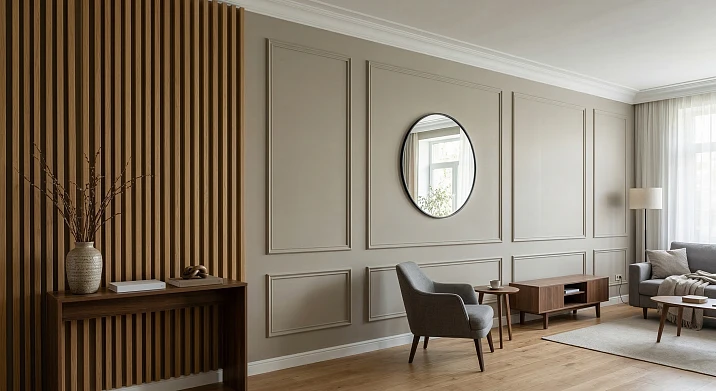
When a person starts calculating the budget for finishing, the first thing they look for is the price of slatted panels per square meter. The logic is clear: there's the wall area, there's the price per m², we multiply - we get a number. We compare several options, choose the cheaper one. Done.
But this is where the most common mistake in renovation planning begins. The price per m² is the cost of the material. Not the cost of the result. And the difference between these two concepts is fundamental. Because the final visual effect is determined not by one item in the price list, but by a system of solutions that interact in the space.
This article is not about 'where it's cheaper'. It's about how to calculate correctly: taking into account not only the square meters of slats, but also polyurethane moldings, finishing profiles, installation, margin, compatibility, and - most importantly - the final value of what will end up on the wall. Read carefully. Here you'll find specific numbers, algorithms, and honest answers to questions that usually remain without a clear answer.
Why the price per m² doesn't give the full picture
Imagine two options. First: slatted panels for a conditional 1,800 rubles per m², purchased at a construction market, without finishing profiles, without cornice, without baseboard, installed 'as is'. Second:Rafter panelsfor 2,400 rubles per m² in a kit with a starter profile, corner elements, a matching cornice and baseboard, installed according to technology with a ventilation gap.
Formally, the first option is 25% cheaper. In reality, the first option is an unfinished interior that looks like a temporary solution. The second is a finished space with character.
Price per m² is one parameter of one item in the estimate. The actual cost of the result consists of:
-
cost of the slatted panels themselves (price per m² × area + 8–10% reserve)
-
finishing profiles (starter, finishing, corner, inside corner pieces)
-
ceiling cornice (linear footage along the perimeter of the room)
-
baseboard (linear footage along the perimeter)
-
door and window opening trims
-
molding frames (if provided)
-
installation materials (battens for lathing, dowels, clips, sealant)
-
installation cost (self-installation or with a crew)
-
Material allowance for trimming and possible errors
When you only consider the 'price of slatted panels,' you see less than half of the actual estimate. And that's exactly why budgets 'blow out'—not because the material got more expensive, but because half the items weren't accounted for initially.




Why comparing the 'price per m²' of two different panels is incorrect
MDF for painting—one price. MDF with a decorative 'natural oak' finish—another, higher price. Solid oak with a radial cut—significantly higher. But these are different products with different performance characteristics and different results in the interior.
MDF for painting requires painting—these are additional costs for primer and paint. However, it can be repainted at any time if desired. MDF with a decorative finish—ready after installation. Solid oak—requires acclimatization, oil finish, ventilation gap, more expensive installation. But it lasts for decades and only improves with time.
Comparing them by price per m² without considering these factors is like comparing the cost per square meter of parquet board and linoleum and concluding that linoleum is 'better.'
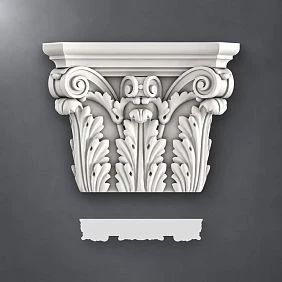
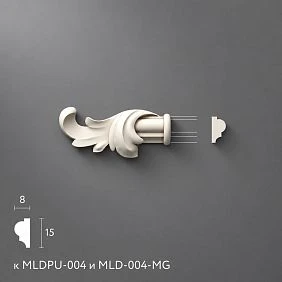
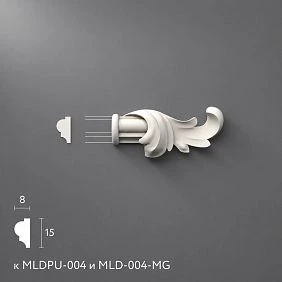
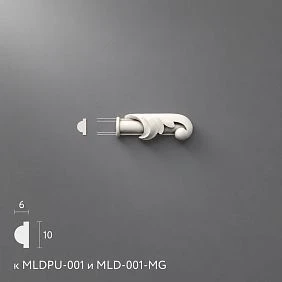
Our factory also produces:



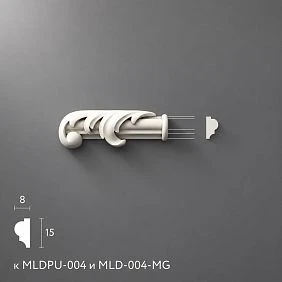
What adds to or reduces the cost of slatted panels
Let's break down each factor specifically. This will allow you not just to know the number, but to understand where it comes from and how to influence it.
Get Consultation
Slat material
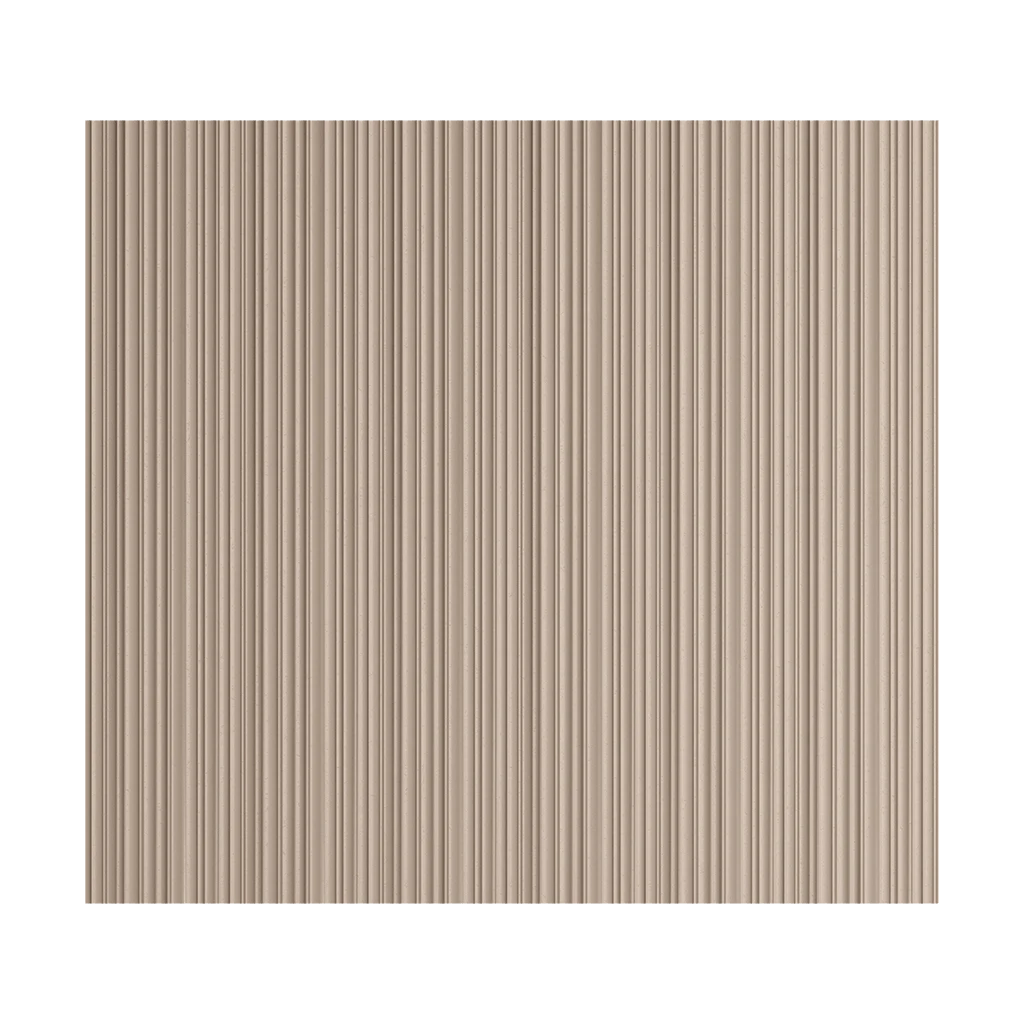
Solid oak, ash, walnut. Natural wood—the highest price in the lineup. Radial cut is more expensive than tangential. Brushed surface is more expensive than smooth. Thermally treated wood—a separate category: higher than basic solid wood, but lower than select radial cut.Wooden slat panelsFrom the array — it's an investment in durability: a properly treated surface lasts 20–30 years without replacement.
MDF with decorative coating. Mid-price range. Price depends on the coating type: PVC film — lower, melamine — higher, lacquer — higher. Wood-grain decors in neutral tones — standard price. Decors with metallic effect, stone-like, non-standard colors — 15–25% higher.
MDF for painting. One of the most affordable options at the base price. But remember: you need to add primer (2 coats) and paint (2 coats) to the cost. The final price per square meter of the finished surface — higher than the base slat.
WPC (wood-polymer composite). Average price, but intended primarily for wet areas and facades. For standard residential spaces — an excessive technical solution.
Slat width and profile
Narrow slat (35–50 mm) uses less material per linear meter, but more pieces per square meter of wall. The final price per m2 may be higher than for a wide slat (70–90 mm). Additionally, the installation cost of a narrow slat with a small pitch is higher due to more operations.
The pitch between slats also affects consumption. With a 65 mm slat and a 60 mm pitch (open gap), slat consumption per m2 of wall is 52%. With a 30 mm pitch — 68%. Calculate precisely for each project.
Slat length and ceiling
Standard lengths: 2400, 2700, 3000 mm. If ceiling height is 2720 mm and slat is 2700 mm — trimming by 20 mm is needed. This is a small waste. If ceiling is 2500 mm and slat is 2400 mm — the slat falls short by 100 mm. Joining or extension required. All this — additional consumption and extra work.
With non-standard ceiling height (3100, 3400, 4200 mm — typical for Moscow Stalin-era and historic buildings), standard slat length does not fit. Custom lengths are needed — this adds 15–30% to the item cost.
Quantity with reserve: mandatory item
Never order exactly the quantity calculated. Reserve:
-
Straight walls without openings — 7–8%
-
Walls with 1–2 windows or doors — 9–11%
-
Walls with niches, protrusions, arches — 12–15%
-
Complex room geometry — up to 18%
Differences in tone between MDF batches, even from the same manufacturer, are possible. If you need to add or replace a slat in six months, the batch may not match in tone. Order with a reserve for one pass.
Complete project estimate with slatted panels: what to consider
Let's break down the full estimate structure using an example of an accent wall in a living room: 3.6 m × 2.7 m = 9.72 sq. m. Slat 65 mm, spacing 55 mm. Ceiling along the room perimeter 5 × 4 m = 18 lin. m. Two doors.
| Position | Calculation | Comment |
|---|---|---|
| Slat panels (price per m2) | 9.72 m2 + 10% = 10.7 m2 | 10% margin for cutting |
| Starter profile at the floor | 3.6 linear m + 5% | Along the width of the accent wall |
| Finishing profile at the ceiling | 3.6 linear m + 5% | Along the width of the accent wall |
| Corner profiles | 2 pcs × 2.7 m | Along the vertical edges of the wall |
| Ceiling cornice | 18 linear m + 8% | Around the entire perimeter of the room |
| Baseboard | 18 linear m + 8% | Around the entire perimeter of the room |
| Door casings | 2 doors × 2 posts × 2.1 m + lintels | Both doors |
| 40×40 battens | Ceiling height ÷ 0.45 × 3.6 m × 1.1 | 6 rows across the wall width |
| Dowels, clips, adhesive | kit | By installation type |
| Acrylic sealant | 1–2 tubes | Joints and ends |
Add up all the items — and you'll get the real project budget, not the 'price per m²' from the price list. Typically, the cost of the slatted panels themselves makes up 55–65% of the total finishing budget. The rest is finishing profiles, decor, and installation materials.
What affects the cost of polyurethane decor
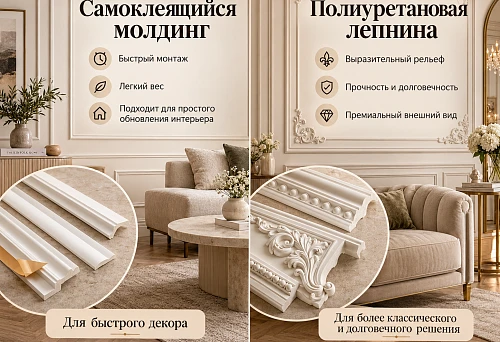
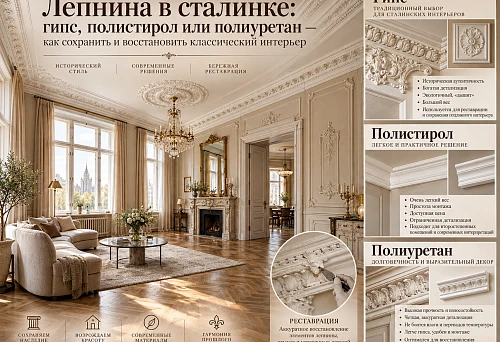
Polyurethane moldings— a price category that directly depends on three parameters: profile complexity, cross-sectional size, and manufacturer.
Profile complexity
Geometric profile (straight lines, simple ogee, chamfer) — the most affordable in the price range. This is not a drawback: geometry is universal, doesn't age, and works in any style.
Ornamental profile (acanthus leaves, beads, egg-and-dart, meander, rocaille) — higher in price. The price of an ornamental cornice can be 1.8–2.5 times higher than a geometric one of the same size. Justified only in a classical context with a corresponding ceiling height.
Complex composite profile (multiple tiers, combination of elements) — the highest price in the category. For historical interiors, restoration, and custom projects.
Cross-sectional size
A 55 mm cornice is significantly cheaper than a 120 mm cornice made of the same material from the same manufacturer. This is a direct relationship: more material — higher price per linear meter. That's why it's important to correctly calculate the required size, not 'take it with a size margin' — overpaying for a scale that isn't needed is pointless.
Moldings made of polyurethane: price depends on width and profile
Flat 20 mm molding for frame profiles is one of the most affordable trim elements. The 45 mm molding with a moderate ornament is significantly more expensive. However, the functionality—creating a frame geometry on the wall—is performed equally effectively by both. This means that overpaying for a complex molding profile only makes sense when the interior style requires it.
How to calculate decorative trim
Ceiling cornice: room perimeter + 8% for joints and corner cuts. For complex corner connections—up to 12%.
Baseboard: room perimeter minus the width of door openings + 8%.
Frame moldings: calculated by the area of the frame rectangles. One rectangle of 600×800 mm requires (600 + 800) × 2 = 2,800 mm = 2.8 linear meters of molding. Plus four corner connections.
Casing: (opening height × 2 + opening width) × number of openings + 10%.
When a more expensive option is more cost-effective in the end
This is not an advertising claim—it is a practical reality confirmed by any experienced designer or installation master.
First case: solid wood vs. MDF with a high ceiling
In a living room of a Stalin-era building with a 3.2 m ceiling and an area of 30 sq. mWooden slat panelsSolid oak from a radial cut array looks fundamentally different than MDF with a 'natural oak' finish. The living texture, volume, and change in tone under different lighting angles are things no decorative imitation can reproduce.
At the same time, solid wood in such an apartment is an investment for 15–20 years without loss of quality. MDF loses its marketable appearance after 7–10 years — the edges swell, the finish dulls. Recalculate the cost 'per year of use' — and solid wood turns out to be cheaper.
Case two: geometric cornice versus no cornice
Many consider a cornice 'optional'. This is one of the main mistakes in budget assessment. A wall without a cornice is an unfinished wall. The crack at the wall-ceiling junction, which appears in the very first year in any new house, is visible. The joint between the batten material and the ceiling finish is technical and unattractive.
A ceiling cornice with a simple geometric profile of 70 mm, with a perimeter of 16 linear meters, costs relatively little. But its visual effect is disproportionately large. The space gains completeness and a 'frame' that holds all the other elements.
Case three: the correct baseboard versus an economical one
An 85 mm baseboard made ofpolyurethanewith a 2.7 m ceiling is an element that creates the 'base' of the space. A 40 mm PVC baseboard in the same apartment is an element that visually 'cuts off' the interior from below, creating a sense of incompleteness.
The difference in cost for the entire apartment perimeter is relatively small. The difference in the visual result is radical. The rule: a 40–45 mm baseboard is only suitable for budget temporary solutions or for rooms with a very specific design concept. For living spaces with paneling — a minimum of 70–85 mm.
Case four: system vs. set
This is the most important case. Buying slats from one source, cornices from another, and baseboards from a third seems rational ('each time I chose the cheaper option'). In practice, tonal and scale mismatches between elements destroy visual unity.
Buying slats, cornices, and baseboards in one place, from one manufacturer, from a coordinated line means getting a system that works. Even if each individual element costs a bit more than the 'optimal' one from different markets.
How to evaluate the project as a whole: the full budget method
We offer a specific calculation algorithm that takes into account all real costs.
Step 1: Area and linear footage
Area of accent walls for slats (height × width of each). Perimeter of the room for cornice and baseboard. Number of door and window openings for trims.
Step 2: Material consumption calculation
Slat panels: area + 10% reserve.
Cornice: perimeter × 1.08.
Baseboard: (perimeter − door width) × 1.08.
Casing: (2 × opening height + opening width) × number of openings × 1.1.
Frame moldings: sum of perimeters of all frames × 1.1.
Battens: (wall height ÷ 0.45) rows × length of accent wall × 1.1.
Step 3: Estimate by items
| Position | Unit | Quantity | Unit price | Total |
|---|---|---|---|---|
| Slatted panels | m² | — | — | — |
| Starter profile | l. m | — | — | — |
| Finishing profile | l. m | — | — | — |
| Corner profile (external) | l. m | — | — | — |
| Ceiling cornice | l. m | — | — | — |
| Baseboard | l. m | — | — | — |
| Door casings | l. m | — | — | — |
| Frame moldings | l. m | — | — | — |
| Corner blocks | pcs | — | — | — |
| 40×40 batten for lathing | l. m | — | — | — |
| Dowels + clips | set | — | — | — |
| Primer + paint (if MDF for painting) | set | — | — | — |
| Installation (if by a crew) | — | — | — | — |
| TOTAL |
A filled table is the real budget. Not the 'price of slatted panels' in an ad.
Step 4: Assessing the 'price of the visual result'
This is a subjective but important parameter. Ask yourself: will this material look decent in 5 years? In 10? Will it require repainting, replacement, or rework?
MDF for painting — can be repainted. Solid wood — requires no intervention. Polyurethane decor — stable for decades. Rule: the longer a material maintains its appearance without intervention, the lower its 'cost per year of operation'.
Where Buyers Calculate Incorrectly: Seven Typical Mistakes
First Mistake: Comparing Different Materials by Price per m²
MDF with 'oak' decor for 1,200 rub./m² and solid oak for 3,500 rub./m² — this is not 'three times more expensive for the same thing.' These are two different materials with different service lives, different visual effects, and different operational requirements. Comparing them by price per m² without considering durability is incorrect.
Second Mistake: Calculating Without a Margin
'Wall area = amount of material' — a formula that guarantees a shortage. A 7–10% margin is not a seller's whim but the actual consumption for trimming, joints, and installation errors.
Third Mistake: Excluding Finish Profiles from the Estimate
Start and finish profiles, corner elements — together they account for 8–15% of the cost of the slatted panels themselves. Their absence in the estimate = an unpleasant surprise at the checkout.
Fourth Mistake: 'I'll Buy the Cornice Later'
Later — a different batch, a different shade, a different manufacturer. A cornice bought 'later' almost never perfectly matches the already installed panels. All system elements must be purchased in one project.
Fifth Mistake: Underestimating Installation Work
Installation of slatted panels with lathing, lighting, and finishing profiles is skilled work. The installation cost is 30–50% of the material cost. "Do it yourself" is possible but requires tools, time, and strict adherence to technology.
Mistake six: ignoring the cost of painting
MDF for painting — after installation, it needs to be primed (2 coats) and painted (2 coats). Primer + paint for 15 m² of surface is a separate expense. Polyurethane decor also needs painting. In total, painting can account for 20–35% of the material cost itself.
Mistake seven: calculating only "for now"
The most expensive repair is the one done twice. Cheap PVC panels yellow, deform, and lose geometry after 4–5 years. The estimate for replacement is essentially a new repair. Choosing quality material with a long service life is not overpayment but savings in the long run.
Real cost comparison of systems
Let's consider three options for finishing an accent wall in a living room 4 × 2.7 m (10.8 m²) + cornice and baseboard around the entire room (perimeter 18 linear meters).
Option A: Economical system
-
MDF with coating, basic decor, slat width 55 mm
-
Geometric cornice 68 mm, baseboard 75 mm
-
Finishing profiles from the basic line
-
Self-installation
Characteristics: average durability 7–10 years before loss of appearance, stable geometry, predictable result. A good choice for a rental apartment or temporary housing.
Option B: Mid-range system
-
MDF for painting, 65 mm slat
-
Geometric cornice 82 mm made of polyurethane
-
88 mm polyurethane skirting board
-
Molding frames flat profile 24 mm
-
Installation by a crew
Characteristics: very flexible system (can be repainted entirely if needed), relevance period — unlimited (depends on paint color). Professional result. Optimal choice for permanent housing.
Option B: Classic System
-
Oak array, 80 mm slat, oil finish
-
Cornice with soft swan neck 105 mm made of polyurethane
-
110 mm polyurethane skirting board
-
Door architraves 72 mm
-
Frame moldings 28 mm
-
Installation with lathing, ventilation gap, professional crew
Characteristics: service life 20–30 years without intervention. Visual result — fundamentally different level. Natural texture, living surface. Investment for the full life cycle of the apartment.
Option B calculated over 25 years of use — cheaper than Option A, which would require two full renovations over the same period.
Cost of moldings: what to buy and how much is needed
Let's examine the budget structure for You can buy ready-made stucco matching the Baroque style. Calculate the quantity: linear meters of cornices and moldings, number of rosettes, pilasters, consoles, corner elements. Add a ten to fifteen percent allowance for trimming. for a standard apartment.
Ceiling cornice: the main item
Accounts for 40–55% of the polyurethane decor budget. The perimeter of a standard room is 12–18 linear meters. The price per linear meter of cornice depends on the cross-section size and profile complexity.
Recommendation: do not skimp on the cornice at the expense of relief quality. Blurred relief on a cheap cornice looks 'smeared' after painting—this defect cannot be fixed with paint.
Baseboard: function and aesthetics in one item
15–25% of the polyurethane decor budget. The baseboard must be dense enough to withstand daily contact with furniture, vacuum cleaners, and feet. Soft, cheap polyurethane deforms at the floor—and this is immediately visible.
Frame moldings
10–20% of the budget. A flat profile 18–30 mm for frames—high effect-to-price ratio. One of the most cost-effective elements of stucco decor by this metric.
Door Casings
10–15% of the budget. Four doors, two windows—a standard apartment. The correct casing is the detail that 'completes' the door into an architectural element.
Accent elements (corner blocks, rosettes)
5–10% of the budget — only if required by the style. Rosettes, corner blocks — for classic interiors. In modern styles, their absence is the norm, not a drawback.
Wall finishing with slatted panels: pricing by zones
Different areas of the apartment require different approaches to material selection and, accordingly, to the budget.
Living Room
Slatted wall panelsFor one accent wall — the main investment. It is advisable not to save here: the living room is the most visible space, the first impression of the apartment. The budget for a slatted wall in the living room is at the 'medium plus' system level. Saving on this wall is immediately noticeable.
Bedroom
slatted panels in the bedroomThe wall behind the bed headboard. The area is smaller than in the living room. You can afford a more expensive material with the same total budget. Natural light oak behind the headboard is a proper investment: this surface is visible every morning, and it should bring pleasure.
Hallway and corridor
Slatted panels in the hallway interiorA small area, but high 'frequency' of contact: you pass through here several times a day. MDF with a practical coating or thermally modified wood is a reasonable choice in terms of price/durability ratio.
Kitchen
Slatted panels in the kitchenOnly in the relaxation area, not above work surfaces. Film-coated MDF with a matte finish — functional and at an affordable price. Solid wood near kitchen vapors — only with a very good hood and oil coating with regular renewal.
Bathroom and toilet
Slatted panels in the bathroom — only thermally modified wood or moisture-resistant MDF with full end insulation and special varnish coating. Polyurethane decor in the bathroom — standard polyurethane is moisture-resistant. Cornice and baseboard in the bathroom — functionally advisable.
How to correctly formulate a request when purchasing
When you contact a manufacturer or online store with a request for slatted panels and molding—a properly formulated request saves time and money.
What you need to provide:
-
Ceiling height in each room
-
Surface area for slats (walls, ceiling)
-
Room perimeter for cornice and baseboard
-
Number of door and window openings with dimensions
-
Interior style (minimalism, modern classic, neoclassical)
-
Preferences for slat material
-
Color palette (warm/cool, light/dark)
-
Budget with breakdown for panels and decor
With this data, the consultant will select compatible system components and calculate the full estimate—not just the 'price per m²,' but the actual project budget.
Slatted panels for interior finishing: summary table of pricing factors
| Factor | Impact on price | Comment |
|---|---|---|
| Material (MDF → solid oak) | ×1,5 – ×3 | MDF is the lower threshold, solid wood is the upper |
| Slat width (narrow → wide) | −10–20% per m² | Wider slats mean fewer pieces per m² |
| Spacing between slats | Directly proportional | Smaller spacing means higher consumption |
| Non-standard length | +15–30% to position | For high ceilings |
| MDF coating | +15–25% | Special decors vs. basic |
| 10% reserve | +10% to consumption | Mandatory |
| Finishing profiles | +8–15% of slat cost | Cannot be ruled out |
| Cornice + baseboard | +25–40% to the batten budget | Depends on size and perimeter |
| Installation | +30–50% of material cost | With a professional crew |
STAVROS: a systematic approach to price and quality
The question 'how much do batten panels cost' only becomes correct when it is followed by 'and what exactly do I get for that price.'
STAVROS producesRafter panelsmade of solid oak, ash, thermowood, MDF with coating and for painting — in a full range of formats and sizes. Simultaneously —Moldings made of polyurethane, cornices, baseboards, architraves, frame profiles. All products are developed as a system: large-scale series, coordinated profiles, stylistic compatibility between wood and polyurethane.
This means one practically important consequence: by choosing a rail in STAVROS and a cornice in STAVROS, you don't get two separate good products—you get a system that works as a single whole. This is how a project with the correct visual result is assembled.
You can buy ready-made stucco matching the Baroque style. Calculate the quantity: linear meters of cornices and moldings, number of rosettes, pilasters, consoles, corner elements. Add a ten to fifteen percent allowance for trimming.And slatted panels in one place, with a full estimate calculation and compatibility consultation—this is not just convenience. It's a guarantee that the budget will be spent on the result, not on rework.
Samples before ordering. Calculation of linear footage and areas—based on your data. Contact us to confirm shipping to your destination. And most importantly—not 'price per m²', but the price for an interior that will please for a long time.
FAQ: Answers to popular questions
How to correctly calculate slatted panels price per m² taking into account the spacing?
Multiply the wall area by the fill factor: rail width ÷ (rail width + spacing). For example, rail 65 mm, spacing 55 mm: 65 ÷ 120 = 0.54. For 1 m² of wall, there is 0.54 m² of rail. Multiply by the price per m² of rail—you get the material cost per m² of surface.
How much does it cost to install slatted panels professionally?
Installation with lathing, with finishing profiles, with lighting—30–50% of the material cost. In Moscow and large cities—closer to 50%. In regions—30–40%.
Can you save on the cornice by taking a smaller size?
No. The cornice size is determined by the ceiling height, not by a desire to save. Incorrect scale—and the result doesn't work. It's better to save on the complexity of the ornament (geometric profile instead of ornamental), but not on the size.
Why is a polyurethane cornice better than a plaster one?
In most residential apartments — lightness (does not load the ceiling), flexibility of installation, resistance to building settlement, ability to paint in any shade without special preparation. Plaster — for restoring historical interiors and specific authorial projects.
Should painting of moldings be included in the estimate?
Yes, definitely. Polyurethane is supplied in white primer — it looks 'technical' before painting. The final shade — after painting with acrylic paint in the chosen RAL. Primer + 2 coats of paint for 20 linear meters of cornice — a separate budget item.
How to understand if the budget for finishing is calculated correctly?
If the estimate has no lines for finishing profiles, cornice, baseboard, trim, installation materials, and reserve — the budget is incomplete. Slatted panels per m2 — that's one line out of eight to ten. The full budget is always 1.8–2.5 times higher than 'panel price × area'.
How long does a polyurethane baseboard last?
High-quality dense polyurethane — 15–20 years without loss of shape and relief. Provided proper installation (glue + additional fastening) and normal use. Soft cheap polyurethane — 3–5 years until visible deformations.
Is it worth ordering samples before purchase?
Definitely. The color on the screen and the color in the actual room under your lighting — are different. Warm lamps 2700K make wood reddish, cold 4000K — gray. A sample under your light — the only reliable way to check the shade.