Article Contents:
- Where to buy slat panels in Novosibirsk
- Which slat panels are suitable for walls
- MDF slat panels: when to choose them
- What affects the price of slatted panels
- How to calculate the number of panels before purchasing
- Where to use slatted panels in interior design
- In the living room
- In the entryway
- In the bedroom
- In commercial interiors
- How to choose slat panels before buying
- Slat wall panels in interior styles
- Why you should look beyond just the price
- How to properly install slat panels
- Slat panels and complementary decor: the system solves everything
- Delivery of slatted panels to Novosibirsk: what you need to know
- How to place an order at STAVROS
- FAQ: Answers to Popular Questions
- About the Company STAVROS
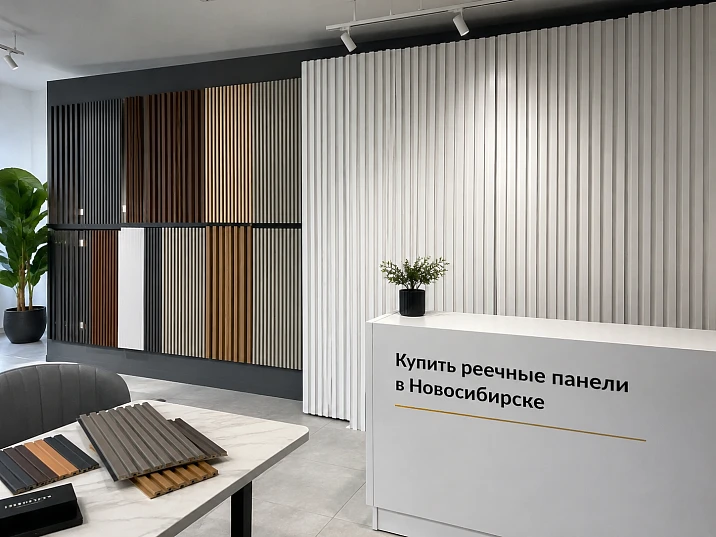
Novosibirsk is a city where private construction and renovation have long gone beyond standard solutions. Here, houses are built with thoughtful interiors, apartments are finished with designer touches, and offices and commercial spaces are arranged where every detail carries meaning. And when it comes to wall decor, the question "where to buy slatted panels in Novosibirsk" is heard more and more often — because slatted finishing has become one of the main tools of modern interior design.
This article is a practical navigator. There are no empty words about "beauty" and "style" here — only specifics: which slatted wall panels to choose for a task, what affects the price, how to calculate the quantity, how to place an order with delivery to Novosibirsk, and why a systematic approach to choosing finishes always gives a better result than buying "by price."
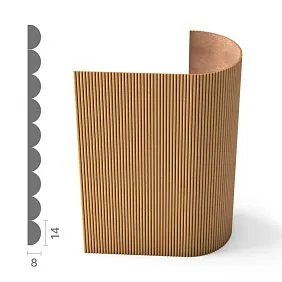
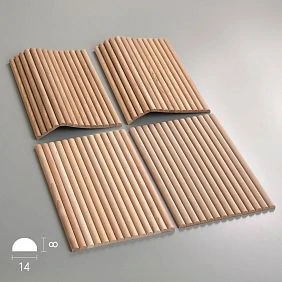
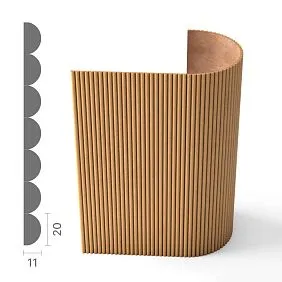
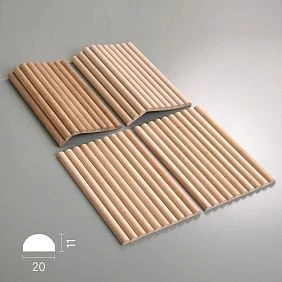
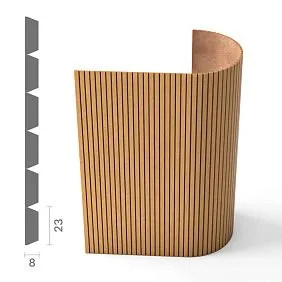
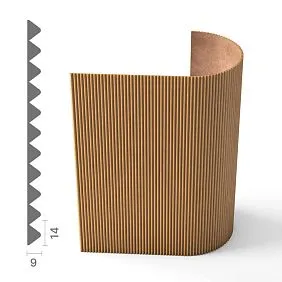
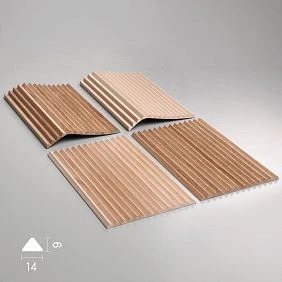
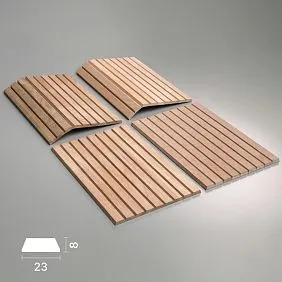
Where to buy slatted panels in Novosibirsk
A direct answer without unnecessary words: you can buy slatted panels in Novosibirsk through the STAVROS catalog by placing an order online with direct delivery to the city. Production is in St. Petersburg, delivery is throughout Russia, including Siberia. This means that a Novosibirsk buyer receives the same products as a Moscow or St. Petersburg buyer, without intermediary markups and without loss of quality.
To buy slatted wall panels in Novosibirsk, simply select the desired items in the catalog, calculate the quantity, clarify details with a manager, and arrange delivery. Production time is 5–10 working days, logistics to Novosibirsk is via a standard transport company as agreed upon when ordering.
An important point that is often ignored when searching for slatted panels in the regions: local hardware stores offer a limited assortment, often without the ability to select panels from the same series with moldings, baseboards, and decorative trims. When ordering through the manufacturer, you get access to the full catalog of slatted panels and to related elements — everything needed for a complete interior system.
If you need to order slatted panels to Novosibirsk with clear deadlines and quality assurance — this is a working and proven route.




Which slat panels are suitable for walls
Before moving on to the details of the order, you need to figure out the main thing: which panels you need. Slat panels are not a single product with one design option. It is a whole system with different materials, profiles, coatings, and purposes.
Panels for an accent wall. The most common scenario: one highlighted wall in the living room, bedroom, or study that sets the tone for the entire space. For an accent wall, panels with an expressive rhythm are suitable — a wide slat with a deep gap. Such a surface works as an architectural object, attracts attention, and organizes the space.
Panels for the TV area. A TV screen on a bare wall is always visual incompleteness. slatted panel for the television creates a background that integrates the equipment into the interior context. A wood color or neutral dark tone is a popular choice for TV areas: the screen looks organic against such a background, not 'hanging in the air'.
Panels for the hallway. In the hallway, slat panels solve two tasks at once: they protect the walls from mechanical damage and visually organize the space. The vertical rhythm of the slats stretches the corridor upward, while the horizontal one adds depth. For the hallway, panels with a hard coating are especially relevant: varnish or oil based on wood or MDF with a reinforced finish layer.
Panels for the bedroom. The headboard area is a classic place for a slat panel in the bedroom. A textured but calm background that is more expressive than a painted wall but softer than a bright pattern. For the bedroom, coatings without solvents are especially important — water-based acrylic enamels without odor.
Panels for painting. Paintable lath panels — a choice for those who need to match a specific color. You take the desired shade according to RAL or NCS, paint the panels before installation with a spray gun — the result is factory quality. This option is especially convenient when you need to match the color of the panels with already selected moldings, doors, or furniture.
Wood-look panels. wood-look slatted panels — natural aesthetics without the whims of natural wood. Warm tones, pronounced texture, organic look in any interior — from Scandinavian to modern classic. They go well with white walls, white moldings, and light furniture.
MDF panels. The most popular option for residential interiors. Stable geometry, uniform surface, compatibility with any paints, easy installation. More details about them in the next section.
Solid wood panels. Oak or beech solid wood is a choice for those who value natural foundation: tactile texture, "living" surface under paint or varnish, high durability. They cost more than MDF, but with proper care they last for decades.
Full range in the catalog of slatted panels STAVROS: there you can compare series, profiles, sizes, and coatings.
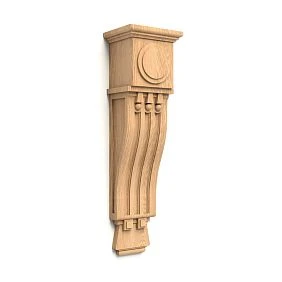
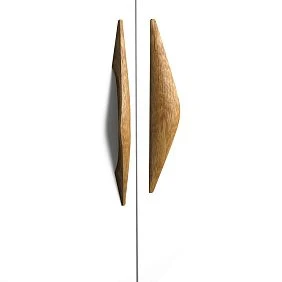
Our factory also produces:


Slat MDF panels: when to choose them
If you are searching for "buy slat MDF panels in Novosibirsk" — you already roughly understand what you want. MDF panels are a rational choice for most residential and commercial interiors, and here's why.
Stable geometry. MDF does not warp from temperature changes and seasonal humidity fluctuations as solid wood does. Slats remain straight, joints do not separate — critical for rooms with central heating, where the air is dry in winter and humid in summer.
Uniform surface. No knots, sapwood, or fiber color variation — the MDF surface is completely uniform. This means that after painting, it looks like a professional factory coating, not a craft job with unpredictable results.
Ease of installation. MDF is easy to cut and process, edges do not delaminate with careful sawing. A basic-skilled installer can handle adhesive fixing without difficulty.
Wide finishing options. For painting with water-based enamels, for varnish, for film — MDF accepts any final coating. This makes it an ideal base for slatted panels for painting: you paint it in the desired shade, you get an exact color without deviations.
Application in apartments, houses, and commercial spaces. Living room, bedroom, study, hallway, reception, meeting room, waiting area — anywhere where a decorative result is important without excessive costs. MDF slatted panels work in residential projects of any scale and in commercial interiors with moderate traffic.
Limitations. MDF without special protection is not suitable for areas with high humidity — bathrooms, open loggias, kitchen backsplashes. For such areas — either moisture-resistant MDF with a special coating or solid wood with a hard varnish.
Summary: if your task is decorative wall finishing in residential spaces with normal humidity conditions — MDF slatted panels are the optimal balance of aesthetics, practicality, and cost.
Get Consultation
What affects the price of slat panels
The question "how much do slatted wall panels cost" does not have a single answer. The price is formed from several components, and understanding each of them helps to create an accurate budget without unpleasant surprises when receiving the invoice.
Material. This is the main pricing factor. MDF is the basic option with optimal cost. Solid oak or beech is significantly more expensive due to raw material costs, more complex processing, and hand sanding. Flexible panels on a fabric base for curved surfaces are a separate category with their own pricing logic.
Panel size. Larger format panels cost more in absolute numbers, but are often cheaper per square meter — due to savings on production operations. A large format also means fewer joints — which reduces costs for moldings to cover them.
Slat width and depth. A wide slat with a deep relief requires more material and more complex milling — the price is higher. A narrow slat with minimal relief is the basic price category.
Type of coating. A panel in "white primer" for painting is the base cost. A panel with a ready-made white or colored coating is slightly more expensive due to the production stage of final finishing. A panel with a wood-like coating, including texture application, is a premium category.
Order volume. When ordering a large volume — several rooms or a commercial project — the unit cost decreases. Check with STAVROS managers for conditions on large orders.
Additional elements. Moldings and cornices for closing the top edge and horizontal joints, baseboards for the bottom junction, Decorative Inserts — all of this is part of the system that needs to be considered in the overall budget. Panels without these elements are unfinished work.
Installation. Self-adhesive DIY installation — zero labor costs. Professional installation with a frame, ceiling surfaces, complex corners — adds an amount to the budget depending on the volume and complexity of the work.
Delivery to Novosibirsk. The delivery cost depends on the weight and volume of the order. With a correct calculation of the number of panels (without excess stock), logistics costs are optimized. You can clarify the delivery cost to your address in Novosibirsk with STAVROS managers when placing an order.
How to calculate the number of panels before purchasing
A calculation error means either a shortage (you'll have to pay extra for additional delivery and wait) or an excess (unnecessary costs). A correct calculation takes 15 minutes and eliminates both scenarios.
Step 1. Measure the wall. Record the width and height of the finishing surface in millimeters. If the panels are not going on the entire wall but on a separate section (TV area, sofa wall, headboard area) — measure that specific section.
Step 2. Determine the area. Width × height = area in sq. mm. Convert to sq. m by dividing by 1,000,000.
Step 3. Choose the direction of the slats. Vertical layout (slats from floor to ceiling) — for optically stretching the space upward. Horizontal (slats parallel to the floor) — for visual expansion. The direction affects how consumption is calculated: with a vertical layout, the panel length correlates with the room height; with a horizontal layout, with the wall width.
Step 4. Consider the panel length. Panel length is a critical parameter for vertical installation. If the room height is 2700 mm and the panel length is 2700 mm — one row, zero joints. If the panel length is 1350 mm — two rows, one horizontal joint. Determine in advance how many rows in height and how many moldings will be needed to cover the joints.
Step 5. Calculate the number of panels. Wall area ÷ area of one panel = number of pieces (round up to the nearest whole number).
Step 6. Add a reserve of 10–15%. For trimming around window and door openings, outlets, switches, and corners. Do not neglect this point: a shortage of one or two panels can delay project completion by a week.
Step 7. Check the joints. Determine where horizontal joints will be and how many molding belts are needed. Each joint is an additional molding across the entire width of the wall.
Step 8. Outlets, switches, lighting. Mark all electrical points and light fixture mounting locations on the diagram. Cutouts for them are made before installation or during the process — plan ahead, do not leave it for later.
If the calculation is difficult, STAVROS managers will help calculate the quantity based on your measurements. Just provide the wall dimensions and the selected panel series.
Where to use slatted panels in interior design
In the living room
Living room — a space of maximum exposure. This is where the guest sees the entire interior in the first seconds after entering. Slat wall panels in the living room work as an architectural accent that sets the tone for the entire room.
TV zone. A screen on a slatted background is a well-thought-out, integrated interior element, not just equipment attached to a random wall. slatted panel for the television in dark wood or neutral white creates the right visual context. Backlighting behind the molding around the perimeter — an atmosphere at the level of a designer project.
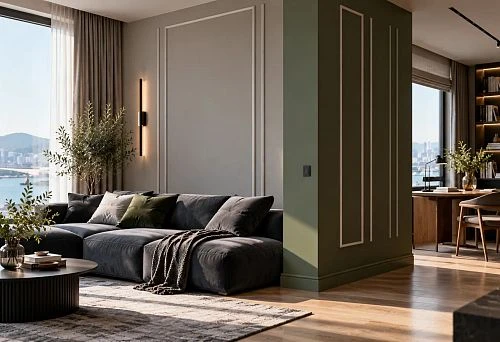
Sofa wall. An accent vertical surface behind the sofa — with molding along the top edge and a baseboard at the bottom — turns the sofa area into a full-fledged architectural niche. The slatted rhythm organizes the gaze, creating a sense of depth.
Decorative vertical. In a living room with high ceilings (from 3 m), a slatted vertical between two zones is a zoning technique without walls and partitions. A visual divider that exists only in architectural perception, but not physically.
In the hallway
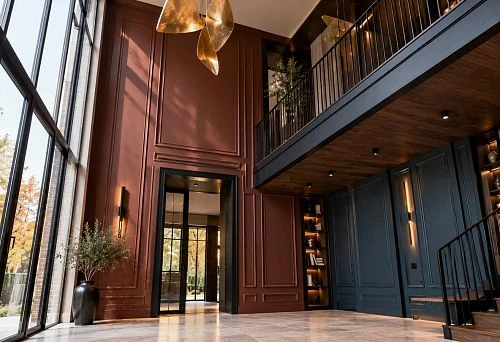
The hallway is the first thing people see. Slatted panels here solve three tasks at once: decorative, protective (against mechanical damage), and spatial (optically elongating a narrow corridor). The vertical rhythm of slats on the side walls adds a sense of height, while the horizontal rhythm on the end wall adds depth.
Combination with polyurethane wall decor — with pilasters or corner elements — transforms the hallway from a technical space into a full-fledged architectural zone.
In the bedroom
In the bedroom, a slatted panel behind the headboard is a delicate tactile background that is more expressive than a painted wall and softer than a bright pattern. Texture without aggression — just what is needed for a relaxation area.
Warm backlighting behind the molding in the headboard area creates an evening glow that makes the bedroom intimate and cozy. A 2700K strip is the standard for sleeping areas. Cold white 5000K is inappropriate in the bedroom.
Slatted panels paired with polyurethane moldings around the perimeter of the headboard area is a professional interior technique that is accessible for DIY installation.
In commercial interiors
Slatted wall panels in offices, restaurants, hotels, showrooms are an established professional technique. In commercial spaces, they perform several functions: create a branded visual style, zone the space, and improve acoustics by diffusing sound waves.
Reception. The wall behind the reception desk with slatted panels is a standard of modern office design. Dark wood or dark lacquer on the slats conveys strictness and status. Light tones convey openness and friendliness.
Meeting room. An accent slatted wall in a meeting room organizes the view, improves acoustics, and creates a working atmosphere. In combination with moldings — additional level of representativeness.
Waiting area. Slat panels in the waiting area reduce visual monotony and create a tactilely rich environment — which is important for forming a positive first impression of the company.
How to choose slat panels before purchasing
A structured approach to selection is the best insurance against mistakes. Go through each item before placing your order.
Material. MDF — for most residential spaces. Solid oak or beech — for premium interiors and areas with high durability requirements. Moisture-resistant MDF — for hallways with heavy use.
Color. Ready-made coating or for painting. If you choose for painting — determine the shade according to RAL or NCS and order a paint sample to compare with moldings and doors.
Length. Match with the room height. For ceilings of 2700 mm, look for panels of 2700 mm or 1350 mm (with a molding belt in the middle). Fewer joints — cleaner result.
Slat width. Narrow slat (10–20 mm) — dense textured rhythm, suitable for small spaces and background surfaces. Wide slat (30–50 mm) — expressive sculptural rhythm, for large walls and accent surfaces.
Relief depth. Large depth — intense play of shadows with side lighting. Small depth — delicate rhythm in any lighting. The choice depends on the lighting character in the room.
Installation method. Adhesive — on a flat base, quick and without a frame. Framed — for uneven walls, on the ceiling, when sound insulation is needed.
Compatibility with baseboards and moldings. Baseboards and moldings should be proportionate to the slats in height and profile. Order samples together with the panels — compare them in person before making a final decision.
Samples. Always order samples before a large order. Color, texture, relief depth — all of this needs to be evaluated in person, not on a monitor.
Delivery conditions to Novosibirsk. Check with the manager for the cost and delivery time of a specific order. For large volumes, pallet delivery by a transport company is possible — reliable and without damage.
Ability to purchase an additional series. Make sure the selected series of panels is produced continuously and can be purchased additionally if needed. This is important for long projects with phased deliveries.
Slat wall panels in interior styles
Slat panels are one of the few finishing materials with genuine stylistic versatility. Let's explore how they work in different aesthetic concepts.
Scandinavian style. Light tones, wood, white — the basic Scandinavian formula. Light wood slat panels or white MDF panels fit perfectly into this context. No decor — just the pure rhythm of slats as the only finishing detail.
Japandi. The Japanese-Scandinavian synthesis is built on a balance of white and wood, emptiness and texture. Slat panels are a precise tool for creating this balance: there is rhythm, but it is not aggressive.
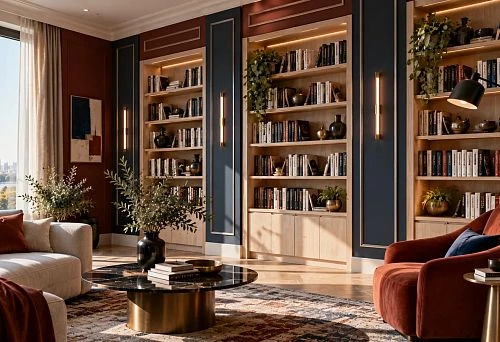
Modern classic and neoclassical. Slat panels paired with moldings и moldings — a combination of linear and plastic relief. Slat rhythm as a structural foundation, molding as a frame, stucco decor as an accent. A three-level finishing system in the spirit of modern neoclassicism.
Loft. Dark MDF slat panels in graphite or anthracite — a powerful industrial technique in loft-style interiors. Contrast with raw concrete or brickwork — a compelling statement.
Minimalism. A slat wall from floor to ceiling without moldings or baseboards — architectural minimalism in its pure form. It requires perfectly flat surfaces and flawless installation, but the result is extremely expressive.
Eclecticism. Slat panels are neutral enough to coexist with diverse elements and expressive enough to structure the space. In mixed styles, they often act as an organizing element that ties together disparate details.
Why you should look beyond just the price
When it comes to choosing slat panels, price is just one parameter. And not always the most important one. Here's why.
Geometry quality. A slat panel with inaccurate geometry — slats of different widths, uneven spacing, non-parallel edges — cannot be installed with clean joints. A deviation of 0.5 mm in one panel accumulates across the entire wall and results in a visible misalignment by the last row. Geometry is something worth paying for.
Material stability. Cheap MDF with unstable density warps with humidity changes. Panels made of homogeneous MDF with controlled density of 720–780 kg/m³ hold their shape consistently.
Surface quality. Sanding the surface for painting — the final result depends on it. On a poorly sanded surface, scratches, micro-relief of the substrate, and unevenness are visible. On a properly prepared surface, enamel lays evenly, like a factory coating.
System compatibility. Panels from one manufacturer are coordinated in geometry with adjacent elements: moldings, baseboards, decorative overlays. Assembling a system from parts of different suppliers is a task with a significant risk of mismatches in sizes and profiles.
The ability to assemble an interior system. STAVROS offers not just slatted panels, but the entire accompanying range: Moldings and cornices, Baseboards, PU overlays, Wall Decor, Moldings. You order everything from one supplier, receive a system coordinated in geometry and style — and don't waste time searching for and comparing parts from different manufacturers.
Service and consultations. The ability to get a qualified answer to questions about calculation, installation, material compatibility — this is also part of the value. Saving 500 rubles on a panel, which results in a week of rework and purchasing missing elements, is not a saving.
How to properly install slatted panels
Installation is the final stage on which the entire visual result depends. Even the best panels look worse than average if installed incorrectly.
Base preparation. The wall must be dry, clean, without loose areas. For adhesive installation, the plane deviation should be no more than 3–5 mm per 2 m. A larger deviation requires installation on a metal profile frame. Priming the base is a mandatory step for the adhesive method.
Marking. Laser or bubble level. The first vertical baseline — from it, the first panel is installed. Check verticality every 3 panels.
Adhesive. MS polymer or polyurethane adhesive without solvents. Apply to the back of the panel in a zigzag pattern with a step of 150–200 mm. Let it sit in the air for 3–5 minutes, then press firmly against the wall. Secure the first 2–3 panels with temporary spacers or painter's tape until the adhesive sets.
Joining. Panels are joined end-to-end. With a precisely matching slat pitch, the joint is almost invisible. Horizontal joints in height are covered with a molding — this is an architectural element, not a defect mask.
Corners. Internal corners — the ends of two panels cut at 45°, or a corner molding. External corners — corner trims or a 45° cut. The technology for working with corners is described in detail in the article about installing polyurethane moldings — clean corners, hidden joints, and painting are disassembled there.
Final painting. MDF panels are primed twice before installation with intermediate sanding using 180–220 grit. Painting with a spray gun before installation yields the best result. After installation, touch up ends and joints with a soft brush. Painting temperature: 18–25°C, air humidity: no higher than 70%.
Slat panels and adjacent decor: the system solves everything
One slat panel on the wall is good. A slat panel in a system with moldings, baseboards, and decor is professional.
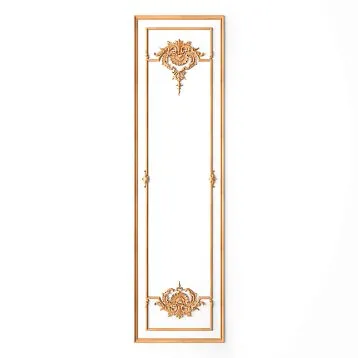
Polyurethane wall decor includes pilasters, panel overlays, corner elements — everything that turns a slatted surface into a complete architectural composition. Pilasters along the edges of the slatted area create a vertical frame. A molding belt horizontally does the same — for a horizontal joint.
PU overlays in the center of a slatted wall — a decorative accent that adds volume and plasticity against the linear rhythm of the slats. Rosettes, cartouches, medallions work as visual focal points on a structured background.
Moldings in combination with slat panels — modern neoclassicism in its most convincing form. The linear geometry of the slats and the plastic relief of stucco decor create a contrast that generates high-level interior tension.
The entire system is available in the STAVROS catalog: from slat panels to stucco and trim — a single source, consistent geometry, one point of contact for ordering.
Delivery of slat panels to Novosibirsk: what you need to know
For a resident of Novosibirsk, ordering through an online store with delivery from St. Petersburg is common practice. STAVROS slat panels are shipped throughout Russia: Moscow, Novosibirsk, Yekaterinburg, Krasnoyarsk — standard delivery.
Packaging. Panels are packed in protective film and rigid cardboard packaging — the risk of damage during transportation is minimal. Large orders are palletized for additional protection.
Timelines. Production takes 5–10 business days. Delivery to Novosibirsk by transport company takes 5 to 10 business days depending on the carrier. Total from order placement to receipt averages 2–3 weeks. Plan your order in advance, especially if renovation deadlines are tight.
What to consider upon receipt. Accept the order in the presence of the courier or transport company representative. Inspect the packaging for damage before signing documents. If in doubt, open the packaging and inspect the panels upon receipt. After signing documents without reservations, responsibility for transportation damage transfers to the recipient.
Returns and replacements. Clarify the conditions for returning and replacing defective items with STAVROS managers when placing your order. Manufacturing defects are rare, but understanding the terms in advance is a sensible practice.
How to place an order at STAVROS
The ordering process is designed to minimize the likelihood of errors — on your part and on the manufacturer's part.
Step 1. Select panels in the catalog. Go to the section of slatted panels, explore the series, compare profiles and coatings. If in doubt, order samples — this will take a few days and save you from disappointment after the main order is delivered.
Step 2. Calculate the quantity. Use the calculation algorithm from the previous section. If you are unsure about the numbers, contact a manager: they will help calculate accurately based on your measurements.
Step 3. Select complementary elements. Moldings for the top edge and joints, baseboards for the bottom junction, and decorative elements if needed. All in one order, one time.
Step 4. Request a consultation. STAVROS managers will help clarify technical details: compatibility of panels with selected moldings, installation recommendations, and painting features of the chosen material.
Step 5. Arrange delivery to Novosibirsk. Clarify the delivery cost, transport company, and estimated timelines. For large orders — discuss palletizing.
Step 6. Place your order. Online via the cart or with a manager by phone or messenger.
Step 7. Receive and check your order. Upon receipt — inspect the packaging and panels according to the recommendations above.
STAVROS showrooms are in St. Petersburg and Moscow. If you are planning a trip — you can arrange a visit in advance and see the panels in person before ordering.
FAQ: Answers to popular questions
Where to buy slat panels in Novosibirsk?
You can place an order in the STAVROS catalog online with delivery to Novosibirsk by a transport company. Before purchasing, it is recommended to order samples — this will allow you to evaluate the color, texture, and depth of the relief in person before making a final decision.
Which slat panels are best to buy for walls?
It depends on the room and the task. For most residential interiors — MDF for painting or with a ready-made coating. For premium projects — solid oak under white enamel or under wood. For high-traffic areas (hallway, commercial) — solid wood with hard lacquer or moisture-resistant MDF.
How much do slatted wall panels cost?
The price depends on the material, size, type of coating, and order volume. It is better to clarify the exact cost using the current STAVROS catalog — it lists prices for all items. Include in your budget additional elements: moldings, baseboards, trims, and delivery to Novosibirsk.
Can I buy MDF slatted panels with delivery to Novosibirsk?
Yes. STAVROS delivers throughout Russia, including Novosibirsk. Production time is 5–10 business days, delivery takes 5 to 10 days depending on the carrier.
What affects the price of slatted wall panels?
Material, slat width and depth, coating type, panel format, order volume, additional elements, and delivery cost. For large volumes, check conditions with managers.
Which panels to choose for the TV area?
Panels with even geometry and a calm rhythm in a tone that doesn't conflict with furniture and walls. Wood-look options work well — a warm tone blends organically with most interiors. Paintable panels — if you need a precise neutral or dark shade.
Is professional equipment required for installation?
Adhesive installation on a level surface is doable for DIY with basic skills: you need a level, MS polymer adhesive, and spacers. Frame installation, complex corners, and ceiling surfaces — it's recommended to hire an experienced craftsman.
Can slat panels be combined with stucco molding?
Yes, and it's one of the strongest interior techniques. The linear slatted rhythm and the plastic stucco relief create a contrast that adds depth and complexity. Slatted panels as the main surface, stucco as a focal accent — a classic neoclassical system.
How to calculate the number of panels for a 4×2.7 m wall?
Wall area: 4 × 2.7 = 10.8 sq m. Area of one panel (e.g., 2700 × 120 mm): 2.7 × 0.12 = 0.324 sq m. Quantity: 10.8 ÷ 0.324 = 33.3 → 34 pieces. Plus a 10% margin: 34 × 1.1 = 37–38 pieces. The panel length of 2700 mm matches the ceiling height — no horizontal joints.
About the company STAVROS
STAVROS is a Russian manufacturer of decorative interior and facade items with a history starting in 2002. The company was founded by two artists in St. Petersburg — early work included restoration of the Constantine Palace in Strelna, followed by the Hermitage, Alexander Palace, and Trinity-Izmailovsky Cathedral.
Today STAVROS is a full-cycle manufacturing company: from profile design to quality control of finishing. The catalog includes Rafter panels from MDF and solid wood, Moldings and cornices, PU overlays, Wall Decor, molding — everything needed to create a complete interior system.
Production in Saint Petersburg with controlled workshop microclimate: temperature 20–24°C, humidity not below 40% — geometric stability of solid wood products is ensured at the production level. "Prestige" class sanding — manual processing, ready for finishing without additional preparation.
STAVROS delivers orders throughout Russia — including Novosibirsk. Orders from one piece. Consultations by phone, messenger, or in the showroom. Select slatted panels for walls, calculate quantity, arrange delivery, and select complementary elements — you can do it right now by contacting the STAVROS team.