




































Article Contents:
- Buy ceiling skirting in Moscow: which option to choose for your interior
- What ceiling skirting boards can be bought in Moscow
- Wooden ceiling skirting boards
- Paintable MDF skirting boards
- Polystyrene ceiling cornices
- Polyurethane decorative profiles
- How to choose ceiling skirting by material
- When wood is better
- When MDF is more convenient
- When polystyrene is more cost-effective
- When a decorative polyurethane profile is needed
- Buy ceiling skirting for apartments, houses and different rooms
- For Apartments
- For Home
- living room
- for the bedroom
- For Kitchen
- For the hallway
- Buy ceiling skirting for stretch ceilings and regular ceilings
- For stretch ceiling
- For painted ceilings
- For high ceilings
- For low ceilings
- How to choose a ceiling skirting board by width and profile
- Narrow profile
- Medium universal profile
- Wide skirting board
- Smooth profile
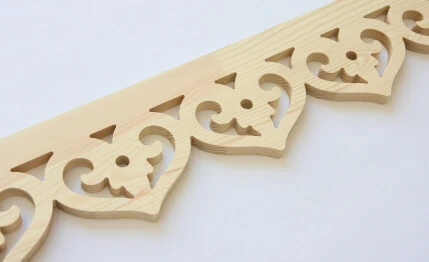
- Decorative profile
- What to combine ceiling skirting with in interior design
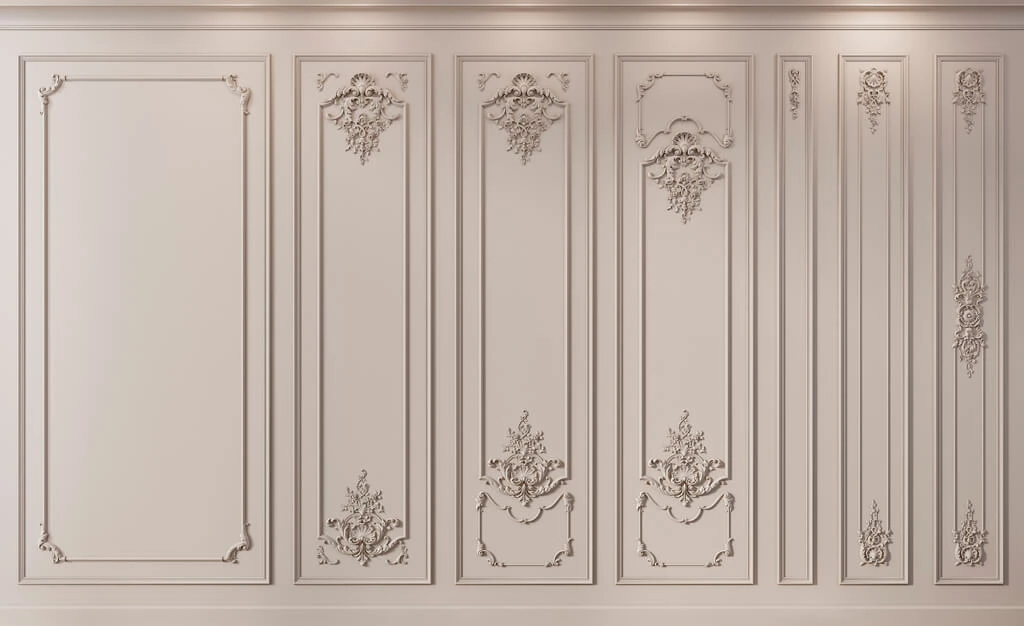
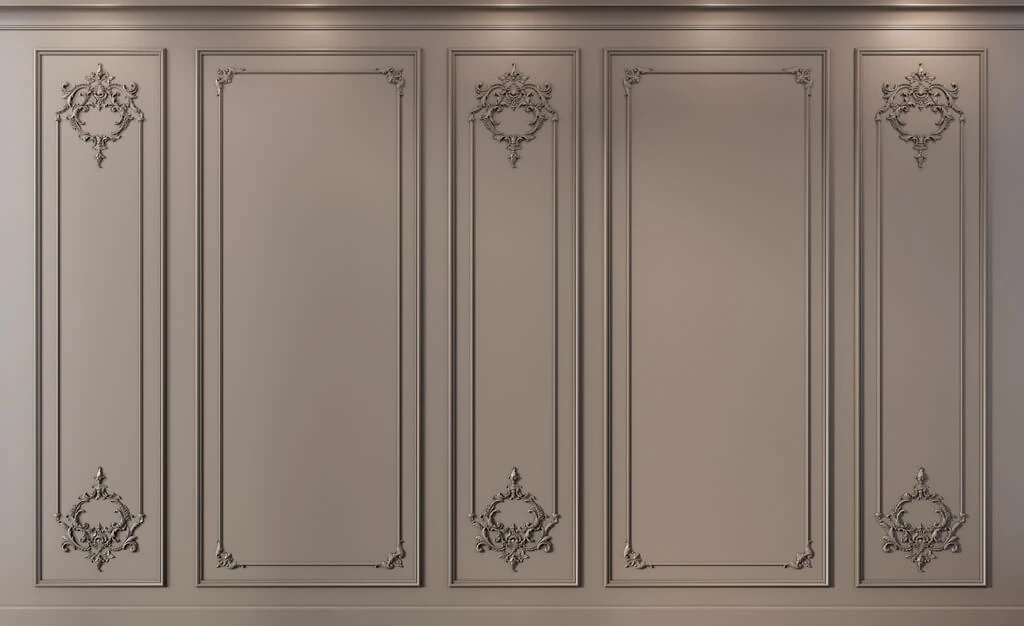
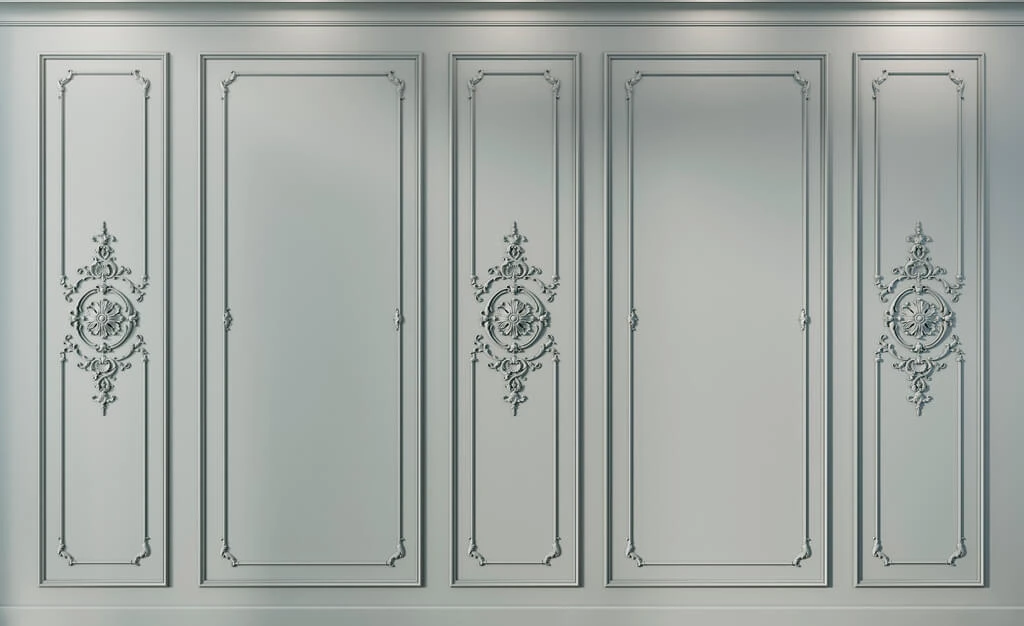
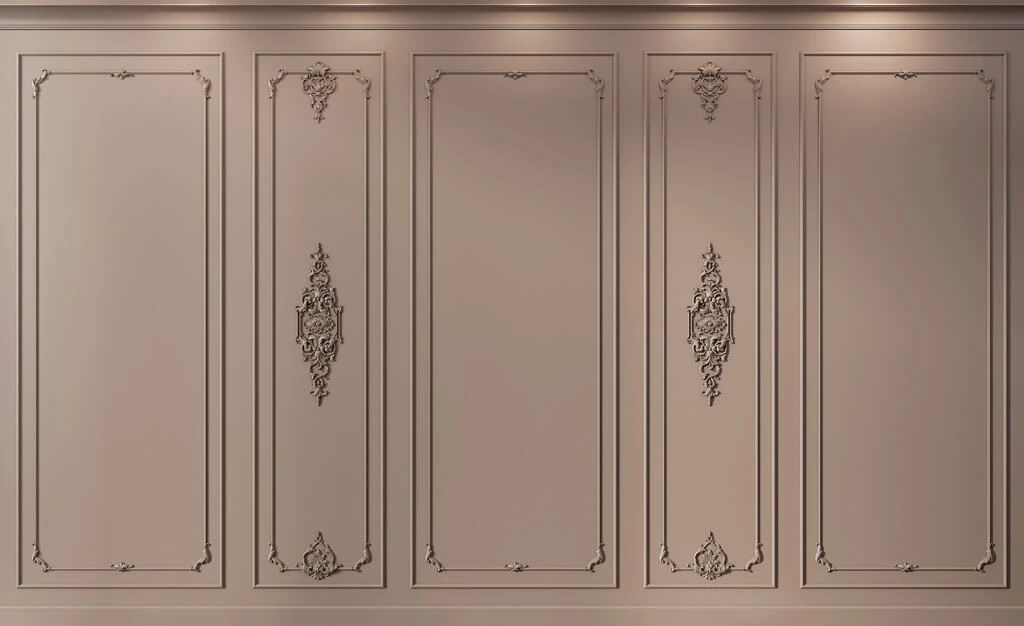
- With wall moldings
- With wooden moldings
- With polyurethane molding
- With floor skirting board
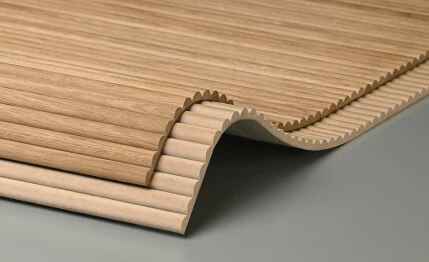
- With slatted panels
- Comparative table of ceiling skirting boards
- Where to buy ceiling skirting in Moscow
- Common mistakes when choosing
- Too narrow profile for a high room
- Incorrect material for the task
- Too complex decor for a simple interior
- No connection with wall and floor decor
- Conclusion
- About the Company STAVROS
- Frequently Asked Questions

Ceiling skirting is a detail that isn't immediately noticed, but without it, the interior feels incomplete. The joint between the wall and ceiling is a technically inevitable line that can be left as is or turned into an architectural accent. A correctly chosen cove, cornice, or decorative profile gives the space that very 'framing' quality that distinguishes a lived-in, thoughtfully designed home from an apartment where wallpaper was simply hung and the ceiling painted.
Moscow is a diverse and demanding market. People live here in Khrushchyovkas with 2.45-meter ceilings, in Stalin-era buildings with stucco cornices, and in new business-class buildings with panoramic windows and heights of nearly 3.2 meters. In each of these contexts, the task of choosing ceiling skirting is solved differently—different materials, different widths, different profiles, different levels of decoration.
If you wantBuy Ceiling SkirtingConsciously—for a specific room, specific style, and specific type of ceiling—this material will give you a complete coordinate system. No general advice. Only specific criteria that work.
Buy ceiling skirting in Moscow: which option to choose for your interior
Before going to the store or opening a catalog, it's worth honestly answering three questions.
What is the height of your ceilings? This determines the width of the profile. A narrow skirting in a tall room looks pitiful. A wide one in a low room feels oppressive and shrinks the space.
What type of ceiling do you have? A stretch ceiling requires a profile with one working shelf attached to the wall. For a painted ceiling—a classic two-sided support.
What interior style are you building? A decorative figured profile is appropriate in classic and neoclassical styles. In a Scandinavian or minimalist interior, it will look alien—there, a clean, smooth line is needed.
Answers to these questions form your entry point into the selection. Everything else is specification by material, width, and decor.
Ceiling skirting board—a separate analysis on types, styles, and selection principles. Study it alongside this material: together they provide full coverage of the topic.

What ceiling skirting boards can be bought in Moscow
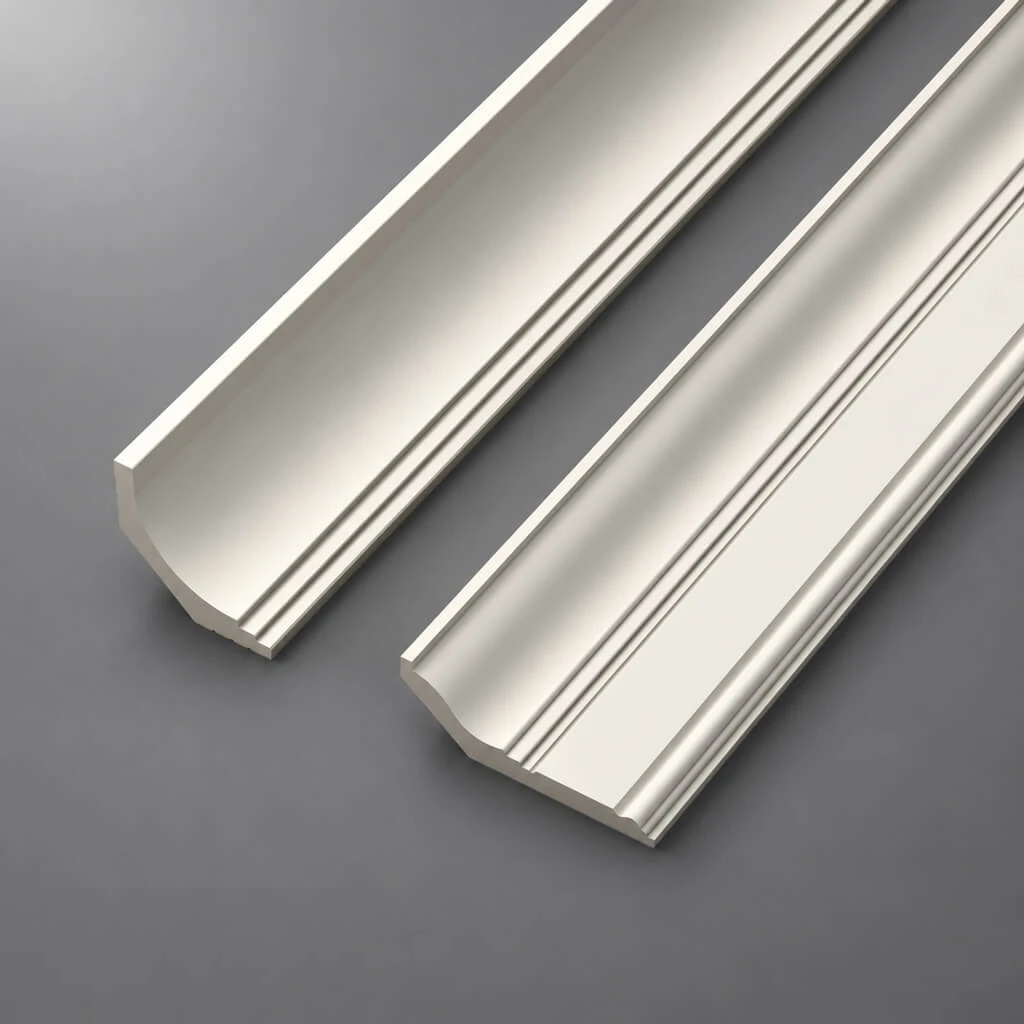
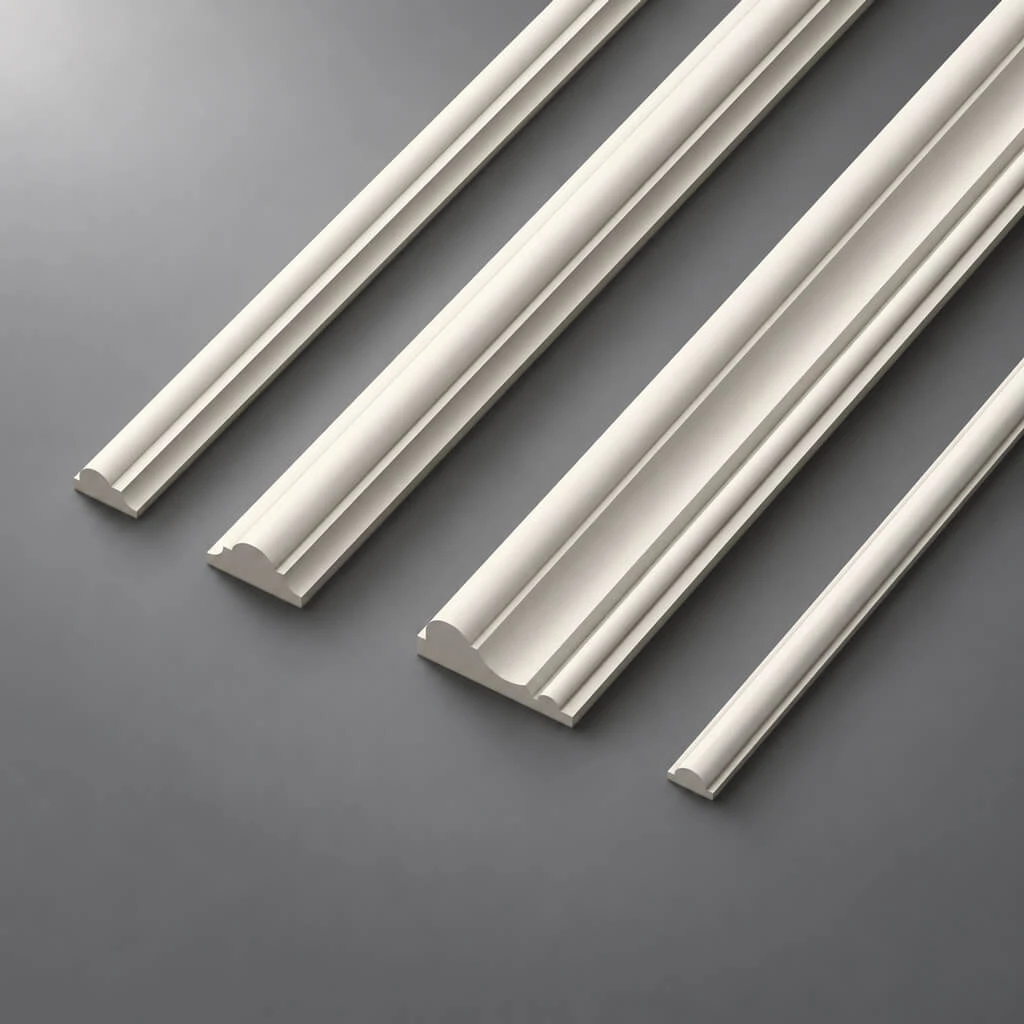
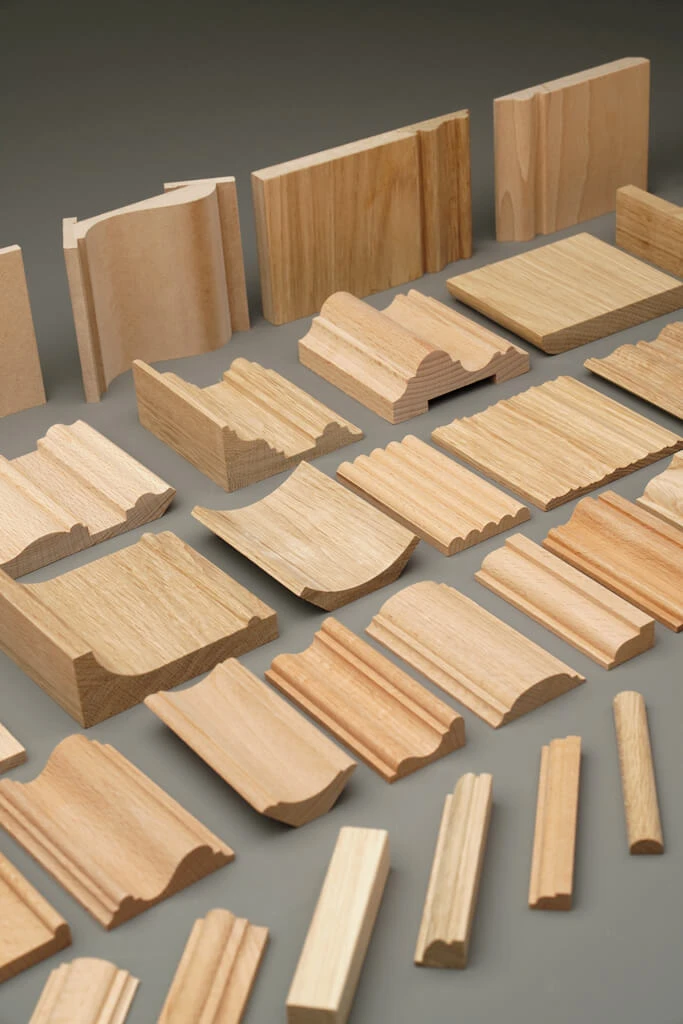
The Moscow market for ceiling profiles today consists of four main categories. Each occupies its own niche—by price segment, material, and application area.
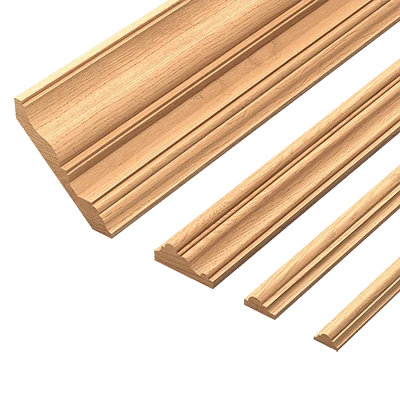
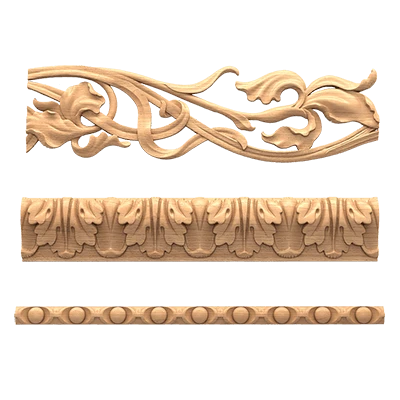
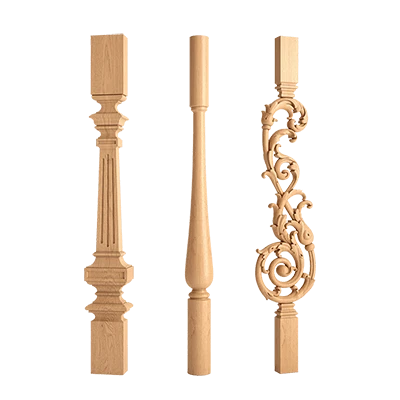
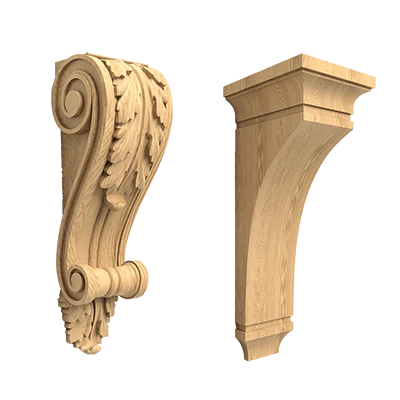
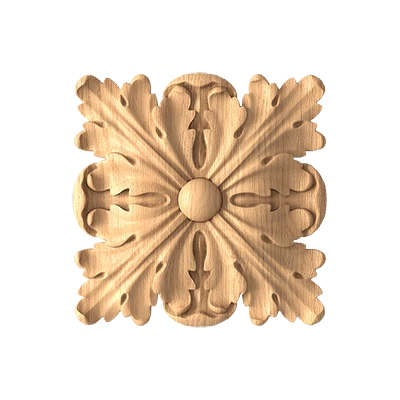
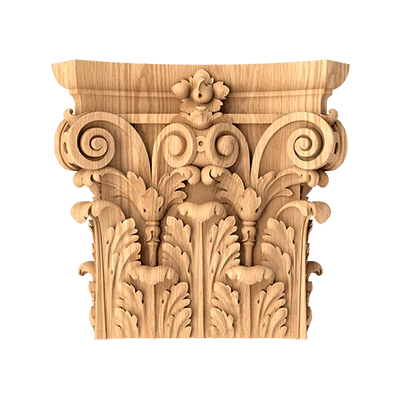
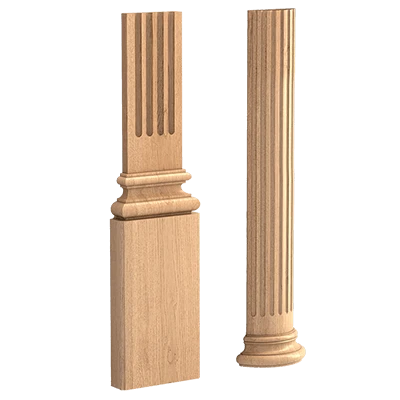
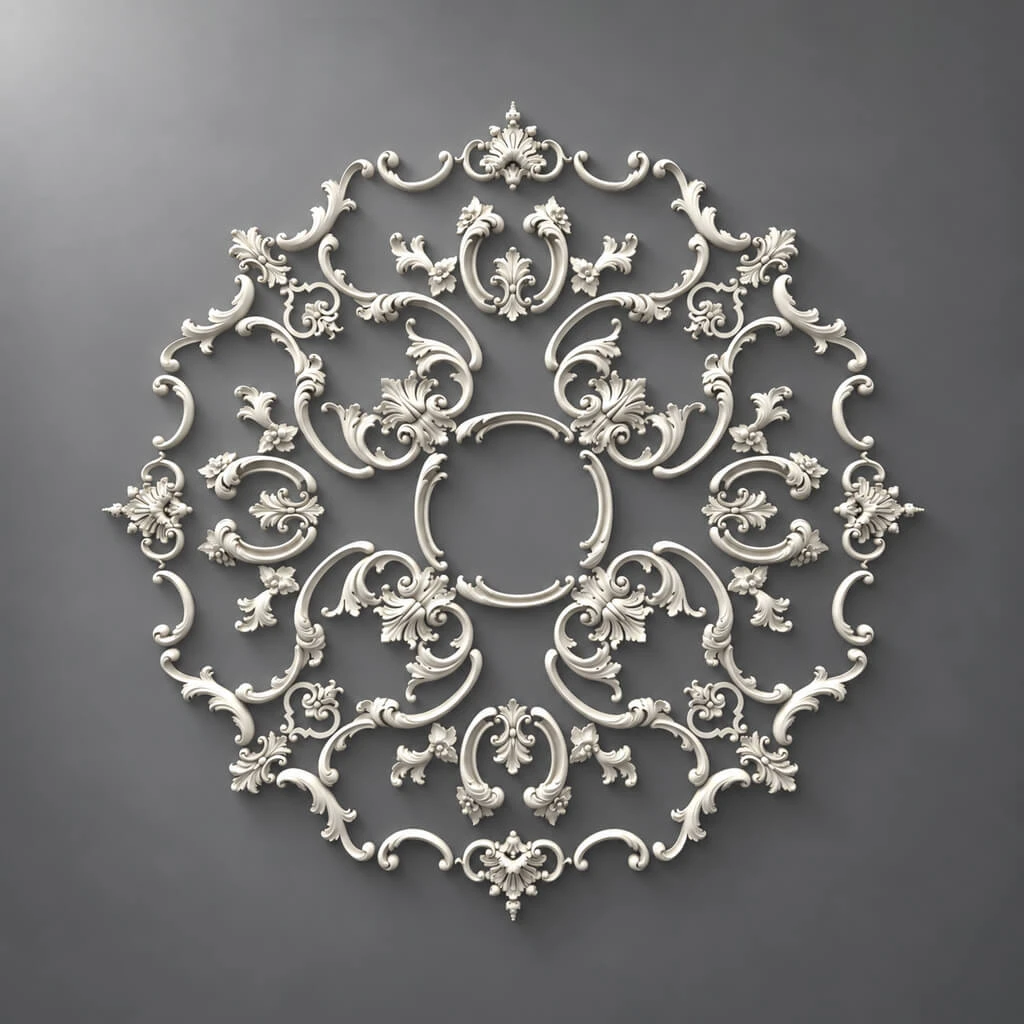
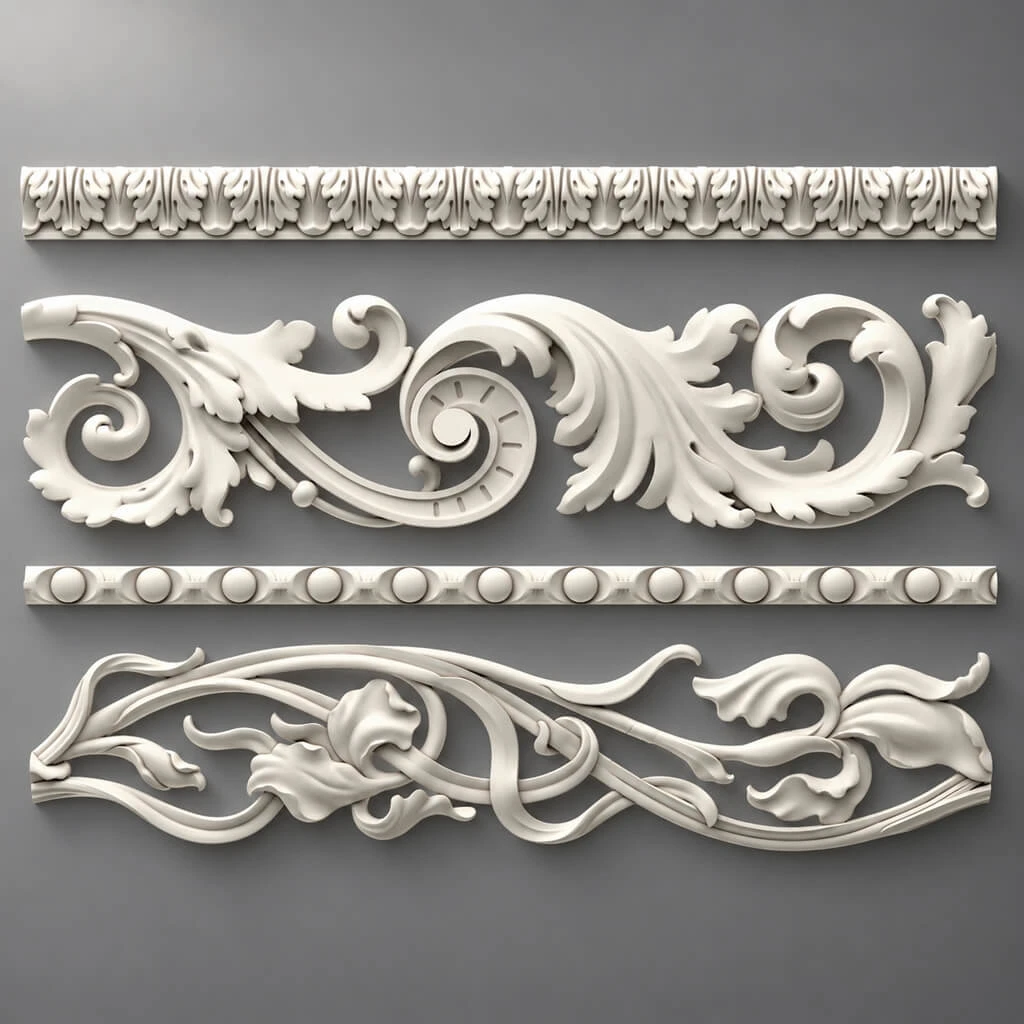
Our factory also produces:
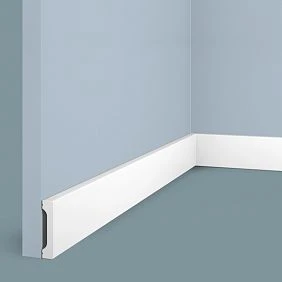
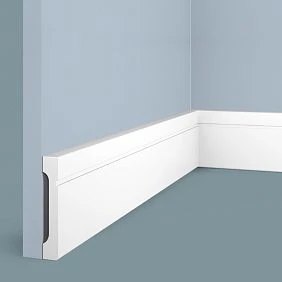
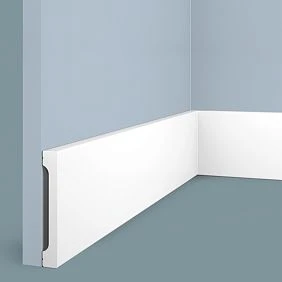
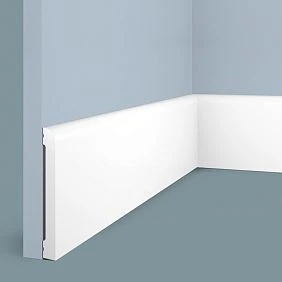
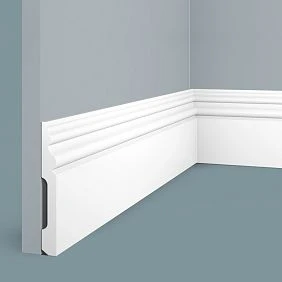
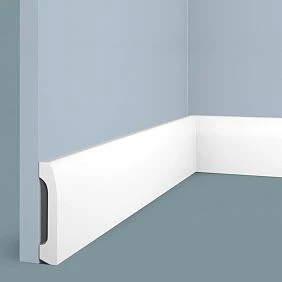


Wooden ceiling skirting boards
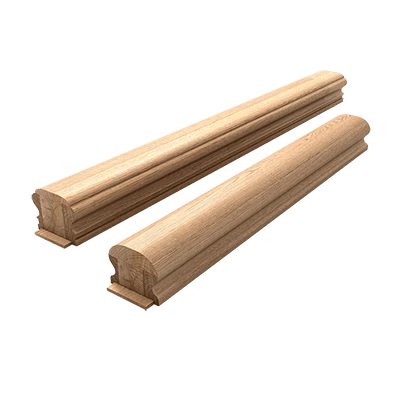
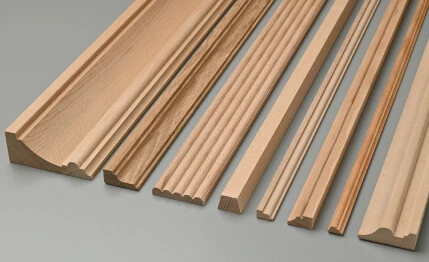
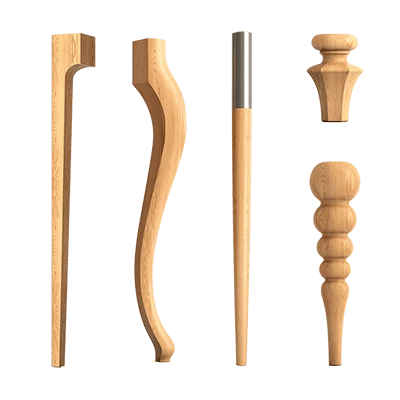
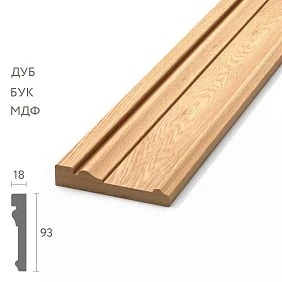
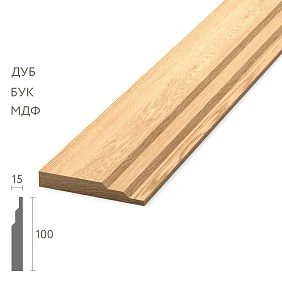
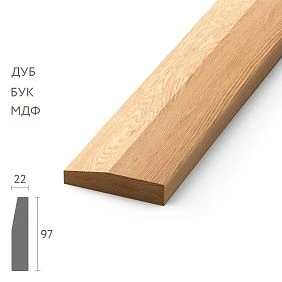
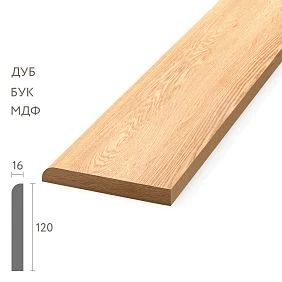
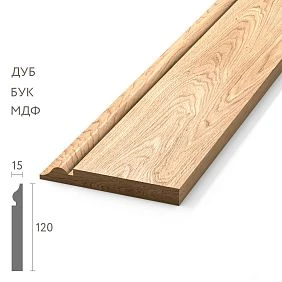
Wooden ceiling skirting board— the premium category. Natural solid oak or beech at the wall-ceiling junction is a living texture that cannot be imitated by polymer or paper film.
Wooden profiles possess three fundamental qualities. First—authenticity: the eye, touching natural wood, receives information about a real material, not its copy. Second—durability: oak profiles, with proper use, last 20–30 years without losing shape. Third—systematicity: wooden ceiling skirting boards integrate organically into a unified architectural system along with wooden cornices, moldings, and floor skirting boards.
Technical description: shelf width from 60 to 120 mm, plank length 2400–2800 mm, surface ready for varnishing, oil tinting, or painting. Mounted with construction adhesive or brackets.
Buy wooden ceiling skirting boards—for living rooms, bedrooms, studies, dining rooms. Not recommended for bathrooms, kitchens, and toilets without good ventilation: humidity fluctuations can cause deformation.
Get Consultation
Baseboard — it is a modest detail, often unnoticed, but plays a critical role in creating the completeness of the interior.
MDF—a dense wood-fiber material with a perfectly smooth surface, precise geometry, and resistance to minor humidity changes. This is the working standard of the Moscow market in the above-average segment.
Buy MDF ceiling skirting boards when you need a flawless straight line over a long length, a white or tinted surface that can be precisely matched to the color of the ceiling and walls. MDF profiles are easily painted in any shade—from classic white to complex gray.
In the catalogwooden and MDF skirting boards— includes options from 60 to 120 mm—both straight and with decorative molding.
Polystyrene ceiling cornices
Polystyrene—a lightweight foamed material that can be cut by hand, glued without tools, and costs minimally. Polystyrene ceiling cornices are the most affordable option for those who want to close the wall-ceiling junction quickly and without significant expense.
Ceiling cornice made of polystyrene— for budget solutions, technical and auxiliary spaces, for temporary finishing. Limitations: low mechanical strength, sensitivity to impacts, may deform when heated.
Detailed information on polystyrene profiles — types, application scenarios, and visual possibilities:Polystyrene ceiling skirting boards.
Polyurethane decorative profiles
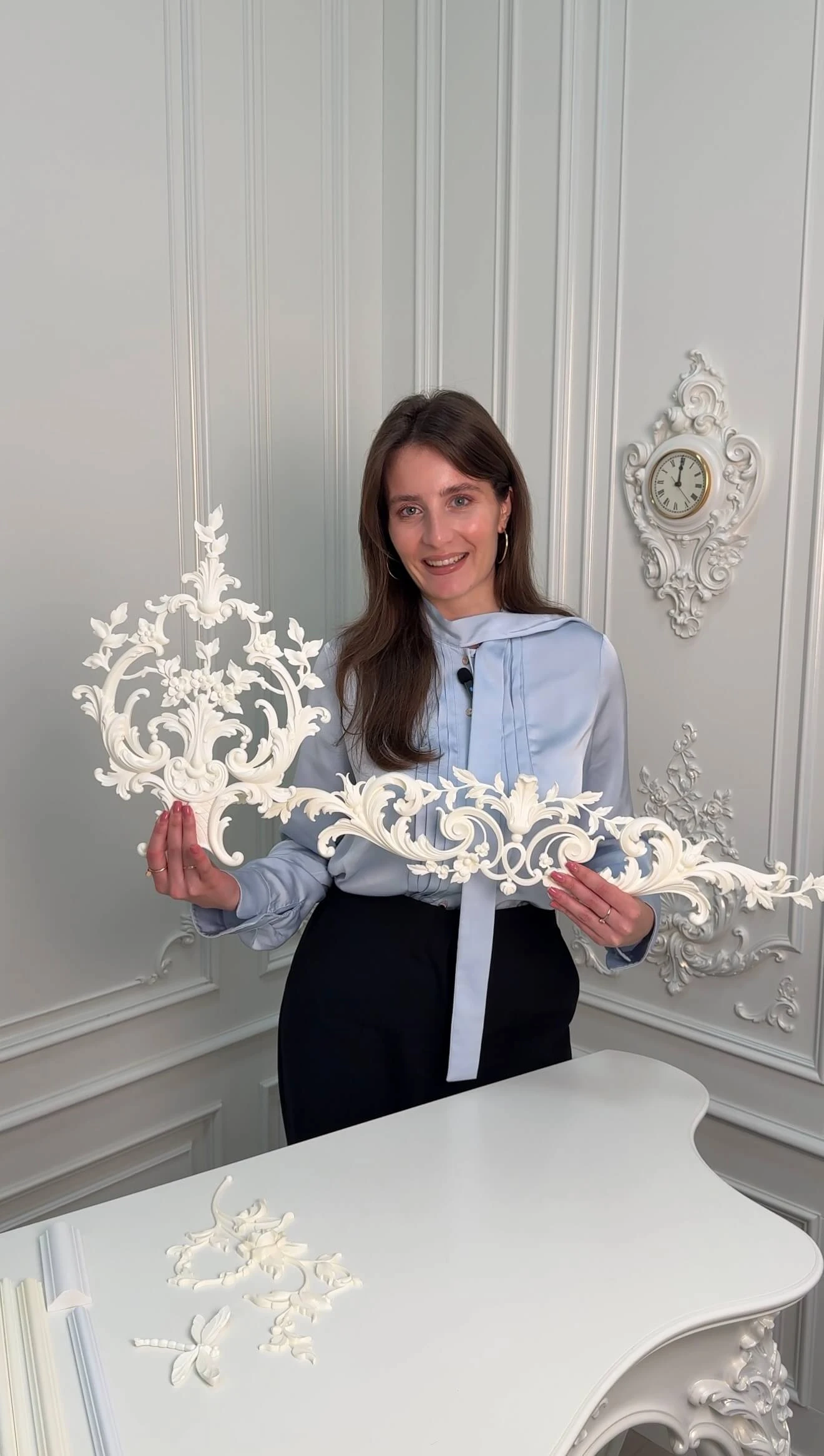
Polyurethane is a dense decorative material that reproduces the relief of stucco, classic cornice profiles, and architectural details with a high degree of accuracy. This category is for those who need to buy a decorative ceiling skirting board without the budget for real plaster.
Polyurethane profile is significantly stronger than polystyrene: it holds its shape, is resistant to mechanical loads, and is easy to paint. For classic and neoclassical interiors — the optimal balance of decorativeness and practicality.
How to choose a ceiling skirting board by material
Material is not only a matter of aesthetics. It is a matter of durability, compatibility with the room, and its place in the overall decorative system.
When wood is better
Solid wood ceiling skirting board is the choice of those who build an interior with a principled emphasis on naturalness. A country house with wooden structures and exposed beams. An apartment with oak parquet and wooden doors. A living room where the decorative system is built on the living texture of the material.
To buy a wooden ceiling skirting board means to include it in a unified wooden system: above at the ceiling, an oak cornice, below at the floorwooden floor baseboardfrom the same wood species. This is an architectural sequence that no synthetic material can imitate.
Condition: stable humidity, dry room. Wood is for living rooms. For the kitchen, bathroom, toilet — other materials.
When MDF is more convenient
MDF excels where precision in scale is needed. Open-plan layouts with long spans, large living rooms with geometrically correct walls — MDF profile provides a flawless line at the ceiling without the slightest deviations.
To buy an MDF ceiling skirting board is the right choice for modern interiors with white ceilings and walls, where a white profile creates a smooth transition without a sharp break to the ceiling. White matte MDF against a white ceiling is a technique that visually 'raises' the space.
MDF skirting board for painting — buy it unlacquered: after installation, fill the joints with acrylic sealant and paint in three coats. The result is indistinguishable from a built-in architectural element.
When polystyrene is more advantageous
Polystyrene wins in only one situation: a limited budget for a minimal task. To close a joint, give a neat appearance — polystyrene handles this. But it should not be considered as a long-term solution for main living areas.
For the kitchen, bathroom, utility rooms, temporary housing — polystyrene is practical: it is not afraid of moisture, installs without special skills, and costs minimally.
When a decorative polyurethane profile is needed
Polyurethane — when the interior requires relief, but the budget is not designed for real plaster molding. Classic cornices with profile belts, with ovals, with architectural detailing — polyurethane reproduces them accurately and convincingly.
Buy polyurethane ceiling skirting — for neoclassical living rooms, for interiors in Art Deco style, for Empire style. Combined with polyurethane ceiling rosettes and wall moldings — this is a full-fledged architectural system that professional designers use as an economical alternative to molding.
Buy ceiling skirting for apartments, houses, and different rooms
The room is the context. And the same white 70 mm profile works completely differently in the kitchen and in the formal living room. Let's honestly analyze each scenario.
For apartments
When furnishing an entire apartment — the principle of systematicity is mandatory. One profile and one color for all main rooms: living room, bedroom, study, hallway. This creates a sense of thoughtfulness and continuity of the interior when moving from room to room.
To buy ceiling skirting for an apartment in Moscow means to determine one solution for the entire perimeter. Practical recommendation: start with the living room, the most demanding room. The profile chosen for the living room is then adapted for the other rooms — the same, but possibly in a narrower version for the bedroom and kitchen.
For home
A country house — a space with other possibilities. Ceilings are higher (often 2.9–3.2 meters or more), area is larger, materials are bolder.buy skirting for the ceilingFor a country house made of wood, it is a natural and logical choice. Solid oak on the ceiling of a house with wooden structures, exposed beams, and parquet flooring is an organic system where each element supports the others.
In a house with high ceilings, a narrow polystyrene profile is a visual mistake. Here, a wooden or polyurethane cornice with a width of 100–120 mm or more is needed: only then does the space receive a proportionate horizontal line at the ceiling.
For the living room
The living room is the most important room in an apartment. Guests spend time here, the family gathers here, and the interior is examined here for a long time and attentively. The ceiling skirting board for the living room must be impeccable in quality, precise in width, and precise in style.
To buy a ceiling skirting board for the living room in Moscow, start by analyzing three parameters: ceiling height, interior style, and flooring material. A living room with oak parquet and 3.0-meter ceilings requires a 100 mm wooden profile with moderate relief. A living room in a modern style with 2.7-meter ceilings requires a white MDF profile of 70–80 mm with a straight section.
In a living room with high ceilings, a wooden ceiling skirting board works in conjunction withmoldings and cornicesfrom a unified system: skirting board at the ceiling + a molding belt on the wall at approximately 2/3 of the height from the floor. This is a classic architectural solution, relevant in any era.
For the bedroom
The bedroom is a space for restoration. Here, the interior should not 'speak' too loudly. The ceiling skirting board for the bedroom should be restrained, moderate, not drawing attention to itself.
A profile of 60–70 mm in the color of the ceiling, smooth or with a delicate bead. White matte for light bedrooms. Tinted to match wood if the bedroom has wooden furniture or parquet.
A special scenario for the bedroom is a ceiling skirting board with lighting. A profile with a protruding shelf at the ceiling, behind which an LED strip is laid: soft diffused light creates an atmosphere in the evening and replaces part of the main lighting. This scenario is especially in demand in Moscow apartments in recent years—the query 'buy ceiling skirting board with lighting' is steadily growing.
For Kitchen
The kitchen is a room with increased requirements for moisture resistance. Buying a wooden ceiling skirting board for the kitchen without a protective coating is a risk: steam from the stove, splashes during cooking, cyclical humidity fluctuations. MDF is acceptable with good ventilation. Polystyrene and polyurethane are the most practical solutions for the kitchen.
Buying a white ceiling skirting board for the kitchen is a universal strategy. White is neutral to any cabinet color and does not require an exact shade. At the same time, the smooth white surface is easy to clean and maintains its appearance for a long time.
Width for the kitchen: 50–70 mm. Wider is impractical: kitchens are rarely rooms with high ceilings, and a wide profile looks somewhat heavy here.
For the hallway
The hallway creates the first impression. It is here that a guest first encounters your interior — and it is here that the details shape the overall perception.
For the hallway of a standard Moscow apartment: a 50–70 mm profile, white or matching the wall color, smooth or with a delicate molding. A wooden ceiling skirting board for the hallway is appropriate if the entire apartment is designed in a unified wooden system and the corridor is an organic part of it.
The hallway often has non-standard geometry: many corners, niches, protrusions. This requires precise calculation of profile lengths and careful joining at corners — both internal and external.
Buy ceiling skirting board for a stretch ceiling and a regular ceiling
The type of ceiling is a technical parameter that determines the profile design. Not all skirting boards are compatible with all ceilings, and this mistake is common.
For a stretch ceiling
A stretch ceiling is a fabric made of PVC or textile on a mounting batten around the perimeter. The joint between the fabric, batten, and wall requires masking. For a stretch ceiling, a profile with one working flange — to the wall — is used. The second flange of a standard corner skirting board presses against the fabric and damages it.
To buy a ceiling skirting board for a stretch ceiling in Moscow means to ensure that the profile has only one attachment point to the wall, and its horizontal flange completely covers the width of the mounting batten (usually 30–50 mm).
Important detail: installation of the skirting board for a stretch ceiling is performed before installing the fabric. The profile is attached to the wall, the fabric is stretched over it, and the batten is inserted under the lower flange of the skirting board. If the skirting board is mounted after stretching — the risk of damaging the fabric is significantly higher.
For painted ceiling
Painted ceiling is standard. A regular corner profile with two shelves works here: one to the wall and one to the ceiling. No material restrictions — wood, MDF, polystyrene, polyurethane. The only condition: both surfaces must be sufficiently even for a tight fit.
In Moscow's Soviet-era buildings, walls often have slight deviations from vertical, and ceilings have uneven height around the perimeter. Under such conditions, a flexible profile that allows a small gap with subsequent putty is preferable to solid wood.
For high ceilings
High ceilings — from 2.9 meters and above — require a wide ceiling profile. A narrow 40–50 mm strip gets lost in a three-meter room: it's as if it's not there. The space needs a substantial horizontal line that maintains the scale.
Buy ceiling skirting for high ceilings in Moscow — 100–120 mm and above. In Stalinist apartments with 3.2–3.5 meter ceilings, decorative cornices 150–200 mm wide with several profile belts were historically used. This logic can be reproduced using a polyurethane decorative cornice — the result is convincing, the installation is realistic.
Proportion rule: ceiling profile width — about 1/35–1/45 of the room height. With a 3.0 meter ceiling — 67–86 mm. With 3.3 meters — 73–94 mm.
For low ceilings
Low ceilings — up to 2.5–2.6 meters — are the scourge of panel Khrushchev-era buildings and part of the Soviet housing stock in Moscow. The skirting's task here is to close the joint without adding visual weight.
Narrow 40–50 mm profile in the ceiling color — an almost invisible strip that exists but doesn't weigh down. The main technique: paint the skirting the same white as the ceiling — then it visually 'dissolves,' and the eye doesn't stop at the joint.
Additional technique for low ceilings: directed light from a chandelier or track upwards — then the joint between ceiling and skirting gets lost in soft diffused light, and the ceiling appears higher.
How to choose a ceiling skirting board by width and profile
Width and profile are two parallel selection parameters. Width is determined by room proportion. Profile — by interior style.
Narrow profile
40–60 mm — for low ceilings, compact spaces, and modern minimalist interiors. Here, the skirting should not attract attention: it performs a technical function and modestly recedes into the background.
A white narrow profile at the ceiling in a white room is practically invisible. But it does an important job: it covers the inevitable joint and gives the room a finished look.
Medium universal profile
60–80 mm — the gold standard of the Moscow market. Works with ceiling heights from 2.6 to 2.9 meters — this covers most apartments in Moscow new builds and renovation stock.
Medium profile — noticeable enough to be an architectural element, yet not creating visual overload. This is precisely why it is chosen for most living spaces.
Wide skirting board
100–120 mm and more — for high ceilings from 2.9 meters, for prestigious interiors, for spaces where the ceiling cornice should be a full-fledged architectural accent.
Buying a wide ceiling skirting for a living room with 3.0–3.3 meter ceilings means setting the right proportion. Paired withmoldings and cornicesfrom a unified system, the wide profile creates a full-fledged architectural 'belt' at the ceiling.
Smooth profile
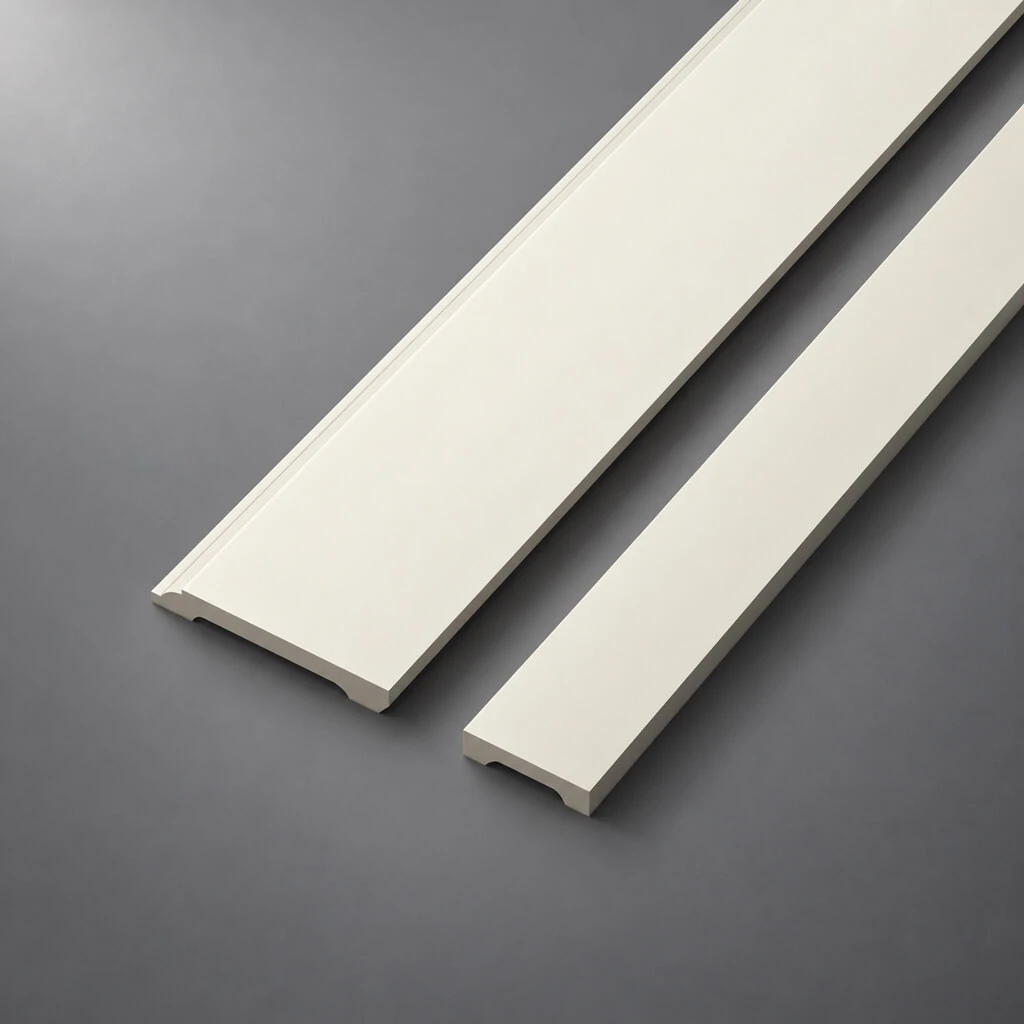
Smooth rectangular profile — the choice of modernity. No relief, no transitions or beads. Only a pure cross-section and a precise straight line at the ceiling.
This profile works in Scandinavian, minimalist, Japanese, and any modern interior where decorative details are intentionally excluded. Next toplank panelsOn walls and with wooden floor skirting, a smooth ceiling profile creates a system of horizontal and vertical lines that structure the space without unnecessary words.
Decorative Profile
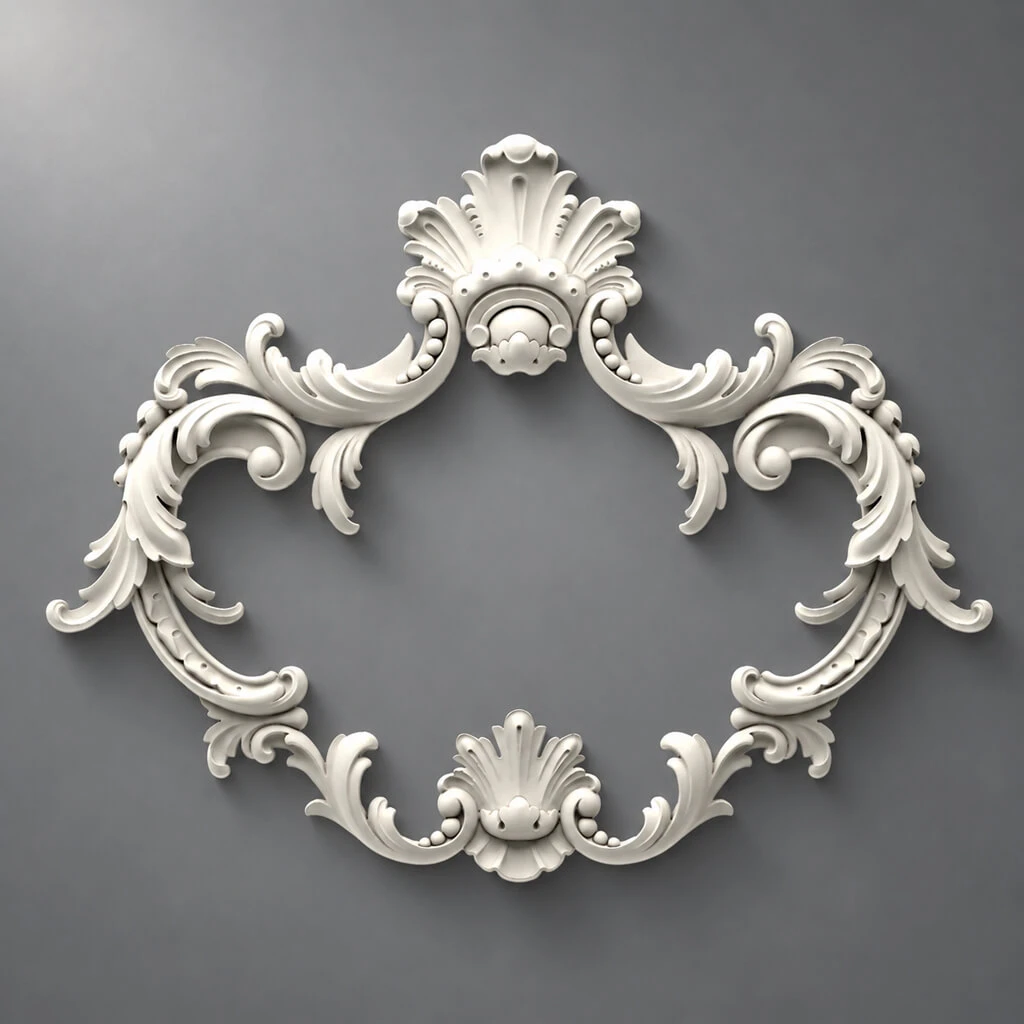
Decorative profile with relief, beads, belts, and transitions is a classic tradition of architectural ornamentation. It is appropriate where the interior is built on architectural details as meaningful content: classic, neoclassical, empire, art deco.
Buying a decorative ceiling skirting for a living room in a classic style means including the room in an architectural dialogue with tradition. Such a profile requires a coordinated context: decorative architraves, wall moldings, representative furniture.
What to combine ceiling skirting with in interior design
Ceiling skirting is an element of a system. Alone, it closes a joint. In a system, it transforms the space.
With wall moldings
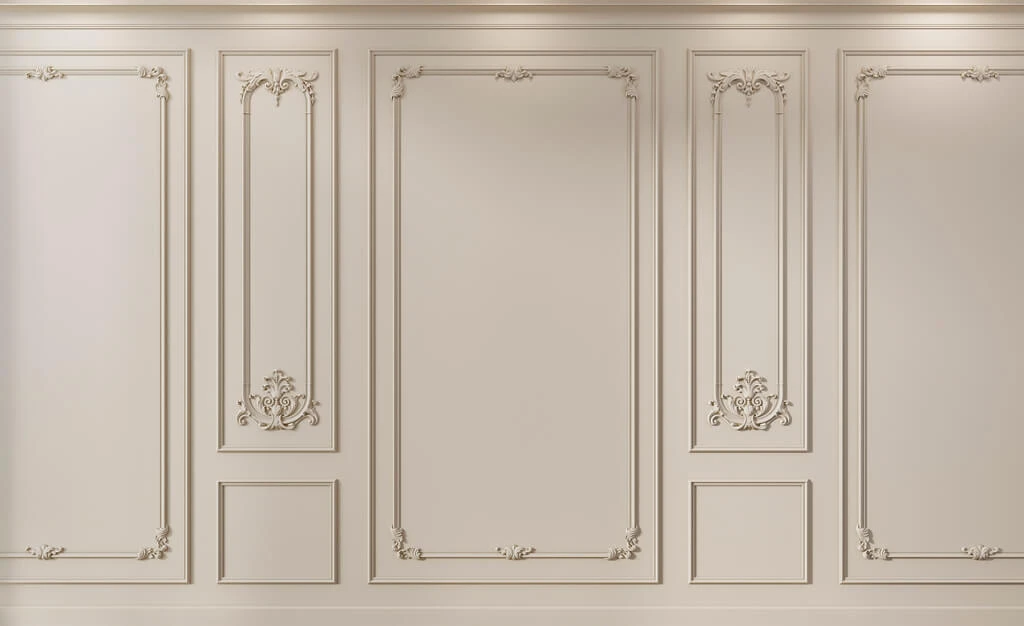
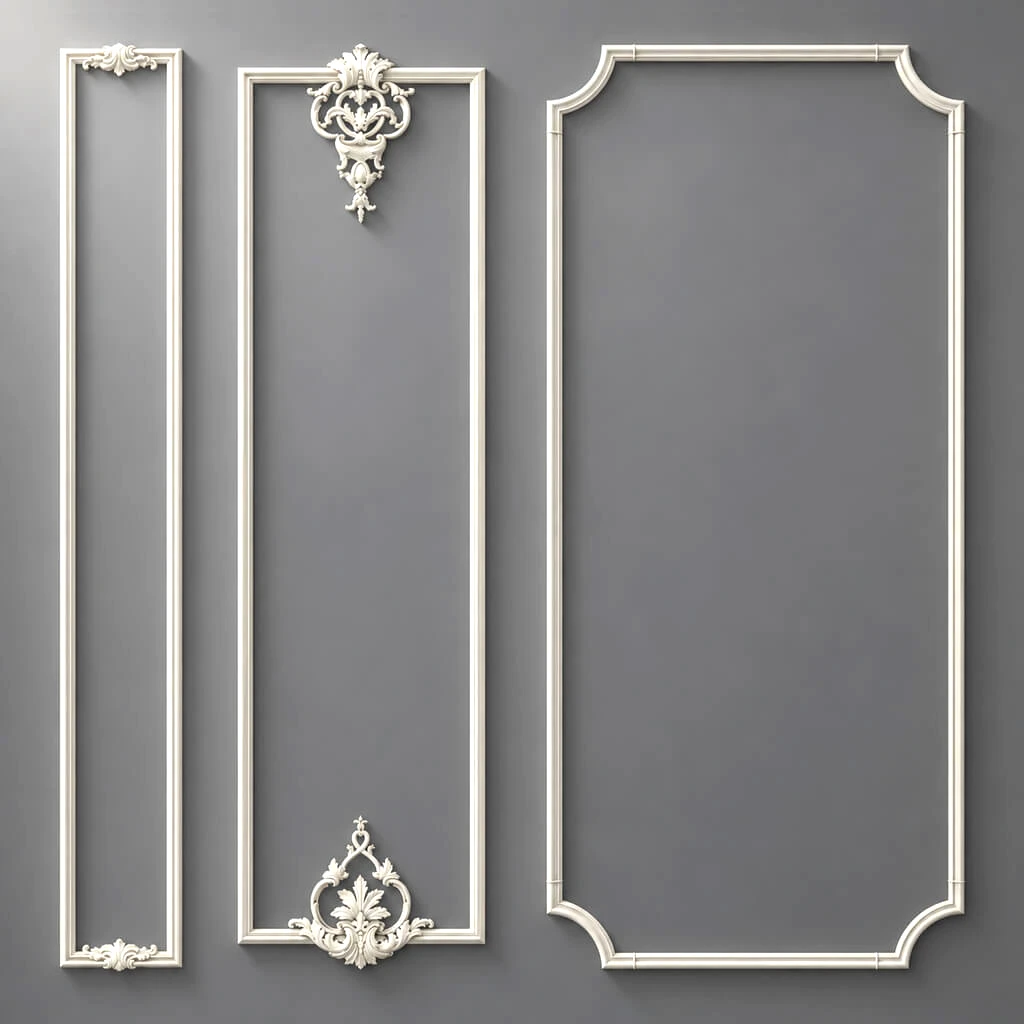
Moldings create horizontal belts, vertical frames, and architectural niches on walls. Ceiling skirting is the top element of this system: it closes the decorative contour of the space from above.
Moldings and cornicesIn a pair with ceiling skirting from the same collection, this is a unified architectural theme. There's no need to independently select proportions and relief: take from one assortment, and coordination is guaranteed.
This technique is especially effective in living rooms with ceilings 2.9–3.2 meters high. A molding belt at a height of approximately 2.1–2.2 meters divides the wall into two zones: the lower one is accent, the upper one is background. Ceiling skirting finishes the upper zone. The system visually 'holds' the high room, preventing it from seeming empty.
With wooden trim
Wooden ceiling skirting in a system with woodencornices and skirting boardsThis is the complete wooden contour of the room. Oak ceiling cornice, oak floor skirting, oak architraves — the interior gains a material consistency that cannot be bought in the polymer segment.
When wood runs as a single thread along the perimeter of the room — from below, from above, and in doorways — the space acquires that special warmth and lived-in quality that distinguishes interiors with character from those without it.
With polyurethane molding
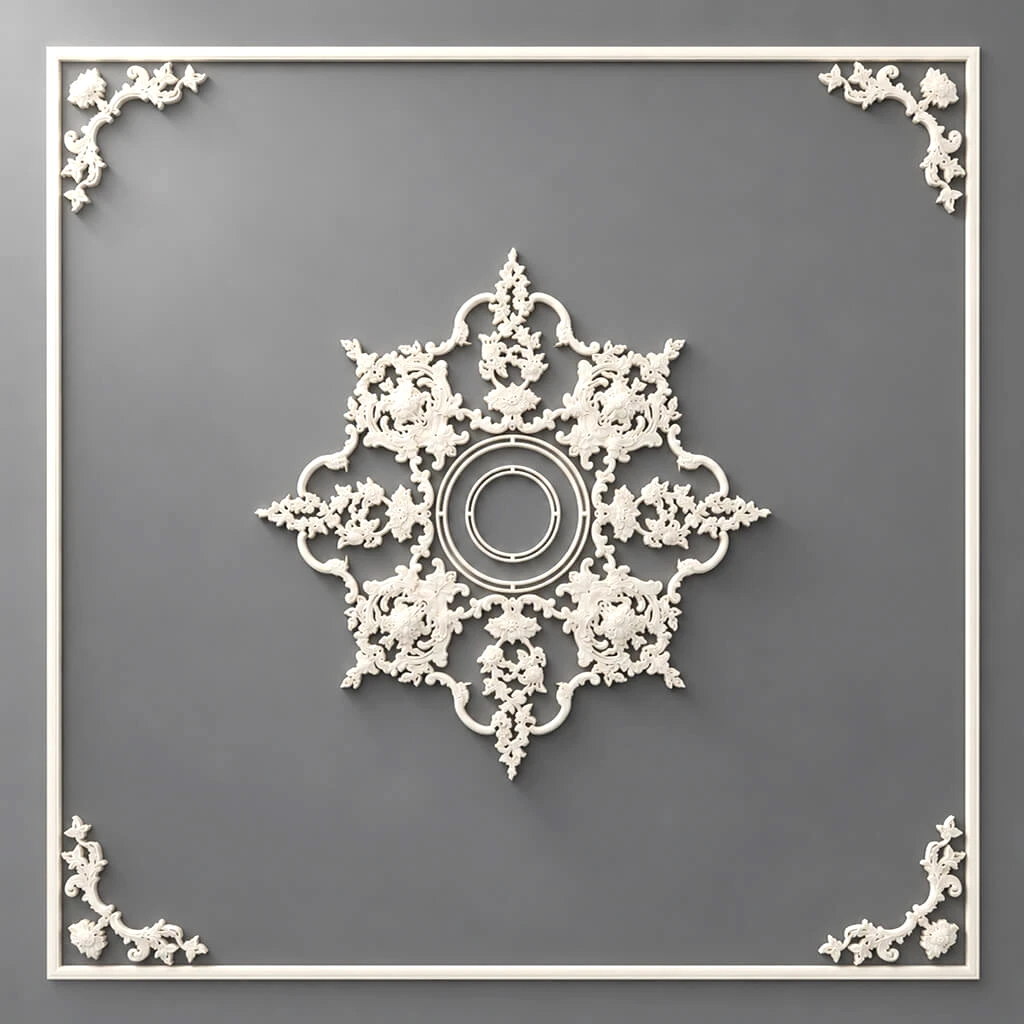
Polyurethane ceiling skirting works in a system with other polyurethane elements: ceiling rosettes, corner inserts, brackets, moldings. This is 'lightweight molding' for those who want classic decor without complex installation and without the budget for real plaster.
Polyurethane cornice with corner inserts from the same series — quick and precise installation. Corners are joined without mitering: the insert is installed in the corner, the profile is cut to size and fits tightly against it. This is especially convenient for non-standard room geometry.
With floor skirting board
Ceiling andbaseboard— the upper and lower horizontal lines of a room. When they are made of the same material and the same profile — the space achieves rhythmic completeness.
Consider a specific example: a 25 sq. m living room with 3.0-meter ceilings, oak parquet, white walls. A 100 mm wooden ceiling cornice made of oak at the ceiling + a 100 mm wooden floor skirting made of oak at the floor. Between them — a clean white wall. The result is architectural symmetry of the upper and lower horizontals, which makes the space complete and proportional.
With slatted panels
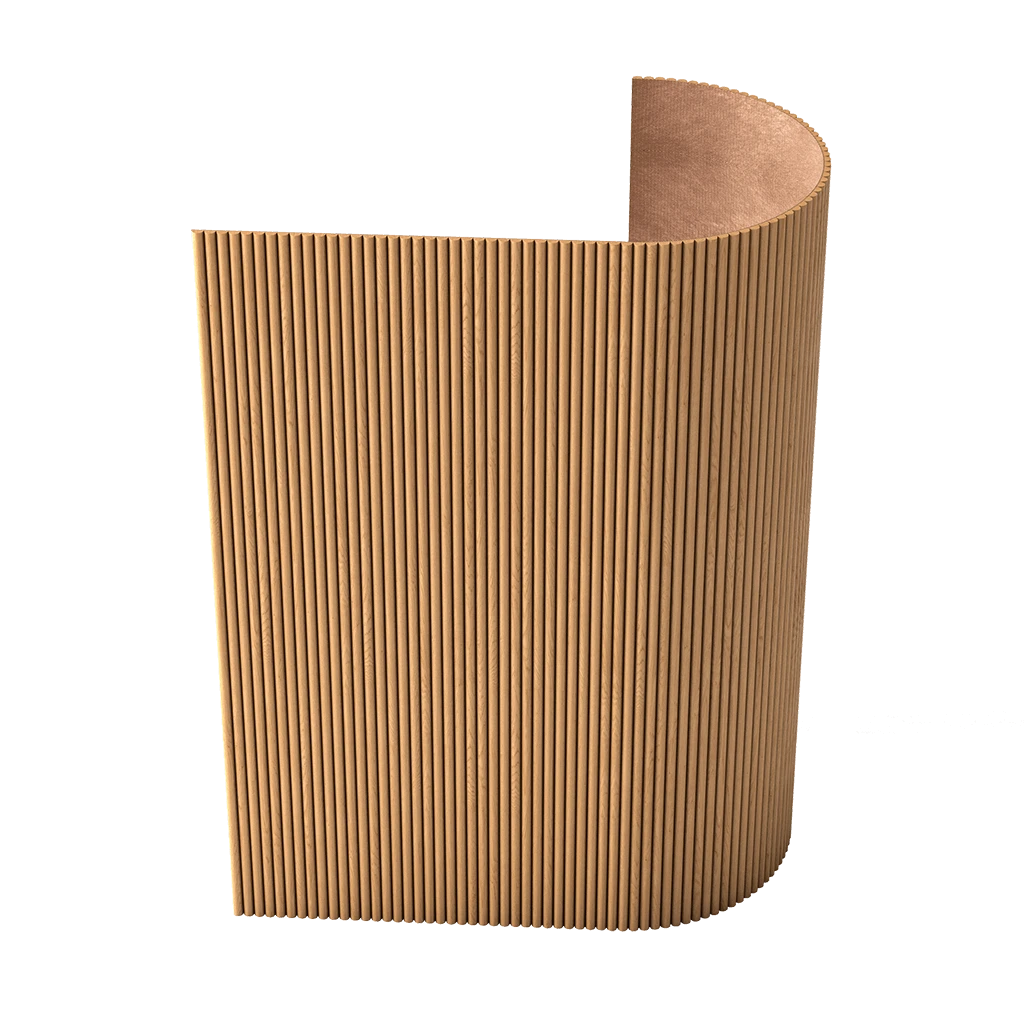
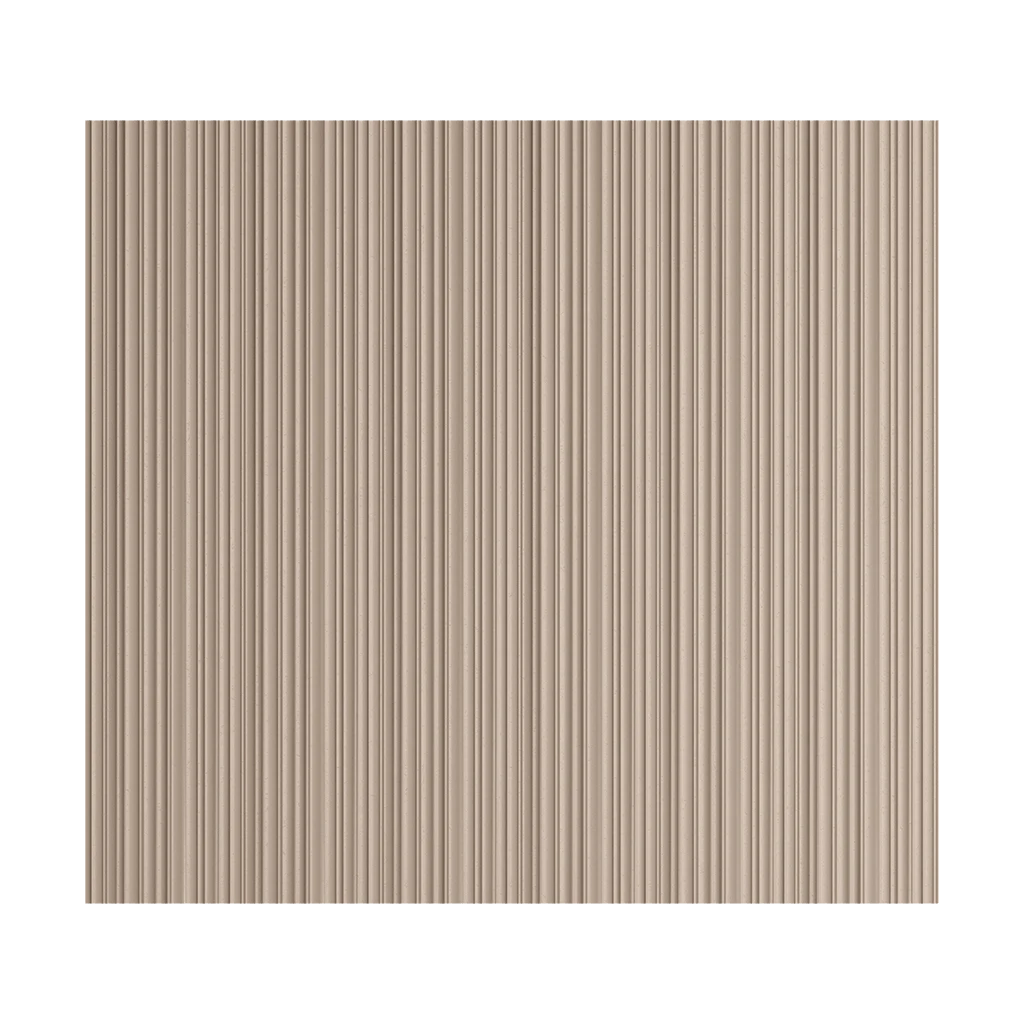
Rafter panelson walls — one of the most stable trends in Moscow interior design. Vertical wooden slats from floor to ceiling or from floor skirting to a certain height create a textural accent that changes the perception of space.
Ceiling skirting in a system with a slatted panel — this is the upper boundary of the wooden field. The slats 'end' under the ceiling cornice, which gathers them into a single horizontal line. With the same wood species for the ceiling skirting, slatted panel, and floor skirting, the interior gets a full wooden outline — lively, warm, architecturally substantial.
Comparative table of ceiling skirting boards
| Criterion | Wood | MDF | Polystyrene | Polyurethane |
|---|---|---|---|---|
| Naturalness | Complete | No | No | No |
| Moisture resistance | Low | Medium | High | High |
| Painting | Yes | Yes | Yes | Yes |
| Strength | High | Medium | Low | Medium |
| Decorative relief | Moderate | Moderate | Medium | High |
| Installation | Professional | Standard | Independent | Standard |
| Width range | 60–120 mm | 60–120 mm | 40–120 mm | 50–200+ mm |
| Ideal rooms | Living room, bedroom, study | Any dry | Kitchen, bathroom, utility rooms | Classic, neoclassic |
Where to buy ceiling skirting in Moscow
Specifics without which any choice remains theoretical.
Availability in stock. Renovation is a chain, and a delay in one link is costly. A reliable supplier keeps the entire range of ceiling skirting boards in a Moscow warehouse: wooden, MDF, polystyrene, and polyurethane profiles. Same-day pickup or next-day delivery is the standard, not an exception.
Choice by material. All four categories should be physically available—with samples you can hold in your hands. The white color of MDF differs from the white of polystyrene. The relief of polyurethane looks different in person than in a photo. Without a physical sample, an accurate choice is impossible.
Choice by profile. Take samples of different widths and place them against the corner of the wall and ceiling in your space. Only this way can you see the real proportion of the profile to the space. What looks wide on a store shelf may be just right in a high-ceilinged room.
Matching the interior style. A professional supplier helps create a unified system: ceiling skirting + moldings + floor skirting from the same collection. This is not 'upselling'—it's protection against a mistake that would require reinstallation to fix.
Delivery in Moscow. Profiles 2400–2800 mm long are inconvenient to transport yourself. Professional delivery with careful packaging is essential to preserve delicate decorative elements during transportation.
For preliminary review of the assortment:wooden cornices and skirting boardsfrom solid wood—online catalog with full specifications for each item.
Common mistakes when choosing
A profile that is too narrow for a high-ceilinged room
They choose a 40–50 mm profile for a living room with 3.0-meter ceilings—and end up with a bland line that fails to match the scale. The space remains unfinished: the joint is covered, but architectural completeness is lacking.
How to avoid: before purchasing, calculate the recommended width using the formula 1/40 of the room height. For 3.0 meters — at least 75 mm. Place a sample against the ceiling joint right in the store or create a photomontage.
Incorrect material for the task
A wooden ceiling skirting board in the kitchen near the stove without proper ventilation — darkens within a year, deforms along the bottom edge. MDF in a bathroom with poor waterproofing — swells and delaminates.
How to avoid: for kitchen and bathroom — polystyrene or polyurethane without exceptions. For dry living spaces — any material based on aesthetic criteria.
Too intricate decor for a simple interior
They buy a lush polyurethane cornice with acanthus leaves and volutes for a minimalist Scandinavian interior — and get a visual conflict. Rich decor at the ceiling against smooth white walls and simple furniture creates a sense of inconsistency.
How to avoid: the level of decorativeness of the skirting board should match the level of decor of the entire interior. Classic style requires a decorative profile. Minimalism requires a smooth one.
No connection with wall and floor decor
Ceiling skirting board is chosen separately from floor skirting board and moldings. As a result, the ceiling has a white smooth profile, the floor has a wooden figured one, the walls have a third type of profile. Each element is 'on its own,' and no systemic feeling arises.
How to avoid: plan the entire decor system simultaneously. Ceiling skirting board, moldings, floor skirting board — from one source, from one collection. This requires one visit to the showroom with samples of all materials and saves you both money and nerves.
Conclusion
Ceiling skirting board is the upper horizontal boundary of your interior. It can be inconspicuous or expressive, modest or monumental — depending on what tasks you set for it.
Choose material based on room conditions: wood — for dry and formal spaces, MDF — for precise white contours in modern interiors, polystyrene and polyurethane — for wet areas and decorative scenarios. Determine width by proportion: narrow — for low ceilings, wide — for high ones. Form a system:Wooden ceiling skirting boardin a unified system with moldings and floor profiles — this is a result that speaks of a conscious approach to interior design.
Start with the catalog:buy skirting for the ceilingmade of wood, MDF, or polyurethane — a choice with a full range and professional consultation.Polystyrene ceiling skirting boards— for practical budget solutions.
About the company STAVROS
STAVROS — a Russian manufacturer of architectural decor made from natural wood, MDF, and polyurethane. The range includes ceiling skirting boards and cornices made of solid oak and beech, MDF profiles for painting, moisture-resistant polyurethane and polystyrene cornices.
All STAVROS decor is developed as a unified architectural system: ceiling skirting boards, wall moldings, floor skirting boards, and paneling are produced in coordinated profiles and proportions. This allows forming a complete wooden contour of a room — from floor to ceiling — from products of a single manufacturer without the risk of mismatched relief or tone.
STAVROS works with private clients, interior designers, and architects. Warehouse and showroom — in Moscow. Delivery across all of Russia.
Frequently asked questions
What is the difference between a ceiling skirting board and a curtain cornice?
These are fundamentally different products. A ceiling skirting board is a decorative architectural profile that covers the joint between the wall and ceiling. A curtain cornice is a functional element for attaching curtains or drapes, mounted on the wall or ceiling. They should not be confused: their purposes and construction are different.
Can a wooden ceiling skirting board be installed independently?
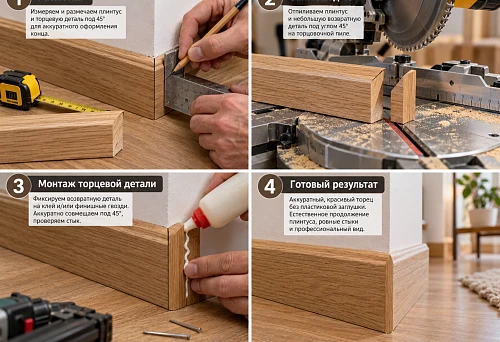
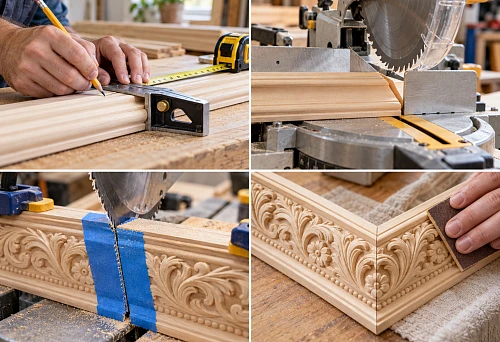
Yes, with basic woodworking skills. You'll need: mounting adhesive or liquid nails, a miter box or electric saw for cutting angles, a level for checking straightness. The main difficulty is precise cutting of internal and external angles. For non-standard room geometry, professional installation is recommended.
How to properly paint an MDF baseboard after installation?
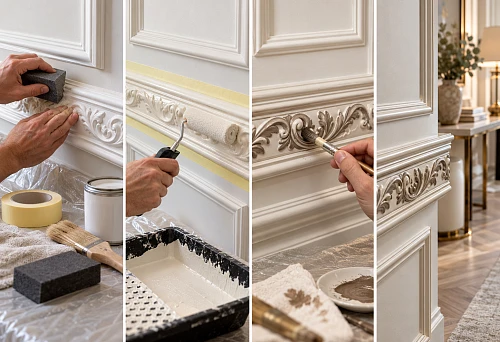
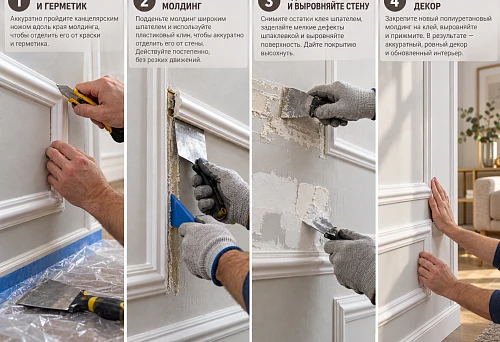
The scheme is as follows: one coat of primer → acrylic putty in the joints → sanding with fine sandpaper → two to three coats of acrylic paint. Each coat is applied after the previous one has completely dried. Result: a surface indistinguishable from factory finishing.
What adhesive should be used for ceiling baseboards?
For wood and MDF — mounting adhesive like 'liquid nails' with good adhesion to wood and plaster. For polystyrene — special adhesive for ceiling baseboards (regular mounting adhesive may dissolve the material). For polyurethane — mounting adhesive or acrylic-based sealant.
Is a special permit required for purchasing and installing ceiling baseboards in Moscow?
No. Installation of decorative ceiling profiles is not considered redevelopment and does not require approval. Exception: if the baseboard is installed in a historical building with a protected interior — in this case, there may be restrictions from supervisory authorities.
How to join a ceiling baseboard in a non-standard (not 90°) corner?
Non-standard angles are a common problem in Moscow apartments of older buildings with 'floating' geometry. Solution: a template angle — a protractor or angle finder — is placed in the room corner, the angle is bisected, each half is the cutting angle for adjacent planks. A more precise option is angle template jigs for a miter box.
How many meters of ceiling baseboard are needed for a 20 sq. m room?
The perimeter of a room is 20 sq. m with a standard proportion of 4×5 meters — 18 linear meters. Plus 10–15% for reserve and trimming in corners. Total: 20–21 linear meters. With non-standard geometry and multiple corners, the reserve increases to 20%.