
























Article Contents:
- Why fasteners are chosen before buying balusters, not after
- The fastener determines the baluster design
- The installation method depends on the staircase design
- Fasteners affect reliability
- What is included in a wooden staircase railing: complete anatomy of the structure
- Balusters
- Handrail (railing)
- Support columns
- Stringer and carriage
- Decorative elements
- Methods of attaching balusters: four fundamental options
- Dowel joint
- Attachment with a threaded stud
- Mounting with dowels
- Hidden attachment on mounting plates
- Fastening for posts: a separate story
- Anchor fastening into a step
- Flange Attachment
- Fastening to a wooden floor on a stud
- Fastening a handrail to balusters: how to make the railing monolithic
- Tenon joint of handrail and baluster
- Fastening a handrail with self-tapping screws through a baluster
- Connecting a handrail to a post
- Fastening balusters to the floor and landing: a special case
- Why the landing is a zone of special attention
- Proper fastening on the landing
- Complete list of fasteners for a wooden fence: what and how many to buy
- Fasteners for balusters (per baluster)
- Fasteners for support posts (per post)
- Fasteners for handrail (per linear meter)
- What to buy together with fasteners: complete fence kit
- Balusters
- Railings and handrails
- Support posts
- Baluster Supports
- Post caps
- Mistakes when buying fasteners for balusters and railings
- Mistake one: fasteners are bought separately and "by analogy"
- Mistake two: fasteners are bought without considering the thickness of the step board
- Mistake three: weak fastening for a heavy baluster
- Mistake four: not checking the fastening method before buying balusters
- Mistake five: saving on anchors for posts
- Mistake six: not buying spare fasteners
- Mistake seven: not checking the compatibility of the handrail with baluster spikes
- How to calculate a complete set of fasteners for a staircase
- Step one: determine the number of balusters
- Step two: determine the number of attachment points
- Step three: calculate fasteners for balusters
- Step four: calculate fasteners for posts
- Step five: calculate the fasteners for the handrail
- Final table for a staircase with 21 balusters and 3 posts
- Hidden fastening of balusters: a modern take on a classic problem
- How It Works
- When to choose hidden installation
- DIY installation or with a master: an honest answer
- When you can do it yourself
- When it's better to call a master
- Where to buy balusters, railings, and components for installing a wooden staircase
- STAVROS: everything for installing wooden fencing in one place
- Frequently Asked Questions
- What fasteners are needed for wooden balusters?
- Can I buy balusters without fasteners?
- What should I buy together with balusters for staircase installation?
- Why do balusters start wobbling after installation?
- How to choose the length of a stud for a baluster?
- Where to buy components for a wooden staircase?
- Is a reserve of fasteners needed during installation?
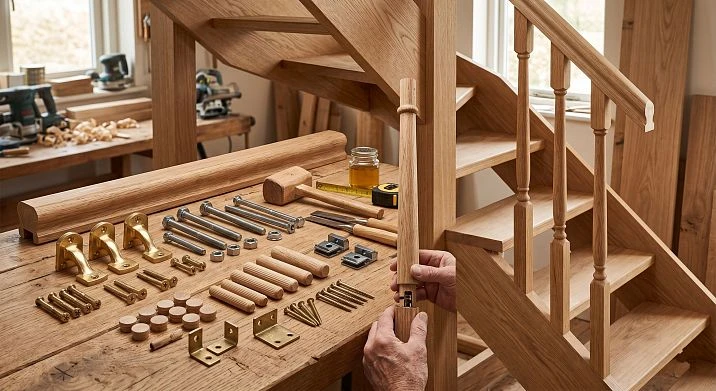
Imagine: balusters are bought, the handrail is chosen, the posts are waiting for installation. Everything is ready — and then it turns out the fasteners don't fit. The stud diameter doesn't match the mounting hole, the dowel turned out to be too short, and the screws are too thin for solid wood. Installation stops. The craftsman stands with ready-made elements and waits for a reorder. A familiar picture? Unfortunately, yes.
Fasteners for balusters and railings are not a trifle "we'll buy on the way." It's a system that needs to be thought out before the balusters themselves are ordered. That's what this article is about: what to buy, in what quantity, which type for which installation method, and why the right choice of fastening makes the staircase reliable for decades.
baluster and railing mounting — a topic that combines structural engineering and the practice of carpentry. Let's break it down in detail, without simplifications or fluff.
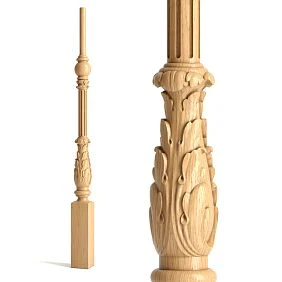
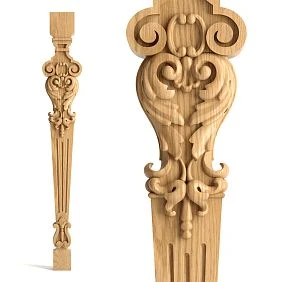
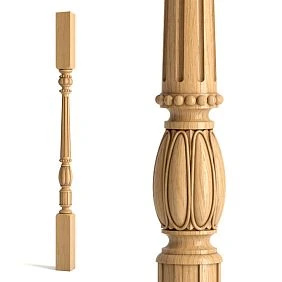
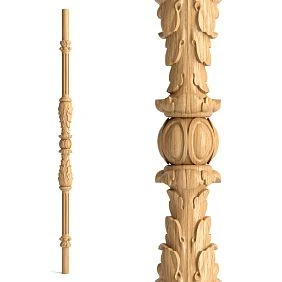
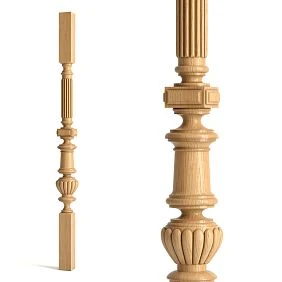
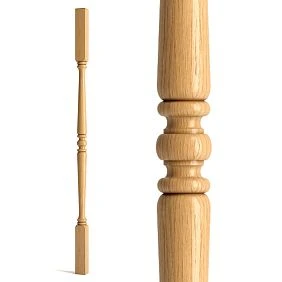
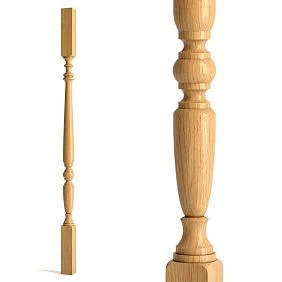
Why fasteners are chosen before buying balusters, not after
This order seems illogical to many. A person goes to the catalog, chooses beautiful balusters, orders them, and then starts thinking: "How do I attach them?" And then the problems begin.
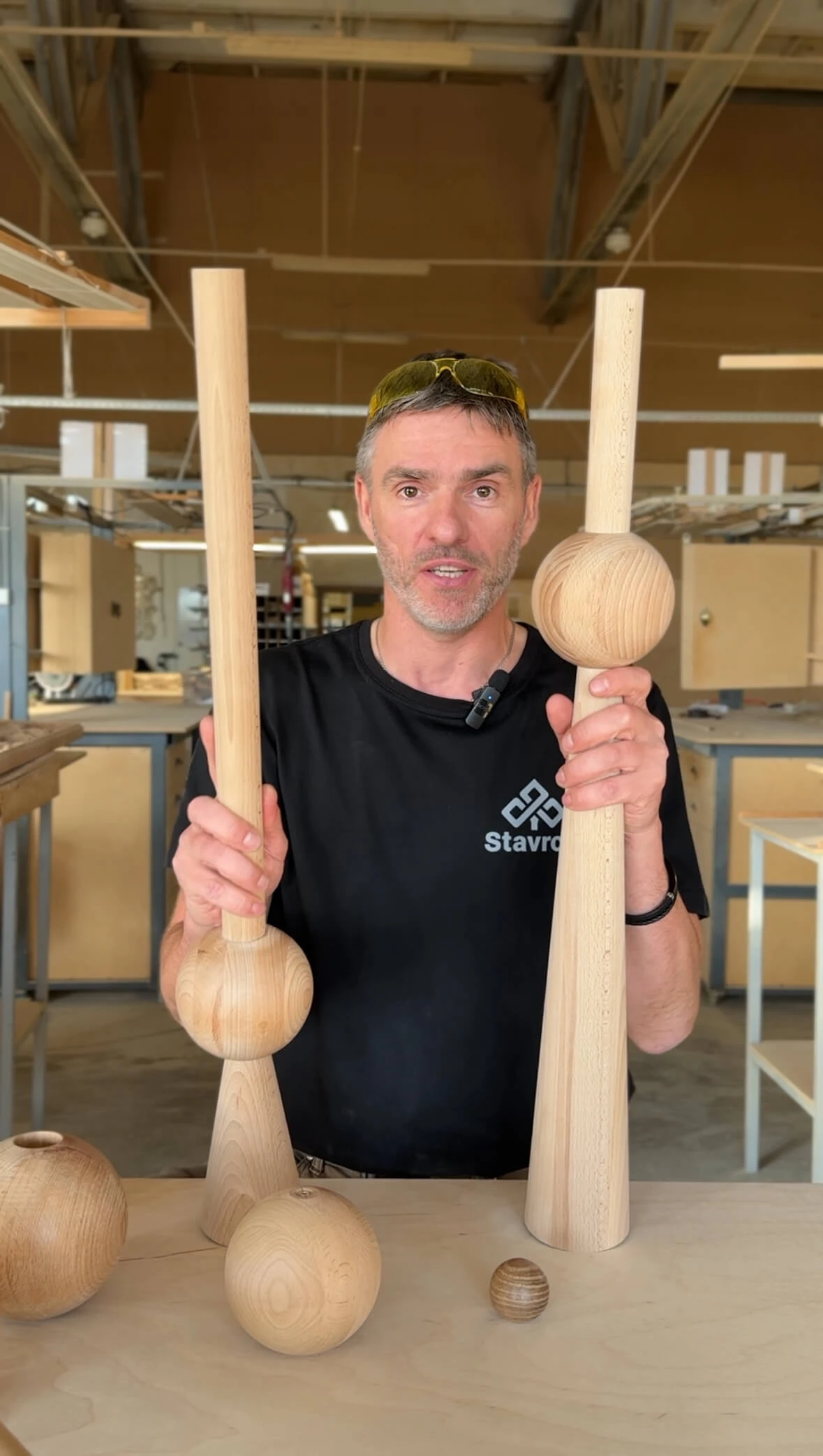
The attachment determines the design of the baluster
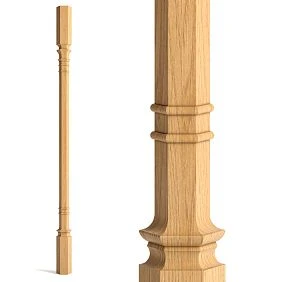
Not every baluster is suitable for every installation method. A baluster with a lower cylindrical tenon with a diameter of 32 mm is designed for a tenon connection with a string or step. If you planned to mount on a stud, you need a baluster with an axial hole. If on a hidden mounting plate, you need a baluster with a flat base without a tenon.
Finding out about this after purchase means either adapting the attachment (not always possible) or returning the product and ordering again.
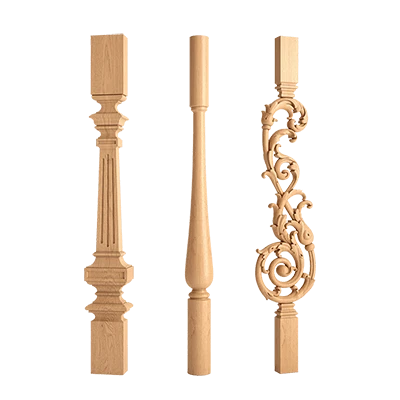
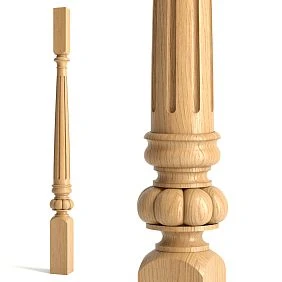
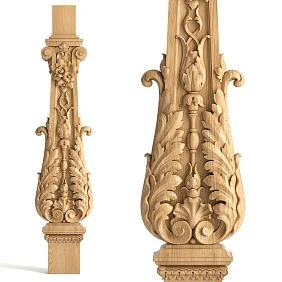
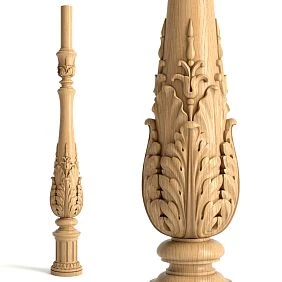
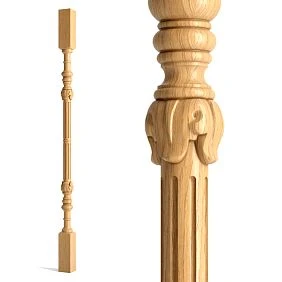
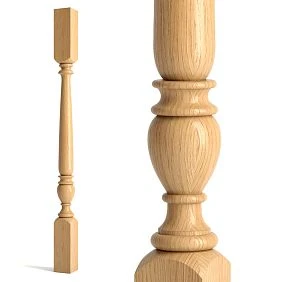
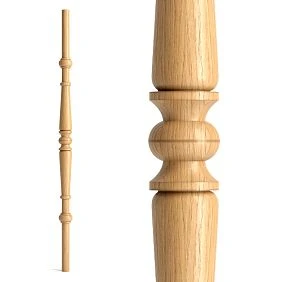
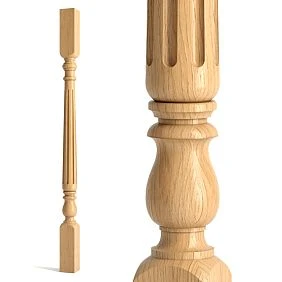
Our factory also produces:
The installation method depends on the staircase design
A staircase on a string is one story. A staircase on a stringer is another. A staircase with open steps is a third. In each case, the attachment points of the balusters are different, the loads are distributed differently, and the appropriate fasteners are needed.
Before buy balusters for the staircase — you need to know the type of your staircase design and decide on the method of their attachment.
Get Consultation
Fasteners affect reliability
A baluster mounted on weak fasteners will eventually start to wobble. This is not just an aesthetic problem—it is a safety issue. The staircase railing must withstand a lateral load of at least 100 kg per point in residential buildings. Proper fasteners are the foundation of this reliability.
What is included in the railing of a wooden staircase: complete anatomy of the structure
Before talking about fasteners, it's important to understand what elements the structure we are installing consists of. A stair railing is a system where each element is connected to others.
Balusters
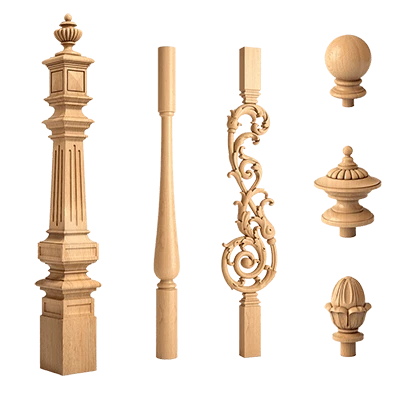
Vertical elements that support the handrail. They are installed at a certain pitch along the flight. They take lateral load from the railing. Buy wooden balusters and installing is only part of the task: they also need to be properly secured at the bottom and top.
Handrail
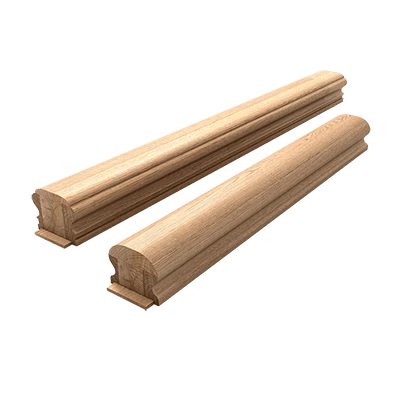
A horizontal element that rests on balusters and posts. This is what you hold onto when going up and down. The handrail must be rigidly connected to the balusters — and it is this connection that often requires special fasteners.
Supporting posts
Large vertical posts at the beginning of the flight, at the end, and at turns. They bear the main load. Posts are attached to the steps or to the landing floor — powerfully, reliably, with metal anchors or large-diameter threaded rods.
Buy balusters and posts for a wooden staircase it's better in one order — this ensures a unified style and compatible sizes of mounting points.
Stringer and carriage
Structural beams of the staircase to which the steps are attached. In a staircase with a stringer, balusters can be attached directly to it. On a carriage, they are attached to the steps.
Decorative elements
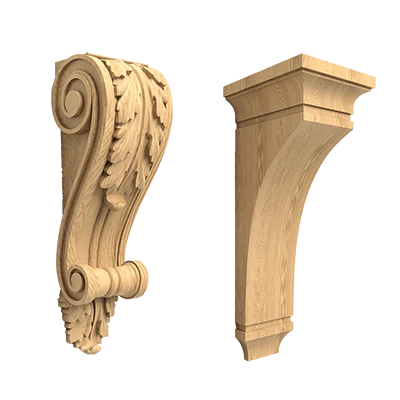
Under-baluster supports, overlays, post caps, transition elements on the landing. They are mounted on top of the main fasteners and hide them from view.
Understanding this anatomy is important: buy staircase components it needs to be done as a set, not element by element, otherwise inconsistencies are inevitable.
Methods of attaching balusters: four fundamental options
There are several ways to attach balusters, each with its own area of application, advantages, and limitations. Let's go through them in order.
Dovetail connection
A classic, time-tested method. The lower tenon of the baluster fits into a round socket in the string or step. The upper tenon fits into the groove of the handrail from below. The joint is fixed with wood glue.
Diameter of the lower tenon: 32–42 mm, length 40–60 mm.
Diameter of the upper tenon: 28–38 mm, length 30–45 mm.
Tools: a spade bit or Forstner bit of the required diameter, a drill.
Advantage: absolute aesthetics — nothing is visible from the outside. The railing looks monolithic. Disadvantage: when replacing a baluster, dismantling requires caution — the glue needs to be softened with a heat gun.
Detailed instructions for this method are in the article about How to install wooden balusterswhere current methods of 2026 are analyzed.
Mounting on a threaded stud
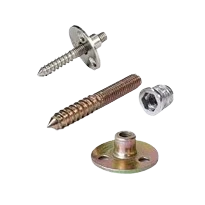
A metal stud M8 or M10 is screwed into the string or step from below. The baluster is placed onto the stud through an axial hole. On top — fixation in the handrail using a similar method or with glue.
Stud: M8×150 mm or M10×150 mm, stainless steel or galvanized.
Axial hole in the baluster: diameter 1–1.5 mm larger than the stud diameter.
Fixation: nut with washer through the bottom of the step (hidden) or anaerobic threadlocker.
Advantage: convenient disassembly for replacement, high pull-out strength. Disadvantage: requires precise alignment of axial holes vertically.
baluster attachment to steps On a pin — one of the most popular modern methods precisely due to maintainability.
Dowel jointing
A wooden dowel — a round rod made of birch or beech — fits into a hole in the string (step) and into a corresponding hole in the baluster. Both ends are glued.
Dowel diameter: 20–32 mm, length 80–120 mm.
Hole depth: half the dowel length plus 3–5 mm of allowance.
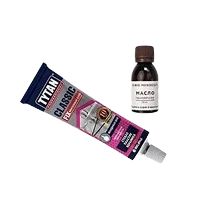
Glue: PVA-M or professional woodworking glue.
Advantage: cost-effectiveness, material availability, absence of metal in the joint (important under certain operating conditions). Disadvantage: glued joint is practically non-separable.
Hidden fastening on mounting plates
A modern method gaining popularity. A metal mounting plate (T-shaped or L-shaped) is attached to the step or string. The baluster with a flat base is placed on the plate and secured through hidden holes.
Plate: steel 2–3 mm, galvanized.
Plate fasteners: screws 5×50 or 6×60 mm into pre-drilled holes.
Baluster: must have a flat base without a tenon.
Advantage: possibility of precise horizontal adjustment, neat appearance, easy dismantling. This is the so-called hidden fastening of balusters, where all fastening equipment is hidden under or inside the baluster.
Fasteners for posts: a separate story
Support posts carry a fundamentally different load than balusters. While a baluster takes relatively little lateral force, a post is the foundation of the entire railing, and its fastening must be substantial.
Anchor fastening into the step
A powerful anchor bolt M12–M16 is embedded into a concrete step or screwed into a wooden one. The post is placed onto the bolt through an axial hole and secured with a nut and wide washer.
Bolt: galvanized steel, M12×200 mm or M16×200 mm.
Axial hole in the post: diameter 14–18 mm.
Hole depth in the step: 80–120 mm.
Flange Attachment
A steel flange is attached to the floor with four screws 6×80 mm, the post is installed into the flange socket. The method is quick and strong, but the flange must be covered with a decorative cap — otherwise, exposed metal spoils the appearance.
Attachment to a wooden floor on a stud
An M12×300 mm stud is screwed into the floor through a prepared hole, and the post is placed on top. The connection is reinforced with a special conical insert that expands the base of the post from the inside.
About the rules for attaching posts in conjunction with balusters — in a professional article fasteners for balusters and railings from practicing specialists.
Attaching the handrail to balusters: how to make the railing monolithic
The handrail is the last element in the installation chain. Its connection to balusters and posts determines the overall rigidity of the railing.
Tenon joint of the handrail with a baluster
The upper tenon of the baluster fits into the longitudinal groove of the handrail from below. This is the most common method for standard turned balusters. Important: the groove in the handrail must match the diameter of the tenon with a tolerance of no more than 0.5 mm. A large gap means play. A small one will not fit without force and may split the handrail.
Attaching the handrail with screws through the baluster
For square or flat balusters, the screw is driven from below through the end of the baluster into the handrail. Diameter: 5 mm, length: 70–90 mm. The hole is pre-drilled with a thin drill (3 mm) to avoid splitting.
Connecting the handrail to the post
The post and handrail are a key connection. Loads here are maximum. A wooden dowel 20×80 mm with glue is used, plus a side tie through a concealed screw 6×100 mm. On formal staircases, an additional metal hidden tie is used.
All the nuances of this connection are detailed in the article How to attach railings to balusters — with professional secrets not found in general instructions.
Attaching balusters to the floor and landing: a special case
Horizontal landings between flights are an area where the installation conditions for balusters fundamentally differ from those on the flight.
On a flight, the baluster stands on the step at an angle to the horizon (the flight's slope angle). On the landing, it is strictly vertical, with a horizontal base. It would seem simpler. But it is on landings that mistakes are most often made.
Why the landing is a zone of special attention
On landings, people stop, turn around, and lean on the handrail when changing direction. The lateral load on the railing here is often higher than on the flight. And if the landing balusters are secured more weakly than the flight balusters, they will be the first to loosen.
Correct fastening on the platform
-
M10×180 mm stud, screwed into the platform board to a depth of at least 80 mm
-
Tightening with a nut and wide washer through the bottom of the baluster (concealed)
-
Additional side fixation through a decorative sub-baluster
install balusters to the floor and handrails — in a separate professional material with step-by-step analysis.
Complete list of fasteners for a wooden fence: what and how much to buy
Let's move on to practice. Below is a detailed list of fastening elements for installing a standard wooden fence.
Fasteners for balusters (per one baluster)
| Element | Size | Quantity | Purpose |
|---|---|---|---|
| Threaded stud | M8×150 or M10×150 | 1–2 pcs | Main attachment to the step |
| Hex nut | M8 or M10 | 1–2 pcs | Tightening the stud |
| Reinforced washer | M8 or M10 | 1–2 pcs | Load distribution |
| Wood glue | PVA-M | 5–10 ml | Fixation in the handrail groove |
| Wooden dowel | 20×80 mm | 1 pc. (alternative to stud) | Tenon joint |
Fasteners for support posts (per post)
| Element | Size | Quantity | Purpose |
|---|---|---|---|
| Anchor stud | M12×250–300 mm | 1 pc. | Post-to-base attachment |
| M12 nut | — | 2 pcs. | Lock nut + main nut |
| Reinforced M12 washer | — | 1 pc. | Load distribution |
| Self-tapping screw | 6×100 mm | 2–4 pcs. | Additional flange mounting |
| Tapered insert | for pole diameter | 1 pc. | Spacer inside base |
Handrail fastening (per linear meter)
| Element | Size | Quantity | Purpose |
|---|---|---|---|
| Countersunk screw | 5×70–90 mm | 2–3 pcs. | Attachment to balusters |
| Wooden dowel | 20×80 mm | 1 pc. per post | Connection to post |
| Glue | PVA-M | 20–30 ml/m | Fixation in grooves |
| Hidden tie | metal 2 mm | 1 pc. per post | Extra rigidity |
What to buy with fasteners: complete railing set
Fasteners are what hold things together. But they fasten elements that also need to be purchased. Let's break down what's included in a complete order.
Balusters
Main vertical railing elements. Selected by shape, size, and wood species. Important: the baluster shape must be compatible with the chosen fastening method.
balusters for staircase to buy It's better to buy from the same manufacturer as the handrails and posts — this ensures compatibility of the mounting points.
For those choosing by width of assortment: wooden balusters for stairs buy in the catalog with a full range of shapes — from strict square to ornate turned-carved.
Railings and handrails
The handrail is selected by profile (D-shaped, rectangular, shaped) and by the size of the groove for the baluster tenon. Length — according to the march with a margin of 200–300 mm for trimming.
buy balusters and handrails in one order — means guaranteeing their compatibility in grooves.
Support posts
Large vertical posts. Selected by cross-section (100×100, 120×120 mm) and height — it is determined by the height of the railing plus the length of the lower mounting tenon or built-in anchor.
Wooden stair posts — a separate category in the catalog: from simple smooth posts to carved with decor.
Baluster supports
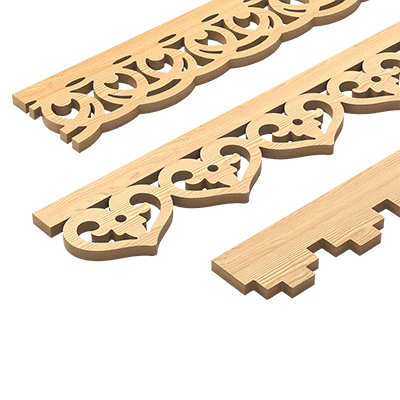
Decorative overlays around the perimeter of the lower zone of the railing. Hide fasteners, give a finished look. Installed at the final stage — on finishing nails or glue.
Post caps
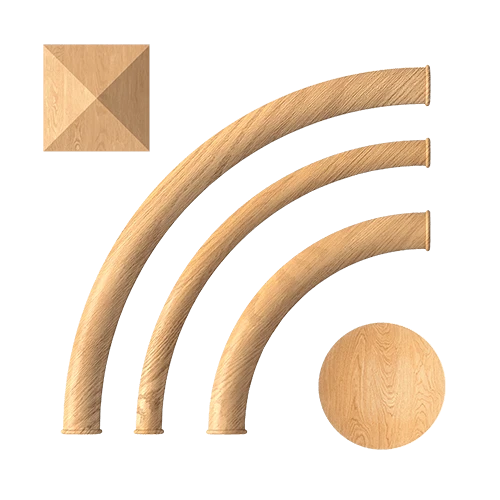
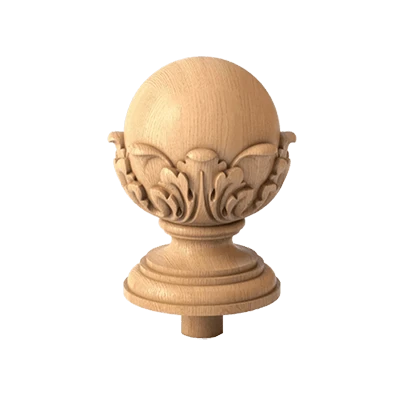
"Balls", "drops", "pyramids" — decorative finials for posts. Attached with glue or via an internal dowel. An essential element for any elegant staircase.
All these items in a single catalog: Staircase Components for Sale — in one order, with delivery, without the need to source from different suppliers.
Mistakes when buying fasteners for balusters and railings
Let's list the most common — and the most costly ones.
Mistake one: buying fasteners separately and "by analogy"
"The neighbor had such studs — I'll take the same." The neighbor has different balusters, a different tenon diameter, a different tread thickness. The studs turned out to be too short — the depth of entry into the tread is only 40 mm instead of the required 70. The railing is not securely held. Rule: fasteners are selected for specific balusters and a specific staircase.
Mistake two: buying fasteners without considering the thickness of the tread board
A solid wood tread 40 mm thick. Stud M10×120 mm: 40 mm into the tread, 10 mm for the nut and washer, and the remaining 70 mm into the baluster body. But if the axial hole of the baluster is only 60 mm deep — the stud protrudes. Rule: stud length = depth in tread + length in baluster body + allowance for nut.
Mistake three: weak fasteners for a heavy baluster
A carved oak baluster weighs significantly more than a simple turned beech one. The dowel for an oak baluster should be larger — 28–32 mm, not the standard 20 mm. Rule: fasteners must match the weight and size of the baluster.
Mistake four: not checking the fastening method before purchasing balusters
You ordered balusters with a cylindrical tenon — and only then discovered that the staircase steps are on a stringer and need to be attached to the step end differently. The tenon does not align with the axis. Rule: first determine the installation method, then choose the balusters.
Mistake five: skimping on anchors for posts
A post on a thin M8 stud in a concrete step is a mistake that will show up in six months. The post will start to wobble, loosening the entire handrail. Rule: for posts — only M12 and above, anchor depth at least 100 mm.
Mistake six: not buying spare fasteners
During installation, one dowel cracked, one stud stripped its thread when tightened, one screw went wrong. Without spares — a halt. Rule: spare fasteners 15–20% of the calculated quantity. Fasteners cost pennies — installation delays cost more.
Mistake seven: not checking compatibility of the handrail with baluster tenons
The handrail was bought with a 30 mm groove, the balusters have a top tenon of 35 mm. The tenon doesn't fit. The handrail or balusters need reworking. Rule: before ordering, ensure the diameter of the baluster's top tenon matches the width of the handrail groove.
How to calculate a complete set of fasteners for a staircase
A practical algorithm used by experienced installers.
Step one: determine the number of balusters
Flight length (mm) / center-to-center spacing (mm) + 1 = number of balusters per flight.
Standard step: 130–160 mm along axes. With a march of 3,000 mm and a step of 150 mm: 3,000 / 150 + 1 = 21 balusters.
Don't forget to account for the landing balusters — they are calculated separately based on the length of the landing railing.
Step two: determine the number of attachment points
Each baluster has at least 2 attachment points: bottom (to the step or stringer) and top (to the handrail). Total: 21 balusters × 2 = 42 attachment points. This is the basic calculation.
Step three: calculate fasteners for balusters
For the stud method:
-
21 studs M10×150 mm
-
21 nuts M10
-
21 washers M10
Stock: +15% = 4 studs, 4 nuts, 4 washers.
Total: 25 studs, 25 nuts, 25 washers.
Step four: calculate fasteners for posts
Standard straight staircase has 2–4 posts (start of flight, end of flight, landing, second floor). For each post:
-
1 stud M12×250–300 mm
-
1 M12 nut + 1 lock nut
-
1 M12 heavy washer
-
4 6×100 mm screws (if with flange)
Step five: calculate fasteners for the handrail
For each baluster — 1 self-tapping screw 5×80 mm (or glue without fasteners). For each connection with a post — 1 dowel 20×80 mm + 1 hidden screw 6×100 mm.
Final table for a staircase with 21 balusters and 3 posts
| Position | Quantity | Stock | Total |
|---|---|---|---|
| Stud M10×150 mm | 21 | 4 | 25 pcs. |
| Nut M10 | 21 | 4 | 25 pcs. |
| Washer M10 | 21 | 4 | 25 pcs. |
| Stud M12×280 mm | 3 | 1 | 4 pcs. |
| Nut M12 (×2 per bolt) | 6 | 2 | 8 pcs. |
| Reinforced M12 washer | 3 | 1 | 4 pcs. |
| Self-tapping screw 5×80 mm | 21 | 4 | 25 pcs. |
| Dowel 20×80 mm (for posts) | 3 | 1 | 4 pcs. |
| Wood glue PVA-M, ml | 300 | 50 | 350 ml |
Hidden baluster fastening: a modern take on a classic problem
A topic increasingly raised when installing high-quality wooden staircases. Hidden fastening means no fasteners are visible from the outside. No visible bolts, no screws on display. Just wood.
How it works
The mounting plate is attached to the step with concealed screws. The baluster is placed on the plate and secured through internal channels. The handrail is pressed onto the top spikes and glued. The under-baluster covers the lower joint.
Result: the railing looks as if the balusters simply grew out of the steps. This is the highest level of installation craftsmanship.
When hidden installation is chosen
-
Grand staircases in expensive interiors
-
Fences with carved balusters, where fasteners should not distract from the decor
-
Stairs "for sale" — in real estate, this is visually valued
-
Homes where the owner himself is "obsessed" with wood and tolerates no compromises
baluster attachment to steps with a description of hidden methods — in a professional material with relevant solutions for 2026.
Installation yourself or with a master: an honest answer
Many ask: can you install balusters yourself? The honest answer is yes, under a few conditions.
When you can do it yourself
-
Wooden staircase on stringers, balusters on dowels or pins
-
Have experience with a drill, Forstner bit, and spirit level
-
Fastener calculation is done correctly, all elements are compatible
-
15–20 balusters are installed without complex turns or non-standard angles
When it's better to call a master
-
Concrete load-bearing base for posts
-
U-shaped or L-shaped staircase with turns and landing
-
Carved oak balusters are heavy and require precise marking
-
Hidden installation — without experience, doing it 'cleanly' the first time is very difficult
For those who take on installation themselves: a step-by-step guide on installation of wooden railings and balusters with all stages from marking to final coating.
Where to buy balusters, railings, and components for installing a wooden staircase
The task of 'assembling' the correct installation kit requires a supplier with a full range. Otherwise — searching across different stores, incompatible sizes, delivery delays.
A good supplier of wooden railing is one who has:
-
Balusters, posts, handrails — of the same wood species and from the same manufacturer
-
Tenon and groove sizes are coordinated within the same product line
-
Can be ordered Buy wooden balusters together with handrails and posts in a single order
-
There is a selection consultation: the manager will help you avoid mistakes with sizes
STAVROS: everything for installing wooden fencing in one place
STAVROS is a Russian manufacturer of solid wood products, specializing in components for wooden stairs. Balusters, posts, handrails, decorative elements — all made in a single system with coordinated sizes of mounting seats.
The STAVROS catalog offers a full range for installation:
-
buy balusters — turned, carved, square, flat, made of beech and oak, with correct tenon sizes for different mounting methods
-
wooden balusters for stairs buy — the entire range of forms in one section
-
Buy balusters and posts for a wooden staircase — in a unified style and with compatible sizes
-
buy staircase components — finials, under-balusters, handrails, connecting elements
All STAVROS products are made from kiln-dried wood with a moisture content of 8–12%. Beech and oak, stable dimensions, high-quality surface treatment for any finishing coating.
buy balusters and handrails Choosing STAVROS means getting a compatible system, not a set of random elements. Constant warehouse availability. Delivery across all of Russia. Consultation on fasteners and installation upon ordering.
STAVROS makes stairs that last for decades.
Frequently asked questions
What fasteners are needed for wooden balusters?
It depends on the installation method. Tenon joint — dowels 20–32 mm and wood glue. Stud mounting — threaded stud M8–M10 of required length, nut, and washer. Concealed installation — metal plate and hidden screws 5×50 mm.
Can I buy balusters without fasteners?
Yes, you can. But the fasteners need to be selected in advance — for the specific installation method and specific baluster sizes. Buying 'blindly' leads to mistakes.
What should I buy along with balusters for staircase installation?
Handrail, support posts, fastening studs or dowels, wood glue, screws for the handrail, under-baluster supports, post caps. The entire kit is available in the STAVROS catalog.
Why do balusters start wobbling after installation?
The main reason is insufficient depth of the tenon or stud. The second is a mismatch between the dowel diameter and the socket size. The third is using regular PVA instead of PVA-M (wood glue). Proper fastening solves all three problems.
How to choose the length of the stud for a baluster?
Formula: stud length = hole depth in the step (at least 70 mm) + nut and washer height (25–30 mm) + entry depth into the baluster body (50–70 mm). For a 40 mm step: 70 + 30 + 60 = 160 mm → choose a 150 or 180 mm stud.
Where to buy components for a wooden staircase?
In the STAVROS catalog — a full range of balusters, posts, handrails, and mounting components for wooden staircases with constant warehouse availability and Contact us to confirm shipping to your destination.
Is a spare fastening kit needed during installation?
Absolutely. The recommended reserve is 15–20% of the calculated quantity. Fasteners are inexpensive, but stopping installation due to a missing stud or a cracked dowel is costly and frustrating.