Article Contents:
- A cabinet needs to be broken down into functional and decorative components
- Construction
- Functional components
- Visible front hardware
- Decorative Components
- What cabinet carcasses are made of: briefly for the production specification
- Material for cabinet furniture: the same carcass does not mean the same product
- Why the back panel affects the construction
- MDF or chipboard — which is better for a wardrobe
- Carcass
- Facade
- Tall wardrobe and long handle
- The handle must be approved before serial drilling of the fronts
- One handle series for several wardrobe modules
- The overlay must be tied to coordinates
- Left and right facade are different positions with asymmetric decor
- Moulding cannot be ordered by linear metres alone
- Additional thickness must appear in the documentation
- The rhythm of the panels must match between adjacent doors
- Wardrobe on legs: supports and mounting hardware as a separate system
- Quality furniture hardware is measurable repeatability
- Furniture hardware manufacturer: what to request before purchasing
- A prototype of one module is better than launching the entire series
- Golden sample — the reference for a production cabinet
- How to scale a single design system across a cabinet collection
- When an alternative position is needed
- Reserve cannot be set as a single percentage for all categories
- What matters to the procurement department of a furniture factory
- STAVROS for manufacturers: how to use the B2B page
- What to pass to the manager
- The component LOT must be linked to the production batch of cabinets
- Production and service reserves are different stocks
- Change request for replacing a critical component
- Sliding wardrobe: door material and front system are specified separately
- Built-in wardrobe and walk-in closet: the specification becomes zonal
- How to prepare a serial kit for the assembly area
- Box labeling must match the BOM
- Pre-production control sample before the full batch run
- How to store an approved sample in production
- Repeat order six months later
- As-built BOM: what is actually installed on a shipped wardrobe
- What to do with leftovers after a series ends
- How to calculate linear meters with leftovers between batches
- How to conduct value engineering without losing model identity
- How to evaluate a furniture components supplier without ratings
- Where this article ends and deep handle selection begins
- How to prepare a commercial shortlist before the first order
- How to link the catalog with a wardrobe manufacturer's internal database
- When a master card needs to be archived
- Supply planning: the wardrobe series and the component series must match
- When one large batch is more profitable, and when several deliveries are
- How to estimate the cost of a component for a series, not just the price per unit
- How to calculate the cost of the decorative package for one wardrobe
- What needs to be saved after the first successful batch
- How to use the actual consumption of the next print run
- How to transfer a model to another workshop without losing the configuration
- Pre-purchase order release checklist
- Edge case: tall cabinet and one long handle
- Edge case: cabinet with fronts of different widths
- Edge case: slatted panel only on the center door
- Edge case: asymmetric overlay composition
- Edge case: cabinet from one series but in two colors
- When changing suppliers is riskier than it seems
- How to prepare a claim for a component
- How to build a unified component standard for the entire cabinet program
- When it's too early to place a production order for components
- What exactly can the procurement department check before a repeat batch?
- Minimum data set for a new SKU in a wardrobe collection
- What components are needed for wardrobe production?
- What materials are used for wardrobes?
- What is a wardrobe carcass made of?
- What is a wardrobe back panel made of?
- Which is better for a wardrobe — MDF or chipboard?
- Which handles to choose for a tall wardrobe?
- Can wooden overlays be used on MDF fronts?
- Are slatted panels suitable for furniture fronts?
- How to calculate linear footage for a series of wardrobes?
- Where to buy components for wardrobe production?
- How to order samples of furniture components?
- Is a golden sample needed for a small series?
- How often should the BOM be reviewed?
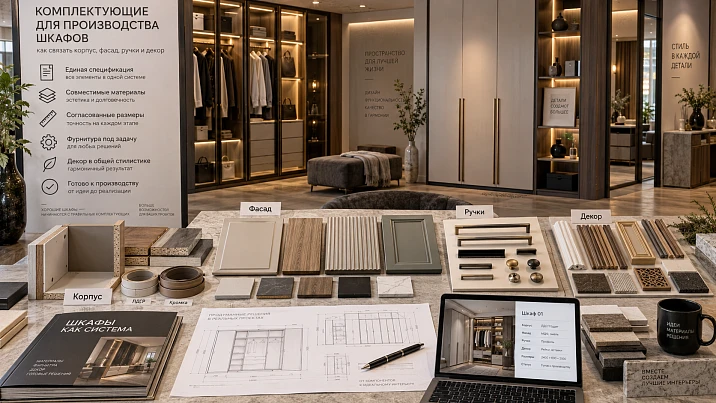
A single wardrobe can be assembled from almost any compatible components. For a series of 100 identical items, this is no longer enough. The manufacturer needs to precisely fix the carcass material, back panel and fronts, handle model, decorative elements, mounting hardware, and actual SKUs. Otherwise, components start changing from order to order, and one furniture model gradually turns into several different products.
Components for wardrobe production are best viewed as a single data system: wardrobe model → carcass → back panel → front → handle → decorative part → mounting hardware → SKU → BOM → prototype → approved sample → series → repeat order. This approach is needed not only by the process engineer. It is equally important for the designer, purchaser, warehouse, assembly, and service.
This article does not repeat the everyday question of "what is the best material for a wardrobe." Carcass materials are considered only to the depth needed for a production specification. The main focus is how to link structural and visible components so they can be purchased in tens and hundreds of identical units without constant manual clarification.
In this scheme, STAVROS is used as a manufacturer and supplier of some external components: wooden furniture handles, decorative overlays, linear mouldings, slatted panels, samples, and mounting hardware for legs and handles. Hinges, slides, carcass boards, and other groups that are not part of the profile of specific STAVROS product sections should not be artificially included in the commercial block.
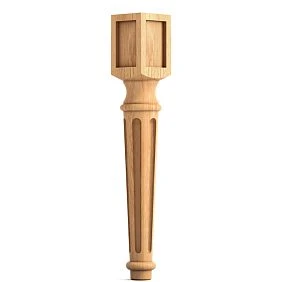
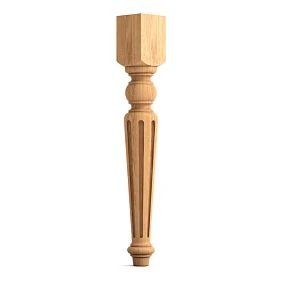
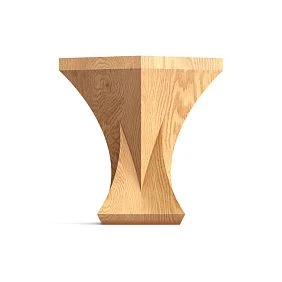
A wardrobe needs to be broken down into functional and decorative components
Before creating a BOM, it is useful to divide the wardrobe into four levels. This immediately shows which data relates to the structure, which relates to the visible part, and which needs to be purchased as separate product items.




Structure
- side panels;
- roof and bottom;
- internal partitions;
- shelves;
- back panel;
- fronts and doors;
- plinth and top box elements, if provided by the model.
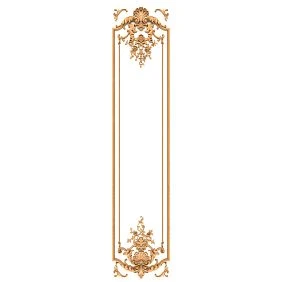
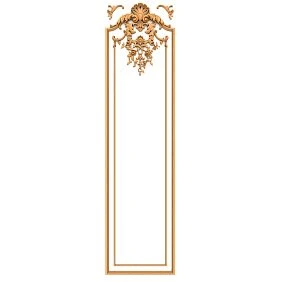
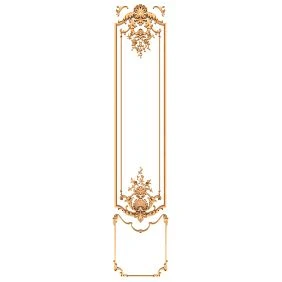
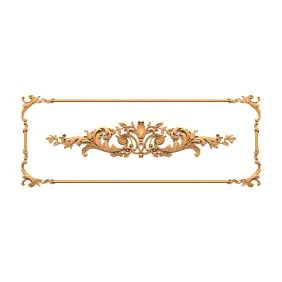
Our factory also produces:
Functional components
- hinges;
- guides;
- fasteners;
- connecting hardware;
- opening and transformation mechanisms, if any.
Get Consultation
Visible front hardware
- furniture handles;
- supports or legs, if they remain visible;
- part of the decorative fasteners.
Decorative components
- Plates;
- Moldings;
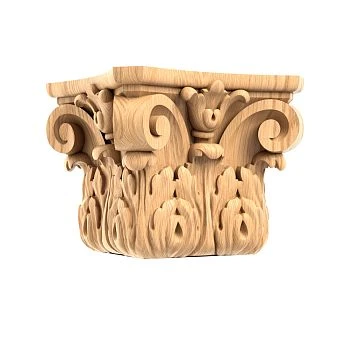
- furniture moulding;
- slatted panels;
- local decorative inserts.
Key principle: every visible purchased part must exist in the specification as a separate object. The entry “facade decor — 1 set” is convenient only until the first repeat order. For a series, it is too vague.
Cabinet BOM: one line for each actual part
The BOM answers a simple production question: what exactly is required for one cabinet unit and in what quantity. If a component can be separately taken from stock, ordered, replaced, or mixed up, it needs its own line.
| Code | Detail | Material / SKU | Qty per cabinet | Critical data |
|---|---|---|---|---|
| C01 | Side panel | Laminated chipboard ___ | 2 | thickness, decor, edge banding |
| B01 | Back panel | HDF / other board ___ | 1 | Thickness, format, installation method |
| F01 | Facade | MDF ___ | 2 | Finish, milling, drilling |
| H01 | Handle | HL-___ | 2 | Size, fit, coating |
| D01 | Overlay | N-___ | 2 | Coordinates, orientation |
| M01 | Molding | MLD-___ | By cutting | Profile, commercial length |
For STAVROS components, it is useful to store the factory's internal code together with the supplier's actual SKU. For example:
INT-HANDLE-04 / HL-___ / OAK / FINISH-02
INT-DECOR-11 / N-___ / BEECH / RAW
INT-MLD-07 / MLD-___ / MDF / PAINT
This allows you to maintain your own coding system while keeping a direct link to the product.
The material for the cabinet must be determined separately for each part
When choosing materials for wardrobes, the query "wardrobe material" is too general for a production specification. The carcass, front, back panel, and decorative element have different functions, so the material is specified for each position.
It is perfectly normal to combine the following in one wardrobe:
- carcass chipboard;
- MDF front;
- HDF or another thin board for the back panel;
- oak handle;
- beech overlay;
- MDF moulding for painting;
- slatted panel made of MDF or solid wood.
Detailed materials for wardrobes have already been covered on STAVROS in a separate article about furniture materials for wardrobes. What matters more in the current material: each selected material must be linked to a specific part and its code.
What wardrobe carcasses are made of: a brief for the production specification
In mass-produced case furniture, panel materials often serve as the base. Melamine-faced chipboard is convenient for straight carcasses with a ready decorative surface. MDF is used where different surface and processing properties are required. Solid wood or a combined construction is used in individual models when required by design and technology.
Wardrobe materials are best recorded at the level of specific parts and revisions. For a BOM, it is not enough to specify only "melamine-faced chipboard". You need to record:
- the manufacturer or internal material code;
- thickness;
- the decor;
- the grain direction, if it is significant;
- the edgebanding type;
- which ends are visible;
- size of the blank or finished part;
- drawing revision.
If a series is re-released after several months, such a record protects against a situation where a different board is used under the name “gray body.”
Material for cabinet furniture: the same body does not mean the same product
Two cabinets with the same body can look like different models if they differ in fronts and visible components. For a manufacturer, this is a useful product architecture: the structural platform remains stable, while the external character is changed by the front SKUs.
| Layer | BASIC version | CLASSIC version | RELIEF version |
|---|---|---|---|
| Housing | The same | The same | The same |
| Facade | smooth | Smooth / MDF | Smooth base |
| Handle | Single base SKU | Wooden handle | Handle coordinated with the relief |
| Decor | No | Molding / overlay | Slat panel |
This is an example of production architecture, not ready-made STAVROS collections. The point is that the material for cabinet furniture and the decorative system perform different functions. The cabinet provides the platform; handles, panels, and overlays provide visual identity.
The back panel of the wardrobe is a separate BOM line
The strong search cluster "wardrobe back panel material" reveals a typical problem: the back panel is often perceived as a secondary part and is written into specifications with the formula "as usual." For a series, this is bad practice.
The back panel affects the construction and must have its own code. In production documentation, the following are recorded:
- the material;
- thickness;
- size;
- decor or color, if it is visible from the inside;
- installation method;
- groove or overlay mounting;
- fasteners;
- orientation;
- revision.
Depending on the design, this may be HDF, fiberboard, thin MDF board, laminated chipboard, or another solution determined by the designer of the specific wardrobe. There is no universal mandatory material for all wardrobes.
Why the back panel affects the design
Changing the thickness or installation method may affect the groove, internal depth, fasteners, and the overall geometry of the carcass. Therefore, you cannot replace the back panel with an "equivalent" one without checking the documentation.
For serial furniture, it is useful to separate:
BACK-MATERIAL
BACK-THICKNESS
BACK-MOUNT
BACK-SIZE
BACK-REVISION
Then the assembly area and supply department work with the same data.
MDF or laminated chipboard — which is better for a wardrobe
For a wardrobe, the question "MDF or laminated chipboard" cannot be decided in one line. The carcass and the facade perform different functions, so materials should be compared for a specific part.
Carcass
For a straight carcass with a finished decorative surface, laminated chipboard is often rational: the board is cut, edged, and goes to assembly. MDF can also be used, but its advantages must be needed by the project.
Facade
If the front must be painted, milled, or have a complex relief, MDF offers more freedom for subsequent processing. If a ready laminated surface is acceptable, chipboard may be sufficient.
A detailed comparison of MDF and chipboard is a separate topic. This article draws a practical conclusion: the carcass material and the front material are specified separately, and visible components are designed relative to the finished front.
The cabinet front is the main carrier of visible hardware
It is the front that connects the cabinet structure to the handle, overlay, moulding, and slatted panel. Therefore, the front specification must be approved before purchasing decorative components.
The following must be determined for the front in advance:
- the material;
- thickness;
- size;
- type of finish;
- milling;
- gaps;
- the position of the handle;
- the presence of overlay decor;
- the additional panel thickness, if it is used.
If the front changes after placing an order for handles or panels, the entire related configuration must be rechecked.
Furniture handles for cabinets: fit first, appearance second
The handle is one of the most critical external components of a cabinet. It simultaneously affects the appearance, ergonomics, and drilling of the front.
In the current category STAVROS furniture handles various structural types and sizes are presented. What matters to the manufacturer is not the general class "wooden handle," but the specific modification.
The specification records:
- SKU;
- total length;
- installation geometry;
- center-to-center distance, if applicable;
- overhang;
- the material;
- coating;
- orientation;
- hole coordinates.
If a series uses one handle model in several lengths, each length is a separate purchasing line item.
Tall cabinet and long handle
A tall front does not automatically mean "the taller the cabinet, the longer the handle." You need to check the proportion, grip comfort, position relative to the floor and adjacent doors. A long handle may look convincing on a tall pantry unit and too large on a narrow module of the same series.
For each front height, it is useful to have an approved configuration:
MOD-600 / HANDLE HL-___ / SIZE-A
MOD-900 / HANDLE HL-___ / SIZE-B
PENAL / HANDLE HL-___ / SIZE-C
This is how a design decision becomes a production rule.
The handle must be approved before serial drilling of the fronts
Once the front is drilled, the installation geometry becomes part of the structure. If a different handle is then chosen, even a visually similar one, the holes may not align.
Before drilling begins, the following must be approved:
SKU + size + center-to-center + hole coordinates + orientation.
If the handle is changed after the series has launched, a new front revision is created. This protects against a situation where the warehouse has already received the new SKU while the workshop is still drilling according to the old template.
One handle series for multiple cabinet modules
Unification is useful when one visual handle family suits a wardrobe, tall cabinet, base unit, and top box. It reduces:
- number of active SKUs;
- stock on hand;
- number of templates;
- risk of mis-sorting;
- volume of service reserve;
- reorder complexity.
But unification should not break proportions. If a single handle is inconvenient to use on a tall wardrobe or is too bulky on a small door, it is better to have two standards within one series.
Decorative overlays for cabinet fronts
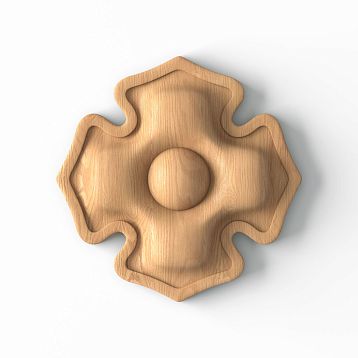
In the decorative overlays STAVROS central, corner, symmetrical, and asymmetrical pieces for furniture fronts and other surfaces are presented.
For a cabinet, an overlay can work as:
- a central accent;
- top decorative element;
- a paired composition at the corners;
- a vertical axis;
- part of a frame with molding;
- a local detail of a classic collection.
If you need to buy decorative furniture overlays for a series of wardrobes, you should choose not only the shape but also the size relative to the actual front.
The overlay must be tied to coordinates
The phrase "overlay in the center" is insufficient for serial production. It is better to store in the drawing:
SKU / X / Y / ORIENTATION / REV
If the front is 600 × 2200 mm, the center can be determined mathematically. But if there is a handle, panel, or asymmetric milling nearby, the coordinates must account for the entire composition.
Left and right fronts are different positions with asymmetric decor
If the overlay has a direction, the fronts DOOR-L и DOOR-R must not exist as a single line. Otherwise, during assembly the elements can easily be swapped.
More correctly:
DOOR-L / N-___ / MIRROR=NO / ORIENT=L
DOOR-R / N-___ / MIRROR=YES / ORIENT=R
This way the warehouse and assembly understand which element is intended for which door.
Furniture moldings for a wardrobe
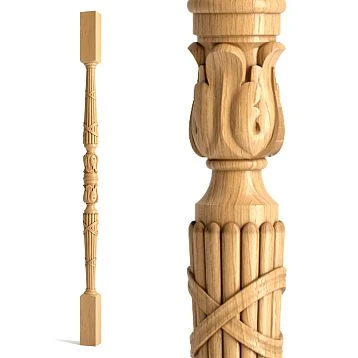
STAVROS trim products include profiles made of solid wood and MDF. In wardrobe furniture, they can be used as:
- crowning cornice;
- moulding frame of the facade;
- plinth;
- vertical profile;
- decorative strip;
- side panel framing.
Linear moulding is useful for serial production specifically as a standardized profile. If the same shape is repeated on dozens of facades, a separate SKU is easier to control than making a similar profile by hand in each order.
Linear moulding cannot be ordered by linear meters alone
The manufacturer needs a chain:
profile → commercial length → part dimensions → number of cabinets → cutting map.
Example. One facade requires two vertical parts of 1800 mm and two horizontal parts of 500 mm. The net length is 4.6 m. But if the commercial strip is 2.4 m, a simple division of 4.6 / 2.4 does not show the real quantity. You need to check which combinations of parts fit into the strip without unwanted joints.
For a series of 100 cabinets, the cutting map is built immediately for the total volume — then the short remnants of one part can be used for other modules.
Slatted panels on cabinet fronts
Current STAVROS slatted panels are used, among other things, on furniture fronts, cabinets, dressers, islands, and radius surfaces. The catalog includes solutions made of MDF and solid wood, as well as flexible options.
For a cabinet, a slatted panel can work in four scenarios:
- fully clad the front;
- create a central insert;
- finish the side panel;
- transition from the front to the end face or an adjacent architectural surface.
If you plan to buy slatted panels for furniture fronts for a serial model, the panel must be included in the drawing before the fronts are launched.
The additional thickness must appear in the documentation
A panel is not a picture on a surface. It adds physical thickness and mass. Therefore, the following are checked:
- base thickness;
- panel thickness;
- total facade assembly;
- gap between doors;
- opening;
- the position of the handle;
- the edge of the facade;
- junction with the side panel;
- hinges and the permissible weight of the finished door.
If this layer is added after the design is approved, new hardware or a change in geometry may be required.
The rhythm of the panels must match between adjacent doors
On a cabinet with multiple doors, the slats are perceived as a single surface. If each facade is cut independently, the spacing may "drift" at the joints.
Therefore, the layout is built for the entire front of the cabinet:
overall width → module → axis → outer margins → door joint lines.
Sometimes it is more advantageous to shift the start of the pattern so that both outer zones look identical. This decision is made by the designer before purchasing.
Cabinet on legs: supports and mounting hardware as a separate system
Not every cabinet has to stand on visible legs. But if the model includes supports, they must be specified as strictly as handles.
For the support, the following are recorded:
- SKU;
- height;
- cross-section;
- the material;
- finish;
- mounting;
- quantity per cabinet;
- installation coordinates.
The height of the leg changes the overall height of the cabinet and the clearance from the floor. Therefore, replacing it with a “similar but slightly taller” one is already a design change.
STAVROS has a separate category for related fasteners hardware for legs and handles, where studs, base pads, mounting plates and other elements are presented. The wooden support and its mounting part must exist in the BOM as separate lines.
Quality furniture hardware is measurable repeatability
For production, the word "premium" means little without data. Quality furniture hardware in a serial process is, above all, compliance with the approved configuration.
The cabinet manufacturer expects:
- match with the drawing;
- repeatable geometry;
- a stable SKU;
- identical material and finish within the agreed batch;
- clear labeling;
- ability to reorder;
- no unauthorized model substitution.
If the supplier offers an equivalent, it must pass a repeat technical check before being used in the series.
Furniture hardware manufacturer: what to request before purchasing
The query "furniture hardware manufacturer" for a factory means not searching for a beautiful catalog, but checking whether the supplier can be integrated into a repeatable production process.
Before the first batch, request:
- SKU card;
- dimensions;
- the material;
- finish options;
- technical drawing or 3D, if available;
- lead time for the specific configuration;
- ability to reorder;
- sample;
- batch and delivery terms.
STAVROS has an up-to-date section of catalogs and drawings that includes materials on furniture handles, mouldings, slatted panels, overlays and other groups. This is useful for the designer and technologist: an external component can be linked to a real product SKU.
Sample before mass production
Approving a product from a photo alone is not enough if the part is repeated across hundreds of items. A physical sample shows scale, tactility, texture, finish and real geometry.
In the section of STAVROS product samples there are samples of mouldings, baguette and slatted panels. For a furniture project, a sample is needed as a working tool, not as a souvenir.
For a prototype, it's useful to check:
- the handle on a real front;
- the molding profile at real scale;
- the slatted panel on the edge and end;
- the overlay relative to the handle;
- the wood finish next to the front color.
After approval, the sample can be saved as APPROVED SAMPLE with the item code and revision.
A prototype of one module is better than launching the entire series
If a cabinet collection includes several modules, there's no need to produce 100 units right away. First, assemble a representative set — the minimum set that tests different geometric scenarios.
For example:
| Module | What it checks |
|---|---|
| MOD-600 | Narrow front, short handle, decorative borders |
| MOD-900 | Wide front, handle proportions, moulding |
| PENAL | Tall door, long handle, vertical rhythm |
| DOUBLE | Joint of two fronts, symmetry of overlays, rails |
If the components work on these boundary types, the series has fewer hidden risks.
Golden sample — the reference serial-production wardrobe
After the prototype, one unit or a complete reference set of modules is approved as the golden sample. This is the physical version of the wardrobe that corresponds to the RELEASED BOM.
The reference must have the following recorded:
- building;
- back panel;
- facade;
- handle;
- hole coordinates;
- overlay;
- molding;
- slatted panel;
- color;
- gaps;
- position of the legs.
Subsequent batches are compared against the reference and the documentation, not against the craftsman's memory.
How to scale one design system across a wardrobe collection
A single structural platform can have several visual levels. For example:
| Line | Facade | Handle | Decorative element |
|---|---|---|---|
| BASIC | smooth | Single base SKU | No |
| CLASSIC | Smooth / MDF | Wooden handle | Molding frame |
| PREMIUM | Complex facade | Expressive handle | Molding + overlay + cornice |
| RELIEF | Panel base | Coordinated handle | Slat panel |
These are not ready-made STAVROS collections, but an example of SKU architecture. The point is to reduce the number of structural platforms and manage visual variety through controlled components.
How to reduce the number of unique components
The more SKUs a single wardrobe collection has, the more difficult purchasing, warehousing, and assembly become. But mechanically cutting the assortment is also risky: unification must not break the proportions of different facades.
Good candidates for unification:
- one series of handles in several lengths;
- one molding profile for different fronts;
- one type of finish;
- one base material for overlays;
- one slat system with several layouts;
- one mounting plate for several supports.
Bad unification is forcing one oversized SKU to work on a small door or using one leg on models with different heights and loads.
A useful metric is SKU per model: how many unique purchased items one cabinet model requires. If two decorative elements perform the same function, it is worth checking whether one can be removed without losing the design.
When an alternative position is needed
For critical components, it is useful to keep in advance:
PRIMARY SKU → APPROVED ALTERNATIVE → conditions of use.
A backup handle is acceptable only after checking fit and appearance. An alternative overlay — after checking coordinates and scale. A different molding — after recalculating the frame and angles. A different slatted panel — after a new layout.
If a replacement requires changing the front, it is not a “simple alternative.” It is a new revision of the product.
How to calculate components for a furniture program
Basic formula:
number of parts per one cabinet × number of cabinets = gross requirement.
Then, the free verified remaining stock is subtracted from the gross requirement, and a justified reserve is added.
Example. In a series of 300 cabinets. Per one cabinet, the following are needed:
- 2 handles;
- 2 overlays;
- 4 mounting elements for the legs;
- 6 molding parts according to the cutting map.
Base requirement:
- handles — 600 pcs.;
- overlays — 600 pcs.;
- mounting elements — 1200 pcs.;
- molding — not "1800 parts" in procurement, but product strips according to the overall cutting map.
If the warehouse has 80 handles of the required configuration, but 30 belong to the service reserve, the available production stock is 50. The procurement requirement before the new reserve is 550, not 520.
The reserve cannot be set as a single percentage for all categories
Handles, moldings, and overlays have different risks. Therefore, universal "+10% for everything" often results in excess stock for one group and a shortage for another.
The reserve depends on:
- batch volume;
- frequency of repeat orders;
- component cost;
- delivery time;
- defect and damage history;
- possibility of using the remainder in the next production run;
- presence of service obligations;
- cutting, if we are talking about mouldings or panels.
For mouldings, it is more logical to calculate the reserve based on cutting. For a single handle, use consumption statistics and service. For a large overlay, it may be more rational to keep several spare units rather than a percentage.
How to prepare an RFQ for a supplier
The request "we need handles for 300 cabinets" forces the manager to guess the configuration. A strong RFQ contains everything that affects price and lead time.
| SKU | Detail | Material / finish | Per 1 cabinet | Quantity | Total | Required date |
|---|---|---|---|---|---|---|
| HL-___ | Handle | Oak / FINISH-01 | 2 | 300 | 600 + reserve | 15.11 |
| N-___ | Overlay | Beech / RAW | 2 | 300 | 600 + reserve | 15.11 |
| MLD-___ | Molding | MDF / PAINT | By map | 300 | Cutting planks | 10.11 |
Additionally, specify:
- project number;
- BOM revision;
- need for a sample;
- delivery address;
- next batch forecast;
- labeling requirements, if any.
This kind of RFQ is easier to recalculate and repeat in six months.
What matters to the procurement department of a furniture factory
For a buyer, interior design language like "a beautiful natural handle" is of little use. The procurement department works with different categories:
- planned volume;
- serial production;
- SKU stability;
- stock program;
- the deadline;
- minimum order quantity;
- repeat supply;
- technical documentation;
- marking;
- payment and delivery terms.
That is why components for furniture manufacturers need to be described not only through design, but also through the production cycle.
STAVROS for manufacturers: how to use the B2B page
STAVROS has a separate page for furniture manufacturers. It offers special prices, shipping from one unit across Russia, a personal manager, and adherence to deadlines.
For a cabinet manufacturer, this is a logical final B2B route after the internal designer has already determined the specific SKUs. Components for case furniture in such a process are purchased according to an approved configuration, not as interchangeable items from a general catalog. The partnership page does not replace the BOM, but it helps translate a technical need into a commercial request.
What to pass to the manager
- cabinet model;
- planned quantity;
- handle SKUs;
- overlay SKUs;
- trim SKUs;
- slatted panels, if used;
- material and finish;
- required samples;
- first delivery date;
- repeat purchase forecast.
The more accurate this data is, the lower the chance that the commercial proposal will be calculated for a different configuration.
Batch acceptance: a new delivery should not go straight to assembly
After delivery, the batch undergoes incoming inspection. This is especially important for external visible components, where a small deviation becomes noticeable on the finished cabinet.
Check:
- SKU;
- quantity;
- the material;
- size;
- coating;
- mounting geometry;
- surface;
- visible damage;
- completeness;
- compliance with the approved sample.
The new batch must remain separated from the old stock until inspection is complete. Otherwise, if a problem is detected, it is impossible to determine which lot the specific parts belong to.
The LOT of components needs to be linked to the production batch of cabinets
If the cabinets are produced in series, it is useful to keep the chain:
COMPONENT LOT → PRODUCTION BATCH → FINISHED PRODUCT.
For example, handles from batch H-LOT-06 installed on production cabinets WARDROBE-BATCH-09. If a systemic coating issue appears after a few months, the service team won't have to check all cabinets of the brand.
Such traceability is especially useful for:
- painted handles;
- tinted wood;
- repeating overlays;
- panels of the same finish;
- components purchased in multiple batches.
Production and service reserves are different stocks
The production reserve is consumed during manufacturing. The service reserve remains after the furniture is sold for future replacement.
Warehouse statuses can be divided as follows:
- FREE STOCK;
- PRODUCTION RESERVED;
- SERVICE RESERVE;
- QUARANTINE;
- CLAIM.
If the service reserve sits in a shared bin, production will gradually consume it. After two years, there may be no handle or overlay available for a warranty replacement.
BOM revisions: a component doesn't change "just in the table"
Every serial model must have a revision number. If a handle, overlay, panel, or facade material changes, the old version is not deleted — a new one is created.
For example:
WARDROBE-04 / BOM REV 01
WARDROBE-04 / BOM REV 02 — new handle
WARDROBE-04 / BOM REV 03 — facade + panel changed
This makes it possible to answer two production questions: which configuration is currently in effect and which one was installed in an already released batch.
Bad practice — open the file spec_final.xlsx, replace the SKU, and save it under the same name. A few months later, it's impossible to prove which handle belonged to the old batch.
Change request for replacing a critical component
If the PRIMARY SKU becomes unavailable or the designer wants to replace it, a short change procedure is needed.
| Field | What to fix |
|---|---|
| Old position | SKU and configuration |
| New item | Proposed SKU |
| Reason | Lead time, price, unavailability, design |
| Impact on the drawing | Drilling, size, thickness, coordinates |
| Impact on inventory | Old item stock balance |
| Introduction date | Effective from which production run |
| approval | Technologist / design engineer / product |
If the new handle requires a different center-to-center distance, it must not be stocked as a "replacement" without new facade documentation.
Sliding wardrobe: door material and front system are specified separately
In a sliding wardrobe, the carcass and door panels can exist as separate structural systems. Therefore, the query "material for sliding wardrobe doors" should not be confused with the material of the side panels and shelves.
The door specification separately records:
- type of door system;
- infill material;
- thickness;
- panel size;
- framed or frameless principle;
- profiles;
- handles or grip profile, if provided;
- decorative inserts;
- weight and compatibility with the specific system — according to the wardrobe manufacturer's calculation.
If a slatted or other decorative panel is added to the door, its thickness and weight must be included in the calculation before choosing the sliding system.
Built-in wardrobe and walk-in closet: specification becomes zonal
For built-in furniture, some parts are determined by the niche. Therefore, it is more convenient to maintain not only the model BOM but also a zone-spec: left section, central module, top cabinet, visible end panel, facade line.
For example:
ZONE-L / BODY-LDSP / FACADE-MDF / HANDLE-HL-___
ZONE-C / BODY-LDSP / FACADE-MDF / PANEL-PAN-___
ZONE-R / BODY-LDSP / SIDE-VISIBLE / MLD-___
This way, components for case furniture are tied not to an abstract wardrobe but to a real section. This is especially useful if the walk-in closet includes different types of doors and finishes.
How to prepare a serial kit for the assembly area
The warehouse can kit each wardrobe unit as a separate kit or issue parts in batches for a production lot. For complex external hardware, a kit reduces the risk of mis-sorting.
Conditional kit for one wardrobe:
KIT WARDROBE-04:
H01 HANDLE — 2 pcs
D01 DECOR L — 1 pc
D02 DECOR R — 1 pc
M01 MLD PART A — 2 pcs
M02 MLD PART B — 2 pcs
FASTENER H01 — 4 pcs
Linear trim can be pre-cut or issued according to a cutting map — the choice depends on the workshop organization. The main thing is that the assembler does not select the required profile "from similar ones."
Box marking must match the BOM
Simple marking is useful for a batch:
MODEL / COMPONENT CODE / SUPPLIER SKU / LOT / QTY.
If the overlay is asymmetrical, L/R is added. If the handles differ in length — SIZE. If there are two finishes — FINISH.
Example:
WARDROBE-04 / H01 / HL-___ / SIZE-700 / OAK / FINISH-02 / LOT-05 / QTY-50
Such a label reduces reliance on visual comparison of similar parts.
Control sample before launching the entire batch
Even after incoming inspection, it is useful to assemble several sets from a real delivery before mass launch. This checks not only the product, but also the interaction with the current batch of fronts.
During the control assembly, check:
- alignment of holes;
- fit of handles;
- orientation of overlays;
- joints of the molding;
- edges of the slatted panel;
- mounting hardware;
- visual match with the golden sample.
If a problem is found on two control cabinets, fixing the process is cheaper than on two hundred.
How to store an approved sample in production
The approved sample must not be kept in a shared box or used for assembly. A separate status is created for it.
On the sample card:
- SKU;
- the material;
- size;
- coating;
- cabinet model;
- approval date;
- revision;
- photo;
- storage location.
If the sample is damaged or the product itself has changed, the standard must be re-approved. The old part must not be considered the reference indefinitely.
Repeat order after six months
For a repeat run, you should not send the supplier an email saying "we need the same as last time." The request must reproduce the configuration.
You need to provide:
- supplier SKU;
- internal code;
- the material;
- size;
- finish;
- previous lot;
- new quantity;
- the required date;
- the current BOM revision.
Price and lead time are requested anew. Historical data is useful for comparison but is not a current commercial term.
As-built BOM: what is actually installed on the produced cabinet
The design BOM shows what was planned. As-built shows what was actually installed. If an alternative was agreed upon during production, it is the actual version that matters for service.
An as-built record may contain:
PROD-BATCH-2026-09
MODEL WARDROBE-04
HANDLE HL-___ / LOT-05
DECOR N-___ / LOT-02
PANEL PAN-___ / LOT-03
BODY MATERIAL ___
BACK MATERIAL ___
BOM REV 05
This improves serviceability and makes the next run faster.
What to do with leftovers after the series ends
The leftover does not need to be automatically moved to FREE STOCK. First, its role is determined.
- part remains as a service reserve;
- part fits another active model;
- part belongs to a discontinued configuration;
- part can be used in the next batch;
- the part has too small a volume and requires a separate solution.
For linear stock, it is important to store the actual remaining lengths, not just the total linear meters. A 350 mm strip and a 1800 mm strip have different usefulness in the next cutting plan.
How to calculate linear stock with leftovers between batches
In a warehouse system for linear stock, it is useful to store:
SKU / MATERIAL / FINISH / LOT / LENGTH / QTY.
For example
Not every model requires overlays, moldings, and panels at the same time. Sometimes a smooth front and one well-chosen handle give a good result.
It is better to avoid the decorative layer if:
- the front already has active milling;
- the handle itself is a strong accent;
- the decor interferes with opening;
- additional mass complicates the hardware;
- the series should be as simple as possible to replicate;
- the component does not create value noticeable to the end customer;
- the decor increases the number of SKUs without a clear commercial reason.
For a factory, this matters: each new visible item creates not only design, but also purchasing, warehousing, control, reserve, and service.
How to conduct value engineering without losing the model's identity
If you need to reduce cost, it is useful to evaluate not "which component is the most expensive," but which changes preserve the visual language of the wardrobe.
Options:
- keep one expressive handle and remove the secondary overlay;
- leave the molding only on the main fronts;
- reduce the number of handle sizes within the collection;
- replace the massive decorative layer with MDF for painting, if this matches the design;
- keep the slatted panel only on the central module;
- unify the finish of several components.
But value engineering should not change the mounting geometry or a visually critical element without new approval. Savings that require reworking already finished fronts are rarely real savings.
How to evaluate a furniture component supplier without ratings
For a serial manufacturer, a furniture component supplier matters not for the brand name, but for the ability to maintain the production standard.
| Criterion | What to check |
|---|---|
| Assortment | Are the required SKUs and sizes available |
| Technical data | Dimensions, drawings, material, configurations |
| Samples | Can the product be tested before the series run |
| Repeatability | Can the same item be ordered again |
| Lead time | Is it confirmed for the required volume |
| Communication | Is there a dedicated manager |
| Batches | Is it possible to work with regular orders |
| Documentation | Are there catalogs, DWG, 3D, and product cards |
This is how queries about the “best furniture hardware manufacturer” turn into measurable criteria instead of a subjective rating.
Where this article ends and an in-depth selection of handles begins
Detailed ergonomics, length, installation height, and handle type selection are already covered in a separate STAVROS article about furniture handles for a wardrobe and a chest of drawers.
In the new article, the handle is considered as a production component within the overall system. This reduces the risk of cannibalization: the main question here is not "which handle is more beautiful," but how to link it to the facade, BOM, warehouse, and repeat purchase.
How to prepare a commercial shortlist before the first order
Before the RFQ, it is not necessary to immediately choose a single SKU. For a new model, you can keep two candidates for critical positions.
| Category | Candidate A | Candidate B | Final selection criterion |
|---|---|---|---|
| Handle | HL-___ | HL-___ | Fit, grip, scale |
| Overlay | N-___ | N-___ | Size, orientation, finish |
| Molding | MLD-___ | MLD-___ | Profile, cutting, material |
| Panel | PAN-___ | PAN-___ | Module, thickness, rhythm |
After the prototype and samples, the shortlist is narrowed down. The final BOM must not contain the wording "SKU A or SKU B at the assembler's choice".
How to link the catalog with the cabinet manufacturer's internal database
Main the STAVROS catalog needed for searching and verifying actual items. The factory's internal database should store only those configurations that have passed their own approval.
The master-card component has useful fields:
- internal code;
- supplier SKU;
- name;
- category;
- the material;
- size;
- clean URL;
- approved sample ID;
- status ACTIVE / ARCHIVE;
- which cabinet models it is used in;
- last check date.
This way, the buyer does not search for each component from scratch, but works with an approved reference list.
When a master card needs to be archived
The card is not deleted if:
- the SKU is removed from the current series;
- it has been replaced by an alternative;
- the cabinet model is discontinued;
- the component is used only for service.
The ARCHIVE status preserves the history of old batches. This is important if a customer requests a replacement part several years later.
How to launch a new cabinet into production: release gate
Before serial release, a formal checkpoint is useful.
A model receives RELEASED status if:
- the body and back panel are defined;
- facades have final drawings;
- handles are approved and drilling is verified;
- overlays have coordinates;
- mouldings have a cutting map;
- panels have a layout and edge solution;
- installation hardware is included in the BOM;
- golden sample is approved;
- critical SKUs have samples;
- RFQ is calculated based on the same revision.
If at least one critical item remains DRAFT, it is better not to consider the full series launch complete.
Supply planning: the cabinet series and the component series must match
If the cabinet parts are ready before the handles or decorative elements, assembly stops at the external component. Therefore, it is better to link the procurement calendar to the cabinet production plan.
For each critical item, it is useful to store:
- ORDER BY — the deadline for placing the order;
- READY DATE — planned readiness;
- NEED IN PRODUCTION — when the component is needed on the shop floor;
- BUFFER — internal time reserve for incoming inspection and possible discrepancies.
If the series is divided into batches of 50 cabinets, the supply of components can also be split by production runs, if this is agreed with the supplier and does not worsen the commercial terms.
When one large batch is more advantageous, and when several deliveries are
A large order can simplify pricing and paperwork, but it increases warehouse space and the risk of freezing the wrong configuration.
It is rational to split the purchase into stages if:
- the model is new;
- pilot production is still ongoing;
- demand is not confirmed;
- the component is expensive;
- the series is produced monthly;
- storage is limited;
- the coating needs to be controlled by batches.
One large batch is more logical if the SKU is stable, the production plan is confirmed, storage space is available, and a long lead time creates a risk of production stoppage.
How to estimate the cost of a component for a series, not just the price per unit
A handle for 900 rubles and a handle for 1,100 rubles differ by 200 rubles, but that is not yet the full economics.
The cost of use includes:
- the purchase price itself;
- additional fasteners;
- tooling or a drilling template;
- custom finish;
- incoming inspection;
- stock inventory;
- service reserve;
- the cost of a late replacement;
- leftovers after the model is discontinued.
If a cheaper handle requires a new drilling pattern and is not compatible with already manufactured fronts, the savings disappear. That is why procurement is evaluated after the design has been checked.
How to calculate the cost of the decorative package for one cabinet
A separate DECOR PACKAGE line can be created for one model.
For example:
2 handles
2 overlays
4 moulding parts
1 slatted insert
fasteners
finish
Package cost:
component price + cutting + finishing + assembly + reserve.
This way, the technician and the commercial department can see how much design is added to the base structural platform. This is useful for the BASIC / CLASSIC / PREMIUM line.
What needs to be preserved after the first successful batch
After release, knowledge should not be left only in the project folder. For the next production run, the following are preserved:
- final BOM;
- as-built BOM;
- golden sample;
- approved samples;
- drawings;
- drilling templates;
- cutting maps;
- latest accepted lot;
- actual consumption;
- service stock;
- supplier contacts;
- replacement history.
The next series then begins with verifying current relevance, not with restoring the old solution from photographs.
How to use the actual consumption of the next print run
After each batch, it is worth comparing plan and actual.
For example:
HANDLE:
ORDERED 620
USED 600
SCRAP/DAMAGE 4
SERVICE RESERVE 10
FREE STOCK 6
The next reserve can already be calculated based on actual statistics. The same applies to the molding: if the cutting map consistently leaves long usable offcuts, they can be included in the new calculation.
This is how serial production gradually replaces the “percentage just in case” with its own data.
How to transfer a model to another workshop without losing the configuration
Even if production is currently at one site, the documentation must allow the model to be transferred to another contractor or another workshop.
The product owner must retain:
- BOM;
- drawings of the carcass and fronts;
- supplier SKU;
- approved samples;
- golden sample or its exact fixation;
- cutting map;
- drilling diagrams;
- finish specifications;
- marking rules;
- as-built history.
If no one can assemble the cabinet without a specific craftsman, the model is not yet standardized.
STAVROS commercial route for cabinet manufacturers
Once the cabinet is broken down into components, the route becomes short.
- open the STAVROS catalog.
- Choose handles, overlays, trim, panels, or mounting hardware.
- Save exact SKUs and technical data.
- Order samples if needed.
- Assemble a prototype.
- Approve the BOM.
- Calculate the print run.
- Submit the request via the page for furniture manufacturers.
- Get a batch quote.
- Re-verify the configurations before launch.
This is why production components for a wardrobe are purchased not as individual interior products, but as part of a managed B2B process.
Pre-release checklist before issuing a purchase order
| Check | Status |
|---|---|
| The BOM has a RELEASED revision | OK / HOLD |
| The carcass and back panel are defined | OK / HOLD |
| Facades approved | OK / HOLD |
| Handles have SKU and fit | OK / HOLD |
| Overlays have coordinates | OK / HOLD |
| Trim has a cutting map | OK / HOLD |
| Panels have a layout and edge solution | OK / HOLD |
| Installation hardware accounted for | OK / HOLD |
| Approved samples saved | OK / HOLD |
| Run quantity and reserve calculated | OK / HOLD |
| RFQ matches BOM | OK / HOLD |
If a critical line is on HOLD, it is better not to issue a purchase order until the reason is closed.
Edge case: tall pantry cabinet and one long handle
A pantry cabinet often tempts you to install the longest possible handle, but the production criterion is more complex. You need to check not only the overall scale, but also the grip, the position relative to the floor, the point of force application, and compatibility with the facade pattern.
Before approval, a control facade or full-size template is made. If the handle model is available in several lengths, a specific one is selected and fixed with its own SKU/size. The phrase "long handle from the same series" is unacceptable in the BOM.
Edge case: cabinet with facades of different widths
If one composition includes doors of 400, 600, and 900 mm, a single handle may look different on each. Unification saves warehouse space, but does not always give a good result.
A rational approach:
- check one handle on all widths;
- if the scale does not work, keep one series but use different sizes;
- if the sizes change the center-to-center distance, create separate drilling templates;
- store the compatibility rules in master data.
This way, production savings do not turn into a visual compromise.
Edge case: slatted panel only on the central door
If cladding the entire wardrobe with slats is expensive or structurally difficult, the panel can be used only on the central module. In that case, the edges are especially important.
You need to determine:
- where the relief ends;
- how the panel joins the smooth front;
- whether all doors are the same height;
- where the handle is located;
- whether the extra thickness creates a different door projection.
A local insert can become a strong feature of the series while also reducing panel consumption.
Edge case: asymmetric overlay composition
A classic wardrobe composition is not always symmetrical. For example, on a four-door wardrobe, the central doors may have mirrored overlays, while the outer ones have single corner elements.
In this case, the BOM must distinguish not only L/R but also the facade type:
FACADE-A-L
FACADE-A-R
FACADE-B-L
FACADE-B-R
Each item gets its own decor set. This prevents "free interpretation" during assembly.
Edge case: a cabinet from one series but in two colors
If one model is available, for example, in a light and a dark finish, you cannot assume that identical wooden parts automatically fit both variants.
Handles and decor may require separate FINISH codes:
WARDROBE-04-LIGHT / HANDLE FINISH-01
WARDROBE-04-DARK / HANDLE FINISH-02
The cabinet's internal code must unambiguously lead to the required component set.
When changing suppliers is riskier than it seems
Changing suppliers may be justified by price or lead time, but an external component is not fully interchangeable based on name alone.
Before transferring, the following are checked:
- geometry;
- the material;
- finish;
- installation;
- mounting holes;
- packaging;
- marking;
- batch consistency.
If a new handle supplier requires a different drilling pattern, that is already a product change. If the moulding profile differs by 2–3 mm in depth, the frame angles and margins may change. That is why a second source goes through a prototype, not just a commercial comparison.
How to prepare a claim for a component
If a part does not match the approved configuration, the claim must be linked to the SKU and lot.
Minimum set:
- cabinet model;
- supplier SKU;
- lot;
- quantity;
- type of deviation;
- photographs;
- measurements, if the issue is dimensional;
- reference to the approved sample or drawing;
- production batch.
This makes it possible to separate an isolated defect from a systemic batch discrepancy.
How to build a unified component standard for the entire cabinet program
If a factory produces not just one cabinet but a line of tall units, two-door and three-door models, display cabinets, and wardrobes, it is useful to create a common cabinet-component standard. It stores not the quantities for a specific order, but the permissible configurations for the entire program.
| Group | What to standardize | What remains variable |
|---|---|---|
| Handles | Series, material, finish | Length by facade type |
| Overlays | Collection and material | Coordinates and quantity |
| Moldings | Profile and finish | Part lengths and cutting |
| Panels | Slatted system type | Width, height, end cuts |
| Supports | Family and fastening | Height, if the design allows options |
Thus, a new cabinet does not start with a full search for hardware. The designer first checks the already approved library, and only if it does not solve the task is a new SKU introduced. This limits the growth of the catalog and facilitates negotiations with the supplier regarding volume.
When it is still too early to place a production order for components
Even if the commercial proposal looks favorable, procurement is not ready if key decisions are still in DRAFT.
It is better not to release the order when:
- the facade material has not been approved;
- the handle was selected only from an image;
- there are no final drilling coordinates;
- the overlays have not been checked on a full-size facade;
- the trim is calculated only in linear meters;
- the slatted panel has no end solution;
- left and right fronts are not separated by codes;
- pilot batch is not defined;
- RFQ refers to an old BOM revision;
- there is no space for safe storage of long-length items and panels.
Early purchasing in this state does not shorten the cycle. It transfers engineering uncertainty into inventory risk.
What exactly can the procurement department verify before a repeat batch
Before each repeat order, procurement can use a short pre-RFQ audit:
- Verify the active model revision.
- Check whether an approved alternative has appeared.
- Calculate the free balance without service reserve.
- Check usable remnants of moulding by lengths.
- Confirm the actual production plan.
- Verify the last accepted batch and open claims.
- Request the current price and lead time.
- Make sure the new PO repeats the same configuration.
This is how the buyer manages not only quantity but also product identity. For a serial cabinet, this matters more than a one-time saving on a similar substitute.
Minimum data set for a new SKU in a cabinet collection
So that a new component does not become a source of questions, its master card must be complete before the first order. For a handle, overlay, moulding, or panel, the minimum is the same:
- internal code;
- supplier part number;
- exact name;
- the material;
- size;
- finish or RAW status;
- clean link to the product card;
- drawing or 3D, if available;
- approved sample ID;
- list of cabinet models where the position is allowed;
- alternative SKU, if it has already been verified.
Such a card separates a technically approved component from a random position found by the purchaser in the catalog. If there is not enough data, the new SKU remains CANDIDATE and does not enter the RELEASED BOM.
For the purchaser, this also creates a clear filter: the presence of an item in the catalog does not yet mean that it is approved for the current cabinet model. Only APPROVED positions enter the production request. A new handle, overlay, or panel first passes the designer's and prototype's verification, and only then becomes a standard component of the series.
FAQ: components for cabinet production
What components are needed for cabinet production?
At minimum, it is necessary to separate carcass parts, back panel, fronts, functional hardware, handles, and decorative components. Each purchased element must have its own code or SKU and quantity per model.
What materials are used for cabinets?
Particleboard, MDF, and HDF/fiberboard are often used for individual elements, as well as solid wood, glass, and metal. The specific material is selected separately for the carcass, front, back panel, and decor.
What is the cabinet carcass made of?
Particleboard is used for many production carcasses, but MDF, plywood, solid wood, and combined solutions are also possible. In a production article, what matters is not an overall rating, but the specific material and thickness specification.
What is the cabinet back panel made of?
Depending on the design, HDF, fiberboard, thin panel materials, or other solutions are used. The material, thickness, and installation method must be specified in the BOM, not left "by default."
Which is better for a wardrobe — MDF or laminate-faced chipboard?
For the carcass, particleboard with a finished surface is often practical, while MDF is used for a painted or milled front. Both materials can be used simultaneously in one model.
Which handles should be chosen for a tall cabinet?
It is necessary to check the proportion of the handle to the front, the grip, the position relative to the floor, the center-to-center distance, and the weight of the door. There is no universal rule that "a tall cabinet needs the longest handle."
Can wooden overlays be used on MDF fronts?
Yes, if the project specifies the size, coordinates, fastening method, and finish. The overlay is stored as a separate BOM line.
Are slatted panels suitable for furniture fronts?
Yes, STAVROS directly demonstrates the use of slatted panels on cabinets and other furniture fronts. The design must account for thickness, weight, edges, hinges, and handles.
How to calculate linear meters for a series of cabinets?
First determine the dimensions of all parts for one cabinet, then multiply by the batch size and build a general cutting map for the commercial profile length. Simple linear metering is not enough.
Where to buy components for cabinet production?
STAVROS offers wooden furniture handles, decorative overlays, linear mouldings, slatted panels, samples, and hardware for legs and handles. For B2B inquiries, it is best to use exact SKUs and the manufacturers page.
How to order samples of furniture components?
The STAVROS catalog has a dedicated product samples section. For a new cabinet series, it is worth checking at least the critical visible items: moulding, panel, finish, and decorative elements.
Is a golden sample needed for a small series?
If the series is repeated and has several external components, a reference sample is useful even for a small batch. It reduces the risk that the next batch will be assembled from memory.
How often should the BOM be reviewed?
Not by the calendar, but when the material, SKU, geometry, finish, or supplier changes. A stable model can remain in a single revision for a long time.
Final production scheme
For a furniture factory, the path from model to repeat purchase looks like this:
- Break the wardrobe down into actual parts.
- Assign material to the carcass, back panel, and fronts.
- Determine the handles and installation geometry.
- Select overlays, moldings, and panels if they are needed.
- Add assembly hardware.
- Create a BOM with supplier SKU.
- Obtain critical samples.
- Assemble a prototype.
- Approve the golden sample.
- Calculate the production run and reserve.
- Prepare the RFQ.
- Accept the batch through incoming inspection.
- Link the lot to the production output.
- Save as-built BOM.
- Reorder by configuration, not by photo.
This is how components for wardrobe production become part of a serial engineering system. The carcass, front, back panel, handles, overlays, moldings, and panels no longer live in separate spreadsheets and email threads — they are connected by one model, one BOM, and one reordering logic.