Article Contents:
- What is included in components for wooden stairs
- Balusters: the vertical rhythm of the entire staircase
- Turned newels
- Carved newels
- Flat balusters
- Strict rectangular balusters
- Baluster spacing: safety and rhythm
- Stair posts: the strength points of the railing
- Starting post
- Turning post
- Finishing post
- Intermediate post
- Scale principle
- Handrails and railings: the top line felt by hands
- Handrail shape
- Width and height
- Matching handrail with balusters and posts
- How to choose components to match interior style
- Classic
- Neoclassicism
- Russian style
- Modern Interior
- Country house
- How to choose all elements in one style
- Single wood species
- Unified stylistic key
- Coordination with Interior Design
- Carved decor — in moderation
- How to calculate components before purchase
- Step one: measure the flight
- Step two: determine the number of balusters
- Step three: determine the number of posts
- Step four: calculate the handrail length
- Step five: add a margin
- What to check before ordering
- Mistakes when buying components for a wooden staircase
- Carved elements for a wooden staircase: when and how
- What to buy together with staircase components
- Step-by-step algorithm: how to buy staircase components without mistakes
- About the Company STAVROS
- FAQ: answers to popular questions about staircase components
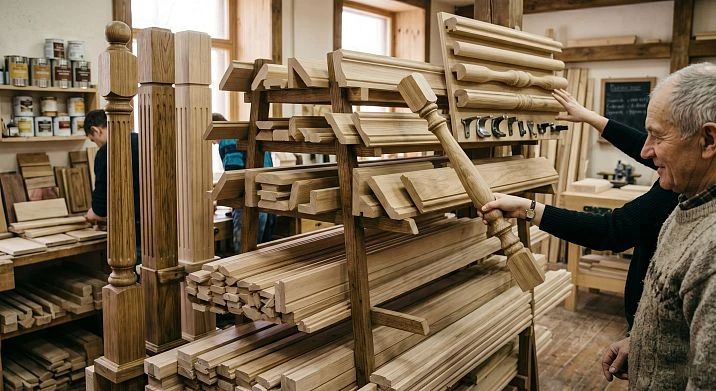
A staircase is not just a way to get to the second floor. It is the first thing a guest sees when entering a home. It is the architectural center of a two-level space, setting the tone for the entire interior: character, style, level of finish, the owner's attention to detail. And while the main structure of the staircase — steps, stringer, carriage — is the load-bearing part, the components for wooden staircases — balusters, posts, handrails, railings, decorative elements — are its face.
Buying components for a wooden staircase without mistakes means understanding that it is not a set of individual parts, but a unified system. Balusters must "speak the same language" as the posts. The handrail must match the profile of the balusters. The wood tone must rhyme with the floor, doors, architraves, and furniture. When everything comes together, the staircase becomes a home decoration. When it doesn't, even good details look random.
What is included in components for wooden staircases
Before moving on to choosing each element, it is important to understand the full composition of the staircase system. Many people order only balusters — and then discover they didn't account for posts, forgot about the turning element, or miscalculated the handrail.
Full set staircase components includes:
-
Balusters are vertical railing elements between the handrail and the steps or the lower horizontal element.
-
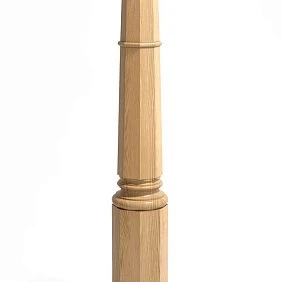
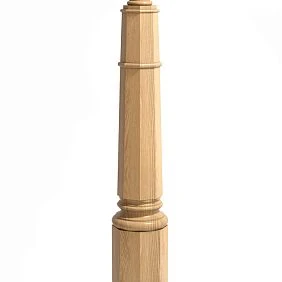
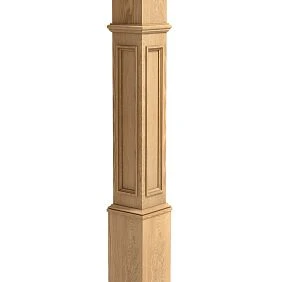
Posts are supporting vertical elements, larger and more prominent than balusters: starting, turning, and ending posts.
-
Handrails and railings are the upper horizontal line of the railing that the hand slides along.
-
Subrails are profiled elements that support the handrail.
-
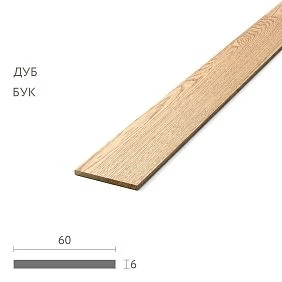
Moldings are additional profiled details: friezes, cover strips, transition elements.
-
Decorative overlays are for decorating the base of posts, fastening points, and joints.
-
Flight finishing elements include rosettes, caps, and corner transition pieces.
Precisely because it is a system, wooden stair components it is always better to select from one catalog, one series, from one manufacturer. This ensures unity of style, wood species, geometry, and finish.




Balusters: the vertical rhythm of the entire staircase
If you look at the staircase from a distance, the first thing you notice is the rhythm of the vertical railing elements. That is balusters for staircases. Their shape, frequency, thickness, and profile character determine the visual "density" of the railing and the style of the entire staircase.
Our factory also produces:
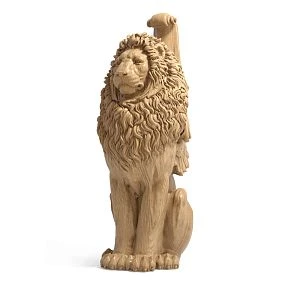
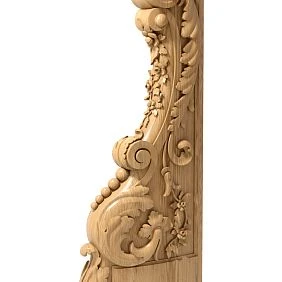
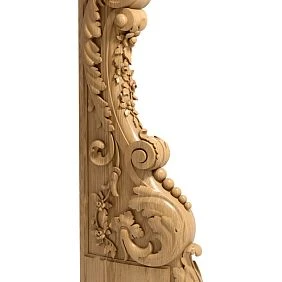
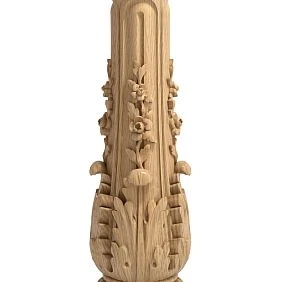
Turned balusters
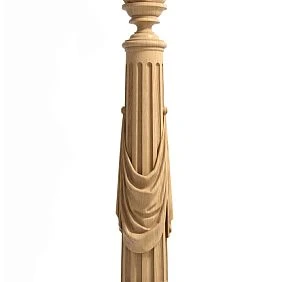
A classic staircase railing. The turned profile with characteristic narrowings, "barrels," necks, and heels is a traditional form that works in classic, neoclassical interiors, in country houses, and in interiors with wooden doors, wooden casings и with wooden floor skirting.
A turned baluster is designed so that its form "breathes": it alternately narrows and widens, creating a play of light and shadow. The larger the spacing between balusters, the more important the expressiveness of each individual detail.
Get Consultation
Carved balusters
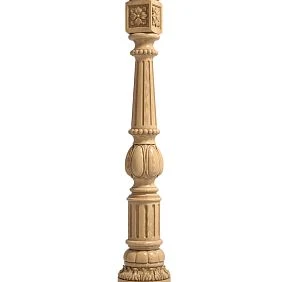
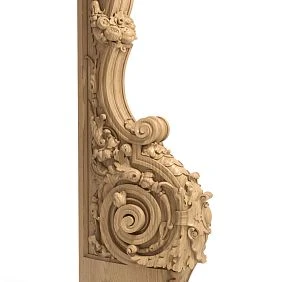
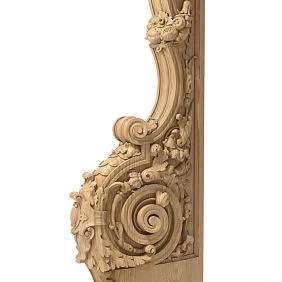
carved balusters — this is hand or machine carving on solid wood, which turns each vertical railing element into a small work of art. Leaves, scrolls, geometric patterns, relief transitions—a carved baluster carries an artistic statement.
Choose for:
-
staircases in the Russian style, where carving is part of the cultural code;
-
classic interiors with rich wooden decor;
-
country houses where the staircase is the main architectural feature;
-
studies and libraries, where Carved wooden decoration present in furniture, doors, and details.
A carved baluster requires a wooden context. One carved element in a modern interior of metal and glass will look alien. But ten carved balusters in a classic living room with a wooden floor and carved doors — that is architectural poetry.
Flat balusters
Flat balusters — figuratively cut from a board, with a silhouette pattern. This is a solution for the Russian style and rustic interior, where through-cut ornamentation historically was part of folk architecture. A flat baluster creates an openwork, airy rhythm of the railing — especially expressive with side lighting.
Strict rectangular balusters
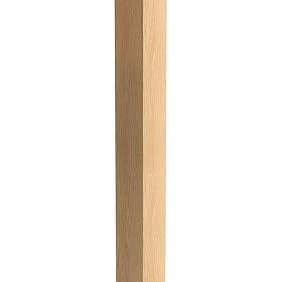
For a modern interior, loft, minimalism — a baluster with a straight rectangular cross-section. No ornament, no turned transitions. Only pure geometry and natural wood. Next to a metal staircase or concrete walls, such balusters work as a warm counterpoint — a living wooden detail among industrial materials.
Baluster spacing: safety and rhythm
The standard spacing of balusters for a residential staircase is 100–150 mm between centers. The clear distance between balusters should not exceed 100–120 mm — this is a safety standard for staircases with children. The larger the baluster and the more expressive its profile, the larger the spacing is permissible without losing the visual density of the railing.
Staircase posts: the points of strength of the railing
Posts for staircase — these are not just "large balusters." They are the load-bearing and visual points of the railing that set the scale of the entire structure. A post is larger, heavier, and more expressive than a baluster — it "holds" the handrail, marks the beginning and end of a flight, and fixes turns and landings.
Starting post
The first and most important. It stands at the base of the staircase and is the "main entrance" to vertical movement. It is the starting post that is seen first — and it should be the most expressive and stately. For classic style — figured, with turned transitions and a rich profile. For a modern interior — straight, with clean geometry. For the Russian style — with carved ornament or flat carving.
Turn post
Installed at stair turning points — on intermediate landings, at points where the flight changes direction. The turning post bears a structural load: it holds the handrail at the angle change point. Therefore, its size and fastening must be carefully calculated.
Finishing post
Completes the railing on the upper landing or at the point where the staircase exits to the floor. It is symmetrical to the starting post or may be somewhat more modest — depending on the design.
Intermediate post
On long flights or with high spans, intermediate posts are installed in the middle of the railing — they reinforce the structure and break the long line of balusters into architectural sections.
Scale principle
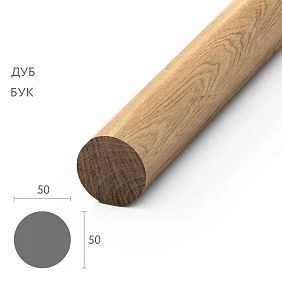
The post should be noticeably larger than the baluster — approximately 2–3 times in cross-section. If the baluster is 50×50 mm, the post should be 100×100 mm or 80×80 mm. This creates a clear hierarchy: the main element is the post, the subordinate is the baluster. Violating this hierarchy makes the railing visually "flat."
Handrails and railings: the top line felt by hands
The handrail is the only staircase element that a person touches every time they walk on it. It should not only be beautiful but also comfortable: fit well in the hand, have the correct cross-sectional size, and be non-slip.
Handrail shape
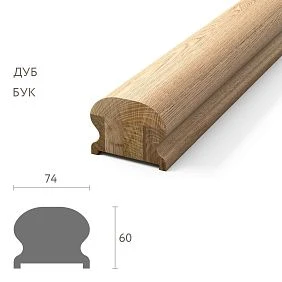
An oval handrail is the most ergonomic. The hand grips it naturally, without strain. Suitable for most residential staircases.
Rectangular handrail — more strict and architectural. For modern interiors and lofts where geometric precision of lines is important.
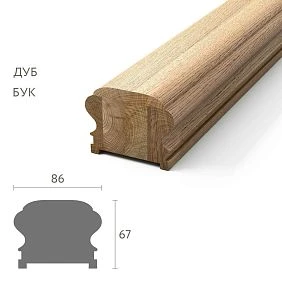
Shaped handrail with grooves — classic. The complex profile with side cutouts makes the grip more secure and gives the handrail a decorative character. For classic staircases with shaped balusters.
"Under-arm" handrail — wide, with a smooth horizontal cross-section. For staircases in country houses with a wide flight and large posts.
Width and height
Standard handrail width is 60–90 mm. For children's staircases, a narrower one — 45–50 mm — can be used. The height of the railing with handrail is at least 900 mm from the step surface and at least 1000 mm on landings. This is not only a comfort standard but also a safety requirement.
Matching the handrail with balusters and posts
The handrail should be "in the same language" as the balusters. If the balusters are carved and classic — a handrail with a shaped profile. If the balusters are straight and strict — a handrail with a clean oval or rectangular cross-section. Profile mismatch is one of the most noticeable mistakes when assembling a staircase.
It is better to match the tone of the handrail to the tone of the posts and balusters. If wooden staircase elements made from the same wood species and same tone — the staircase looks like a single object, not like a set of random parts.
How to choose components to match the interior style
This is a key decision. The staircase may be masterfully executed in terms of construction, but if its wooden components do not match the style of the home's interior — it will seem out of place.
Classic
Turned or carved balusters with an expressive profile. Shaped posts with turned transitions. Handrail with a classic complex profile. Tone — warm: oak, walnut, tinted beech. A classic staircase is the architectural dominant of the house: it should be visible, "readable," and command respect.
In a Classic Interior wooden stair components are consistent with wooden moldings, wooden cornices and doors with wooden plinth. All of this is one wooden language of the house.
Neoclassicism
More restrained forms. Turned balusters with a less complex profile. Posts without excessive decoration. Handrail with a neat classic profile. Color — light or neutral warm tone. A neoclassical staircase is a classic that "knows how to hold a pause."
Russian Style
carved balusters и Flat balusters with carved or relief ornament. Posts with carved details. Connection with carved wooden decor in the interior — trims, cornices, overlay elements. A Russian staircase is a national statement: powerful, textured, immodest in a good sense.
Modern interior
Straight balusters, smooth posts, handrail with a clean oval or rectangular cross-section. Minimum ornament — maximum natural wood texture. Ash or oak with clear oil. Wooden staircase elements in a modern interior, it is a "warm accent" among concrete, metal, and glass. They should not compete with the architecture of the space — they should complement it.
Country house
Natural wood at its full potential. Wide posts, voluminous balusters, a handrail with a solid cross-section. Pine, oak, larch — depending on the character of the house. Pogonazh iz massiva, Wooden baseboard, wooden doors and stairs — all from the same world. In a country house, the staircase is not an interior accent, it is nature itself, lifted to the second floor.
How to match all elements in one style
This is a matter of system. Beautiful individual elements do not guarantee a beautiful staircase as a whole — it is important that they all work together.
Single wood species
Oak for balusters, pine for the handrail, and beech for the posts — three different tones and textures. If there is no special design intent, all solid wood staircase components should be from the same species. Or from different species, but coordinated in tone through the coating.
A unified stylistic key
Mixing turned balusters with rectangular posts is a stylistic conflict. Carved balusters with a smooth handrail without a profile is also a mismatch. Each element must confirm the overall stylistic solution, not contradict it.
Coordination with interior
The staircase does not exist in a vacuum. It stands in a house where there is a parquet floor, wooden doors with wooden casings, Wooden baseboard, furniture. The tone of the staircase should rhyme with the tone of these details. It doesn't have to match exactly — but be "from the same wood."
Carved decor — in moderation
Carved wooden decoration — is a powerful element. Carved balusters, carved rosettes at the base of posts, carved overlays — are good in moderate amounts. If carving is only on the balusters — that's enough. If carving is on the balusters, posts, handrail, overlays, and three other places — the interior becomes an overloaded object.
How to calculate components before purchasing
A mistake in calculation means reordering and delivery, overpayment, and installation delays. The correct calculation is done once — before ordering.
Step one: measure the flight
The length of the staircase flight is the total length of the railing horizontally. For a straight staircase, this is simply the horizontal projection of the flight. For an L-shaped or U-shaped staircase, it is the total length of all spans plus landings.
Step two: determine the number of balusters
Using the formula: (flight length / baluster spacing) + 1. With a flight length of 6 m and a spacing of 120 mm: 6000/120 = 50 balusters + 1 = 51 balusters. For stairs with a turn, the calculation is done separately for each span.
Standard spacing is 100–150 mm. When calculating, consider: the gap distance should not exceed 120 mm. If the baluster is 40 mm wide, then with a spacing of 150 mm, the gap will be 110 mm — acceptable.
Step three: determine the number of posts
-
Starting post: 1 pc. at the beginning of the stairs.
-
Finishing post: 1 pc. at the upper landing.
-
Turning posts: 1 pc. for each turn.
-
Intermediate posts: 1 pc. every 1.5–2 m of the flight (as needed).
For a standard L-shaped staircase in a two-story house: starting + 1–2 turning + finishing = 3–4 posts.
Step four: calculate the length of the handrail
Handrail length = length of the flight along the inclined surface (not horizontal projection). For a straight flight: if the horizontal projection is 4 m at a rise angle of 35° — inclined length = 4/cos(35°) ≈ 4.88 m. Add 10–15% margin for trimming and joints.
Step five: add margin
For balusters — 5–7% above the calculation. For the handrail — 10–15%. For posts — no margin (counted exactly). For Pogonazh iz massiva and overlays — 10%.
What to check before ordering
Before placing an order for staircase components made of wood, go through this checklist:
-
Baluster dimensions: height, width, shape of the mounting base;
-
Post height: does it match the railing height considering the handrail;
-
Handrail profile: is it compatible with the balusters in style and with the under-rail element in fit;
-
Wood species: is it the same for all elements or specially coordinated different ones;
-
Finish: varnish, oil, unfinished — depends on installation conditions and style;
-
Color: coordinated with the floor, doors, wooden skirting board and furniture;
-
Compatibility of elements: balusters, posts and handrail — from one system;
-
Presence of turning parts: handrail turning blocks, corner overlays;
-
Fastening method: tongue-and-groove, bolted connection, special brackets — do you know the technology?
-
Stock: is it calculated correctly;
-
Possibility to buy more: is the series produced on an ongoing basis.
Mistakes when buying components for a wooden staircase
Over years of working with wooden interiors, a list of mistakes that occur again and again has been compiled. Here they are — so you don't repeat them.
Buying balusters separately, without handrails and posts. This guarantees mismatch. A baluster from one series, a post from another, a handrail from a third — and the staircase looks like a construction set without instructions.
Choosing elements from different styles. Carved balusters with straight minimalist posts — a stylistic conflict. Or a classic handrail with geometric modern balusters — the same thing.
Don't count the number of balusters. "By eye" is the most expensive way to buy staircase components. Shortages are discovered during installation, and delivery adds both time and money.
Forget about turning posts. On an L-shaped or U-shaped staircase, turning posts are key structural elements. Their absence is a problem for both safety and aesthetics.
Choose elements that are too thin for a massive staircase. A wide flight requires proportionate posts. A 40×40 mm baluster on a 1.5 m wide staircase looks flimsy and unprofessional.
Don't account for railing height. The minimum railing height for residential staircases is 900 mm from the step, 1000 mm on landings. Lowering the height is dangerous and aesthetically "cuts" the vertical line.
Don't coordinate the color with the floor, doors, and wooden skirting board. The staircase is part of the interior. Its color should be part of the overall wood logic of the house.
Buy only from photos without dimensions. A photo does not convey scale. A baluster in the catalog may seem large, but in reality turn out to be 50×50 mm. Look at dimensions in the technical specifications.
Don't account for fastening. Different fastening systems require different holes and hardware. If you bought balusters without considering the fastening system, installation will turn into improvisation.
Don't include a reserve. Trimming, breakage during installation, a defect in one plank — all these are real losses. Minimum 5–7% above the calculation.
Carved elements for a wooden staircase: when and how
Carved Decor for a staircase, this is not a mandatory element, but a choice for those who want the staircase to become an artistic object. Carving is appropriate and expressive in specific contexts.
When carved elements work:
-
In a country house where wood is the main material;
-
In a classic interior with figured doors, wooden moldings and architectural details;
-
In the Russian style, where ornament is part of the aesthetic program;
-
In a study or library, where wooden decor carries a status load.
How to use carving on a staircase:
-
Carved balusters — the main option;
-
Carved applied rosettes at the base of posts;
-
Carved Decorative Inserts on the ends of the steps;
-
Carved elements on the frieze board under the steps.
Carving should be dosed — otherwise the staircase will turn into a 'museum of wooden ornament'. One expressive carved element on a post or a series of identical carved balusters — this is enough for a strong statement.
What to buy together with staircase components
A wooden staircase is the center of a two-level space. The wooden logic of the entire house is built around it. Here is what you should match together:
-
components for wooden staircases — balusters, posts, handrails, handrail supports;
-
balusters for staircases — turned, carved, flat;
-
carved balusters — for classic and Russian style;
-
Flat balusters — for through-cut ornament;
-
Wooden baseboard — lower horizontal floor frame;
-
Wooden casings — the vertical wooden contour of doorways;
-
Wooden moldings and cornices — additional profiles for walls and transitions;
-
Pogonazh iz massiva — complete profile system in a single series;
-
Carved wooden decoration — overlay elements for stairs and interior;
-
Decorative wooden inlays — for doors, furniture, and wooden parts;
-
Solid Wood Items — complete catalog of wooden parts for the home.
Step-by-step algorithm: how to buy staircase components without mistakes
-
Determine the type of staircase. Straight, L-shaped, U-shaped, spiral — each type requires its own calculation and set of elements.
-
Measure the flight, landing, and railing height. Accurate numbers are the basis of a correct order.
-
Choose a style. Classic, neoclassical, modern, Russian style, country house — the shape of all elements depends on this.
-
Select posts. Starting, turning, finishing — from the same series as the balusters.
-
Choose handrails. By profile, width, tone, and compatibility with balusters.
-
Check color and wood species. Coordinate with the floor, doors, architraves, and baseboard.
-
Calculate quantity and reserve. Balusters: calculation by step + 5–7%. Handrail: along the inclined length + 10–15%.
-
Go to catalog staircase components and place an order as a single set.
About the company STAVROS
STAVROS is a Russian manufacturer of solid wood products: stair components, balusters, moldings, trims, architraves, baseboards, carved decor, and furniture parts. The STAVROS catalog features complete wood finishing systems for private homes, country residences, and classic interiors. Balusters, posts, handrails, and decorative elements are produced in coordinated series — so that every element of your staircase works as part of a unified architectural solution, not as a set of random parts. Full-cycle production, working with private clients, designers, architects, and construction organizations. Contact us to confirm shipping to your destination.
FAQ: answers to popular questions about stair components
What components are needed for a wooden staircase?
For a complete fence, you need balusters, support posts (starting, turning, finishing), handrails or railings, sub-handrails, as well as linear elements and decorative overlays to complete the installation.
Can I buy balusters separately?
Technically — yes. But the result will be better if you buy balusters together with posts and handrails from the same series. Only then will the staircase look cohesive and professional.
How to calculate the number of balusters for a staircase?
The length of the flight is divided by the selected step between balusters (usually 100–150 mm), the result is rounded up and 1 is added. Plus 5–7% spare. Before ordering, it is worth coordinating the calculation with a master.
What is more important — balusters or handrail?
Both elements are fundamentally important. Balusters create rhythm and safety of the fence. The handrail is the only element that the hand contacts: it affects safety and comfort with every ascent and descent.
How to choose components for the interior?
You need to determine the style of the staircase and the house, match the wood tone with the floor, doors, and baseboards, choose a baluster and post profile that matches the style — and buy everything from the same series from one manufacturer.
Carved or turned balusters — which to choose?
Turned balusters are a universal choice for classic, neoclassical, and most wooden interiors. Carved ones are for country houses, Russian style, and interiors with rich wooden decor, where the ornament is part of the stylistic program.
Can I buy additional balusters later if I didn't have enough?
If the series is produced on an ongoing basis — yes. Therefore, before ordering, you should clarify whether the selected series is regular. A manufacturer with a wide and stable assortment guarantees that you will be able to purchase the missing elements.