












































Article Contents:
- Why the mounting method should be chosen before buying a skirting board
- What mounting methods exist for MDF skirting boards
- Glue for MDF skirting boards: when it's the right solution
- Which adhesive to use
- When glue works perfectly
- Surface preparation: a step you can't skip
- Technique for applying glue to the skirting board
- When glue doesn't work
- Clips for MDF skirting boards: freedom of installation and removal
- What are clips for MDF skirting boards
- When clips are the best choice
- Clip spacing step
- Weaknesses of clips
- MDF baseboard mounting plate: a systematic approach
- What is the fundamental difference from clips
- When a mounting plate is necessary
- How the 'baseboard + mounting plate' system works
- Combined fastening: when one method is insufficient
- Glue + finishing nail (or point fastening)
- Clips + reinforcement in corners
- Mounting plate + glue on complex areas
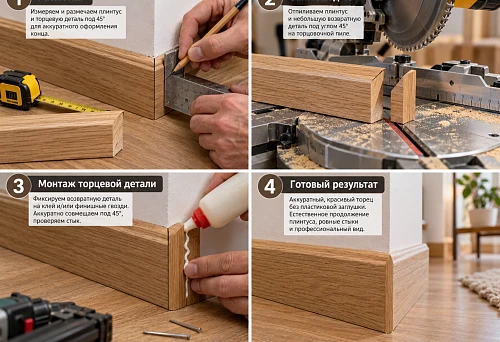
- How to fasten the end of the baseboard at a doorway
- How to choose fasteners based on wall type
- Concrete Walls
- Drywall
- Brick Wall
- Painted walls
- Uneven walls: the most difficult situation
- Wall after finishing
- How to choose fasteners based on baseboard type
- Tall MDF baseboard (100–150 mm)
- Paint-Ready MDF Skirting Board
- White MDF baseboard with factory enamel
- MDF baseboard with wood finish
- Solid Wood Skirting Board
- Corners, joints, and ends: how fasteners affect nodes
- Internal corner: double reinforcement
- External corner: corner piece as an alternative to precise installation
- Lengthwise joint: the rule of the attachment point
- Wooden corner piece and molding as supplementary elements
- Step-by-step algorithm for installing MDF baseboard with glue
- Mistakes in choosing and installing fasteners
- Choosing fasteners: summary table
- What to buy for neat installation
- FAQ: Answers to Popular Questions
- About the Company STAVROS
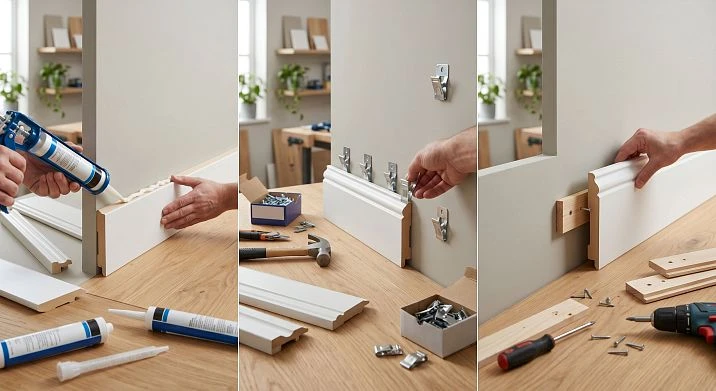
The baseboard is chosen, delivered, neatly stacked by the wall — and then a question arises that for some reason isn't thought about in advance: how, exactly, to attach it? Glue? Clips? Mounting rail? Self-tapping screws? A combination of two methods? The wrong choice of fastener means gaps at the wall, "bubbles" on a flat section, a baseboard that starts to peel off after six months, or, on the contrary, a plank glued so firmly that it cannot be removed without damaging the wall.
Mounting method MDF Skirting Boards — this is not a technical nuance at the final stage. It is a decision made before installation that affects the entire result: how tightly the baseboard fits against the wall, whether it can be dismantled without damage, how it will behave at corners and near doorways, and how neat the joint will be.
This article is an honest and detailed breakdown of all methods for attaching MDF baseboards. No fluff, with specific recommendations for each type of wall, each type of baseboard, and each installation task.

Why the attachment method should be chosen before buying the baseboard
Most people think about fastening at the last moment — when the skirting board is already bought, the walls are ready, and you just need to "install it." This is a costly mistake.
That's why the decision about fastening is made in advance:
Clips require a specific skirting board profile. Not every MDF skirting board is compatible with clips: you need a special tongue-and-groove system or a corresponding mounting groove on the back side. If you bought a skirting board without a groove for the clip, installation on clips is impossible.
The mounting strip affects the gap between the skirting board and the wall. If installation with a strip is planned, this must be taken into account when measuring gaps near doors and architraves.
Glue does not allow dismantling the skirting board without consequences. If wires or cables run inside the skirting board, glue prevents quick access. Clips or a strip are the only adequate choice here.
Uneven walls require a special approach. Glue only works on relatively flat surfaces. On walls with a wave of 3–5 mm or more, other solutions are needed.
In summary: the type of fastening determines the type of skirting board you buy and the type of wall preparation before installation. This is the first choice, not the last.


What methods of fastening MDF skirting boards exist
Before diving into each method, let's establish the full picture:
-
Glue (liquid nails, construction adhesive) — the strip is fixed along its entire length using an adhesive compound
-
Clips — plastic or metal latches that attach to the wall, the rail "snaps" into them
-
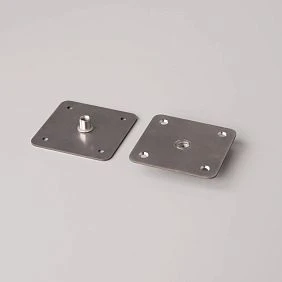
Mounting rail — a metal or plastic strip to which the baseboard is attached along its entire length
-
Self-tapping screws or dowels — point fixation through the baseboard body into the wall (visible points, covered with caps)
-
Finishing nails — with pneumatic or hand tools, point invisible fixation
-
Combined method — glue + clips, mounting rail + glue on complex sections
Each of these methods is not a universal solution. Each is good in its own situation and bad in another.
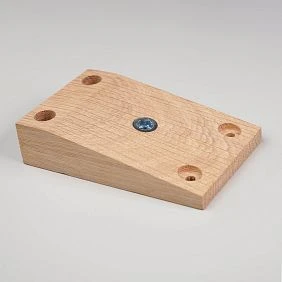
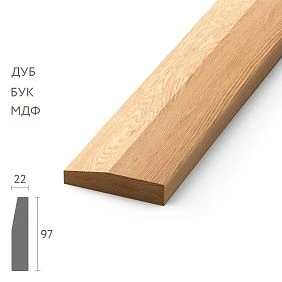
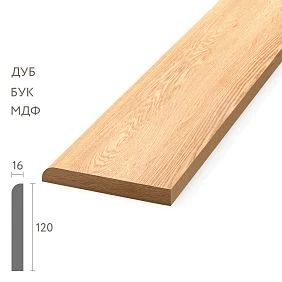
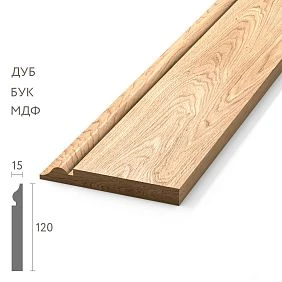
Our factory also produces:
Glue for MDF baseboard: when it is the right solution
Glue is the most common installation method MDF Skirting Boards in residential apartments. Its popularity is understandable: no need to drill walls, no visible attachment points, quick installation. But this method has strict application conditions.
Get Consultation
Which adhesive to use
The most commonly used are:
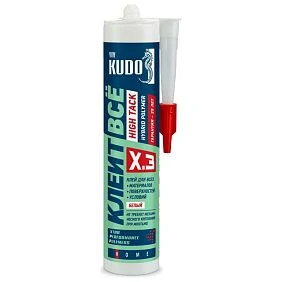
Polymer-based liquid nails (polyurethane or acrylic). Optimal choice for MDF baseboards. High adhesion to MDF, concrete, plaster, drywall. Open time — 5–10 minutes. Full cure — 24 hours.
MS polymer-based construction adhesive. Universal composition with high elasticity after curing. Not afraid of minor vibrations. Works well on complex pairs like "MDF + painted wall."
Acrylic construction adhesive. Budget option with acceptable adhesion. Gains strength slower than polyurethane. Suitable for baseboards in areas without impact loads.
Solvent-based liquid nails. Not recommended for MDF: the solvent can penetrate under the decorative film and cause it to swell.
When glue works perfectly
Glue is the right choice under the following conditions:
-
The wall is level (deviation no more than 2 mm per 2 meters)
-
The surface is clean, dry, without chalk paints or lime
-
The baseboard will not need to be removed in the future
-
Wires inside the baseboard are not expected
-
Baseboard up to 100 mm high (additional fixation required for tall baseboards)
Surface preparation: a step you can't skip
Any adhesive only works on a clean surface. Dust, grease, paint residue, chalk coating — all of this significantly reduces adhesion. Preparation algorithm:
-
Wipe the wall at the base with a slightly damp cloth
-
Allow to dry completely (at least 30 minutes)
-
If necessary, degrease with a solvent (white spirit)
-
Prime problem surfaces (lime, old paint) with a deep penetration primer
-
Allow the primer to dry completely
A special case is painted walls. Adhesive holds worse on oil paint than on plaster. On water-based paint — average. If the walls are painted, do a test by gluing a scrap piece for 24 hours and check the peel force.
Technique for applying adhesive to the baseboard
Apply glue to the back side of the baseboard in a zigzag or with dot blobs spaced 20–25 cm apart. A continuous strip is excessive consumption and risks squeezing glue out from under the baseboard. Dots 1.5–2 cm in diameter with a 25 cm spacing ensure even load distribution.
For a baseboard intended for painting — after applying glue and pressing the strip, check all points: the baseboard must fit tightly against the wall without gaps. A gap up to 1 mm is acceptable, with subsequent acrylic sealant along the top edge. A gap of 2 mm or more — glue will not help here; a different method is needed.
When glue fails
-
The wall has a wave of 3 mm or more along the length of the strip — glue will not "pull" the baseboard to the wall
-
The surface is covered with lime whitewash — glue adheres to the coating, not to the wall
-
Baseboard height is 120 mm or more — the weight of the strip requires additional fixation
-
High room humidity — installation in a bathroom or kitchen requires moisture-resistant glue
-
The ability to dismantle is required — removing a glued baseboard without damage is impossible
Clips for MDF baseboard: freedom of installation and dismantling
Installation of MDF Skirting Board on clips — a method popular in countries with developed construction culture. In Russia, it is gradually catching on but gaining supporters among those who value the ability to dismantle and neat access to utilities.
What are clips for MDF baseboards
A clip is a small plastic or metal fastener that is attached to the wall with a dowel or self-tapping screw. The baseboard "snaps" into the clip using a special groove on the back or bottom side. For removal, simply pry the baseboard with a thin tool — it clicks and comes off.
Key condition: the baseboard must have a corresponding mounting groove or capture system compatible with the clips. Check compatibility when purchasing — ask the seller if clip mounting is available for the specific model.
When clips are the best choice
Wires and cables. If electrical or network cables are planned behind the baseboard, clips are the only reasonable choice. Access to cables at any time without dismantling the entire wall.
Rental housing and temporary installation. Clips allow you to remove the baseboard without damaging the wall and move it to another location.
Rooms with possible remodeling. If floor replacement or redevelopment is planned in the future, a baseboard on clips can be removed in 10 minutes.
Flat walls. Clips work well where walls are flat: each clip must sit in the same plane, otherwise the baseboard will "wave".
Spacing of clips
Standard spacing is 40–50 cm. At corners and doorways — an additional clip 5–10 cm from the edge of the plank. This prevents the end or corner from "pulling away".
In areas where the baseboard experiences additional load (near passageways, around furniture that is periodically moved), the spacing is reduced to 30 cm.
Weaknesses of clips
-
On an uneven wall, clips are attached in different planes — the baseboard "waves"
-
Clips hold the baseboard at points: between attachment points, the plank may slightly pull away from the wall
-
At external corners and in non-standard joints, clips are less convenient than glue
-
For a tall baseboard (100–120 mm and more), clips alone may not be enough — reinforcement at the bottom point is needed
Mounting strip for MDF baseboard: a systematic approach
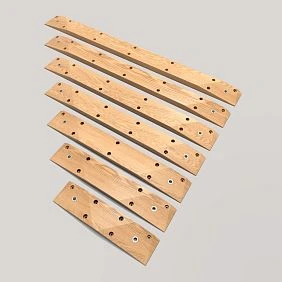
A mounting strip is not a set of individual clips, but a continuous rail that is attached to the wall along the entire length of the baseboard. The baseboard snaps into it or is fixed using a "groove — rail" system.
What is the fundamental difference from clips
Clips are point fastening with a spacing of 40–50 cm. A mounting strip is linear fastening along the entire length. The fundamental difference is that the strip creates a single, even mounting line: the baseboard rests not on individual points, but on a continuous support. This eliminates "sagging" and "waviness" between fixation points.
When a mounting strip is necessary
High MDF baseboard (100–150 mm). The higher the strip, the greater the leverage forces pulling it away from the wall at the top. A mounting rail fixed along the bottom or middle line holds the baseboard more securely than individual clips.
Long straight walls. On a 5–6 meter wall without partitions, the mounting strip ensures a perfectly straight bottom line of the baseboard. Clips spaced 40–50 cm apart provide acceptable but still point supports.
Repeated installation. In projects where the same baseboard is installed in many rooms (new buildings, offices), the mounting strip speeds up the process: the rail is fixed once, and the baseboard snaps into place quickly along the entire length.
Professional result. The mounting strip is a professional's tool. It ensures precise horizontal alignment of the baseboard's bottom line regardless of minor floor irregularities.
How the 'baseboard + mounting strip' system works
-
A metal or plastic rail is attached to the wall with self-tapping screws spaced 30–40 cm apart at a height corresponding to the bottom part of the baseboard
-
The horizontal alignment of the rail is checked with a level along its entire length
-
The baseboard snaps into the rail (or is attached to it with fasteners)
-
Ends and corners are finished with additional elements
Important nuance: the batten protrudes 3–5 mm from the wall plane. This must be considered when finishing the ends at door openings — the distance from the wall to the front plane of the baseboard increases.
Combined fastening: when one method is insufficient
Practice shows: the best results come not from a "pure" method, but from a well-thought-out combination. Let's look at specific scenarios.
Glue + finishing nail (or point fastening)
The main fastening is glue along the entire length. At several key points (near corners, at ends, in the middle of long runs) — a finishing nail 30–40 mm long, countersunk into the body of the baseboard.
The nail point is puttied. For baseboards intended for painting — it is completely hidden under paint. For baseboards with a laminated decor — it is covered with a decorative plug in the matching tone.
This combined method provides reliable pressing at critical points and eliminates "corner lifting" in the first day while the glue has not yet reached full strength.
Clips + reinforcement at corners
On straight sections — clips with a 40 cm spacing. In areas of internal and external corners — an additional clip 5 cm from the corner line on each side, plus a small amount of glue on the back side of the plank end at the corner.
This is important: the corner is where two ends of the baseboard meet at 45°. Any gap from the wall at this point opens a crack in the most visible spot. Reinforcement here is mandatory.
Mounting strip + glue on complex areas
Mounting strip is the primary method. But near doorways, on short pieces (less than 30 cm), in niches and near protrusions — additional glue. Short pieces of baseboard do not hold securely with only the strip: the support length is too small.
How to attach the end of the baseboard near a doorway
The end near the door is the most vulnerable point with any mounting method. The baseboard ends here, and the last 10–15 cm of the strip are held only by the outermost clip or the end of the rail.
Optimal solution: the last clip (or rail point) — no further than 8–10 cm from the end. Additionally: a drop of glue on the back side of the baseboard in the end zone. The end is primed and painted — more details about this How to install MDF skirting board taking into account all the nuances.
How to choose fasteners based on wall type
The wall is the main factor in choosing the mounting method. The same clip behaves differently on concrete, drywall, and brick.
Concrete walls
Concrete — a strong, stable base. Any method is suitable:
-
Glue — excellent adhesion with a clean surface
-
Clips on dowels — reliable, easy
-
Mounting bracket on dowels — ideal for long runs
The only difficulty: monolithic concrete sometimes has a film of formwork oil. Degreasing is mandatory.
Drywall
Drywall — a light and relatively soft surface. Nuances:
-
Glue works if the surface is not painted or painted once
-
Clips on special dowels for drywall (butterfly or molly) — reliable
-
Self-tapping screw into drywall without a dowel — holds weakly, not recommended for clips
Important: drywall often slightly "warps" over time. Clips on drywall — with slight adhesive reinforcement along the entire length.
Brick wall
Brick — a porous surface with good adhesion for glue. Dowels in brick hold reliably. Nuance: joints between bricks sometimes create unevenness at the baseboard level. Check if there is a "wave" at the base of the wall.
Painted walls
The most unpredictable option:
-
Water-based paint in 1–2 layers — adhesive holds moderately
-
Oil-based paint — adhesive holds poorly
-
Thick layer of paint (5+ layers) — possible detachment along with the paint
Recommendation for painted walls: clips on dowels. The dowel passes through the paint and anchors in the wall — reliable regardless of paint type.
Uneven walls: the most challenging situation
Wall deviation of 3 mm or more over the length of the plank — this is a problem area for any fastener. Detailed instructions on how to work with such surfaces are provided in the material about MDF baseboard for uneven walls.
Brief algorithm:
-
Assess the actual deviation using a straightedge or level
-
For deviation up to 3 mm: adhesive with point reinforcement (nail), apply adhesive in a thicker layer in 'sinking' areas
-
For deviation of 3–7 mm: clips on adjustable pads + adhesive
-
If deviation exceeds 7 mm: pre-level the wall or use an adjustable mounting bracket
Wall after finishing
Installing the baseboard is the final step. The wall must be fully prepared: puttied, painted, and dried. Installing the baseboard before final painting is a mistake: when painting the wall, you will have to mask the baseboard, which is inconvenient and often yields an unattractive result. Installing after painting is the correct order.
How to choose fasteners based on baseboard type
Not only the wall, but also the baseboard itself dictates the mounting method.
Tall MDF baseboard (100–150 mm)
A tall and therefore heavy baseboard requires reliable fastening. Using only glue without additional fixation is risky: the top edge of the plank may pull away from the wall over time under its own weight, especially on vertical sections.
Optimal method: mounting bracket or clips at 30–35 cm intervals + glue on the lower part of the back side. This combined fastening holds securely even at a height of 150 mm.
Detailed information about about MDF skirting board sizes and optimal mounting methods for each height can be found in a separate guide.
MDF skirting board for painting
for MDF skirting boards for painting any method is suitable — with one important caveat: all attachment points (nail heads, screw holes) must be puttied and sanded before final painting. After painting, the surface must be monolithic.
Glue is the preferred method for paintable baseboards: no point fasteners, nothing to putty (except joints). Glue + finish nail combination — if reinforcement is needed in critical areas.
White MDF baseboard with factory enamel
for white MDF baseboard with a ready-made coating — glue or clips. Screws and nails are undesirable: the attachment point on a white baseboard is covered with a plug, which is still slightly noticeable. Glue provides a clean surface without any traces.
If point reinforcement is still necessary — a finish nail with a plug in a matching tone (white). With proper plug selection — practically invisible.
MDF baseboard with wood finish
Baseboard with wood decor (oak, walnut, wenge) is installed with glue or clips. When using plugs for point fasteners — plugs must match the decor tone. For popular decors, manufacturers offer corresponding plugs.
Solid wood skirting board
Wooden baseboard made of natural solid wood is traditionally attached with finish nails or special nails for solid wood. Glue is also used, but not as the sole method: wood "breathes" and may pull away from the wall during seasonal movement. A nail or fastener securely holds the plank during any material movement.
Nail points are puttied with tinting mastic matching the wood tone or covered with a wax crayon.
Corners, joints, and ends: how fasteners affect nodes
Internal corner: double reinforcement
Two baseboards meet at a 45° angle in the corner. The end of each is at the point of maximum visibility. Any gap from the wall in this area creates a visible gap immediately.
Fastening algorithm for an internal corner:
-
The outermost clip or rail is 5–7 cm from the corner line
-
Apply additional glue to the back side of the end
-
After installation: press the end by hand for 2–3 minutes until the glue initially sets
-
If necessary, secure with masking tape until fully dry
External corner: corner piece as an alternative to precise installation
The external corner is the most vulnerable spot. The sharp edge at the joint of two planks easily chips, and even perfect installation won't protect against accidental impact.
Wooden corner bracket is installed vertically on the external corner. It:
-
Closes the ends of both pieces of baseboard
-
Protects the vulnerable edge from mechanical damage
-
Hides any inaccuracy in the cut
-
Adds architectural character to the entire opening
Apply glue to the corner piece — in 3–4 spots vertically. It holds securely on any surface.
Joint along the length: the rule of the attachment point
The joint of two planks along the length must fall on the attachment point of the clip or rail. If the joint is between two clips, the ends of the planks have no support and will separate over time.
Plan the layout so that each joint is 5–10 cm from the attachment point. Sometimes it's worth slightly changing the joint location for this.
Wooden corner piece and molding as additional elements
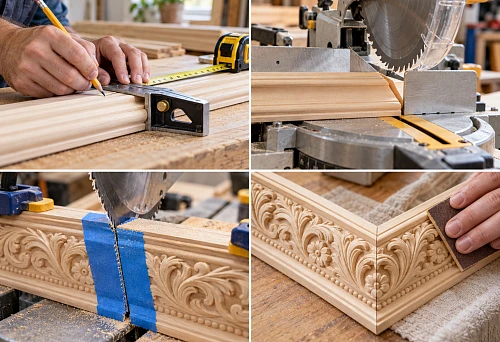
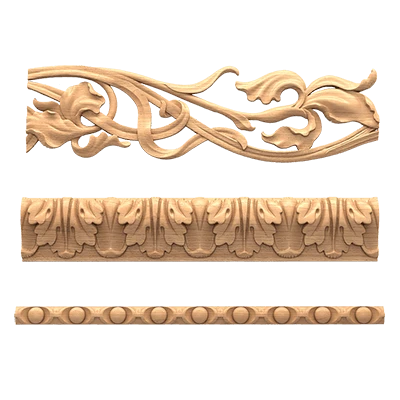
If a complex transition remains at the door opening (difference in thickness of baseboard and casing, non-standard angle) — wooden molding a narrow profile in the role of a vertical trim piece solves the problem. It is attached with spot glue, hides the joint, and does not require complex fasteners.
Step-by-step algorithm for installing MDF baseboard with glue
For those who chose the glue method — a specific sequence of actions:
Step 1 — Marking. Draw a horizontal line on the wall at the height of the baseboard (or along the bottom line of the mounting strip). Use a laser level or a bubble level.
Step 2 — Fit check. Place each strip against the wall "dry". Assess the gaps. If the gap in any spot is more than 2 mm — remember that point: here the glue needs to be applied thicker.
Step 3 — Surface preparation. Clean and, if necessary, degrease the wall. Prime problem areas.
Step 4 — Applying glue. Glue — on the back side of the baseboard. Zigzag or dots with a step of 20–25 cm. In gap areas — more generously.
Step 5 — Open time. When working with polyurethane glue — let the glue "tack" for 5–8 minutes. The glue will start to stretch like chewing gum — this is a sign that it can be pressed.
Step 6 — Pressing and fixing. Press the strip firmly against the wall along its entire length. Hold for 1–2 minutes. In critical points (corners, ends) — painter's tape for temporary fixation.
Step 7 — Reinforcement at critical points. Finish nail at corners and ends (if necessary).
Step 8 — Sealant. After the glue has fully set (24 hours) — apply acrylic sealant along the top edge of the baseboard. Smooth with a moistened finger. Allow to dry.
Step 9 — Final finishing. For baseboards intended for painting — fill joints and attachment points with putty, sand, prime, and paint.
Complete guide to proper installing MDF skirting boards — in a separate detailed article.
Mistakes when choosing and installing fasteners
1. Gluing the baseboard to a dusty, greasy, or damp wall. The adhesive does not bond to a contaminated surface. After a few months, the baseboard will start to come off. Surface preparation is not optional.
2. Placing clips on an uneven line. Clips in different planes cause the baseboard to wave along its length. Before installing clips: check the horizontality of the future installation line with a level.
3. Not checking the fit before installation. Dry-fit for 2 minutes. Not checking risks getting a baseboard with gaps that cannot be fixed with sealant.
4. Choosing fasteners without considering the baseboard height. Glue without reinforcement for a 120 mm baseboard is insufficient. The top edge of a heavy plank will pull away from the wall over time.
5. Not reinforcing external corners. A sharp edge on an external corner without a corner piece is a future chipping point at the first impact.
6. Trying to close a 5 mm gap with sealant only. Sealant works with gaps up to 1.5–2 mm. Large gaps require wall leveling or another fastening method.
7. Not considering dismantling if there are wires inside. Cable behind the baseboard + glue = problem at the first need to access the cable. Clips or a mounting rail are the only correct choice here.
8. Installing the baseboard before finishing the floor. Final tile or laminate installation can damage the already installed baseboard. The baseboard is always the last element to install.
9. Using solvent-based glue for MDF. The solvent penetrates under the decorative film, causing swelling and peeling of the coating. Only water-soluble or polyurethane compounds.
10. Not leveling the mounting rail. A crooked rail leads to a crooked lower contour of the baseboard. The rail must be strictly horizontal, regardless of floor unevenness.
Fastening selection: summary table
| Situation | Adhesive | Clips | Mounting rail |
|---|---|---|---|
| Even walls | Excellent | Excellent | Excellent |
| Uneven walls (up to 3 mm) | Good (thicker layer) | Good | Good |
| Uneven walls (more than 3 mm) | Poor | Medium | Good |
| High baseboard (100+ mm) | With reinforcement | With reinforcement | Excellent |
| Baseboard with cables behind it | No | Excellent | Excellent |
| Temporary installation | No | Excellent | Good |
| Baseboard for painting | Excellent | Good | Good |
| White baseboard | Excellent | Good | Good |
| Gypsum board | Good | Good (special dowels) | Good |
| Concrete | Excellent | Excellent | Excellent |
What to buy for neat installation
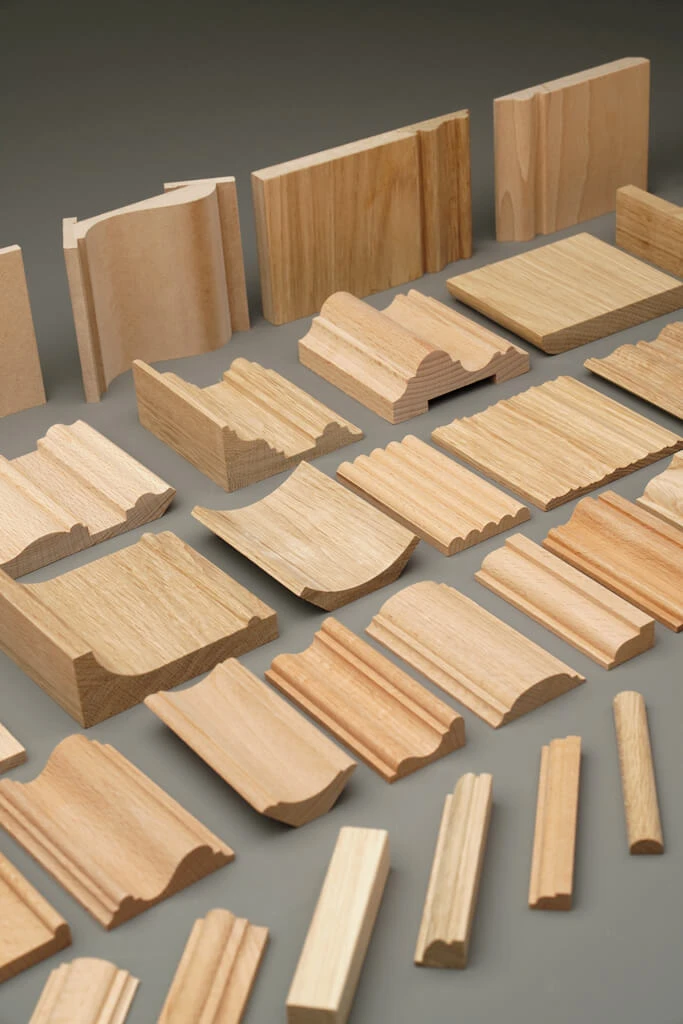
MDF Skirting Board — base. Selected by height, profile and decor for a specific interior, floor and doors.
— is a horizontal element that frames the room at the bottom of the walls where the wall meets the floor. Skirting boards perform several functions: they hide the technological gap between the wall and floor covering (necessary for thermal expansion), protect the lower part of the wall from mechanical damage, create visual completion, and may conceal wiring. — for non-standard wall colors and the cleanest result after finishing.
White MDF Skirting Board — with factory enamel. Preferred mounting method: glue without point fasteners.
Wooden baseboard — for classic and natural interiors. Mounted on finishing nails or glue with nails.
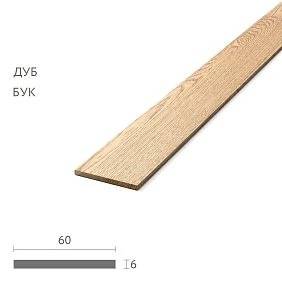
Wooden corner bracket — for external corners and ends of doorways. Hides complex joints, protects vulnerable edges.
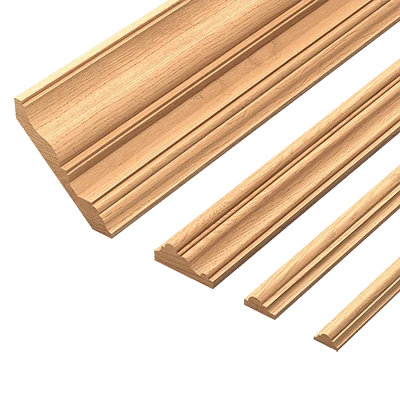
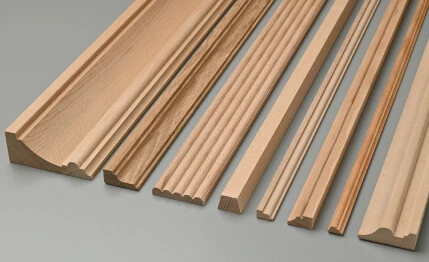
wooden molding — an additional vertical element at doorways and transition zones.
Trimming Items — a full range of additional elements for any non-standard installation tasks.
Learn about which MDF skirting board to choose for a specific floor type and interior — in a separate guide. About MDF floor skirting board for different rooms and ceiling heights — as well.
FAQ: Answers to popular questions
What is better: adhesive or clips for MDF baseboard?
Depends on the task. Glue — if the walls are even, wires behind the baseboard are not needed, and the baseboard is installed permanently. Clips — if access to cables is needed, removal is possible, or the housing is rented. In practice, a combination of glue + spot reinforcement in corners gives the best result.
Can MDF baseboard be glued to the wall?
Yes, this is a common and working method. Conditions: even surface (deviation up to 2 mm), clean and dry wall, suitable glue (polyurethane liquid nails or MS-polymer). Not suitable for walls with lime whitewash and for baseboards behind which cables are needed.
What to use to glue MDF baseboard to the wall?
Polyurethane liquid nails are the best choice. MS-polymer mounting adhesive is a versatile option with good elasticity. Avoid solvent-based adhesives: they can swell the decorative film of MDF.
When is a mounting strip needed for MDF baseboard?
For high baseboards (100+ mm), on long even walls to ensure a perfect horizontal bottom line, in professional projects with a large volume of installation. A mounting strip provides more even adhesion than individual clips.
Can MDF baseboard be attached to uneven walls?
Yes, but considering the degree of unevenness. Up to 2 mm — glue with thicker application in recessed areas. 3–5 mm — clips or a strip with adjustment + glue. More than 5 mm — preliminary wall leveling or use of a mounting strip with shims.
How to attach a high MDF baseboard?
Combined method: mounting strip or clips with a step of 30–35 cm + glue along the lower part of the back side. Glue alone is not enough for a high baseboard: the top edge of a heavy strip may pull away from the wall.
How to finish the end of the skirting board at the door?
The extreme fastening point is no further than 8–10 cm from the end. Additional glue in the end zone. The end is primed and painted in the color of the baseboard. For a complex joint with a casing, a wooden corner vertically covers the end.
Can MDF baseboard be removed after installation?
On clips or a mounting strip — yes, quickly and without damage. On glue — extremely difficult without damaging the wall or the baseboard itself. If future removal is possible, choose clips from the start.
About the company STAVROS
Installation begins with the correct choice of baseboard — a material whose geometry allows the use of any of the described fastening methods without additional issues.
STAVROS manufactures MDF skirting boards with a dense homogeneous base of class E1, which ensures straightness of the strips and stable dimensions along the entire length. A straight baseboard on a straight wall means minimal gaps, minimal sealant consumption, and a neat lower contour without modifications.
STAVROS produces a complete system of elements for installation: MDF baseboards in white, for painting, wood-look (oak, ash, walnut, wenge); solid wood baseboards; corners, moldings, and linear products for finishing corners, ends, and complex transition nodes. Everything is manufactured in unified dimensional standards — installation of STAVROS elements does not require adjustment or modification.
Clarify MDF skirting board price per linear meter, select the desired profile, and place an order with delivery to Moscow, St. Petersburg, and regions of Russia — on the STAVROS website.