






























Article Contents:
- What is included in furniture hardware and what is most often searched for in Krasnodar
- Furniture handles
- Bracket handles and knobs
- Wooden and metal handles
- Supports and legs
- Materials for installation and fastening
- How to choose furniture fittings for a specific task
- For Kitchen
- For a Wardrobe
- For chests and cabinets
- For Solid Wood Furniture
- For modern case furniture
- Which furniture handles to choose
- Bracket handles
- Button Handles
- Long handles
- Wood or metal
- How to select size and center-to-center distance
- When to choose a concise form and when a decorative one
- Wooden or metal handles: which is better
- Appearance
- Wear resistance
- Combination with furniture style
- For classic style
- For modern interiors
- For kitchens and active use
- Hardware for furniture legs and supports
- When supports are needed
- When glides are needed
- How to choose the height
- How to account for load
- What is important for tables, cabinets, consoles, wardrobes
- Materials for installation and what to consider during installation
- Basic mounting elements
- Compatibility with Base
- Marking Accuracy
- Facade and coating protection
- Common mistakes during installation
- How to choose furniture hardware according to furniture style
- Classic Furniture
- Contemporary furniture
- Minimalism
- Neoclassicism
- Solid wood furniture
- How to avoid mistakes when buying furniture hardware
- Ignoring Dimensions
- Choosing only by photo
- Not Checking the Material
- Ignoring Load Capacity
- Not planning installation in advance
- Choosing hardware without considering usage scenarios
- What to check before ordering furniture hardware in Krasnodar
- Availability of required sizes
- Material and Coating
- Compatibility with furniture
- Delivery terms
- Ability to find a solution for the project
- Why it's profitable to buy hardware from the manufacturer
- Stable assortment
- Quality of processing
- Selection by sizes and styles
- More convenient for private and professional orders
- Easier to assemble a complete set in one place
- Who is this furniture hardware suitable for
- For private clients
- Furniture makers
- For interior designers
- For carpentry workshops
- For custom furniture manufacturers
- FAQ: Answers to Popular Questions
- Which furniture hardware is best to choose for a kitchen?
- What is better for furniture: wooden or metal handles?
- Which handles are suitable for classic furniture?
- How to choose supports and legs for furniture?
- Can furniture hardware be matched to a specific interior style?
- What to look for when ordering hardware with delivery to Krasnodar?
- Where to buy furniture hardware in Krasnodar with a wide assortment?
- Is it possible to buy furniture hardware wholesale in Krasnodar?
- Conclusion

Furniture hardware in Krasnodar is needed not only by large manufacturers and furniture workshops—it is in demand among the broadest range of customers: from private clients renovating their kitchen to interior designers, carpentry workshops, and small businesses producing custom furniture. Every time a person sets out to furnish a sliding wardrobe, kitchen set, chest of drawers, or cabinet, they face the same question: how to choose hardware so that it lasts long, looks organic, and doesn't disappoint after a year of use?
Today, you can buy furniture hardware in Krasnodar in various ways: through local construction markets, in retail stores, and also in online stores with delivery directly to the site. The difference lies in the assortment, manufacturing quality, and depth of selection for a specific project. That's why it's important to understand in advance what exactly you're looking for: which type of handle will suit the facade, which supports will bear the load, which fastener material won't fail in high kitchen humidity. This article is a detailed practical guide that will help you navigate the assortment and make the right choice.


What is included in furniture hardware and what is most often searched for in Krasnodar
Furniture hardware— is a collective term that unites several fundamentally different groups of products. Some perform an exclusively functional role: without them, furniture simply won't open, stand on its feet, or be assembled. Others carry a pronounced decorative function: they form the first visual impression of a piece of furniture.
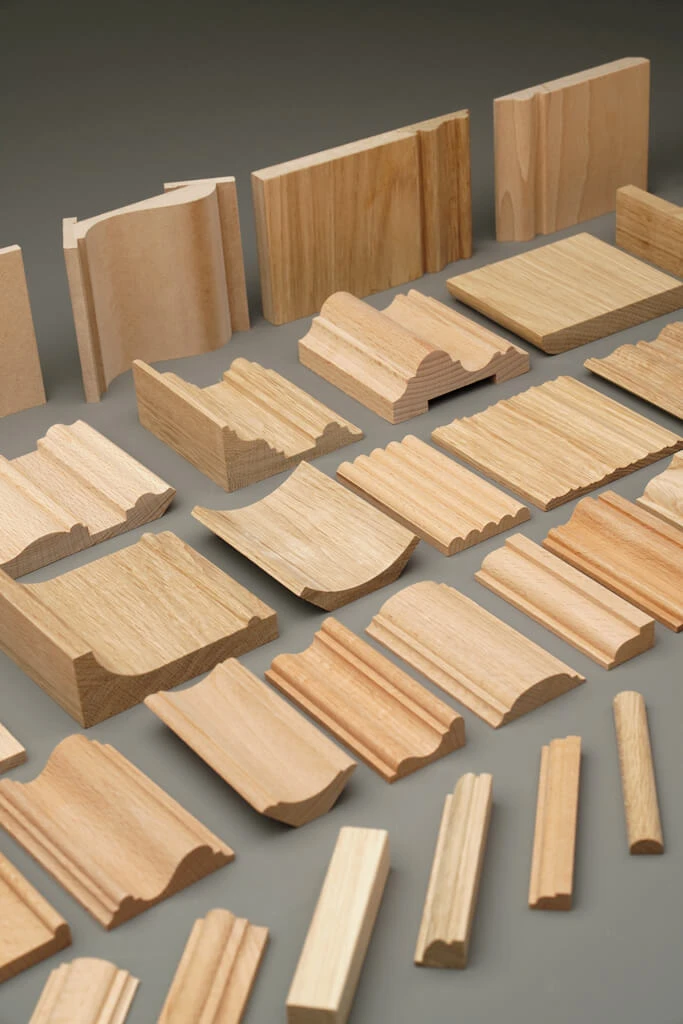
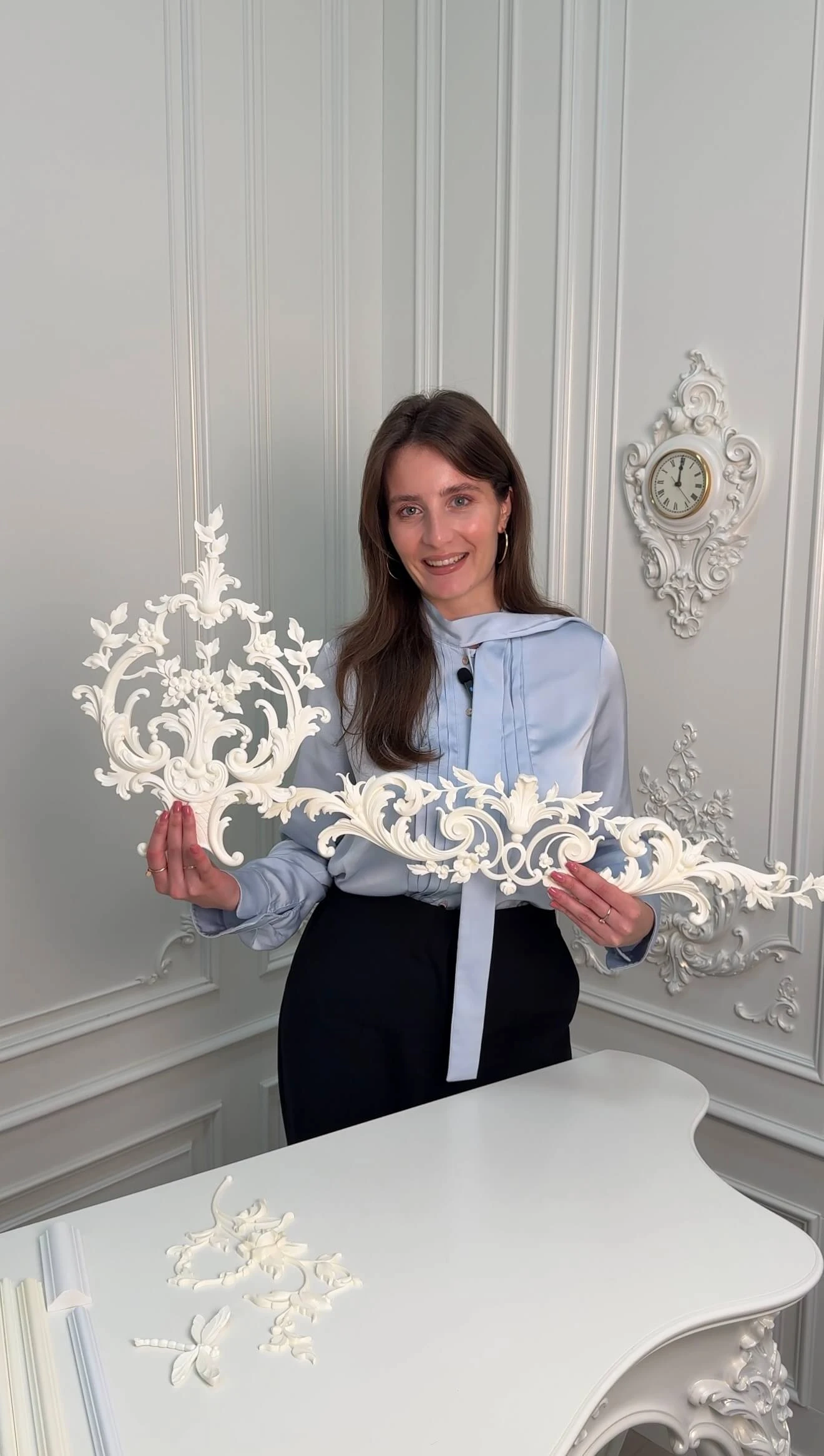
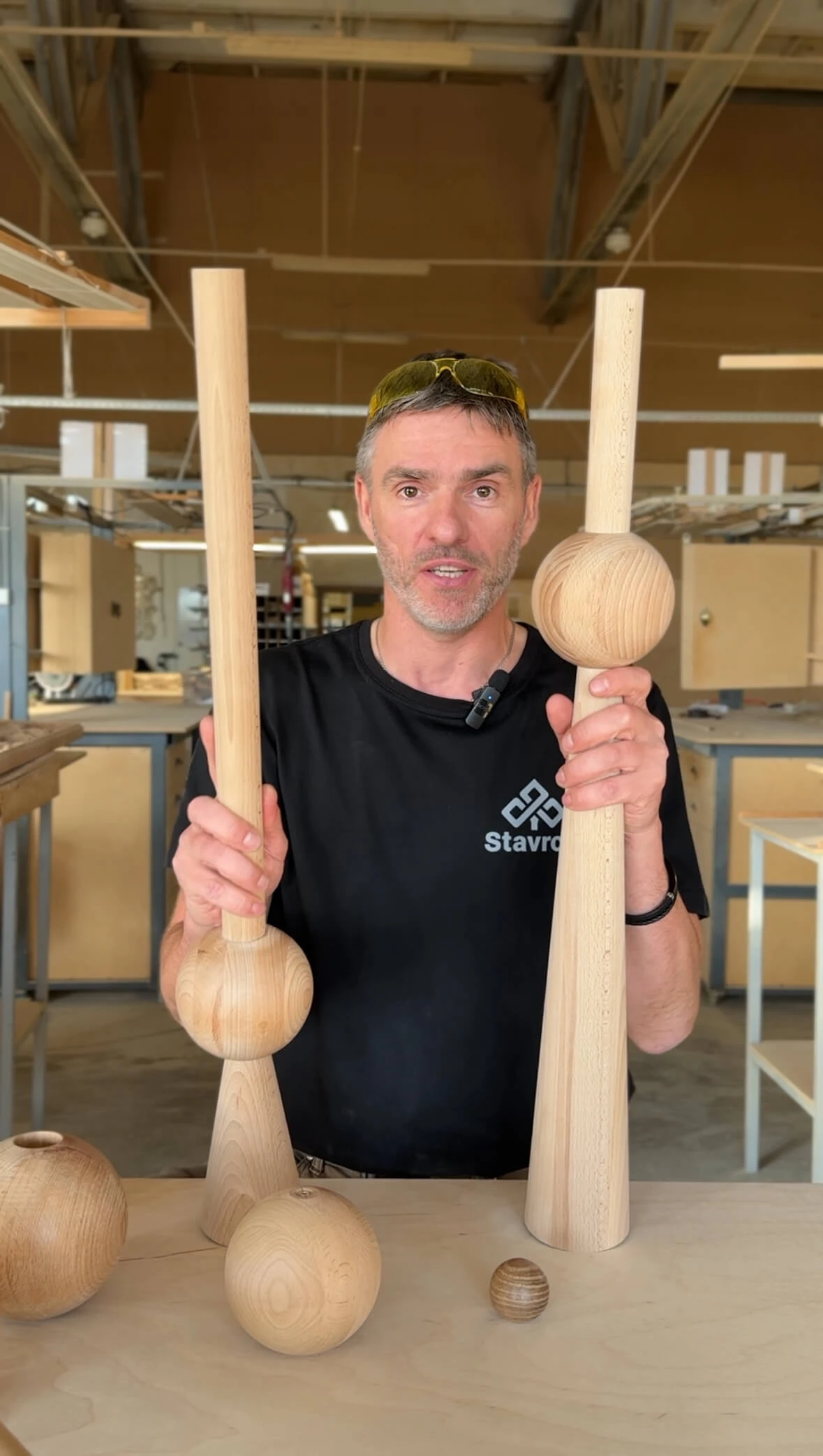
Furniture handles
Handles are the most noticeable and frequently replaced element of hardware. They are chosen both during initial furniture assembly and when updating an already finished set. Even without repainting the facades, replacing handles can completely change the look of a kitchen or hallway. That's whyfurniture handlesoccupy the leading place in search queries on the topic of furniture hardware in Krasnodar.
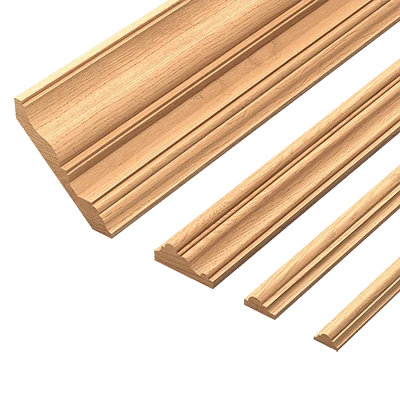
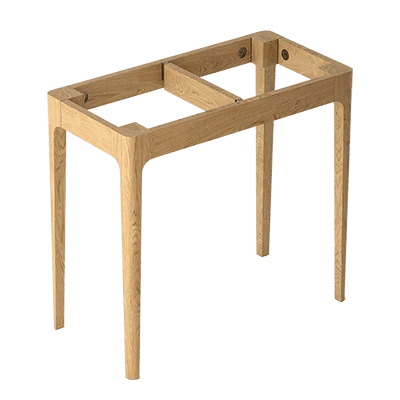
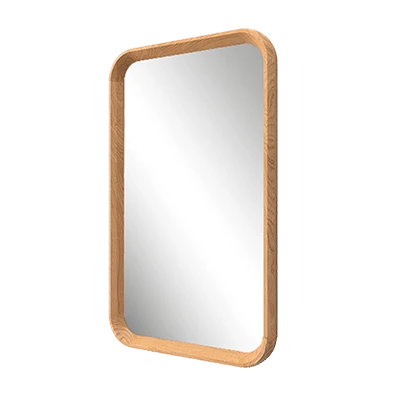
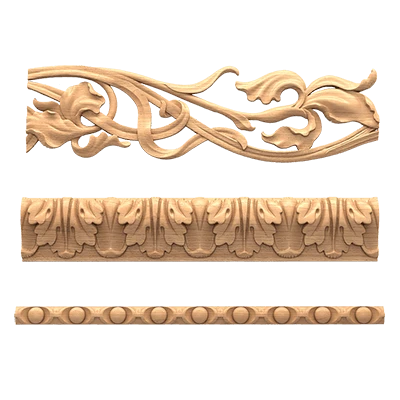
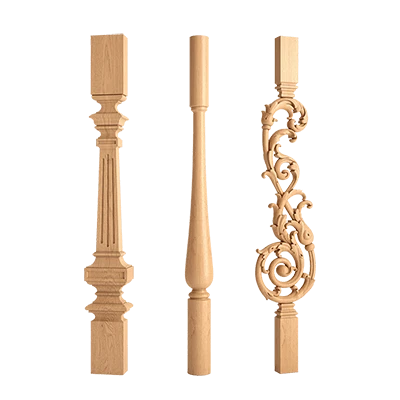
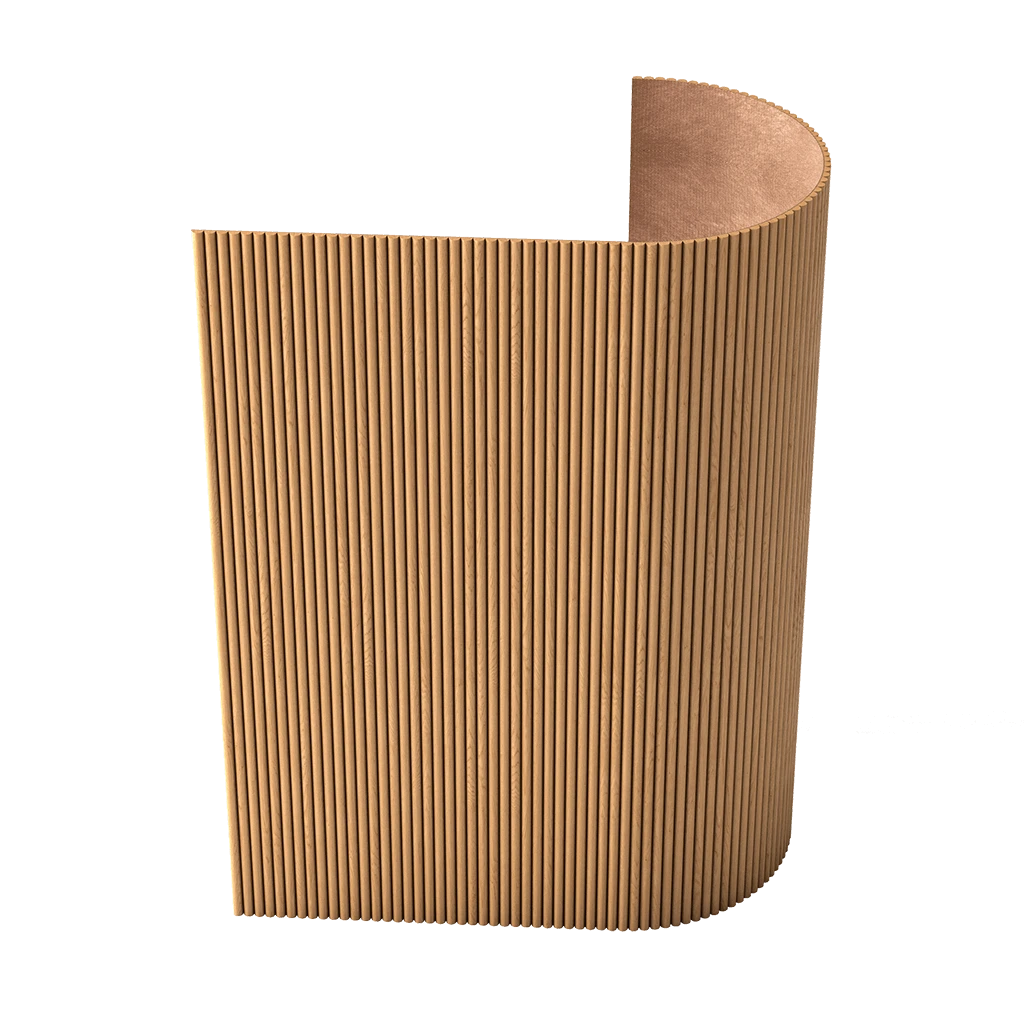
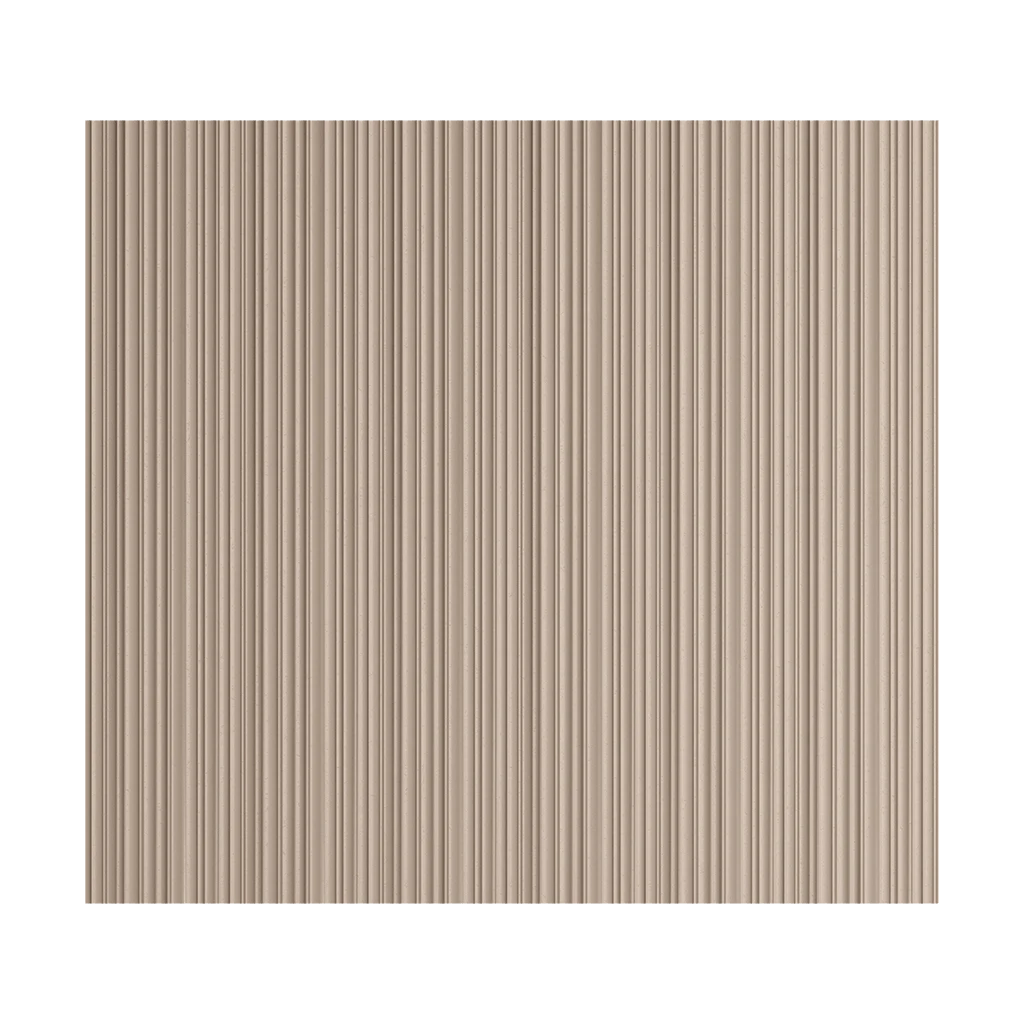
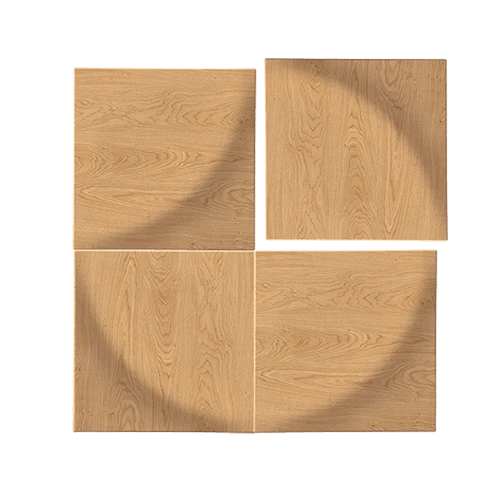
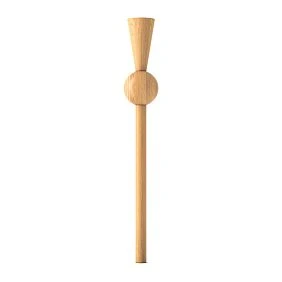
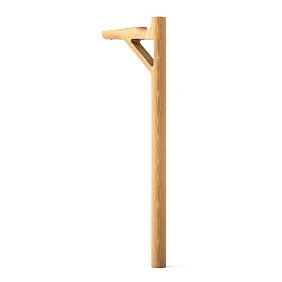
Our factory also produces:
Bracket handles and knobs
Bracket handles are attached at two points, forming a curved bridge. They are convenient, practical, and look great both on kitchen cabinet fronts and on dresser drawers. Knob handles are a compact option that is especially in demand where conciseness is important: small cabinets, drawers, built-in furniture with minimalist design.
Get Consultation
Wooden and metal handles
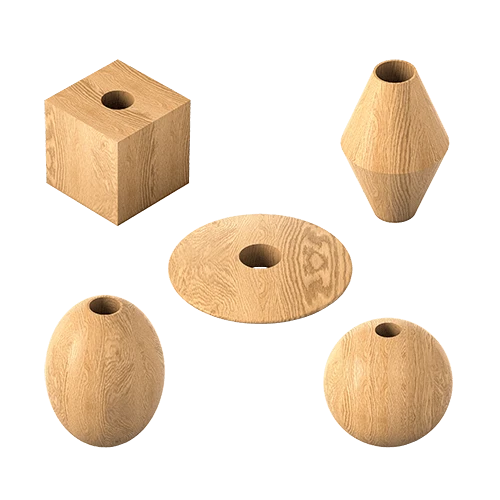
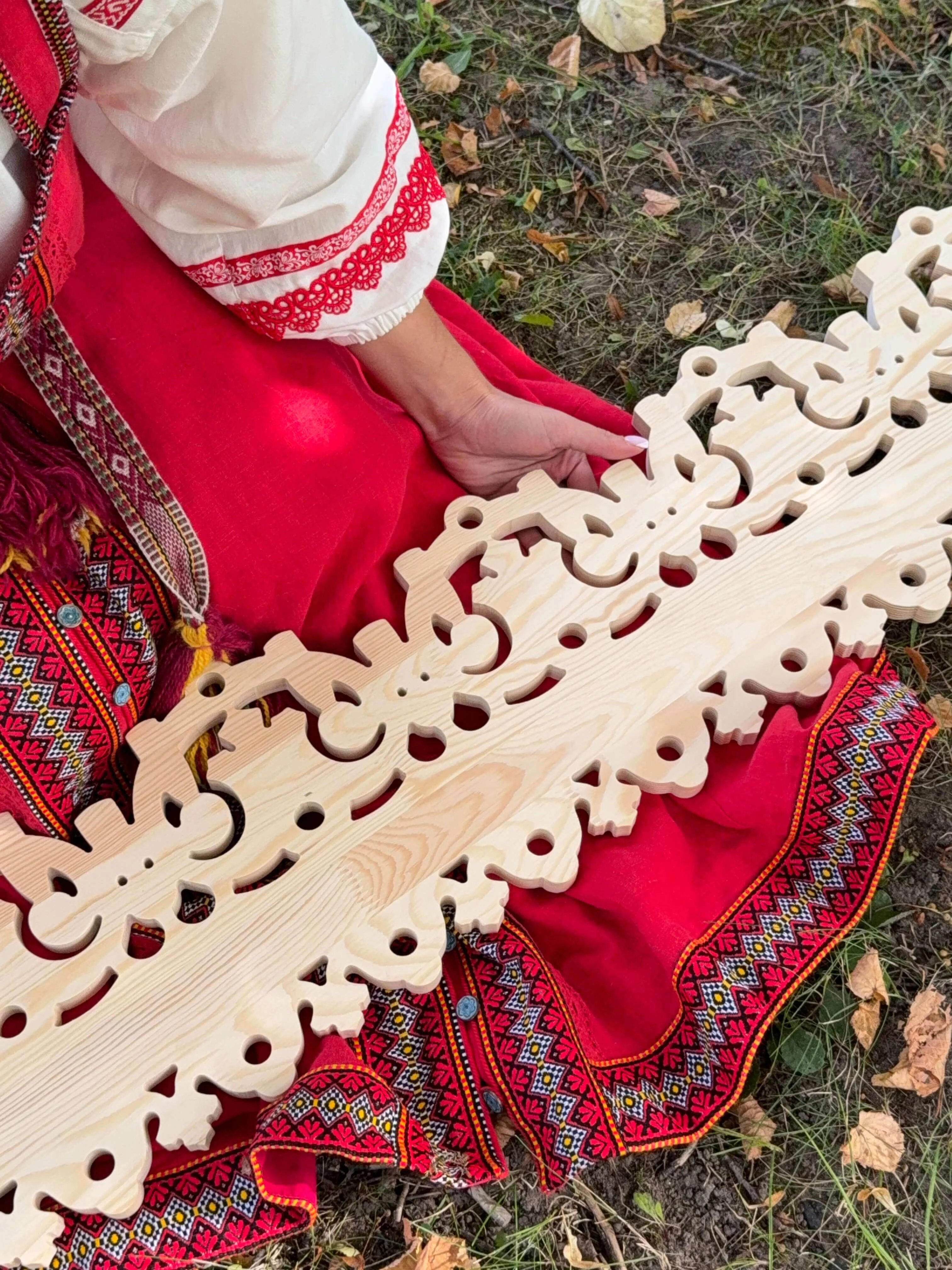
Wooden furniture handles are distinguished by the natural warmth of their texture and fit organically into classic, Scandinavian, rustic, and eco-friendly interiors. Metal handles are resistant to mechanical stress, moisture, and aggressive cleaning agents, making them indispensable in the kitchen and bathroom.
Supports and Legs
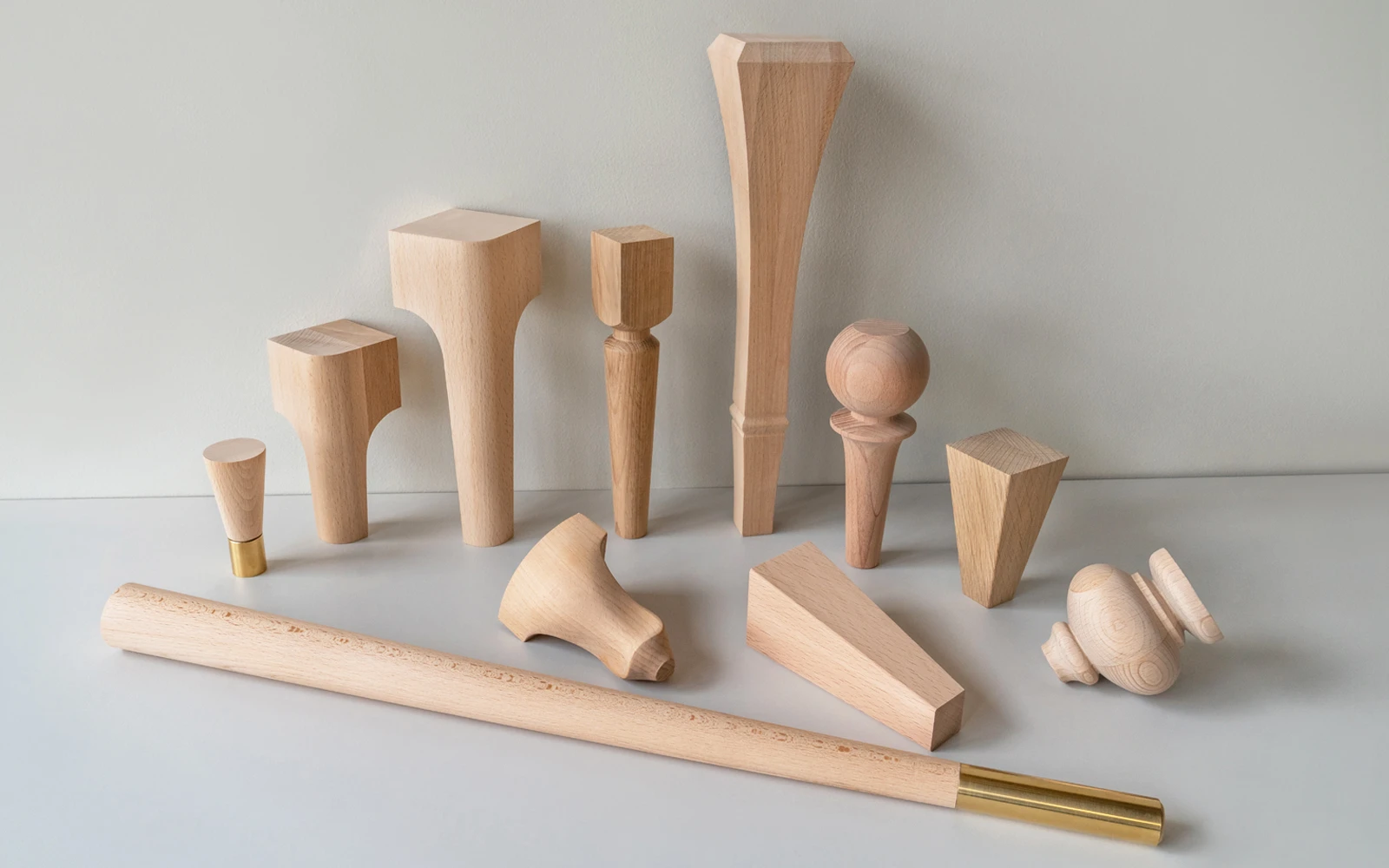
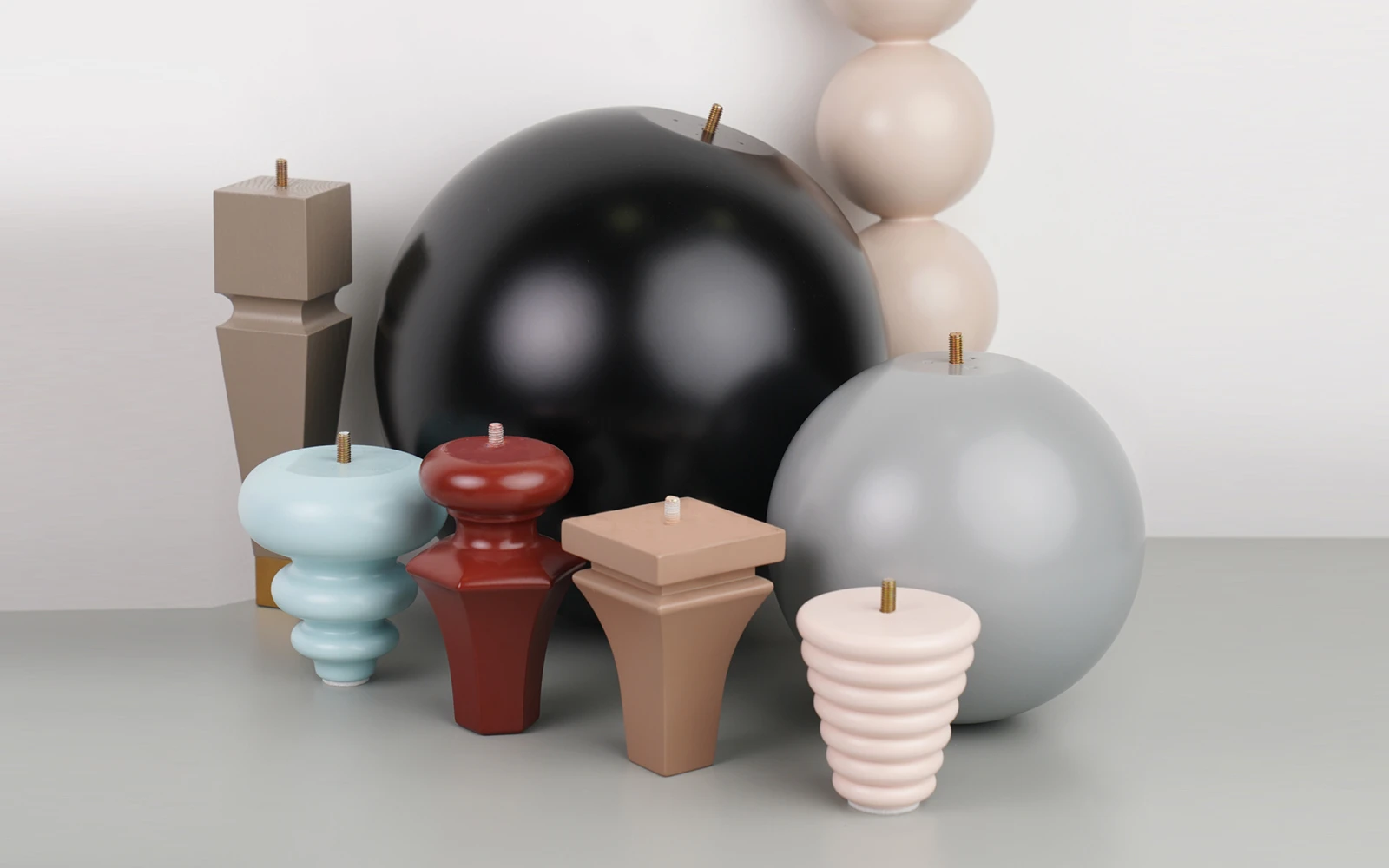
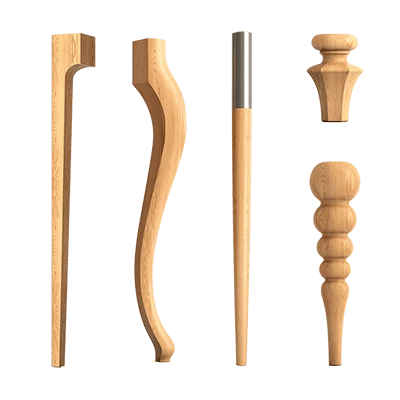
Furniture legs and supports directly affect the stability and service life of the structure. An incorrectly chosen support for a sliding wardrobe or kitchen island is a direct path to body warping and floor covering damage. Glides protect floors from scratches and allow furniture to be leveled on uneven surfaces.
Materials for mounting and fastening
This group includes screws, confirmat screws, furniture bolts, eccentric fasteners, corner brackets, rails, and other elements that ensure assembly strength. Without properly selected fasteners, even the most expensive hardware will not deliver the desired result.
How to choose furniture hardware for a specific task
The correct choice of hardware begins not with browsing a catalog, but with understanding the usage scenario. Furniture for the kitchen, a hallway wardrobe, and a bedroom nightstand are fundamentally different situations that require a different approach to each hardware element.
For Kitchen
The kitchen is a high-load zone. Here, hardware operates under conditions of constant humidity, temperature fluctuations, grease aerosol, and mechanical impact. Handles must be made from materials resistant to moisture and chemicals: stainless steel, chrome-plated metal, solid wood from valuable species with a protective coating. Bracket handles on kitchen fronts are a classic and proven option: convenient grip, easy cleaning, modern look.
Supports for a kitchen island or floor cabinets must withstand significant weight and ensure stability under lateral loads. Glides are mandatory—they compensate for unevenness in the screed, which in kitchens is often non-uniform.
For a cabinet
Cabinets are case furniture with high load on fronts and hinges. Handles for cabinet doors are selected taking into account the weight of the panel: for heavy doors, longer handles with two-point fastening are suitable, which distribute the force when opening. For built-in cabinets in classic interiors, decorative metal handles with cast patterns or curved profiles are justified.
For chests of drawers and cabinets
Chests of drawers and cabinets are furniture where the appearance of the handle decides almost everything. This is where you can allow yourself more expressive solutions: bracket handles in neoclassical style, wooden buttons with concise carving, matte metal profiles. At the same time, it is important to maintain a uniform style throughout the piece of furniture: the same center-to-center distance, the same finish, the same installation height.
For solid wood furniture
Hardware for solid wood furniturerequires special attention: wood is a living material that changes size with changes in humidity. Fasteners for solid wood should allow slight movement of the wood without splitting it or stripping the threads. Handles for such furniture are best chosen in a single material - wooden or forged metal, which organically complement the natural texture.
For modern case furniture
Case furniture made of laminated chipboard and MDF is the most mass segment. Here, fittings are chosen primarily based on interior style and functional convenience. Metal handles in matte or chrome finish, brackets with a concise profile, buttons without visible fasteners - all of this fits organically into modern interiors of minimalism, high-tech, and Scandinavian style.
Which furniture handles to choose
Choosing handles is perhaps the most responsible decision when furnishing furniture. A mistake here is visually obvious and can only be corrected by complete replacement.
Pull handles (bail handles)
Bracket handles are a universal and most popular type. They are suitable for almost any furniture: kitchen fronts, chest of drawers drawers, cabinet doors. Brackets with center-to-center distances of 96, 128, and 160 mm are standard sizes that fit most cases. Important: before purchasing, always measure the distance between the centers of the holes on the front - it must exactly match the center-to-center distance of the handle.
Button Handles
Button handles are fastened at one point. Ideal for small drawers, nightstands, hanging cabinet doors. Their concise form makes them a favorite in minimalist interiors. Buttons made of metal with a matte finish, buttons made of wood with a sanded surface - both options are relevant and combine well with various fronts.
Long handles
Long railing handles are a current trend in kitchen design. They occupy the entire width of the front or most of it, creating a horizontal accent. This technique visually expands the kitchen and gives it a designer look. For installing long handles, it is important to precisely check the vertical and horizontal level.
Wood or Metal
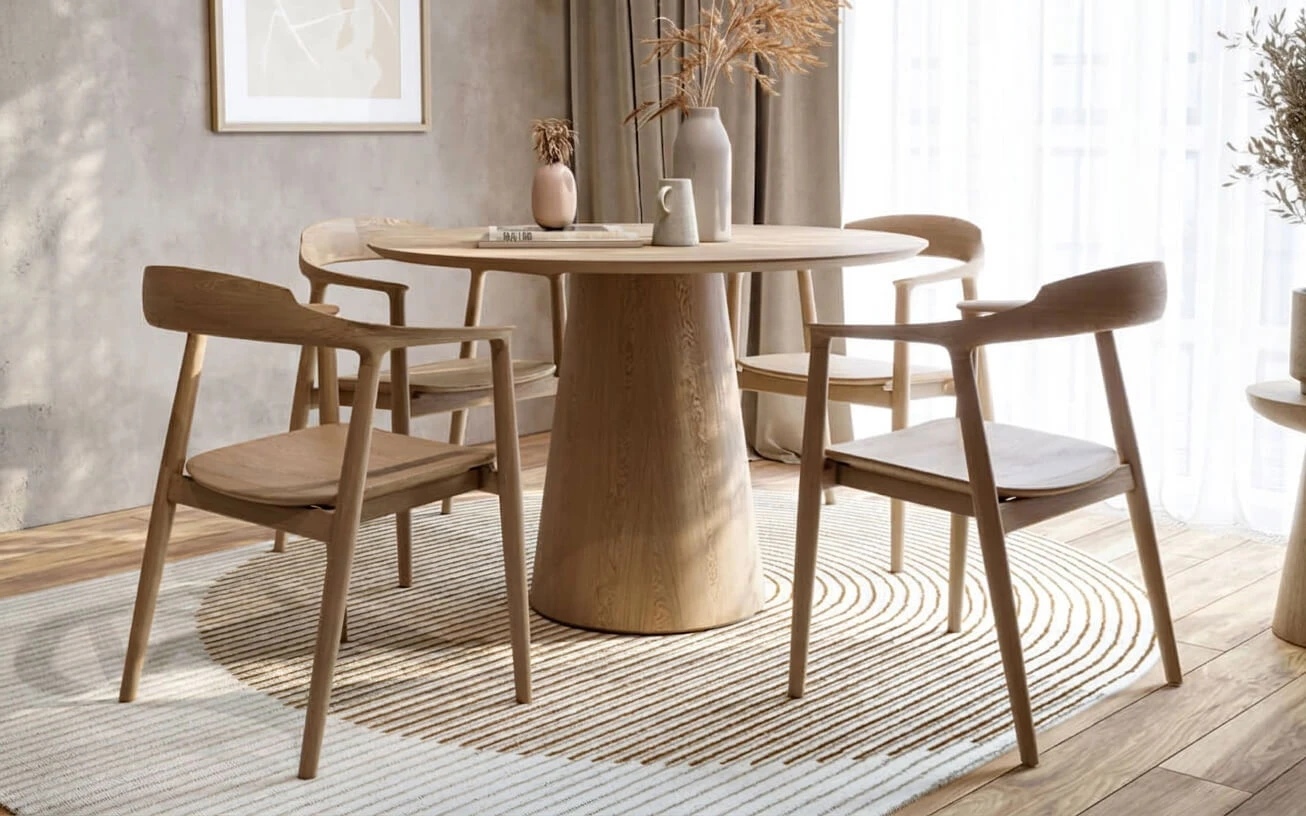
Wooden furniture handles create a feeling of warmth and naturalness. They are suitable for eco-styles, classic, Scandinavian interiors, and Provence. Metal handles are universal, practical, and resistant to stress. Chrome and matte metal handles work well in modern interiors, while gold and bronze tones are suitable for neoclassical and art deco styles.
How to choose the size and center-to-center distance
Center-to-center distance is the distance between the centers of the mounting holes. The most common are: 32, 64, 96, 128, 160, 192 mm. Before ordering, be sure to measure the existing holes in the facade or calculate the required spacing according to the project in advance. Replacing a handle without considering this parameter will lead to the need to drill new holes, which poses additional risks to the facade.
When to choose a minimalist form and when a decorative one
Minimalist handles—flat brackets, disc buttons, thin profiles—are appropriate in minimalist, Scandinavian, and high-tech interiors. Decorative handles with patterns, castings, and wood carvings are organic in classic, neoclassical, and baroque interiors. The main rule: do not mix styles within a single piece of furniture.
Wooden or metal handles: which is better
This question is asked most often. There is no definitive answer—it all depends on the specific task, interior style, and operating conditions. Let's break it down honestly.
Appearance
Wooden handles carry natural warmth, each piece is unique in its grain pattern. Metal ones create a sense of clarity, precision, and technological sophistication. In an interior, wood sounds soft, metal sounds confident.
Wear resistance
In this parameter, metal handles win unconditionally: metal is not afraid of scratches from rings and bracelets, resistant to moisture, grease, and cleaning agents. Wooden handles with intensive use require more careful handling: they cannot be cleaned with aggressive chemicals, and with prolonged contact with moisture, they may swell.
Combination with furniture style
Wooden handles are ideal for:
-
Scandinavian style;
-
Japandi;
-
Rustic and country;
-
Provence;
-
Eco-interiors with natural materials.
Metal handles are organic in:
-
Minimalism;
-
High-tech;
-
loft;
-
neoclassical (gold, brass);
-
modern Scandinavian interiors (matte black, nickel).
For classic style
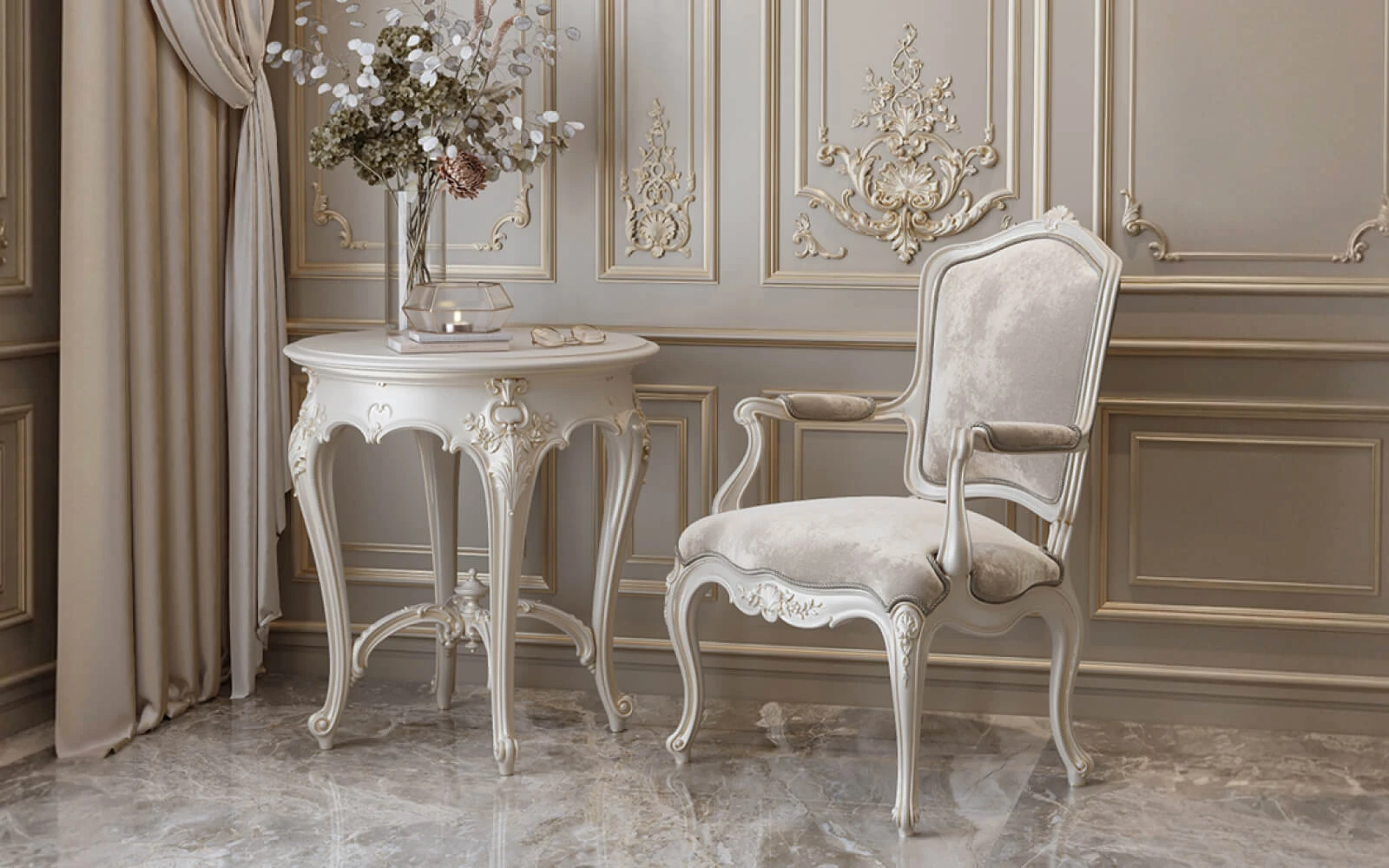
In classic interiors, the priority is decorative metal handles with casting: bronze, gold, antique. Wooden handles with lathe-turned or carved decor are also appropriate, especially in furniture made from solid valuable wood species.
For modern interiors
Here, metal handles reign: matte chrome, black nickel, satin-finished steel. They are visually weightless, do not compete with the facade design, and look strict and modern.
For kitchens and active use
The kitchen is the zone of maximum testing for hardware. For kitchen facades, metal handles made of stainless steel or chrome-plated metal are preferable: they withstand wet cleaning, do not react to grease stains, do not darken, and do not lose shape. Wooden handles are also used in the kitchen, but only if they are made from dense wood species and coated with durable varnish or wax.
Hardware for furniture legs and supports
Supports and legs for furniture are not just an aesthetic detail, but a load-bearing structural element. Their choice determines the stability, durability, and appearance of the furniture from below.
When supports are needed
Furniture legs are installed where the cabinet needs to be raised above the floor: under kitchen cabinets, dining tables, consoles, and wardrobes. They make cleaning under furniture easier, provide ventilation for the lower part of the cabinet, and give furniture a lighter, 'floating' appearance.
When glides are needed
Furniture glides are small but important parts. They are installed on furniture legs to protect the floor covering from scratches and dents. Glides are especially relevant for parquet, laminate, and tile floors. Additionally, adjustable glides allow you to level furniture on surfaces with height variations—this is particularly important for kitchen units where level is a critical parameter.
How to choose the height
Leg height affects the overall height of the furniture piece. For kitchen floor cabinets, the standard leg height is 100–150 mm; for tables—from 700 mm to 750 mm from the floor (including the tabletop thickness). For consoles and bedside tables, leg height is selected individually according to the project.
How to account for load
Each type of leg is designed for a specific load. For cabinets and units with heavy contents, legs with reinforced bases and wide platforms are necessary. Thin decorative legs are for lightweight furniture: poufs, small cabinets, open shelving.
What's important for tables, cabinets, consoles, wardrobes
| Furniture type | Recommended leg type | Features |
|---|---|---|
| Dining table | Adjustable metal legs | Height 710–730 mm from the floor |
| Kitchen cabinet | Plastic adjustable supports | Height 100–150 mm |
| Console/pedestal | Decorative metal legs | Focus on appearance |
| Cabinet | Reinforced supports with wide base | Load calculation |
| Bedside table | Wooden or metal legs | Height according to design |
Materials for installation and what is important to consider during installation
Hardware installation is the final stage, where even the highest-quality product can easily be ruined. Proper fasteners and precise marking ensure that the hardware will serve for years without loosening or damaging the facades.
Basic installation elements
Materials for furniture installation include:
-
Confirmat screws — special furniture screws for connecting chipboard and MDF parts;
-
Eccentric fasteners — provide disassemblable connections of parts without visible external fasteners;
-
Furniture bolts and nuts — for connecting structures requiring increased strength;
-
Corner fasteners and brackets — for reinforcing frame structures;
-
Dowel pins — wooden or plastic dowels for centering parts during assembly.
Compatibility with the base
Fasteners are selected depending on the base material: chipboard, MDF, solid wood, plywood — each has its own requirements for thread type, seating depth, and drill diameter. Using unsuitable fasteners leads to screw pull-out and part damage.
Incorrectly installed handles are immediately noticeable and spoil the impression even of the most expensive kitchen. Marking must be done with millimeter precision, using a level, ruler, and center punch for drilling. Ideally, create a cardboard or thin plastic template with drill holes, which is applied to each facade to ensure uniformity.
Precision is especially important when installing handles. Even a millimeter deviation from the design position will be visually noticeable, especially if handles are installed in a row on one facade. Use a mounting template or jig—a special device for drilling holes for handles without marking each facade separately.
Protection of the facade and finish
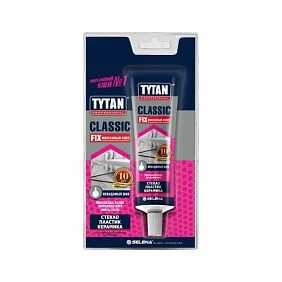
When installing handles, it is important not to damage the paint finish or veneer. For this purpose, protective pads are used during drilling, depth limiters on drills, as well as special mounting adhesive for buttons where through drilling is undesirable.
Common mistakes during installation
-
Drilling without a jig—leads to chaotic placement of handles;
-
Screws that are too long—puncture through a thin facade;
-
Screws that are too short—do not hold the handle under load;
-
Installing a handle without checking the level—a visually noticeable tilt.
How to choose furniture hardware according to furniture style
Style is the language that furniture speaks. Hardware is its intonation. A mismatch between the style of the hardware and the style of the furniture destroys the entire interior concept, even if all other elements are selected flawlessly.
Classical furniture
For classic furniture, choose hardware with a clear decorative accent: cast handles with floral ornamentation, bronze brackets with scrolls, buttons with relief patterns. Metal finish—antique, aged gold, dark bronze. Wooden handles with a turned profile are also appropriate on classic solid wood facades.
Contemporary furniture
Modern furniture dictates minimalism in details: flat brackets without ornament, disc-shaped buttons, long rail handles. Finishes include matte chrome, nickel, anodized aluminum. The handle shape emphasizes the lines of the facade rather than competing with them.
Minimalism
In minimalism, handles are often removed from sight altogether: integrated profiles for milling or milled grooves are used. Where a handle is still needed, the most neutral shape is chosen: a thin bracket, a disc button with a matte finish.
Neoclassicism
Neoclassicism is a style where classical forms are reinterpreted in a modern way. Handles with smooth lines and restrained decor are appropriate here: brass brackets without ornament, matte gold, satin bronze. The shape is laconic, the material is noble.
Solid wood furniture
Hardware for solid wood furnitureshould be proportionate to the wood: heavy carved handles for massive cabinets, elegant wooden buttons for small chests. Metal and wood work in tandem here: forged metal handles on oak or ash facades are an exemplary combination.
How to avoid mistakes when buying furniture hardware
Mistakes in choosing hardware cost more than they seem: damaged facades, incomplete delivery, mismatched center-to-center distance—all of this costs time and nerves. Let's examine the most common errors.
Not considering dimensions
The most common mistake is buying handles without checking the center-to-center distance. Even if a handle visually fits, it physically won't mount on the facade if the holes don't align. Always take precise measurements before purchasing.
Choosing based only on photos
Photos in the catalog convey the general shape but don't always accurately depict the finish color, texture, and weight of the product. If possible—request a sample or clarify the material and finish with the manager.
Not checking the material
Under 'metal handles,' products made of zamak (zinc alloy), aluminum, stainless steel, or painted plastic may be hidden. These are fundamentally different materials in terms of strength and durability. For kitchens and heavily used furniture, choose stainless steel or high-quality zamak with a protective coating.
Not considering the load
Handles on kitchen wall cabinets open differently than on floor cabinets: here, the strength of the pull-out fastening is important. If the cabinet is heavy, handles with reinforced bolts and an increased contact area are needed.
Not planning the installation in advance
Some handles require through-drilling, others are attached with glue or special fasteners. Learn the installation scheme before purchase to avoid discovering on-site that the necessary tool or fastener is not at hand.
Choosing hardware without considering the usage scenario
A decorative handle with fragile casting is not the best choice for children's furniture. A narrow bracket made of thin sheet metal is a poor option for a heavy cabinet door. Always think not only about how the hardware looks, but also about how it will function.
What to look for before ordering furniture hardware in Krasnodar
Before making a final purchase decision, it's worth answering a few practical questions—then the choice will be much easier and more accurate.
Availability of required sizes
Make sure the catalog has handles with the required center-to-center distance and in the required quantity. It often happens that a beautiful handle is available in one size, but the needed one is not. Clarify the availability of specific items in advance.
Material and Finish
The handle's finish affects not only appearance but also durability. Chrome plating, nickel plating, matte oxidation, powder coating, galvanization—each finish has its own lifespan and reaction to operating conditions. For kitchens and bathrooms, choose finishes with moisture resistance.
Compatibility with furniture
Check that the shape and proportions of the handle harmonize with the size of the facade. A small button on a wide kitchen facade will get lost visually; a large pull on a small dresser drawer will overload the details.
Delivery terms
When ordering furniture hardware in Krasnodar, clarify the delivery times, the possibility of consolidated shipping of different items, and the minimum order amount. Many suppliers offer delivery to Krasnodar and the region within tight deadlines—this is important if you are working under renovation deadlines.
Ability to select a solution for the project
A good supplier doesn't just ship items from the catalog but also helps assemble a kit for a specific project: selecting handles to match the desired style, supports for the required load, and fasteners for the specific material.
Why it is profitable to buy hardware from the manufacturer
Direct purchasing from a furniture hardware manufacturer provides a whole range of specific advantages, which are especially noticeable with wholesale or regular orders.
Stability of assortment
A manufacturer has no risk of items suddenly disappearing from the assortment—this is especially important for furniture workshops and productions that need to reorder the same SKUs.
Surface finish quality
The manufacturer controls the full production cycle: from raw material selection to surface finishing. This guarantees predictable quality on every item, without mixed batches or random defects.
Selection by sizes and styles
The manufacturer's catalog is typically broader than the distributor's: you can find non-standard center distances, rare finishes, and custom sizes. This is valuable for design solutions.
More convenient for both private and professional orders
The manufacturer works with both retail customers and professional market participants—designers, carpenters, furniture makers. You can buy a single pair of handles for your home or place a large wholesale order for production.
Easier to assemble a complete kit in one place
When hardware—handles, supports, glides, fasteners—is purchased from a single supplier, it's easier to control product compatibility, delivery times, and style consistency. There's no need to coordinate multiple orders with different suppliers.
Who is this furniture hardware suitable for
Furniture hardware from STAVROSDesigned for the broadest range of customers—from private clients to professional participants in the furniture market.
For private clients
Those renovating a kitchen, updating a hallway cabinet, or assembling bedroom furniture will find the necessary handles, supports, and fasteners here in any quantity—from a couple of pieces to several dozen.
For furniture makers
Craftsmen and small furniture manufacturers get a stable assortment with the possibility of reordering identical items—without the risk that a needed item will suddenly disappear.
For interior designers
For designers, a wide selection of styles and finishes is important to perfectly match the project concept. The catalog of wooden and metal handles in various shapes and finishes allows for selecting solutions tailored to specific interior styles.
For carpentry workshops
Carpenters often work with solid wood furniture — and here, handles that are organic to natural wood are especially important. Self-produced wooden handles are the optimal choice for such tasks.
For Custom Furniture Manufacturers
Companies producing furniture for custom projects are interested in a supplier with a wide range, clear deadlines, and the ability to work with both small and large batches.
FAQ: Answers to popular questions
What furniture hardware is best to choose for a kitchen?
For kitchens, hardware made of stainless steel, chrome-plated metal, or high-quality zamak with a moisture-resistant coating is suitable. Bracket handles with a center-to-center distance of 96 or 128 mm are the most universal option for kitchen fronts. Wooden handles are used in kitchens provided they have a dense protective coating.
What is better for furniture: wooden or metal handles?
There is no definitive answer — the choice depends on style, operating conditions, and personal preferences. Wooden handles are warmer, look more organic in classic and natural interiors. Metal ones are more durable, easier to care for, and more versatile in style.
What handles are suitable for classic furniture?
For classic furniture, cast metal handles with ornamentation, bronze and gold brackets with decorative elements, as well as wooden handles with a turned profile on solid wood products are suitable.
How to choose supports and legs for furniture?
The choice of support is determined by the type of furniture, its weight, and the desired height. For kitchen cabinets — adjustable plastic supports with a height of 100–150 mm. For tables and consoles — metal supports calculated for load and with a decorative appearance. Glides are mandatory on any hard surfaces.
Can furniture hardware be selected to match a specific interior style?
Yes, that's exactly how it should be done. The style of hardware is an integral part of the design project. In the catalog STAVROS handles for classical, modern, Scandinavian, and natural interiors are presented.
What to look for when ordering hardware with delivery to Krasnodar?
Clarify the availability of the required items, delivery times, payment terms, and the minimum order amount. When ordering several types of hardware for one project, it is more convenient to place a consolidated order with one supplier — this speeds up delivery and simplifies logistics.
Where to buy furniture hardware in Krasnodar with a wide assortment?
You can order furniture hardware in Krasnodar with delivery from the online store STAVROS — here, handles, supports, glides, and mounting materials are presented in a wide assortment with the possibility of selection for any project.
Is it possible to buy furniture hardware wholesale in Krasnodar?
Yes, the STAVROS online store works with both retail customers and wholesale clients: furniture manufacturers, carpentry workshops, design studios. For wholesale orders, clarify the terms with the managers.
Conclusion
Choosing the right furniture hardware in Krasnodar is not a matter of guesswork. Each element plays its role: handles create the first visual impression, supports ensure stability, and mounting hardware determines the reliability of the entire structure. To avoid mistakes, start with the task: first understand what type of furniture the hardware is for, then determine the style, and only then select specific models based on size, material, and finish.
Pay special attention to handles as the most noticeable element: choose the correct center-to-center distance, decide between wood and metal, and settle on the shape and finish. Supports and fasteners are equally important: skimping here leads to problems during assembly.
The company STAVROS offers a wide catalog offurniture hardwarewith delivery across Krasnodar and all of Russia. Wood and metal handles, supports, glides, and mounting materials—all can be selected and ordered in one place, without overpaying or unnecessary approvals. STAVROS is a manufacturer that understands the task and works with both private clients and professional market participants: furniture makers, designers, and carpentry workshops.