




























































Article Contents:
- Product base: which STAVROS products are suitable for a frame
- Why a frame from baseboard is a working idea, not a "DIY project"
- Why classics look modern today
- Why baseboard is needed not only near the floor
- What can be made from baseboard and molding
- Frame for a painting
- Mirror frame
- Photo frame
- Decorative frame on the wall
- Furniture front frame
- MLDPU-001 — thin frame for photos, fronts and small compositions
- MLDPU-002 — universal frame for painting, mirror and panel
- MLDPU-003 — wide architectural frame for large mirror and accent wall
- MLDPU-004 — compact frame for modern classics
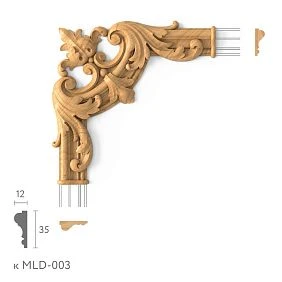
- Corner decor MLDPU-1U-1.1 — when corners should become part of the pattern
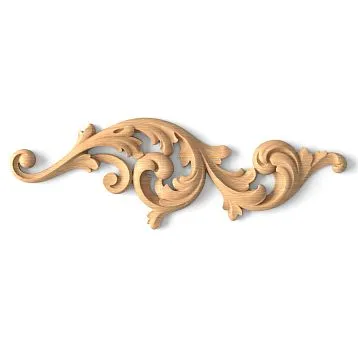
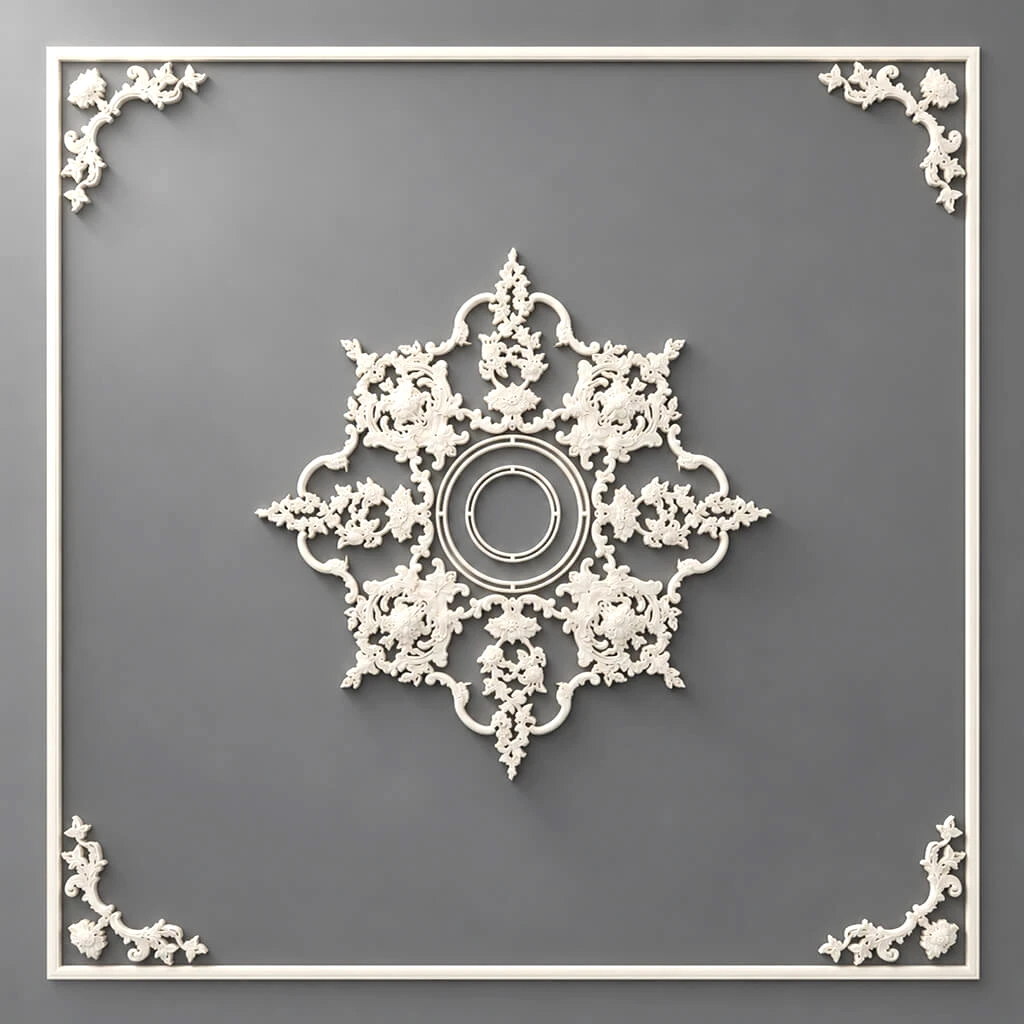
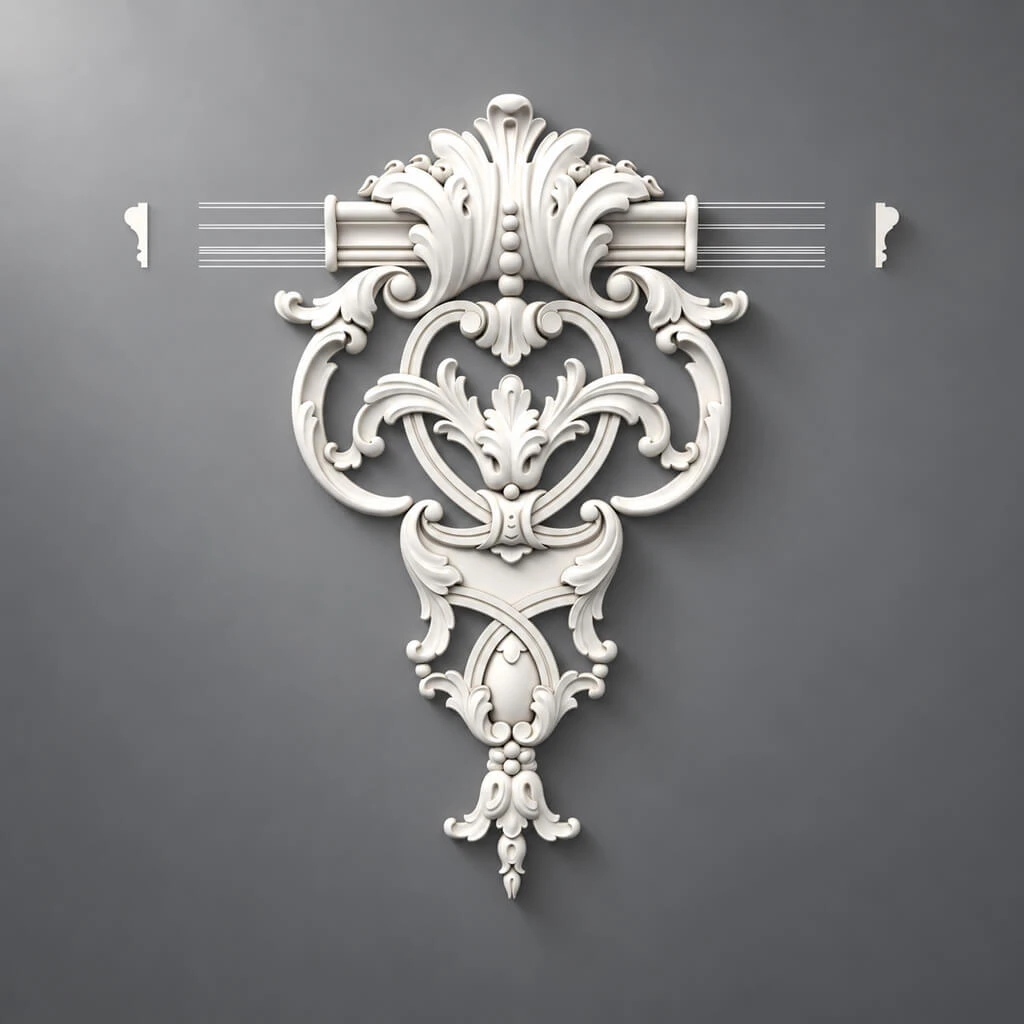
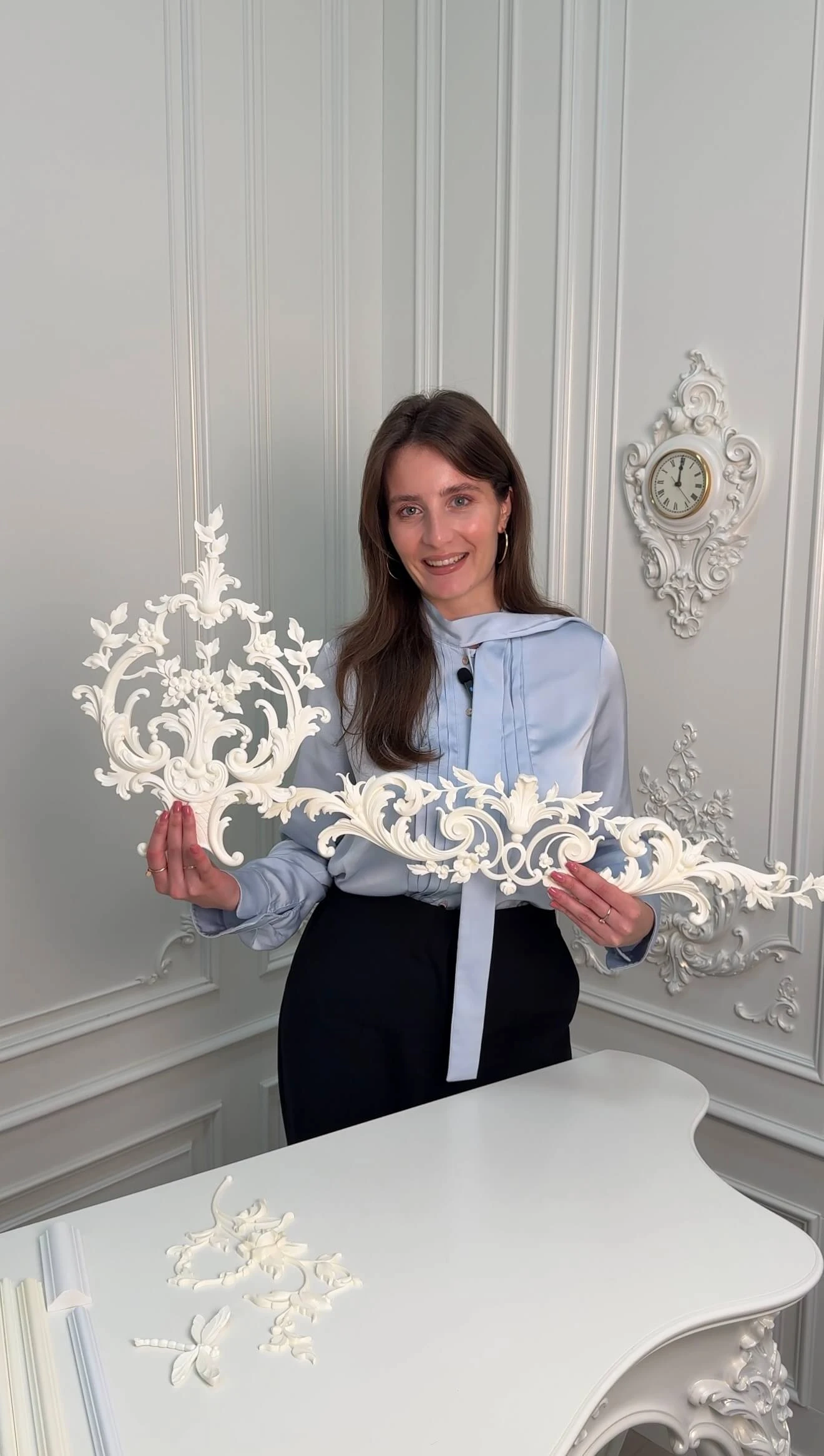
- Central decor NPU-434.1 — for a complete composition
- How to make a frame from baseboard with your own hands?
- Which baseboard is best to use for a frame?
- Can you make a picture frame from ceiling baseboard?
- Can you make a mirror frame from baseboard?
- How to calculate the amount of molding for a frame?
- What is better: mitering corners or using corner decor?
- Can you paint a frame made of polyurethane molding?
- How to make a frame modern, not too classic?
- Is molding suitable for a frame on a furniture facade?
- Where to buy STAVROS moldings and frame decor?
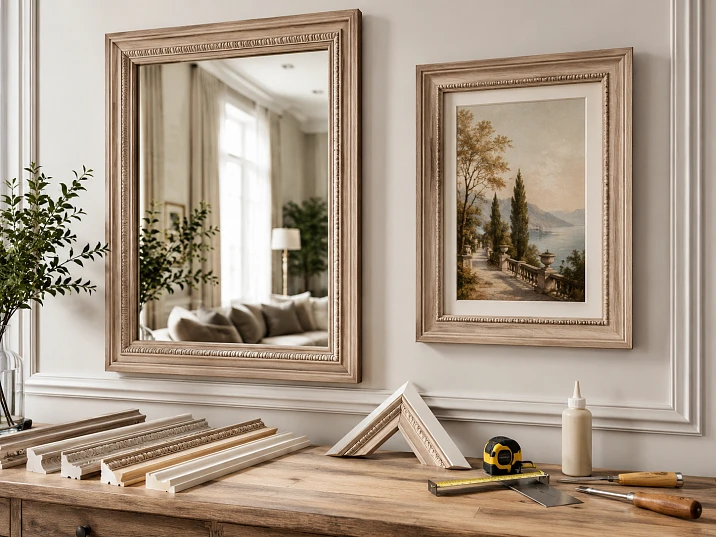
A frame made from baseboard is not a random interior trick, but a clear way to turn an ordinary profile into an expressive architectural element. From molding, ceiling baseboard, or decorative profile, you can assemble a frame for a painting, mirror, photo, wall panel, niche, or furniture facade. The main thing is not to treat the profile as a "remnant after renovation," but to choose it deliberately: by scale, shape, material, relief depth, and room style.
At STAVROS, polyurethane moldings are especially convenient for this task: they already have a finished profile, are suitable for decorative wall, ceiling, and furniture finishing, and work well in classic, neoclassical, art deco, and calm modern interiors. If a thin photo frame is needed, a compact profile will do. If a noticeable frame for a mirror or decorative panel is required, it's better to choose a wider molding. And if you want not just a rectangle but a finished decorative accent, the frame can be supplemented with corner and central elements.
This technique helps solve several problems at once. The painting gets a more expressive framing. The mirror no longer looks like a random sheet of glass on the wall. An empty wall turns into a composition. The furniture facade gains depth. At the same time, a frame made from baseboard or molding doesn't have to be "palatial." If you choose a restrained profile and paint it the color of the wall, you get a modern, neat, and architectural detail.
In this article, we'll break down how to make a frame from STAVROS baseboard and molding: which profile to choose, how a frame for a painting differs from a frame for a mirror, how to calculate the length, when corner elements are needed, how to avoid mistakes during marking, and where to buy suitable moldings and decor on the STAVROS website.
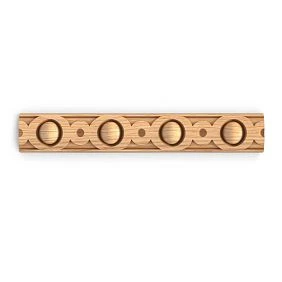
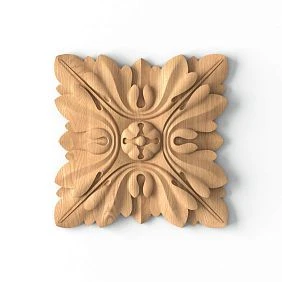
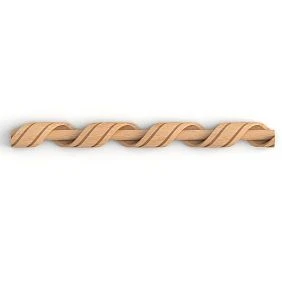
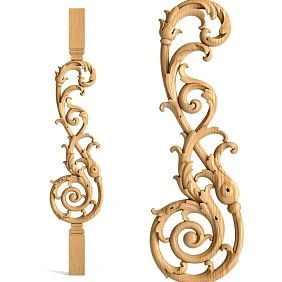
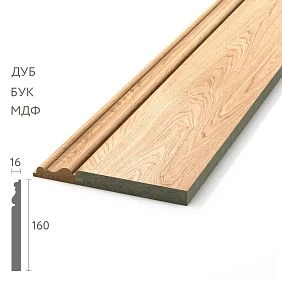
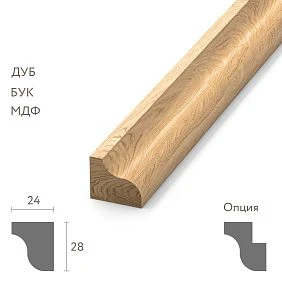
Product basis: which STAVROS products are suitable for a frame
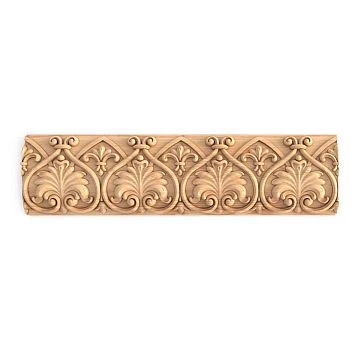
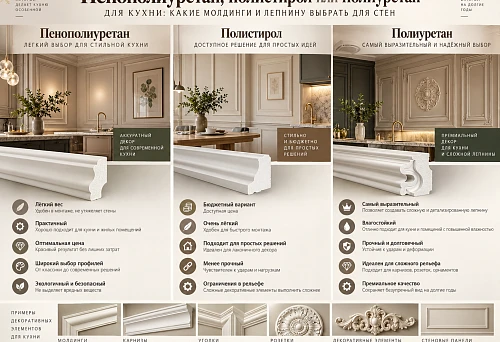
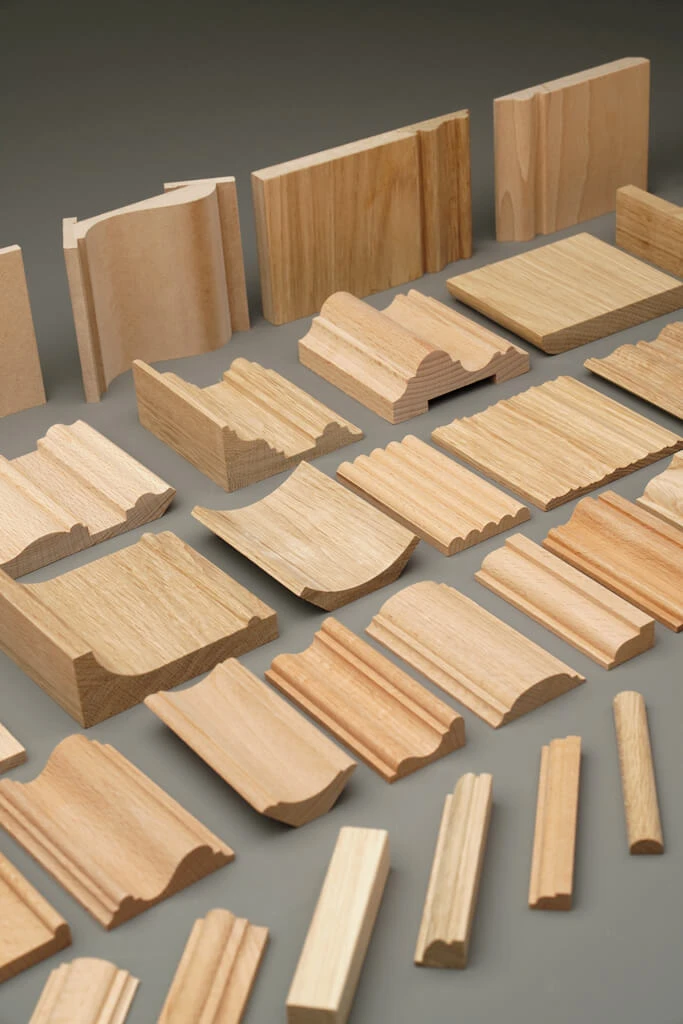
For a decorative frame, not only the dimensions of the future painting or mirror matter. First, you need to understand which profile will be the base. At STAVROS, for this task, you can use polyurethane moldings, decorative elements for moldings, corner decor, and central overlays. The main product group is STAVROS polyurethane moldings, cornices, and baseboards. In this category, it's convenient to select a profile by width, height, pattern, and purpose.
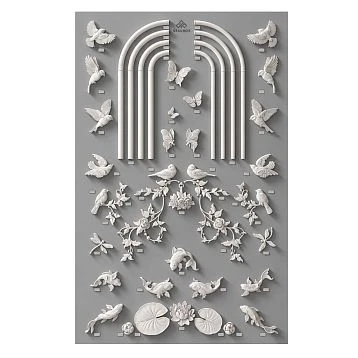
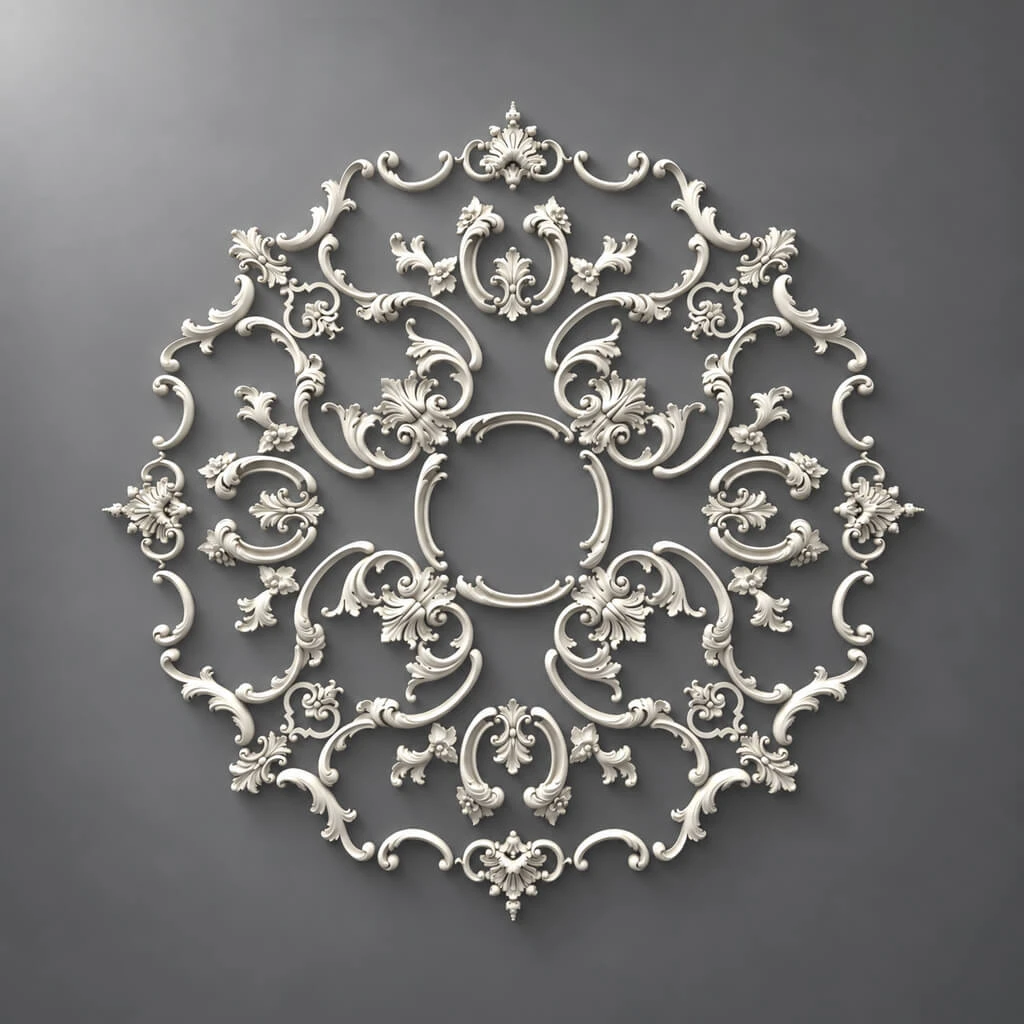
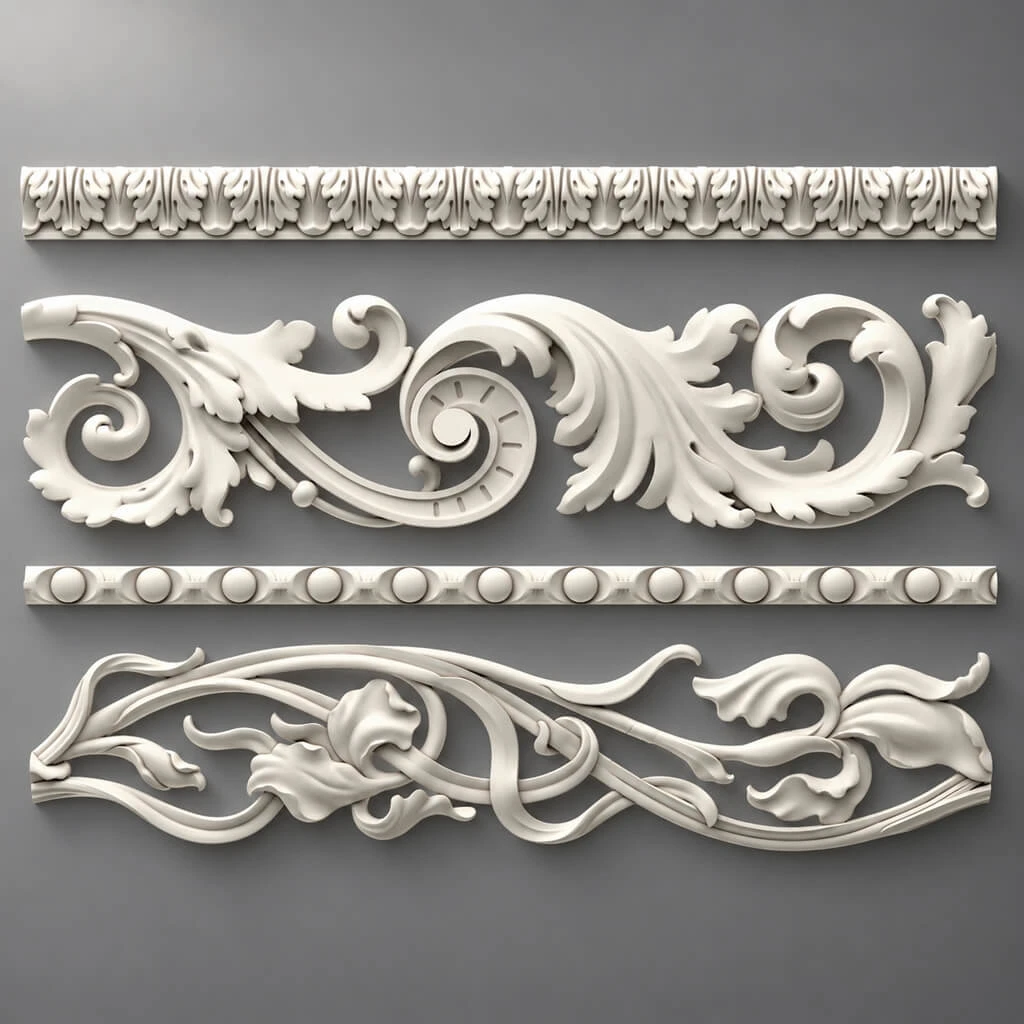
If the frame should be not just rectangular but decorative, it's worth additionally looking at Decor for Molding. Such elements help to design corners, the center of the upper part of the frame, symmetrical accents on the sides, or a decorative composition on the wall.
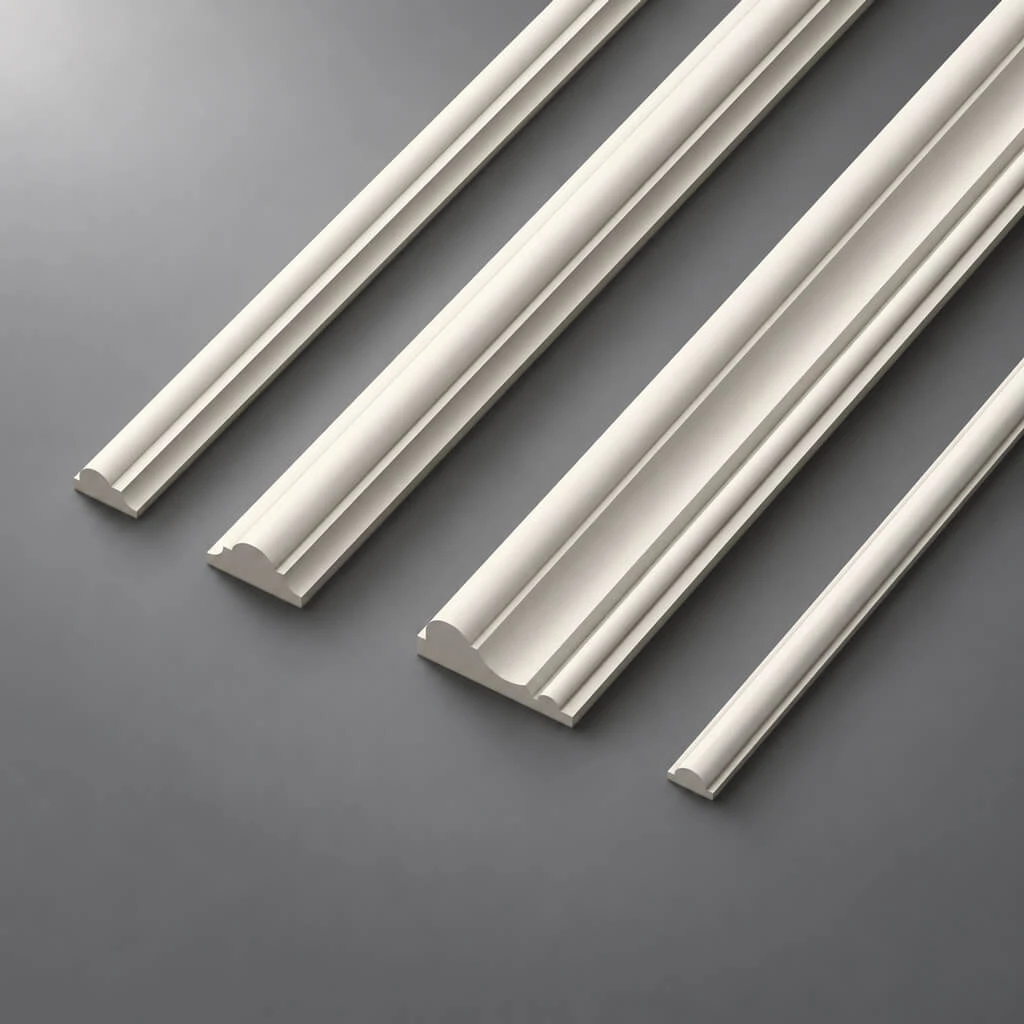
We take four STAVROS moldings as base profiles for the article: MLDPU-001, MLDPU-002, MLDPU-003, and MLDPU-004. They differ in size and visual impact. A small frame requires one scale, a large mirror another. The mistake many buyers make is choosing a profile "by looks" separately from the item, and then the frame ends up too heavy, too thin, or mismatched with the room's style.
| Model / Group | Product Type | Confirmed Size | Material | Finish | Purpose | Features | Order Conditions |
|---|---|---|---|---|---|---|---|
| MLDPU-001 | Molding | 10×6×2600 mm | Polyurethane | For painting; check current options in the product card | Walls, ceilings, furniture, small frames | Compact profile for a thin contour | Check availability, configuration, and order conditions in the product card or with a STAVROS manager |
| MLDPU-002 | Molding | 22×11×2600 mm | Polyurethane | For painting; check current options in the product card | Paintings, mirrors, decorative panels, wall frames | Universal size for an expressive but not overloaded frame | Check availability, configuration, and order conditions in the product card or with a STAVROS manager |
| MLDPU-003 | Molding | 35×12×2600 mm | Polyurethane | For painting; check current options in the product card | Large mirrors, panels, accent walls | Wider profile for an architectural frame | Check availability, configuration, and order conditions in the product card or with a STAVROS manager |
| MLDPU-004 | Molding | 15×8×2600 mm | Polyurethane | For painting; check current options in the product card | Modern classics, thin wall frames, furniture fronts | Compact universal profile | Check availability, configuration, and order conditions in the product card or with a STAVROS manager |
| MLDPU-1U-1.1 | Corner decor | 97×97×10 mm | Polyurethane | Check the product card for current options | Decorative frame corners | Compatible with MLDPU-001 and MLD-001-MG | Check availability and configuration before ordering |
| NPU-434.1 | central decorative element | Check the current size in the product card | Polyurethane | Check the product card for current options | Central frame accent, decorative composition | Helps turn a simple frame into a complete ensemble | Check availability and configuration before ordering |
Important note: in this article, the frame is considered not as a load-bearing baguette for a heavy canvas or as a structure that holds the mirror itself. Molding and baseboard work as a decorative contour. If the frame is used around a mirror, painting, or panel, the method of attaching the item itself must be considered separately. Weight, fasteners, base, wall type, and configuration are best clarified before ordering.

Why a frame made of baseboard is a working idea, not a "DIY project"
The word "baseboard" has a domestic connotation: many perceive it only as a strip near the floor or ceiling. But in interior design, the profile works much more broadly. It sets a line, frames a plane, creates rhythm, emphasizes boundaries, and helps bring different elements of a room together into a single composition. Therefore, a frame made of ceiling baseboard or molding can look not like homemade decor, but like part of the room's architecture.
The secret is that a good profile has shape. It has height, relief, plane transitions, shadow, and edge. When such a profile frames a painting or mirror, it doesn't just cover the edge. It creates a visual pause between the object and the wall. The painting stops "sinking" into the plane. The mirror gains depth. The decorative panel looks not glued on, but built into the interior.
A frame made of baseboard is especially useful where a regular baguette seems too independent, and an empty wall looks unfinished. For example, in the bedroom above a dresser, you can make a rectangular frame around a mirror. In the living room, highlight a painting or poster. In the hallway, design a vertical panel. In the study, create a strict outline around graphics. In the children's room, make a frame for a photo or decorative insert, if the overall style of the room allows such a technique.
The main difference from a random "craft" is precision. You need to choose a profile according to scale, carefully calculate the length, make even markings, prepare the joints, and think through the painting. If all stages are done carefully, a frame made from baseboard on the wall looks like a designer detail, not an attempt to save on a baguette.
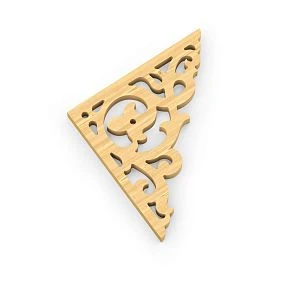
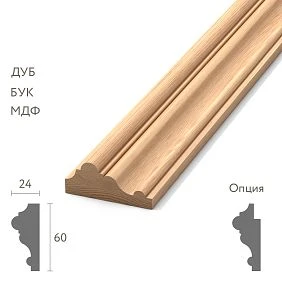
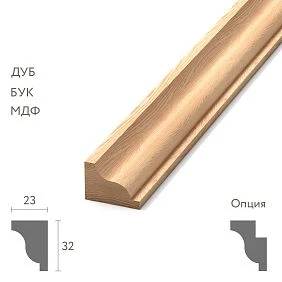
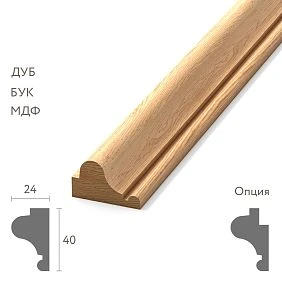
Our factory also produces:
Why classics look modern today
Classic interior is often mistakenly associated only with massive stucco, complex ornaments, and heavy furniture. But modern classics work differently. What matters is not overload and ostentatious luxury, but order: proportions, symmetry, clean lines, calm geometry, soft depth of walls. Molding in such an interior becomes not decoration for decoration's sake, but a tool of composition.
One neat frame made from molding can do more than many random decorative items. It gathers the gaze. Shows where the center of the wall is. Supports the height of the door, the shape of the mirror, the line of the dresser or the headboard. Even if the frame is painted the same color as the wall, it still works due to light and shadow. The surface becomes not flat, but architectural.
That is why frames made of moldings are suitable not only for classic apartments. They are appropriate in neoclassicism, modern art deco, soft minimalism, Scandinavian interiors with warm texture, calm city apartments, studios, offices, bedrooms, or living rooms. The difference is only in the choice of profile. For formal classics, you can take a more expressive molding and add decorative corners. For a modern apartment, it is better to choose a thin or medium profile and paint it the color of the wall.
Classics become modern when unnecessary noise is removed from them. What remains is proportion, rhythm, symmetry, and a neat contour. A frame made from baseboard and molding works exactly in this logic: it does not require overloading the room, but adds composure to the interior.
Get Consultation
Why a baseboard is needed not only by the floor
Baseboard covers the joint of the wall and floor — that is its usual technical role. But in a good interior, it does more. Floor baseboard gathers the bottom line of the room, ceiling baseboard completes the top, and molding can create an internal frame on the wall. Together, these elements form the architectural framework of the space.
If a room only has furniture and smooth walls, the space can look flat. Baseboards, cornices, and moldings add layers. They help the eye read height, width, center, and boundaries. This is especially noticeable in rooms with simple solid-color walls: without profiles, they can seem empty, but with the right rhythm, they become calm and feel expensive.
A frame made of baseboard or molding continues this same idea. It transfers the profile from the floor or ceiling line to the wall. The result is not a separate decorative item, but a repetition of the architectural language. If the room already has a ceiling cornice, floor baseboard, or furniture with panels, a frame on the wall will support this rhythm. If such elements are not yet present, a frame can be the first step toward a more cohesive interior.
At the same time, you don't need to literally use the same profile everywhere. It's important that the elements are related in character. For example, a thin molding MLDPU-004 can support a calm modern wall, while a more expressive MLDPU-003 can suit a large mirror or accent panel. For the buyer, this is a practical advantage: you don't have to change the entire interior, but can add a frame precisely where the wall lacks structure.
What can be made from baseboard and molding
A frame made from baseboard is not limited to one scenario. It can be used around a painting, mirror, photograph, wall panel, decorative insert, or furniture front. In each case, the requirements for profile, size, and visual weight change. There is no universal solution: what works well for a large mirror may be too heavy for a small photo.
Frame for a painting
A frame for a painting made from baseboard is needed when you want to enhance the image and make it part of the interior. This technique works especially well with decorative paintings, graphics, posters, panels, textile inserts, and reproductions that are in a prominent place. The molding creates a transition between the wall and the image, and the painting itself looks more confident.
For a small painting, it's better to choose a compact profile. A too-wide molding can "eat up" the artwork and make the image secondary. For example, Molding MLDPU-001 with dimensions 10×6×2600 mm is suitable for thin frames, small wall compositions, and furniture fronts. If the painting is medium-sized or a more noticeable framing is needed, you can consider Molding MLDPU-002 with dimensions 22×11×2600 mm.
It's important to decide in advance whether the molding will frame the painting itself or create a frame on the wall around it. In the second case, the painting can hang inside the decorative rectangle, and the frame becomes part of the wall. This option often looks more modern: the image is not overloaded, and the wall gets an architectural center.
Frame for a mirror
A mirror frame made from baseboard solves a different problem. A mirror almost always functions not only as an object but also as a light element. It reflects a window, chandelier, furniture, passage, or part of the room. If a mirror hangs without a frame, it can look too technical. A decorative profile adds completeness to it.
Scale is especially important for a mirror. A small mirror in the hallway can have a thin contour. A large mirror above a console, dresser, or fireplace needs a more substantial profile. Here, MLDPU-002 or MLDPU-003 measuring 35×12×2600 mm is suitable. A wide profile better supports a large surface and makes the mirror look like an interior object, rather than a random sheet on the wall.
At the same time, it's important to remember: a decorative frame does not replace mirror mounting. The mirror itself must be installed safely, considering weight, base, and installation method. If the exact configuration, fasteners, or permissible loads are not specified in the product card, these parameters should be clarified with a STAVROS manager before purchase.
Photo frame
A baseboard frame for photos is especially well-suited for wall galleries. For example, you can frame one large family photo, a series of black-and-white shots, a child's artwork, or a composition of several images. Here, it's important not to make the profile too formal. A photo is usually perceived more intimately than a painting or mirror, so it needs a neat contour.
For photos, it's better to choose a thin or medium molding. MLDPU-001 will provide a delicate frame, MLDPU-004 — a slightly more noticeable but still restrained contour. Molding MLDPU-004 has dimensions of 15×8×2600 mm, making it suitable for modern classics, wall rectangles, small decorative frames, and facade inserts.
If there are several photos, it's better to draw a layout in advance. Identical frames create order. Different sizes can look lively but require more precision. Too many small frames on one wall quickly turn into visual noise, especially if there are already shelves, lights, textiles, or active furniture nearby.
Decorative frame on the wall
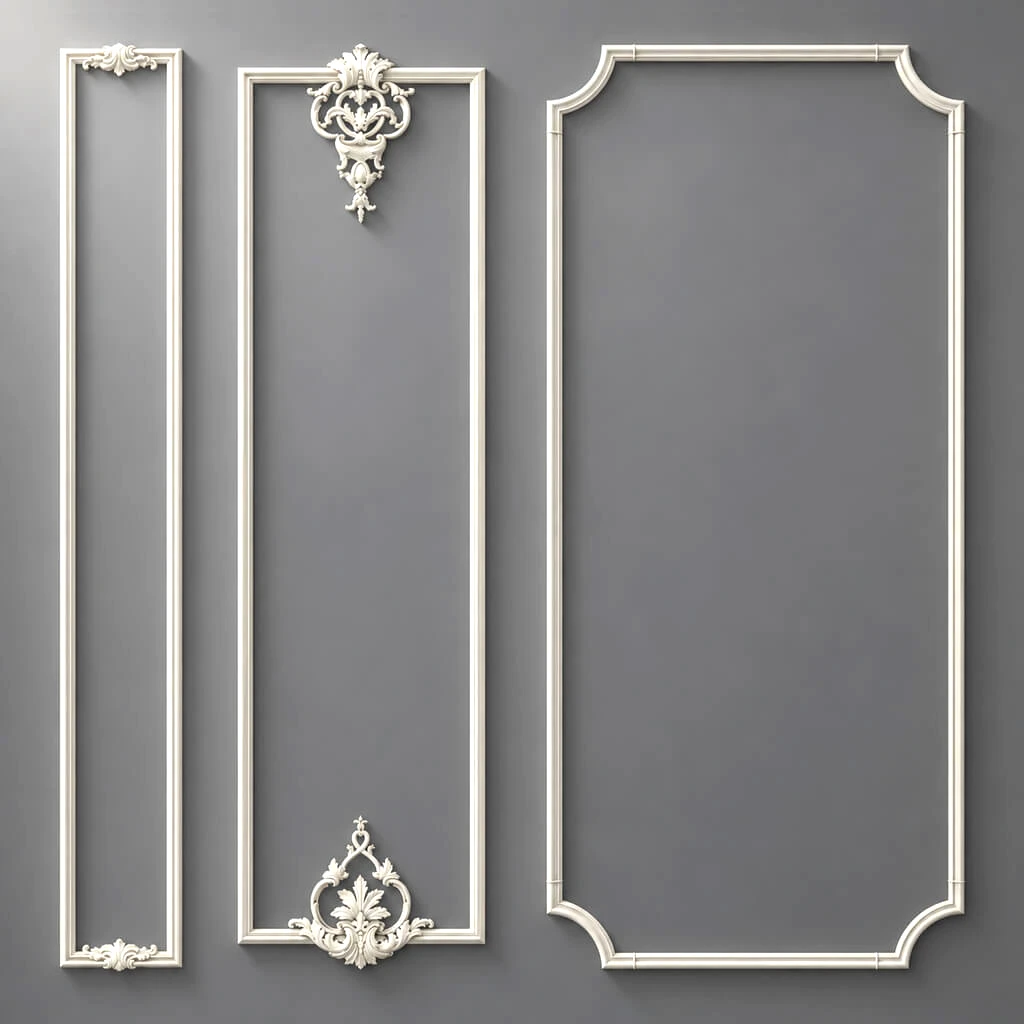
A frame made from baseboard on the wall may have no picture inside at all. This is an independent decorative technique: rectangles, vertical panels, symmetrical fields, elongated frames at the head of the bed, framing the sconce area, composition around a console or mirror. This option is good when the wall is empty, but you don't want to hang additional items on it.
A decorative frame makes the wall architectural. It creates shadow, emphasizes height, adds rhythm. In the bedroom, it can be placed behind the bed. In the living room, around the sofa area. In the hallway, along a long wall. In the study, behind the desk. In the dining room, on the wall next to the dining group.
For such a task, geometry is especially important. A frame on the wall made from baseboard must be level, otherwise the entire composition will look sloppy. Before installation, you need to check the height from the floor, distance to door trims, switches, furniture, and ceiling cornice. If there are several frames, there should be equal intervals between them. In this case, even a simple profile looks professional.
Frame for furniture facade
Molding can be used not only on the wall. Compact profiles are suitable for decorative design of furniture facades, side panels, headboards, screens, decorative panels, and built-in structures. This technique is especially useful if the furniture should support a classic or neoclassical interior line, but the finished facade seems too flat.
For facades, it is better to choose profiles that are light in perception: MLDPU-001 or MLDPU-004. They do not overload the plane and allow you to make a neat frame. If the furniture is large, such as a wardrobe, tall sideboard, or decorative panel, you can use a more noticeable profile, but it must be correlated with the thickness of the facade, handles, base, and overall style.
Additional decor for moldings should be used with caution. Corner elements or central overlays work well in a classic ensemble, but on a small door they can look too active. If in doubt, it's better to start with a clean rectangle, and add decorative details only where they truly support the composition.
How to choose a profile: baseboard, molding, or cornice
Profile selection starts not with the beauty of the design, but with the task. You need to understand what exactly you want to frame: a small photo, a painting, a large mirror, an empty wall, a panel, or a furniture facade. Then assess the scale of the room. In a small room, a wide profile may look heavy. In a spacious room, a too thin frame will get lost.
| Element | When to use | Which frame is suitable for | What to check |
|---|---|---|---|
| Thin molding | When a light contour without strong relief is needed | Photo, small painting, furniture facade, thin wall frame | Evenness of the base, neatness of joints, accuracy of painting |
| Medium molding | When a universal decorative frame is needed | Painting, medium-sized mirror, decorative panel | Ratio of profile width to item size |
| Wide molding | When the frame should become a noticeable architectural accent | Large mirror, panel, accent wall | Does the profile overload the wall and adjacent elements |
| Ceiling skirting board | When a voluminous decorative contour is needed | Large frame, decorative panel, expressive classic | Is the profile shape suitable for the wall plane |
| Floor skirting board | Only if the profile is aesthetically suitable for the frame | Non-standard decorative contour | Does the profile look too "floor-like" and heavy |
| Corner decor | When you need to beautifully finish corners without a simple miter cut | Classic frame, decorative wall composition | Compatibility with the selected molding |
| Central decor | When the frame needs an accent at the top, bottom, or center | Mirror, panel, formal frame, decorative wall | Does the element disrupt symmetry and scale |
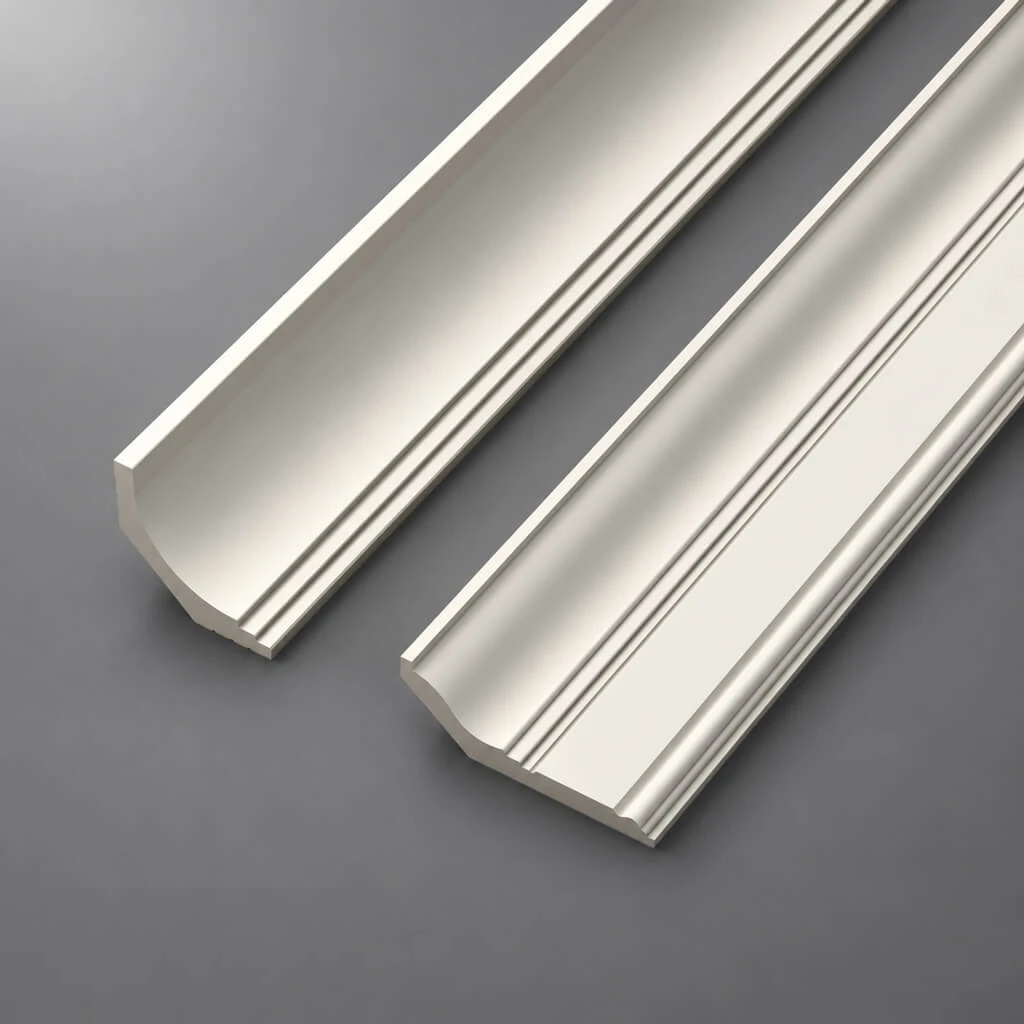
Molding is often more convenient than baseboard because it is initially perceived as a decorative profile for a flat surface. Ceiling baseboard can create a more voluminous frame, but its shape is not always suitable for a wall. Floor baseboard should be used with caution: it often has a pronounced bottom orientation, so it may look too heavy in a frame.
If you need a frame from ceiling baseboard for a painting, first hold the profile against the wall next to the image and evaluate it at actual scale. In a display or photo, the profile may seem neat, but next to a small painting it may turn out too large. For a frame from baseboard for a mirror, on the contrary, a too thin profile may get lost, especially if the mirror is large and hangs on a wide wall.
Which STAVROS products to use for the frame
It is more convenient to choose a profile not abstractly, but for a specific scenario. Below is the practical logic for selection based on STAVROS moldings.
MLDPU-001 — thin frame for photos, facades, and small compositions
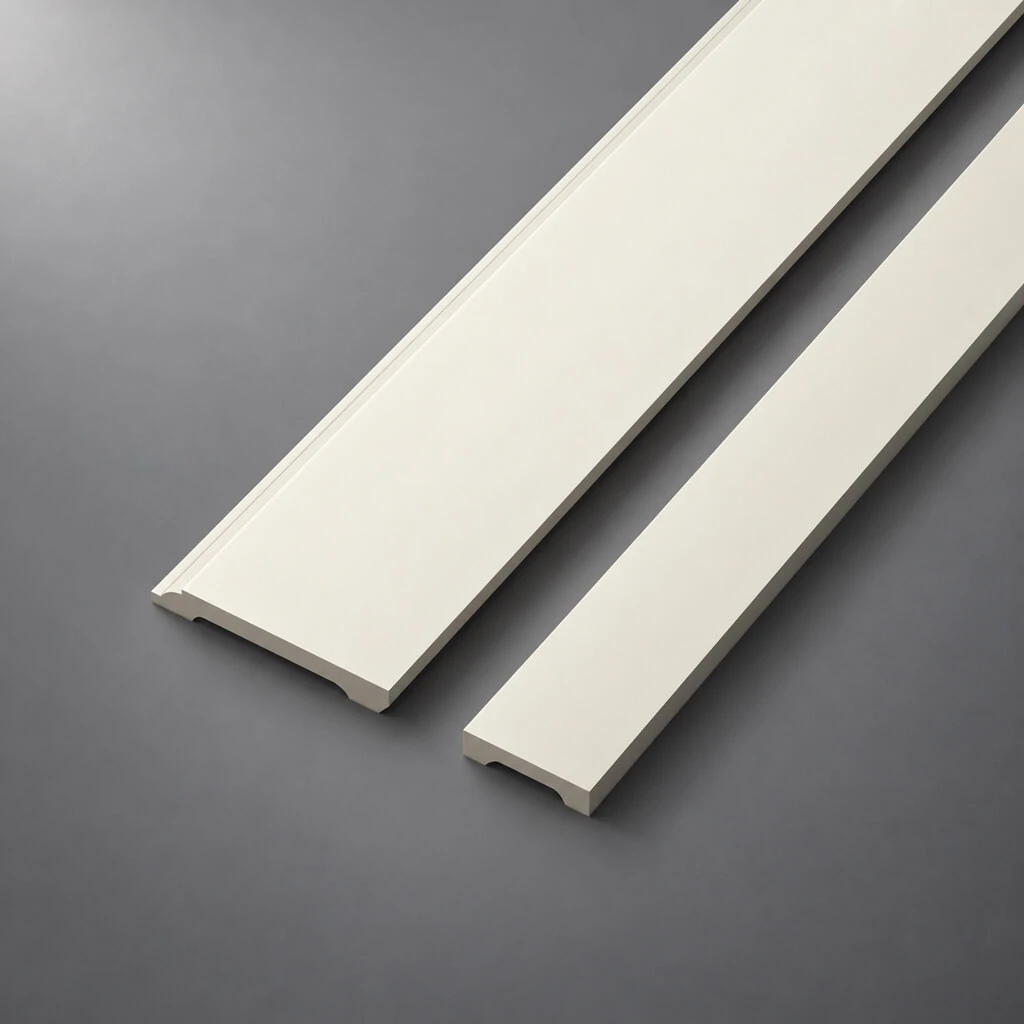
MLDPU-001 — compact molding measuring 10×6×2600 mm. It should be considered when the frame needs to be delicate. For example, for a small photo, graphic, decorative insert, furniture facade, or thin wall frame.
Such a profile does not compete with the subject inside the frame. It creates a neat line but does not draw all the attention to itself. In modern interiors, this is often a plus: the molding works almost like an architectural stroke. It is especially good if the frame is painted in the color of the wall or furniture.
MLDPU-001 is also convenient when there are several frames. The more repetitions on the wall, the neater the profile should be. A thin molding allows you to create rhythm without overload. If you make three or four frames from a too wide profile, the wall can become heavy. The compact option helps maintain lightness.
MLDPU-002 — a universal frame for a painting, mirror, and panel
MLDPU-002 has dimensions of 22×11×2600 mm. This is a good universal profile for cases when the frame should be noticeable but not too massive. It can be used for a painting, a medium-sized mirror, a decorative panel, or a wall frame in the living room or bedroom.
The advantage of this scale is flexibility. MLDPU-002 already provides relief and shadow but does not look overly formal. If you frame a mirror above a dresser with it, you get a calm interior composition. If you make a frame around a painting, the image becomes more cohesive. If you use the profile on a wall without a painting, the frame will still be readable even when painted in the wall color.
This option should be considered as a basic one if the buyer does not want a too thin contour but is not ready for a wide decorative frame. For most medium-sized rooms, such a profile will be a clear and rational choice.
MLDPU-003 — a wide architectural frame for a large mirror and accent wall
MLDPU-003 — a wider profile with dimensions of 35×12×2600 mm. It is needed where the frame should become a noticeable part of the interior. For example, for a large mirror, decorative panel, large wall composition, or accent wall in the living room or bedroom.
A wide profile holds scale better. If the mirror is large, a thin frame can look like a random strip along the edge. MLDPU-003 creates a more confident framing. It adds depth and makes the subject visually weightier. This is especially important in rooms with high ceilings, large furniture, big doorways, or expressive light fixtures.
But a wide molding requires discipline. It should not be used for a small photo or a narrow wall. It needs space around it. If there are many shelves, pictures, sconces, switches, and furniture nearby, such a profile can compete with them. Before purchasing, it's better to mark the wall with painter's tape and see if the frame becomes too active.
MLDPU-004 — a compact frame for modern classics
MLDPU-004 has dimensions of 15×8×2600 mm. This is a good option for modern classics, restrained neoclassicism, neat wall frames, facades, and small decorative compositions. It is more noticeable than a very thin profile, but lighter than a universal or wide molding.
This profile is convenient to use where the interior should look put together but not formal. For example, in a bedroom with solid-color walls, in a hallway, in a study, in a children's room with classic details, on furniture facades, or around a small mirror. MLDPU-004 helps add a frame without turning the wall into a grand hall.
If you want to make a frame from baseboard molding yourself but are afraid of overloading the interior, it's better to start with compact profiles. They forgive more scale mistakes and fit more easily into different rooms.
Corner decor MLDPU-1U-1.1 — when corners should become part of the pattern
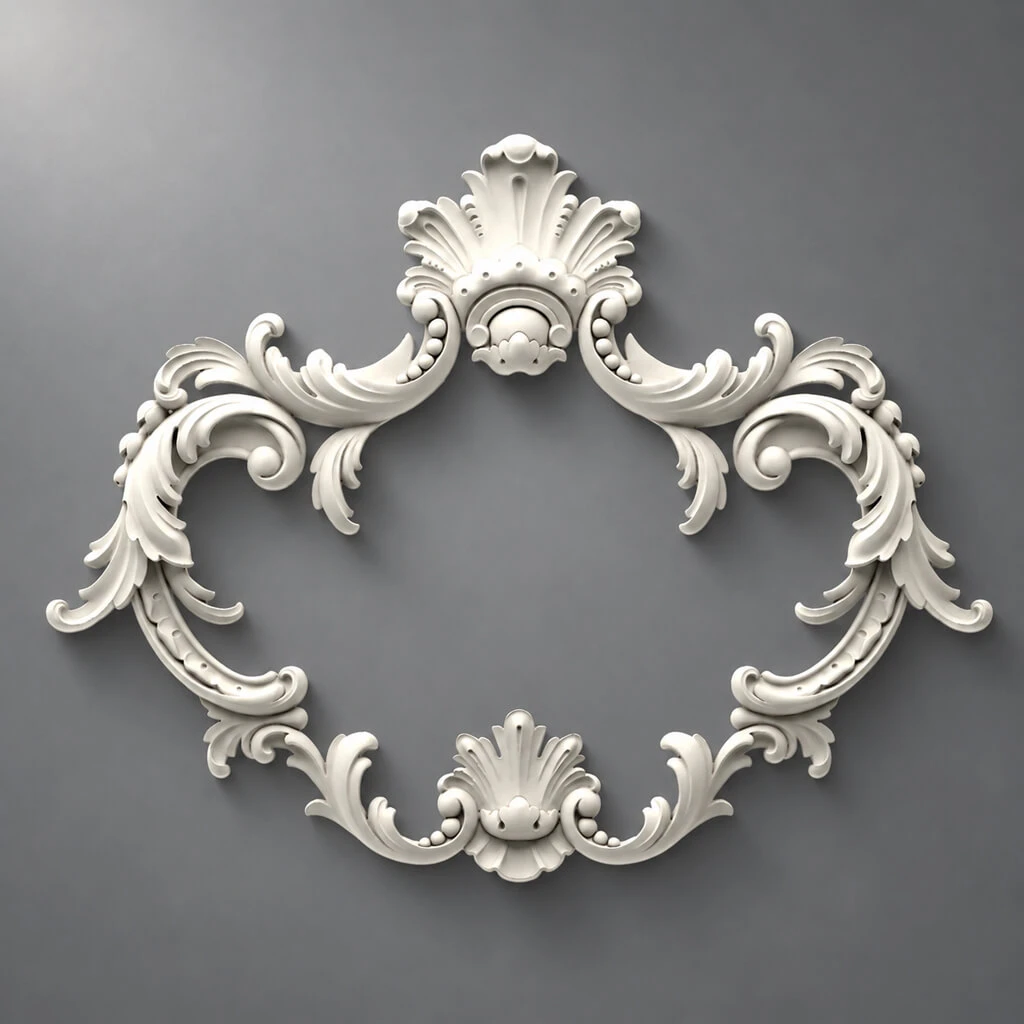
Corner decor MLDPU-1U-1.1 has dimensions 97×97×10 mm and is compatible with MLDPU-001 and MLD-001-MG. This element is needed when you want to make the frame more decorative and not be limited to a simple 45-degree miter cut.
Corner elements work as accents. They emphasize the four points of the frame and make the composition more classic. This works well for a mirror, decorative panel, or wall frame in a bedroom or living room. They look especially expressive if the frame is painted the same color as the wall: the ornament appears through light and shadow but doesn't shout.
However, corner decor should only be used if compatible with the selected profile. You cannot just pick any corner 'by beauty' and hope it matches the molding in height, width, and pattern. Before ordering, you need to check the product card, compatibility, and current parameters.
Central decor NPU-434.1 — for a complete composition
Central decor NPU-434.1 can be used when a simple rectangle seems too calm. The central element is added to the top part of the frame, in the middle of the composition, above the mirror or inside a decorative wall scheme.
Such decor is especially appropriate in classic and neoclassical interiors. It helps turn the frame from just a contour into a complete ensemble. For example, a mirror above a console can be framed with molding, and a central detail added on top. In the bedroom, a decorative frame behind the headboard can get a light accent at the center of the top line.
With central decor, it's important not to overdo it. If corner elements, an active profile, and contrasting paint are already used, an additional overlay can make the composition too busy. It's better to choose one main accent: either an expressive profile, corners, or a central element.
How to tell if such a frame suits your interior
Before buying a profile, ask yourself not just "is it beautiful?" but several practical questions. Where will the frame be? What does it frame? What is the wall size? Is there a door, window, sconce, outlets, switches, wardrobe, or dresser nearby? What style is already set in the room? The answers will help choose not only the model but also the scale.
If the room is small and the wall is narrow, it's better not to start with a wide profile. A thin frame will provide the needed structure without taking up space. If the room is spacious, ceilings are high, and the mirror is large, a too-thin molding will look weak. Here, a more confident profile is needed.
If the interior is modern and calm, it's better to paint the frame the same color as the wall. This way, it will work through relief rather than contrast. If the goal is to make an accent, you can choose a different color, but it should be supported by other elements: furniture, handles, lights, textiles, or doors. A contrasting frame without support often looks random.
If the room already has many details, the frame should be simpler. If the walls are empty and there is little furniture, you can afford a more expressive profile. In an interior, it's not the amount of decor that matters, but its consistency. One frame, placed precisely and to scale, can look stronger than five different elements that are not connected to each other.
Where to use a frame made of baseboard and molding in the interior
A frame made of baseboard or molding is appropriate in almost any room if you choose the right scenario. It's important not to place it "where there's leftover space," but to tie it to the function of the area.
In the living room, a frame can highlight a painting above the sofa, frame the TV area, create a panel around a decorative poster, or emphasize the symmetry of the wall. If the sofa is wide, the frame should be proportionate: a too-small rectangle above large furniture will look lost. It's better to focus on the width of the sofa, the placement of sconces, and the height of the backrest.
In the bedroom, a frame is often used behind the headboard. This could be one large rectangle, two symmetrical frames on the sides, or a composition around a mirror and vanity table. If the bedroom is calm, it's worth painting the frame the color of the wall. Then it will add depth but won't feel overwhelming.
In the hallway, a frame helps to design a mirror, console, bench area, or a long empty wall. Here it's especially important to consider walkways. The profile should not obstruct movement, catch on clothing, or conflict with door trims. Compact moldings are usually more practical.
In the study, a frame can border graphics, diplomas, a map, a decorative panel, or the wall behind the desk. Strict proportions and calm profiles work well for a study. Here, it's not about elegance, but about composure.
In a children's room, a frame can be used for photos, drawings, a decorative insert, or calm wall zoning. But it's better to choose a profile without excessive grandeur. A children's room changes quickly, so the frame should be versatile.
On furniture facades, molding helps support the room's style. For example, if the interior already has frames on the walls, a similar contour on a cabinet facade or decorative panel will create a connection. The main thing is not to overload the furniture, especially if it's small.
Material and finish: why polyurethane molding is convenient for a frame
This article is based on STAVROS polyurethane moldings. For a decorative frame, this is a practical material: the profile is lightweight compared to massive wooden elements, has a stable shape, is suitable for interior finishing, and is supplied ready for painting. Thanks to this, the frame can be adapted to the color of the wall, furniture, doors, or decorative panel.
Painting is an important part of the result. The same profile can look different. If you paint the frame the color of the wall, you get a restrained architectural effect. If you choose a shade one tone darker or lighter, the frame becomes a soft accent. If you make it contrasting, it will work as an independent decorative object. For classic interiors, enamel finishes are sometimes chosen, but specific coating options, material compatibility, and surface preparation should be clarified using product cards and STAVROS recommendations.
A wooden baseboard can also be used as a decorative profile, but that's a different purchasing logic. Wood has its species, grain direction, possible tinting, reaction to humidity, processing and fastening features. If the buyer specifically needs a frame made of wooden baseboard for a picture, the profile should be selected from a separate card, and the parameters of polyurethane products should not be automatically transferred to wood.
Polyurethane molding is convenient because it is easier to incorporate into a wall's decorative scheme. It is suitable for frames, rectangles, wall panels, furniture fronts, and decorative accents. But even with a convenient material, proper surface preparation, the right adhesive, careful marking, and clean joint finishing are important. The material helps but does not replace precision in work.
How to combine a frame with other STAVROS products
A molding frame rarely exists on its own. It works better when supported by other interior elements. If the room has a ceiling cornice, floor line, curtain rod, decorative overlays, or furniture with relief, the frame becomes part of a common language. If such elements are absent, they can be added gradually.
The first combination is moldings and baseboards. In the category of polyurethane moldings, cornices, and baseboards you can select a profile not only for the frame but also for other lines in the room. This helps make the interior cohesive. For example, the ceiling contour completes the top, the molding creates a frame on the wall, and the floor baseboard gathers the bottom.
The second combination is molding and decor for moldings. If the frame should look more classic, you can use molding decorative elements. Corners and central details add completeness to the composition. But they should be used sparingly: the decorative power should match the scale of the room.
The third combination is a frame and a mirror. If the mirror is large, the frame can become the main decorative element of the wall. In this case, it is better not to place many small objects nearby. A console, chest of drawers, sconce, or a pair of lamps are enough. The frame will work as an architectural framing.
The fourth combination is a frame and furniture fronts. If molding is used on the wall, a similar profile can be repeated on the furniture. This works especially well in classic and neoclassical interiors. The repetition should not be literal, but the character of the lines should match.
The fifth combination is a frame and related STAVROS articles. If you are planning not just one decorative frame but a general system of profiles, it is useful to look at the material about vertical harmony of ceiling plinth, floor plinth and mirror frame, as well as the article about plinth and molding as the floor and ceiling line of the interior. These materials help to see the role of the profile in the room more broadly.
How to calculate the length of molding for a frame
It is better to calculate before purchasing, rather than after the profile has already been chosen. The basic formula is simple:
2 × frame width + 2 × frame height + a margin of 10–15% for corners, trimming, and possible errors.
For example, you need to make a frame measuring 600×900 mm. The perimeter is calculated as follows:
2 × 600 + 2 × 900 = 3000 mm.
With the margin, approximately 3300–3500 mm of profile will be required. If the length of the chosen molding is 2600 mm, one strip will not be enough. You need to take two strips. The remainder may be useful for a test cut, a small frame, a decorative fragment, or as a backup during installation.
Stock is especially important if you are making 45-degree corners. Beginners often only calculate the clean perimeter and forget that during cutting, some material is lost to trimming. If you make a mistake in one corner, a short piece cannot always be fixed. Therefore, it is better to buy a profile with a reasonable margin than to later try to find the exact same batch or model.
If there are several frames, calculate each one separately, and then sum up the length. Do not forget that long sides are better cut from whole sections of the profile. Joints in the middle of visible sides are undesirable, especially on a painted frame. If a joint is unavoidable, it should be placed where it is less noticeable.
How to make a frame from baseboard: step-by-step guide
Before starting work, you need to choose a scenario. A frame for a painting, a frame for a mirror, a frame for a photo, and a decorative frame on the wall require different precision and different scales. But the general procedure is similar.
First, determine the outer size of the frame. If the frame will be around a painting, decide what gap to leave between the image and the profile. If the frame will be around a mirror, check where the mirror itself is and how it is attached. If the frame is decorative and there will be nothing inside, tie it to furniture, the center of the wall, ceiling height, and neighboring elements.
Then make the markings. It is better to use a level, tape measure, pencil, and painter's tape. Painter's tape helps to see the future frame before installation. Stick a rectangle on the wall and step back a few meters. Check if it is too high, too low, or if the frame conflicts with switches, sconces, doors, or furniture.
After that, calculate the profile. Cut the
After gluing, you need to carefully treat the joints. Even a good cut may have a small gap. It needs to be prepared for painting. The final appearance of the frame depends not only on the profile but also on the cleanliness of the joints. On a light wall, an uneven corner will be noticeable, so this step cannot be skipped.
How to make corners neat
Corners are the weakest point of a homemade frame. It is by them that you can see how carefully the work was done. Even an expensive profile will look bad if the corners diverge, have gaps, or do not match in height.
There are two approaches. The first is a 45-degree miter cut. It is suitable for a strict rectangular frame, modern classics, and clean lines. This method requires precise tools and careful marking. It is important to correctly determine the direction of the cut: the inner and outer sides of the profile have different lengths. An error in direction causes the part not to fit into place.
The second approach is to use corner elements. For example, MLDPU-1U-1.1 can be used if it is compatible with the selected profile. Corner decor removes part of the miter cut problem but requires a different precision: straight sections must fit evenly to the corner element, and all four corners must be positioned symmetrically.
Which option is better? If you need a strict modern rectangle, choose the miter cut. If the frame should be more decorative and classic, consider corner elements. But don't mix everything unnecessarily. Sometimes a simple clean corner looks more expensive than an overloaded composition.
How to paint a molding frame
Painting defines the character of the frame. The same molding can look almost invisible, architectural, contrasting, or grand — it all depends on the color and preparation.
The most subtle option is to paint the frame the same color as the wall. This is a good choice for modern interiors, bedrooms, studies, and small spaces. The relief will be visible through light and shadow but won't compete with furniture. This technique works especially well for frames on the wall without a picture inside.
The second option is a shade one tone darker or lighter than the wall. The frame becomes more noticeable but remains soft. This is suitable for neoclassicism, hallways, living rooms, children's rooms, mirror areas, or decorative panels.
The third option is a contrasting color. It should be used carefully. A contrasting frame immediately attracts attention, so it must be justified. For example, a dark frame can support furniture handles, lamps, table legs, or graphics in a picture. A white frame on a colored wall can look fresh if the room has white doors, a ceiling cornice, or furniture.
Before painting, you need to prepare the joints and surface. If there are gaps, unevenness, or glue residue, paint will not hide them but will emphasize them. Final neatness is especially important for a frame at eye level. All unconfirmed questions about the compatibility of paint, primer, and coating are best clarified before purchase and installation.
How to make a frame modern, not "palatial"
Many people are afraid of moldings because they imagine a heavy palace interior. But a molding frame can look very modern. To do this, you need to follow a few rules.
First — choose the right scale. A modern frame most often should not be too wide. Thin and medium profiles look lighter. MLDPU-001 and MLDPU-004 are suitable for a calm outline, MLDPU-002 for a universal frame. A wide profile is better left for a large mirror or an accent wall.
Second — do not overload the wall. If you are making a frame around a mirror, you don't need to add many small paintings, shelves, or decorative items nearby. If there are several frames on the wall, they should be unified by distance, size, and rhythm.
Third — paint it the color of the wall. This is the easiest way to make a classic profile modern. The frame does not argue with the interior but adds depth.
Fourth — watch the geometry. Modern classics are not about randomness. The frame should be straight, symmetrical, and logically positioned. If it is slightly higher than needed or shifted relative to the furniture, it will be noticeable.
Fifth — use decor sparingly. A corner or central element can be beautiful, but it doesn't have to appear in every frame. Sometimes a clean rectangle looks stronger.
Mistakes when buying and making a frame from a baseboard
The most common mistake is choosing a profile only by photo. In the image, the molding may seem thin, but in reality, next to a small painting, it may turn out too active. Or vice versa: the profile looks expressive in the card but gets lost on a large wall. Before purchasing, you need to match the size of the profile with the size of the frame and the room.
The second mistake is taking a profile that is too wide for a small object. The frame should support the painting or photo, not overwhelm it. If the image is small, it is better to choose a compact molding.
The third mistake is not allowing for extra material. The clean perimeter almost never equals the actual consumption. Corners, trimming, test cuts, and potential errors require additional centimeters. A 10–15% margin usually helps avoid the unpleasant situation where you're just short of one strip.
The fourth mistake is gluing without marking. Even if it seems clear "by eye," any misalignment will be noticeable on the wall. The frame must be aligned with a level and tape measure.
The fifth mistake is not considering adjacent elements. The frame may end up too close to a switch, trim, sconce, cabinet, or curtain. As a result, it will look random.
The sixth mistake is using unsuitable glue. Do not use an aggressive compound without checking compatibility with the material and base. Installation recommendations should be clarified in the product card or with a STAVROS manager.
The seventh mistake is painting without preparing the joints. Gaps and unevenness are especially noticeable after painting. Joints need to be brought to a neat state before the final coat.
The eighth mistake is making the frame separately from the overall logic of the interior. The profile should complement the room: furniture, doors, mirror, lighting, ceiling or floor molding. If the frame is not connected to anything, it looks out of place.
Who is a frame made of baseboard and molding suitable for?
This solution is suitable for those who want to add architectural character to the interior without completely redoing the room. A molding frame allows you to change the impression of a wall, mirror, or painting in a targeted way. There is no need to change all the furniture, rework the layout, or buy complex decor. It is enough to choose the right profile, make markings, and carefully complete the finishing.
The frame is suitable for owners of apartments in classic and neoclassical styles. It will support doors, baseboards, furniture facades, mirrors, and ceiling elements. At the same time, it can be made subtle if painted in the color of the wall.
Suitable for those framing a mirror. A frameless mirror often looks technical, especially in a hallway, bedroom, or living room. Molding helps turn it into an interior object.
It is suitable for those who want to decorate an empty wall. A painting or shelf is not always needed. Sometimes a frame is enough to make the surface expressive.
Suitable for those who love custom solutions. You can assemble a frame from molding to fit the specific size of a painting, mirror, or panel. This is convenient when standard baguette does not match in scale or style.
Suitable for craftsmen, designers, decorators, and buyers who are willing to pay close attention to marking and installation. The result depends on precision.
Who should choose a different solution
A frame made of baseboard or molding is not always the best option. If you need a ready-made load-bearing frame for a heavy painting, it's better to consider specialized baguette and fasteners. The molding in this article works as a decorative profile, not as an independent structural element.
If the mirror is heavy and must be held only by the frame, this approach is unsafe. The mirror itself needs to be mounted separately, considering weight and base. The decorative profile can cover the edge or frame the area, but should not replace engineering fastening without calculation.
If the interior is extremely minimalist and does not involve relief, even thin molding may be unnecessary. In this case, it's better to use smooth panels, color, light, or wall texture.
If the wall is very uneven, first address the base issue. Molding will emphasize irregularities, especially on long straight sections. On an uneven surface, joints may separate, and the profile may not fit tightly.
If there is no way to neatly cut corners or call a specialist, it is better to choose a scheme with corner elements or abandon the complex frame. Careless installation will ruin even a good profile.
How to buy moldings and decor for a frame on the STAVROS website
It is best to start the purchase by selecting the main category. In the section STAVROS moldings, cornices, and baseboards you can select a profile for a frame, wall, ceiling, or decorative composition. First, determine the scale: thin, medium, or wide profile. Then open the specific product card and check the size, material, purpose, installation features, availability, and ordering conditions.
If you need a small frame for a photo or facade, look at MLDPU-001. If you need a universal frame for a painting or mirror, compare MLDPU-002 and MLDPU-004. If you need a large architectural outline, consider MLDPU-003. Don't choose a profile just by name: be sure to check the size in millimeters.
If the frame should be decorative, additionally explore the section decoration for moldings. Corner elements and center pieces help assemble a more complex composition. But before ordering, you need to check compatibility with the selected molding.
Before purchasing, prepare the frame dimensions. Write down the external width, height, number of frames, desired margin, type of corners, and painting option. This will make it easier for the manager to help with selection, and for you to avoid unnecessary purchases or material shortages.
What to clarify before ordering:
- current availability of the selected profile;
- exact configuration;
- compatibility of the molding with corner or center decor;
- recommendations for glue and installation;
- surface preparation before painting;
- possibility of using the profile on a wall, ceiling, or furniture;
- terms of ordering and receiving the product.
Practical Selection Scenarios
If you are making a picture frame about 500×700 mm, you should not immediately take the widest profile. Most often, MLDPU-001 or MLDPU-004 is sufficient. Such a frame will emphasize the image but will not become heavier than the painting itself.
If you need to frame a mirror above a dresser, focus on the size of the mirror and the width of the furniture. For a medium mirror, MLDPU-002 is suitable. For a large mirror that should become the main element of the wall, you can consider MLDPU-003. If the mirror hangs in a small hallway, it is better not to overload it with a wide profile.
If the task is to make decorative frames on the wall in the bedroom, start by marking with painter's tape. Stick the future rectangles and look at them together with the bed, nightstands, sconces, and curtains. Then choose the profile. For a calm effect, MLDPU-001 or MLDPU-004 are suitable; for a more noticeable one, MLDPU-002.
If a furniture facade is being decorated, it is important to consider the thickness of the door, the handles, and the overall proportion of the furniture. Compact moldings look neater. Corner elements should only be added if the facade is large enough and the furniture style supports it.
If you want a classic frame with ornament, you can use the corner decor MLDPU-1U-1.1 if it is compatible with the selected profile. For a central accent, NPU-434.1 is suitable, but it needs to be integrated into the overall symmetry.
How to connect the frame with the wall color, furniture, and light
The frame should not live separately from the room. Its color, height, thickness, and relief should support existing elements. If the room has white doors, a white ceiling cornice, and light baseboards, a white frame will be logical. If the walls are painted in a complex shade, the frame can be made the same color to achieve a calm relief.
Furniture is also important. A frame above a dresser should relate to the width of the dresser. A frame behind a bed should relate to the width of the headboard. A frame above a sofa should relate to the sofa area, not just the center of the wall. If you only focus on the empty space, the composition may shift.
Light helps reveal the profile. Molding casts a shadow, so sconces, floor lamps, and natural light from a window are important nearby. On a completely dark wall without side light, the relief will be less noticeable. On a wall with side lighting, even a thin profile can look expressive.
If the frame surrounds a mirror, consider the reflection. The mirror may reflect a window, chandelier, cabinet, or passage. The frame should enhance a beautiful picture, not emphasize chaos. Sometimes it is better to slightly shift the mirror or change its height to make the reflection calmer.
How to avoid mistakes with the size of a frame on the wall
The size of the frame should be related to the object inside or the furniture nearby. If the frame is around a painting, it should not be too tight. Air is needed. If the frame is around a mirror, the profile should not cover the useful reflective surface if that is important for function. If the frame is decorative, it should have clear margins from the floor, ceiling, doors, and furniture.
For a single large frame on the wall, it is important to leave enough space around the edges. If the rectangle almost touches the trim or the corner of the room, it will look cramped. If the frame is too small on a large wall, it will get lost. A good size lies between these extremes.
For multiple frames, rhythm is important. Equal intervals make the composition calm. Different intervals can be beautiful but require design calculation. If you are making frames yourself, it is better to choose simple symmetry.
Height also affects perception. A frame placed too low makes the wall feel heavy. A frame placed too high loses its connection with the furniture. In the area of a sofa, bed, or dresser, the frame should support the piece, not hang separately above it.
Picture frame from baseboard: what to consider before buying
The painting demands respect for the image. The profile should not conflict with the color, subject, or size of the work. If the painting is bright, it's better to make the frame calm. If the image is restrained, the profile can be slightly more expressive. But in any case, the frame should help, not steal attention.
Thin profiles are suitable for graphics and small posters. For medium-sized paintings, a universal molding can be chosen. For large-format decorative panels, a wider profile is better. If the painting already has its own frame, the molding on the wall can serve as an external architectural outline, rather than a replacement for the baguette.
A good technique is to hang the painting inside a wall frame. Then the molding itself is on the wall, and the painting is attached separately. This allows you to create a composition where the image, wall, and furniture are connected. This option looks especially good above a console, sofa, fireplace, dresser, or headboard.
Before ordering a profile, check the size of the painting, the desired gap, and the overall frame size. Don't forget about the allowance for trimming. If painting is planned, consider whether the frame will match the wall color or differ from it.
Mirror frame from baseboard: how to make it safe and beautiful
A mirror visually expands the space, but without proper framing it can look cold. A molding frame adds interior appeal. This is especially important in the hallway, bedroom, bathroom area without direct water contact, dressing room, living room, and dining room.
For a mirror, you need to consider not only beauty but also safety. The decorative profile should not be the only fastening for a heavy mirror. First, the mirror itself is mounted, then the decorative framing. If the fastening parameters, weight, base, or components are not confirmed, they need to be clarified before work.
The width of the profile depends on the size of the mirror. A small mirror needs a compact molding. A large one needs a more confident outline. If the mirror is above a dresser, the frame should be related to the width of the dresser. If the mirror is full-length, it's important to consider the person's height, walkways, and distance to the floor.
A mirror frame made from ceiling molding can look expressive, but the profile must be chosen carefully. Not every ceiling molding looks good on a vertical surface. Molding is often a more versatile solution.
A frame made from molding on the wall: when nothing is needed inside
Sometimes the best frame is an empty one. There is no painting, mirror, or photo inside. There is only the wall plane, framed by molding. This technique makes the room calmer and more expensive in perception because it adds architectural structure without unnecessary objects.
Empty frames work well in the bedroom, living room, hallway, dining room, and study. They can be vertical, horizontal, paired, symmetrical, or elongated. It is important that the shape of the frame supports the room. Vertical frames visually lift the wall. Horizontal ones expand it. Paired frames create order.
In a modern apartment, such frames are often painted the color of the wall. Then they do not look like a decorative insert, but become part of the surface. This is especially beautiful on matte walls and with side lighting. The relief is visible softly, without aggressive contrast.
For an empty frame, you can use MLDPU-004 or MLDPU-002. If the wall is large and the frame should be the main element, a wider profile is suitable. If there are several frames, it is better to choose a calmer molding.
Why the STAVROS profile is better than a random plastic molding
A random plastic baseboard is often chosen only because it is readily available. But a decorative frame requires a different approach. The profile should look beautiful on the wall, have a neat relief, be suitable for painting, and combine with interior elements. Not every construction baseboard for the floor or ceiling can handle this task.
STAVROS moldings are designed for decorative use. They are used in interior compositions, on walls, ceilings, and furniture. They have a clear size, profile, product card, and the ability to select compatible elements. This is more important than it seems: the frame is assembled not from one strip, but from a system of parts.
A random profile may have a rough texture, an unsuitable shape, a too utilitarian appearance, or difficulty with painting. As a result, the frame will look not like an interior element, but like a repurposed building material. In a premium or simply neat interior, such a difference is noticeable.
STAVROS allows you to assemble a frame mindfully: choose a molding, add corner decor, select a central element, check dimensions and compatibility. This makes the purchase not an improvisation, but a normal interior solution.
FAQ
How to make a frame from a baseboard with your own hands?
You need to choose a profile, determine the frame size, calculate the perimeter with a margin, mark the wall, cut elements at 45 degrees or use corner decor, dry-fit the frame, apply mounting adhesive, fix the profile while it sets, process the joints and paint. For a neat result, even marking and clean corners are most important.
Which baseboard is best to use for a frame?
For a decorative frame, it is often more convenient to use not a floor baseboard, but a molding. It is better suited for a wall plane, picture, mirror, or furniture facade. For small frames, consider MLDPU-001; for universal tasks, MLDPU-002 or MLDPU-004; for a large mirror or accent wall, MLDPU-003.
Can a picture frame be made from a ceiling baseboard?
Yes, a picture frame from a ceiling baseboard is possible, but the profile should be chosen according to the scale of the image. If the picture is small, a bulky ceiling baseboard may look too heavy. Often, a molding is more convenient for a picture because it provides a neater decorative outline.
Can you make a mirror frame from a baseboard?
Yes, a mirror frame from a baseboard or molding can look very expressive. But it is important to remember: the decorative profile should not replace the safe mounting of the mirror. First, you need to secure the mirror considering its weight and the base, and then decorate it with molding.
How to calculate the amount of molding for a frame?
Use the formula: 2 × width + 2 × height + 10–15% allowance. For example, for a 600×900 mm frame, the net perimeter is 3000 mm. With allowance, you need approximately 3300–3500 mm. If the molding length is 2600 mm, two planks will be required.
What is better: mitering corners or using corner decor?
If you need a strict modern frame, it is better to make a 45-degree miter cut. If you want a more decorative classic look, you can use corner elements. But before purchasing, you need to check the compatibility of the corner decor with the selected molding.
Can a frame made of polyurethane molding be painted?
Yes, STAVROS polyurethane moldings are used for subsequent finishing and painting. It is better to check the specific surface preparation, compatibility of paint, primer, and glue in the product card or with a STAVROS manager.
How to make a frame modern rather than too classic?
Choose a thin or medium profile, paint it the color of the wall, do not use too much ornament, and maintain even geometry. A modern frame works through proportions and shadow, not through an abundance of decor.
Is the molding suitable for a frame on a furniture facade?
Yes, compact moldings can be used for decorative design of furniture facades if the profile is suitable in size and style. For such tasks, it is better to consider thin options, for example MLDPU-001 or MLDPU-004. Before installation, you need to check the base, method of attachment, and subsequent finishing.
Where to buy moldings and decor for the STAVROS frame?
Suitable profiles can be selected in the section of STAVROS polyurethane moldings, cornices, and baseboards. For decorative corners and central elements, see the section decoration for moldings. Before ordering, check the dimensions, compatibility, availability, and purchase terms in the product card.
Conclusion
A frame made from baseboard and molding is a simple in concept but very expressive interior technique. It helps to frame a painting, mirror, photo, decorative panel, empty wall, or furniture facade. The main thing is to choose the profile not randomly, but according to the task: a thin molding for a delicate contour, a universal profile for a painting and mirror, a wide molding for a large architectural frame, corner and central decor for a more classic composition.
STAVROS offers moldings, baseboards, and decorative elements from which you can assemble a frame for a specific interior. Before purchasing, it is important to calculate the length, check the profile dimensions, decor compatibility, ordering conditions, and installation recommendations. Then the frame will not be a temporary DIY project, but a neat part of the wall, furniture, or mirror composition.
A good frame does not shout about itself. It makes the interior more cohesive, emphasizes scale, adds symmetry, and helps connect the painting, mirror, furniture, and wall. That is its value: a small profile can change the perception of an entire room if chosen precisely and installed neatly.