
























Article Contents:
- One top drawer can change the character of the entire dresser
- NPU-251 is a carved overlay, not a molding, baguette, or furniture handle
- NPU-251 in numbers: what you need to know before fitting
- Why for the top drawer you should first check 207 × 80 × 9 mm
- When you should immediately check 311 × 120 × 14 mm
- Which NPU-251 size to choose for the dresser
- First measure not the dresser, but the top facade
- Side margins matter more than a simple answer "207 mm fits"
- A height of 80 mm also requires free space
- Paper template 207 × 80 mm — the most useful fitting before purchase
- For the large version, a second template 311 × 120 mm is needed
- A 9 mm relief cannot be assessed with a flat sheet
- The handle is the main neighbor of NPU-251 on the facade
- One central button: overlay above or around?
- Central handle-bracket: the most complex situation
- Two handles on the edges: the central field is freed up
- Integrated handle: the overlay can more easily maintain independence
- Can NPU-251 replace a furniture handle
- One NPU-251 on the top drawer is the cleanest scenario
- Why you don't have to repeat the overlay on every drawer
- Decorating only the top drawer creates hierarchy
- When NPU-251 should be repeated on all drawers
- Two top drawers side by side: one overlay each or a shared center
- Paired composition on one wide drawer
- One large or two compact: comparing the solution
- What to do if 207 mm is too little and 311 mm is too much
- Horizontal form is especially useful for a drawer front
- Where exactly to place NPU-251 on the top front
- Do not press the overlay against the top edge
- And do not lower it to the bottom edge of the drawer without a reason
- Molding frame around NPU-251: when it is really needed
- When the frame is not needed
- Draw the frame with painter's tape before buying the molding
- Inside the NPU-251 frame, there should be a free field
- Decor for moldings is only needed for a complex composition
- What not to do from scratch if you have ready-made STAVROS elements
- NPU-251 color: blend with the facade or emphasize
- For the first redo, it is safer to first test monochrome
- Painting all furniture and installing NPU-251 — one project or two
- If the dresser is already painted and you don't want to change the color
- The handles and NPU-251 must belong to the same system, even if they are different
- Do you need to change the handles together with the overlay
- Top overlay and dresser legs
- NPU-251 in the bedroom: one overlay is often stronger than a whole set
- A dresser in the living room requires a more serious scale check
- Entryway: the relief should also be checked along the movement route
- Kids' room: a classic accent is possible, but the surface should remain convenient
- Walk-in closet: a good scenario for a unified furniture system
- Commercial interior: distance is checked first
- What to buy together with NPU-251
- How not to confuse a decorative overlay with a facade replacement
- Practical scenario: a regular white dresser with three drawers
- Practical scenario: a wide dresser with a heavy countertop
- Practical scenario: a dresser with two handles per drawer
- Practical scenario: a long handle almost the full width
- Practical scenario: facades already have a thin frame
- Practical scenario: a completely smooth dresser, but a classic mirror nearby
- Practical scenario: wanting it to look more expensive, so decor is planned on each drawer
- Preparation for installation starts with positioning, not with glue
- An already painted facade requires a separate inspection of the base
- Do not use NPU-251 as a way to hide a problematic facade without diagnostics
- How to check the position before final fixation
- Mistakes that prevent a simple dresser from becoming classic and make it look overloaded
- Purchasing NPU-251 based only on a photo
- Checking only the length
- Ignoring the 9-millimeter relief
- Choosing the large version just because it is more noticeable
- Decor on every drawer without a preliminary layout
- Two NPU-251 where one large one is better
- Attempt to cover the joint of two boxes with an overlay
- Placement flush against the handle
- Placement almost under the countertop
- Position too low
- Molding frame without checking the inner field
- Adding corner decor just because it is sold in the same category
- Contrast painting without a mockup
- Simultaneous replacement of handles, addition of frames and several overlays without intermediate checking
- Attempt to use NPU-251 as a handle
- Buying the needed quantity by eye
- Choosing an article number instead of choosing a composition
- What is NPU-251?
- What sizes of NPU-251 are available?
- What size is best for the top drawer?
- Why does the article focus specifically on the size 207 × 80 × 9 mm?
- Do I need to install NPU-251 on every drawer?
- Can I install the pads on all drawers?
- How do I know if NPU-251 fits between the handles?
- What should I do if the handle is located strictly in the center?
- Can NPU-251 be placed around the handle?
- Can NPU-251 replace the handle?
- What is more important — the width of the dresser or the width of the facade?
- Is it enough that 207 mm is less than the width of the drawer?
- How to check the size before purchasing?
- Do I need to account for the 9 mm thickness?
- How does the large version differ besides length and height?
- Can the NPU-251 be installed on a very narrow drawer?
- What to do if 207 mm is too little, but 311 mm is too much?
- Can I use two NPU-251 207 mm on one wide front?
- What is better — two small ones or one large one?
- Is a frame needed around the NPU-251?
- When is a frame useful?
- What should the frame be made of?
- Do I need to buy decor for moldings together with the frame?
- Can I get NPU-251 only for the top drawer and leave the rest smooth?
- Won't the top drawer look separate from the rest?
- Can NPU-251 be installed on an already painted dresser?
- Can the overlay be used on a laminated facade?
- Do I need to remove the drawer for fitting?
- Do I need to repaint the entire dresser after installing NPU-251?
- Which looks calmer — an overlay matching the furniture color or a contrasting one?
- Can the overlay and the dresser be painted with the same material?
- Are new handles needed after installing NPU-251?
- What to do if the handle is too long?
- Will NPU-251 suit a dresser in a modern interior?
- Will NPU-251 suit neoclassicism?
- What is better for a classic dresser — one overlay or decor on all drawers?
- Can NPU-251 be used on a door?
- Can NPU-251 be used not on the top drawer, but on the middle one?
- If the top drawer is too low, where should the overlay be placed?
- Do I need to buy a spare NPU-251?
- How to calculate the quantity for four drawers?
- Can NPU-251 be mixed with other overlays on the same dresser?
- What is better — NPU-251 or just a molding frame?
- How to know when there is too much decor?
- Where to buy NPU-251?
- Where to look for other overlays if NPU-251 doesn't fit?
- Where to choose a frame around the overlay?
- What to check right before placing an order?
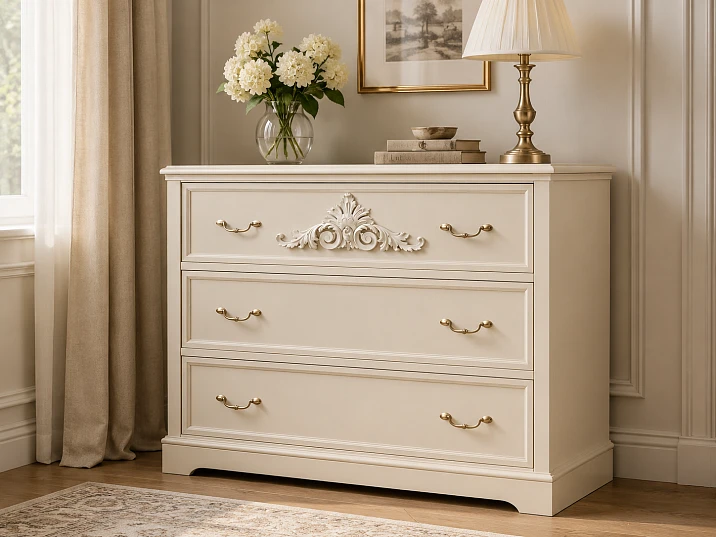
A dresser can be well-made, fit in size, stand comfortably in a bedroom or living room — and still seem too plain. Smooth facades, straight lines, ordinary handles, no decorative details. Changing such furniture only because of its appearance is unreasonable, especially if the body, drawers, and hardware are completely satisfactory. It is much more interesting to change one section of the facade and see how strongly it can affect the entire piece.
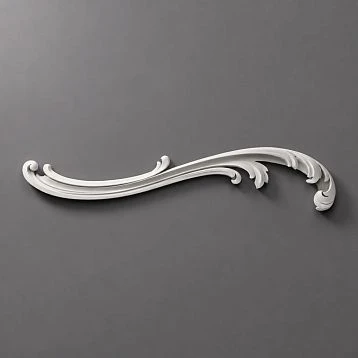
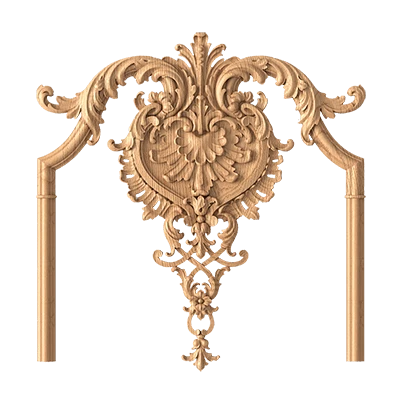
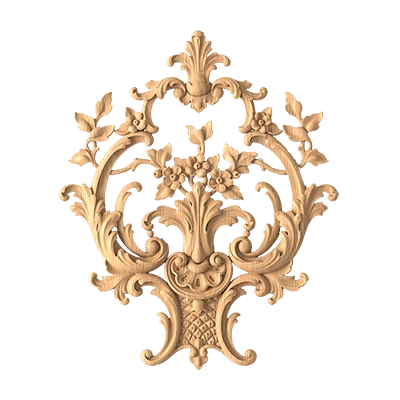
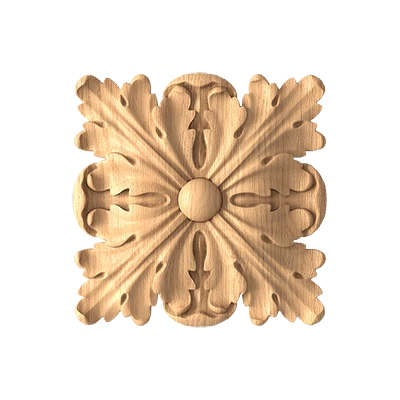
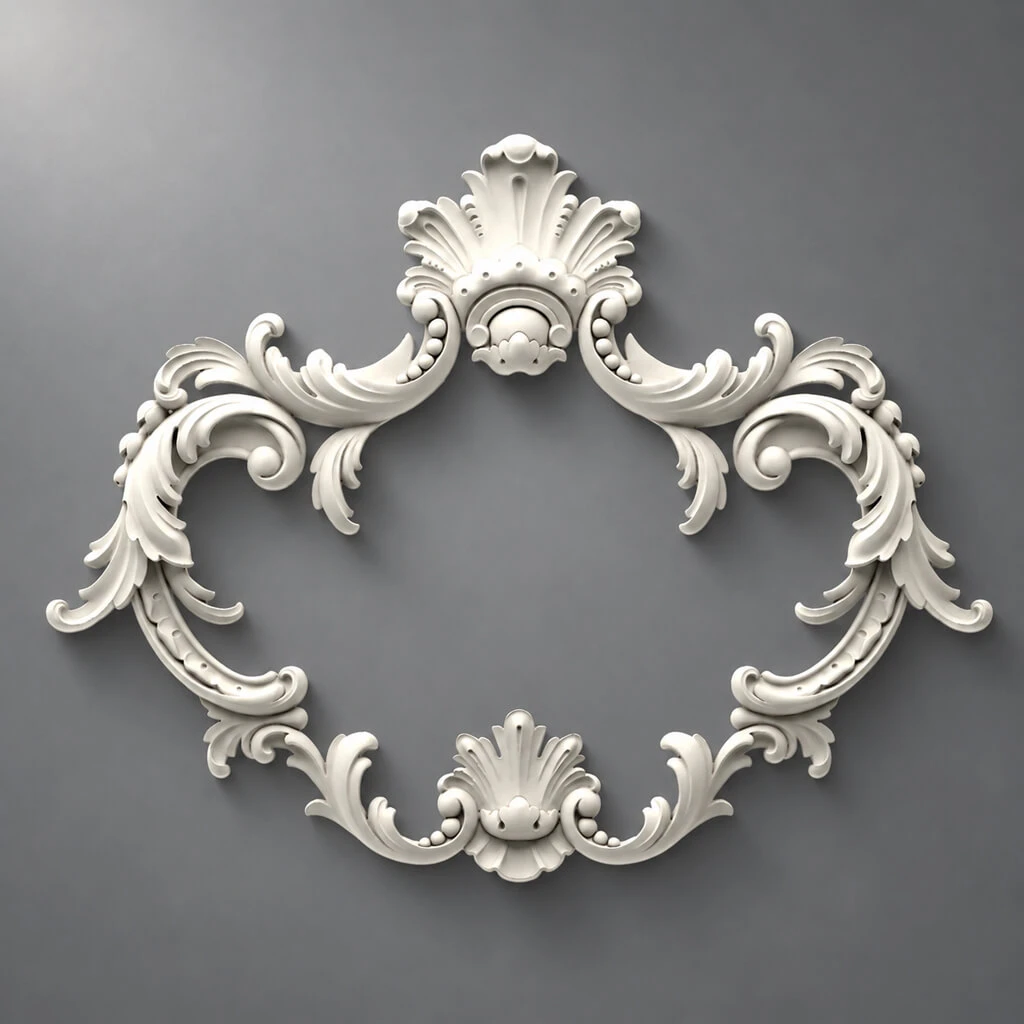
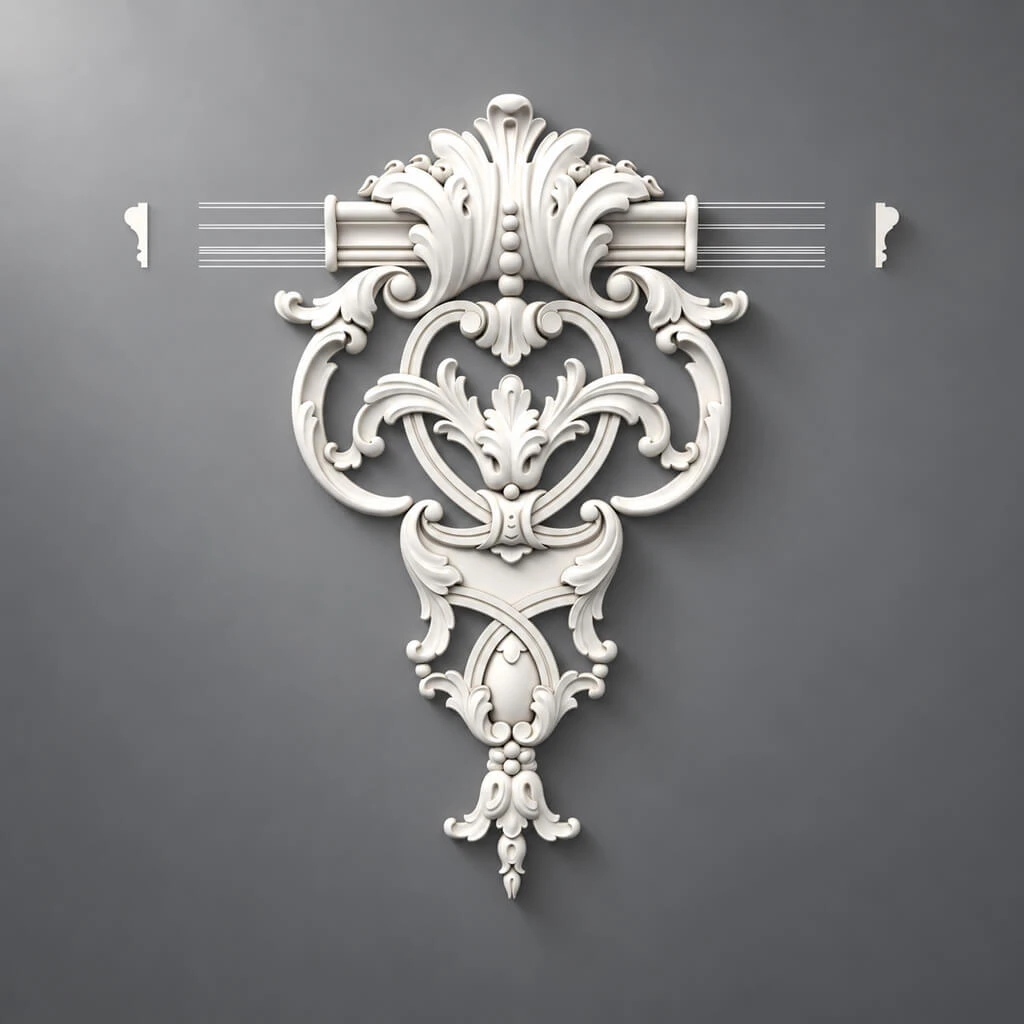
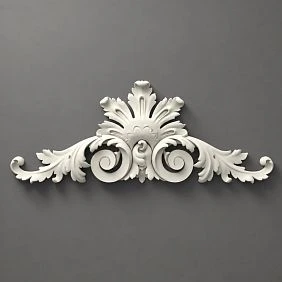
For this task, furniture molding is suitable, or more precisely, a separate carved decorative overlay. NPU-251 made of polyurethane is especially interesting for its elongated horizontal shape: the compact version measures 207 × 80 × 9 mm, so it can be considered not as a random ornament, but as the central decor of the top drawer of the dresser. The current NPU-251 card also features a larger version of 311 × 120 × 14 mm. This is a different scale that makes sense to test on a wide facade or a more massive dresser.
The idea is simple: the lower drawers remain calm, while the top one gets a carved accent. The dresser does not turn into a solid molding composition and does not require replacing all facades. A point appears that gives the piece a classic character and helps connect it with other furniture, a mirror, wall frames, or room decor.
However, buying an overlay just because the size "roughly fits" is premature. You need to understand whether 207 mm fits between the handle and the edges of the facade, whether the relief will block the convenient grip area, whether one element is enough, whether a molding frame is needed around it, and whether the 9-millimeter protrusion will be too close to the adjacent drawer.
That is why buy carved overlay NPU-251 better after trying on in full size. Then what is bought is not just a beautiful polyurethane decor, but a part that has already found its exact place on a specific dresser.
One top drawer can change the character of the entire dresser
When you want to make ordinary furniture more classic, the first thought is often too radical: replace the facades, add complex frames to each drawer, change the legs, handles, and tabletop. This turns out to be not a refresh, but a full-scale remake.
But the classic character of furniture is created not by the number of decorative elements. Hierarchy is much more important.
In old cabinet furniture, this principle is clearly visible: not every surface is necessarily decorated equally. There may be a main drawer, a central door, a top rail, or one highlighted panel. The other details are subordinated to it.
The same technique can be applied to a simple modern dresser.
The top drawer is closer to the tabletop and more often comes into view. If a small carved furniture overlay appears on it, the eye begins to perceive the upper part of the dresser as more developed. The lower smooth facades no longer seem "unfinished" — they become a calm background.
This results in a useful compromise between two extremes.
The first extreme is a completely smooth box.
The second is carved overlays on each drawer, moldings, corners, additional rosettes, and several other types of decor.
One NPU-251 on the upper front allows you to first test the principle itself. Does the classic ornament suit the piece? Does the scale match? Do you like the result specifically in your room?
If the answer is positive, the composition can be developed further. If not, you haven't turned the entire dresser into a complex decorative project.

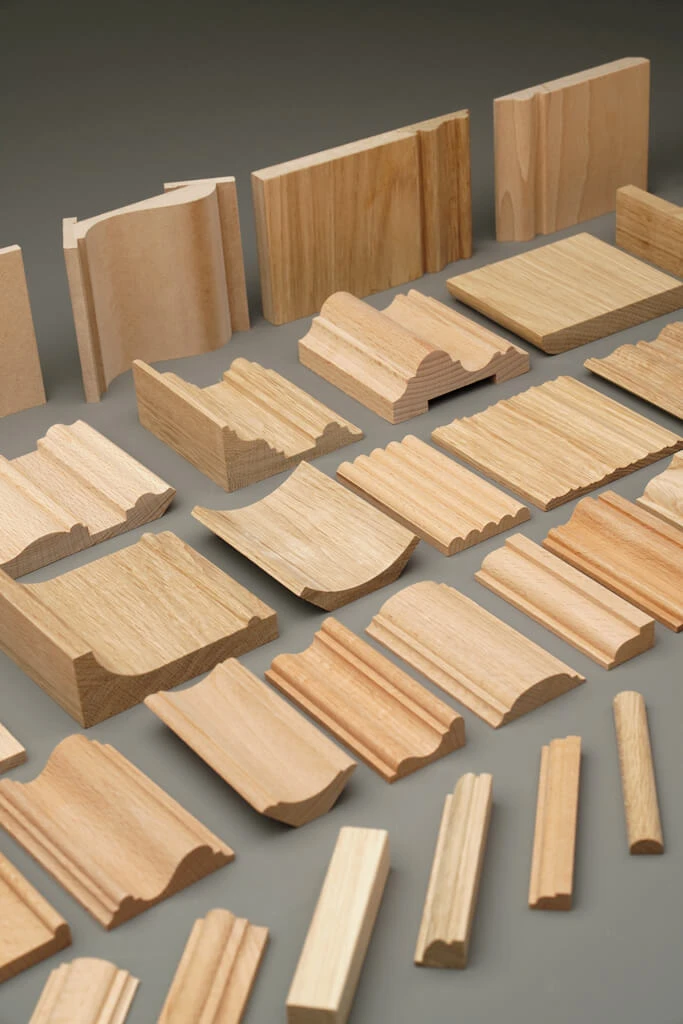
NPU-251 is a carved overlay, not a molding, baguette, or furniture handle.
The type of product is crucial for making the right purchase.
NPU-251 is a carved decorative overlay made of polyurethane. It has a complete ornament and fixed dimensions. It is not cut to length like a linear profile to build a rectangular frame.
It does not replace a handle.
It does not perform the function of furniture hardware.
It is not a baguette.
And it should not be called a rosette just because the piece may occupy a central position on the front.
The overlay works differently: the finished relief is placed on a flat surface and becomes an independent decorative element.
If you need exactly this approach, you can first look Buy decorative polyurethane overlays and compare NPU-251 with other options by size and proportions.
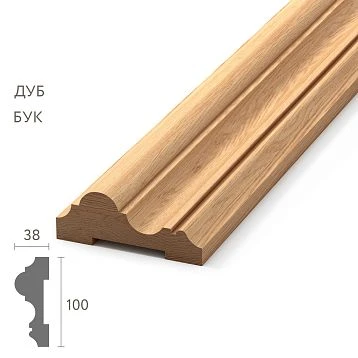
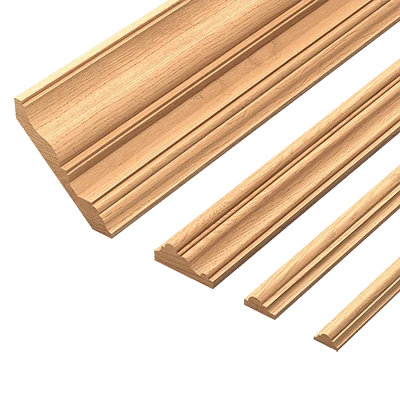
If the task is to draw a frame around the entire perimeter of the box, a different product group will be needed — buy polyurethane moldings.
And when you want to complicate the frame itself with corner, central, or connecting elements, it makes sense to separately look at buying polyurethane molding decor.
These products are not interchangeable. They can work together, but each is responsible for its own part of the composition.
Our factory also produces:
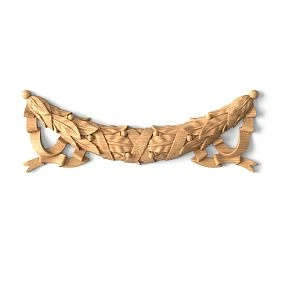
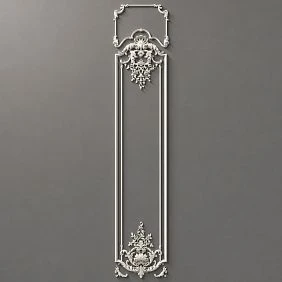
NPU-251 in numbers: what you need to know before trying it on
NPU-251 currently has two sizes, and for a dresser this is especially useful: you can compare not only "with or without overlay," but also two different scales of the same item.
| Characteristic | Compact NPU-251 | Large NPU-251 |
|---|---|---|
| Product type | Carved decorative overlay | Carved decorative overlay |
| Article number | NPU-251 | NPU-251 |
| Material | Polyurethane | Polyurethane |
| Size | 207 × 80 × 9 mm | 311 × 120 × 14 mm |
| Proportion | Horizontally elongated | Horizontally elongated |
| Main scenario of this article | Top drawer of a small or medium chest of drawers | Wider facade or large chest of drawers |
| What to check especially | Distance to the handle and side edges | Facade scale and free space around |
| Relief protrusion | 9 мм | 14 мм |
| Main method of checking | Template 207 × 80 mm | Template 311 × 120 mm |
The size 207 × 80 × 9 mm is interesting because it does not require a huge facade. With a width of just over 20 cm, the overlay remains a compact central ornament and does not tend to fill the entire drawer.
The 311 × 120 × 14 mm version is noticeably larger. This is not "the same decor, just a bit bigger." On a furniture facade, the increase is almost always felt more strongly than the numbers in the card suggest. The piece takes up more area, requires larger side margins, and protrudes further from the surface.
Therefore, the two sizes should be tried on as two independent design solutions.
Get Consultation
Why for the top drawer you should first check 207 × 80 × 9 mm
The top facade of a dresser is often lower than the lower drawers. Even if all drawers are the same, the area around the handle limits the free space.
The height of NPU-251, 80 mm, allows you to test a compact ornament without trying to fill most of the facade.
Even more important is the horizontal length of 207 mm.
The overlay can occupy the central part of a wide drawer, leaving noticeable side margins. It is precisely the empty space on the right and left that helps the relief look like a separate decorative piece, rather than a too-small panel trying to replace the entire finish.
The 9 mm relief also has practical significance.
Nine millimeters already creates volume. With side lighting, a shadow appears. But before purchasing, this protrusion is easier to check on a dresser, especially if a handle, tabletop edge, or protrusion of an adjacent element is nearby.
Therefore, for a regular smooth top drawer, 207 × 80 × 9 mm is a reasonable first template, but not an automatic recommendation without measurements.
When it's worth immediately checking 311 × 120 × 14 mm
There are dressers where a 207-millimeter piece will look too small.
Imagine a wide piece of furniture with a heavy tabletop, large handles, and a top drawer front almost the full length of the body. A small overlay turns out to be a tiny decorative spot, unrelated to the scale of the furniture.
Then it's worth making a second paper template — 311 × 120 mm.
It is noticeably larger and can work more confidently on a large front.
But a new limitation appears — the height of 120 mm.
Not every top drawer provides that much free space. Especially if the handle is already centered.
Additionally, the 14 mm protrusion needs to be checked against the handles, adjacent fronts, and structural elements of the dresser.
Therefore, the larger version suits not "more classic furniture," but a larger free field.
Which size of NPU-251 to choose for the dresser
| Situation | 207 × 80 × 9 mm | 311 × 120 × 14 mm |
|---|---|---|
| Narrow top drawer | Check first | Often requires too much space |
| Medium smooth front | Good starting option | Worth comparing with a template |
| Very wide facade | May look too small | May better match the scale |
| Central handle takes up a lot of space | Requires a separate layout | Even harder to place without conflict |
| Handles are located at the edges | Often enough center remains | Possible with large width |
| One overlay without a frame | Subtle accent | More independent decor |
| Inlay inside the molding frame | Suitable for compact inner field | Need a large frame |
| Small dresser in the bedroom | Often more appropriate | Check carefully |
| Large dresser in a spacious living room | Can be delicate | Often more interesting in scale |
Don't turn this table into a hard rule. The most accurate criterion is a full-size fitting on a specific facade.
First, measure not the dresser, but the upper facade.
The width of the entire item says little about the possibility of installing the NPU-251.
The dresser has side panels.
Gaps.
Body frames.
Countertop overhang.
Perhaps the facade is recessed or, conversely, overlay.
Therefore, we are interested in the clear field of the top drawer.
Measure its width from the visible left edge of the facade to the right.
Then the height.
After that, mark the position of the handle or two handles.
If there is a keyhole, decorative hardware, or another detail, it also needs to be transferred to the diagram.
Now it becomes clear where the NPU-251 can actually be located.
Side margins are more important than the simple answer "207 mm fits."
Suppose the facade has a width of 230 mm.
An overlay 207 mm long will physically fit there.
But about a centimeter will remain on each side.
Compositionally, this may look cramped.
Therefore, the criterion "size smaller than the facade" is insufficient.
Need to evaluate the free field.
The overlay needs a background.
Especially carved.
The ornament should have the ability to end, after which the eye will see the clean plane of the facade and only then its edge.
If the relief almost touches the side borders, the overlay starts to look as if it was chosen on the principle of 'just to fit'.
A height of 80 mm also requires free space.
The same applies to the vertical.
If the facade is 100 mm high, NPU-251 with a height of 80 mm will leave too little space at the top and bottom.
If the facade is significantly higher, it becomes possible to choose the position.
The overlay can be placed strictly in the center.
A little higher.
Attach it to the handle.
Or include it in the frame.
Therefore, before ordering, you need to measure two sides, not just one length.
A paper template 207 × 80 mm is the most useful fitting before purchasing.
Take thick paper or cardboard.
Cut out a rectangle 207 × 80 mm.
There is no need to reproduce the entire ornament perfectly. It is enough to schematically mark its overall silhouette so that the template does not come across as a heavy solid block.
Attach it to the facade with painter's tape.
Close the drawer.
Step back.
Look at the dresser from the point where it is usually seen.
Don't evaluate only up close.
If the furniture is opposite the bed, sit on the bed.
If it's a living room, look from the sofa.
If the dresser is in the hallway, stand at the entrance.
Sometimes NPU-251 seems large enough up close, but from three meters away it becomes barely noticeable.
Conversely, a large option may seem too active when trying it on, but from a normal distance it turns out to be proportional.
For the large version, a second template of 311 × 120 mm is needed.
Don't try to mentally enlarge the first one.
The difference is too significant.
Cut out the second rectangle of 311 × 120 mm.
Compare the photos.
It is better to photograph the entire dresser, not just the drawer.
In a close-up, any overlay seems significant. In a general view, its real scale relative to the tabletop, legs, and the entire body becomes clear.
A 9 mm relief cannot be assessed with a flat sheet.
The compact NPU-251 has a thickness of 9 mm.
A flat paper template shows length and height, but not volume.
If a handle or relief frame is nearby, make a simple volumetric mock-up: place cardboard or other temporary material of approximate thickness under the template.
The task is not to accurately reproduce the product.
You need to understand whether a conflict arises between two protruding parts.
This is especially relevant if the handle is located directly under the overlay.
The handle is the main neighbor of NPU-251 on the facade.
The top drawer usually already has a furniture handle.
This means the new part does not appear in an empty field.
This is where most beautiful ideas meet real furniture.
The handle can be:
a central button;
a bracket in the center;
two small handles closer to the edges;
a long horizontal handle;
a profile or integrated into the top edge.
Each option requires its own scheme.
One central button: overlay above or around?
If the small handle is strictly centered, placing the NPU-251 on the same axis is easiest.
But vertically, the functions need to be separated.
For example, the overlay above, the handle below.
This creates a clear hierarchy:
the ornament on top;
the hardware below.
However, there should be free space left between them.
If the relief almost touches the handle, the details start to look like one random cluster.
Too large a gap can also break the connection.
Therefore, this template is especially useful here.
Central handle-bracket: the most complex situation
The horizontal bracket occupies approximately the same compositional zone as the NPU-251.
This results in two horizontal lines, one above the other.
If the bracket is long, the overlay may start to compete with it.
There are several options.
The first is to raise the NPU-251 higher, if the facade height allows.
The second is to abandon the overlay on this drawer and design a different facade.
The third is to reconsider the hardware within a separate project.
But you cannot buy the NPU-251 expecting it to somehow "integrate" around a long handle without checking the dimensions.
Two handles on the edges: the central field is freed up
For NPU-251, this is one of the most convenient scenarios.
The hardware is located on the left and right.
The center is free.
A compact horizontal overlay can occupy exactly this area.
But an accurate check of the distance between the inner edges of the handles is needed, not just between their mounting points.
A voluminous handle can extend into the central area more than is visible from the holes.
Integrated handle: the overlay can more easily maintain its independence
If the drawer opens via a profile or hidden grip along the top edge, the central part of the facade is free.
In that case, NPU-251 gets more placement options.
It can be centered.
You can add a frame.
You can use the large version on a wide drawer.
But even with a hidden handle, you need to check that the relief does not fall into the natural hand movement zone.
Beautiful decor should not make a person search every time for where to place their fingers.
Can the NPU-251 replace a furniture handle?
No.
This is a decorative overlay, not hardware for opening.
Even if the relief seems convenient for gripping, you cannot turn a decorative element into a working handle just because of external similarity.
The overlay has a different function.
It decorates the facade.
Opening should be provided by the intended furniture mechanism and hardware.
One NPU-251 on the top drawer is the cleanest scenario
Why does the article focus specifically on it?
Because it is minimal intervention.
Imagine a dresser with four smooth drawers.
We are not trying to cover all four with the same decor.
We do not change the body.
We do not build a complex frame across the entire furniture facade.
One NPU-251 appears on the top drawer.
And immediately a top decorative zone emerges.
This is like a collar on simple clothing: a small detail can change the character of the entire item without taking up much space.
For a first experience with polyurethane furniture decor, this is a very reasonable scheme.
Why you don't have to repeat the overlay on every drawer
Repetition seems logical: if one piece is good, four should be even more expressive.
But furniture composition doesn't always work that way.
Four identical carved overlays create a very strong rhythm.
If the facades are placed close together, the pattern starts to repeat at short intervals.
Instead of one accent, you get a continuous decorative grid.
For a large classic dresser, this might be justified.
For a simple modern piece that you only want to shift slightly toward classic, it's already too much.
So first, decorate only the top drawer virtually or with templates.
Then add a second template to the bottom.
Then a third one.
Compare.
Sometimes after the second one it immediately becomes clear: one was stronger.
Decorating only the top drawer creates a hierarchy.
This works especially well if the top facade is slightly lower than the others.
It is naturally perceived as a separate part.
NPU-251 enhances this difference.
If all drawers are the same size, the overlay still creates a visual top.
The eye begins to read the dresser from top to bottom, rather than as a repetition of four identical rectangles.
This effect is what makes simple furniture more distinctive.
When NPU-251 is worth repeating on all drawers
There are situations where repetition is justified.
The dresser is wide.
The facades are tall.
The handles are small.
The ornament does not occupy a large part of each field.
The room is quite spacious.
Other interior elements support the classical style.
In this case, identical overlays can create a consistent facade rhythm.
But buying a full set without a preliminary layout is not worth it.
Cut out as many paper templates as the number of drawers you plan to decorate.
And only after that decide on the quantity.
Two top drawers side by side: one overlay for each or a shared center.
Some dressers have a top row of two small drawers.
Here, NPU-251 requires especially careful checking.
One overlay for each front may turn out to be too wide.
One piece centered on the entire dresser is not suitable if it crosses the joint of two movable drawers.
The decorative overlay must not cover the line between individual fronts.
Each drawer must work freely and independently.
If NPU-251 does not fit on a separate front, it is better to choose a different decor rather than try to use it over a structural joint.
Paired composition on one wide drawer
On a very wide facade, one NPU-251 measuring 207 mm can get lost.
The idea arises to install two.
This is acceptable as a compositional technique.
But two overlays are no longer a single central accent.
A rhythm appears, and the need to precisely maintain distances:
from the left edge to the first piece;
between the overlays;
from the second piece to the right edge.
If these intervals are random, the pair looks like two independently glued items.
On a regular dresser, before using this layout, it's better to check the large NPU-251 311 × 120 × 14 mm.
One large overlay often turns out to be calmer than two small ones.
One large or two compact: comparing the solution
| Option | What the facade gets | Main risk |
|---|---|---|
| One NPU-251 207 × 80 × 9 mm | A small central accent | May get lost on a very wide drawer |
| One NPU-251 311 × 120 × 14 mm | A stronger center | May take up too much height |
| Two NPU-251 207 × 80 × 9 mm | Repetition and horizontal rhythm | Harder to maintain distances |
| NPU-251 inside the frame | Finished panel field | The frame may turn out to be tight |
| Overlays on all drawers | Unified ornamental system | Easy to overload the dresser |
The choice should be made not by the amount of decor, but by the role the top facade should play.
What to do if 207 mm is too little, and 311 mm is too much
There is no need to choose the "lesser evil."
NPU-251 is just one item in the category.
If both sizes look wrong, it's better to open carved polyurethane overlays for furniture and choose a different model.
This is a normal commercial choice.
The interior doesn't have to adapt to the product you like.
On the contrary, the product should fit the specific furniture.
The horizontal shape is especially useful for a drawer front
The drawer itself is elongated horizontally.
Therefore, a horizontally oriented pattern is easier to integrate into its geometry.
A vertical overlay on a low long facade could look random.
A square one would create too compact a center.
NPU-251 repeats the direction of the drawer itself.
That is why the size 207 × 80 mm deserves testing on a dresser.
If a different horizontal scale or another pattern is needed, you can compare horizontal polyurethane overlays and not limit yourself to a single article.
Where exactly to place NPU-251 on the upper facade
The most obvious option is the center.
But the word "center" needs clarification.
There is the geometric center of the facade itself.
There is a free space between the handles.
There is a center of the molding frame.
Sometimes they coincide.
Sometimes no.
If the handle is installed below the geometric center, the overlay can be slightly raised so that there is space between it and the hardware.
If a frame is being built around it, NPU-251 is better evaluated relative to the inner field of the frame.
If the facade is asymmetric due to a keyhole or another detail, ordinary mathematical centering may look incorrect.
Therefore, the marking is always checked visually on the finished drawer.
Do not press the overlay against the top edge
The dresser has a tabletop.
It forms a strong horizontal line.
If the NPU-251 is raised almost flush against it, the two parts start to conflict.
The overlay needs its own space.
In addition, the protruding countertop can cast a shadow.
The relief located directly beneath it may be harder to read under certain lighting.
And don't lower it to the bottom edge of the drawer without a reason.
The bottom edge is the boundary with the adjacent facade.
If the overlay ends up almost at the joint, it creates the impression that it belongs to two drawers at once.
This looks especially bad if the gap between the facades is dark and clearly visible.
It's better when the NPU-251 is clearly within a single field.
Molding frame around the NPU-251: when it's really needed
One overlay on a perfectly smooth wide drawer sometimes looks lonely.
Not bad.
Exactly lonely.
There is ornament, but the facade remains a large empty rectangle.
Then a frame helps.
buy polyurethane moldings makes sense if you have decided in advance to build a separate internal field around NPU-251.
This results in a three-level composition:
the edge of the drawer;
molding frame;
carved overlay in the center.
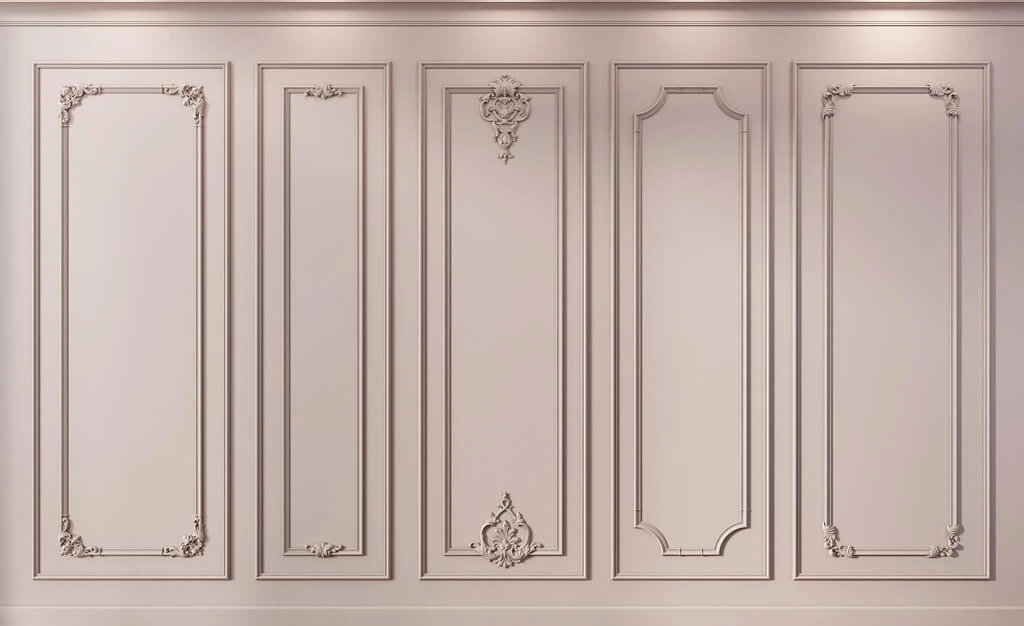
Thus, the facade becomes much closer in logic to classic paneled furniture.
When a frame is not needed
Narrow drawer.
Small chest of drawers.
Expressive handle.
Little space around the overlay.
Under these conditions, another line around the perimeter will only make the facade denser.
NPU-251 can work perfectly on its own.
This is especially useful when the goal is not to literally imitate historical furniture, but to add one classic motif to a modern piece.
Draw the frame with painter's tape before buying the molding.
You don't need to buy several meters of profile at once.
First, take some painter's tape.
Stick a rectangle around the paper template NPU-251.
Take a look.
Make the frame bigger.
Then smaller.
Remove it completely.
Compare the photos.
This is a simple way to understand whether you really need the second type of decor.
Inside the frame, NPU-251 should have a free margin.
The frame should not almost touch the relief.
Otherwise, you get a cramped box.
The point of the frame is to compose the layout, not to squeeze the central ornament.
The larger the NPU-251, the larger the inner field should be.
Therefore, the 311 × 120 mm version will require significantly more space.
Decor for moldings is only needed for complex compositions.
If a simple rectangle seems too strict, there are additional polyurethane elements for molding systems.
You can buying polyurethane molding decor and develop the frame with corner or other decorative details.
But for a small dresser, this is the next level of richness.
First, one NPU-251 is checked.
Then a simple frame.
And only if it is truly insufficient — additional decor.
It is this sequence that protects furniture from overload.
What not to make from scratch if there are ready-made STAVROS elements
The topic starts with the words "how to make a simple dresser classic," but this does not mean that you need to manually carve a classic ornament.
There is no need to transfer the design onto a wooden blank.
There is no need to master carving.
There is no need to try to mold a complex overlay yourself.
There is no need to assemble an ornament from random fragments yourself.
The ready-made NPU-251 already sets the shape.
The buyer solves more useful tasks:
where to place it on the dresser;
what size to choose;
whether a frame is needed;
what color to use;
how many elements to order;
how to prepare existing furniture for decorative updating.
This is precisely the practical meaning of ready-made polyurethane molding. The complex relief is purchased ready-made, and efforts can be focused on the composition and neat finishing of the furniture.
If the project goes far beyond one dresser, it is convenient to first look You can buy ready-made stucco matching the Baroque style. Calculate the quantity: linear meters of cornices and moldings, number of rosettes, pilasters, consoles, corner elements. Add a ten to fifteen percent allowance for trimming. and assemble a system from suitable categories, rather than searching for each decorative detail randomly.
Color NPU-251: blend with the facade or emphasize
There are two fundamentally different approaches.
The first is that the overlay becomes part of the facade itself.
It has the same color.
The contrast is minimal.
The ornament is visible thanks to volume and shadow.
This solution is especially good if you want to make the dresser more classic but keep a calm character.
The second one — the overlay differs in color.
Now the eye notices not only the relief but also the silhouette.
The detail is perceived much more actively.
This means color also affects the perception of size.
NPU-251 207 × 80 mm, almost dissolved in the color of the facade, and the same overlay in strong contrast — visually two different elements.
For the first redo, it's safer to first test monochrome
Not in a technical sense, but in a design sense.
If the dresser already has a good color, you can try making the overlay part of that surface.
Then even a pronounced ornament does not look like a decoration glued on top.
If the result seems too calm, contrast can be considered further.
But the specific painting scheme, priming, and compatibility of the chosen coating with polyurethane and the existing facade need to be checked before finishing. There is no universal paint "for any dresser."
Painting all the furniture and installing NPU-251 — one project or two
If the dresser is planned to be completely repainted, the decorative scheme should be determined in advance.
The reason is simple.
After the NPU-251 appears, you need to decide whether it will be:
painted together with the facade;
highlighted with a separate color;
combine with handles;
fit into the molding frame.
The overall order of finishing work depends on this.
You shouldn't finish the entire dresser first and then apply the overlay for the first time, only to discover that the chosen paint makes it too prominent.
If the dresser is already painted and you don't want to change the color
Then the task becomes even more precise.
You need to match the NPU-251 design to the existing facade.
You don't have to repaint all the furniture for just one overlay.
But before final installation, it's advisable to make a sample of the future color of the decorative piece and hold it against the dresser.
A small piece of painted cardboard already shows how strong the contrast will be.
Handles and NPU-251 should belong to the same system, even if they are different
It is not necessary to look for the same ornament.
Scale is much more important.
A tiny handle next to a very large NPU-251 can get lost.
A large complex bracket next to an active plate can create too dense a center.
If the handles are already expressive, a small version of NPU-251 is often more interesting than a large one.
If the hardware is extremely simple, the plate can take on a more prominent role.
Do you need to change the handles together with the plate?
No.
If the existing hardware matches in style and size, there is no need to change it just for NPU-251.
But if it is the handles that make the dresser emphatically modern, and the goal is to achieve a more classic look, the question of hardware is indeed worth considering.
Before drilling new holes, first make a visual layout.
The overlay itself can change the character of furniture more than it seems.
Top overlay and dresser legs
The legs are on the opposite side of the piece, but visually participate in the overall style.
If the dresser stands on simple straight supports, one classic NPU-251 creates a deliberate contrast.
If the furniture already has carved or turned legs, the overlay connects the top and bottom.
But you don't need to automatically redo the supports just because a decorative facade has appeared.
The purpose of this article is to update the dresser without unnecessary reconstruction.
NPU-251 in the bedroom: one overlay is often stronger than a whole set
The bedroom is usually viewed from close or medium distance.
The dresser often stands opposite the bed, next to a mirror, or against a wall with relatively calm decor.
Here, the compact NPU-251 can read well even on its own.
Especially if the top drawer is almost at eye level for a seated person.
Many identical overlays can make furniture too busy for a calm space.
Therefore, the bedroom is one of the best scenarios for a single top accent.
A dresser in the living room requires a more serious scale check.
In the living room, the viewing distance is often greater.
The dresser can stand against a long wall.
Above it — a painting, mirror, TV, or wall composition.
The 207-millimeter overlay may turn out to be too delicate.
In that case, you need to compare 311 × 120 × 14 mm.
But you shouldn't choose the larger version just because the room is spacious. The dresser itself can be small.
The scale of the detail is determined primarily by the furniture.
Hallway: the relief should also be checked along the movement path.
A narrow hallway creates a different scenario.
People pass close to the furniture.
They open the top drawer.
They put keys on the countertop.
Therefore, a protrusion of 9 or 14 mm should be perceived not only as a beautiful light-and-shadow effect.
Check whether the decor falls into the zone of constant contact with a hand or clothing.
Children's room: a classic accent is possible, but the surface should remain comfortable
Dressers in a children's room are used actively.
Therefore, a complex relief on each facade may be less practical than a single overlay at the top of the furniture.
But the specific placement needs to be checked against the actual use of the dresser.
The decorative idea should not interfere with the drawers opening or create an uncomfortable area for hands.
Walk-in closet: a good scenario for a unified furniture system
If the room has several wardrobes, cabinets, and a dresser, NPU-251 can support the existing classic furniture language.
For example, wardrobes have framed facades, while the dresser is completely smooth.
One overlay plus a thin frame on the top drawer visually connects the items without requiring the entire dresser to be redone.
Commercial interior: the distance is checked first
In a salon, boutique, hotel, or other public area, furniture is often viewed from a greater distance.
Then the compact NPU-251 may become too small.
But for a stand, a small dresser against the wall, or a decorative item, it may still be appropriate.
Before ordering a batch, a full-size mockup is always made.
What to buy together with NPU-251
Not every dresser needs a set of additional items. But the buyer should understand which directions are truly related to the task.
| What to add to the purchase | When this is needed | What for | Link |
|---|---|---|---|
| NPU-251 | If the size is checked on the facade | Main carved accent | buy carved overlay NPU-251 |
| Other overlays | If NPU-251 does not fit in scale | Choose a different shape or size | Buy decorative polyurethane overlays |
Horizontal overlays
How not to confuse a decorative overlay with a facade replacementThe overlay does not change the geometry of the drawer itself. If the facade is damaged, warped, has serious chips, or structural defects, the decorative element does not automatically solve this problem. First, the furniture must be suitable for normal use. NPU-251 works with the external appearance, not replacing repairs to the body or hardware. Practical scenario: a regular white dresser with three drawersThe facades are smooth. The handles are small and located in the center. The dresser is functional but looks too neutral. We start with a template of 207 × 80 mm. We place it on the top drawer above the handle. If the margins on the left and right are sufficient, and there is air left above to the countertop, the scheme already works. We leave the bottom two drawers empty. We get one classic top accent without turning the entire piece of furniture into stylization. Practical scenario: a wide dresser with a heavy countertopOn such a piece, the 207 mm version may seem small. We check 311 × 120 mm. If the large template occupies the central part of the facade but does not come too close to the edges and the handle, it may better match the scale. If even 311 mm looks lonely, the next step is not a second overlay, but trying a molding frame. Practical scenario: a dresser with two handles per drawerThe center is free. This is a favorable situation. NPU-251 can be installed between the handles, preserving symmetry. But what is measured is the actual gap between the handle bodies. If it is only slightly wider than 207 mm, the decorative piece may look cramped. Then a different size of the plate or a different layout is needed. Practical scenario: a long handle almost the full widthHere, NPU-251 may not fit the upper front at all. The long handle already occupies the main horizontal line. Another elongated piece above it creates two competing lines. It's better to try a different drawer, a different type of decor, or abandon the idea without replacing the hardware. Practical scenario: facades already have a thin frameIn this case, the NPU-251 ends up inside the finished field. This is one of the most straightforward options. The key is to check the internal size of the existing frame. The overlay should leave free space around itself. If 207 mm is too much, the NPU-251 should not be installed just because the external width of the drawer allows it. Practical scenario: the dresser is completely smooth, but there's a classic mirror nearbyOne overlay on the top drawer can tie the furniture to the mirror. You don't necessarily have to literally repeat the frame's ornament. A general sense of carved decor is enough. If there are already many details between the furniture and the mirror, a frame around NPU-251 may be unnecessary. Practical scenario: you want it to look 'more expensive,' so decor is planned on every drawer.This is the moment when it's better to stick with templates. Place four paper NPU-251s. Look at the dresser as a whole. Then remove the three lower ones. Compare. Very often, the version with a single top overlay is more convincing precisely because it has hierarchy. Preparation for installation begins with positioning, not with glue.Before discussing the method of fixation, the location must be finally determined. Close all drawers. Check the gaps. Find the facade axis. Apply the template. Open the drawer. Grab the handle. Make sure the future relief does not fall under the hand. Only after this does it make sense to move on to mounting materials. The specific compatibility of the adhesive, base, and finish must be checked against the recommendations for polyurethane decor and the material of the facade itself. An already painted facade requires a separate check of the base.The fact that the overlay is decorative and relatively compact does not mean that any mounting system is compatible with any coating. Dressers can be: painted; laminated; veneered; lacquered; with film facades. Therefore, it is impossible to give one universal gluing scheme for all options. Before installation, you need to understand what the front surface is made of and what condition the coating is in. Do not use NPU-251 as a way to hide a problematic facade without diagnostics.A small scratch in the decor area is one thing. A peeled coating is another. If the base is unstable, installing an overlay on top of it does not fix the problem. First, the surface itself is put in order. How to check the position before final fixationMark the central vertical axis with painter's tape. If the overlay must be strictly centered, align its center with this line. Then mark the height. Take a photo. After that, slightly shift the template upward. One more photo. Move it back down. Compare. This simple method often helps more accurately than ten minutes of thinking in front of an open drawer. Mistakes that prevent a simple dresser from becoming classic, making it look overloadedBuying NPU-251 based only on a photoThe relief is shown large in the product card. On the dresser, it will occupy specific 207 × 80 or 311 × 120 mm. The scale needs to be transferred to the furniture. Checking only the length"207 mm fits" is not an answer yet. Side margins and sufficient facade height are needed. Ignoring the 9-millimeter reliefA flat pattern and a real three-dimensional overlay are perceived differently. Additionally, the ledge needs to be checked near the handle. Choosing the large version just because it's more noticeable311 × 120 × 14 mm requires more space. On a small drawer, it may look heavy. Decor on each drawer without a preliminary layoutRepeating four carved elements can overload the furniture. First, compare with a single top overlay. Two NPU-251 where one large one is betterA paired composition requires precise spacing and more decorative density. First, check the large version. Attempt to cover the joint of two drawers with an overlayThis cannot be done based on the logic of the design: movable facades must remain independent. Placement close to the handleThe decorative overlay and hardware begin to look like one tight knot. Placement almost under the countertopThe relief loses its free field and may fall into strong shadow. Too low positionThe overlay visually sticks to the gap between the drawers. Molding frame without checking the inner fieldThe frame may turn out to be too tight around NPU-251. Adding a corner decoration just because it is sold in the same categoryAn additional part should solve a specific problem, not just increase the amount of ornament. Contrast coloring without a mockupContrast makes the overlay more noticeable and visually enlarges it. What looked calm in the facade color may become too active in another color. Simultaneous replacement of handles, adding frames and several overlays without intermediate checkingThen it is impossible to understand which part actually improved the furniture and which turned out to be unnecessary. Attempt to use NPU-251 as a handleA decorative overlay does not replace functional hardware. Buying the required quantity "by eye"First, the scheme of each facade is determined. Only then the number of items. Choosing an article number instead of choosing a compositionIf NPU-251 does not fit in scale, it is better to choose a different overlay. There is no need to rebuild all the furniture for one article number. When NPU-251 is truly suitableNPU-251 should be considered if the dresser has a smooth facade with sufficient free space. If you want to add a horizontal carved accent. If the furniture is structurally sound and there is no need to replace the facades. If the handles leave room for the overlay. If the classic detail matches the interior. If it is possible to make a full-size template before purchasing. And if the task is specifically decorative renewal, not repair of damaged furniture. When it is better to choose a different overlayIf 207 mm is too much. If 311 mm is too little or too much. If the NPU-251 shape does not match the handles. If the facade is vertically elongated. If corner decor is needed. If a very small central ornament is required. In this case, open Buy decorative polyurethane overlays and compare other models. When it's better to use only moldingSometimes the facade doesn't ask for a carved center. He lacks structure. Then a simple frame can be stronger than NPU-251. Especially if the entire interior is built on geometric neoclassicism without floral ornament. In that case buy polyurethane moldings can be used as a standalone solution, without adding a central overlay. When NPU-251 and the frame work togetherLarge smooth drawer. Sufficient height. Simple handle. Classic interior. In such conditions, the frame creates the architecture of the facade, and the NPU-251 is its center. The main thing is that one element does not try to replace another. How many NPU-251 to buyIf only the top drawer is decorated, then one. If the same decor is needed on two separate facades, then two. If the overlay is installed on each of the four drawers, then four. If a paired scheme is planned on one facade, the quantity is calculated according to the layout. There is no need to buy extra elements "just in case" without understanding the composition. It is better to check current availability and ordering conditions directly before making a purchase. How to buy NPU-251 on STAVROS without random selectionStart with the dimensions of the facade. Not from the catalog. After measuring, make two templates — 207 × 80 and 311 × 120 mm. Determine the position of the handles. Check one top accent. If it is too weak — the large version. If both do not fit — another overlay. If one detail is not enough — a molding frame. And only after that proceed to the product card. So order NPU-251 from polyurethane for a furniture facade You can already go with a specific scheme, rather than hoping to come up with a use after delivery. If you want to update not only the dresserSometimes one furniture makeover becomes the start of a larger project. The dresser got NPU-251. After this, the door seems too simple. Then you want to connect the furniture with the wall frame. And a full decorative system emerges. In that case, it makes sense to look at You can buy ready-made stucco matching the Baroque style. Calculate the quantity: linear meters of cornices and moldings, number of rosettes, pilasters, consoles, corner elements. Add a ten to fifteen percent allowance for trimming. as a general category and select elements on a unified scale. But you don't need to transfer NPU-251 to every free surface. The principle should be repeated, not necessarily a single article. FAQ: NPU-251 on the dresser frontWhat is NPU-251?NPU-251 is a carved decorative polyurethane overlay. In the task under consideration, it is used as furniture decor on the front of a dresser drawer. What sizes of NPU-251 are available?The current product card offers options of 207 × 80 × 9 mm and 311 × 120 × 14 mm. Which size is better for the top drawer?For a small or medium front, it makes sense to first try 207 × 80 × 9 mm. On a large wide drawer, it is worth additionally checking 311 × 120 × 14 mm. Why does the article emphasize the size 207 × 80 × 9 mm?It is compact enough for the scenario with a single top drawer and has a horizontal proportion that matches the shape of most dresser furniture fronts. Do I need to install NPU-251 on every drawer?No. A single overlay on the top facade can create a more expressive hierarchy than identical decor on all drawers. Can I install overlays on all drawers?Yes, if full-size templates show that repetition does not overload the facade and each element has enough free space. How do I know if NPU-251 fits between handles?Measure the free distance between the nearest edges of the handles themselves, not just between their mounting points. Then apply the 207 × 80 mm template. What if the handle is located exactly in the center?The overlay can be checked above or below the handle if the facade height allows maintaining sufficient distance between elements. If space is limited, it's better to choose a different layout. Can NPU-251 be placed around the handle?Only after a full-size trial. You cannot assume in advance that the ornament will automatically fit the existing hardware. Can NPU-251 replace a handle?No. It is a decorative overlay, not furniture hardware for opening a drawer. What is more important — the width of the chest of drawers or the width of the facade?The width of the specific facade. The overlay is installed on it. Is it enough that 207 mm is less than the width of the drawer?No. There should be free space on the right and left. Simple physical placement does not yet mean good proportion. How to check the size before purchase?Cut out a cardboard or paper template of 207 × 80 mm and apply it to the facade. For comparison, make a second one — 311 × 120 mm. Do I need to take the 9 mm thickness into account?Yes. The relief protrudes from the plane, so you need to check its proximity to the handle and the natural hand movement zone. How does the larger version differ besides length and height?It also has a larger protrusion from the surface: 14 mm instead of 9 mm. On a furniture front, this makes the part more voluminous. Can the NPU-251 be installed on a very narrow drawer?Only if sufficient margins remain around it after a test fit. If the overlay almost touches the edges, it's better to choose a smaller decor. What to do if 207 mm is too little, but 311 mm is too much?Choose another item in the decorative overlays category. There's no need to select the NPU-251 at any cost. Can two NPU-251 207 mm overlays be used on one wide front?Yes, as a paired composition, but you need to precisely maintain the distance between the parts and the edges. Before purchasing, compare this layout with one large NPU-251. What's better — two small ones or one large one?It depends on the front. One large one creates a single focal point, two small ones create rhythm. For a regular dresser, a single focal point usually looks calmer. Is a frame needed around the NPU-251?Not necessarily. On a small facade, one overlay can be sufficient decoration. When is a frame useful?On a wide smooth facade, where a single NPU-251 seems isolated and the surface lacks architectural division. What to make the frame with?For a framed composition, you can choose polyurethane moldings of a suitable profile and size. Do you need to buy decor for moldings together with the frame?Only if the project involves more complex corners or additional ornamental nodes. For a simple frame, extra elements are not necessary. Can I decorate only the top drawer with NPU-251 and leave the rest smooth?Yes. This is exactly the scenario that allows making the dresser more classic with minimal intervention. Won't the top drawer look separate from the rest?If the size of the overlay matches the dresser and the color is related to the furniture, the top accent can create a deliberate hierarchy rather than a sense of a random detail. Can the NPU-251 be installed on an already painted dresser?The possibility depends on the material of the facade, the condition of the coating, and the chosen mounting system. Compatibility needs to be checked before fixing. Can the overlay be used on a laminated facade?This depends on the specific surface and mounting material. It is impossible to universally promise compatibility with any furniture laminate. Do I need to remove the drawer for fitting?For an initial visual fitting, a closed facade is usually sufficient. The specific installation organization depends on the dresser's construction. Do I need to repaint the entire dresser after installing the NPU-251?No. Design-wise, different schemes are possible. But you need to decide in advance whether the overlay will match the facade color or work in contrast. What looks calmer — an overlay in the color of the furniture or a contrasting one?In the color of the facade, the relief is perceived as softer and is mainly revealed through light and shadow. A contrasting detail becomes more noticeable. Can the overlay and the dresser be painted with the same material?The specific compatibility of the finishing compound with polyurethane and the furniture facade material must be checked before work. Are new handles needed after installing NPU-251?Not necessarily. If the existing handles match in scale and character, they can be left. What to do if the handle is too long?Check another position for the overlay or abandon NPU-251 on this facade. Two strong horizontal details may compete. Will NPU-251 suit a dresser in a modern interior?It may work as a single classic accent if such contrast is supported by the overall concept of the room. For strict minimalism, the overlay may be unnecessary. Will NPU-251 suit neoclassicism?Yes, especially as a restrained central ornament on a smooth facade or inside a simple molding frame. What is better for a classic dresser — one overlay or decor on all drawers?It depends on the scale of the item. One creates an accent, repetition on all drawers forms a much richer classic facade. Can NPU-251 be used on a door?The product card allows the use of a decorative overlay on furniture and doors, but the dimensions and position need to be checked for the specific surface. Can NPU-251 be used on the middle drawer instead of the top one?Yes. The top drawer is chosen as the most understandable accent scenario, but the final position is determined by the proportions of the specific dresser. If the top drawer is too low, where should the overlay be placed?You can check a higher lower facade or choose a smaller overlay. Do I need to buy a spare NPU-251?Without a specific reason, an extra element is not necessary. First determine the actual quantity based on the layout. How to calculate the quantity for four drawers?If each drawer front has one overlay, you will need four. But before ordering, make four paper templates and evaluate the repetition on the entire dresser. Can NPU-251 be mixed with other overlays on the same dresser?Only with a well-thought-out hierarchy. Several different ornaments easily create visual clutter. What is better — NPU-251 or just a molding frame?If you need a carved center — NPU-251. If the task is only architectural division of a smooth front, one frame may be enough. How to know when there is already too much decor?If the eye stops seeing the dresser's shape itself and immediately catches several competing reliefs, the composition should be simplified. Where to buy NPU-251?You can buy carved overlay NPU-251 directly in the product card after checking the size. Where can I see other overlays if NPU-251 doesn't fit?To do this, you can go to the category and Buy decorative polyurethane overlays, choosing a different size and type of decor. Where can I find a frame around the overlay?Profiles for frame compositions are collected in the section where you can buy polyurethane moldings. What to check right before placing an order?The actual size of the facade, the position of the handles, the selected size of NPU-251, the number of overlays, the presence or absence of a frame, and the current product card data. Before purchasing, run one simple testClose the dresser. Remove unnecessary items from its top. Glue a paper NPU-251 measuring 207 × 80 mm onto the top drawer. Step back to a normal distance. Take a look. Now remove the template. Does the dresser seem too empty again? That means the idea works. Put the template back and add a frame with painter's tape. Is it better or heavier? If it's heavier, the frame isn't needed. Now try 311 × 120 mm. Which option looks like part of the furniture, and which looks like a decoration stuck on top? This is the main question before buying. Not "which size looks prettier in the card." Not "where there is more thread." But which one looks as if it was always intended for this very dresser. One well-chosen element is stronger than a random set of moldingsA simple dresser doesn't necessarily need to be completely redone to change its character. You can keep the body. Keep the facades. Keep most of the hardware. And add one detail in the right place. NPU-251 is especially interesting precisely for this reason. The horizontal shape matches the geometry of the drawer, and the two available sizes allow testing different scales: 207 × 80 × 9 mm for a more compact accent and 311 × 120 × 14 mm for a large facade. But the mere existence of two sizes does not make the choice automatic. Need to measure the top drawer. Check the handle. Look at the side margins. Account for the relief volume. Decide whether there will be one overlay. make a template. Only then proceed to purchase. If NPU-251 fits, you can order NPU-251 from polyurethane for a furniture facade in the chosen size and quantity. If not, it is better to move on to carved polyurethane overlays for furniture and find an option that truly matches the facade. When one overlay is not enough, you can add buy polyurethane moldings and turn the top drawer into a framed composition. If not just one piece is being updated, but the entire decorative system of the room, it is more useful to look at You can buy ready-made stucco matching the Baroque style. Calculate the quantity: linear meters of cornices and moldings, number of rosettes, pilasters, consoles, corner elements. Add a ten to fifteen percent allowance for trimming. as a single group. STAVROS allows you to go from a specific furniture task to a specific product, rather than assembling classic decor from random parts. For a simple dresser, this is especially valuable: sometimes just one properly selected NPU-251 on the top drawer is enough to make the furniture stop looking faceless — without replacing facades, without unnecessary overload, and without turning a small renovation into a major reconstruction. |