








































































Article Contents:
- Fittings and decor: what is the fundamental difference
- Why it is important not to mix functions
- Kit for furniture facade: complete specification
- Wooden furniture handles: function, style, wood species
- Types of wooden handles for furniture
- Wood species for handles
- Technical parameters when choosing a handle
- Furniture supports and legs: design and style
- Leg height: what it determines
- Leg shape and furniture style
- Attaching Legs
- Wooden decor for furniture fronts
- Where to use wooden overlays
- Types of wooden decorative elements
- Polyurethane decor for furniture fronts
- Polyurethane moldings for frame panels
- Polyurethane overlays: point decor
- Polyurethane stucco for furniture top belts
- How to assemble a facade in a unified style: principles of systematic selection
- Principle 1: unified style of hardware and decor
- Principle 2: proportionality
- Principle 3: decor zone vs function zone
- Principle 4: motif repetition
- Ready-made kits: what to buy for different types of furniture
- Dresser: complete set of hardware and decor
- Cabinet with tall fronts
- Bedside table
- Console or vanity table
- Furniture for painting: monolithic front
- How not to overload the front with decor
- Unloading rules
- Mistakes when buying furniture fittings and decor
- Buying handles after gluing moldings
- Choosing decor without facade dimensions
- Buying legs without considering load
- Placing polyurethane decor in the grip zone
- Not checking compatibility of primer and paint with polyurethane
- Mixing different styles of fittings and decor
- Not buying spare
- Full checklist for forming a furniture decor cart
- FAQ: frequently asked questions about furniture fittings and decor
- About the Company STAVROS
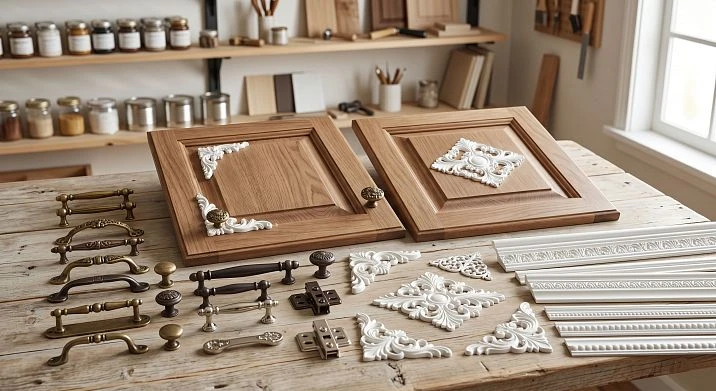
Imagine: you ordered furniture, it's ready, installed — and suddenly you realize something is missing. The handles were chosen hastily, the legs were bought separately and don't quite match the tone, the moldings on the fronts look like random decoration. Sound familiar? This is a classic mistake — assembling a furniture front piece by piece without having a single specification from the start.
A professional approach to a furniture front is systematic: Furniture Handles, furniture legs, Moldings for furniture, Polyurethane appliqués и Decor for Molding — all of this is chosen together, in the same style and size logic, even before the first front is put into production.
This article is a practical guide for those who want to put together the right basket: fittings for function, decor for style, materials for installation and finish. From a chest of drawers to a built-in wardrobe, from classic to modern minimalism. Read it like a specification — and take notes.

Fittings and decor: what is the fundamental difference
Before assembling the basket, understand the distinction that many confuse. Fittings and decor are not synonyms. These are different categories with different functions, and mixing their tasks leads to a poor-quality result.
Furniture fittings are everything that ensures the operation of furniture: opening, closing, fixing, support. These include:
-
Wooden handles — provide grip and opening;
-
furniture supports and legs — carry structural load;
-
hinges, guides, fasteners — hidden mechanical components.
Functional requirements are imposed on hardware: strength, ease of grip, load resistance. Beauty is important, but secondary.
Furniture decor is everything that forms the visual image of the facade without performing a load-bearing or mechanical function:
-
Moldings made of polyurethane — frame profiles on facades;
-
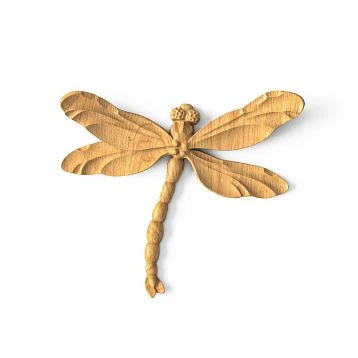
decorative elements for furniture — applied wooden parts;
-
Polyurethane appliqués — central and corner decorative elements;
-
Polyurethane moldings — three-dimensional relief on surfaces.
Aesthetic and stylistic requirements are imposed on decor. It should not bear load — it should be beautiful, proportionate, stylish.




Why it is important not to mix functions
This is not pedantry. It is a practical necessity. If you place a polyurethane pad in an area of constant hand grip, it will quickly peel off or chip. If you choose a handle based solely on decorative considerations (beautiful but uncomfortable), using the furniture will be uncomfortable. The system works when each element is responsible for its own task.
Our factory also produces:
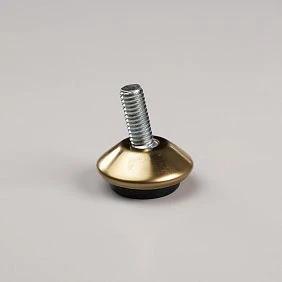
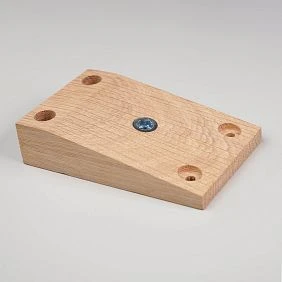
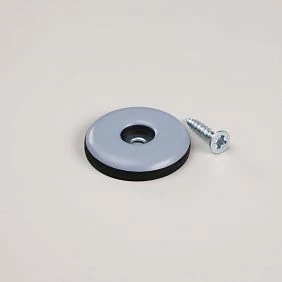
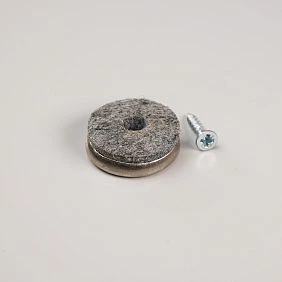
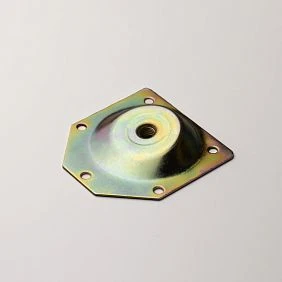

Furniture front set: full specification
Before breaking down each category in detail, here is a complete list of what is included in the hardware and decor set for a typical front.
Wooden elements:
-
Wooden Furniture Handles — surface-mounted or flush-mounted;
-
furniture supports and legs — for sofas, chests of drawers, nightstands, beds;
-
Wooden decor and overlays — carved and milled elements;
-
Wooden moldings — for fronts with open wood texture.
Polyurethane decoration:
-
Moldings made of polyurethane — for frame panels on fronts;
-
Polyurethane appliqués — central medallions, corner inserts;
-
Decor for polyurethane moldings — decorative inserts at frame intersections;
-
Polyurethane moldings — volumetric decor for the upper belt and false panels.
Installation and finishing materials:
-
mounting adhesive for polyurethane;
-
acrylic sealant;
-
adhesive primer;
-
primer-insulator for MDF;
-
furniture paint or enamel;
-
fasteners for wooden elements;
-
spare decor and moldings 10–15%.
Get Consultation
Wooden furniture handles: function, style, wood species
The handle is the first thing the hand touches when opening a drawer or cabinet door. That is why functional requirements come first: a comfortable grip, correct cross-section, reliable fastening.
Types of wooden furniture handles
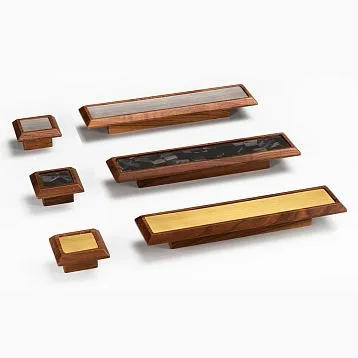
Surface-mounted pull handle. Mounted on the facade with two screws. Protrudes forward by 30–60 mm. The handle shape is an arc or a straight bar. Convenient, decorative, highly visible. For classic and neoclassical facades — with profile and rounding. For modern ones — a straight bar with a minimal profile.
Rail handle. A straight long handle on two brackets. Length 150–600 mm. Typical for tall fronts, kitchen sets, built-in wardrobes. A wooden version of the rail handle is warmer and more organic than a metal one.
Knob handle. A small round handle with minimal protrusion. For small fronts: drawers, cabinets, drop-down lids. A wooden knob for varnishing or painting.
Flush handle. Recessed flush into the front. For dressing rooms, built-in wardrobes, furniture without protruding hardware. A wooden flush handle for painting is an ideal solution for a monolithic front.
All options furniture handles — in the corresponding section of the catalog. When choosing, be sure to specify: center distance (for brackets and rails — the distance between mounting points), recess depth (for flush handles), front thickness.
Wood species for handles
Wooden handles with coating — from beech, oak, ash. For open texture under varnish — oak or ash. For painting to match the front color — beech or birch: smooth surface, good paint adhesion.
Important: buy all handles from the same batch. Different batches may have slight differences in wood shade, which is noticeable with a uniform tint.
Technical parameters when choosing a handle
| Parameter | Value |
|---|---|
| Center distance (bracket) | 64, 96, 128, 160 mm — standard |
| Rail length | 150–600 mm |
| Surface-mounted handle protrusion | 30–60 mm |
| Recess depth (for inset) | 10–18 mm |
| Recommended facade for inset | At least 18–22 mm |
Furniture supports and legs: design and style
furniture legs bear the load of the cabinet. This is not a purely decorative element, although it does perform an important visual function: the leg "lifts" the furniture off the floor, creating a feeling of lightness, space under the item, and a finished silhouette.
Leg height: what it determines
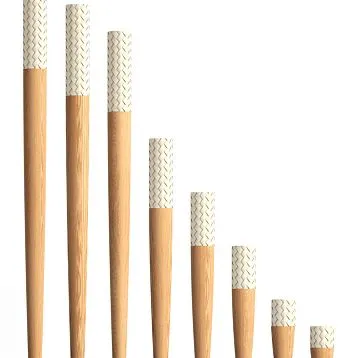
Low legs 30–50 mm — for sofas, beds, low cabinets. They give the item stability and groundedness. Medium 60–100 mm — for chests of drawers, consoles, armchairs. They create airiness. High 120–200 mm — for console tables, dressing tables, elegant cabinets. They make the furniture silhouette light and architectural.
The higher the leg, the stricter the requirements for its structural strength. A high leg with a diameter of 30 mm made of softwood is a poor choice for a heavy chest of drawers. For loaded items — oak or beech, diameter at least 40–50 mm.
Leg shape and furniture style
Turned leg with vases — classic. Straight tapered leg — neoclassical and modern classic. Spindle leg (thin straight) — modern minimalism. Leg with carved relief — for furniture in Russian or Baroque style.
Furniture legs are chosen in the same style as the handles. If the handle has a moderate turned profile, the leg should be similarly restrained. A Baroque leg with elaborate carving + a strict rectangular handle = stylistic conflict.
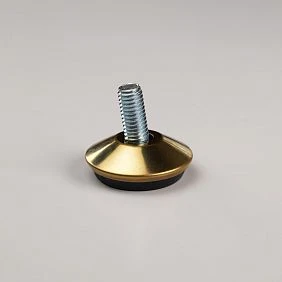
Legs with threads are screwed into installed bushings. Hand-tighten the threads 2–3 turns, checking for smooth operation. If it feels tight, there may be misalignment—unscrew and try again. Tighten all legs evenly—3–4 turns per leg around the circle until all are secured. This ensures even seating.
The standard method of attaching a wooden leg is through an insert bolt or threaded insert in the leg body. A mounting hole for the bolt is drilled in the bottom wall of the furniture body. When purchasing, clarify: is the leg supplied with a mounting bolt or not?
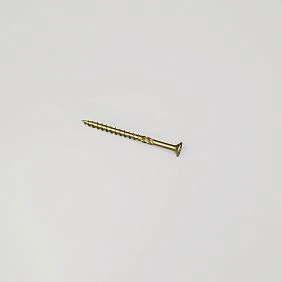
For upholstered furniture (sofas, armchairs) — the leg is attached via a plate or platform. For case furniture — directly into laminated chipboard or solid wood via an M6–M10 bolt.
Wooden decor for furniture fronts
Wooden decoration — a category that gives the furniture front tactile depth and natural expressiveness. Unlike polyurethane, a wooden overlay is not just visually relief — it is relief to the touch, warm, and has a natural texture.
Where to use wooden overlays
On fronts with open wood texture — wooden overlays from the same or similar species. When varnished, they blend with the front surface, creating the effect of a massive carved detail.
On facades for painting, wooden overlays are used where maximum strength of the decorative relief is needed: in areas of hand contact, on lower belts, on central medallions of frequently opened doors.
Types of wooden decorative elements
Overlay medallions. Central decorative elements for large facades — cabinet doors, dresser fronts, side panels. The medallion is glued or attached with a screw in the center of the facade.
Corner overlays. Decorative elements in the corners of frame panels. They complete the frame. Unlike polyurethane corner inserts, they are more durable and better withstand accidental impacts.
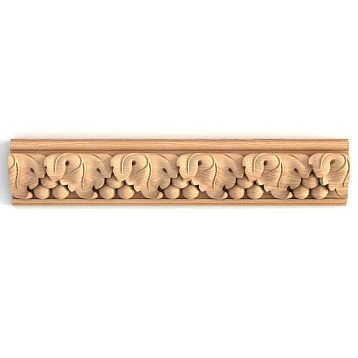
Carved linear moldings. Linear wooden profiles with relief — for creating decorative horizontal or vertical belts on facades. Used as an alternative to wooden moldings.
Three-dimensional overlay elements. Rosettes, cartouches, decorative inserts — individual elements for accent use on large central facades.
Polyurethane decor for furniture facades
polyurethane furniture decor — the main tool for creating an expensive facade for painting. Lightweight, flexible, with a uniform surface without texture — when painted, polyurethane 'disappears', leaving only the shape and relief.
Polyurethane moldings for frame panels
Moldings made of polyurethane — the main linear element of facade decor. They are glued to the surface, forming a frame panel — a rectangular or square framing of the central area of the facade.
Choosing the width of molding for furniture:
-
12–18 mm — for narrow fronts and drawers;
-
20–28 mm — for standard cabinet doors (450–600 mm);
-
30–40 mm — for wide fronts (600–800 mm) and large sections.
Molding profile by style:
-
Ogee + shelf — classic profile, creates expressive shadow;
-
Cove — softer profile, neoclassical;
-
Rectangle with chamfer — for modern and minimalist fronts.
Polyurethane overlays: point decor
Polyurethane appliqués — corner inserts at molding frame intersections, central rosettes, decorative medallions. They complete the frame panel, adding a point accent.
Rule: overlays are placed exclusively outside the zone of constant tactile contact. Corner inserts in the corners of the frame are a safe zone. The central overlay at palm level when opening is not.
Decor for polyurethane moldings — small decorative elements installed along the length of the molding strip or in its center. The effect is an additional rhythmic accent along the length of the frame.
Polyurethane stucco for upper belts of furniture
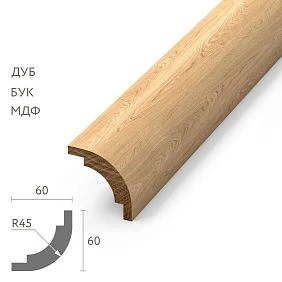
Polyurethane moldings used on furniture in areas where it is not regularly touched by hands: the upper decorative belt of a cabinet, the lower cornice above the legs, the decorative frieze under the tabletop of a console table.
For furniture scale — small-sized stucco: profile height 30–60 mm, projection 15–25 mm. An architectural cornice 150 mm high on a dresser facade is disproportionate.
How to assemble a facade in a unified style: principles of systematic selection
The main question when forming a cart is not "what is more beautiful", but "what goes together as a system". The facade is perceived as a single whole, and each element should work towards the overall image, not pull in its own direction.
Principle 1: unified style of hardware and decor
The style of the handle, leg, and molding should match. Not necessarily identical — but in the same direction. Three guidelines:
-
Classic: turned handle with profile + leg with vase + molding with heel. All elements — with moderate relief, rounded, warm.
-
Neoclassicism: handle with a soft rectangular profile + straight tapered leg + molding with a fillet. More strict, but not aggressively geometric.
-
Modern classic: straight handle with a minimal profile + straight leg + molding with a chamfer. Geometry, clarity, no ornaments.
Principle 2: proportionality
The scale of the decor should match the scale of the facade. A small drawer 300 × 200 mm — thin molding 12–15 mm, a small knob handle or a short pull. A tall facade 450 × 1200 mm — molding 25–30 mm, a long handle 150–200 mm, a central overlay is possible.
Disproportion is one of the key mistakes. A large overlay on a small chest looks bulky. A thin molding on a tall cabinet — gets lost and is not readable.
Principle 3: decor zone vs function zone
Draw the facade and divide it into zones:
-
Function zone — the place for installing the handle (30–40 cm from the edge at a height of 900–1100 mm from the floor for vertical doors, centered for drawers). Here — only the handle.
-
Decor zone — the remaining surface of the facade, except for a strip of 50–60 mm around the handle. Here — moldings, overlays, frames.
This simple demarcation prevents the main mistake: an overlay right next to the handle.
Principle 4: motif repetition
If you use a molding frame with corner inserts on a dresser, use the same molding and inserts on the bedside tables. Motif repetition creates a furniture "set" even from different pieces.
Ready-made kits: what to buy for different types of furniture
Dresser: complete set of hardware and decor
A dresser is a piece with several drawers and possibly a top door. Challenge: ensure facade unity with different formats (drawers + doors).
What to buy:
-
Furniture Handles — on each drawer and door, identical in model and center distance;
-
furniture legs — 4 pcs., height 60–80 mm for a classic dresser;
-
decorative elements for furniture — wooden overlays or medallions on central drawer fronts;
-
Moldings made of polyurethane — frame panels on each drawer, same margin from edges;
-
Polyurethane appliqués — corner inserts in frames;
-
glue, sealant, primer, paint, spare.
Cabinet with tall fronts
What to buy:
-
Wooden Furniture Handles — long, 150–250 mm, along the vertical axis of each front;
-
Moldings made of polyurethane — frame panels (one or two per tall front);
-
Decor for Molding — dot inserts at the center of the top horizontal strip of the frame;
-
Polyurethane moldings — upper decorative belt of the cabinet;
-
glue, sealant, primer, paint.
Bedside table
Small format — delicate decor.
What to buy:
-
Furniture Handles — small bracket or button;
-
Furniture legs — 4 pcs., 50–80 mm;
-
Moldings made of polyurethane — thin profile 12–15 mm, frame on the facade;
-
glue, sealant, primer, paint.
No large overlays — the scale is not right. The principle of «less is better» works flawlessly for small furniture items.
Console or vanity table
A console is a piece with exposed legs and a decorative facade. The emphasis here is on the legs.
What to buy:
-
furniture legs high — 120–180 mm, turned, with expressive profile;
-
Wooden Inlays — decor of the facade drawer or decorative front panel;
-
Polyurethane appliqués — decor under the tabletop (frieze area);
-
handle — small, sized to match the facade drawer.
Furniture for painting: monolithic facade
What to buy:
-
handles made of beech or birch — for painting in the color of the facade;
-
Moldings made of polyurethane — frame panels + vertical division for large facades;
-
Polyurethane appliqués — corner inserts;
-
primer-insulator for MDF + adhesion primer for polyurethane;
-
furniture enamel — two coats;
-
sealant for joints.
Key in a facade for painting: a single primer, a single paint (from one can) for all elements — facade, molding, and handle. Then the boundary between wood and polyurethane disappears.
How not to overload a facade with decor
An overloaded facade is one of the most common mistakes made by DIYers. More relief does not mean more expensive. Often — the opposite.
Rules for unloading
On small facades — one accent. A 300 mm wide drawer accommodates either a thin frame or a small handle. Frame + overlay + large handle on a 300 mm facade — overload.
One ornament in the system. If you chose a molding with a fillet — do not add a molding with a cyma next to it. One profile for the entire furniture set.
Handle — outside the relief. The handle must not touch the molding or overlay. The gap between the handle and the nearest decor is at least 40 mm.
Stucco — only in neutral zones. Upper belt, lower base, frieze under the countertop. Not in the center of the door, not next to the handle.
Layout before installation. Draw each facade on paper to scale. Mark all elements: handle, frame, overlays. This will take 20 minutes — and save hours of rework.
Mistakes when buying furniture fittings and decor
Buying handles after gluing moldings
Classic sequence of mistakes: first moldings are glued, then handles are bought — and it turns out that a molding is in the right place. Rule: layout of the entire facade — before buying anything.
Choosing decor without facade dimensions
"I'll take a couple, see how it looks" — almost always ends in scale mismatch. Decor is chosen for specific dimensions: facade width → molding width, facade height → frame height, facade size → overlay size.
Buying legs without considering load
A beautiful tall thin leg made of soft wood under a heavy chest of drawers — that's a structural risk. furniture legs For loaded items — made of hard wood, with a large cross-section.
Place polyurethane decor in the grip zone
Polyurethane — for walls, false panels, top and bottom belts. Not for areas that are regularly touched. In the grip zone — wood.
Do not check compatibility of primer and paint with polyurethane
Some paints adhere poorly to polyurethane without a special primer. Without primer — peeling after 6 months. More about glue and primer — in the article what to glue polyurethane molding with.
Mix different styles of hardware and decor
Baroque leg + minimalist handle + neoclassical molding = eclectic without concept. Stick to one style or one neutral direction throughout the furniture.
Do not order spare
Moldings are cut with waste at corners. Overlays may break during installation. Handles may get lost before installation. A 10–15% spare is a mandatory line in any specification.
Complete checklist for forming a furniture decor basket
Use this list for every order:
-
All facades measured (width × height of each)
-
Diagram of each facade with handle and molding markings created
-
Style selected: classic / neoclassical / modern classic
-
Furniture Handles — model, center distance, quantity
-
Furniture legs — height, wood species, fasteners, quantity
-
Wooden Inlays — type, size, quantity
-
Moldings made of polyurethane — profile, width, length with allowance
-
Polyurethane appliqués — corner inserts, medallions, quantity
-
Construction adhesive — tubes as per consumption
-
Acrylic sealant — tubes by consumption
-
Primer-insulator for MDF — volume
-
Adhesion primer for polyurethane — volume
-
Furniture paint — volume with reserve
-
Fasteners for handles and legs
-
Reserve of moldings and overlays +10–15%
FAQ: frequently asked questions about furniture fittings and decor
What to buy for a furniture facade with decor?
Furniture Handles, support, Moldings made of polyurethane, Polyurethane appliqués, Wooden decoration, glue, sealant, primer, paint, and reserve. The entire specification is compiled before purchase — according to the diagram of each facade.
Can polyurethane decor be used on furniture?
Yes, provided proper placement: frame panels, corner inserts, top and bottom trim. Not allowed — in areas of constant mechanical contact: near the handle, on the bottom edge of a frequently opened door.
What is better to make from wood, and what from polyurethane?
Wood — for handles, supports, legs, and tactile parts. polyurethane decor — for moldings, overlays, frames, and decor for painting. A combination gives a better result than using a single material.
How to choose handles for a facade with moldings?
First the facade layout, then selection of moldings by width and profile, then selection of handle by molding style. The handle should not fall into the frame area and should have a gap of at least 40 mm from the nearest molding.
How to choose the size of an overlay for a chest of drawers?
The overlay should occupy no more than 30–40% of the facade width. For a 400 mm drawer — overlay no wider than 120–160 mm. Height — proportionally.
Is a special primer needed for polyurethane before painting?
Absolutely. Without an adhesion primer, the paint adheres worse and peels within a few months. For MDF facades with polyurethane moldings — two different primers: an isolator for MDF and an adhesion primer for polyurethane, or a universal compatible compound.
About the company STAVROS
The full range for furnishing furniture facades — Wooden Furniture Handles, Furniture Legs and Supports, Decorative Elements for Solid Wood Furniture, Wooden moldings, Moldings made of polyurethane, Polyurethane appliqués, Decor for Molding и Polyurethane moldings — is manufactured and supplied by STAVROS.
STAVROS is a Russian manufacturer of natural wood and polyurethane products for furniture and interiors. Founded in St. Petersburg in 2002. Completed projects include the Hermitage, the Konstantinovsky and Alexander Palaces, and the Trinity-Izmailovsky Cathedral. Restoration experience sets the standard for profile precision, surface quality, and stylistic consistency that STAVROS applies to every product — from a furniture handle to a decorative molding for a facade.
Order a complete set of furniture fittings and decor, get advice on style selection and quantity calculation — on the STAVROS website. Contact us to confirm shipping to your destination., order from one unit.