









































































Customers also buy

Alexander U.
October 2, 2026
I have been working with Stavros since 2024, and the quality of the products is top-notch. Customers are happy!!!
Elena G.
September 29, 2026
Daria is a very competent specialist; she provided consultation and helped us select items. They were sent promptly.
Jony F.
September 23, 2026
We have our own furniture production and have been in touch with Stavros for many years. We regularly order sockets and brackets from them. The quality of the wooden decor in the Prestige finish is simply top-notch; the elements arrive perfectly prepared for painting. I would also like to mention the bulletproof packaging: everything is wrapped in stretch film, padded with foam material, and packed in thick cardboard. It arrives in perfect condition. A true luxury level, we will continue working together.
More than 20 years on the market
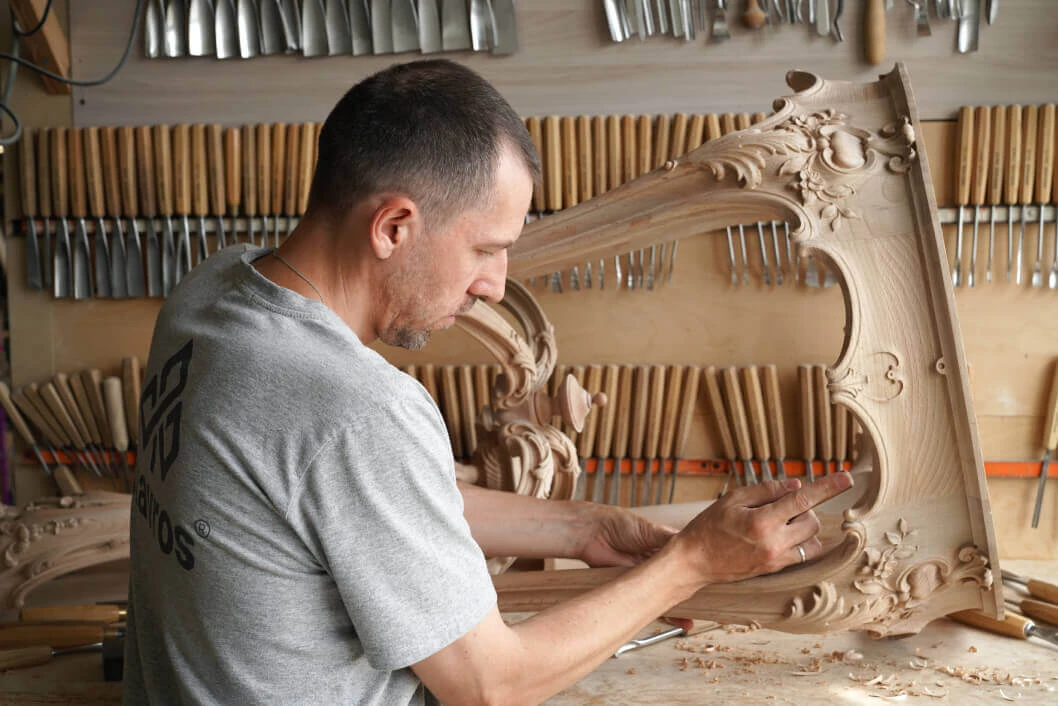
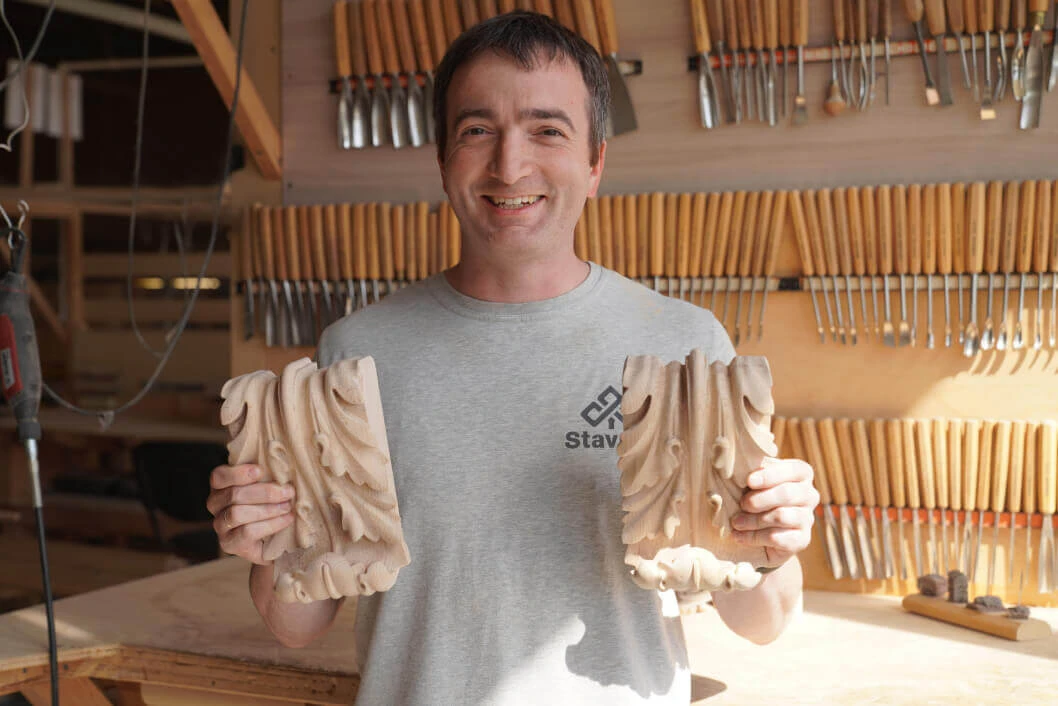
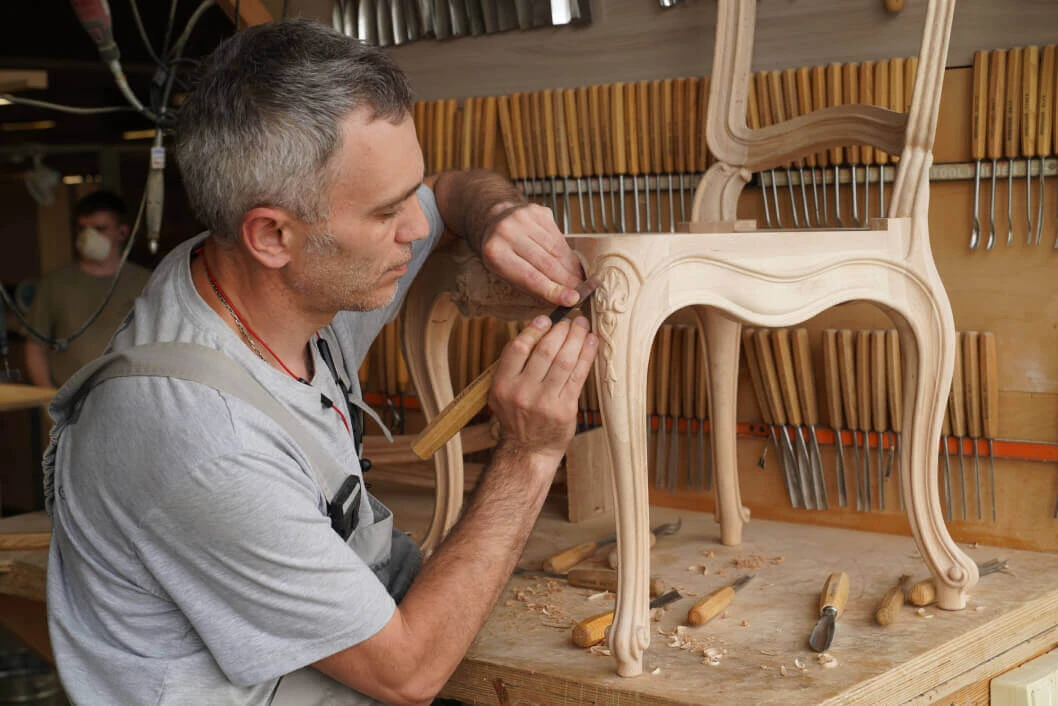
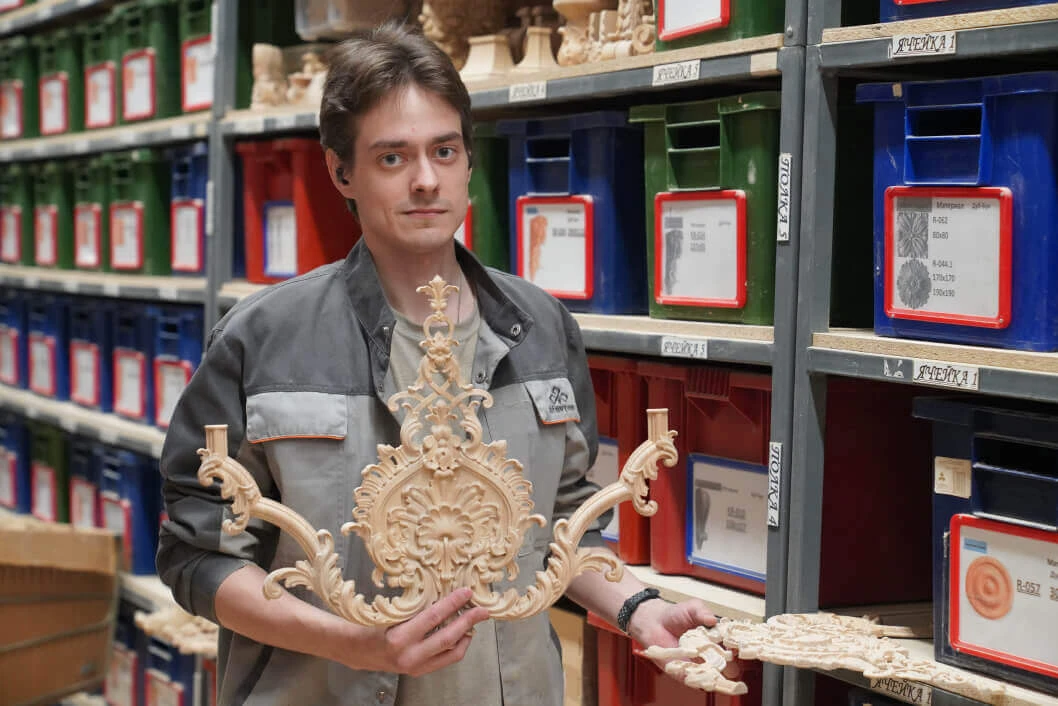
The company's success began in 2002, when two artists — Andrey Ragozin and Evgeny Tsapko — created a small creative workshop for producing wooden carved items. The masters' work was quickly noticed, and within a year they were invited to participate in the reconstruction of the Konstantinovskiy Palace in Strelna.
After the success of this project, the company focused on recreating palace interiors, furniture, church furnishings, and carved decorations in various artistic styles. They worked with cultural heritage sites: The Hermitage, the Alexandrovsky Palace, the Troitsko-Izmaylovsky Cathedral, the Sheremetyevsky Mansion, and many others.
The masters' task — and still is — to create wooden items with the highest level of detail and understanding of every element, based on impeccable knowledge of artistic laws and interior styles.

STAVROS Guarantees
Quality of products without complaints
We save your time, peace of mind, and budget
Large warehouse program
We solve your tasks with maximum speed
Adherence to production deadlines
Streamlined process reduces all risks
Delivery from 1 piece throughout Russia
Quality service regardless of order volume
Your positive business reputation
Reliable partner — the foundation of your business
More products in the category of trim items
Frequently asked questions
Our showrooms are located in Saint Petersburg and Moscow. Production is located in Saint Petersburg.
Moscow contacts: https://www.stavros.ru/contacts_all/?tab=msk
Contacts of Saint Petersburg: https://www.stavros.ru/contacts_all/?tab=spb
- Send request by email [email protected]
- Write to us at Telegram
- Write to us at WhatsApp
- Order by phone +7 (800) 555-46-75
- Visit our showroom in Saint Petersburg and Moscow
Yes, we ship orders throughout Russia and to CIS countries.
We cooperate with transportation companies such as СДЭК and DPD.
You can also arrange pickup of your order through any convenient transportation company for you.
Delivery cost depends on the size, weight of the item, and delivery address.
When placing an order, the delivery cost is calculated automatically and displayed as a separate line on our website.
Prices and availability of items on the website are always current. Data is updated daily.
Note: items in stock are stored on the warehouse in unpolished form and shipped within 3 working days.
If the item is not in stock, average production time: 5–10 working days.
This is the quality of polishing of the items.
Standard — machine polishing, at a more attractive price.
Prestige — detailed hand polishing, items do not require further work.
More details: https://www.stavros.ru/information/kachestvo/
This is the type of veneer of the items.
Under enamel: produced by gluing wooden laminates without color and texture matching. Contrast tonal and textural differences are noticeable. This blank should be chosen if the item is intended for opaque coating.
Under tinting: produced by gluing wooden laminates with color and texture matching. Tonal and textural differences may occur. This blank should be chosen if the item is intended for semi-transparent finish.
More details: https://www.stavros.ru/information/kachestvo/
Beech — dense, non-porous wood, most often used for items covered with enamel.
Oak — dense, porous wood with clearly visible natural grain. Due to its strength and decorative properties, it is often used in items with semi-transparent coating, highlighting the wood pattern.
Custom-made, if non-standard items are required, we can produce products from other types of wood, including blanks provided by the customer, manufactured according to our technical specifications.
All our furniture legs can withstand a vertical load of at least 100 kg.
Average production time for custom-made items: 5–10 working days.
Most items are stored on the warehouse in unpolished form. We need time to polish and pack orders.
Yes, we manufacture non-standard items according to individual projects, but we only accept orders with a minimum quantity.
We can manufacture items of the desired size, but we only work with bulk orders. For details, please consult the sales department manager.
Yes, some of our products can be used outdoors. For example, polyurethane items, as well as carved door casings made of pine.
Other items are produced to order using PUR glue, if minimum quantity is available. No warranty is provided for such products, as outdoor conditions are considered aggressive.
Yes, we paint items when ordering products for a total amount of 150,000 rubles or more.
- Dust removal. After sanding, the surface must be dusted.
- Priming. Apply primer in an even layer.
- Matting. After the primer has fully dried, the surface should be matted (lightly sanded for better adhesion).
- Finish coating. Apply finish coating: lacquer or enamel, in 2 layers, with interlayer drying.
More details: https://www.stavros.ru/information/sovety/
Apply adhesive to the decor. Place it on the surface and press briefly. Then, lift the decor from the surface and leave it open for 3–5 minutes. Press the decor firmly onto the surface and hold for 5–10 seconds.
More details: https://www.stavros.ru/information/sovety/
Ideally, you should prepare a design project before placing an order.
You can do this yourself by downloading drawings of our products from our website, or you can order a project from us.
If the number of decorative elements and fittings is small, our company's manager can assist you with selection.
Unfortunately, this service is not provided.
The packaging method depends on the type of items, but in each case, we ensure sufficient protection for safe transportation.
We most often use corrugated cardboard and stretch film. Fragile items are additionally secured on a rigid base to prevent damage during transport.
We ship all items starting from 1 piece.
Room measurements and item installation can be performed by our partners — carpentry companies represented in most regions of Russia.
Often searched in category Wooden and MDF items
7625
3332
2639
2461
1912
1608
1325
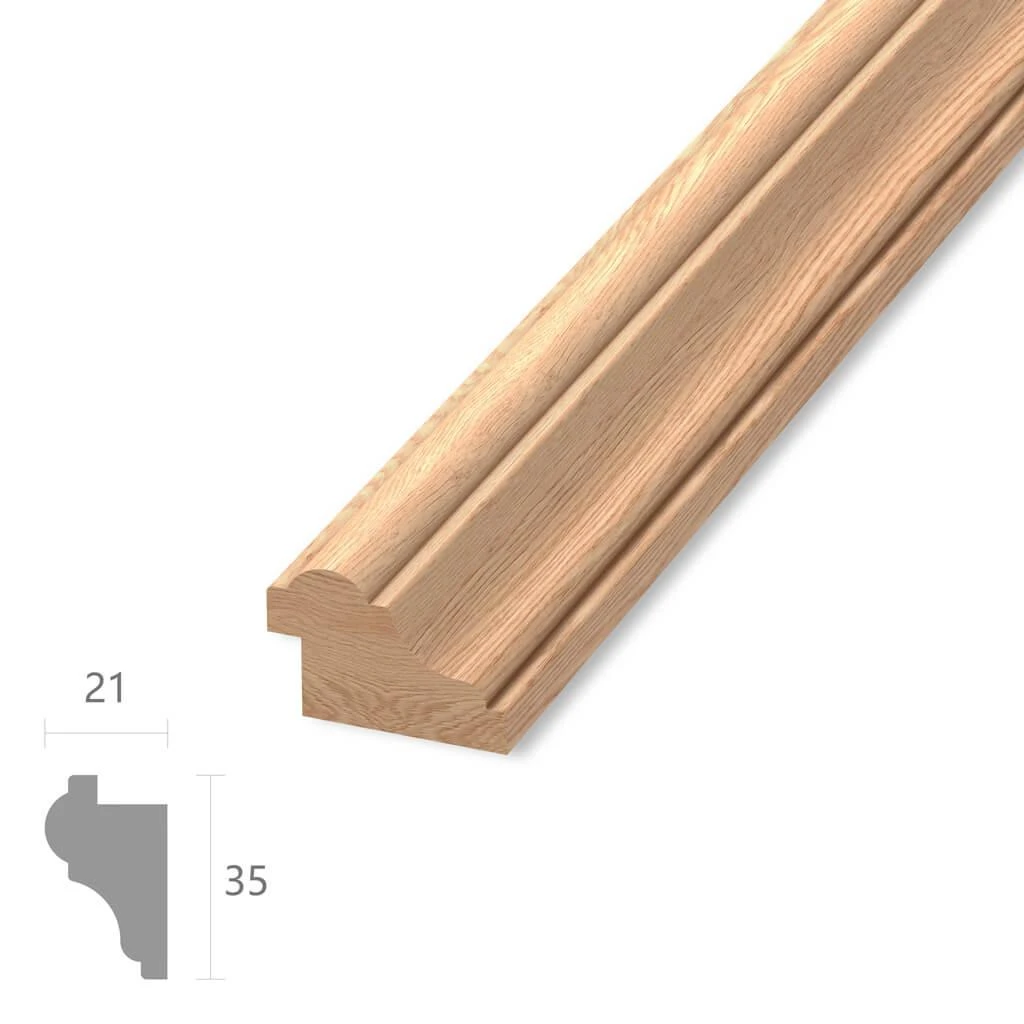
Expressive furniture profile 35×21 mm for fronts, frames and decorative trim
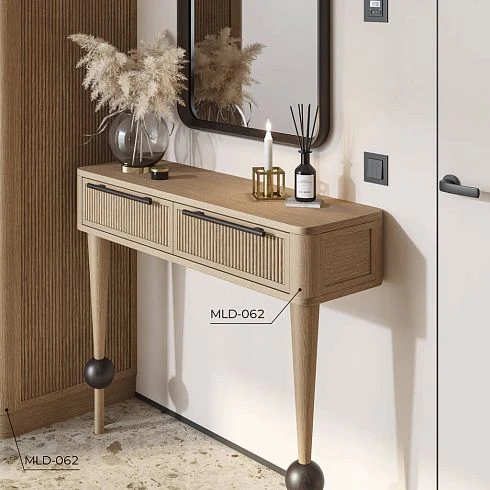
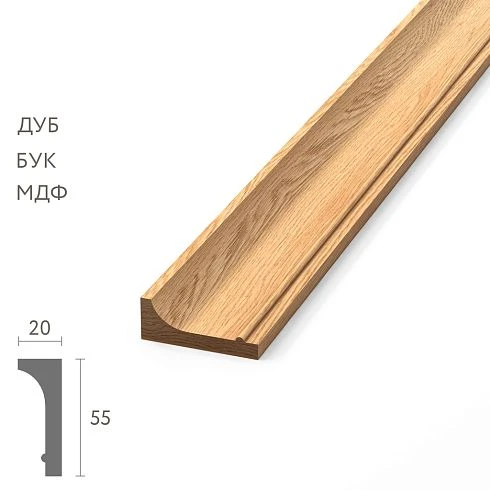
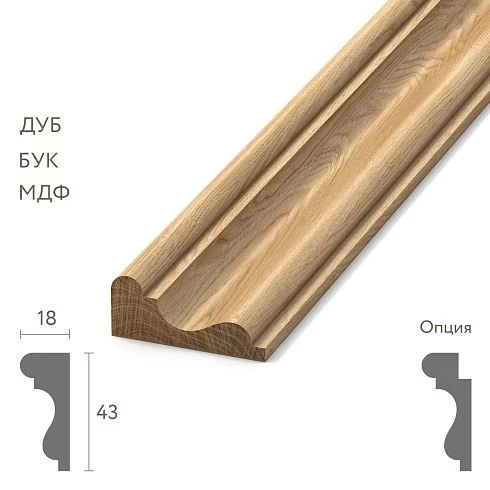
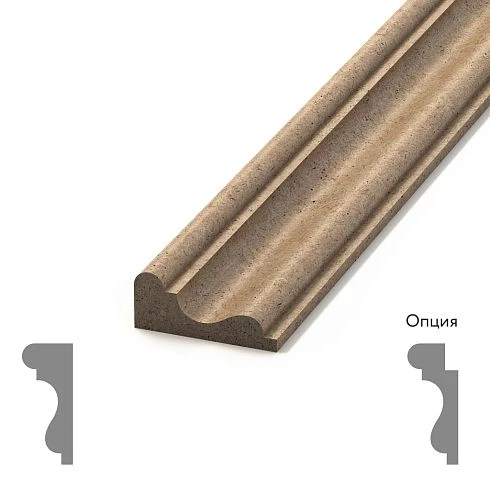
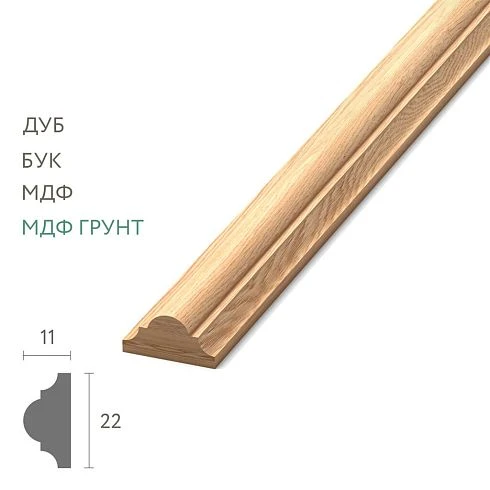
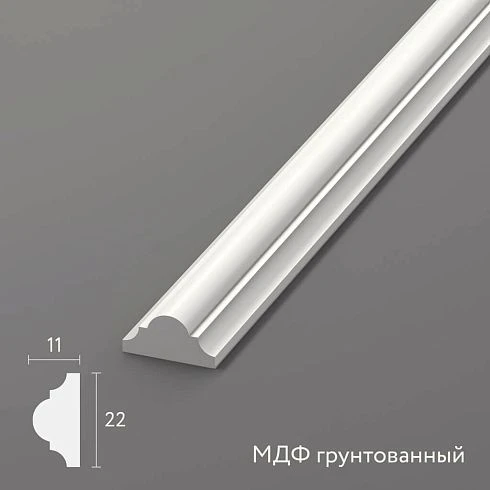
Decorative molding MLD-006.1 is a dimensional profile for finishing furniture, fronts, doors, panels and other joinery products where a clearly visible architectural line is required. Unlike narrow furniture strips that only slightly outline the contour, the 35×21 mm profile creates a more pronounced relief and can become a standalone design element.
MLD-006.1 has a classic profiled shape with smooth rounded transitions. This geometry works well with light: the convex sections of the profile catch the light, while the recesses create soft shadow, so the decorative frame remains expressive even with a solid-color painted front.
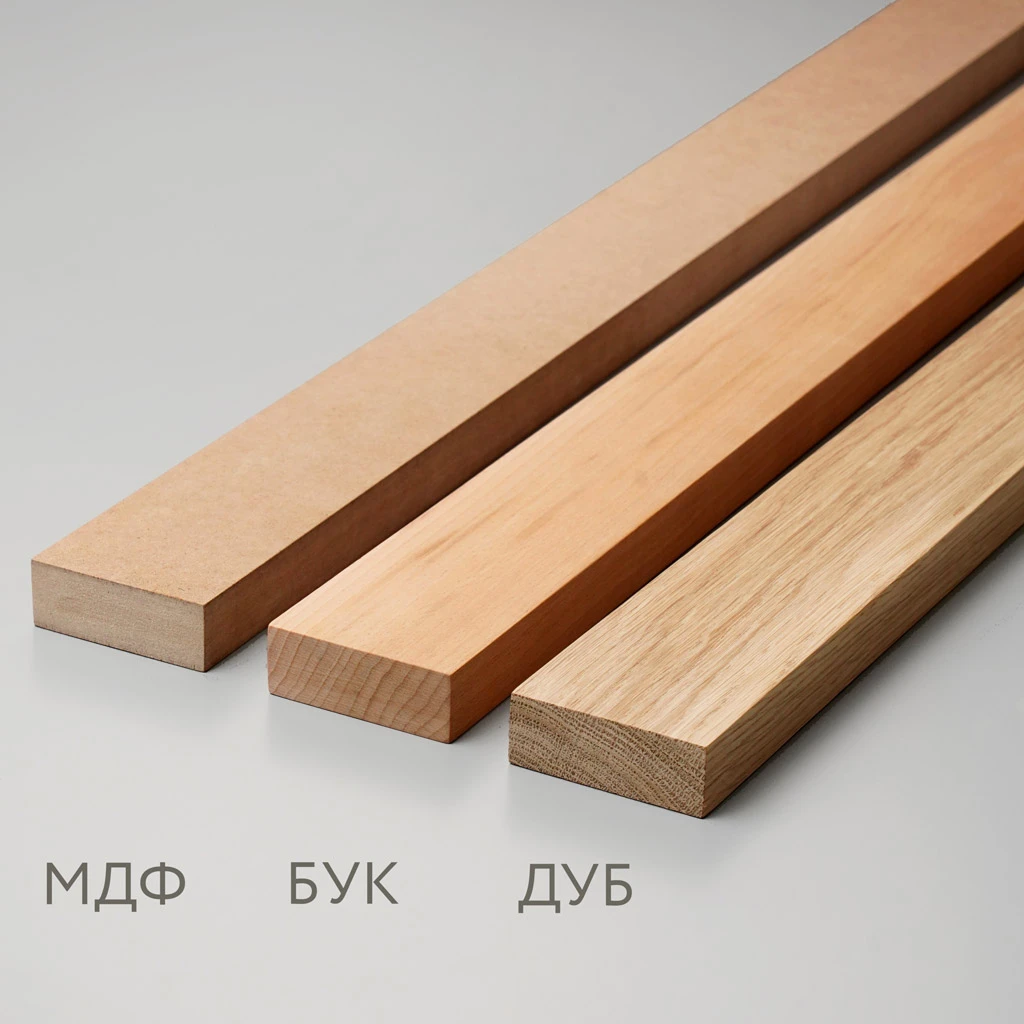
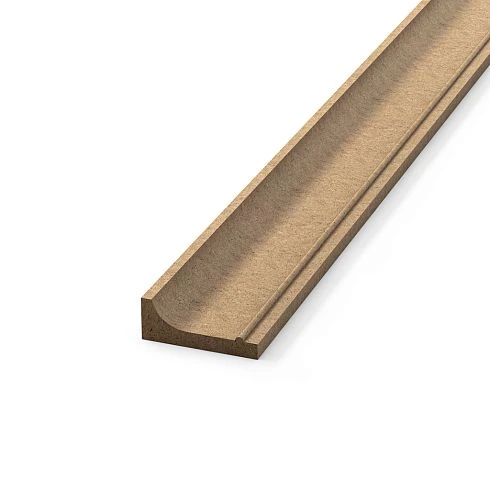
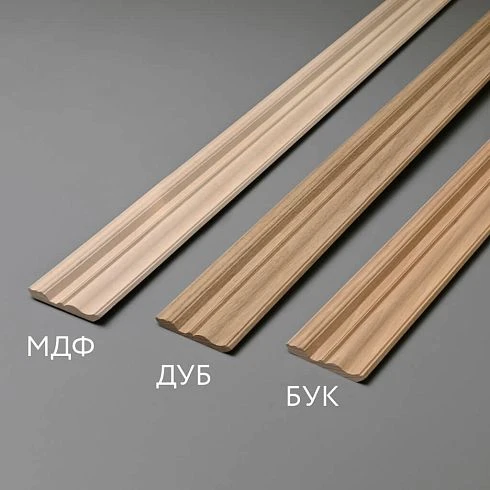
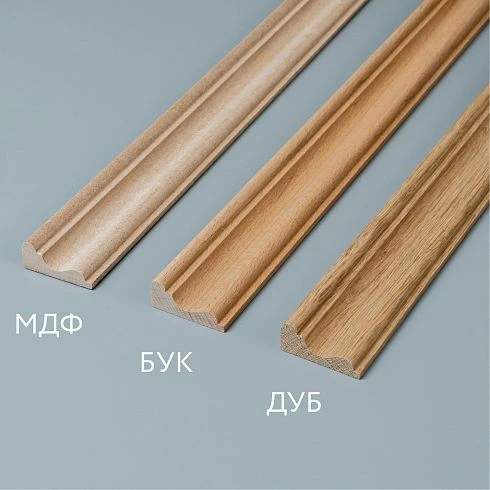
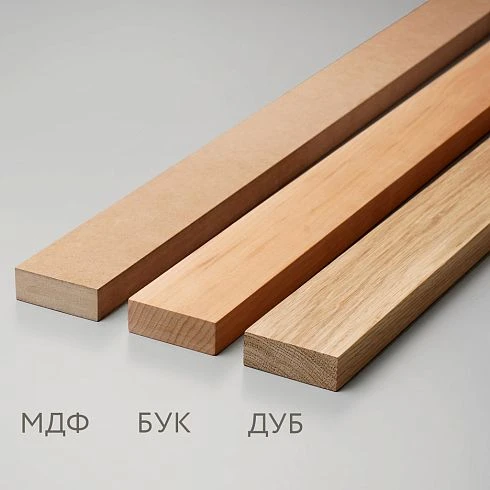
The model is available in three material options — MDF, beech and oak. This allows the same profile to be used both in painted furniture and in projects that require natural wood with clear, tinted or other decorative-protective finishes.
Thanks to its 35×21 mm size, MLD-006.1 is especially well suited for medium and large furniture fronts, cabinets, chests of drawers, sideboards, display cases, wall and decorative panels. The profile is large enough to be noticeable on a large surface, yet with the right proportions it does not overload the composition.
Dimensions and Options
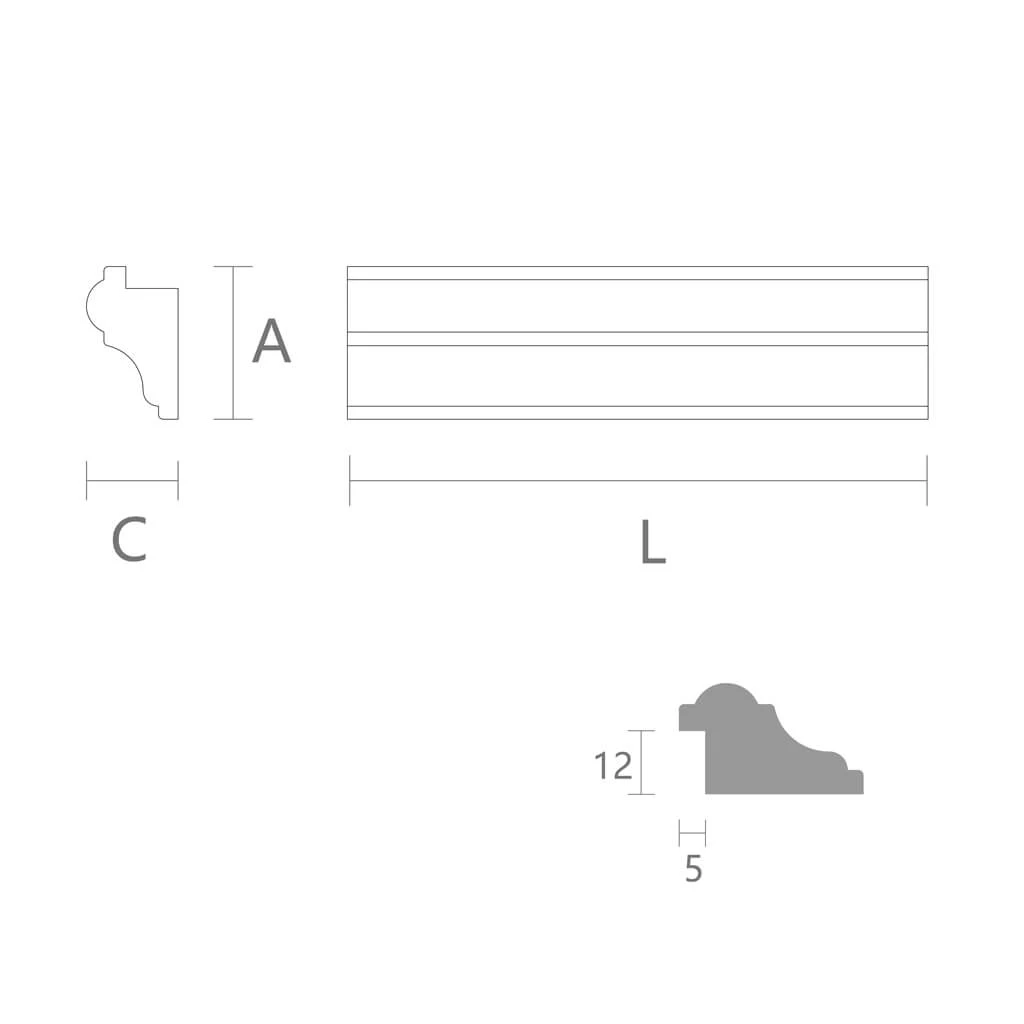
| Characteristic | Value |
|---|---|
| Article number | MLD-006.1 |
| Product type | decorative furniture molding |
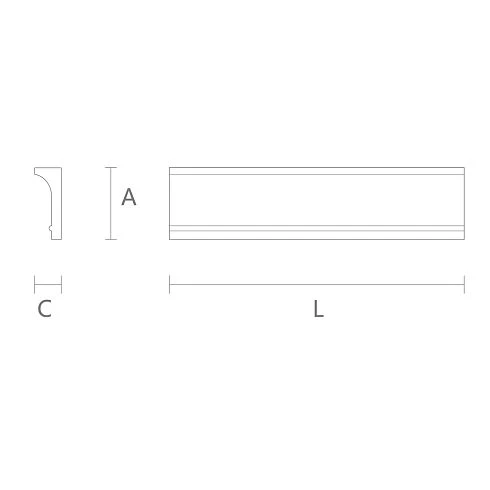
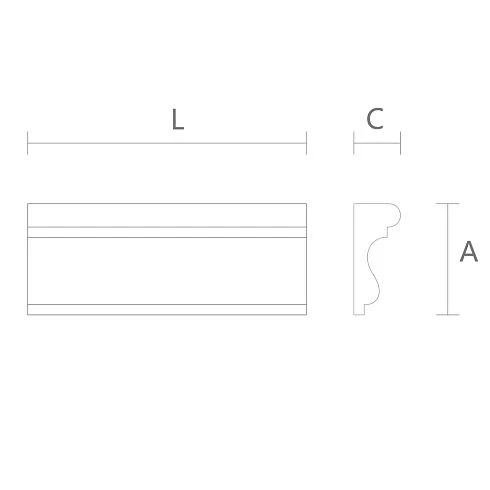
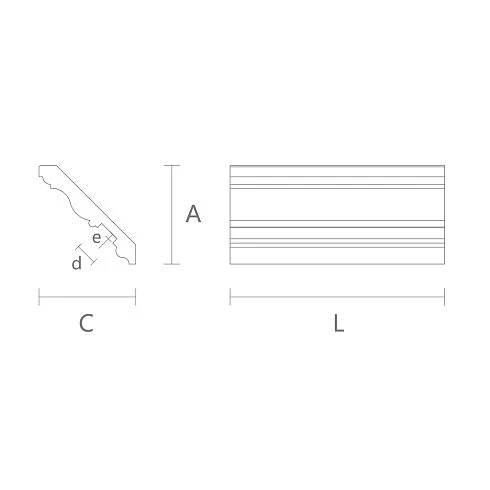
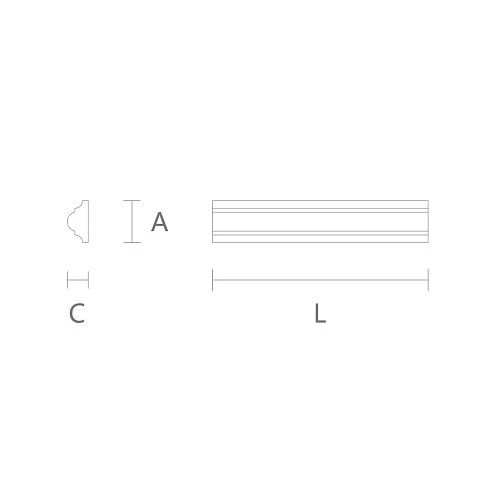
| Size A | 35 мм |
| Size C | 21 мм |
| Material | MDF, beech, oak |
| MDF length | 2600 мм |
| Beech length | 2400 мм |
| Oak length | 2400 мм |
| Sanding quality | Prestige |
| Primary application | furniture fronts, decorative frames, panels, doors, cabinets, chests of drawers |
| Possible finishing | painting, tinting, lacquer and other systems depending on the material |
The current price of a specific modification is shown in the size and price table on the product page.
What is the wooden molding MLD-006.1 used for
The main purpose of a decorative profile is to add architecture to a flat surface.
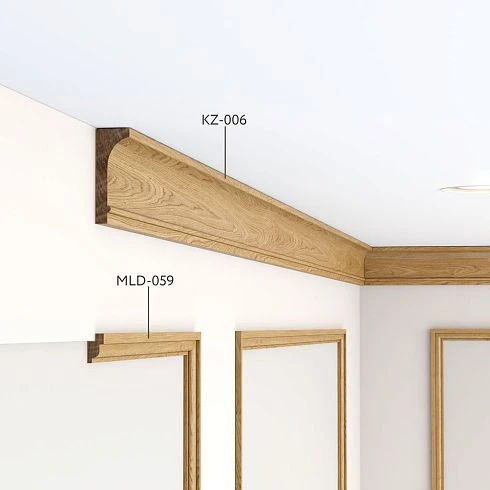
A modern furniture facade can be structurally very simple: a panel, a painted or veneered surface, a handle. But if you install furniture molding around the central field, the facade begins to be perceived completely differently. A frame appears, the proportions change, and depth and play of light emerge.
MLD-006.1 is ideal for those projects where the decorative frame should be clearly visible.
It can be used:
- on cabinet doors;
- on chest of drawers facades;
- on large drawers;
- on furniture cabinets;
- on sideboards and display cabinets;
- on kitchen facades;
- on side panels of cabinet furniture;
- on decorative panels;
- on interior doors;
- on wall compositions of small and medium format;
- in the manufacture of classical and neoclassical furniture;
- in the restoration of existing interior items.
At the same time, MLD-006.1 does not necessarily have to be used only in traditional classics. When painted in a single color, this decorative furniture molding can look quite restrained and work in modern neoclassicism, transitional interiors, and projects where simple facades are complemented by architectural detailing.
Size 35×21 mm: when a larger furniture molding is needed
The profile size is one of the main selection parameters.
MLD-006.1 has a profile height of 35 mm and a depth of 21 mm. This is no longer a thin decorative strip. This size makes the frame clearly visible even on a fairly large furniture front.
That is why MLD-006.1 is worth considering for wardrobe doors, tall fronts, wide dresser drawers, and other surfaces where a too-narrow profile can visually get lost.
On a front that is, for example, several tens of centimeters high, a small molding sometimes looks like a random line. A more expressive 35 mm furniture molding forms a full-fledged frame and can change the perception of the entire surface.
When choosing, it is important to consider not only the outer size of the front, but also the size of the inner field that will remain after installing the frame. The wider the profile, the more free space is needed around it.
That is why MLD-006.1 works especially well where the designer deliberately wants to achieve a pronounced framing.
Decorative frame on a furniture front
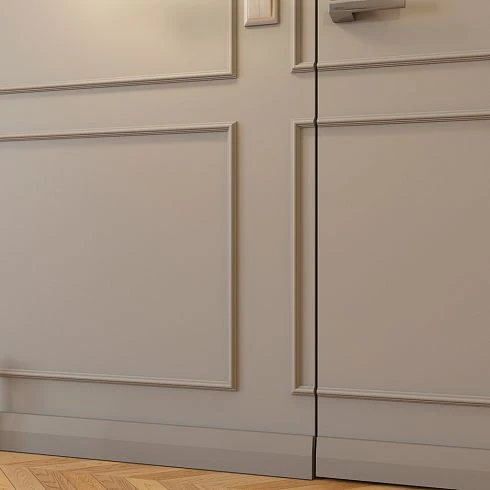
One of the most obvious uses of MLD-006.1 is creating a rectangular frame.
Four sections of the profile are installed along the perimeter of the front and joined at the corners. With quality installation, the individual elements are perceived as a single decorative structure.
At the same time, not only the precision of the cut is important, but also the position of the frame relative to the edges of the front.
If the distance from the frame to the left and right edges differs even by a few millimeters, this can be clearly noticeable on a small front. This is especially critical for furniture where several identical doors or drawers are located side by side.
Therefore, for a series of facades, it is worth defining a unified size system in advance:
edge offset → outer frame size → inner field → handle position.
This approach allows for achieving clean, repeatable geometry.
Thanks to its volume, MLD-006.1 is especially well suited for frames that should become a noticeable part of the design, rather than just a thin outline.
Molding for furniture cabinet facades
On large cabinet doors, a decorative frame solves several tasks at once.
First, it reduces the visual emptiness of a large flat surface.
Second, it helps emphasize the vertical proportions of the door.
Third, it allows the cabinet design to be tied to other classical or neoclassical elements of the room.
Molding for furniture facades MLD-006.1 can be installed along the perimeter of each door, forming identical vertical fields.
At the same time, it is not necessary to place the profile close to the edges. A wider inner indent gives a calm composition, while placing the frame closer to the periphery makes it visually larger.
On tall fronts, a more complex division is also possible: for example, one large frame or two vertically arranged decorative zones.
Which option is better depends on the height of the cabinet, the placement of the handles, the proportions of the doors, and the overall style of the furniture.
Wooden molding for a chest of drawers
On the fronts of a chest of drawers, the 35×21 mm profile looks more noticeable than compact furniture moldings.
Therefore, MLD-006.1 is especially appropriate on wide and fairly tall drawers.
Each front can be finished with a separate rectangular frame. If all frames have the same indents, a clear visual rhythm emerges.
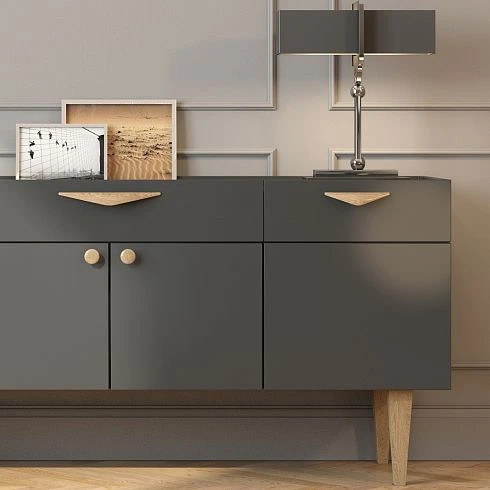
This technique looks especially interesting on chests of drawers painted in a solid-color enamel. The front, profile, and body can be painted in the same color, but due to the three-dimensional geometry, the decorative molding remains visually distinguishable.
During the day, its shape is readable thanks to natural lighting. In the evening, with side or top light, more pronounced light-and-shadow transitions appear.
Thus, decorativeness is created not by additional color, but by form.
MLD-006.1 for buffets and display cabinets
Buffets, display cabinets, and dining room furniture traditionally pair well with profiled decor.
MLD-006.1 can be used on solid lower fronts, side panels, and other parts of the structure.
If the upper part of the buffet is made with glass and the lower part has closed doors, a decorative wooden molding helps make the lower section more architectural and visually connect it with cornices, baseboards, and other profiled elements.
At the same time, it is important to distinguish between decorative and structural functions. An overlay molding can visually frame a surface, but it should not automatically be considered a fixing element for glass or another insert unless the product design provides for this.
Wooden oak molding
The MLD-006.1 version in oak is suitable for furniture where it is important to preserve the natural character of the material.
Oak has a clearly readable texture, so even a relatively small element can become noticeable after clear or tinted finishing.
Oak molding looks especially natural:
- on solid wood furniture;
- on facades veneered with oak;
- in offices;
- in libraries;
- on sideboards;
- on classic cabinets;
- on furniture for living rooms and dining rooms;
- in items of individual joinery production.
If the profile is used under a transparent finish, before cutting it is useful to lay out several strips side by side and evaluate the wood grain.
Natural wood always has an individual texture. Two sections of the same species do not have to be identical.
Therefore, for the frame it is desirable to select elements so that the pattern looks harmonious, especially if it is located directly in front of the eyes.
Beech molding
Beech has a calmer wood grain pattern than oak.
Therefore, beech molding is well suited for projects where a natural material is required, but the decorative effect should be created primarily by the profile shape rather than by an active texture.
Beech can be used in furniture with a clear finish, tinting, or painting with compatible systems.
It is especially convenient to use it in furniture where frames are repeated on several fronts. The calm wood structure helps maintain a more uniform appearance.
MLD-006.1 in beech can be used on wardrobes, chests of drawers, sideboards, cabinets, kitchen furniture, and other joinery products.
When choosing a finish, keep in mind that the final shade depends not only on the coating composition, but also on the wood itself, surface preparation, and application technology.
Therefore, before finishing a large number of parts, it is reasonable to perform a test coat.
MDF molding for painting
If the future furniture will be fully painted with opaque enamel, it makes sense to consider the MLD-006.1 version in MDF.
An MDF molding for painting allows you to create a decorative frame that, after finishing, visually merges with the facade.
For example, the facade, cabinet and molding are painted in the same milky, beige, gray, green or another color.
The surface remains uniform in color but is no longer flat.
Thanks to the large 35×21 mm profile, the relief is clearly visible even without contrasting paint.
That is why decorative MDF frames are often used in furniture for enamel coating: the designer achieves an architectural effect without introducing additional shades or materials.
The MDF version is 2600 mm long, which must be taken into account when calculating the cutting plan.
What to choose: MDF, beech or oak
The choice of material directly depends on the desired result.
If you need to preserve the natural wood grain and emphasize the naturalness of the furniture, solid wood should be considered first.
Oak provides the most expressive texture.
Beech is distinguished by a calmer grain pattern.
MDF is practical for projects intended for opaque painting, when the main decorative element becomes the shape rather than the wood texture.
Conventionally, the choice can be reduced to the following logic:
natural expressive texture → oak;
calm wood surface → beech;
furniture to be painted → MDF.
This does not mean that beech or oak cannot be painted. The choice always depends on the design, the customer's requirements, and the finishing technology.
However, under a transparent coating, MDF cannot replace natural wood, because its purpose and structure are fundamentally different.
How to calculate the amount of molding
Before buying furniture molding, it is necessary to calculate the total length of all decorative frames.
For one rectangular frame, the calculation looks simple:
2 × frame width + 2 × frame height.
However, this is only a theoretical minimum.
In practice, an allowance must be taken into account:
- for 45° mitre cuts;
- for matching the grain pattern of natural wood;
- for possible cutting errors;
- for test pieces;
- for cutting specifics relative to the length of a whole plank.
For beech and oak, the length of MLD-006.1 is 2400 mm.
For MDF — 2600 mm.
For example, if several long vertical elements are required, the total combined linear meterage may be less than the total length of the purchased planks, but it will be impossible to obtain another long piece from the leftovers.
That is why, when there are many fronts, it is useful to first draw up a cutting plan.
Why it is better to make a cutting plan in advance
Suppose you need to make decorative frames for six cabinet doors.
A simple calculation of the perimeters gives the total linear meterage. But it does not answer the question of exactly how many full strips will be needed.
If each door requires long vertical elements, you need to see how many such parts can be obtained from a strip 2400 or 2600 mm long.
In some cases it is more economical to change the cutting sequence: first obtain the long parts, and cut the short horizontal ones from the remaining sections.
For wooden moulding this is especially important, because unsystematic cutting leads to a large number of short offcuts.
When ordering natural oak or beech, it is also worth allowing a small reserve for visually matching the parts.
How the corners of a decorative frame are made
For a classic rectangular frame, the profile is usually joined at the corners at 45°.
On a simple flat bar, a small inaccuracy is sometimes almost unnoticeable.
With a shaped molding, the situation is different.
MLD-006.1 has a pronounced, complex geometry. If even one element is cut slightly inaccurately, the profile lines at the corner may not align.
Therefore, before final fixing, it is recommended to do a dry assembly of the frame on the facade.
Checked:
- outer dimension;
- internal dimension;
- diagonals;
- profile match;
- the quality of each corner;
- the same offset from the edges of the facade.
Only after that can you proceed to final fastening.
Why precision is especially important for the 35×21 mm profile
The more expressive the profile, the easier it is for the eye to notice mistakes.
On a thin molding, a small gap in the corner can sometimes be visually concealed with finishing.
On the more voluminous MLD-006.1, several profile lines are disrupted at once.
Therefore, when working, it is advisable to use a precise mitering tool and to secure the piece reliably during cutting.
Do not try to correct a significant inaccuracy with putty or glue alone.
Correct sequence:
precise measurement → precise cut → dry fitting → adjustment → installation → preparation for finishing.
This approach yields a much more predictable result.
Installing molding on the facade
The fastening method depends on the material of the profile itself, the substrate, and the subsequent finishing technology.
Suitable adhesive compounds are often used for overlay decorative parts.
The adhesive must be compatible with two materials at once:
with molding and the base of the facade.
Before installation, the surface must be clean, dry, and sufficiently strong.
It is not recommended to glue the decorative profile directly onto a weak, peeling, or dirty coating.
If old furniture is being updated, the condition of the existing paint or varnish must first be assessed.
Before applying the adhesive, it is useful to mark it out. On large facades, even a difference of a few millimeters between the upper and lower position of the frame can become noticeable.
For a series of identical doors or drawers, it is especially convenient to use a template.
Template for multiple facades
If MLD-006.1 is used on a single wardrobe or chest of drawers with several identical facades, special attention should be paid to consistency.
Marking each door individually by hand increases the likelihood of accumulated error.
It is easier to determine the correct position of the frame once, and then transfer it to the remaining facades using a template or identical reference dimensions.
This allows you to achieve identical:
- indents;
- frame dimensions;
- position relative to the handles;
- visual proportions.
On furniture with a large number of repeating elements, this precision immediately affects the overall perception of quality.
Combination of molding and furniture handle
When designing a facade, it is important to consider not only the molding itself, but also the furniture handle.
MLD-006.1 has a fairly large cross-section, so the frame should be positioned so that the handle retains visually and functionally comfortable space.
The handle should not accidentally "stick" to the profile.
It is also advisable to avoid a situation where the handle mounting hole falls directly into the area of the installed molding, unless such a solution is specifically provided for by the design.
It is better to first develop the entire facade composition:
door contour → decorative frame → inner field → handle.
Then the elements will be perceived as a unified system.
Using MLD-006.1 on the side panels of furniture
Finishing is often limited to the front facades, although the visible sides of furniture can occupy a significant area.
For example, a freestanding chest of drawers or wardrobe often has a clearly visible side panel.
If the facades are decorated with pronounced frames, a completely smooth side sometimes looks too plain.
MLD-006.1 can be used to create a decorative panel on the side surface as well.
The frame can repeat the geometry of the facade or have its own proportions.
This technique is especially characteristic of classic case furniture and allows the piece to be perceived not as an ordinary box with decorative doors, but as a complete architectural product.
Molding for kitchen facades
The profile can also be used in kitchen furniture design if its application is consistent with the construction and the chosen finishing technology.
On large facades, a 35×21 mm frame creates a distinctive classical or neoclassical pattern.
However, when designing a kitchen, it is especially important to take operational factors into account.
The material, adhesive system, primer, and finish coating must match the conditions of the specific room and the expected load.
The decorative profile itself determines the shape, but the durability of the finished facade depends on the entire manufacturing and finishing technology.
Molding for furniture restoration
MLD-006.1 can be used not only in the manufacture of new furniture pieces.
Sometimes the structure of an old wardrobe, chest of drawers, or sideboard is in good condition, but the appearance of the facades is outdated or seems too plain.
Installing a decorative frame makes it possible to significantly change the style of the furniture without completely replacing the carcass.
This works especially effectively in combination with new paint and replacement hardware.
But before such a remodel, it is necessary to check:
- façade strength;
- condition of the old coating;
- door geometry;
- gaps;
- operation of the hinges;
- position of handles.
After installing the profile, the façade becomes not only visually but also physically more voluminous. This should be taken into account where the doors are located close to each other or to adjacent parts.
Molding for painting
In projects with painted façades, the preparation of the profile is of particular importance.
Even if an MDF moulding is chosen, the surface must meet the requirements of the primer and paint manufacturer before applying the decorative system.
The ends, cut areas, and corner joints require special attention.
If, after installation, the frame and the façade should be perceived as a single piece, the transitions between the elements must be prepared especially carefully.
On a voluminous profile, light reveals any defects more strongly than on a completely flat surface.
Therefore, the quality of preparation directly affects the final appearance.
Natural molding for a clear finish
When working with oak or beech, the approach is different.
Here, the goal is not to hide the wood grain. On the contrary, it is often desirable to preserve and emphasize it.
Therefore, the quality of selecting the parts becomes part of the design.
Before assembly, it is recommended to:
- lay out the pieces of the future frame;
- check the direction and pattern of the wood grain;
- select the most harmonious combinations;
- only after that, perform the final cutting.
After applying oil, lacquer, stain, or another transparent finish, the wood grain often becomes more noticeable than on an untreated part.
That is why pre-selection really matters.
«Prestige» sanding quality
For MLD-006.1, the “Prestige” sanding quality is provided.
For profiled parts, the quality of machining is especially important.
A flat surface is relatively easy to sand additionally by hand. With a shaped moulding it is more difficult: excessive sanding can change the shape of the radii and transitions.
Therefore, a well-prepared profile reduces the amount of subsequent manual processing.
Nevertheless, before applying a specific finishing system, it is necessary to check the surface and perform the technological operations specified by the manufacturer of the materials used.
How a profile affects the perception of furniture
MLD-006.1 is a good example of how a relatively small part can greatly change the character of a product.
Without a moulding, the facade is perceived as a single plane.
After adding a frame, at least three visual levels appear:
the outer surface of the facade, the profile itself, and the inner field.
Thanks to this, even a simple construction looks more complex.
On natural oak, the effect is enhanced by the wood grain.
Under solid-color enamel, the light-and-shadow pattern becomes the main feature.
Therefore, a decorative profile can work differently depending on the material and finish, although its geometry remains unchanged.
MLD-006.1 in a classic interior
For classic furniture, a pronounced framed composition is a natural solution.
MLD-006.1 allows you to create it without the need to use complex carved ornamentation.
The profile has a fairly decorative shape but remains a moulding element with regular geometry.
It can be combined with:
- furniture cornices;
- plinths;
- skirting boards;
- columns;
- pilasters;
- decorative overlays;
- furniture legs;
- other profiled elements.
It is only important to maintain the scale.
If the furniture is small, too much large decor can make it visually heavy.
If the piece is massive, on the contrary, a 35×21 mm profile can become the connecting element of the entire composition.
MLD-006.1 in neoclassical style
In neoclassical furniture, decorative profiles are often used more restrainedly.
The facade may have just one frame without additional carving or complex overlays.
For example:
matte solid-color facade + MLD-006.1 + minimalist metal handle.
In such a composition, the profile is responsible for the architecture, while the hardware provides a subtle accent.
This technique works especially well on large wardrobes and chests of drawers, where completely flat surfaces would look too monotonous.
Can MLD-006.1 be combined with other moldings?
Yes, but combining several profiles requires more careful attention to proportions.
For example, a larger MLD-006.1 can be used as the outer frame, while a thinner profile is added inside.
This creates a two-contour decorative composition.
However, on small facades, this technique can turn out to be too busy.
Therefore, before ordering a large amount of material, it is advisable to make a sketch or assemble a small test fragment.
In furniture decor, the rule "more elements — better" almost never works.
A correct balance between free surface and relief details is far more important.
How MLD-006.1 differs from narrow furniture moldings
A narrow profile is suitable for a delicate frame and a small facade.
MLD-006.1 solves a different task.
The size of 35×21 mm allows it to:
- create a more noticeable relief;
- work on large doors;
- create pronounced light and shadow;
- serve as an independent decorative element;
- visually support other massive furniture architecture.
Therefore, choosing it based only on the external beauty of the profile is wrong.
You need to consider the size of the surface on which it will be installed.
For a small drawer, MLD-006.1 may be excessive. For a tall cabinet front, on the contrary, it is exactly suitable.
How to order MLD-006.1
Before ordering, it is advisable to determine:
- the material;
- number of frames;
- the dimensions of each frame;
- the required total linear meters;
- cutting diagram;
- required stock;
- type of subsequent finishing.
For MLD-006.1, MDF, beech, and oak are available.
Profile size — 35×21 mm.
The length of the MDF option is 2600 mm.
The length of the beech and oak profile is 2400 mm.
The current price of the selected material is displayed directly on the product page.
If you are planning to make a set of furniture, it is better to calculate the required amount of material for the entire project at once. This allows you to use the length of the strips more efficiently and reduce the number of useless offcuts.
Who wooden molding MLD-006.1 is suitable for
The profile is designed for both furniture manufacturing and individual projects.
It can be used in custom furniture making, in carpentry workshops, in the production of facades, interior panels, and individual pieces of furniture.
MLD-006.1 will be especially interesting for those who need:
wooden furniture molding with a pronounced profile;
molding for cabinet fronts;
oak furniture molding;
beech molding;
MDF molding for painting;
decorative profile for a frame;
molding for a chest of drawers;
profiled wooden decor for furniture.
Thanks to three material options, the same geometry can be adapted to completely different production technologies.
Why you should choose a profile based on the project, not just a photo
In a close-up image of a single molding, it is difficult to judge its real scale.
That is why for MLD-006.1 it is especially important to take into account the actual size — 35×21 mm.
Before ordering, it is useful to visualize or mark a strip of the corresponding width on the facade.
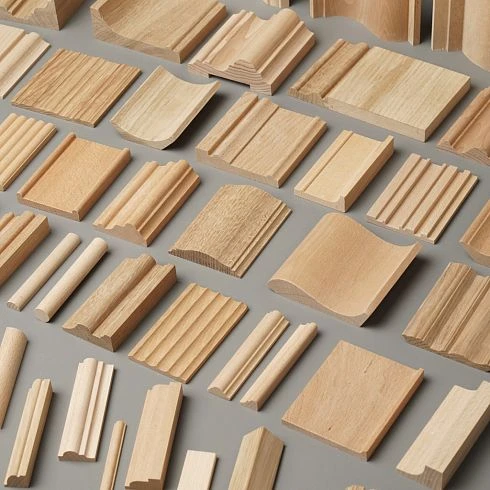
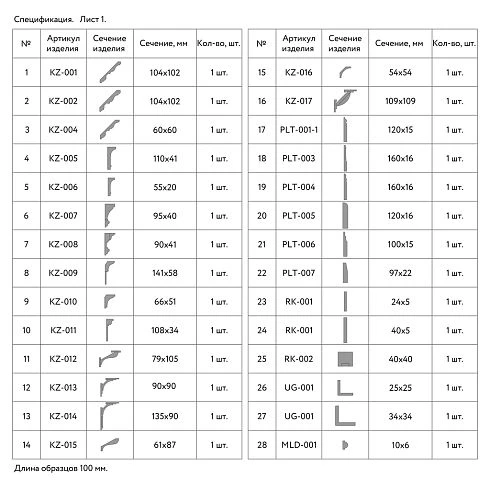
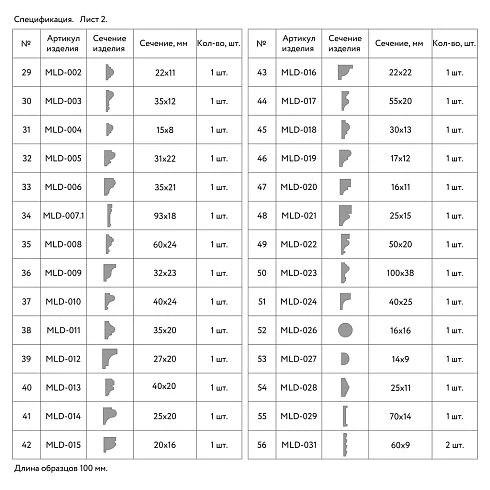
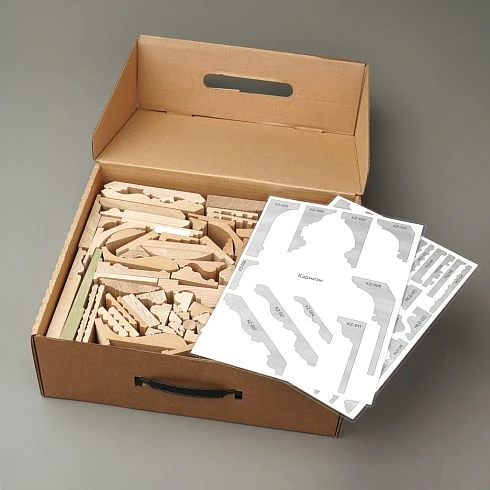
Even better — use a sample of the trim product if you need to make a final decision for a large project.
This way you can check in advance:
- how wide the profile looks;
- what internal size of the frame remains;
- whether there is enough space for the handle;
- whether the molding matches the scale of the cabinet or chest of drawers;
- whether the profile shape matches other decorative elements.
This is significantly more reliable than choosing architectural decor solely from a large catalog image.
Expressive wooden molding for furniture and facades
MLD-006.1 is a decorative profile for projects where a furniture surface needs noticeable volume and a clear architectural frame.
The 35×21 mm cross-section makes it more expressive compared to thin furniture moldings and allows it to be used on fairly large facades.
The oak version is suitable for pieces where the natural wood texture matters.
Beech provides a calmer grain pattern and works well in various furniture finish options.
MDF is especially convenient for painted facades, where the profile and the main surface should be perceived as a single color composition.
MLD-006.1 can be used on wardrobes, chests of drawers, cabinets, sideboards, display cases, kitchen facades, and decorative panels. The profile is suitable for creating single and more complex frame compositions, finishing the side surfaces of furniture, and updating existing pieces.
The main thing when working with such molding is to choose the right scale, make accurate markings, and join the corners well. Then the profile does not look like a random overlay, but becomes part of the furniture's architecture.
For a buyer looking for wooden moulding, furniture moulding, cabinet moulding, moulding for furniture fronts, decorative wooden profile, oak moulding, beech moulding, or MDF moulding for painting, MLD-006.1 offers a practical option with fairly expressive geometry and the ability to choose a material for a specific manufacturing technology.
When used correctly, the 35×21 mm profile can transform even a simple flat front: add depth, create rhythm, emphasize proportions, and make the piece of furniture look more complete.
Your request has been sent!
Our manager will contact you within 5 minutes