























Article Contents:
- Why polyurethane is suitable for facade decor
- What facade decor elements are used for the home
- Facade Molding
- Polyurethane Moldings and Cornices
- Window and door decor on the facade
- Brackets, capitals, and pilasters
- How to choose polyurethane facade decor to match the style of your home
- Classic house
- Neoclassicism
- Modern home
- How to correctly calculate and plan facade decor
- Installation of polyurethane moldings: what is important to know
- Combination of polyurethane and wood on one facade
- Mistakes when choosing polyurethane facade stucco
- Color and finish coating of facade decor
- Where to buy facade decor and polyurethane stucco
- FAQ: frequent questions about polyurethane facade decor
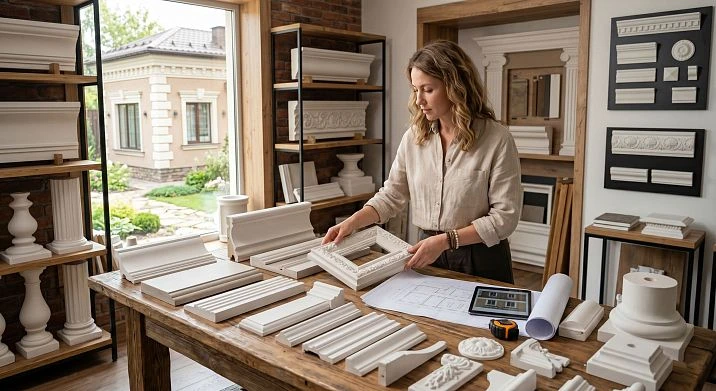
Facade decoration made of polyurethane is exactly the tool that, with minimal structural changes, gives maximum visual results.Polyurethane moldings, moldings, cornices, brackets, overlays, capitals, pilasters — all of this is available today to any owner of a private house, cottage, or country residence. This is not a privilege of architects with multi-million budgets. This is a practical, technological, and beautiful solution.
Facade Decoration at STAVROS is a full range of decorative elements for exterior design: from thin molding strips and linear products to complex ornamental overlays, keystones, sandriks, and carved brackets. In this article, we will break down everything in essence: why polyurethane works better than other materials on the facade, which elements are chosen for different house styles, what mistakes are made most often — and how to avoid them.
Why polyurethane is suitable for facade decor
Before choosing the shape and ornament, you need to understand the material. Because polyurethane as facade decor is not just a replacement for plaster. It is a different logic, different possibilities, and different installation requirements.
Facade decoration made of polyurethaneemerged as a response to a real market demand: most private homeowners want a rich classical facade, but traditional plaster stucco is poorly suited for this — it is heavy, fragile, requires a professional plasterer and serious reinforcement for wall mounting. Polyurethane offered the same visual effect — with radically different physical characteristics.
What specifically makes polyurethane the right material for exterior decor?
Low weight.Polyurethane Itemsweigh 5–8 times less than plaster analogs of the same size and profile. A 2 m long cornice with a profile height of 150 mm made of polyurethane weighs 400–600 g. The same plaster cornice weighs 3–4 kg. The difference determines the mounting method: polyurethane is installed with glue without anchors or reinforcement.
High detail of shapes.Polyurethane Decoris produced by injection molding into precise molds. This allows reproducing acanthus leaves, dentils, flutes, volutes, and complex ornamental relief with a level of detail unattainable by hand in serial production.
Weather resistance. Polyurethane does not absorb water, does not swell, and does not delaminate during freeze-thaw cycles. The operating temperature range is from -40 to +60°C, covering the climatic conditions of most of Russia.
Ease of processing.polyurethane productsare easily cut with a regular hacksaw, sawed at any angle, and adjusted on site. Corner joints of cornices are made at 45° with minimal gaps.
Painting.Polyurethane architectural decorationAccepts any water-based facade paints. After priming and painting with facade enamel with a UV filter, the surface becomes uniform, without pores, with good adhesion to subsequent layers of paint during planned renovation.
Affordability. Compared to natural stone, metal, and even plaster, polyurethane is significantly cheaper with a comparable visual result. This allows for comprehensive decoration of the entire facade, not limited to just the entrance group.
There are also limitations that are more important to honestly discuss than to conceal. Polyurethane degrades under direct UV radiation without a protective coating: it yellows and becomes brittle. Without a final coat of facade paint with a UV stabilizer, the service life is drastically reduced. Properly installed and paintedOutdoor facade decoration using polyurethanelasts 20–30 years without loss of shape or relief.
A detailed comparison of materials for facade decor is presented in thearticle about plaster and polyurethane stucco moldingon the STAVROS website. It covers all the nuances: density, weight, frost resistance, installation technologies, comparison of cost per linear meter, and total costs for facade decoration.
What facade decor elements are used for a house
A facade is not a wall. It consists of several visual zones, each requiring its own approach: the plinth, the main volume, the interfloor belt, window rows, the cornice line, the pediment, and the entrance group.Decorative elements for facadesare selected not individually, but as a system: each element must support the others in a unified scale and style.
Let's break down the categories by their role on the facade.
Our factory also produces:
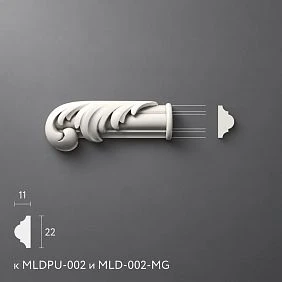
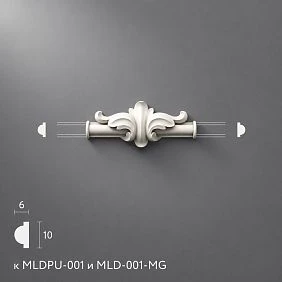
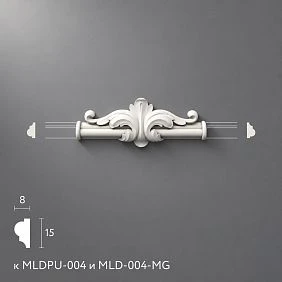
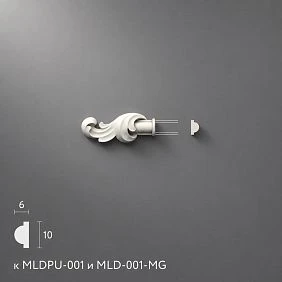
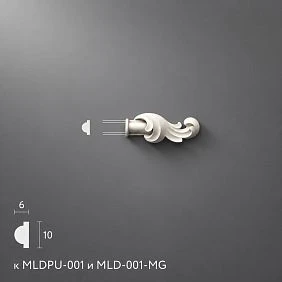
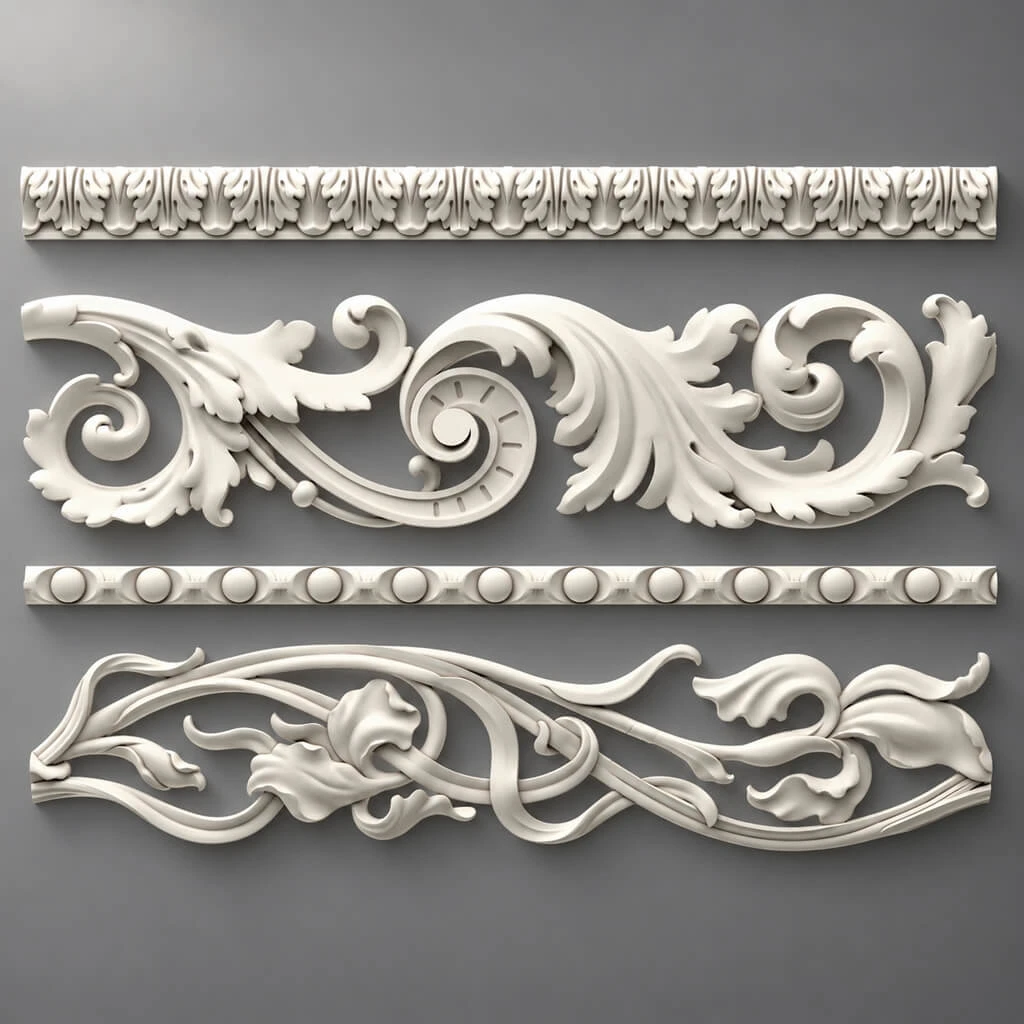
Facade moldings
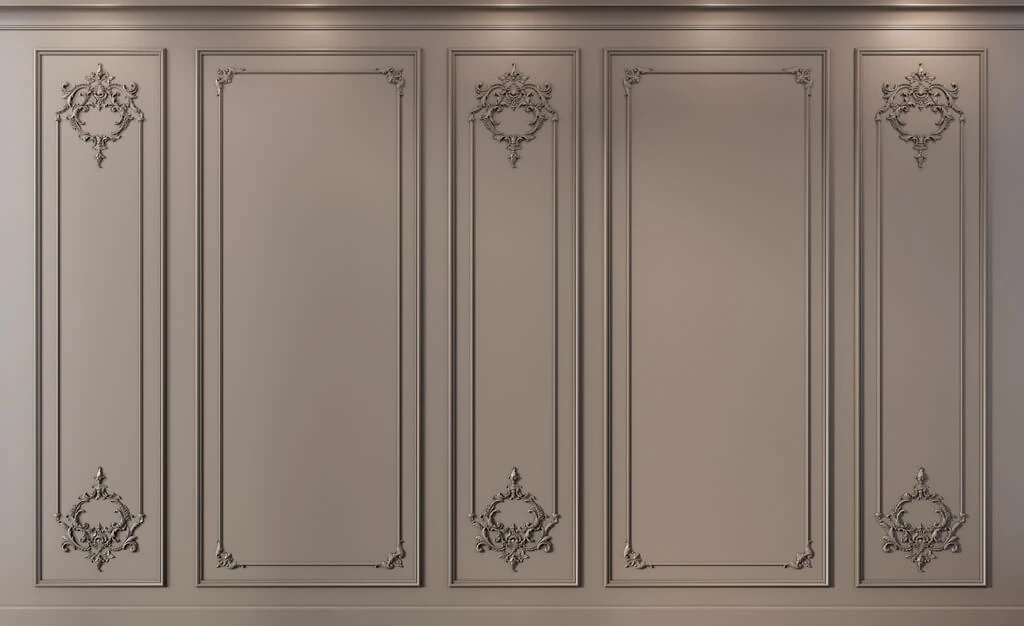
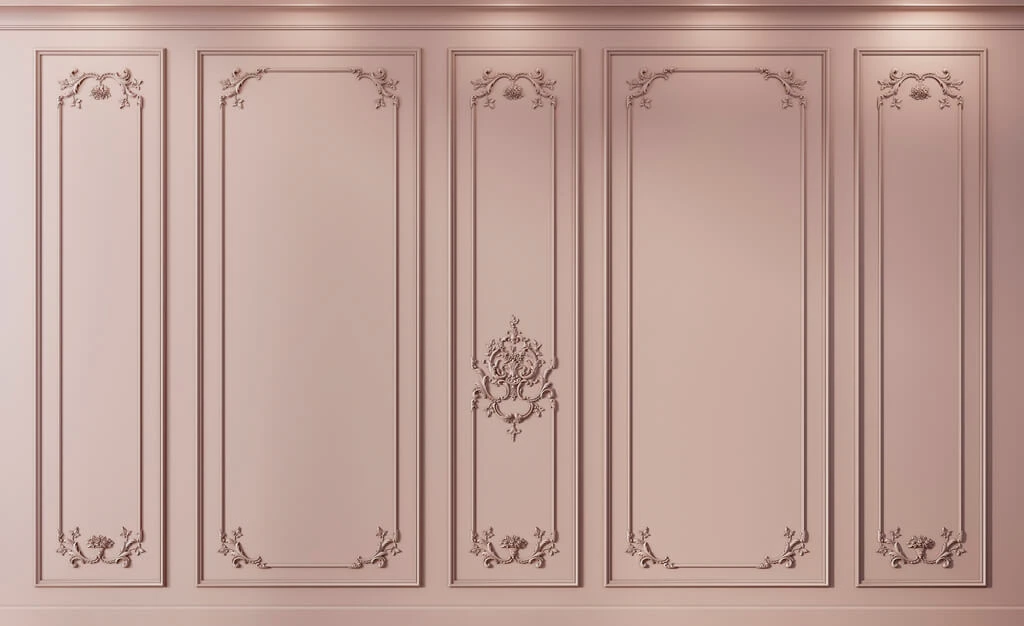
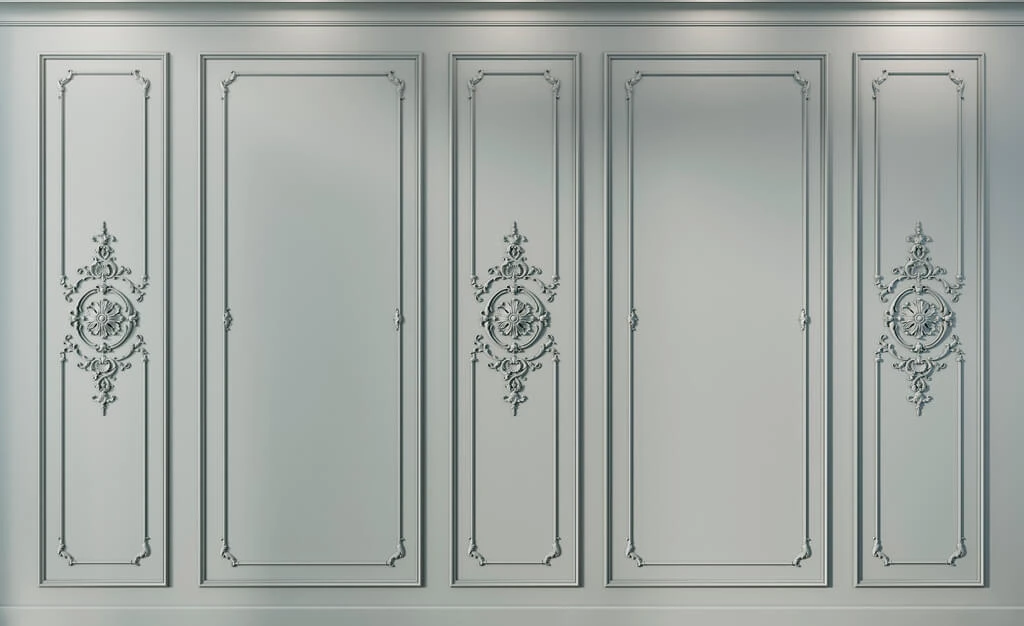
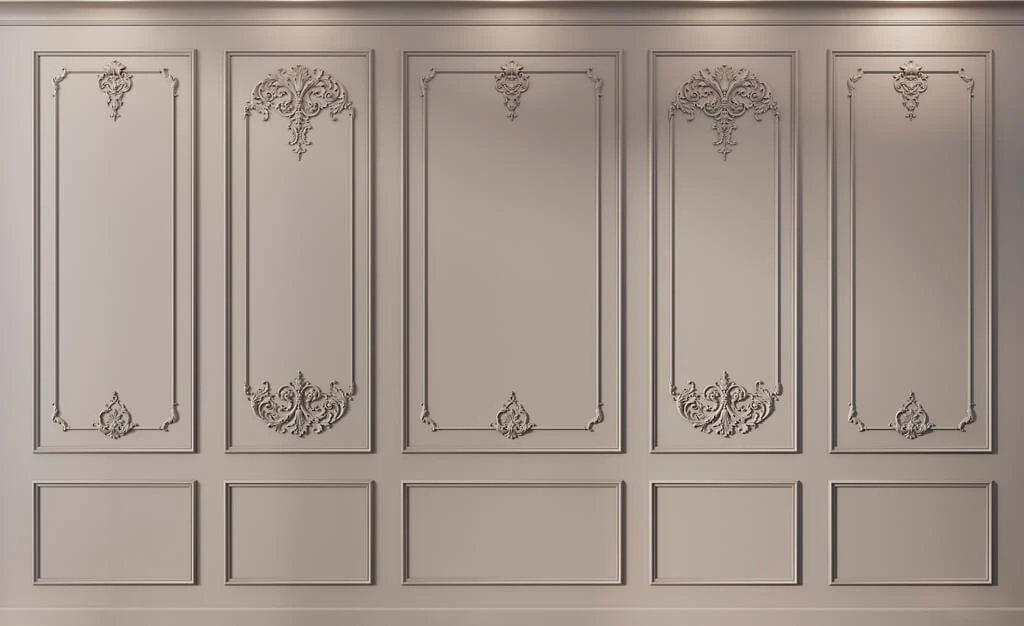
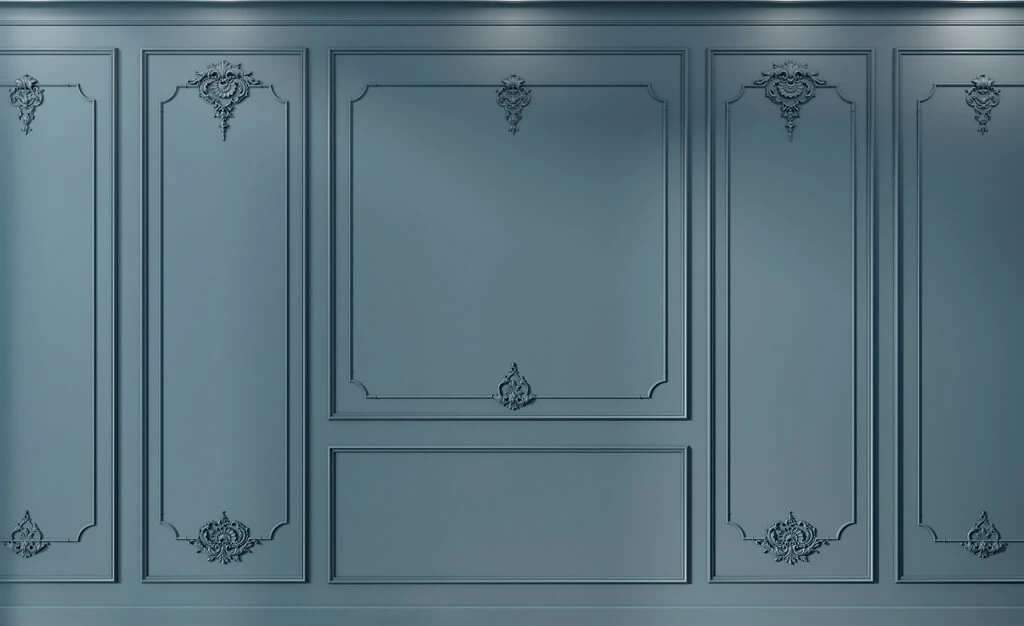
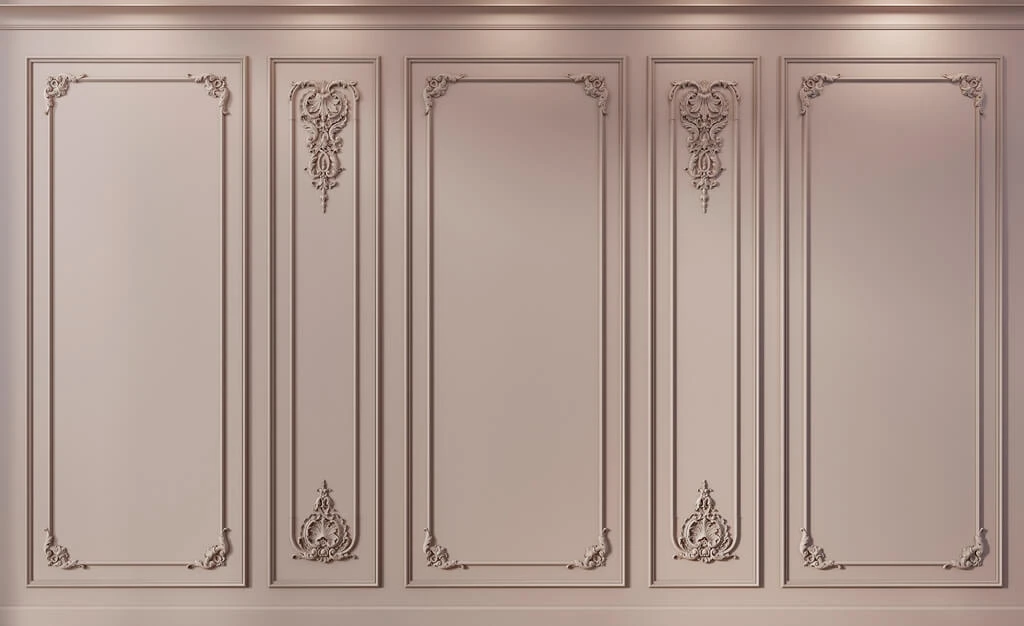
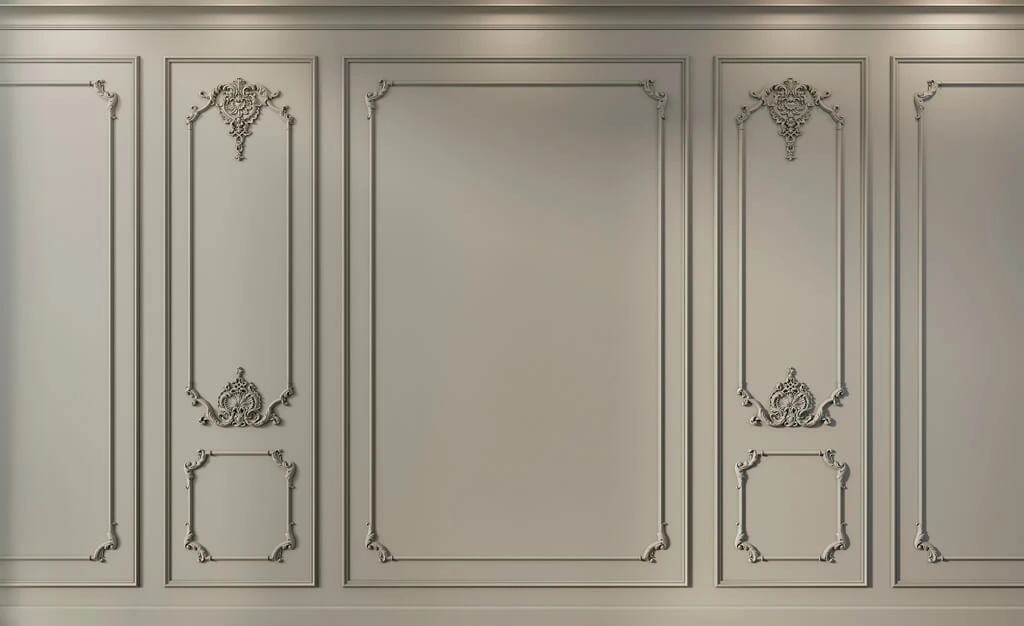
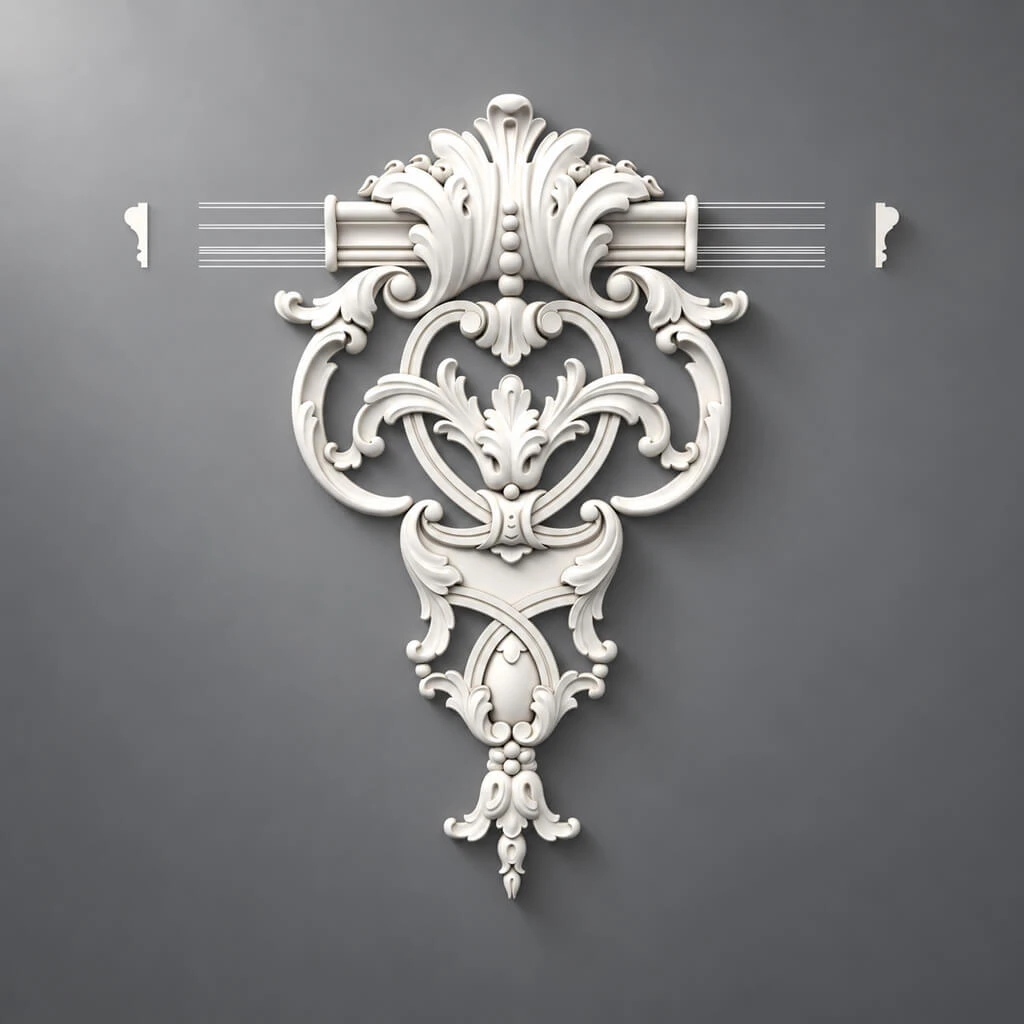
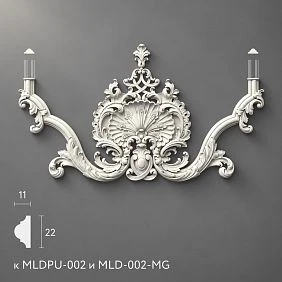
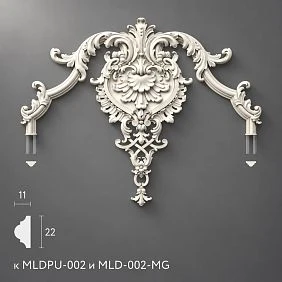
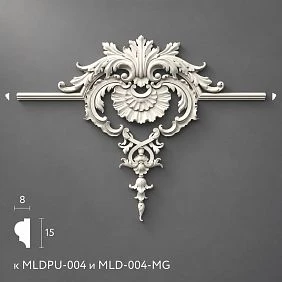
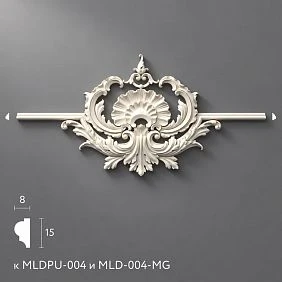
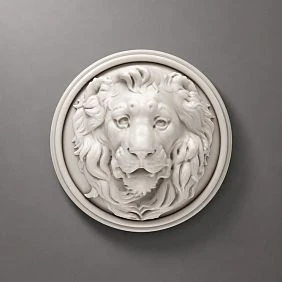
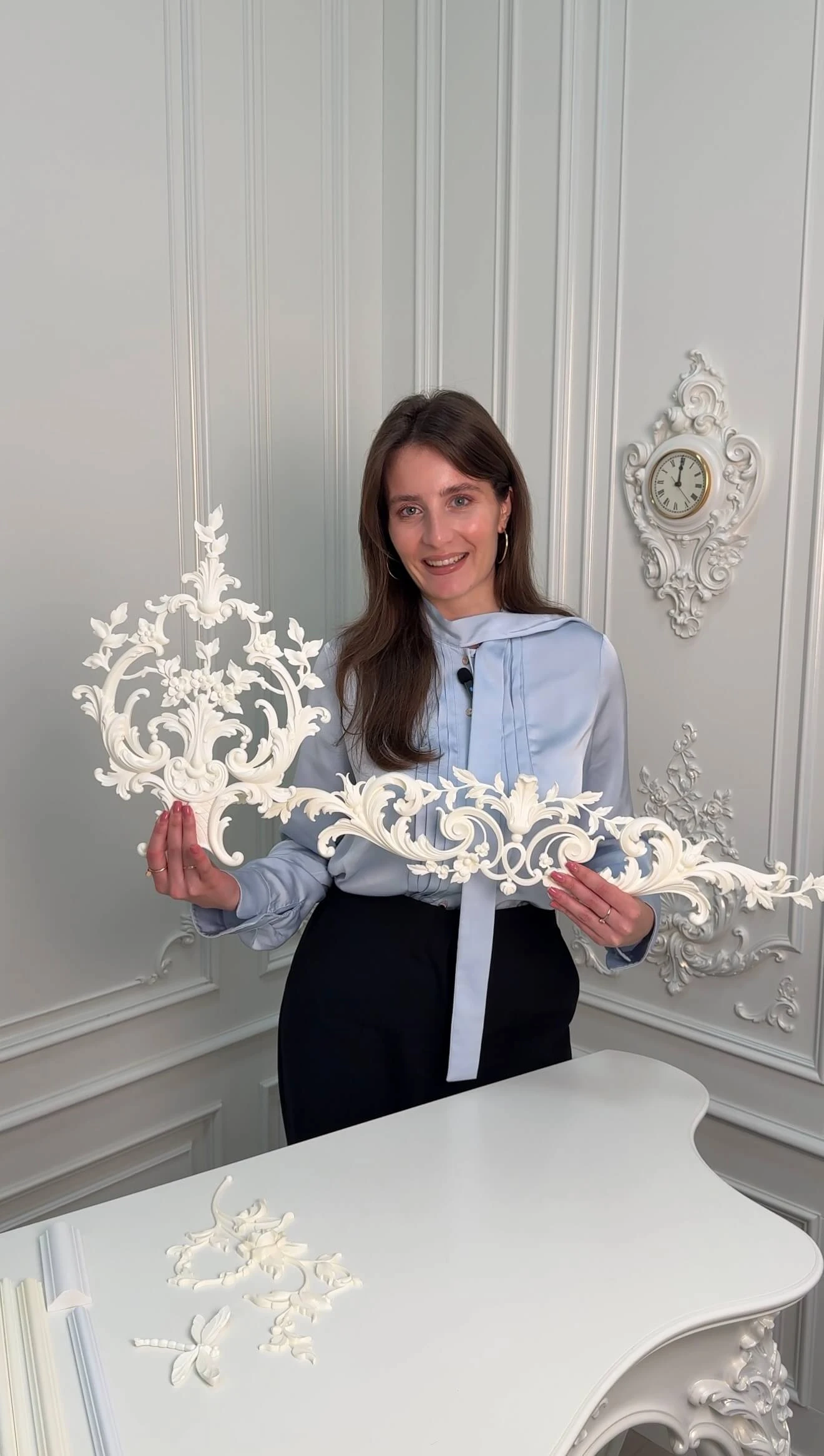
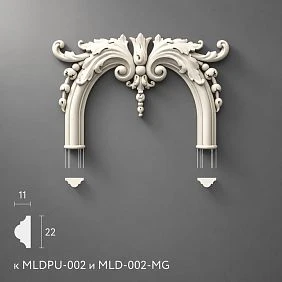
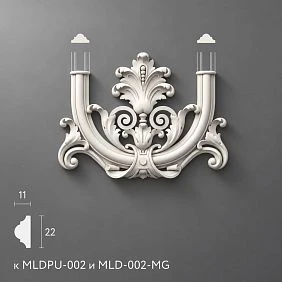
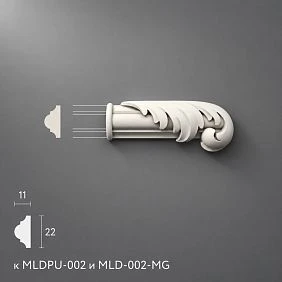
Polyurethane molding allows creating a stylish and presentable exterior of a house, while the material retains its qualities in any weather conditions.is the richest category in terms of form formation. These are applied three-dimensional elements that create relief on a flat wall surface. Stucco can be thin — like a grid of ornament on a frieze — or massive: keystones, mascaron, relief panels, sculptural overlays.
Where it is appliedStucco on the Facade?
-
in the pediment area — as an ornamental accent on the triangular or semicircular completion of the wall;
-
above windows — sandriks, keystones, decorative "eyebrows";
-
under the cornice overhang — a frieze with a repeating ornament or meander;
-
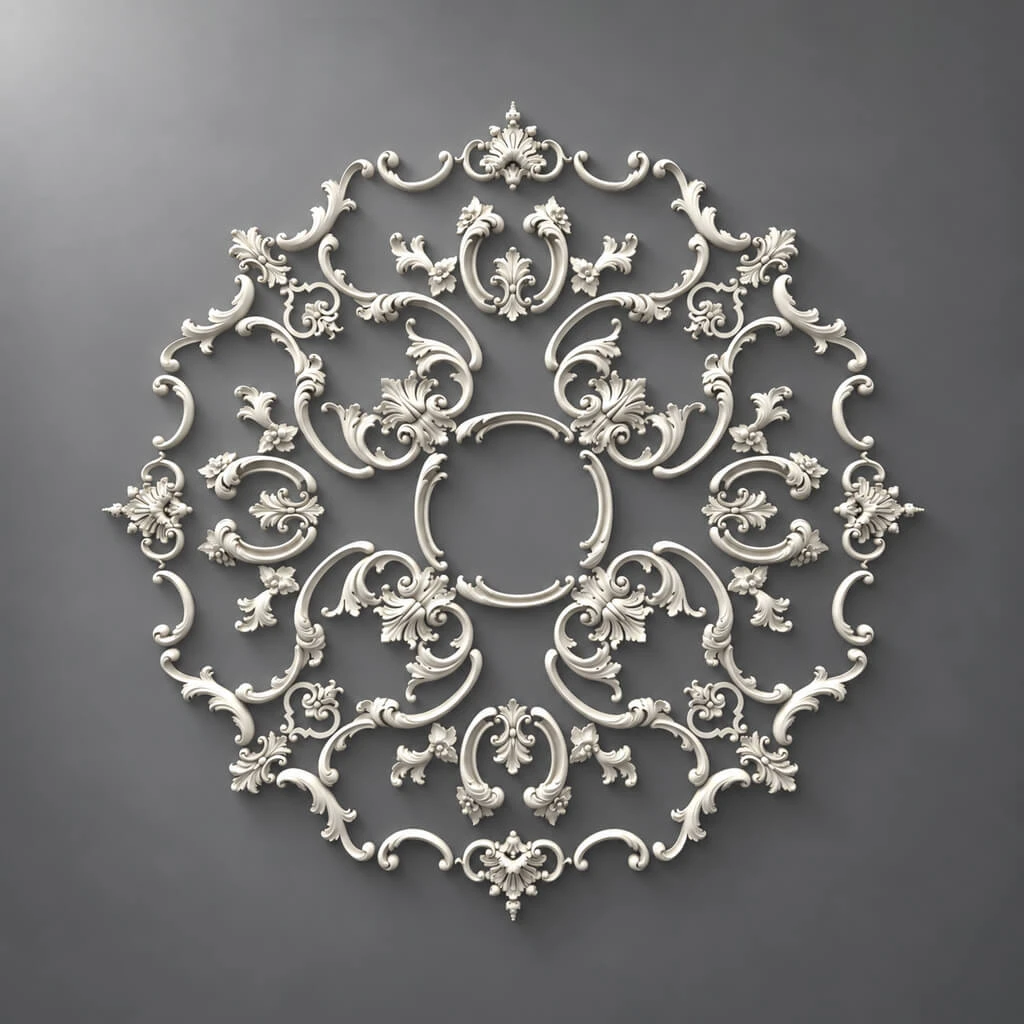
on wall surfaces — relief medallions, rosettes, plant overlays in the piers;
-
at the entrance door — a rich portal framing with pilasters, a stucco cornice, and an ornamental lock.
Facade molding for a housein its classic execution works in several architectural styles: strict classicism with geometric ornament, lush baroque relief, restrained neoclassicism, 19th-century estate architecture. It is important to understand: stucco does not create a style by itself — it enhances the already stated architectural concept.
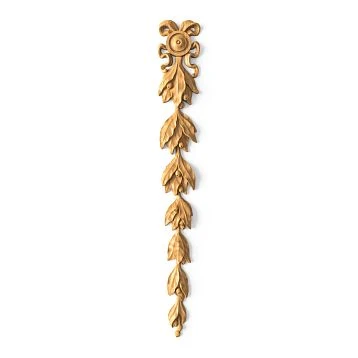
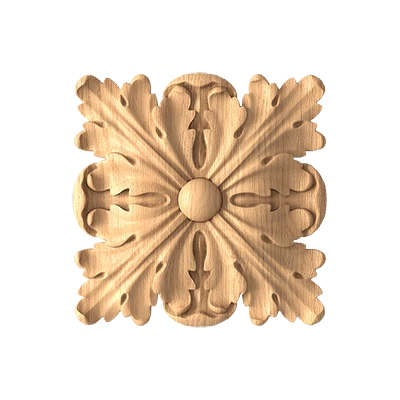
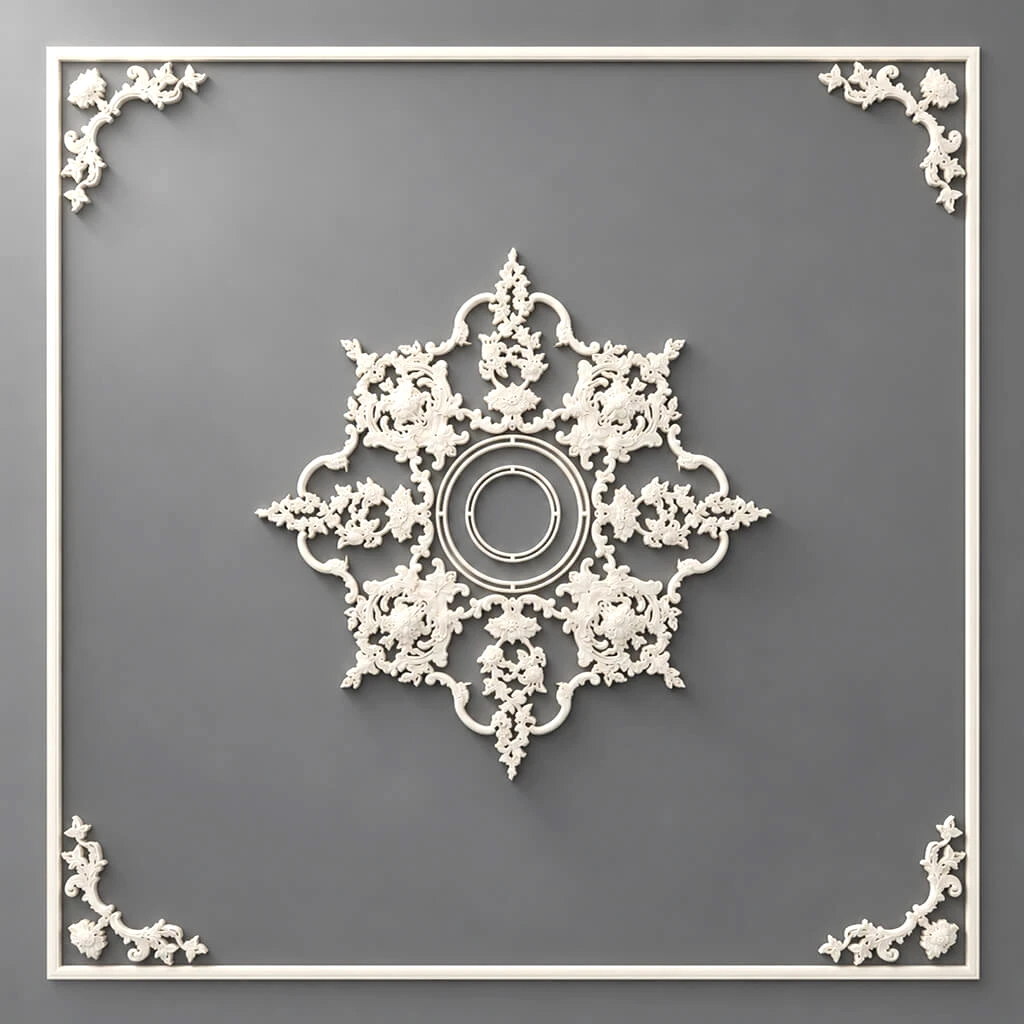
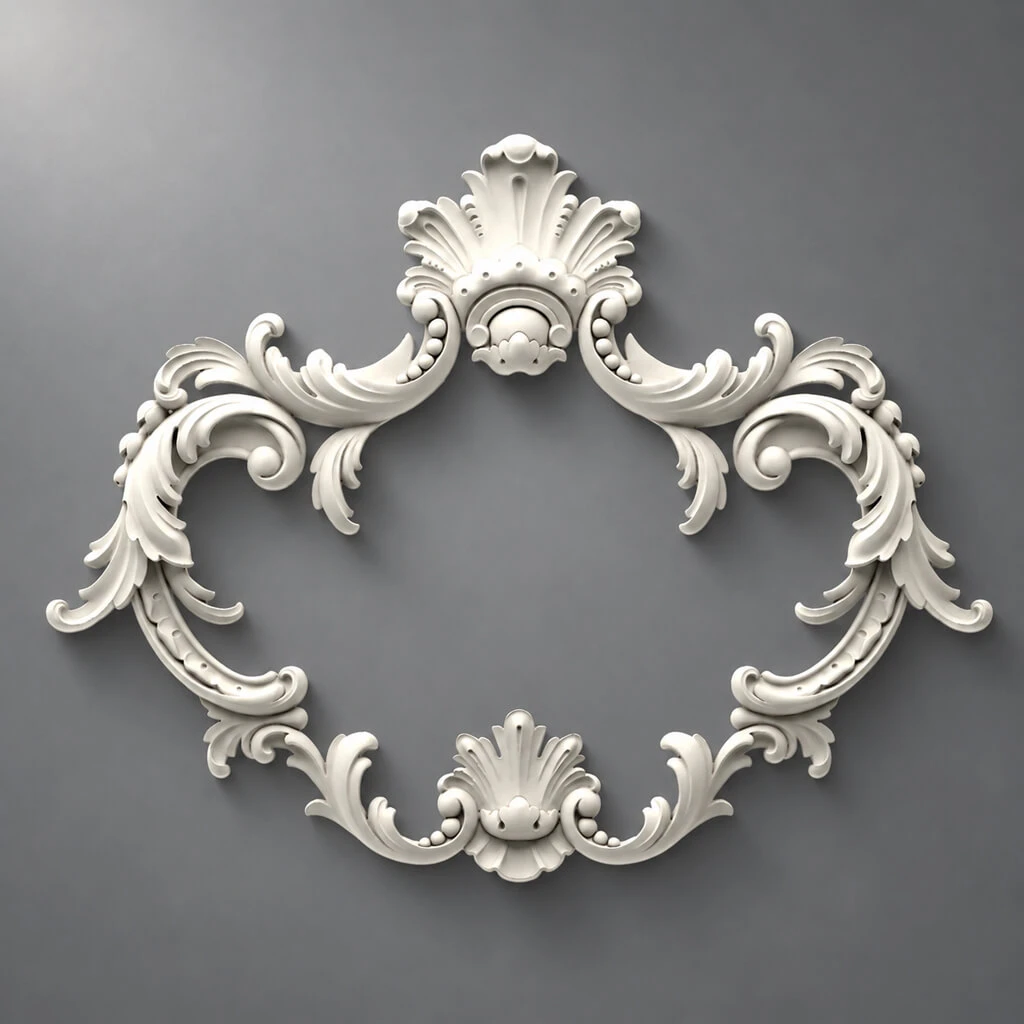
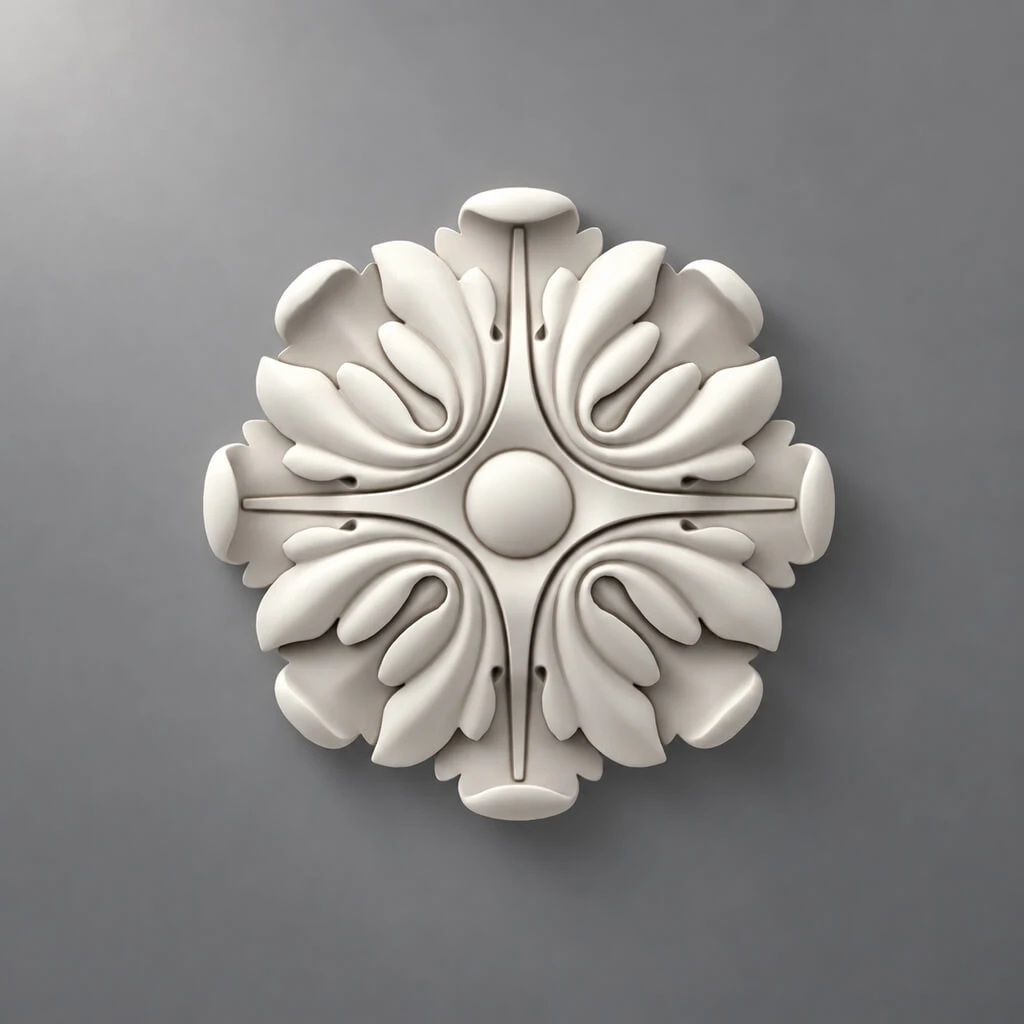
Polyurethane molding for facadesThe STAVROS catalog offers a wide selection of overlay elements: from simple rectangular frame overlays to complex ornamental reliefs.Facade Molded DecorationThis is a category that brings together all point overlays: medallions, rosettes, corner blocks, ornamental inserts. They give the facade a "luxurious" detailing without increasing the weight of the structure.
Technically: the standard thickness of overlays is from 15 to 60 mm, which creates a pronounced shadow under side lighting. The relief is clearly readable at a distance of 5–15 meters — it is from this distance that a person evaluates the facade of a house.
Get Consultation
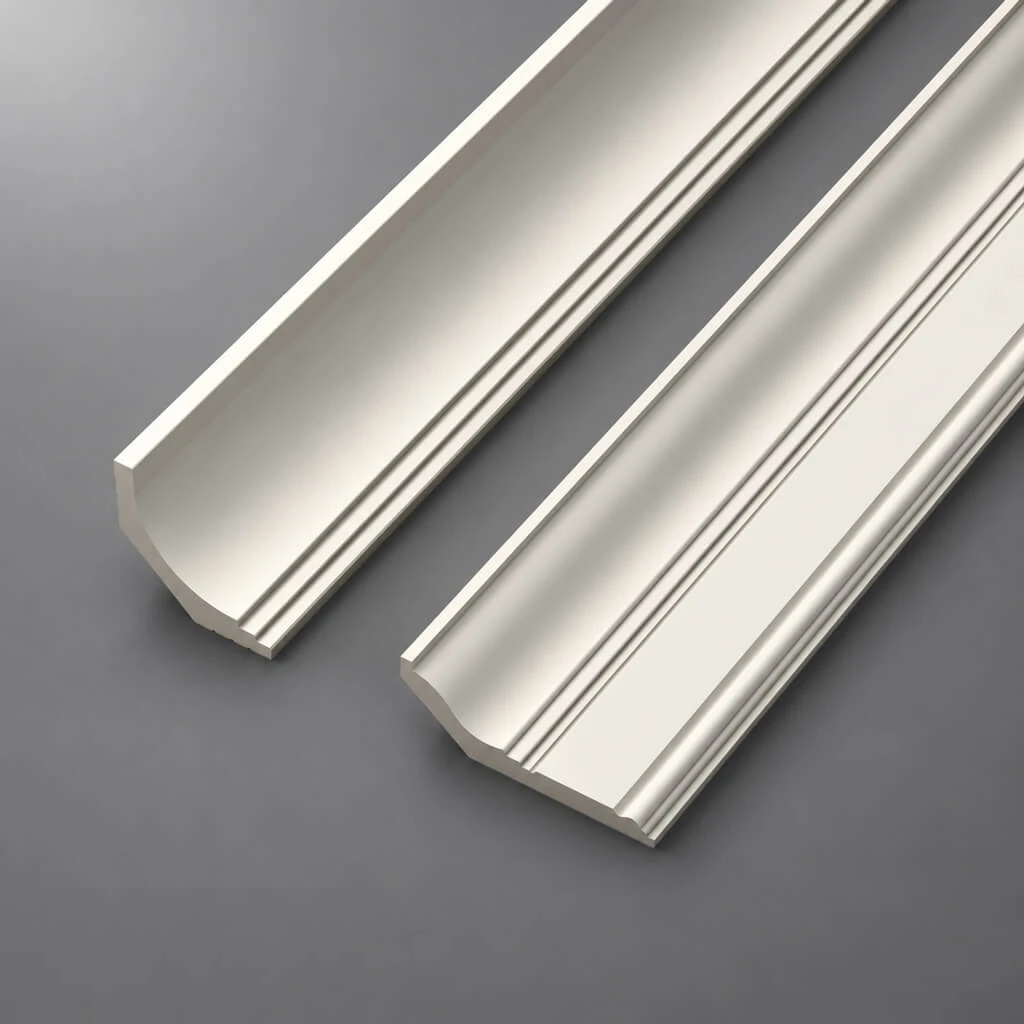
Polyurethane moldings and cornices
If stucco is accents, then moldings and cornices are the framework. Without them, even the most beautiful overlay elements look "taken out of context." It is moldings that create horizontal and vertical lines that structure the facade plane.
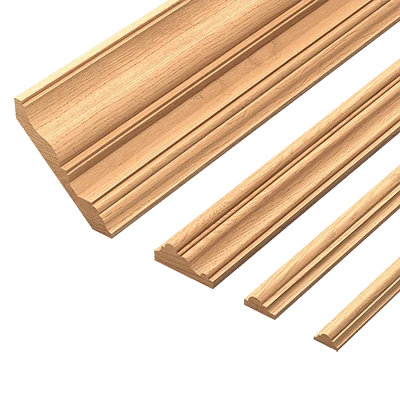
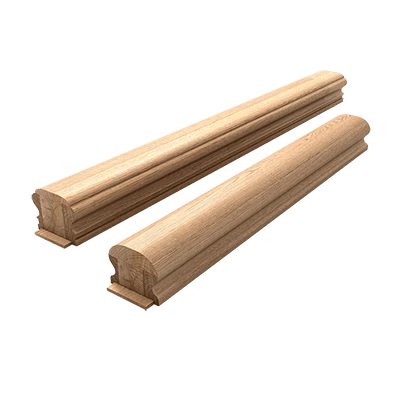
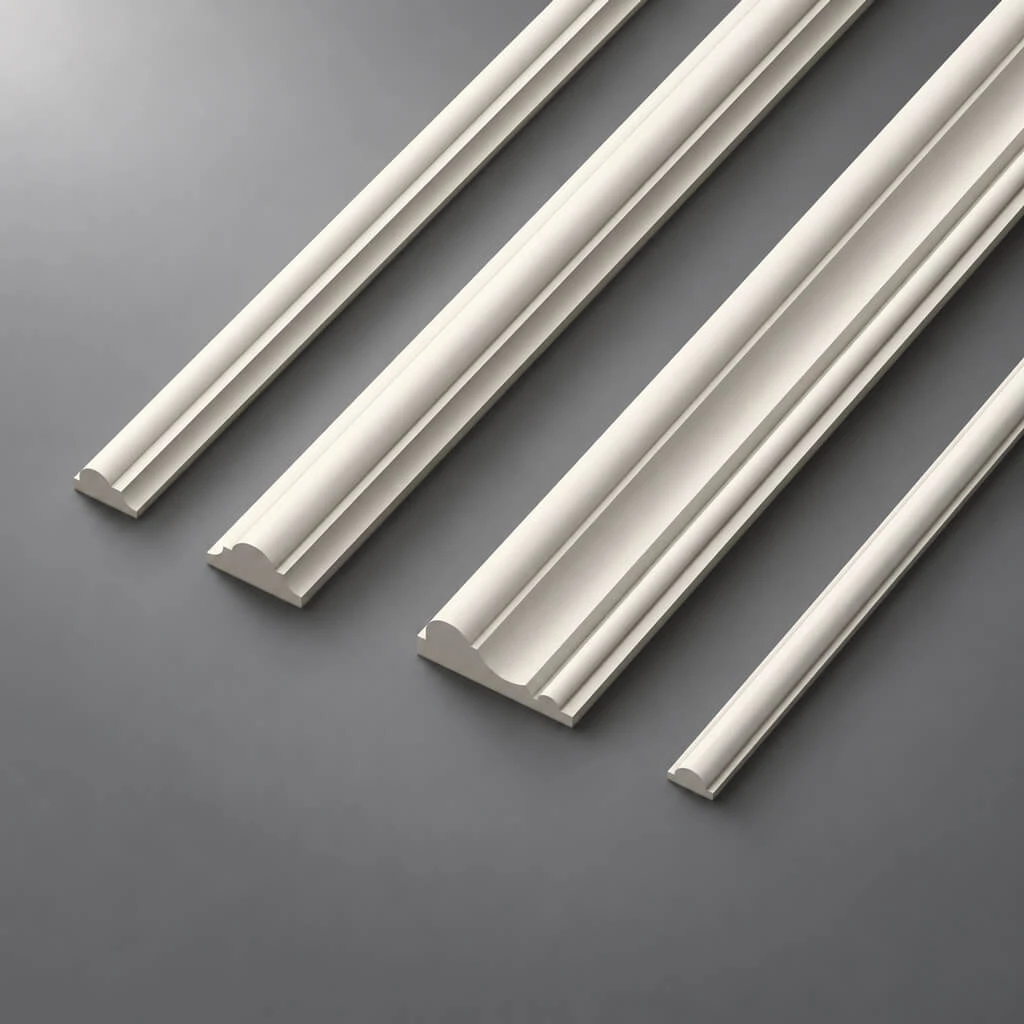
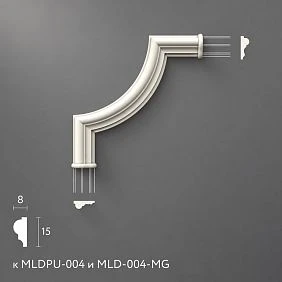
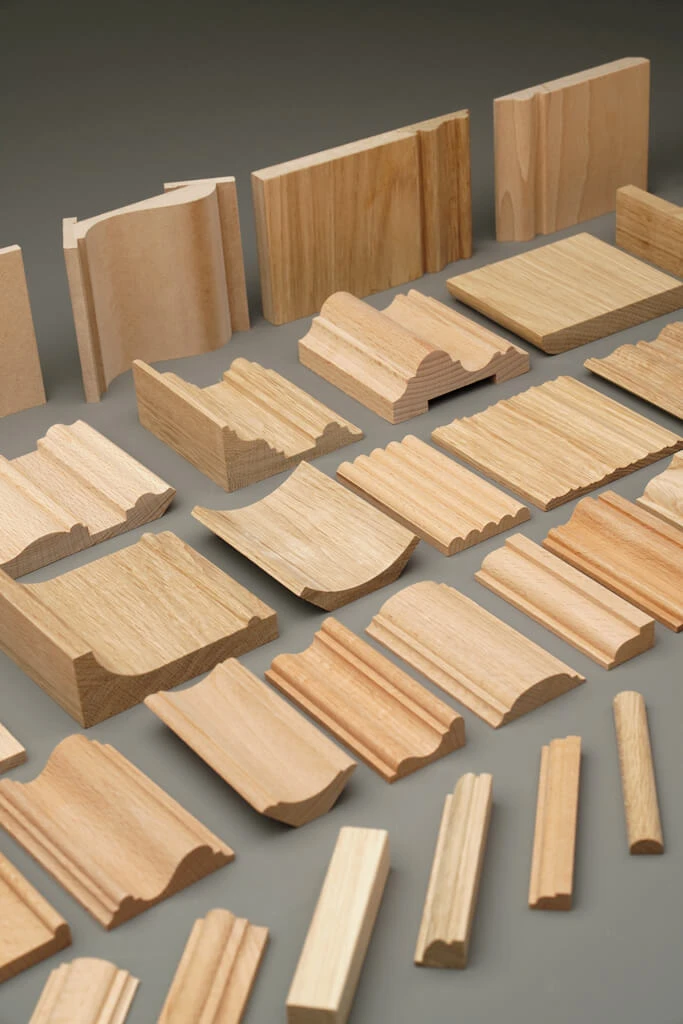
Moldings made of polyurethaneThis is a profiled linear element with a characteristic cross-section: shelves, beads, scotias, quarter rounds, complex multi-level profiles. On the facade, they perform the following functions:
-
Interfloor belt — a horizontal band between the first and second floor; visually divides a high wall into tiers, reduces the feeling of monotony;
-
Window sill — a profile above or below the window as a horizontal accent;
-
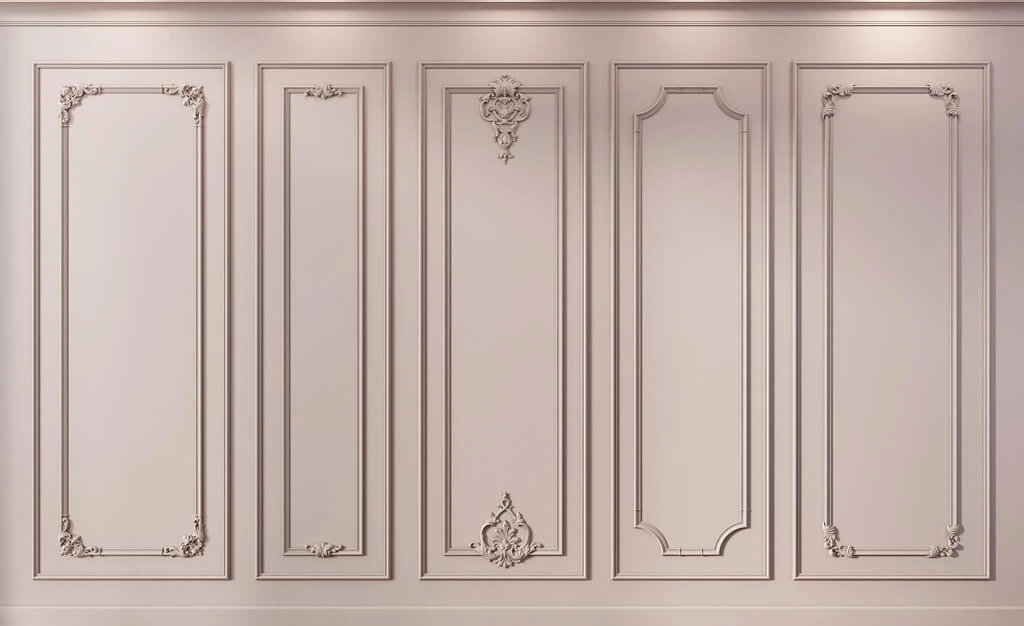
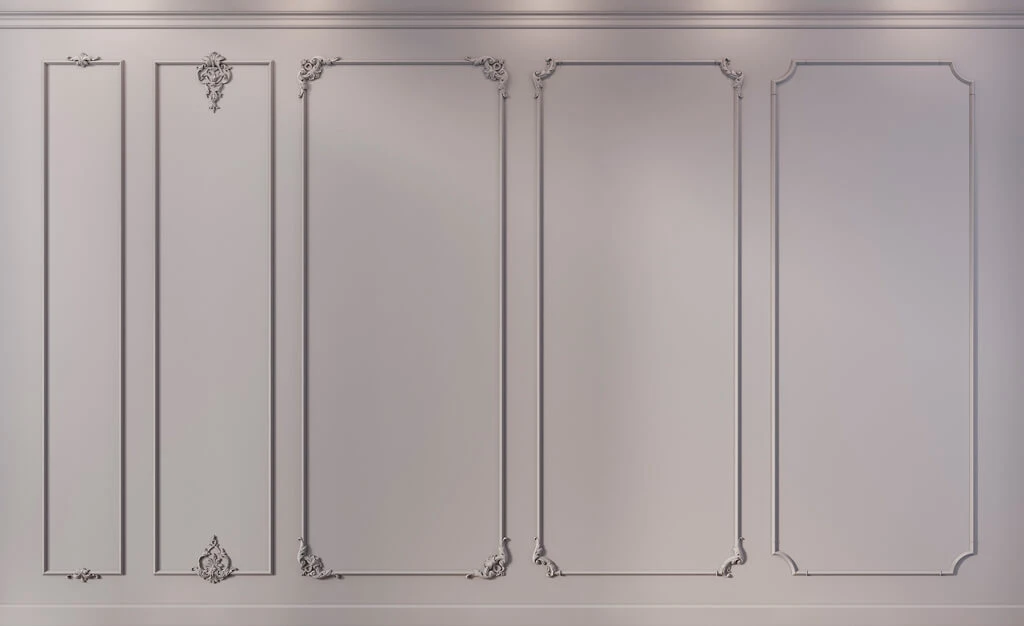
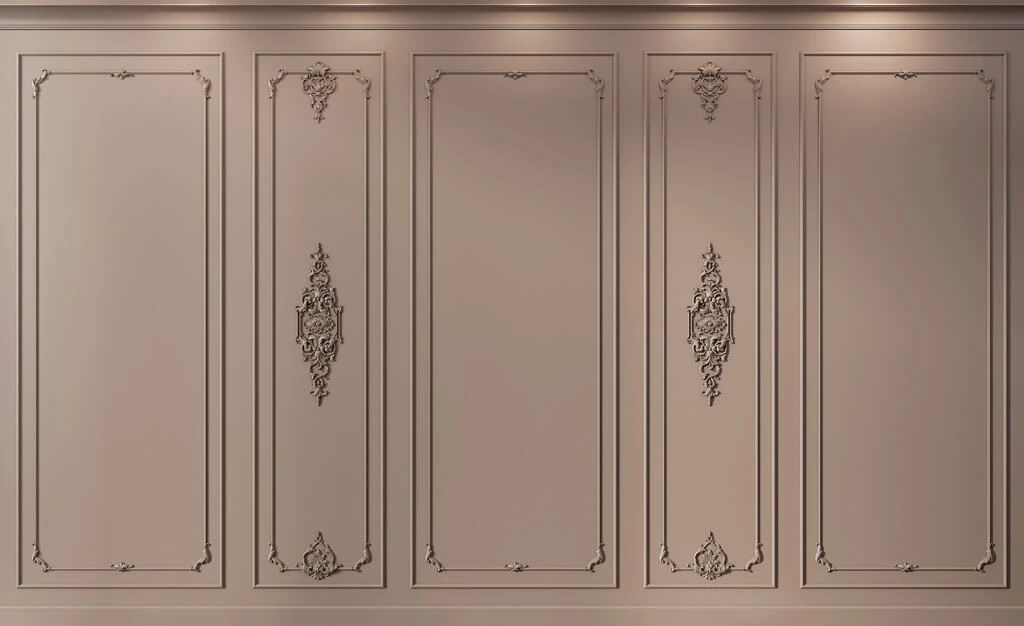
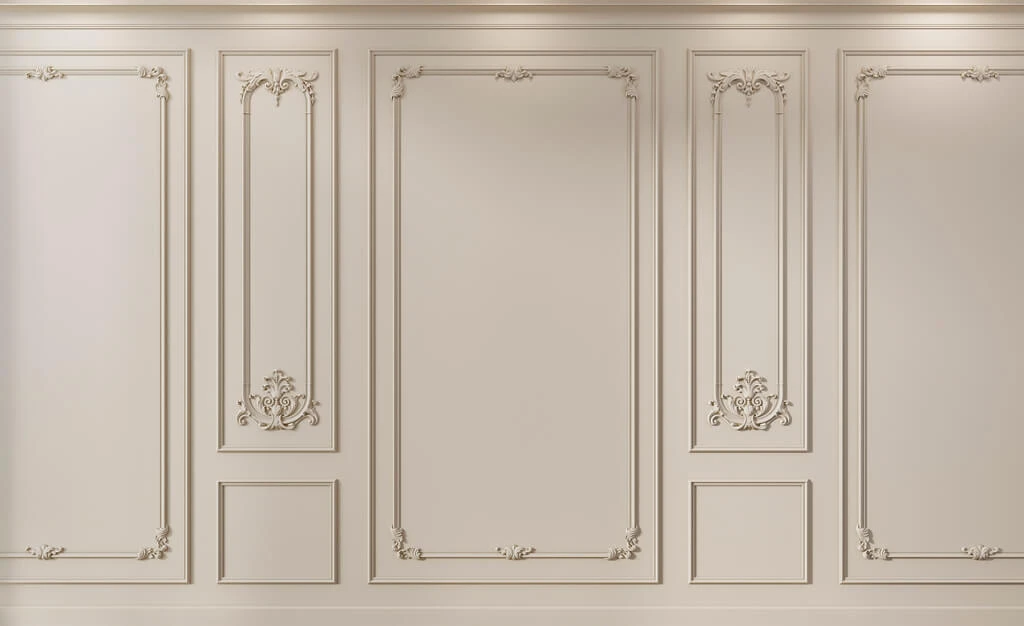
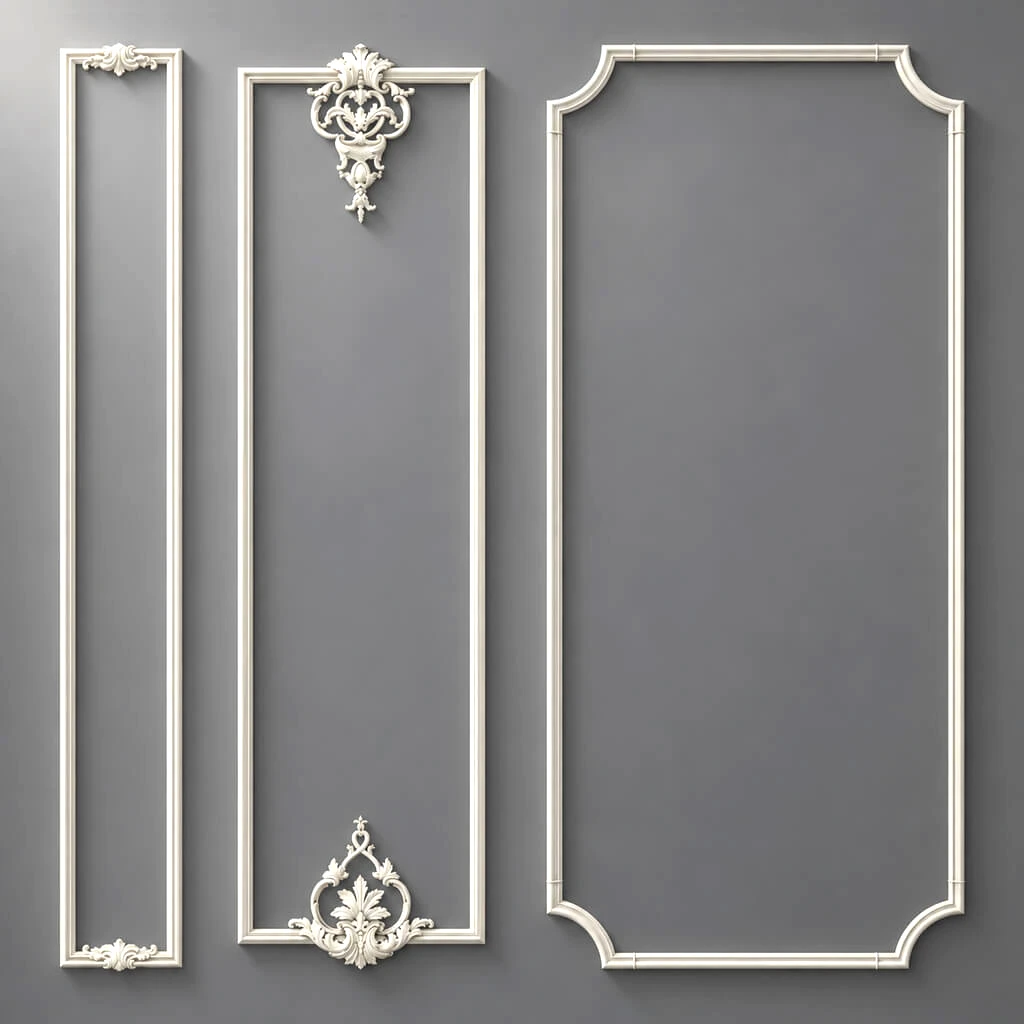
Frame molding — a rectangular frame made of profile, creating a decorative panel on the wall plane;
-
Vertical band — accentuates the pier or corner of the building.
Polyurethane facade moldingsThey are produced in standard lengths of 2000 mm with a range of profile heights from 30 to 250 mm. The choice of profile height is a function of the facade scale: for a one-story house, an interfloor molding of 80–120 mm, for a two-story house — 120–180 mm and higher.
A cornice is a large profile at the top of a wall, forming the transition to the roof. In classical architecture, a cornice consists of several profiles: shelf, scotia, astragal, fascia, drip. In polyurethane, all of this can be executed as a single cast product or assembled from several linear elements.
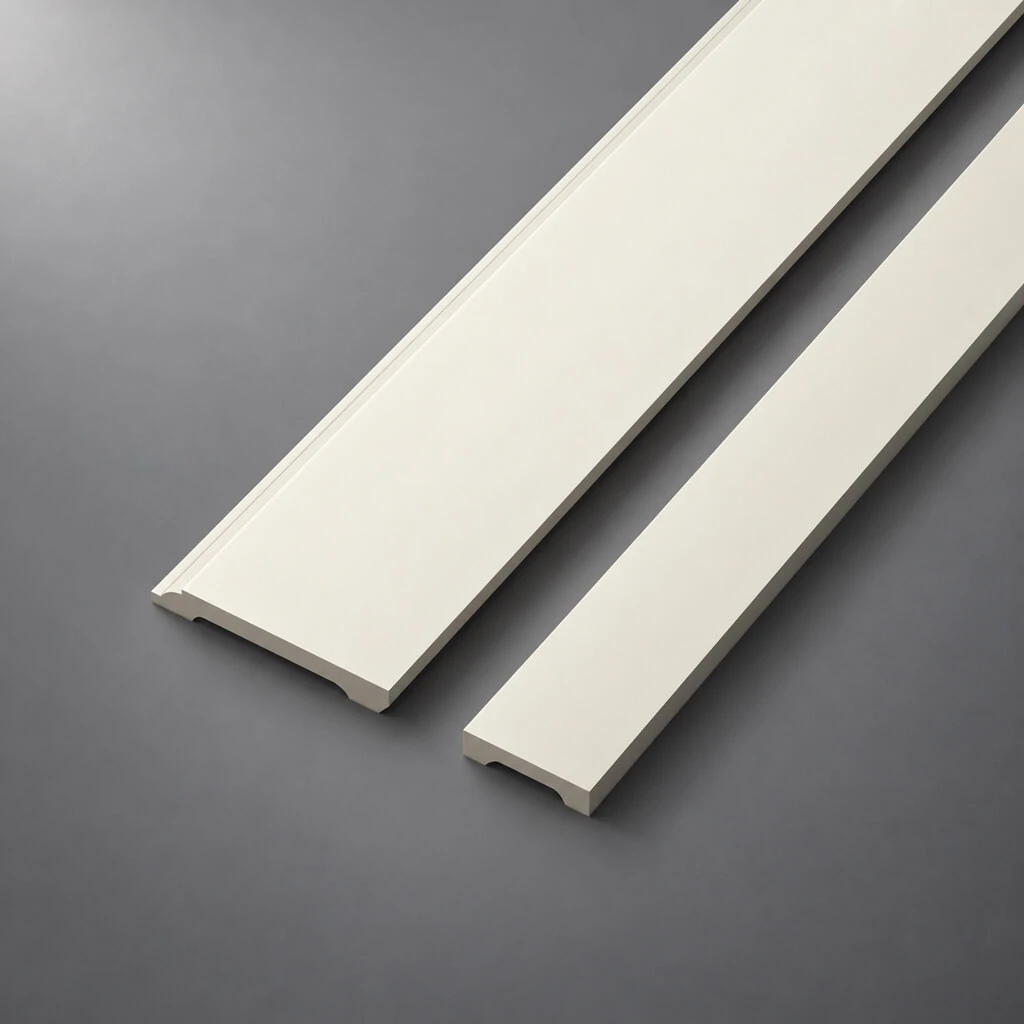
Polyurethane trim — a separate category of facing and transition profiles, which includes corner strips, transition rods, and additional profiles. These are details that complete the installation: they cover joints, frame internal and external corners, and create continuous lines on complex facade geometries.
Practical point: buy polyurethane molding should be ordered with a 10–15% margin over the calculated linear footage — for angled cuts, on-site adjustments, and in case of defects during cutting.
Window and door decor on the facade
A window is the point of maximum attention on a facade. It is from the windows that the style of a house begins to be read. And that is why Facade window decoration from polyurethane provides the greatest visual effect in terms of money and effort spent.
What is included in window framing:
Side architraves — vertical profiles on the sides of the opening. They can be simple (rectangular molding) or complex (profile with pilaster, rustication, ornament).
Top pediment — a horizontal element above the window. It can be straight, triangular, or arched. It is the pediment that gives the window its "architectural completion".
Keystone — a protruding element at the center of the upper arch or straight pediment. One of the most recognizable details of a classic facade.
Window sill — a horizontal profile under the window. Creates the lower boundary of the window opening, diverts water from the wall.
Polyurethane facade decoration for the houseSTAVROS window frames allow you to design any type of opening — rectangular, arched, non-standard — with precise size adjustment. Polyurethane is cut according to a template, making it possible to create a custom frame for non-standard window shapes.
The front door is the strongest compositional element on the facade. The most expressive solutions are appropriate here: a portal with pilasters, a rich frame with an ornamental keystone, a canopy with brackets, a stucco overlay above the door. The entrance group should visually stand out among other facade elements — be larger, richer, more accent.
molded decoration made of polyurethaneFor the entrance group: overlays, corner blocks, medallions, ornamental inserts — all of these are attached with mounting adhesive, painted to match the facade or in contrast, and create that very "ceremonial" effect that turns the entrance to the house from a utilitarian opening into an architectural statement.
decorative polyurethane elementsFor window and door areas — in the STAVROS catalog, this is a separate category of overlays that are easy to select by size and ornament.
Brackets, capitals, and pilasters
Three elements that give the facade "architecturality" — not just beauty, but the feeling of a professionally developed architectural project.
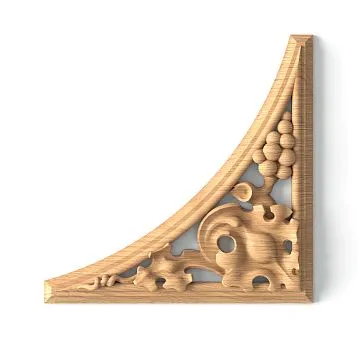
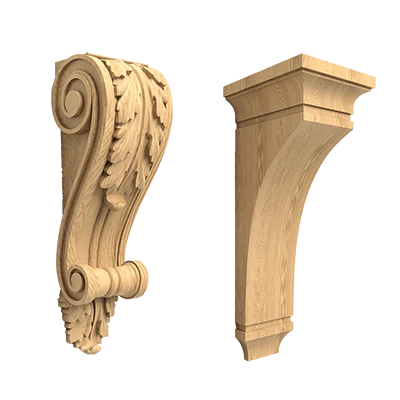
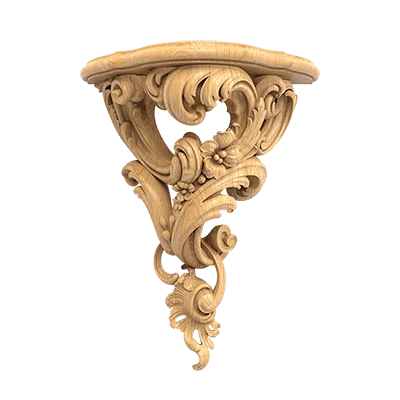
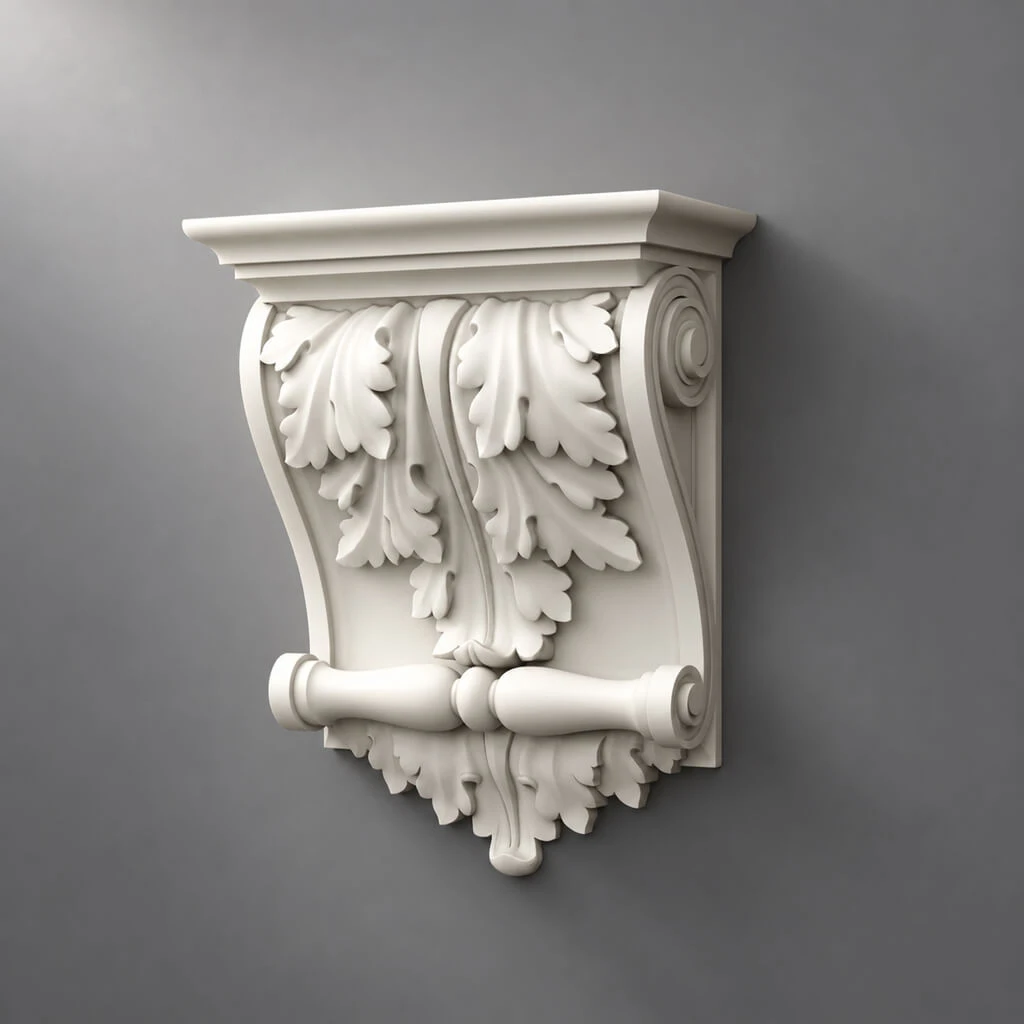
Brackets.Polyurethane brackets — these are decorative consoles that are mounted under the cornice overhang, under the canopy of the entrance group, under balcony shelves. They perform two functions: visually "support" the protruding element (cornice, canopy) and create a rhythmic accent along the horizontal.
Polyurethane bracketinstalled with glue in combination with mechanical fastening when the cornice has a significant overhang. Standard spacing is 60–80 cm along the cornice belt. This creates a rhythmic horizontal line visible from a distance.
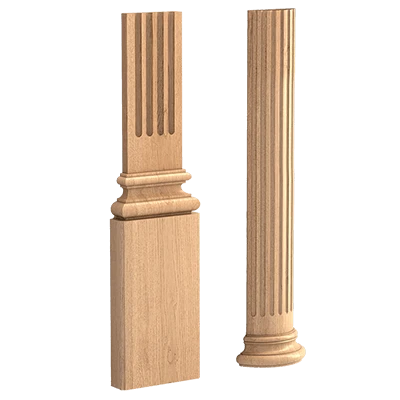
Pilasters.Pilasterare flat vertical projections of a wall, architecturally similar to a column but not detached from it. On the facade, pilasters are placed in the piers between windows, at the corners of the building, and in the entrance portal area. They create a vertical rhythm — especially important for houses with large horizontal wall planes.
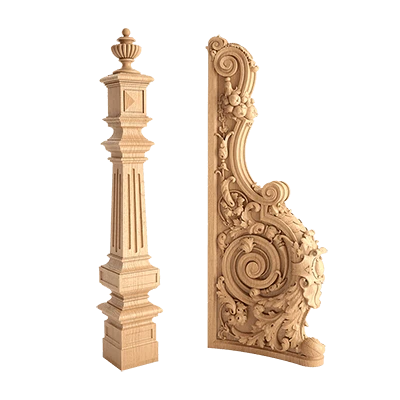
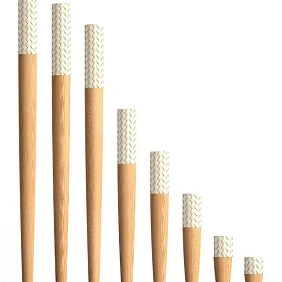
Wooden pilaster for the facade is a separate topic, relevant primarily for houses with wooden cladding. In STAVROS, this is the sectionpilasters and columns, where products made from solid wood with different trunk treatments are presented.
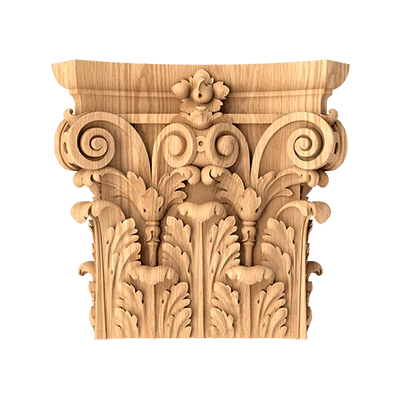
Capitals.Capitalare the upper part of a column or pilaster, creating a transition from the vertical shaft to the horizontal cornice or entablature. Without a capital, the pilaster looks unfinished — like text without a period at the end of a sentence.
buy a capitalin STAVROS can be made of wood, in several order variants. The Doric capital is strict, with minimal profile, suitable for restrained classicism. The Ionic capital has characteristic volutes, for more plastic solutions. The Corinthian capital has a lush acanthus leaf, for a rich classical and baroque facade.
The combination of pilaster, capital, and cornice on the facade is a complete order system. It is this combination that creates the feeling of "real architecture," not just finished walls.
How to choose polyurethane facade decor to match the style of the house
Style is not about personal taste. Or rather, not only about it. Style is a system of rules, each of which has an architectural justification. Breaking the rules is not always bad, but only if you understand what you are breaking and why.
Classic house
Classicism is about symmetry, order, and richness of detail. ClassicalFacade Decoration is when every element has a name and its place in the architectural hierarchy.
A classical facade is characterized by a full set of order elements:
-
A cornice with a rich profile and brackets under the overhang;
-
Polyurethane molding allows creating a stylish and presentable exterior of a house, while the material retains its qualities in any weather conditions. in the form of a frieze with a repeating motif;
-
Symmetrical window frames with pediments and keystones;
-
Pilaster or a semi-column in the piers and at the corners;
-
Capital of the Ionic or Corinthian order;
-
Stucco on the Facade in the pediment area as a central accent.
The color scheme of classicism is contrasting: white decor on a warm wall tone (beige, light yellow, cream, light gray). The decor protrudes forward not only physically but also in color — it is lighter, brighter.
The main rule of classicism: symmetry. If there is a pilaster on one side of the facade, there should be one on the other as well. If the first-floor windows have framing, then the second-floor windows should too. Violating symmetry in classicism is not an authorial technique; it is a mistake.
Neoclassicism
Neoclassicism is classicism filtered through minimalism. Less ornament, more clean surfaces. Clear lines instead of lush relief. That is whyPolyurethane facade moldingsin the neoclassical style — straight, wide, without ornament — become the main tool.
Neoclassicism is characterized by:
-
a wide cornice with a minimal profile without brackets;
-
a horizontal molding belt in the interfloor zone;
-
window framing made of a straight profile without a pediment or with a laconic straight pediment;
-
an emphasis on proportions rather than ornament;
-
a calm color palette close to monochrome: decor in the tone of the wall or with minimal lightening.
Polyurethane architectural decorationin the neoclassical spirit — it's about "moderation of dignity." Nothing superfluous. Only what works for the proportion.
facade decoration made of polyurethanein a neoclassical solution, it looks good on houses with a large facade area, where the main decorative effect is created precisely by horizontal belts and clear cornice lines.
Modern house
Here — the most difficult part. Modern architecture does not require decor, but uses it skillfully. This is a style where one correctly chosen element works more powerfully than ten in classic.
For a modern housefacade decorative elementsare used concisely:
-
a wide horizontal molding as the only decorative belt on the facade;
-
simple rectangular window framing without ornament;
-
emphasis on the entrance group: one large element instead of a scattering of small ones;
-
contrast of decor with the facade — dark molding on a light wall or vice versa.
decorative polyurethane elementsfor a modern facade, this primarily means rusticated overlays (imitation stonework), geometric panel overlays, and simple rectangular frames. No acanthus leaves, no volutes. Form follows function.
Outdoor facade decoration using polyurethanein a modern solution, it is often done in the color of the wall — without color contrast. Then the decor works through texture and shadow, not through color.
How to correctly calculate and plan facade decor
This is a practical block that is rarely found in theoretical articles. But this is where most people lose money and time.
Step 1: Measure the entire facade. Not just the length of the wall, but all elements: width of window openings, height from the base to the cornice, distances between windows, floor heights. Without precise measurements, it is impossible to correctly choose the scale of the decor.
Step 2: Determine the decoration zones. Where will the cornice be? Is an interfloor belt needed? What is done with the windows — just a cornice or full framing? How elaborate will the entrance group be? Draw a facade diagram — even by hand — indicating the zones.
Step 3: Determine the style. This is more important than choosing specific products. The style sets the rules: what is compatible and what is not.Facade decoration made of polyurethanefor classic and neoclassical styles — these are different profiles, different ornaments, different proportions.
Step 4: Choose the scale. For a one-story house with wall heights of 3–3.5 m, a cornice with an overhang of 80–100 mm is normal. For a two-story house with a height of 7 m, a cornice of 140–180 mm is needed. The molding should be visible from the distance from which the house is usually viewed.
Step 5: Calculate the quantity. The linear footage of cornices and moldings is the perimeter of the building plus 10–15% for cuts and waste. Overlay elements (medallions, brackets, keystones) are counted individually.
Step 6: Check compatibility. All elements must be from the same collection or at least from the same style direction. Cornices, moldings, and window frames from different collections will have incompatible profiles — joining them on the facade will be impossible without visible gaps.
Installation of polyurethane stucco: what is important to know
Installation is where even correctly chosen and beautiful products can yield poor results. The good news: the technology for installing polyurethane decor is mastered and documented. There is nothing fundamentally complicated about it, provided you follow it.
Base preparation. The surface must be clean, dry, free of grease stains, dust, and loose layers. If the wall is plastered with fresh plaster, allow a curing period of at least 4 weeks before installation. A damp base is the main cause of delamination.
Priming. For mineral bases (plaster, brick, aerated concrete) — deep penetration primer. For painted surfaces — ensure the adhesive is compatible with the type of paint.
Adhesive. The mounting adhesive for polyurethane decor is specialized, with high adhesion to mineral surfaces and polyurethane. The adhesive is applied to the product along the perimeter and in the center — in "sausages" with a step of 10–15 cm. Not in a continuous layer: air channels are needed.
Fixation. After pressing, hold the element for 3–5 minutes until the adhesive sets. Long linear elements are additionally secured with clamping nails during full curing (usually 24 hours).
Sealing joints. Joints between elements and joints to the wall are filled with acrylic sealant. Not with mounting foam, not with silicone: only acrylic, which can be painted over.
Painting. The final and mandatory stage. Polyurethane is primed in 1 coat, then 2 coats of facade paint with UV filter. The paint must be specifically for exterior use — it contains additives that prevent material degradation under ultraviolet light.
A detailed guide oninstalling polyurethane molding — in a separate STAVROS article with photos and step-by-step instructions. Typical mistakes and ways to correct them are also covered there.
Combination of polyurethane and wood on one facade
A question that arises for many homeowners with wood siding or a combined facade: can you usePolyurethane Decorwhere the main surface is wood?
The answer is yes, with the right approach. Not as a replacement for wood decor, but as a complement. For example: a wooden house withhouse carvingon the trim can have a polyurethane cornice along the perimeter of the roof overhang — if the cornice is painted to match the wooden elements, it will look organic.
Another scenario: the lower floor is stone (plaster, brick), the upper floor is wood. Polyurethane decor is appropriate on the lower floor, wooden carved elements on the upper floor. An interfloor belt made of polyurethane molding becomes a transitional element between the two materials and two styles.
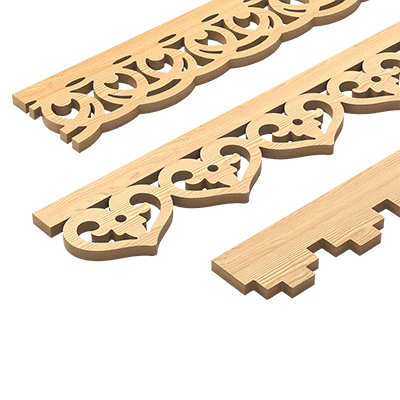
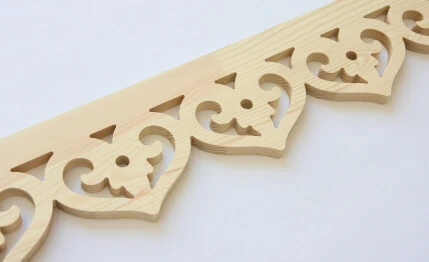
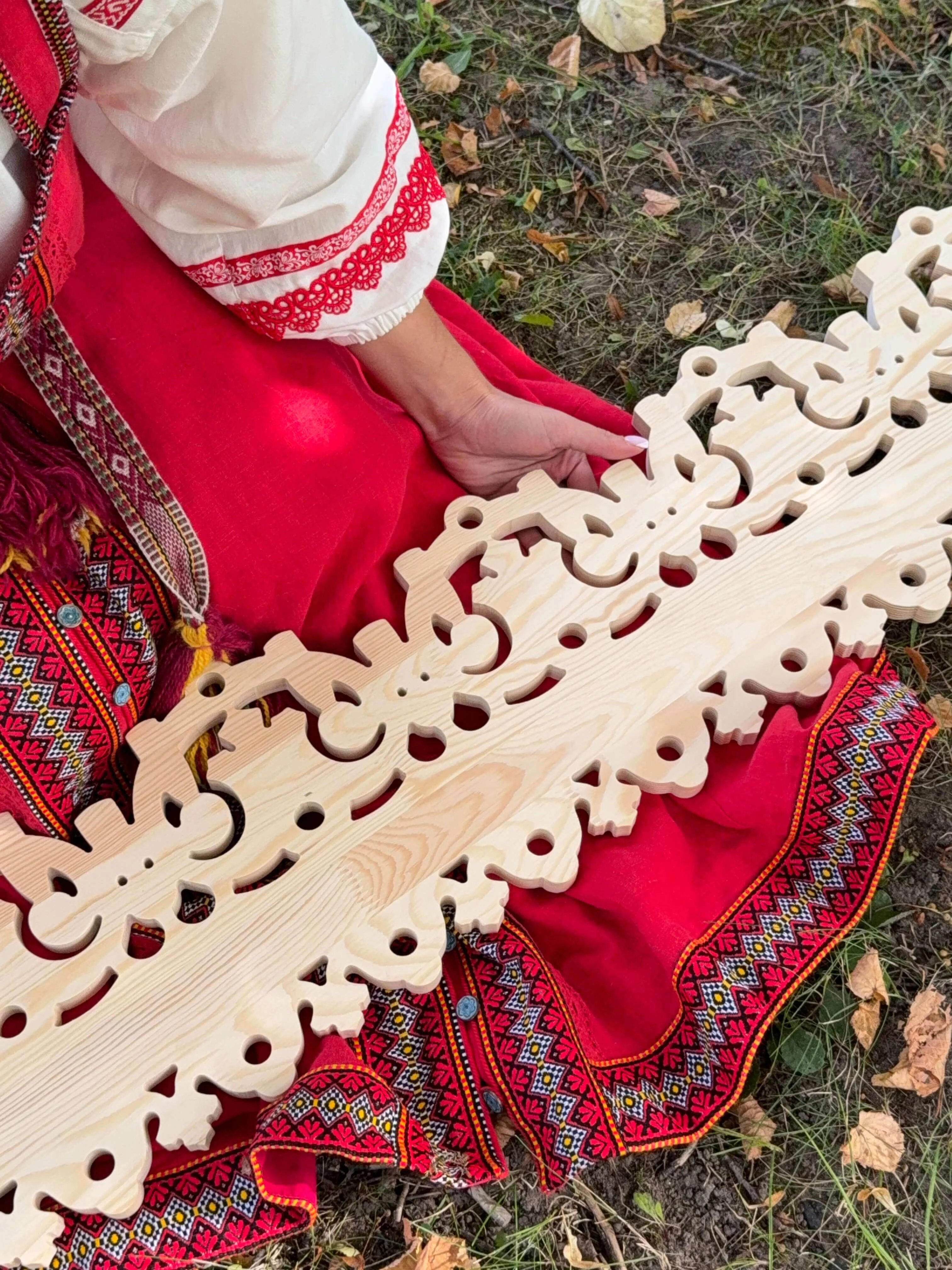
wooden ornamentis a separate topic that STAVROS pays great attention to. Carved trim,wooden lacesoffits, gable boards with ornamentation — all of this is made from solid wood on CNC machines with precise reproduction of traditional patterns.
Mistakes when choosing facade stucco from polyurethane
This is an honest section — without euphemisms. Because mistakes when choosing facade stucco happen regularly, and most of them can be prevented at the selection stage.
Error 1. Too small decor on a large facade
A medallion with a diameter of 120 mm on a two-story house with a facade of 12×8 m will be invisible.Polyurethane molding allows creating a stylish and presentable exterior of a house, while the material retains its qualities in any weather conditions.is selected based on the perception distance. Rule: the element should be readable from the distance from which a person usually sees the facade — 10–20 m. From such a distance, details smaller than 80–100 mm blend into the background.
Error 2. Overload with different ornaments
Acanthus leaves + meander + floral ornament + geometric frames — all on one facade. This is not richness — it is chaos. ProfessionalFacade Molded Decorationis built on one dominant ornamental motif with one or two additional ones. No more.
Error 3. Mismatch between decor and architecture
Polyurethane molding for facadesin Baroque style on a house with a flat roof and large glass facades is a stylistic contradiction that cannot be 'saved' by good installation. The decor must match the architecture.
Error 4. Incompatible window frames and cornice
Thin straight window trims and a massive profiled cornice with brackets are stylistically and scale-wise incompatible. All elements must be proportionate to each other: the cornice sets the maximum scale, the remaining elements decrease.
Error 5. Interior stucco on the facade
This is the most expensive mistake. Interior polyurethane without UV stabilizers, without moisture resistance — will be destroyed outdoors in 1–2 seasons. Always clarify:facade decoration made of polyurethaneit must be specifically for facades.
Error 6. Poor surface preparation
Adhesive does not work on dusty or damp surfaces. The result is elements falling off after the first winter. Surface preparation is not optional, but mandatory. Instructions forfinishing with stucco— in a separate STAVROS article.
Error 7. Different profiles from different manufacturers
A molding profile from one supplier and a cornice from another may have incompatible cross-section scales and incompatible style characteristics. Buy the entire facade decor system in one place — this guarantees compatibility of elements.
More aboutstucco made of gypsum and polyurethane— in the comparative article STAVROS. The same article covers the fundamental differences in materials for facade application.
Color and finish coating of facade decor
A topic often overlooked when choosing — and later regretted. Because the color of the decor affects the perception of the facade no less than the shape of the elements themselves.
White decor is a classic choice. White cornice and moldings on a warm wall tone create high contrast, which reads well in any lighting. This is a traditional option for classical and neoclassical facades.
Decor in the wall tone is a modern approach. Minimal contrast means the decor works through form and shadow, not through color. This is a subtle solution requiring a well-chosen profile with an expressive cross-section.
Contrasting dark decor is relevant for modern houses with cream or gray walls. Dark gray or anthracite molding on a light background is a bold, modern, graphic solution.
Practice: polyurethane decor is primed with a special facade primer in 1 coat, then 2 coats of facade paint (acrylic or silicate) with UV filter. It is best to tint the paint to the desired shade at the paint manufacturer using the RAL system — this ensures an exact match of the decor color and the main wall color or the desired contrasting tone.
Repainting timelines: when using high-quality facade paint — once every 7–10 years. With cheap paint or skipped priming — 3–5 years.
Where to buy facade decor and polyurethane stucco molding
The facade decor market today is extensive, but choosing a supplier is not a lottery. There are several criteria that are fundamentally important.
First is specialization. A company that sells polyurethane decor as a single line in a huge price list cannot provide quality advice on selection and compatibility of elements. STAVROS is a manufacturer and supplier specifically of decorative elements: wooden and polyurethane. This is the main product, not an ancillary assortment.
Second is assortment. For a comprehensive facade design, you need to buy cornices, moldings, brackets, window frames, overlays — and all of this must be compatible in scale and style. Disparate purchases from different suppliers create fitting problems.
Third is the availability of facade (exterior) products in the assortment. Not all manufacturers of polyurethane products produce facade decor with characteristics for outdoor use. This should be clarified before purchase.
At STAVROS you can buy facade decor for any type of property: private house, cottage, country residence, dacha, entrance group. The entire assortment is collected in a convenient catalog with navigation by categories and styles.
Buy polyurethane facade decor — these are cornices, moldings, linear elements, brackets, overlay elements, window frames, keystones, medallions, rosettes. Everything in one catalog.
You can buy ready-made stucco matching the Baroque style. Calculate the quantity: linear meters of cornices and moldings, number of rosettes, pilasters, consoles, corner elements. Add a ten to fifteen percent allowance for trimming. — a section of overlay elements for accent decor: ornamental overlays, corner blocks, relief panels.polyurethane moldings buy here with the ability to select by size, shape, and style direction.
Buy Molded Decoration — overlay decorative elements for facades and interiors: a wide range of products with different profiles and ornaments.
a polyurethane molding storeSTAVROS — full range of facade and interior decor.catalog of facade decorationallows you to select elements considering the house style, facade material, and design tasks.
For those who find it difficult to choose on their own: STAVROS specialists provide consultations on selecting decor for a specific project. You can describe the object, send photos, and get a recommendation for a set of elements with a linear footage calculation.
FAQ: frequent questions about polyurethane facade decor
How is polyurethane facade decor different from interior decor?
Facade products are made from denser polyurethane with increased moisture resistance, designed for a temperature range from -40 to +60°C, and require a mandatory finish coat of facade paint with a UV stabilizer. Interior polyurethane does not have these characteristics and is not suitable for outdoor use.
How long does polyurethane decor last on a facade?
With proper installation and proper finish coating — 20–30 years without loss of shape. Paint is renewed every 7–10 years. With improper installation or without protective coating, the lifespan is drastically reduced.
Can polyurethane decor be installed independently?
Yes. The technology is available for DIY: special glue, acrylic sealant, facade paint. Detailed step-by-step instructions are in theinstallation guide for moldingson the STAVROS website.
How to choose the scale of decor for my house?
Start with the cornice: its projection should be at least 1/40 of the facade height. For a one-story house — projection from 80 mm, for a two-story house — from 130–140 mm. Moldings are selected by analogy with the smaller size. All other elements are proportional to the cornice.
Is it necessary to specially prepare the wall before installing decor?
Absolutely. The surface must be clean, dry, free of grease stains and loose layers. Priming is a mandatory step. Installation on an unprepared base = unreliable fastening.
Can polyurethane decor be painted in a dark color?
Yes, but with one nuance: dark surfaces heat up more in the sun, which theoretically accelerates thermal deformation. In practice, this is insignificant when using high-quality facade paint. Dark decor requires high-quality priming and good paint with a high UV filter.
What glue should be used for installing polyurethane decor on the facade?
Specialized mounting glue for polyurethane, compatible with mineral substrates. Not mounting foam, not epoxy glue, not universal PVA. The type of glue affects the strength of the fastening and the durability of the entire structure.
How do facade moldings differ from interior ones?
Facade moldings have a deeper relief (designed for perception from a distance), higher material density, and are painted or intended for exterior coating. Interior moldings have a thin relief for close inspection, lighter material.
What is polyurethane linear molding and why is it needed?
Polyurethane trim— facing and transition profiles for creating continuous lines on the facade: corner strips, extension profiles, transition rods. They complete the installation of decor — cover joints, shape corners, create unity of lines. Without linear elements, facade decor looks "unfinished."