Article Contents:
- Short answer: which wooden skirting board to choose
- Why do you need a wooden skirting board in the interior
- How a wooden skirting board differs from a regular one
- How to choose the height of a wooden baseboard
- How to choose a skirting board profile
- Wooden skirting board for painting, varnish or stain
- How to match a skirting board to the floor, doors and furniture
- Skirting board, moldings and cornice: how to assemble a unified system
- Wooden skirting board for different rooms
- living room
- for the bedroom
- For the hallway
- For Office
- For a kitchen-living room
- Installation of wooden baseboard: key points
- Mistakes when choosing a wooden baseboard
- What to buy together with a wooden baseboard
- FAQ: questions about wooden baseboards
- About the Company STAVROS
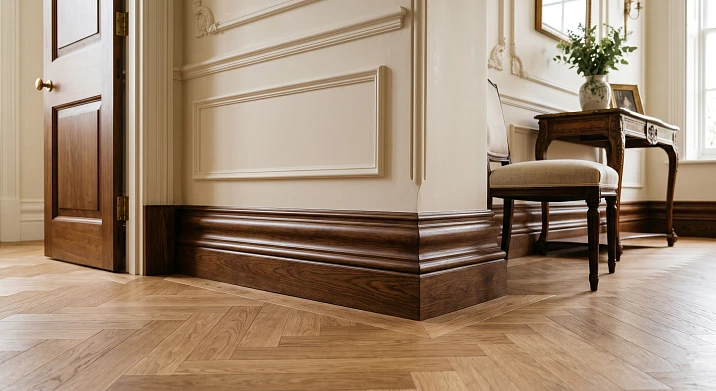
A baseboard is a detail that is noticed last, but without which no interior works. It is that lower horizontal line that covers the joint between the floor and the wall, brings the finish together into a single whole, and — with the right choice — speaks more about the owner's taste than any painting on the wall.
with a classic profile creates a sense of solidity, reliability. — this is not just a strip of natural material. It is an architectural element of the lower zone of the room that connects the floor with vertical surfaces, complements wooden doors, echoes furniture, and supports the overall system wooden decor in the interior. Let's break it down in order — honestly, specifically, and with practical results.
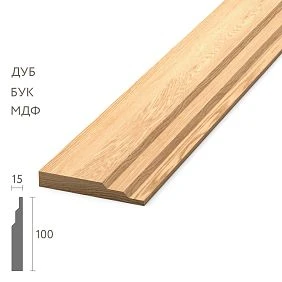
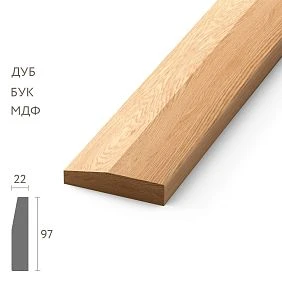
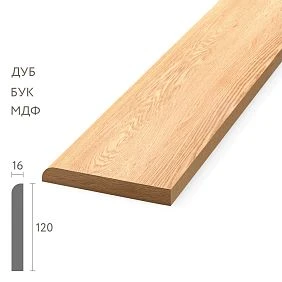
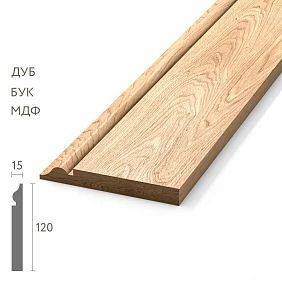
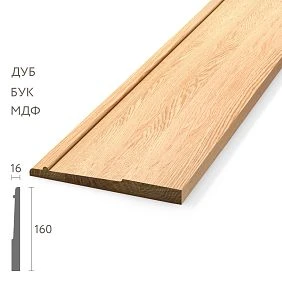
Short answer: which wooden baseboard to choose
If you need a quick reference — here it is:
-
Classic interior — choose a taller one Skirting made of solid wood with an expressive profile, matching the doors or more expensive — with a stain in the color of oak or dark walnut.
-
Neoclassicism — a calm profile of medium height under white enamel, in a unified system with solid wood moldings and cornices.
-
A modern apartment with natural materials — laconic Wooden baseboard without complex relief, for clear varnish or stain.
-
An apartment with wooden doors — baseboard matching the trim and door frame: this is a classic combination that always works.
-
Solid wood furniture — Wood skirting board connects through color with furniture legs, handles и with wooden cornices on top.
-
Walls with moldings — the baseboard should support the scale and profile of the wooden element system, otherwise the lower horizontal line will fall out of context.




Why do you need a wooden baseboard in the interior
The question is not idle. The baseboard has existed since the first wooden floors and plastered walls appeared: the joint between these two planes is never perfect. It moves with humidity changes, deforms, opens gaps. The baseboard covers all this — and does it beautifully.
But function is only one side. The second, much more important, is the aesthetic side. Wooden baseboard for a classic interior is the lower architectural accent of the space. It sets the "weight" of the lower wall zone, forms the horizontal rhythm of the room, and creates a connection between the floor, walls, and furniture.
Imagine a classic living room: parquet floor, white walls with moldings, wooden cornice along the top of the cabinet, carved legs on the sofa. Now add to this a thin plastic baseboard of 40 mm. The destruction of the complete picture — precisely because of this small detail at the very bottom. The correct wooden baseboard in the same system — and the interior closes into a finished image.
The baseboard performs five tasks simultaneously in the interior:
-
Technically closes the joint between the floor and the wall, hides the gap, accommodates deformation movement.
-
Protects the lower part of the wall from mechanical damage — from the vacuum cleaner, furniture, feet.
-
Completes the finishing of the floor and walls — without it, any finishing looks "raw".
-
Connects the space: through tone and profile — with doors, furniture, wooden decor.
-
Creates the scale of the lower zone — a high baseboard "lowers" the room, making it cozier; properly selected, it organizes the rhythm of the interior.
Our factory also produces:


How a wooden baseboard differs from a regular one
The baseboard market is wide. Plastic, MDF, veneer, solid wood — each material has its own properties. Let's compare honestly:
| Option | When it fits | Features |
|---|---|---|
| Solid wood baseboard | Classic, neoclassical, natural materials, wooden furniture | Natural texture, possibility of painting and staining, durability, eco-friendliness |
| MDF baseboard | Calm modern finish, painted to match walls | Smooth surface for enamel, but less durable in humidity |
| Plastic baseboard | Budget renovation, technical solution | Cheap, practical, but visually poor |
| High wooden baseboard | Classic interior, large rooms, expressive finishes | Creates an architectural accent, requires scale matching |
| Low wooden baseboard | Minimalism, small spaces, calm background | Delicate finish without accent |
The key advantage of solid wood over MDF is not just aesthetics. It is the density of the wood structure, which holds fasteners without breaking, accepts stain without uneven spots, and responds well to sanding during repainting. Skirting made of solid wood — this is a product with a lifespan of decades, not a consumable repair material.
Another argument: in interiors with natural wooden doors, parquet, and solid wood furniture, an MDF baseboard inevitably loses to the texture. Real wood next to an imitation of wood is always noticeable. Maybe not immediately, but it is visible.
Get Consultation
How to choose the height of a wooden baseboard
Here's a question that is asked most often — and solved correctly least often. The height of a baseboard is not just a number. It's a relationship with ceiling height, room scale, interior style, and the dimensions of other wooden profiles.
Ceilings and proportions. Basic rule: baseboard height is approximately 1/20 to 1/25 of the ceiling height. For ceilings of 250 cm — baseboard 100–125 mm. For ceilings of 300 cm — baseboard 120–150 mm. This is not a strict norm, but a reasonable guideline that ensures visual proportionality.
Classics demand height. In classical and neoclassical interiors high wooden baseboard — it's the norm, not the exception. 120–180 mm and above is a common range for living rooms, studies, and halls with classic furniture. A high baseboard creates weight in the lower zone and emphasizes the architectural character of the space.
Small rooms — be careful. In a bedroom of 12–15 sq. m, a too massive and high baseboard "eats up" space. A wall of 260 cm with a baseboard of 180 mm is already almost 7% of the height in the baseboard. The room starts to feel lower. For small spaces — baseboard 60–100 mm with a neat profile.
Relationship with door casings. A door casing is a vertical profile that goes around the door opening. Its width visually "sets" the scale of wooden details in the room. The baseboard should not be wider than the casing — this is a basic rule of harmony. If the casing is 60 mm, the baseboard should not be 150 mm.
Relationship with the cornice. wooden cornice on furniture — the upper horizontal accent. The baseboard is the lower one. In a coordinated interior, their scale should be close. A massive cornice of 80 mm + a delicate baseboard of 40 mm — a mismatch. Cornice 80 mm + baseboard 80–100 mm — a system.
Where the baseboard will be visible. In the hallway and corridor, the baseboard is seen up close — here the profile matters. In the living room, it is seen from afar — here scale and tone matter. In the bedroom, the baseboard is often covered by furniture along most of the perimeter — here a moderate height is practical.
How to choose a skirting board profile
The profile is the cross-section of the skirting board: the shape of its front side. It is the profile that determines whether the skirting board will look "heavy" or "light", and how much it decorates or neutralizes the wall.
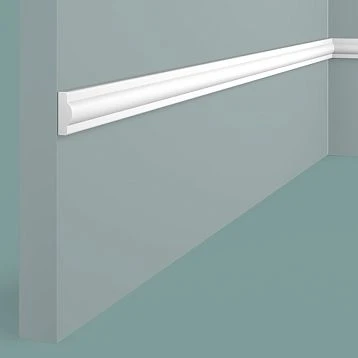
Simple smooth profile. Rectangular cross-section with small chamfers or roundings. Clean geometry without ornament. Suitable for modern classics and calm neoclassical interiors where structure is important, not decor. Painted with enamel — it becomes part of the wall, not a separate accent.
Quarter-round profile. The bottom or top edge with a rounding — a traditional furniture and joinery profile. Moderately decorative, readable, not overloaded. Works well in neoclassicism and interiors with lacquered wooden doors.
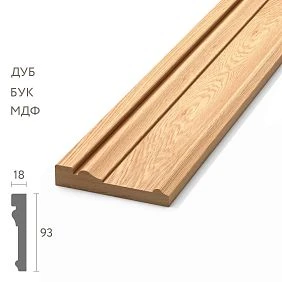
Shaped profile. Several steps, bevels, relief edges in the cross-section. An expressive silhouette that is visible both up close and from afar. A classic solution for living rooms, studies, and halls with classic furniture. Looks best under stain or tinting that emphasizes the relief.
Wide profile — for large spaces. A skirting board 140–200 mm high with several decorative ledges is already a serious architectural detail. In a living room with 320 cm ceilings, such a skirting board creates a lower trim belt, similar to an architectural plinth. Only for spacious rooms.
Narrow profile — for a delicate background. A 40–60 mm skirting board made of wood under clear lacquer — almost invisible, but natural. For interiors where wood should "sound" quietly, without dominating: bedrooms, children's rooms, small rooms.
Which profile to choose for Wooden Picture Frame и layoutIf the interior has frames made of layout on the walls or Wooden molding for furniture fronts — the baseboard profile should not conflict with them. Profiles similar in style (all with a chamfer, all with a rounding, all strict) create unity. Dissimilar ones create disharmony.
Wooden baseboard for painting, varnish, or stain
What should the finish coating be? This is a decision that needs to be made before installation — because the surface preparation technology depends on it.
For white enamel. The most common option in neoclassical and modern classical interiors. A baseboard made of birch or alder without coating has a smooth, dense surface that accepts enamel well.
Technology: sanding P150 → P220, antiseptic primer, two coats of enamel (water-based acrylic or alkyd). Between coats — light sanding P320 for smoothness. A baseboard painted white visually "blends in" with the wall and does not draw attention to itself.
Important rule: paint before installation. The painted and dried baseboard is mounted in place — this saves time and provides a higher quality coating.
For clear varnish. The natural wood grain is fully preserved. This is an option for interiors where wood is part of the concept: parquet, wooden doors under varnish, solid wood furniture. Wood skirting board under clear matte varnish looks natural and organic.
Matte varnish on horizontal surfaces is more practical than glossy: scratches and cleaning marks are less visible. For baseboards — definitely matte.
For staining. When you need to match the shade of the baseboard to the floor, doors, or furniture — stain before varnish. Dark walnut, cherry, wenge, American walnut — standard palettes available at any hardware store.
Nuance: the stain must be tested on the end cut of that specific batch of baseboard. Birch and alder take stain differently — and even different batches of the same species can vary. The test allows you to select the right number of coats for the desired tone.
Baseboard in the color of the wall. One of the striking techniques: a baseboard painted the same color as the wall — it does not stand out as a separate element but becomes part of the wall plane. This technique is often used in minimalist classic interiors where they want to "remove" the lower horizon and emphasize furniture and decor.
Baseboard in the color of the doors. A classic pairing, familiar from European interiors. White doors — white baseboard. Dark oak doors — baseboard in the same oak. This system creates a unified wooden register in the room and works regardless of the wall color.
Contrasting baseboard. A dark baseboard on light walls is an artistic technique that "grounds" the space. It works in well-thought-out interiors where the dark tone of the baseboard echoes dark doors, dark furniture, or wooden flooring. Not for spontaneous decisions.
How to choose a baseboard to match the floor, doors, and furniture
This is the most practically important section. This is where the main decision is made.
For wooden floors. The classic recommendation is to match the floor tone or be half a tone darker. This creates a smooth transition from the horizontal floor to the vertical wall without sharp contrast. If the floor is light — the baseboard is slightly darker. If the floor is dark — the baseboard can be taken slightly lighter or in the same tone.
Important: a solid wood baseboard for staining allows you to precisely match the shade to any parquet. This is the main advantage of natural wood over MDF with a film coating.
For doors and architraves. The door is the most visually loaded vertical element in the room. If Buying a wooden baseboard in the same tone as the door casing — they form a single wooden frame around the space. This is a professional technique that makes the room's finish cohesive.
If the doors are white enamel, the baseboard should also be white enamel. If the doors are natural oak, the baseboard should be the same oak. This is an unbreakable rule in a classic interior.
To classic furniture. Classic Furniture often has wooden legs, handles, and decorative elements. A baseboard matched to the tone of the furniture legs is a subtle but perceptible connection. Wooden legs light walnut + baseboard in the same light walnut = a unified wooden language for the lower zone of the interior.
To light enamel furniture. If the furniture is white or in a pastel tone, the baseboard is also best in white enamel. This creates a calm, airy lower horizon. Wooden handles on white furniture in natural wood + white baseboard — a neat play of tones.
To dark furniture. A dark wardrobe, dark doors, dark parquet — a space with a rich wooden tone. Here, a baseboard in a dark tone completes the overall tonality of the lower zone. An expressive figured profile in dark walnut creates a "heavy base" that gives the interior monumentality.
To wall moldings. If the walls are finished solid wood moldings — the baseboard should be close to them in style and finish. A narrow 20 mm molding in white enamel + a massive 150 mm baseboard in dark walnut is a conflict. Moldings and baseboards are one system.
Baseboard, moldings, and cornice: how to assemble a unified system
This is a fundamental question for anyone building a classic or neoclassical interior. The baseboard, moldings, and cornice are three levels of horizontal wooden accents in the space. And they must work together.
The logic of the system is simple and visually clear:
-
with a classic profile creates a sense of solidity, reliability. — the lower horizon, the "base" of the wall.
-
Moldings from solid wood — the middle zone: frames, decorative lines, dividing the wall into zones.
-
wooden cornice — the upper horizon: the completion of furniture or the wall under the ceiling.
When all three levels are present in one room, in one material, in one finish, and at a consistent scale — the interior gains architectural depth. This is what distinguishes a well-thought-out space from a random collection of nice things.
How to coordinate the scale. If wooden cornice the furniture has 70 mm, the wall molding is 35 mm, the baseboard is 100 mm: this is a working proportion. The cornice and baseboard are larger, the molding is more delicate. Large elements frame the space, the molding creates rhythm within that frame.
Unified tone. All three elements in white enamel are a classic for neoclassical interiors. All three in dark walnut are for studies and libraries. Mixing tones is only possible with a clear design logic.
Profile style. A baseboard with a complex figured profile + a molding with a simple rectangular cross-section + a cornice with a relief ornament — three different styles that don't speak the same language. Profile consistency is as important a requirement as tone consistency.
Wooden angle in the system. In places where the baseboard meets vertical surfaces or protrusions, a wooden corner piece covers the corner joints. In a unified system with the baseboard, moldings, and cornice, it should be the same tone and a similar profile.
Wooden baseboard for different rooms
For the living room
Living room — the main space of an apartment or house. Here, the baseboard should work for the image, not just cover the joint. high wooden baseboard 120–160 mm with a figured profile in combination with wall moldings — this is a full-fledged classic finish for the lower zone.
In a spacious living room with ceilings from 280 cm and classic solid wood furniture, the baseboard can be even more expressive — up to 180 mm. If the living room has Classic Furniture с with wooden appliqués и brackets — the baseboard completes the lower zone of this decorative system.
Tone for the living room: white enamel for light interiors, dark walnut or oak — for interiors with a rich wood tone. Wooden Picture Frame on paintings in the same tone as the baseboard — the final touch.
For the bedroom
Bedroom — a space of tranquility. A monumental baseboard that draws attention is not needed here. The optimal choice is a wooden baseboard of medium height 70–100 mm with a soft, calm profile. Tone — matching the color of the doors or half a tone darker than the floor.
In the bedroom, the baseboard is often hidden behind bedside tables and wardrobes. Choose a profile that looks beautiful even where it is visible. Furniture Legs in the same tone as the baseboard — create the feeling that objects have "grown" out of the floor, rather than being placed chaotically.
For the hallway
The hallway is a high-traffic area. The baseboard here experiences maximum mechanical stress: bags are placed, shoes are moved, and the vacuum cleaner is used. Skirting made of solid wood in the hallway — it's not just about aesthetics, but also wall protection.
In the hallway, a neat joint with door trims is especially important: the angle where the baseboard meets the trim should be clean, without gaps. Wooden angle in the corners helps to neatly cover the joints.
Tone for the hallway: most often matching the color of the doors — there are the most doors in the hallway, and a baseboard coordinated with them creates a unified wooden look.
For an office
A study is a space of concentration and status. Here, dark wood is appropriate like nowhere else. A solid wood baseboard in dark walnut or wenge, combined with dark doors, bookcases, and with wooden cornices on the library — this is a serious, warm, rich interior.
For a study, an expressive shaped profile is the right choice. A 120–150 mm baseboard in dark lacquer + Wooden handles on furniture in the same tone + Wooden Picture Frame on frames — finished men's classics.
For a kitchen-living room
An open space where the kitchen and living room are combined requires special attention to the baseboard. It must be uniform throughout the entire perimeter, including the kitchen area. This is the detail that visually unites the zones into a single space.
In the kitchen area, a solid wood baseboard must have a coating resistant to wet cleaning and steam. Polyurethane varnish is the optimal choice. In the living room area — the same baseboard, the same tone. Unity of perimeter — unity of space.
Installation of wooden baseboard: key points
Even the best baseboard looks bad with poor installation. Here's what's important to know.
Acclimatization. A solid wood baseboard must sit in the room for 48–72 hours before installation. The wood absorbs air humidity — and the geometry stabilizes. Installation without acclimatization risks deformation and gaps.
Fastening method. A wooden baseboard is attached with liquid nails or finish nails followed by puttying the heads. In some cases — with special baseboard brackets. Glue is good for even walls; unevenness requires mechanical fastening.
Corner joints. External corners — 45-degree joint (miter box or miter saw). Internal corners — 45-degree joint or abutment with profile trimming to match the shape of the adjacent baseboard. The quality of corner joints is the first thing noticed when inspecting the finish.
Expansion gap. A gap of 1–2 mm is left between the end of the baseboard and the door casing, which is filled with acrylic sealant after installation. This compensates for deformations and ensures a neat visual joint.
wooden plank as an addition. In some interiors, a wooden strip is installed on top of the baseboard as an additional decorative profile — creating a two-level lower band. This is typical for tall classic interiors with pronounced wall decor.
Mistakes when choosing a wooden baseboard
These mistakes really happen — and most of them can only be fixed by replacing the baseboard.
Choosing a baseboard only by the floor color. This is the most common mistake. The floor is not the only reference. Doors, furniture, moldings are equally important variables.
Not considering doors and architraves. The baseboard and door trim are in the same visual field. Mismatched tones or styles break the unity.
Installing a baseboard that is too low in a classic interior. A 40 mm baseboard in a living room with classic furniture is absurd. The scale does not match the interior, furniture, or decor.
Choosing a profile that is too high for a small room. A massive 160 mm baseboard in a 12 sq. m bedroom with 255 cm ceilings — the baseboard will 'eat up' the room's height.
Not coordinating with moldings and cornices. Different profile styles in one interior create disharmony that is perceived even if a person cannot explain it. Intuition says 'something is off' — and that 'something' is often mismatched wooden trim.
Forgetting about painting. Buying a baseboard, installing it, and only then thinking about the color means painting in inconvenient conditions with poor results. Painting — before installation.
Mixing different wood shades without a system. A baseboard matching light birch + doors matching dark walnut + furniture matching cherry — three different woods in one room without logic create visual confusion.
Not considering Wooden decoration and moldings. The baseboard should be considered as part of the overall system of wooden elements: Pogonazh iz massiva, overlays, Wooden profile, cornices, handles — all of this is a unified decorative program.
What to buy together with the wooden baseboard
For those building a complete system of wooden decor:
with a classic profile creates a sense of solidity, reliability. — the lower horizontal element, the foundation of the system.
Moldings from solid wood — decorative profiles for frames on walls and furniture facades.
wooden cornice — the upper finishing element for cabinets, kitchens, and sideboards.
Wooden cornice — molding MLD-044 — an alternative profile for walls and furniture.
Wooden Picture Frame — for picture and mirror frames in the same decorative register.
Wooden profiles and moldings from solid wood — full range of wooden profiles for finishing.
Wooden molding for facades — for frame inserts on cabinet doors.
Wooden angle — for corner joints of baseboards and trims.
wooden plank — for an additional decorative band above the baseboard.
decorative inlays for furniture — for facades in a unified wooden system.
wooden furniture handles — a functional element matching the baseboard color.
Wooden legs — for the lower decorative level of furniture in coordination with the baseboard.
Classic Furniture — ready-made items with wooden details for a cohesive interior.
FAQ: questions about wooden baseboards
Which wooden baseboard to choose for a classic interior?
For classic style — an expressive profile with a height of 100 mm or more, matching the doors or under a dark stain. Skirting made of solid wood should support the overall system of cornices, moldings, and furniture decor.
Should the baseboard be matched to the floor or to the doors?
Both options are correct, but in classic style, the baseboard is traditionally coordinated with door trims and frames — this creates a unified wooden register. In interiors with natural wood, the baseboard is often matched to the floor as well.
Can wooden skirting boards be painted?
Yes. with a classic profile creates a sense of solidity, reliability. made of birch or alder accepts enamel, varnish, and stain perfectly. For a good result — sanding, priming, painting before installation.
Which baseboard to choose for low ceilings?
For ceilings 240–250 cm — a baseboard 60–80 mm with a neat profile. A baseboard that is too high with low ceilings visually compresses the room.
What to pair a wooden baseboard with?
С solid wood moldings, with wooden cornices, doors and trims, with wooden furniture legs, handles and the overall style of wooden decor.
Is acclimatization of wooden baseboard necessary?
Yes, definitely. 48–72 hours in the room before installation is a standard requirement for any natural wood product.
About the company STAVROS
Wooden baseboard is a detail that works at the boundary of two planes. A small detail with a big character. Chosen wisely, it completes the finish, connects the space, and creates that very 'final touch' without which the interior remains unfinished.
STAVROS manufactures with a classic profile creates a sense of solidity, reliability. made of natural solid wood — birch and alder. Even geometry, dense structure, surface without coating — a ready-made blank for enamel, varnish, or stain in the shade you need.
The STAVROS range includes a complete system of wooden solid wood trim: baseboards, Crown Molding, Moldings, corners, rails, picture frames, layouts, Handles, Legs и Decorative Inserts. Everything — from one material, in one place, for a unified decorative system.
STAVROS — wooden decor for those who build an interior with character.