Article Contents:
- How wooden skirting differs from MDF and plastic
- Solid Wood Skirting Board
- MDF skirting
- Plastic baseboard
- Where to use wooden floor skirting
- Living Room
- Bedroom
- Office
- Entry Hall
- Country house
- How to choose the height of a wooden baseboard
- Classification by height
- How not to make a mistake with the height
- How to choose the profile of a wooden baseboard
- Smooth straight profile
- Profile with soft chamfer or cove
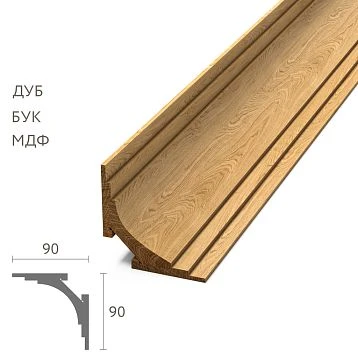
- Shaped Profile
- High decorative profile
- Solid wood skirting: which material to choose
- Oak
- Oak
- Ash
- Spruce
- Color of wooden skirting: matching floor, doors, or walls
- Matching the floor color
- Matching door and trim color
- To match the furniture color
- For painting
- Contrasting skirting board
- Wooden baseboard and architraves: how to make a beautiful joint
- The main rule: choose them together
- Thickness matters
- Baseboard height and door opening
- System logic
- Wooden baseboard in different interior styles
- Classic
- Neoclassicism
- Modern Interior
- Jatoba
- Russian style and country house
- Wooden baseboard for parquet, laminate, and engineered wood flooring
- Parquet
- Engineered wood plank
- Laminate
- Mistakes when buying wooden baseboards
- What to buy together with wooden floor baseboards
- How to buy a wooden floor skirting board without mistakes: a step-by-step algorithm
- About the Company STAVROS
- FAQ: answers to popular questions about wooden floor skirting boards
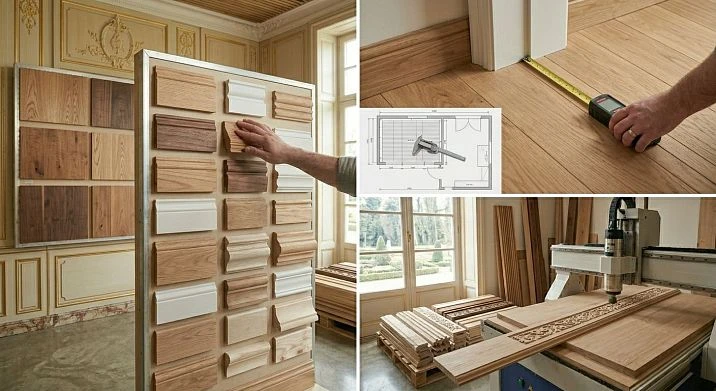
A skirting board is a detail that everyone notices but rarely appreciates. When it's right, it's invisible — it's just there, and the interior looks complete. When it's wrong, you immediately feel it: the floor is "torn" from the wall, wooden doors face one way, furniture another, and the whole room falls apart into separate pieces, unconnected.
A wooden floor skirting board is not a technical element or just a "gap cover." It is an architectural detail that connects the floor to the wall, supports doors and architraves, echoes furniture and wooden decor, and in this role — with the right choice — makes the interior more expensive, cohesive, and professional.
If you want to buy a wooden floor skirting board and do it wisely — considering height, profile, material, color, and joints — this guide will give you a comprehensive answer. No fluff, no general phrases, only specifics from selection to installation.
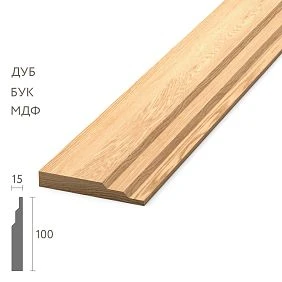
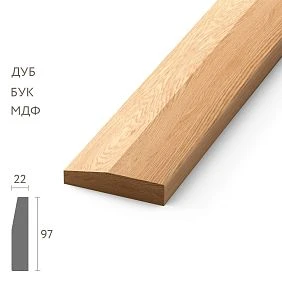
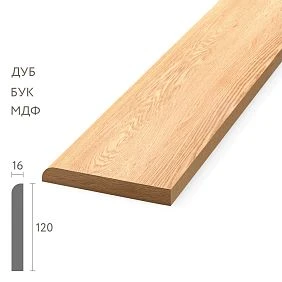
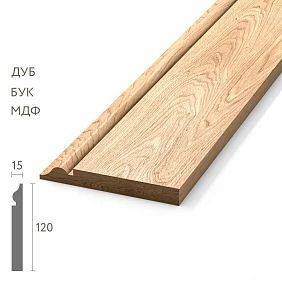
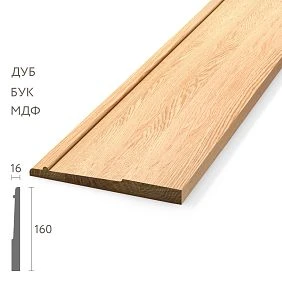
How a wooden skirting board differs from MDF and plastic
Let's start with a fundamental question that every second buyer asks: why choose a solid wood skirting board when there are more affordable options?




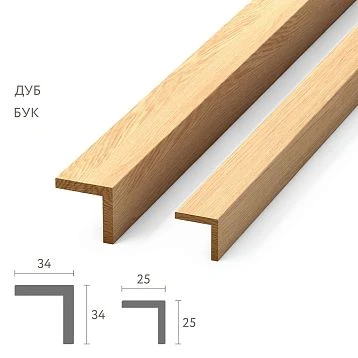
Solid wood skirting board
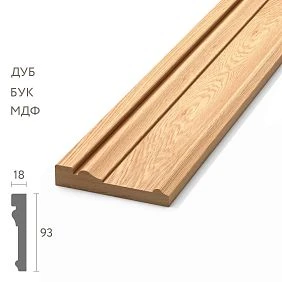
Wooden baseboard — it is a living material with a unique fiber texture, warm character, and a sense of solidity. It can be sanded, repainted, restored. It accepts any coating: varnish, oil, wax, stain. A wooden skirting board made of oak, beech, or ash stands in an interior for decades without losing shape or appearance.
The main advantage of solid wood over any other material is the living cross-section. The wood fiber works as a natural texture that cannot be replicated in any coating. It is this texture that makes the wooden floor, wooden doors, and wooden skirting board a single ensemble.
Our factory also produces:


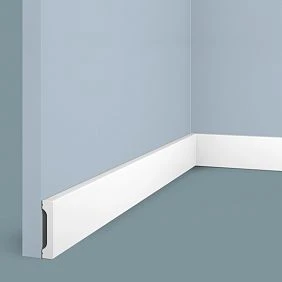
MDF skirting board
MDF is an engineered material with perfect geometry. It does not react to humidity, does not warp, and does not dry out. MDF holds paint well and is suitable for situations where the baseboard must match painted walls or doors — and visually "disappear." For a modern and minimalist interior where the baseboard should not be a noticeable wooden element, MDF is a reasonable choice.
Get Consultation
Plastic skirting board
Plastic is a purely technological and budget solution. In an interior with wooden doors, parquet, classic furniture, and natural materials, a plastic baseboard looks like a dead spot in a living space. It does not accept coating, cannot be restored, "yellows" over time, and has nothing in common with the organic nature of a wooden interior.
The conclusion is simple: if the room has a wooden floor, wooden doors, parquet, engineered wood flooring, classic furniture, or Solid Wood Items — a solid wood baseboard is the only material that will honestly support all of this.
Where to use wooden floor baseboards
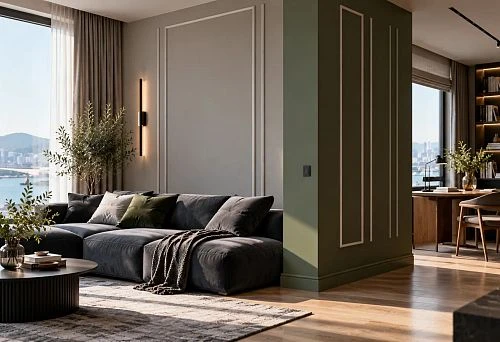
Living Room
or slatted panels — a wooden baseboard from the same series creates a unified architectural system from floor to ceiling. Wooden moldings or slat panels — a wooden baseboard from the same series creates a unified architectural system from floor to ceiling.
Bedroom
The bedroom requires a warm, natural character. A wooden baseboard here creates a soft transition from floor to wall, adds coziness, and removes the feeling of "technical finishing" that inevitably arises with a plastic option. In a bedroom with parquet or engineered wood flooring, a baseboard made of the same wood is a rule of good taste, not an option.
Office
A wooden baseboard in a study is an element of status and a professional environment. A study with parquet, wooden wall panels, a library, and a solid desk requires a complete finishing system: a tall wooden floor baseboard, Wooden casings, wooden moldings and trim — all in the same tone.
Entryway
In the hallway, the baseboard has increased requirements: heavy traffic, street dirt, and moisture near the entrance area. A wooden baseboard made of dense wood—oak or beech—handles these conditions. But it's also important to consider the joint with doorways: Wooden casings and the baseboard must be coordinated in thickness and profile.
Country house
A country house is an ideal environment for a wooden baseboard. Here, wood is everywhere: walls, ceilings, stairs, doors, furniture, beams. Pogonazh iz massiva — baseboards, architraves, cornices, moldings — in a country house works as a single architectural system. Choosing MDF or plastic in such a context means deliberately destroying the integrity.
How to choose the height of a wooden baseboard
Height is the first thing to think about. It determines the visual weight of the baseboard in the room and its alignment with the architectural scale of the space.
Classification by height
Low baseboard (40–60 mm). Minimal, almost unnoticeable. Suitable for modern interiors, minimalism, Japandi, Scandinavian style—where the baseboard should perform a function rather than be an architectural element. In a room with ceiling heights of 3 m or more, such a baseboard gets lost.
Medium baseboard (70–100 mm). A universal option for most apartments with ceilings of 2.7–3 m. Expressive enough to be a noticeable element and restrained enough not to compete with other details. Pairs well with standard doors of 2.0–2.1 m height.
High baseboard (110–150 mm). An architectural element. For classic, neoclassical styles, studies, living rooms, and homes with ceilings from 3 m. A wide wooden floor baseboard makes the room visually more 'expensive'—the floor line looks solemn and substantial.
Very high baseboard (160–200 mm and above). Suitable for mansions, high-end interiors, historical spaces. In an ordinary apartment with a ceiling of 2.5 m, such a baseboard will create a feeling of a 'box'.
How to avoid mistakes with height
Practical guideline: the baseboard height should be approximately 1/25–1/30 of the wall height. For a 3 m wall, this is 100–120 mm — an excellent "average classic." For a 2.5 m wall, it's 83–100 mm. For a 4 m wall, it's already 133–160 mm.
Second guideline: look at the doors. If the doors are tall and have expressive wooden casings, a too-low baseboard will look disproportionate. The height and scale of the baseboard should "rhyme" with the height and scale of the door frames.
How to choose a wooden baseboard profile
The profile is the shape of the baseboard's cross-section. It determines the stylistic affiliation and visual weight of the detail.
Smooth straight profile
A rectangular or slightly beveled cross-section without additional chamfers, fillets, or ornamentation. This is a concise, architectural profile. Suitable for modern interiors, minimalism, Scandinavian style, loft with wooden accents, Japandi. It does not require "support" from other details — it is complete on its own.
Profile with a soft chamfer or fillet
The upper part of the baseboard is slightly rounded or cut at an angle. This is the most common profile — universal, readable, suitable for most interiors from modern to country. Not too strict and not too decorative.
Shaped profile
A multi-level or stepped silhouette with several transitions. For classic and neoclassical styles. Such a baseboard requires support in details: Wooden moldings on the walls, trims with a similar profile, a cornice with a matching cross-section. A figured baseboard in a "bare" interior without other wooden details looks lonely.
High decorative profile
A baseboard 120–160 mm high with a pronounced relief, possibly with an additional shelf or groove for a cable channel. An architectural solution for studies, living rooms, classic and neoclassical interiors. Often used together with with wooden cornices as a complete system for horizontal framing of a room.
Solid wood baseboard: which material to choose
Skirting made of solid wood is made from different types of wood — and the choice of species affects not only the color, but also the strength, texture, and response to treatment.
Oak
Oak is the benchmark among species for floor baseboards. Its Janka hardness is about 1290 units, density 700 kg/m³ — this material is not afraid of heavy traffic, impacts, or wet cleaning. Oak's texture is expressive, with a characteristic large pattern. Color ranges from light brown to warm nutty, depending on the treatment.
Oak is the best choice for hallways, kitchens, studies, and any high-traffic areas. In classic and neoclassical interiors, an oak baseboard is an impeccable stylistic choice.
Beech
Beech is slightly softer than oak, but also belongs to hardwoods. The texture is more neutral, the pattern calm. Color is light pink or creamy beige, it takes stain and varnish well. Beech is often chosen for light interiors — bedrooms, living rooms, children's rooms. It pairs well with furniture handles the same material.
Ash
Ash is durable, with a beautiful large pattern and a lighter shade than oak. An excellent option for a natural Scandinavian or modern interior with a lively texture. Ash takes clear varnish and oil especially expressively — the texture "comes alive."
Spruce
A soft wood, more affordable in price. Pine is a good choice for a country house in a "rustic" or Russian style, where softness and minor surface features are part of the character. For heavily used rooms, pine requires additional surface protection — hard oil or varnish with a high degree of protection.
Color of a wooden baseboard: to match the floor, doors, or walls
Choosing a color is not just about "which one is prettier." It is an architectural decision that determines how the room will be perceived as a whole.
Matching the floor color
A baseboard in the same tone as the wooden floor is a classic neutral solution. The floor and baseboard merge into a single horizontal plane, and the wall "starts" higher. The room visually appears wider. This approach works flawlessly for most interiors.
An important nuance: "matching the floor color" does not mean "exactly the same shade." You can choose a baseboard slightly darker or slightly lighter than the floor — this creates a soft transition while maintaining unity.
Matching the color of doors and architraves
This is a more complex but very effective solution. The baseboard and Wooden casings in one tone create a single "wooden contour" of the room: baseboard along the floor perimeter, architraves along the door perimeter, moldings along the ceiling perimeter — all the same color and made of the same material. This is the highest level of interior consistency.
Matching the color of furniture
For a study with dark wooden furniture, a library, and a desk — a baseboard in the same dark tone creates an internal connection. The eye "catches" the repetition of color from the floor to the desk and notices the system.
For painting
Skirting made of solid wood can be purchased without coating and painted in any desired color. This is especially relevant when the baseboard needs to match white or painted doors — then a wooden profile with white paint gives a better result than MDF because it holds the coating more firmly and does not deform.
Contrasting baseboard
A dark baseboard on a light floor is a design technique that works if it is supported in the interior: dark doors, dark furniture, dark frames. Contrast for the sake of contrast — without a system — looks random.
Wooden baseboard and door casing: how to make a beautiful joint
The joint between the baseboard and door casing is one of the most technically and aesthetically challenging elements in room finishing. It is here that "ugly" moments most often appear, spoiling the impression of the entire interior.
Main rule: select together
Wooden baseboard и Wooden casings should be selected together, not separately. This rule is constantly violated — first doors with casings are installed, then the baseboard is chosen. As a result, the casing turns out to be thinner than the baseboard, and the joint looks like an architectural mistake.
Thickness matters
If the baseboard is thicker than the casing — the baseboard "overlaps" the casing and the joint looks rough. If the casing is thicker than the baseboard — the baseboard butts against the casing and a compensating strip is needed. The ideal option: the baseboard is slightly thinner than the casing, so that the latter "receives" the baseboard into its base.
Baseboard height and door opening
A high baseboard (120–150 mm) near a door opening requires special attention: the baseboard must neatly "go" under the casing leg or be cut to the profile. This is a task for an experienced installer, and it needs to be thought about in advance.
System logic
In an ideal interior, the baseboard, casing, and Wooden moldings — these are parts of a single architectural system. They can be of different heights and widths, but must be made of the same material, same species, same tone, and same degree of processing. Pogonazh iz massiva is produced precisely as a system: baseboards, architraves, cornices, moldings — everything in a single series, which solves the problem of consistency automatically.
Wooden baseboard in different interior styles
Classic
A tall or shaped wooden baseboard is a mandatory element. It works in tandem with wooden architraves, with wooden cornices along the ceiling and wooden moldings on the walls. Warm wood tones — oak, walnut — create a feeling of richness and solidity. In classic style, the baseboard is not a background, but an architectural detail.
Neoclassicism
A calmer profile, light shades, geometrically clean cross-section. White or cream Skirting made of solid wood for painting or in light tinting. Neoclassicism is the same system as classicism, but with more restrained forms.
Modern interior
Straight profile, minimal decor, emphasis on geometry. A wooden baseboard in a modern interior is chosen to create a "natural" touch — as a wooden detail in a space dominated by concrete, glass, or metal. Height is medium, profile is as laconic as possible.
Japandi
Natural wood without coating or with a transparent matte oil. Simple profile, warm texture of ash or oak. No ornamentation. A wooden baseboard in Japandi is the "breath" of the material, its natural character without processing.
Russian style and country house
Here, maximum freedom. A wooden baseboard with a pronounced profile, carved architraves, wooden moldings, Pogonazh iz massiva — everything works in a single natural system. Wood is everywhere, and the baseboard is an organic part of this space.
Wooden baseboard for parquet, laminate, and engineered wood flooring
The type of flooring influences the choice of baseboard not so much by appearance as by installation technology.
Parquet
Natural solid parquet is the best partner for a solid wood floor baseboard. One wood species, one shade, one system. The baseboard is attached to the wall (not the floor!) — the parquet must remain "floating" or glued independently of the baseboard.
Engineered wood flooring
Engineered wood flooring is a layer of valuable wood on a stabilizing base. It looks identical to parquet but is more stable in behavior. A wooden baseboard for engineered wood flooring is selected on the same principle: matching wood species, profile to suit the interior style.
Many laminate manufacturers produce matching accessories — baseboards, corners, and caps — in tones of their collections. This is convenient — you buy everything in one place, with guaranteed decor consistency.
Laminate with a solid wood baseboard is a combination of synthetic and natural. It works if the baseboard shade is close to the laminate shade. But if there is other wood in the interior — doors, furniture, details — a wooden baseboard is more logical than MDF or plastic.
Mistakes when buying a wooden baseboard
Here's what regularly goes wrong — and why you have to redo it later.
Buying a baseboard without considering door casings. The most common mistake. The baseboard and Wooden casings — это единая система, и выбирать их нужно вместе.
Выбирать цвет только по фото. Фотография не передаёт реальный тон дерева: монитор, освещение студии, обработка — всё это искажает. По возможности смотрите образцы вживую или рядом с фрагментом пола.
Не смотреть высоту и толщину профиля. Профиль выглядит иначе в натуральный размер, чем на экране. Распечатайте поперечное сечение в масштабе 1:1 и посмотрите, как он будет смотреться рядом с вашими дверями и полом.
Брать слишком низкий плинтус для высоких потолков. Плинтус 40 мм на трёхметровой стене — это визуальный дисбаланс. Соблюдайте пропорцию.
Не учитывать цвет дверей и мебели. Плинтус из тёмного ореха рядом с белыми дверями и светлой мебелью требует либо продуманного дизайнерского обоснования, либо является ошибкой.
Забывать про углы и подрезку. Внутренние и внешние углы — это подрезка. Каждый угол — дополнительный расход материала. Без запаса монтаж превращается в импровизацию.
Не закладывать запас. Минимум 10–12% сверх расчётного количества. На подрезку, дефекты, сложные участки у дверей.
Смешивать разные оттенки дерева без логики. Дуб в гостиной, бук в спальне, ясень в прихожей — разные тона без единой системы — это не эклектика, это хаос.
Выбирать пластиковый угловой стык рядом с деревянным плинтусом. Пластиковая угловая заглушка рядом с натуральным деревом сразу обнажает несостоятельность решения. Для деревянного плинтуса используются деревянные угловые элементы или тщательная подрезка под 45°.
Покупать плинтус отдельно от общей отделочной системы. Pogonazh iz massiva — baseboards, architraves, cornices, moldings — are created as a system. Buying just one element from it and getting the rest from anywhere means agreeing in advance to an inconsistent result.
What to buy together with a wooden floor baseboard
The right choice is not just a baseboard. It's a system where each element is connected to another:
-
solid wood baseboard — the main item;
-
Wooden casings — in the same series, in the same tone;
-
Wooden moldings and cornices — for finishing the ceiling line and walls;
-
Pogonazh iz massiva — a complete system of wooden profiles for the interior;
-
wooden furniture handles — for coordinating wooden furniture details with the finish;
-
wooden frames — for mirrors, paintings, decorative elements;
-
Carved decorative inserts for furniture — if furniture is being updated together with baseboards and architraves;
-
Solid Wood Items — full catalog of wooden parts for interior, furniture, and decor.
How to buy a wooden floor skirting board without mistakes: step-by-step algorithm
-
Measure the perimeter of the room. Length of all walls + 10–12% allowance for trimming and corners.
-
Determine the ceiling height. This sets the range of acceptable skirting board height.
-
Choose the skirting board height. According to the proportion 1/25–1/30 of the wall height.
-
Select the profile. Smooth — for modern, shaped — for classic, straight with chamfer — for a universal solution.
-
Choose the wood species. Oak — for durability, beech — for light tone, ash — for natural texture, pine — for country and rustic.
-
Decide on color or finish. To match the floor, doors, furniture, or for painting.
-
Coordinate with architraves. Check thickness, tone, series — they must be from the same system.
-
Calculate the allowance. Perimeter + 10–12%.
-
Select matching trim. Moldings, cornices, architraves — in one series.
-
Go to catalog wooden baseboards и of solid wood.
About the company STAVROS
STAVROS is a Russian manufacturer of wooden trim, baseboards, architraves, moldings, and cornices made from solid oak, beech, ash, and other species. The company produces complete finishing systems: wooden baseboards, architraves, moldings, cornices in coordinated series — for apartments, country houses, offices, and commercial interiors. The STAVROS catalog also includes furniture handles, legs, carved overlays, wooden frames, and decorative solid wood products for furniture and interiors. Works with private clients, designers, and construction organizations. Delivery across all of Russia.
FAQ: answers to popular questions about wooden floor baseboards
Which wooden baseboard is best to buy for the floor?
The choice depends on the floor type, ceiling height, interior style, and door color. For parquet and engineered wood flooring — a baseboard made of the same wood species in a matching tone. For classic and office interiors — a tall shaped profile. For modern interiors — a straight, minimalist profile.
What is better: wooden skirting board or MDF?
A solid wood baseboard is better where natural texture, connection with wooden floors and doors, durability, and the possibility of restoration are important. MDF is more convenient when the baseboard needs to be painted to match the wall or door color and you want even geometry without worrying about humidity.
How to choose the color of a wooden skirting board?
The most universal principle is to match the baseboard with the doors and architraves. This creates a unified wooden contour for the room. The second option is to match the floor color: a calm, classic solution. A contrasting baseboard requires thoughtful support in the interior.
Is a reserve needed when buying a baseboard?
Absolutely. At least 10–12% above the calculated perimeter — for cutting corners, joints near doors, and possible defects. For rooms with non-standard geometry — up to 15%.
What to pair a wooden baseboard with?
With wooden architraves, moldings, cornices, solid wood trim, wooden doors, furniture with wooden legs and handles, frames, and other solid wood elements. The entire system — in one material and one tone.
Can you paint a solid wood skirting board?
Yes. A solid wood baseboard without coating is primed and painted in the desired color. The wood base holds paint more firmly than MDF and preserves the painted surface longer without cracks or peeling.
How to calculate the amount of wooden baseboard?
Measure the perimeter of the room (the sum of all wall lengths). Subtract the total width of door openings from the perimeter. Add 10–12% reserve. The resulting number is the required length of baseboard in linear meters.