
































Article Contents:
- Furniture molding vs. wall molding: what is the fundamental difference
- Where furniture moldings are used: a complete application map
- Cabinets and sliding wardrobes
- Chests of drawers
- Kitchen
- Nightstands and consoles
- Display cabinets and libraries
- What types of furniture moldings exist: classification by profile and purpose
- By Profile Shape
- By width and purpose
- How to choose a profile: from facade to molding, not the other way around
- Furniture moldings for facades: how exactly they work
- Frame effect
- Horizontal division
- Vertical divisions
- Base profile
- Moldings for different types of furniture: specific solutions
- Molding for wardrobe
- Molding for chest of drawers
- Molding for kitchen
- Molding for display case and library
- How to choose color and finish: coordination with furniture
- In the color of the facade
- In a darker tone
- Natural Wood
- For painting
- Contrasting detail
- How to update furniture with furniture moldings
- How to add classic style to simple cabinets
- How to update a kitchen
- How to make a dresser "different"
- Furniture moldings in different interior styles
- Provence
- Classic
- Neoclassicism
- Russian style
- Modern classicism
- What should match furniture moldings
- Mistakes when buying furniture moldings
- How to calculate the amount of furniture molding
- Step-by-step algorithm: how to buy furniture moldings correctly
- About the Company STAVROS
- FAQ: answers to popular questions about furniture moldings
Look at any classic furniture — an antique cabinet with carved frames, a Provence-style kitchen with expressive facades, a massive dresser with dark wood and elegant drawers. What makes this furniture "different"? Not just the material, not just the handles and legs. The main thing is the lines. Thin profile frames that turn a flat facade into a piece of joinery art. These are furniture moldings.
Buying furniture moldings means acquiring the very tool that, for a modest price, transforms an ordinary cabinet into a classic interior piece. But only if the molding is chosen correctly: by profile, width, tone, and facade scale. Otherwise, even the most beautiful profile looks like a "glued-on strip" — a random detail without meaning.
This article is a detailed analysis of how exactly to choose solid wood molding for furniture: from understanding the profile to correct calculation, from style selection to matching with handles, legs, and carved overlays.
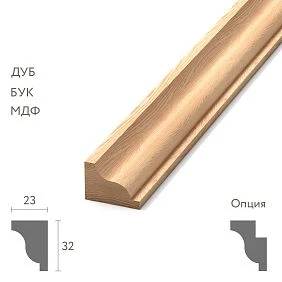
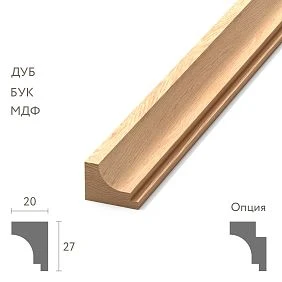
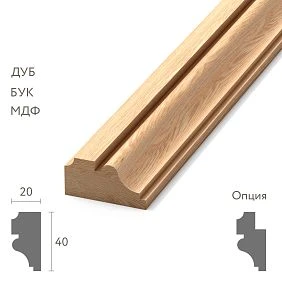
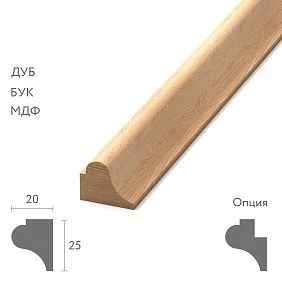
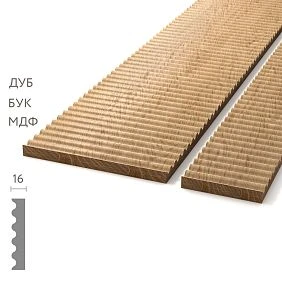
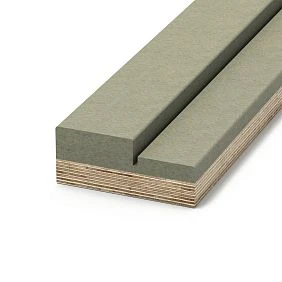
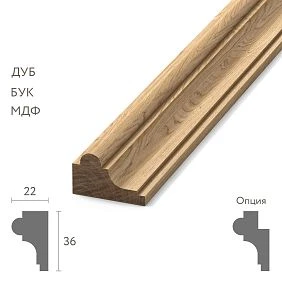
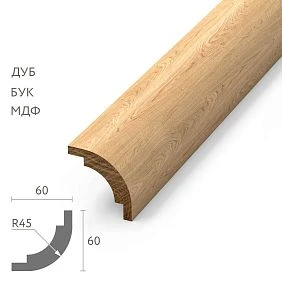
Furniture molding and wall molding: what is the fundamental difference
These are not the same product in different sizes. They are two different decorative tools with different tasks, different application logic, and different scales.
Wall molding works with the architecture of the room: it frames walls, divides them horizontally, and creates the order logic of the room. A wall profile can be 40, 60, 100 mm wide or more — this is appropriate on a large wall surface.
Furniture molding works with facades, drawers, doors, and plinths. Its task is to form a frame, emphasize the geometry of the facade, visually break up the plane of the door into parts, or enhance the architectural character of the furniture. The scale here is fundamentally different: Furniture molding it usually has a width from 10 to 30 mm, rarely up to 40 mm — and this is a fundamentally different proportion.
If you put a wall molding 80 mm wide on a cabinet, the result will be heavy and disproportionate. If you use a furniture profile of 15 mm on wall paneling, it will get lost and not be readable.
The conclusion is simple: buying molding for furniture is not just choosing a profile you like. It is an exact match to the scale of the facade.




Where furniture moldings are used: a complete application map
Moldings for furniture — a universal tool. They are used everywhere there is a furniture facade that you want to make more expressive.
Our factory also produces:
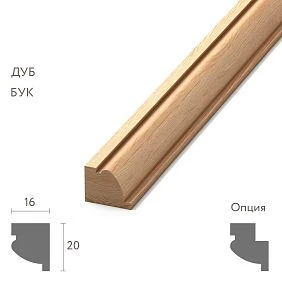
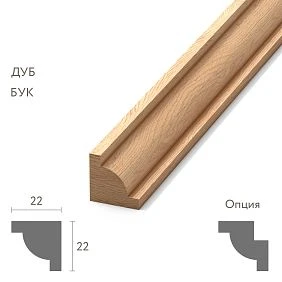
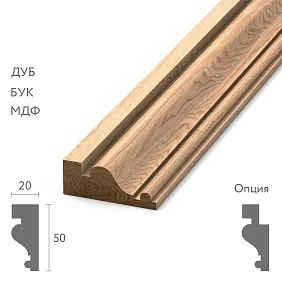
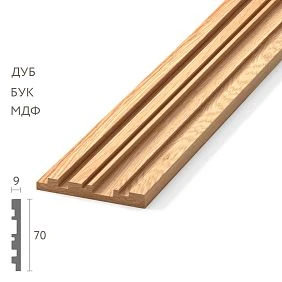
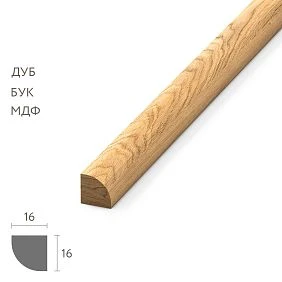
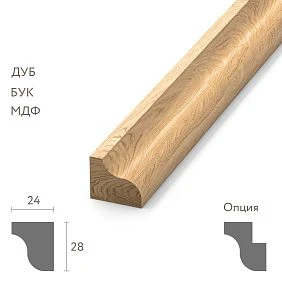
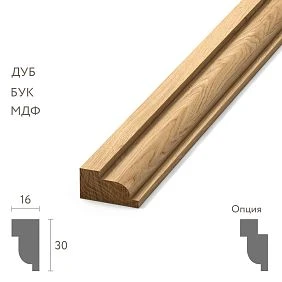
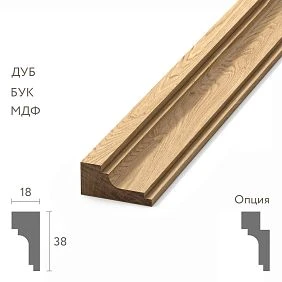
Cabinets and sliding wardrobes
On cabinets furniture molding operates in several modes:
-
Frame on the door facade — molding is glued along the perimeter of the door, forming a classic frame with a visually "recessed" or "convex" center. The most common technique for classic cabinets.
-
Horizontal division of the facade — molding divides a tall door into two parts, creating a paneled logic. Visually "shortens" the facade and makes it more proportional.
-
Top decorative line — profile along the top horizontal of the body, creating a cabinet finish.
For a cabinet in a classic interior, the molding on the facades should be consistent with wooden moldings on walls — if the furniture is in a classic living room or study with wooden paneling, the unity of profiles creates a cohesive interior.
Get Consultation
Chests of Drawers
For a chest of drawers, molding works on the drawers. A frame around the perimeter of each drawer is a classic technique that turns a simple chest of drawers into an item with character. It is important to maintain proportionality: a drawer 15 cm high requires molding no wider than 12–15 mm. A wide profile on a narrow drawer turns it into an "overloaded" detail.
On a large chest of drawers with tall drawers, more expressive solutions are possible: double frame, molding with carved profile, combination with carved overlays for furniture.
Kitchen
Kitchen facades — perhaps the most widespread application molding for furnitureA classic kitchen is practically unthinkable without moldings: frames on doors are a hallmark of furniture in Provence, neoclassical, and Italian classic styles.
For the kitchen, the following are especially important:
-
Coating durability. Kitchen moldings are used intensively: they are washed and touched with greasy hands. Therefore, for the kitchen, it is better to use a profile with a durable lacquer or oil coating;
-
Precision of joints. There are many corners in the kitchen — moldings are cut at 45 degrees at every internal and external corner of the frame. Poor cutting is immediately noticeable;
-
Scale. Kitchen fronts are usually of standard sizes — 400–600 mm in width. A molding of 12–20 mm works optimally.
Cabinets and consoles
TV cabinet, bedside table, console in the hallway — on this furniture, molding creates a horizontal and vertical rhythm of the fronts. For a TV cabinet in a classic interior, frames made of molding on the fronts can completely change the "reading" of the furniture — from a neutral modern piece, it transforms into a classic object.
Showcases and libraries
On showcases solid wood molding for furniture emphasizes glass inserts, frames them with a profile, and makes the display case more classic and expensive. On library cabinets, the molding sets a vertical rhythm for sections and a horizontal rhythm for shelves.
What are furniture moldings: classification by profile and purpose
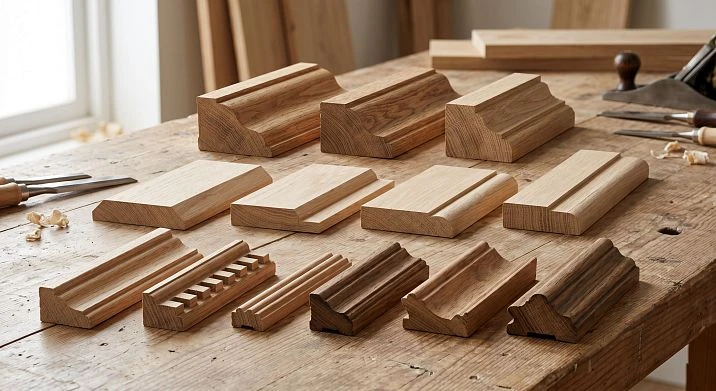
Before buying furniture moldings, you need to understand the types: they differ not only in width but also in profile, which determines both the decorative character and the method of application.
By profile shape
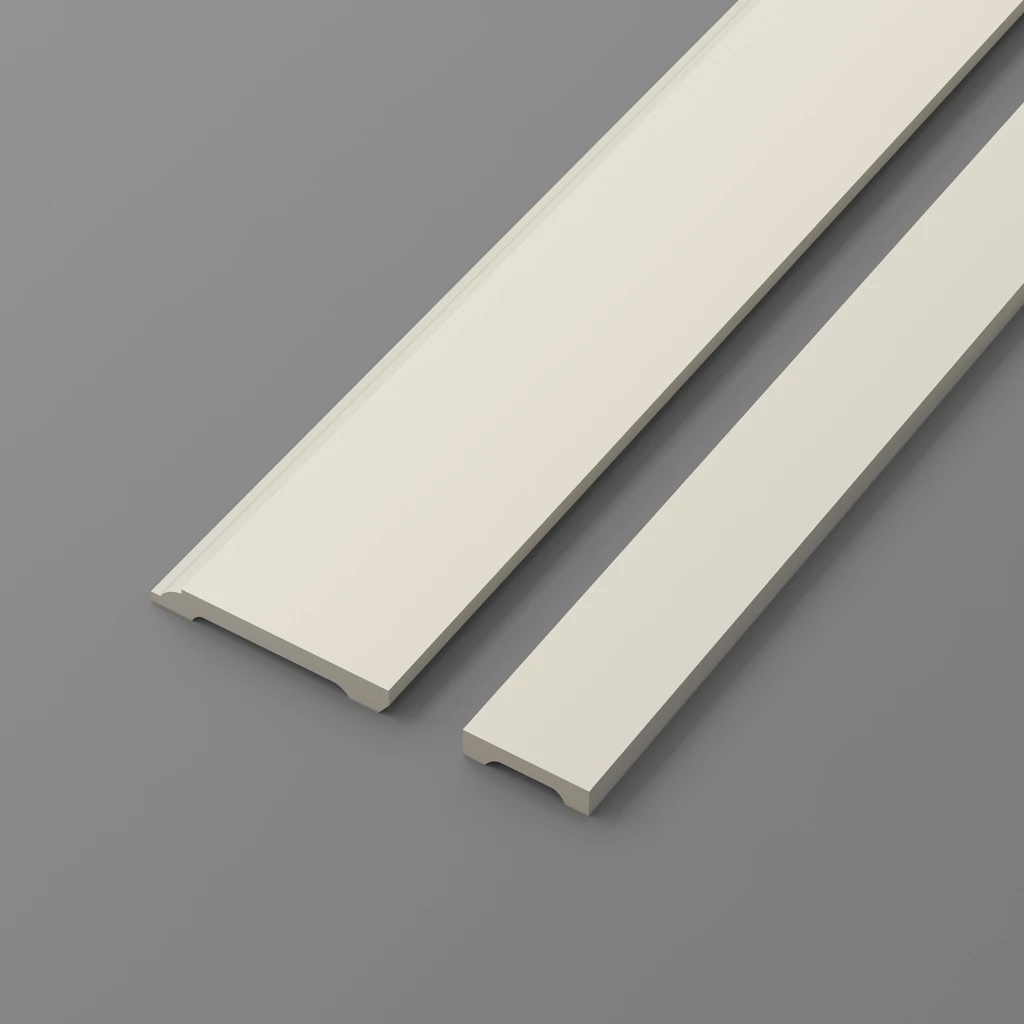
Smooth rectangular molding is the simplest. Rectangular cross-section without complex relief. Suitable for modern classic interiors, furniture for painting, minimalist facades. Creates a clear geometry of the frame without unnecessary ornament.
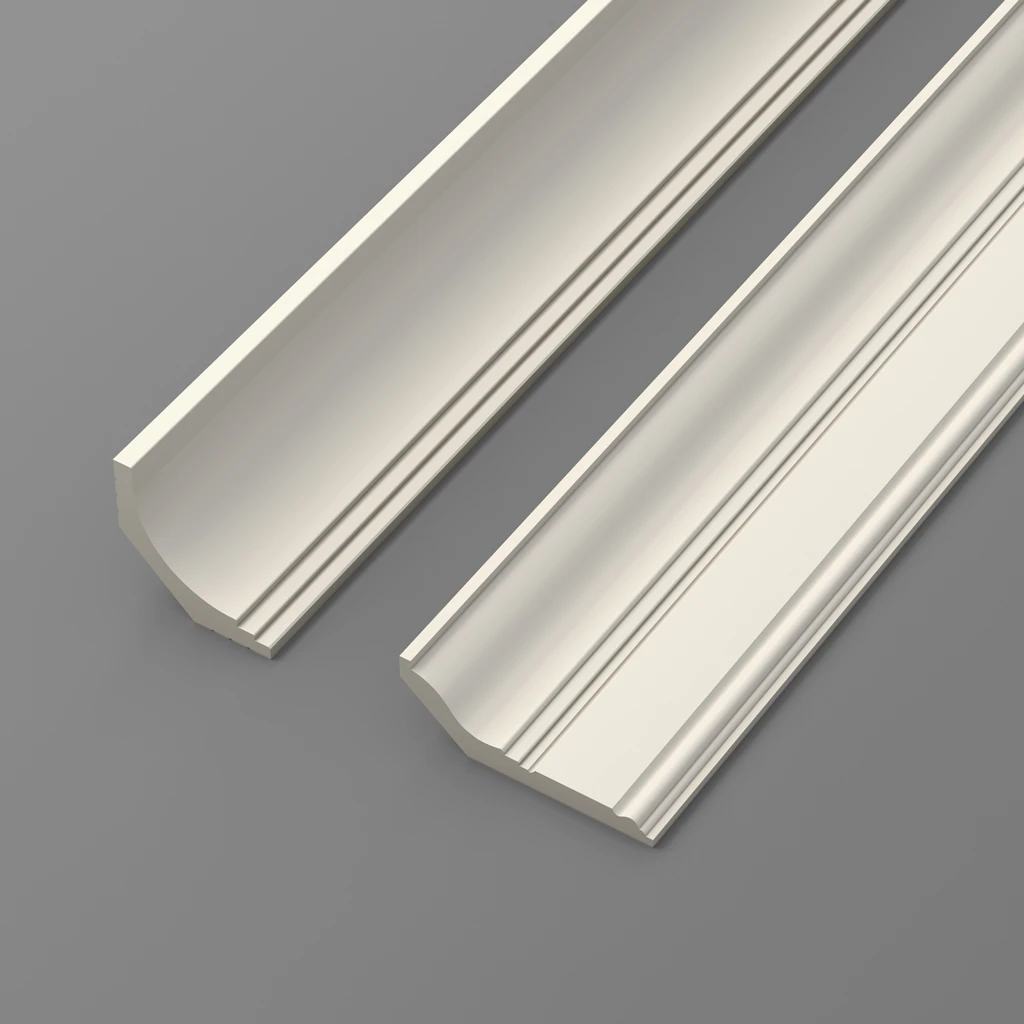
Cove and ogee — a profile with a smooth concave or convex transition. A soft and concise profile that looks good on facades in Provence and neoclassical styles. Thin ogee from 10 mm — for small drawers and narrow frames.
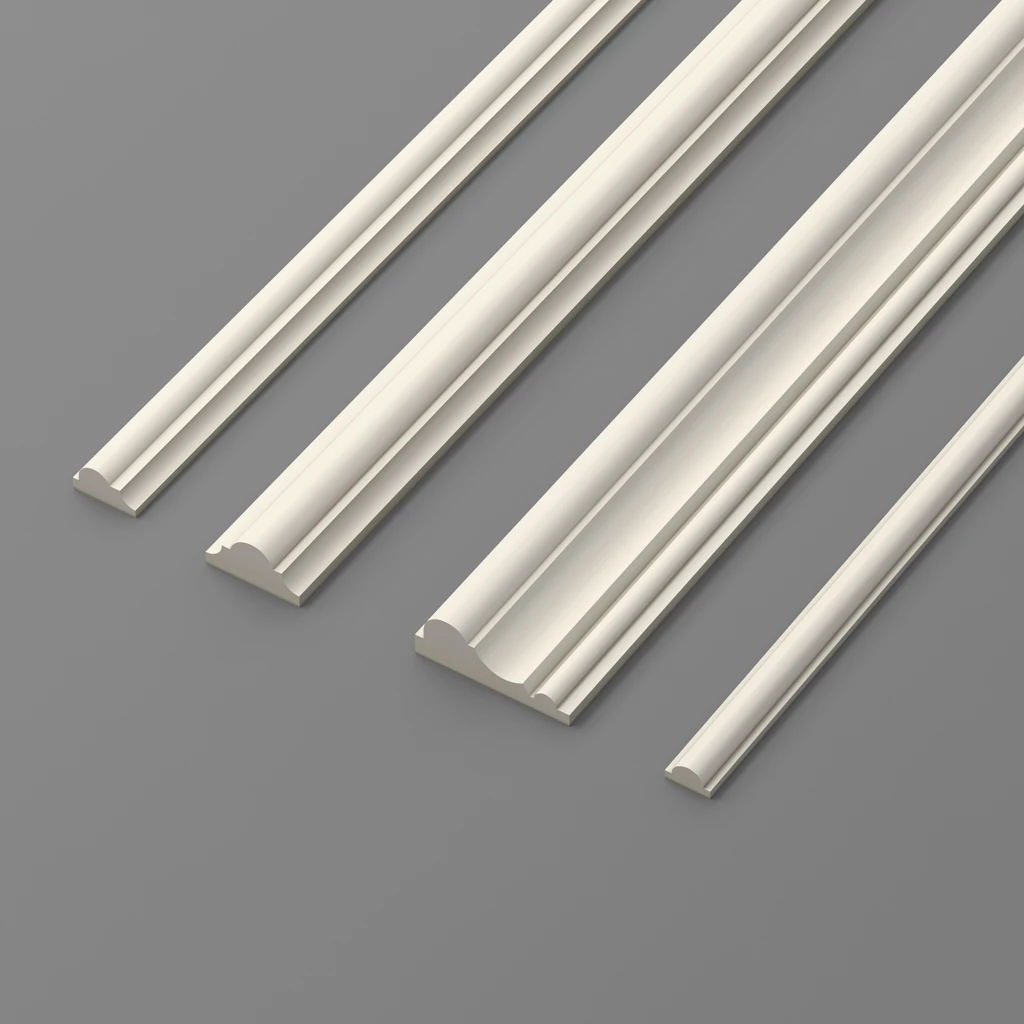
Semicircular (oval) profile — a molding with a convex cross-section in the shape of a semi-oval. A classic furniture profile that creates a soft "convex" frame. For classic cabinets, display cases, kitchen facades in Provence style.
Figurative complex profile — several transitions: straight sections, coves, shelves, heel beads. Rich decorative character. For classic furniture with expressive facades, for office furniture and libraries.
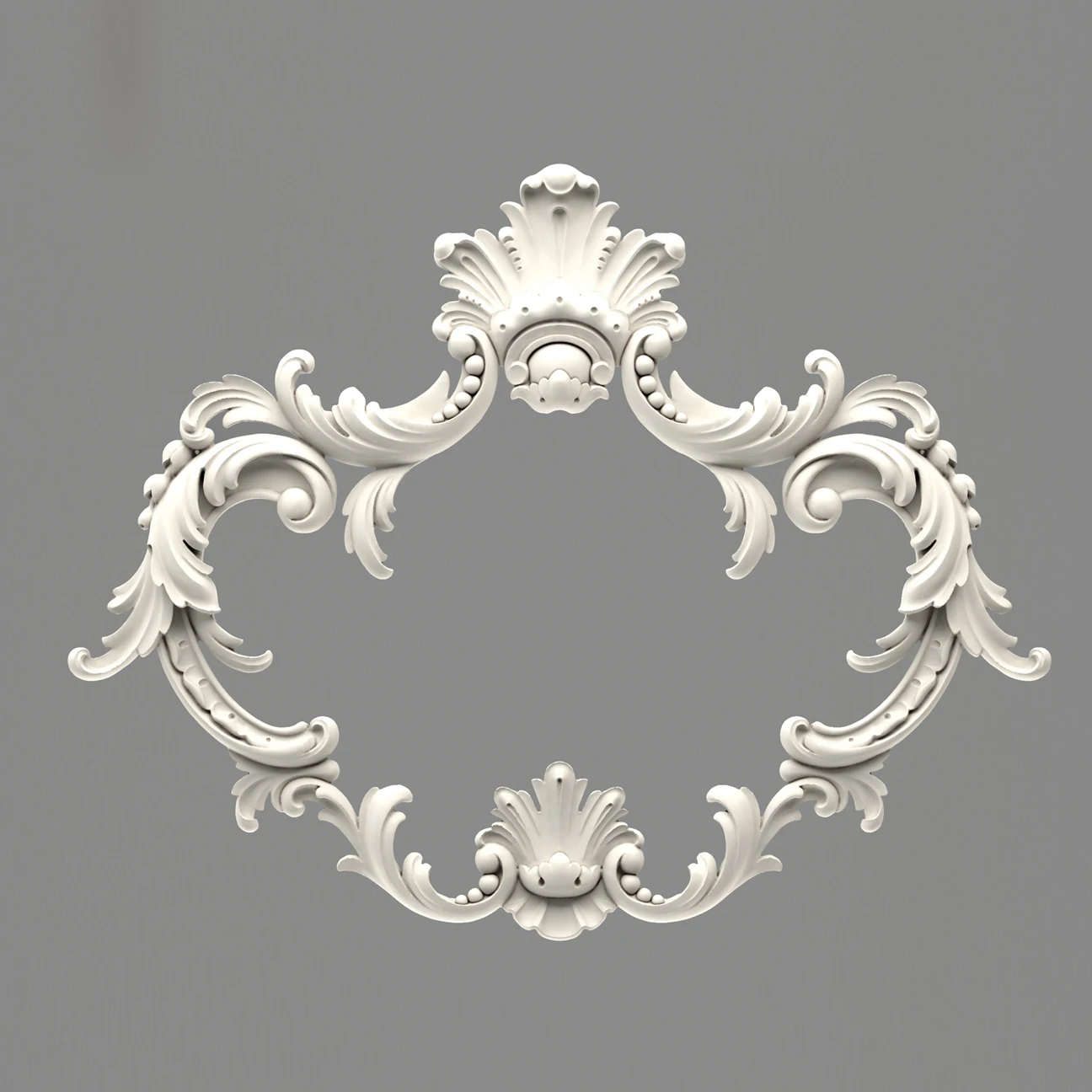
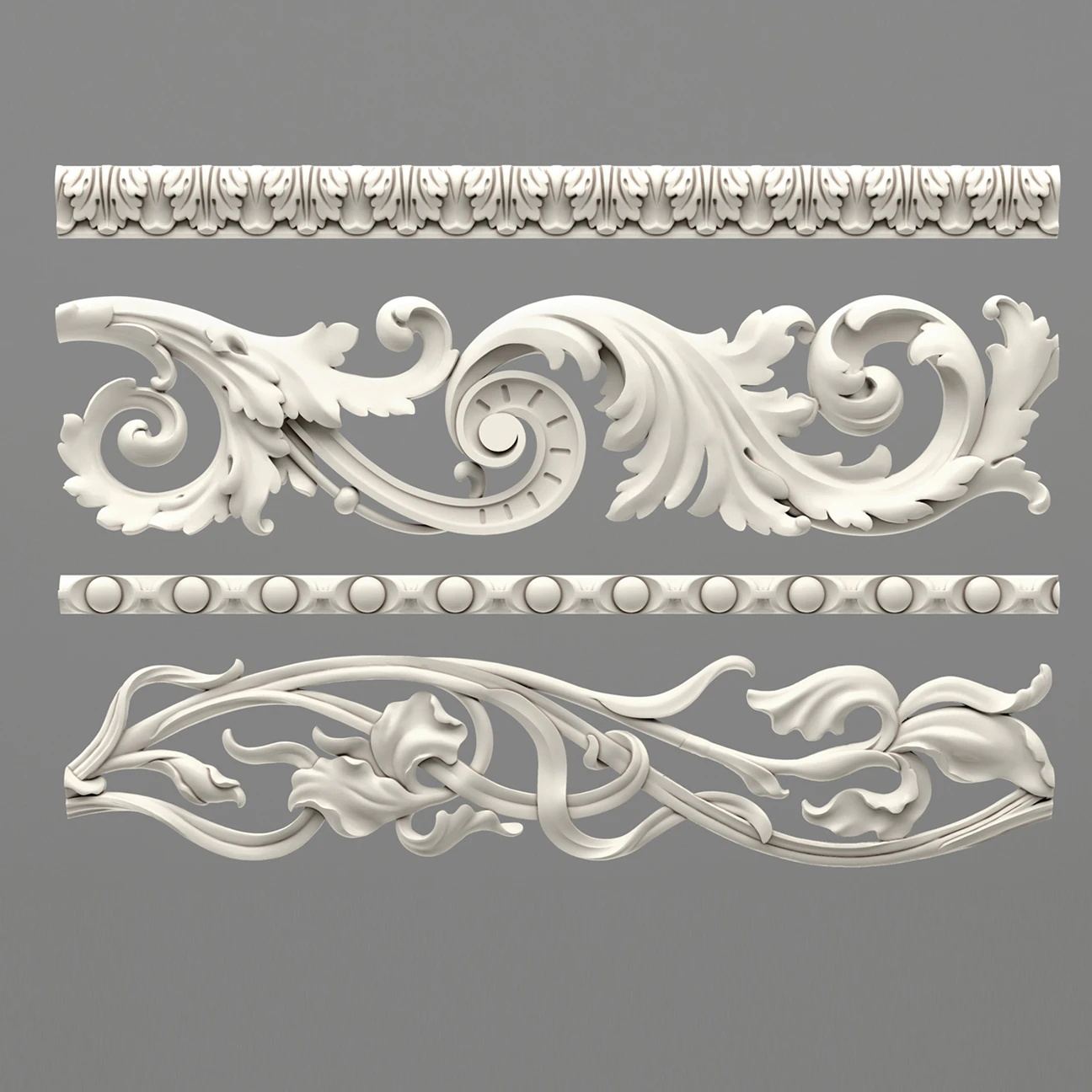
Carved profile — with ornament or relief pattern on the surface. For Russian style, Baroque, rich classic interior. Best combined with carved overlays for furniture и wooden furniture handles the corresponding ornament.
By width and purpose
| Width | Purpose | Furniture type |
|---|---|---|
| 10–15 mm | Thin frame, dresser drawers | Dresser, small nightstand |
| 15–25 mm | Standard furniture frame | Kitchen, cabinet, TV stand |
| 25–35 mm | Expressive frame, top line | Cabinet, library, display case |
| 35–50 mm | Large decorative profile | Library, fireplace portal in furniture |
How to choose a profile: from facade to molding, not the other way around
This is the key selection principle. Most people's mistake is to first choose a beautiful molding from a catalog and then try to 'fit' it to the furniture. The correct order is the reverse.
Step one: determine the furniture and facade. What exactly do you want to decorate? A cabinet door 600×900 mm? A dresser drawer 500×180 mm? A kitchen facade 400×700 mm? Specific dimensions are the starting point.
Step two: choose the frame scheme. A simple frame around the perimeter with a 20–30 mm indent from the edges? A double frame? A horizontal division? The scheme determines how much molding is needed and how it will be joined.
Step three: calculate the proportion. The width of the frame (the distance between the molding and the edge of the facade) should be 1.5–2 times the width of the molding itself. With a 20 mm molding, the indent from the edge is 30–40 mm.
Step four: choose a profile according to the style. Classic — shaped or semi-circular profile. Modern classic — smooth rectangular or cove profile. Russian style — carved profile.
Step five: coordinate with handles and legs. wooden furniture handles и Furniture legs should be in the same "language" as the molding — in terms of profile character, tone, and scale.
Furniture moldings for facades: how exactly they work
I want to break down practically — what exactly happens to furniture when it is applied moldings for furniture fronts.
Frame effect
A frame of molding around the perimeter of the door creates a visual "frame" — it divides the facade into a "frame" and a "field." If the molding has a convex profile, the field appears recessed, like in a classic panel. If the molding is rectangular, the field and frame are on the same level but clearly separated geometrically.
This technique literally transforms a simple flat door made of laminated chipboard or MDF. Add a frame of wooden molding — and the cabinet starts to look like classic solid wood furniture.
Horizontal division
On tall doors (from 900 mm and above), molding can be used for horizontal division of the facade. One horizontal line of molding divides the door into two "fields" — lower and upper. This is not only a decorative but also a visual technique: the long vertical is broken into proportional parts.
Vertical divisions
On wide facades — panels, side panels, display case facades — vertical moldings create rhythm. Three vertical lines on a wide panel turn it into a three-part composition. This is the classic logic of order architecture, transferred to a furniture facade.
Baseboard profile
Furniture molding at the base of the body — between the legs and the lower plane — creates a neat finish from below. Especially important for classic furniture with wooden legs: the transition from the body to the leg must be architecturally complete.
Moldings for different types of furniture: specific solutions
Molding for a wardrobe
The cabinet is the most "voluminous" consumer of furniture moldings. Several application options:
-
Frame of wooden molding on each door — creates a uniform rhythm across the entire facade;
-
Top cornice — a horizontal profile along the top line of the cabinet that connects the furniture to the ceiling and with wooden cornices in the interior;
-
Vertical divider — on a wide cabinet, molding along the vertical edges of sections creates a pilaster effect.
For a cabinet in a classic study with wooden panels, the molding profile on the facades should match or harmonize with the profiles of wooden moldings on the walls.
Molding for a chest of drawers
The main rule for a chest of drawers is the proportionality of each drawer. Molding 12–18 mm for a standard drawer 15–20 cm high. Frame offset from drawer edges — 15–25 mm. If drawers are of different heights, the frames should be visually proportionate to their drawer, not identical in molding size.
For a classic chest of drawers with expressive with matching legs and shaped wooden handles — molding with a more complex profile: cove, semi-circular, or shaped. For a modern chest of drawers for painting — smooth rectangular.
Molding for the kitchen
In the kitchen moldings for furniture fronts are usually used in two variants:
Frame on the door — a classic scheme for facades in Provence and neoclassical style. The molding is selected to match the facade color or in a darker tone for contrast.
Upper frieze profile — molding between wall cabinets and the ceiling or above the last wall cabinet. It completes the top line of the kitchen and connects it with with wooden cornices the room.
An important practical point for the kitchen: ensure the molding does not interfere with opening doors and drawers. When gluing the frame onto the door, the molding's offset from the edge must be sufficient so that adjacent frames do not hit each other when opened.
Molding for display case and library
On a display case, the molding frames the glass inserts. Classic scheme: an outer frame along the door perimeter and an inner framing of the glass insert. Between them is the facade field, which can be decorated carved inlays.
For a library cabinet, the molding creates vertical and horizontal lines of sectional division. On tall shelf sections, horizontal moldings make the shelf division visually pronounced, while vertical ones set the rhythm of sections.
How to choose color and finish: coordination with furniture
Choosing the right profile is half the task. The other half is the right color and finish.
In the color of the facade
The molding is selected to match the exact tone of the facade. The frame "dissolves" into the surface and creates the effect of a relief (convex or recessed) part of the facade — as if it were an originally intended design. This is the most harmonious option for ready-made furniture.
In a darker tone
Molding darker than the facade — a contrasting frame. A classic solution for a Provence-style kitchen: white facades and gray or cream moldings. Or for a chest of drawers with tinted wood: molding in the color of the stain, facade slightly lighter.
Natural wood
solid wood molding for furniture Under clear varnish or oil — for natural solid wood furniture. The tone of the molding matches the tone of the body: light oak to light oak, dark walnut to walnut. If the furniture is made of one species, the molding should be from the same.
For painting
For furniture to be painted, use MDF molding or solid wood molding without pre-painting. After installation, the molding and facade are painted together in one color — the frame is visible only in relief, not in color. This is a strict and beautiful solution for white classic interiors.
Contrasting detail
Molding in a fundamentally different color — as a decorative frame with its own character. For example, dark molding on a white cabinet. This is a bold technique that requires support: dark furniture handles, dark Furniture legs, dark Wooden baseboard.
How to update furniture with furniture moldings
This is one of the most practical topics. Not everyone has the budget for a full furniture replacement — but many have the desire to make a kitchen, cabinet, or chest of drawers "different." Moldings are one of the most affordable ways to transform.
How to add classic style to simple cabinets
Take an ordinary cabinet with flat chipboard facades. A frame is glued around the perimeter of each door wooden molding. The molding is cut at 45 degrees at the corners. The surface is primed and painted in a single color. Result: the cabinet visually turns into a classic paneled cabinet with shaped facades.
This takes a few hours of work and costs many times less than replacing furniture.
How to update a kitchen
On kitchen facades, frames are added from moldings for kitchen facades. The handles are being replaced — old metal ones with wooden furniture handles in a classic style. A top cornice profile is added above the wall cabinets. Result: a kitchen with modern bodies resembles a handmade solid wood kitchen.
How to make a dresser "different"
Frames are added to the drawers, handles are replaced with wooden, legs are added under the body Wooden legs — and a simple IKEA dresser turns into a classic piece with legs and framed fronts.
Furniture moldings in different interior styles
Provence
White or cream fronts with frames made of molding, painted in the same or slightly contrasting tone. The profile is soft, semi-circular, or ogee. wooden handles in a classic or rustic form. The feeling is as if the furniture was brought from a French village.
Classic
Figured Furniture molding with a rich profile. Warm wood tone. Frames on all fronts — cabinets, display cases, library sections. Combined with wooden moldings on walls the furniture becomes part of the room's architectural decor.
Neoclassicism
Calm, smooth profiles. White or cream tone. Frames are wider — molding 20–25 mm with a neat rectangular or slightly shaped profile. wooden handles — strict form, without ornament.
Russian Style
Carved decorative inserts for furniture in combination with moldings with an ornamental profile. Dark or natural tinted wood. Connection with wooden casings и decor made from solid wood.
Modern classic
Minimum relief, maximum geometry. Thin smooth frames. Molding in the color of the facade — the frame is only visible in the shadow. Simple wooden handles with a clean form. The result is furniture with a classic structure but a modern character.
What should be combined with furniture moldings
A molding is not an isolated detail. It works within the system of furniture decor. Here is the full list of elements that must be coordinated:
-
wooden furniture handles — must match the molding in style and tone;
-
Furniture Legs and Supports — for furniture on legs, the leg profile must be in the same language as the molding profile;
-
Carved decorative inserts for furniture — decorative elements on the facades that complement the molding frames;
-
decor for furniture facades — corner elements, central overlays, ornamental details;
-
Wooden baseboard — the lower horizontal line of the room with which the furniture should rhyme;
-
wooden wall moldings — if the furniture is placed in an interior with wooden paneling;
-
Pogonazh iz massiva — a complete profile system for a unified wooden interior;
-
Solid Wood Items — a catalog of all wooden parts for coordinated design.
Mistakes when buying furniture moldings
Buying molding without measuring the facade. It sounds obvious — but this is the most common mistake. Without specific door dimensions, it is impossible to correctly choose the molding width and calculate the frame offset.
Choosing too wide a molding. A 40 mm molding on a 15 cm high dresser drawer is a frame that "eats up" the entire facade. The proportion is broken, and the result looks rough.
Not considering the thickness of the facade. Some moldings require a specific method of attachment — groove, tenon, or glue. If the facade is thin (12–16 mm), you need to check if the molding fits the groove depth.
Forgetting about door opening. The frame on the door should not protrude beyond the plane of the facade so much that it catches adjacent doors when opening.
Not coordinating the molding with handlesThe carved profile of the molding and the smooth metal handle are a stylistic conflict. For a classic molding — Wooden handles of the appropriate character.
Mixing different shades of wood. Two different tones of molding on one piece of furniture is chaos, not design.
Making frames without symmetry. Uneven frame margins from the edges of the facade — right margin 25 mm, left 30 mm — are immediately visible and look like an installation error.
Not accounting for corner trimming. The molding in the frame corners is joined at 45 degrees. Without a precise miter box and careful trimming, the joints will be visible.
Buying molding without a reserve. Each corner trimming takes several centimeters. Plus for defects from inaccurate cutting. Minimum reserve is 10–15% above the calculated amount.
Using wall profile instead of furniture profile. Without checking the scale, this is almost always a mistake: wall profile is heavier and coarser than furniture profile.
How to calculate the amount of furniture molding
The calculation is simple but requires precision.
For a frame on one door:
Door perimeter × 1.1 (10% reserve for trimming) = amount of molding per door.
For a 600×900 mm door: (600 + 900) × 2 = 3000 mm = 3 m × 1.1 = 3.3 m of molding.
For multiple fronts: sum all perimeters and add 10–15% reserve.
For the top line of the cabinet: cabinet length × 1.1.
Final reserve: always add at least 10%, preferably 15%. Molding is a linear material, and it is not always possible to buy exactly one linear meter of the exact same color and batch.
Step-by-step algorithm: how to buy furniture moldings correctly
-
Identify the furniture. Cabinet, kitchen, chest of drawers, nightstand, display case, bookcase.
-
Measure the fronts. Height and width of each door and drawer.
-
Choose a scheme. Frame, horizontal division, top line, base.
-
Calculate the molding width. From 10 to 40 mm depending on the size of the front.
-
Choose a profile. Smooth, semi-circular, shaped or carved — depending on the furniture style.
-
Check the color and coating. Coordinate with the facade tone, handles и legs.
-
Calculate the quantity. Along the perimeter of all facades plus 15% reserve.
-
Go to catalog of wooden moldings и furniture moldings and place the order.
About the company STAVROS
STAVROS is a Russian manufacturer of wooden products for furniture and interiors made from solid wood and polyurethane: furniture moldings, handles, legs, carved overlays, linear moldings, baseboards, architraves, capitals, pilasters, and architectural decor. The STAVROS catalog features complete systems of furniture and interior decor, coordinated by style, tone, and profile. Full-cycle production. Works with furniture manufacturers, designers, architects, and private clients. Delivery across all of Russia.
FAQ: answers to popular questions about furniture moldings
What is a furniture molding?
Furniture molding is a decorative wooden profile that is glued onto furniture facades to create frames, panels, and classic decorative divisions on doors, drawers, and side panels.
Where are furniture moldings used?
On cabinets, dressers, kitchen facades, nightstands, display cases, libraries — wherever you need to design a furniture facade, add a frame, or create a classic look.
How is furniture molding different from wall molding?
Furniture molding is smaller in width and scale, designed for facades and furniture parts. Wall molding is larger and works with architectural planes — walls, ceilings, doorways.
Can old furniture be updated with moldings?
Yes, this is one of the most accessible ways of transformation. Molding frames on flat facades, new Handles и Legs — and the furniture visually changes beyond recognition.
What to buy together with furniture moldings?
wooden furniture handles, Wooden legs, carved appliqués, Wooden baseboard и Pogonazh iz massiva for the unity of the entire decor system.
How to calculate the amount of molding?
Add up the perimeters of all facades you plan to decorate and add 10–15% extra for corner trimming and possible installation defects.